Free Printable Boundary Exploration Worksheets for Class 12
Explore Class 12 boundary exploration concepts with Wayground's comprehensive collection of free Social Studies worksheets, featuring printable PDFs, engaging practice problems, and complete answer keys to enhance geographic understanding.
Explore printable Boundary Exploration worksheets for Class 12
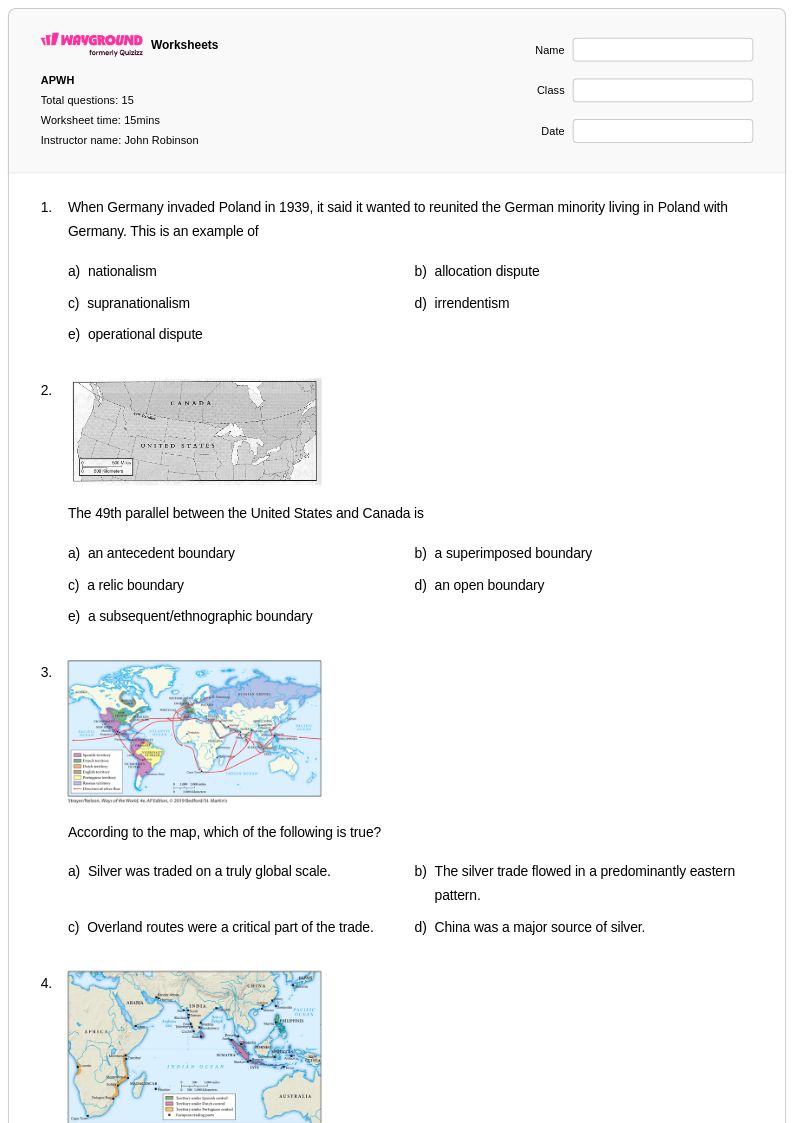
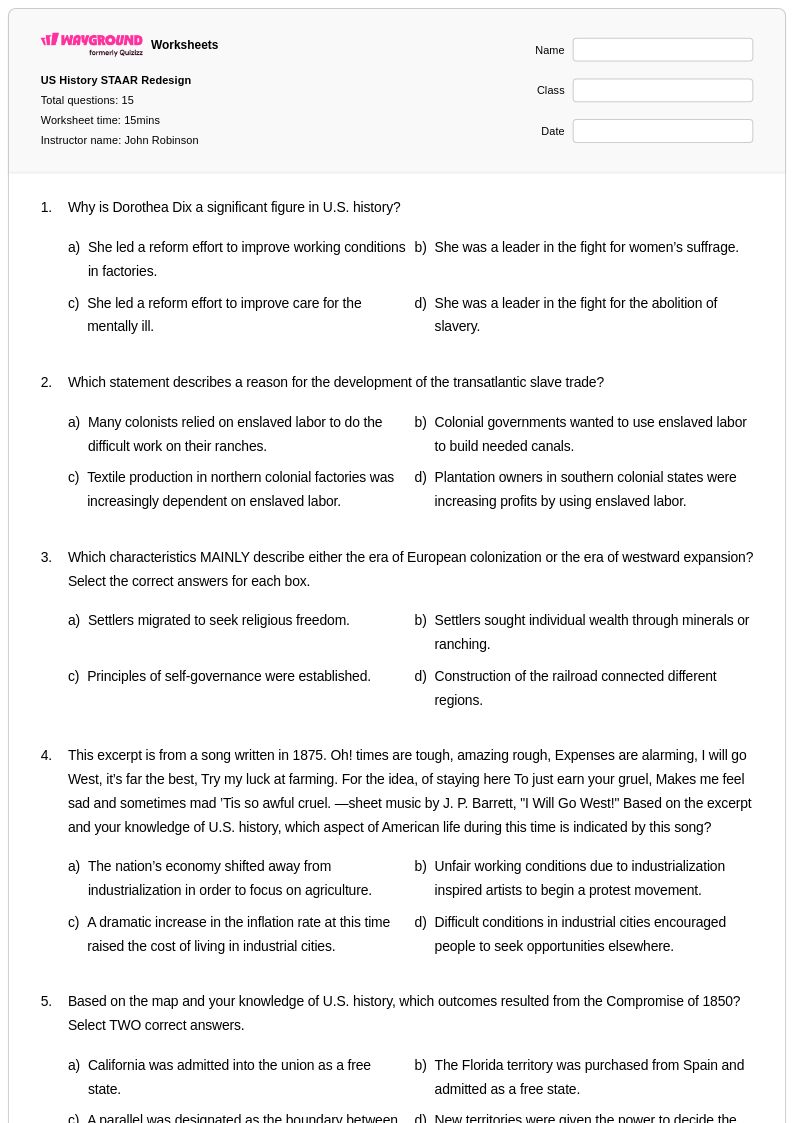
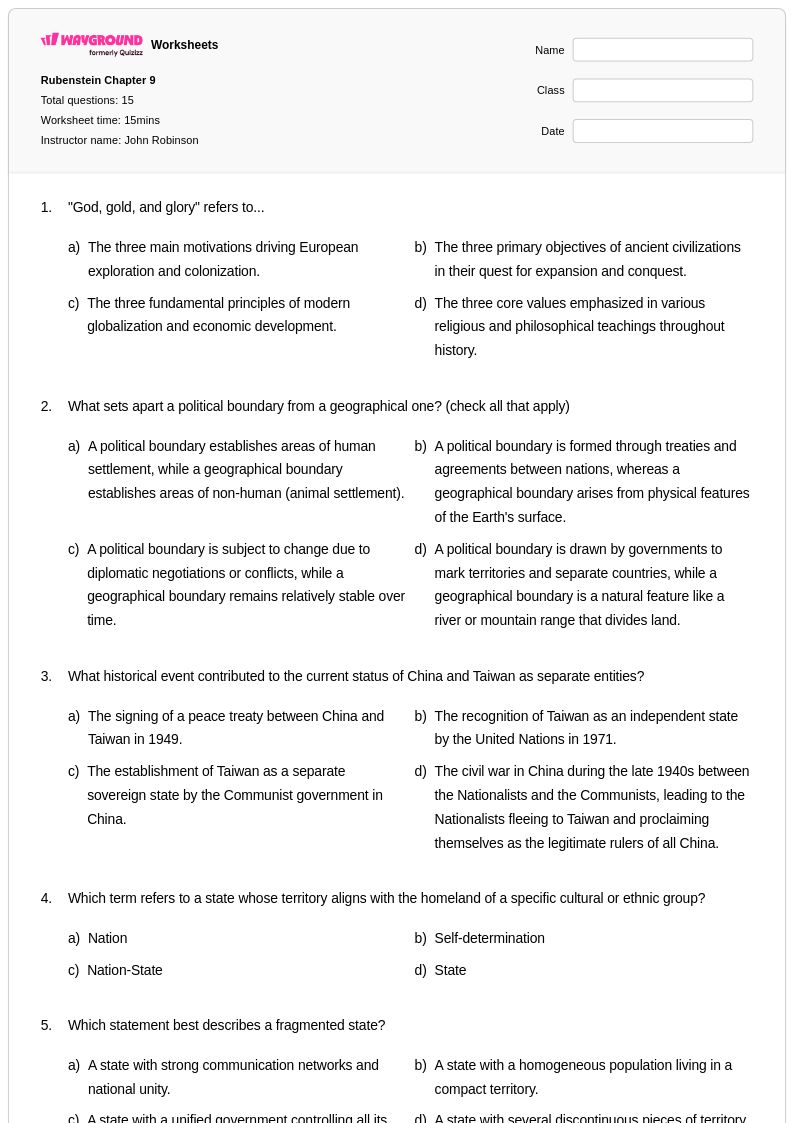
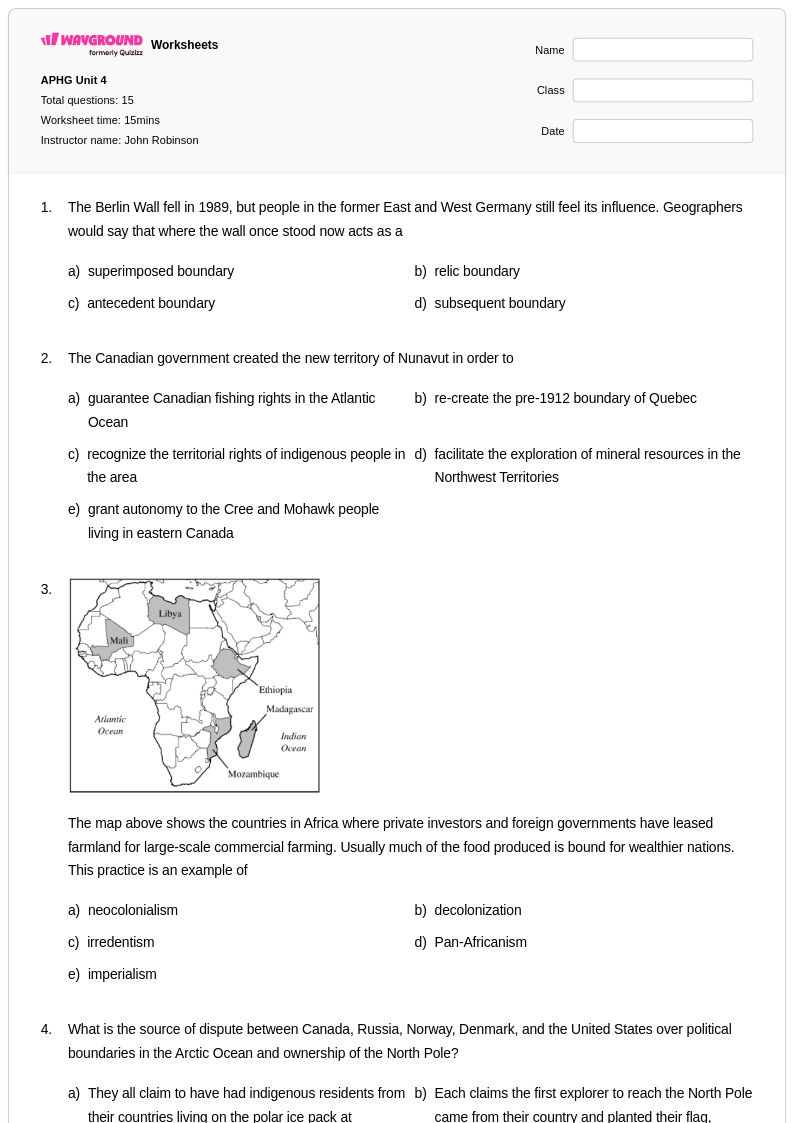
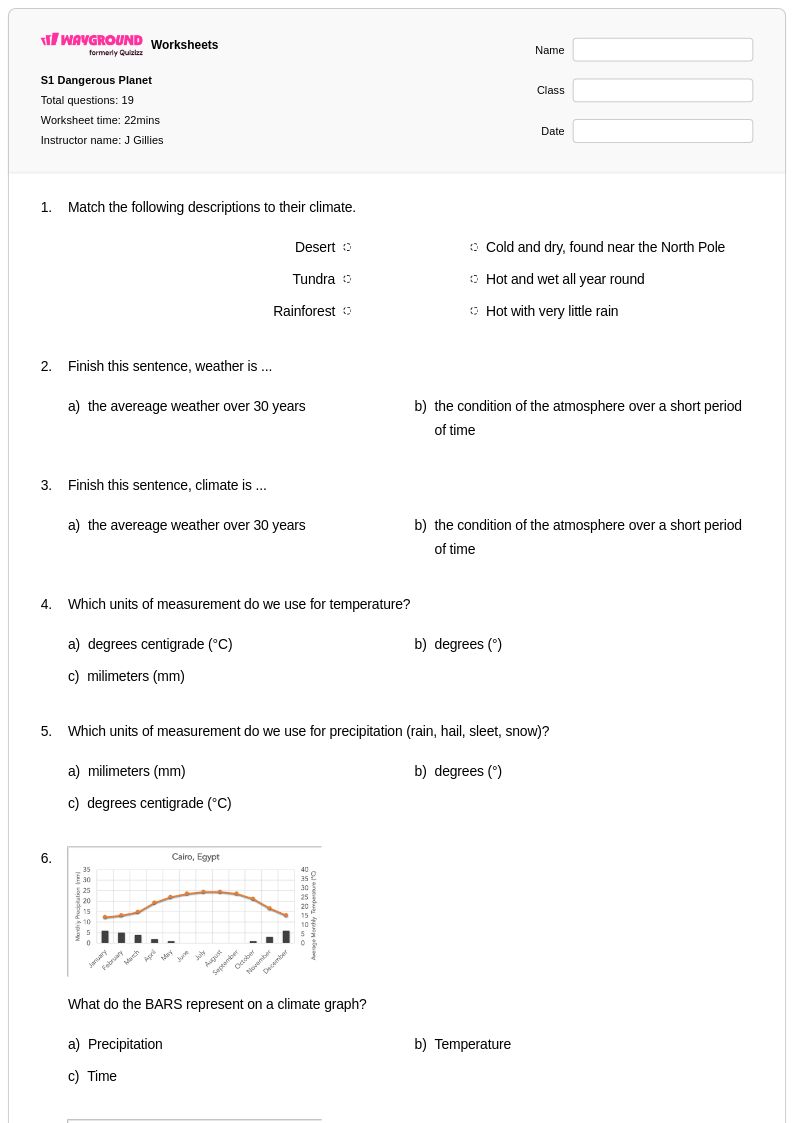
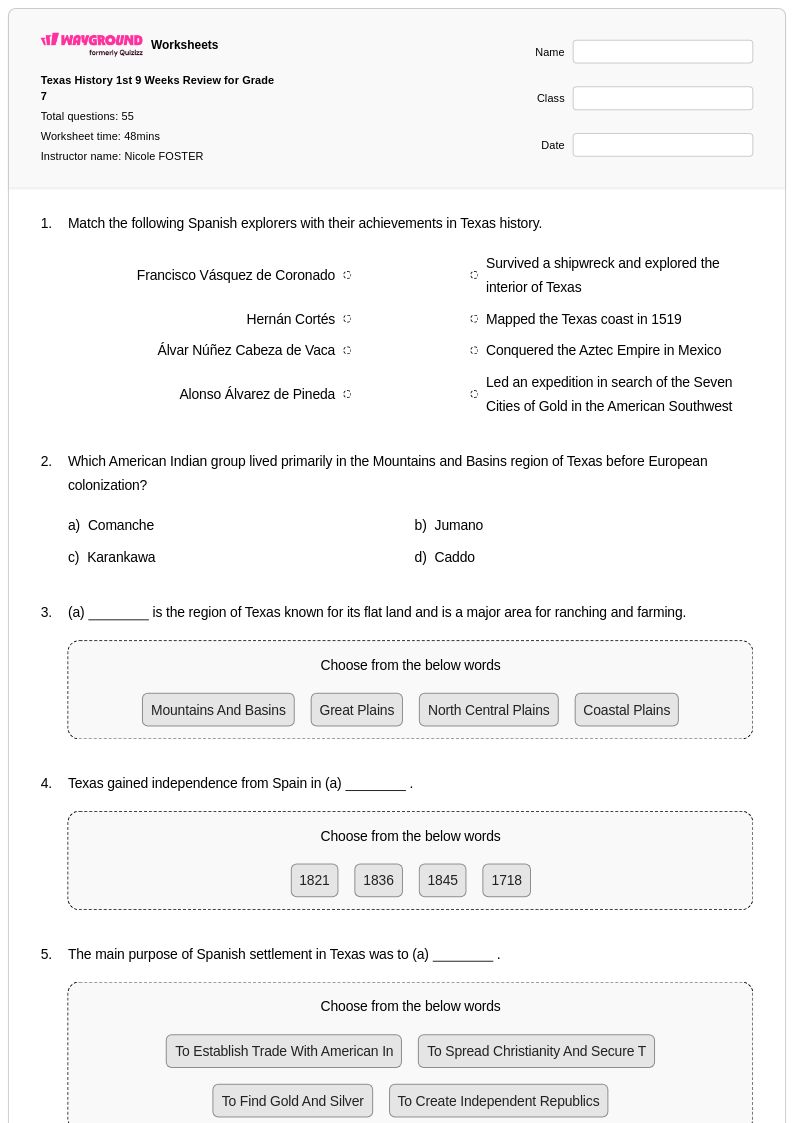
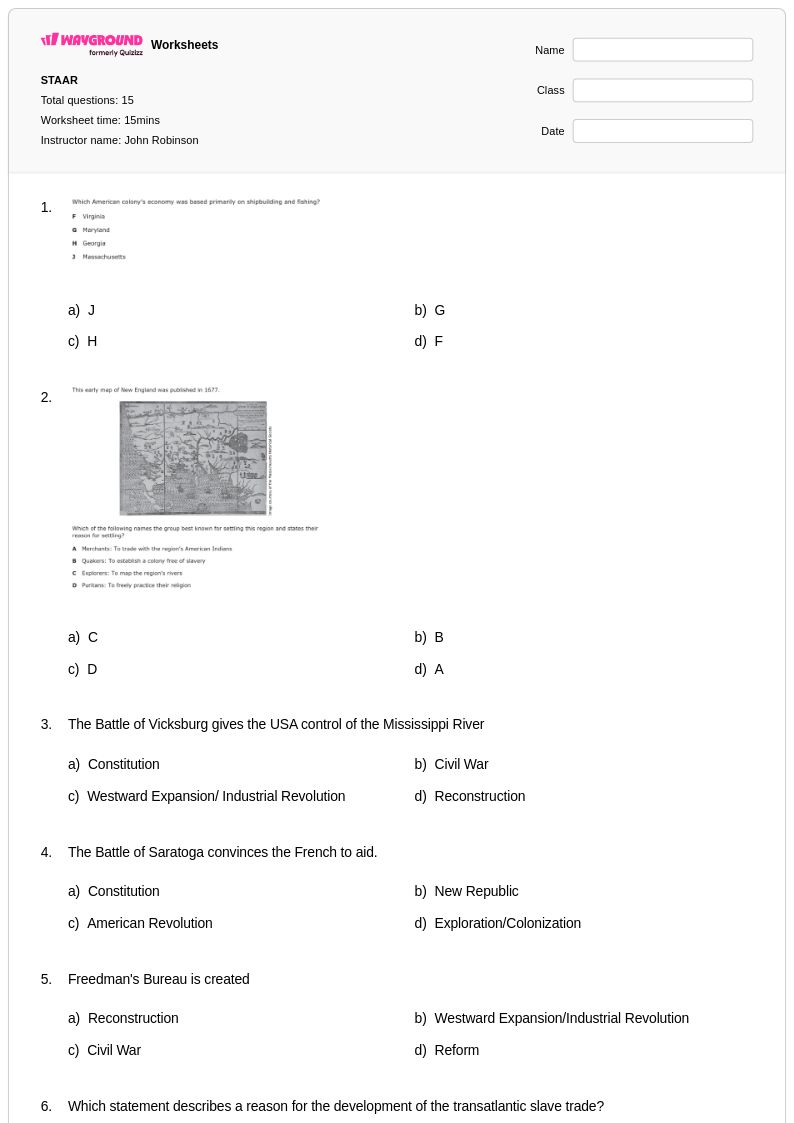
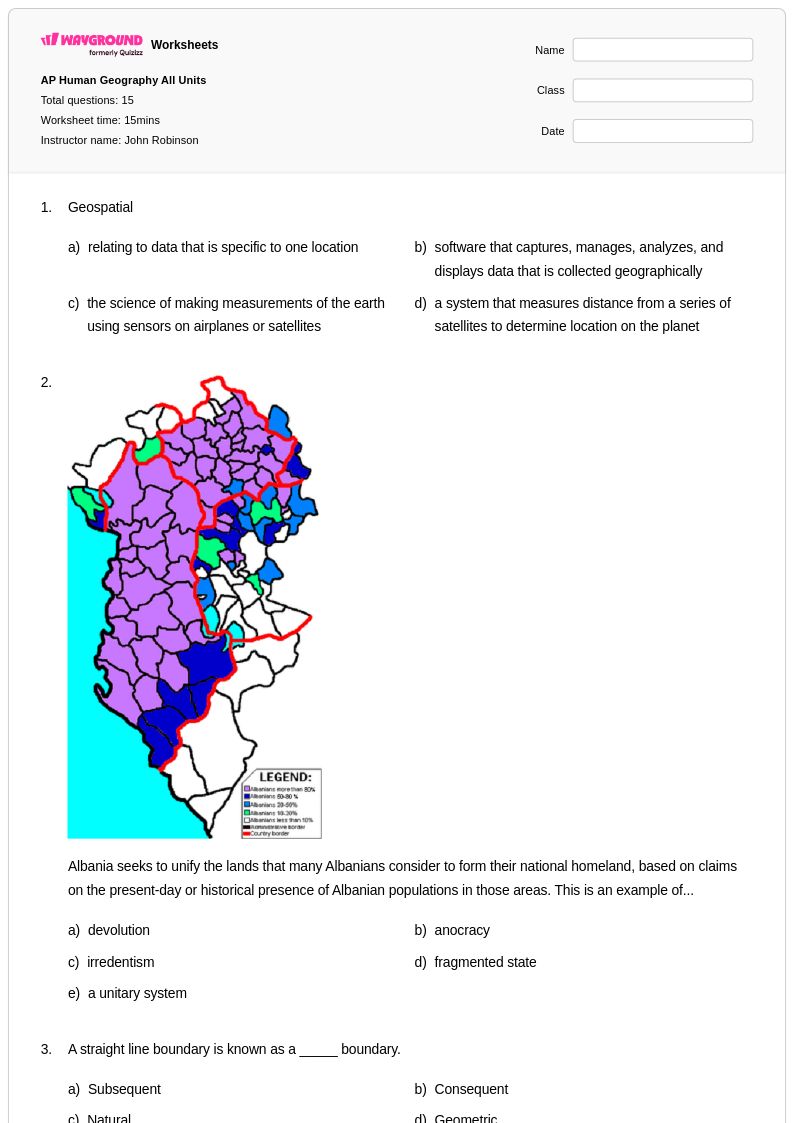
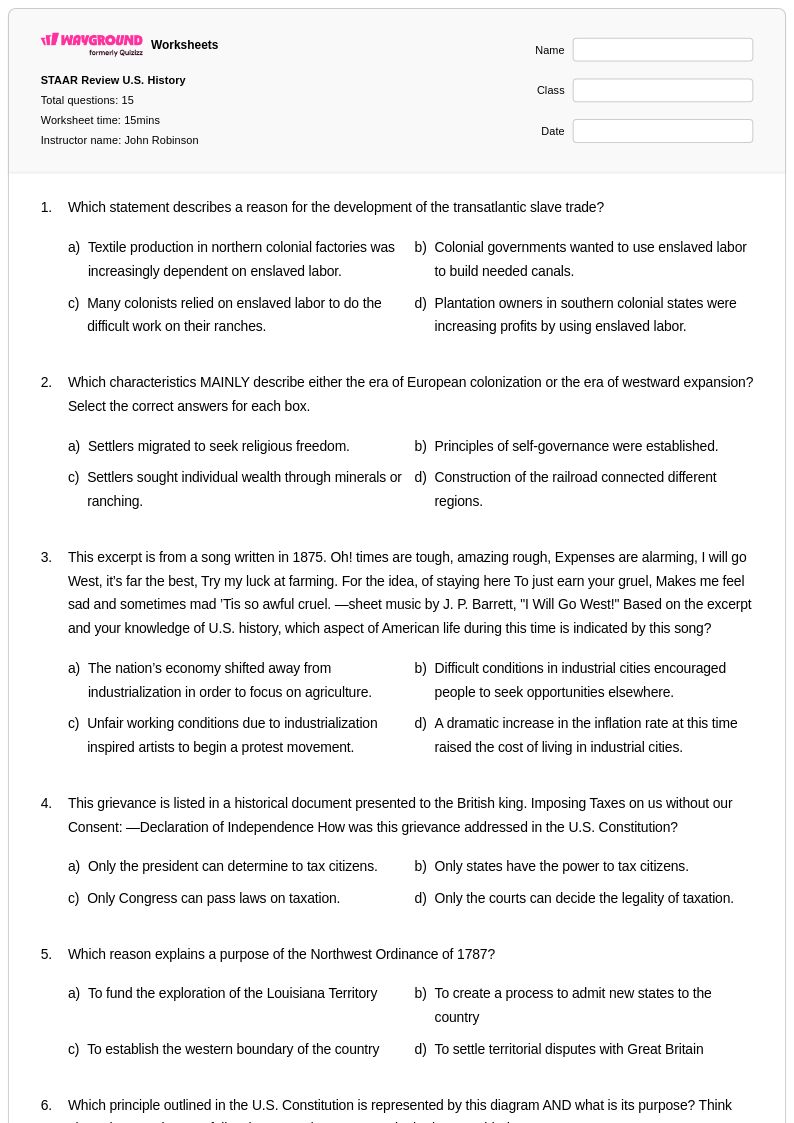
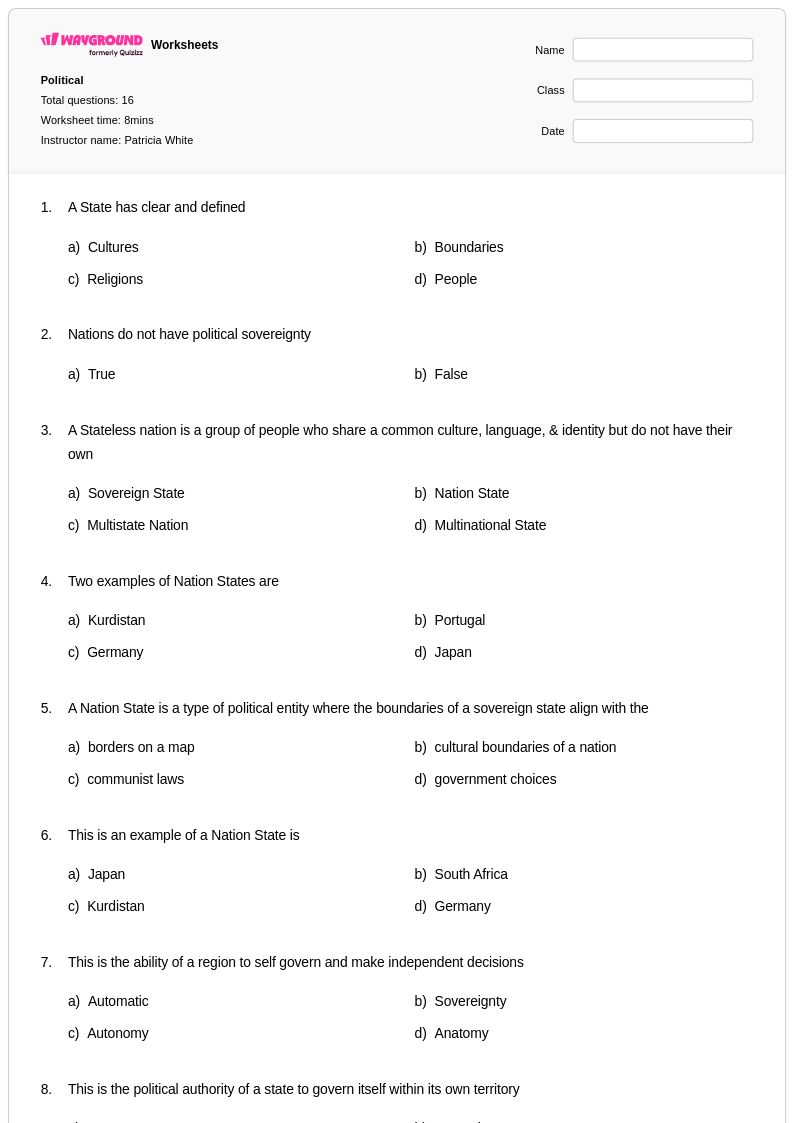
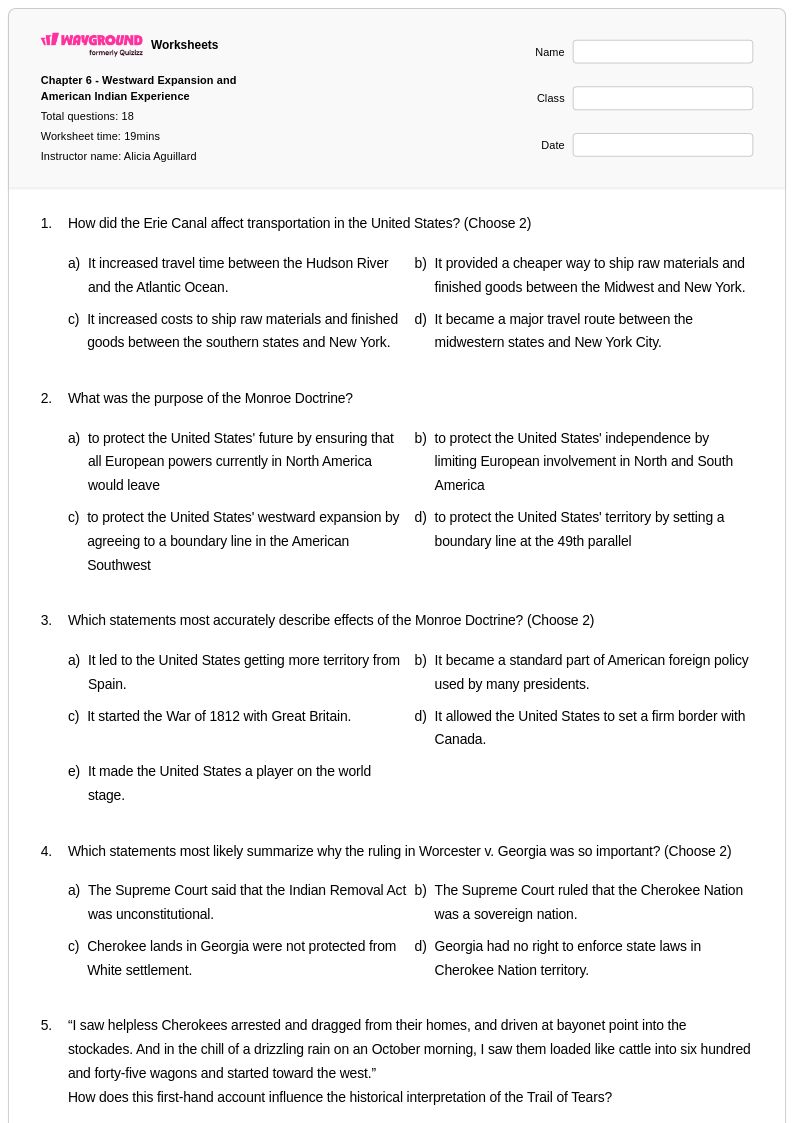
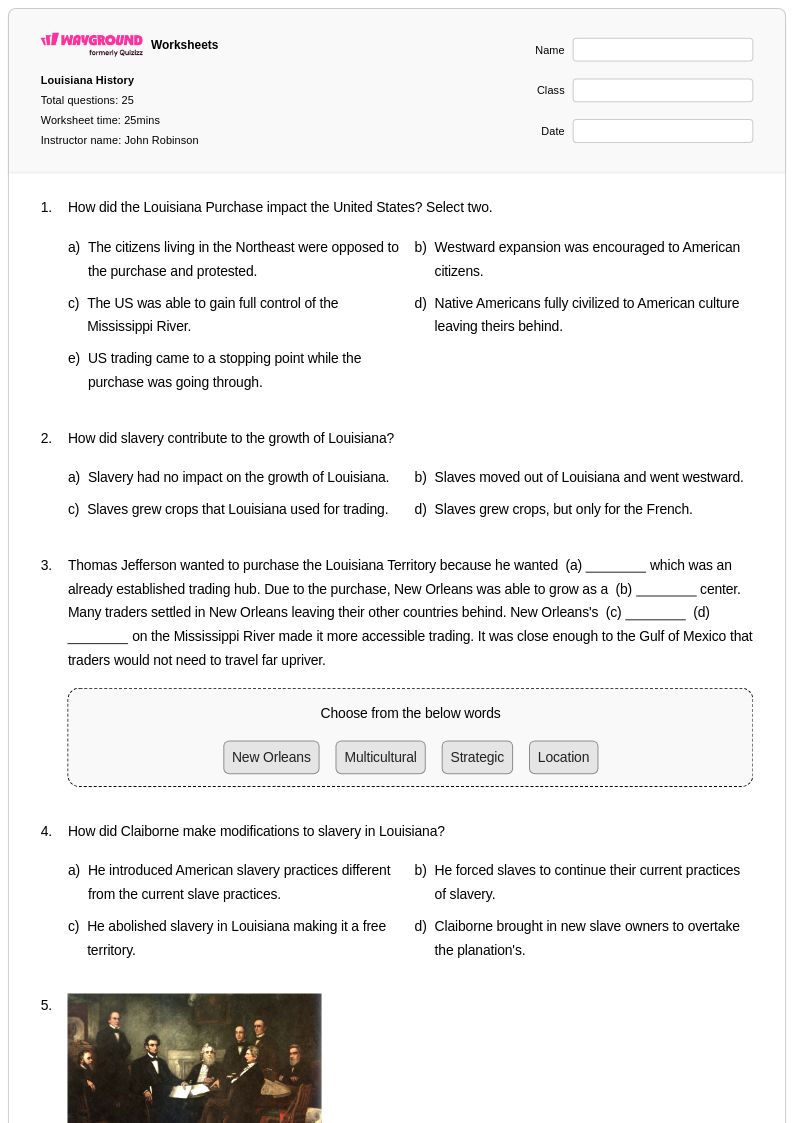
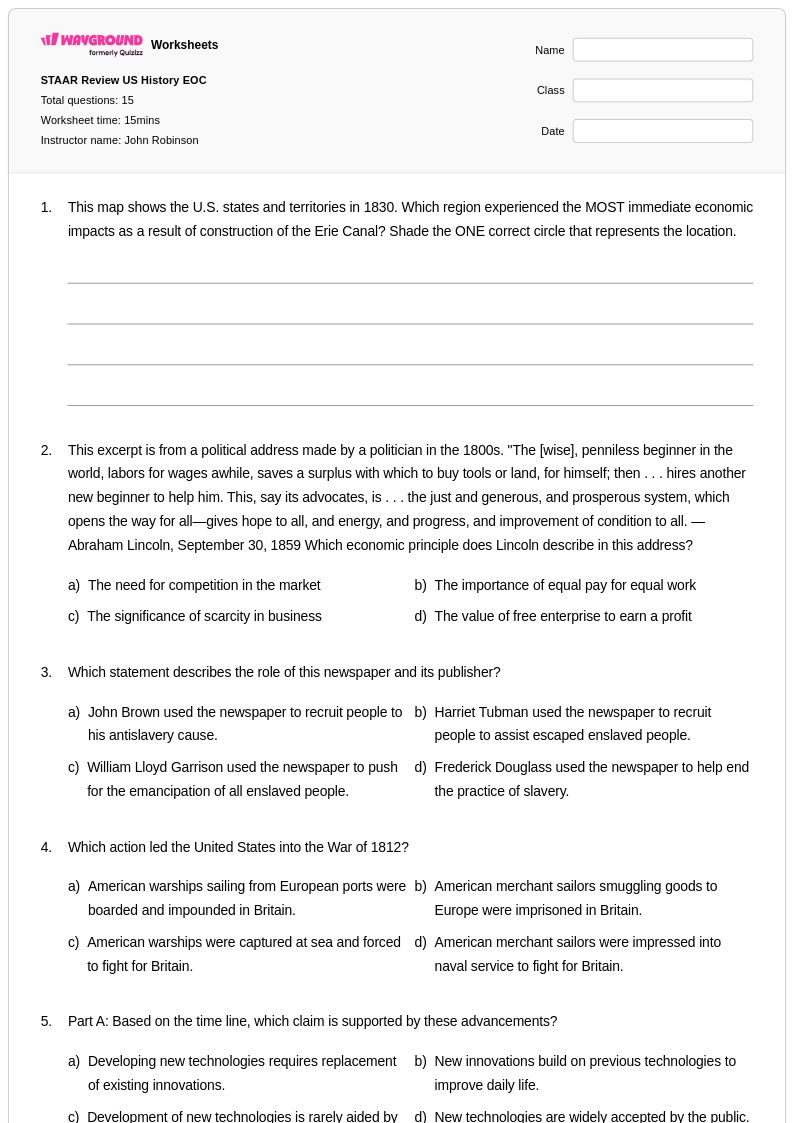
Boundary exploration worksheets for Class 12 students available through Wayground (formerly Quizizz) provide comprehensive resources for understanding the complex geopolitical concepts that shape our modern world. These advanced social studies materials guide students through critical analysis of political boundaries, territorial disputes, and the historical processes that have created contemporary border configurations. The worksheets strengthen essential skills including spatial reasoning, critical thinking about sovereignty and self-determination, and analysis of how physical geography intersects with human political organization. Students engage with practice problems that examine real-world boundary conflicts, study maps depicting disputed territories, and analyze primary source documents related to border negotiations. Each worksheet collection includes detailed answer keys to support independent learning, and the materials are available as free printables in convenient pdf format for classroom distribution and homework assignments.
Wayground (formerly Quizizz) supports Class 12 social studies teachers with an extensive collection of millions of teacher-created boundary exploration resources that address diverse learning needs and curriculum requirements. The platform's robust search and filtering capabilities allow educators to quickly locate materials aligned with specific geography standards, whether focusing on maritime boundaries, ethnic enclaves, or contested regions. Teachers can differentiate instruction by selecting worksheets with varying complexity levels, from basic boundary identification exercises to sophisticated analysis of international law and territorial sovereignty. The flexible customization tools enable educators to modify existing materials or combine multiple resources to create comprehensive units, while the availability of both printable and digital formats including downloadable pdfs accommodates different classroom technologies and teaching preferences. These features streamline lesson planning while providing targeted resources for remediation, enrichment activities, and ongoing skill practice in this fundamental area of political geography.
FAQs
How do I teach boundary exploration in a geography class?
Teaching boundary exploration effectively starts with distinguishing between the three main types of boundaries: political, physical, and cultural. Begin with concrete local examples, such as neighborhood or district lines, before scaling up to state, national, and international borders. From there, introduce how boundaries form through treaties, geographic features, and historical conflicts, helping students understand that borders are dynamic rather than fixed. Case studies involving disputed territories or historical boundary shifts give students meaningful context for geographic reasoning.
What exercises help students practice analyzing geographic boundaries?
Effective practice exercises include map annotation tasks where students identify and label political versus physical boundaries, as well as comparative activities that ask students to examine how a border changed over time and explain why. Boundary dispute analysis prompts, where students read about a territorial conflict and evaluate competing claims using geographic evidence, build both critical thinking and content knowledge. These exercises develop spatial reasoning and the ability to connect geographic factors to real-world human activity.
What are the most common misconceptions students have about geographic boundaries?
One of the most persistent misconceptions is that borders are natural and permanent when in fact most political boundaries are human constructs that have shifted significantly throughout history. Students also frequently conflate physical boundaries, such as rivers or mountain ranges, with political borders, assuming the two always align. Another common error is treating boundary disputes as purely geographic when they are often rooted in cultural, ethnic, or economic factors. Addressing these misconceptions early helps students develop more nuanced geographic thinking.
How do boundary exploration worksheets support geographic literacy development?
Boundary exploration worksheets build geographic literacy by giving students structured practice in reading and interpreting maps, analyzing territorial divisions, and evaluating the factors that shape borders. Repeated exposure to boundary analysis tasks helps students internalize spatial thinking skills and connect abstract political concepts to physical geography. Over time, this practice strengthens students' ability to reason about how borders influence human activity at scales ranging from local neighborhoods to international frontiers.
How can I use Wayground's boundary exploration worksheets in my classroom?
Wayground's boundary exploration worksheets are available as printable PDFs for traditional classroom use and in digital formats for technology-integrated learning environments, giving teachers flexibility depending on their classroom setup. Teachers can also host the worksheets as a quiz directly on Wayground, enabling interactive student engagement and streamlined assessment. Each worksheet includes a complete answer key, making it straightforward to use for guided practice, independent work, or formative assessment.
How can I differentiate boundary exploration instruction for students at different skill levels?
Differentiation in boundary exploration can involve adjusting the complexity of the maps or source materials students analyze, ranging from simple continent-level borders to nuanced regional boundary disputes. On Wayground, teachers can apply student-level accommodations such as reduced answer choices to lower cognitive load for students who need additional support, or enable Read Aloud for students who benefit from audio delivery of question content. These settings can be applied individually or to the whole class and are saved for reuse across future sessions, making ongoing differentiation practical rather than time-consuming.