
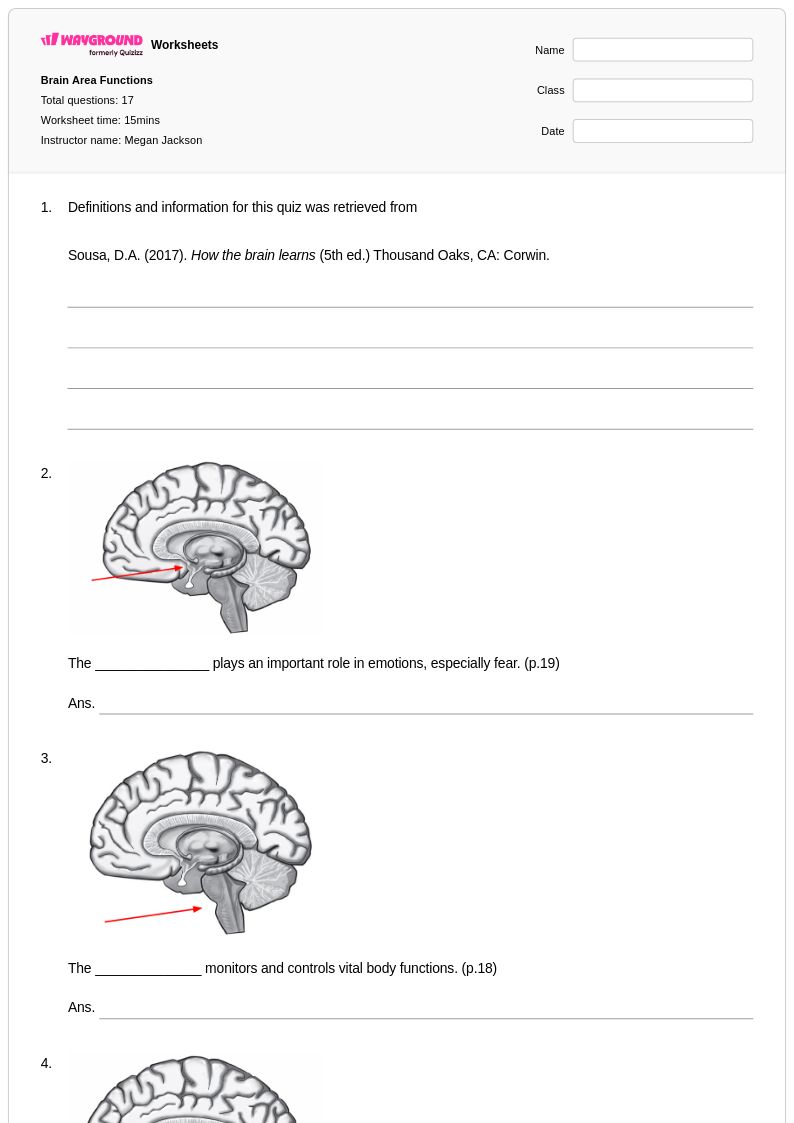
17 Q
KG - 5th
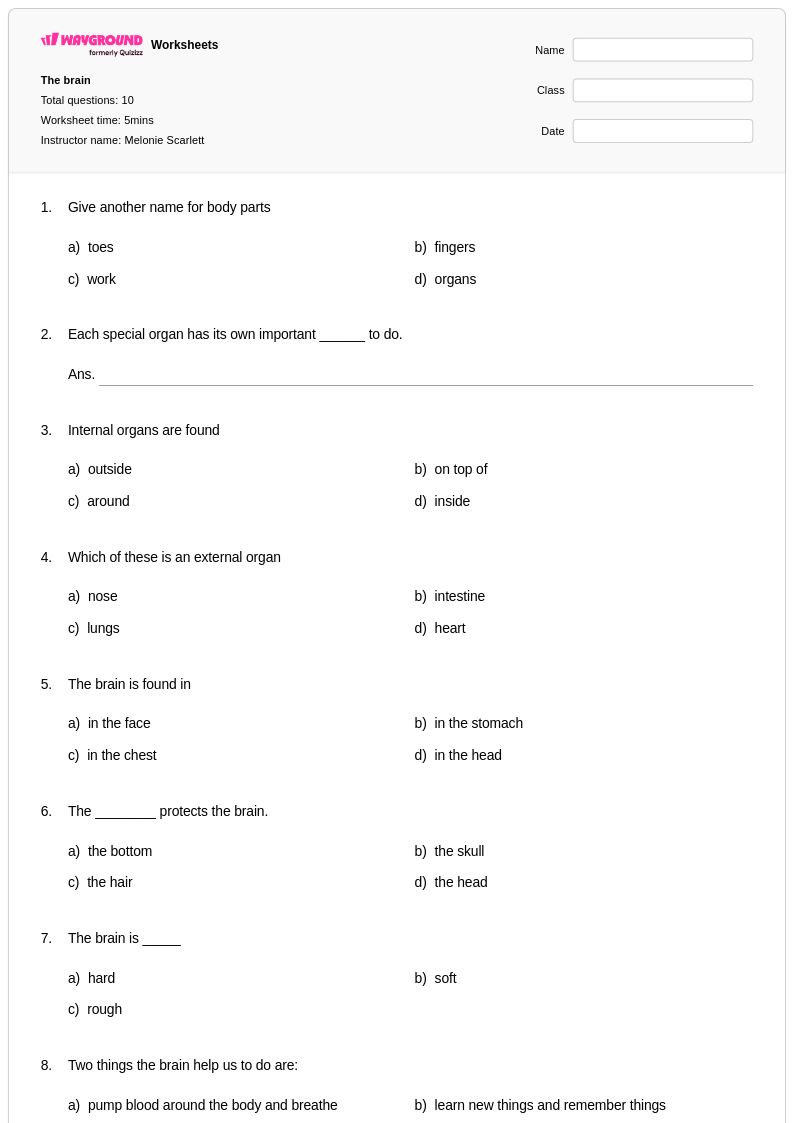
10 Q
1st - 2nd
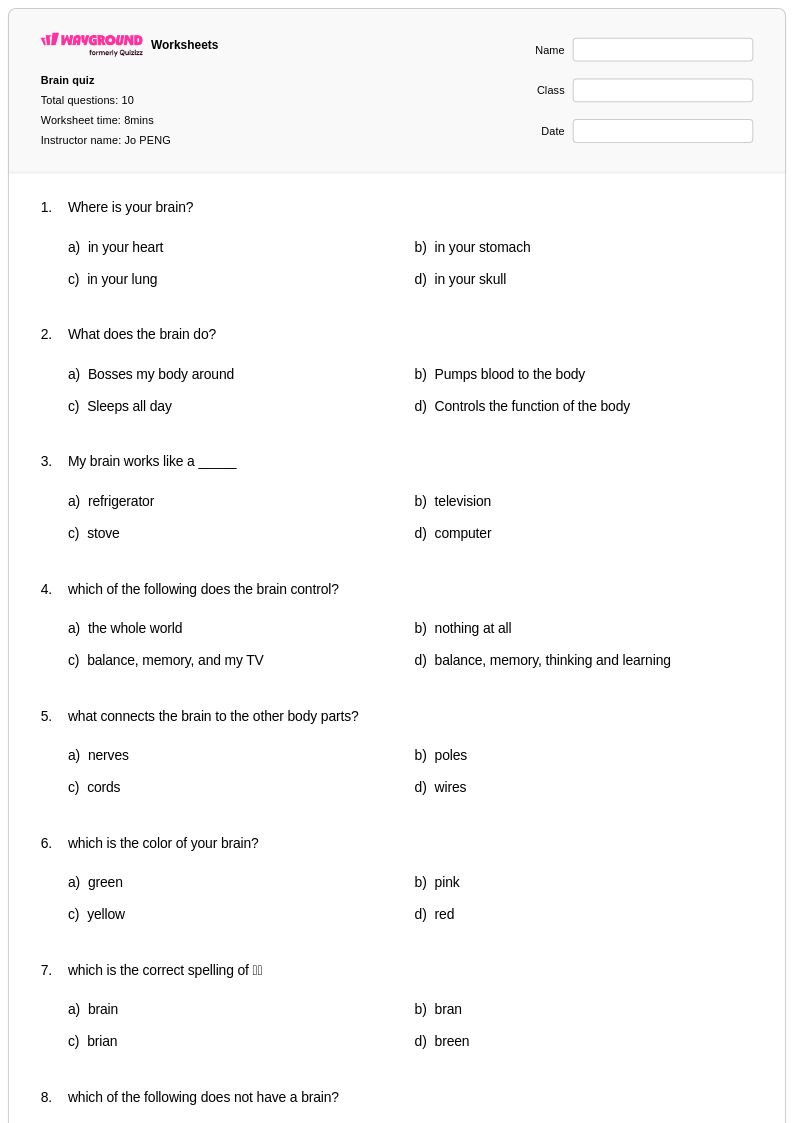
10 Q
KG - 4th
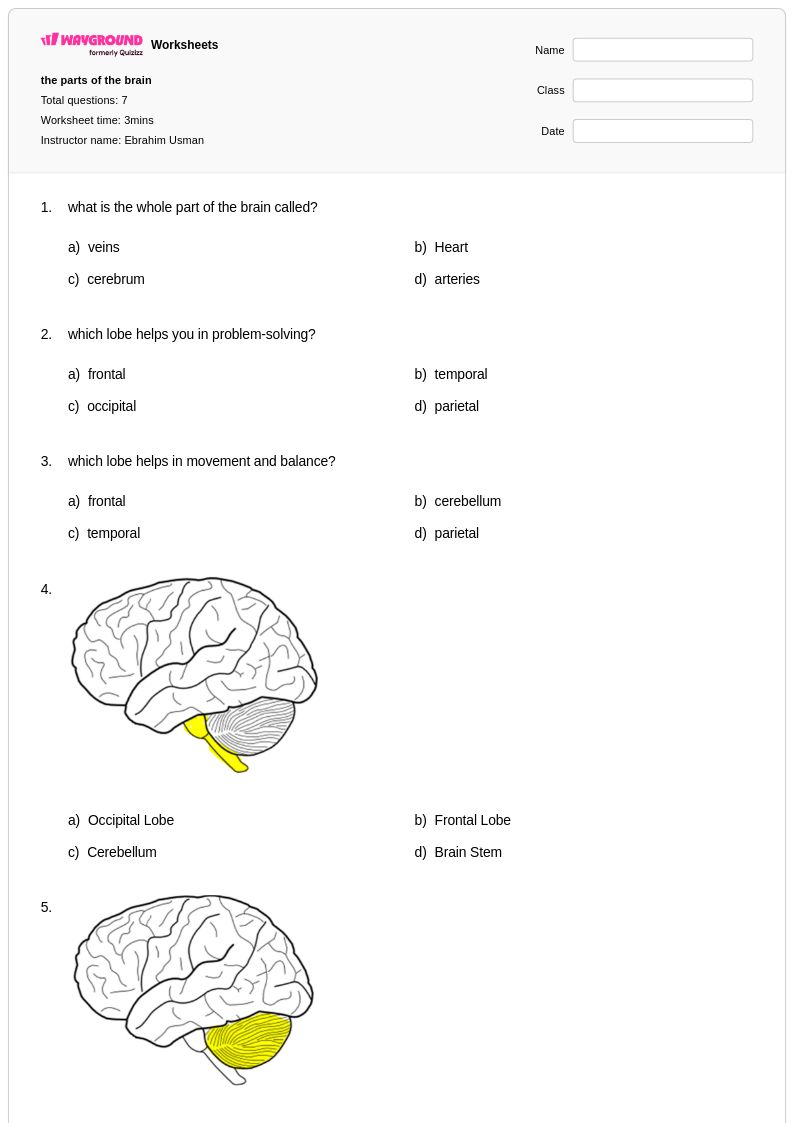
7 Q
1st
10 Q
KG - 3rd
20 Q
1st - 5th
10 Q
1st - 5th
16 Q
1st
8 Q
1st
20 Q
1st - 2nd
10 Q
1st
31 Q
1st - 5th
8 Q
1st

8 Q
1st
21 Q
1st
23 Q
1st - 5th
15 Q
1st
15 Q
1st
10 Q
1st - 3rd
10 Q
1st - 3rd
25 Q
1st - Uni
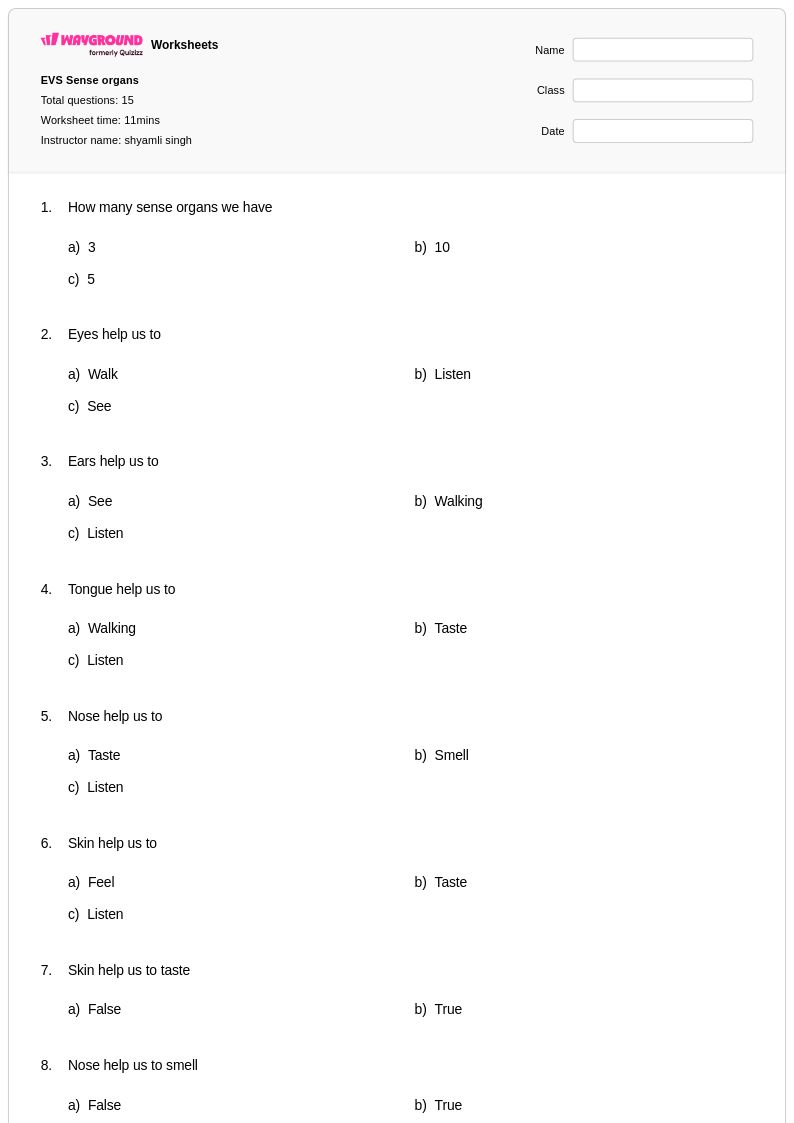
15 Q
1st - 2nd
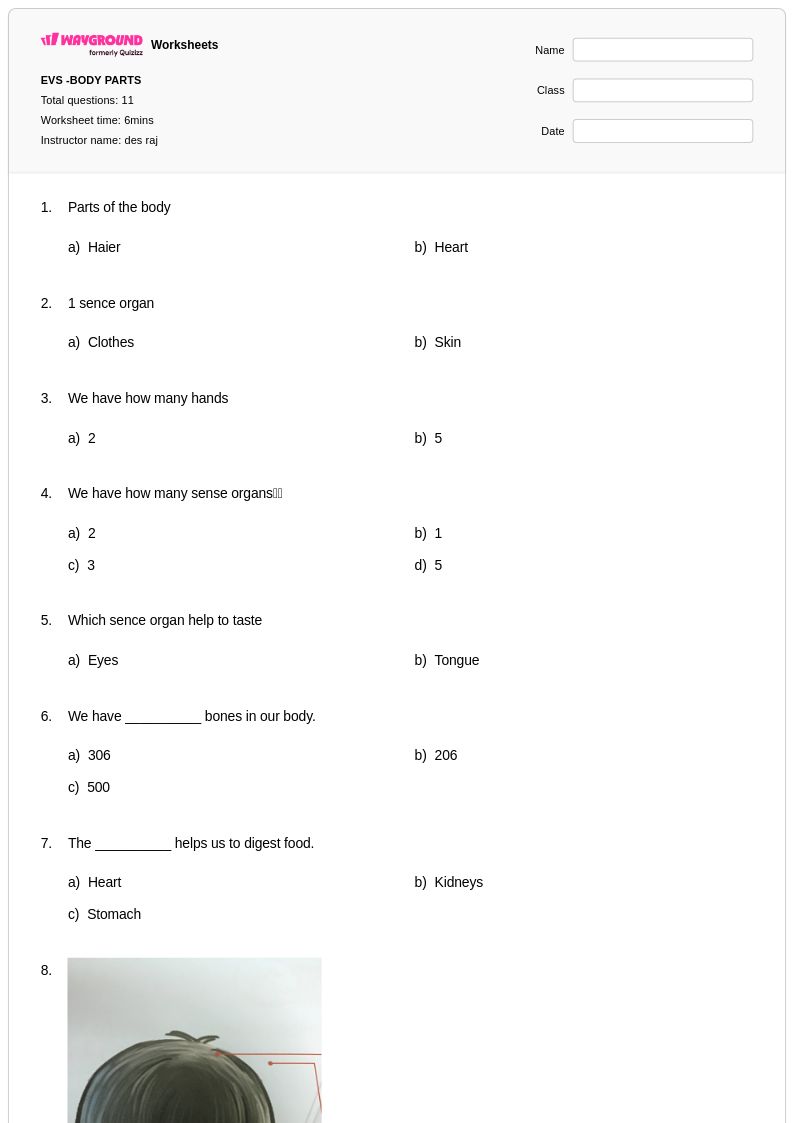
11 Q
1st
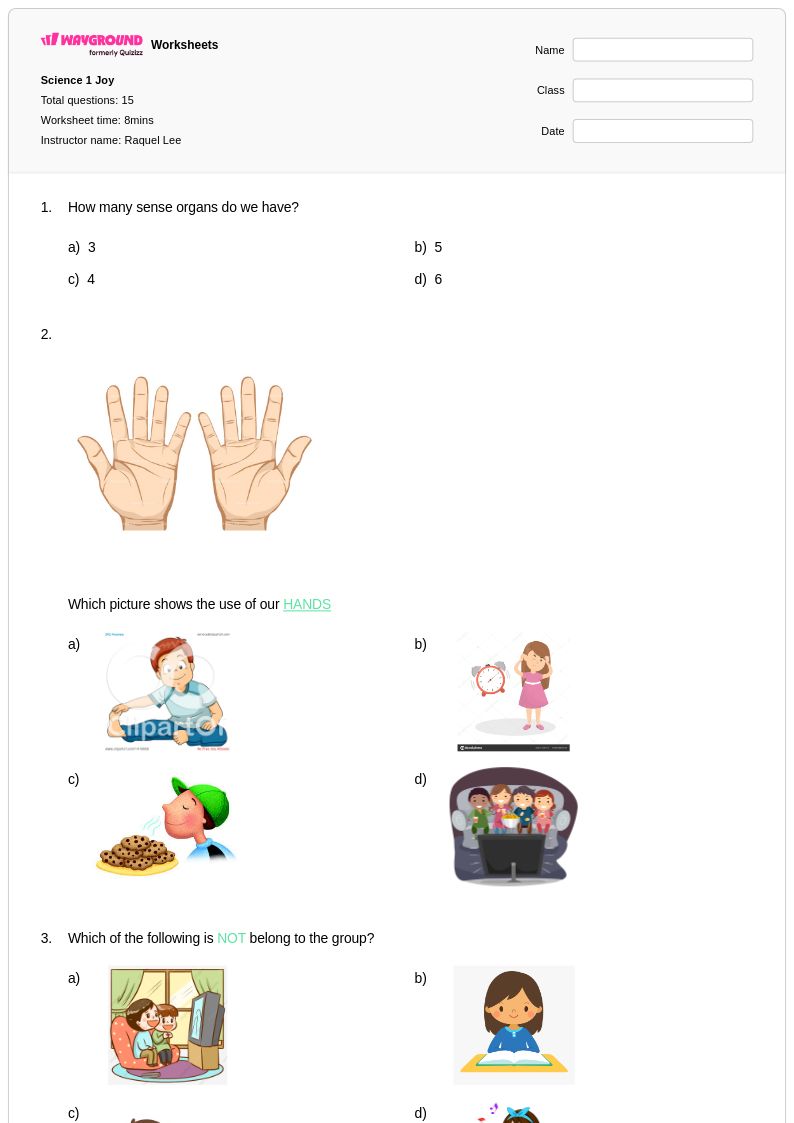
15 Q
1st
Explore Other Subject Worksheets for class 1
Explore printable Brain worksheets for Class 1
Brain worksheets for Class 1 students available through Wayground (formerly Quizizz) introduce young learners to the fascinating world of neuroscience through age-appropriate activities and engaging visual content. These educational resources focus on helping first-grade students understand basic brain functions, including how the brain controls their body movements, processes their five senses, and helps them think and learn. The worksheets strengthen foundational scientific observation skills while building vocabulary related to body systems and encouraging students to make connections between their daily experiences and brain activity. Each printable resource includes practice problems that guide students through identifying different parts of the brain's role in their lives, with accompanying answer keys that support both independent learning and teacher-guided instruction. These free pdf materials serve as essential tools for introducing complex scientific concepts in developmentally appropriate ways that capture young students' natural curiosity about how their bodies work.
Wayground (formerly Quizizz) empowers educators with access to millions of teacher-created brain study materials specifically designed for Class 1 science instruction, featuring robust search and filtering capabilities that help teachers quickly locate resources aligned with their curriculum standards and learning objectives. The platform's differentiation tools enable teachers to customize worksheets based on individual student needs, whether providing additional support for struggling learners or offering enrichment opportunities for advanced students ready to explore more complex neurological concepts. Teachers can seamlessly transition between printable pdf formats for traditional classroom activities and digital versions for interactive learning experiences, making these resources invaluable for lesson planning, targeted skill practice, and both remediation and extension activities. The comprehensive collection supports diverse teaching approaches while maintaining scientific accuracy, ensuring that educators have reliable, professionally developed materials that make brain science accessible and engaging for their youngest students.
FAQs
How do I teach brain anatomy to students effectively?
What exercises help students practice identifying brain regions and their functions?
What common mistakes do students make when learning about the brain?
How can I differentiate brain anatomy worksheets for students with different learning needs?
How do I use Wayground's brain worksheets in my classroom?