
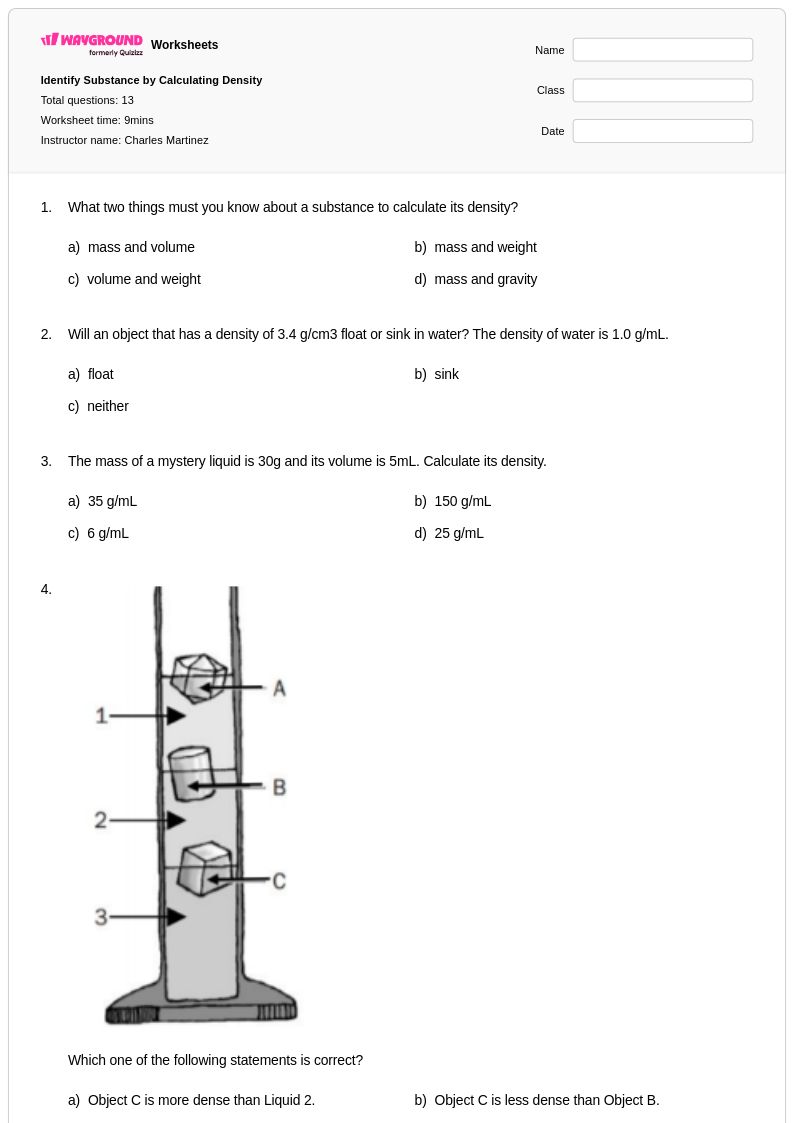
13 Q
6th - 8th
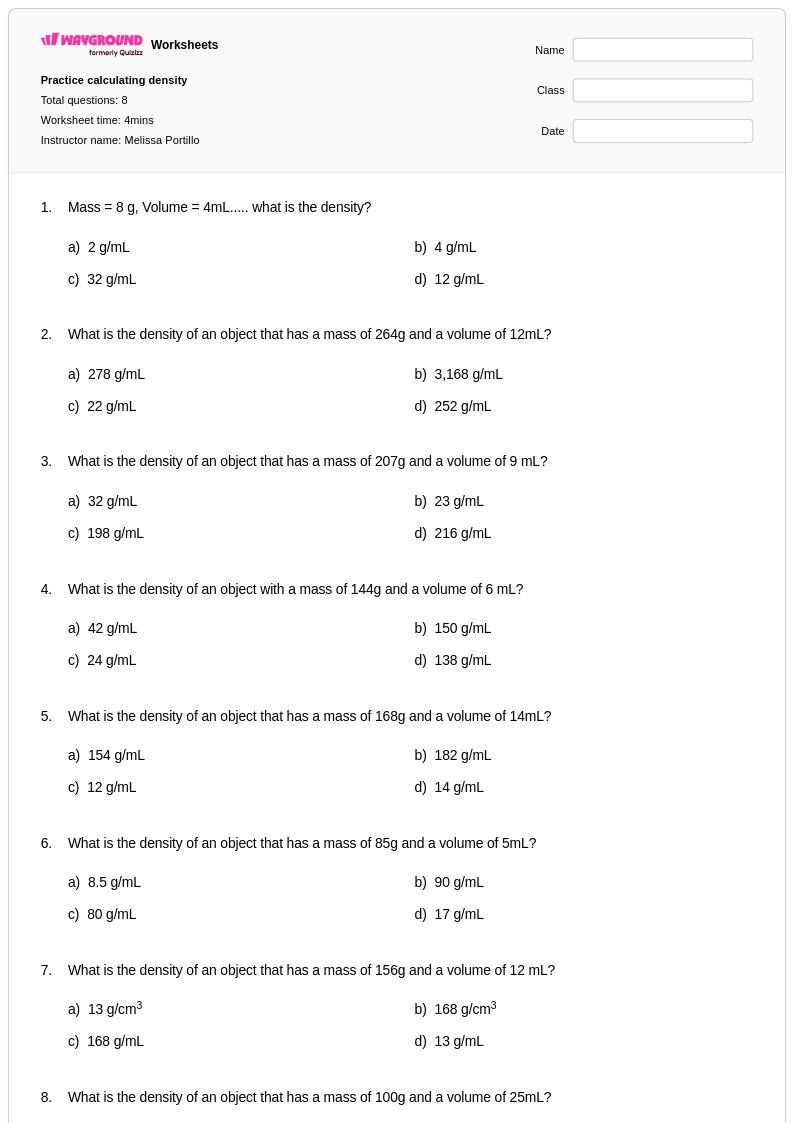
8 Q
6th - 9th
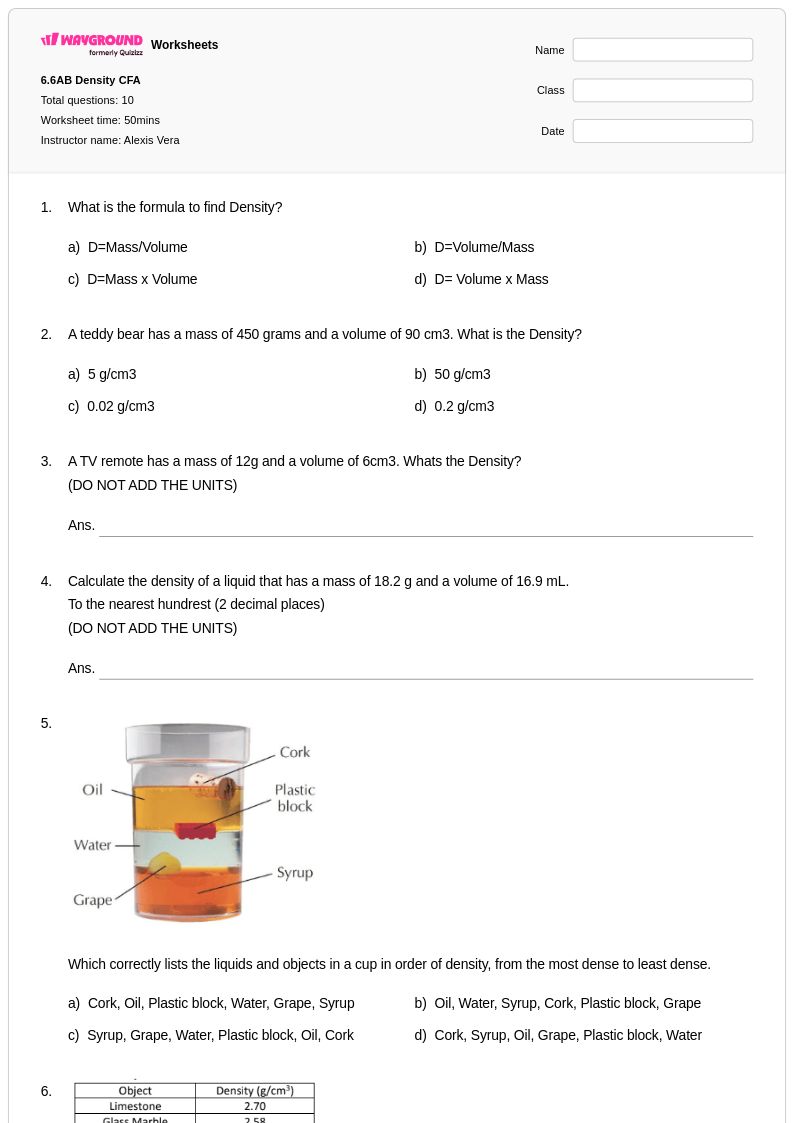
10 Q
6th
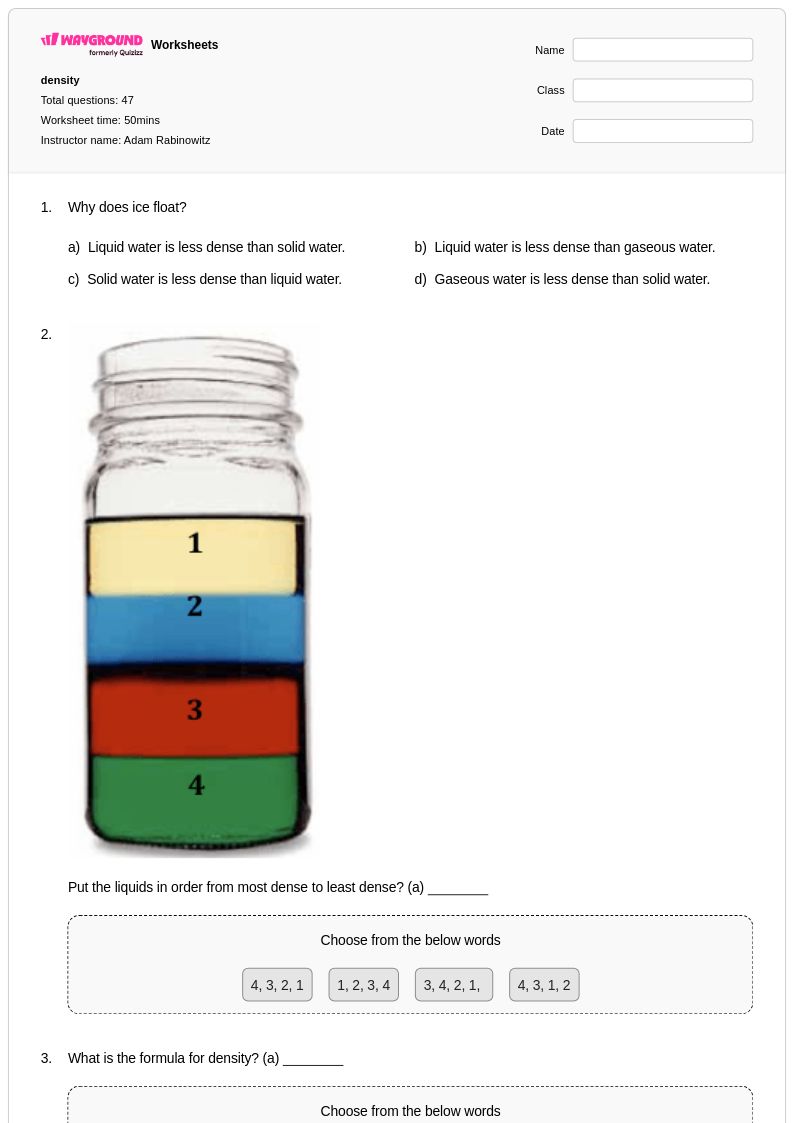
47 Q
6th
25 Q
6th
10 Q
6th
13 Q
6th - Uni
25 Q
6th - Uni
25 Q
6th - Uni
15 Q
6th - Uni
103 Q
6th
25 Q
6th
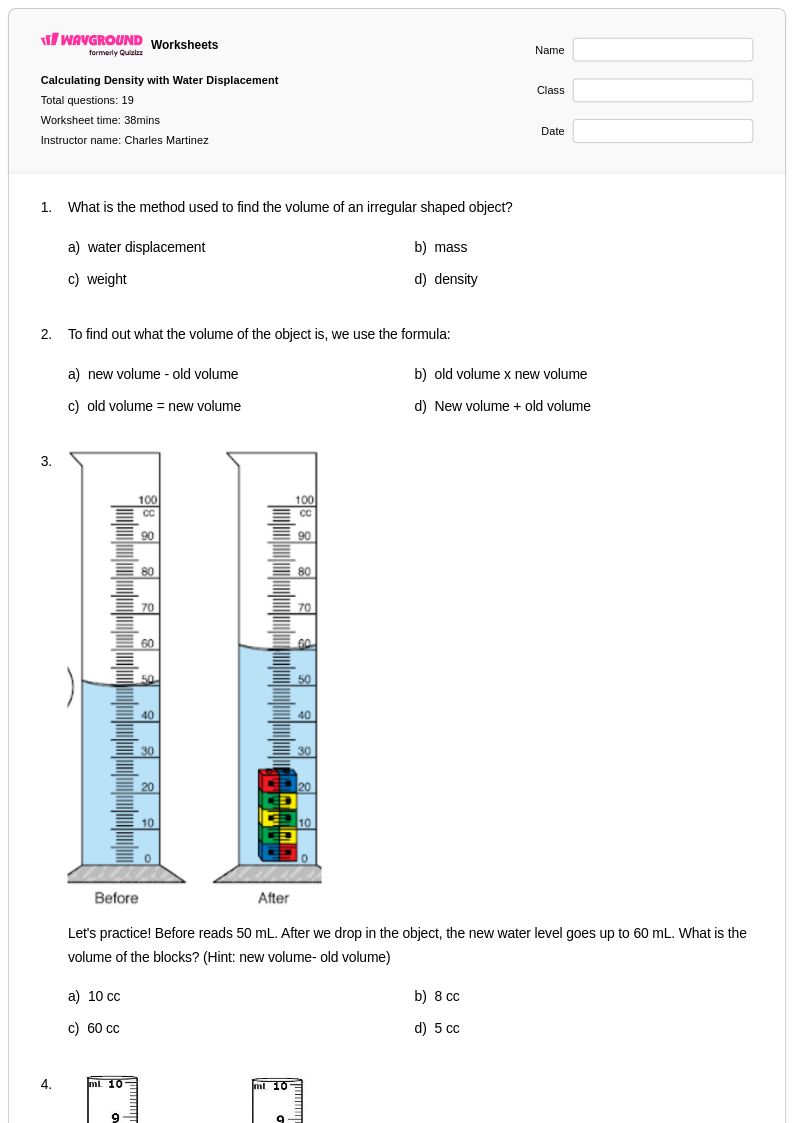
19 Q
6th
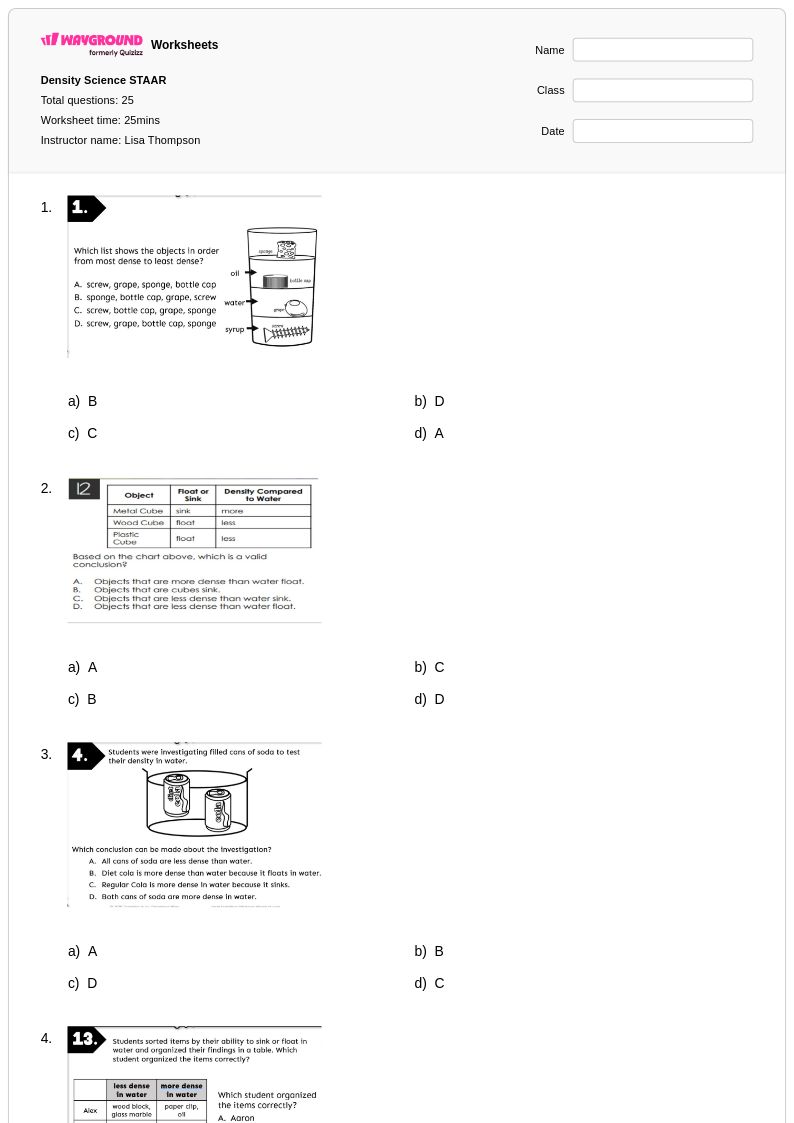
25 Q
5th - Uni
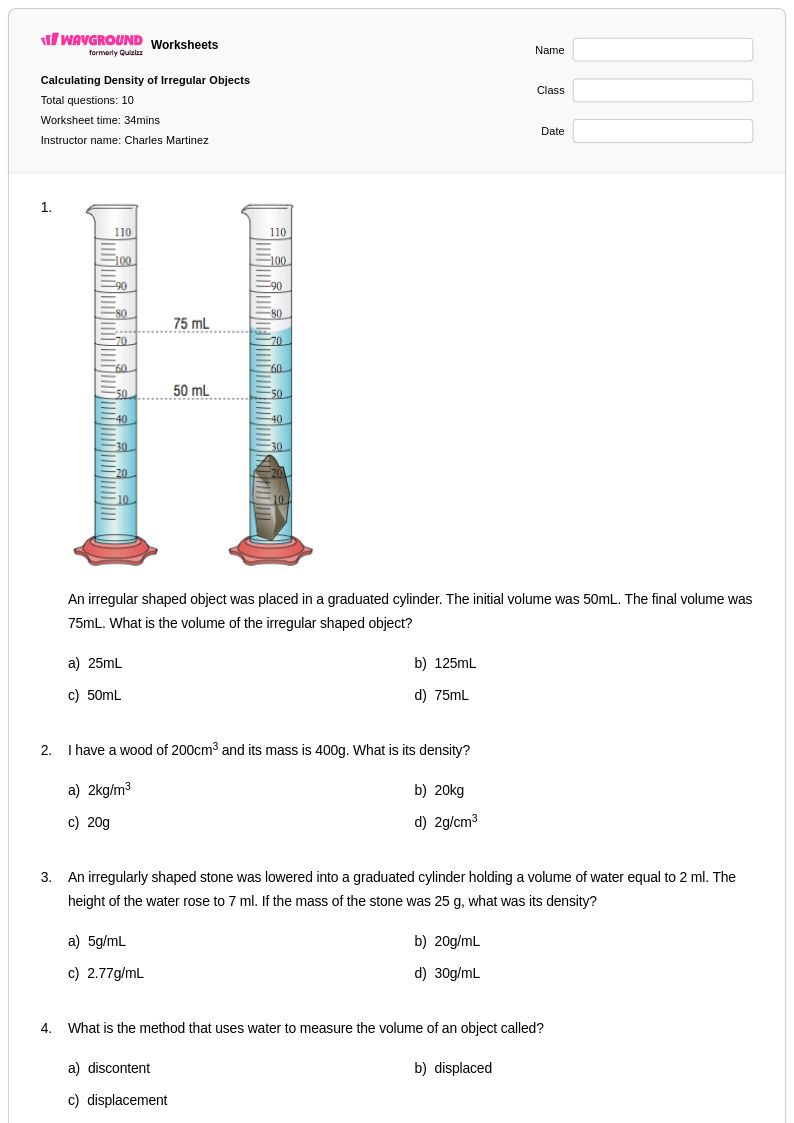
10 Q
6th
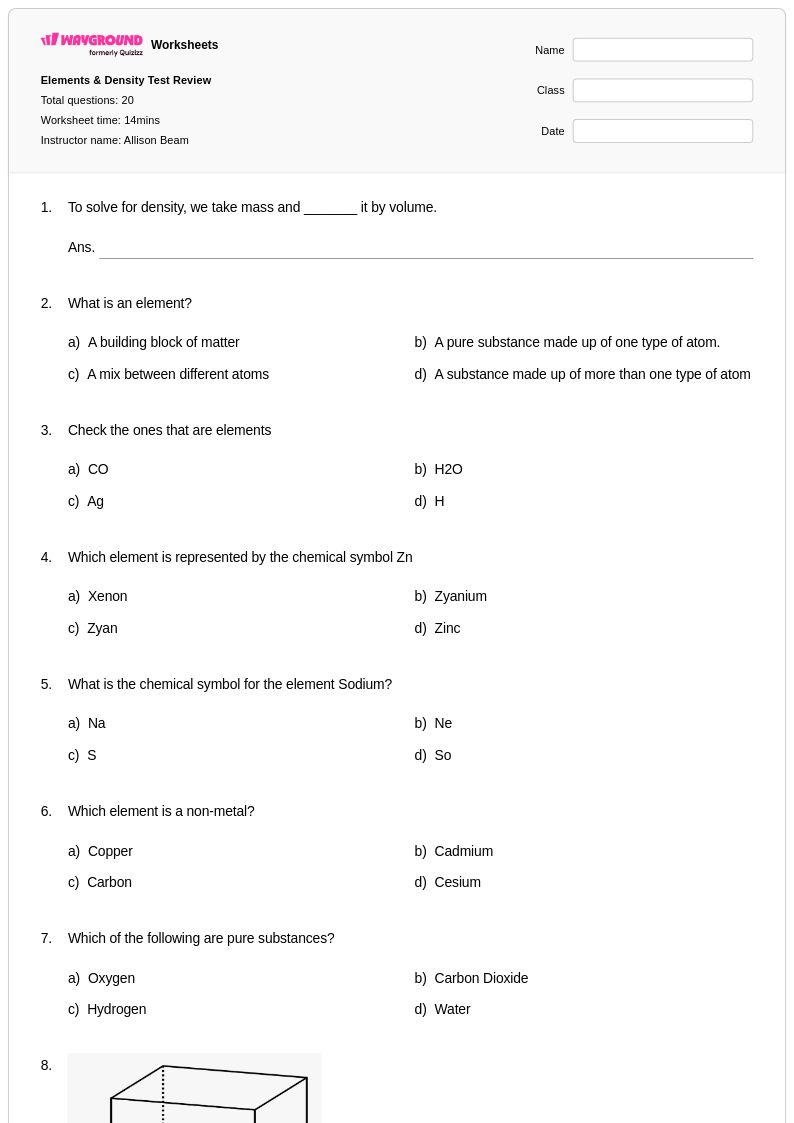
20 Q
6th
17 Q
6th
25 Q
6th - 9th
25 Q
6th
17 Q
6th
10 Q
6th - 8th
18 Q
6th
21 Q
6th
16 Q
6th
Explore Calculating Density Worksheets by Grades
Explore Other Subject Worksheets for class 6
Explore printable Calculating Density worksheets for Class 6
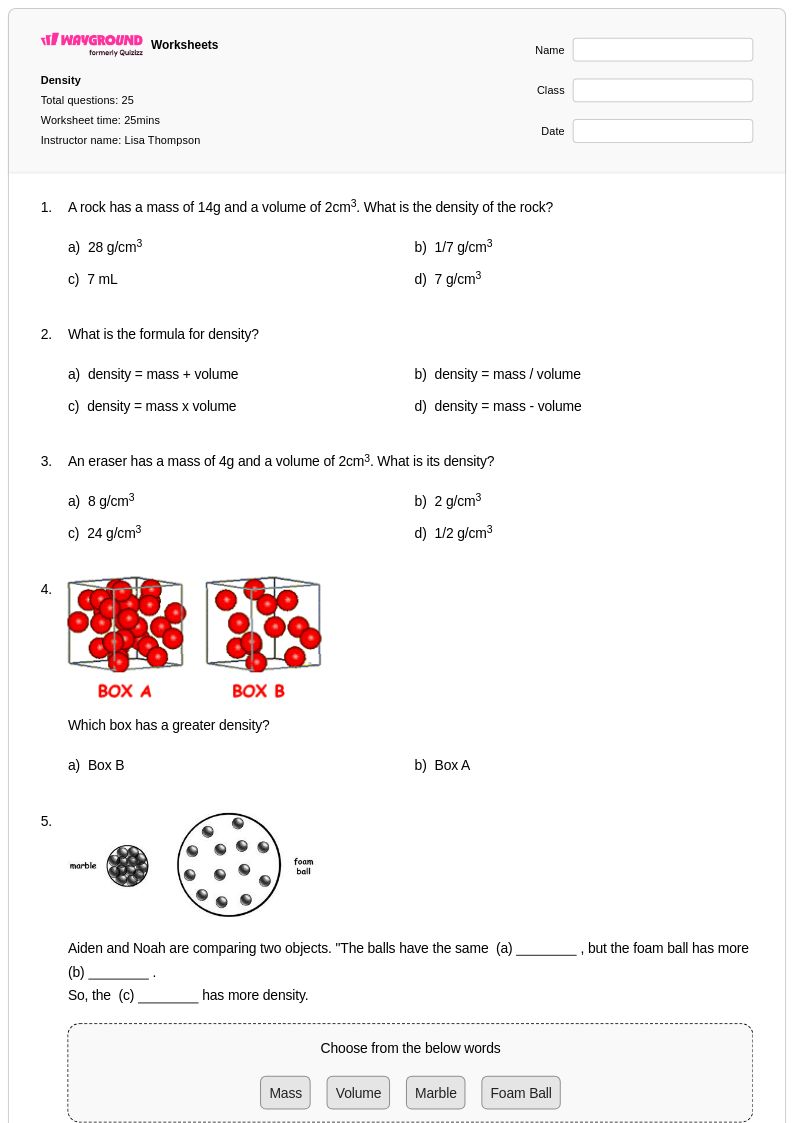
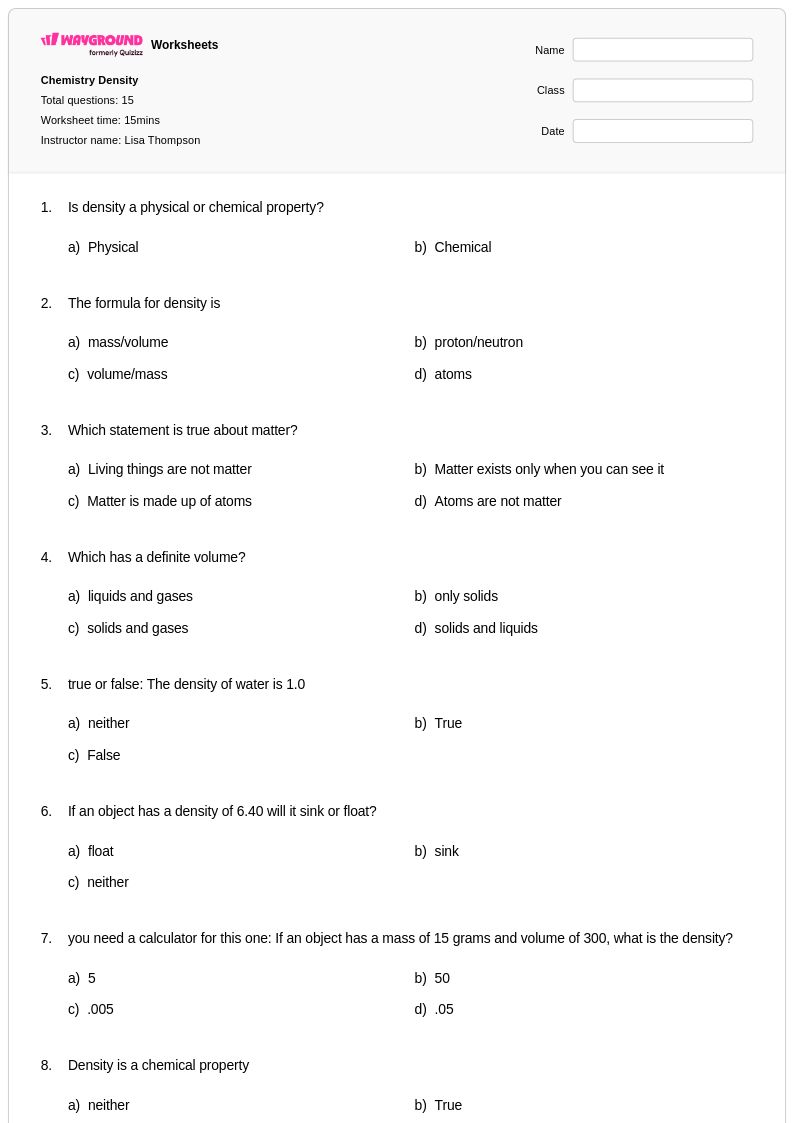
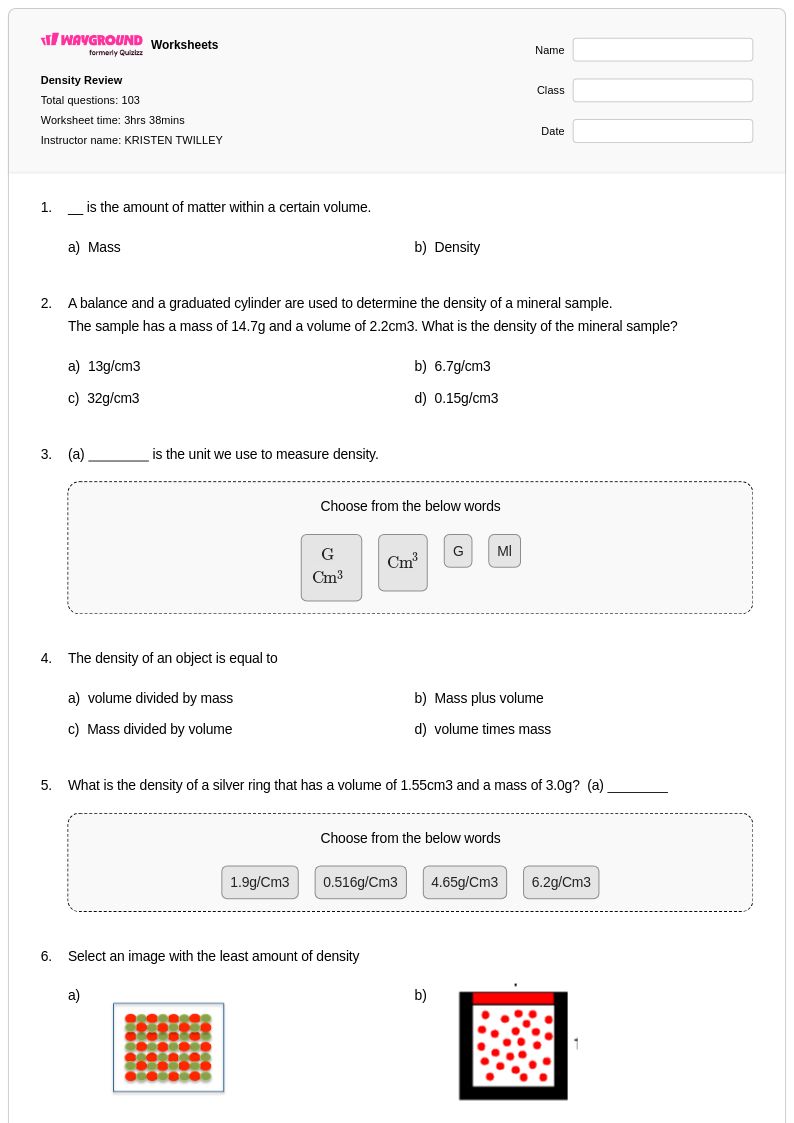
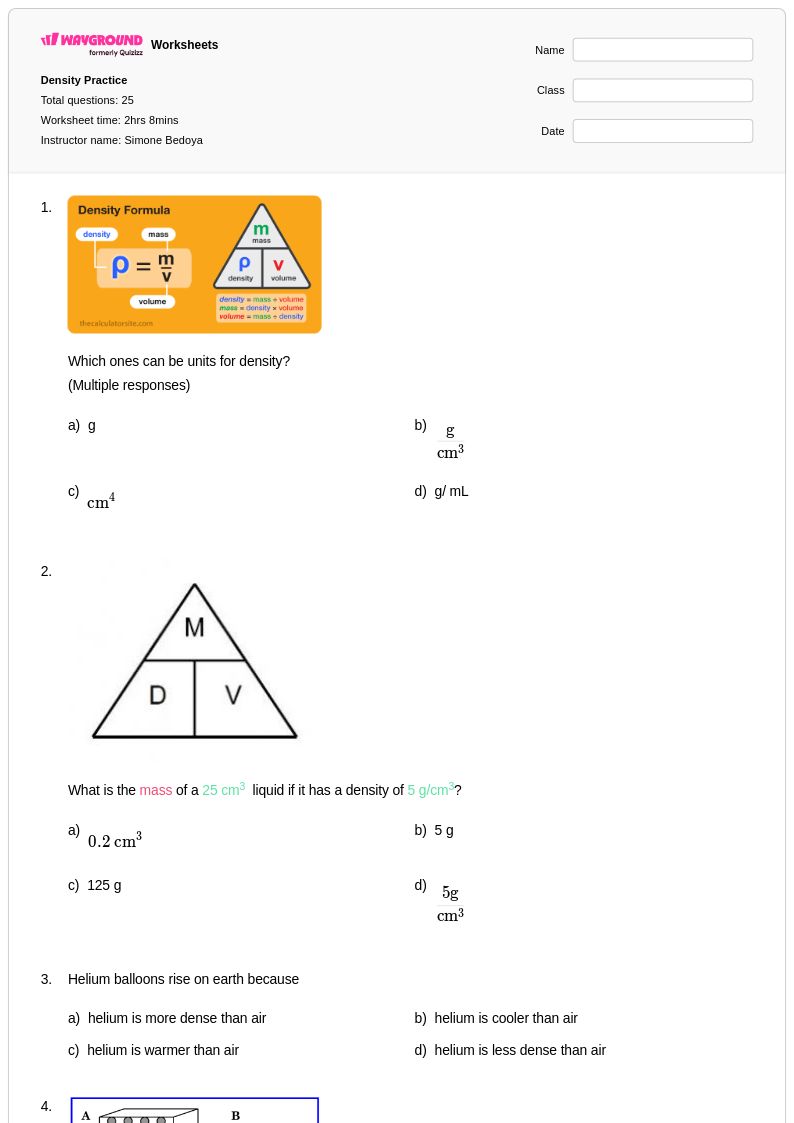
Calculating density worksheets for Class 6 students available through Wayground (formerly Quizizz) provide comprehensive practice with this fundamental physical science concept that bridges mathematics and scientific inquiry. These carefully designed worksheets guide sixth-grade learners through the essential formula of density equals mass divided by volume, offering systematic practice problems that range from basic calculations to real-world applications involving different materials and substances. Students develop critical analytical skills as they work through scenarios involving measuring mass in grams, determining volume through various methods, and applying the density formula to identify unknown materials or predict whether objects will float or sink. Each worksheet includes a complete answer key that allows for immediate feedback and self-assessment, while the free printable format ensures accessibility for both classroom instruction and independent study, making these pdf resources invaluable for reinforcing this cornerstone concept in physical science education.
Wayground (formerly Quizizz) empowers educators with an extensive collection of millions of teacher-created resources specifically designed to support Class 6 physical science instruction, including comprehensive calculating density worksheet collections that align with state and national science standards. The platform's robust search and filtering capabilities enable teachers to quickly locate worksheets that match their specific instructional needs, whether targeting initial concept introduction, skill remediation, or advanced enrichment activities. Teachers can easily customize these materials to accommodate diverse learning styles and ability levels within their classrooms, utilizing built-in differentiation tools that support both struggling learners and academically advanced students. Available in both printable pdf format and interactive digital versions, these calculating density resources seamlessly integrate into lesson planning workflows, providing flexible options for homework assignments, guided practice sessions, formative assessments, and test preparation activities that strengthen students' mastery of this essential physical science skill.
FAQs
How do I teach students to calculate density for the first time?
What types of problems should students practice when learning to calculate density?
What mistakes do students commonly make when calculating density?
How can I differentiate density calculation practice for students at different ability levels?
How do I use Wayground's calculating density worksheets in my classroom?
How does density calculation connect to broader physical science concepts?