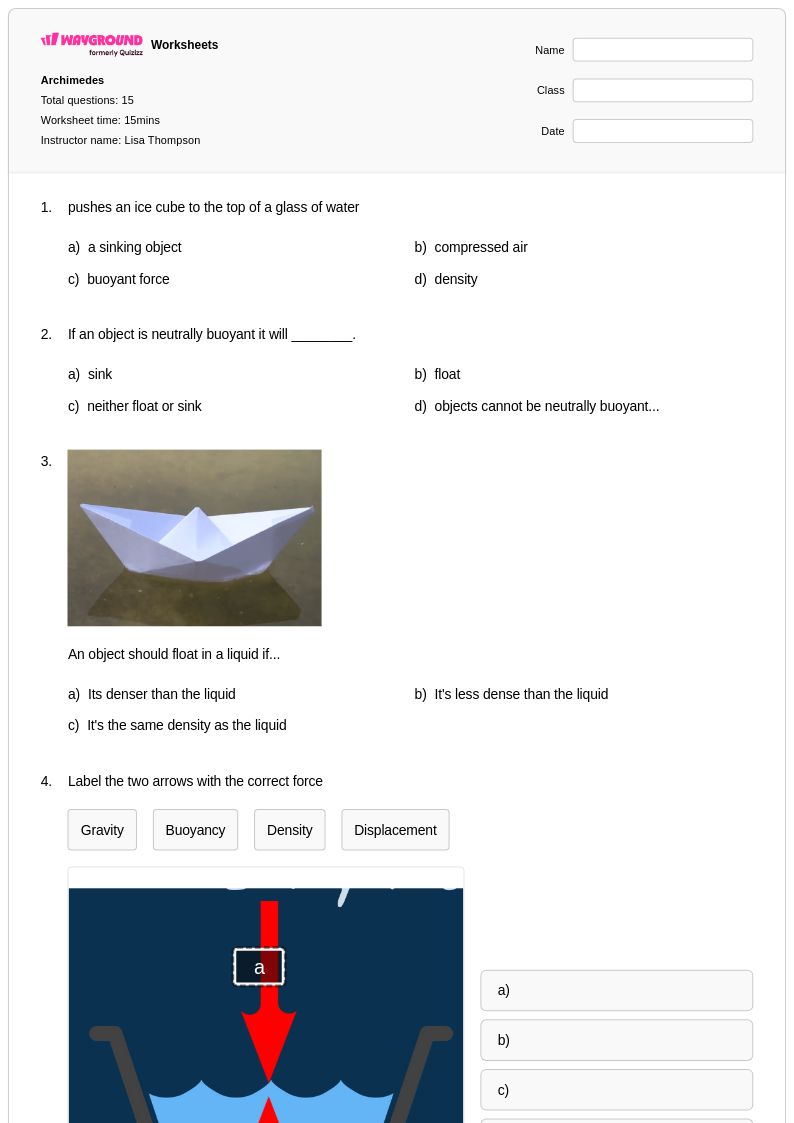
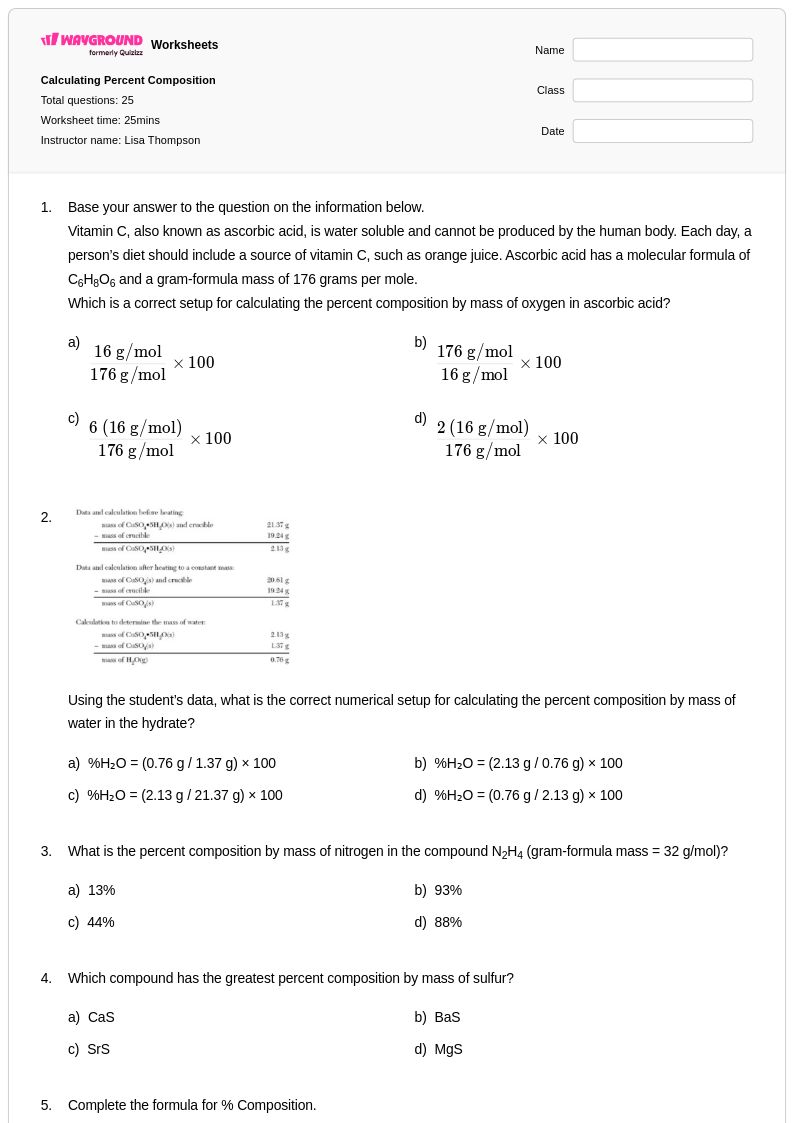
Free printable worksheets and practice problems help students master calculating density through hands-on exercises, featuring step-by-step solutions and comprehensive answer keys for effective physical science learning.
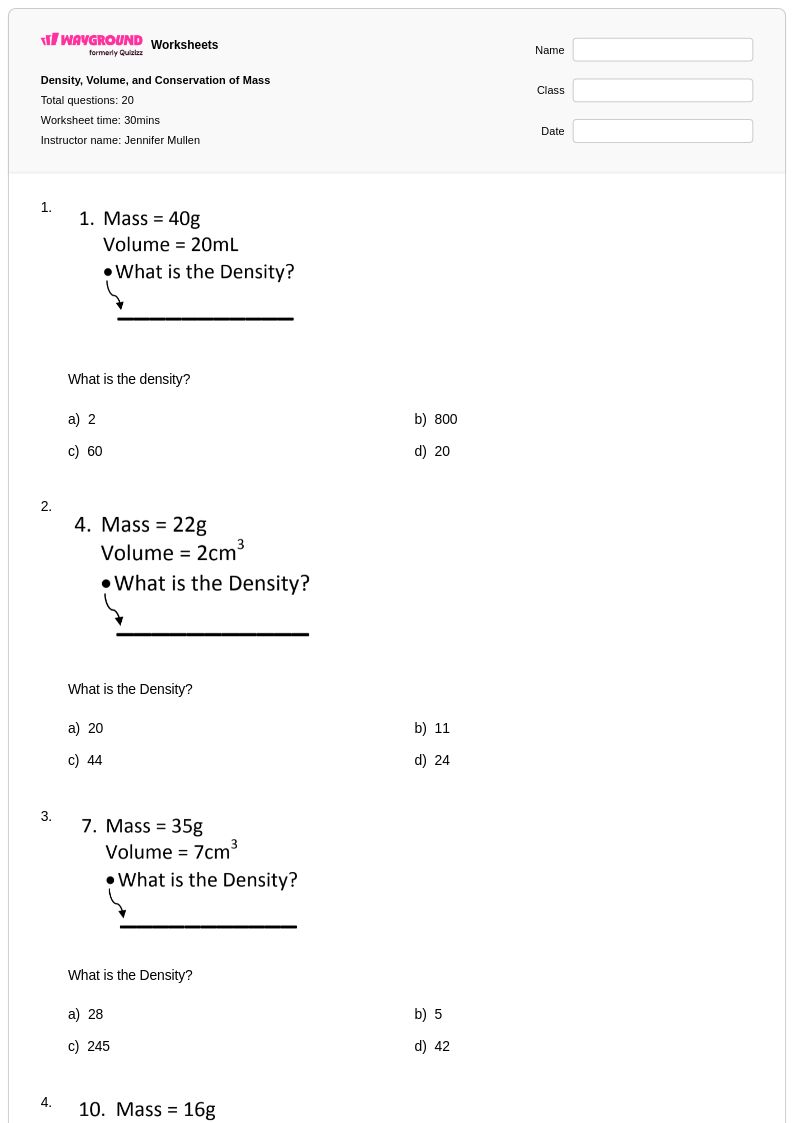
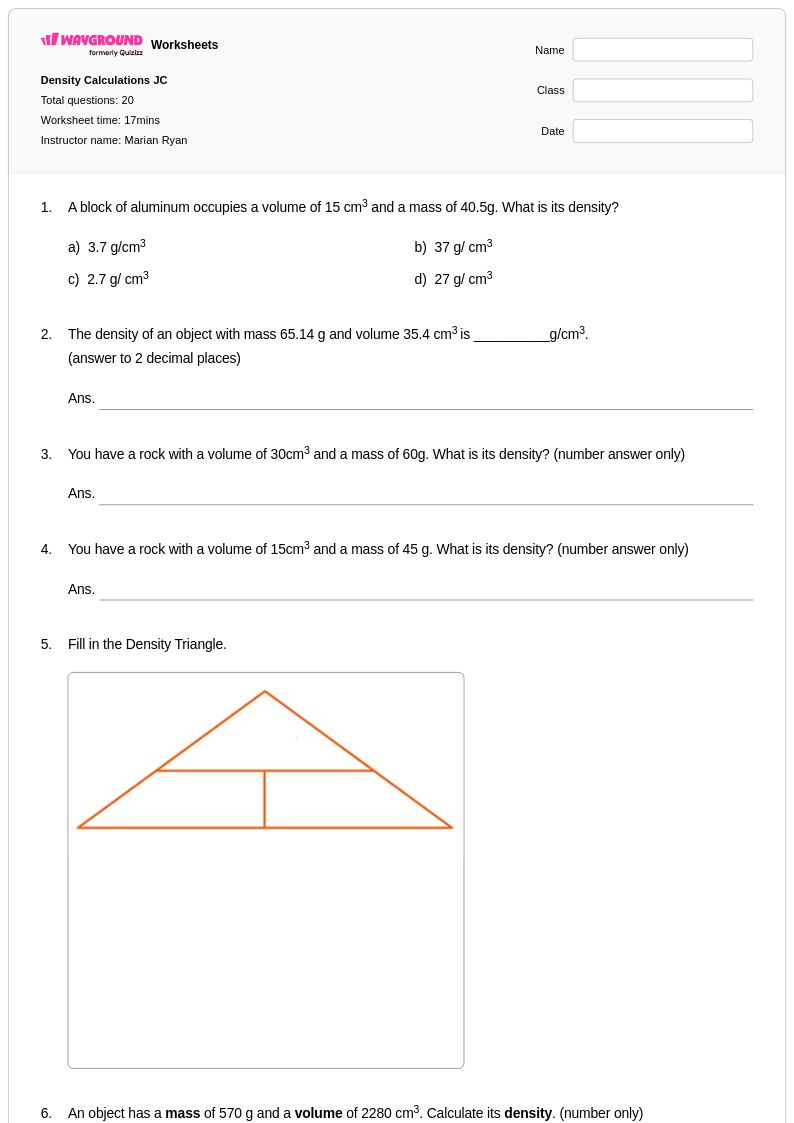
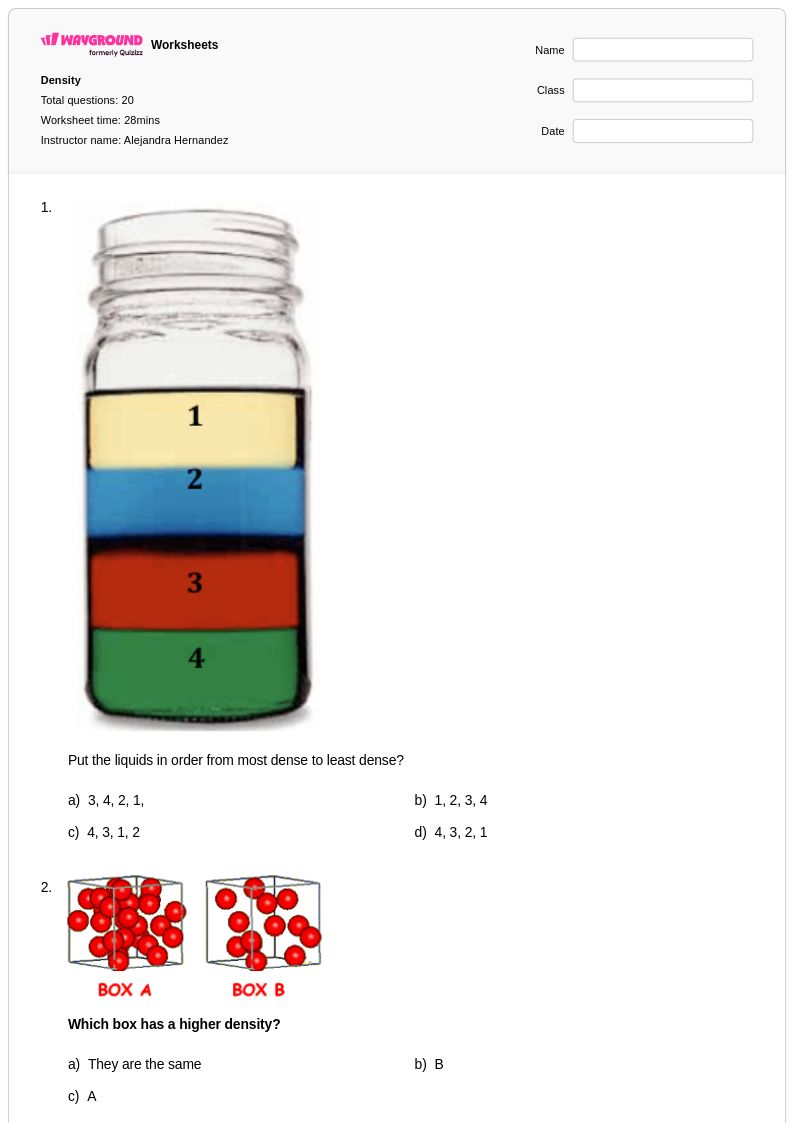
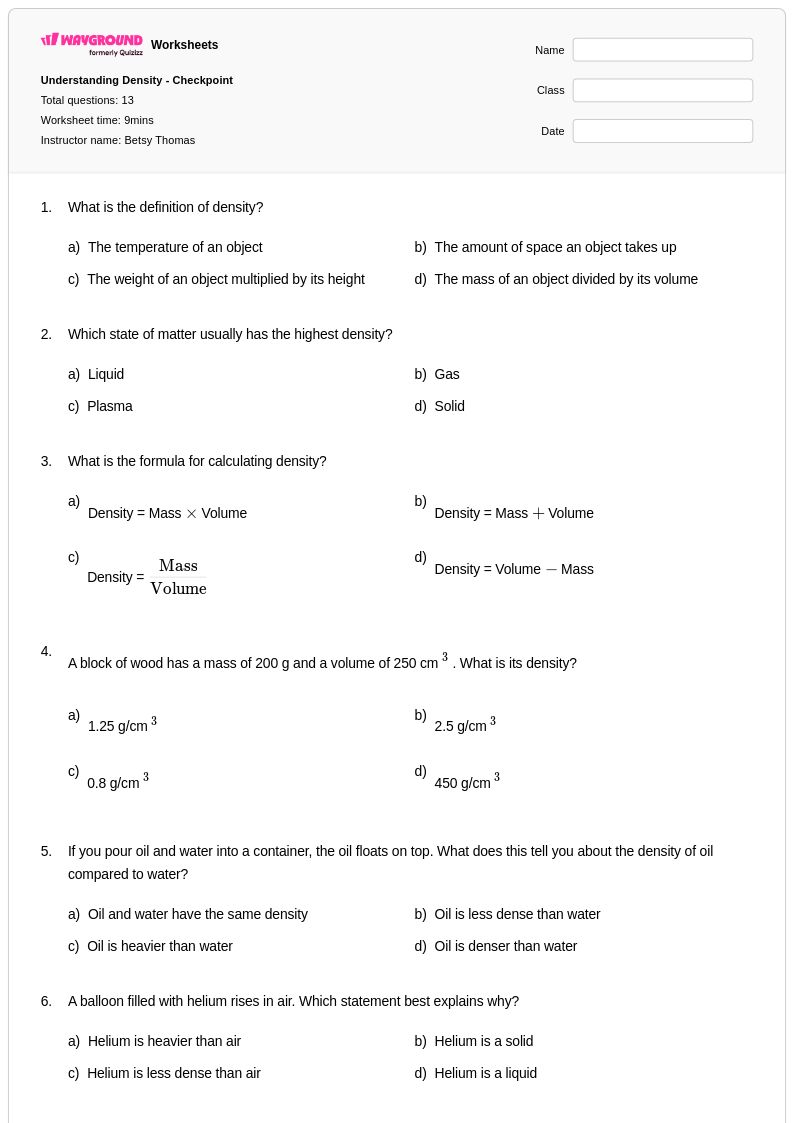
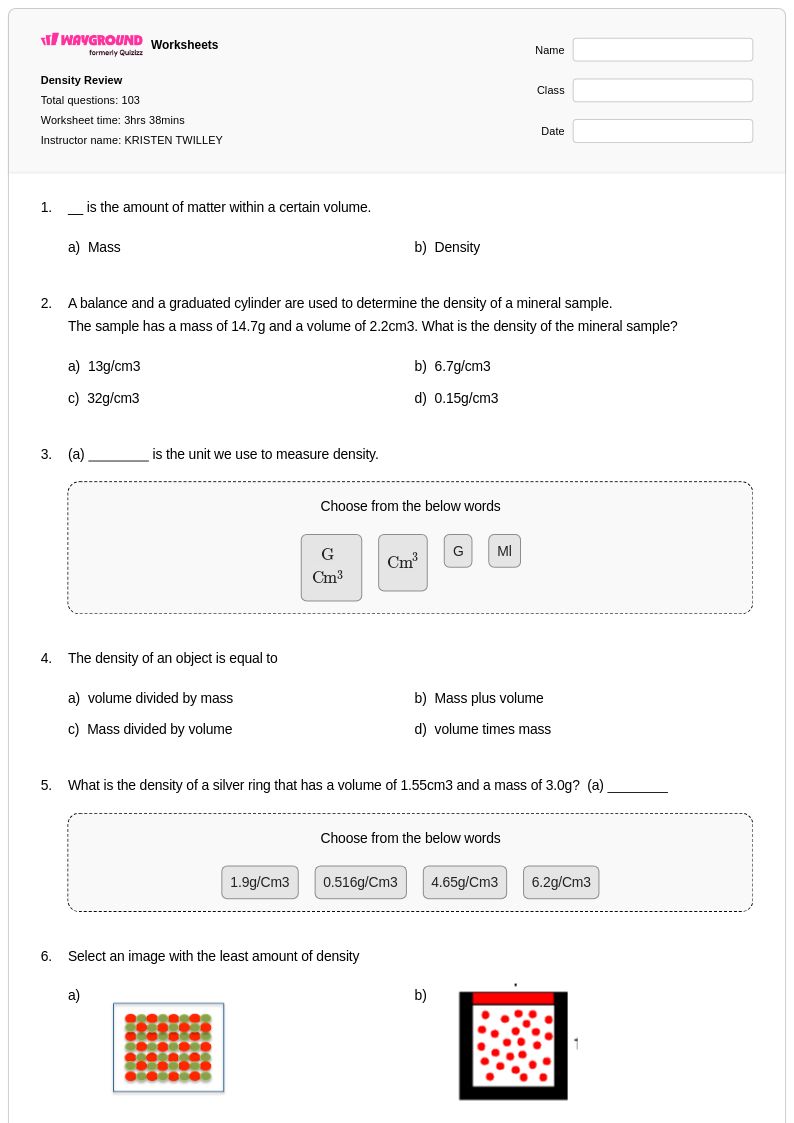
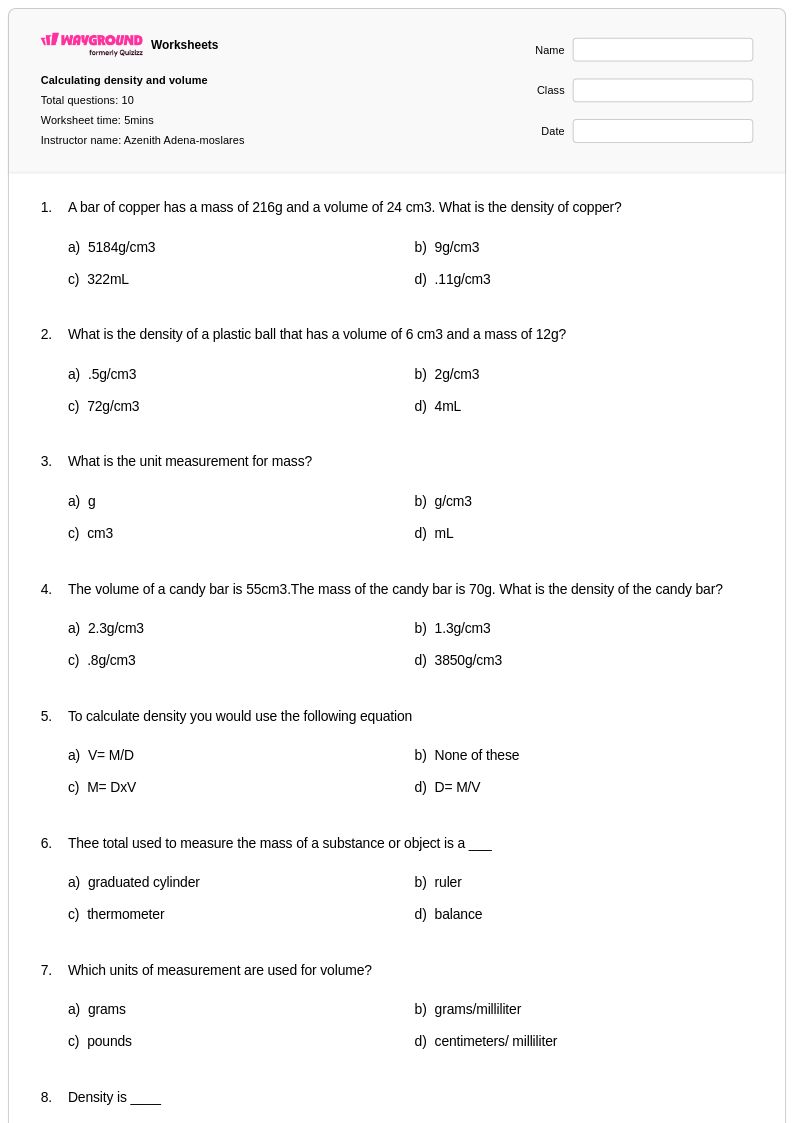
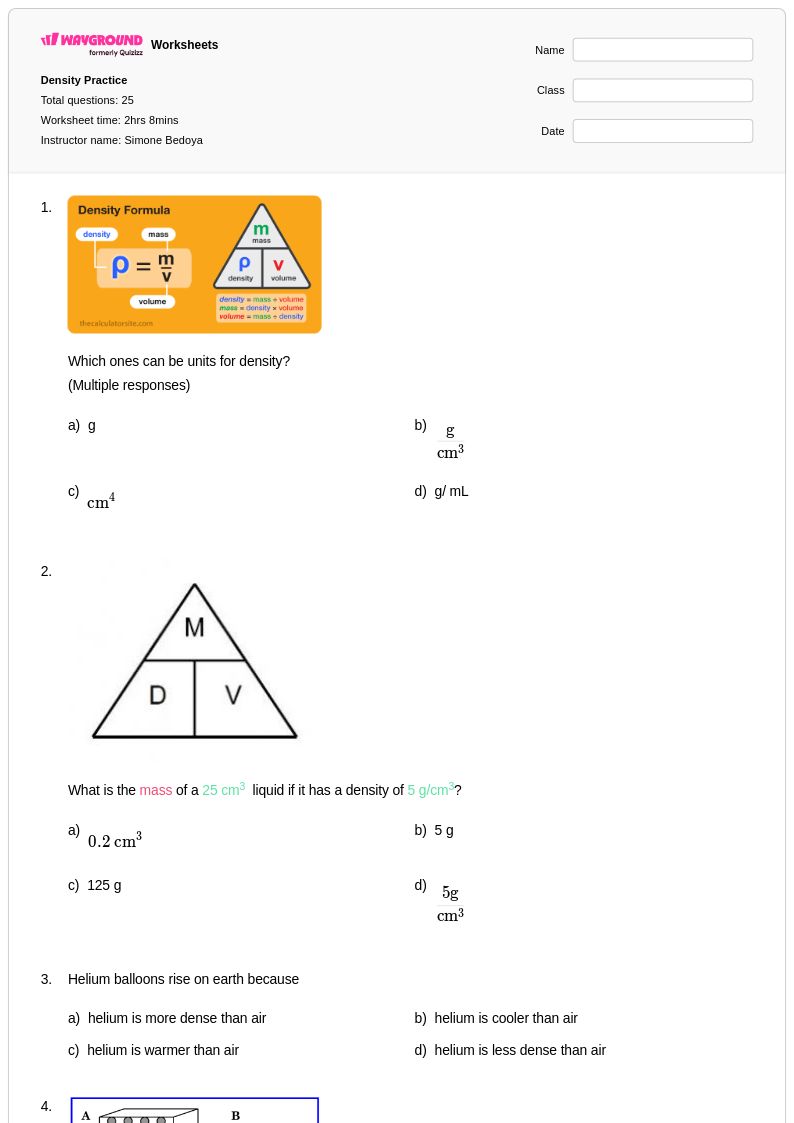
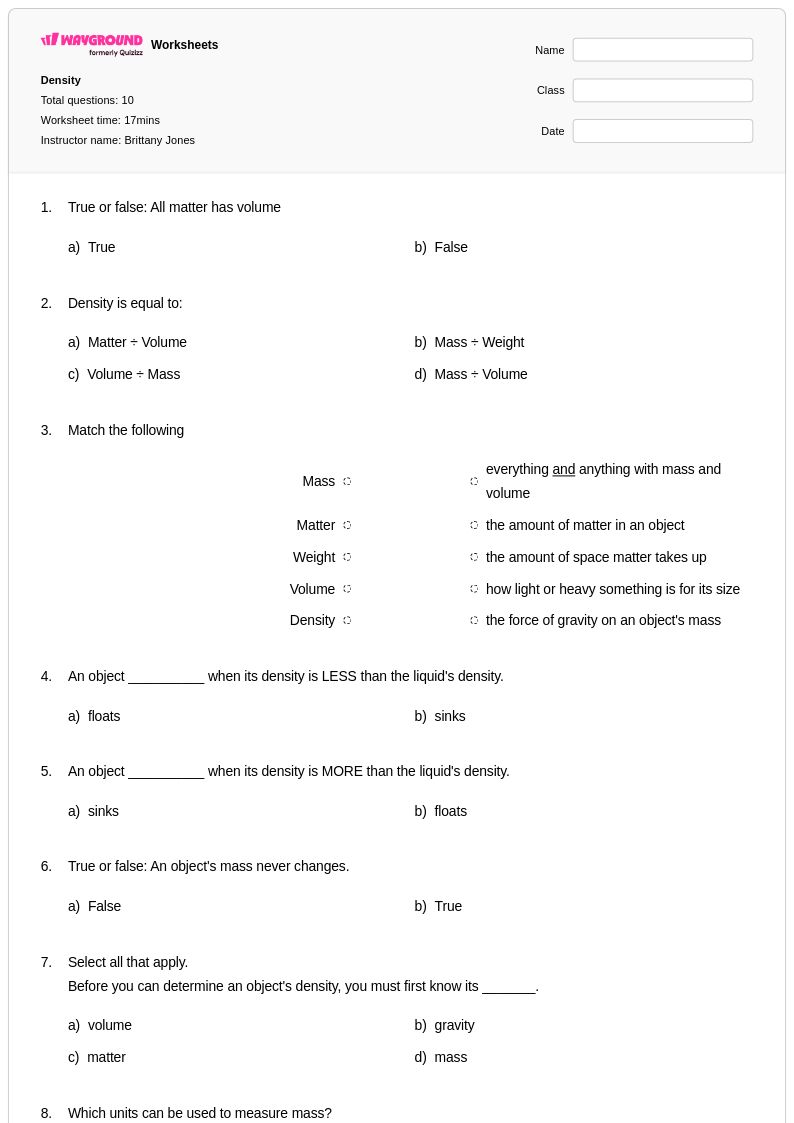
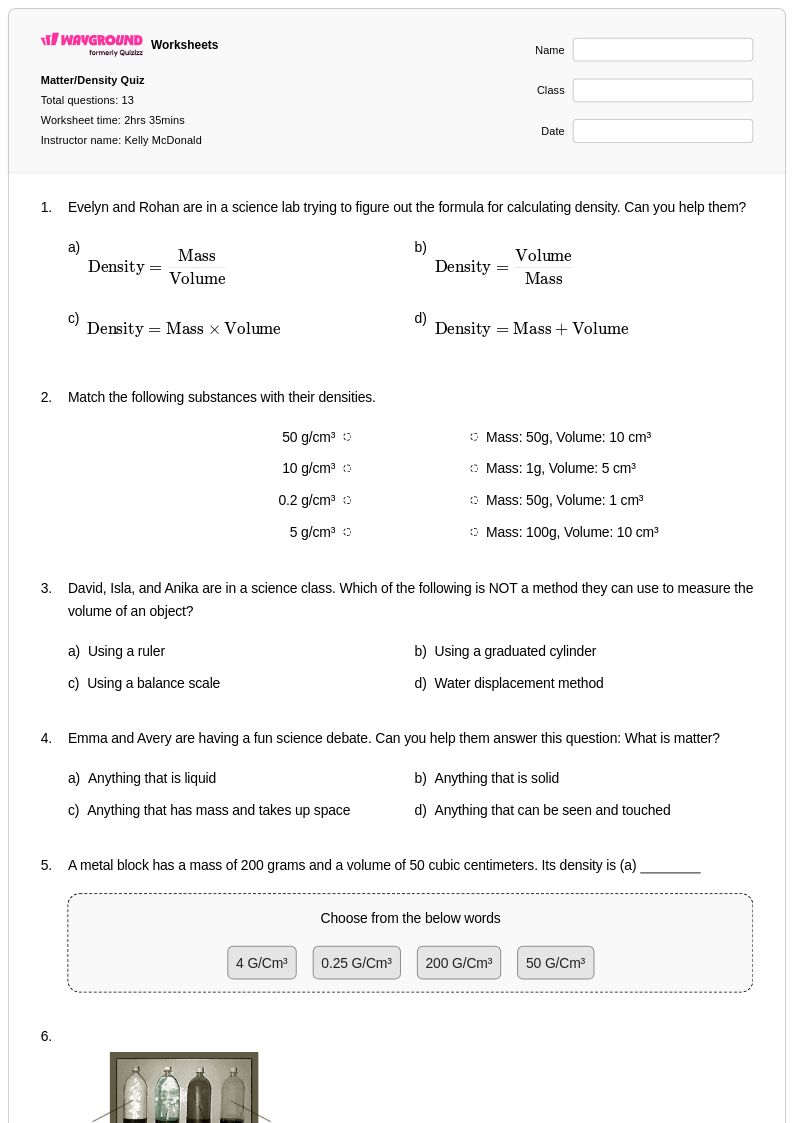
Calculating density worksheets available through Wayground (formerly Quizizz) provide students with comprehensive practice in one of physical science's most fundamental concepts. These expertly designed resources guide learners through the essential formula D = m/V, helping them master the relationship between mass, volume, and density across various materials and substances. Each worksheet collection includes detailed answer keys and step-by-step solutions that enable students to understand common calculation errors and develop problem-solving strategies. The printable pdf format makes these free resources easily accessible for classroom use, homework assignments, or independent study sessions, while practice problems progress from basic density calculations to more complex scenarios involving unit conversions and real-world applications.
Wayground (formerly Quizizz) empowers educators with millions of teacher-created calculating density worksheets that streamline lesson planning and support differentiated instruction. The platform's robust search and filtering capabilities allow teachers to quickly locate resources aligned with specific learning standards and student ability levels, whether they need introductory density concepts or advanced problem sets involving irregular objects and multiple measurement units. These versatile worksheet collections are available in both printable and digital formats, enabling seamless integration into traditional classrooms or remote learning environments. Teachers can customize existing worksheets or create targeted practice sets for remediation and enrichment, ensuring that every student receives appropriate scaffolding to master density calculations and develop confidence in quantitative reasoning skills essential for success in physical science.
FAQs
How do I teach students to calculate density for the first time?
Start by grounding the concept in tangible examples — ask students why a brick feels heavier than a sponge of the same size. Once the intuition is established, introduce the formula D = m/V and walk through worked examples that isolate each variable before asking students to solve for all three. Scaffolded practice that begins with whole-number values and clean units helps students build procedural fluency before moving to decimals and unit conversions.
What types of problems should students practice when learning to calculate density?
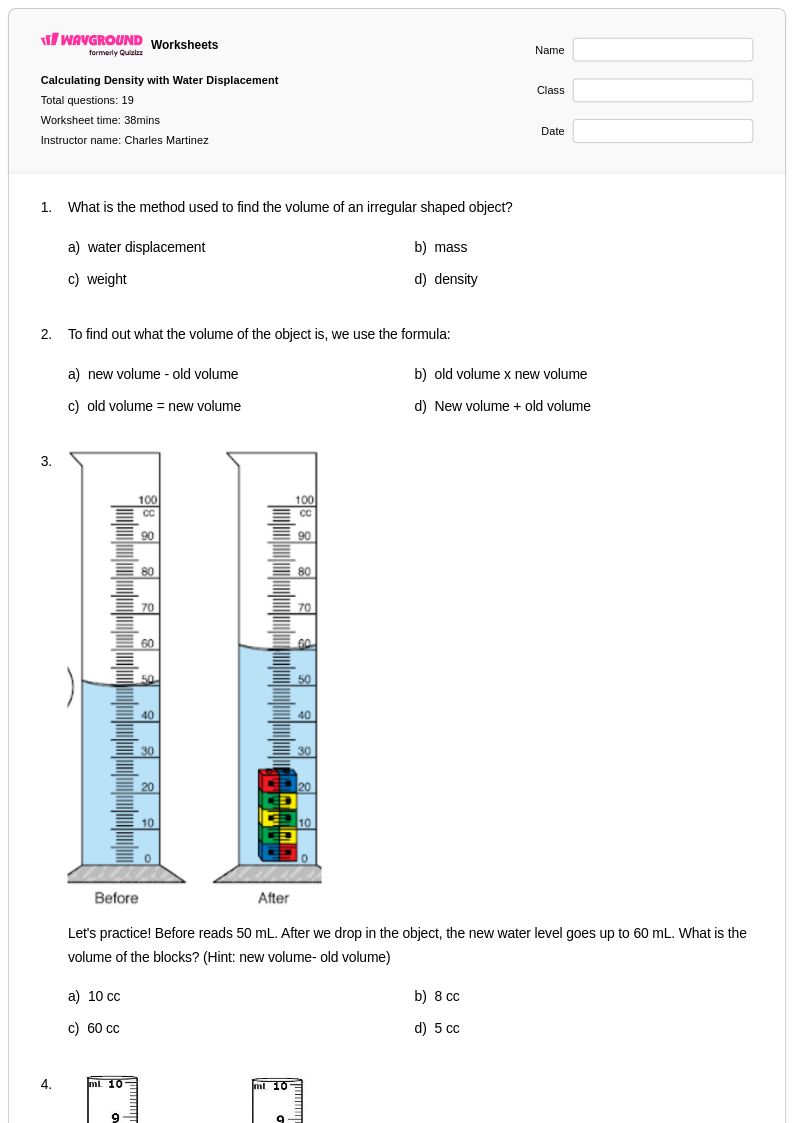
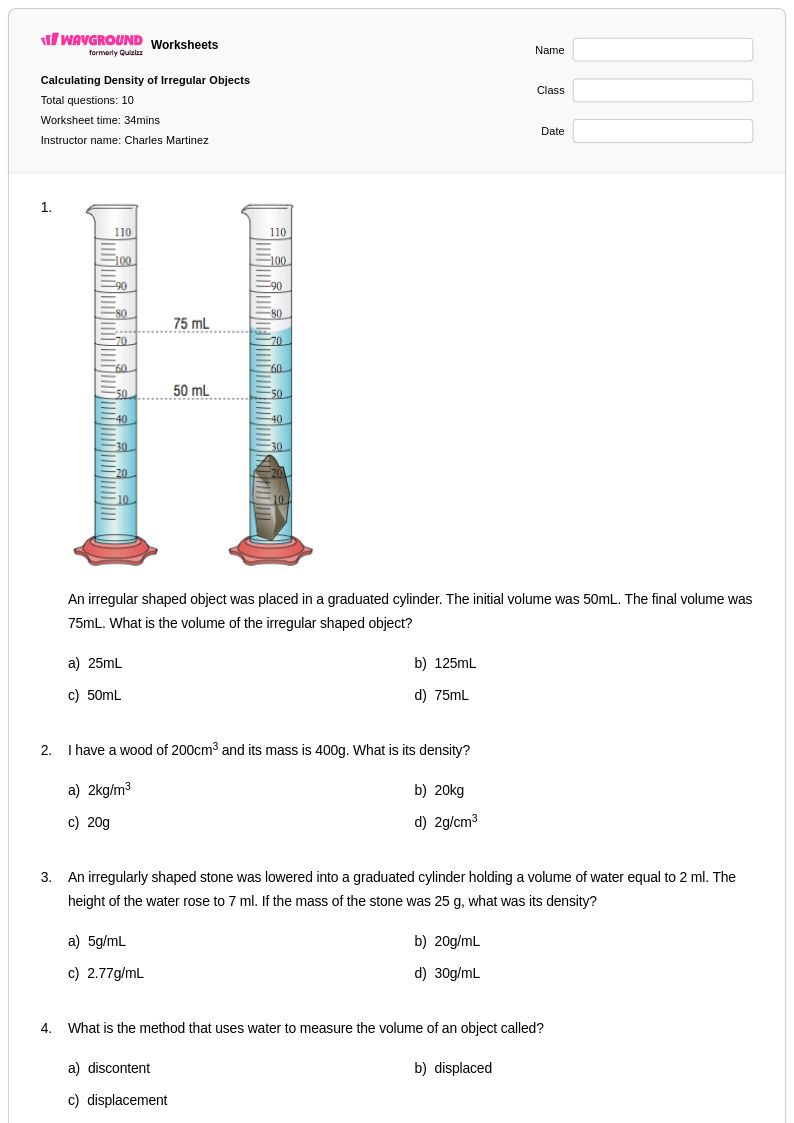
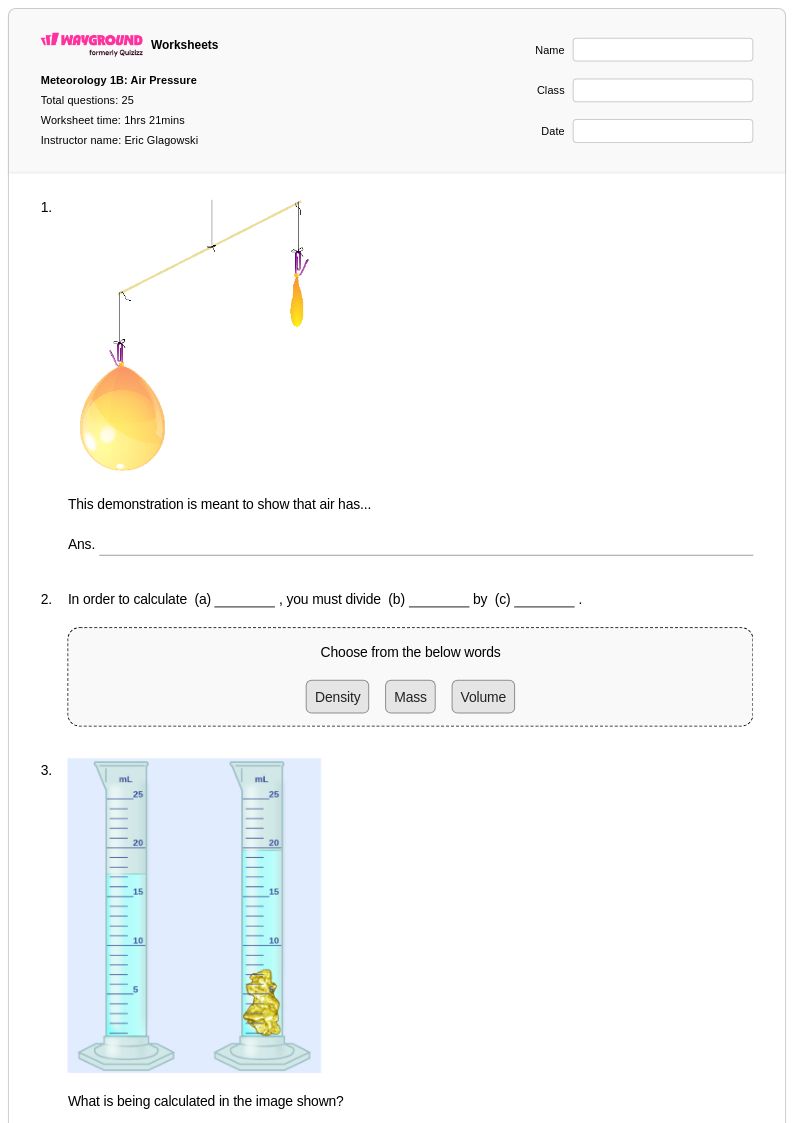
Students should work through three problem types in sequence: solving for density when mass and volume are given, solving for mass or volume when density is known, and multi-step problems that require unit conversions before applying D = m/V. Including problems with irregular objects measured by water displacement adds real-world grounding and prepares students for lab-based assessments.
What mistakes do students commonly make when calculating density?
The most frequent error is inverting the formula — dividing volume by mass instead of mass by volume. Students also struggle with unit consistency, particularly when mass is given in grams but volume is expressed in liters rather than milliliters or cubic centimeters. A third common error is rounding intermediate values too early, which compounds inaccuracies in the final answer. Targeted practice problems that deliberately present these pitfalls help students recognize and self-correct these patterns.
How can I differentiate density calculation practice for students at different ability levels?
For students who need additional support, start with problems using whole numbers and a single substance, then gradually introduce decimals, mixed units, and multi-step scenarios. On Wayground, teachers can apply reduced answer choices for students who need it, lowering cognitive load without altering the core content. Extended time and read-aloud settings are also available for individual students, allowing the same worksheet to serve the full range of learners in one class.
How do I use Wayground's calculating density worksheets in my classroom?
Wayground's calculating density worksheets are available as printable PDFs for traditional classroom use and in digital formats for technology-integrated or remote learning environments. Teachers can also host worksheets as a live quiz on Wayground, making them suitable for formative assessment, independent practice, or homework. The platform's search and filtering tools let teachers locate resources by difficulty level or learning standard, so the right worksheet reaches the right students without manual sorting.
How does density calculation connect to broader physical science concepts?
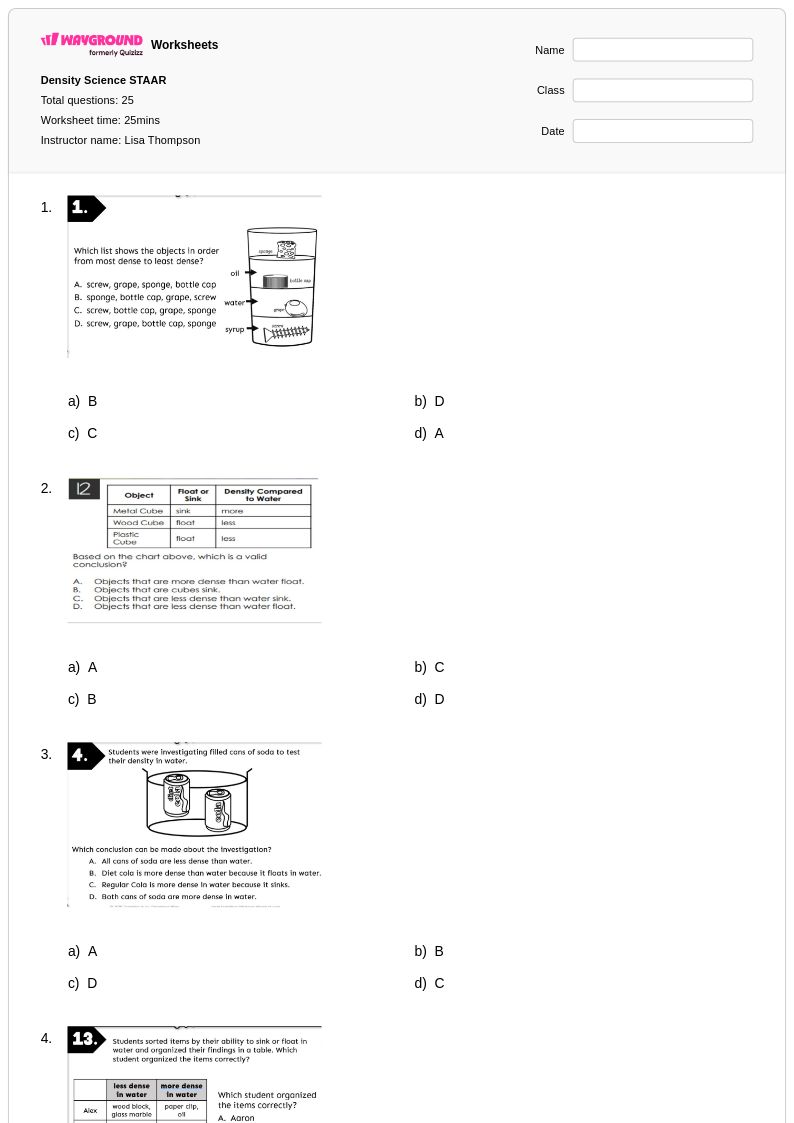
Density is foundational to understanding buoyancy, material properties, and phase changes — concepts students encounter throughout physical and earth science. Mastering D = m/V also builds quantitative reasoning skills that transfer directly to chemistry topics like molarity and concentration. Teachers who address density early in a physical science course give students a reusable problem-solving framework they will apply repeatedly across the curriculum.