Free Printable Character Motivation Worksheets for Class 8
Class 8 character motivation worksheets from Wayground help students analyze why characters act and make decisions through engaging printables, practice problems, and comprehensive answer keys for effective reading comprehension development.
Explore printable Character Motivation worksheets for Class 8
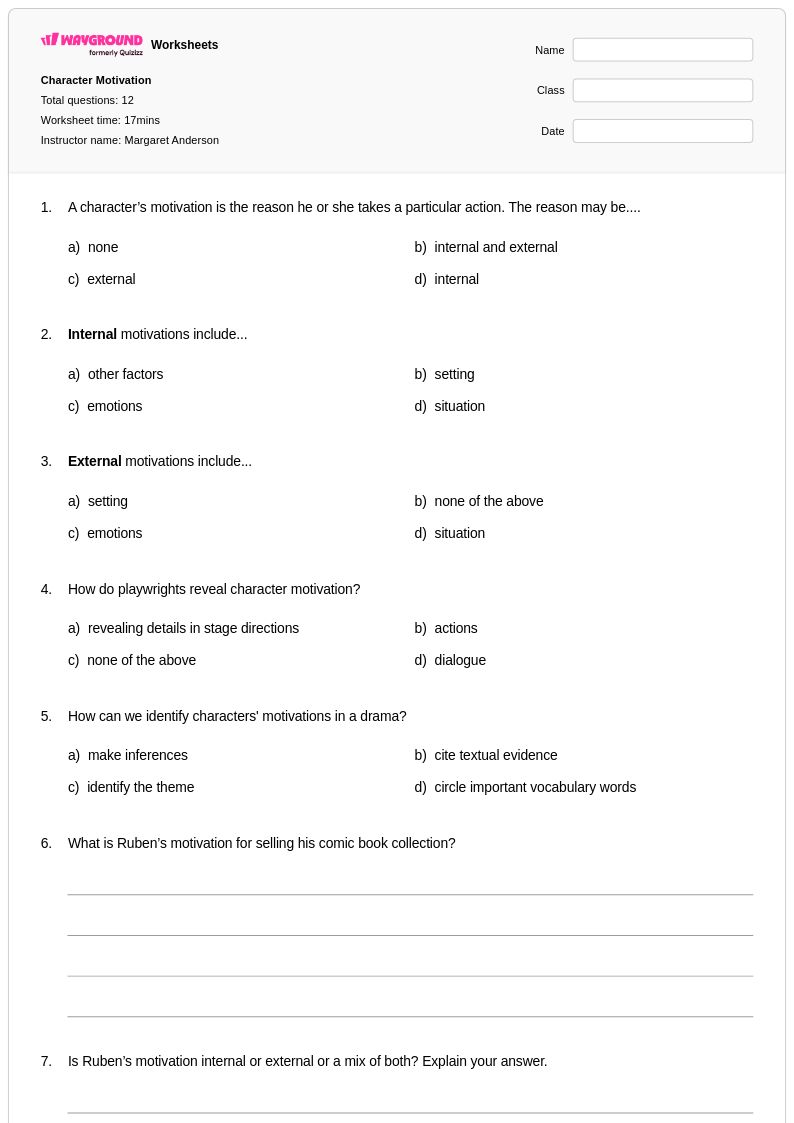
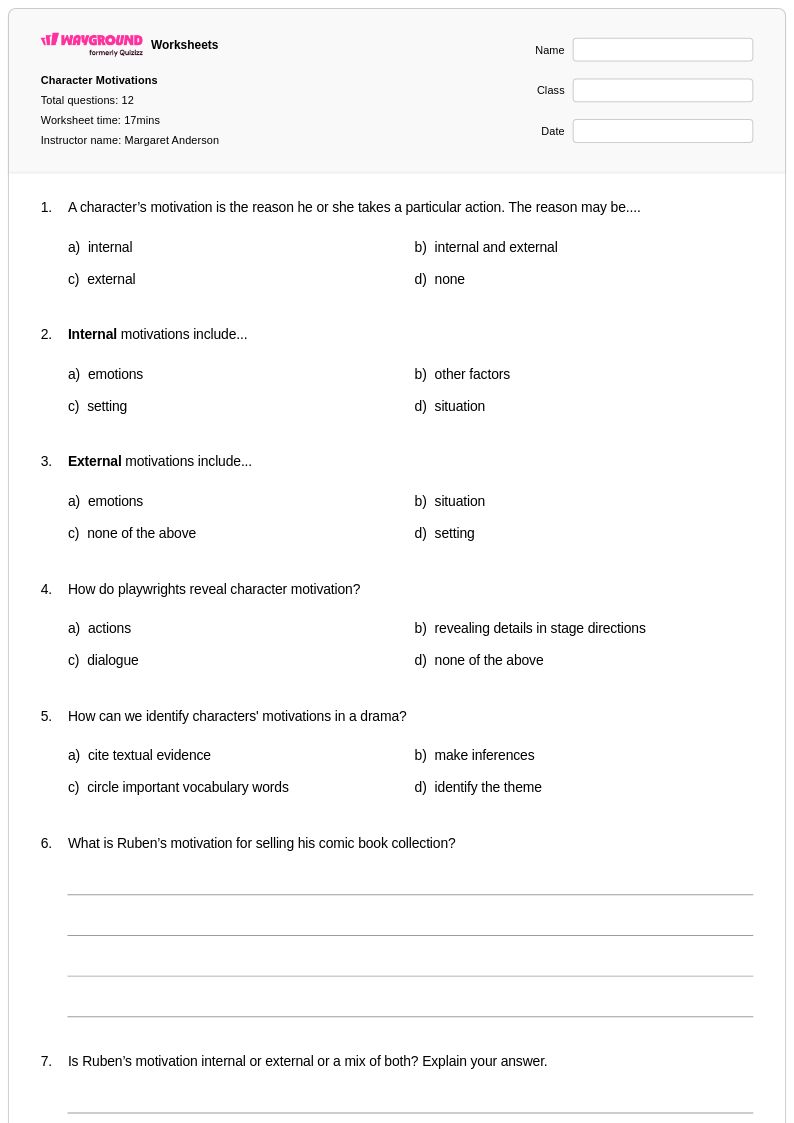
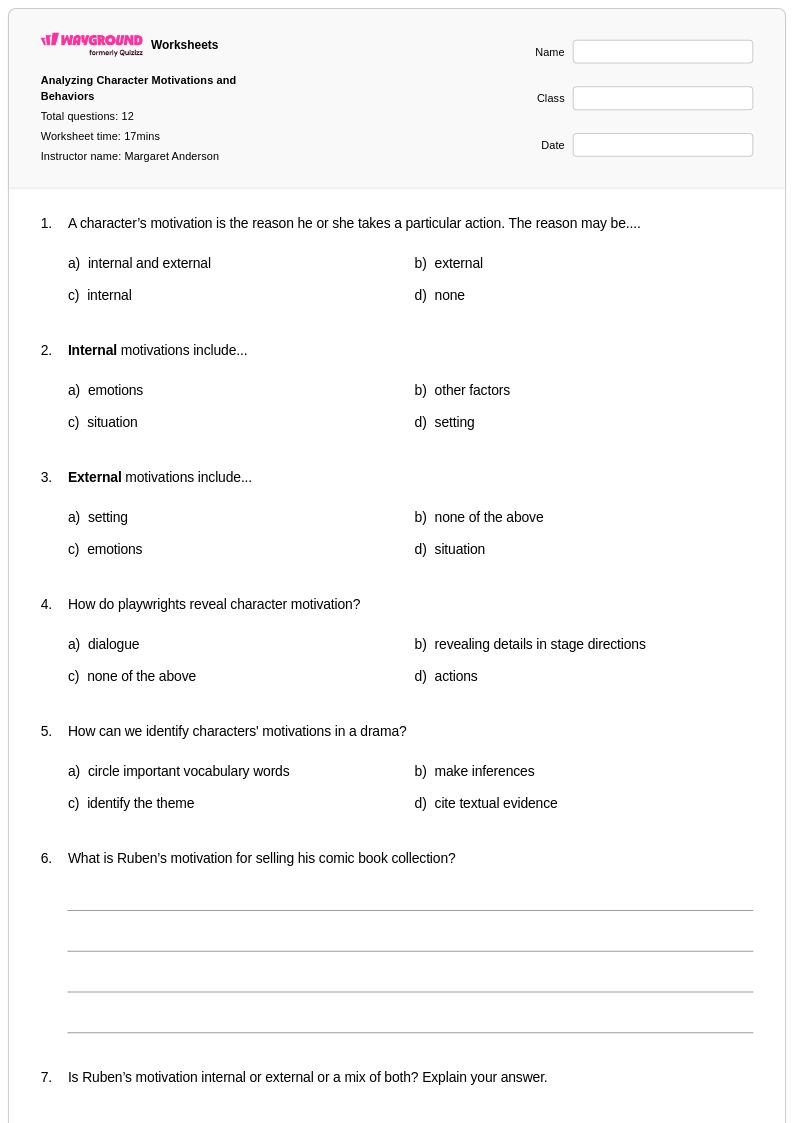
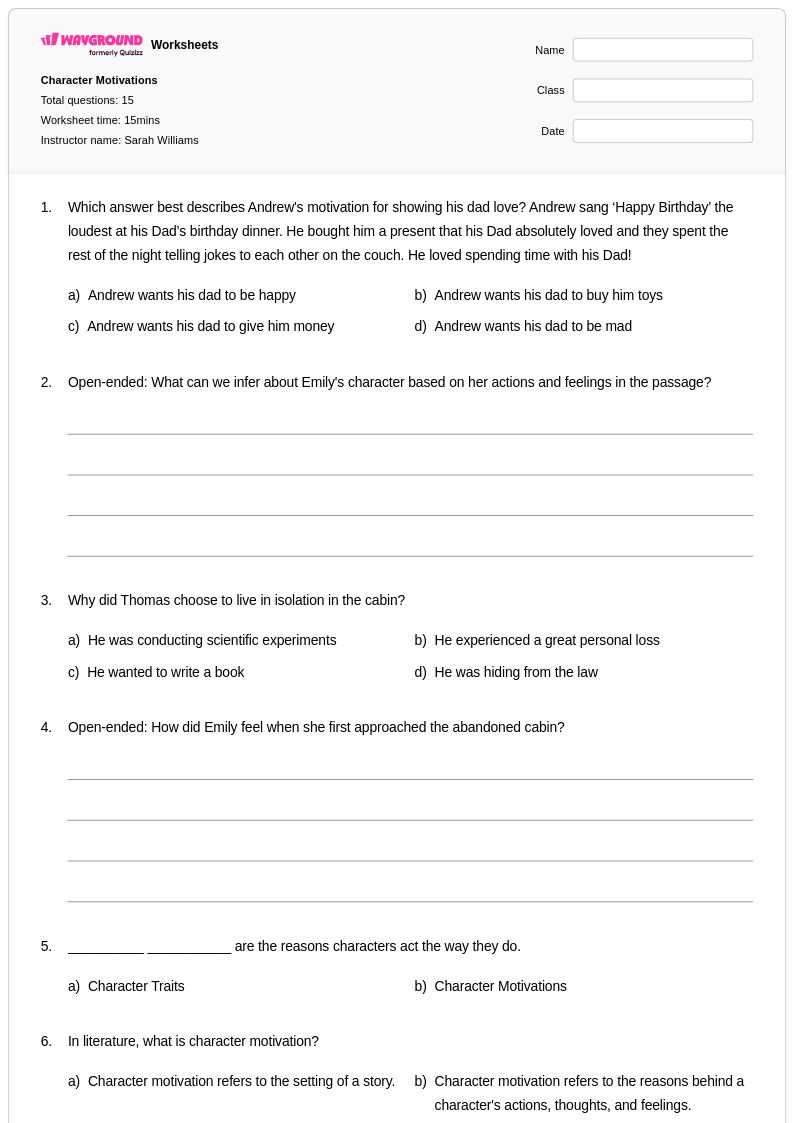
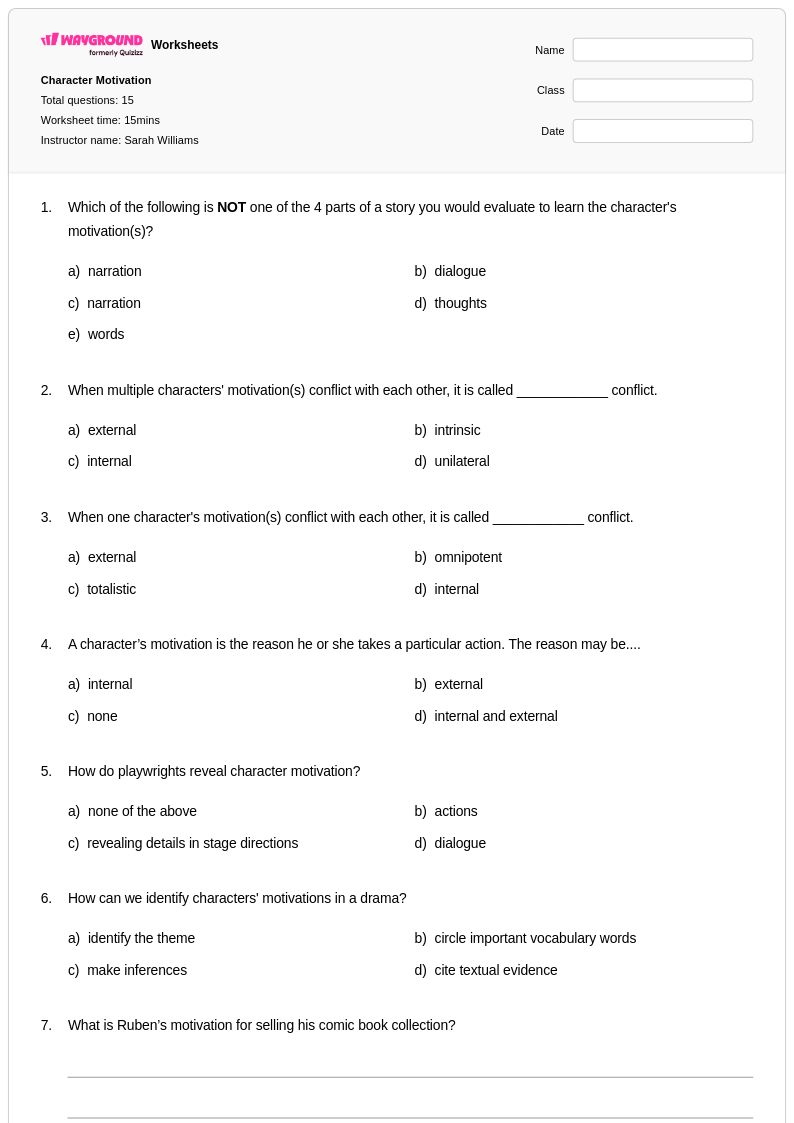
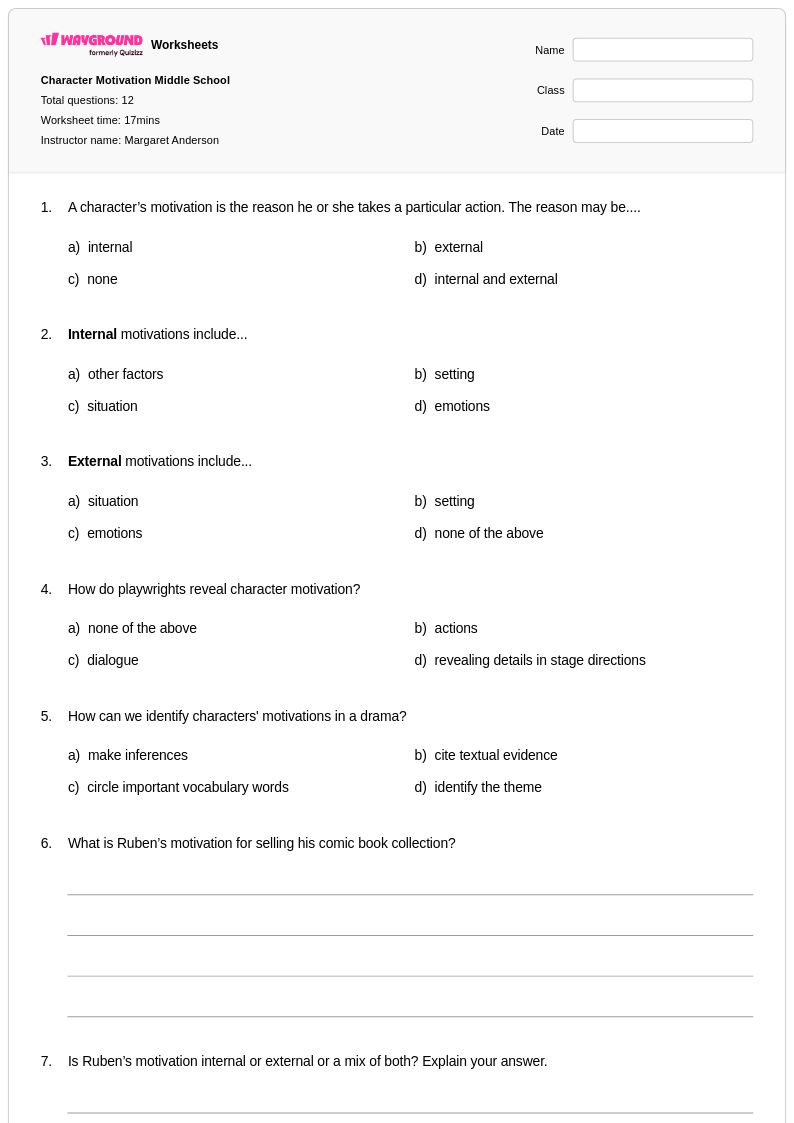
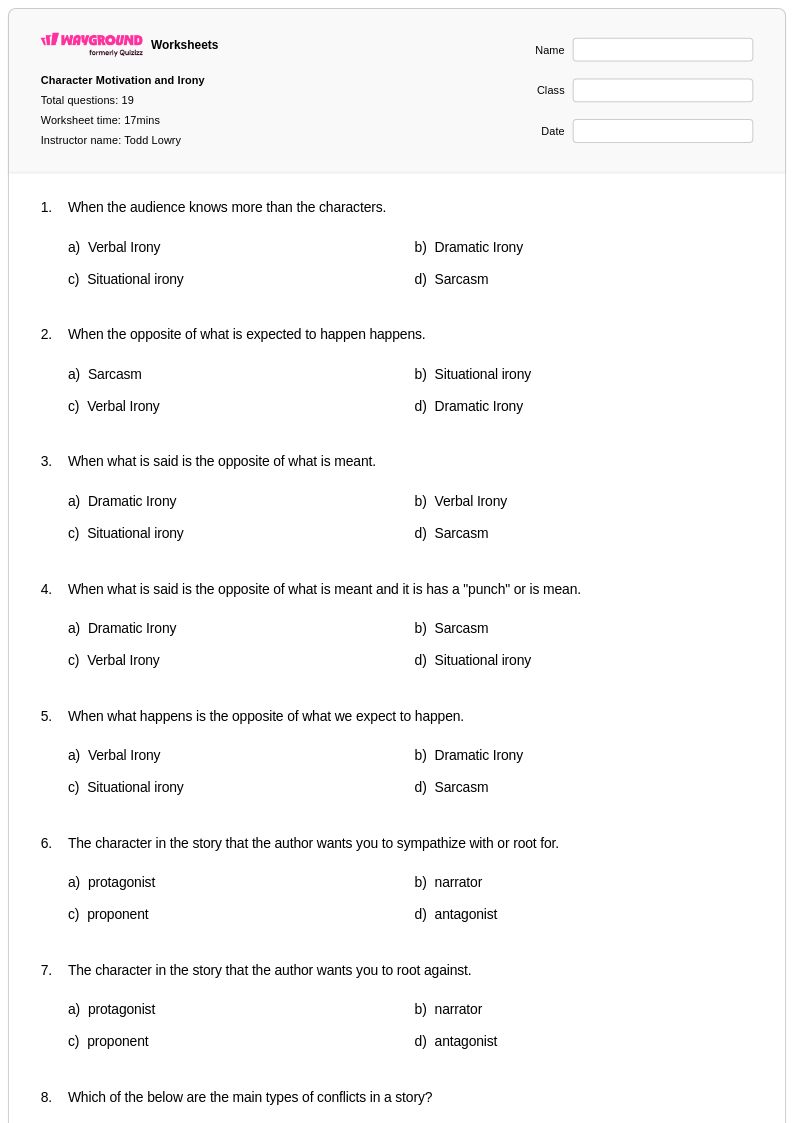
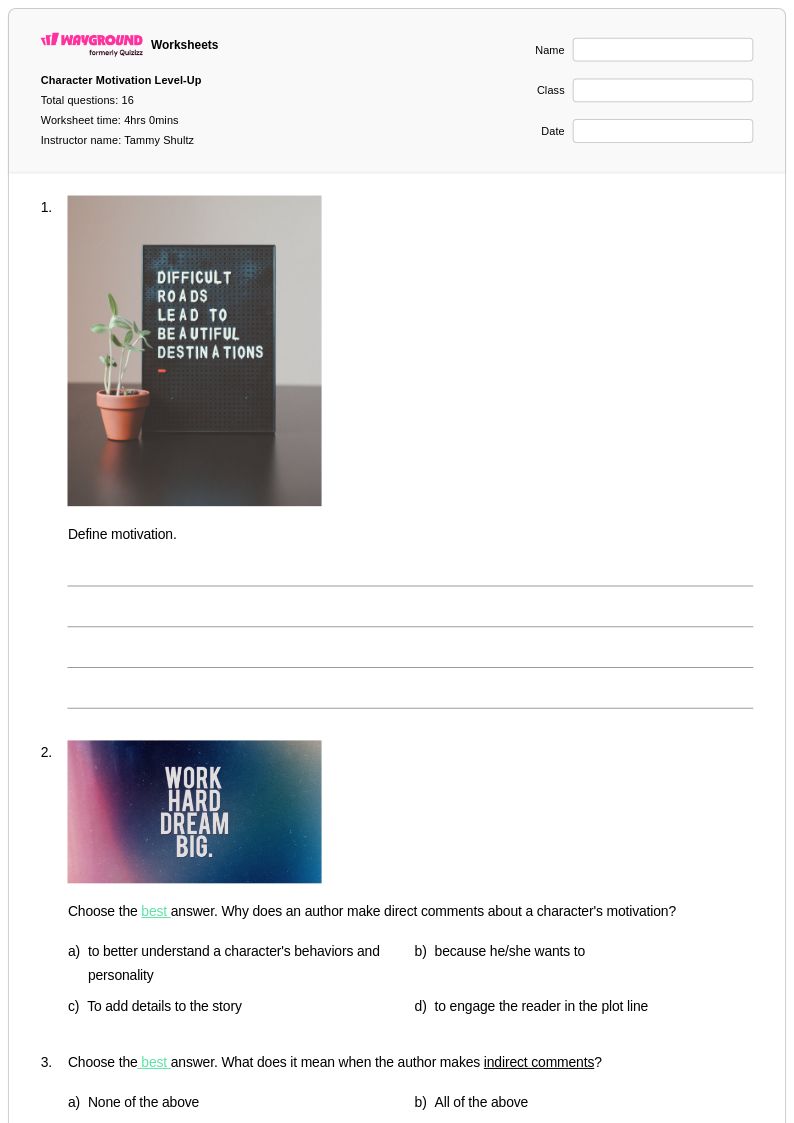
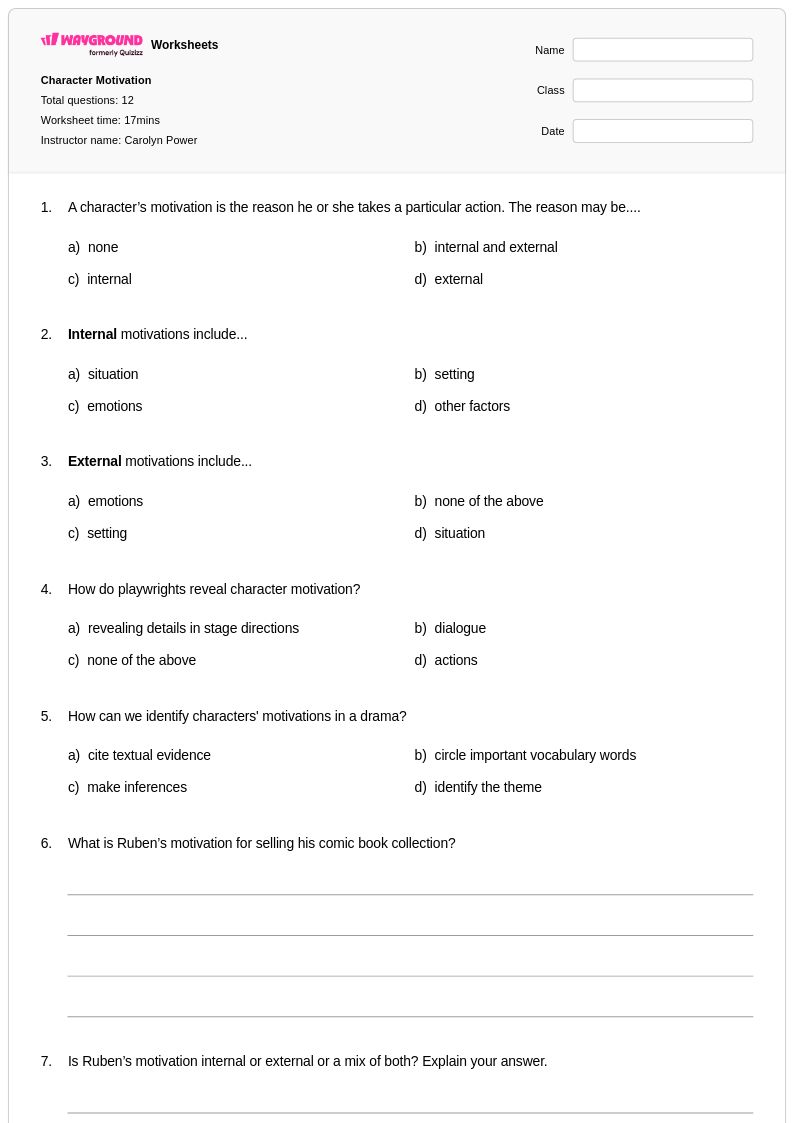
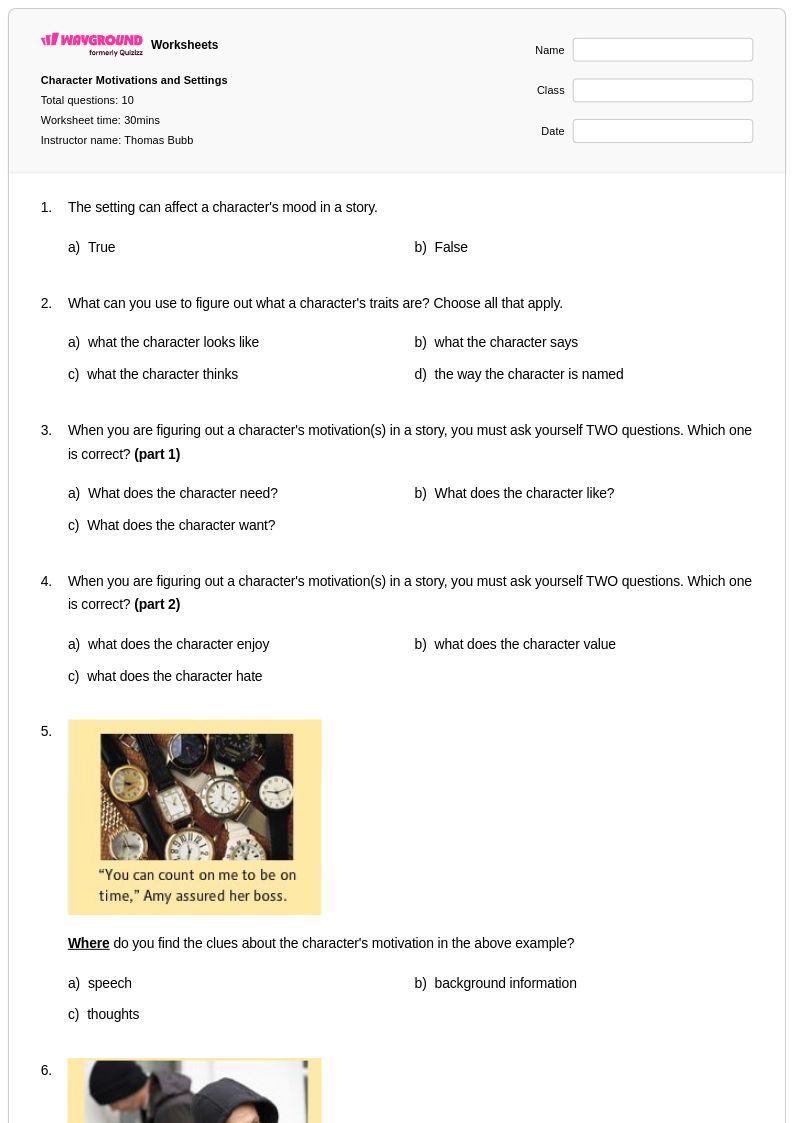
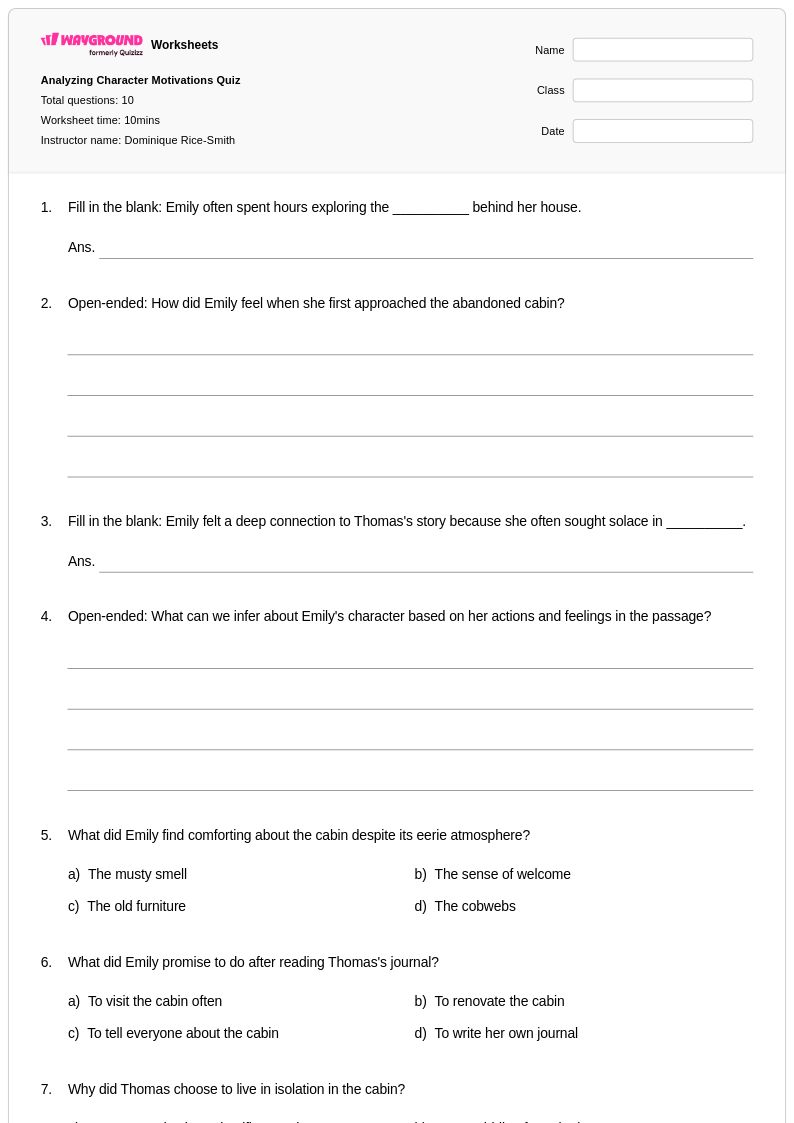
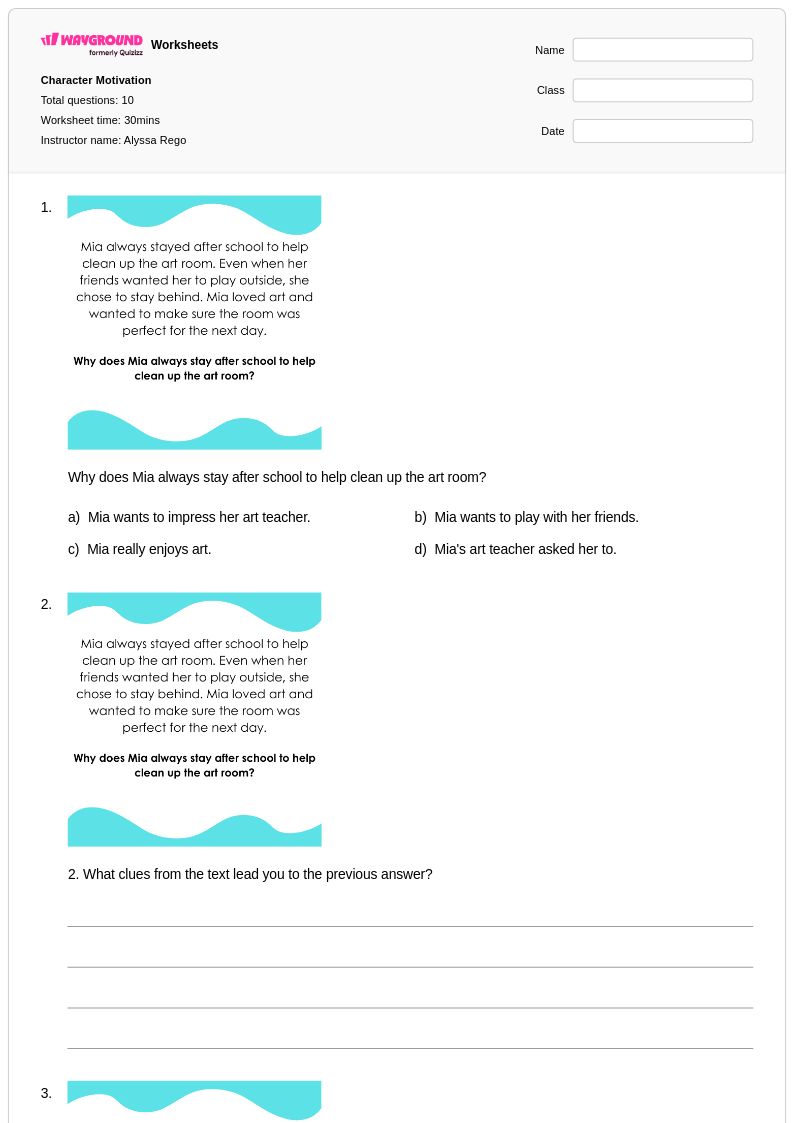
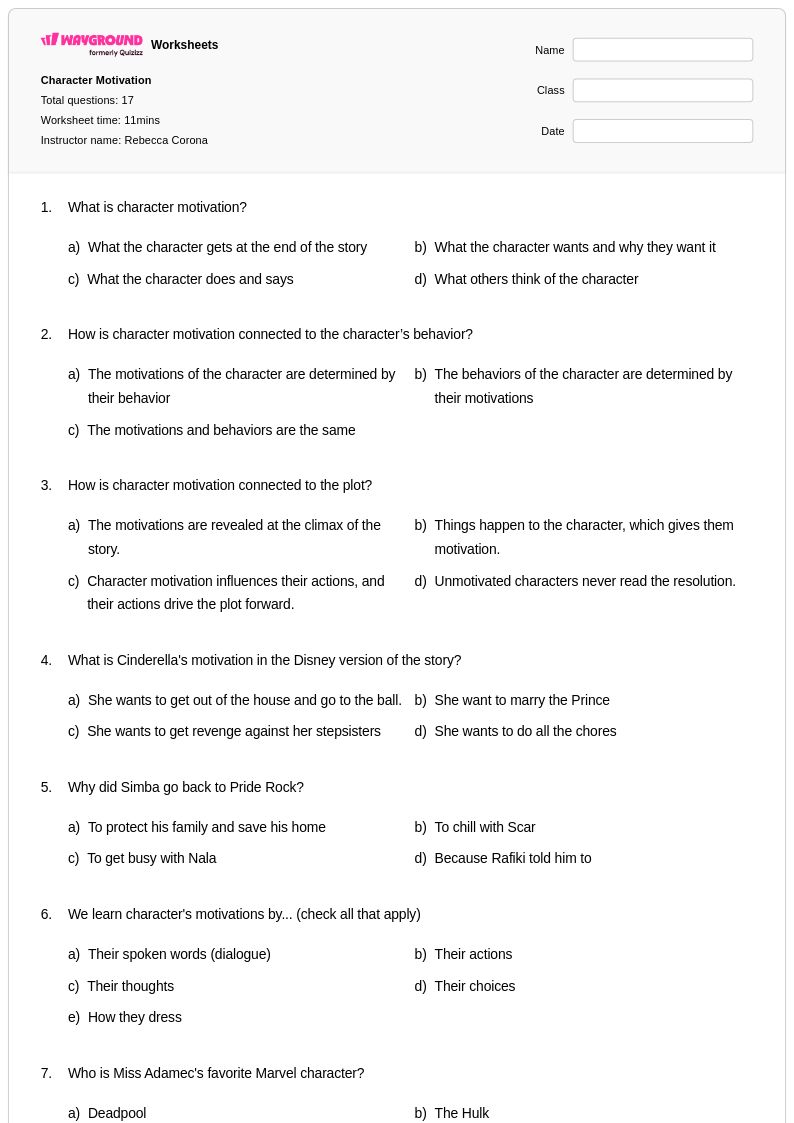
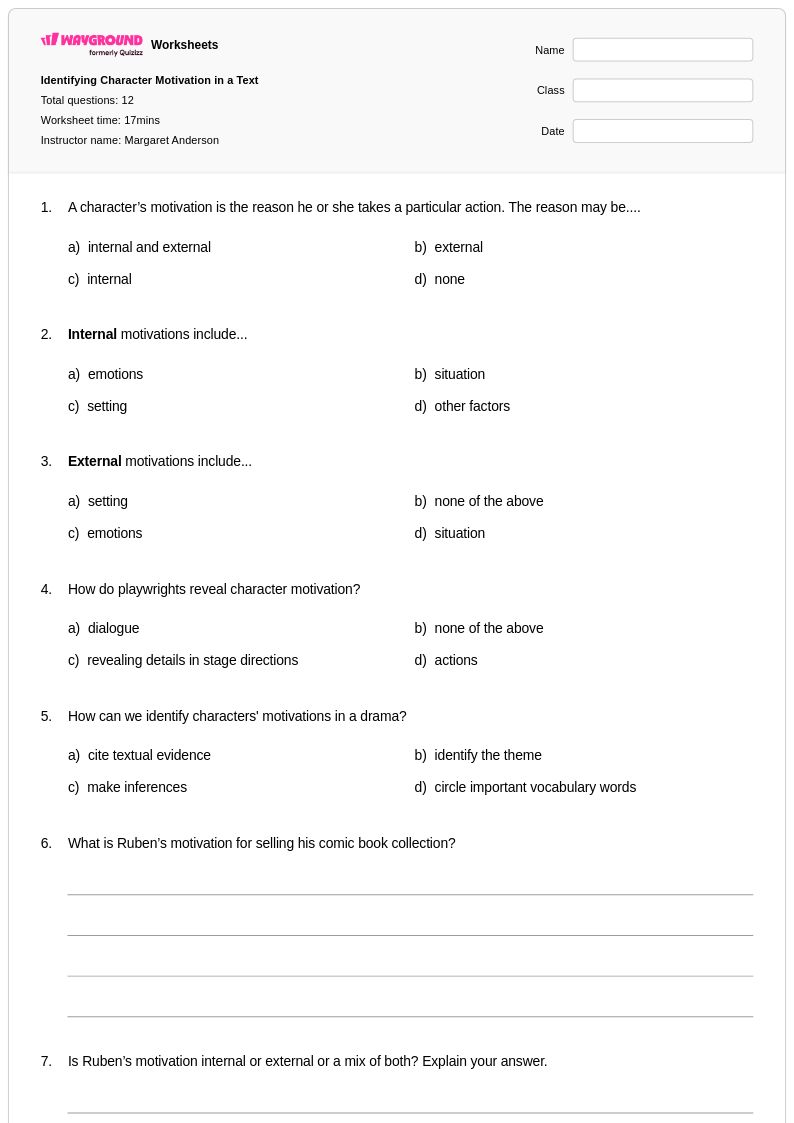
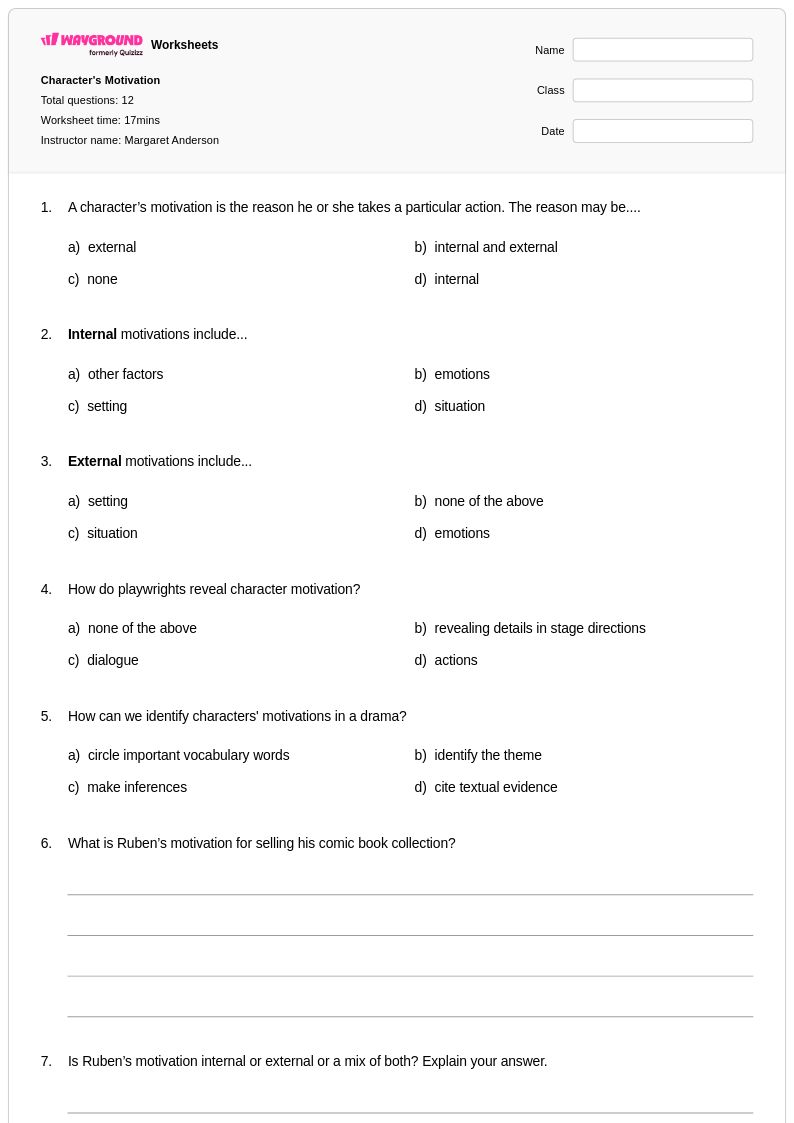
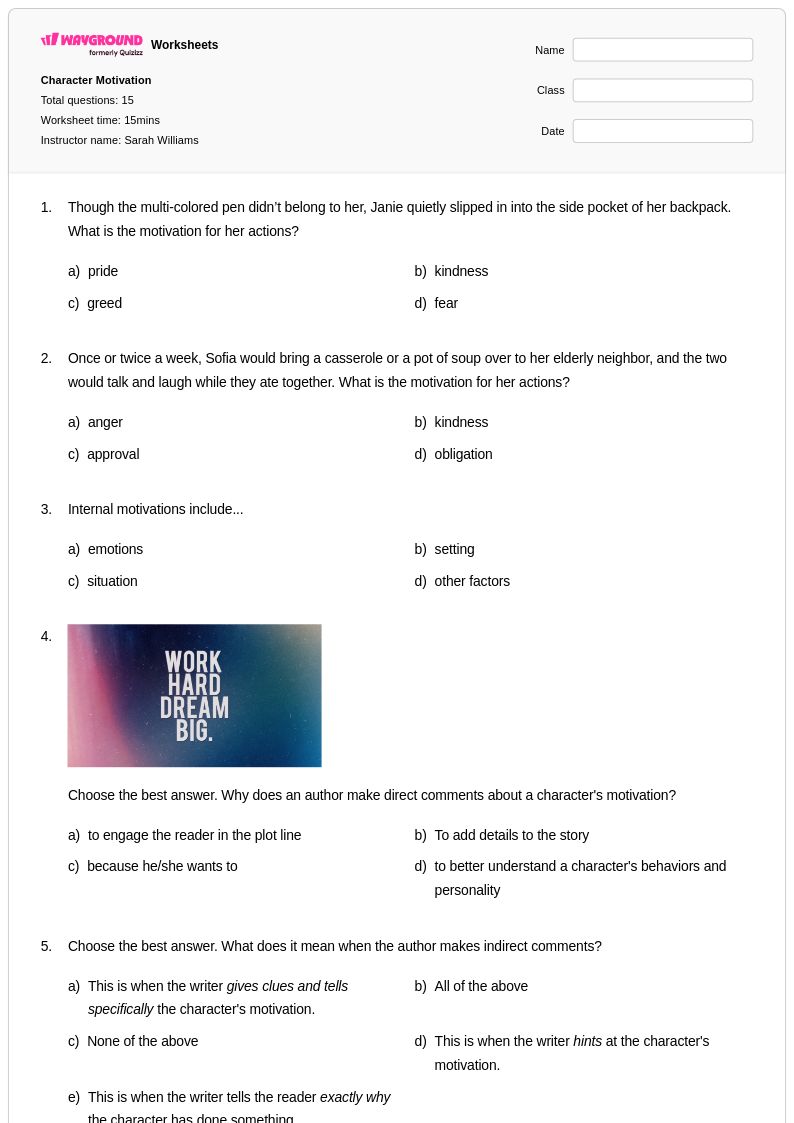
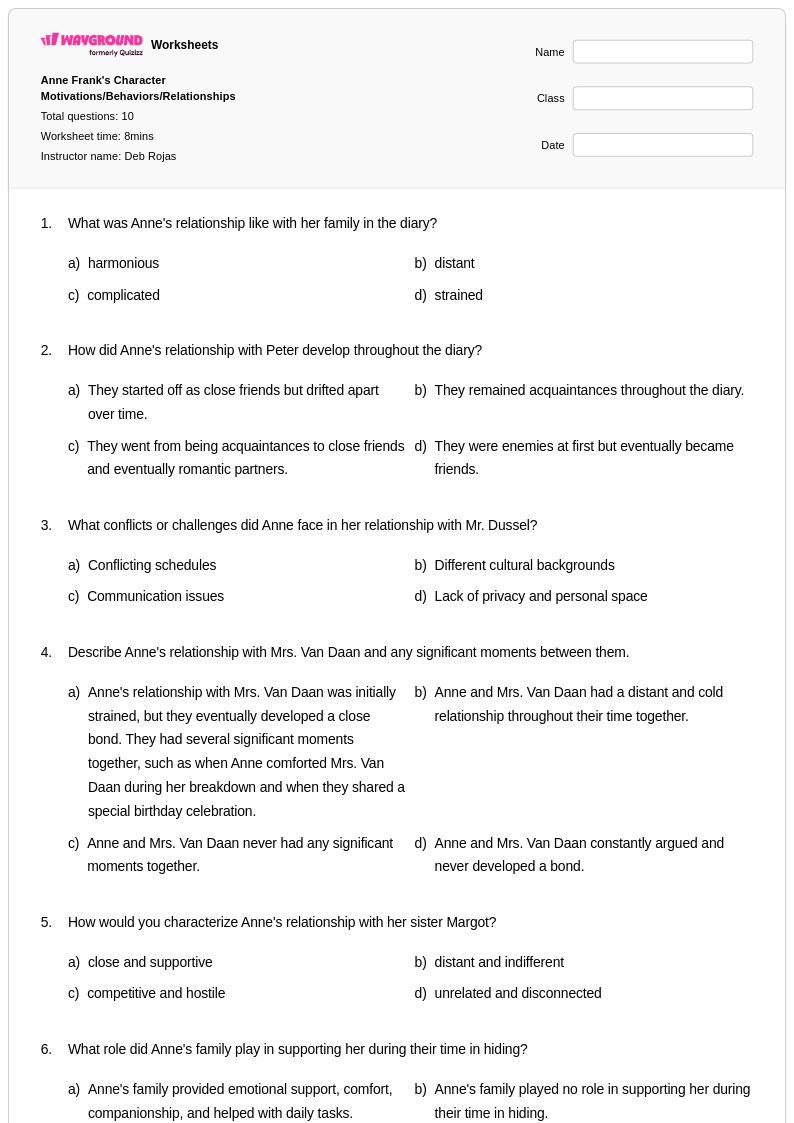
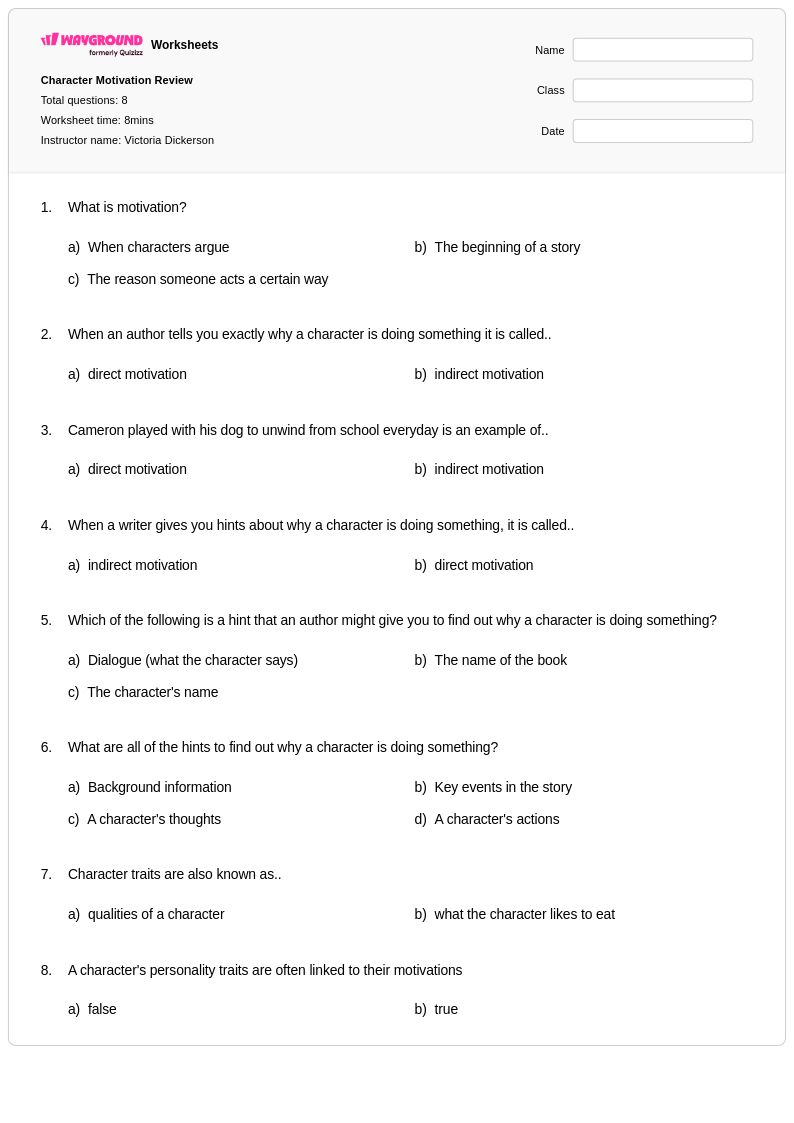
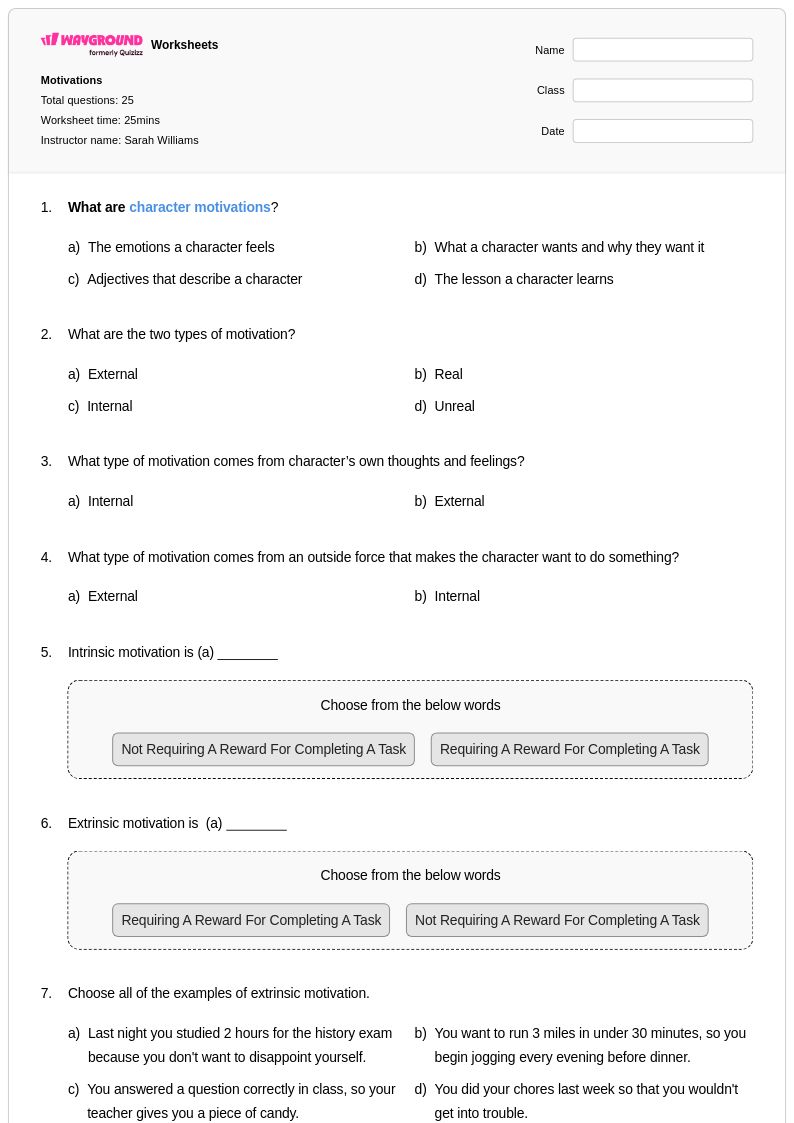
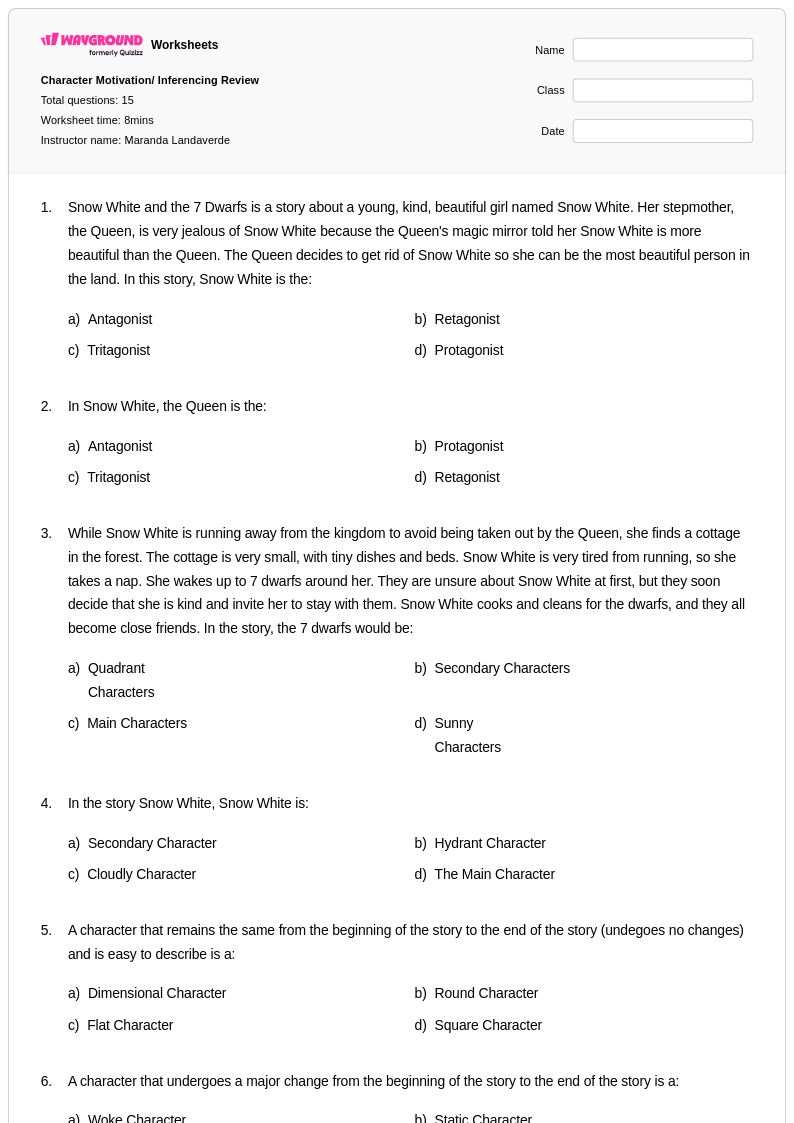
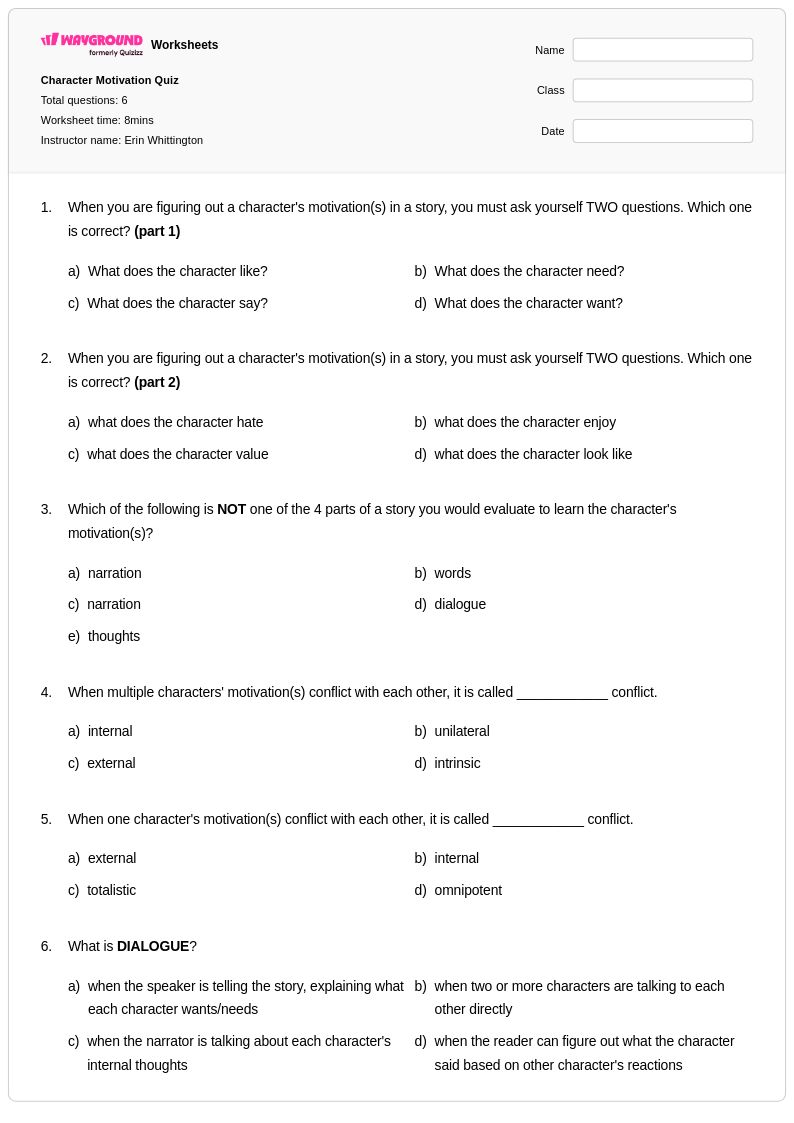
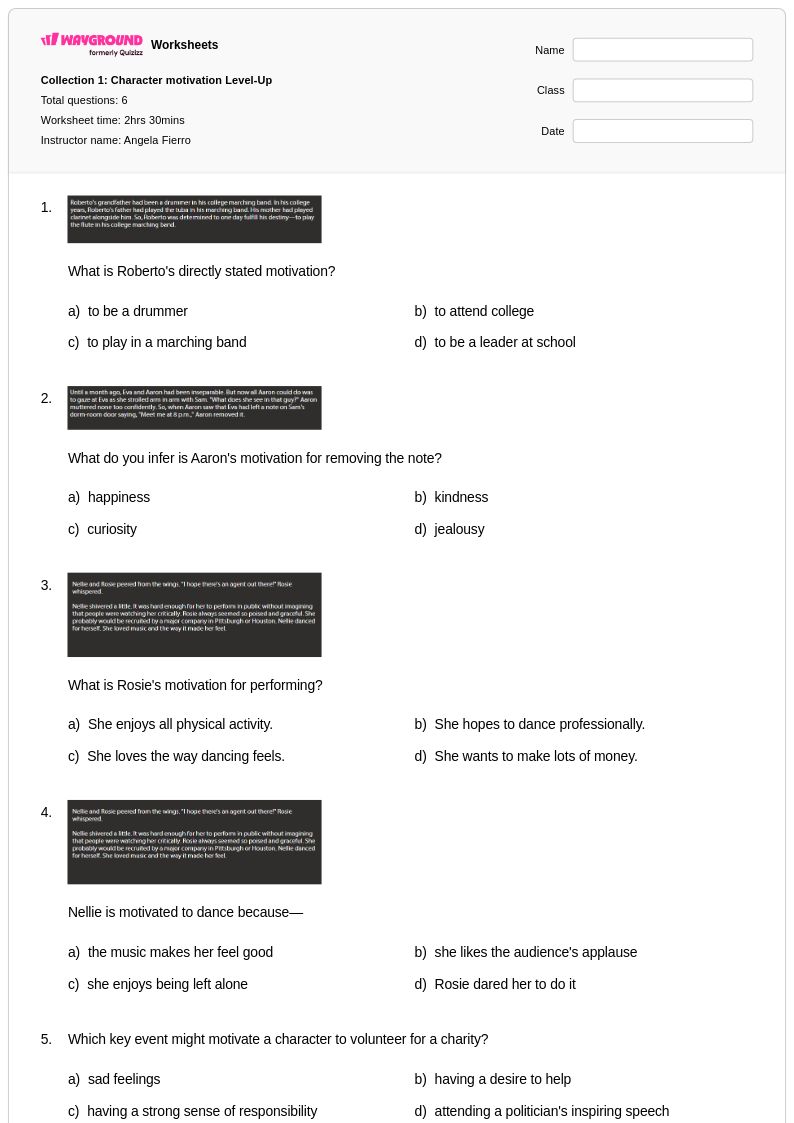
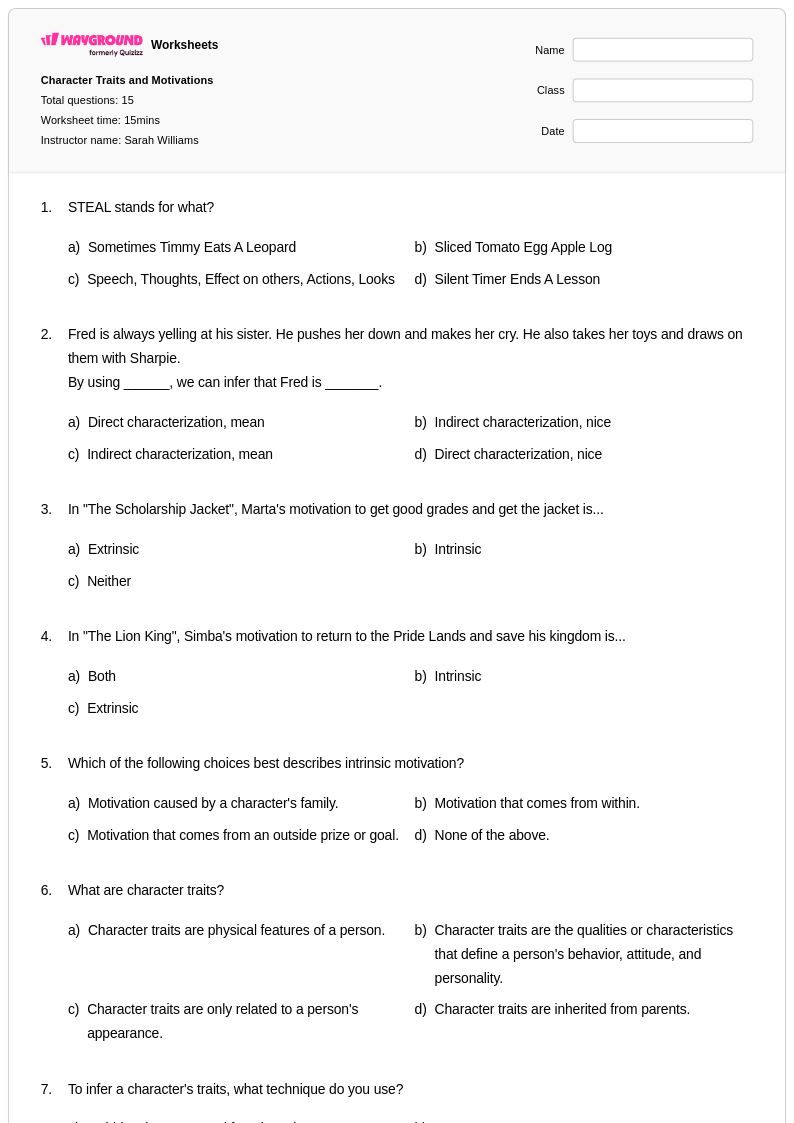
Character motivation worksheets for Class 8 students available through Wayground (formerly Quizizz) provide comprehensive practice in analyzing why fictional characters make specific choices and behave in particular ways throughout literary works. These expertly designed resources strengthen critical thinking skills by guiding students to examine textual evidence, identify underlying psychological drivers, and connect character actions to broader themes within novels, short stories, and other narrative texts. The collection includes varied practice problems that challenge eighth graders to distinguish between explicit and implicit motivational clues, analyze how character backgrounds influence decision-making, and evaluate how authors reveal character psychology through dialogue, actions, and internal thoughts. Each worksheet comes with detailed answer keys that support independent learning and self-assessment, while the printable pdf format ensures easy classroom distribution and homework assignments.
Wayground (formerly Quizizz) empowers educators with an extensive library of millions of teacher-created character motivation resources specifically calibrated for Class 8 reading comprehension instruction. The platform's robust search and filtering capabilities allow teachers to quickly locate worksheets aligned with specific literary standards and differentiate instruction based on individual student reading levels and analytical abilities. These customizable materials support diverse instructional goals, from initial skill introduction during whole-class lessons to targeted remediation for struggling readers and enrichment opportunities for advanced students ready to tackle complex character analysis. The flexible digital and printable formats enable seamless integration into both traditional classroom settings and remote learning environments, while built-in assessment tools help teachers track student progress in understanding character psychology and motivation across various literary genres and time periods.
FAQs
How do I teach character motivation to students?
Teaching character motivation begins with helping students distinguish between what a character does and why they do it. Anchor instruction in textual evidence by having students cite specific dialogue, actions, and narrative details that reveal internal drives, needs, or goals. It helps to model the inference process aloud using a familiar text before asking students to apply the same thinking independently, since motivation is often implied rather than stated directly.
What exercises help students practice analyzing character motivation?
Effective practice exercises ask students to identify a character's goal, the obstacles they face, and the choices they make in response, then connect those elements to an underlying motivation. Structured graphic organizers that separate behavior from motivation are especially useful because they force students to slow down and justify their thinking with textual evidence. Repeated practice across multiple texts and character types builds the inferential stamina this skill requires.
What mistakes do students commonly make when analyzing character motivation?
The most common error is confusing what a character does with why they do it, essentially restating an action rather than inferring a motivation. Students also tend to impose their own values onto characters, concluding that a character is simply 'mean' or 'greedy' without grounding that reading in the text. A third frequent mistake is citing only surface-level evidence, such as a single line of dialogue, while overlooking the pattern of behavior across the full text that reveals deeper motivation.
How do I use Wayground's character motivation worksheets in my classroom?
Wayground's character motivation worksheets are available as printable PDFs for traditional classroom use and in digital formats for technology-integrated environments, making them flexible enough for in-class work, homework, or blended learning. Teachers can also host worksheets as a quiz directly on Wayground, which allows for real-time student responses and streamlined review. Each worksheet includes a complete answer key, so they work equally well for independent student practice and teacher-guided instruction.
How can I differentiate character motivation instruction for students at different reading levels?
Differentiation for character motivation should focus on the complexity of the text and the degree of scaffolding provided. Struggling readers benefit from passages where motivation is more explicitly stated, paired with sentence frames that guide their evidence-based responses. More advanced students can work with texts where motivation is deeply implicit or contradictory, requiring them to weigh competing pieces of evidence. On Wayground, teachers can apply individual accommodations such as Read Aloud support or reduced answer choices to meet specific student needs without disrupting the rest of the class.
Why is understanding character motivation important for reading comprehension?
Character motivation is the engine behind plot development, so students who cannot identify why characters act as they do often struggle to follow cause-and-effect relationships in a story. Understanding motivation also deepens inferential thinking because it requires students to read beneath the surface of what is written. This skill transfers across genres and grade levels, making it one of the highest-leverage analytical reading strategies in ELA instruction.