Enhance students' understanding of common nouns with Wayground's comprehensive collection of free worksheets, printables, and practice problems that include detailed answer keys to reinforce fundamental English grammar concepts.
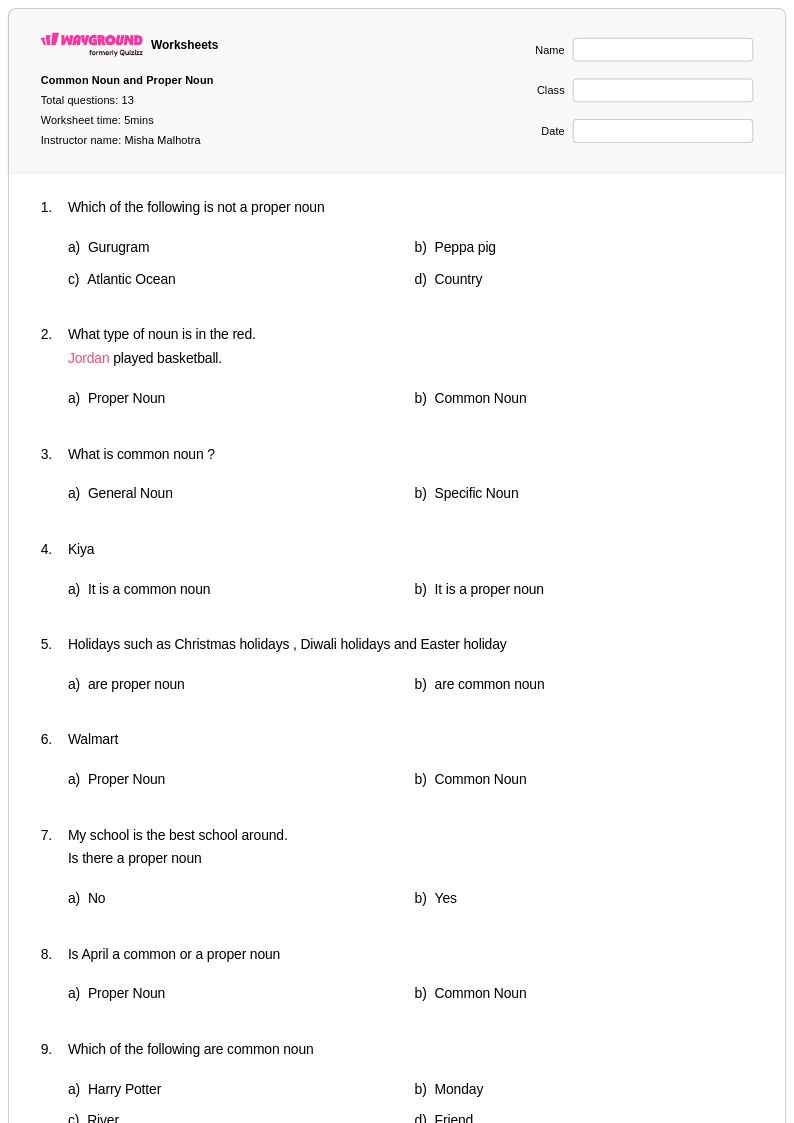
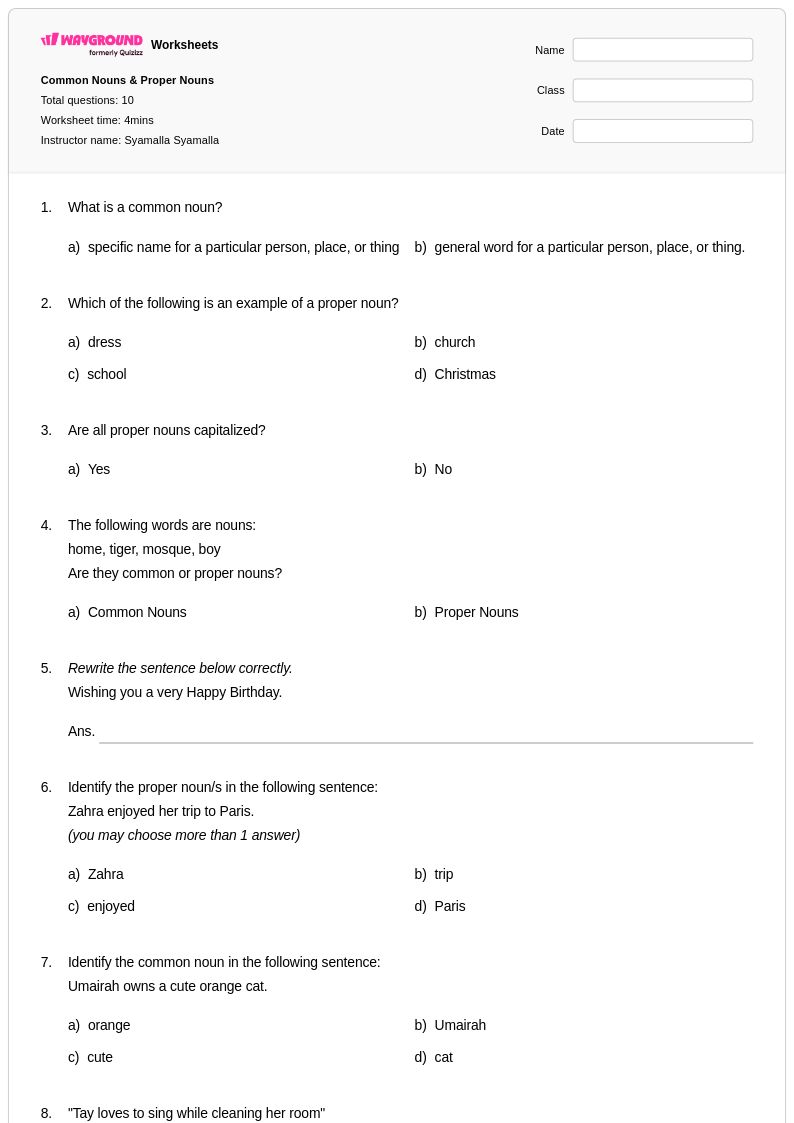
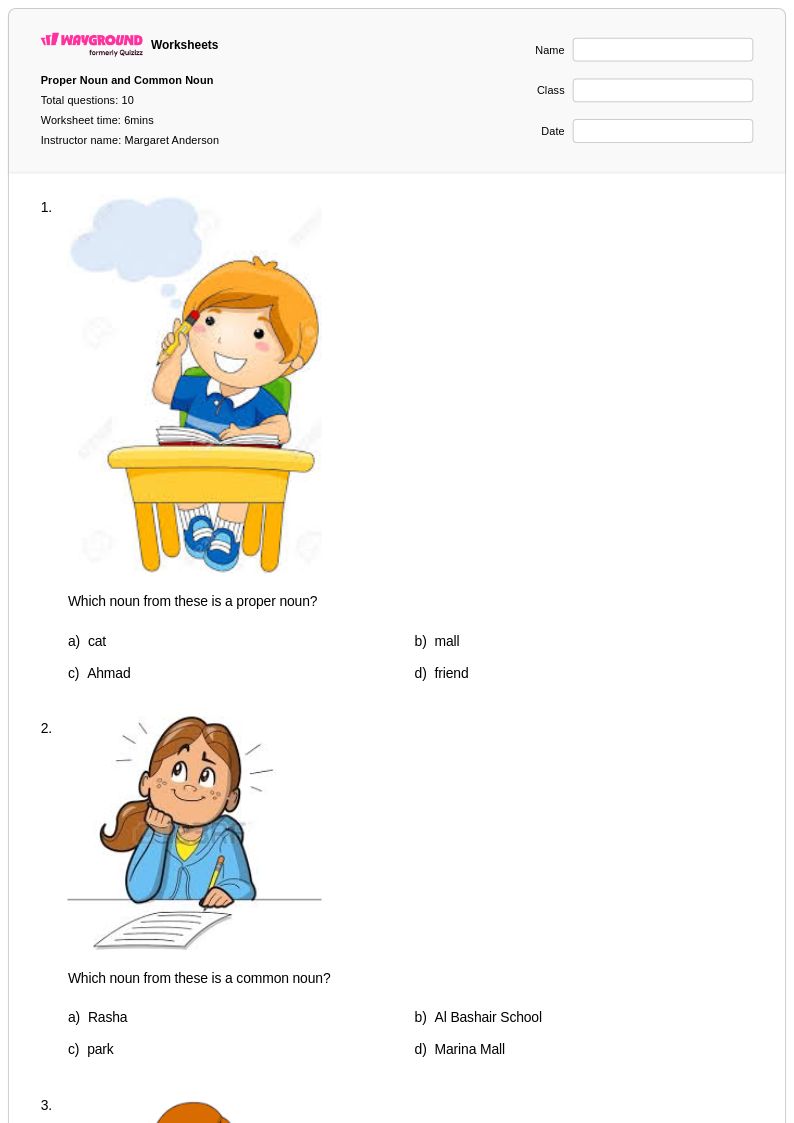
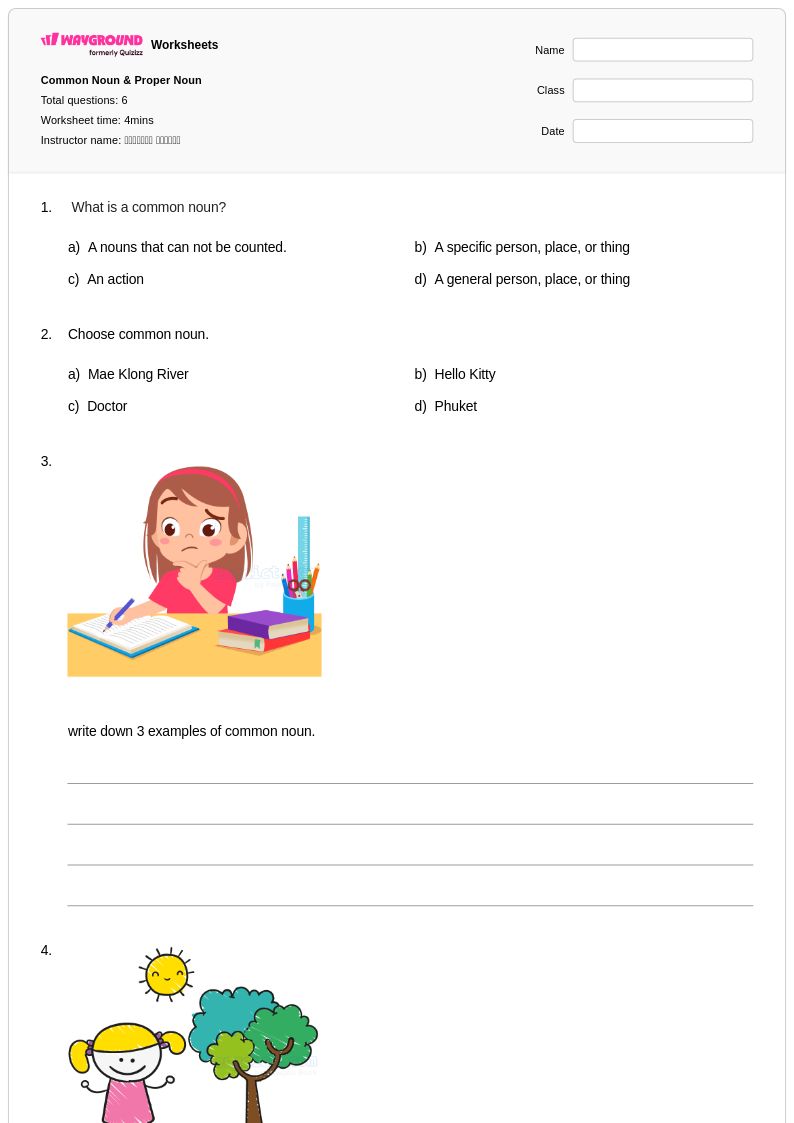
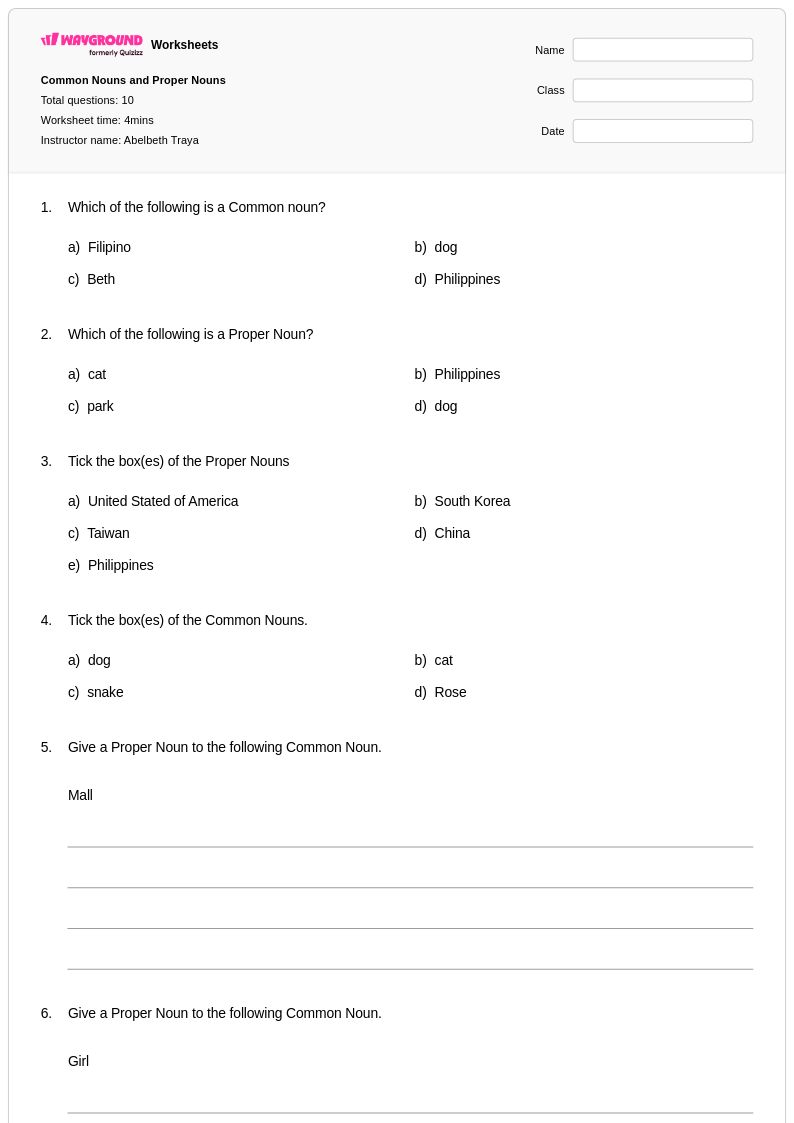
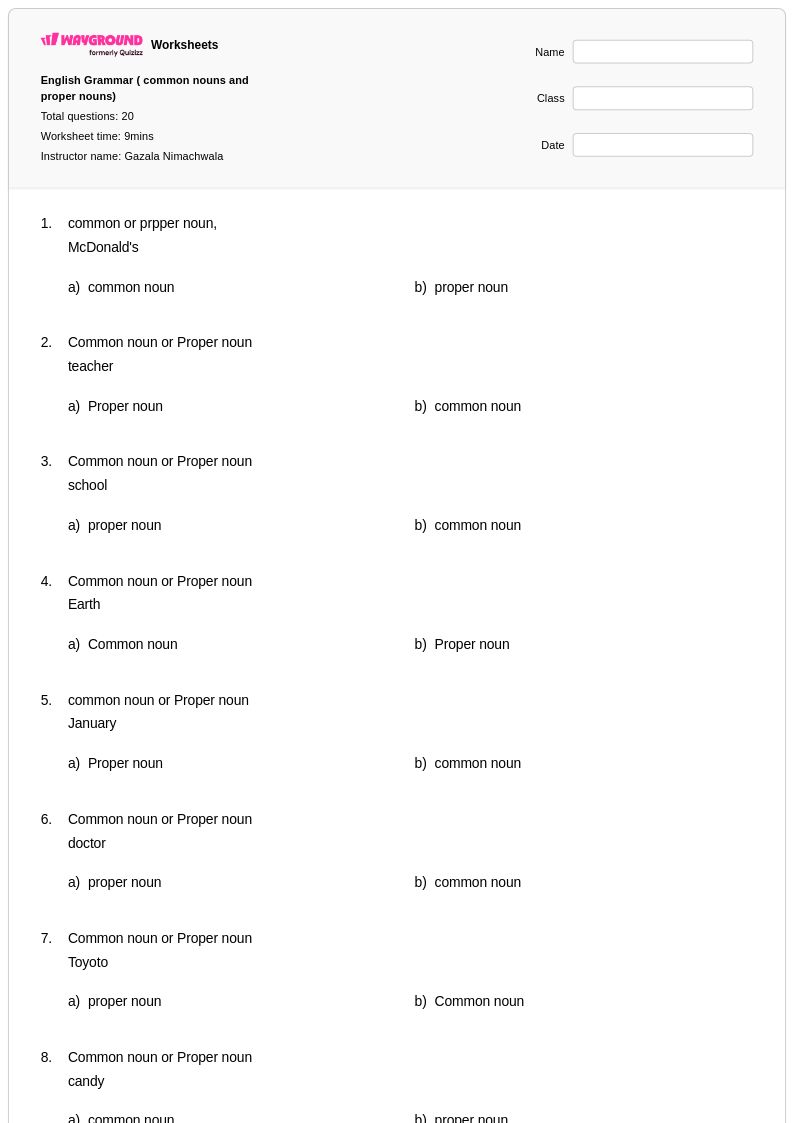
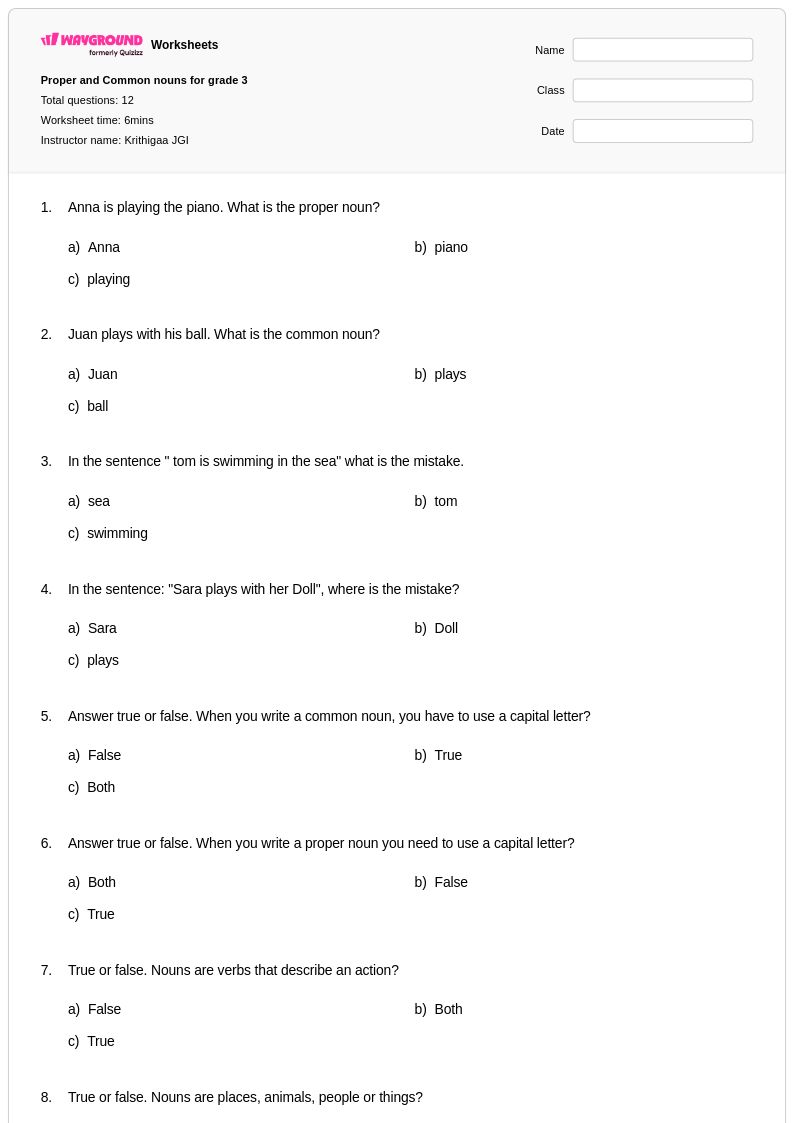
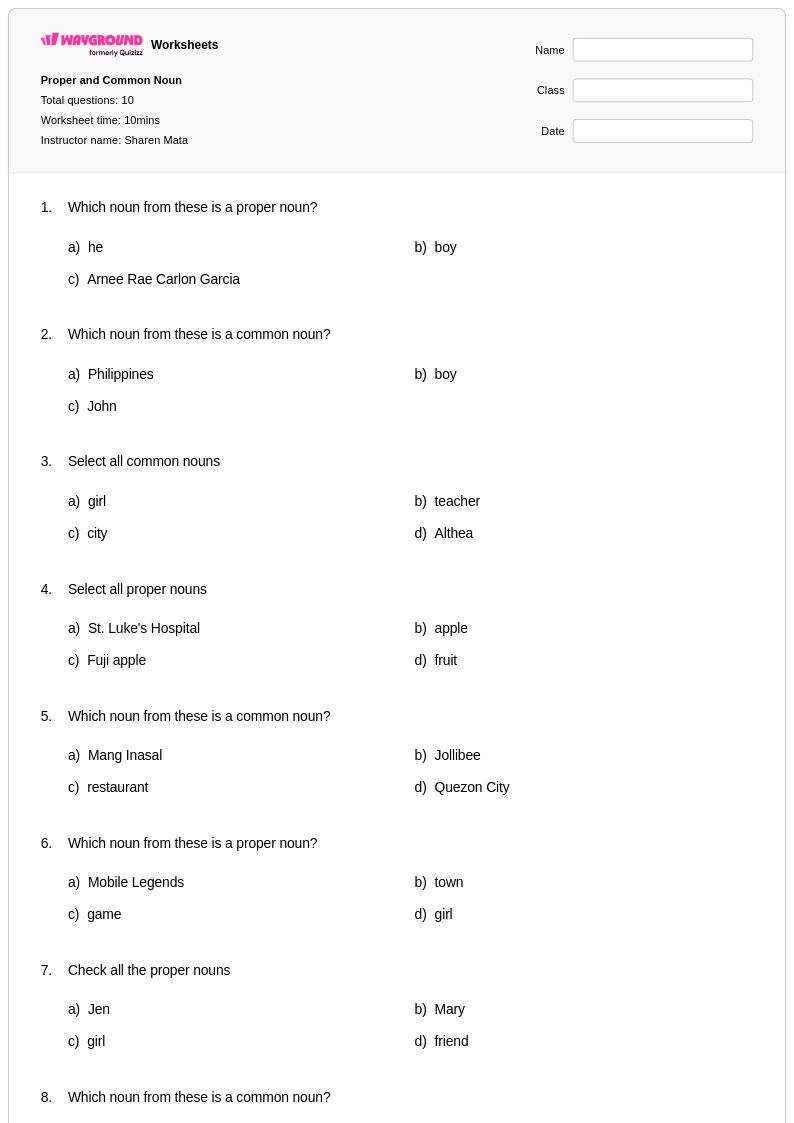
Common noun worksheets available through Wayground (formerly Quizizz) provide comprehensive practice for students learning to identify and categorize the most fundamental building blocks of language. These educational resources focus on helping learners distinguish common nouns from other parts of speech while developing essential vocabulary and grammar skills through systematic practice problems. The worksheets feature diverse exercises that guide students through recognizing everyday objects, places, people, and concepts that serve as common nouns in sentences and passages. Teachers can access complete materials including detailed answer keys, ready-to-use pdf formats, and free printables that support both classroom instruction and independent study, making it simple to reinforce this critical foundation of English grammar.
Wayground (formerly Quizizz) supports educators with an extensive collection of teacher-created common noun resources drawn from millions of professionally developed materials that undergo rigorous quality standards. The platform's advanced search and filtering capabilities allow teachers to quickly locate worksheets aligned with specific learning objectives and curriculum standards, while built-in differentiation tools enable customization for diverse student needs and ability levels. These common noun practice materials are available in both printable pdf formats for traditional classroom use and digital formats for interactive learning experiences, providing maximum flexibility for lesson planning, targeted remediation sessions, and enrichment activities. The comprehensive nature of these resources streamlines curriculum preparation while ensuring students receive focused skill practice that builds confidence in identifying and using common nouns effectively across all areas of written and spoken communication.
FAQs
How do I teach common nouns to elementary students?
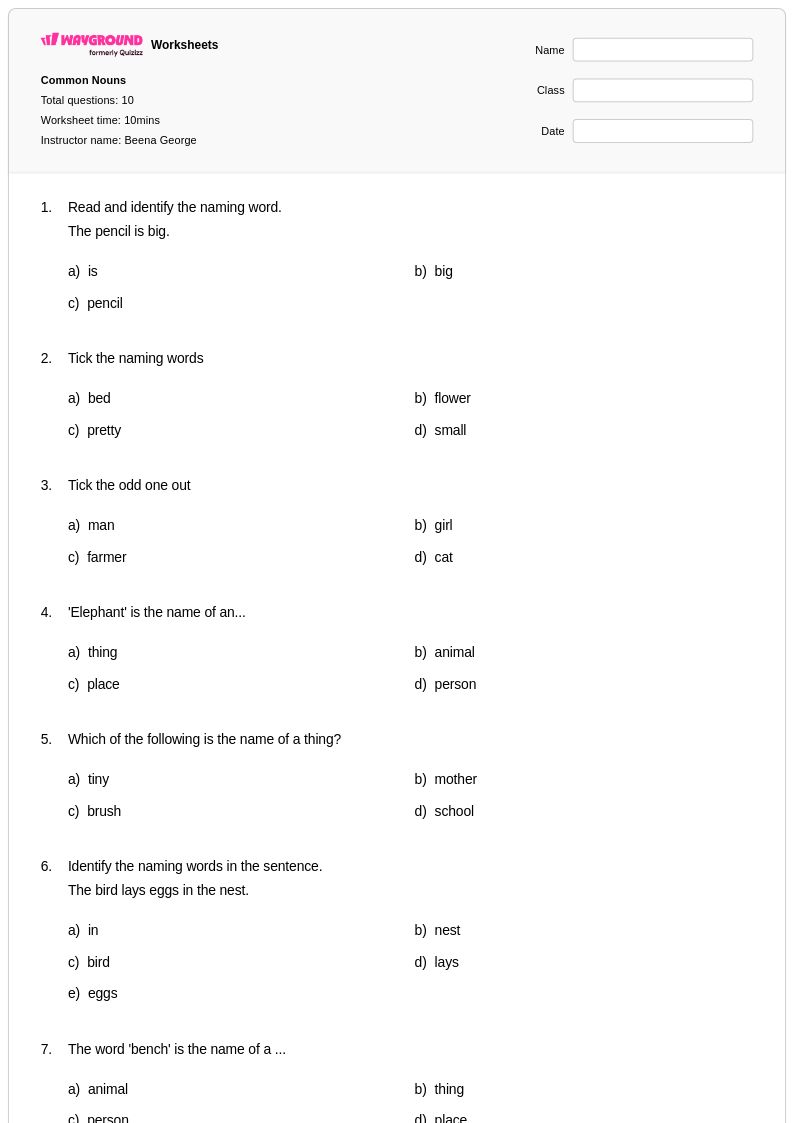
Start by anchoring the concept in the concrete: common nouns are general names for everyday people, places, things, and ideas, as opposed to specific proper nouns. Use familiar examples from the classroom itself, such as desk, teacher, and window, before moving to written sentences. Sorting activities where students categorize nouns by type (person, place, thing, idea) are especially effective for building recognition before application.
What exercises help students practice identifying common nouns?
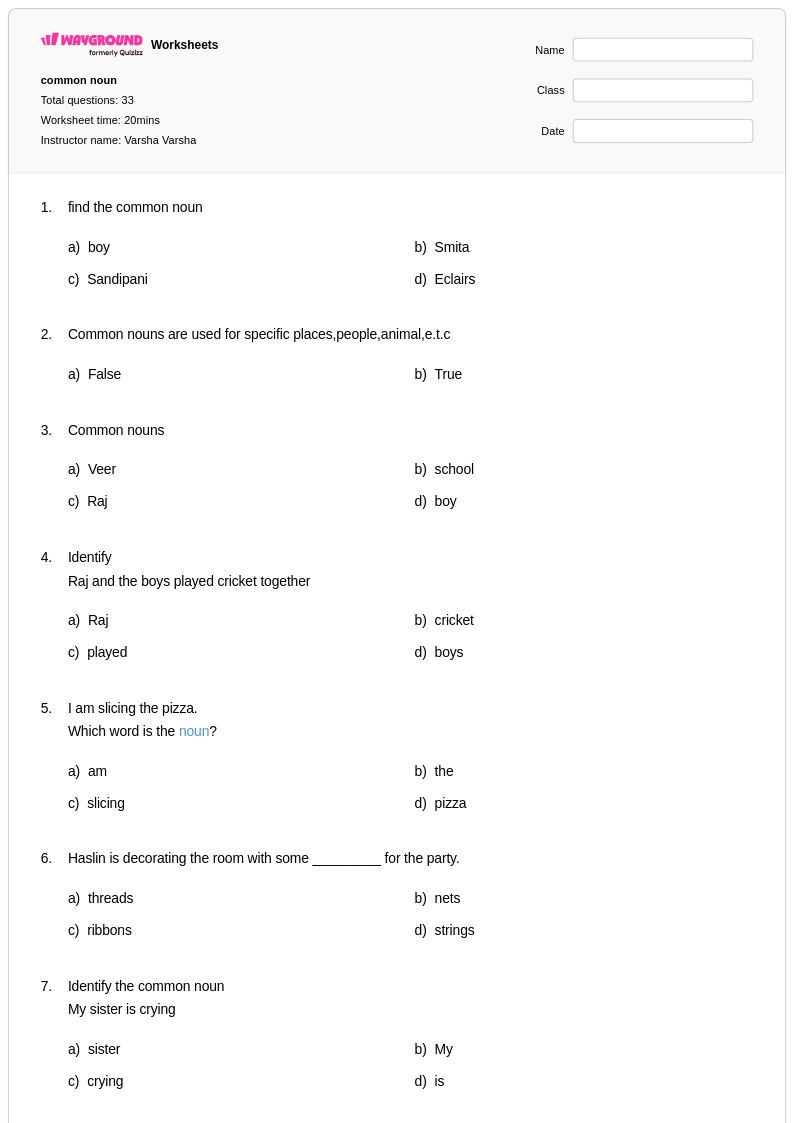
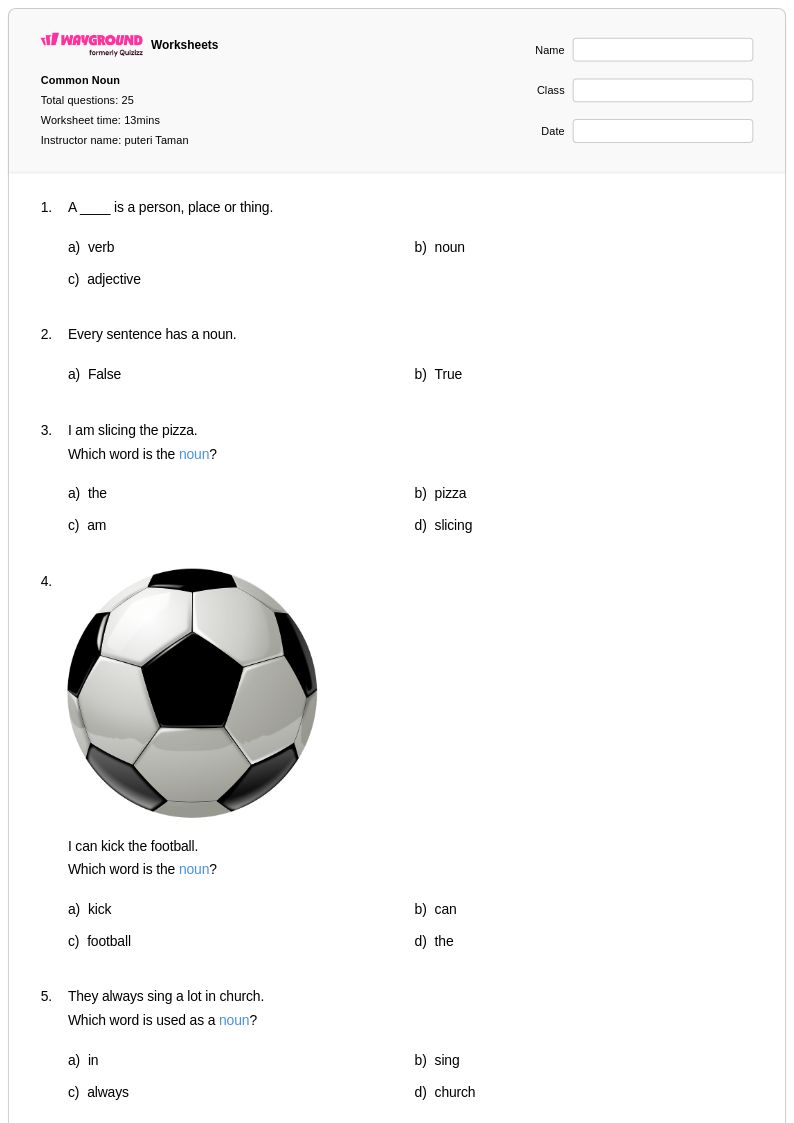
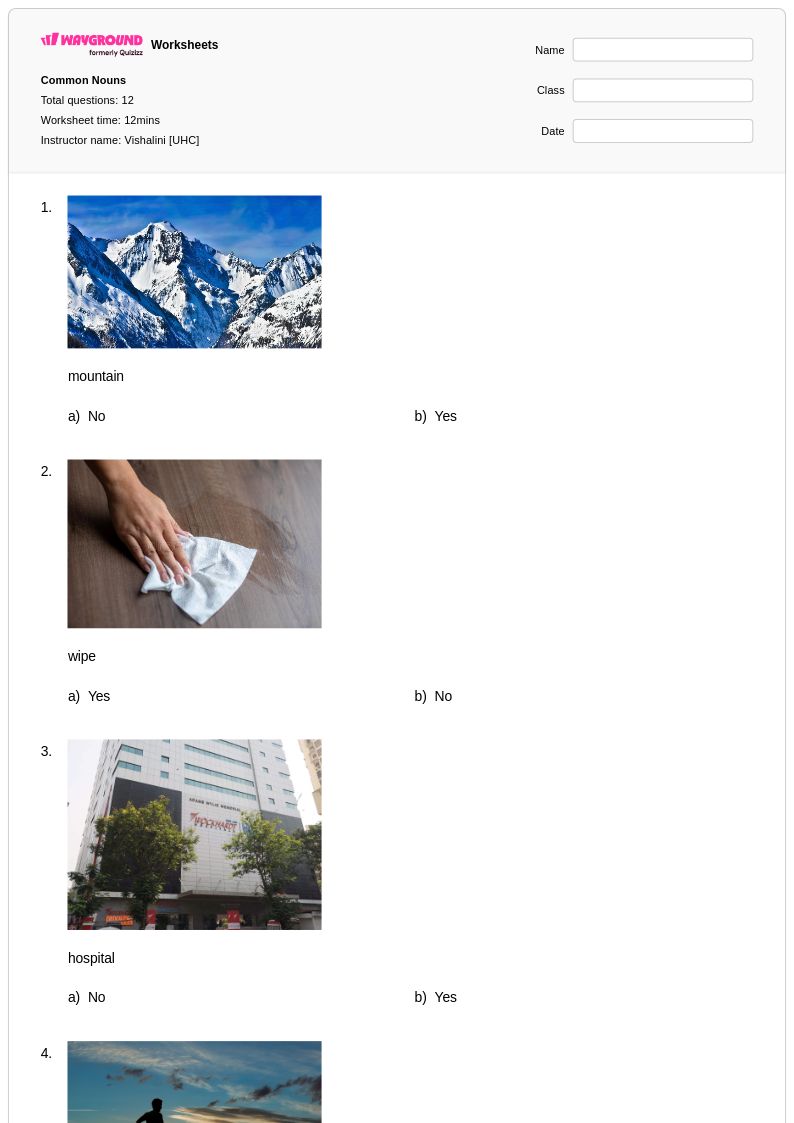
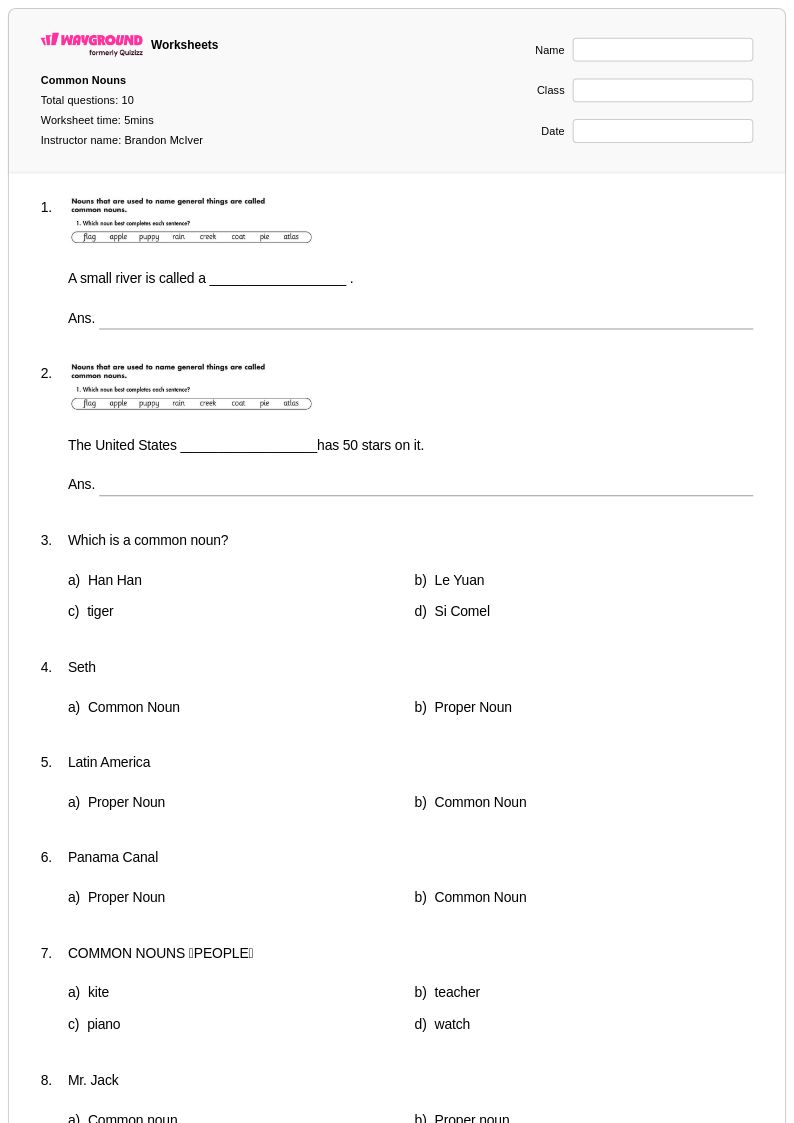
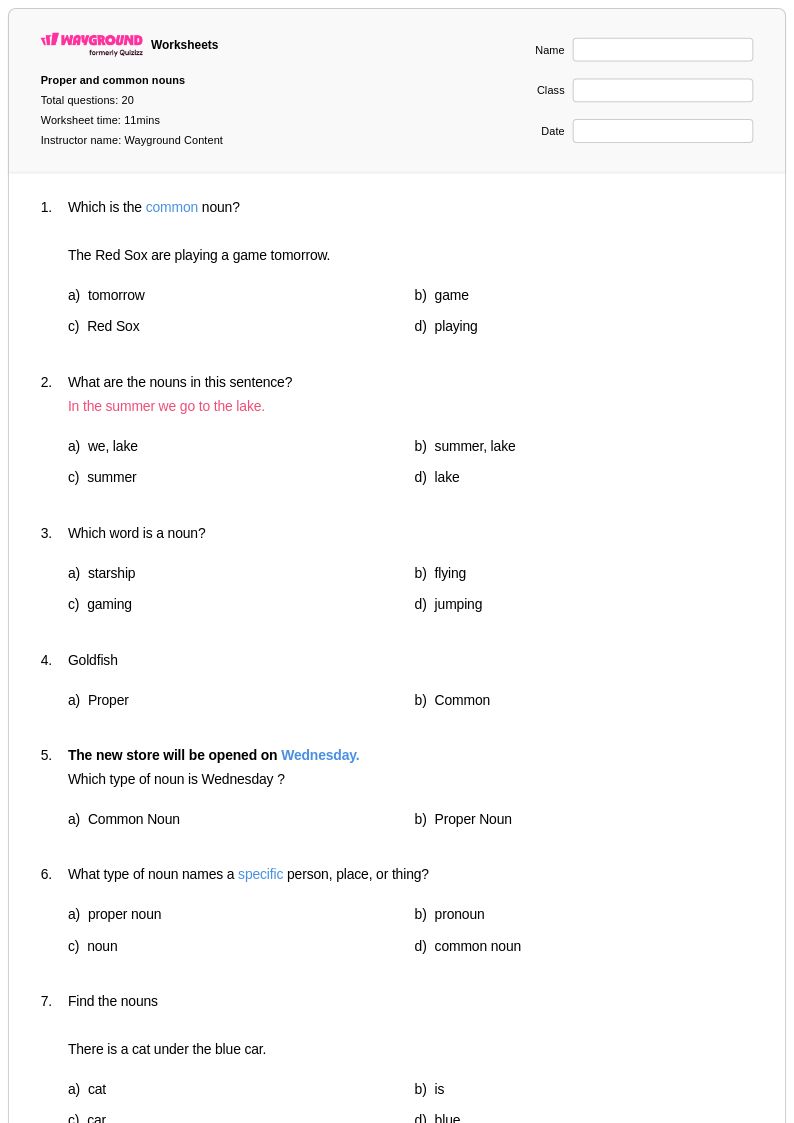
Effective practice exercises include underlining common nouns in sentences, sorting word lists into noun categories, and filling in blanks with appropriate common nouns. Passage-based exercises, where students identify all common nouns within a short paragraph, build the skill in context rather than in isolation. These formats mirror the way nouns appear in real reading and writing, which strengthens transfer to authentic tasks.
What is the difference between a common noun and a proper noun, and how do I explain it to students?
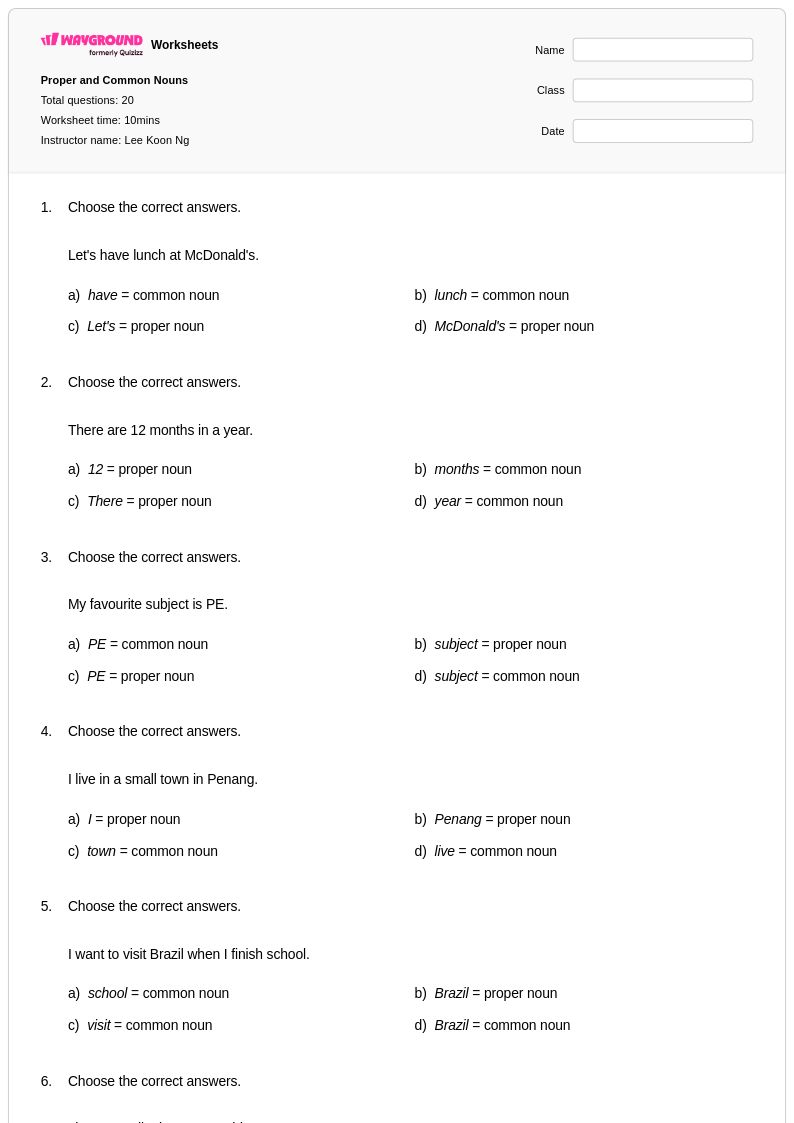
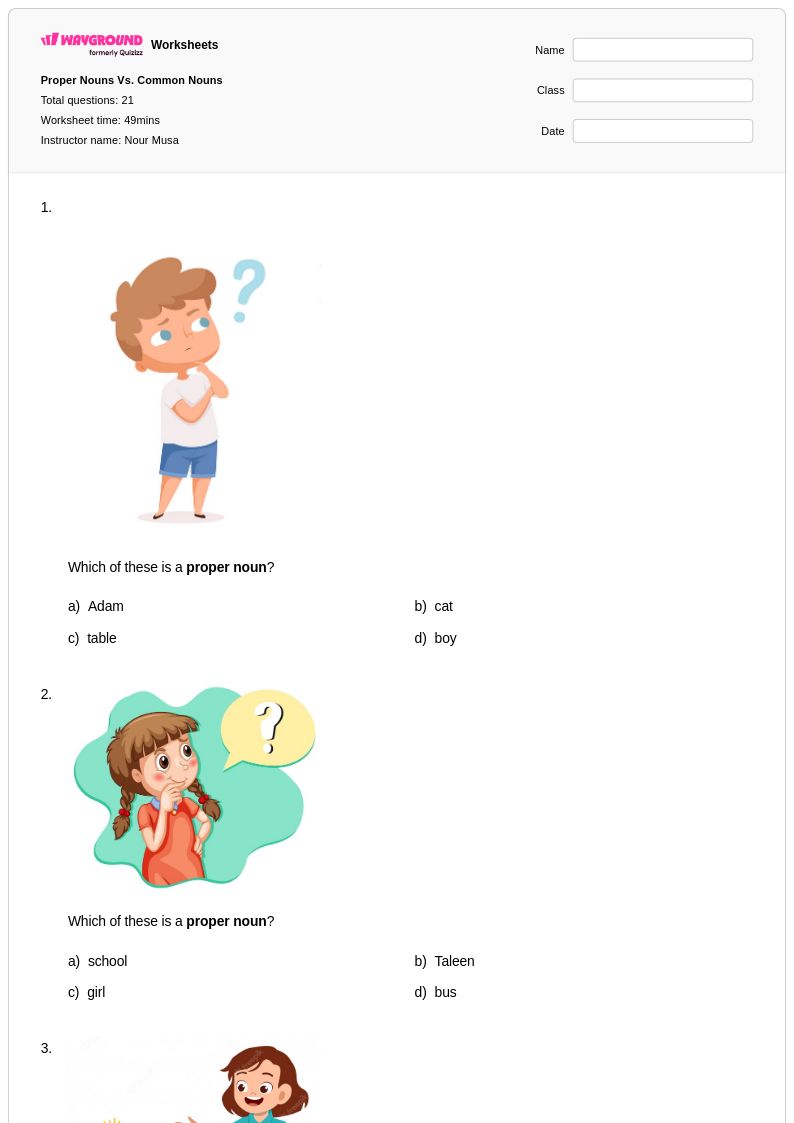
A common noun is a general name for a person, place, thing, or idea and is not capitalized unless it starts a sentence, while a proper noun names a specific one and is always capitalized. For example, city is a common noun, but Chicago is a proper noun. A reliable classroom anchor is to ask students: 'Is this a name shared by many things, or does it belong to just one specific thing?'
What mistakes do students commonly make when identifying common nouns?
The most frequent error is confusing common nouns with proper nouns, particularly when students encounter capitalized words mid-sentence and assume capitalization alone defines a noun. Students also struggle to recognize abstract common nouns like freedom, love, or idea because these cannot be seen or touched. Another common error is misidentifying adjectives that closely resemble nouns, such as treating the word wooden in 'the wooden box' as a noun rather than a modifier.
How can I use common noun worksheets to support students who need differentiation or accommodations?
On Wayground, teachers can apply individual accommodations directly to students, including read aloud support so questions are read to students who need it, reduced answer choices to lower cognitive load, and extended time for those who need more processing time. These settings can be applied to one student or the whole class and are saved for reuse in future sessions, making it straightforward to support diverse learners without disrupting the rest of the class.
How do I use Wayground's common noun worksheets in my classroom?
Wayground's common noun worksheets are available as printable PDFs for traditional classroom use and in digital formats for technology-integrated learning environments, including the option to host them as a quiz on Wayground. Teachers can use them for direct instruction support, independent practice, homework, or targeted remediation. The included answer keys make grading efficient and allow students to self-check their work during independent study.