Free Printable Connotation and Denotation Worksheets for Class 8
Discover Class 8 connotation and denotation worksheets and printables that help students master the differences between literal meanings and implied emotions in words through engaging practice problems, free PDFs, and comprehensive answer keys.
Explore printable Connotation and Denotation worksheets for Class 8
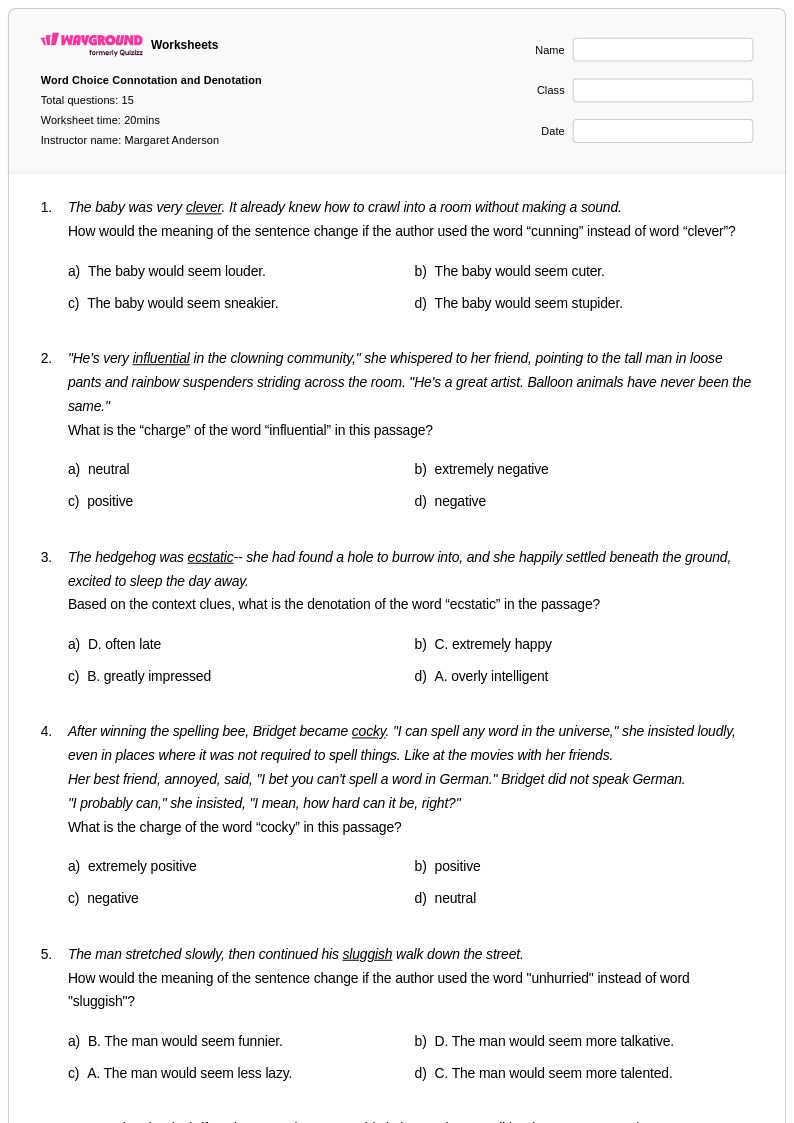
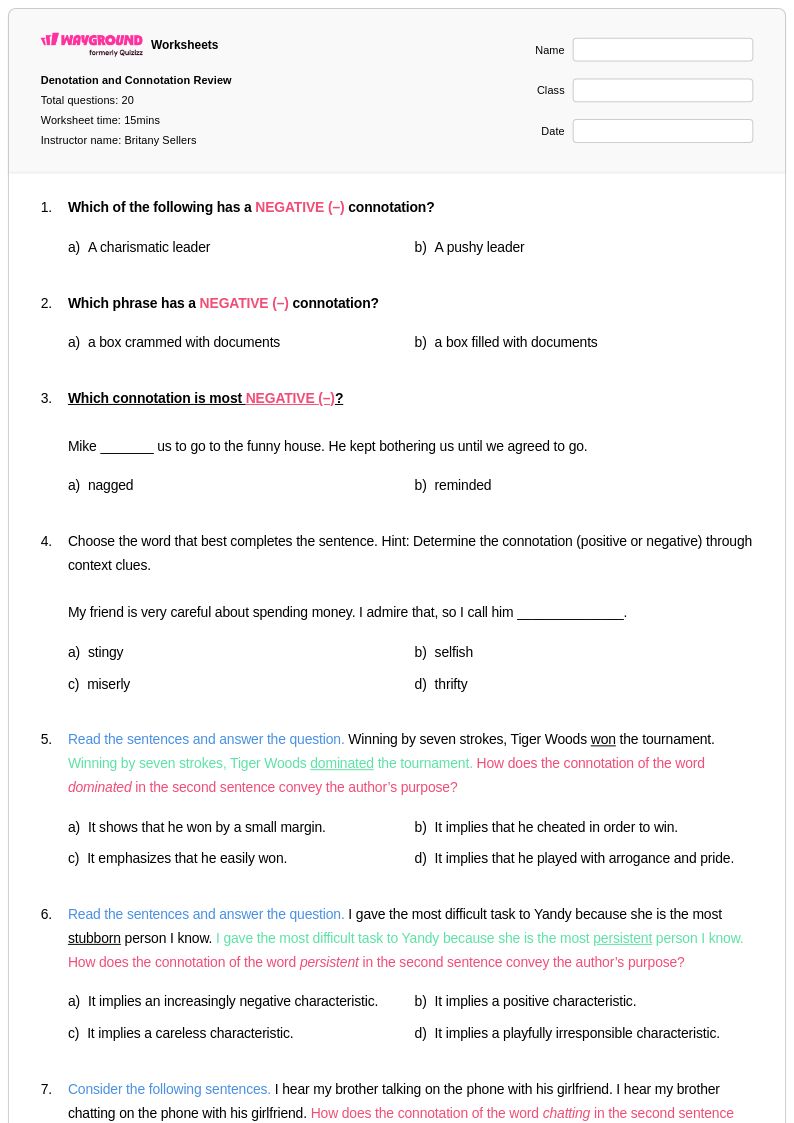
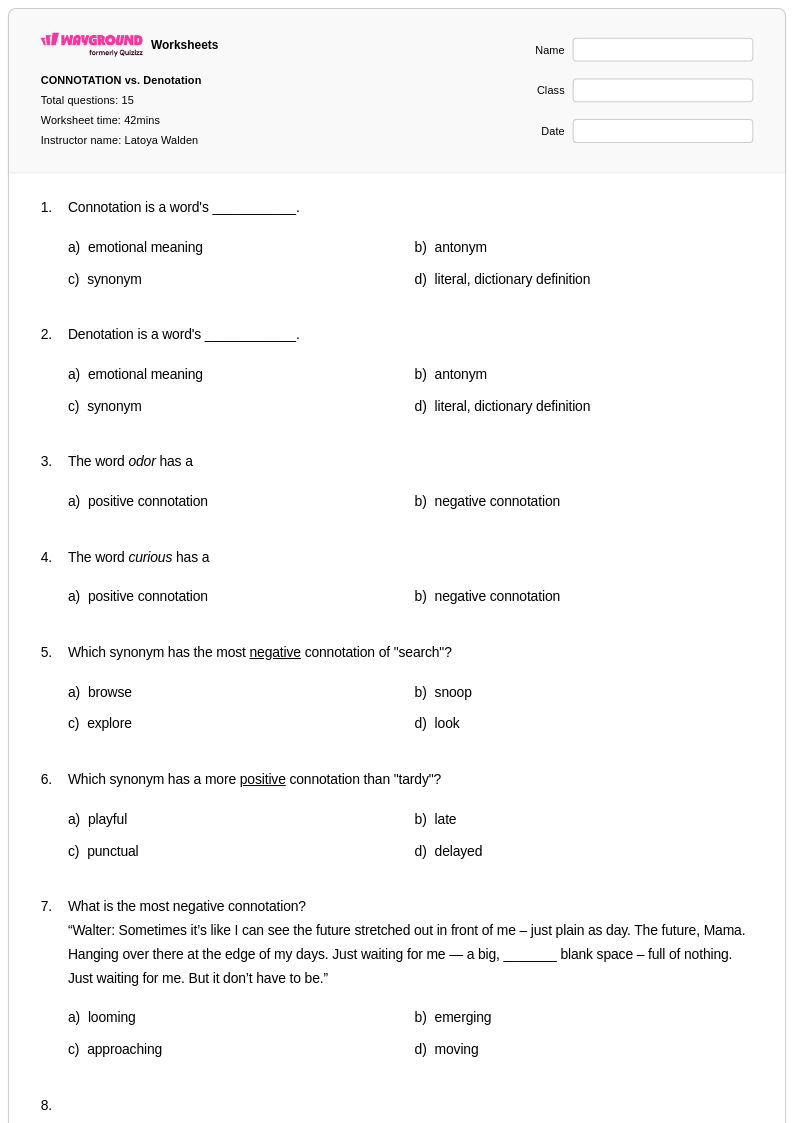
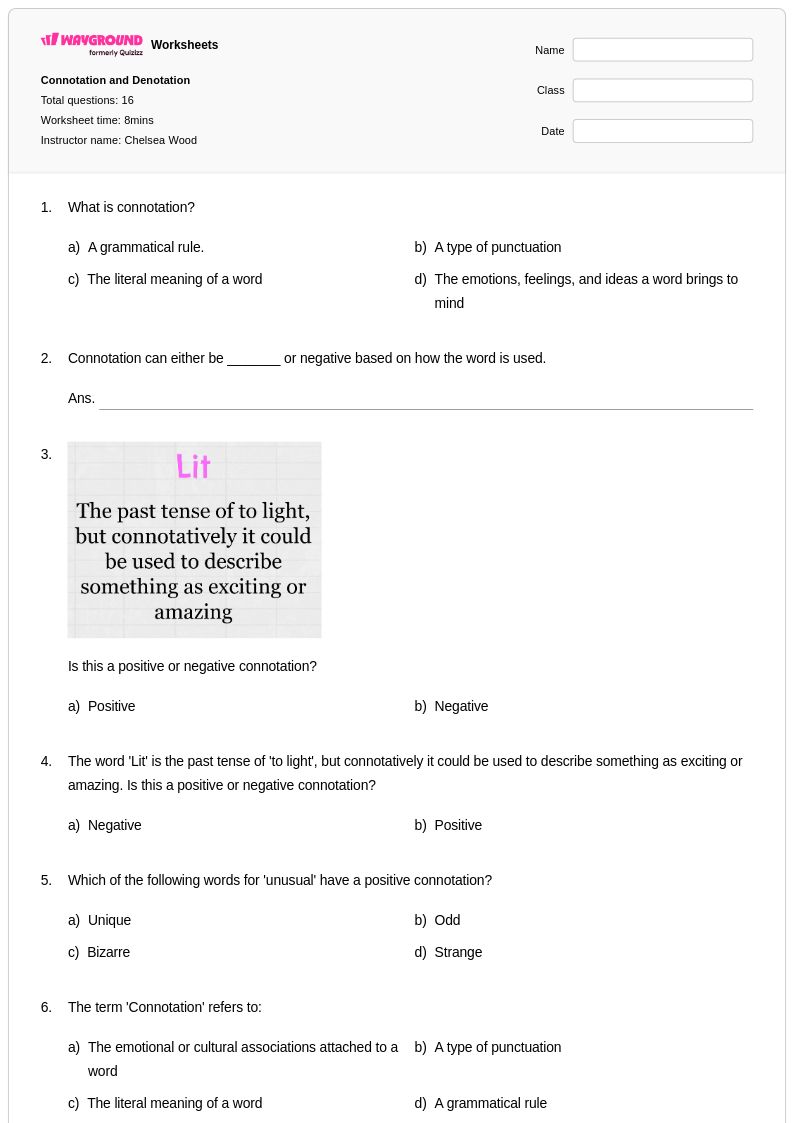
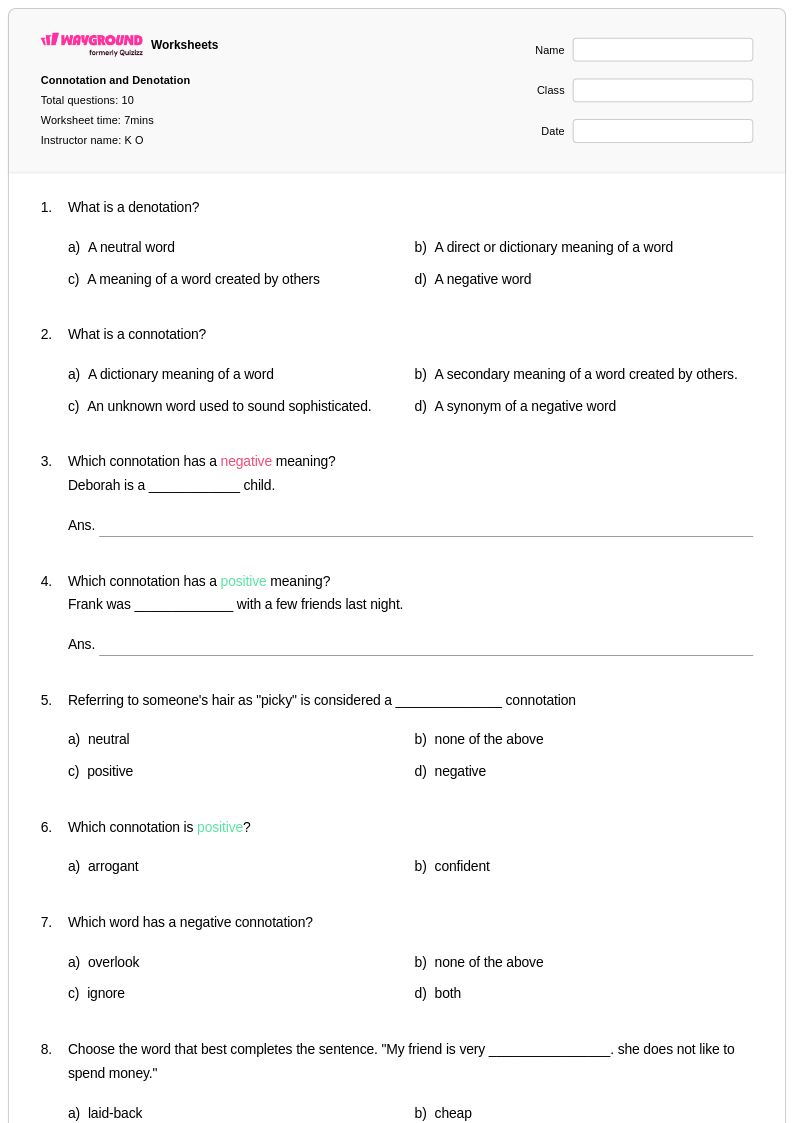
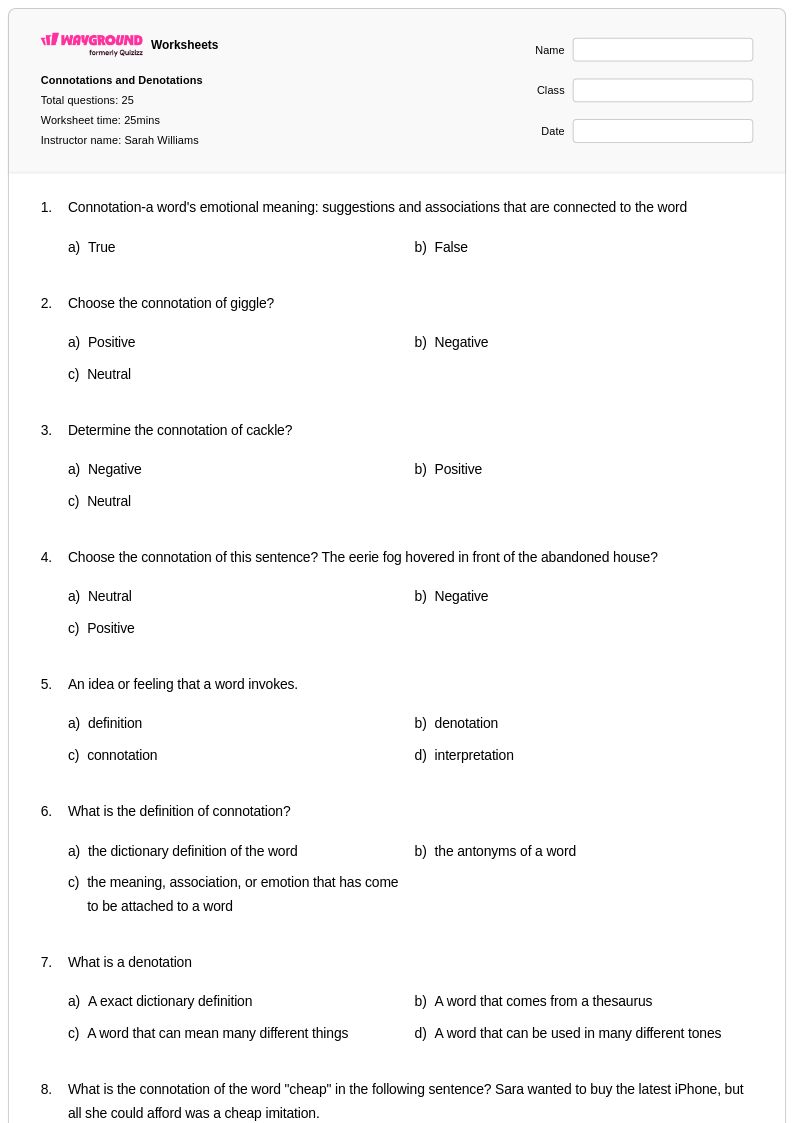
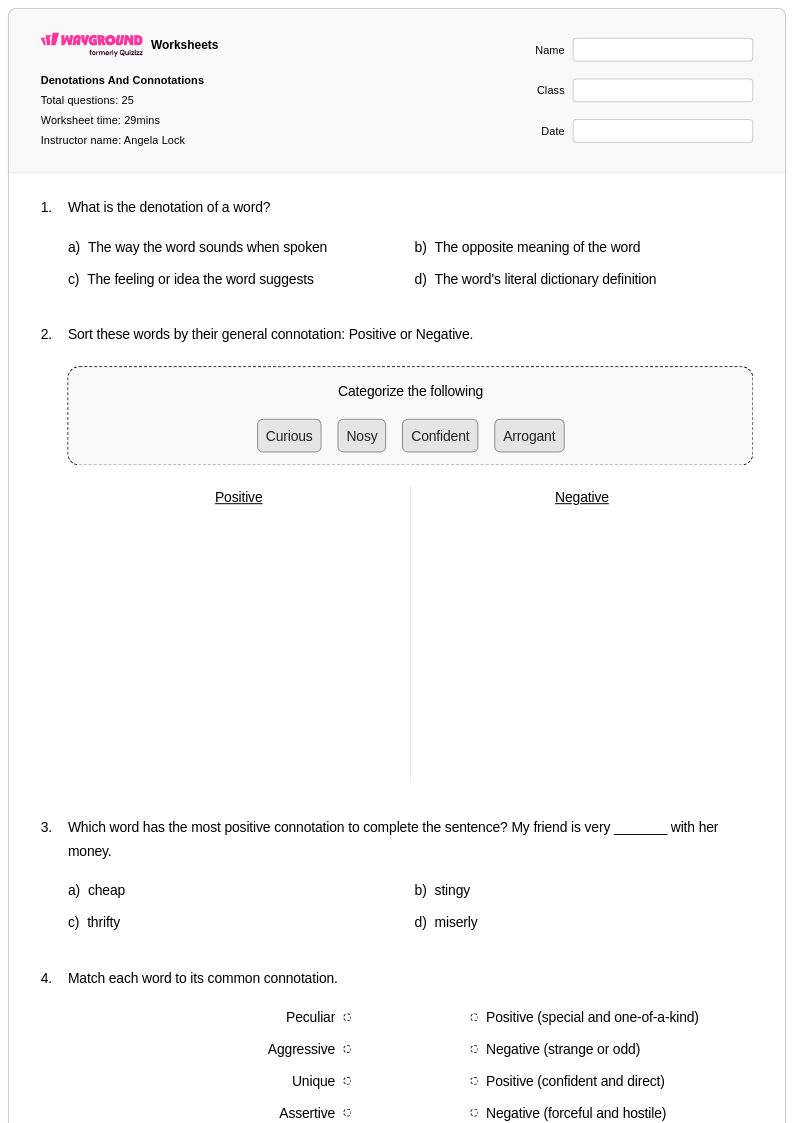
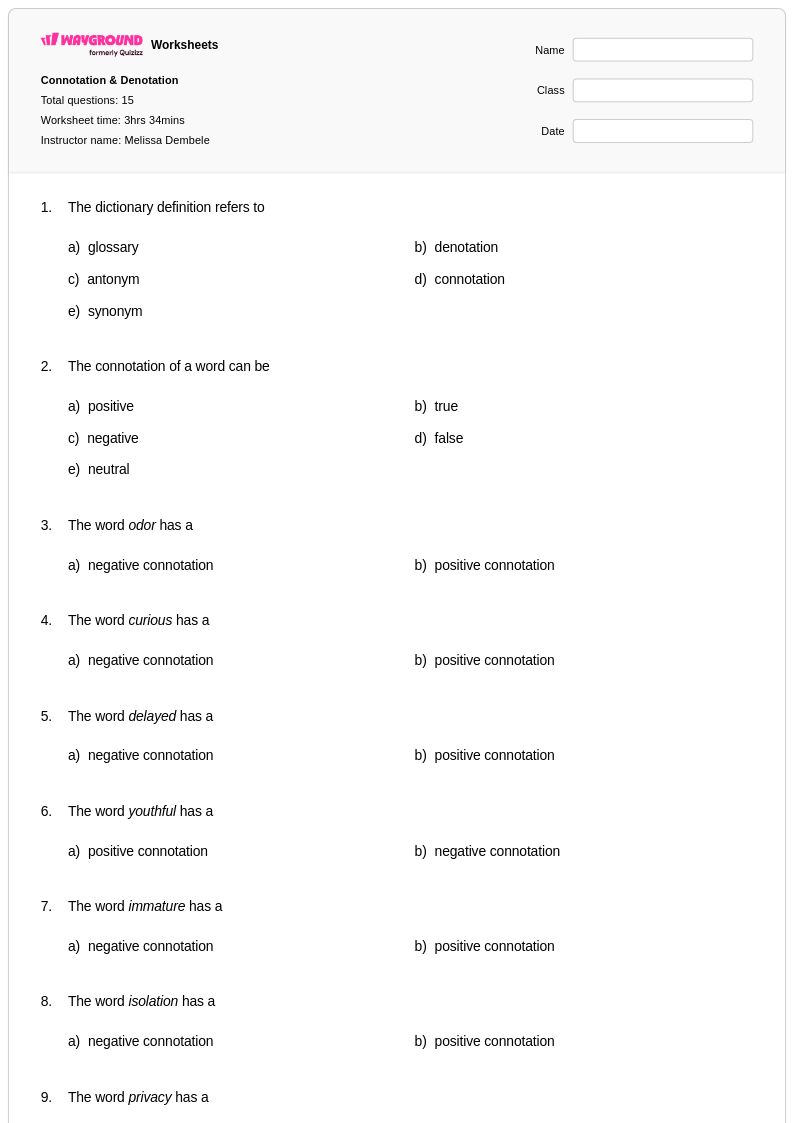
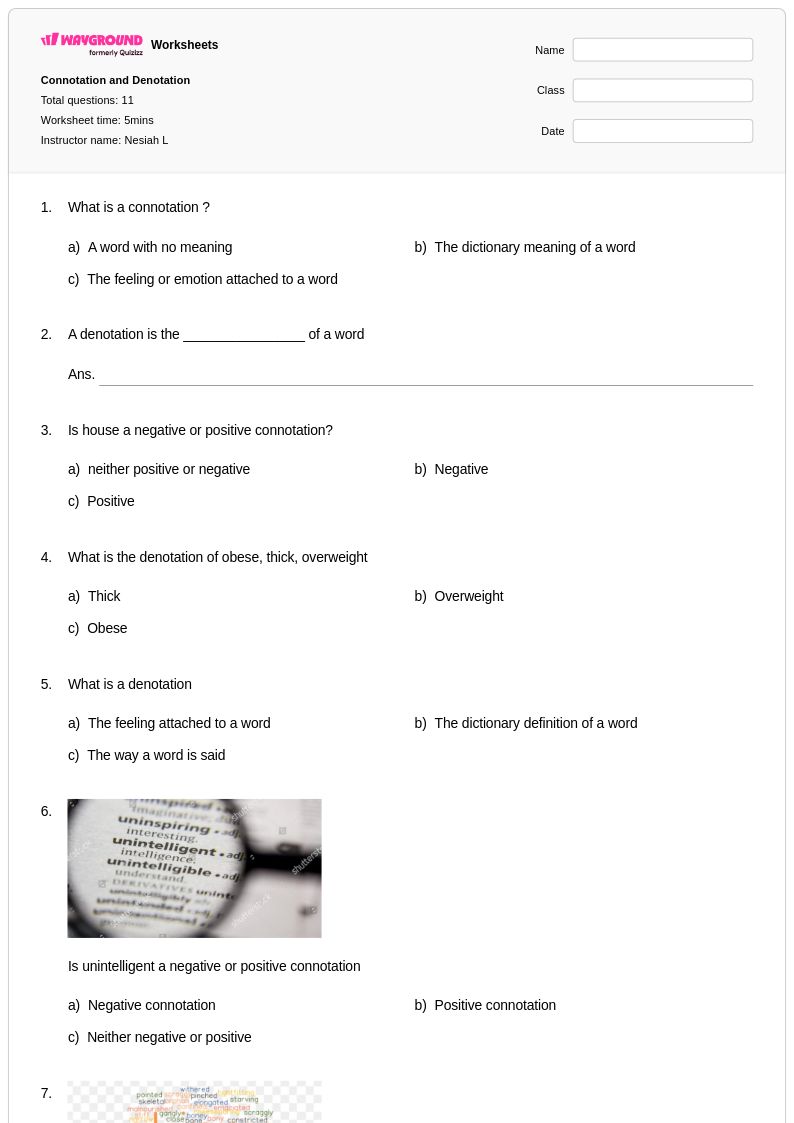
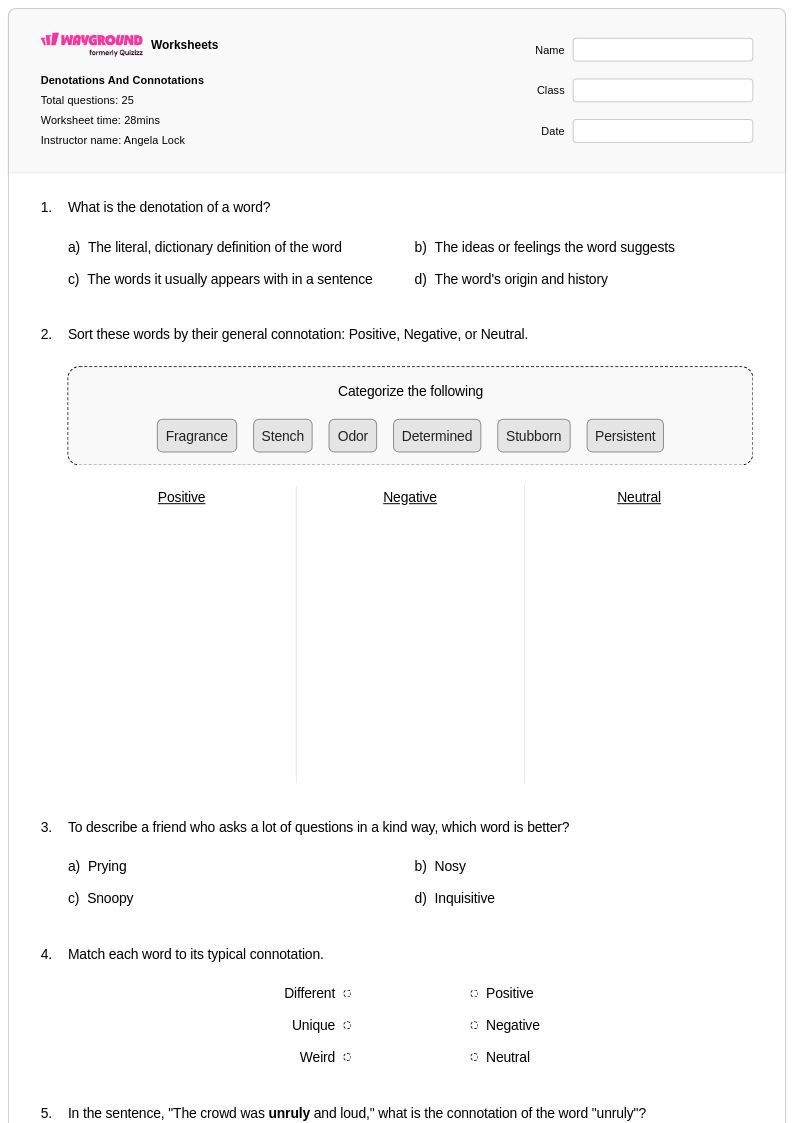
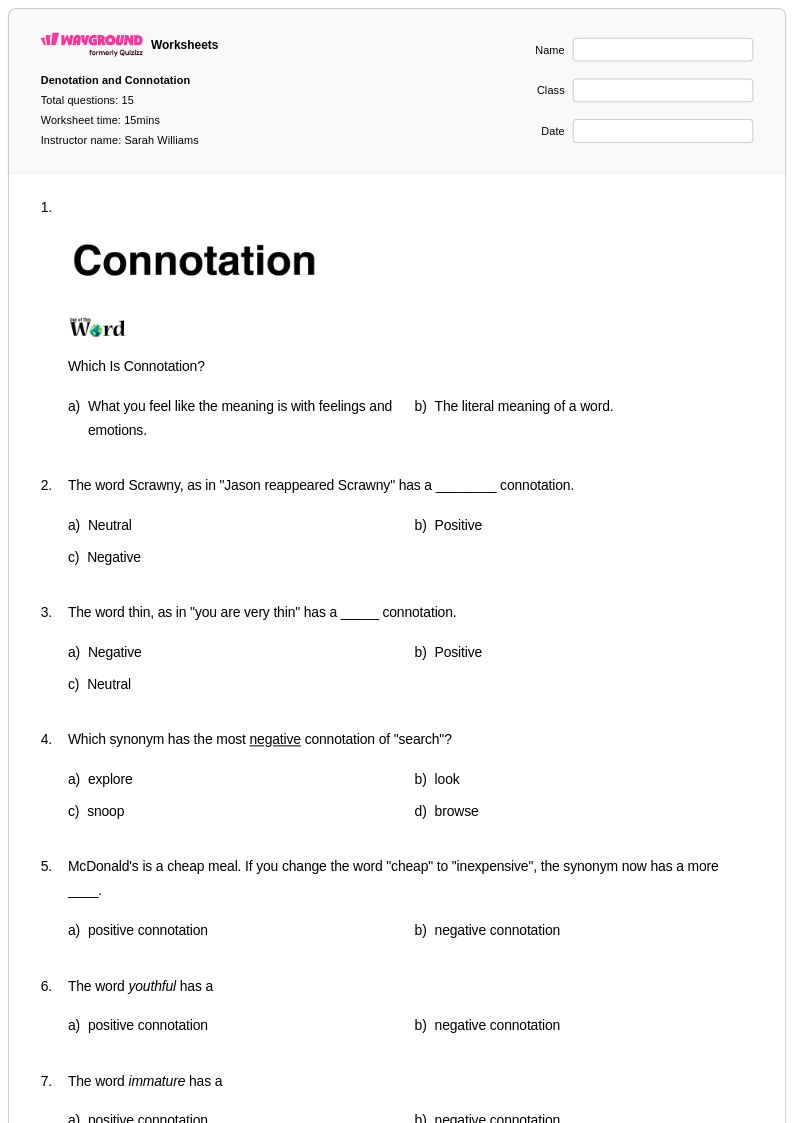
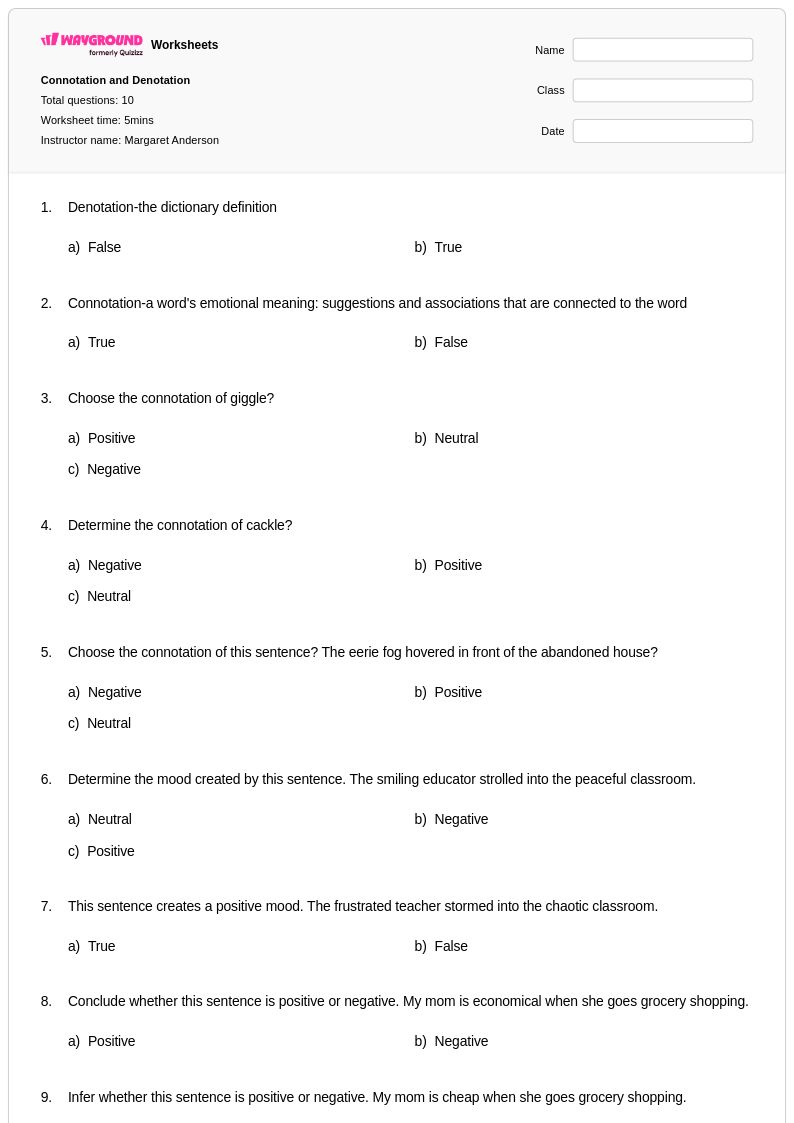
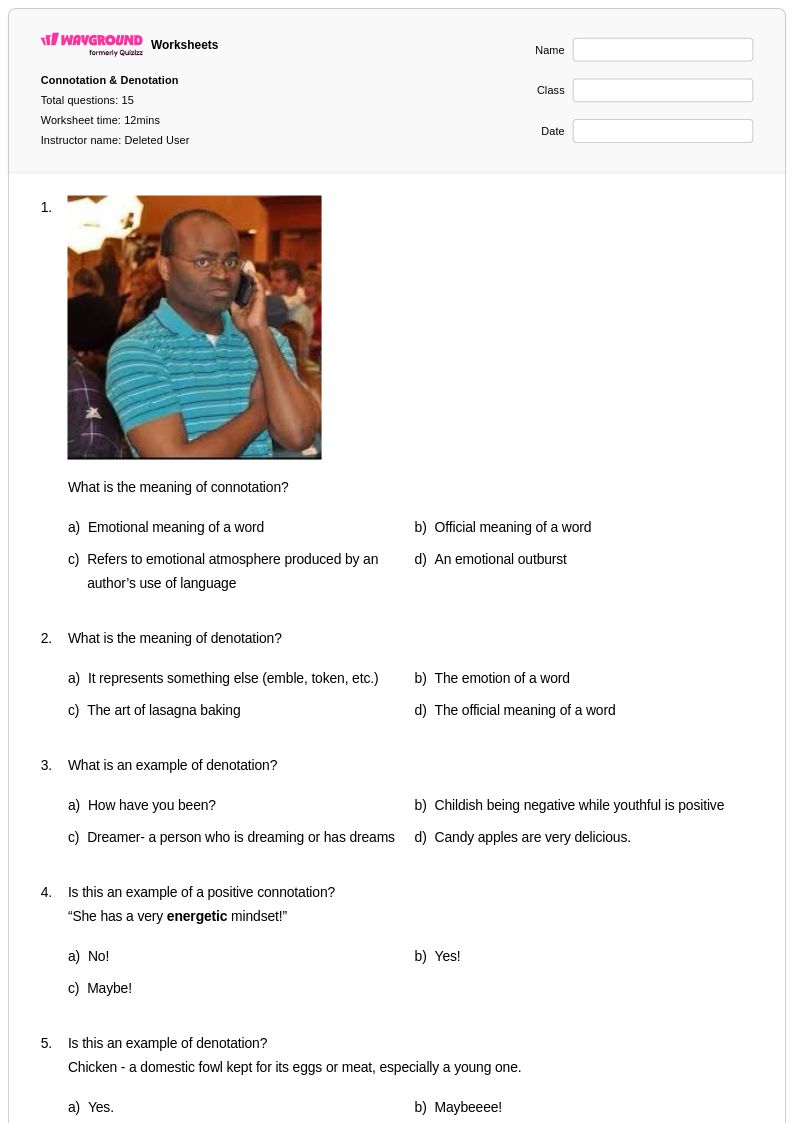
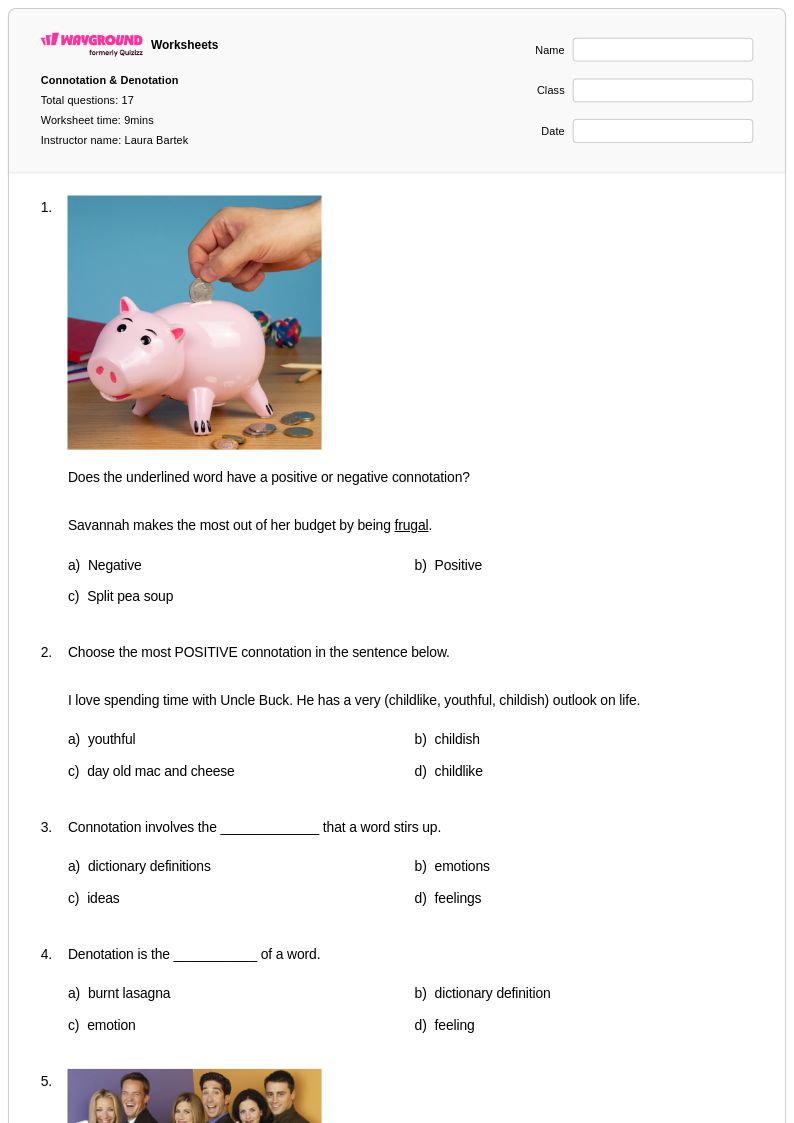
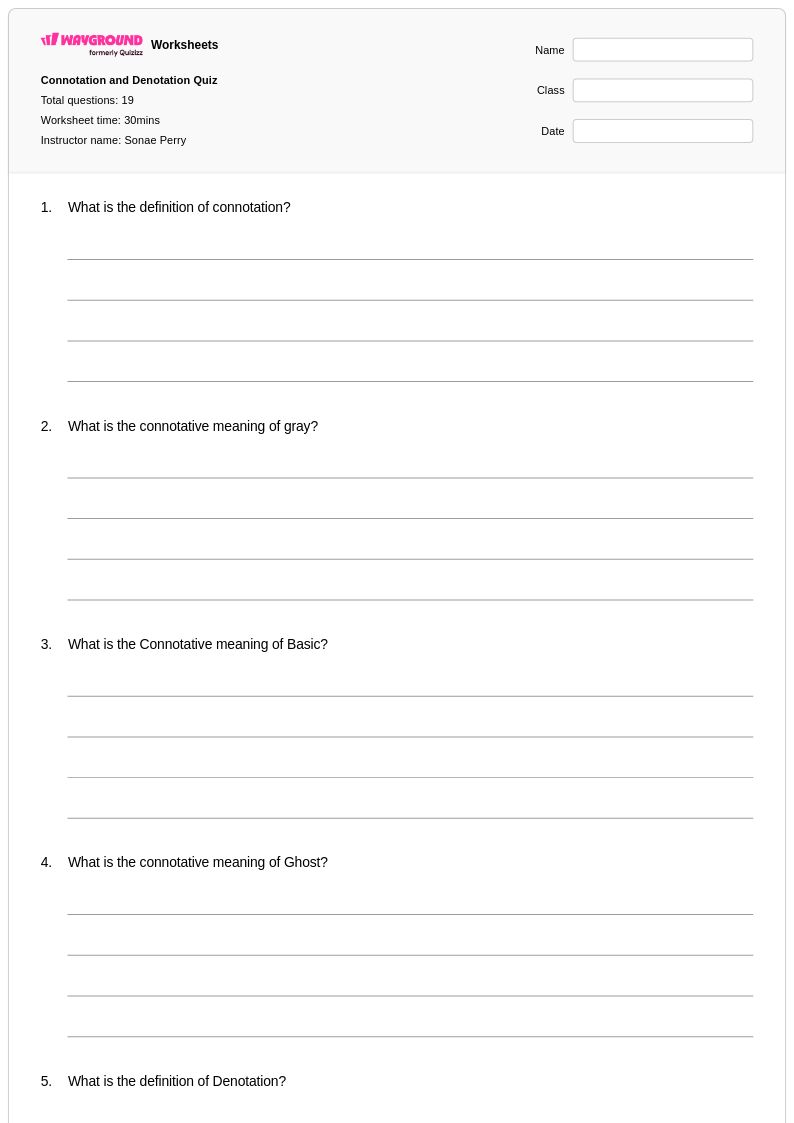
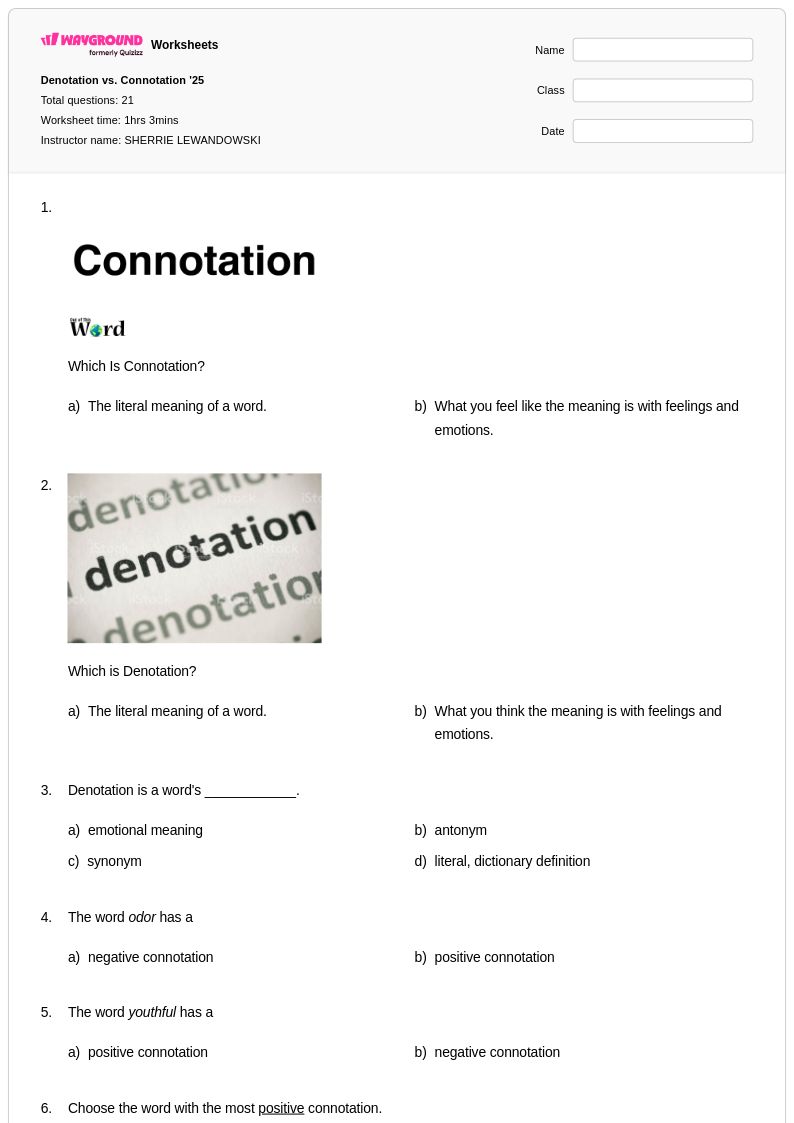
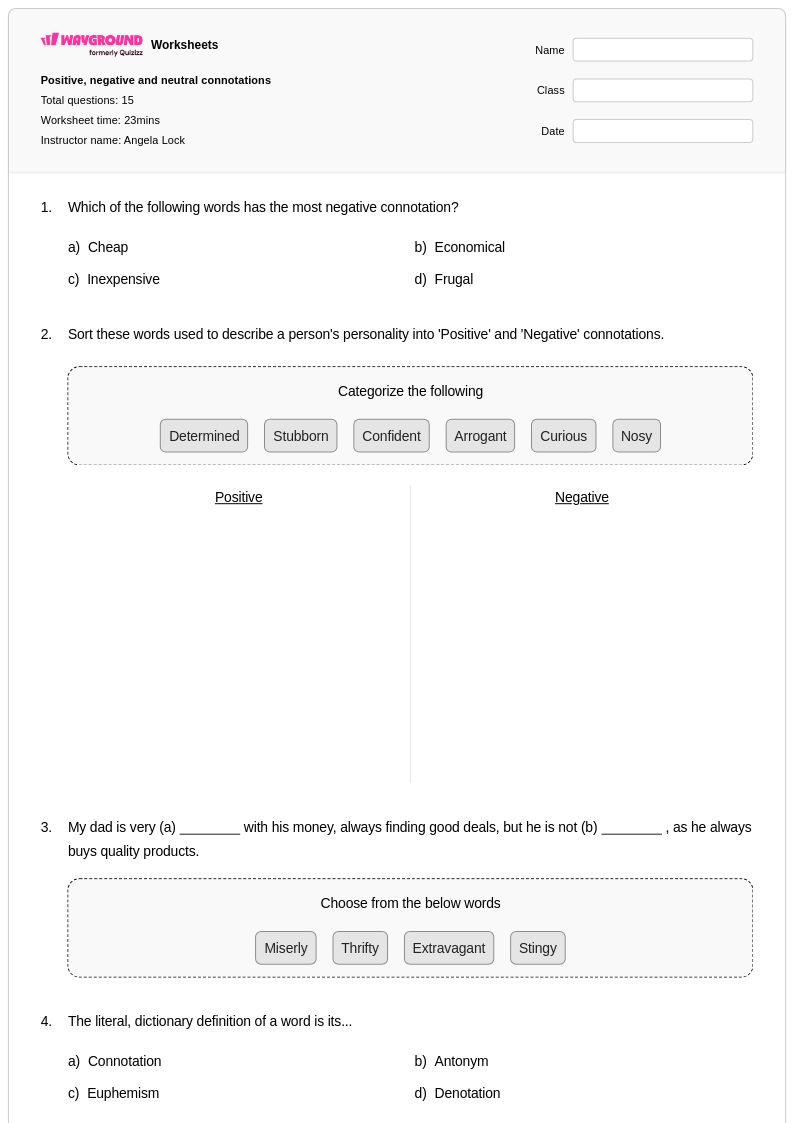
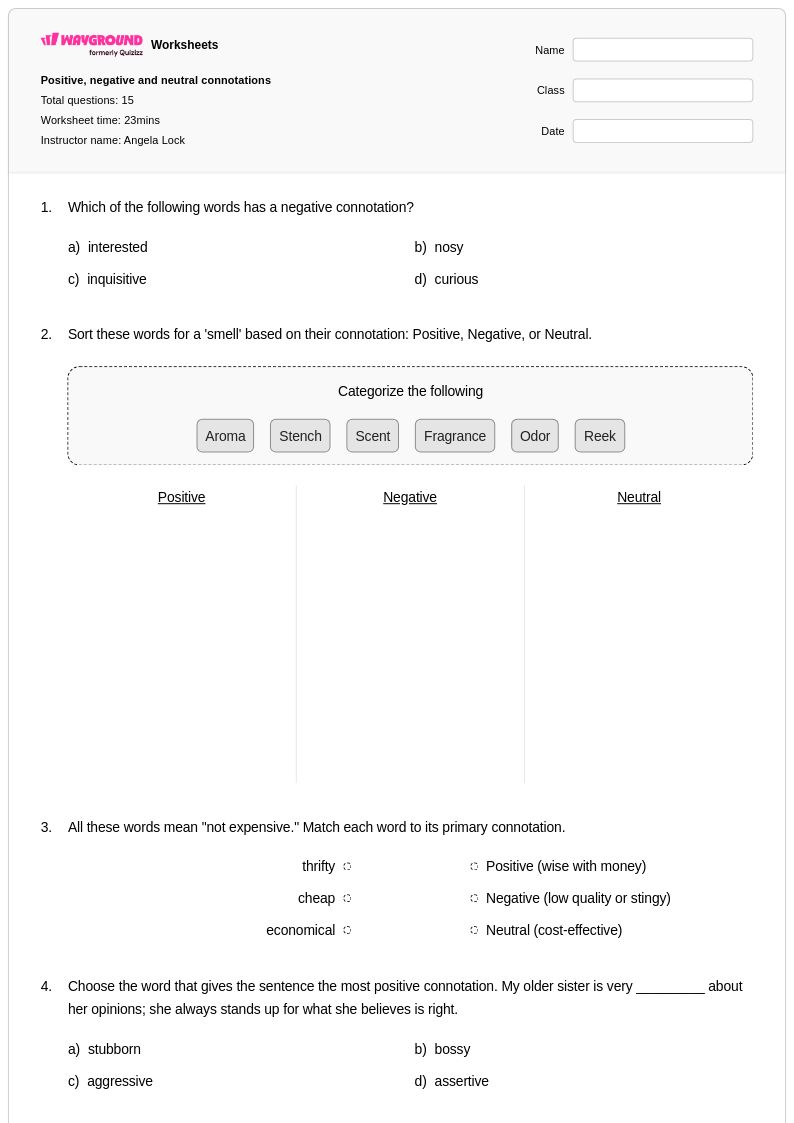
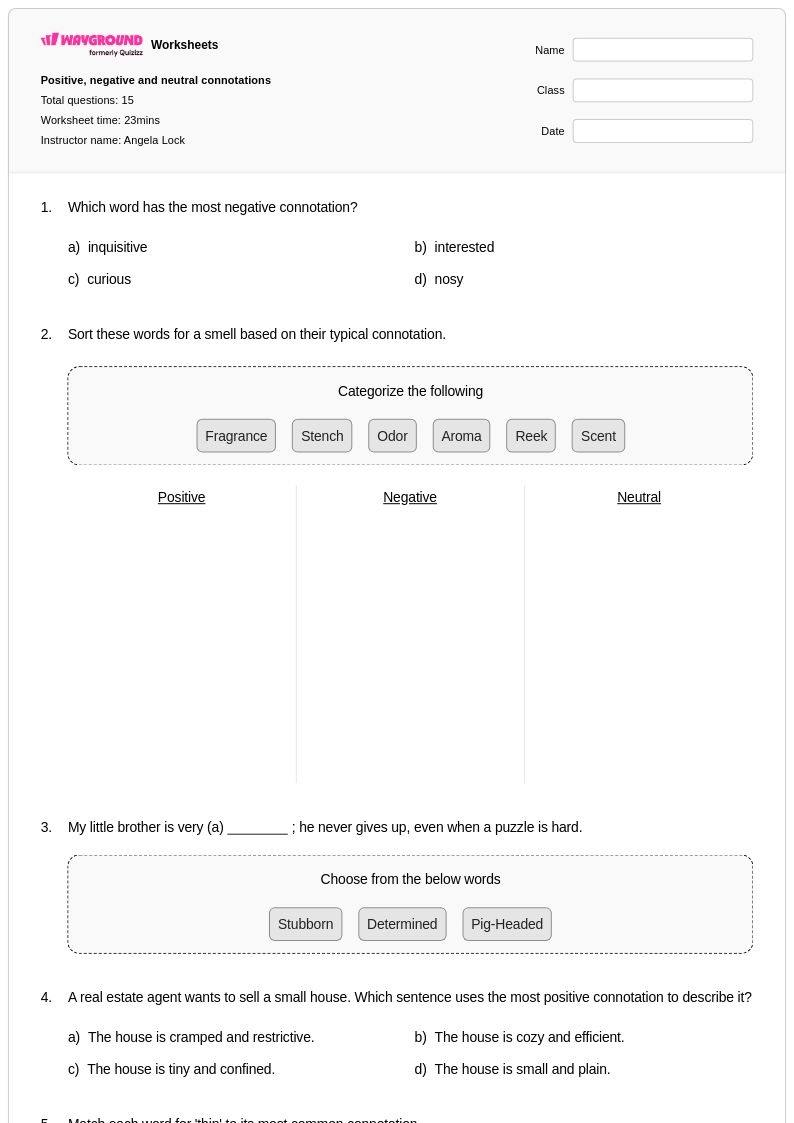
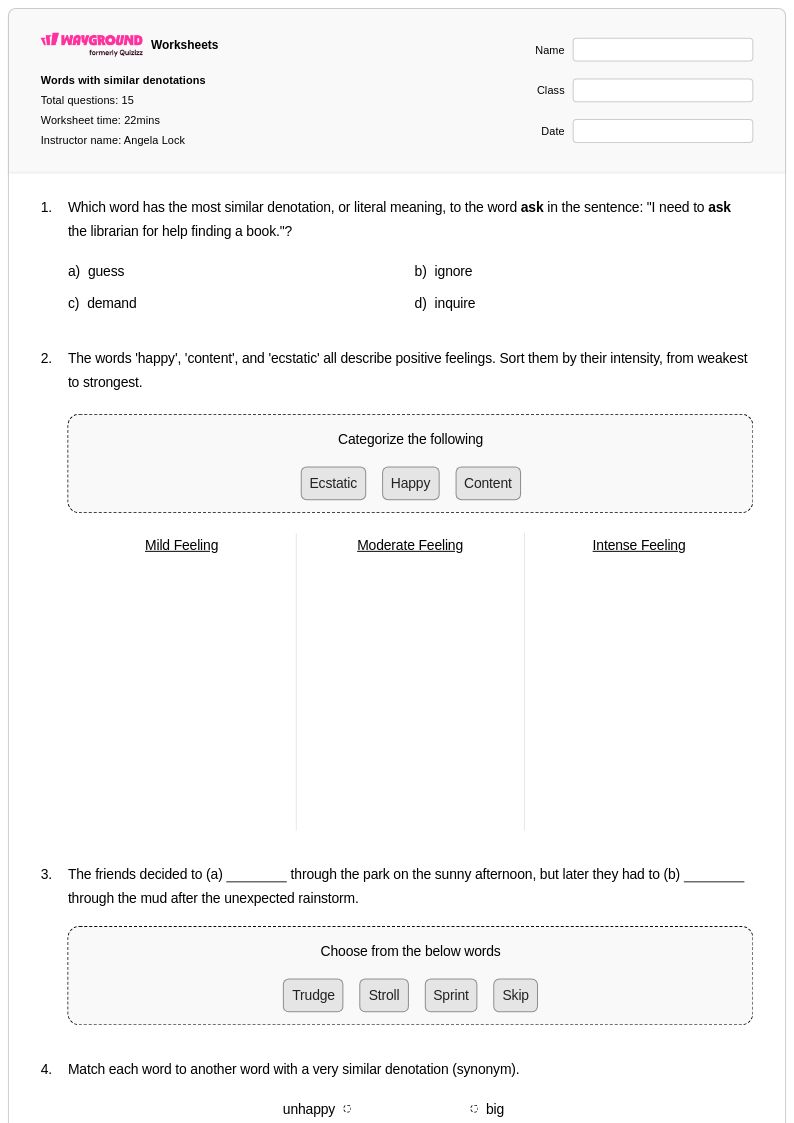
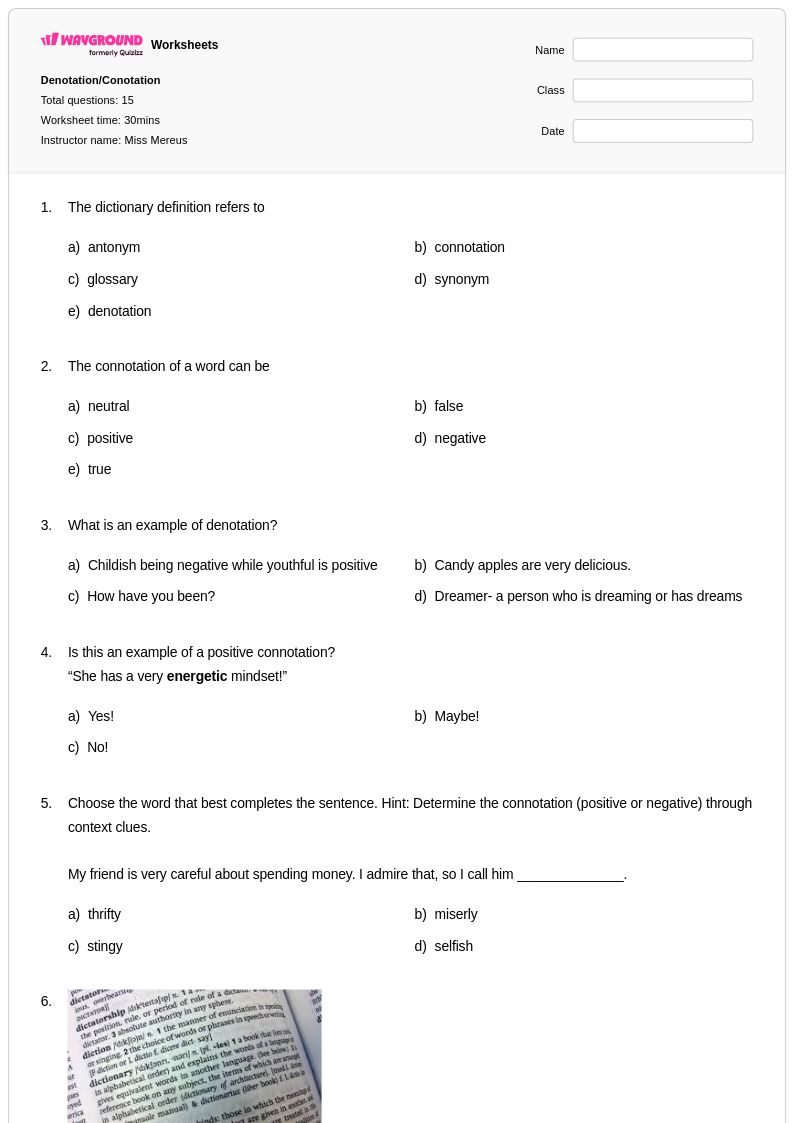
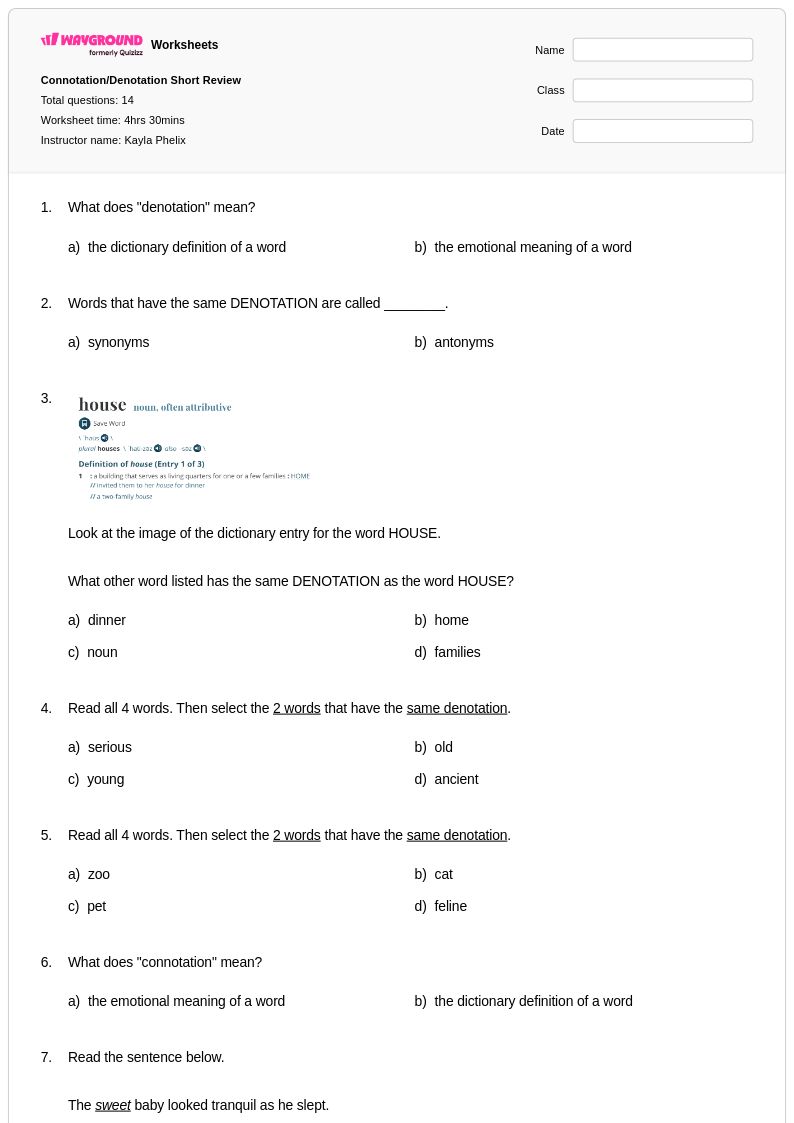
Connotation and denotation worksheets for Class 8 students through Wayground (formerly Quizizz) provide comprehensive practice in understanding the literal versus implied meanings of words. These educational resources strengthen students' ability to distinguish between a word's dictionary definition and its emotional or cultural associations, a critical skill for advanced reading comprehension and effective writing. The worksheets feature diverse practice problems that challenge students to analyze word choices in various contexts, from literature excerpts to everyday communication scenarios. Each printable resource includes detailed answer keys to support independent learning and self-assessment, while the free pdf format ensures easy access for both classroom instruction and homework assignments.
Wayground (formerly Quizizz) empowers teachers with an extensive collection of millions of teacher-created connotation and denotation resources that support differentiated instruction across diverse learning needs. The platform's robust search and filtering capabilities allow educators to quickly locate materials aligned with specific standards and learning objectives, while customization tools enable teachers to modify worksheets for targeted skill practice or remediation. These resources are available in both printable and digital formats, including downloadable pdfs, providing flexibility for various classroom environments and teaching styles. Teachers can seamlessly integrate these materials into lesson planning for initial concept introduction, ongoing practice sessions, or enrichment activities that deepen students' understanding of nuanced word meanings and their impact on communication effectiveness.
FAQs
How do I teach connotation and denotation to students?
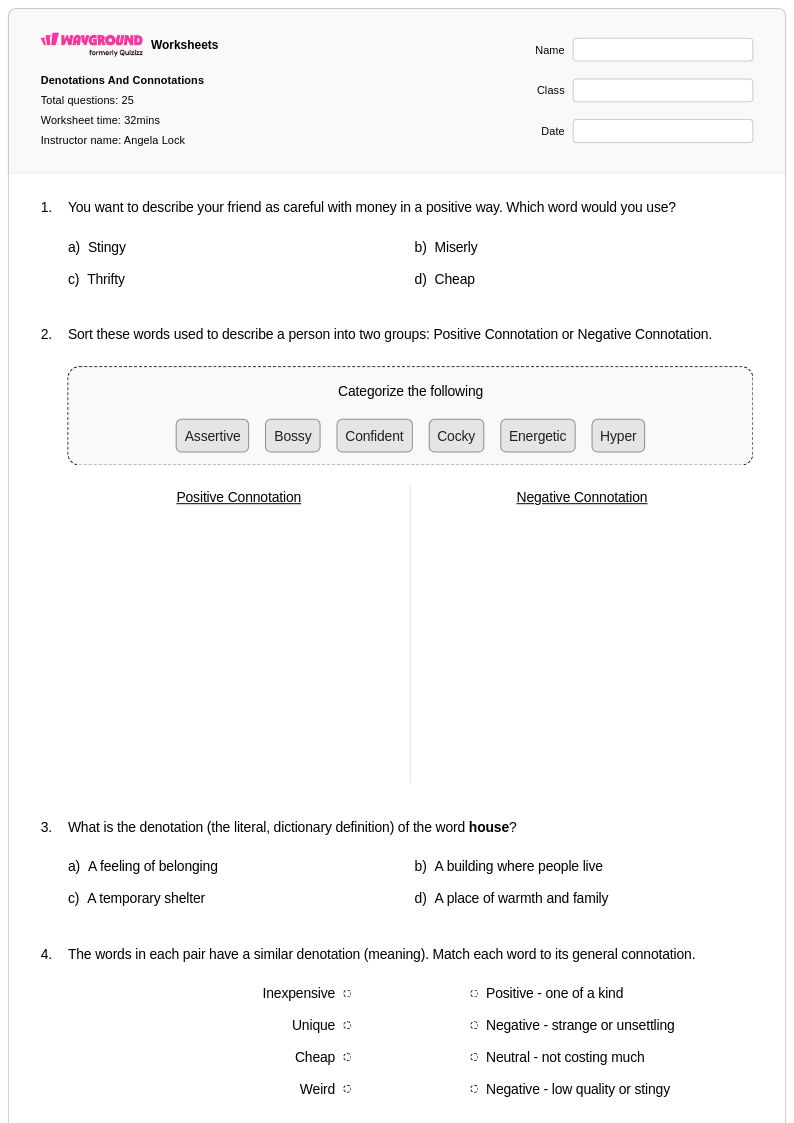
Start by grounding students in the denotative meaning of a word — its dictionary definition — before layering in connotation, the emotional or cultural associations a word carries. A reliable entry point is comparing near-synonyms like 'thrifty,' 'cheap,' and 'frugal,' which share a denotation but carry distinct positive, neutral, and negative connotations. From there, move into context-based analysis using real sentences so students see how word choice shapes tone and reader perception. Anchor each lesson with explicit vocabulary practice before applying skills to longer passages.
What exercises help students practice identifying connotation and denotation?
Synonym sorting activities — where students group words by shared denotation and then rank them from negative to positive connotation — build both skills simultaneously. Sentence rewriting tasks, where students swap one word for a connotative equivalent and explain how the tone shifts, deepen understanding of how word choice functions in context. Contextual scenario exercises that ask students to choose the most appropriate word based on audience and purpose are especially effective for preparing students for literary analysis and persuasive writing.
What mistakes do students commonly make when distinguishing connotation from denotation?
The most common error is treating connotation as synonymous with definition, failing to recognize that two words can mean the same thing literally while carrying very different emotional weight. Students also frequently label all connotations as either 'good' or 'bad,' missing the neutral category entirely. Another persistent misconception is assuming connotation is fixed — students often don't account for how context, audience, or cultural background can shift a word's connotative value.
How does understanding connotation help students with reading and writing?
Recognizing connotation is foundational to literary analysis because it allows students to explain how an author's word choices construct tone, reveal bias, or manipulate reader emotion. In writing, students who command connotative differences can make deliberate, precise word choices rather than defaulting to the first synonym they know. This skill also directly supports reading comprehension in persuasive and argumentative texts, where connotation is frequently used to influence without explicit argument.
How can I use Wayground's connotation and denotation worksheets in my classroom?
Wayground's connotation and denotation worksheets are available as printable PDFs for traditional classroom use and in digital formats for technology-integrated environments, including the option to host them as a quiz directly on Wayground. The worksheets include detailed answer keys, making them practical for independent practice, homework assignments, or guided review. For students who need additional support, Wayground's accommodation features — such as Read Aloud and reduced answer choices — can be applied individually, allowing all students to access the same material at an appropriate level.
How do I differentiate connotation and denotation instruction for students at different levels?
For students who are still developing vocabulary foundations, begin with high-frequency word pairs and concrete connotative contrasts before introducing nuanced or culturally specific associations. Advanced students benefit from analyzing connotation in authentic literary excerpts, political speeches, or advertising copy, where the stakes of word choice are high and visible. On Wayground, teachers can modify worksheets for remediation or enrichment and apply individual accommodations — such as extended time or adjusted font sizes through reading mode — so differentiation can happen at the student level without disrupting the rest of the class.