Free Printable Constitutional Law Worksheets for Class 9
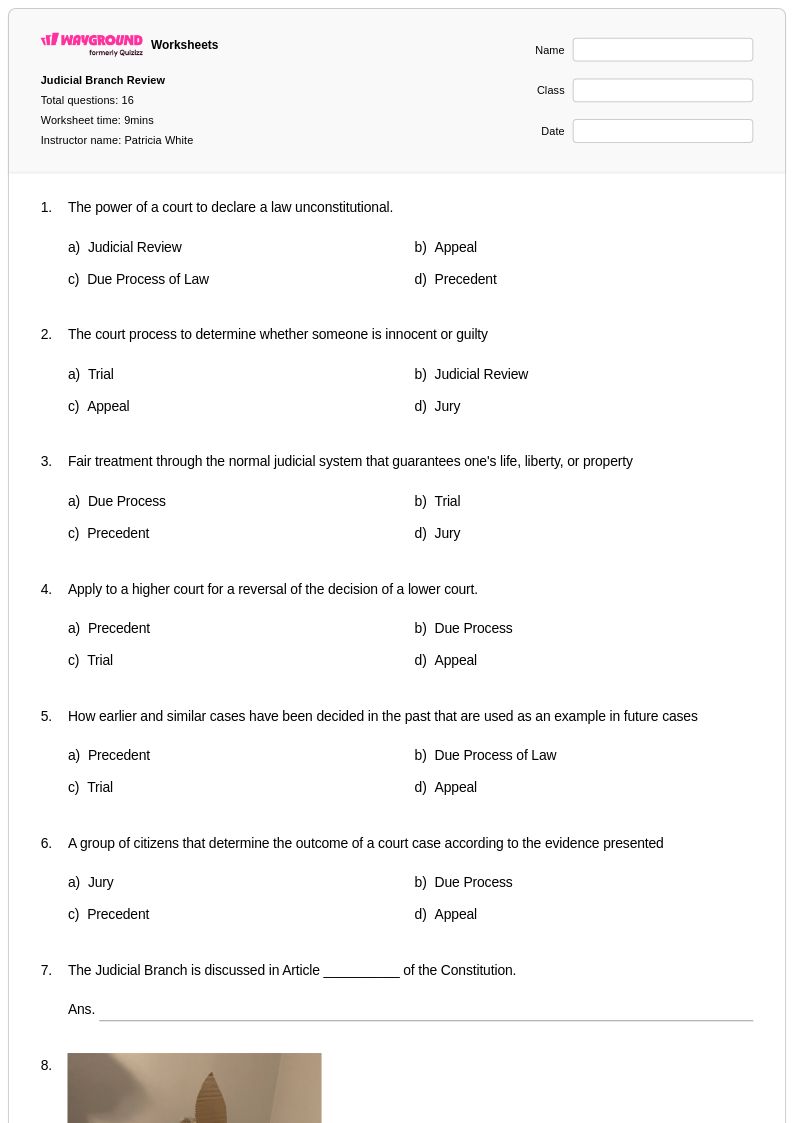
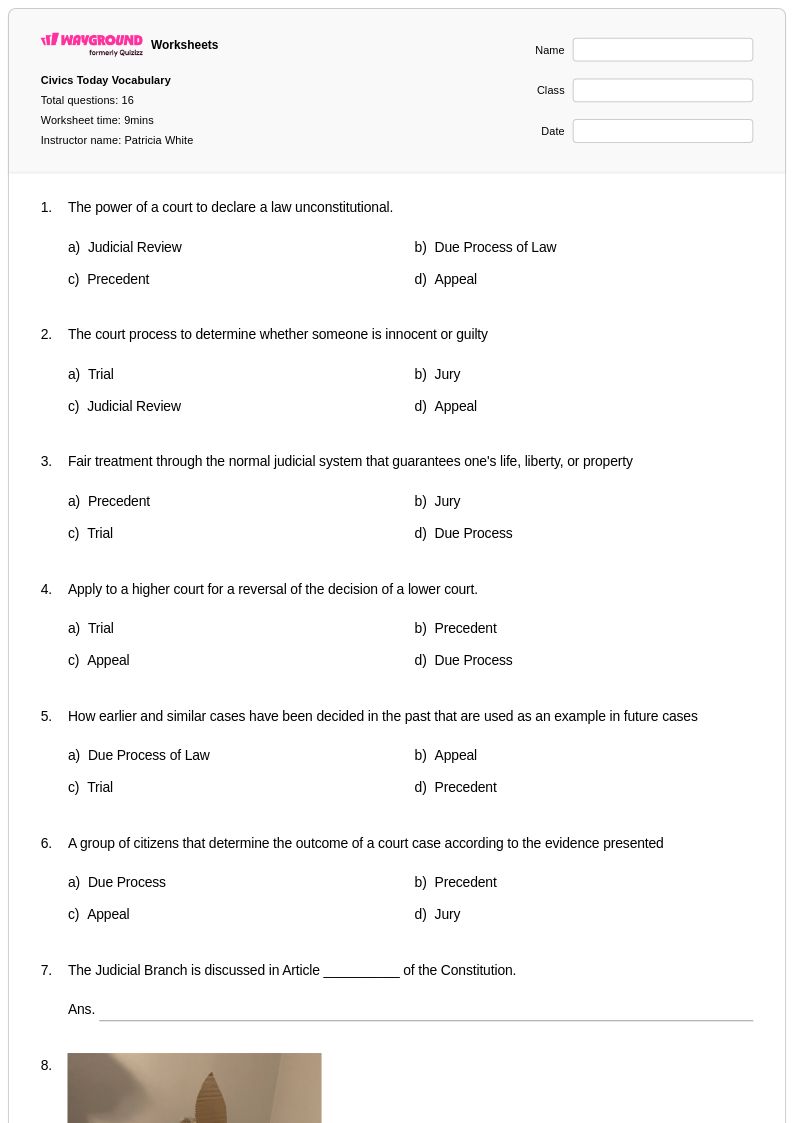
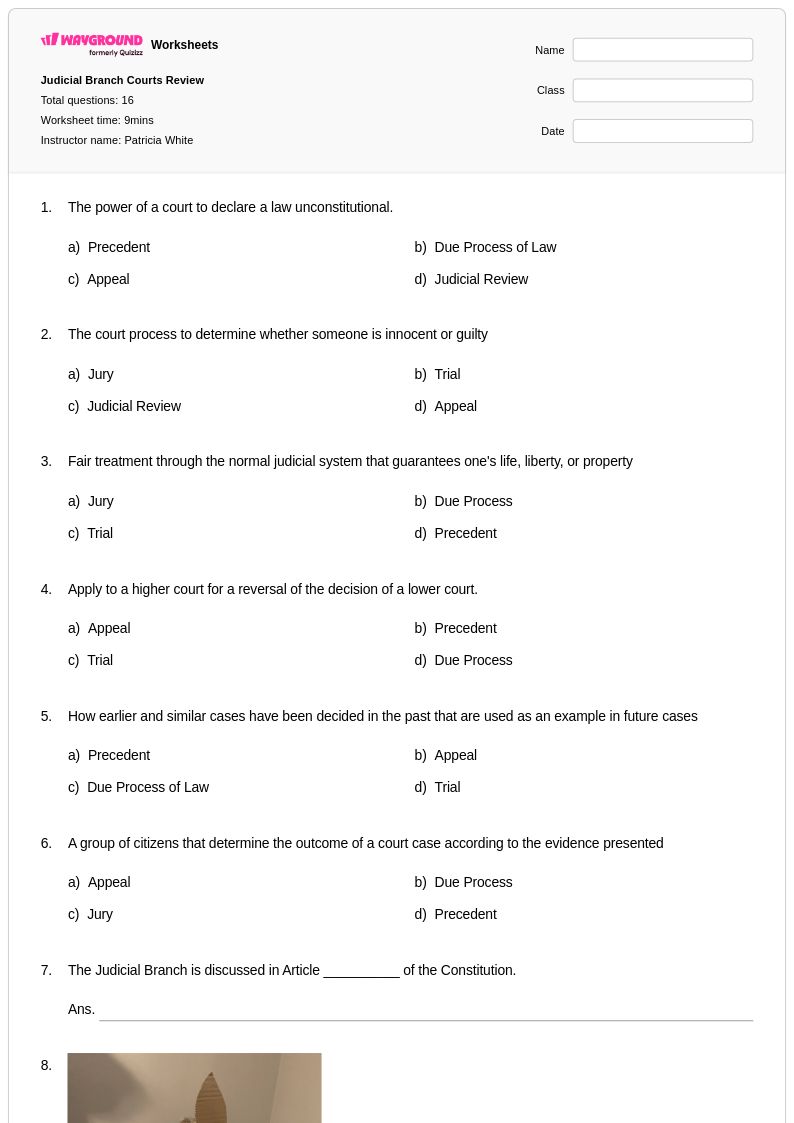
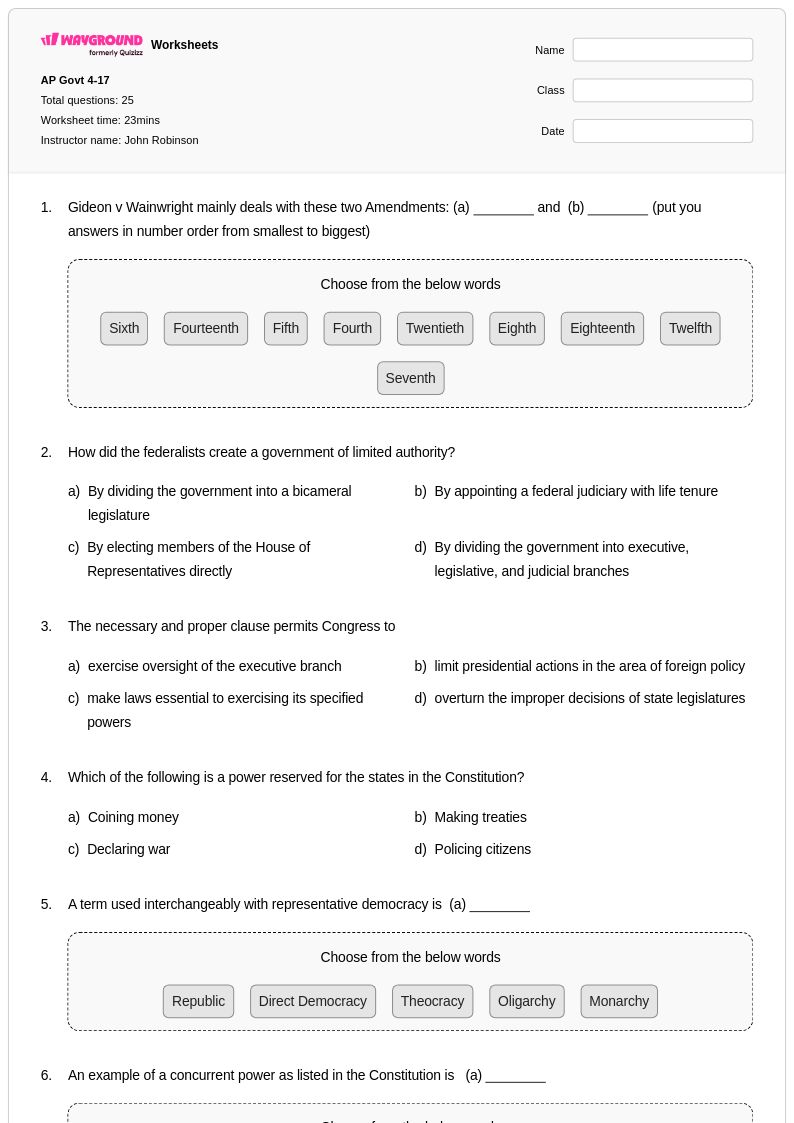
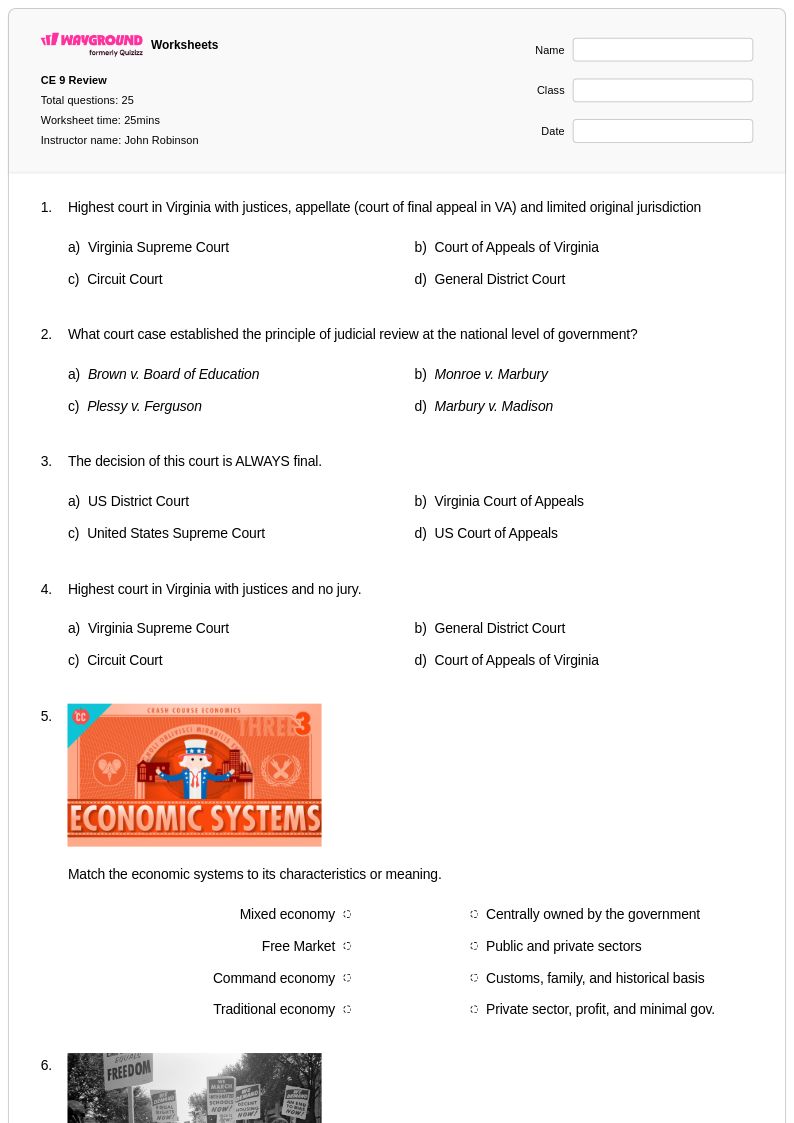
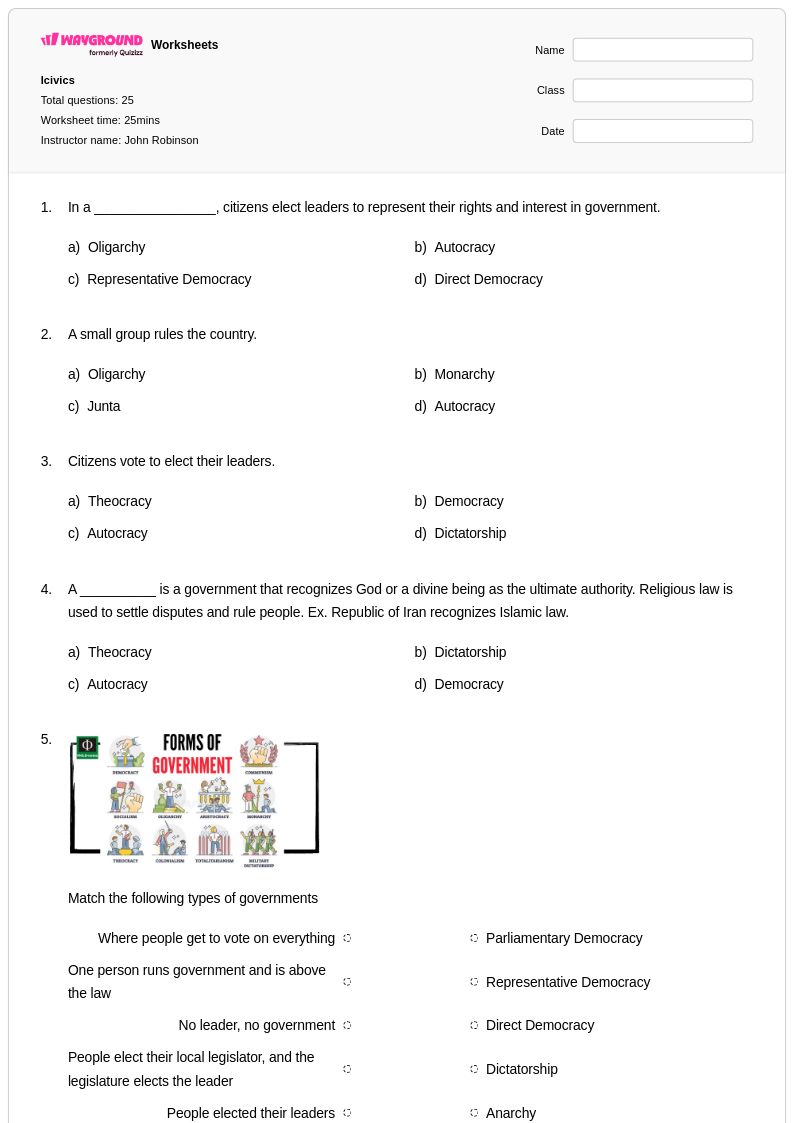
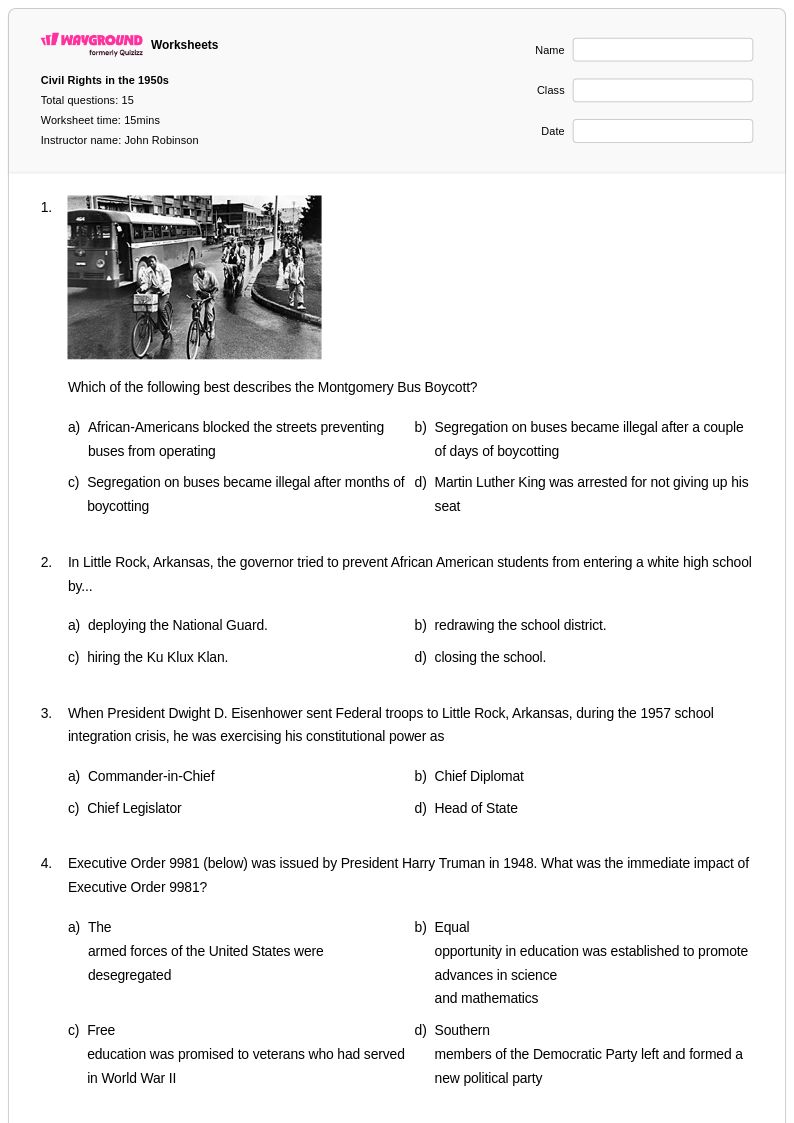
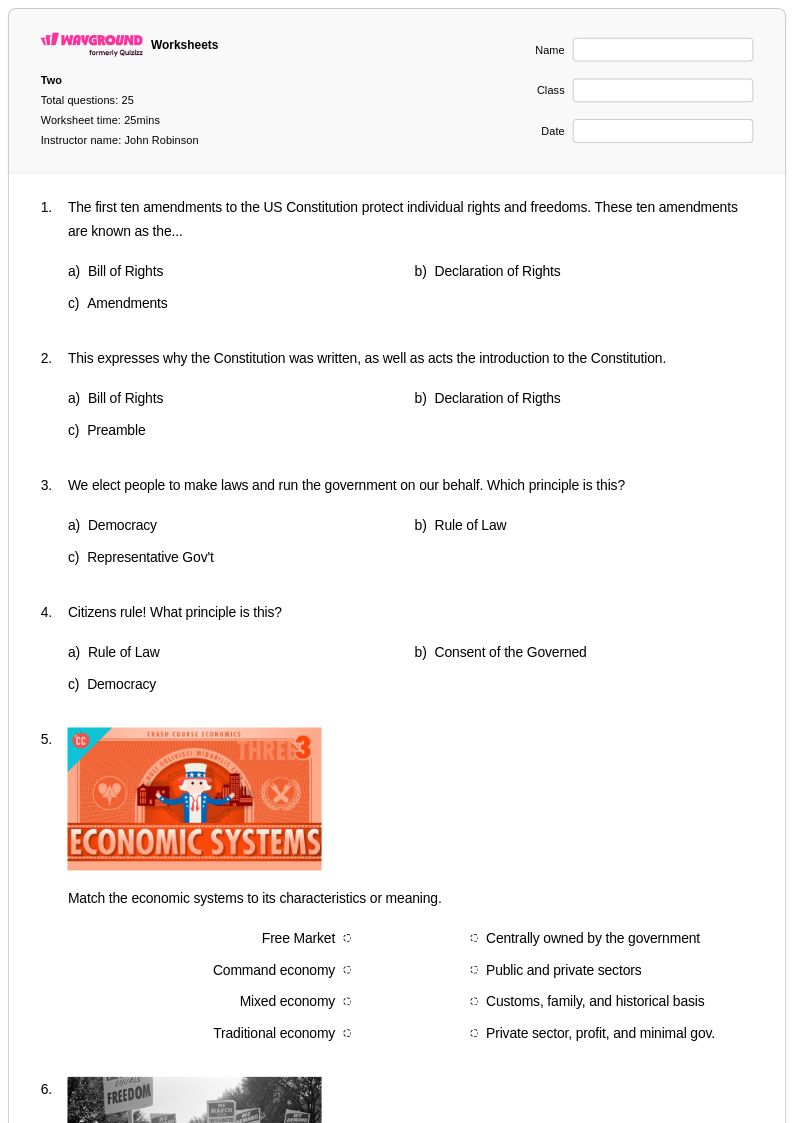
Class 9 Constitutional Law worksheets from Wayground provide comprehensive printables and practice problems that help students master fundamental principles of constitutional interpretation, government structure, and civil rights through engaging PDF exercises with complete answer keys.
Explore printable Constitutional Law worksheets for Class 9
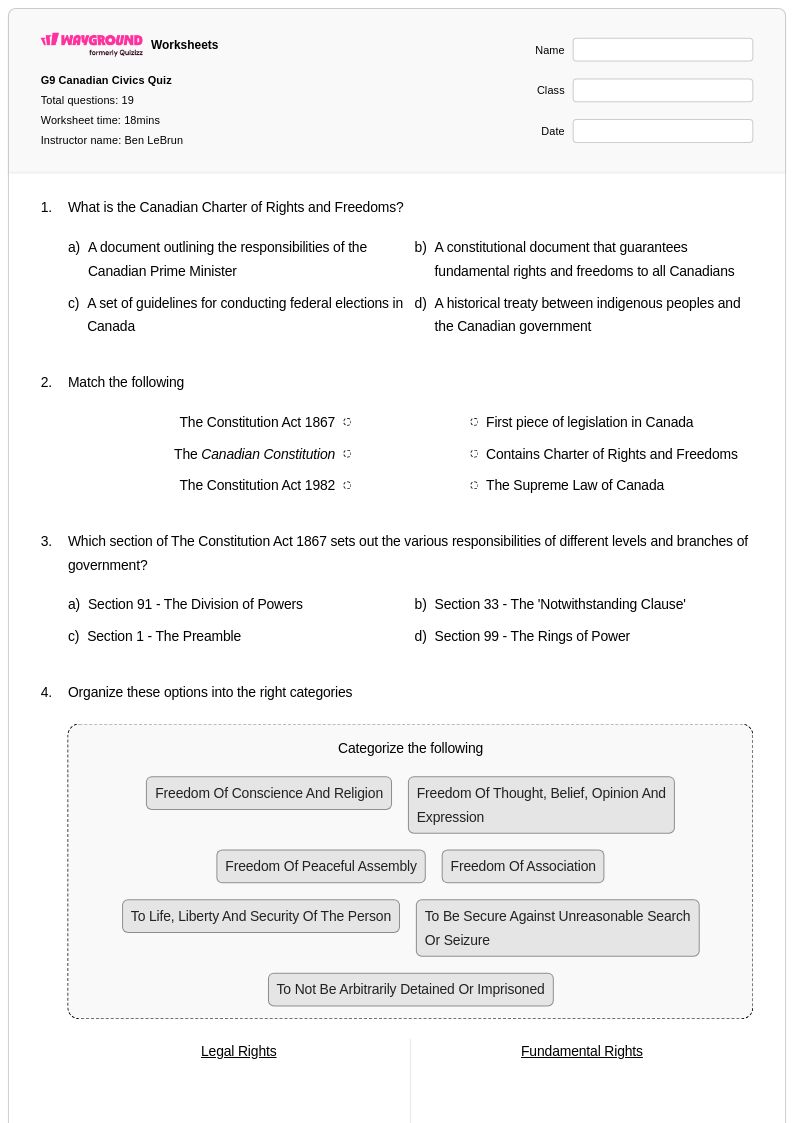
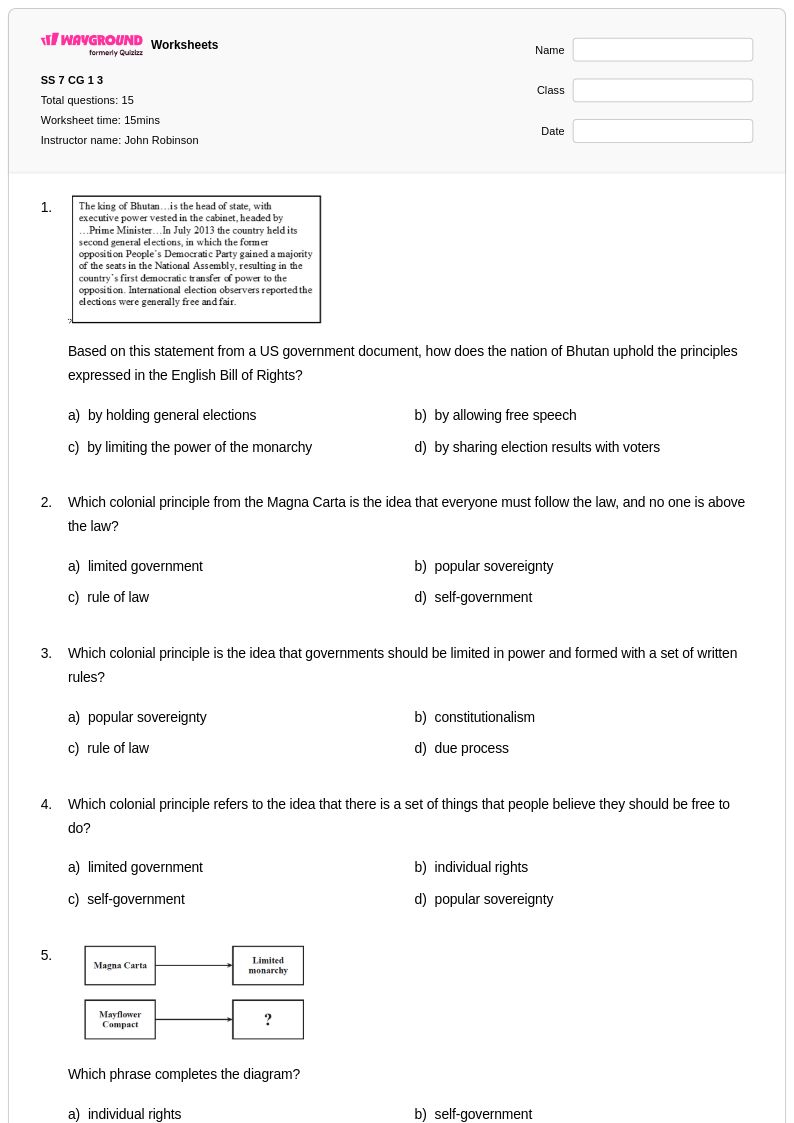
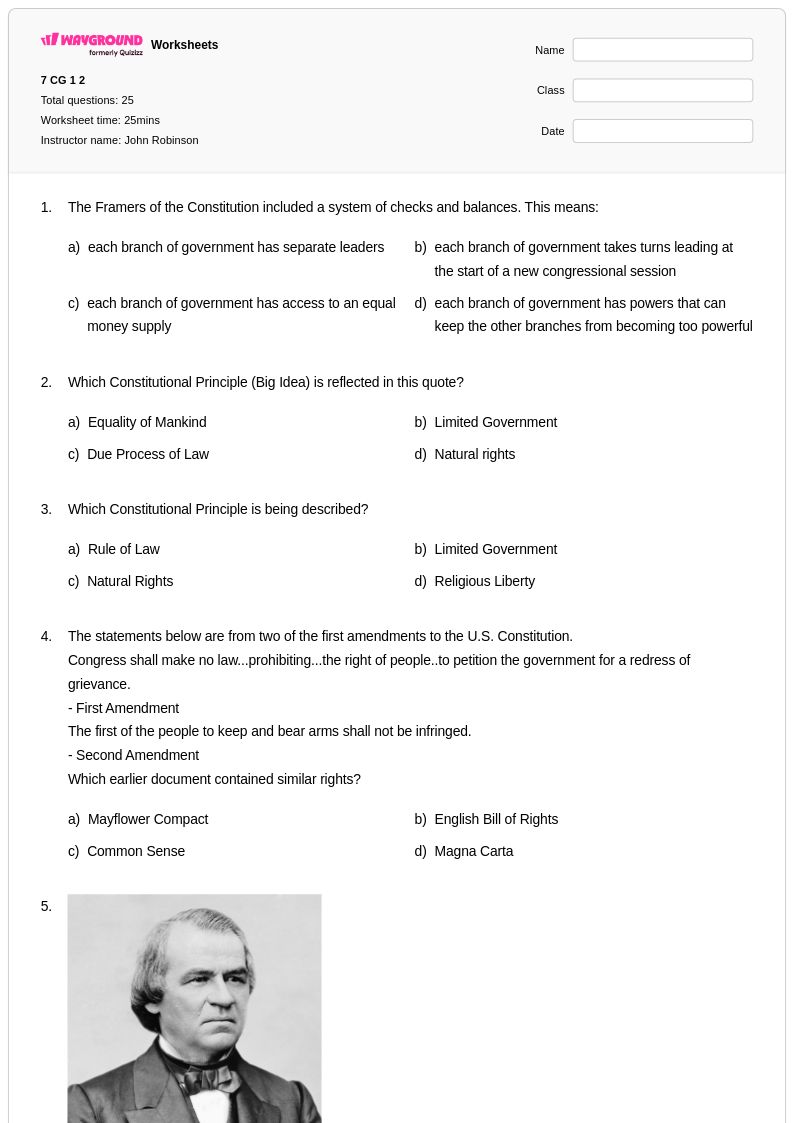
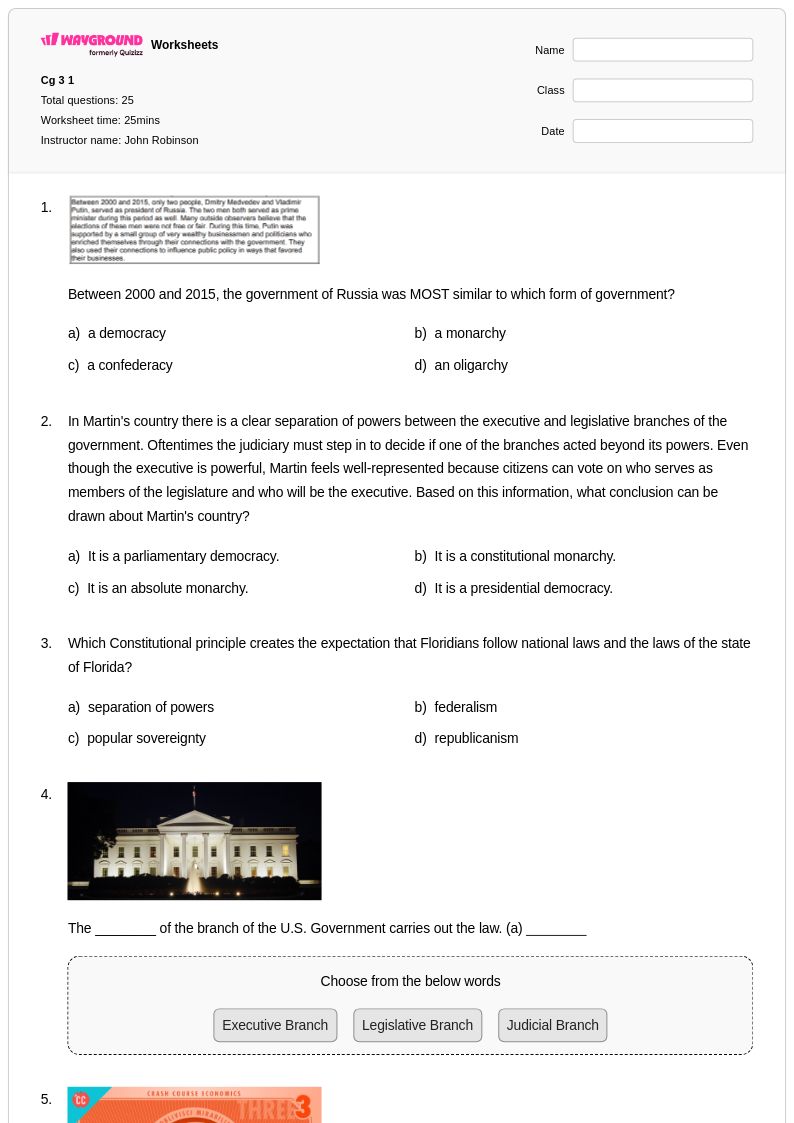
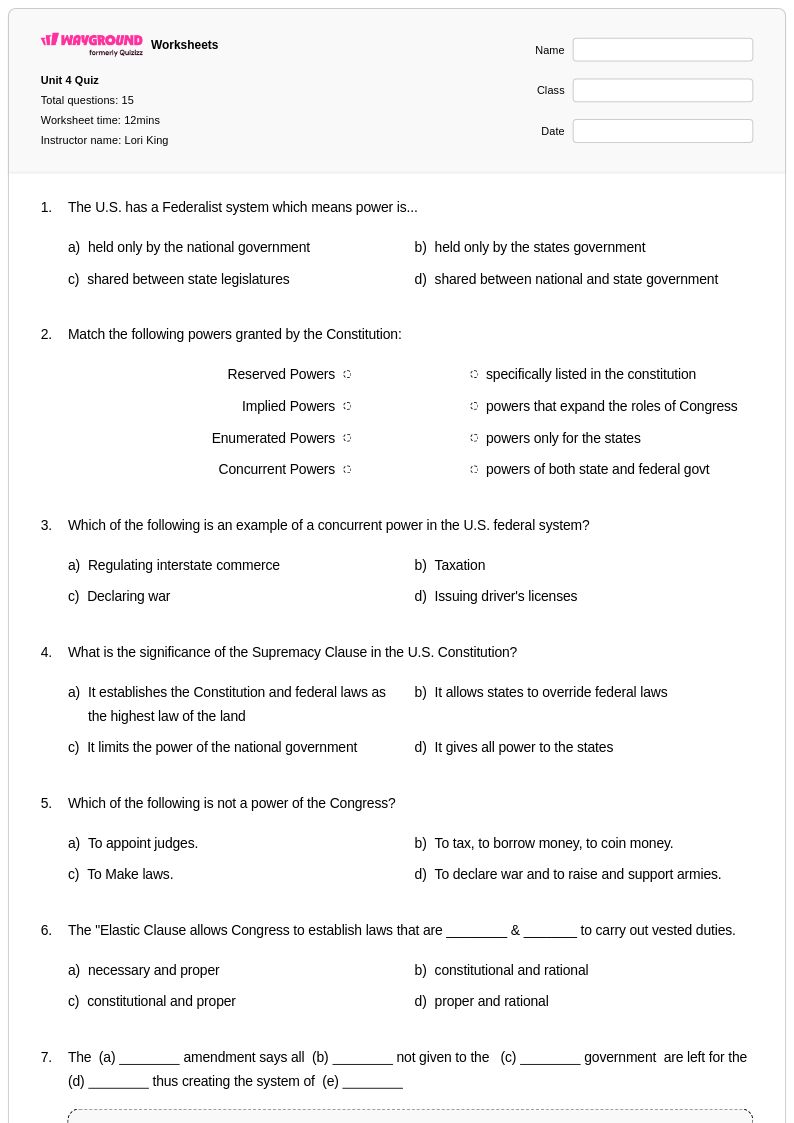
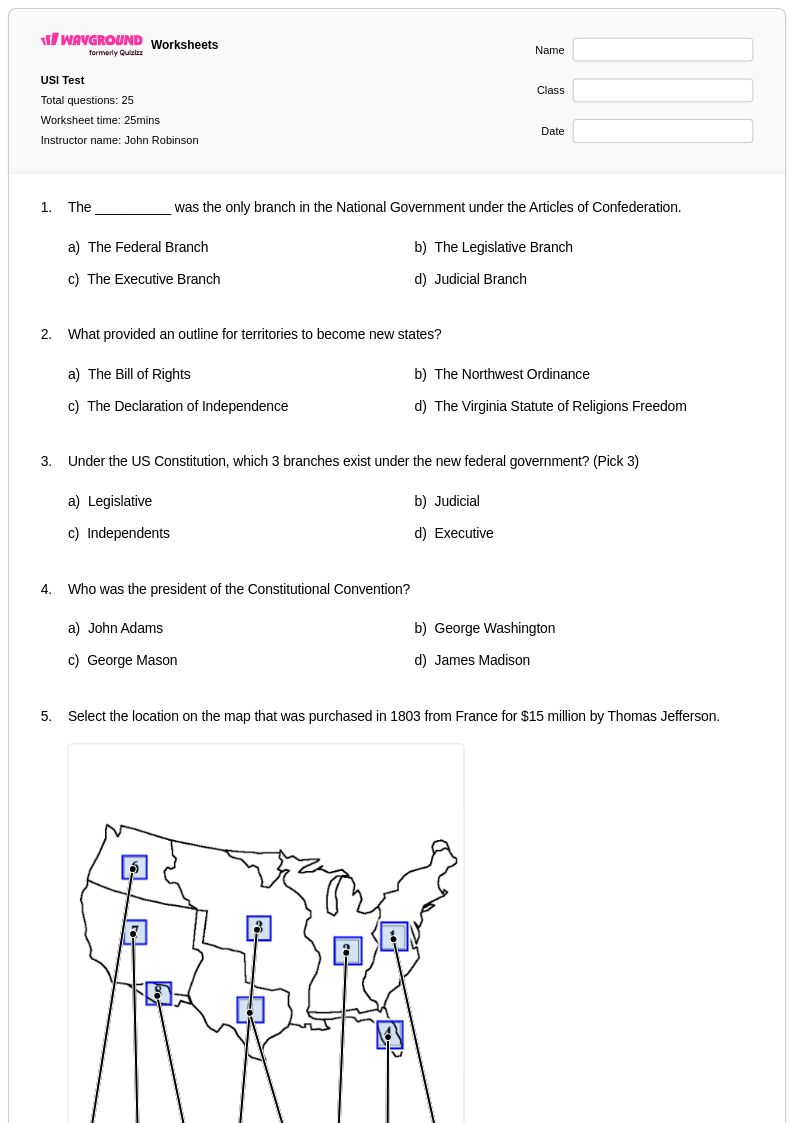
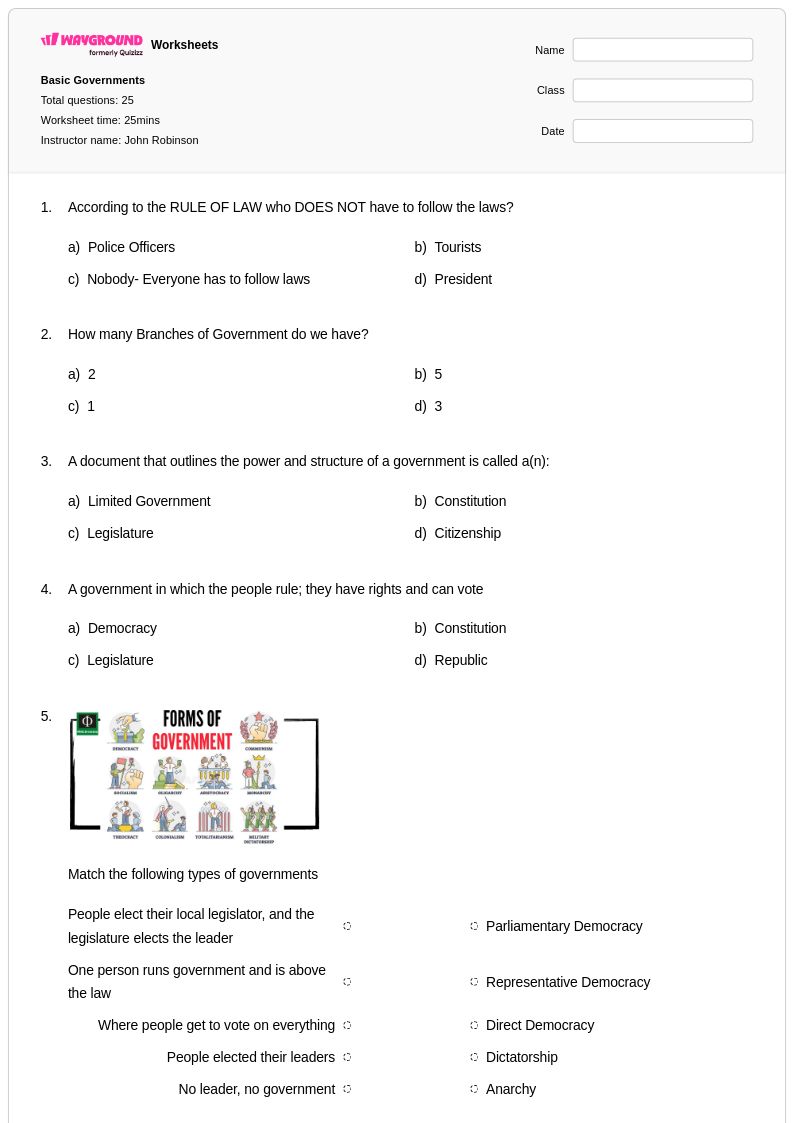
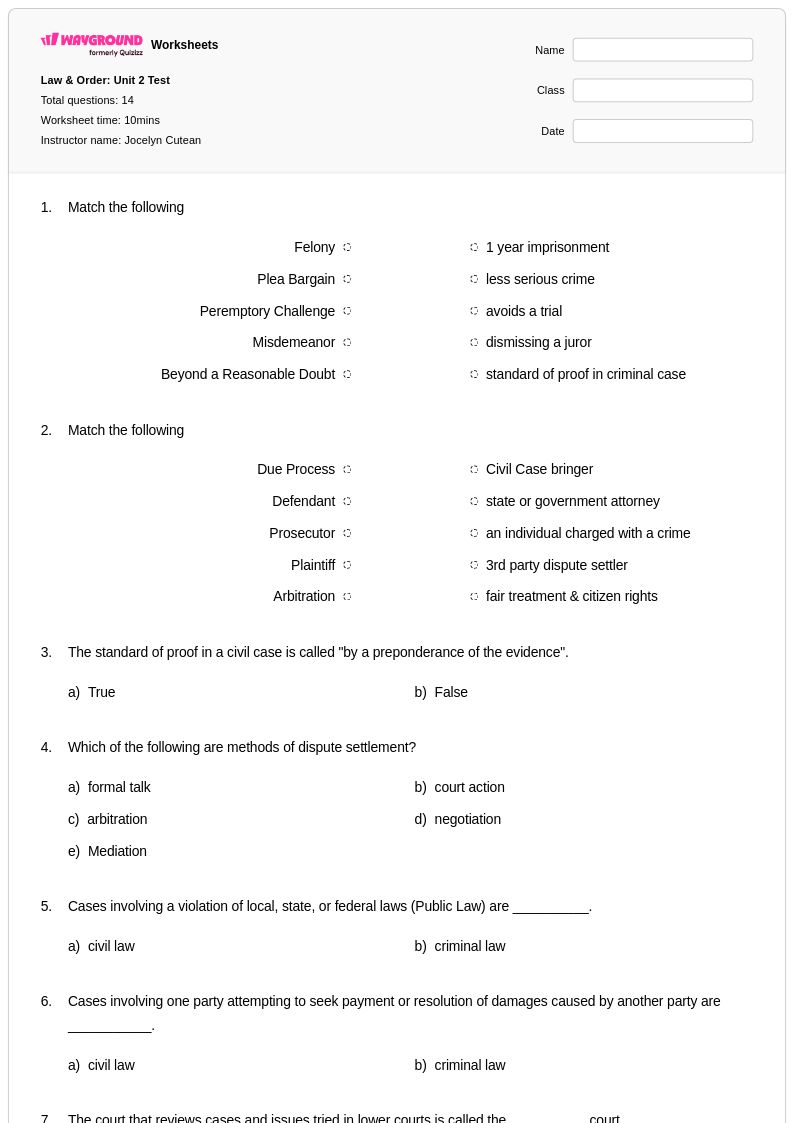
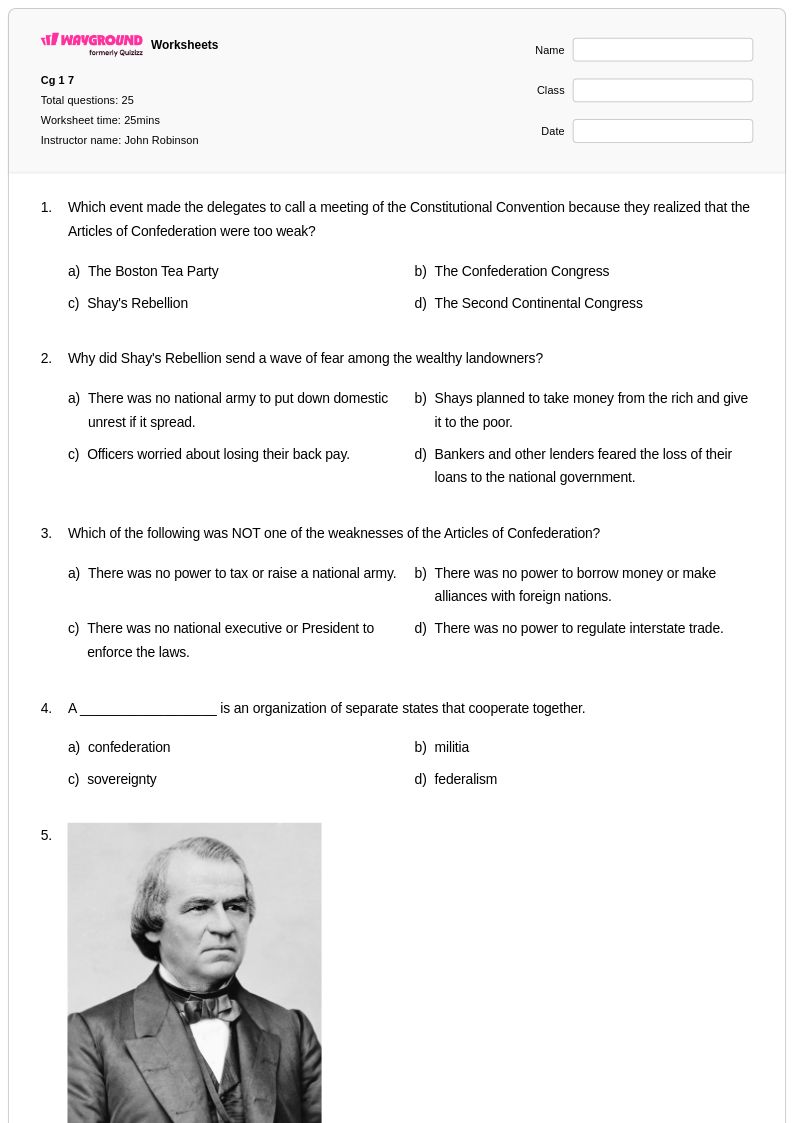
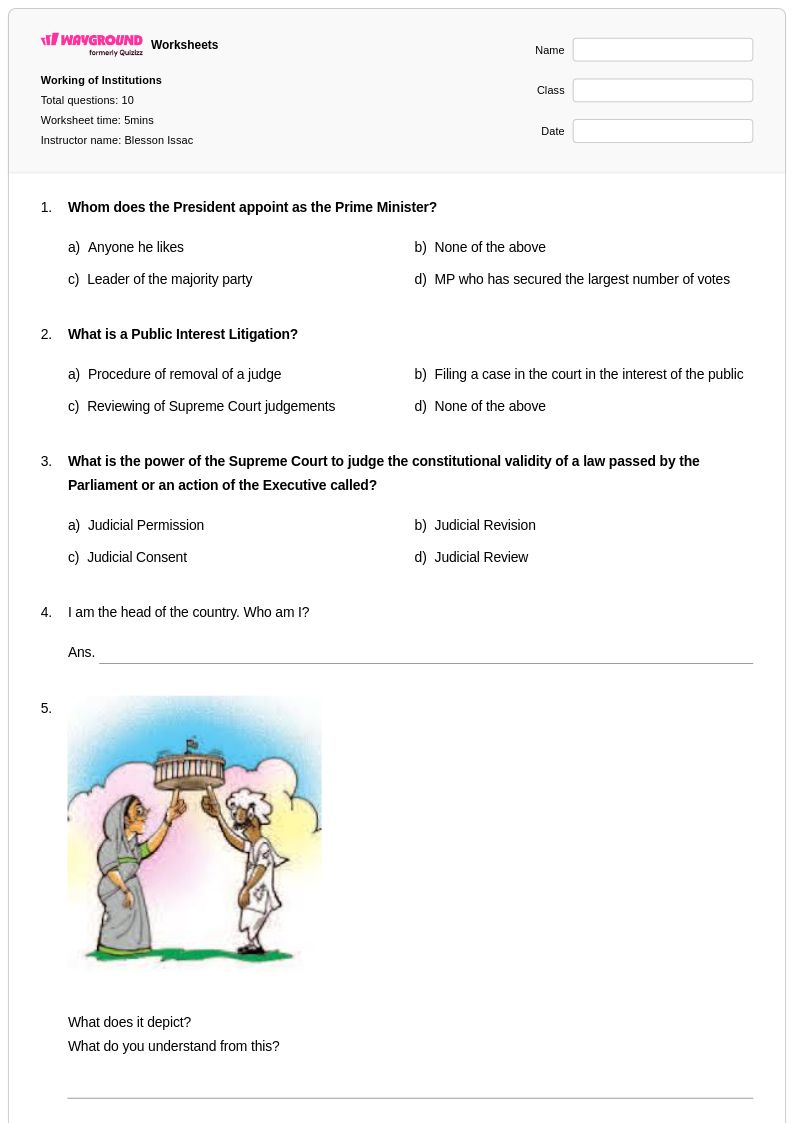
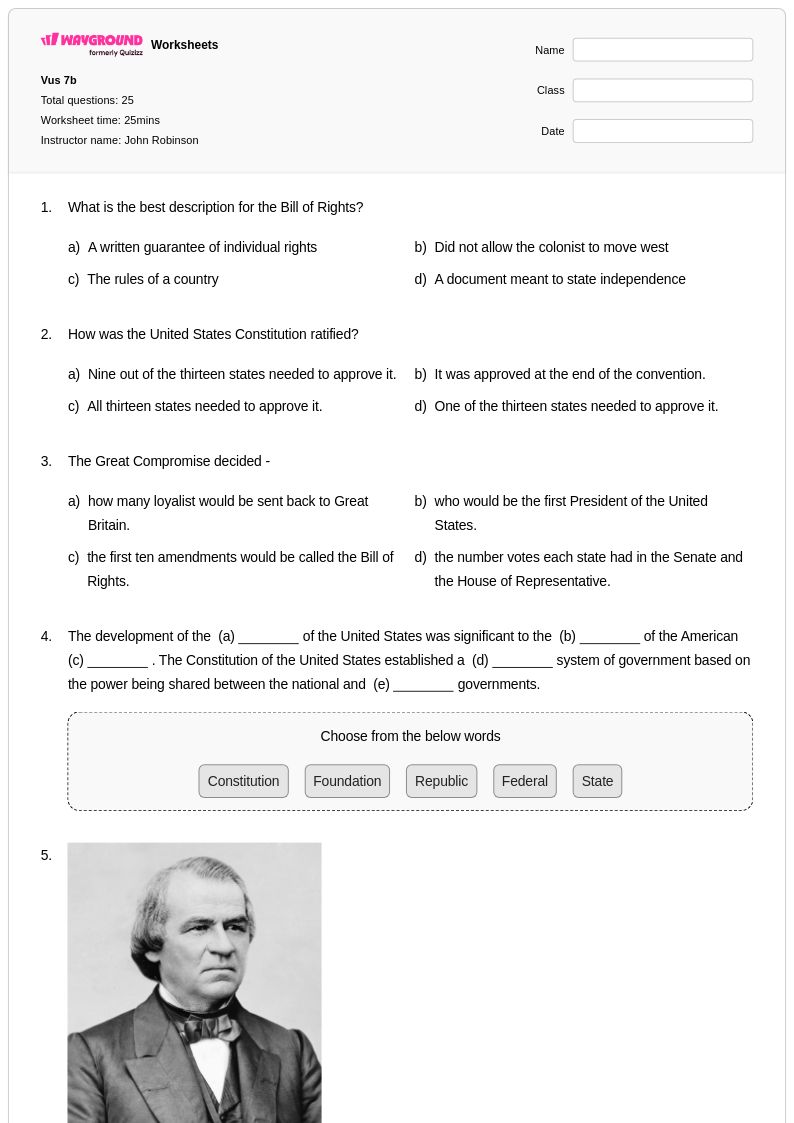
Constitutional Law worksheets for Class 9 students available through Wayground (formerly Quizizz) provide comprehensive coverage of fundamental principles that form the foundation of American government and legal systems. These expertly designed resources strengthen students' analytical skills as they examine the Constitution's structure, interpret key amendments, and explore landmark Supreme Court cases that have shaped constitutional interpretation. The worksheets include practice problems that challenge students to apply constitutional principles to real-world scenarios, while accompanying answer keys enable both independent study and guided instruction. Teachers can access these free printable materials in convenient pdf format, making it easy to distribute constitutional law exercises that build critical thinking skills essential for civic participation and legal literacy.
Wayground's extensive collection draws from millions of teacher-created resources, offering educators powerful search and filtering capabilities to locate Class 9 Constitutional Law materials that align with specific standards and learning objectives. The platform's differentiation tools allow teachers to customize worksheets based on individual student needs, whether for remediation of foundational concepts like separation of powers or enrichment activities exploring complex constitutional debates. These resources are available in both printable and digital formats, including downloadable pdf versions, giving educators flexibility in lesson planning and assignment distribution. The comprehensive nature of these constitutional law worksheet collections supports systematic skill practice while enabling teachers to address diverse learning styles and academic levels within their Class 9 civics classrooms.
FAQs
How do I teach constitutional law to high school students?
Teaching constitutional law effectively starts with grounding students in foundational concepts like judicial review, separation of powers, and federalism before moving into landmark Supreme Court cases. Use primary source analysis to help students read constitutional text directly, then connect those passages to real judicial decisions. Scaffolding from concrete examples — such as how Marbury v. Madison established judicial review — toward more abstract constitutional interpretation builds the analytical thinking students need for civics and beyond.
What exercises help students practice constitutional law concepts?
Practice exercises that ask students to analyze the reasoning in Supreme Court opinions, match constitutional amendments to real-world scenarios, and identify which branch of government holds authority in a given situation are especially effective. Case study worksheets that present a legal scenario and ask students to apply constitutional principles reinforce both content knowledge and analytical skills. Repeated exposure to due process, individual rights, and federalism questions helps students internalize how constitutional principles interact in practice.
What common mistakes do students make when learning constitutional law?
A frequent misconception is that the Constitution is a fixed document with a single correct interpretation, when in fact constitutional meaning has evolved significantly through judicial precedent and amendment. Students also commonly conflate the roles of the three branches, misattributing legislative power to the executive or vice versa. Another typical error is treating the Bill of Rights as the only source of individual protections, overlooking later amendments and landmark court interpretations that have expanded those protections over time.
How can I differentiate constitutional law instruction for students at different skill levels?
For struggling learners, simplify case studies to focus on one constitutional principle at a time and provide vocabulary support for legal terminology like 'due process' and 'equal protection.' Advanced students benefit from open-ended constitutional interpretation scenarios that mirror real legal arguments, asking them to construct and defend a position using textual evidence and precedent. On Wayground, teachers can apply accommodations such as reduced answer choices or read-aloud support to individual students, allowing the same worksheet to serve diverse learners simultaneously without disrupting the rest of the class.
How do I use Wayground's constitutional law worksheets in my classroom?
Wayground's constitutional law worksheets are available as printable PDFs for traditional classroom use and in digital formats for technology-integrated environments, making them flexible enough for in-person, hybrid, or remote instruction. Teachers can also host worksheets as a live quiz directly on Wayground, which allows for real-time student response tracking. Each worksheet includes a complete answer key, reducing prep time and making them practical for both instruction and independent practice sessions.
How do I assess whether students understand constitutional law principles?
Effective assessment of constitutional law understanding goes beyond recall and asks students to apply principles to novel scenarios — for example, presenting a hypothetical government action and asking students to identify which constitutional clause it might violate and why. Short-answer responses that require students to cite specific amendments or cases reveal deeper comprehension than multiple-choice alone. Tracking recurring errors, such as misidentifying which branch initiates legislation or confusing due process with equal protection, helps pinpoint exactly where additional instruction is needed.