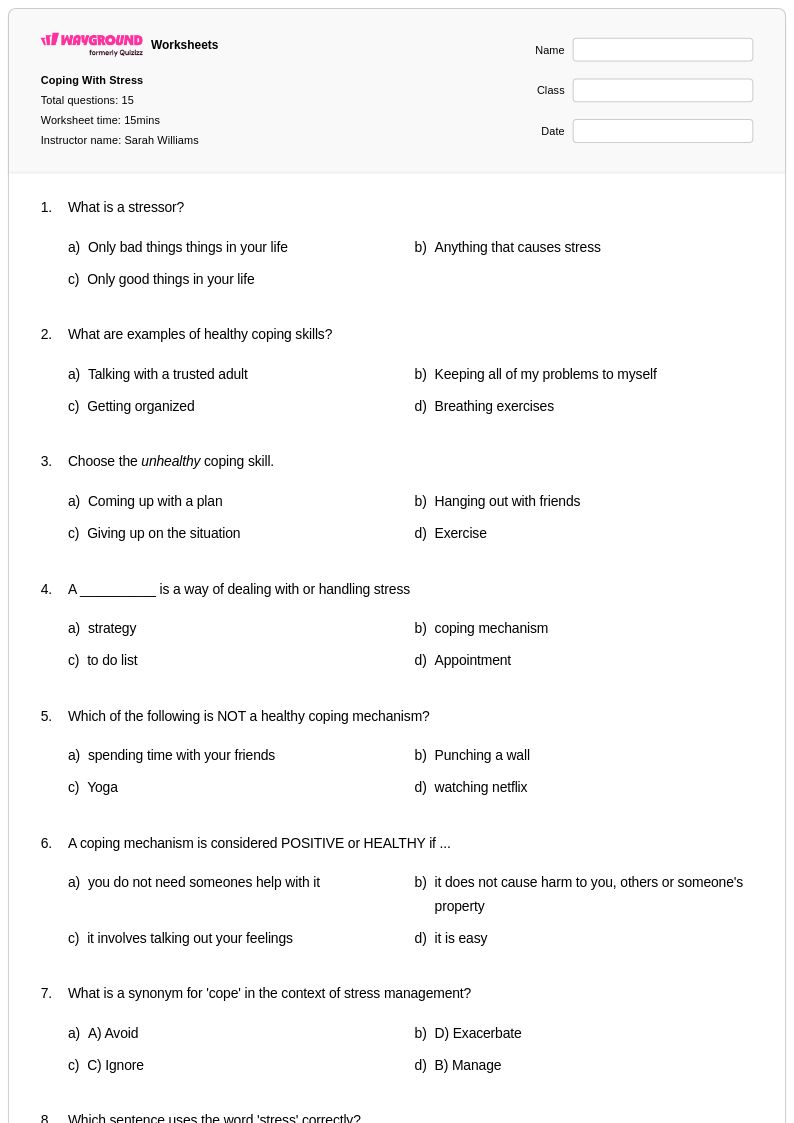
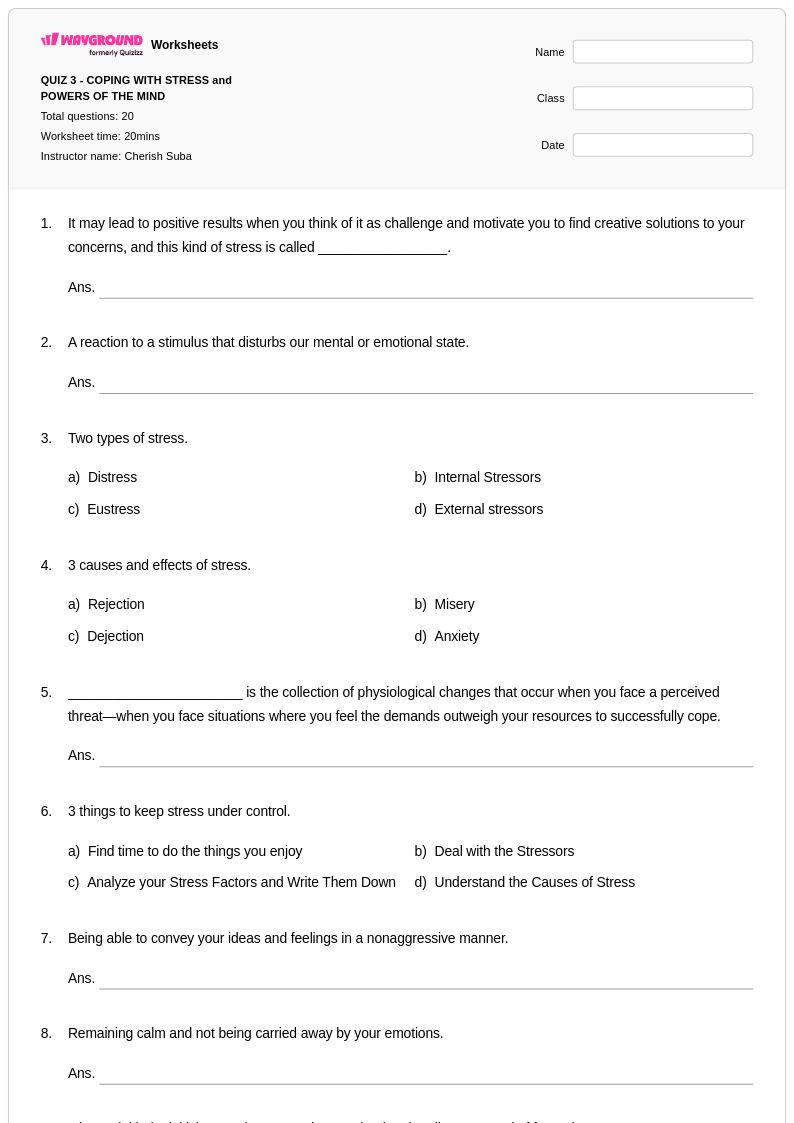
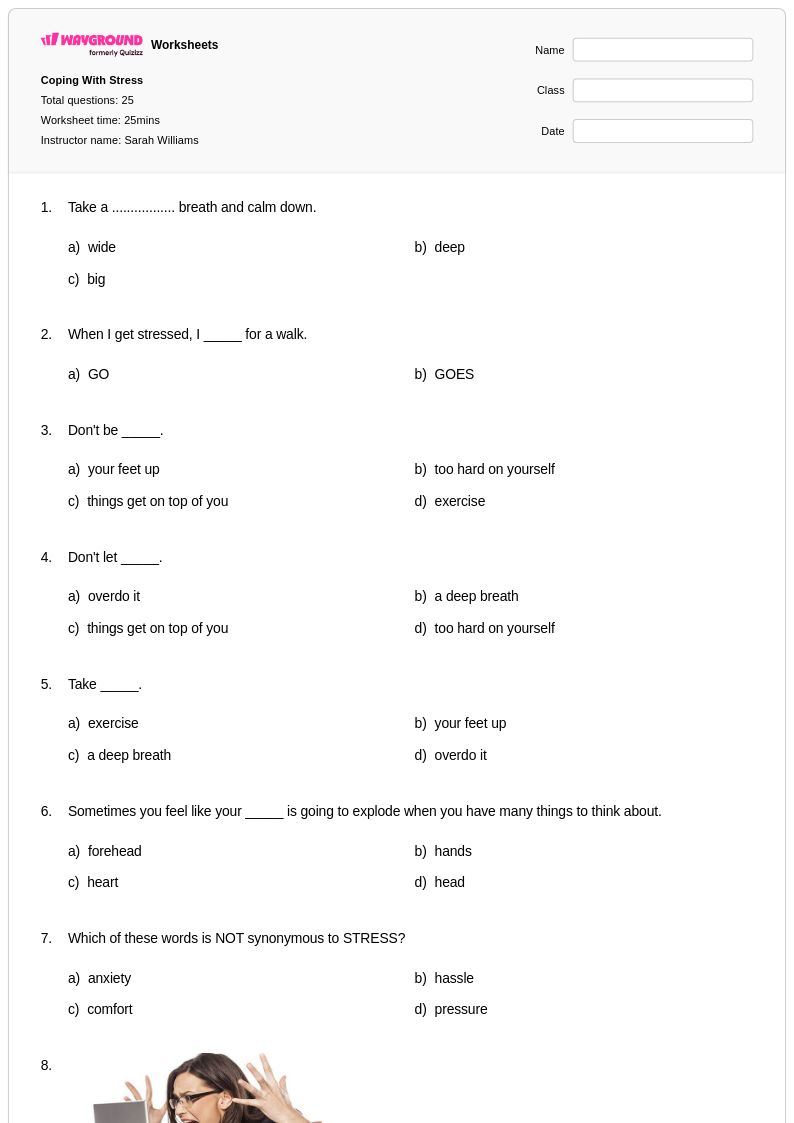
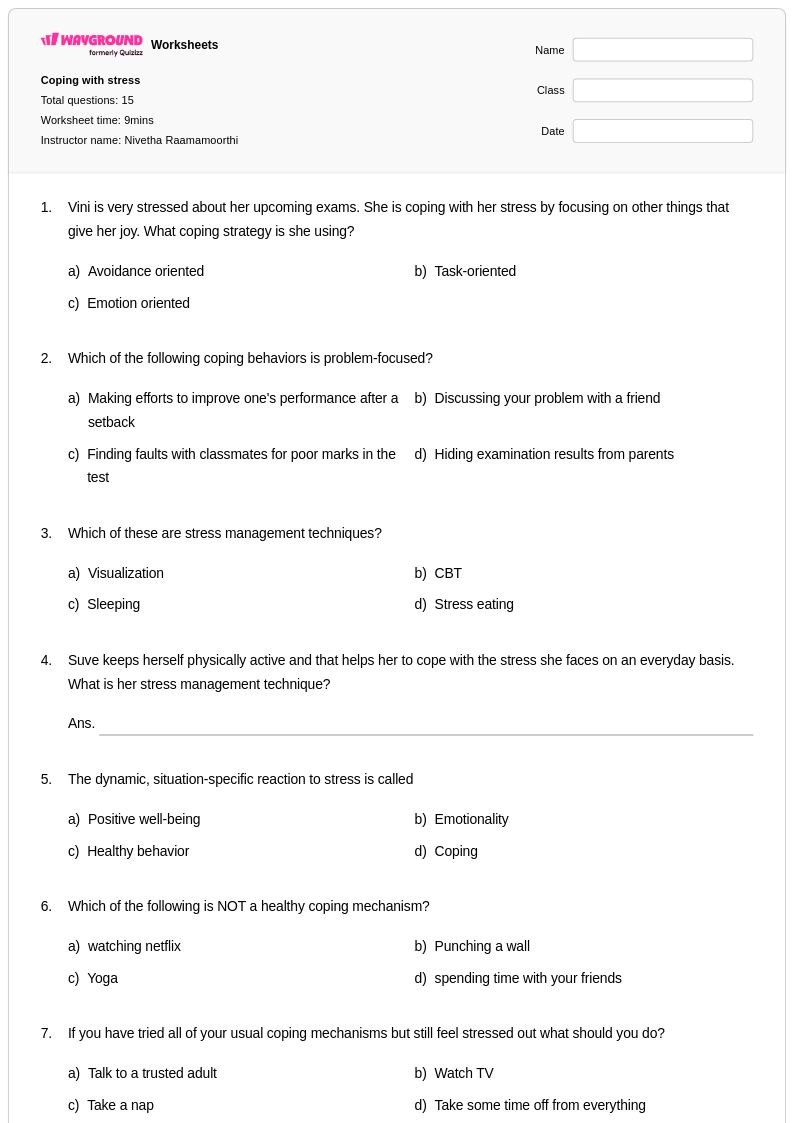
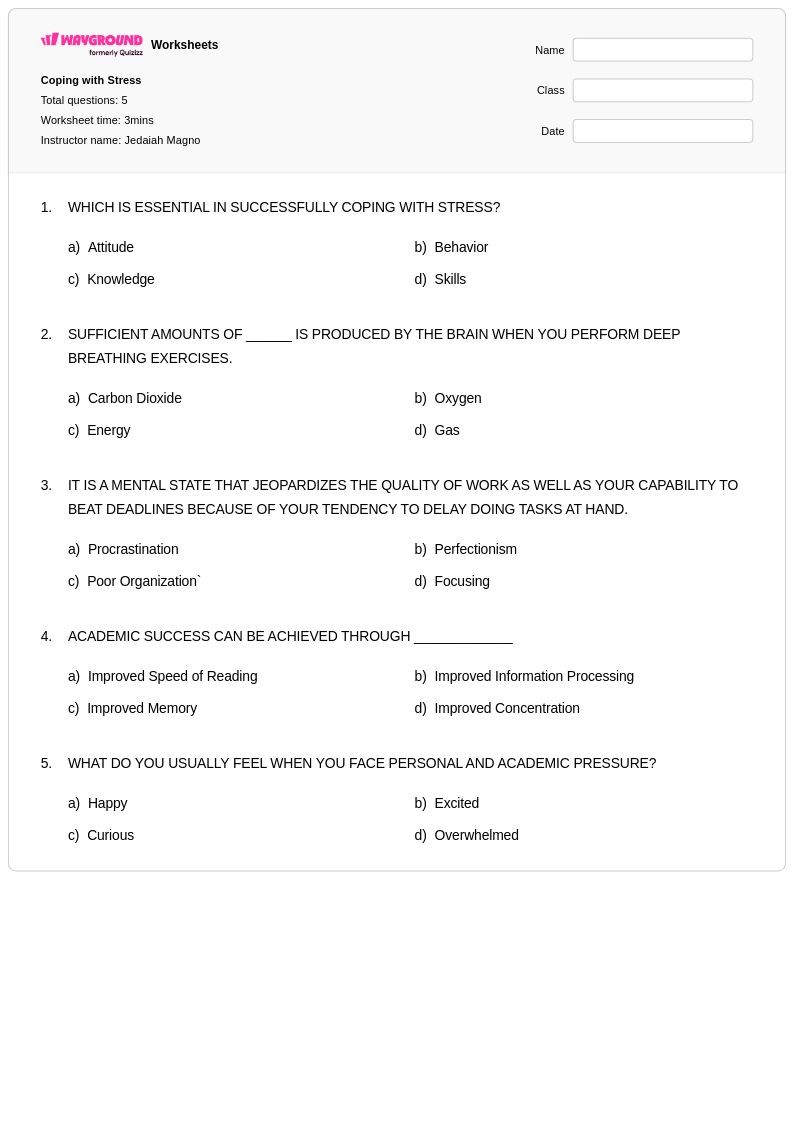
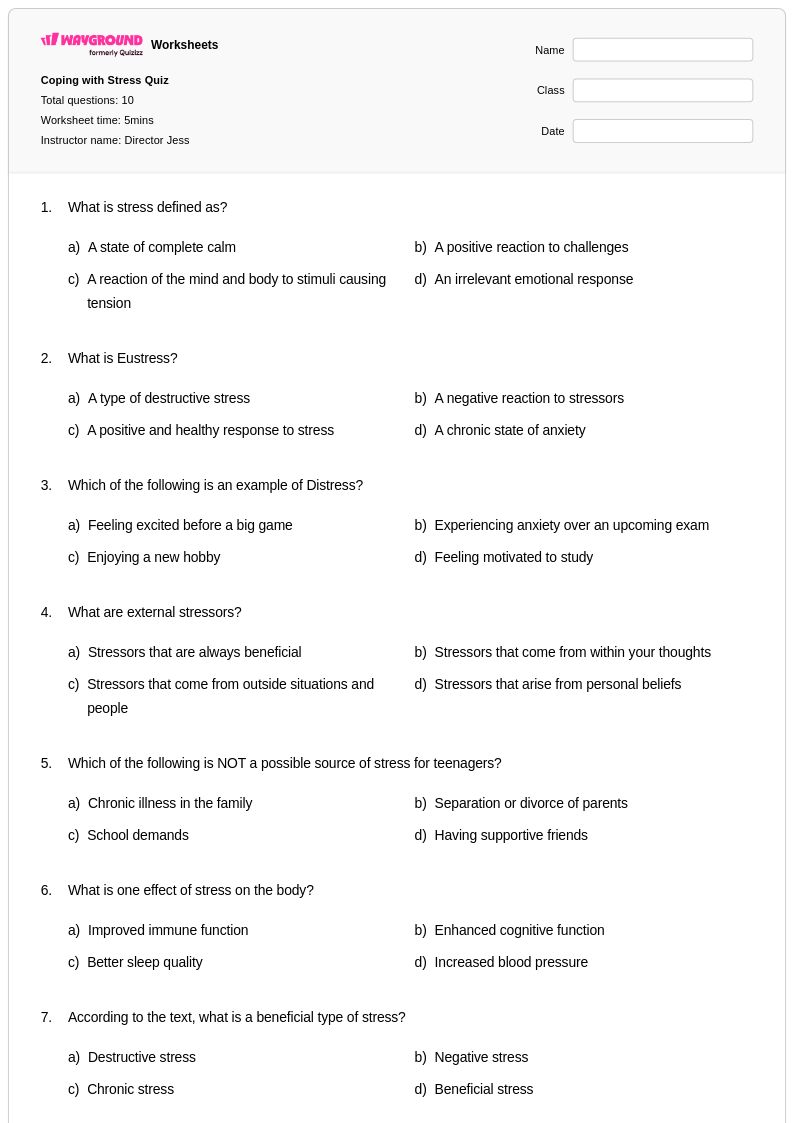
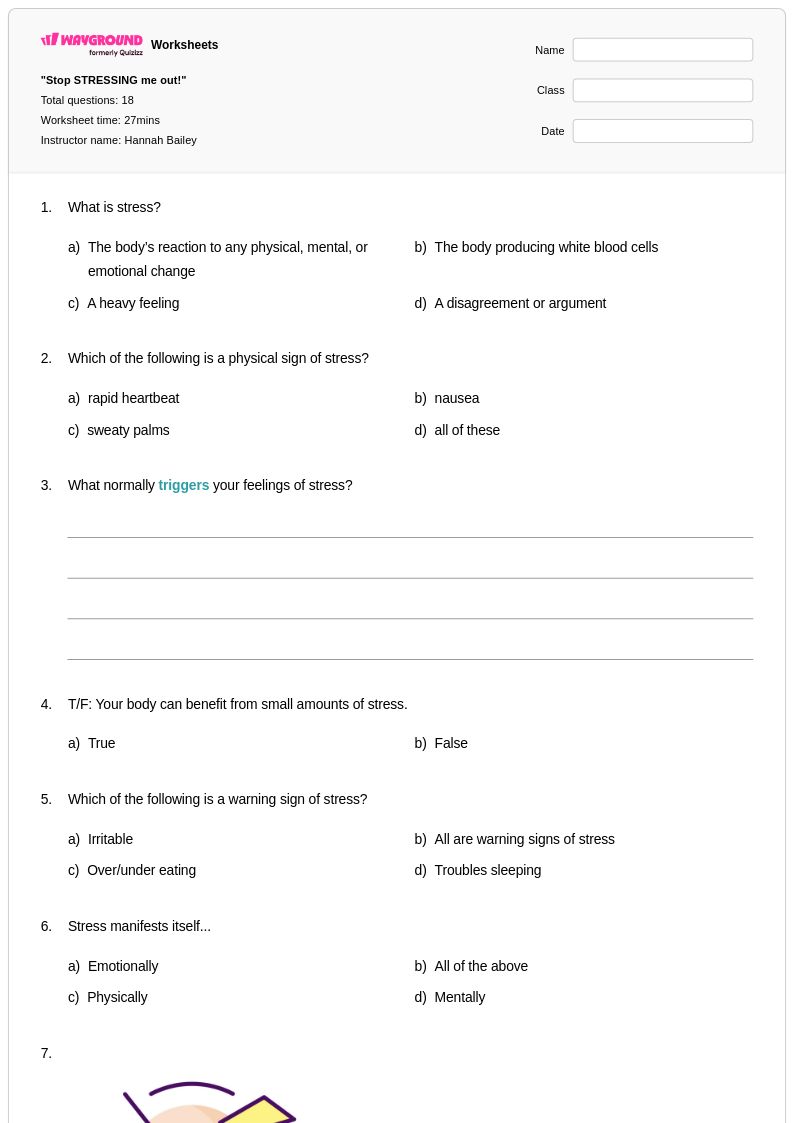
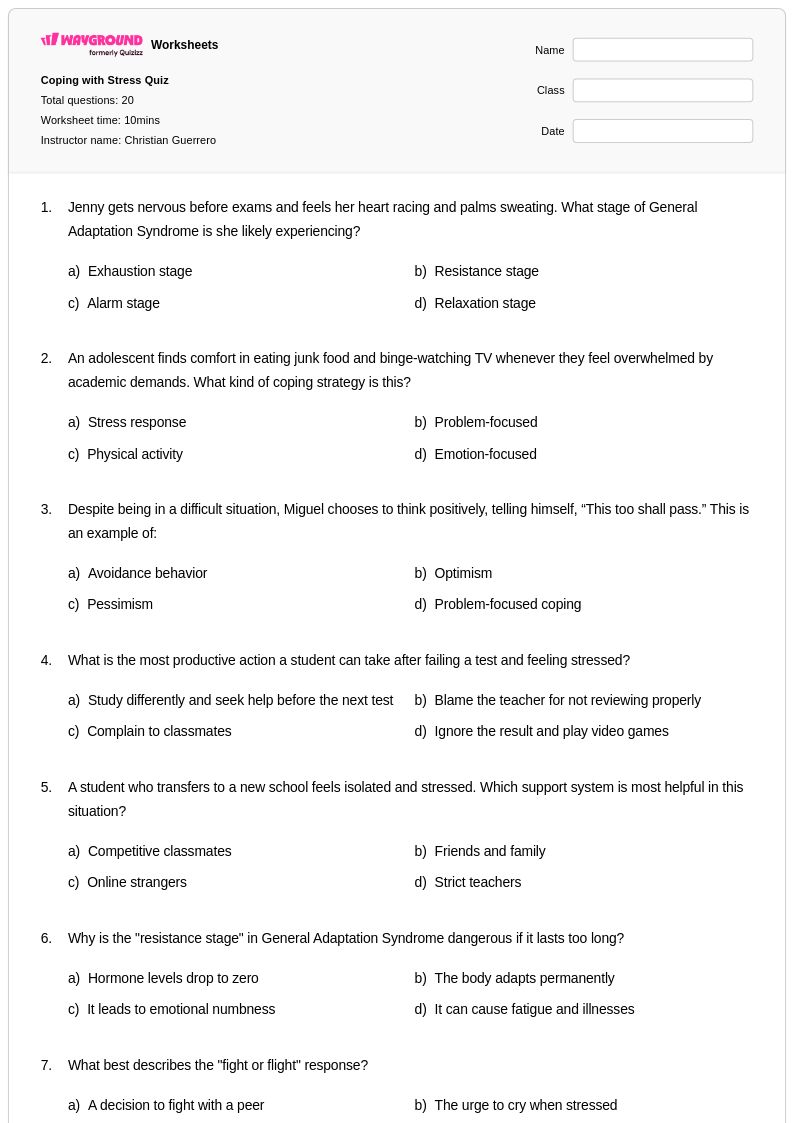
Free Printable Coping with Stress Worksheets for Class 12
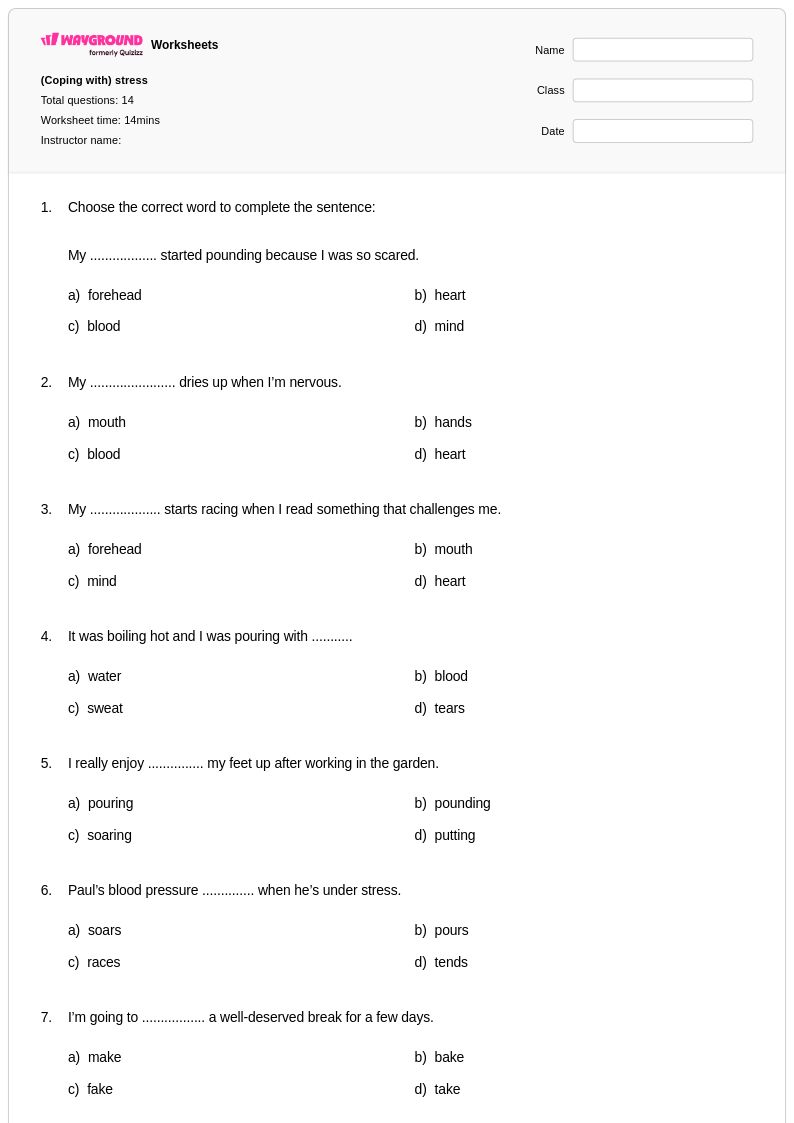
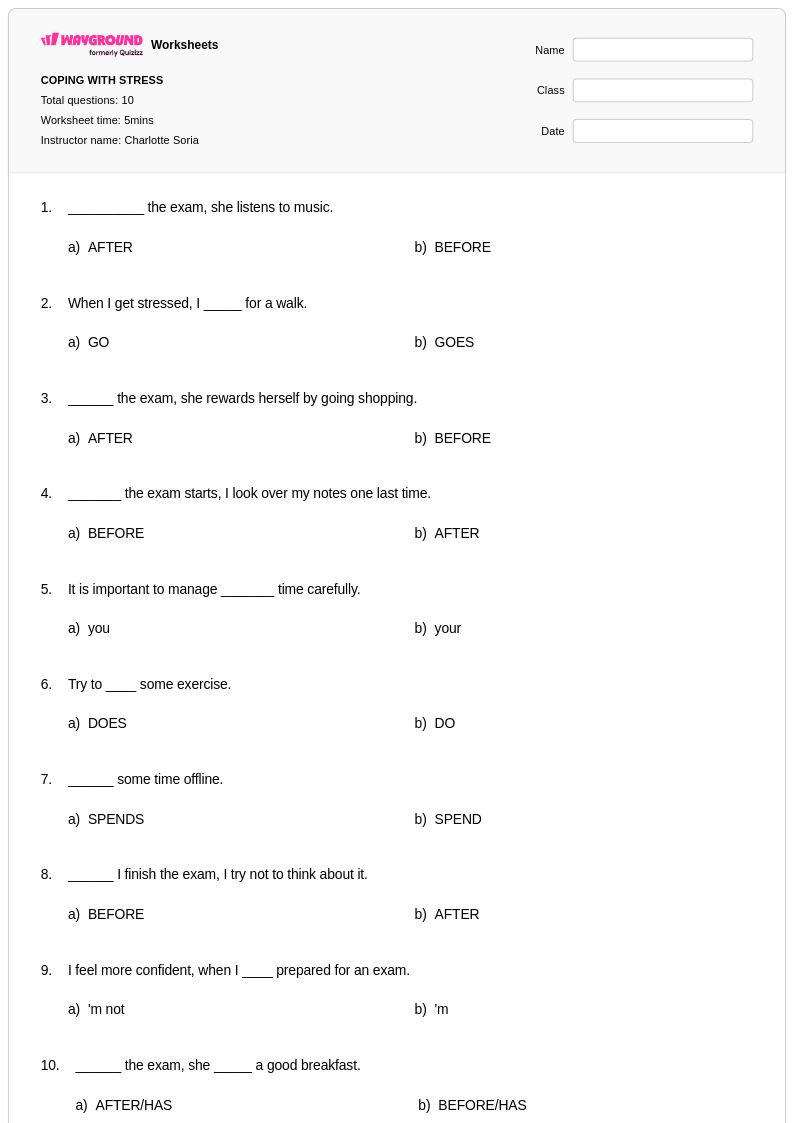
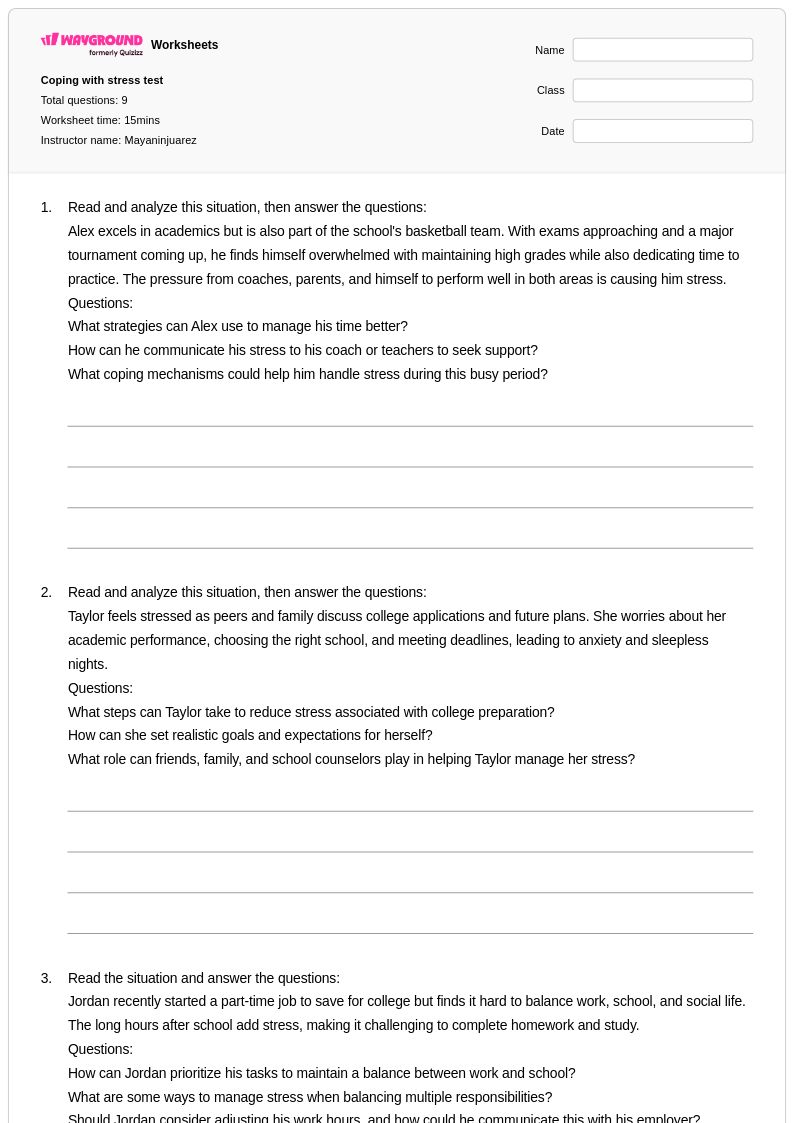
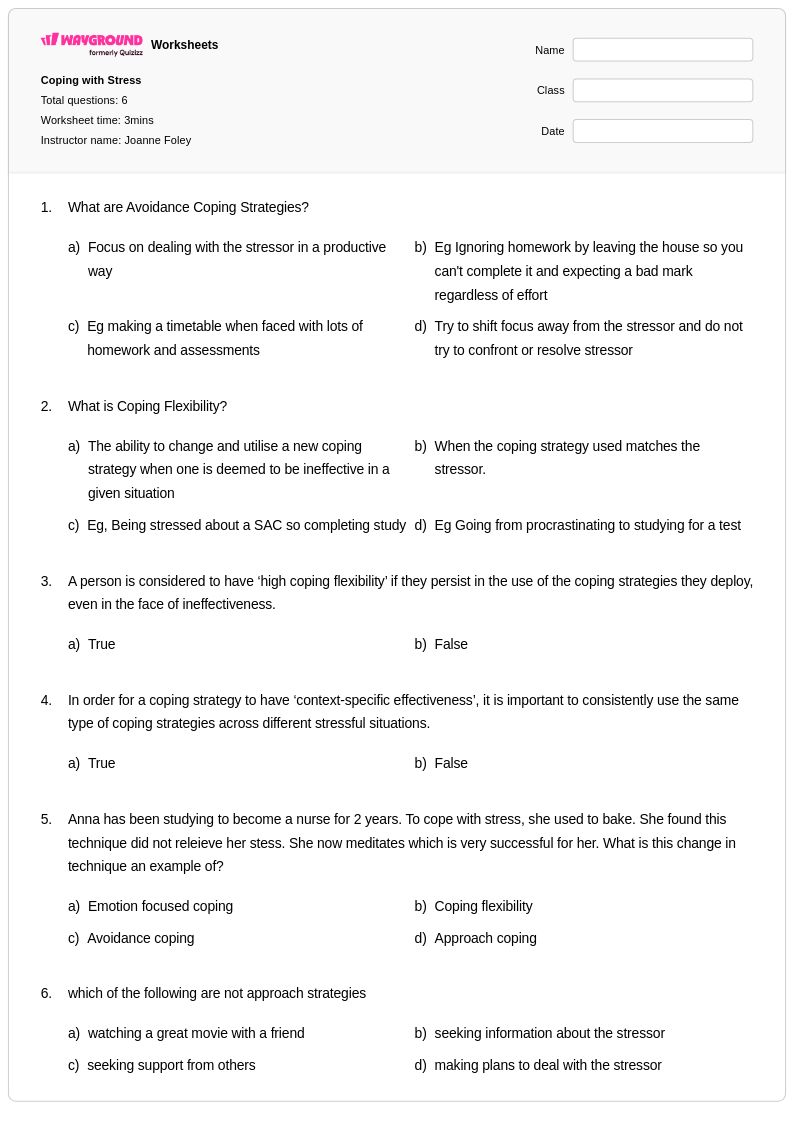
Class 12 Physical Education students can master coping with stress through Wayground's comprehensive collection of free worksheets, printables, and practice problems with answer keys designed to build essential mental health strategies.
Explore printable Coping with Stress worksheets for Class 12
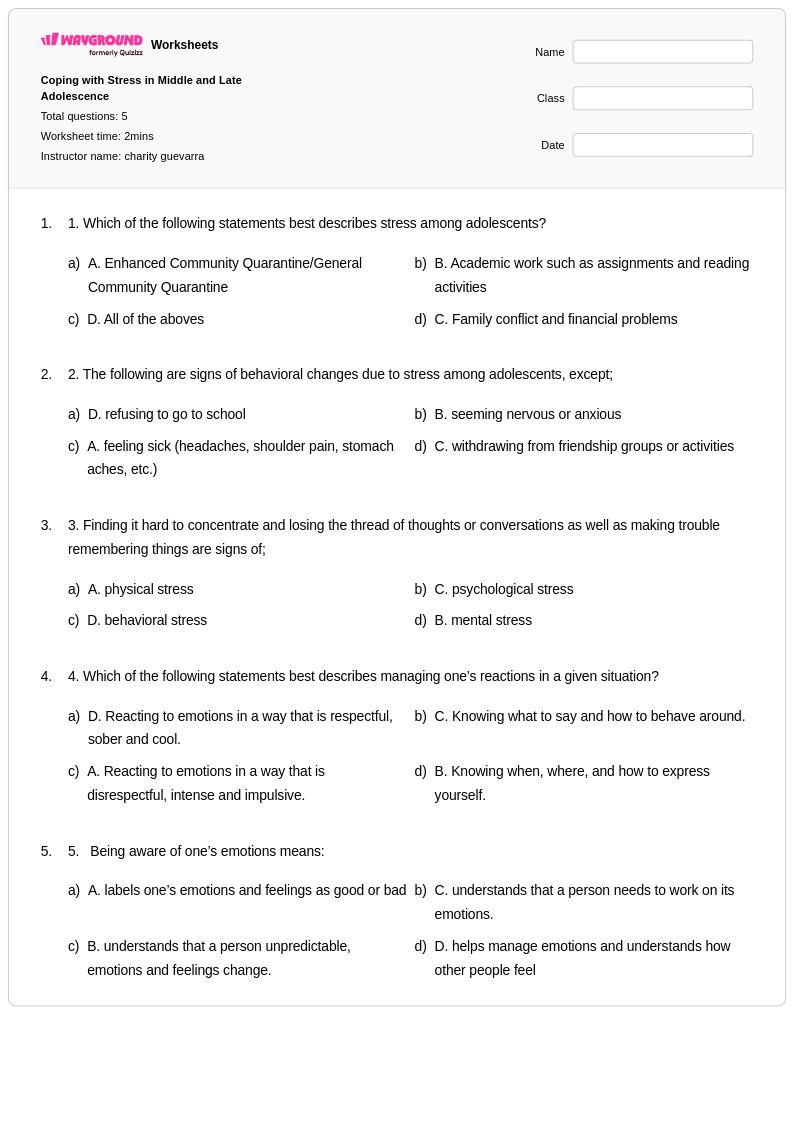
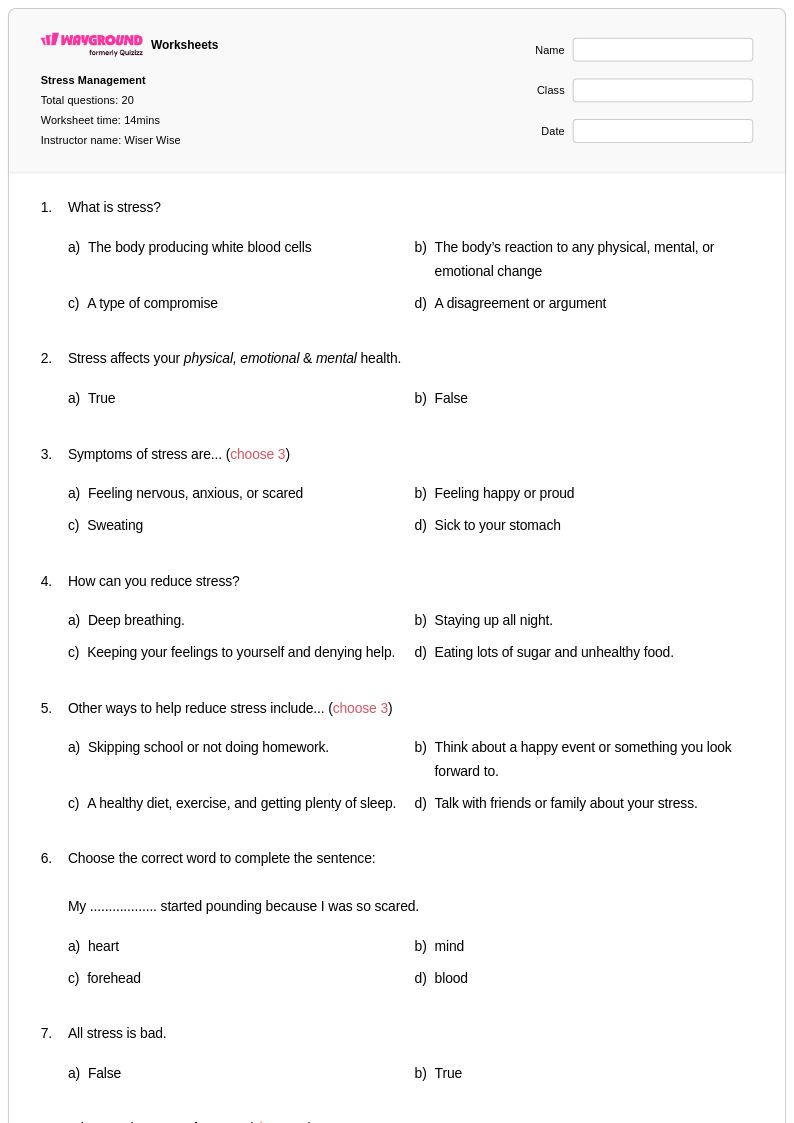
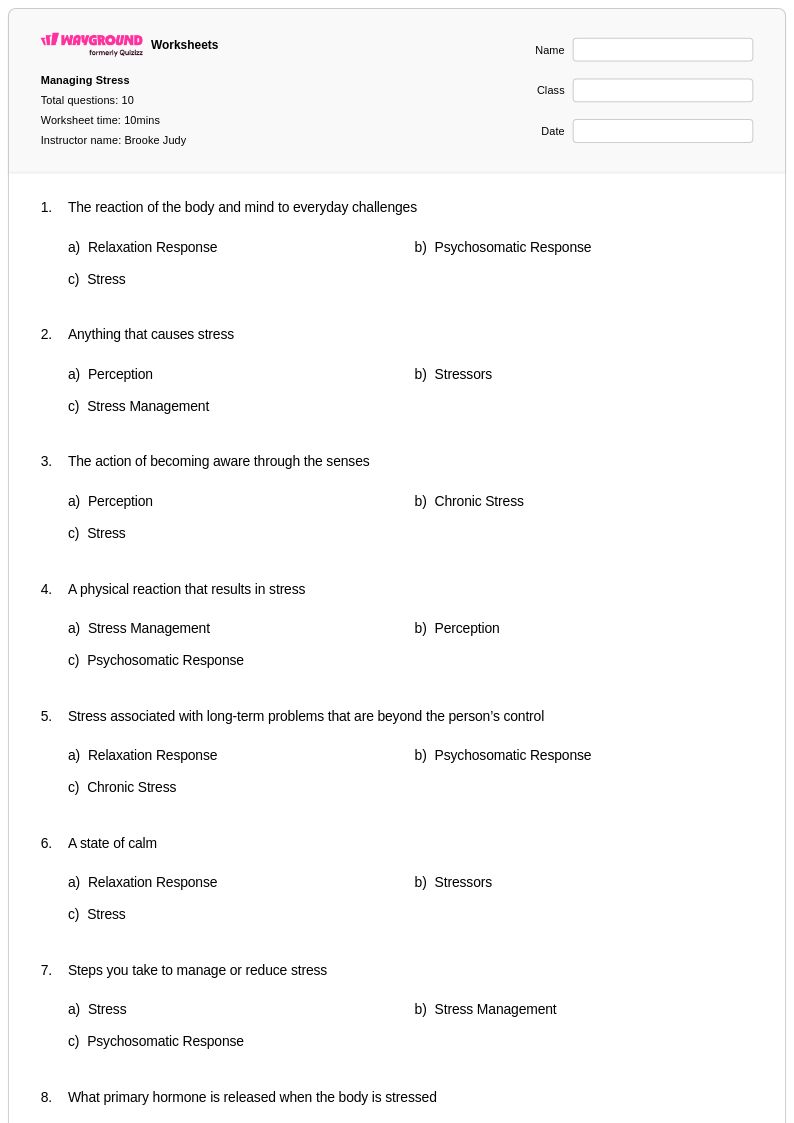
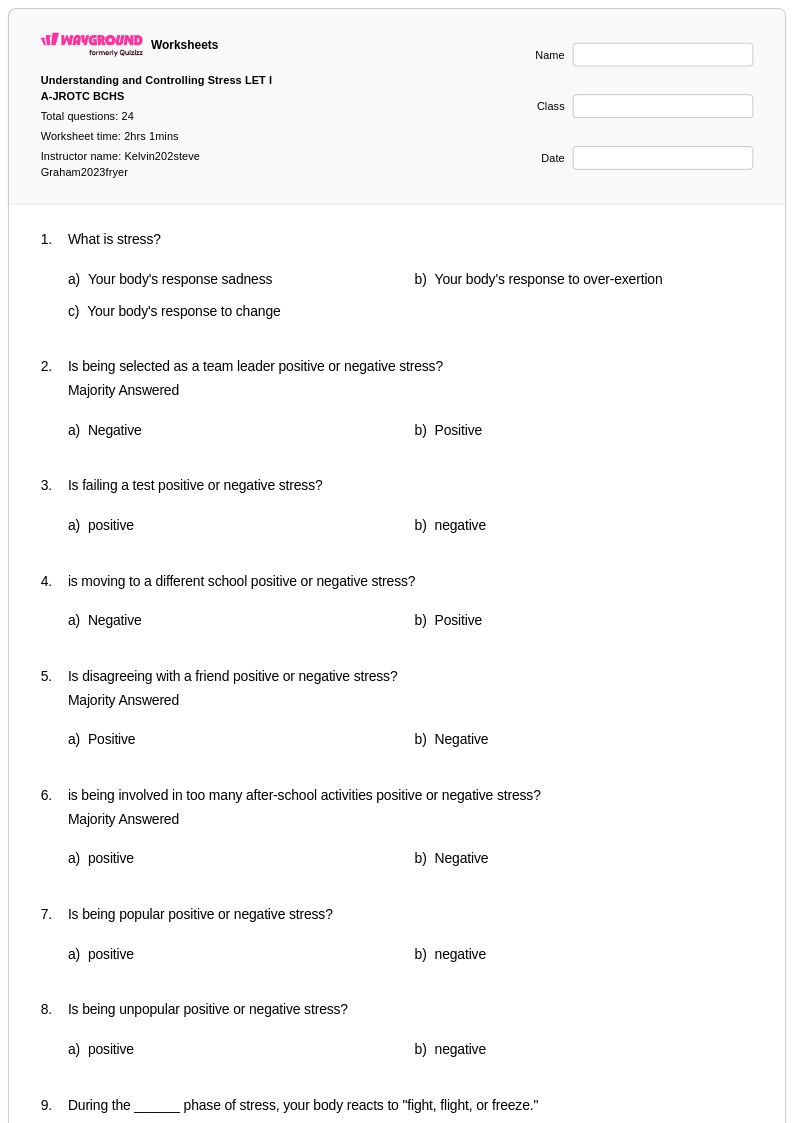
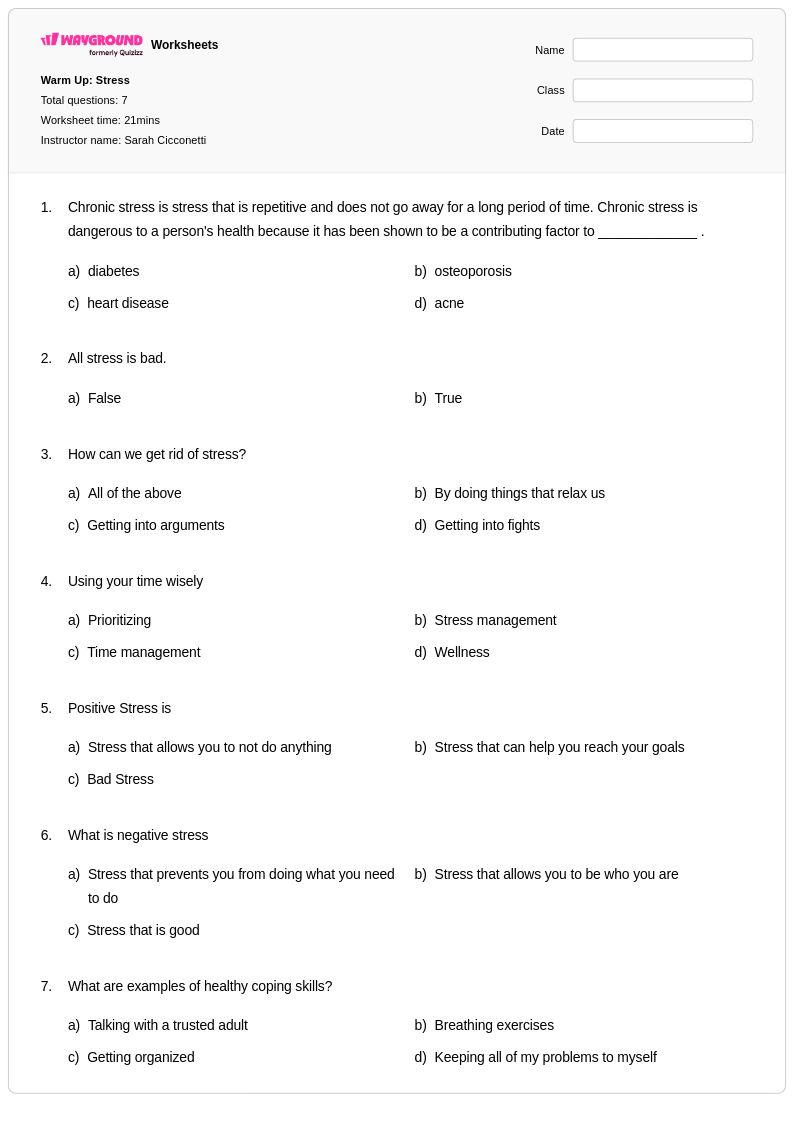
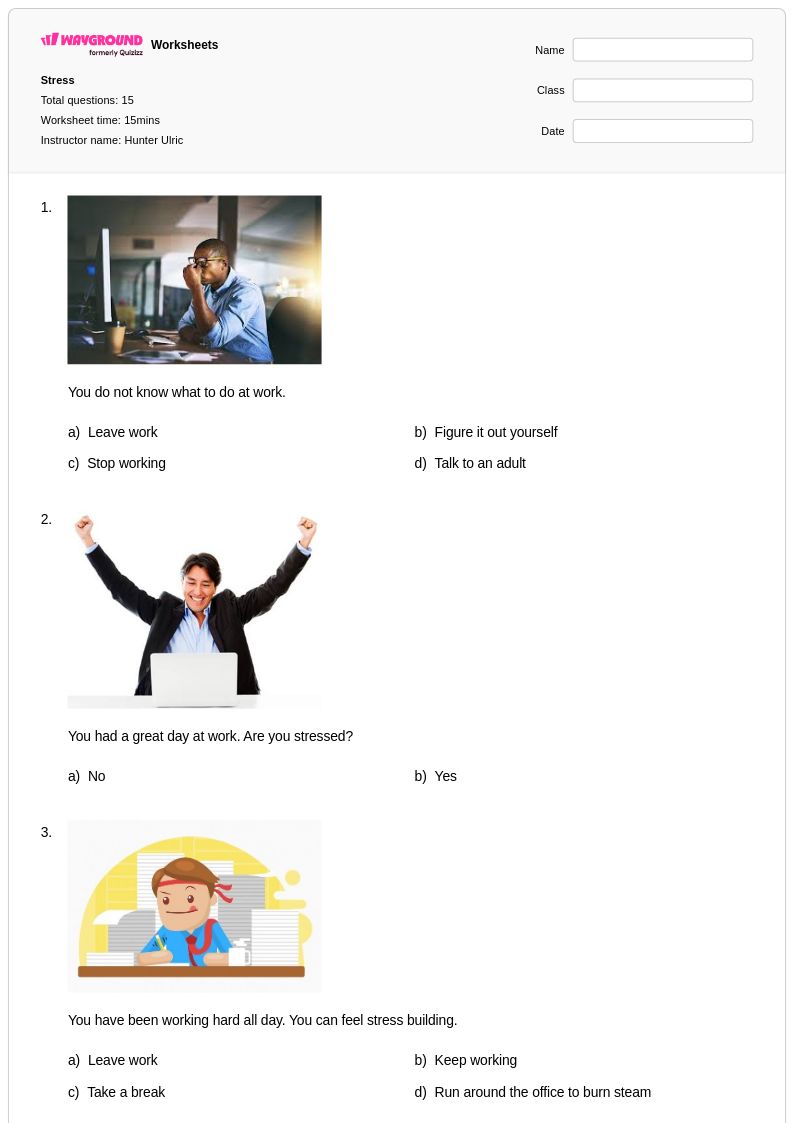
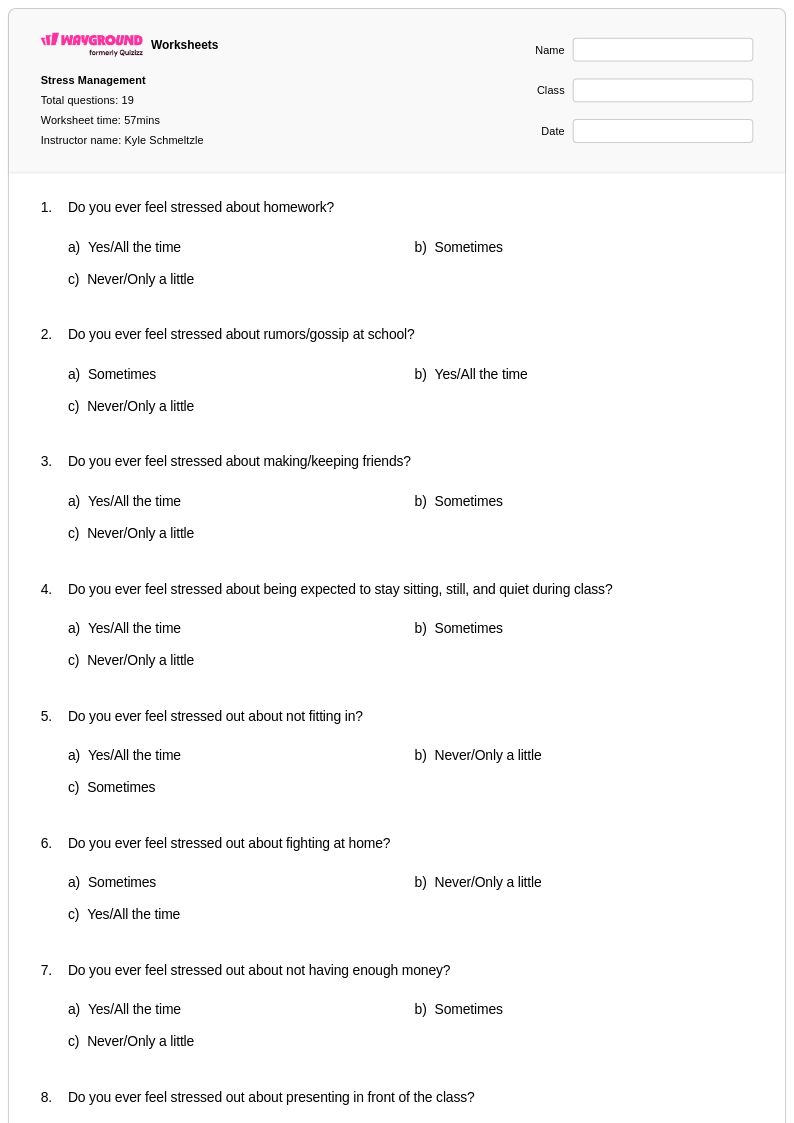
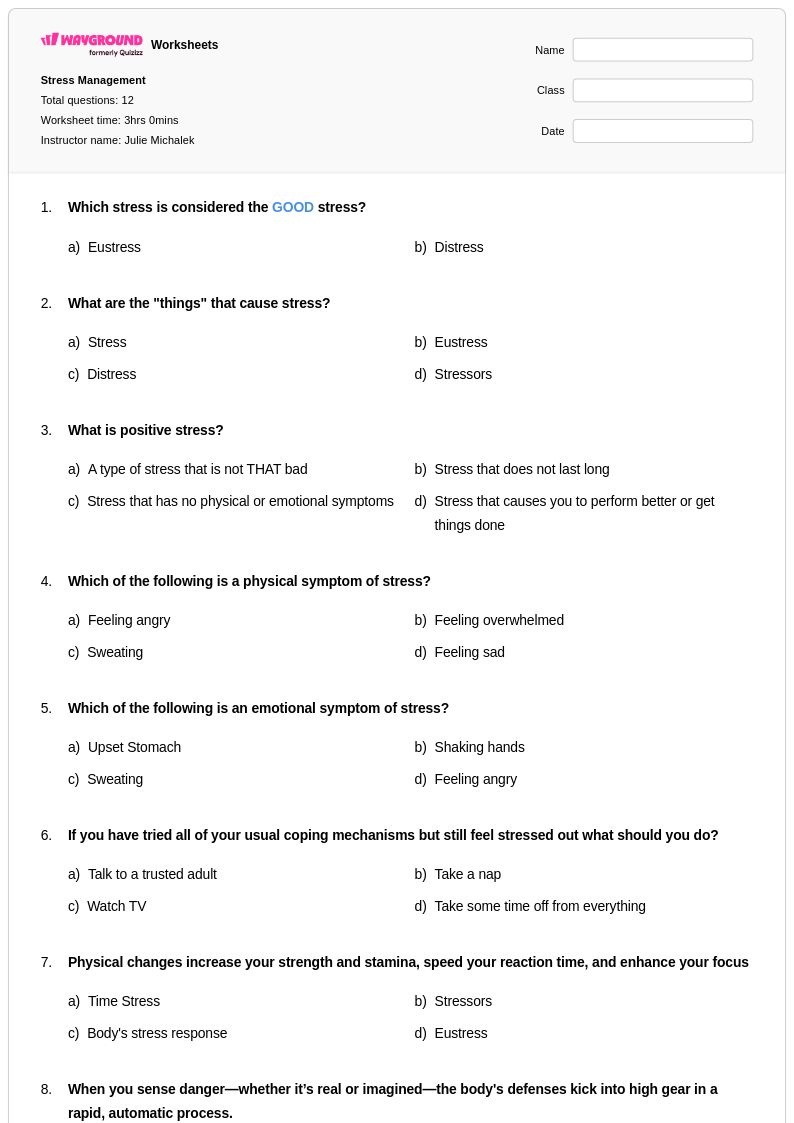
Coping with stress represents a fundamental life skill that Class 12 students must master as they prepare for post-secondary transitions and adult responsibilities. Wayground's comprehensive collection of physical education worksheets focusing on stress management provides students with evidence-based strategies and practical tools to identify, understand, and effectively manage stress in healthy ways. These expertly designed resources strengthen critical thinking skills around personal wellness while building students' capacity to recognize stress triggers, implement breathing techniques, develop time management strategies, and create personalized coping mechanisms. The free printable worksheets include guided practice problems that help students apply stress reduction techniques to real-world scenarios, complete with detailed answer keys that support independent learning and self-assessment of their stress management progress.
Wayground, formerly Quizizz, empowers physical education teachers with millions of teacher-created resources specifically designed to address stress management and mental health topics for high school students. The platform's robust search and filtering capabilities enable educators to quickly locate age-appropriate materials that align with health and wellness standards while supporting diverse learning needs through built-in differentiation tools. Teachers can seamlessly customize worksheets to match their specific curriculum requirements and student populations, with flexible delivery options including both digital formats and printable PDF versions for classroom or homework use. These comprehensive resources streamline lesson planning while providing targeted materials for remediation, enrichment, and systematic skill practice, ensuring that all Class 12 students develop essential stress management competencies before entering their next life phase.
FAQs
How do I teach coping with stress in a physical education or health class?
Teaching stress coping in PE or health class works best when you connect physical activity directly to mental wellness outcomes. Start by helping students identify their personal stress triggers and physiological responses, such as increased heart rate or muscle tension, then introduce movement-based strategies like progressive muscle relaxation, breathing exercises, and aerobic activity as evidence-based tools for stress reduction. Grounding lessons in the body-mind connection gives students concrete, repeatable techniques they can apply outside the classroom.
What exercises help students practice stress management techniques?
Effective practice exercises include guided breathing drills, body-scan relaxation sequences, and structured reflection prompts that ask students to log stress triggers and the coping strategies they used in response. Worksheets that walk students through progressive muscle relaxation or prompt them to evaluate how physical exercise changed their mood are especially useful because they reinforce the physiological basis of stress management, not just the concept. Repeated low-stakes practice builds the automaticity students need to apply these strategies under real pressure.
What mistakes do students commonly make when learning about stress and coping strategies?
A frequent misconception is that stress is purely mental and therefore unrelated to physical health, which causes students to underestimate the role of exercise, sleep, and body-based techniques in managing it. Students also tend to conflate any distraction, such as scrolling on a phone, with a genuine coping strategy, so instruction needs to explicitly distinguish avoidance behaviors from adaptive coping mechanisms. Worksheets that require students to evaluate the short-term and long-term effectiveness of different strategies help correct this confusion.
How can I differentiate stress management instruction for students with different needs?
Differentiation for stress management instruction should account for both academic readiness and students' personal stress-response patterns, since some learners arrive with heightened anxiety that affects engagement. On Wayground, teachers can enable accommodations such as Read Aloud for students who struggle with text-heavy reflection prompts, reduced answer choices for those who experience decision fatigue, and extended time for students who need more space to process emotionally sensitive content. These settings can be applied to individual students while the rest of the class receives standard settings, keeping the accommodation private and the lesson seamless.
How do I use Wayground's coping with stress worksheets in my classroom?
Wayground's coping with stress worksheets are available as printable PDFs, making them suitable for individual journaling, small-group reflection, or take-home assignments, and in digital formats for interactive classroom discussions or technology-integrated learning environments. Teachers can also host the material as a live quiz on Wayground, which adds a formative assessment layer to what might otherwise be a passive activity. Because each worksheet includes a complete answer key, teachers can use them for guided instruction or release them for independent practice with confidence.
How do I connect stress management lessons to physical education standards?
Most state health and PE standards include benchmarks around social-emotional wellness, self-management, and the relationship between physical activity and mental health, all of which map directly to stress coping content. Framing lessons around the physiological effects of stress, such as cortisol response and how aerobic exercise counteracts it, gives teachers a standards-aligned anchor that bridges fitness and wellness domains. Worksheets that ask students to design personal stress-management plans using physical and mindfulness strategies are particularly effective for demonstrating mastery of these integrated standards.