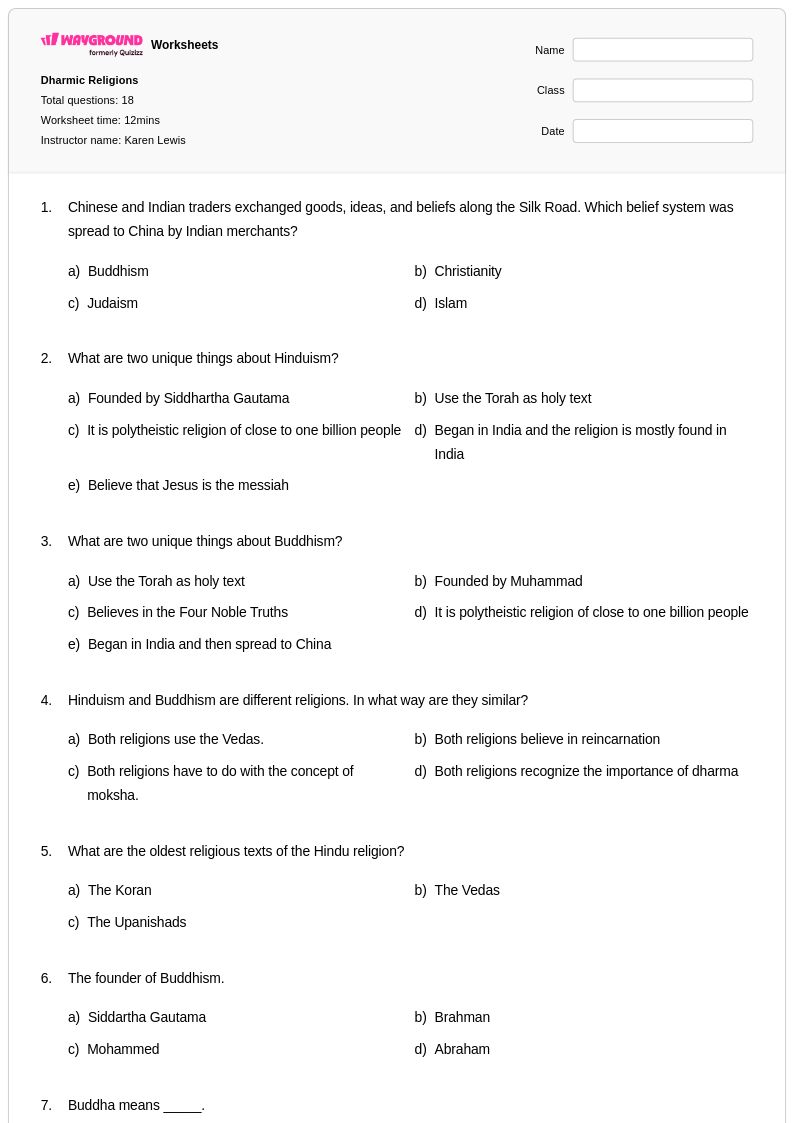
Free Printable Core Beliefs Worksheets for Class 8
Class 8 students explore fundamental values and belief systems that shape communities worldwide with Wayground's comprehensive collection of Core Beliefs worksheets, featuring engaging printables, practice problems, and answer keys.
Explore printable Core Beliefs worksheets for Class 8
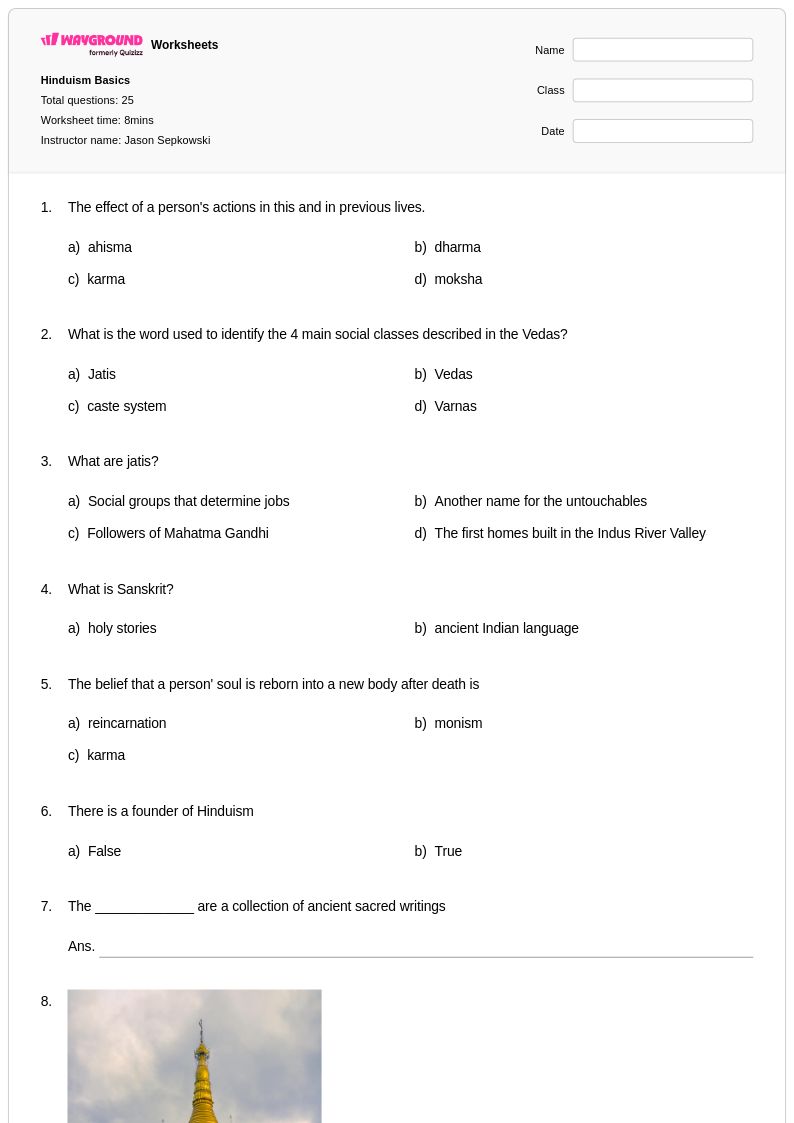
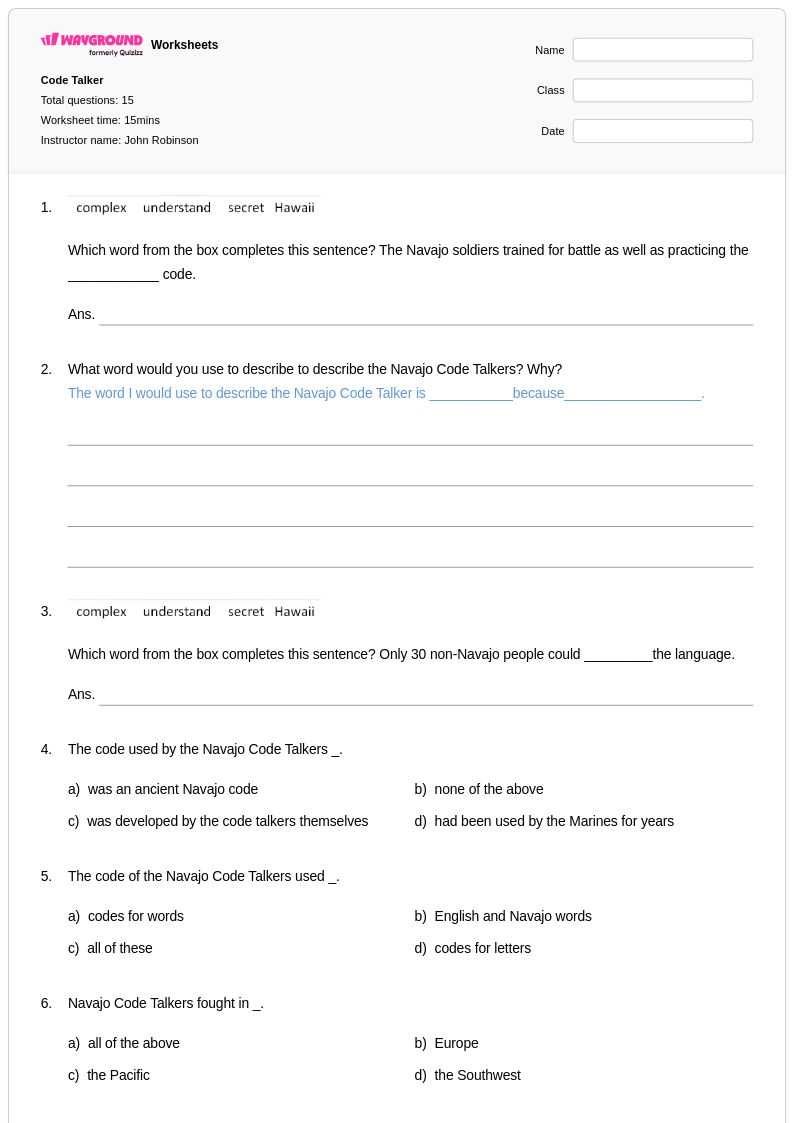
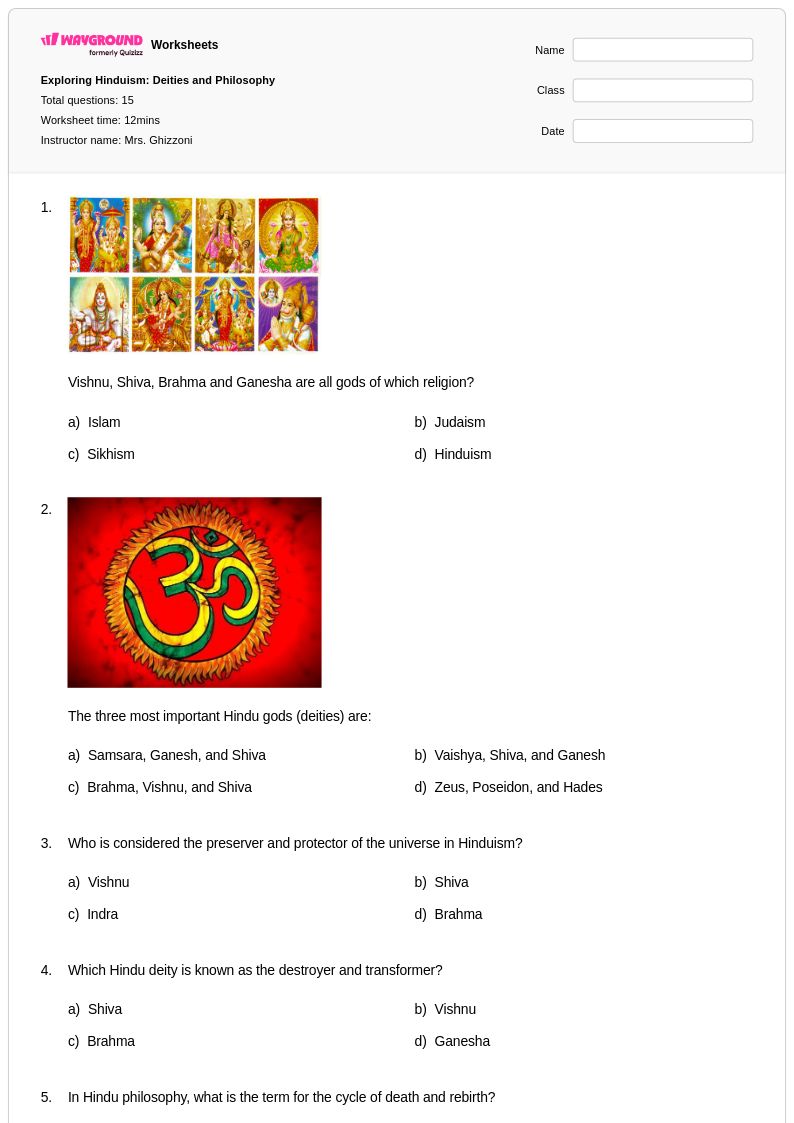
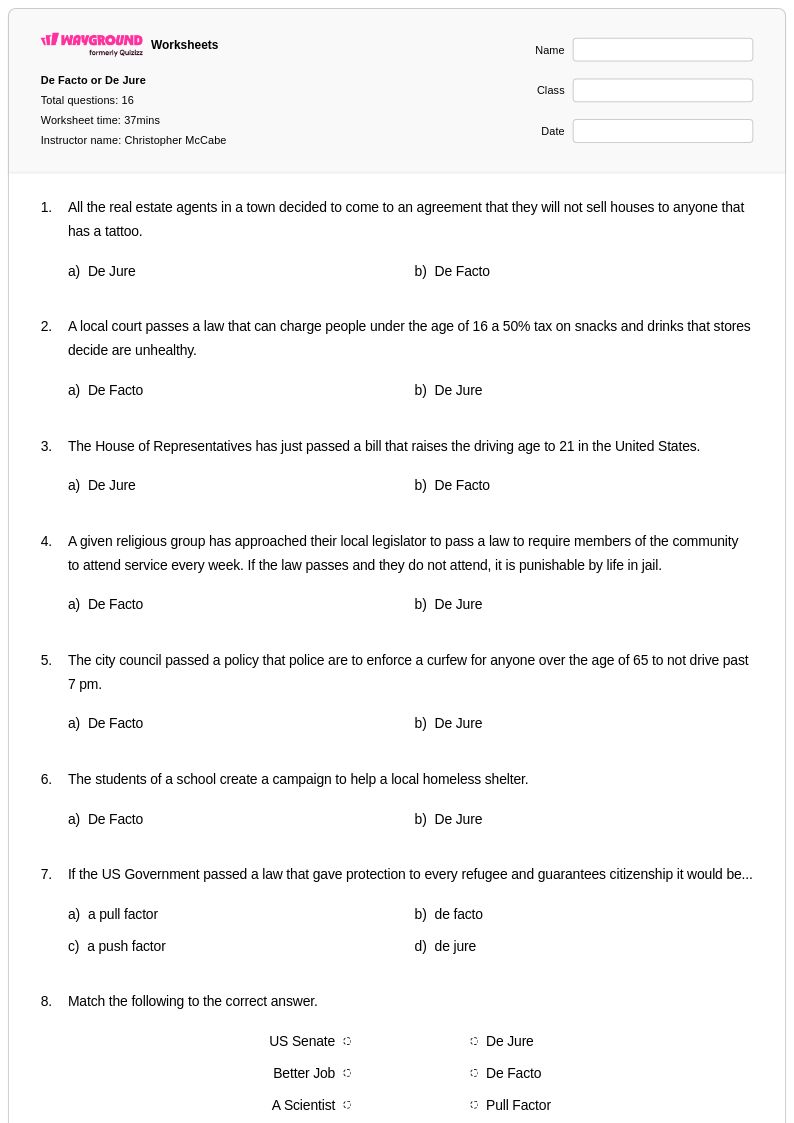
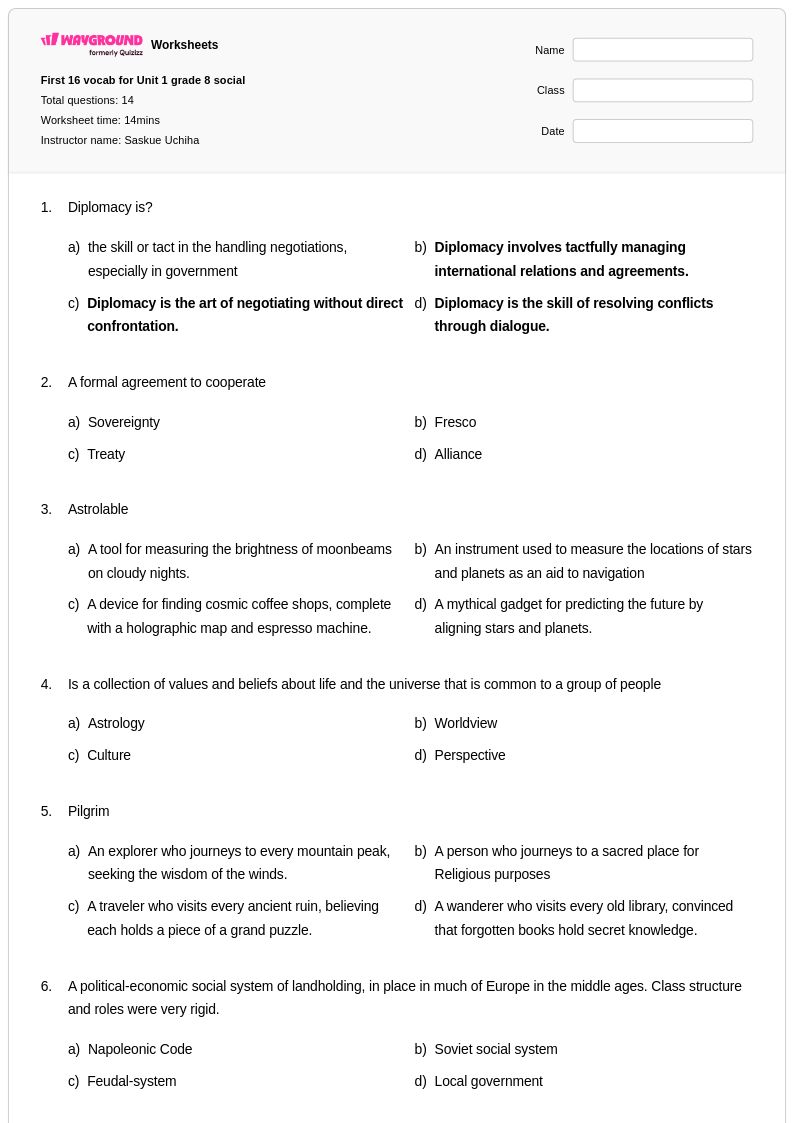
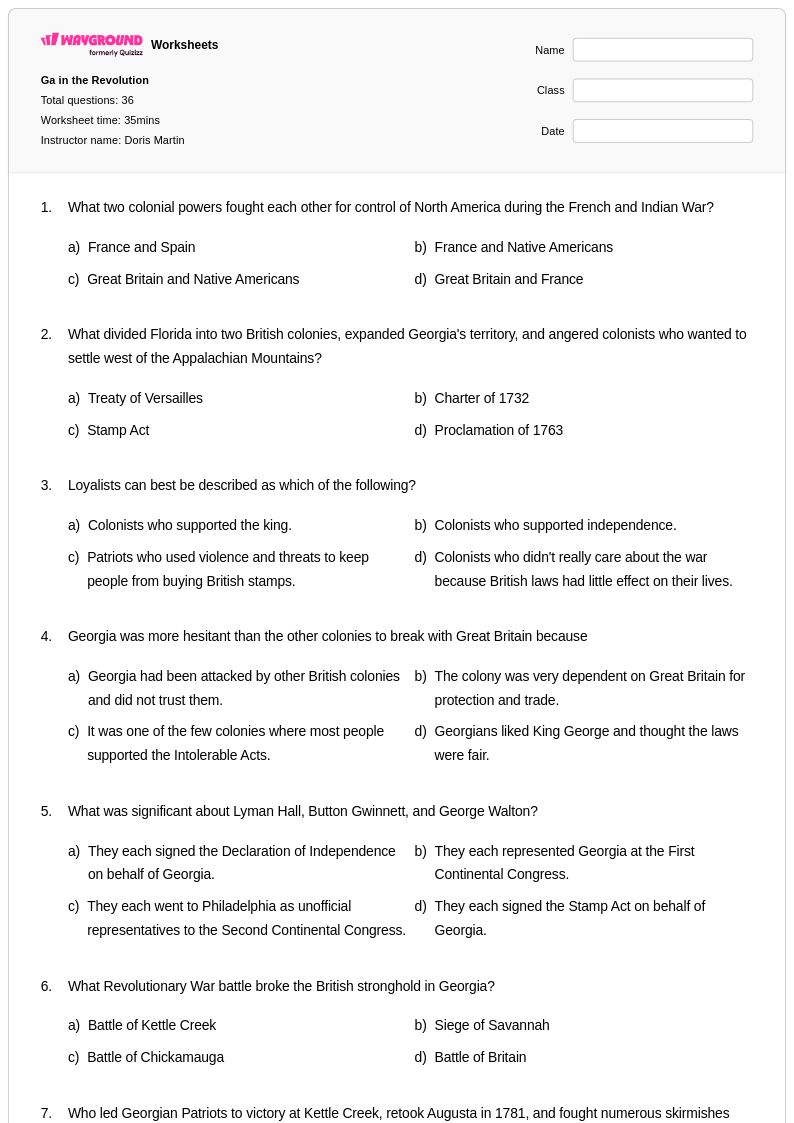
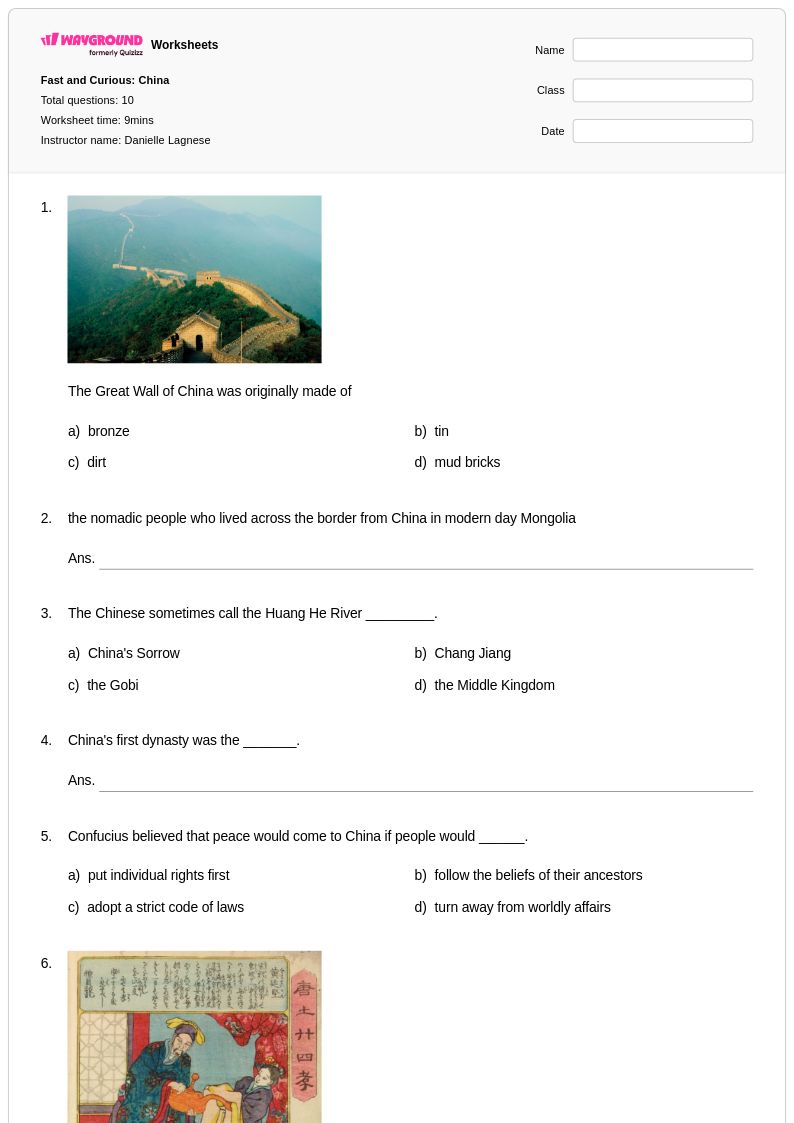
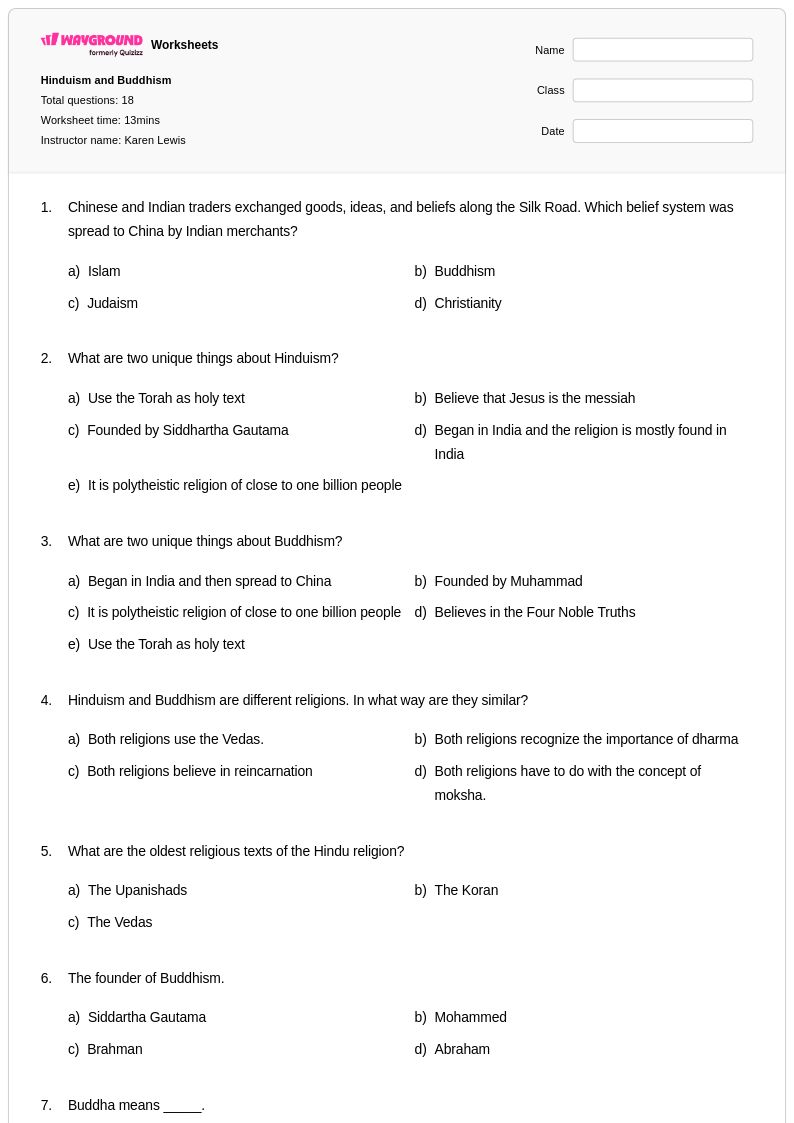
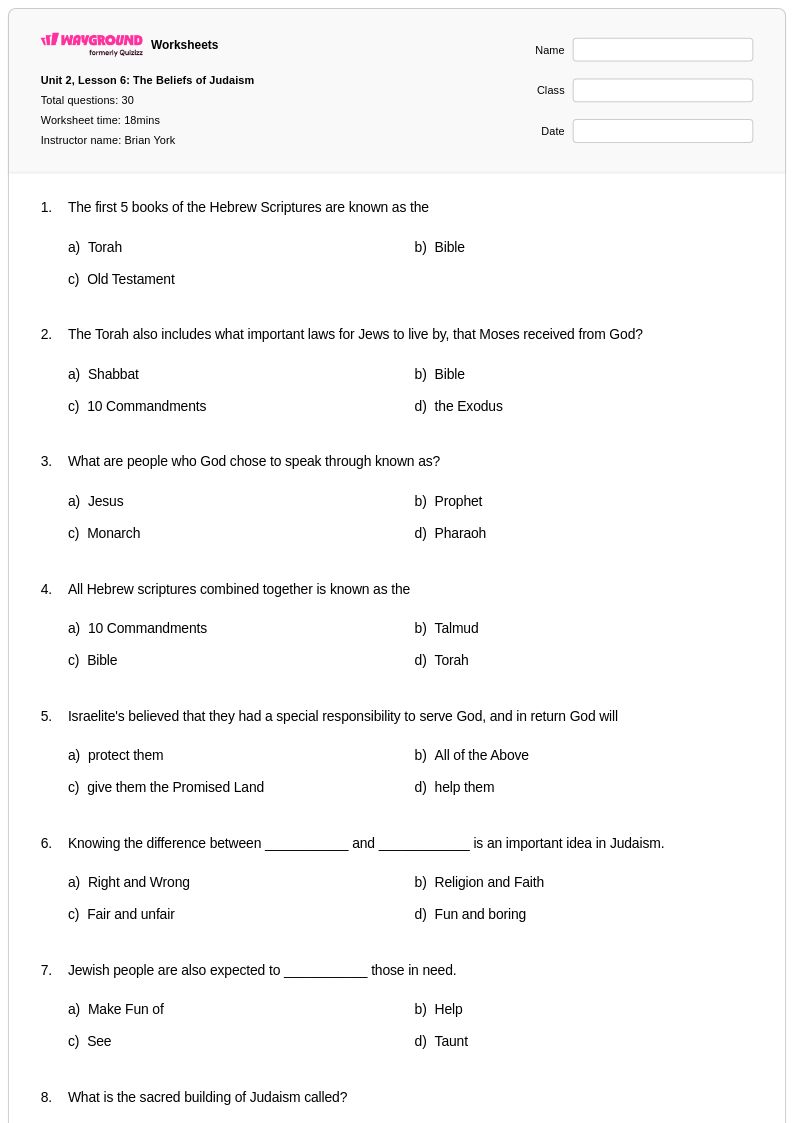
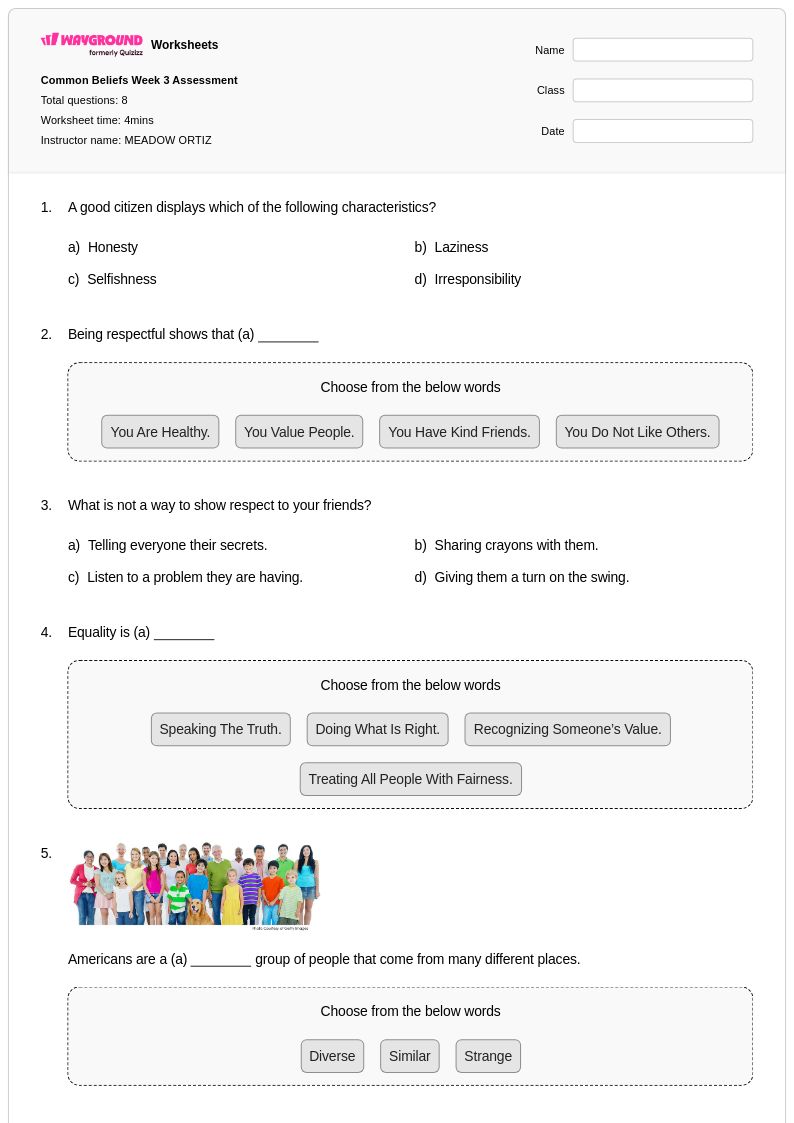
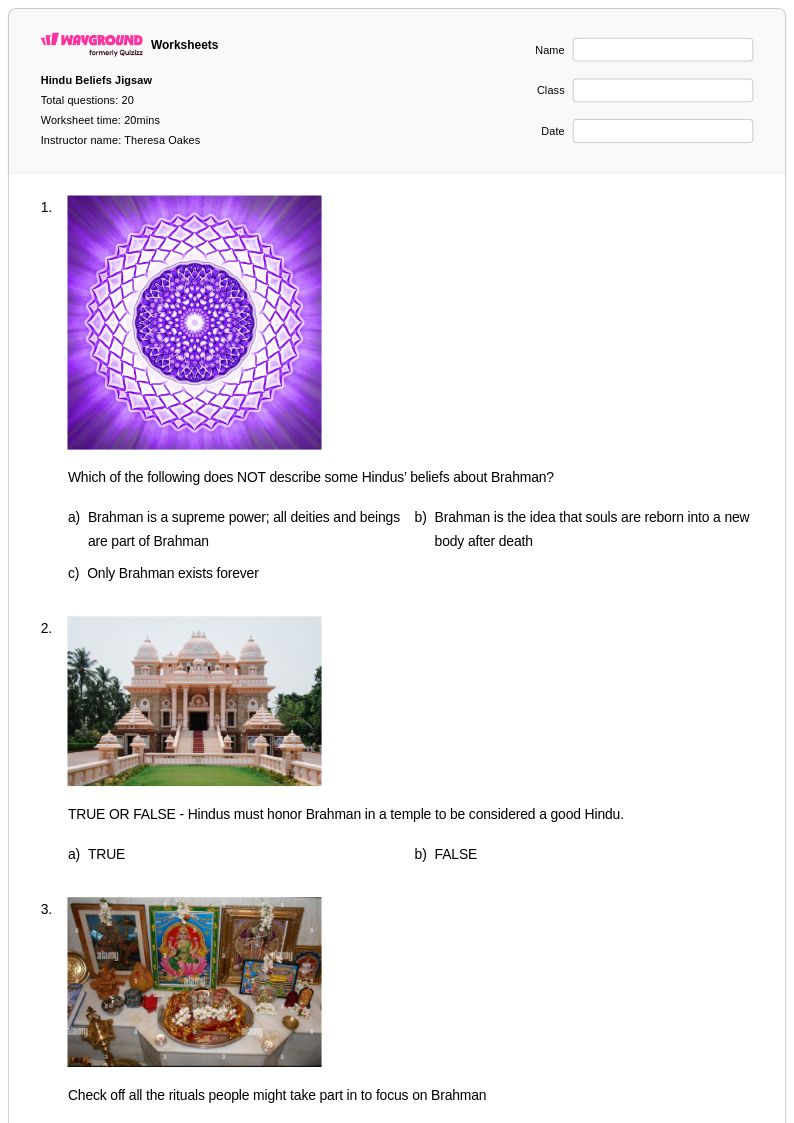
Core beliefs worksheets for Class 8 students available through Wayground provide essential practice in understanding how fundamental values and principles shape communities and cultures around the world. These comprehensive printables help students analyze the religious, philosophical, and cultural foundations that guide different societies, from examining sacred texts and moral codes to exploring how belief systems influence daily life and governance. Students develop critical thinking skills as they compare and contrast core beliefs across various cultures, identify how these beliefs manifest in traditions and practices, and evaluate the role of faith and ideology in shaping community identity. Each worksheet collection includes detailed answer keys and structured practice problems that guide students through complex concepts while building their ability to recognize patterns in human belief systems and their cultural expressions.
Wayground's extensive collection of teacher-created resources supports educators in delivering engaging core beliefs instruction through millions of carefully curated worksheets that can be accessed in both digital and printable pdf formats. The platform's robust search and filtering capabilities allow teachers to quickly locate materials aligned with specific curriculum standards and differentiate instruction based on individual student needs and learning levels. These flexible customization tools enable educators to modify existing worksheets or combine multiple resources to create comprehensive lesson sequences that address diverse learning objectives. Whether used for initial skill-building, targeted remediation, or enrichment activities, these Class 8 core beliefs materials provide teachers with reliable, professionally-developed content that streamlines lesson planning while ensuring students receive meaningful practice in understanding the complex relationship between belief systems and cultural development.
FAQs
How do I teach core beliefs in a social studies or cultural studies class?
Teaching core beliefs effectively starts with grounding students in concrete examples before moving to abstract comparison. Begin by having students identify beliefs within their own community, then examine how beliefs in other cultures shape governance, traditions, and social norms. Structured activities like belief mapping and guided text analysis help students build a framework for understanding how shared values function across different societies.
What kinds of exercises help students practice analyzing core beliefs?
Exercises that ask students to compare and contrast belief systems across two or more cultures are especially effective for building analytical skills. Practice problems that connect core beliefs to real-world outcomes, such as how a shared value influences a governance structure or community tradition, push students beyond surface-level identification toward deeper critical thinking. Worksheets that include structured prompts for written reflection reinforce this analysis.
What misconceptions do students commonly have when studying core beliefs?
A frequent misconception is that core beliefs are the same as religious beliefs, which causes students to overlook secular ideologies, civic values, and cultural norms as belief systems. Students also tend to treat beliefs as static rather than recognizing that they evolve over time and in response to social change. Addressing these errors explicitly helps students develop a more accurate and nuanced understanding of how belief systems operate.
How can I use core beliefs worksheets to support diverse learners in my classroom?
Core beliefs worksheets on Wayground are available in both printable PDF and digital formats, making them accessible across traditional and technology-integrated classrooms. For students who need additional support, Wayground's digital platform offers built-in accommodations including read aloud, extended time, and reduced answer choices, which can be assigned to individual students without disrupting the experience of the rest of the class. These settings are reusable across sessions, reducing setup time for teachers.
How do core beliefs connect to cultural patterns and community formation?
Core beliefs are the shared values and principles that give communities their identity, shaping everything from daily social interactions to formal governance structures. When students learn to identify these belief systems, they begin to see cultural patterns, such as why certain traditions persist or why specific social structures emerge in particular societies. This connection between belief and culture is central to any meaningful study of social studies, history, or global citizenship.
What common errors do students make when comparing belief systems across cultures?
Students frequently apply ethnocentric thinking when comparing belief systems, unconsciously measuring another culture's values against their own as the default standard. They also tend to overgeneralize, treating an entire culture as holding one unified belief when in reality belief systems are often internally diverse and contested. Worksheets that ask students to cite specific evidence for their comparisons help counteract both of these tendencies.

![Westward Expansion [Unit 8] - Printable Core-beliefs Worksheets Class 8 - Wayground](https://quizizz-static.s3.amazonaws.com/_media/worksheets-new/64088c1edd42bb001efc0389-westward-expansion-unit-8)