Free Printable Creation of the Us Constitution Worksheets for Class 7
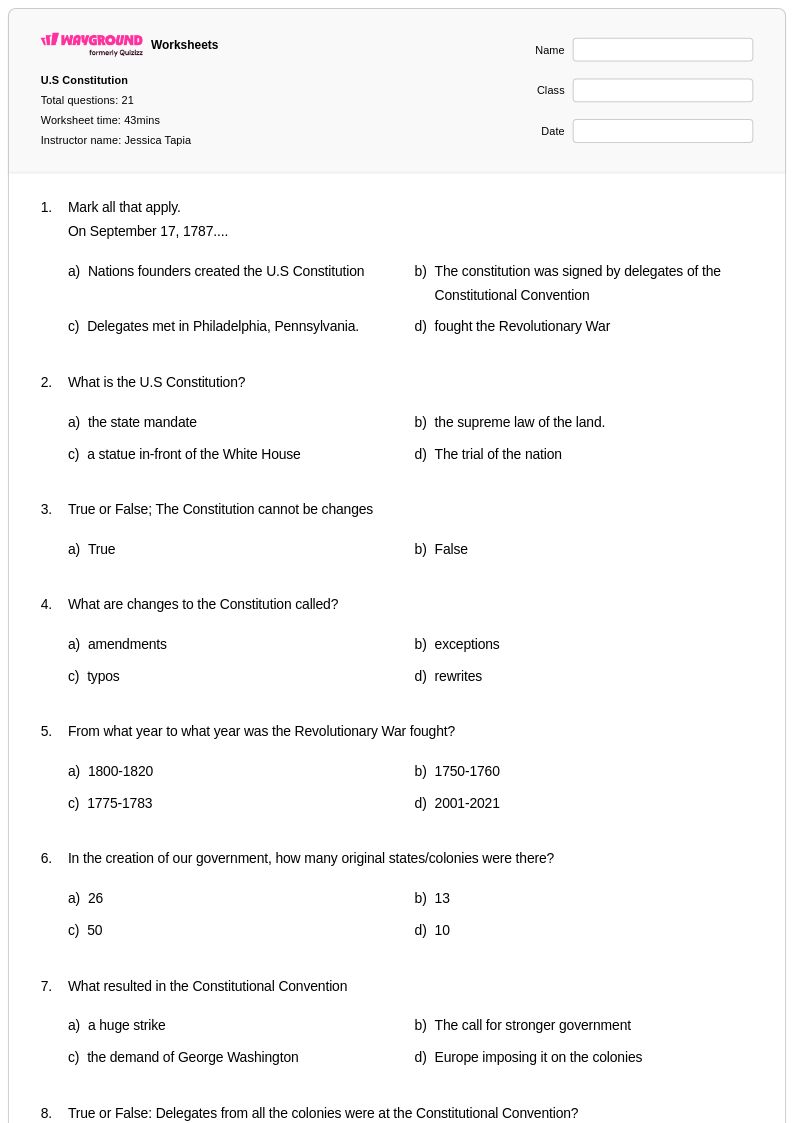
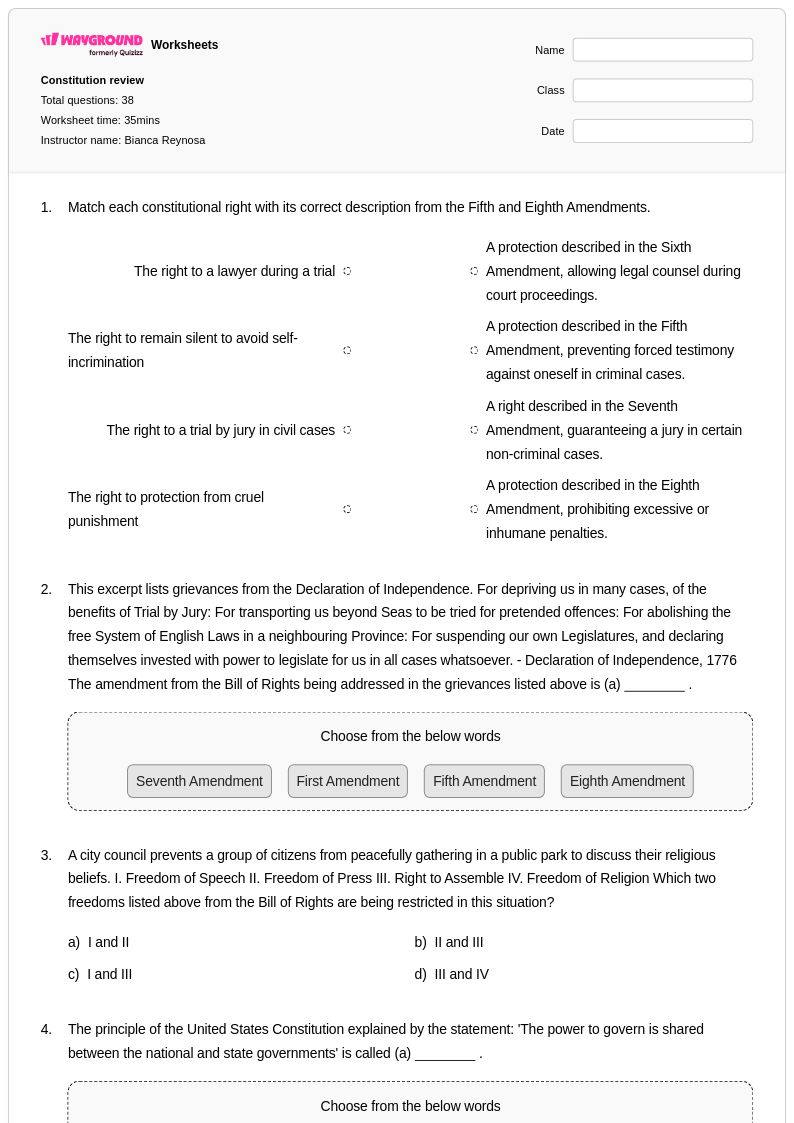
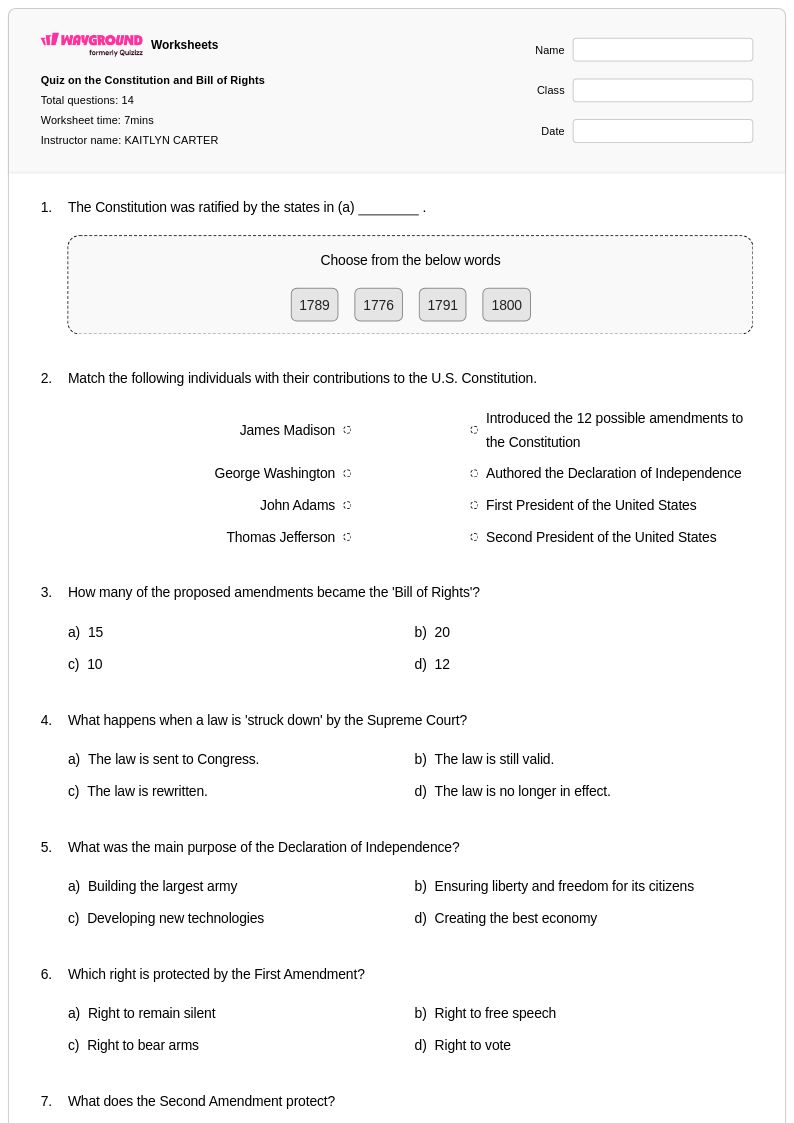
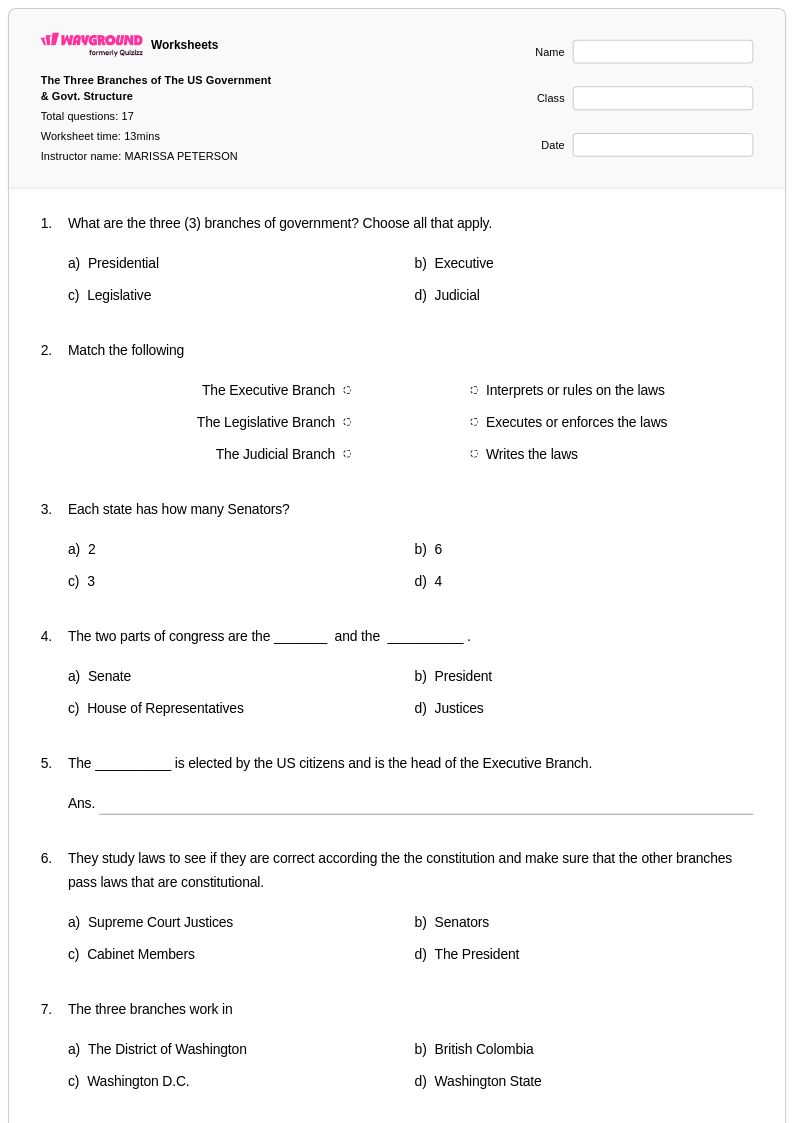
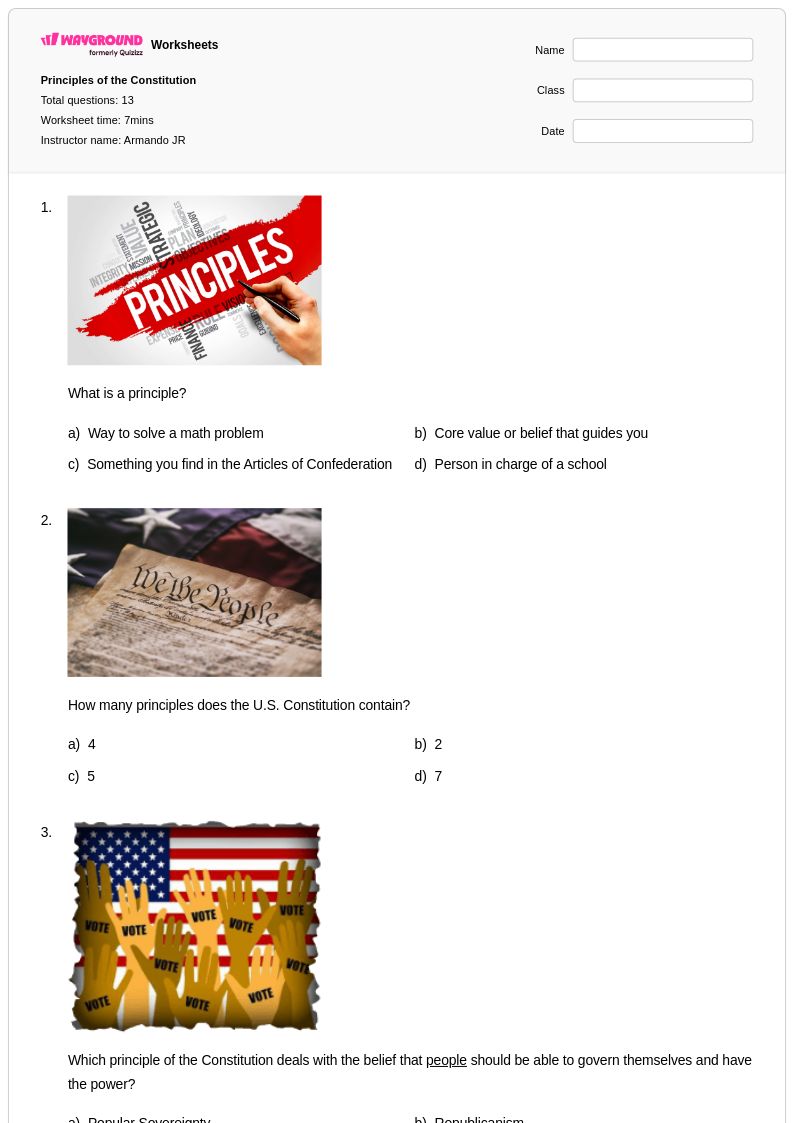
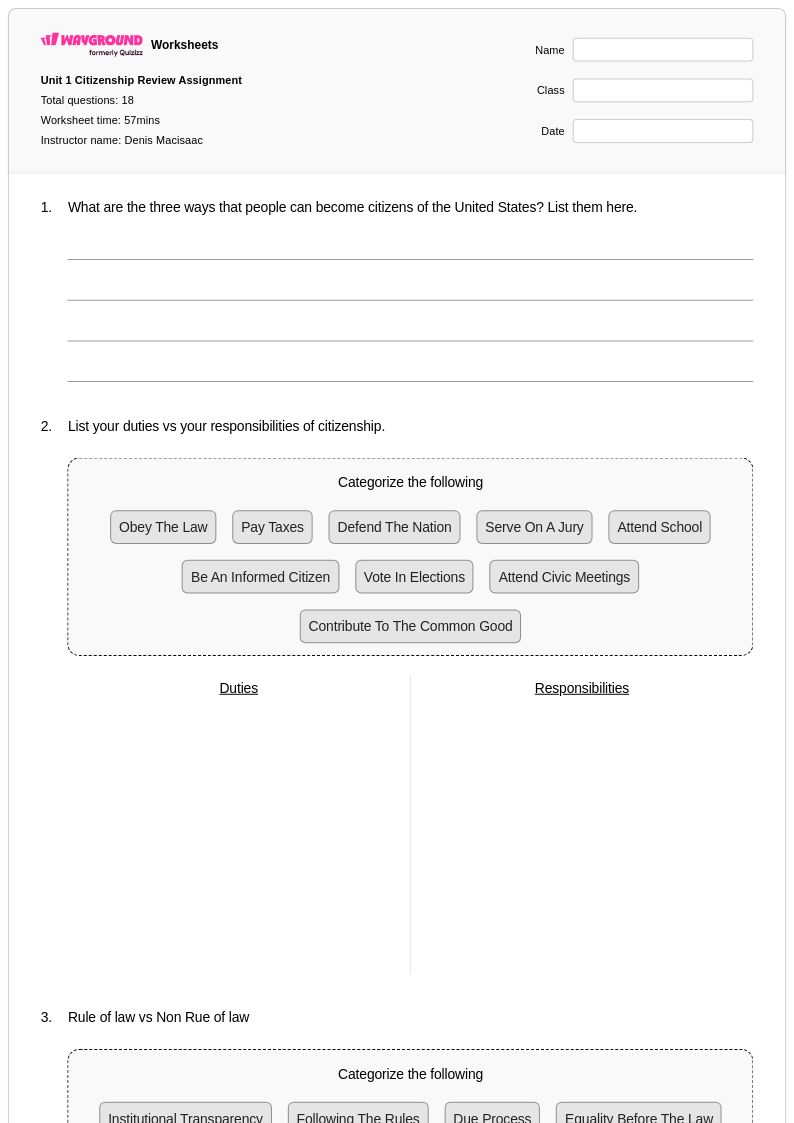
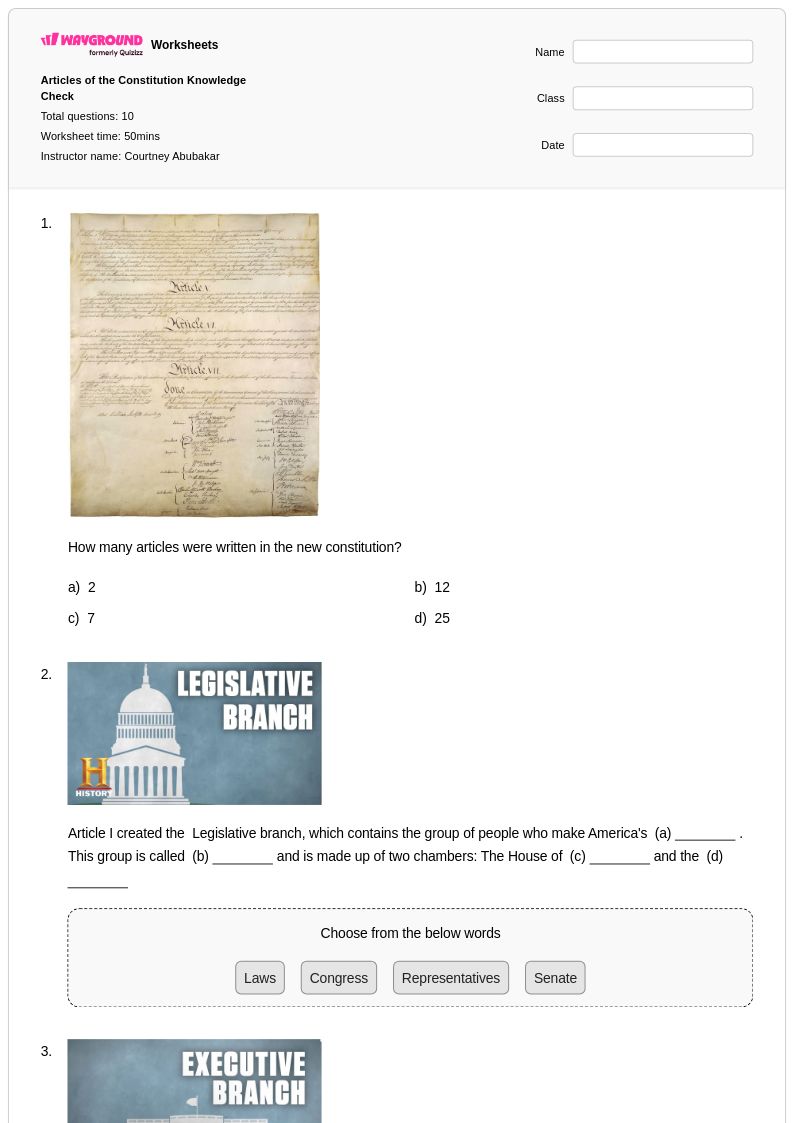
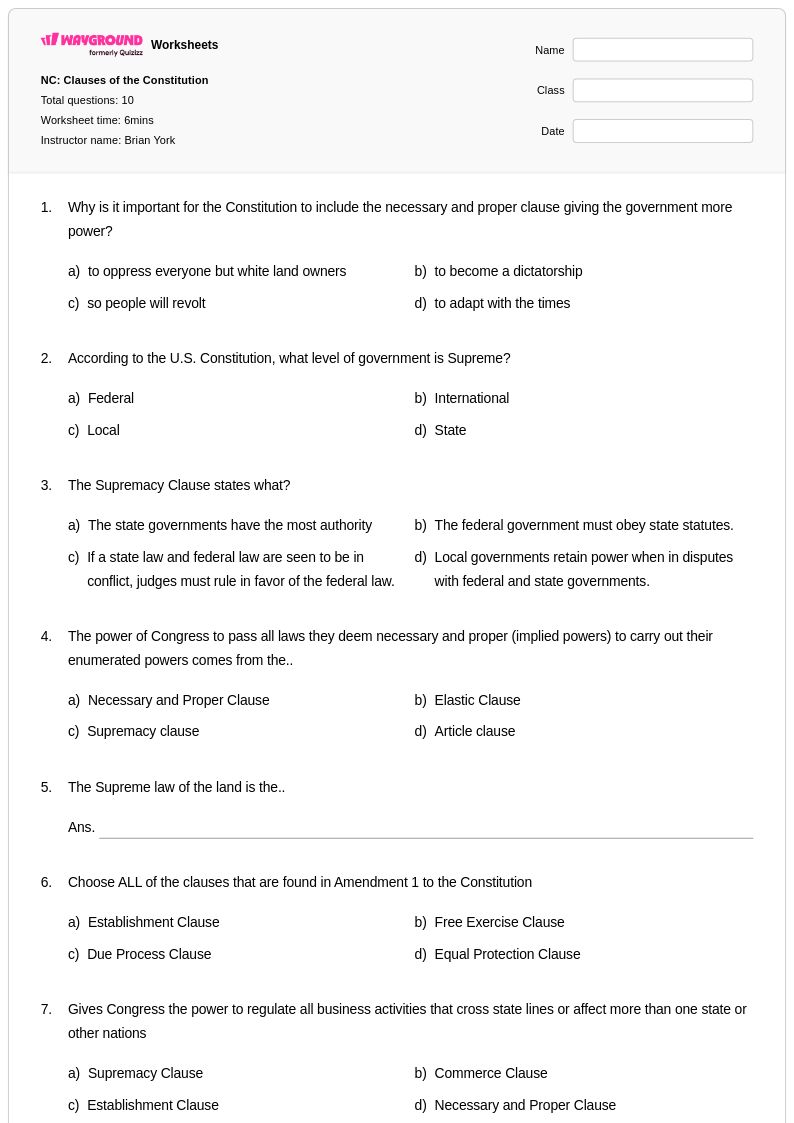
Wayground's Class 7 Creation of the US Constitution worksheets provide free printables and practice problems that help students explore the founding principles, key debates, and constitutional framework that shaped American government, complete with answer keys for effective learning.
Explore printable Creation of the Us Constitution worksheets for Class 7
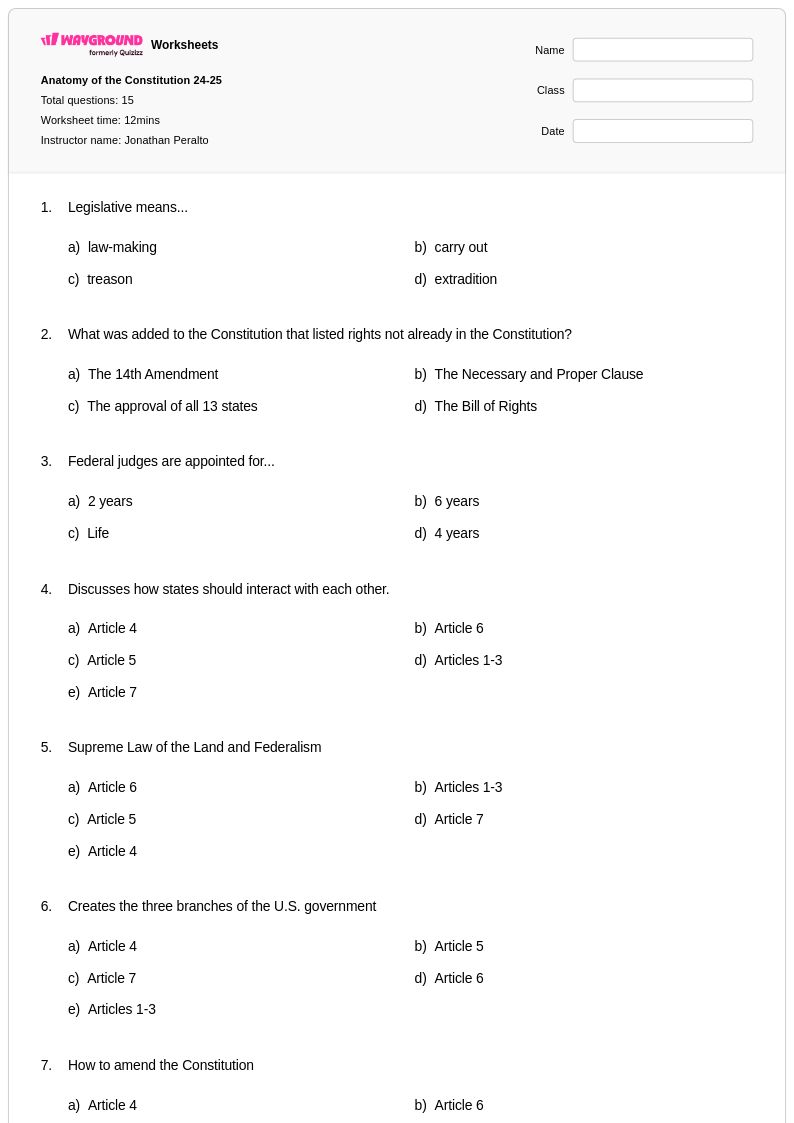
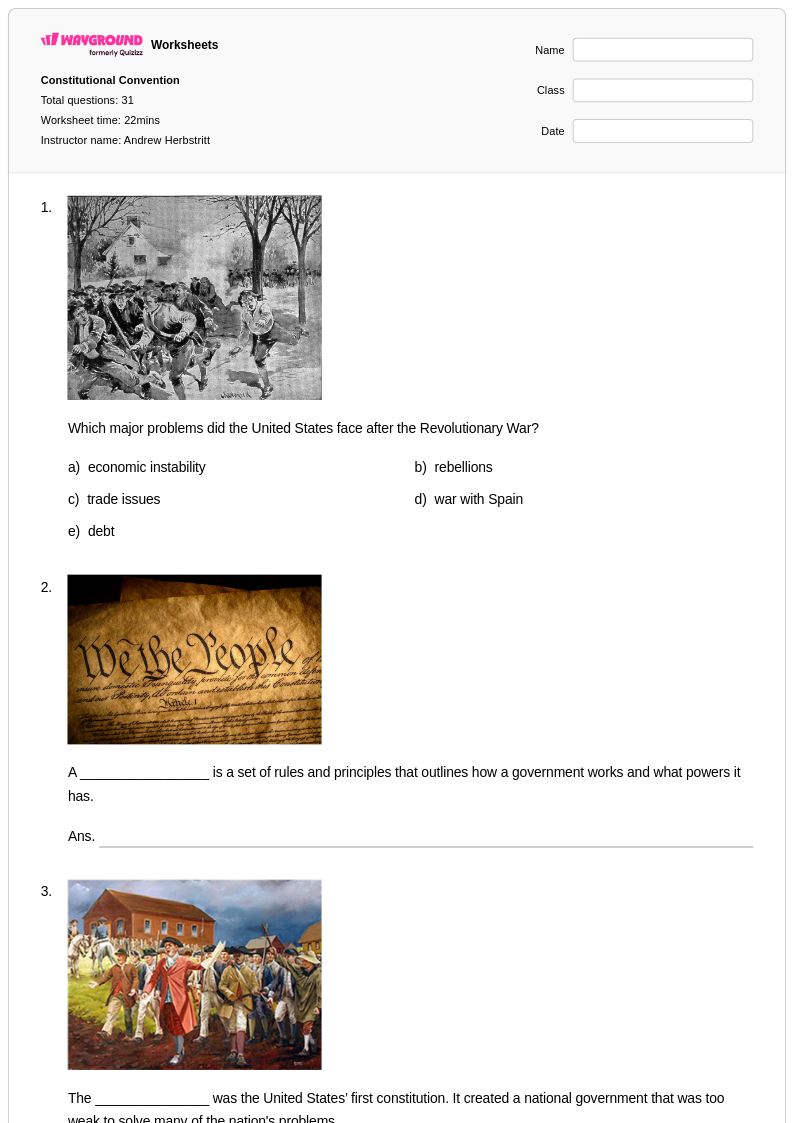
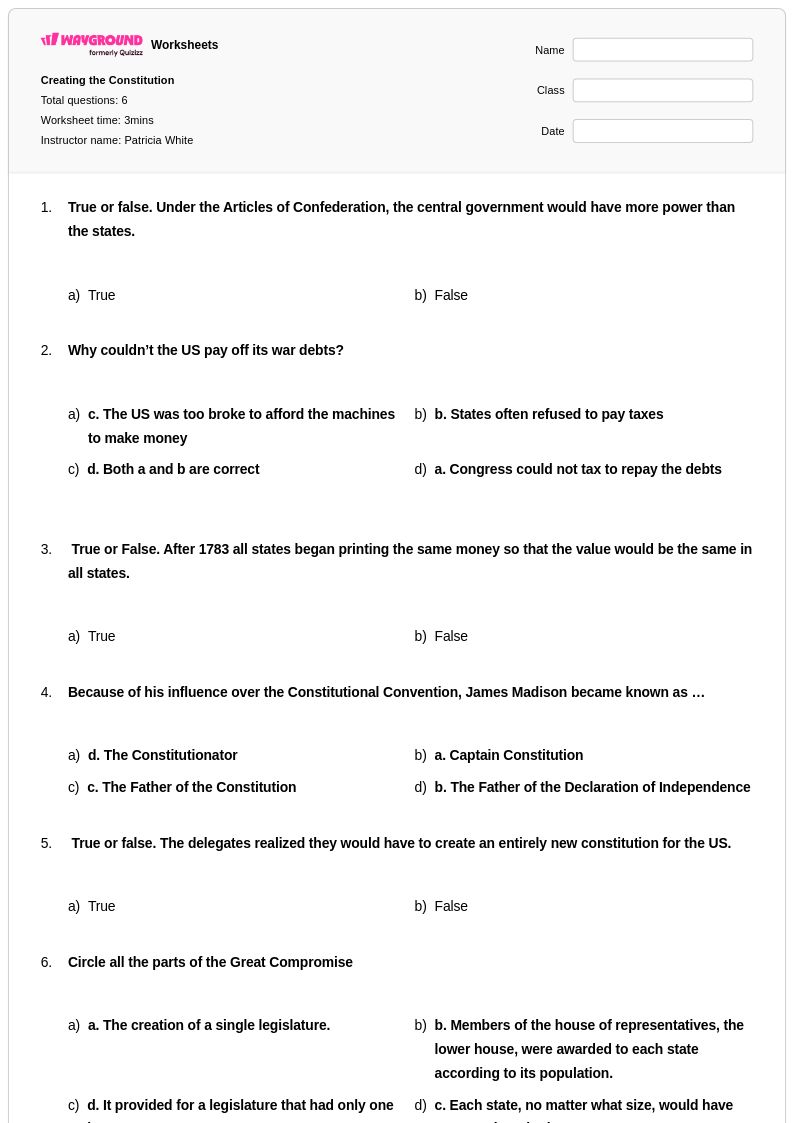
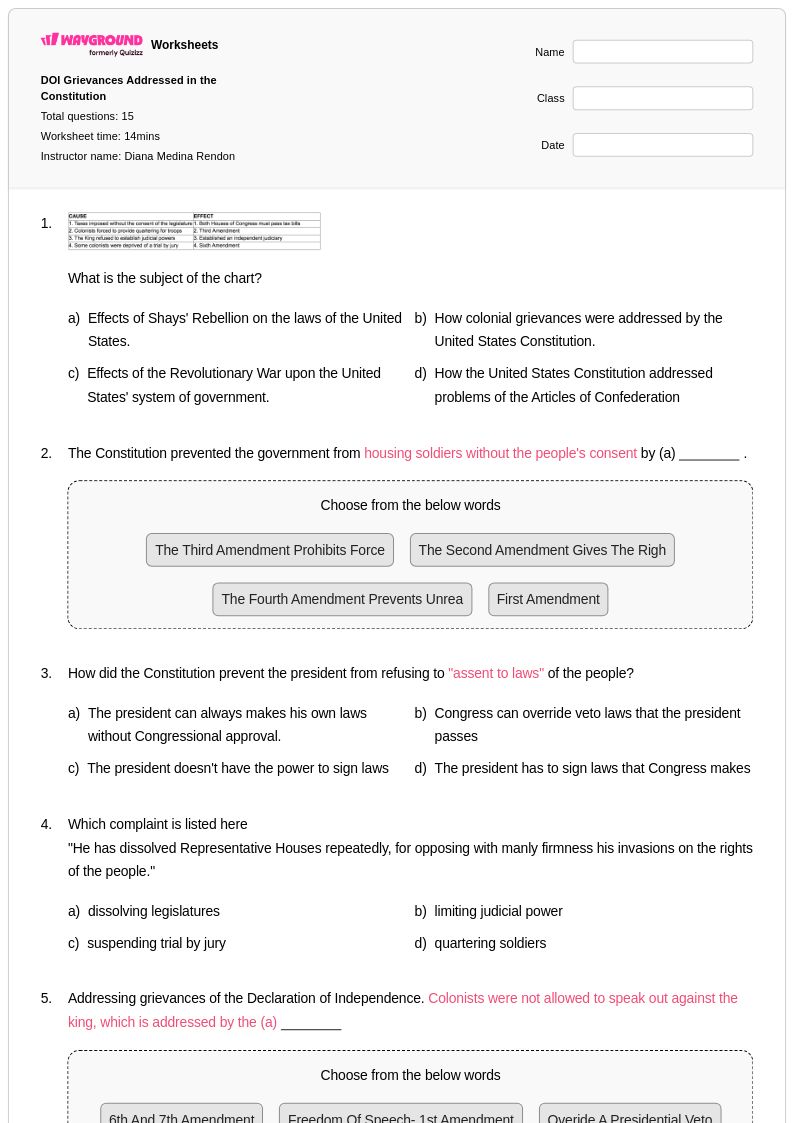
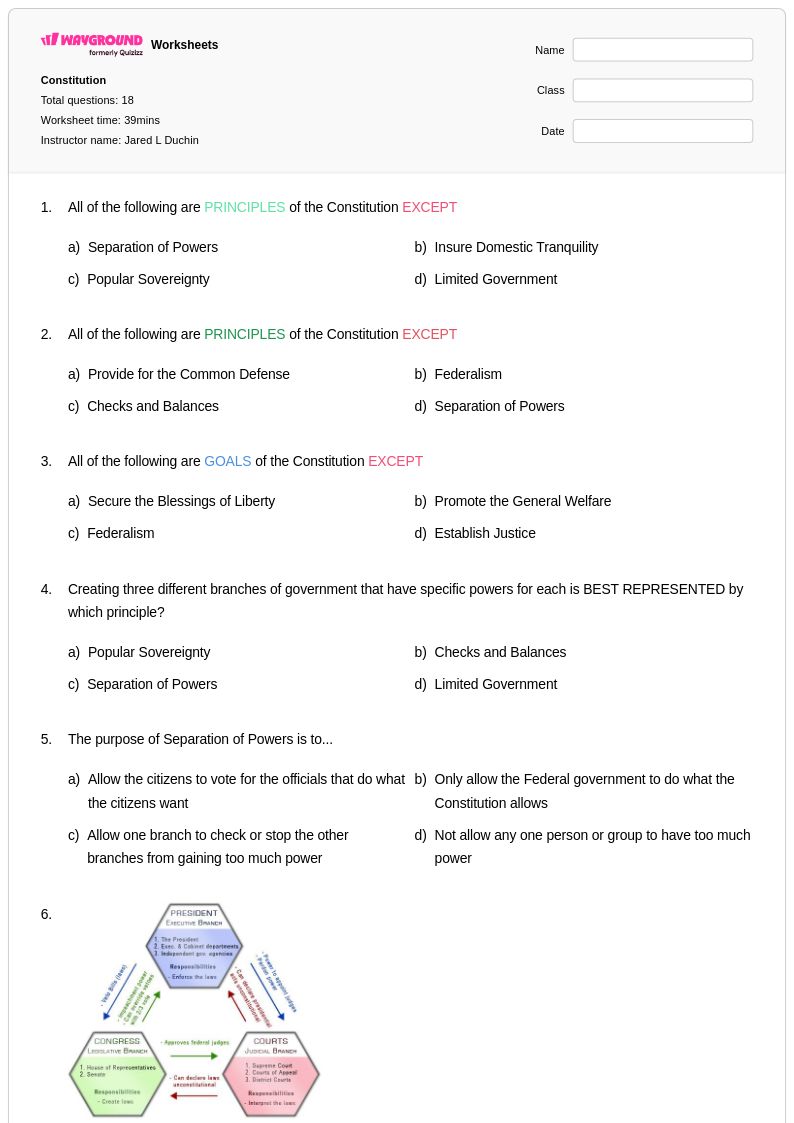
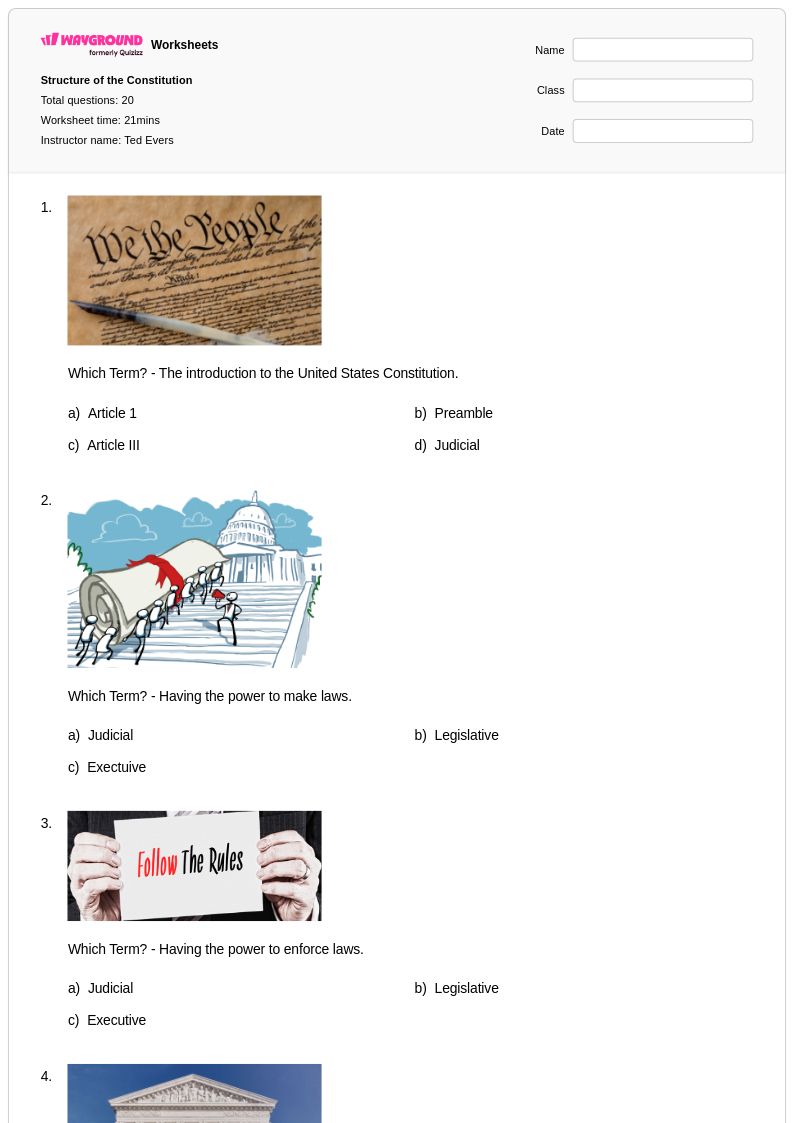
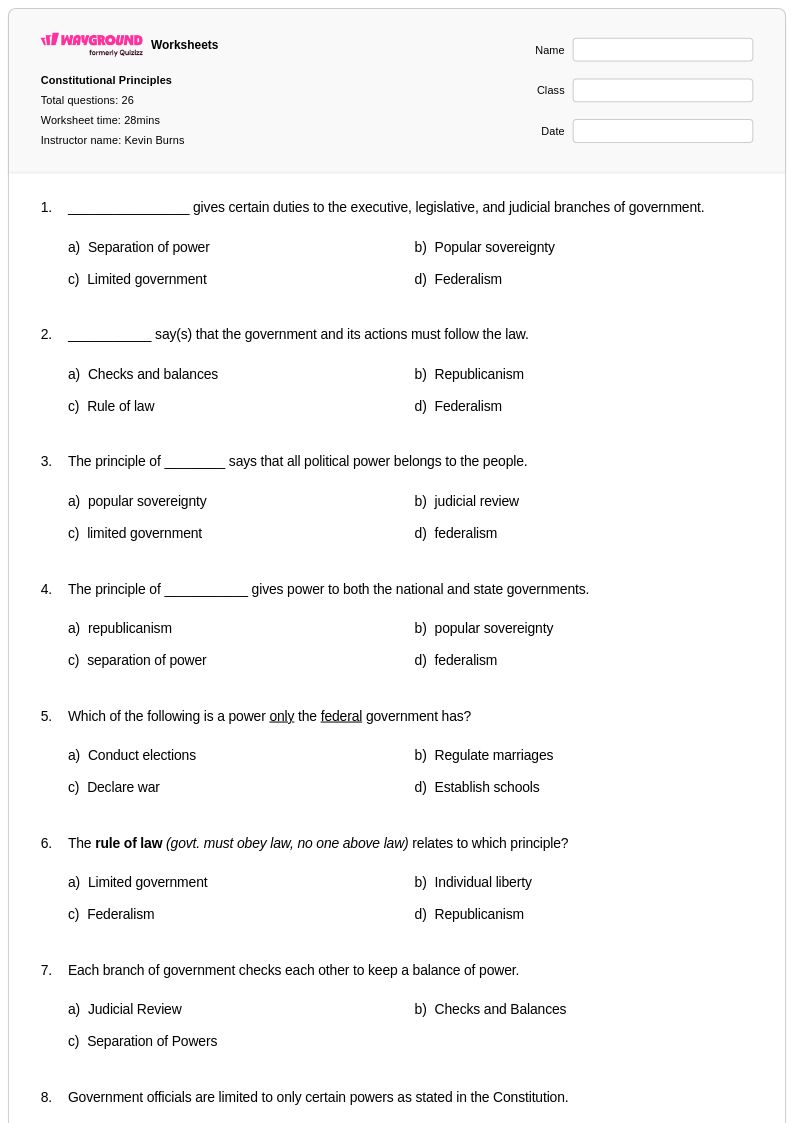
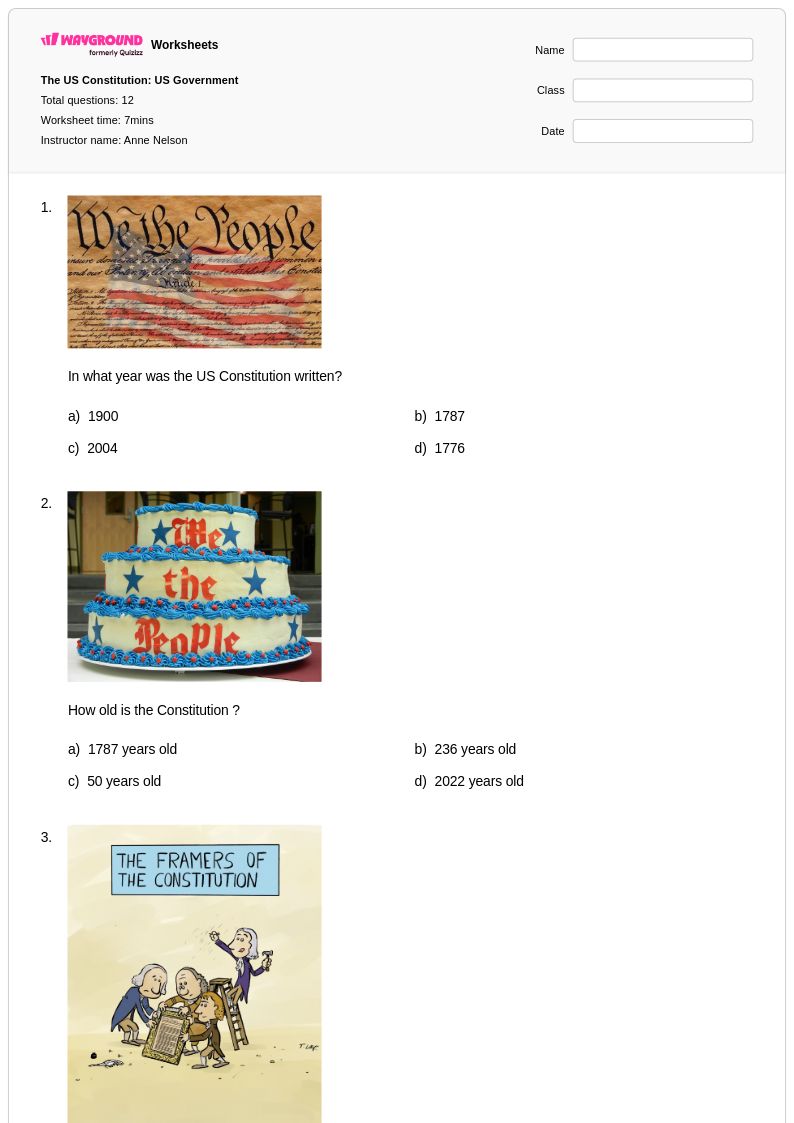
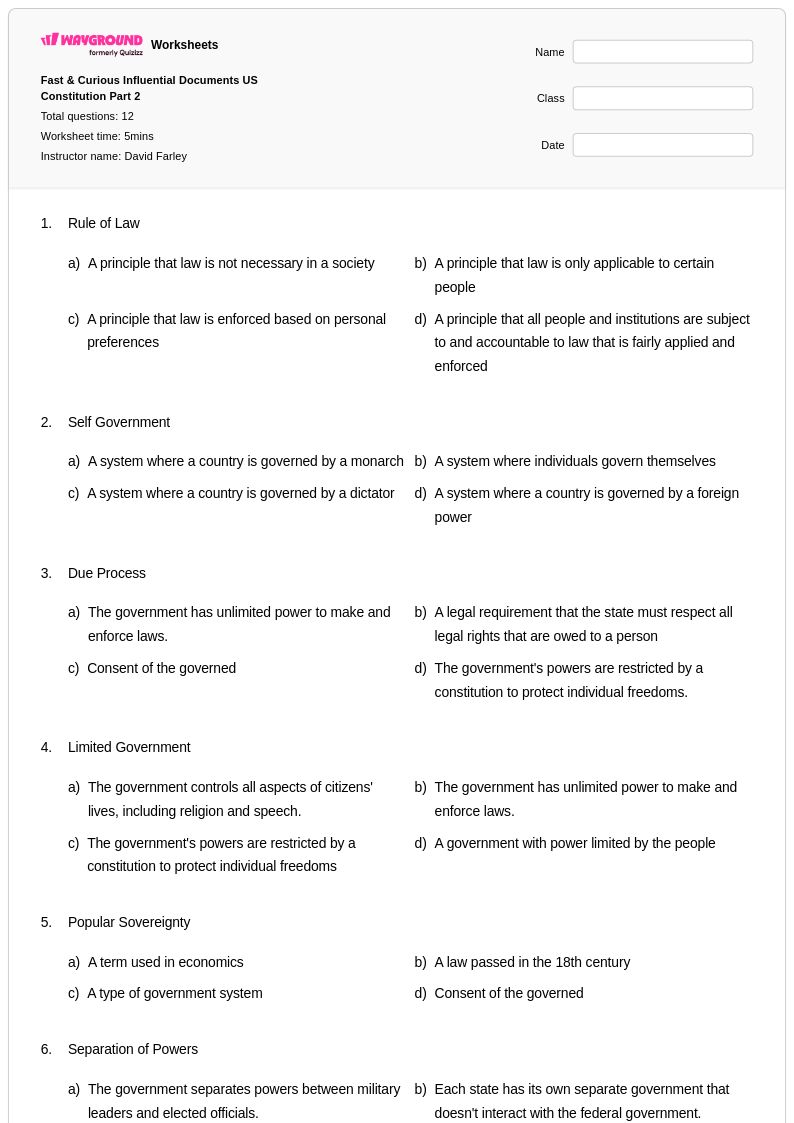
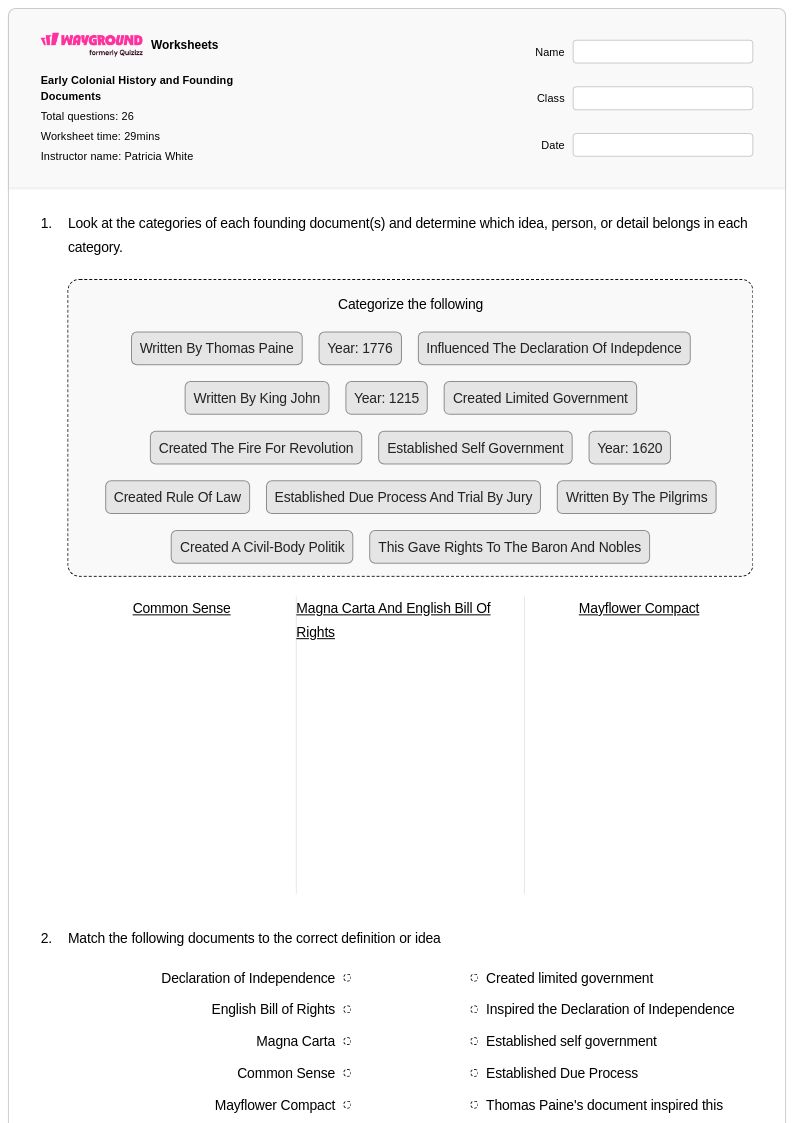
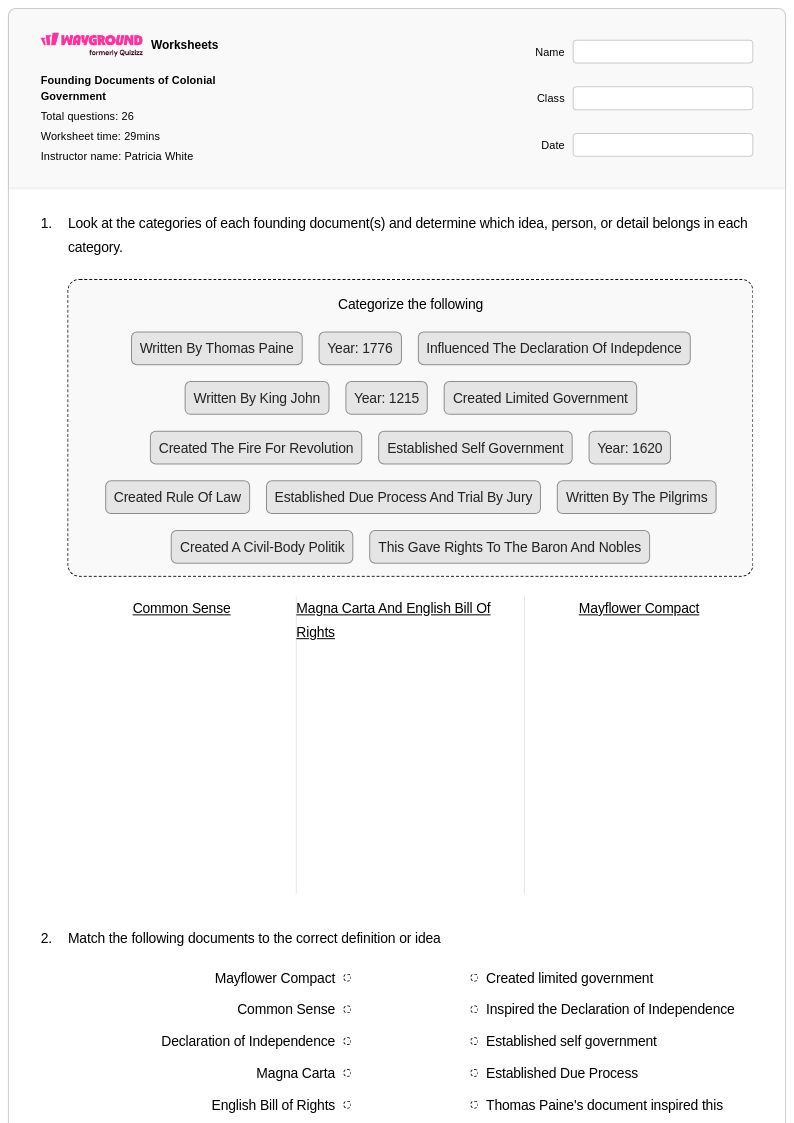
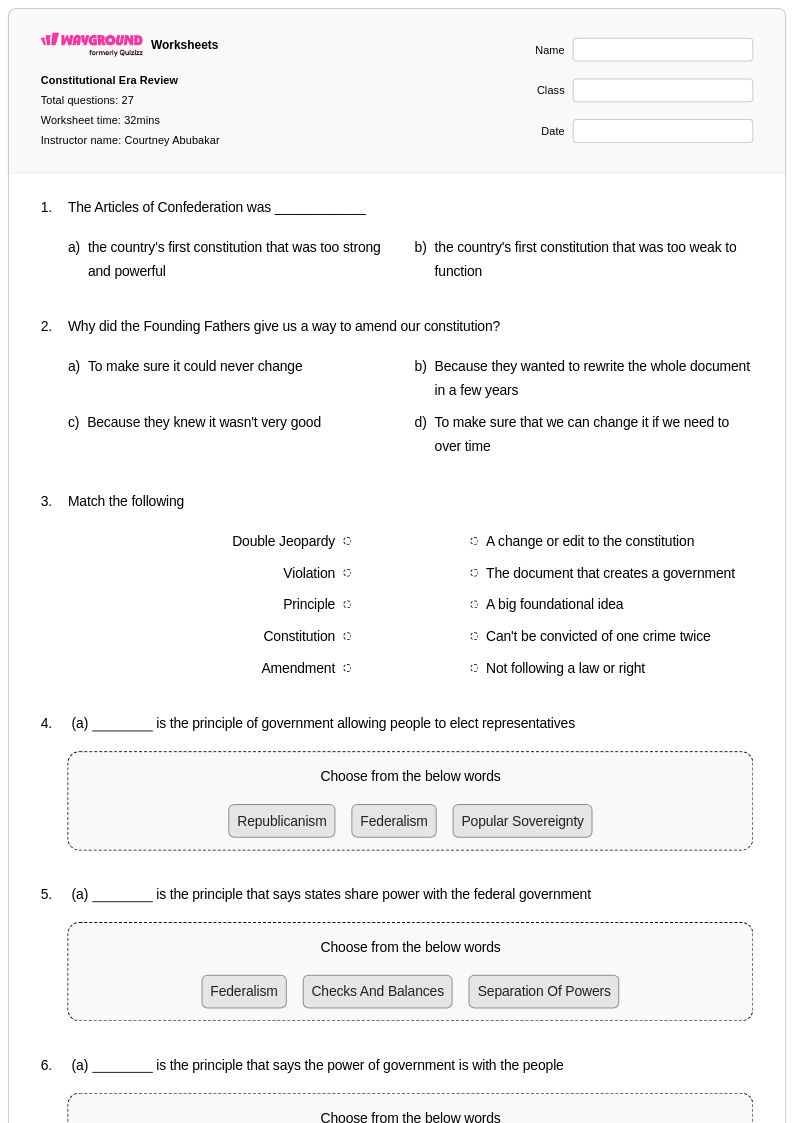
Creation of the US Constitution worksheets for Class 7 students available through Wayground provide comprehensive coverage of this pivotal moment in American history when the Founding Fathers drafted our nation's governing document. These educational resources help seventh-grade students develop critical thinking skills about the constitutional convention process, the major compromises that shaped our government structure, and the key figures who influenced the final document. Students engage with practice problems that explore the Virginia Plan versus the New Jersey Plan, the Great Compromise, the Three-Fifths Compromise, and the debates between Federalists and Anti-Federalists. Each worksheet collection includes detailed answer keys to support both independent study and classroom instruction, with free printable pdf formats that make these resources accessible for immediate classroom use.
Wayground supports educators with millions of teacher-created resources specifically designed for Class 7 civics instruction on the Creation of the US Constitution, featuring robust search and filtering capabilities that help teachers quickly locate materials aligned with state social studies standards. The platform's differentiation tools enable instructors to customize worksheets for varying student ability levels, ensuring that struggling learners receive appropriate scaffolding while advanced students encounter enriching challenges about constitutional principles and governmental structure. Teachers can seamlessly transition between printable pdf worksheets for traditional classroom settings and digital formats for technology-integrated lessons, making these resources invaluable for lesson planning, targeted remediation of constitutional concepts, and skill practice that reinforces understanding of how our foundational governing document emerged from intense debate and compromise.
FAQs
How do I teach the creation of the US Constitution in a way students actually understand?
Start with the failures of the Articles of Confederation so students understand why a new framework was necessary. From there, structure lessons around the major debates at the Constitutional Convention, including the conflict between large and small states resolved by the Great Compromise, and the Federalist vs. Anti-Federalist divide over ratification. Primary source excerpts from the Federalist Papers paired with guided analysis questions help students move beyond memorization toward genuine constitutional reasoning.
What exercises help students practice key concepts from the Constitutional Convention?
Effective practice activities include document analysis tasks that ask students to evaluate the weaknesses of the Articles of Confederation and compare them to the Constitution's solutions. Structured exercises that require students to explain specific compromises, such as the Three-Fifths Compromise and the Great Compromise, in their own words reinforce conceptual depth. Practice problems that connect constitutional principles like federalism, separation of powers, and checks and balances to real governmental structures help students see the document as a functioning system rather than a historical artifact.
What mistakes do students commonly make when learning about the creation of the Constitution?
One of the most common errors is treating the Constitution as the inevitable product of a unified founding generation, when in reality it emerged from intense disagreement and fragile compromise. Students frequently confuse federalism with the separation of powers, conflating the division of authority between levels of government with the division among branches. Another persistent misconception is underestimating the Anti-Federalist position, which students often dismiss as simply opposing progress rather than articulating legitimate concerns about centralized power and individual rights.
How can I use Creation of the US Constitution worksheets in my classroom?
These worksheets are available as printable PDFs for traditional classroom instruction and in digital formats for technology-integrated or remote learning environments, giving teachers flexibility regardless of their setting. Teachers can also host them as a quiz directly on Wayground, enabling real-time student responses and built-in assessment. Whether used as guided practice, independent work, or assessment tools, the worksheets cover constitutional principles, key compromises, and the Federalist debate, and each includes a complete answer key to support efficient grading and review.
How do I differentiate Constitution worksheets for students at different skill levels?
For struggling students, reduce cognitive load by focusing on one compromise or principle at a time before asking students to synthesize across concepts. Wayground supports individual accommodations including Read Aloud for students who need text read to them, reduced answer choices to simplify multiple-choice tasks, and extended time settings that can be configured per student without alerting the rest of the class. Advanced learners can be challenged with primary source analysis tasks that require them to evaluate competing constitutional visions rather than simply recall facts.
How do I assess whether students understand the compromises made during the Constitutional Convention?
Strong assessment tasks ask students to explain not just what a compromise was, but why it was necessary and what each side conceded. For example, a well-constructed prompt on the Great Compromise should require students to identify the positions of large and small states and articulate how the bicameral legislature resolved the conflict. Common error patterns to watch for include students restating a compromise without analyzing its political significance or failing to connect the Three-Fifths Compromise to the broader tension over slavery and representation.