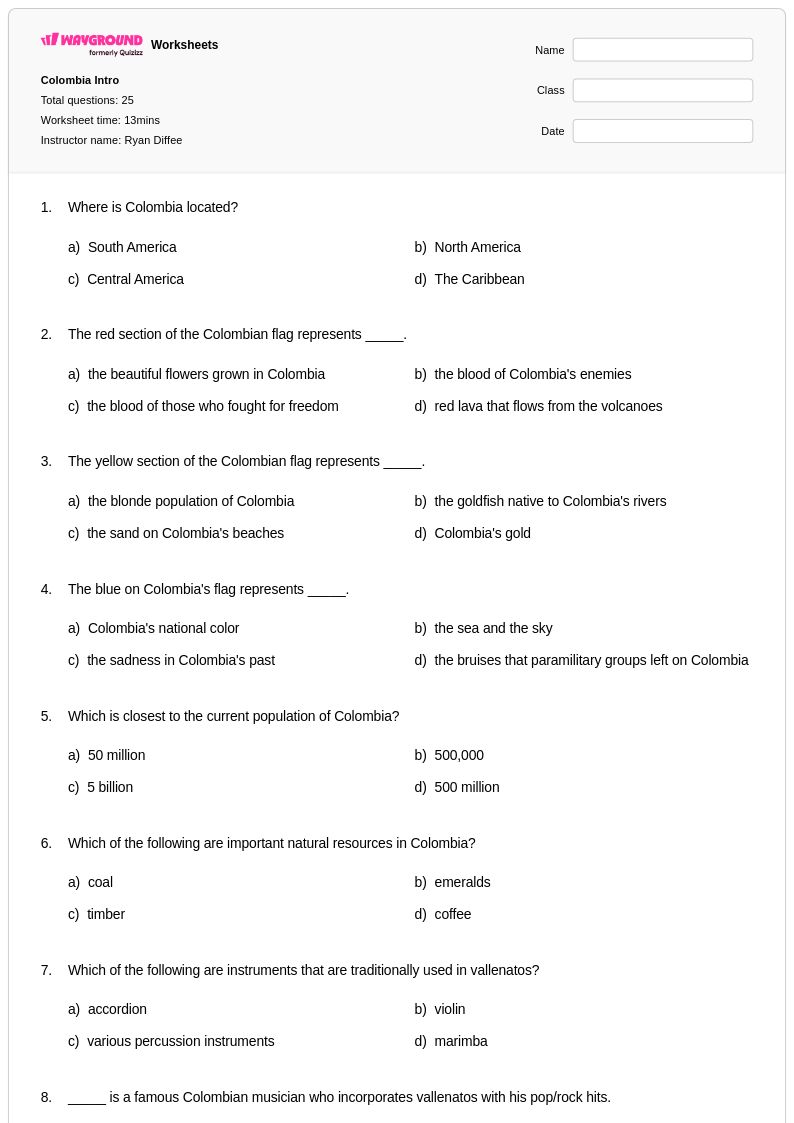
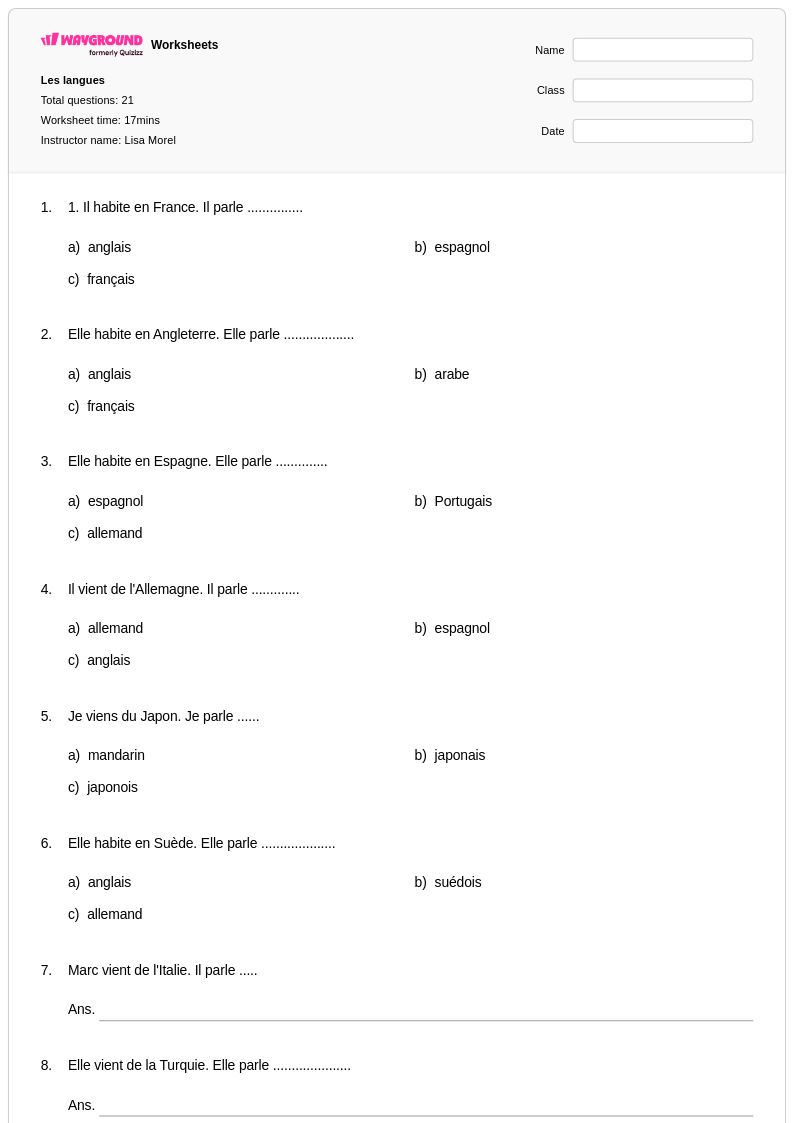
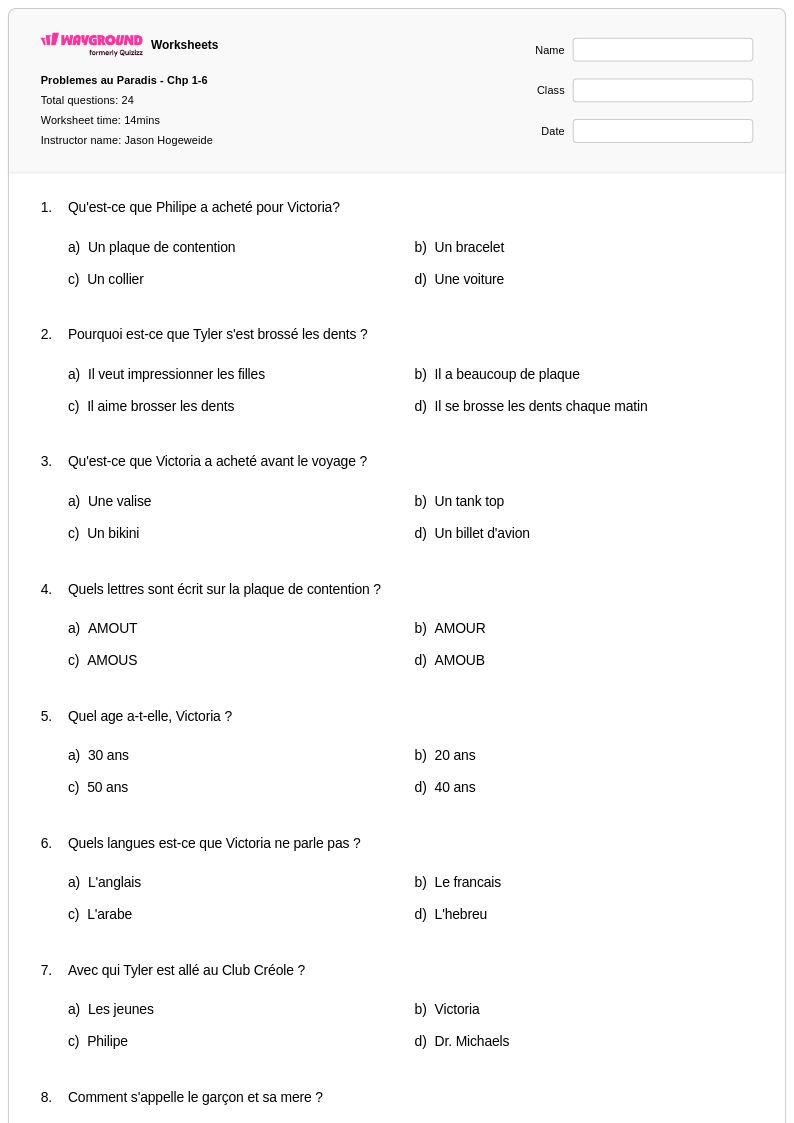
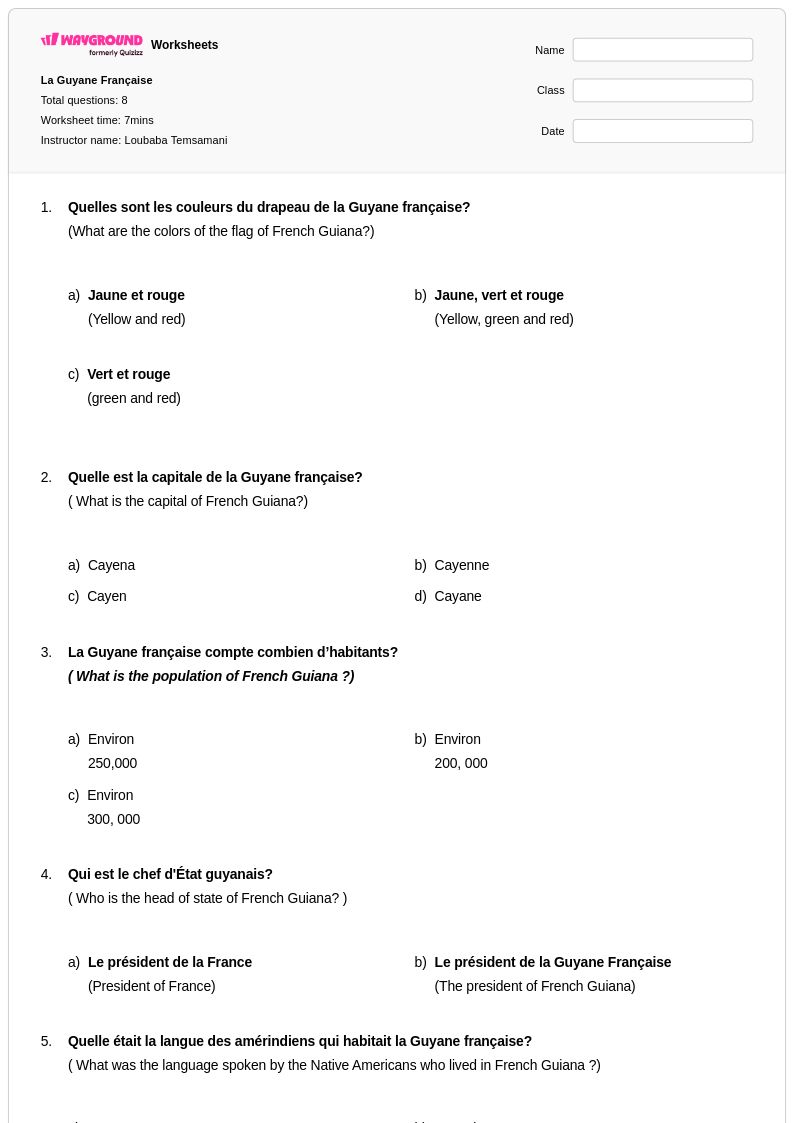
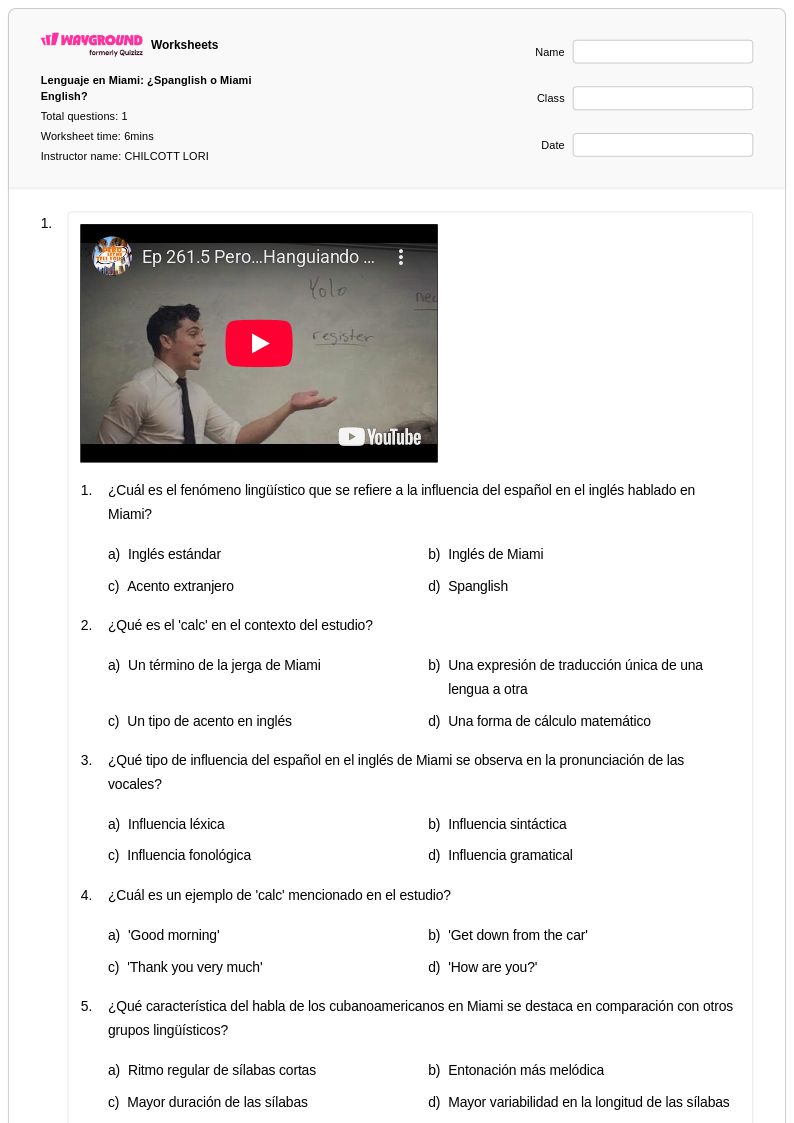
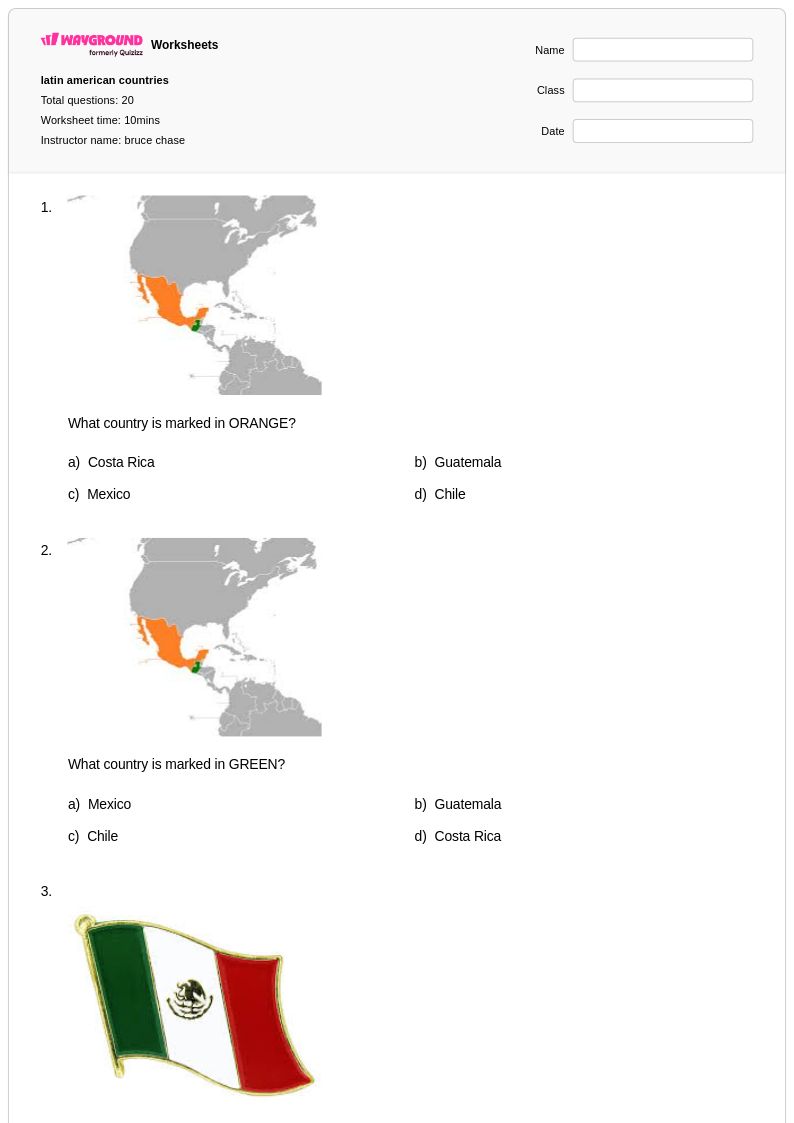
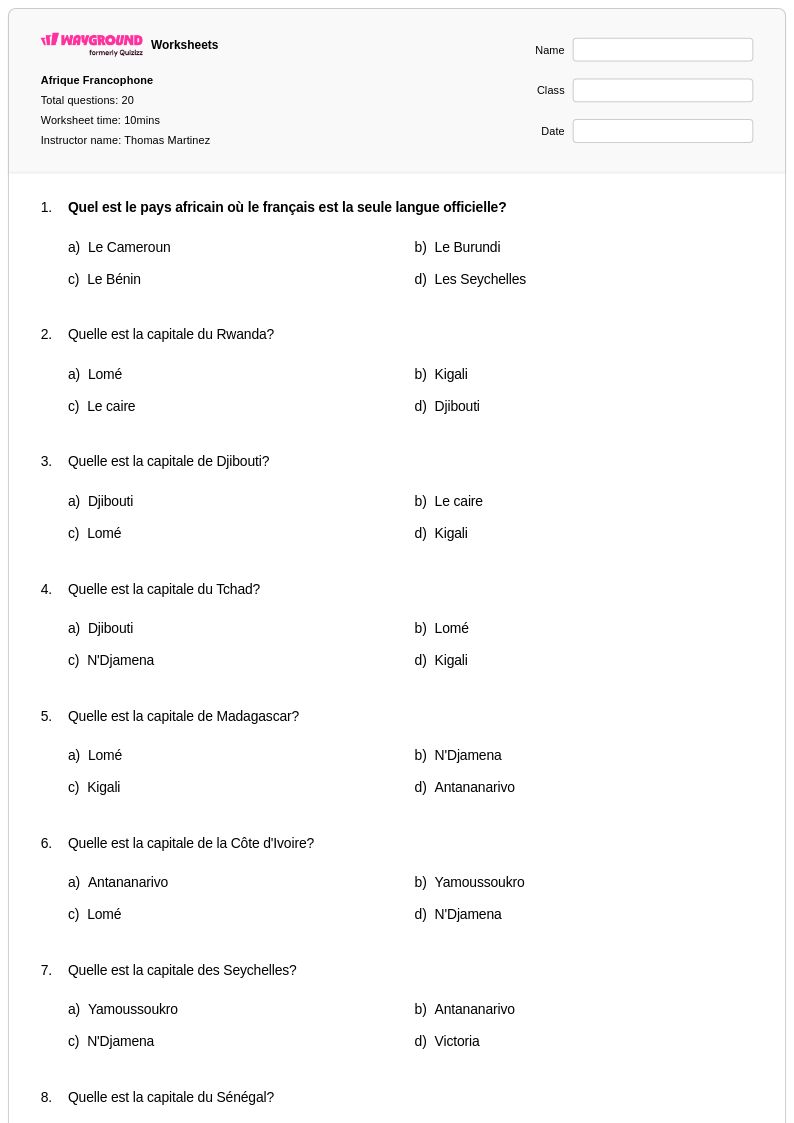
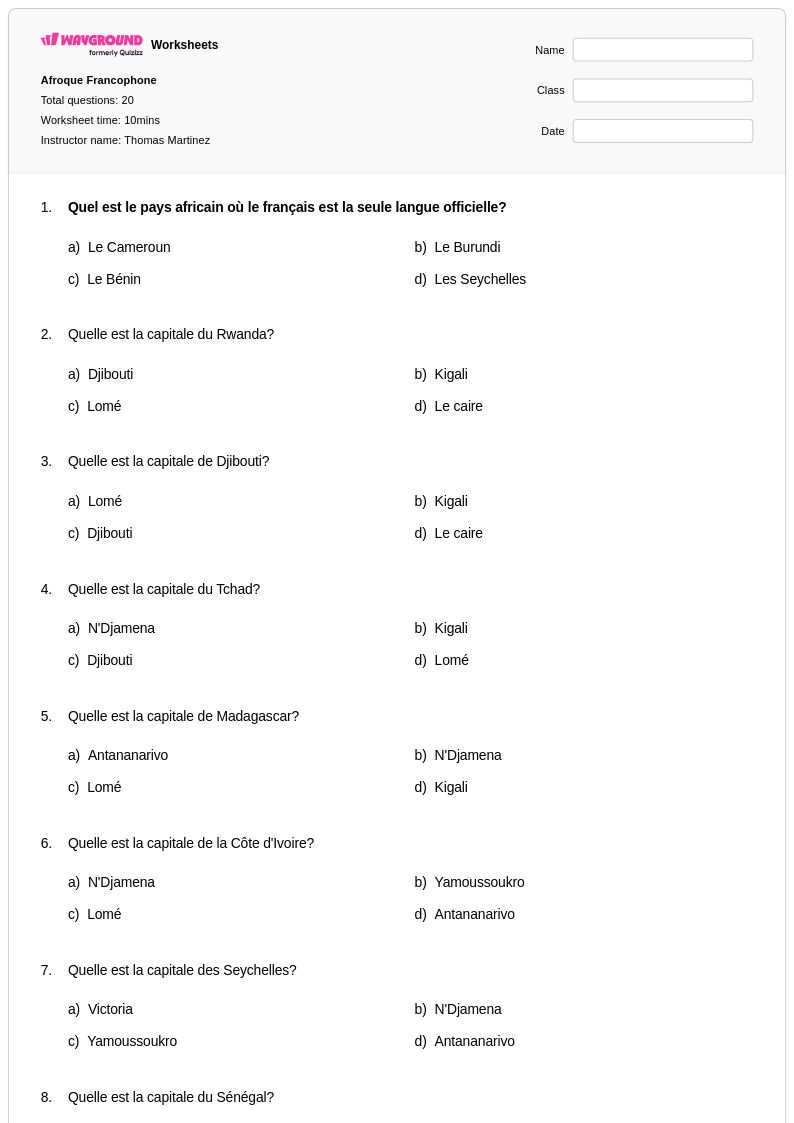
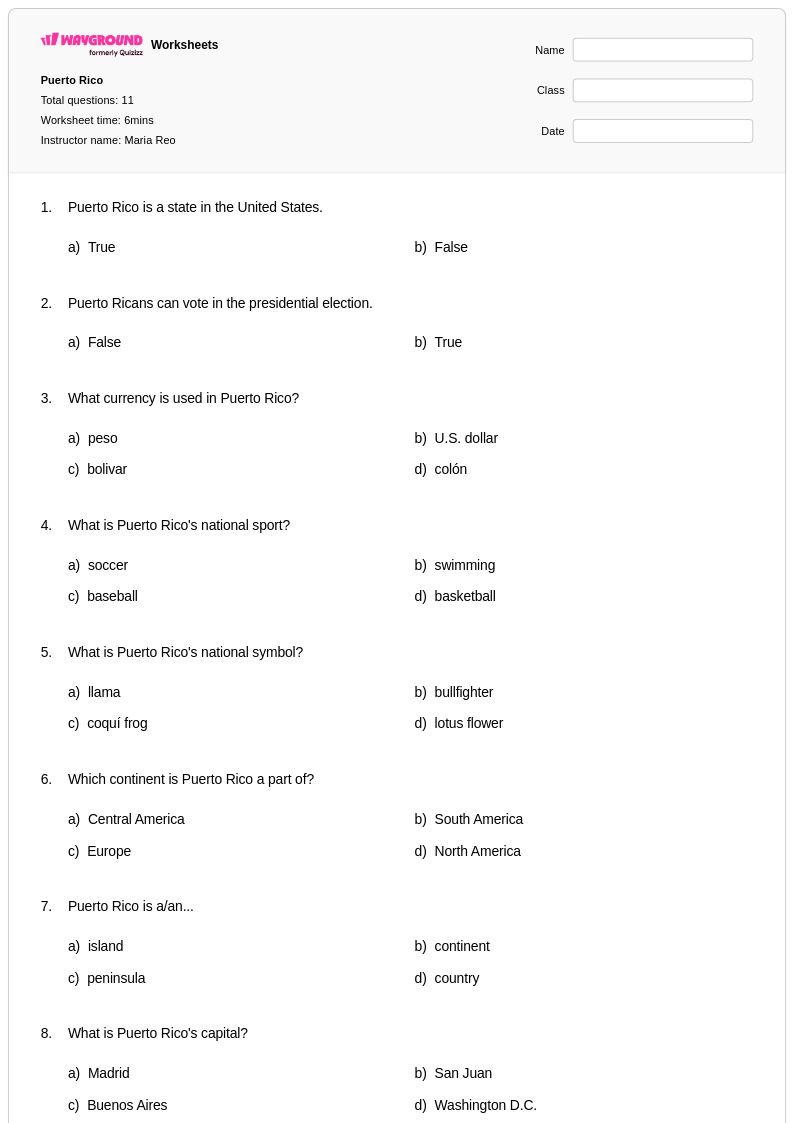
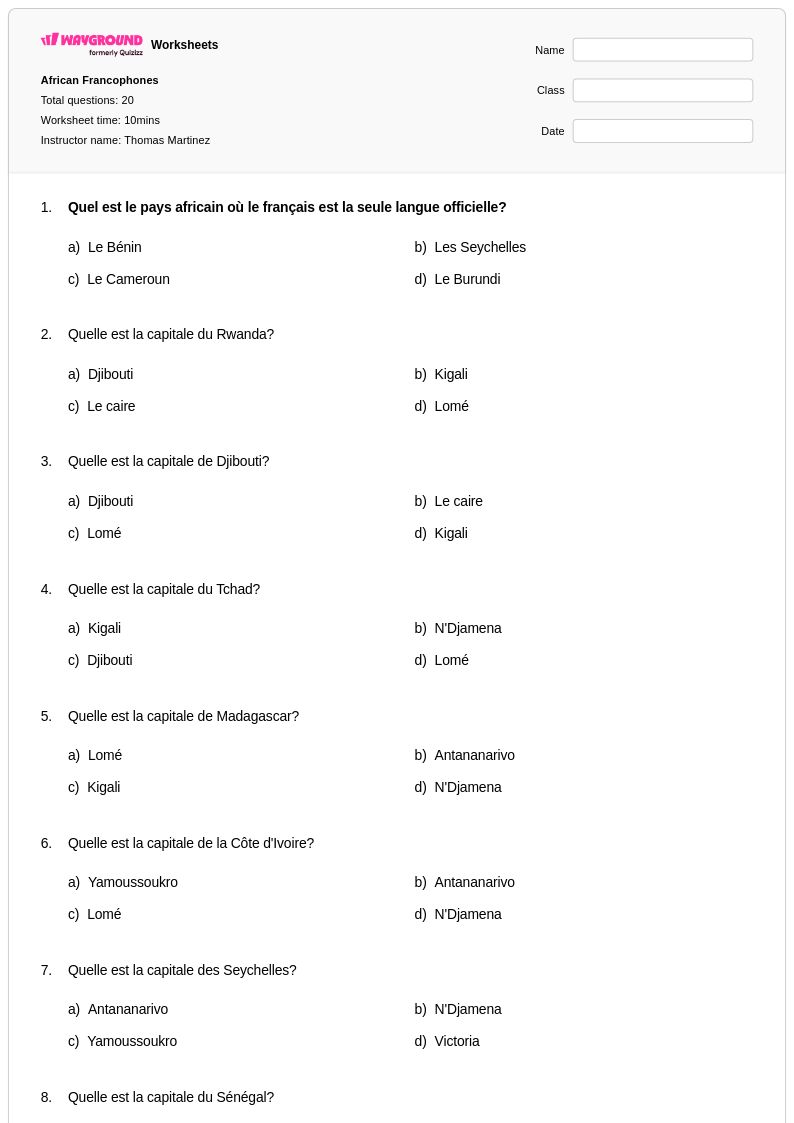
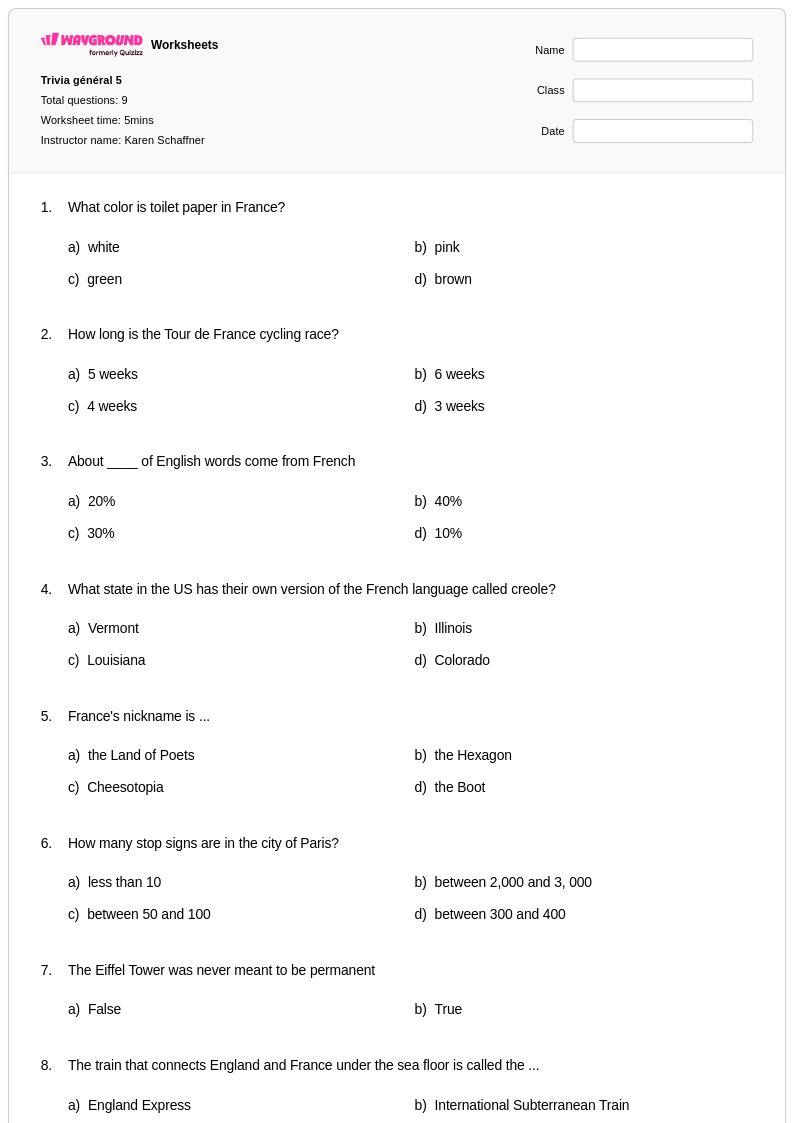
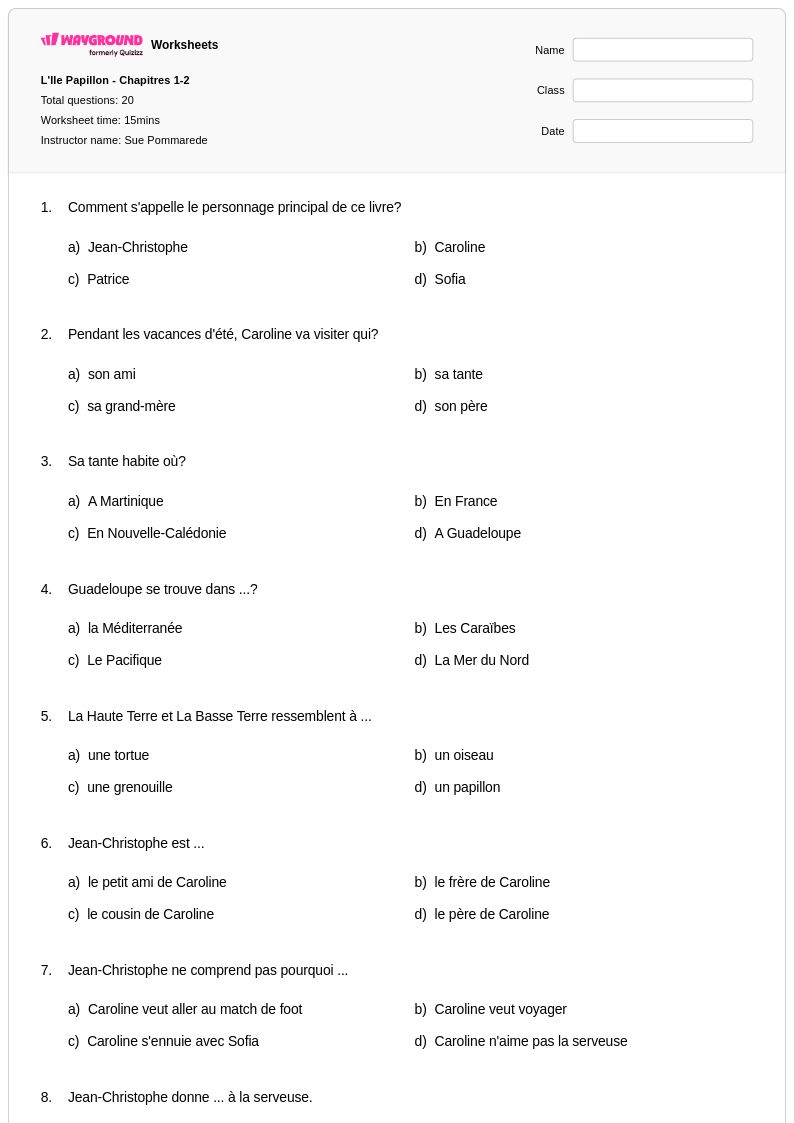
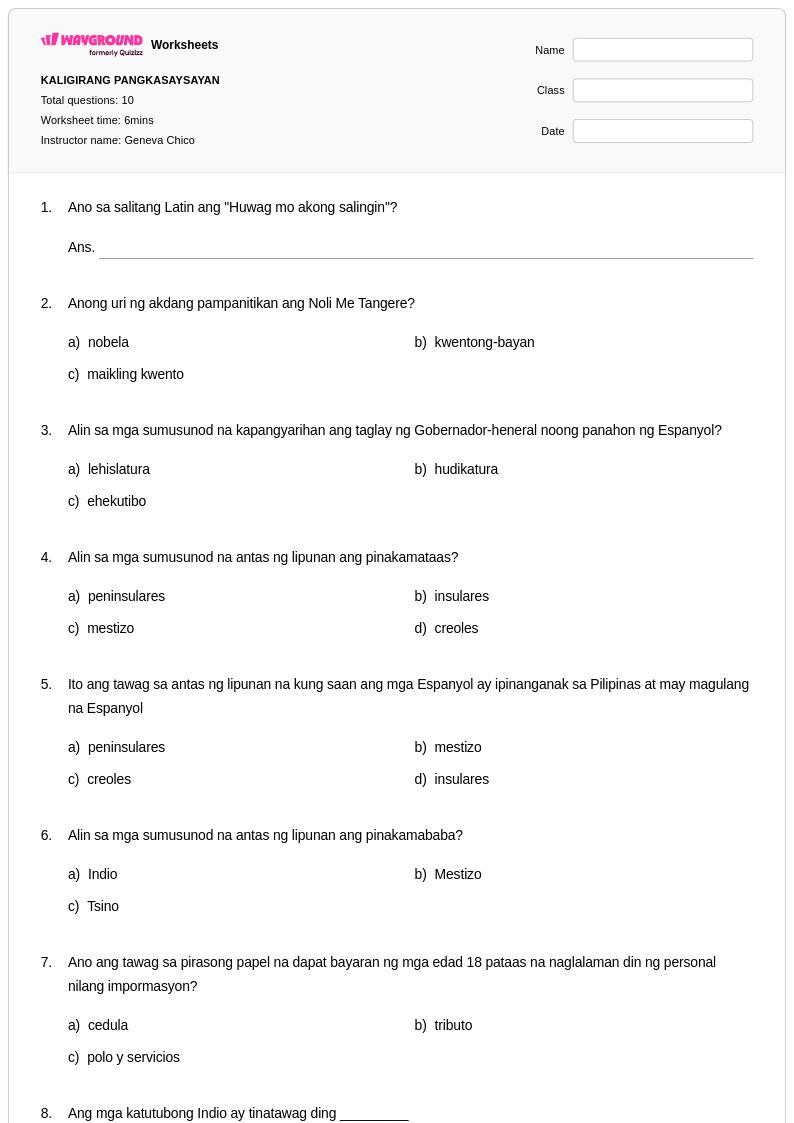
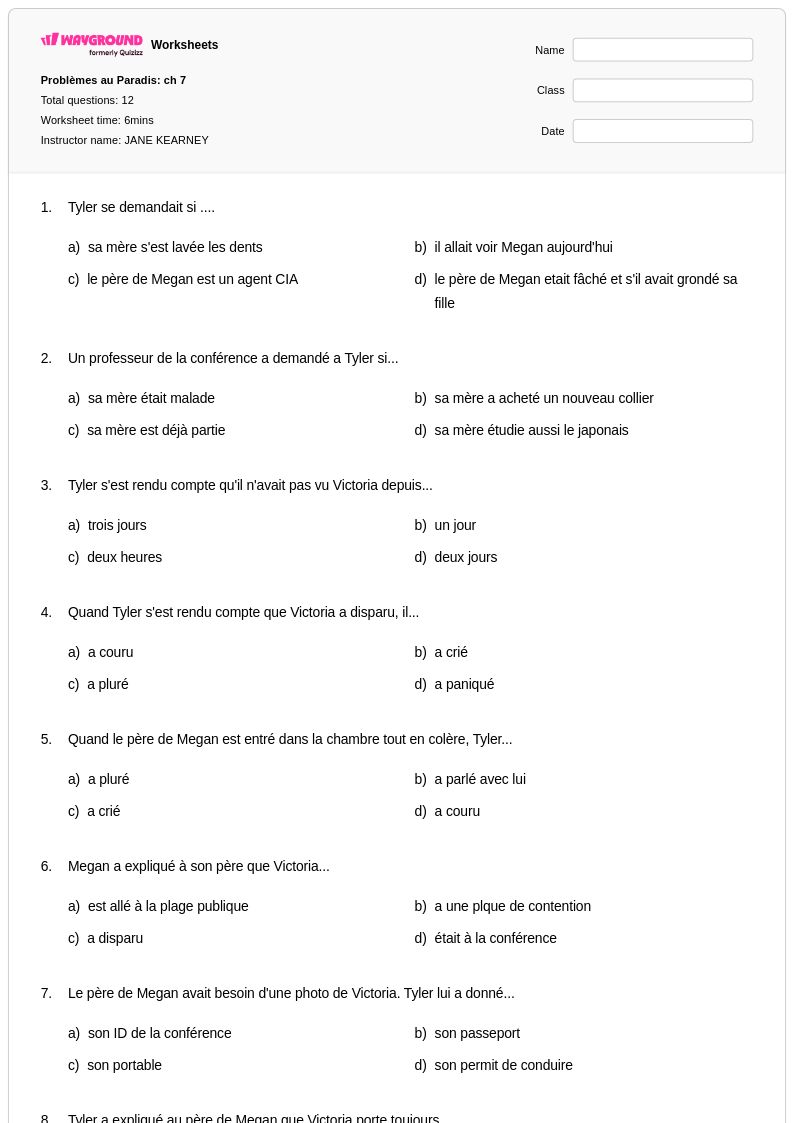
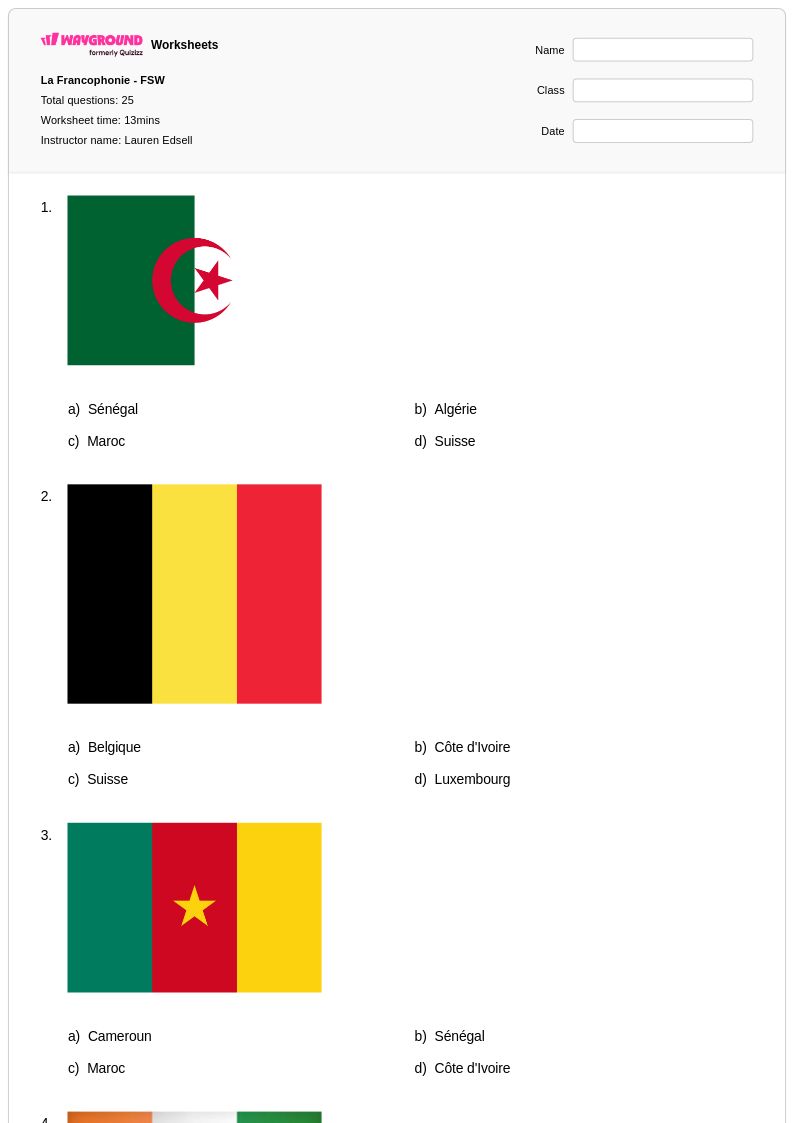
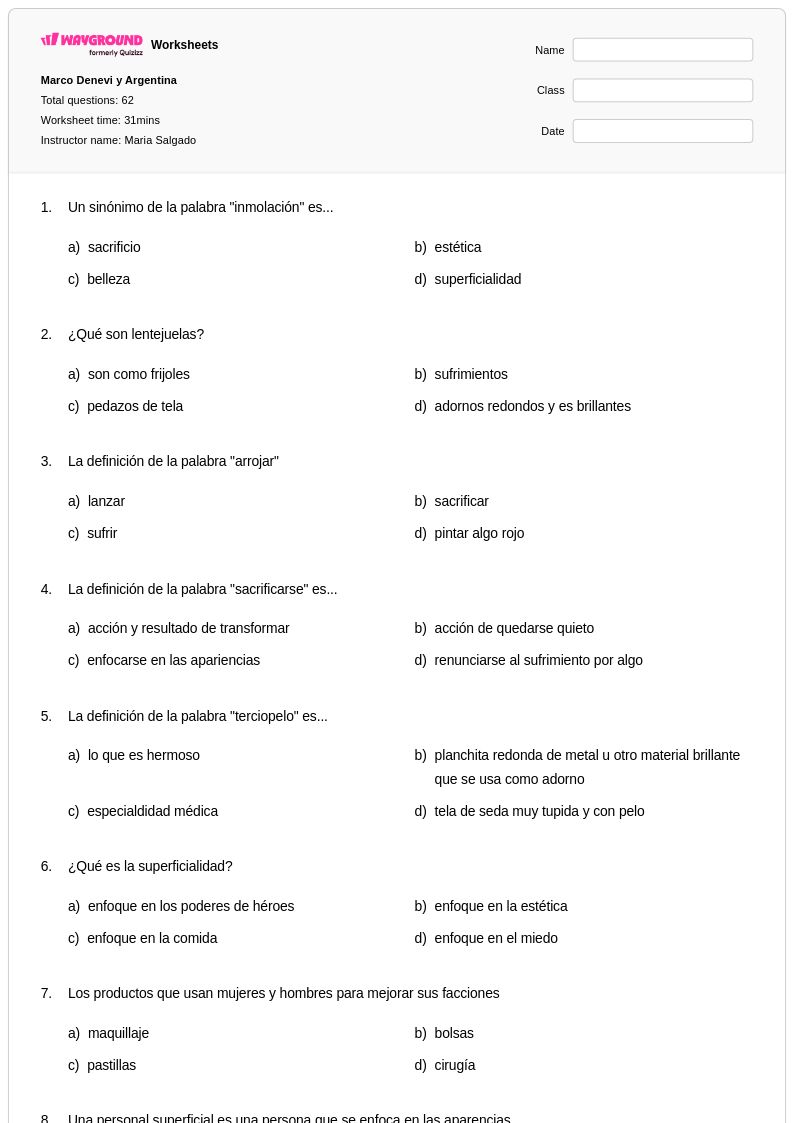
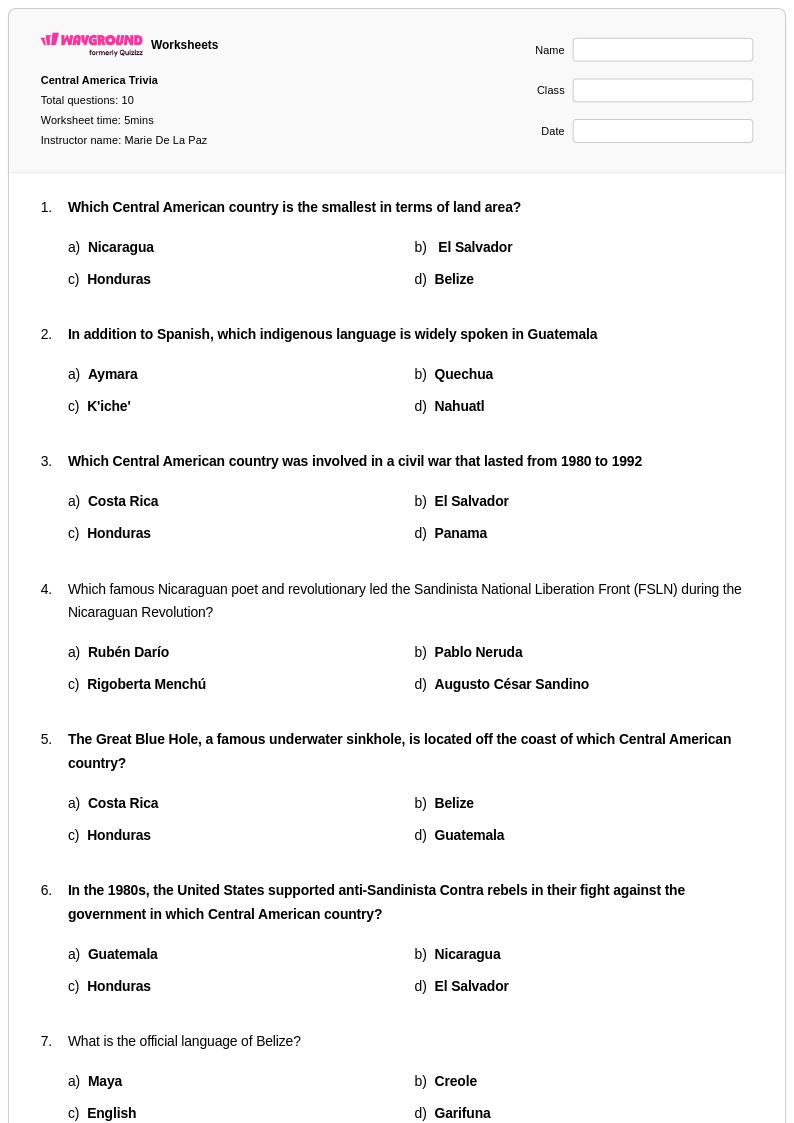
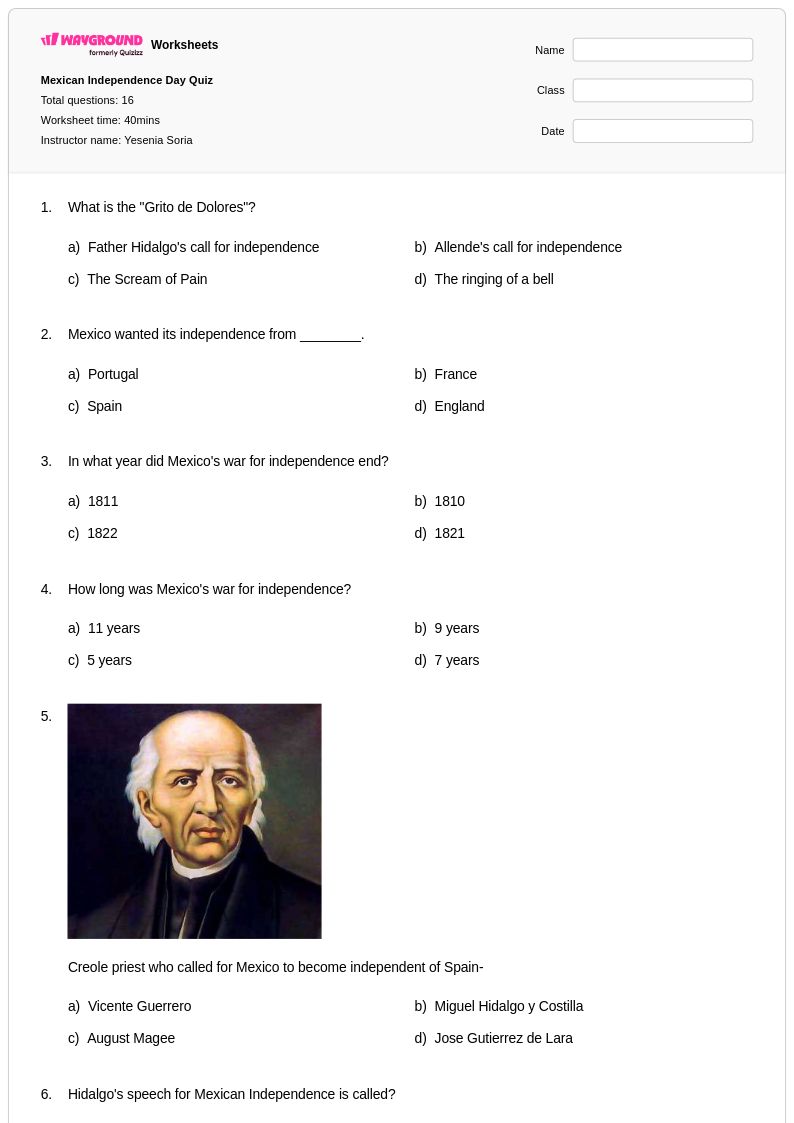
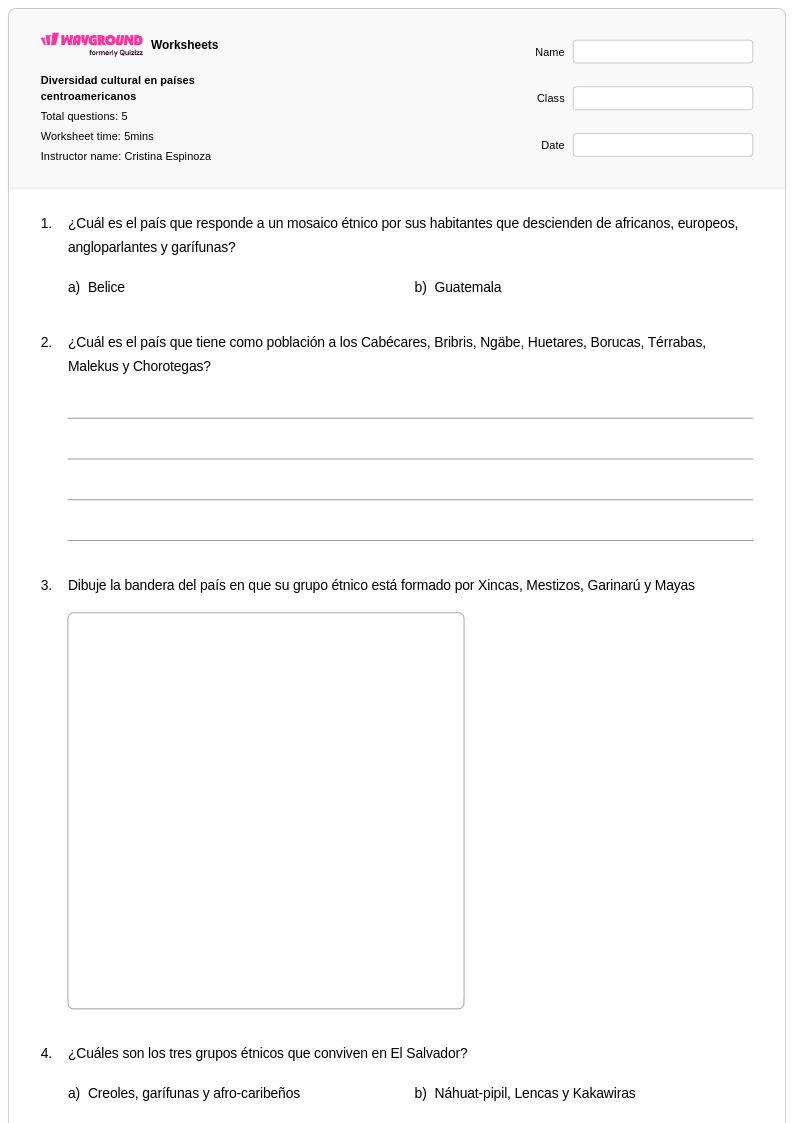
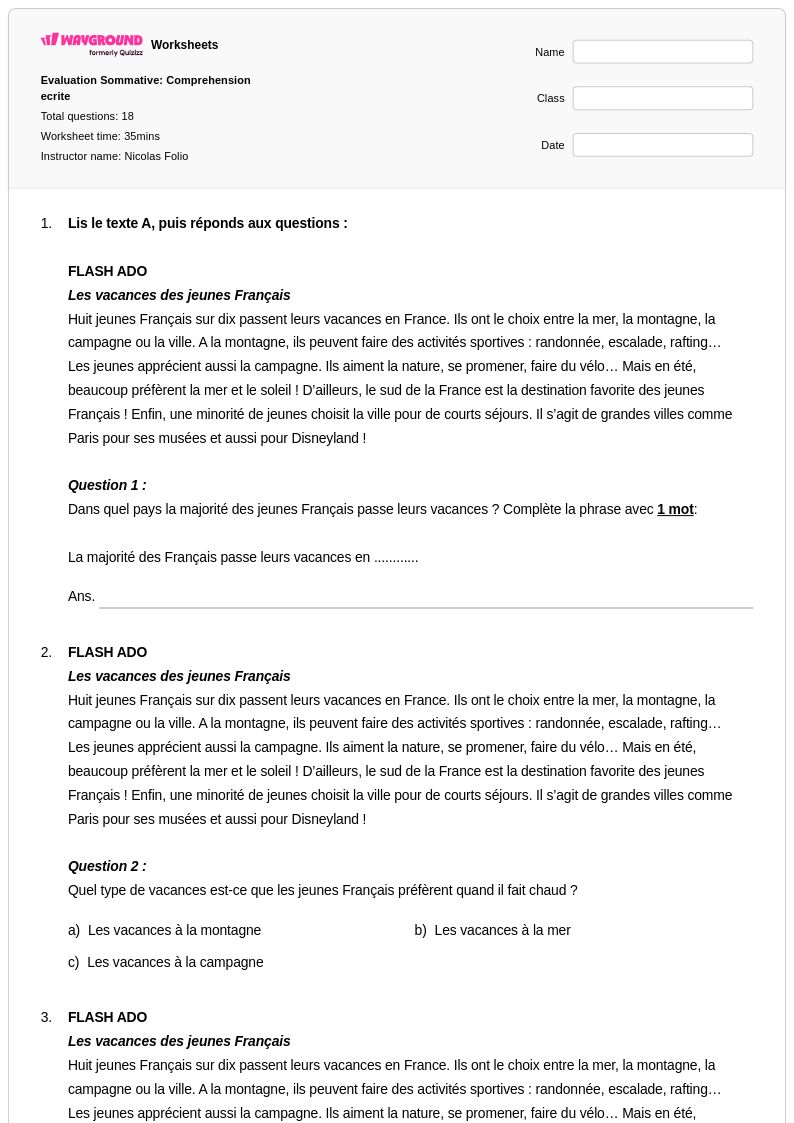
Discover free Class 9 Creole printable worksheets and practice problems with answer keys that help students explore this unique language family's grammar, vocabulary, and cultural significance through engaging PDF activities.
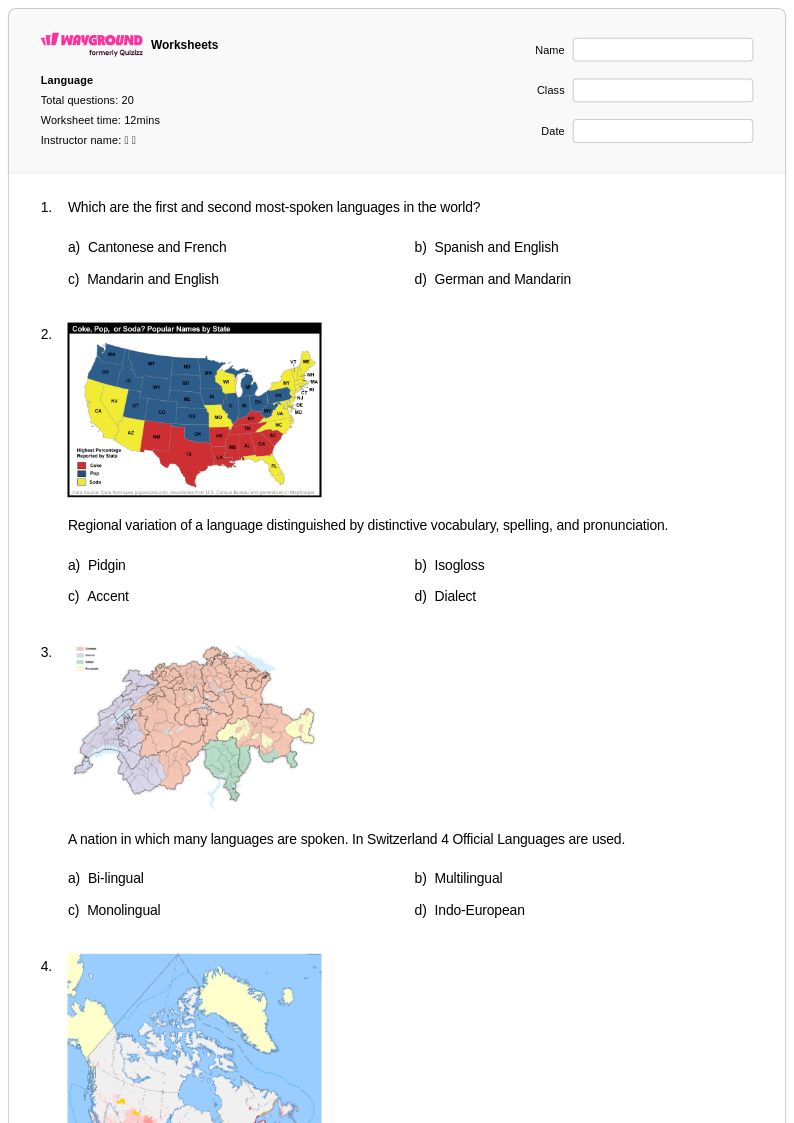
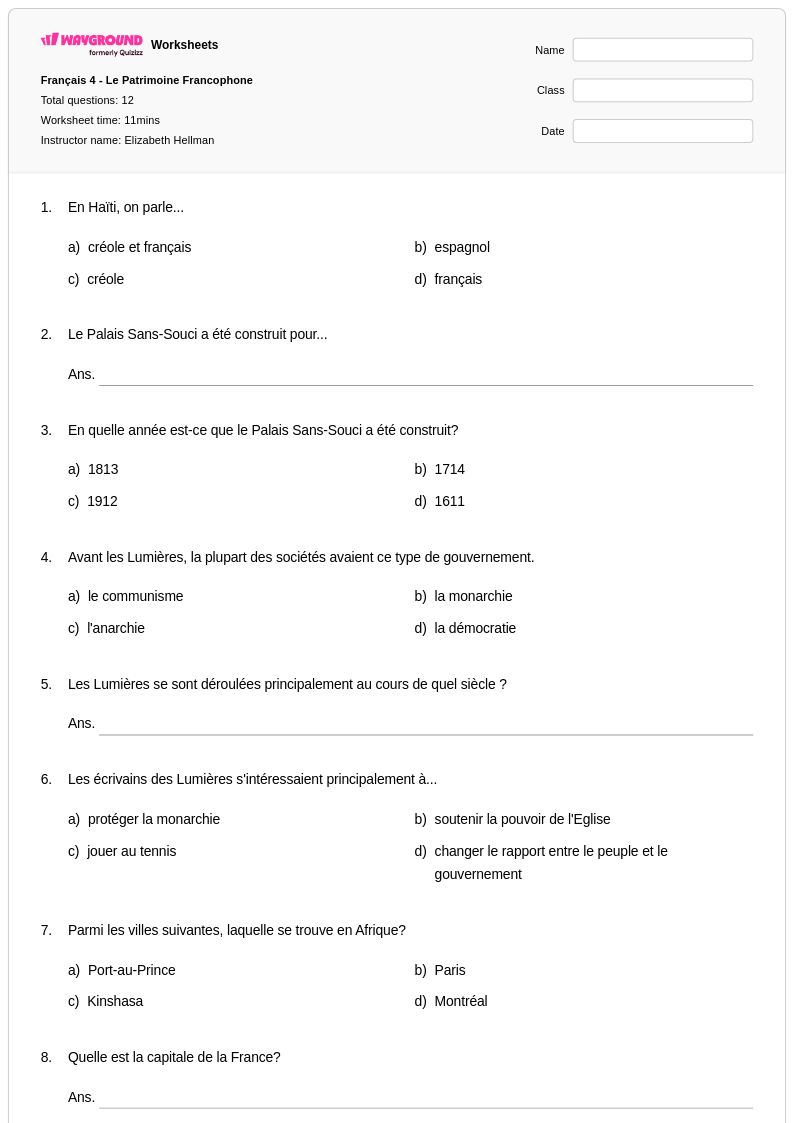
Creole language worksheets for Class 9 students available through Wayground (formerly Quizizz) provide comprehensive exploration of these dynamic contact languages that emerge from the interaction of multiple linguistic communities. These educational resources strengthen students' understanding of creole formation processes, linguistic features, and cultural significance while developing critical thinking skills about language evolution and social identity. The worksheets include practice problems that examine specific creole languages such as Haitian Creole, Jamaican Patois, and Louisiana Creole, featuring exercises on phonological patterns, grammatical structures, and vocabulary development. Each printable resource comes with a detailed answer key to support independent learning and includes free pdf downloads that facilitate both classroom instruction and home study, enabling students to analyze the complex linguistic phenomena that distinguish creoles from their lexifier languages.
Wayground's extensive collection of teacher-created creole language resources empowers Class 9 world language educators with millions of expertly designed materials that address diverse learning needs and academic standards. The platform's robust search and filtering capabilities allow teachers to quickly locate age-appropriate content covering specific creole varieties, linguistic concepts, or cultural contexts, while differentiation tools enable customization for various proficiency levels within the classroom. These flexible resources are available in both printable and digital formats, including downloadable pdf versions that streamline lesson planning and support seamless integration into existing curriculum frameworks. Teachers can effectively use these materials for skill practice sessions, targeted remediation of challenging linguistic concepts, and enrichment activities that deepen students' appreciation for the rich cultural heritage embedded within creole languages, ultimately fostering a more nuanced understanding of global linguistic diversity.
FAQs
How do I teach Creole languages in a world language or linguistics class?
Teaching Creole languages works best when grounded in the historical and social conditions that produce contact languages. Start by introducing the pidgin-to-creole continuum, then use specific examples like Haitian Creole, Jamaican Patois, and Louisiana Creole to show students how substrate and superstrate languages interact. Connecting language emergence to real historical events, such as colonization and the transatlantic slave trade, gives students meaningful context for understanding grammatical and lexical patterns.
What exercises help students practice identifying features of Creole languages?
Effective practice exercises for Creole languages include comparing phonological and syntactic patterns across multiple creoles, identifying examples of lexical borrowing, and analyzing how substrate languages influence grammar. Sentence-level exercises that ask students to trace the origin of specific vocabulary or grammatical structures build the analytical skills needed for sociolinguistic study. Practice problems that focus on distinguishing creole features from their source languages reinforce understanding of how contact languages develop their own independent systems.
What misconceptions do students commonly have about Creole languages?
The most common misconception is that Creole languages are simplified, broken, or inferior versions of their source languages rather than fully developed linguistic systems with consistent grammar and rich vocabulary. Students also frequently confuse pidgins and creoles, not recognizing that creoles are acquired as native languages and have far greater structural complexity than pidgins. A third common error is assuming all creoles are mutually intelligible simply because they share superstrate vocabulary.
How can I use Creole worksheets to support students at different proficiency levels?
Creole language worksheets can be differentiated by focusing introductory learners on cultural context and basic vocabulary comparison while directing advanced students toward syntactic analysis and sociolinguistic theory. On Wayground, teachers can apply individual accommodations such as Read Aloud for students who need audio support, reduced answer choices to lower cognitive load for struggling learners, and extended time settings to support students who need more processing time. These accommodations are saved per student and reusable across sessions, so differentiated instruction does not require rebuilding settings for each assignment.
How do I use Wayground's Creole worksheets in my classroom?
Wayground's Creole language worksheets are available as printable PDFs for traditional classroom use and in digital formats for technology-integrated instruction, giving teachers flexibility for in-person, hybrid, or remote settings. Teachers can also host any worksheet as a live quiz on Wayground, making it suitable for formative assessment or whole-class review. Each worksheet includes a detailed answer key, so grading and providing feedback is straightforward whether students complete the activity independently or in small groups.
What Creole language topics are covered in these worksheets?
Wayground's Creole worksheets cover a broad range of topics including creole phonology, syntax patterns, lexical borrowing, substrate and superstrate influences, and the historical contexts that gave rise to specific creoles. Materials address languages such as Haitian Creole, Jamaican Patois, and Louisiana Creole, making them applicable across both introductory linguistics courses and more advanced world language curricula. Sociolinguistic factors, including cultural significance and language community dynamics, are also addressed.