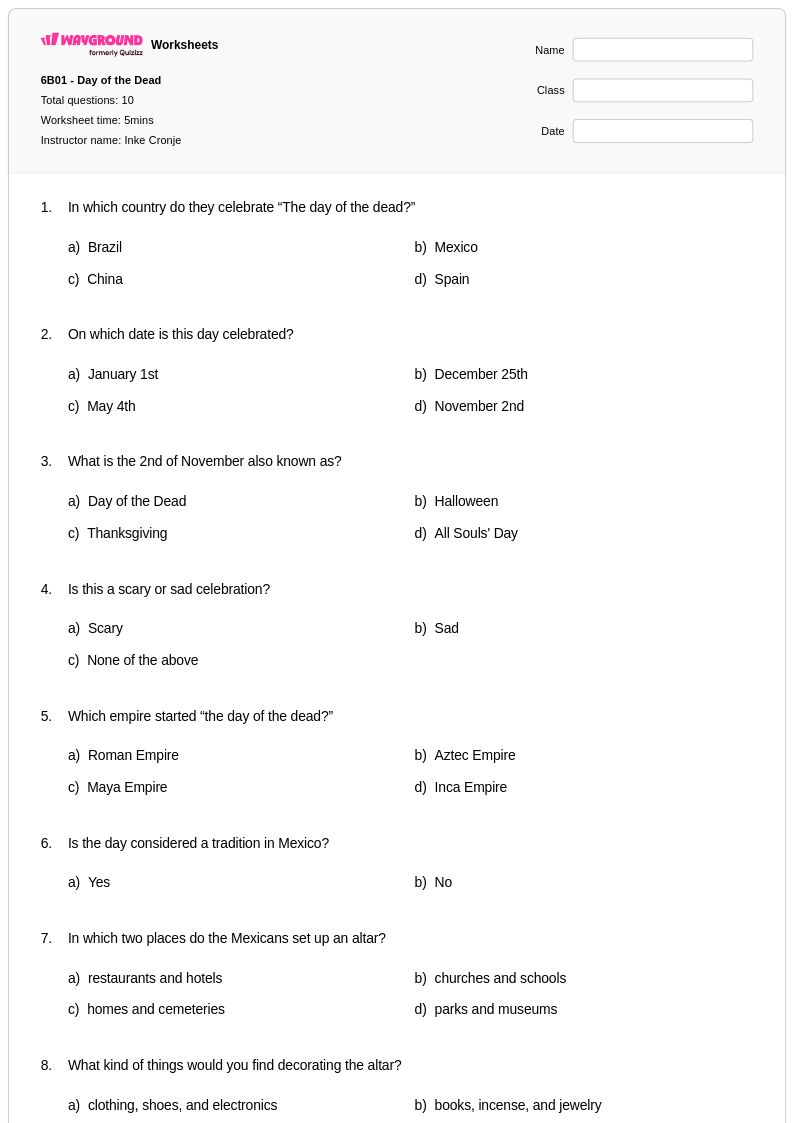
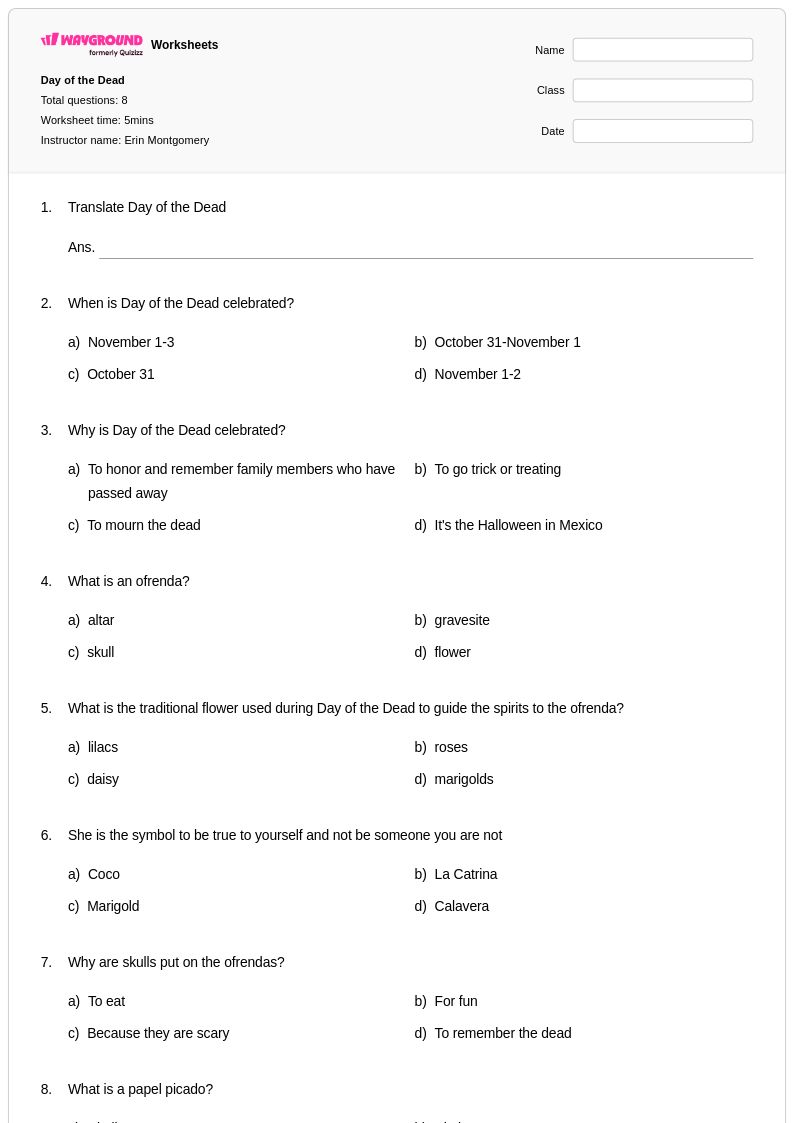
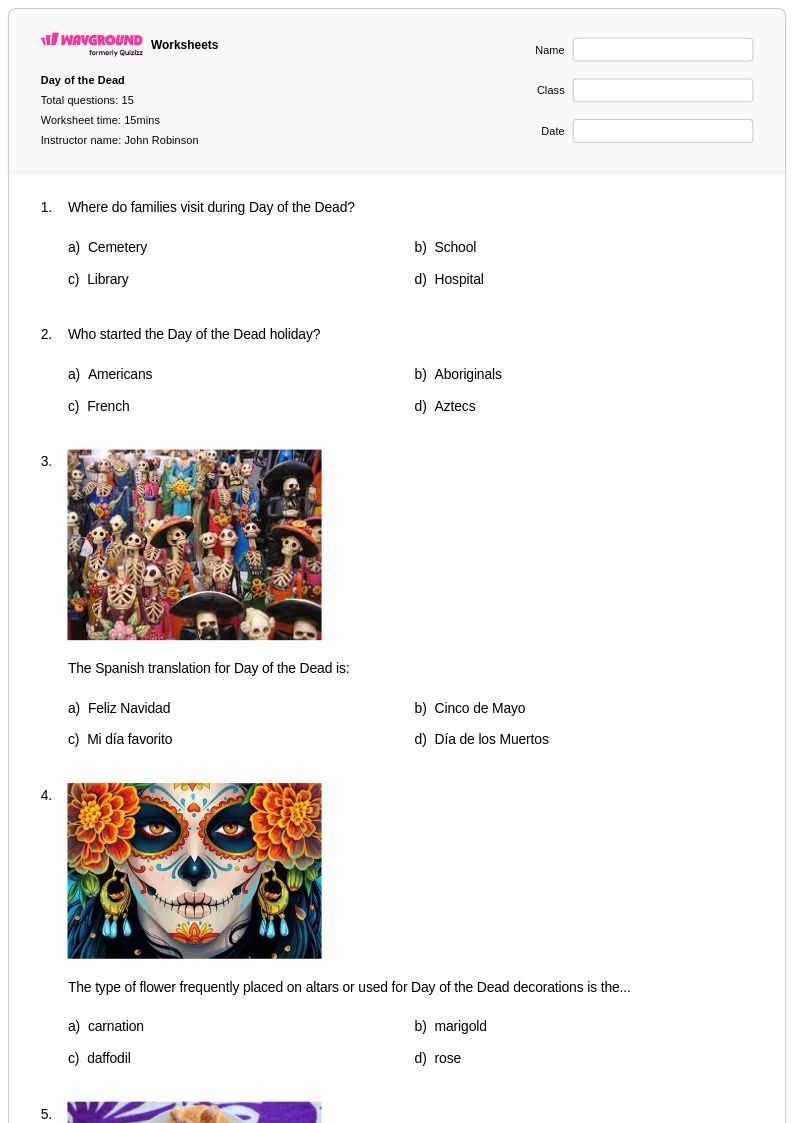
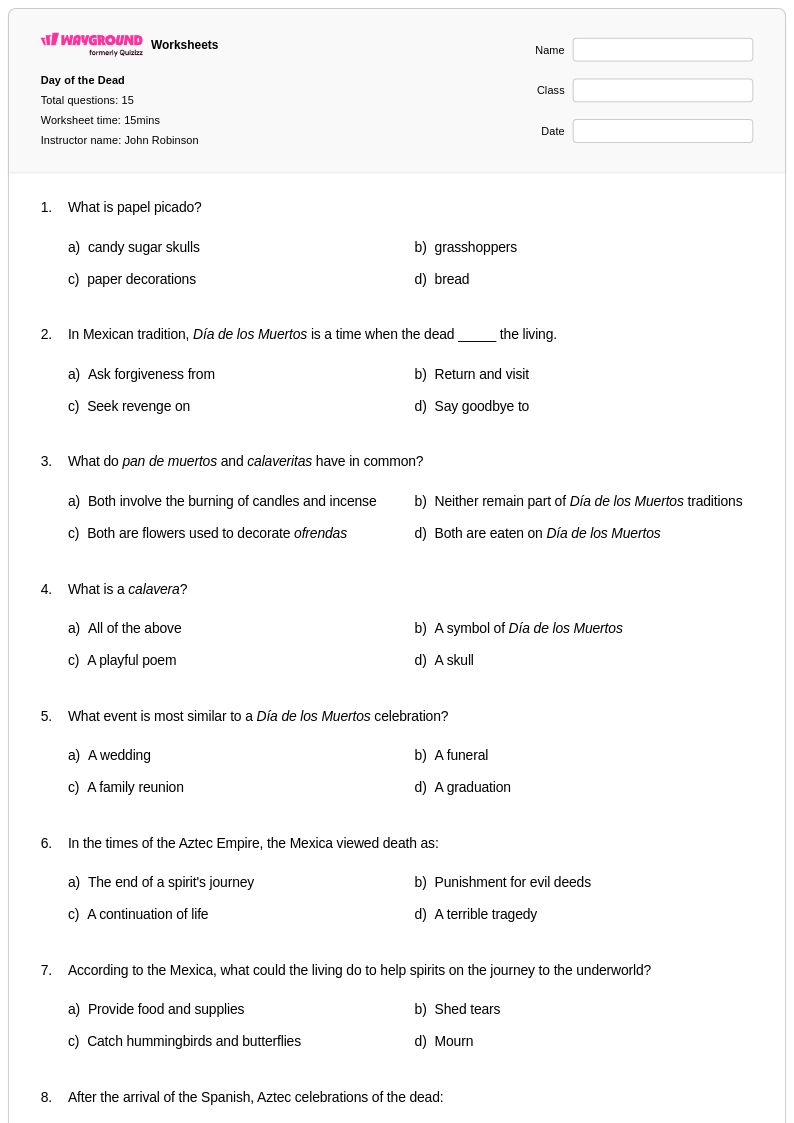
Free Printable Day of the Dead Worksheets for Class 6
Explore Class 6 Day of the Dead printables and free worksheets from Wayground that help students discover this meaningful cultural celebration through engaging practice problems and activities with complete answer keys.
Explore printable Day of the Dead worksheets for Class 6
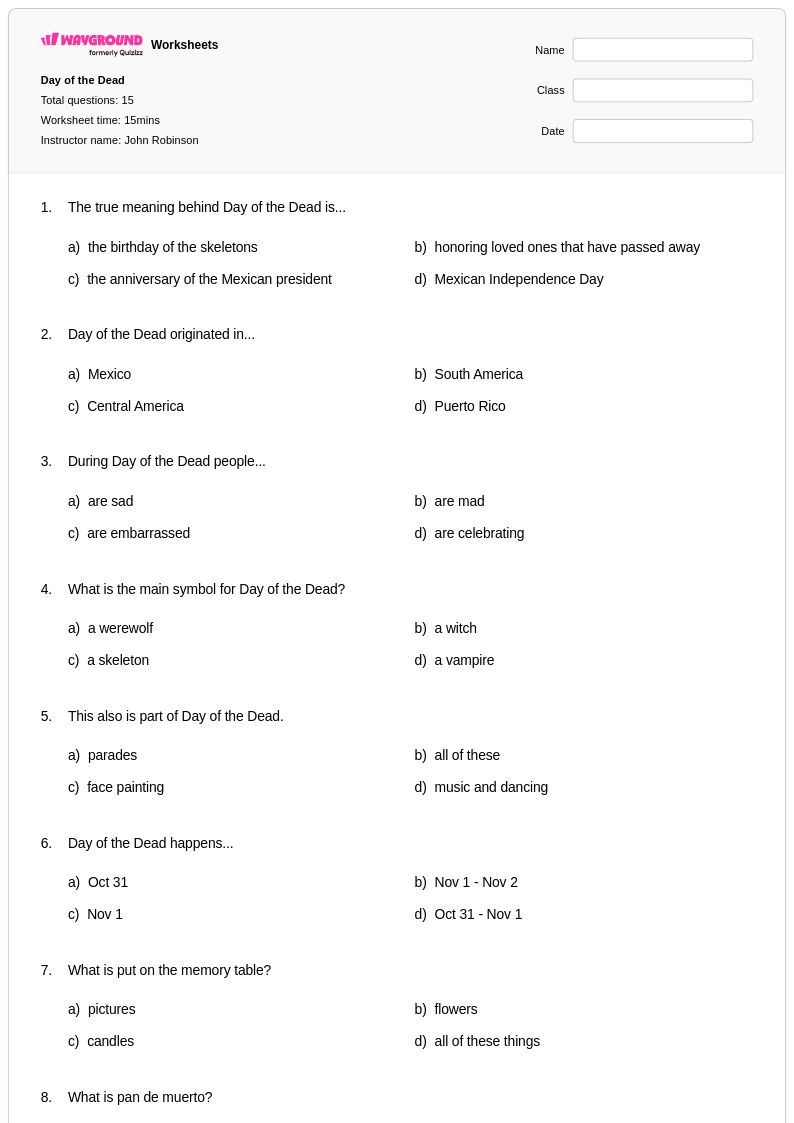
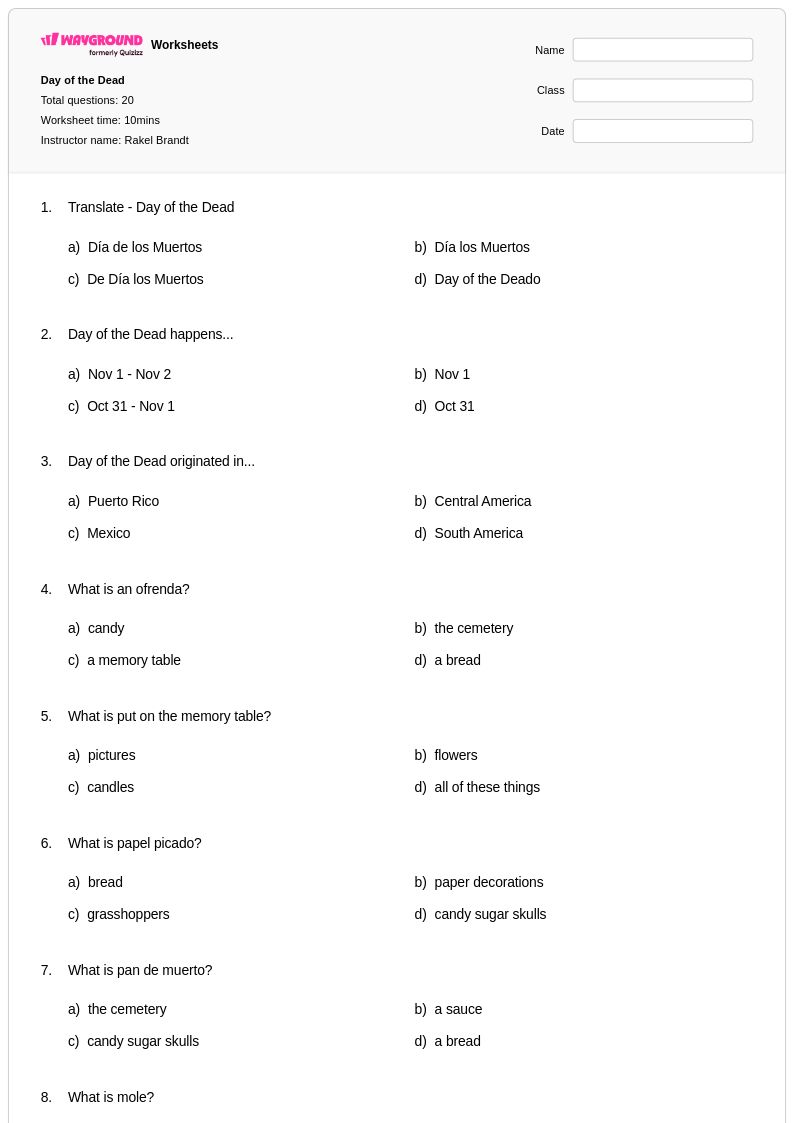
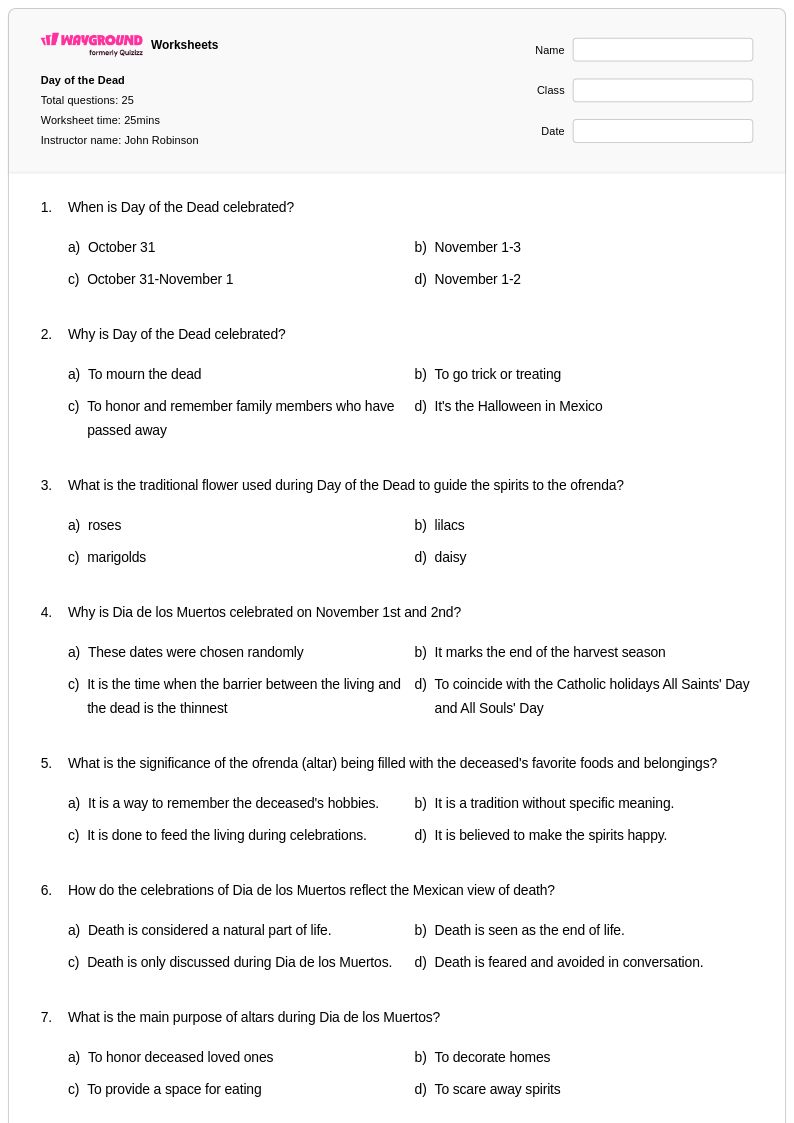
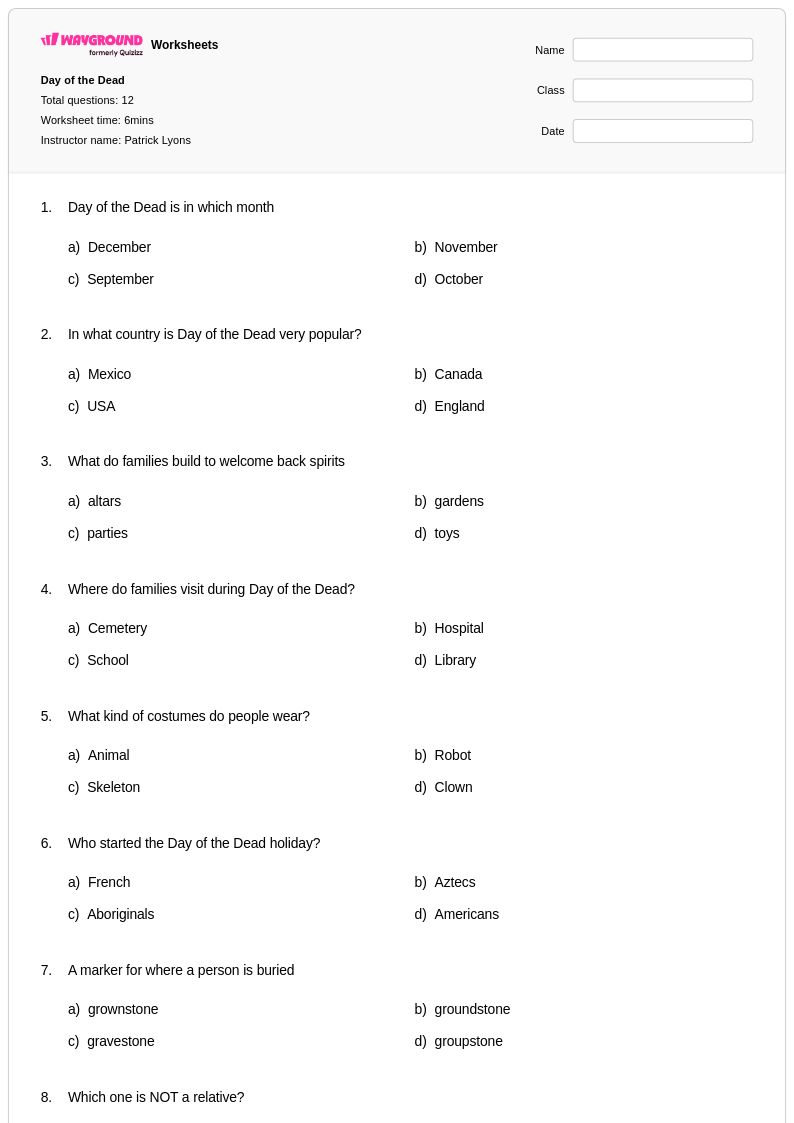
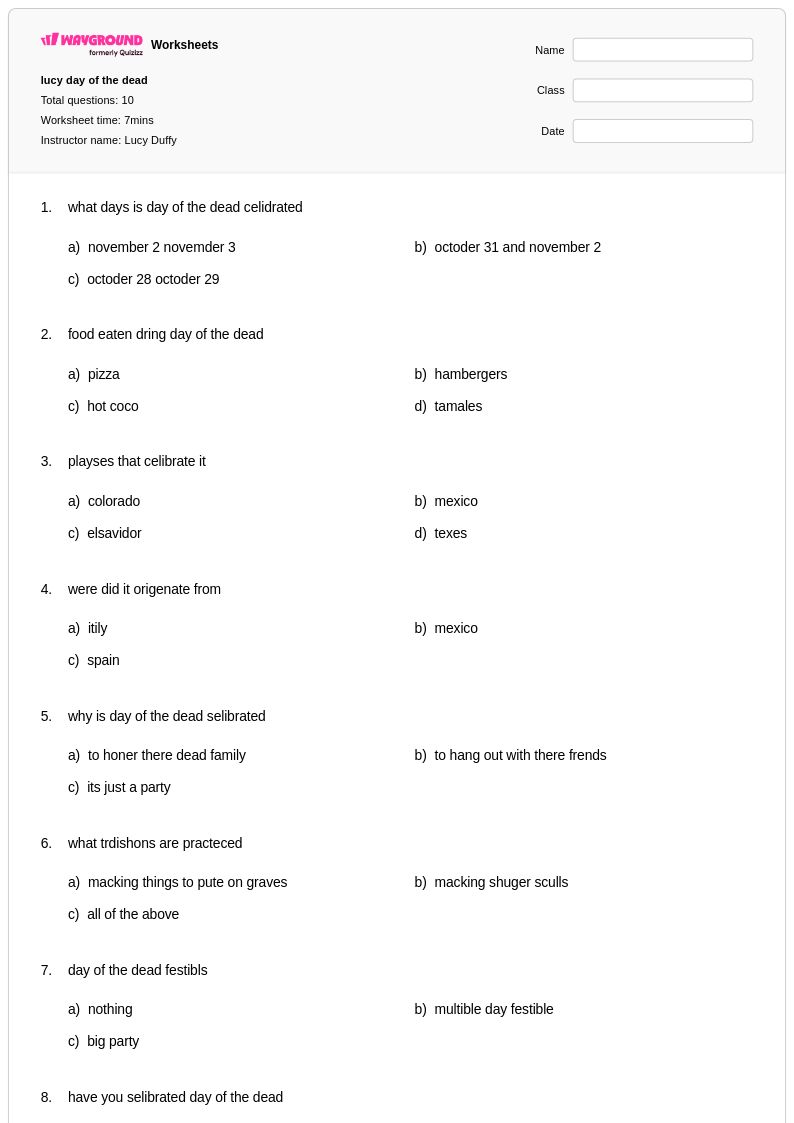
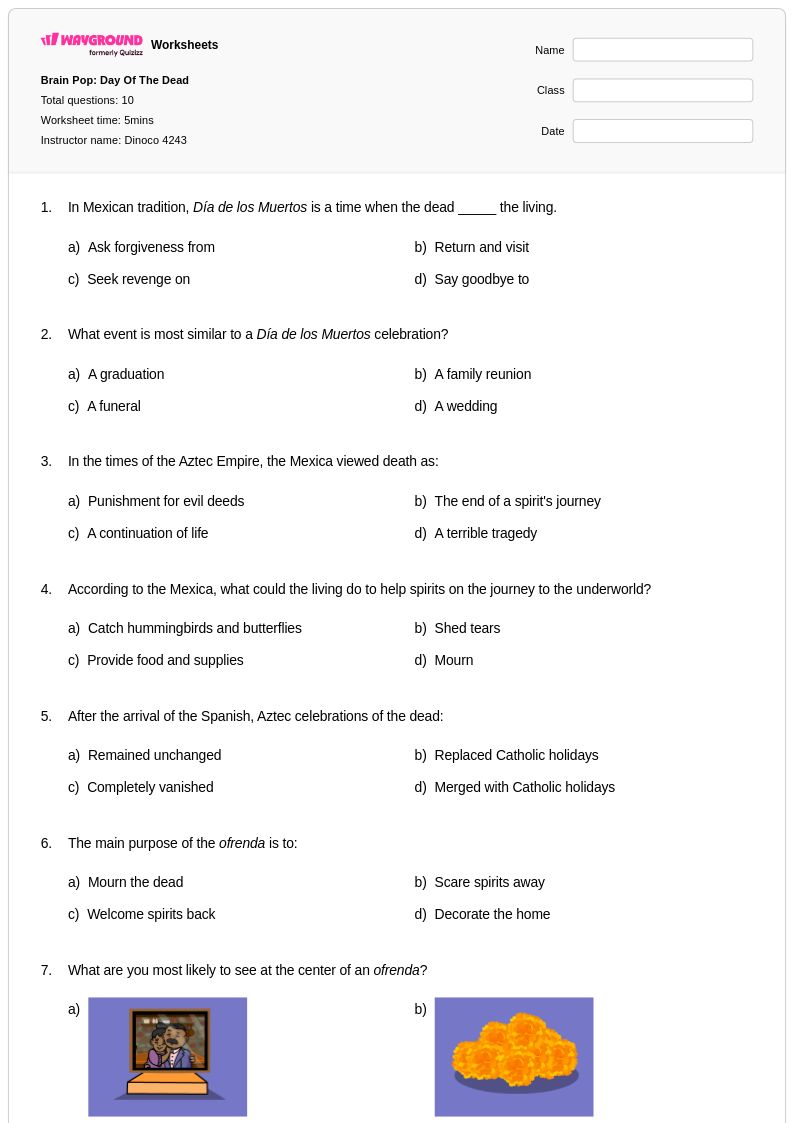
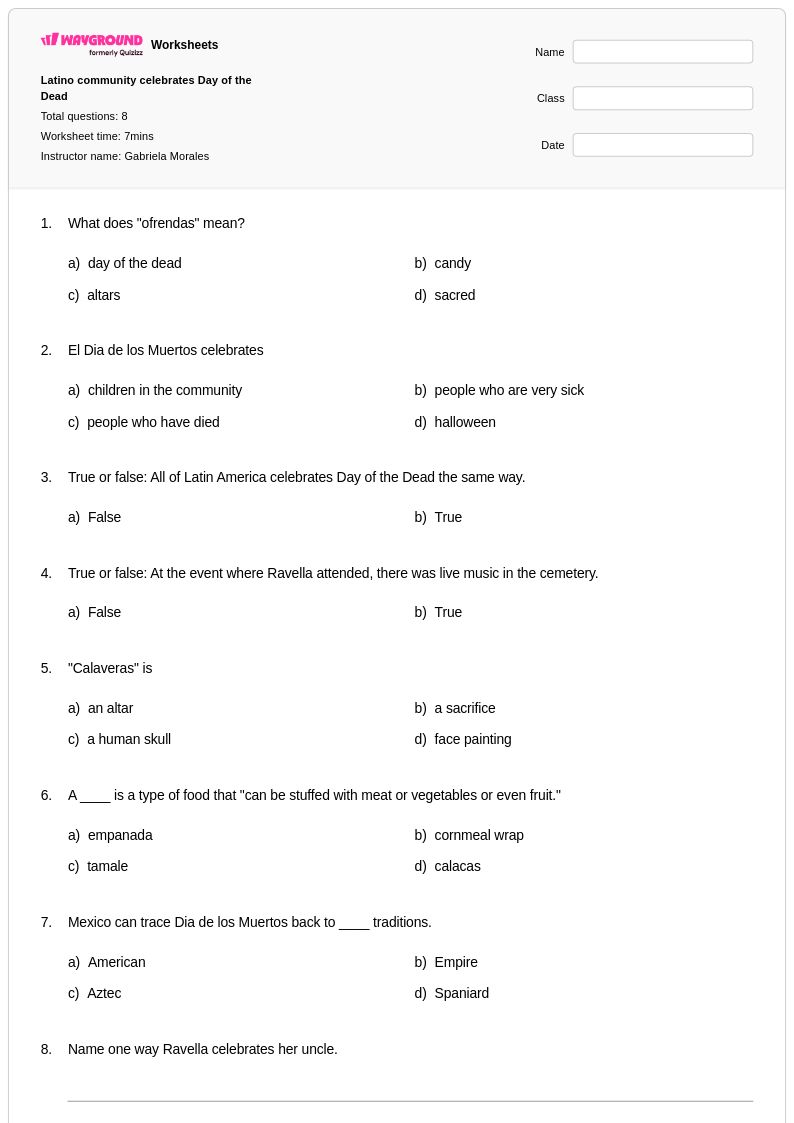
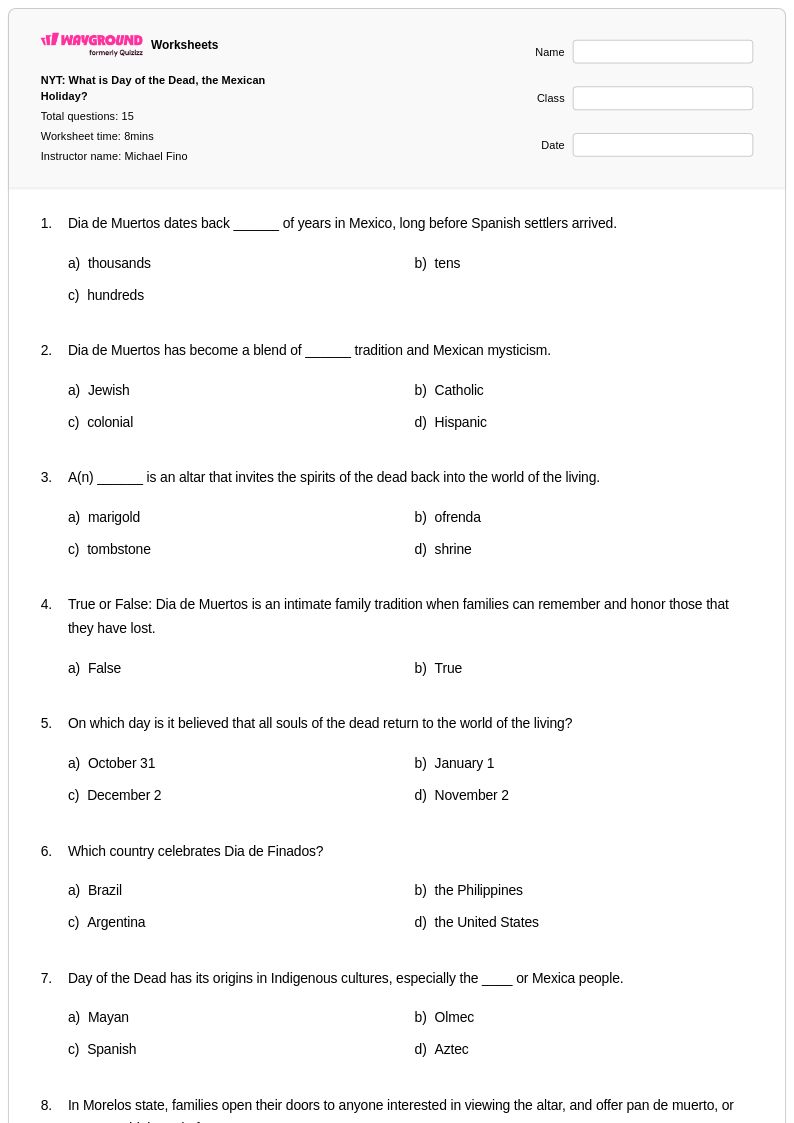
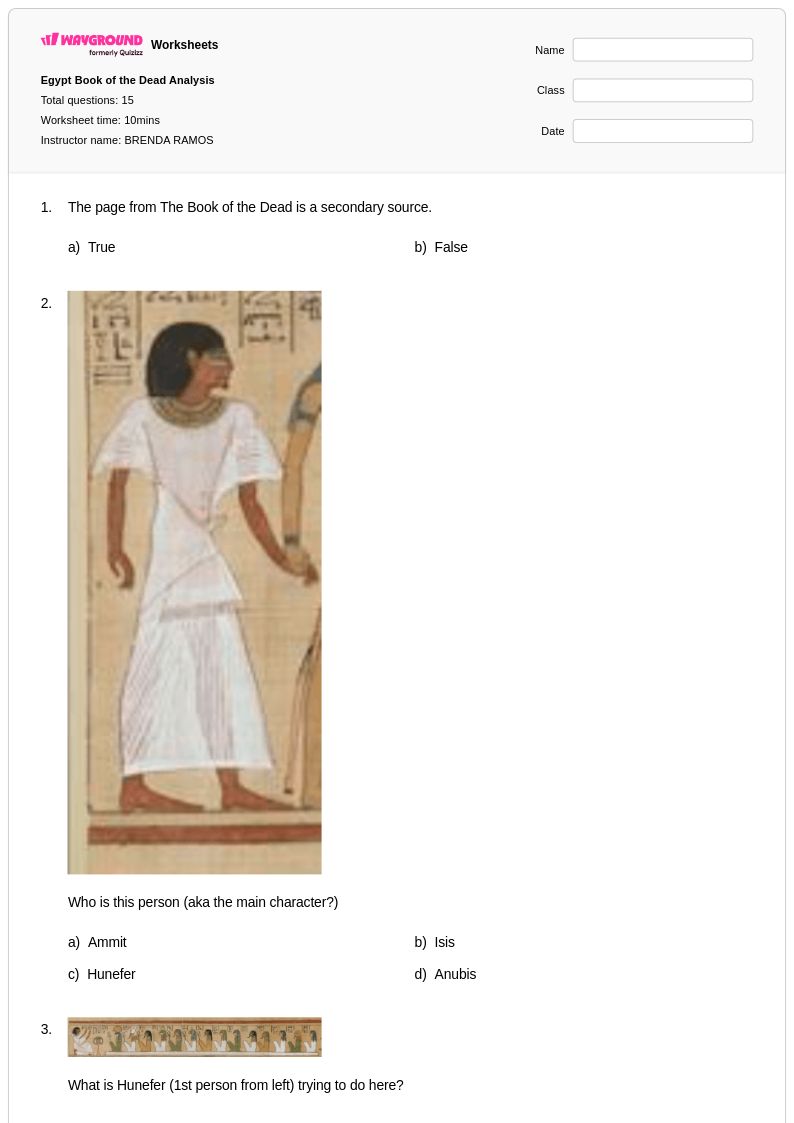
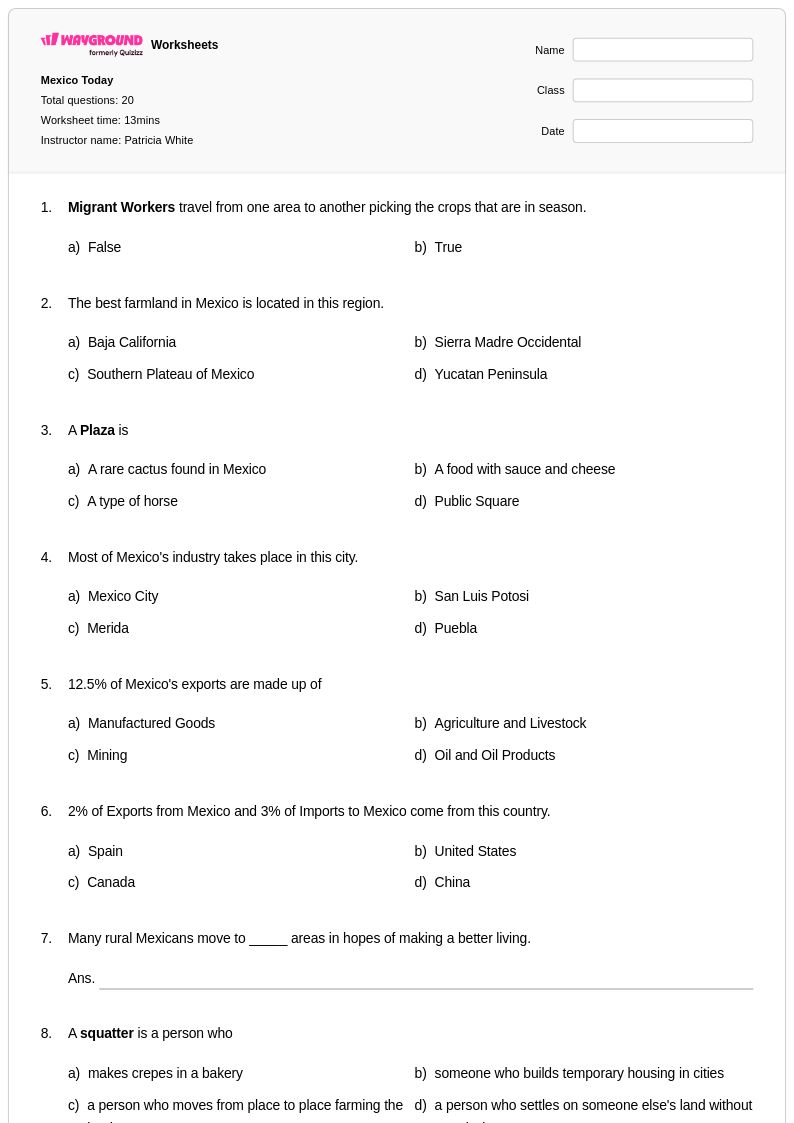
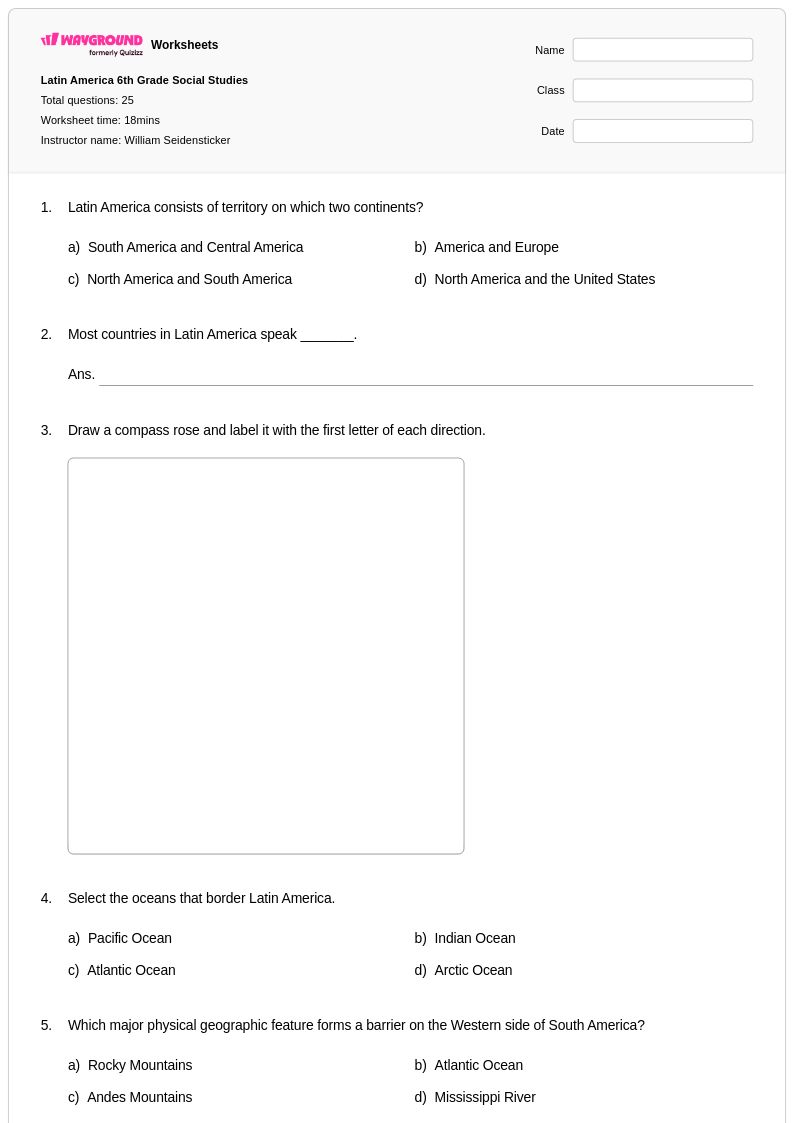
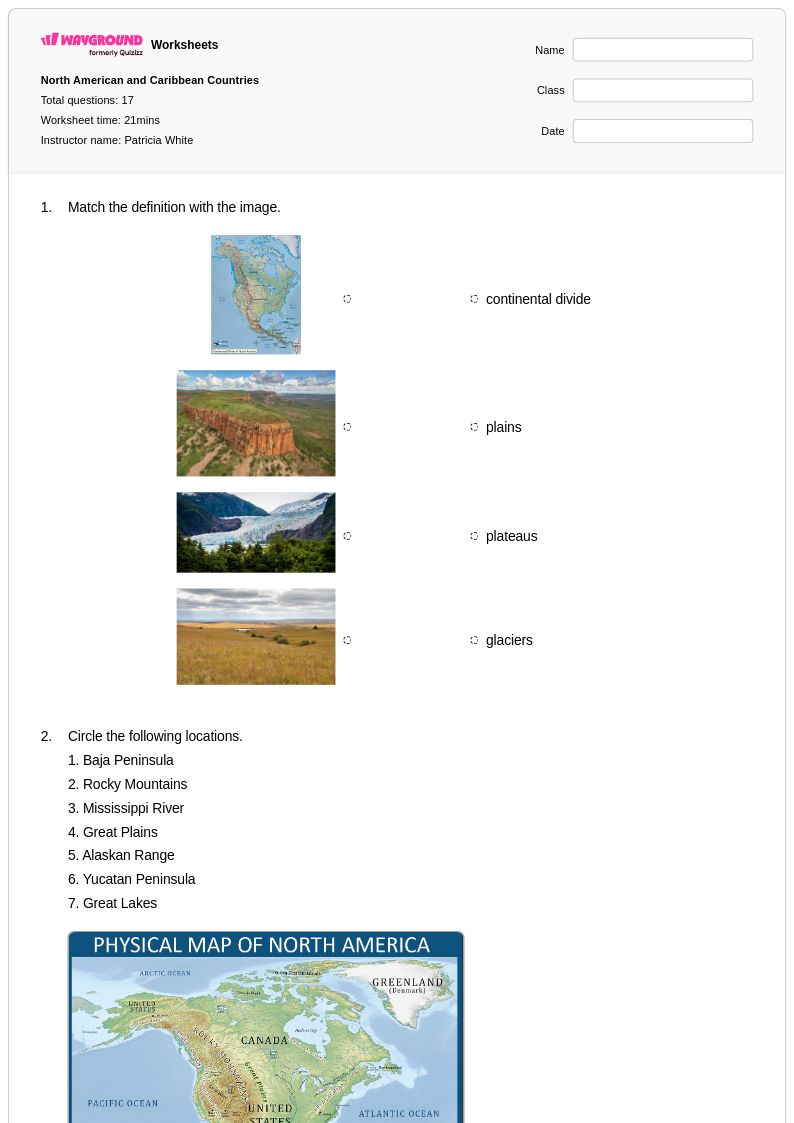
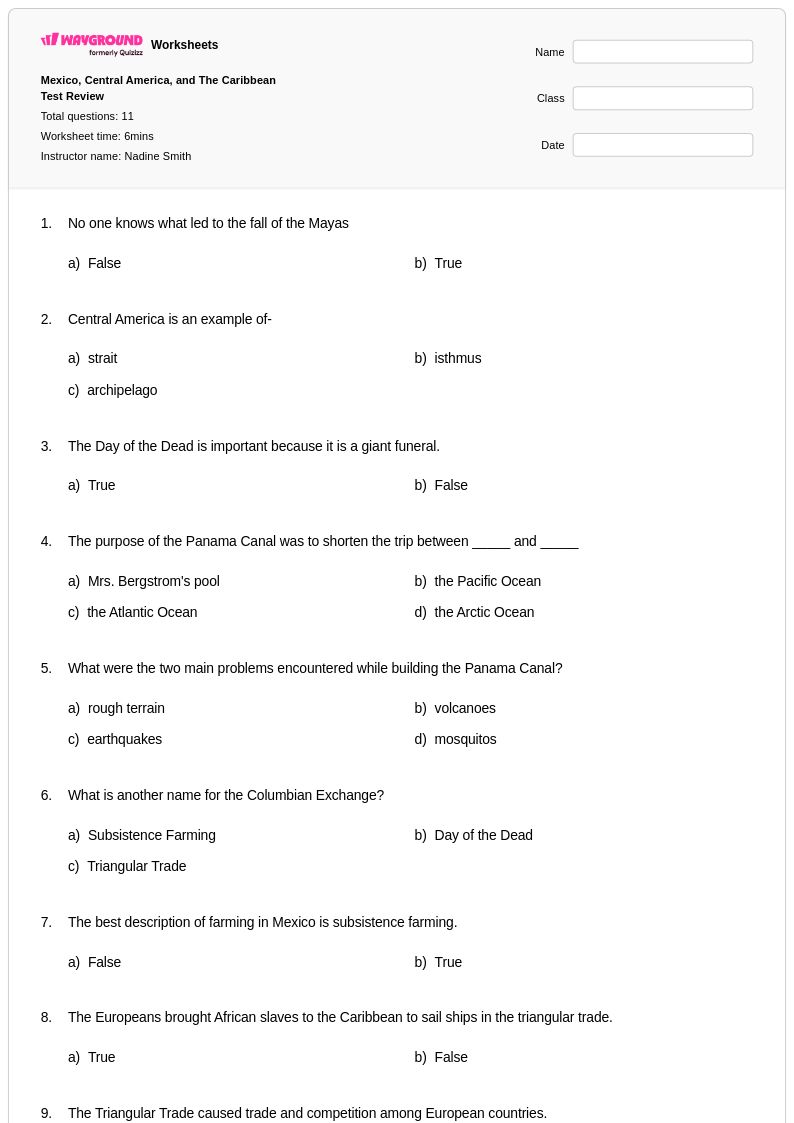
Day of the Dead worksheets available through Wayground (formerly Quizizz) provide Class 6 students with comprehensive resources to explore this significant Mexican cultural tradition and its broader impact on communities worldwide. These educational materials strengthen critical thinking skills as students analyze the historical origins, symbolic meanings, and contemporary practices associated with Día de los Muertos celebrations. The worksheet collection includes practice problems that challenge students to compare and contrast different cultural approaches to honoring deceased family members, while free printables offer hands-on activities such as creating ofrendas, interpreting traditional artwork, and examining the role of food, flowers, and music in the celebration. Each worksheet comes with a detailed answer key to support both independent learning and classroom instruction, with pdf formats ensuring easy distribution and accessibility for all students.
Wayground (formerly Quizizz) empowers teachers with millions of educator-created resources specifically designed for Day of the Dead instruction, featuring robust search and filtering capabilities that help locate age-appropriate materials aligned with social studies standards for cultural awareness and global citizenship. The platform's differentiation tools enable teachers to customize worksheets based on individual student needs, while flexible formatting options allow seamless transitions between printable handouts and digital assignments. These comprehensive resources support effective lesson planning by providing ready-to-use materials for introducing new concepts, conducting skill practice sessions, and implementing both remediation strategies for struggling learners and enrichment opportunities for advanced students. Teachers can confidently integrate these worksheets into unit studies on Mexican culture, immigration patterns, or comparative religious practices, knowing that each resource has been crafted by experienced educators who understand the importance of presenting cultural traditions with accuracy and respect.
FAQs
How do I teach Day of the Dead in a culturally respectful way?
Teaching Day of the Dead effectively means grounding the lesson in its Mexican and Indigenous roots rather than treating it as a Halloween equivalent. Focus on the celebration's core themes: honoring deceased loved ones, the role of the ofrenda (altar), symbolic elements like marigolds and sugar skulls, and its recognition as a UNESCO Intangible Cultural Heritage. Connecting the holiday to family memory and community identity helps students engage with it respectfully rather than superficially.
What reading comprehension activities work well for a Day of the Dead lesson?
Reading comprehension activities that ask students to identify the historical origins of Día de los Muertos, describe the symbolic meaning of specific elements, and compare the celebration across different Mexican regions work particularly well. Compare-and-contrast tasks — pairing Day of the Dead with another cultural observance like All Saints' Day or Obon — push students to think critically about how different communities honor the deceased. These exercises build both content knowledge and analytical reading skills simultaneously.
What common misconceptions do students have about Day of the Dead?
The most persistent misconception is that Day of the Dead is a Mexican version of Halloween because both fall in late October or early November. Students often conflate the two, missing that Día de los Muertos is a joyful, community-centered celebration rooted in pre-Columbian Aztec traditions fused with Spanish Catholic observances. Another common error is treating the holiday as monolithic — in practice, traditions vary significantly by region, family, and generation, which is an important nuance for cultural literacy.
How can I use Day of the Dead worksheets to build cultural awareness across my class?
Day of the Dead worksheets work well as an entry point into broader discussions about how cultures mark death, memory, and community. After students complete activities on Día de los Muertos traditions, prompt them to research or share a family or community tradition that serves a similar purpose — this positions the lesson as comparative cultural study rather than a single-culture spotlight. Structured reflection questions on the worksheets reinforce the idea that diverse traditions deserve equal analytical attention.
How do I use Wayground's Day of the Dead worksheets in my classroom?
Wayground's Day of the Dead worksheets are available as printable PDFs for traditional classroom use and in digital formats for technology-integrated environments, giving teachers flexibility to assign them as in-class activities, homework, or assessments. Digital versions can be hosted as a quiz directly on Wayground, allowing for real-time student responses and streamlined grading. All worksheets include answer keys, so they support both independent student work and direct teacher-led instruction.
How can I differentiate Day of the Dead instruction for students with different learning needs?
When using Wayground's digital worksheets, teachers can apply individual accommodations such as Read Aloud for students who need audio support, reduced answer choices to lower cognitive load for struggling learners, and extended time for students who require it. These settings can be assigned to specific students without alerting peers, so the rest of the class works under default conditions. For further differentiation, the platform's customization features allow teachers to modify content for remediation or enrichment, ensuring all students can meaningfully engage with the cultural content.