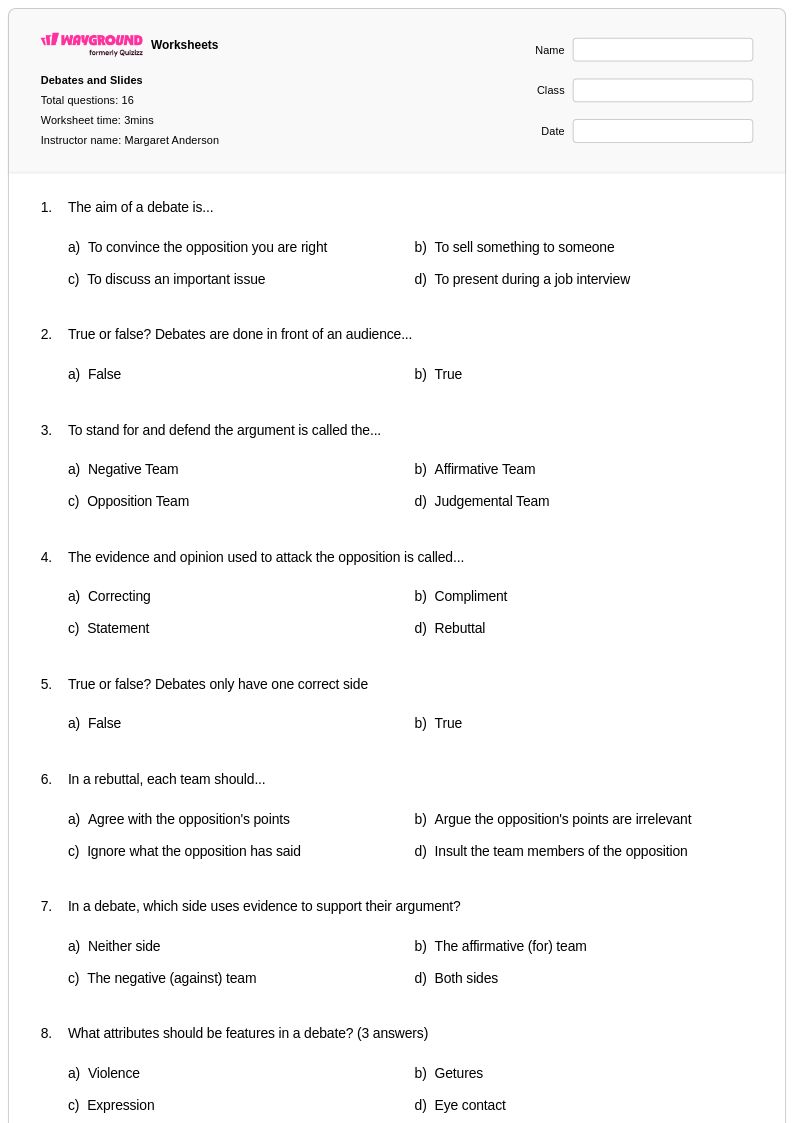
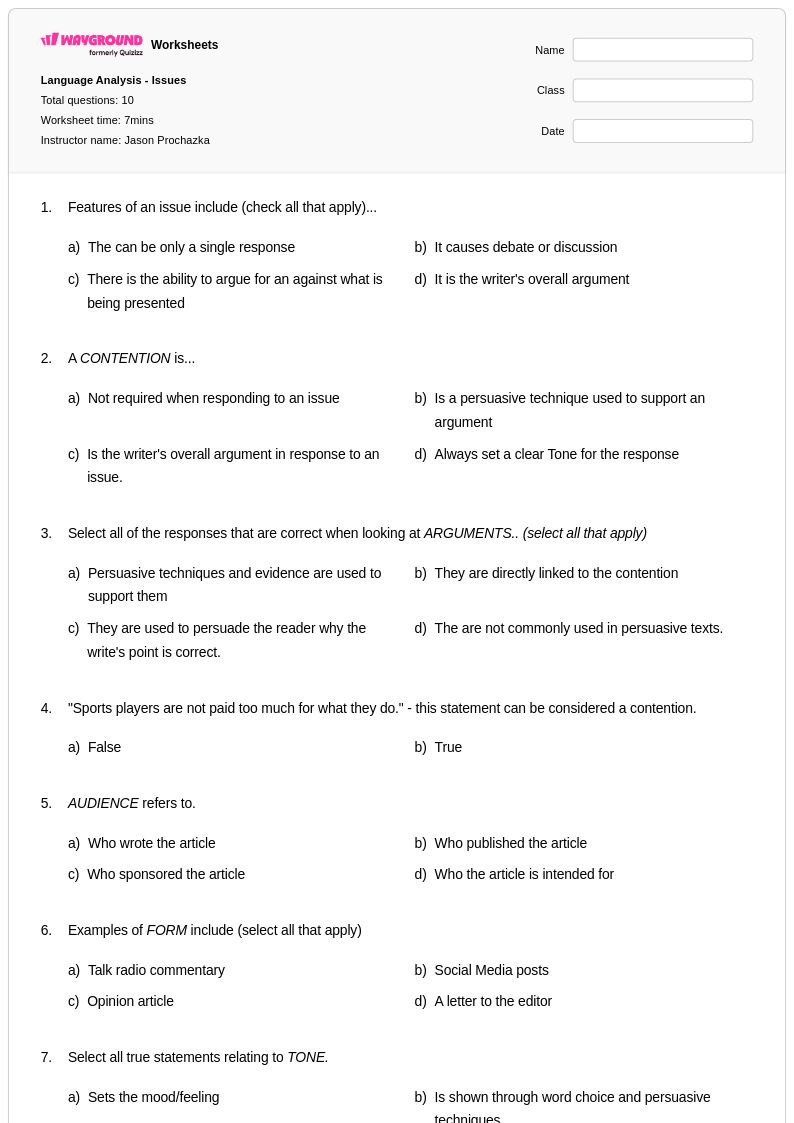
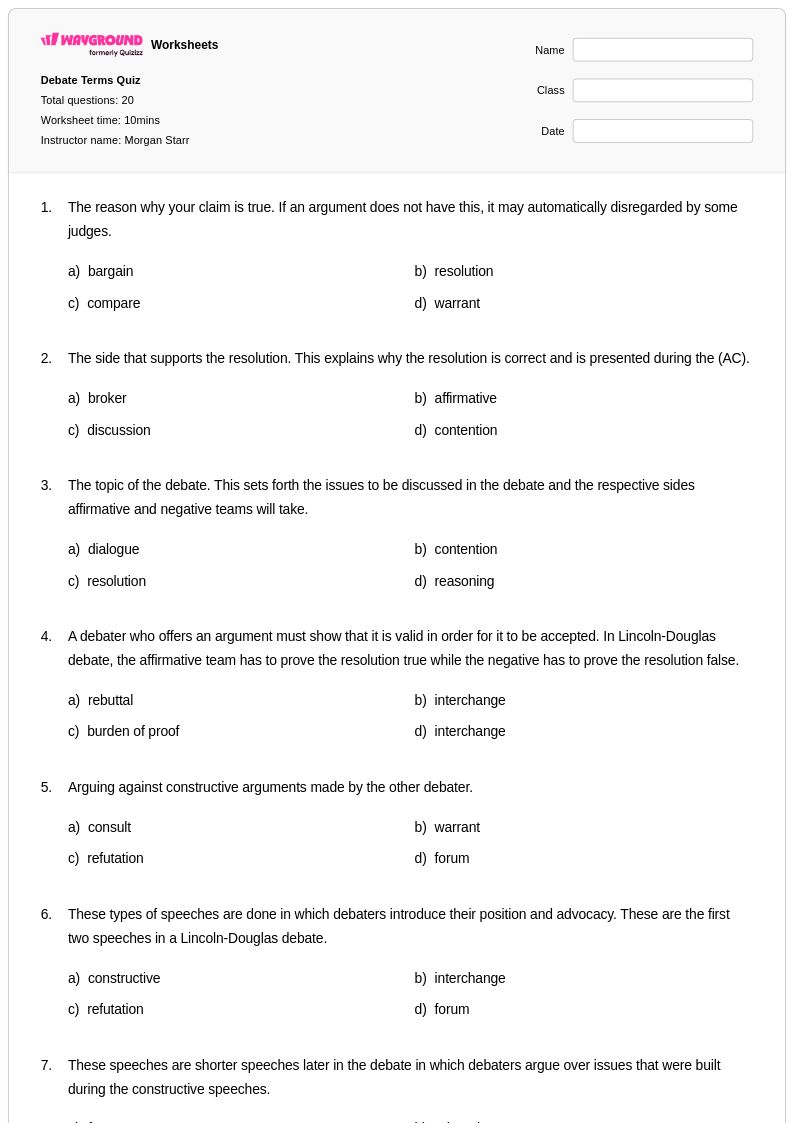
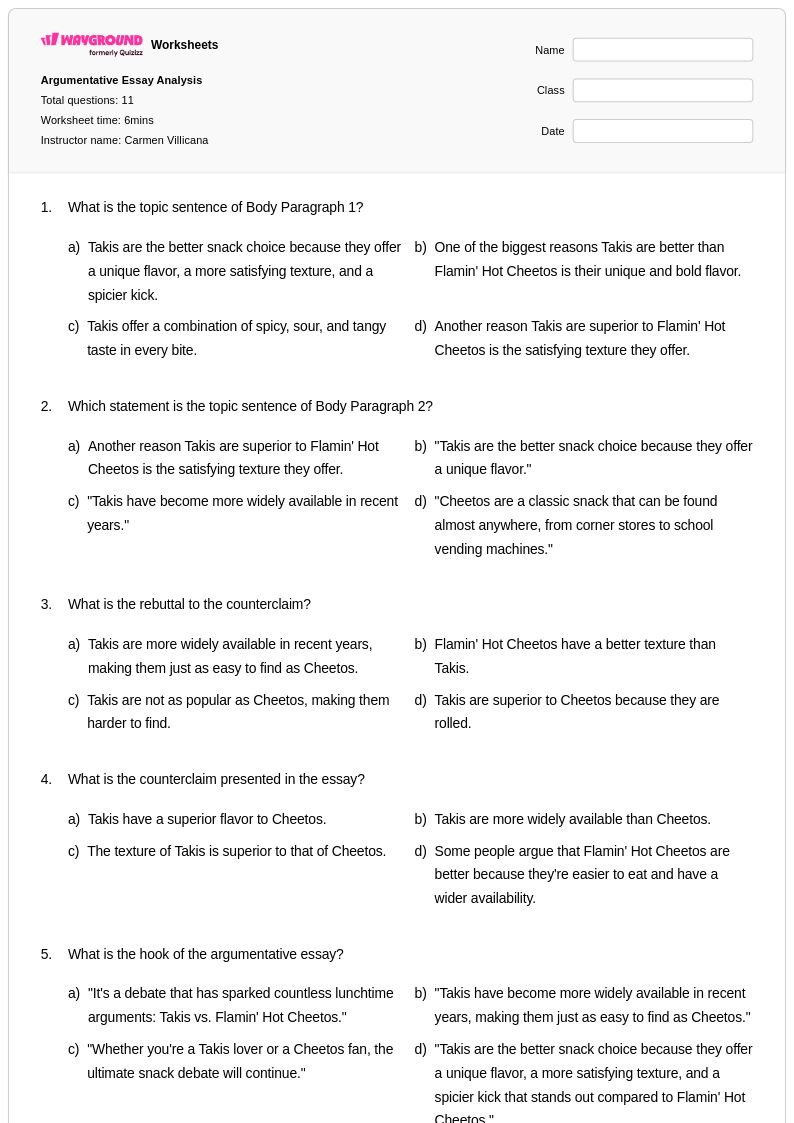
Free Printable Debate Analysis Worksheets for Class 7
Enhance Class 7 students' critical thinking skills with our free debate analysis worksheets and printables, featuring practice problems and answer keys to develop argumentation evaluation techniques.
Explore printable Debate Analysis worksheets for Class 7
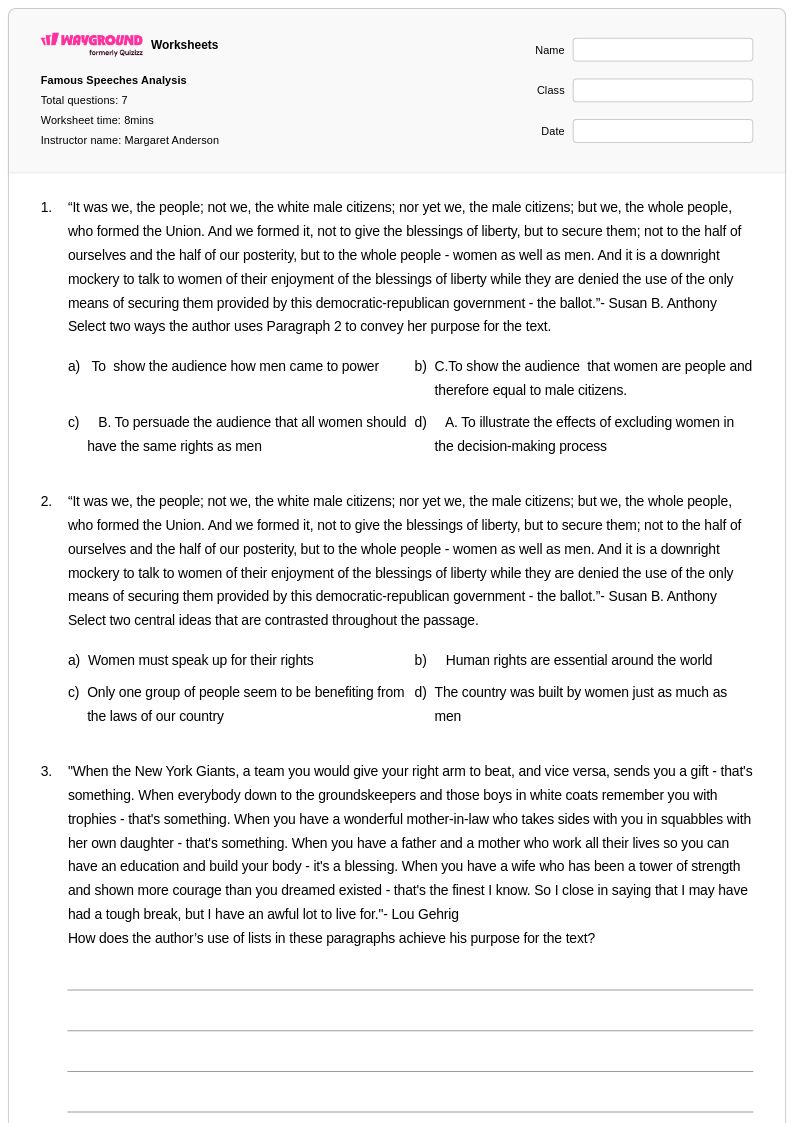
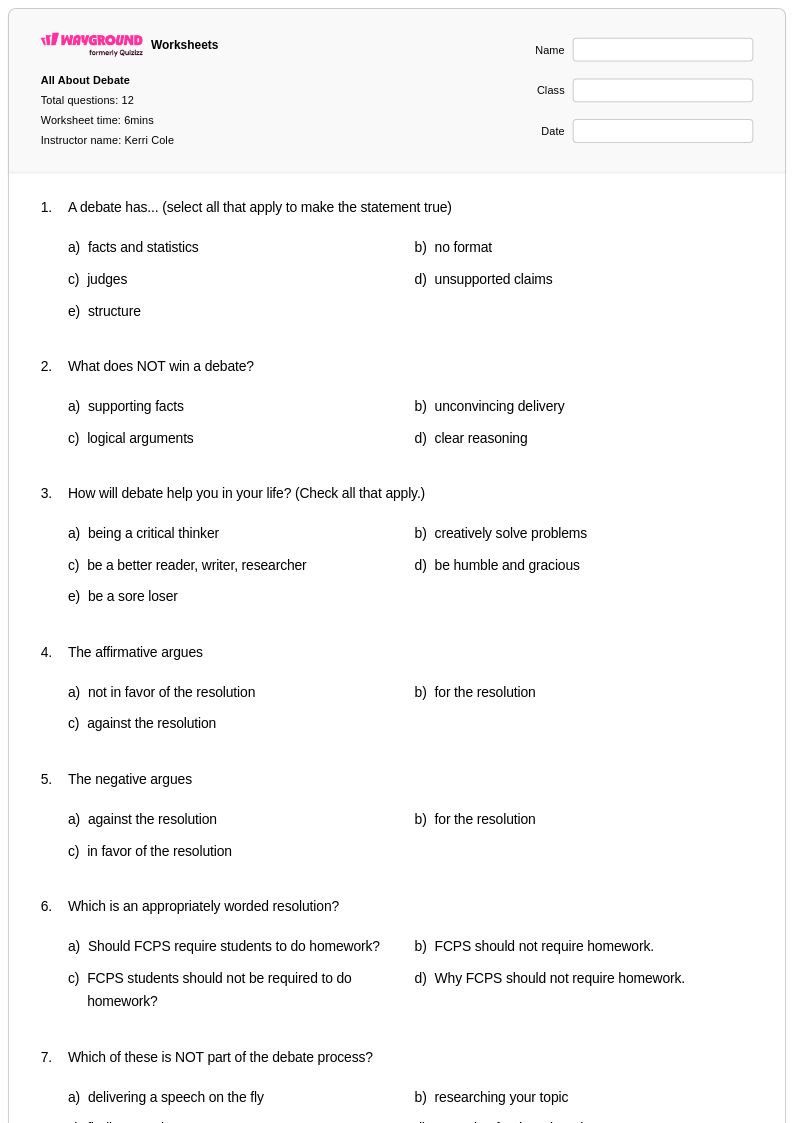
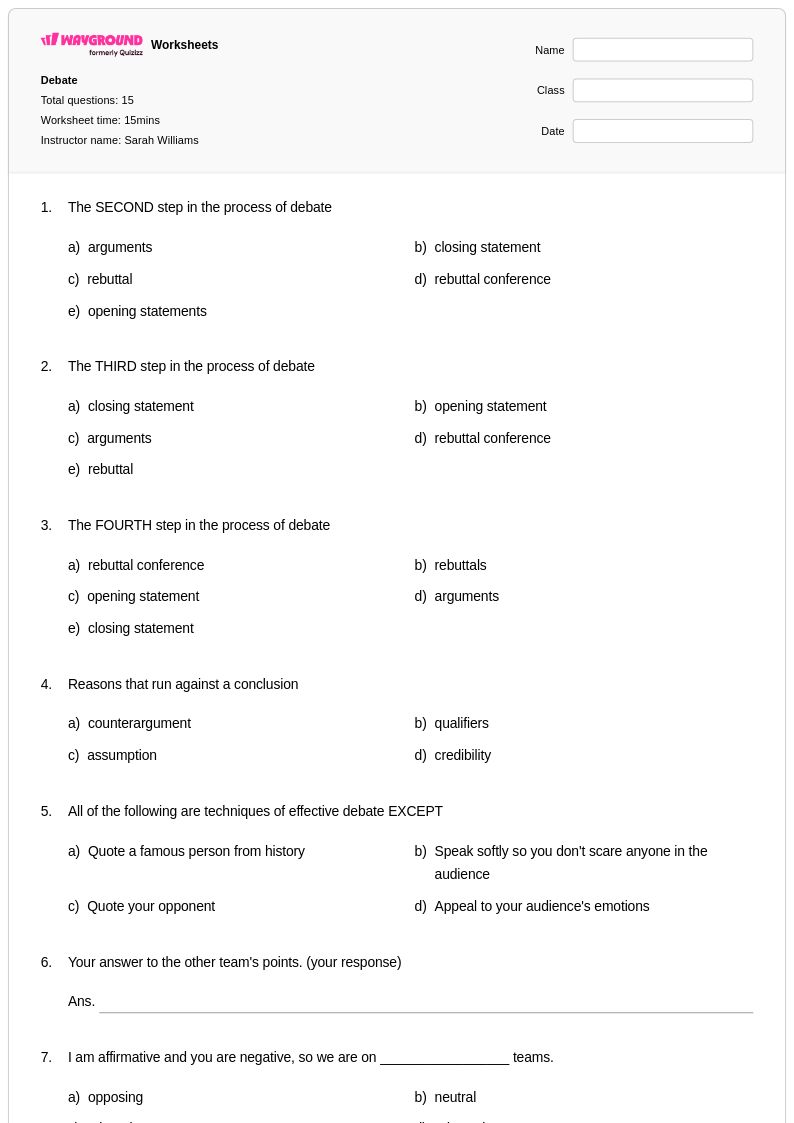
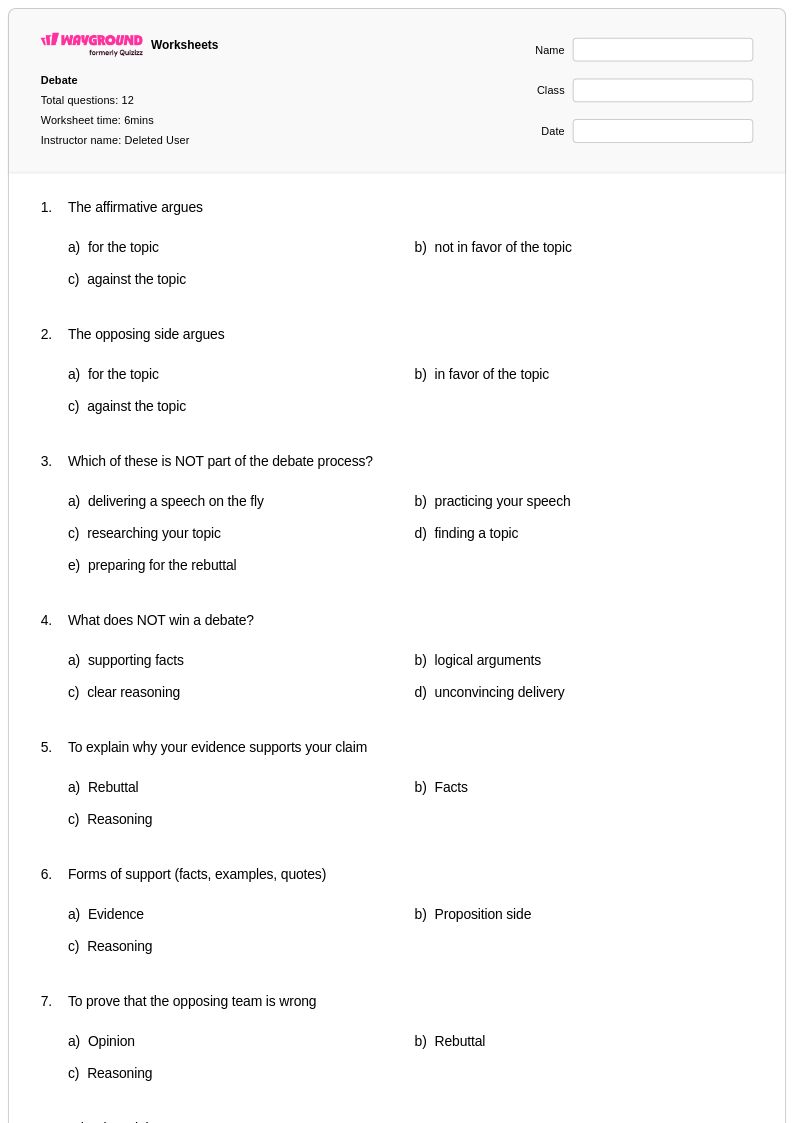
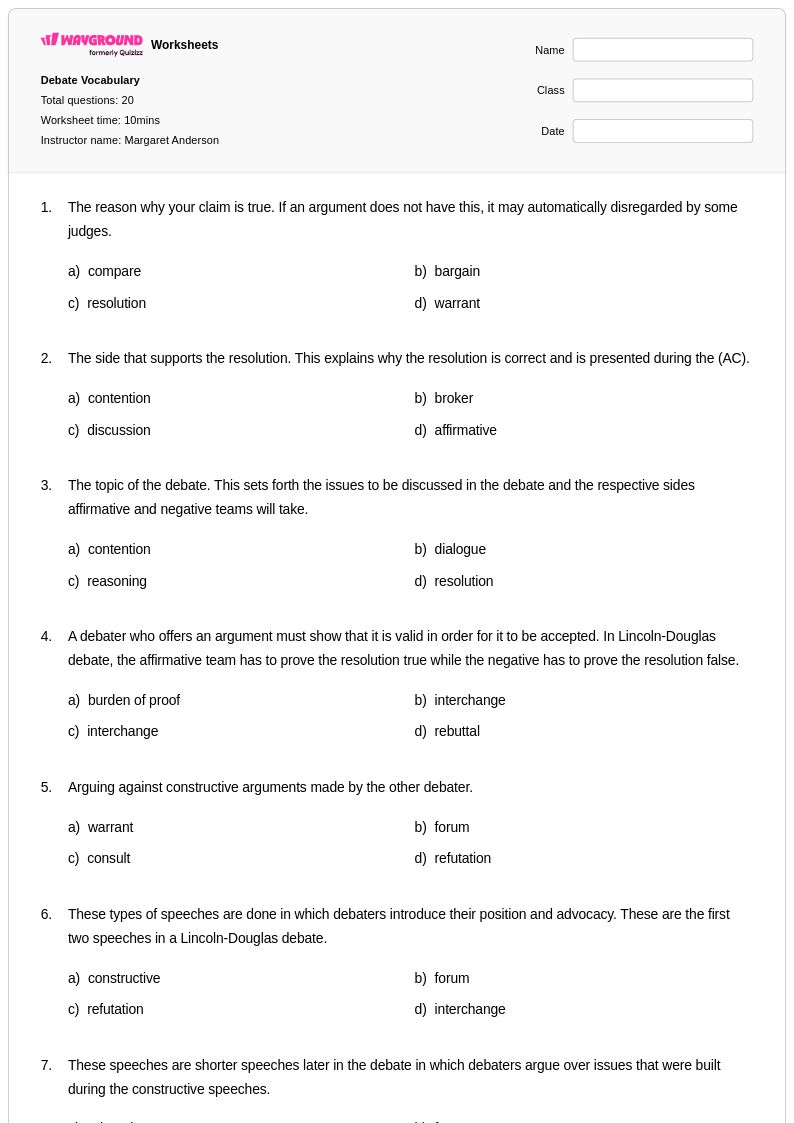
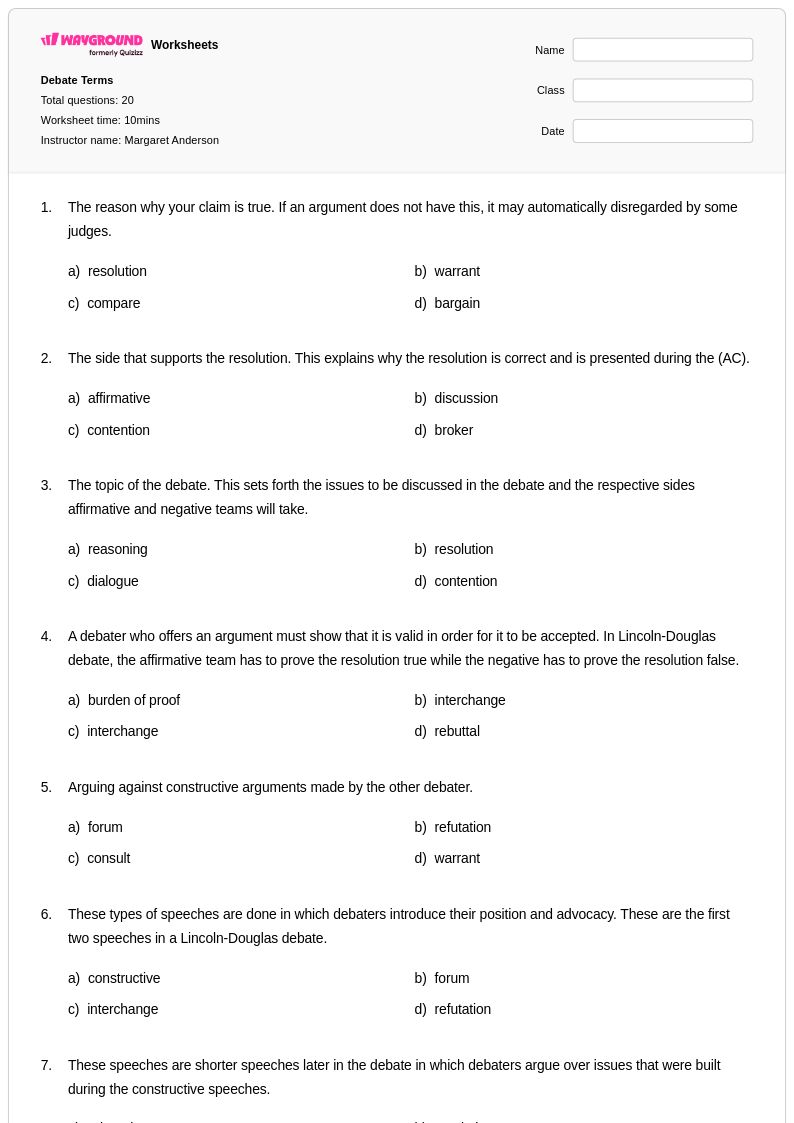
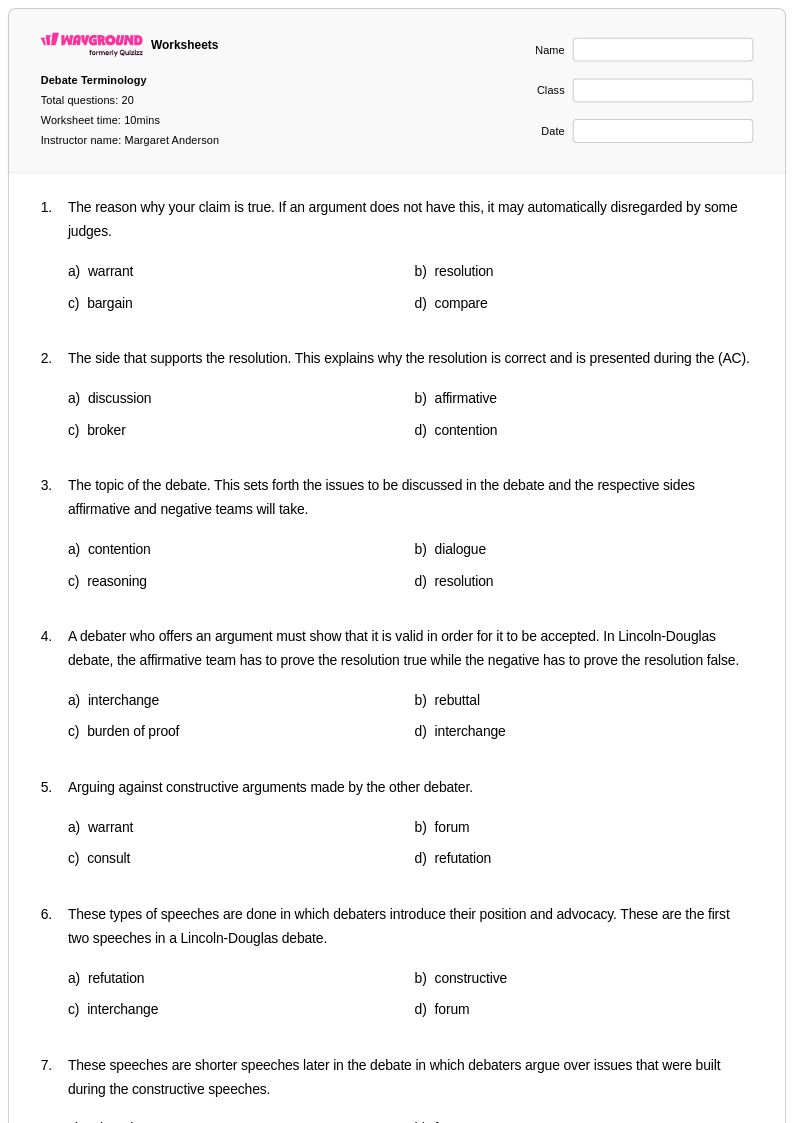
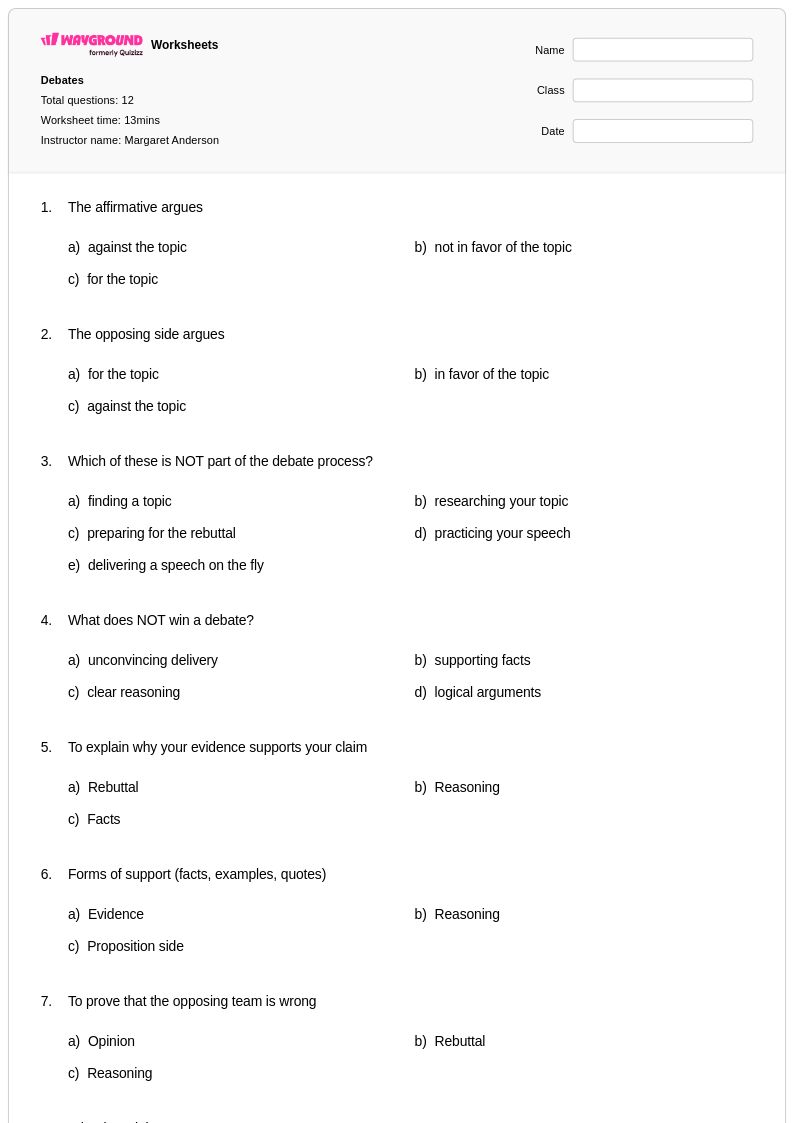
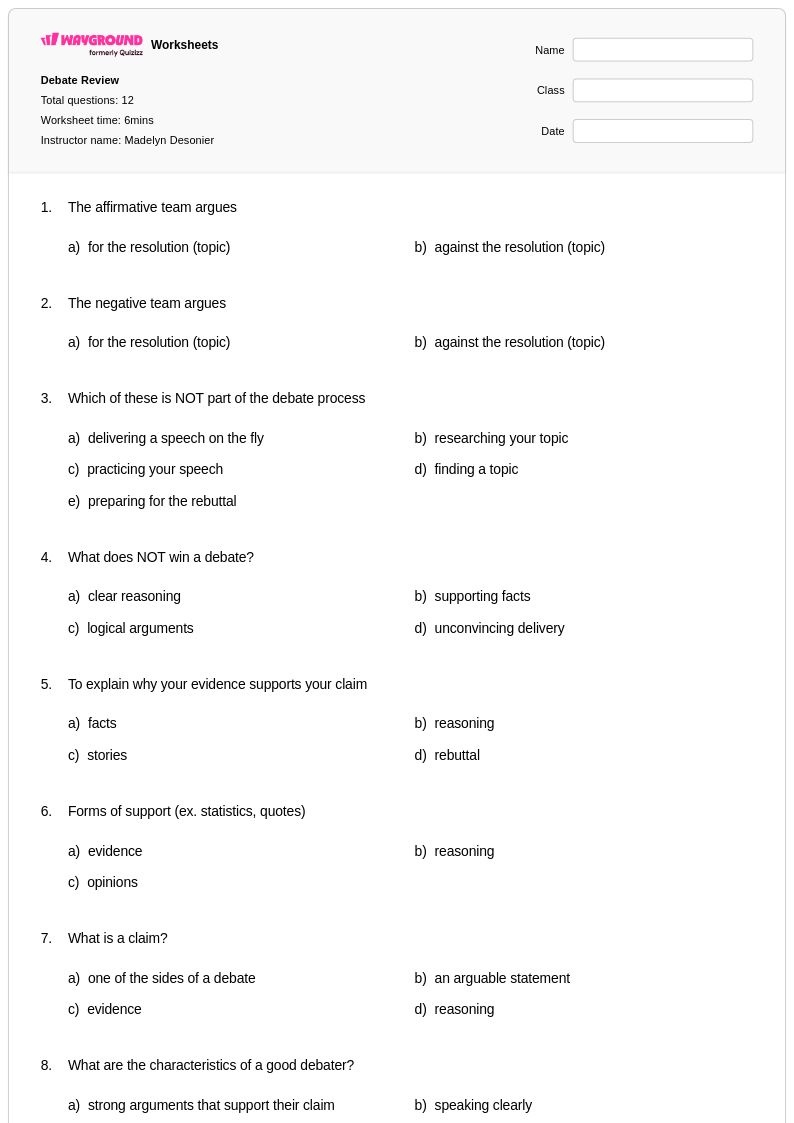
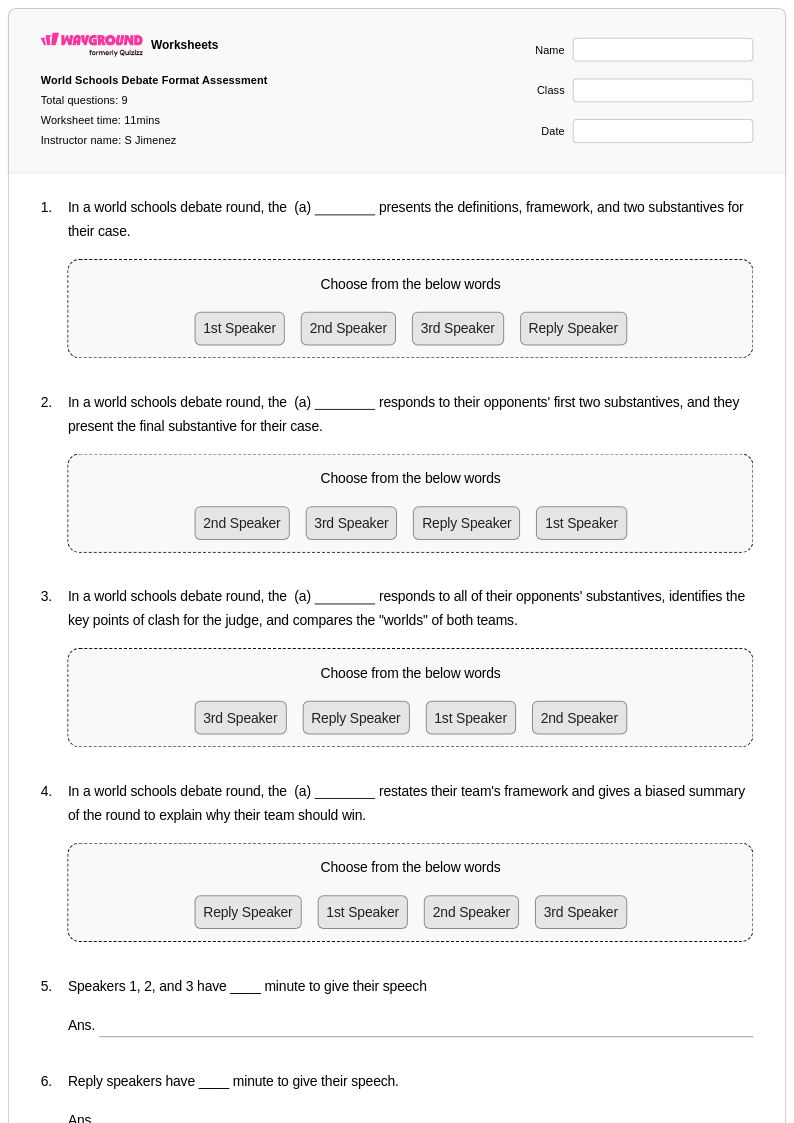
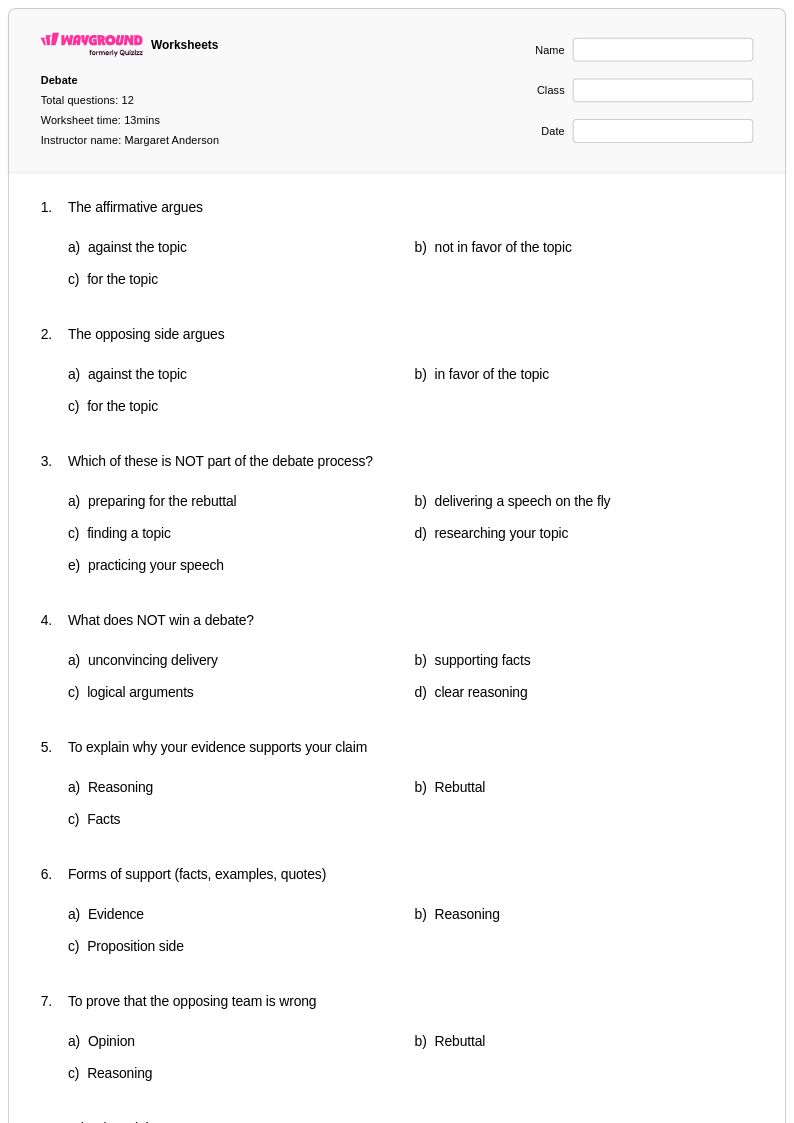
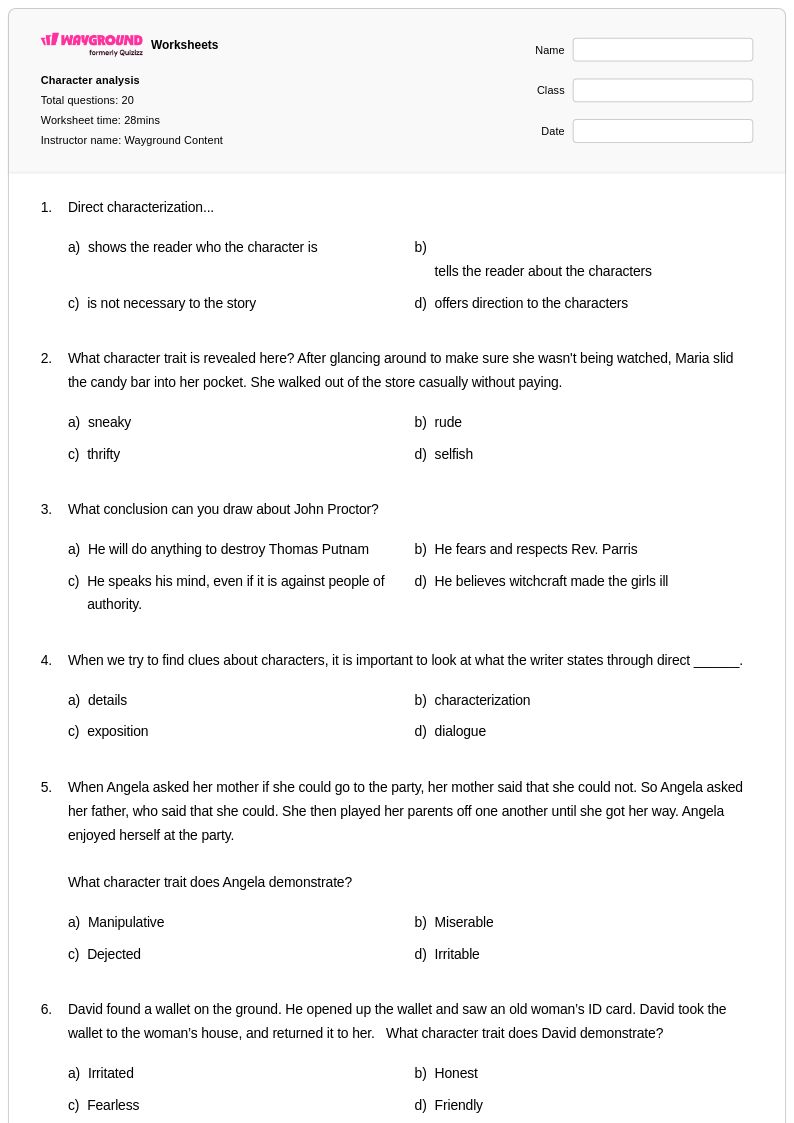
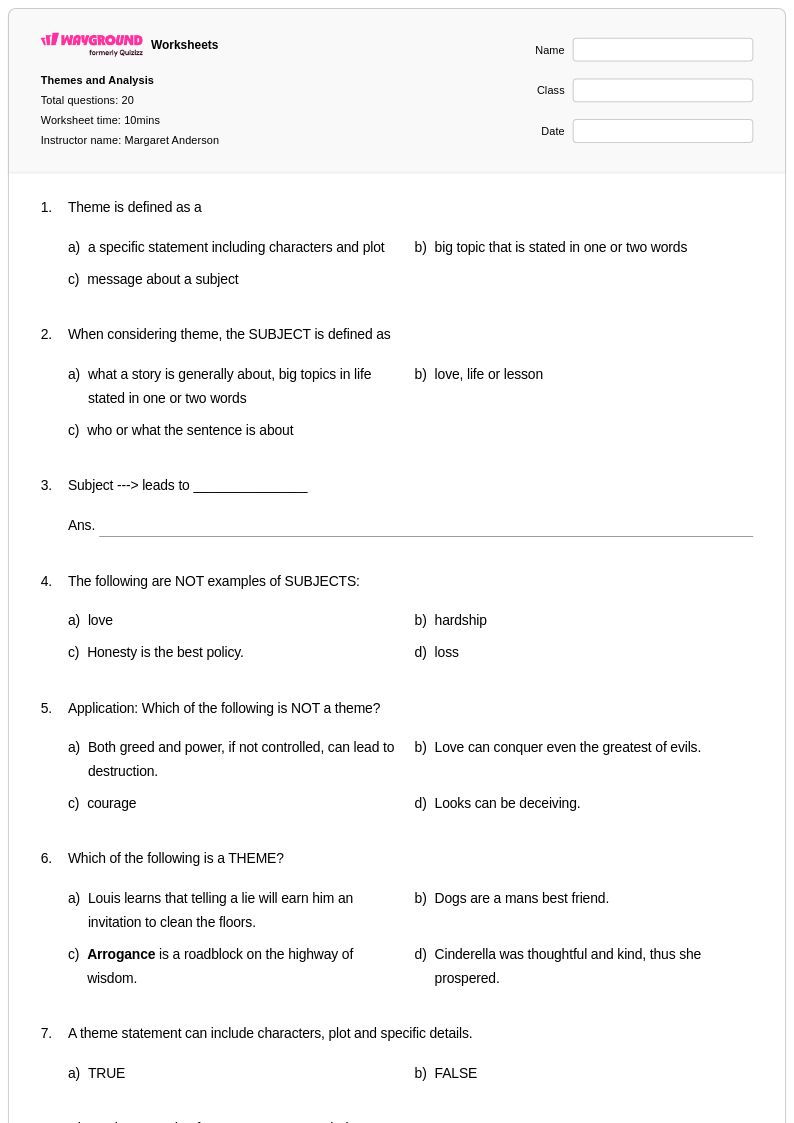
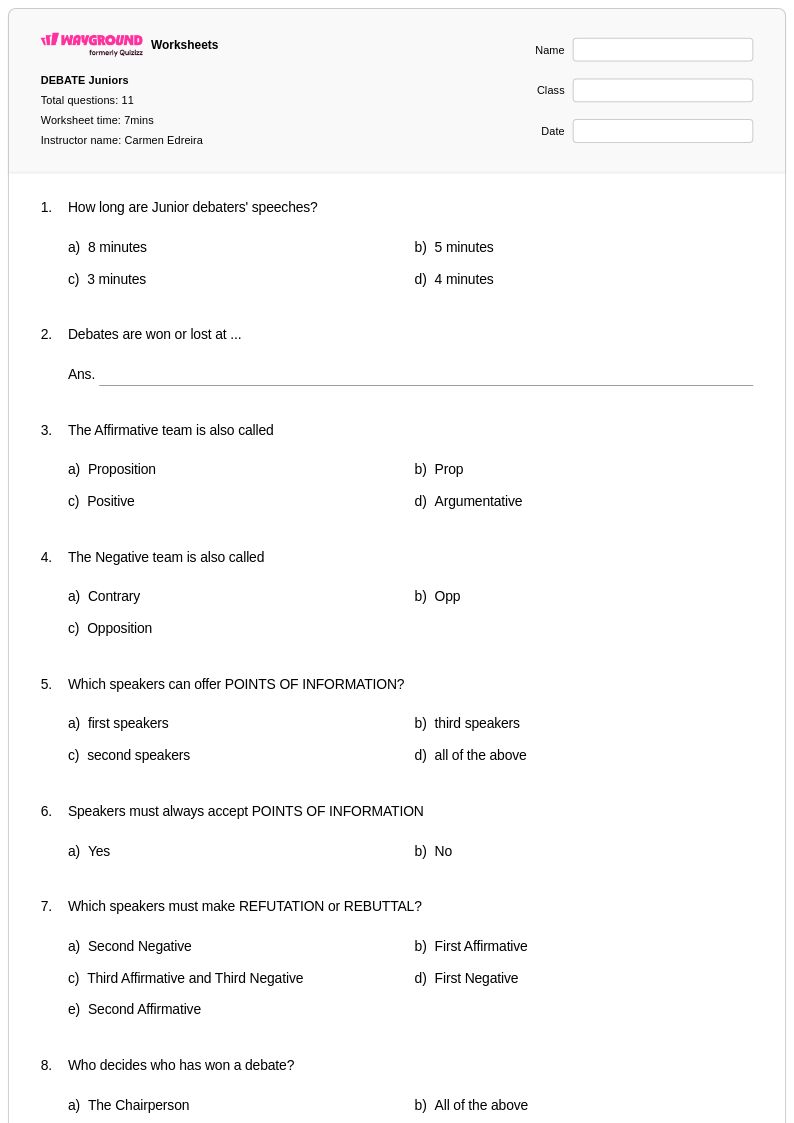
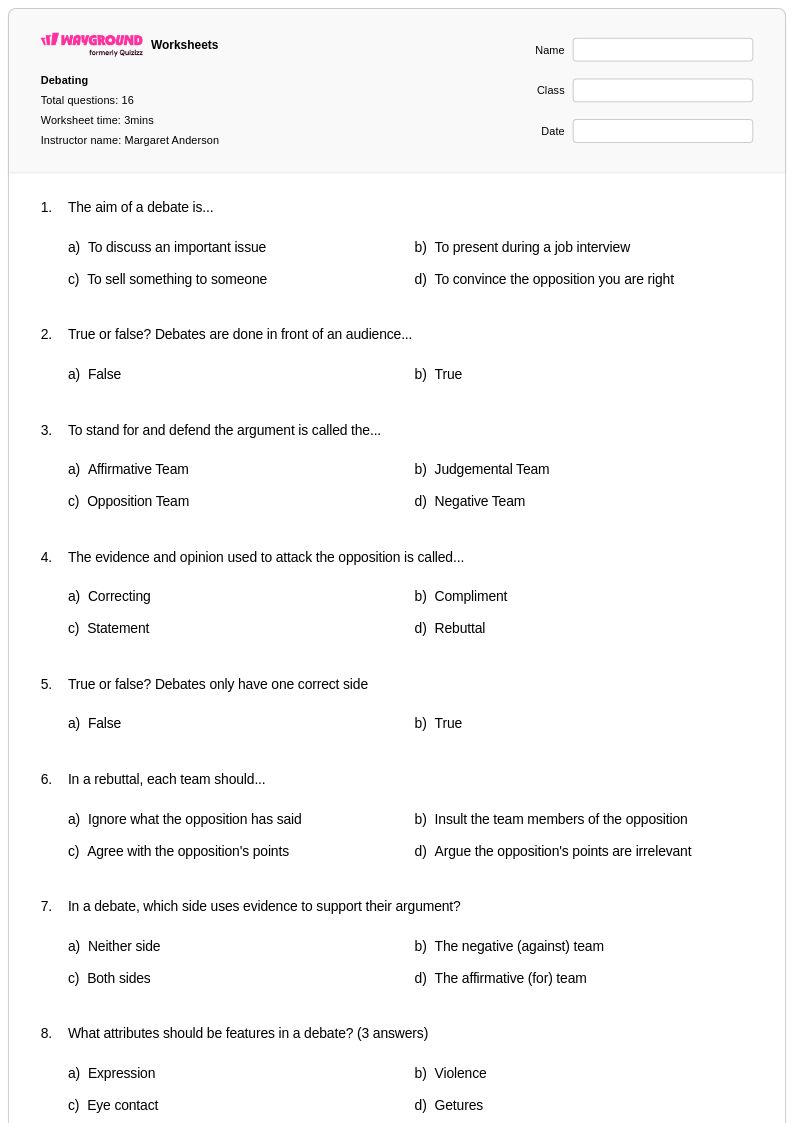
Debate analysis worksheets for Class 7 students through Wayground (formerly Quizizz) provide comprehensive resources that develop critical thinking and analytical writing skills essential for academic success. These carefully designed materials guide seventh-grade learners through the systematic examination of argumentative structures, helping them identify claims, evidence, counterarguments, and rhetorical strategies used in formal debates. Students strengthen their ability to evaluate the effectiveness of different persuasive techniques while practicing close reading and analytical writing through engaging practice problems that mirror real-world debate scenarios. The collection includes printable worksheets with detailed answer keys, allowing educators to provide immediate feedback and support independent learning, while free pdf formats ensure accessibility for diverse classroom environments.
Wayground's extensive library offers millions of teacher-created debate analysis resources specifically aligned with Class 7 English standards, providing educators with powerful search and filtering capabilities to locate materials that match their specific curriculum needs. Teachers can easily differentiate instruction by selecting worksheets that range from basic argument identification to complex rhetorical analysis, while the platform's flexible customization tools allow for modifications that support diverse learning styles and academic levels. Available in both printable and digital formats, these resources seamlessly integrate into lesson planning for skill practice, remediation sessions, and enrichment activities, enabling educators to provide targeted support that helps students master the sophisticated analytical thinking required for advanced academic writing and critical discourse evaluation.
FAQs
How do I teach students to analyze a debate?
Start by breaking debates into their structural components: claims, evidence, counterarguments, and rebuttals. Teach students to evaluate each component separately before assessing the argument as a whole. Introducing logical fallacies early helps students recognize weak reasoning and distinguish it from well-supported claims. Practice with real or model debates gives students concrete material to apply these analytical frameworks before they encounter more complex argumentative scenarios.
What exercises help students practice evaluating arguments?
Structured analysis activities work best, where students read or listen to a debate and annotate claims, label evidence types, and flag persuasive techniques or logical fallacies. Practice problems that mirror real-world debates build transferable skills because students must apply their evaluation criteria to unfamiliar content rather than rehearsed examples. Repeated exposure to different debate formats, such as parliamentary, policy, and Lincoln-Douglas, helps students recognize that argument structure varies by context and develop flexible analytical thinking.
What mistakes do students commonly make when analyzing debates?
The most frequent error is confusing a strongly stated claim with a well-supported one. Students often mistake confident or emotionally persuasive language for logical validity, which is why explicit instruction on logical fallacies is essential. Another common mistake is failing to evaluate source credibility, treating all cited evidence as equally reliable. Students also struggle to distinguish between a counterargument and a rebuttal, which limits their ability to assess how effectively a debater responds to opposition.
How can I differentiate debate analysis instruction for students at different skill levels?
For students who need more support, reduce the complexity of the debate excerpt and provide a structured graphic organizer with labeled sections for claims, evidence, and fallacies. Advanced learners benefit from analyzing multi-round debates or comparing argumentative strategies across different debate formats. On Wayground, teachers can apply accommodations at the individual student level, including reduced answer choices to lower cognitive load for struggling students and read-aloud support for those who need audio access to written content, without affecting the experience of other students in the class.
How do I use Wayground's debate analysis worksheets in my classroom?
Wayground's debate analysis worksheets are available as printable PDFs for traditional classroom use and in digital formats for technology-integrated environments, including the option to host them as a quiz directly on Wayground. Each worksheet includes a complete answer key, which supports both self-assessment by students and efficient teacher evaluation. Teachers can use the platform's search and filtering tools to locate materials aligned to specific standards or debate formats, and differentiation settings allow the same assignment to be customized for students at varying skill levels simultaneously.
How do debate analysis worksheets support analytical writing development?
Analyzing debates trains students to identify what makes an argument persuasive or flawed, which directly strengthens their own argumentative writing. When students can label claims, assess evidence quality, and spot logical fallacies in others' arguments, they become more deliberate in constructing their own. This transfer from analysis to production is why debate analysis practice is considered foundational for essay writing, particularly in persuasive and expository contexts.