Free Printable Determining Meaning Using Roots, Prefixes, and Suffixes worksheets
Discover free printable worksheets and practice problems that help students master determining meaning using roots, prefixes, and suffixes, complete with answer keys and downloadable PDFs through Wayground's comprehensive vocabulary collection.
Explore printable Determining Meaning Using Roots, Prefixes, and Suffixes worksheets
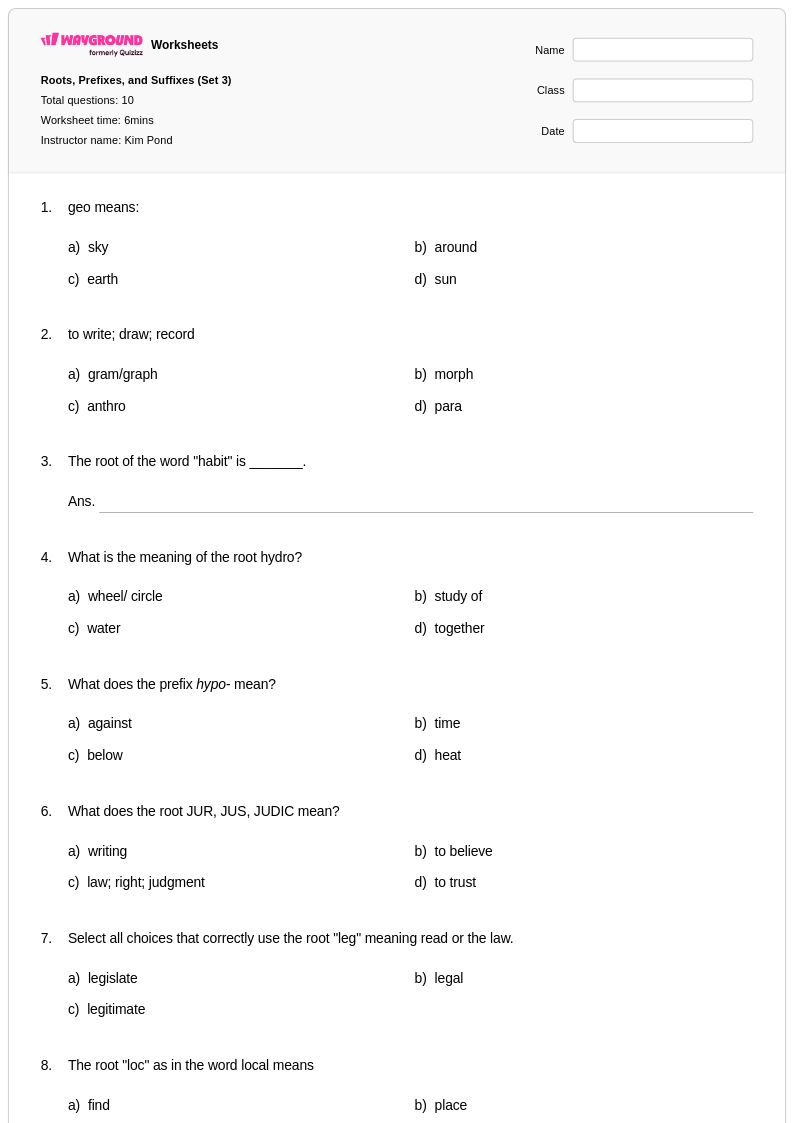
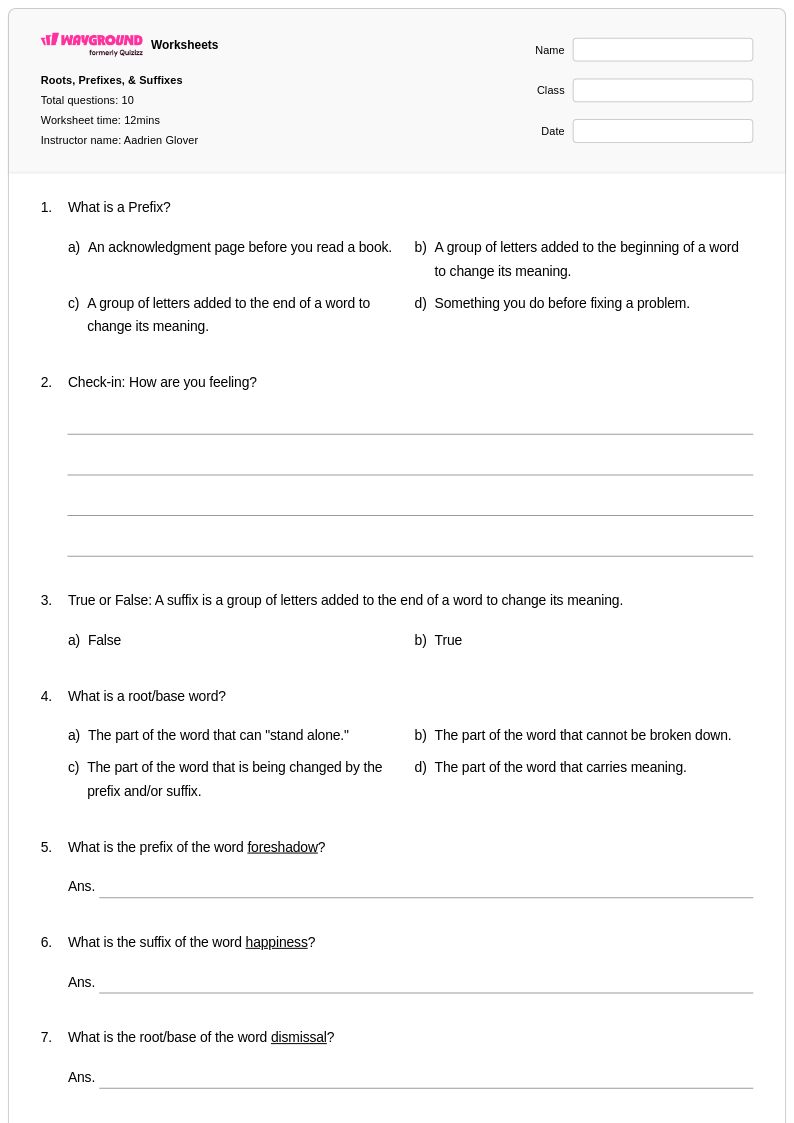
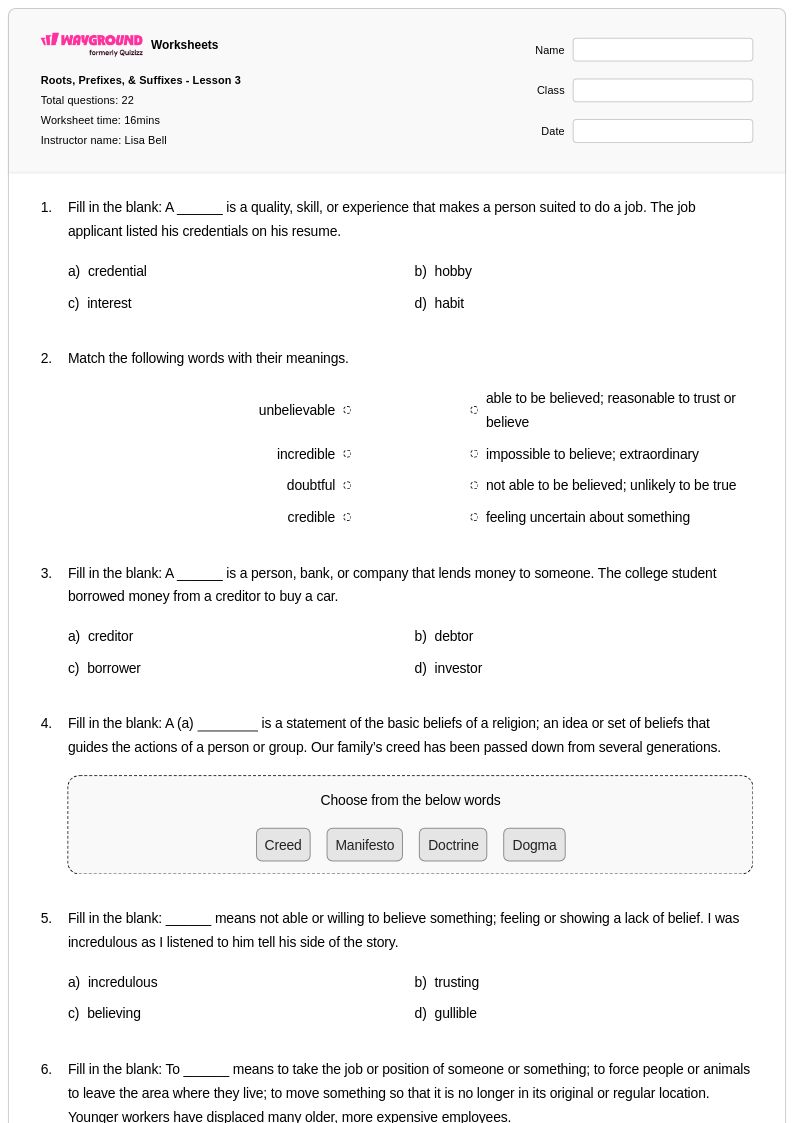
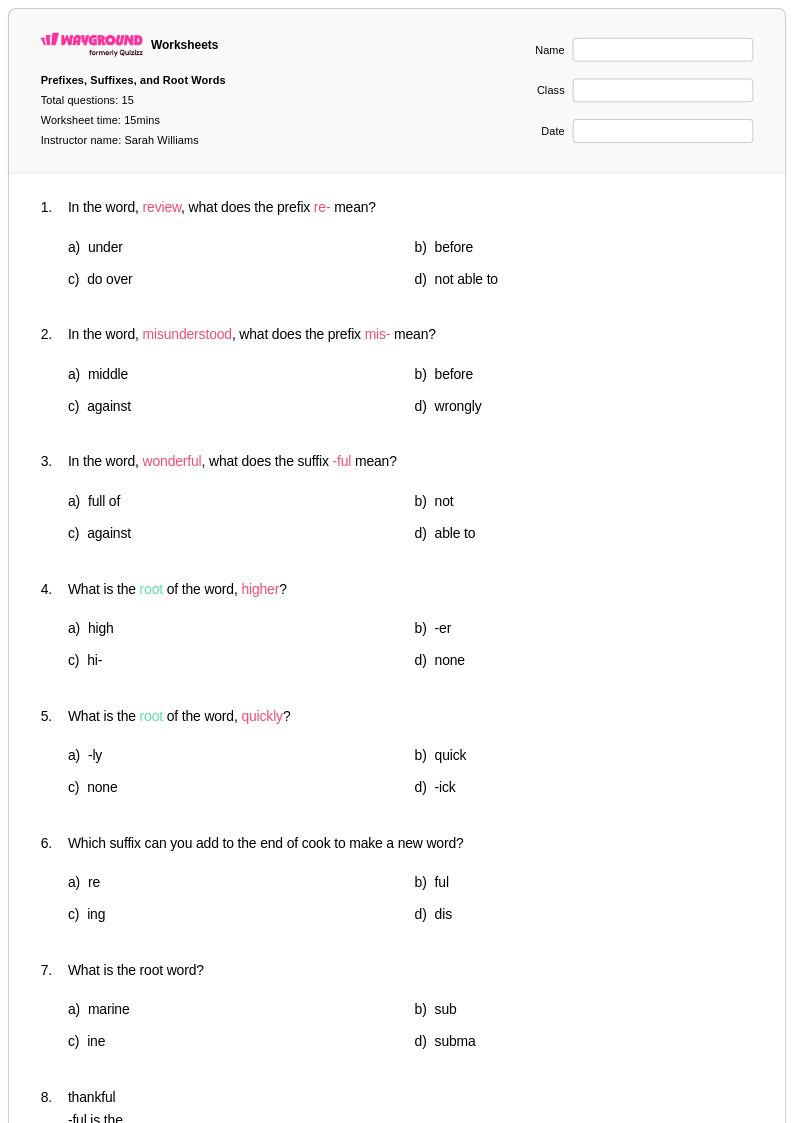
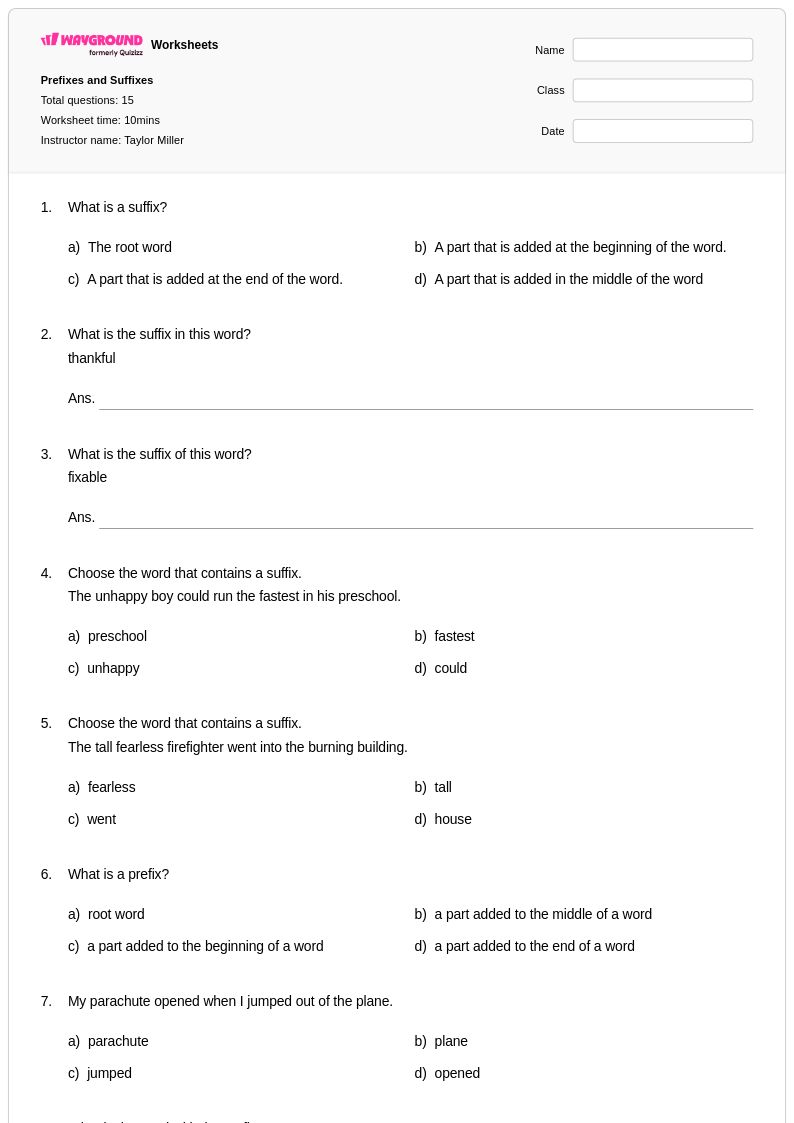
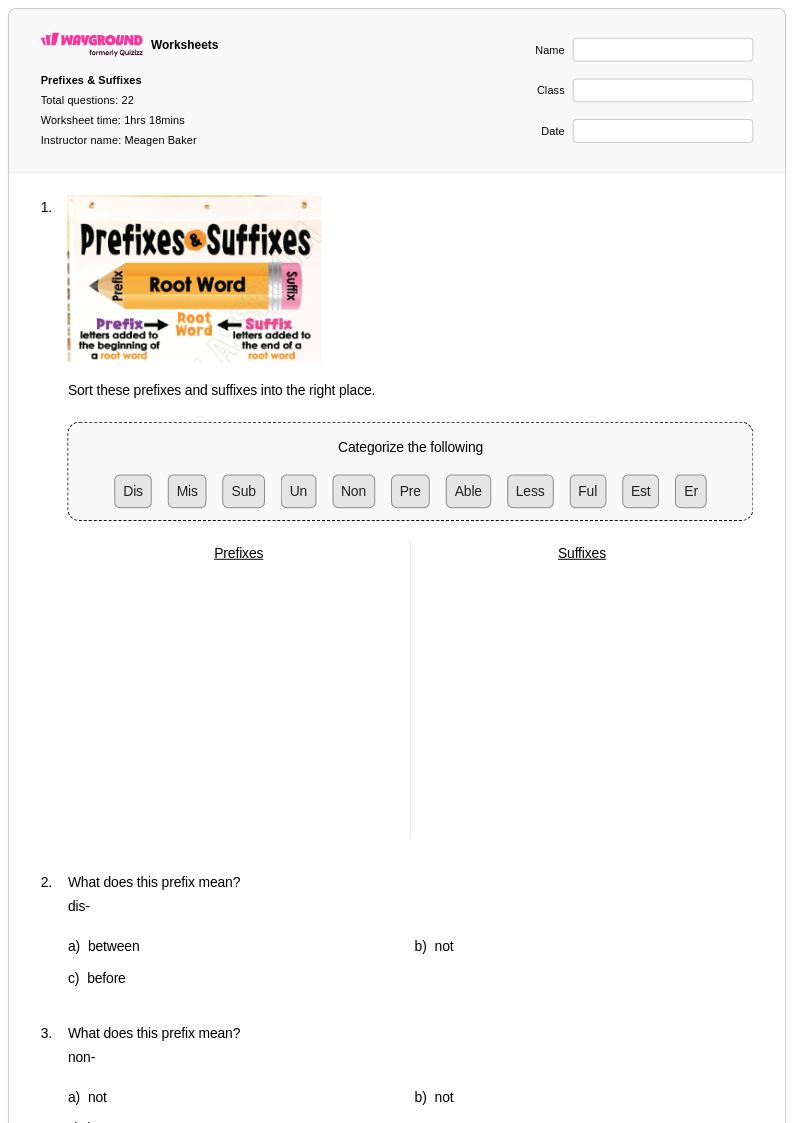
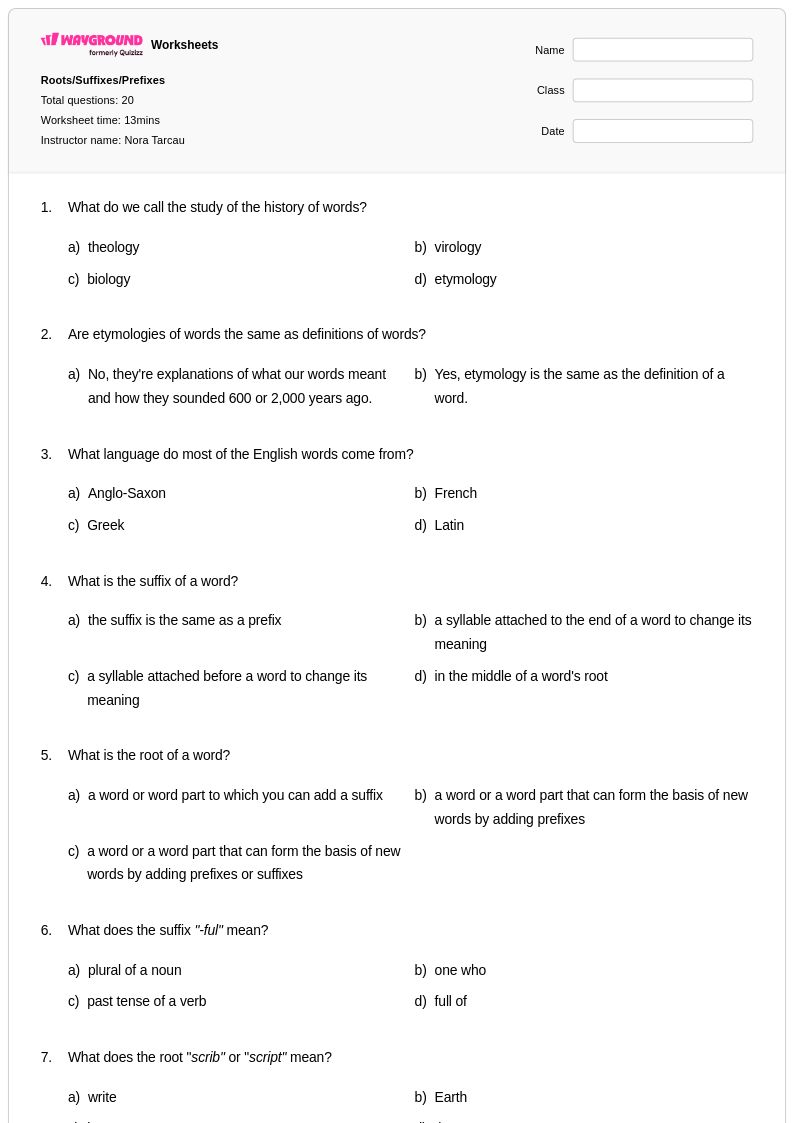
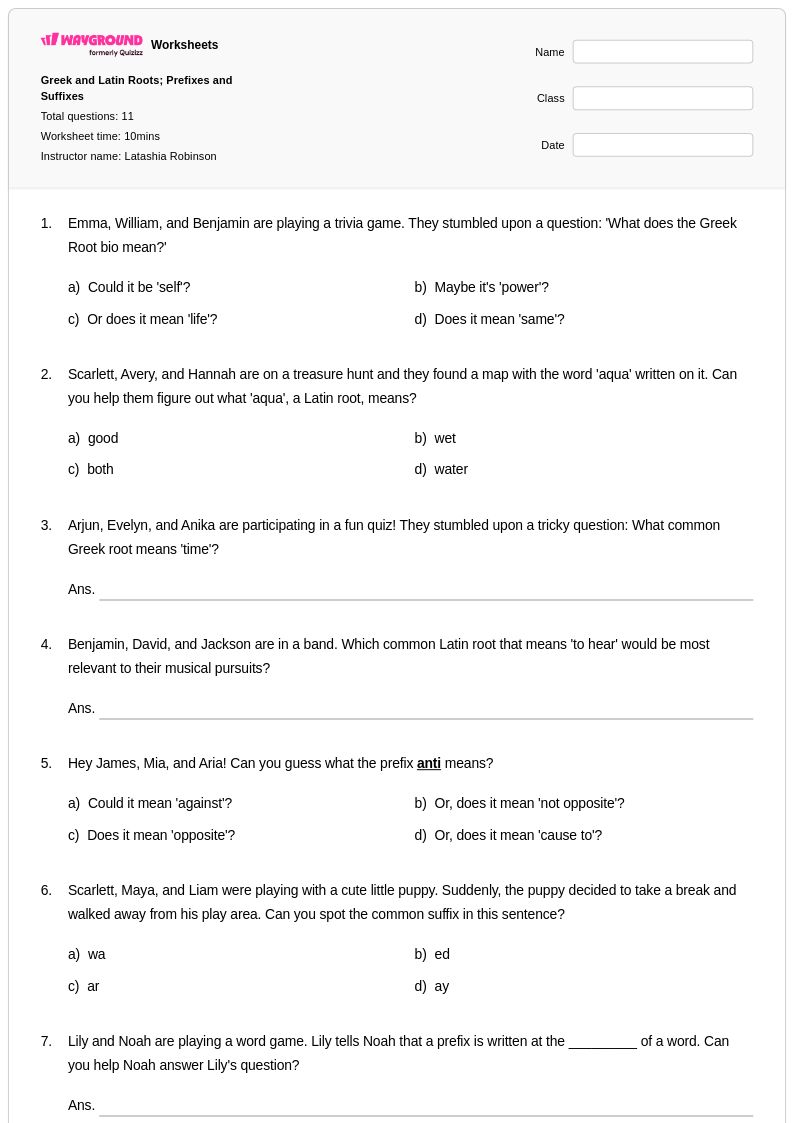
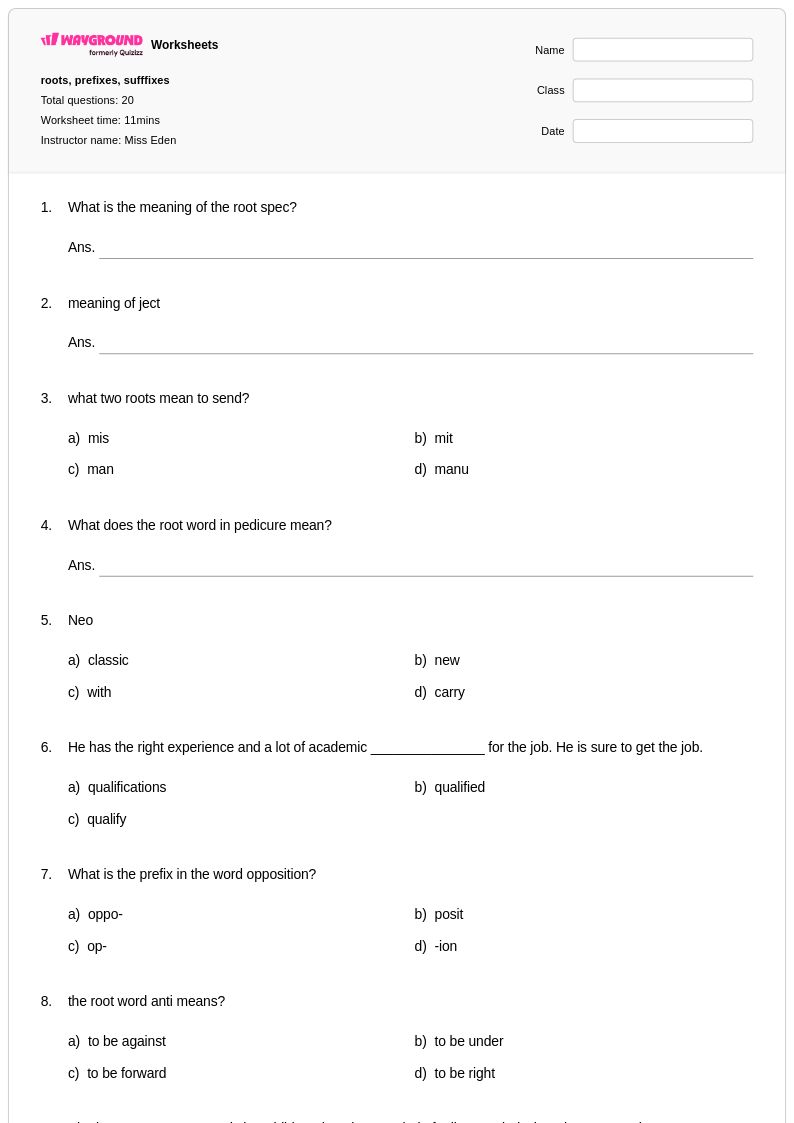
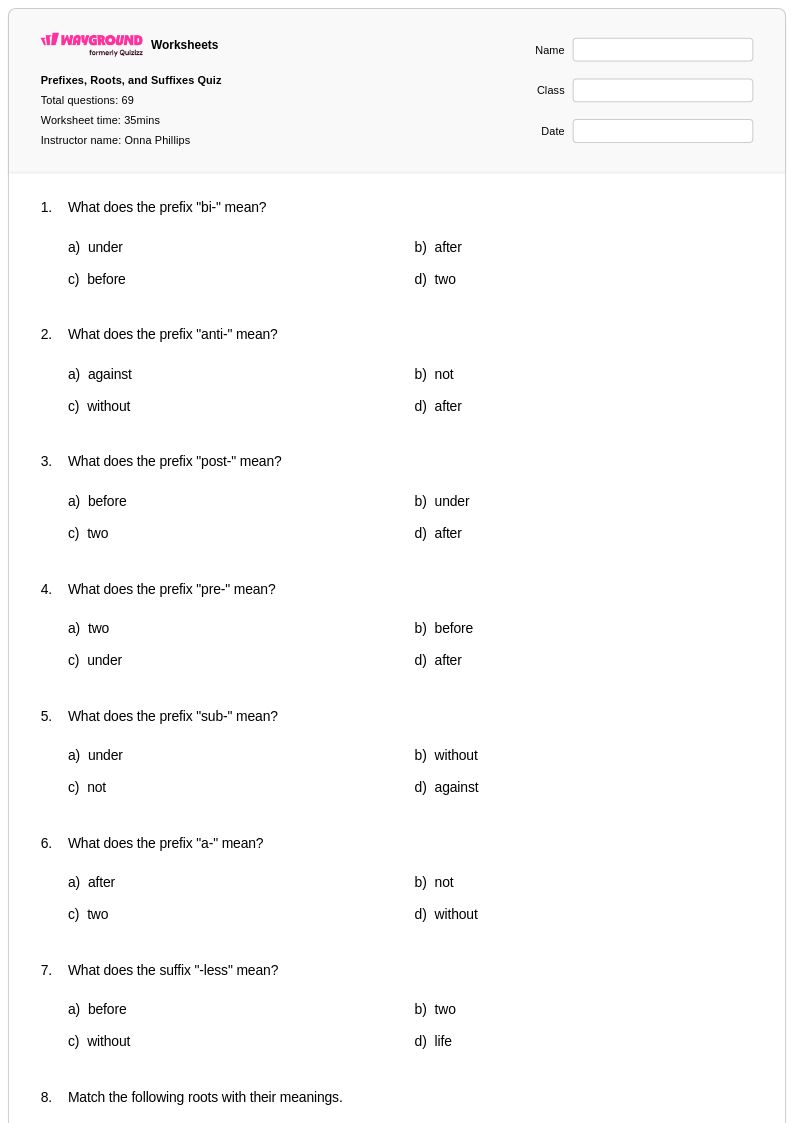
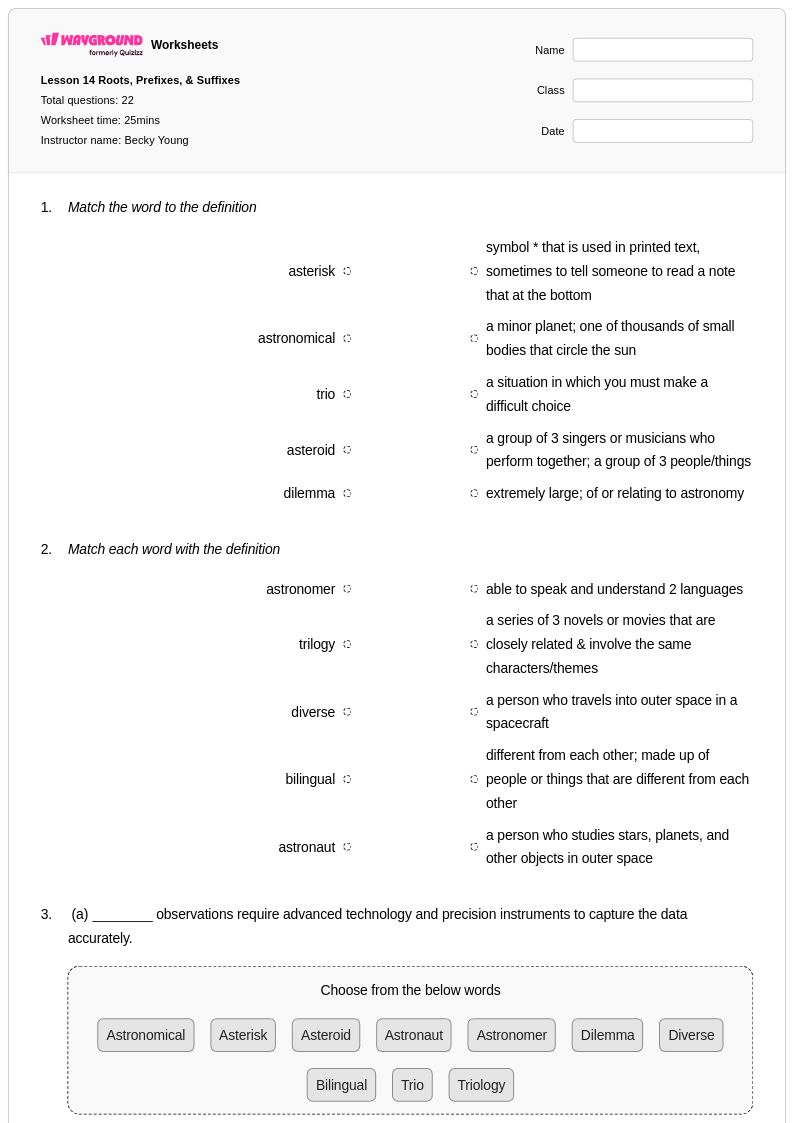
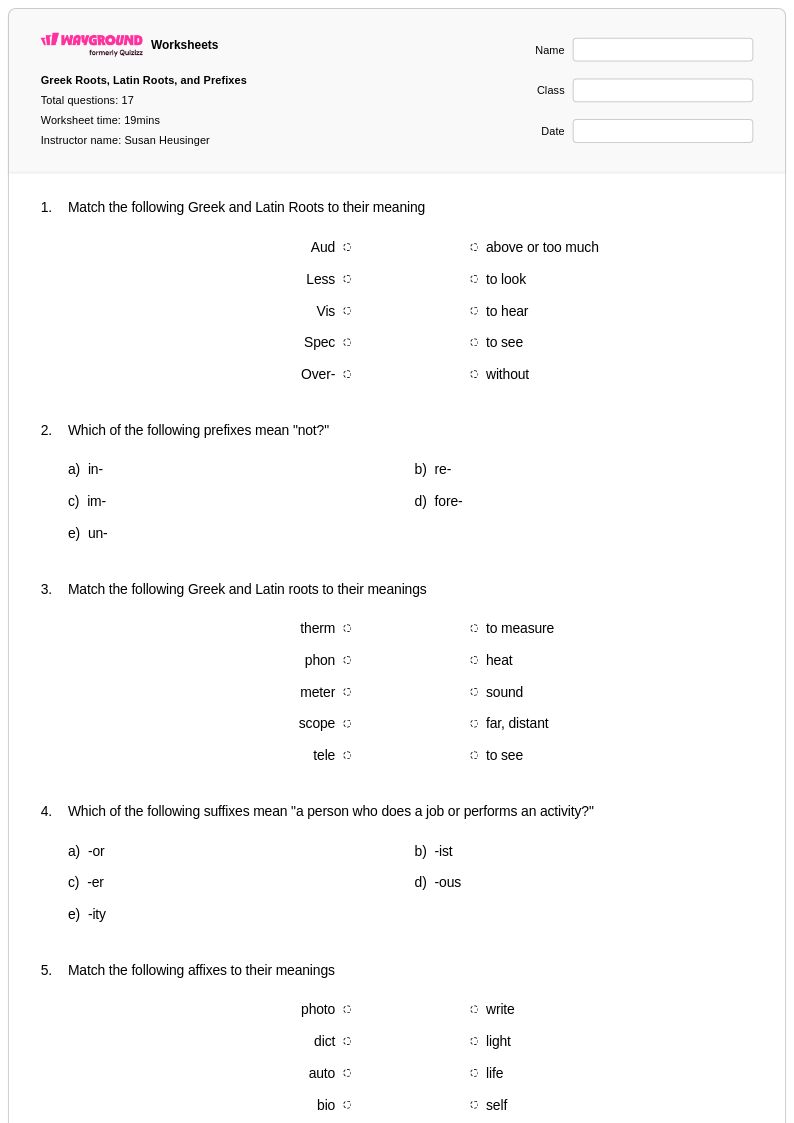
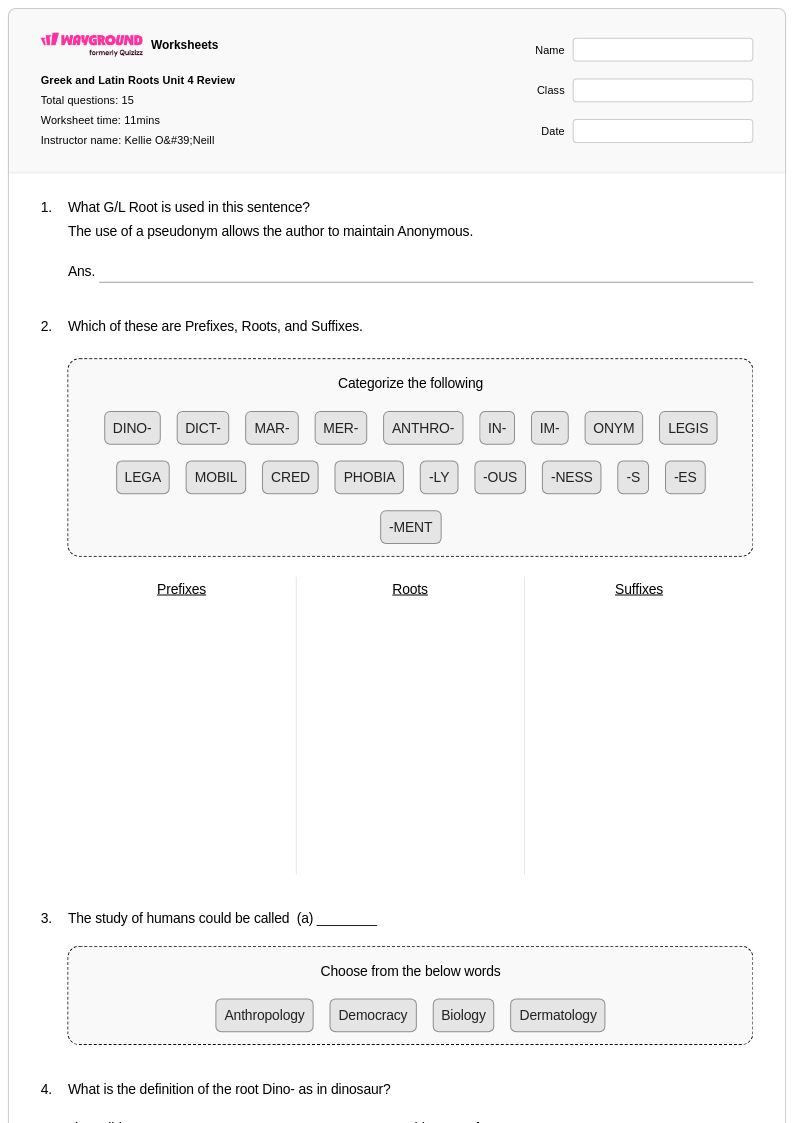
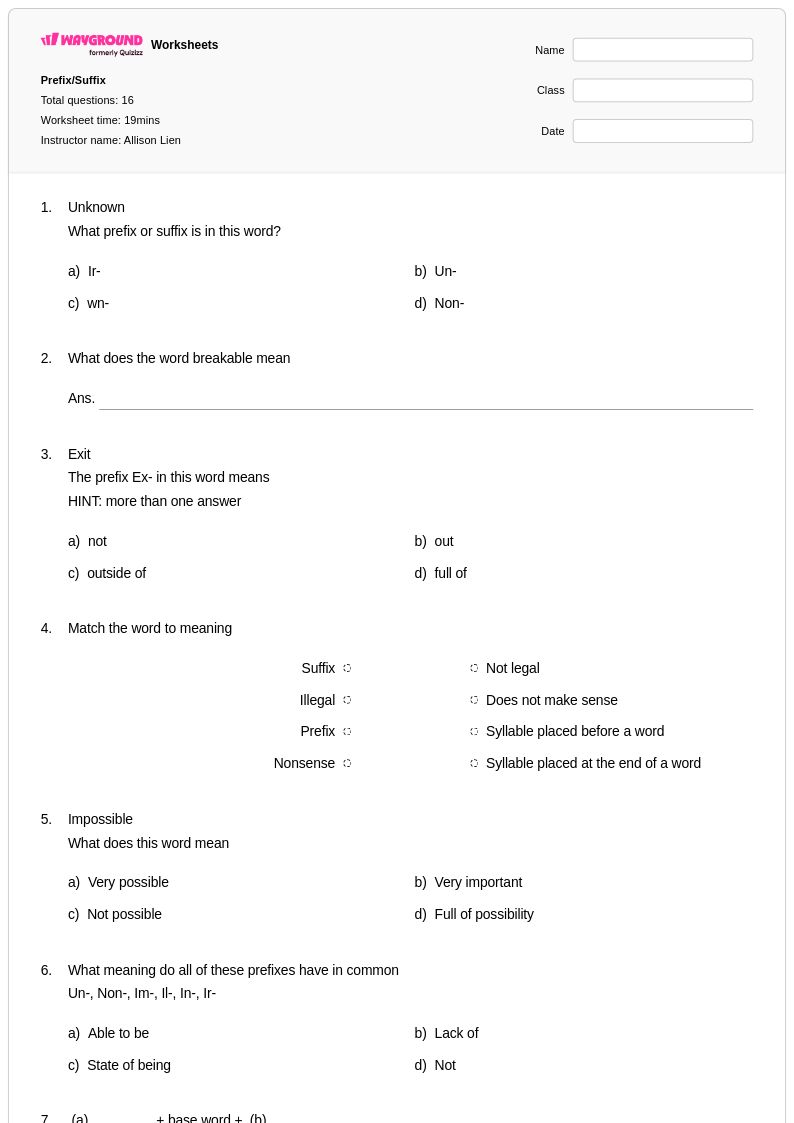
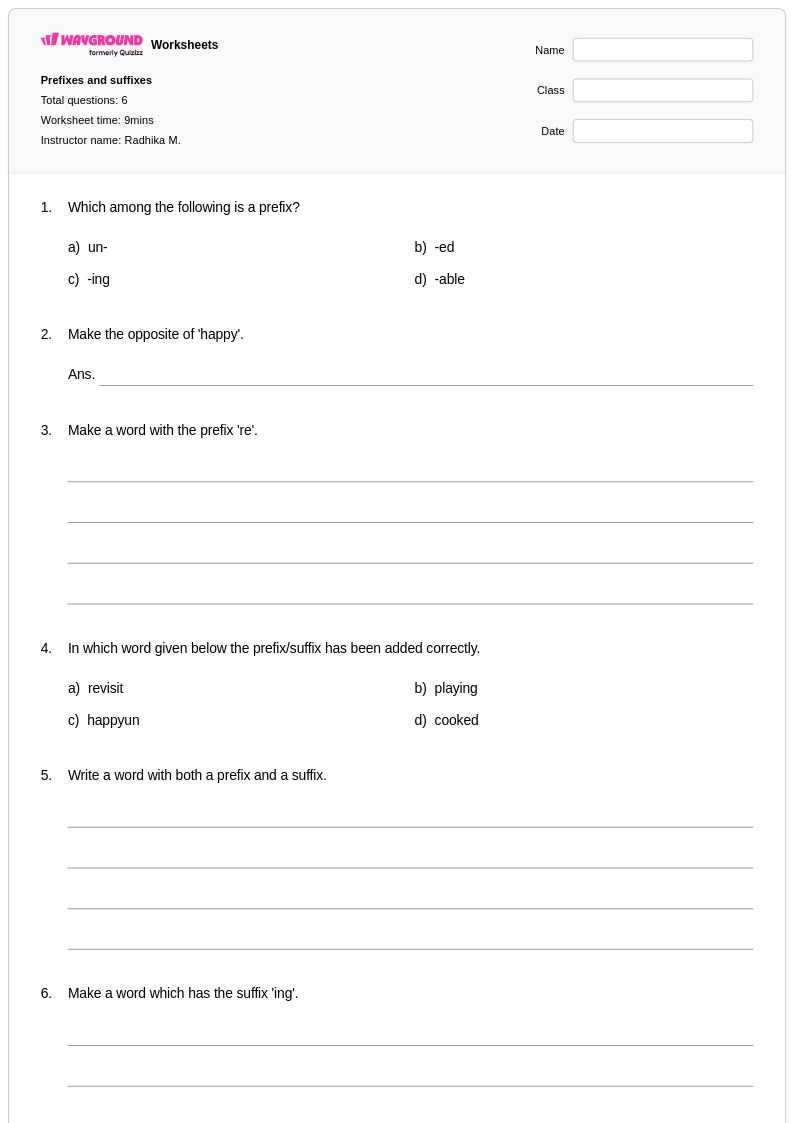
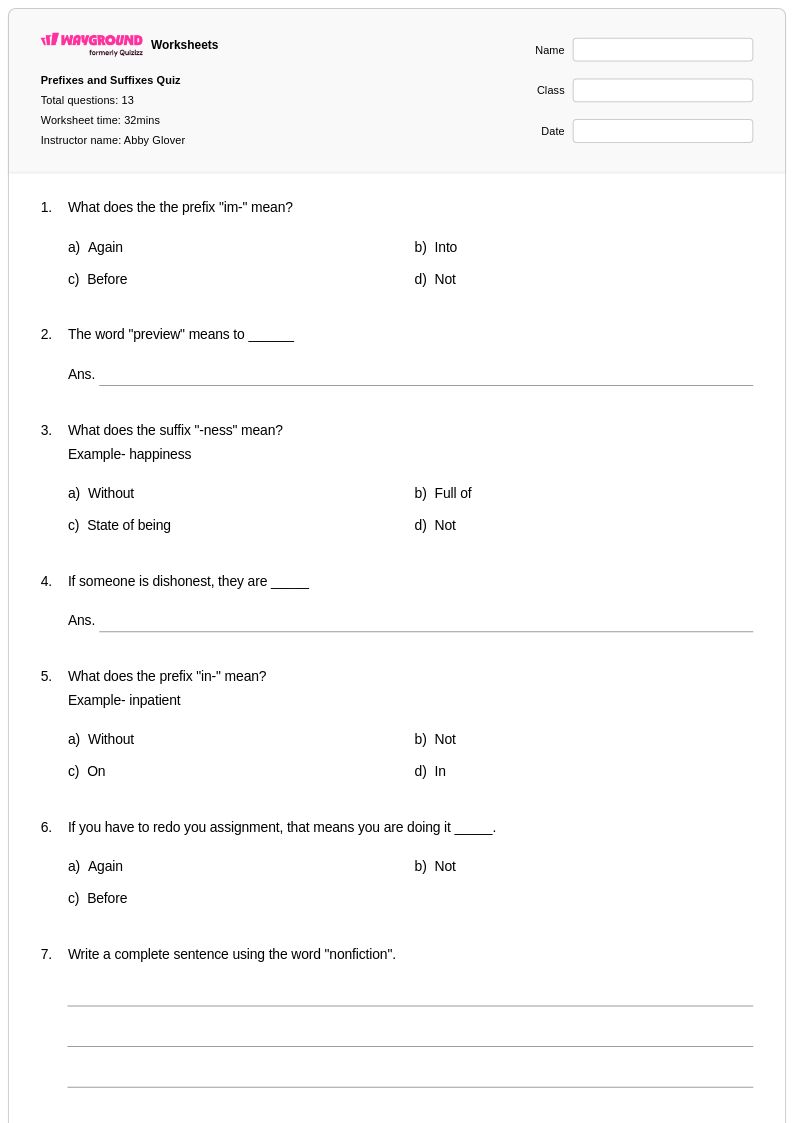
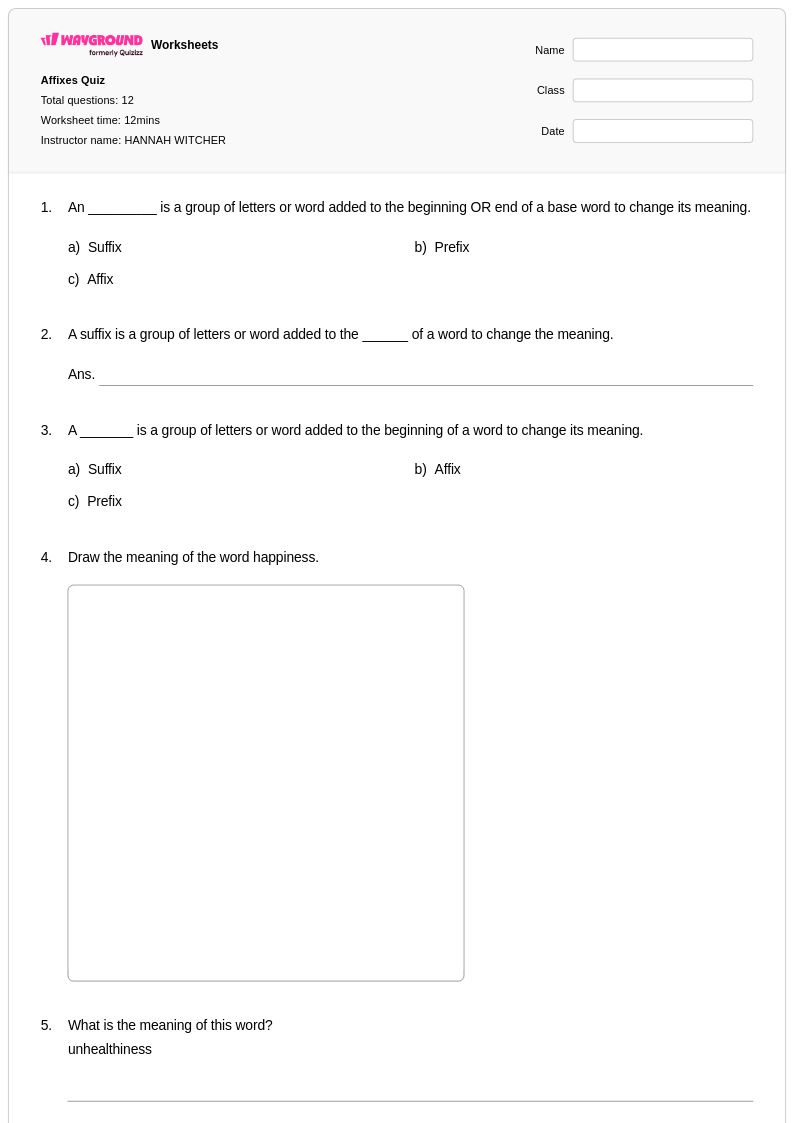
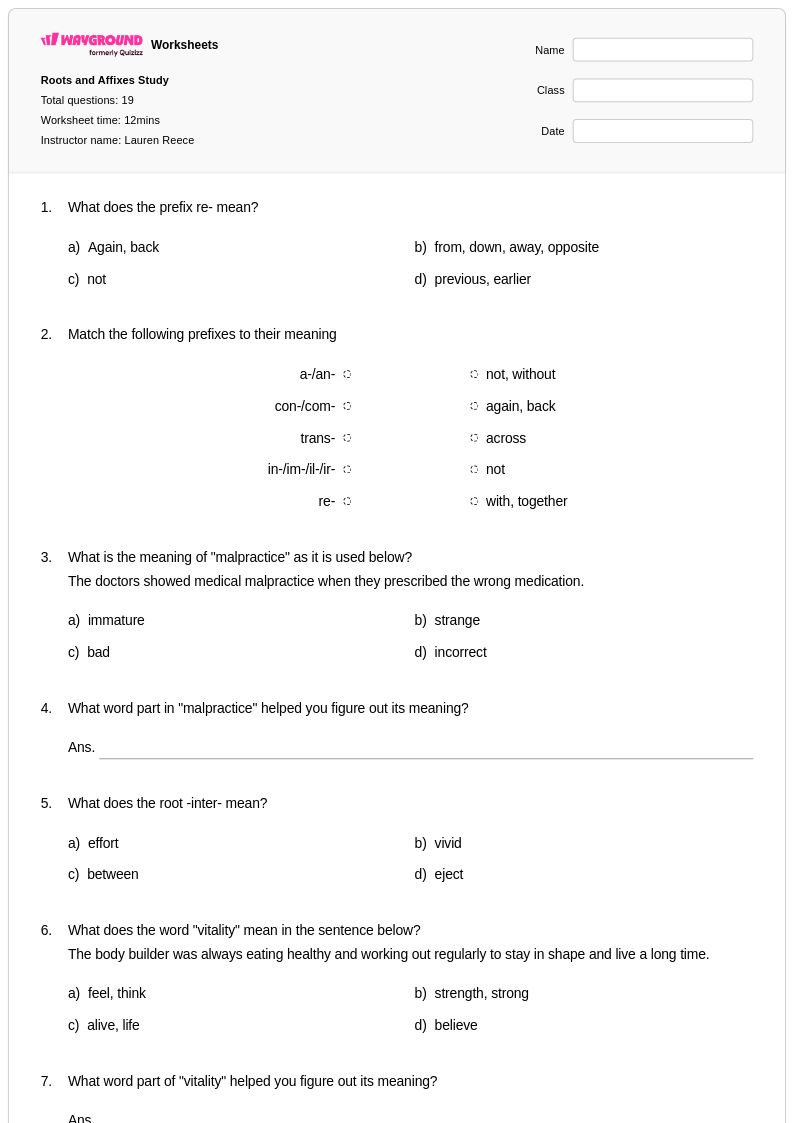
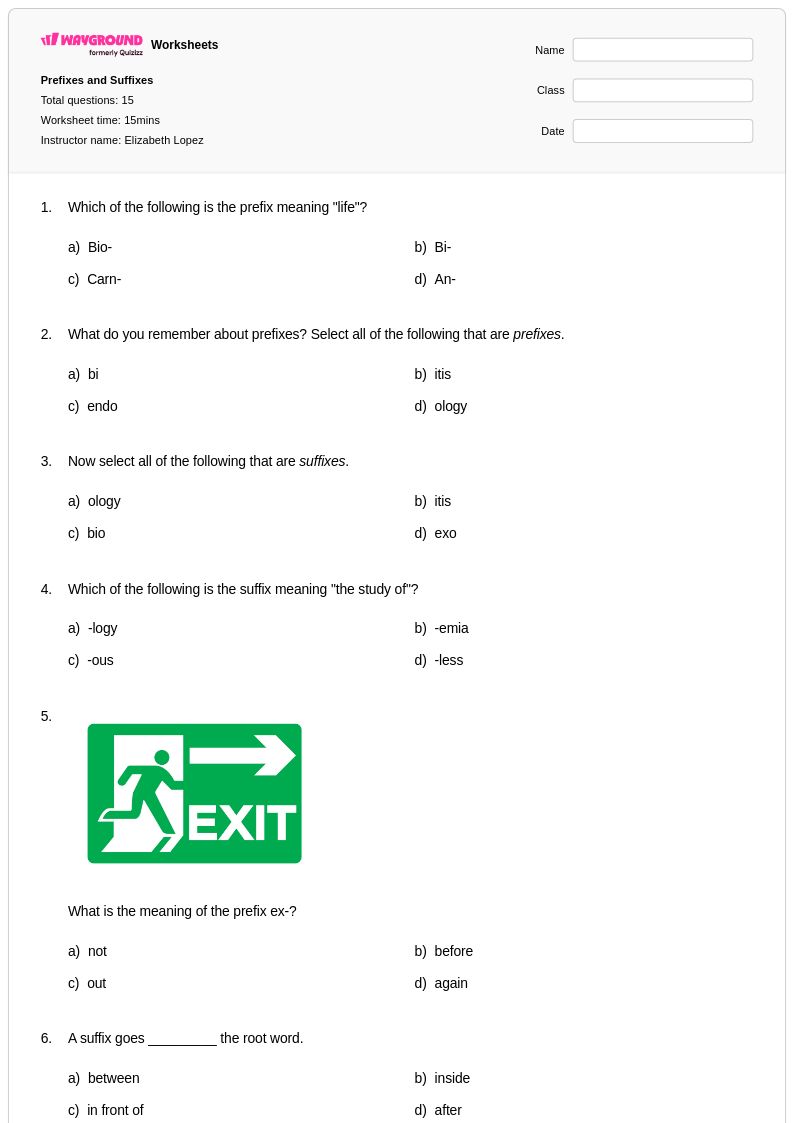
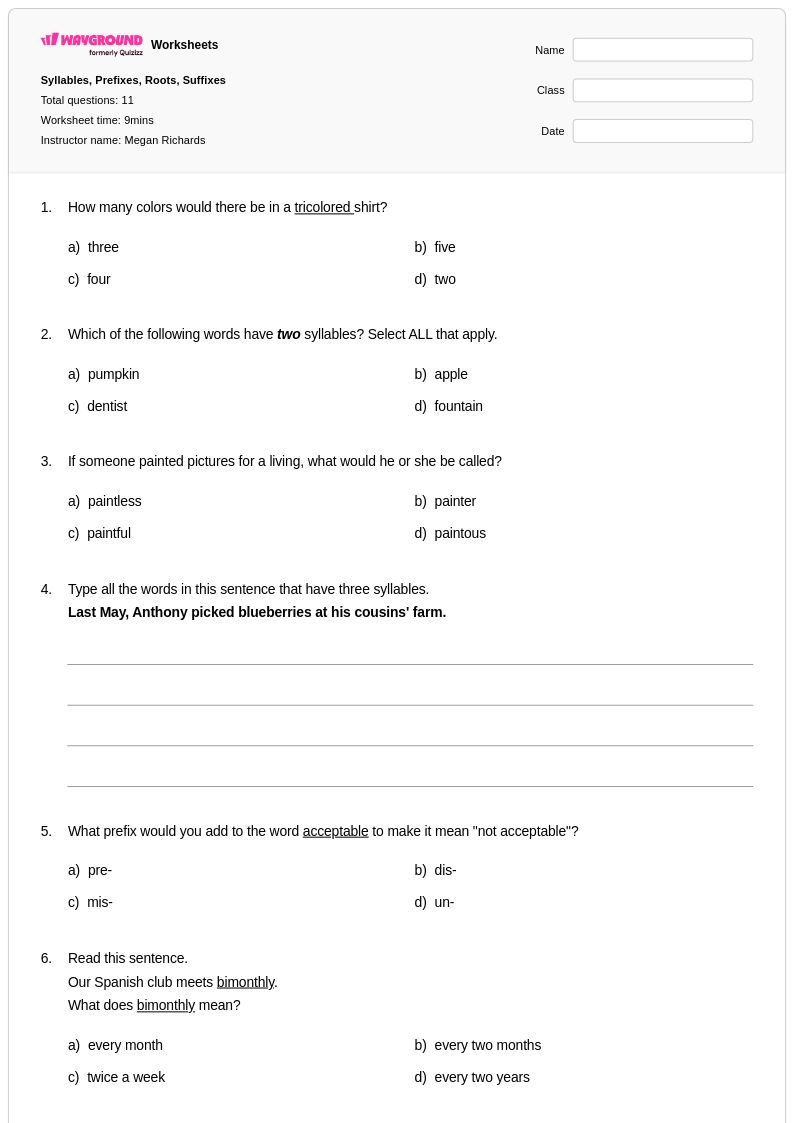
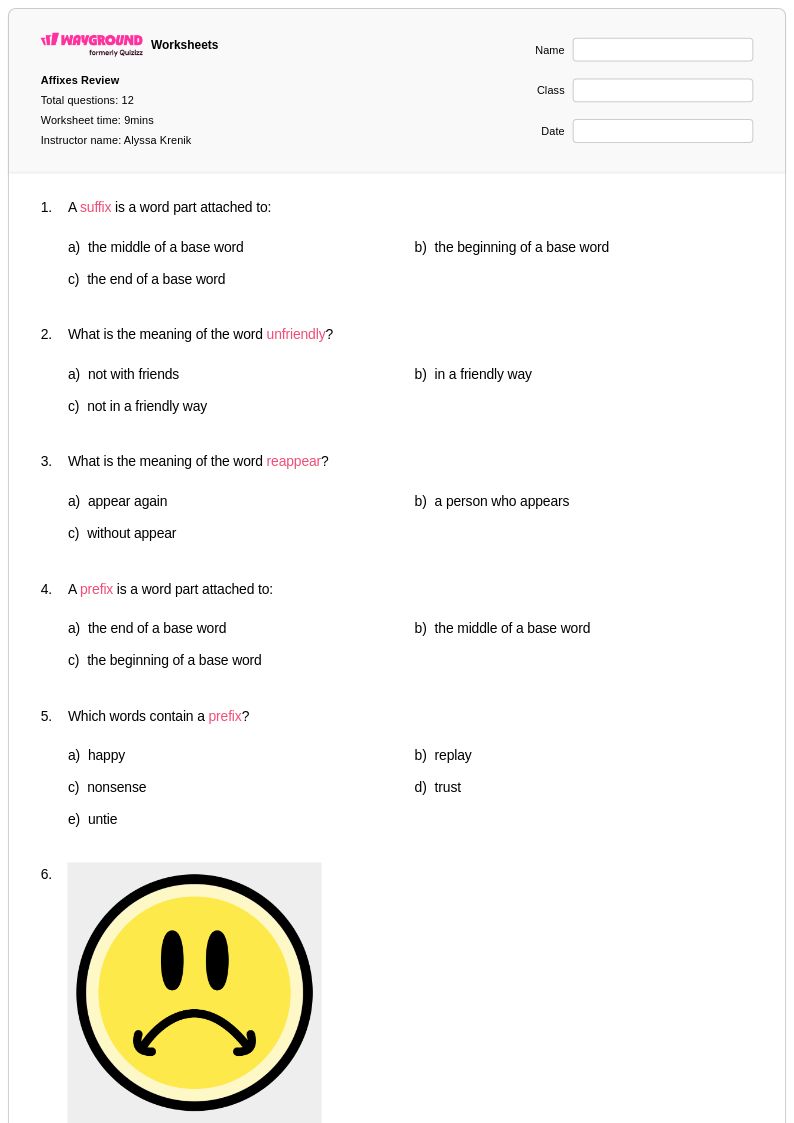
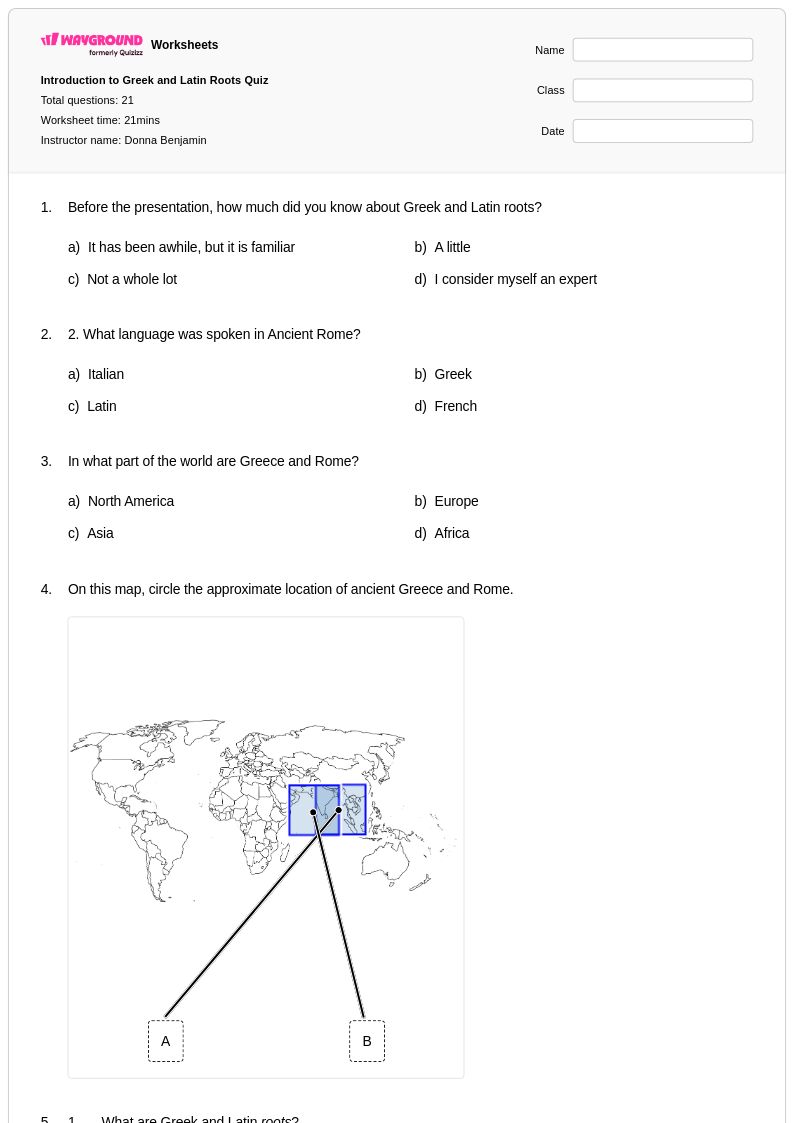
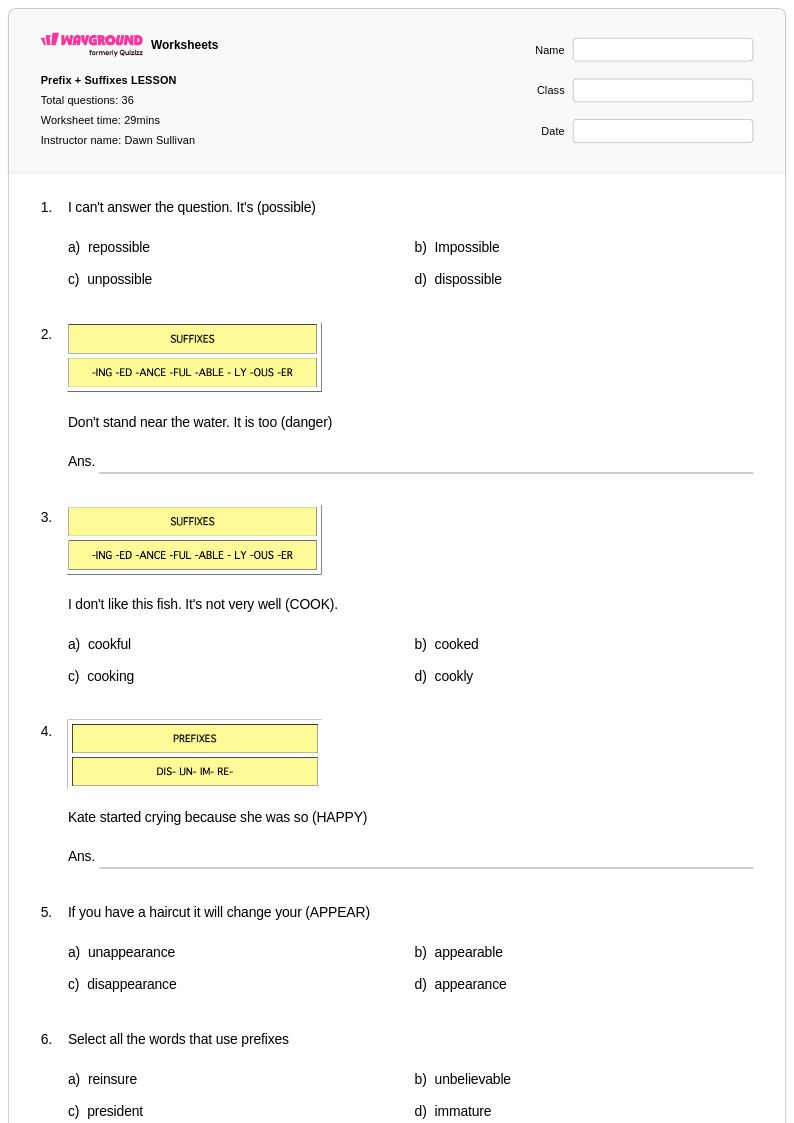
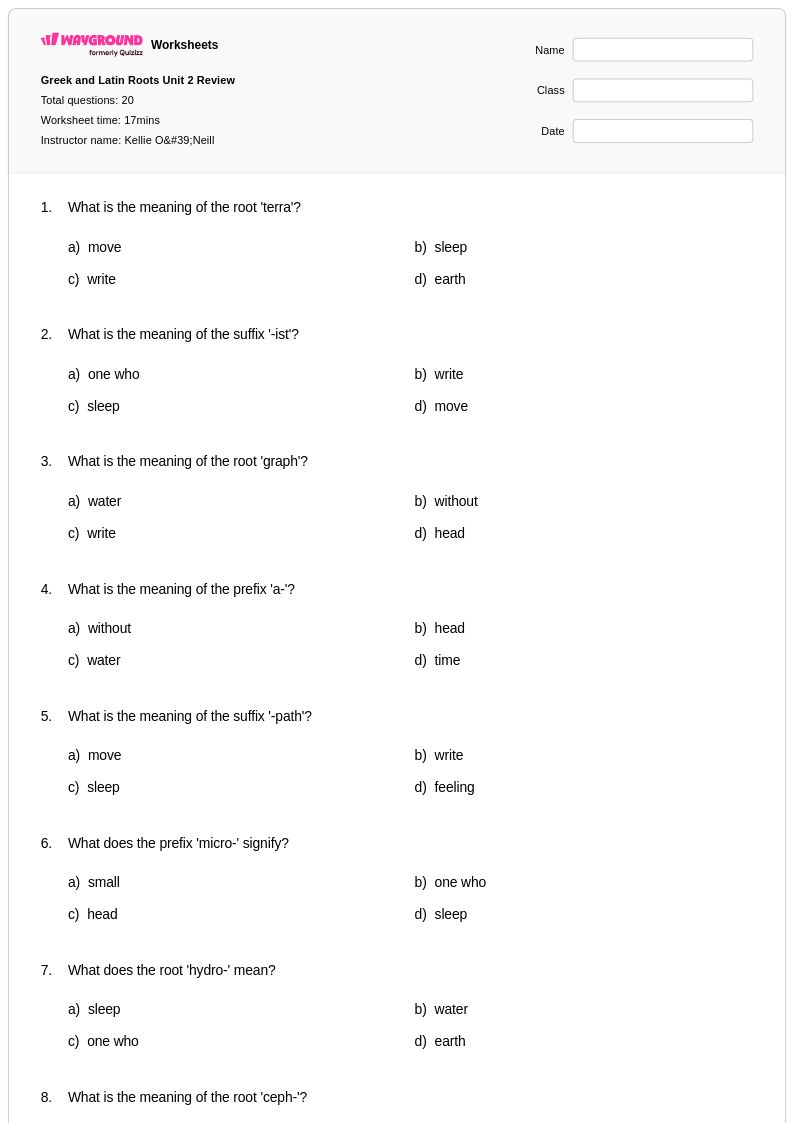
Determining meaning using roots, prefixes, and suffixes worksheets available through Wayground (formerly Quizizz) provide comprehensive practice in word analysis and vocabulary development. These expertly designed worksheets help students master the fundamental skill of breaking down unfamiliar words into their component parts to determine meaning, strengthening their reading comprehension and expanding their vocabulary across all academic subjects. Each worksheet includes carefully structured practice problems that guide students through identifying common Latin and Greek roots, recognizing prefix patterns, and understanding how suffixes change word meaning and function. Teachers can access complete answer keys and printable pdf versions to streamline classroom implementation, while the free resources offer varied difficulty levels to accommodate different learning needs and provide systematic skill reinforcement.
Wayground (formerly Quizizz) supports educators with millions of teacher-created worksheets focused on root, prefix, and suffix instruction, featuring robust search and filtering capabilities that allow teachers to quickly locate materials aligned with specific learning standards and objectives. The platform's differentiation tools enable instructors to customize worksheets for individual student needs, whether for remediation of struggling learners or enrichment of advanced students ready for more complex morphological analysis. Available in both printable and digital formats including downloadable pdfs, these resources streamline lesson planning while providing flexible options for in-class practice, homework assignments, and assessment preparation. Teachers can efficiently track student progress in morphological awareness and adjust instruction accordingly, ensuring all students develop the critical word analysis skills necessary for academic success across content areas.
FAQs
How do I teach students to use roots, prefixes, and suffixes to determine word meaning?
Start by explicitly teaching the most common Latin and Greek roots alongside high-frequency prefixes and suffixes, since these building blocks appear across multiple subject areas. Model the process of breaking an unfamiliar word into its component parts before asking students to determine meaning independently. Gradual release works well here: demonstrate with a think-aloud, then practice with guided examples, then have students apply the strategy to new words in context.
What exercises help students practice identifying roots, prefixes, and suffixes?
Effective practice includes word dissection activities where students physically separate a word into its morphemes and label each part, as well as definition-building exercises where they combine known parts to infer meaning before checking a dictionary. Matching tasks that pair prefixes or roots with their meanings build automaticity, while sentence-level exercises require students to apply morphological knowledge in context rather than in isolation.
What mistakes do students commonly make when using roots, prefixes, and suffixes to figure out word meaning?
A frequent error is over-relying on a single morpheme while ignoring the others, such as recognizing the prefix but misreading the root, which produces an incorrect or nonsensical definition. Students also frequently confuse roots that look similar, such as 'aud' (hear) and 'auto' (self), or misapply a rule because they have not yet learned that some roots shift spelling across derived words. Another common misconception is assuming the prefix always negates the word, when prefixes like 'in-' can mean 'into' rather than 'not' depending on the root.
How can I differentiate root, prefix, and suffix instruction for struggling readers?
For students who struggle, reduce the number of morphemes introduced at one time and anchor each new root or prefix to a high-frequency anchor word they already know. Wayground supports individual accommodations such as Read Aloud, which reads questions aloud for students with decoding difficulties, and reduced answer choices, which lowers cognitive load during practice. These settings can be applied to individual students without disrupting the rest of the class, making differentiation manageable within a single assignment.
How do I use Wayground's roots, prefixes, and suffixes worksheets in my classroom?
Wayground's worksheets on this topic are available as printable PDFs for traditional classroom use and in digital formats for technology-integrated environments, giving teachers flexibility for in-class practice, homework, or assessment preparation. Teachers can also host worksheets directly as a quiz on Wayground, enabling real-time student responses and streamlined grading. Each worksheet includes a complete answer key, so implementation requires minimal additional preparation time.
Why is morphological awareness important for reading comprehension across subjects?
Morphological awareness, the ability to recognize and use word parts to construct meaning, directly supports reading comprehension because academic vocabulary across science, social studies, and mathematics is heavily rooted in Latin and Greek morphemes. A student who recognizes that 'bio' means life and 'logy' means the study of can decode 'biology,' 'microbiology,' and 'biochemistry' without prior exposure to each word. Building this skill systematically reduces vocabulary gaps and improves students' ability to read independently in content-area texts.