Enhance students' understanding of word structure and formation with Wayground's comprehensive morphology worksheets, featuring engaging printables, practice problems, and answer keys to master prefixes, suffixes, and root words.
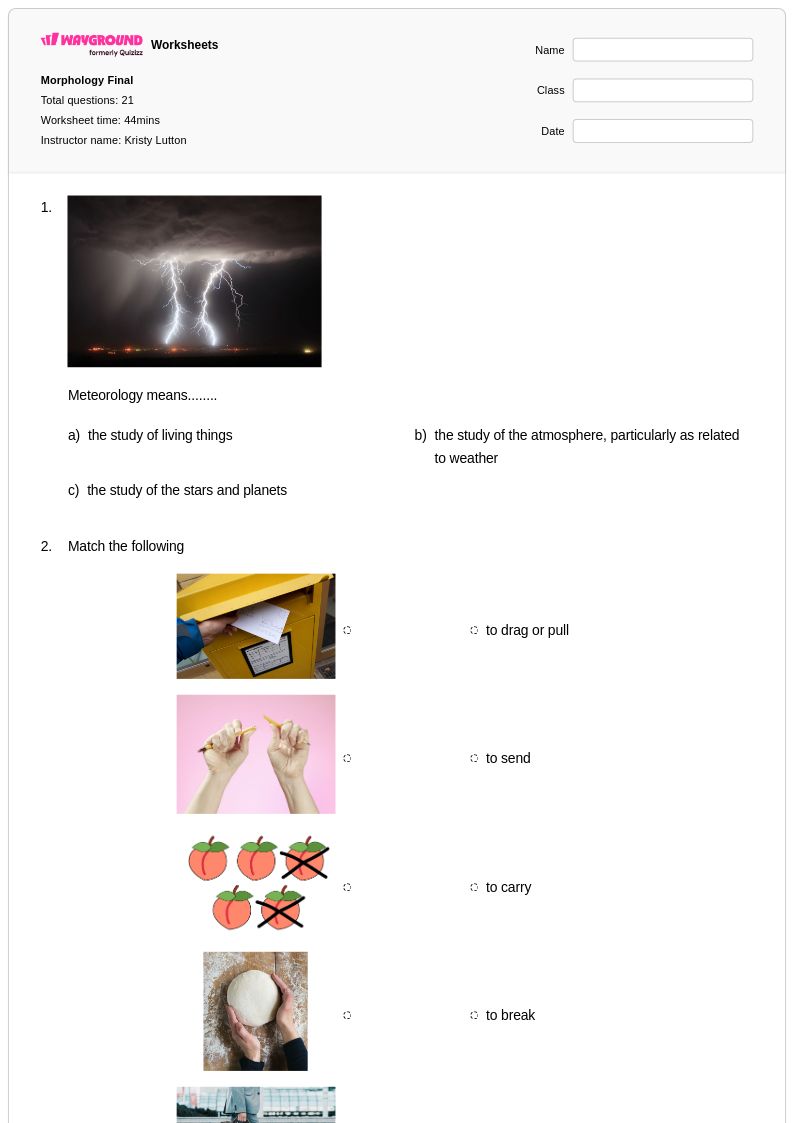
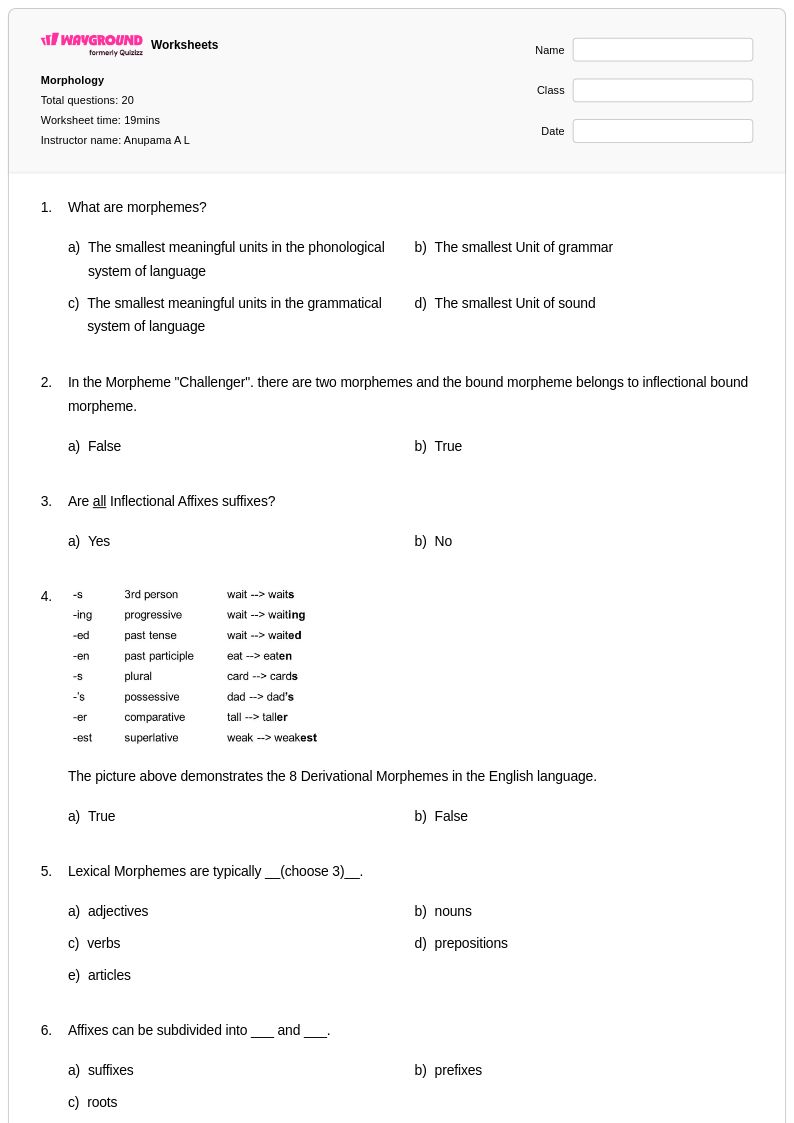
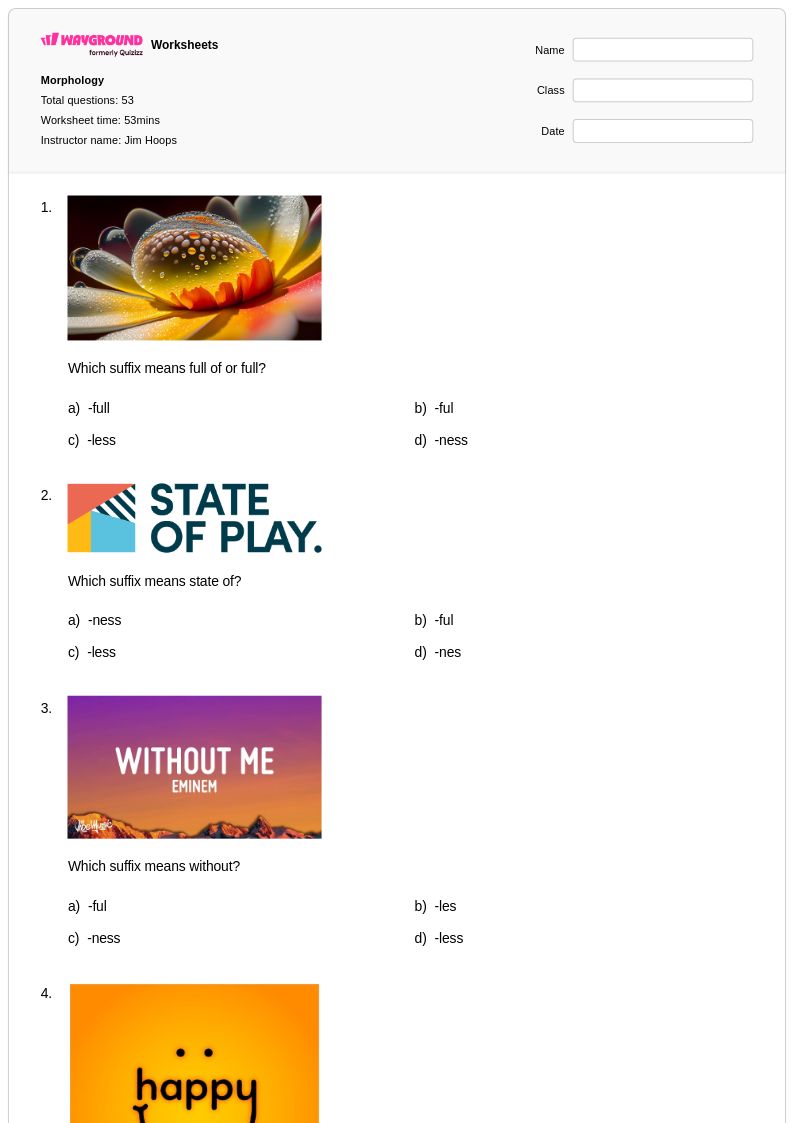
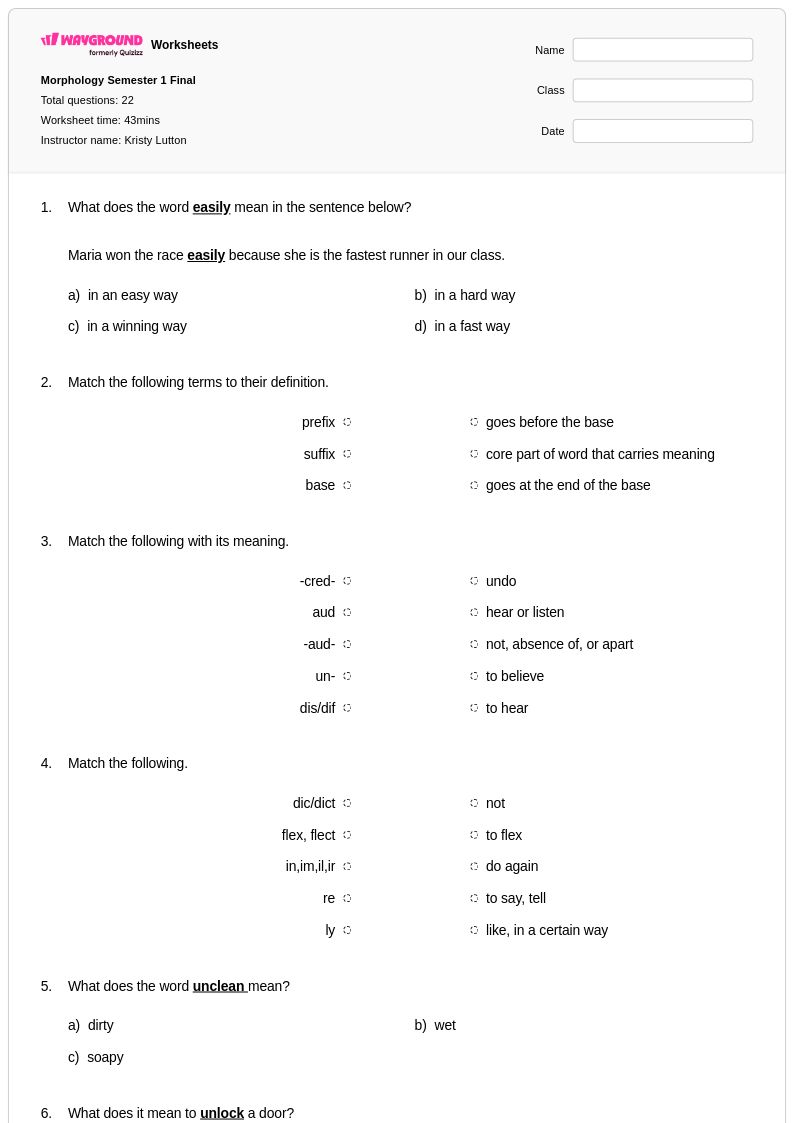
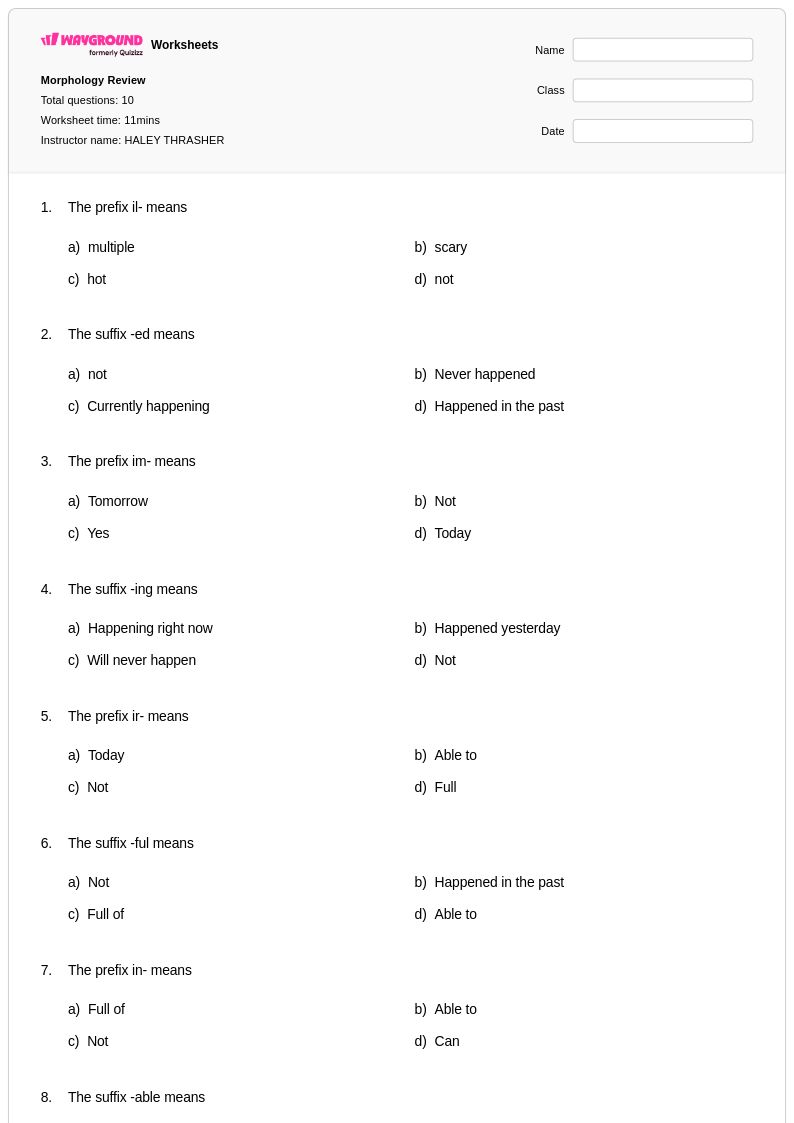
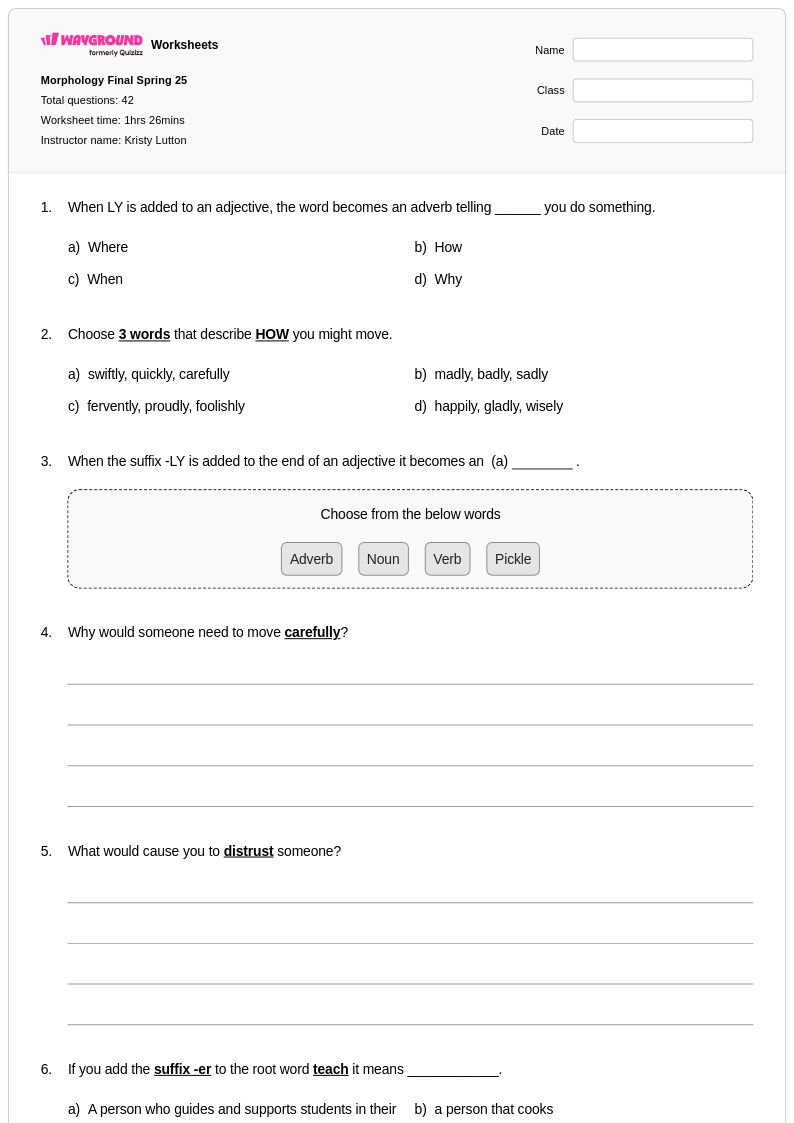
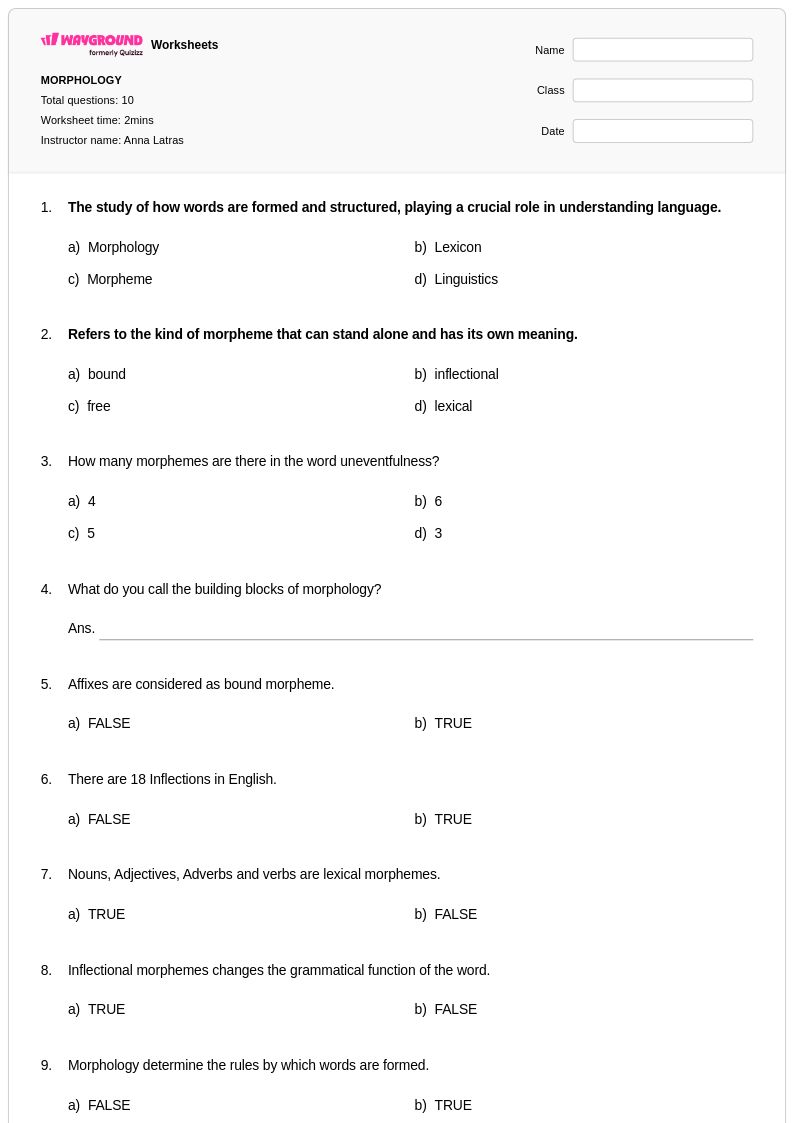
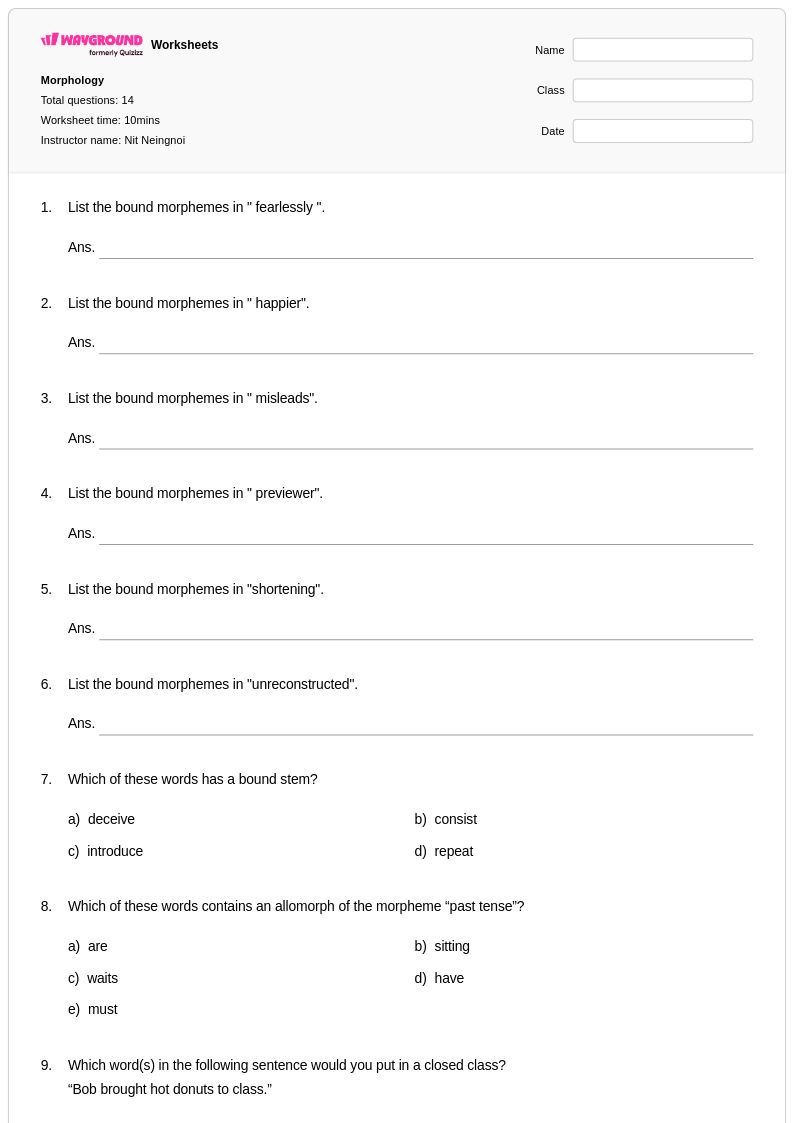
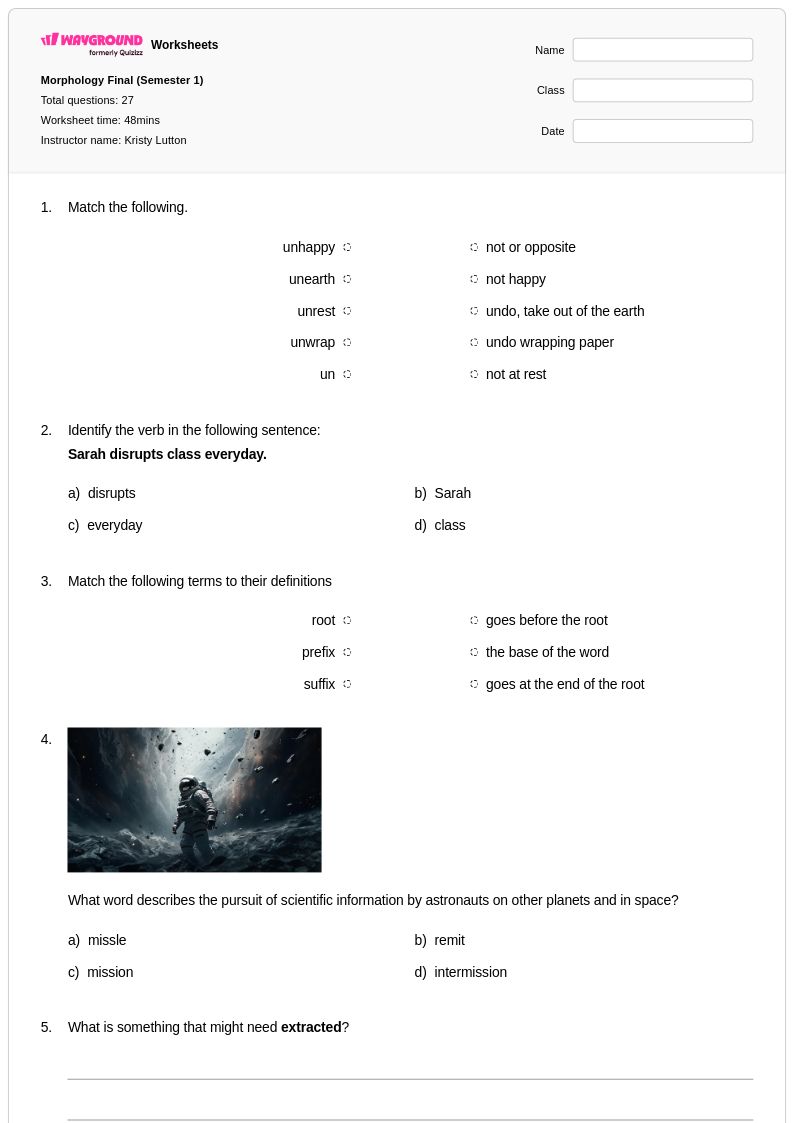
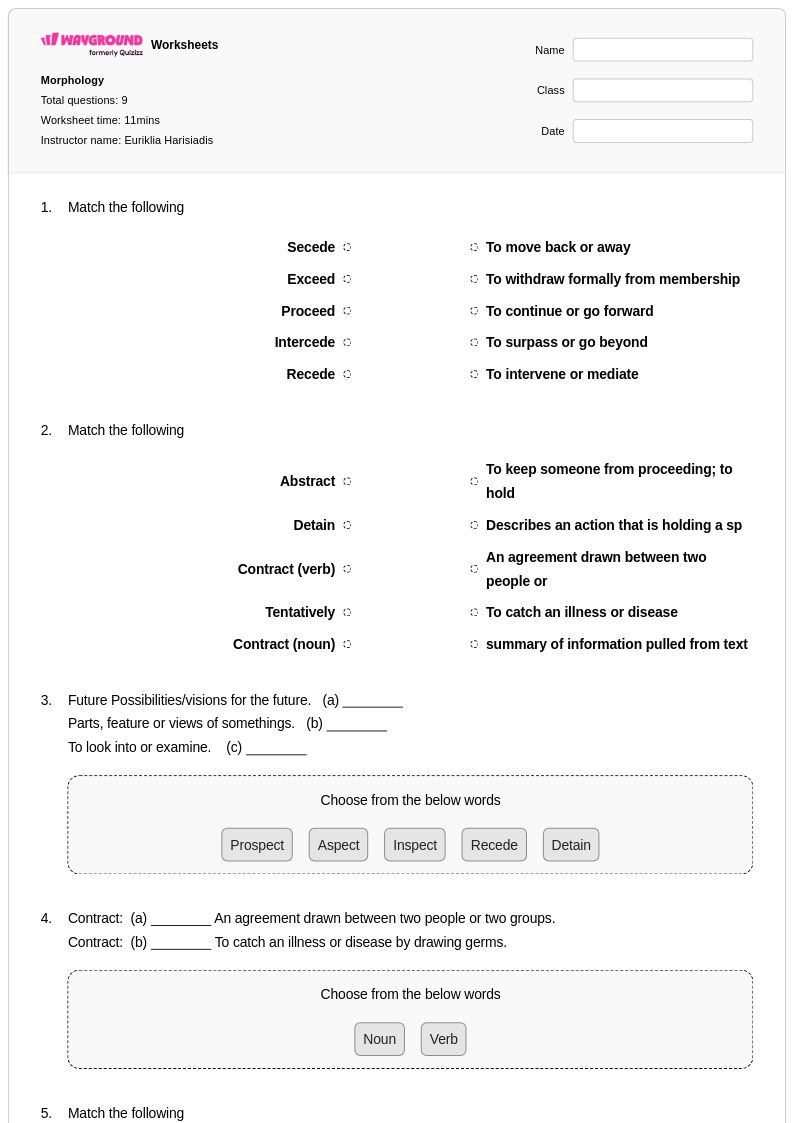
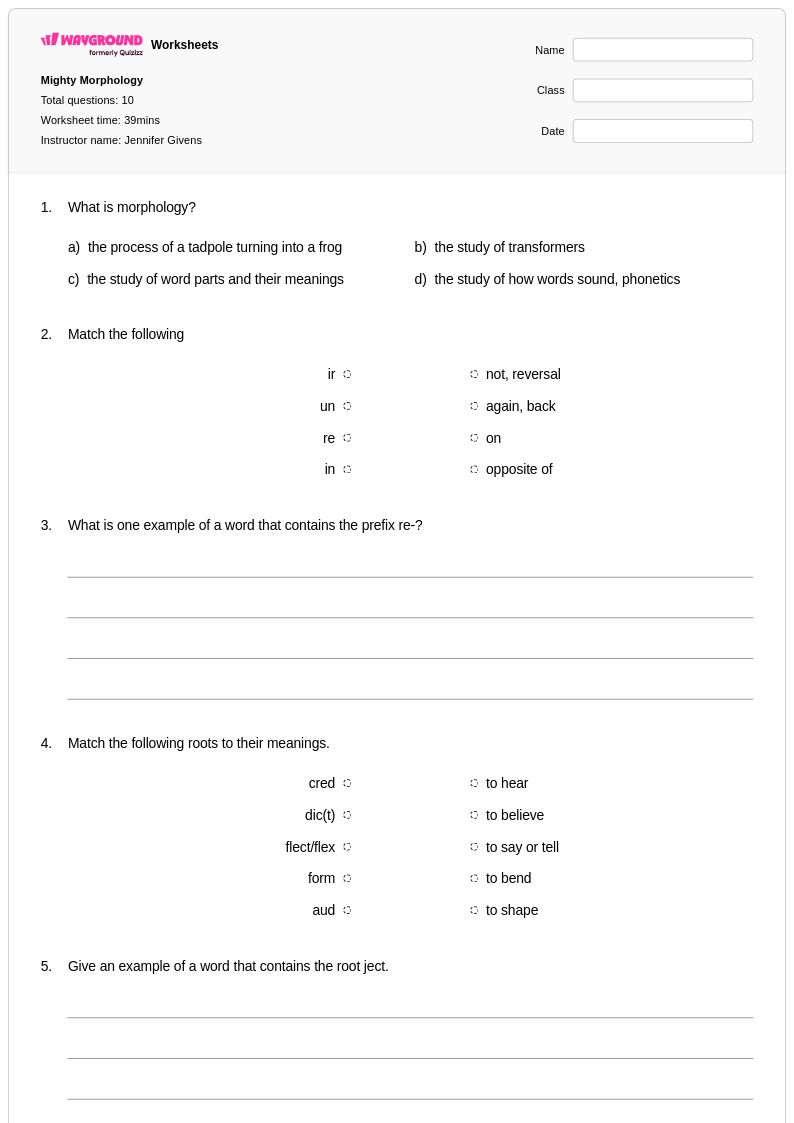
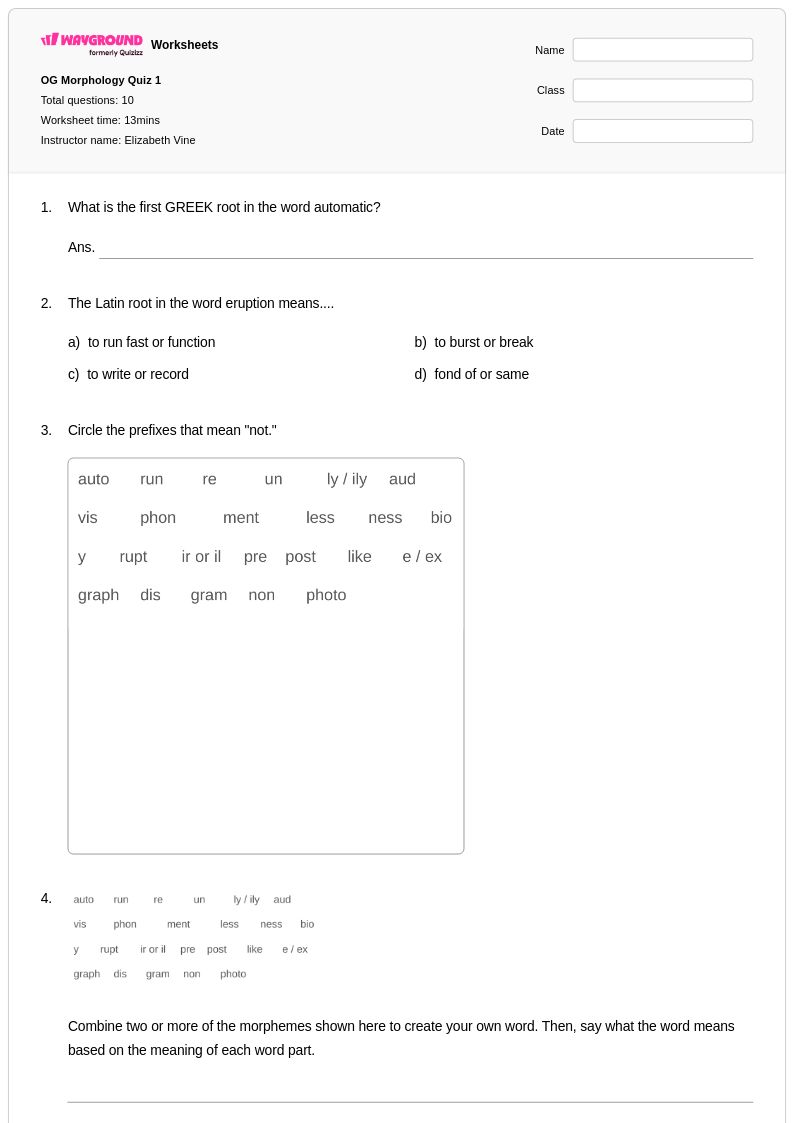
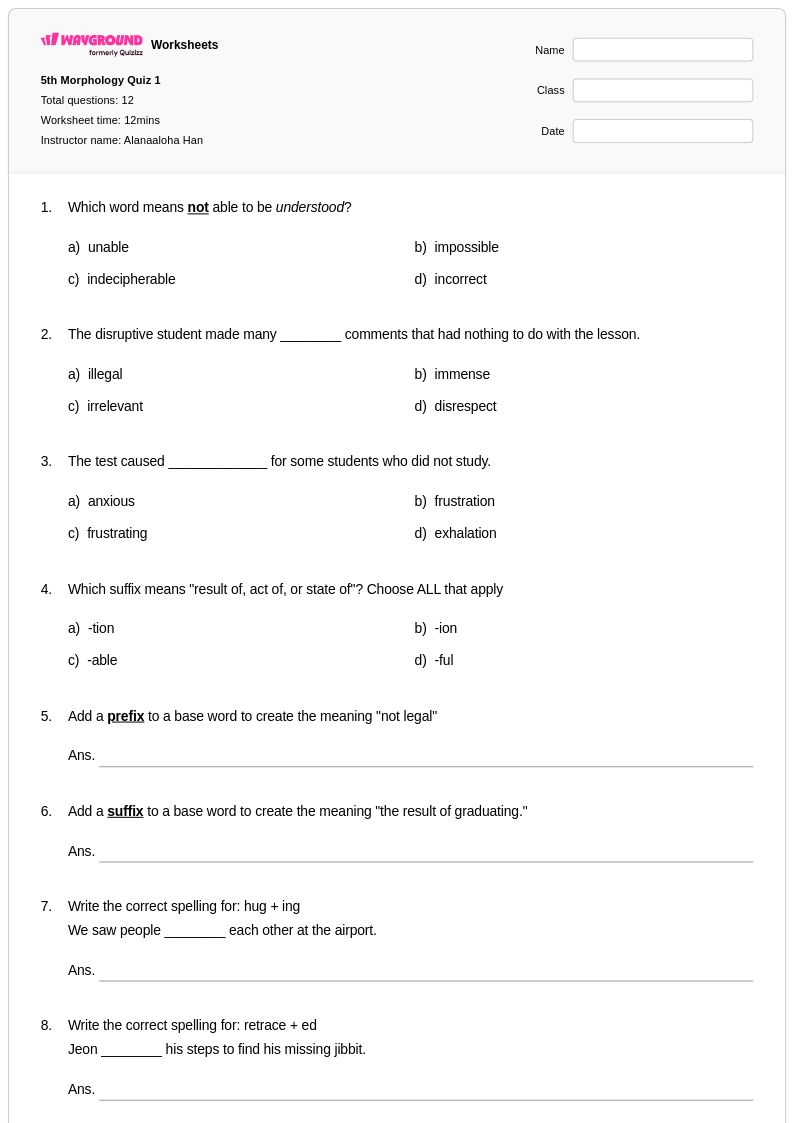
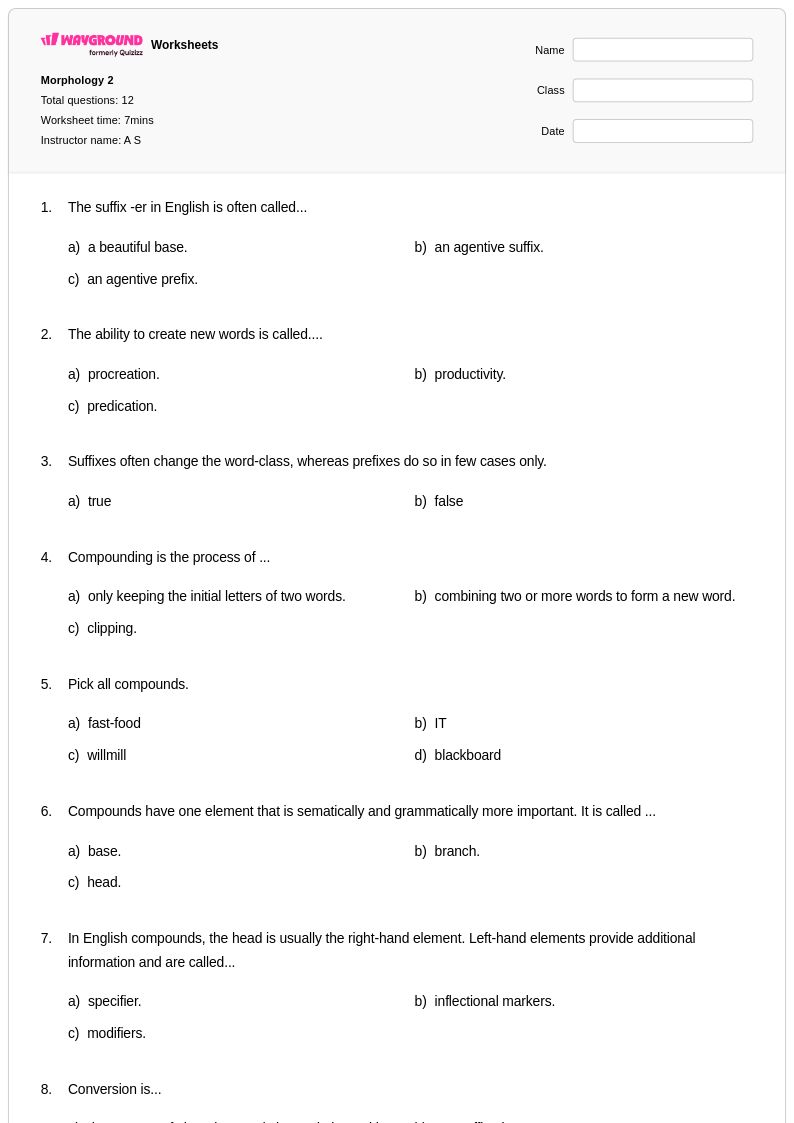
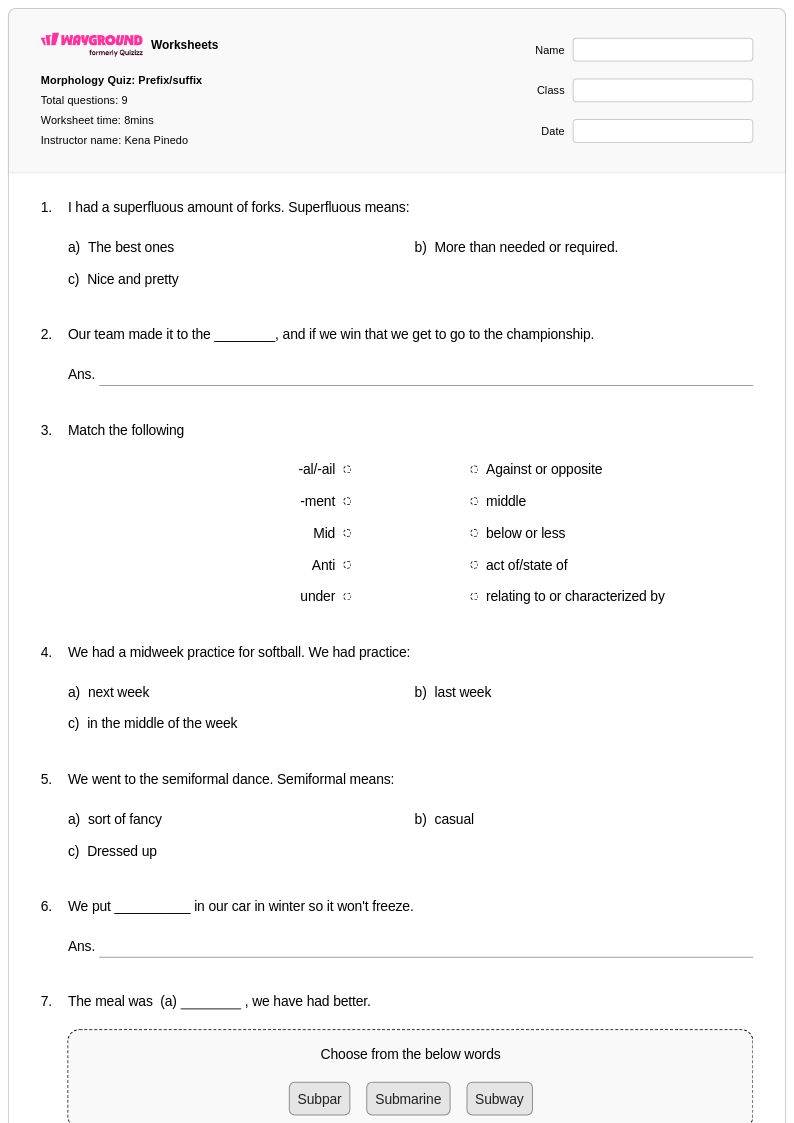
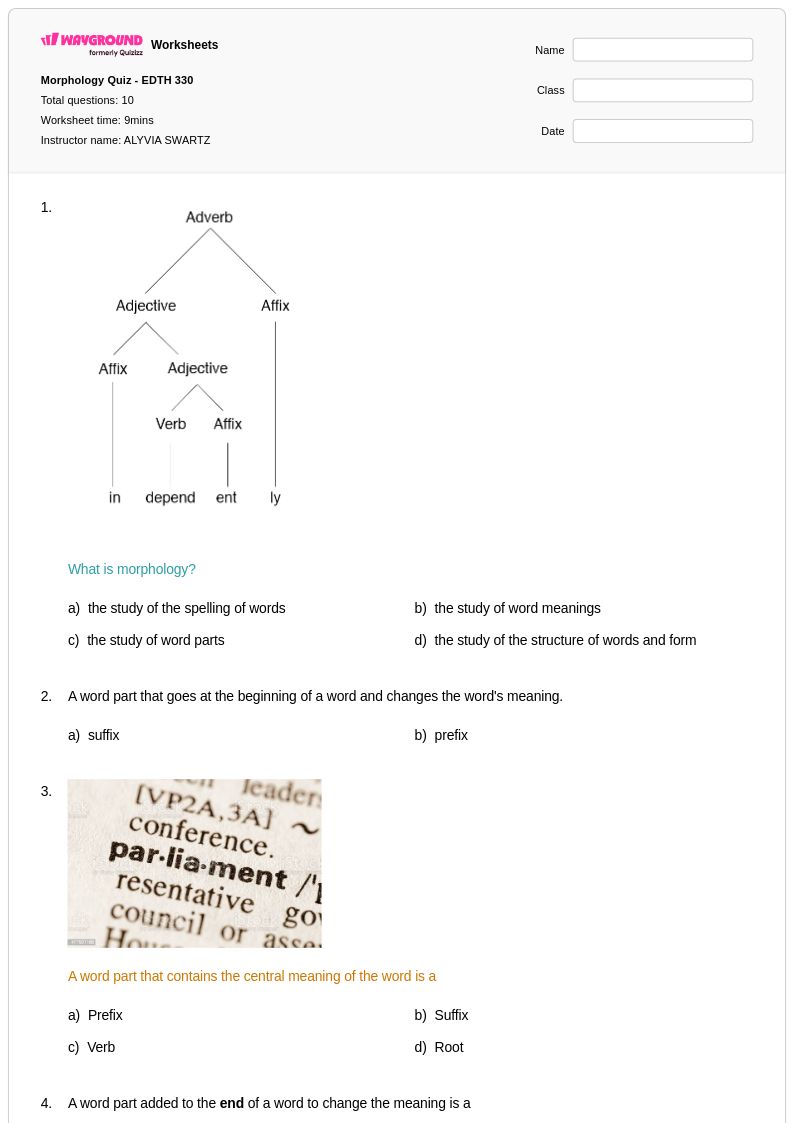
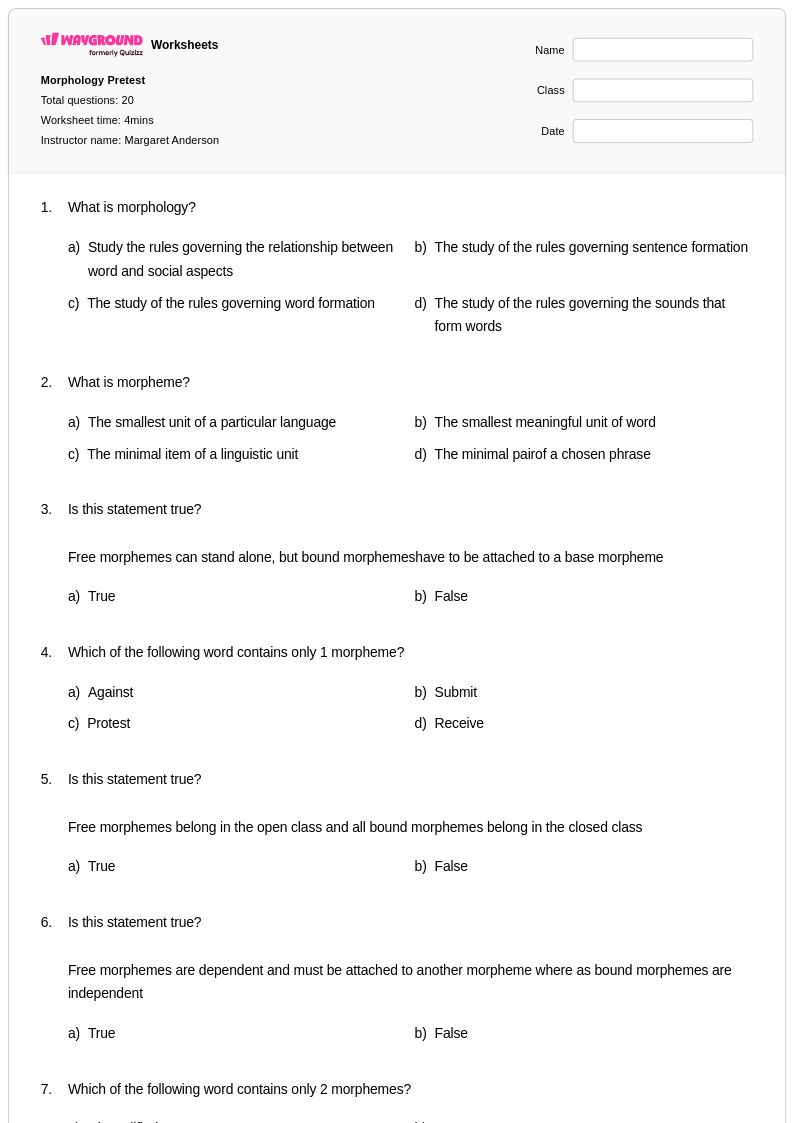
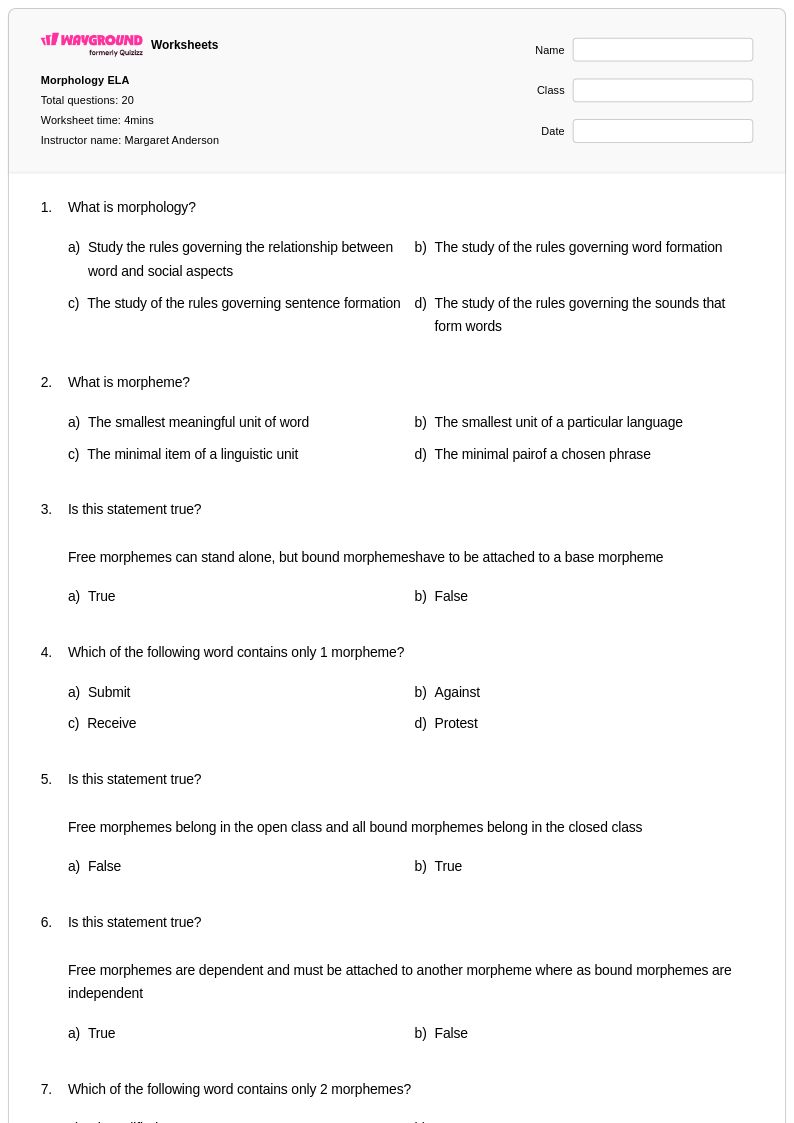
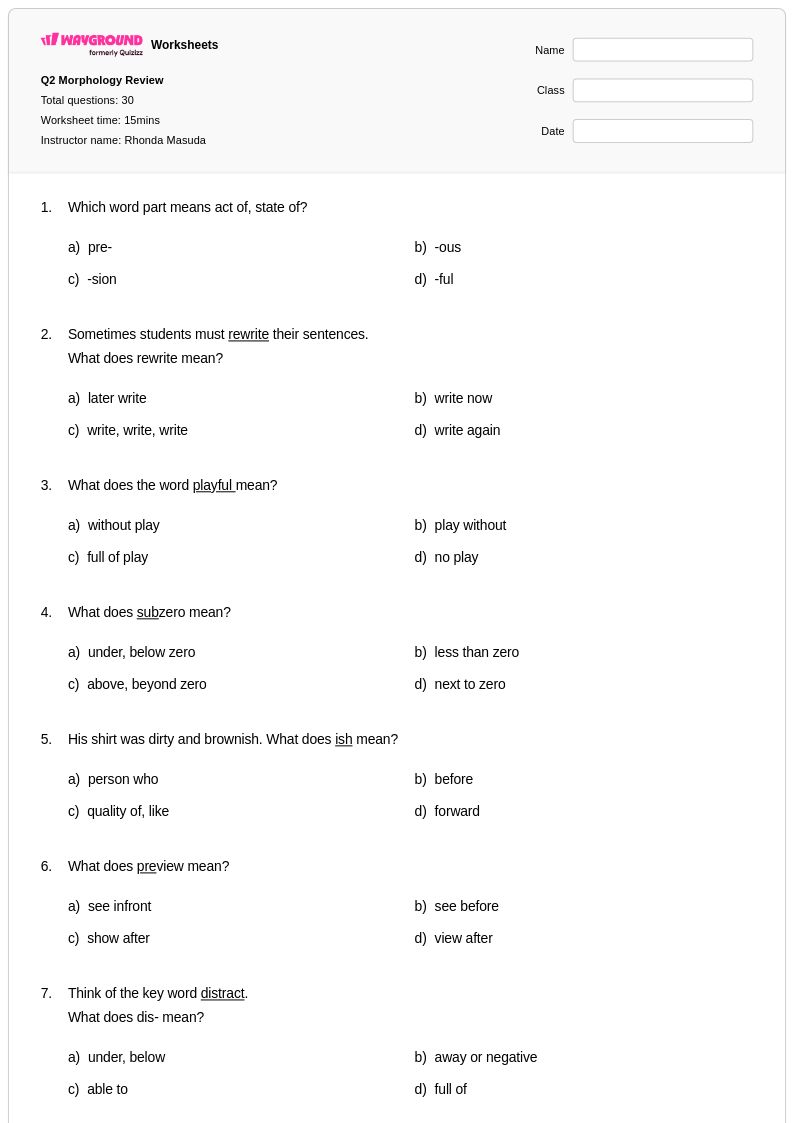
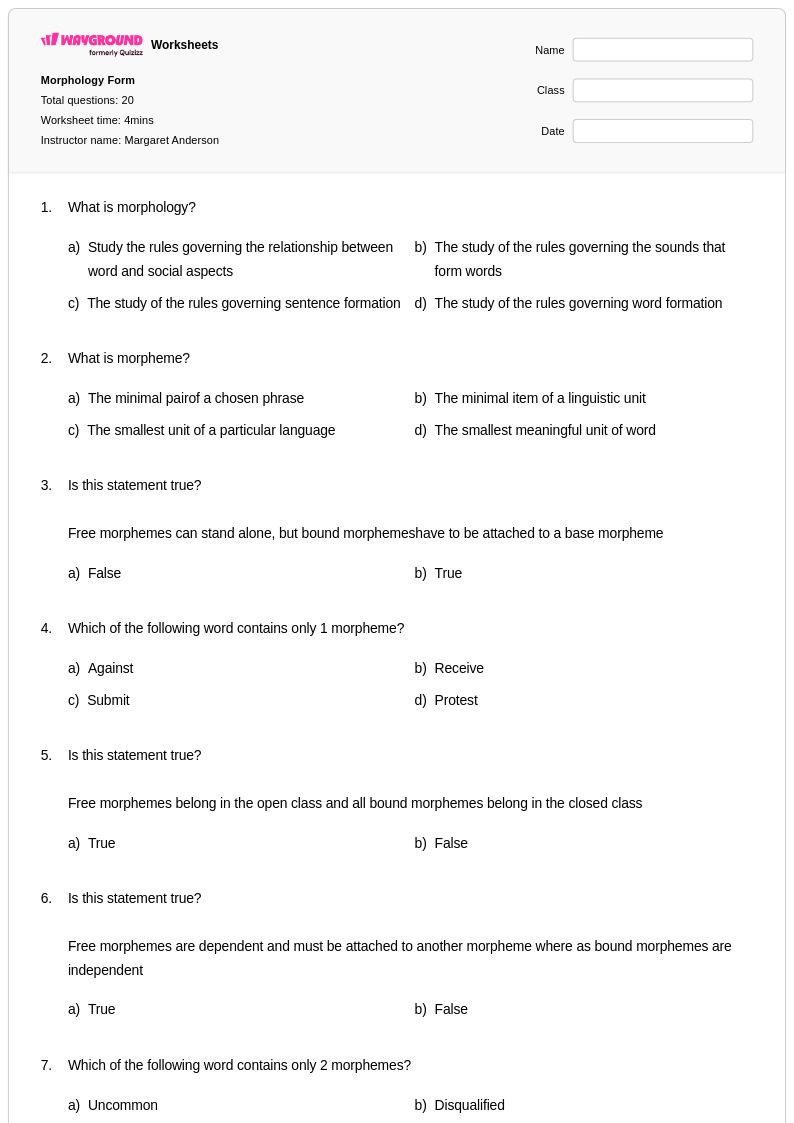
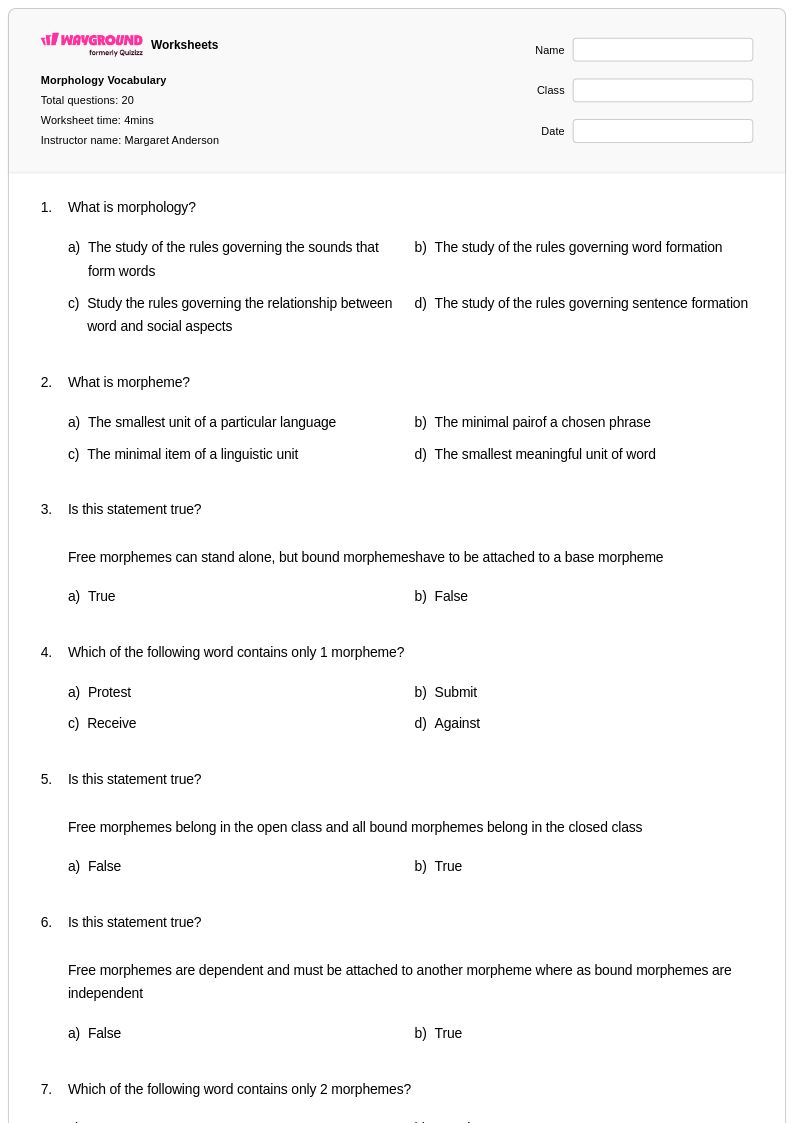
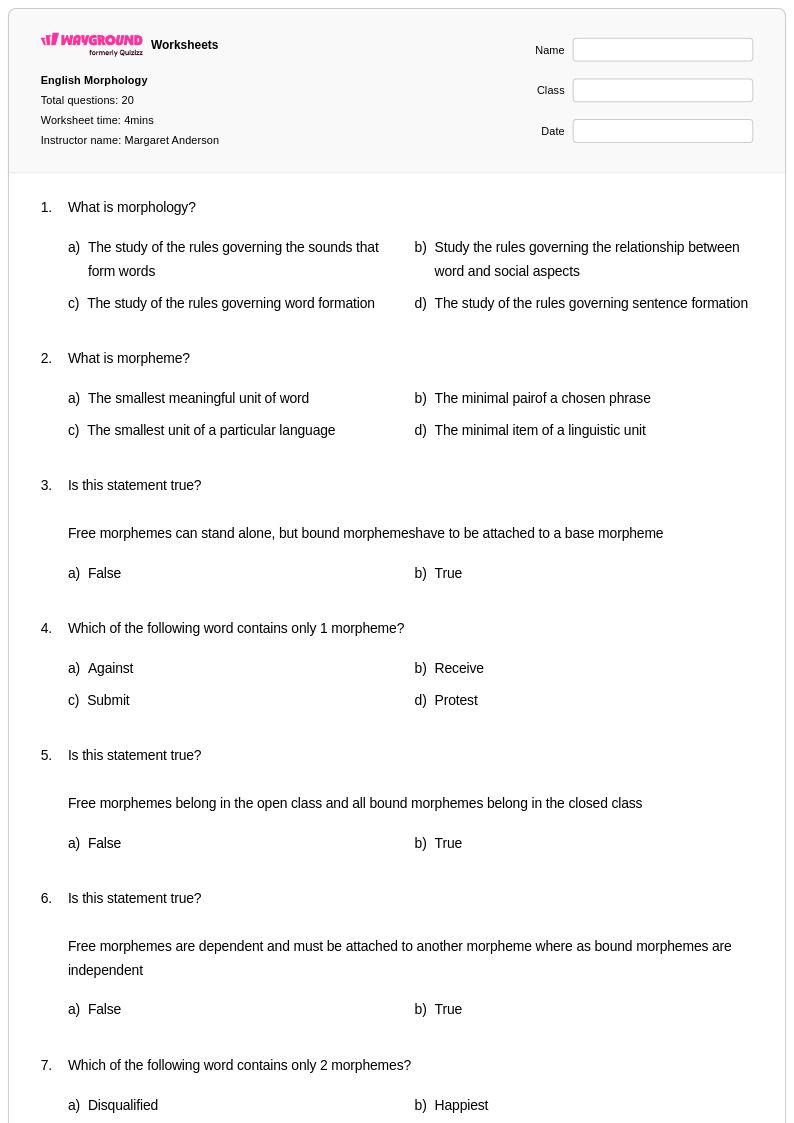
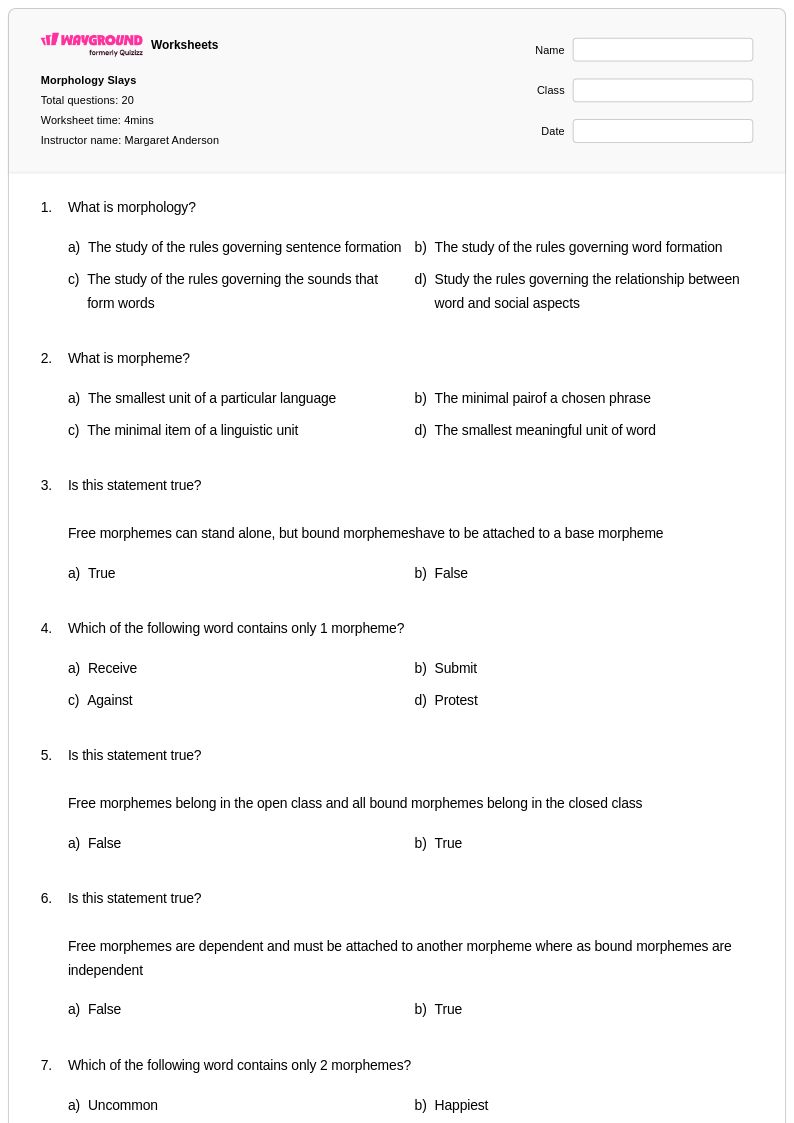
Morphology worksheets available through Wayground (formerly Quizizz) provide comprehensive practice in understanding word structure, formation, and the meaningful units that comprise language. These educational resources focus on essential morphological concepts including root words, prefixes, suffixes, inflectional and derivational morphemes, compound words, and word family relationships. Students develop critical analytical skills as they deconstruct complex vocabulary, identify morphemic patterns, and apply structural knowledge to decode unfamiliar terms. The worksheet collection includes diverse practice problems that strengthen morphological awareness, from basic affix identification to advanced word analysis exercises. Each resource comes with a detailed answer key and is available as free printable pdf materials, making them accessible for both classroom instruction and independent study.
Wayground (formerly Quizizz) empowers educators with millions of teacher-created morphology resources that support differentiated instruction and comprehensive skill development. The platform's robust search and filtering capabilities enable teachers to locate precisely targeted worksheets that align with specific learning objectives and language standards. These morphological practice materials are available in both printable and digital formats, including downloadable pdf versions that facilitate seamless lesson planning and classroom implementation. Teachers can customize existing worksheets or create original materials using the platform's flexible tools, making it simple to address individual student needs through remediation activities for struggling learners or enrichment exercises for advanced students. The extensive morphology worksheet library supports systematic vocabulary instruction while building students' capacity to understand the structural foundations of English language acquisition.
FAQs
How do I teach morphology in the classroom?
Effective morphology instruction begins with teaching students to recognize the smallest meaningful units of language: root words, prefixes, and suffixes. Start with high-frequency roots and affixes, then build complexity by introducing inflectional morphemes (like -ed and -ing) before moving to derivational morphemes that change a word's part of speech. Explicit, systematic instruction works best when paired with regular practice decoding unfamiliar words using structural clues, helping students transfer morphological knowledge to independent reading and writing.
What exercises help students practice morphology?
Strong morphology practice exercises include affix identification tasks, word-building activities where students combine roots and affixes to form new words, and word family sorts that group related forms together. Deconstruction exercises, where students break complex vocabulary into its component morphemes, are especially effective for building analytical skills. Worksheets that move from basic prefix and suffix labeling to advanced word analysis reinforce morphological awareness across difficulty levels.
What are the most common mistakes students make when learning morphology?
A frequent error is treating any recognizable string of letters as a morpheme, such as identifying 'ear' as a root in 'early' when no meaningful connection exists. Students also confuse inflectional and derivational morphemes, mistakenly assuming that adding a suffix always creates a new word rather than a new grammatical form. Another common misconception is over-generalizing rules, for example, assuming that removing a prefix always restores a complete base word, which does not hold for words like 'receive' or 'require'.
How can morphology instruction help students decode unfamiliar vocabulary?
When students understand morphemic patterns, they can use structural analysis as a decoding strategy rather than relying solely on context or memorization. Recognizing that the prefix 'bio-' relates to life, or that '-tion' signals a noun form, allows students to make informed guesses about words they have never seen before. This structural knowledge is particularly valuable in content-area reading, where complex, multi-morpheme vocabulary is dense and domain-specific.
How do I use Wayground's morphology worksheets in my classroom?
Wayground's morphology worksheets are available as free printable PDFs for traditional classroom use and in digital formats for technology-integrated environments, giving teachers flexibility in how they assign and collect student work. Teachers can also host worksheets as a quiz directly on Wayground, enabling real-time feedback and easy progress monitoring. Each worksheet includes a complete answer key, which simplifies grading and supports independent or small-group practice without additional teacher preparation.
How can I differentiate morphology instruction for students with different learning needs?
For students who need additional support, focus on a smaller set of high-utility prefixes and suffixes before expanding the scope, and use visual organizers to map word families. On Wayground, teachers can apply accommodations such as Read Aloud so students hear questions read to them, reduced answer choices to lower cognitive load, and extended time for students who need it. These settings can be assigned to individual students without alerting the rest of the class, allowing seamless differentiation within a single shared activity.