Free Printable Dimensions of Wellness Worksheets for Class 12
Class 12 Physical Education students can explore comprehensive dimensions of wellness through Wayground's free printable worksheets and practice problems, complete with answer keys to reinforce holistic health concepts and personal well-being strategies.
Explore printable Dimensions of Wellness worksheets for Class 12
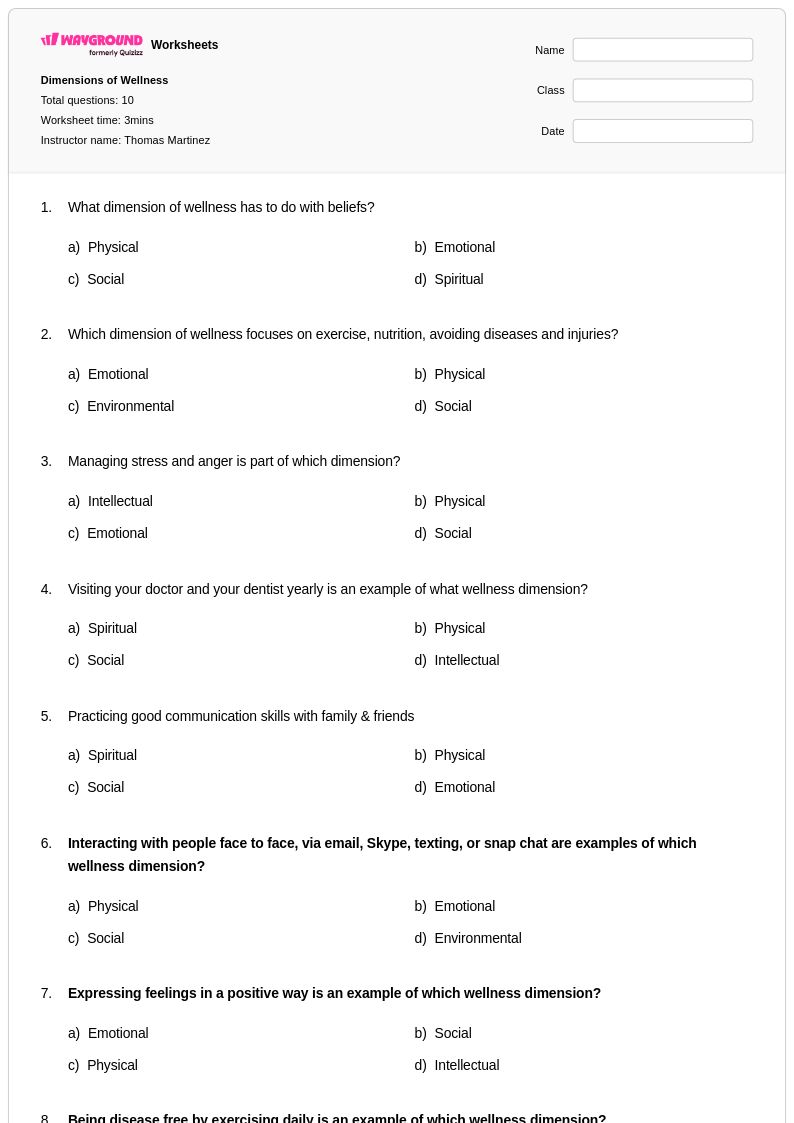
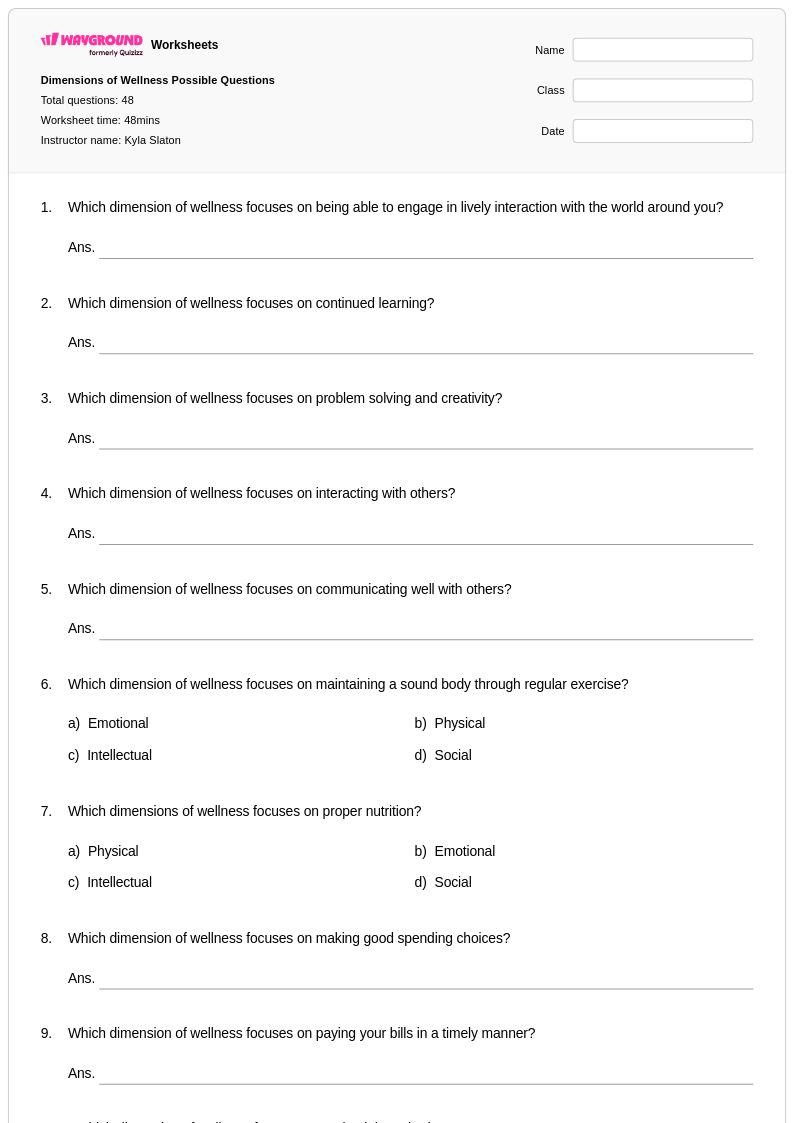
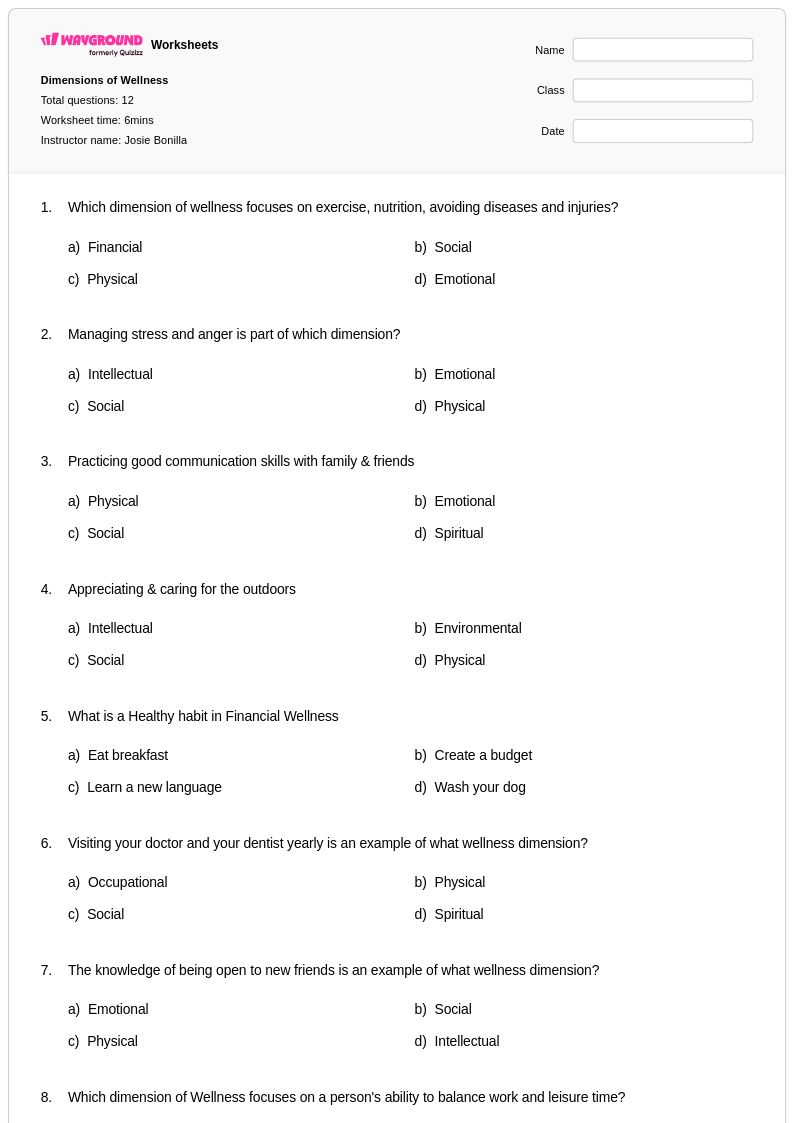
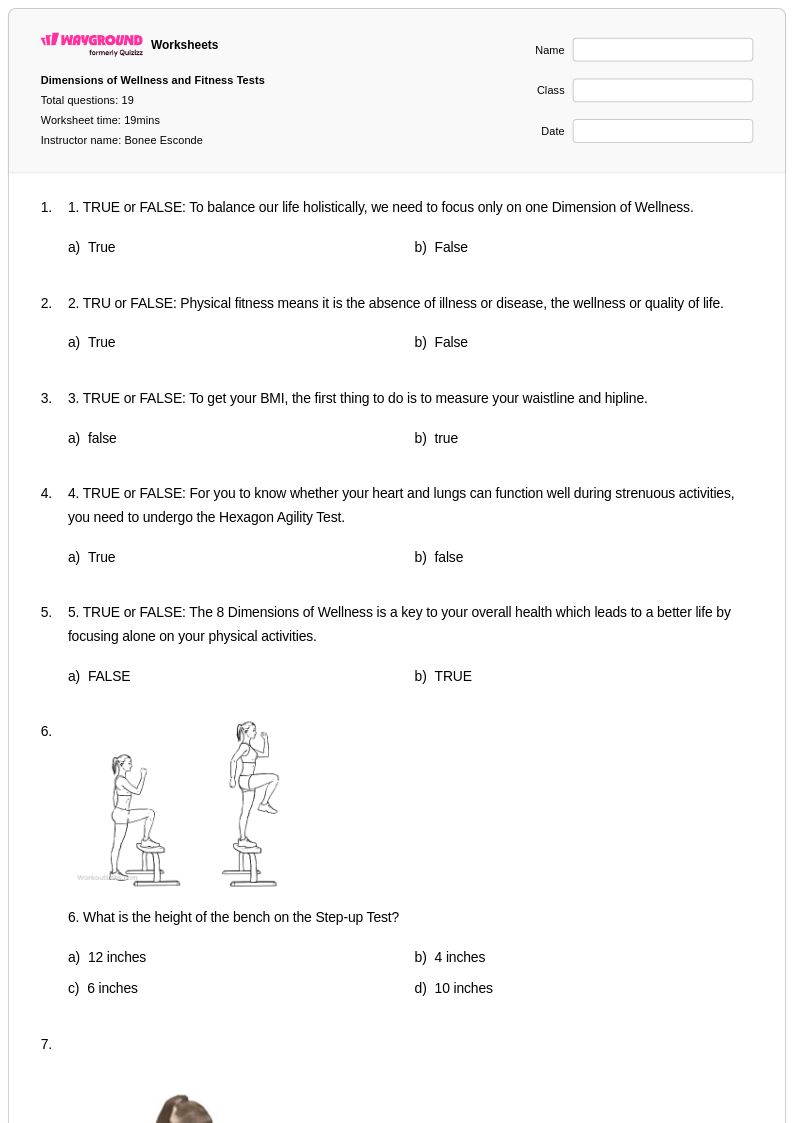
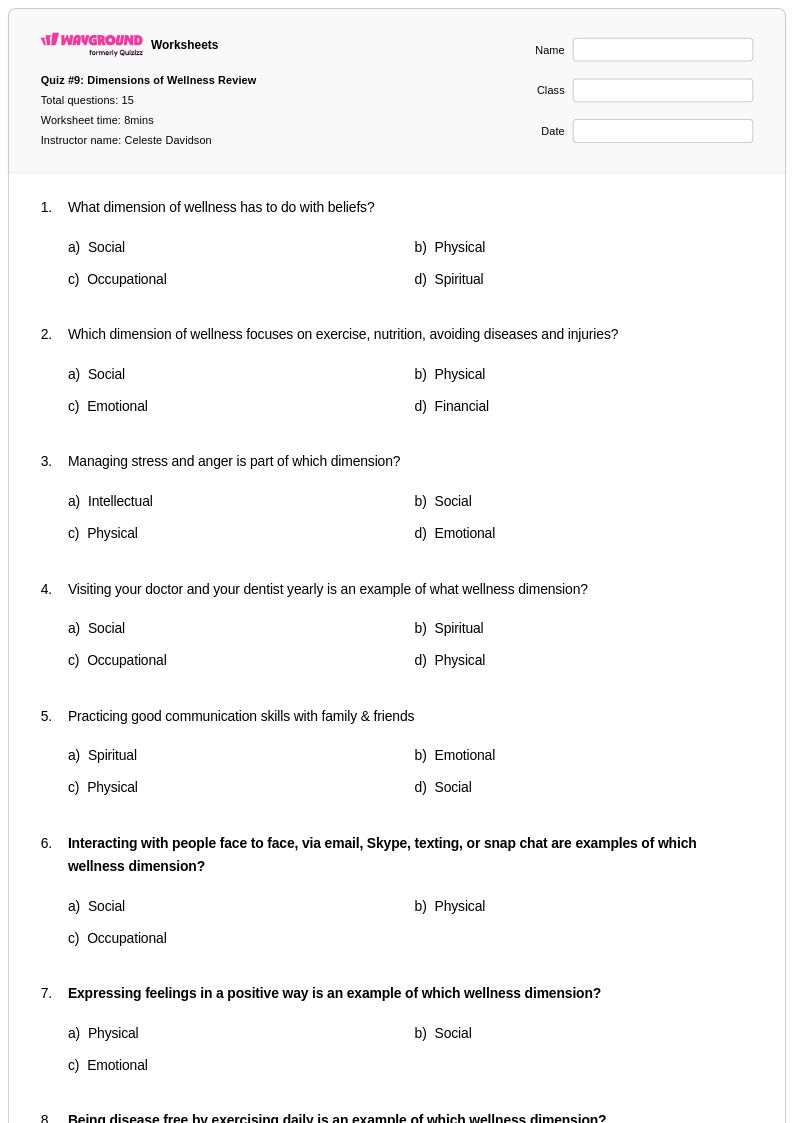
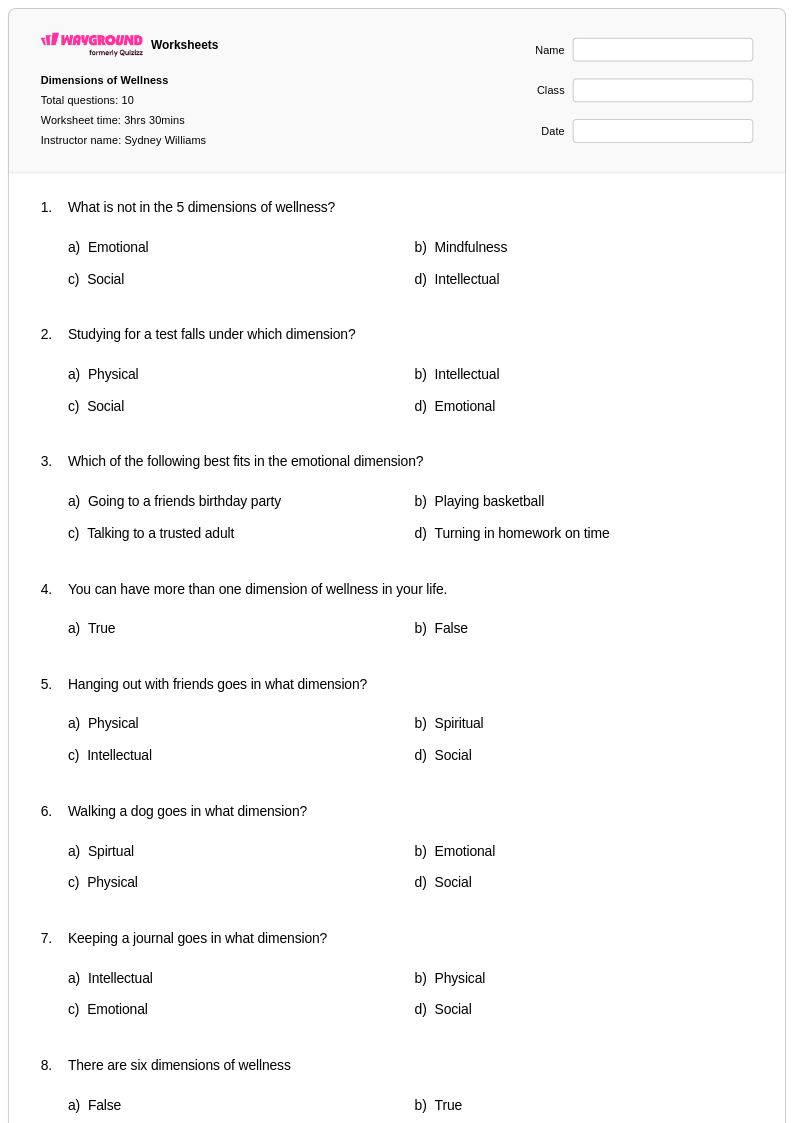
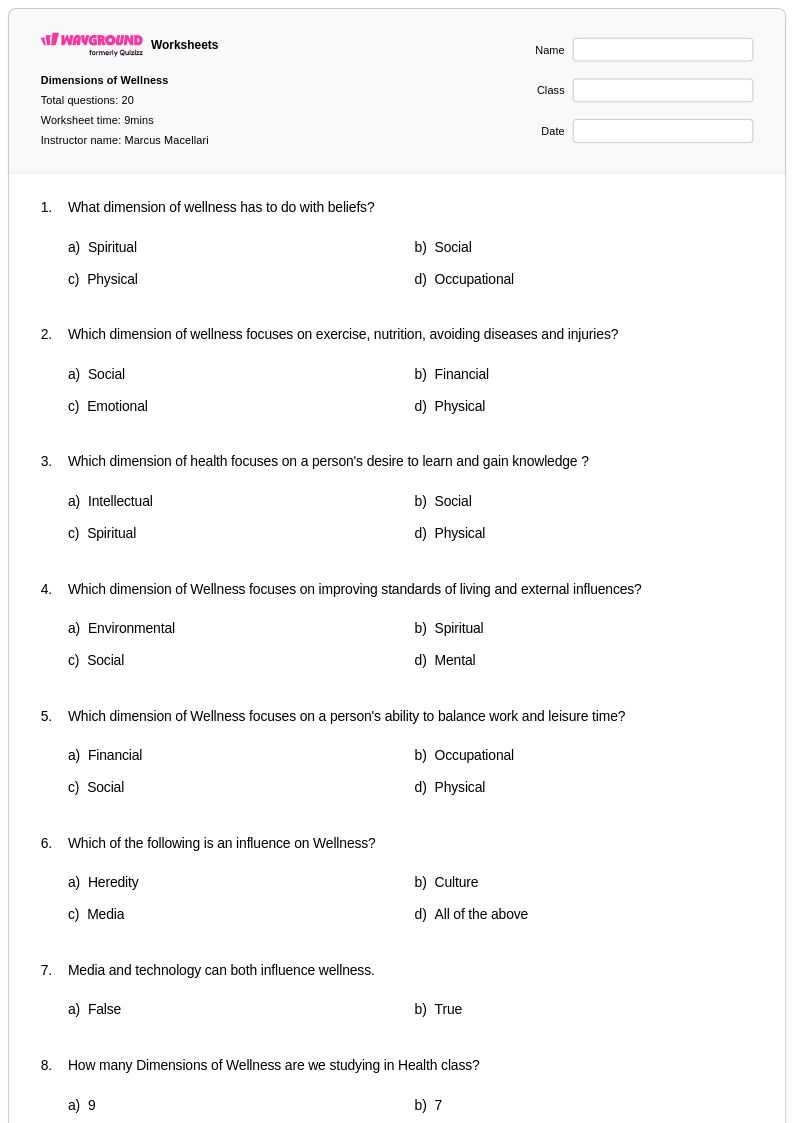
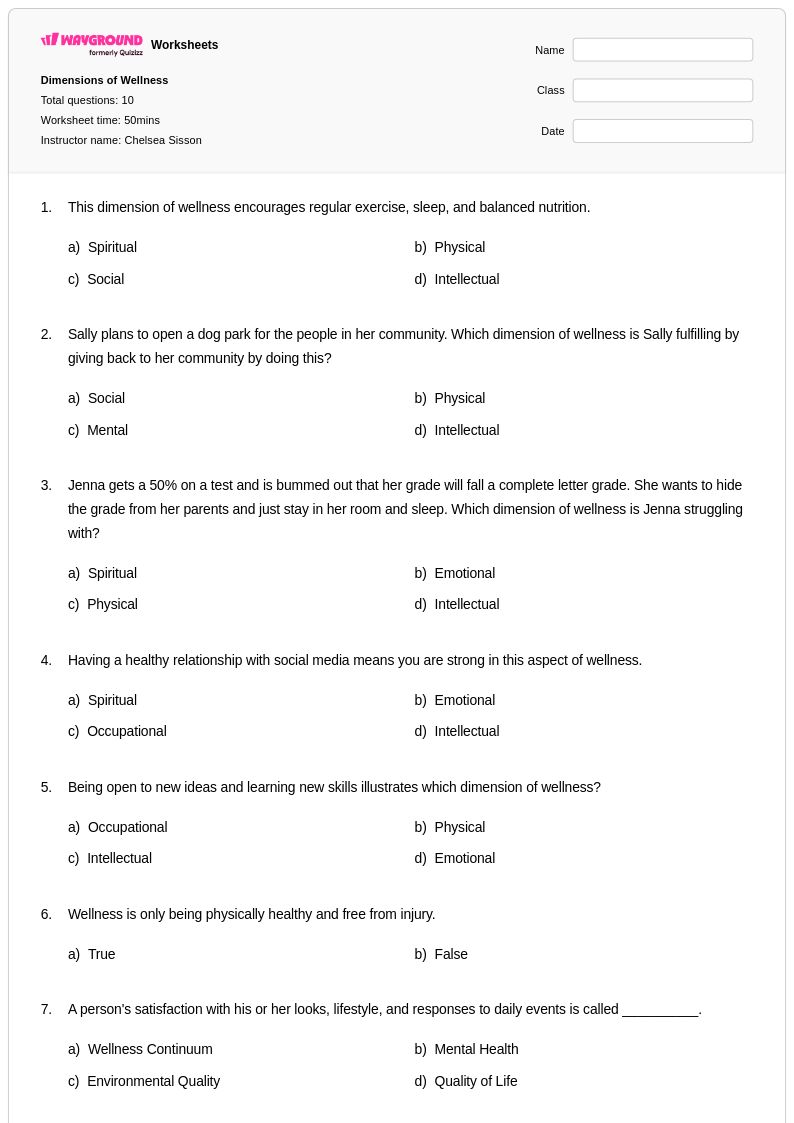
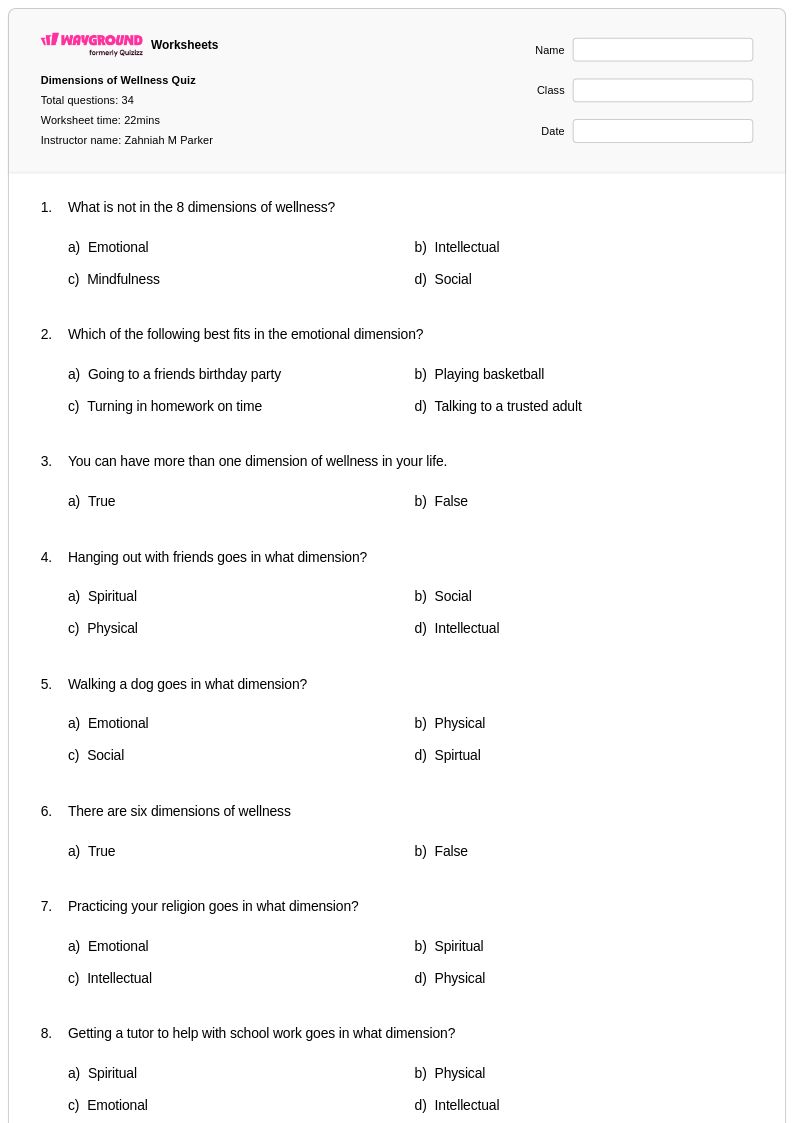
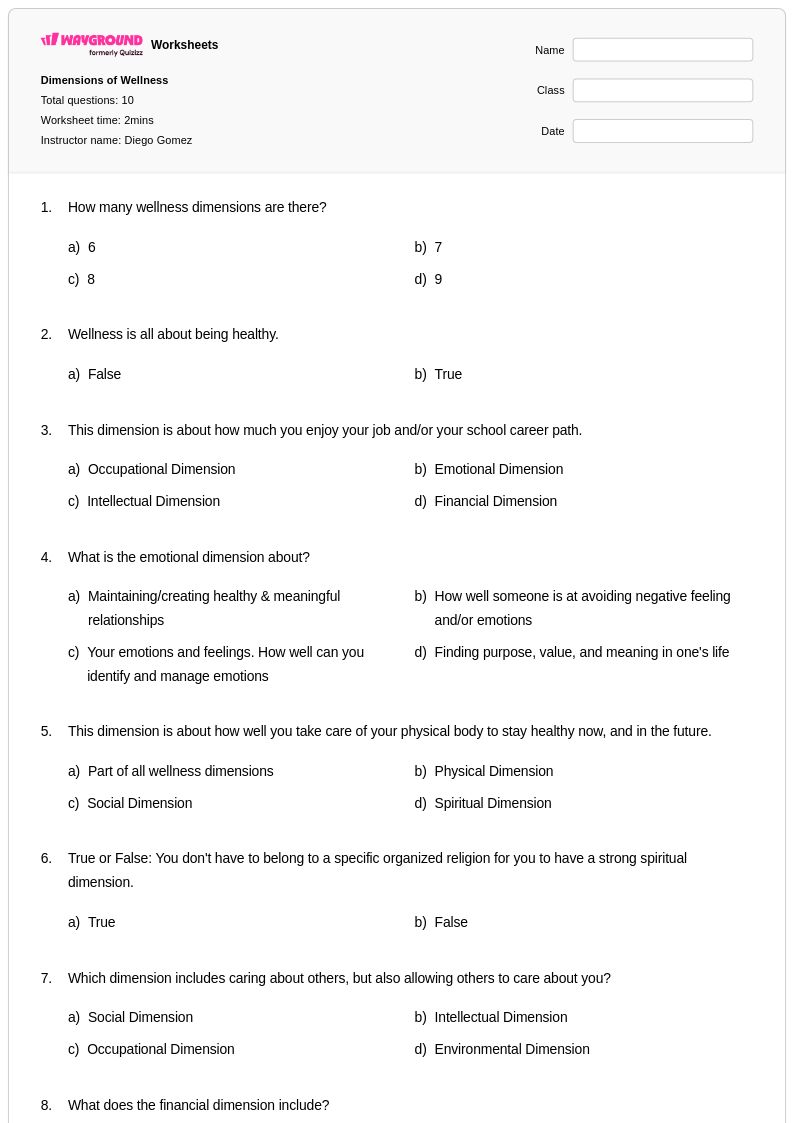
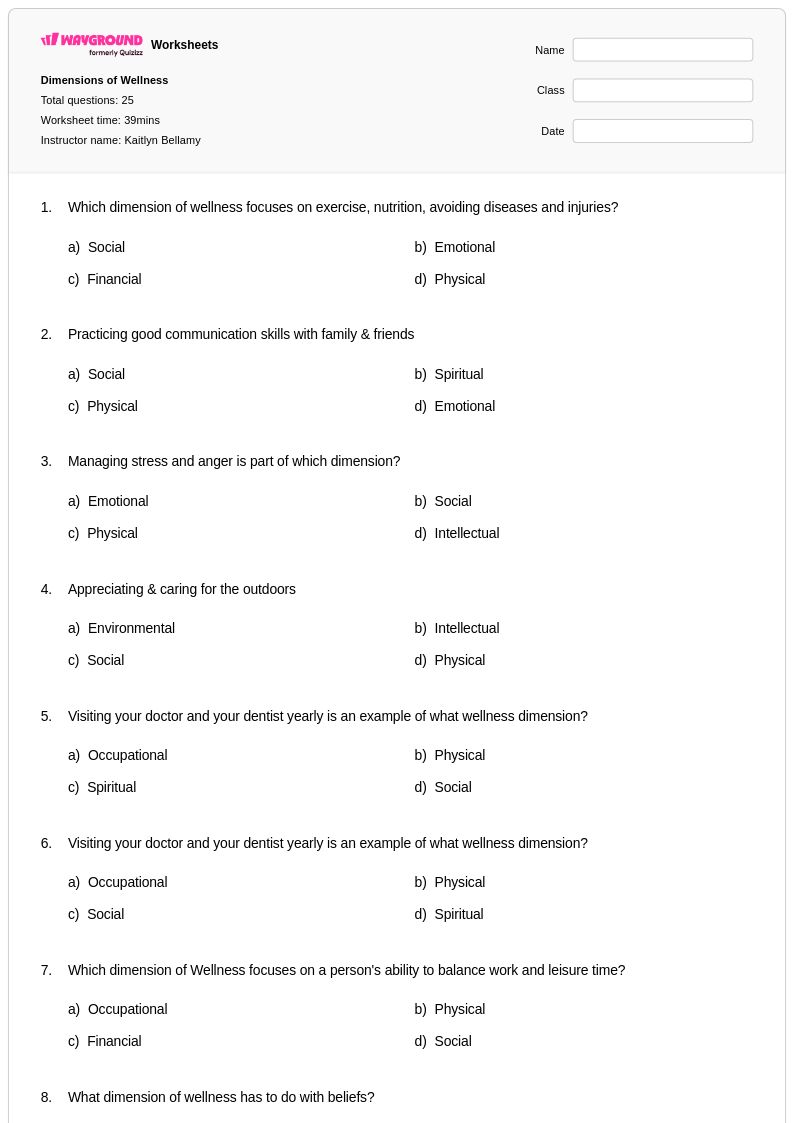
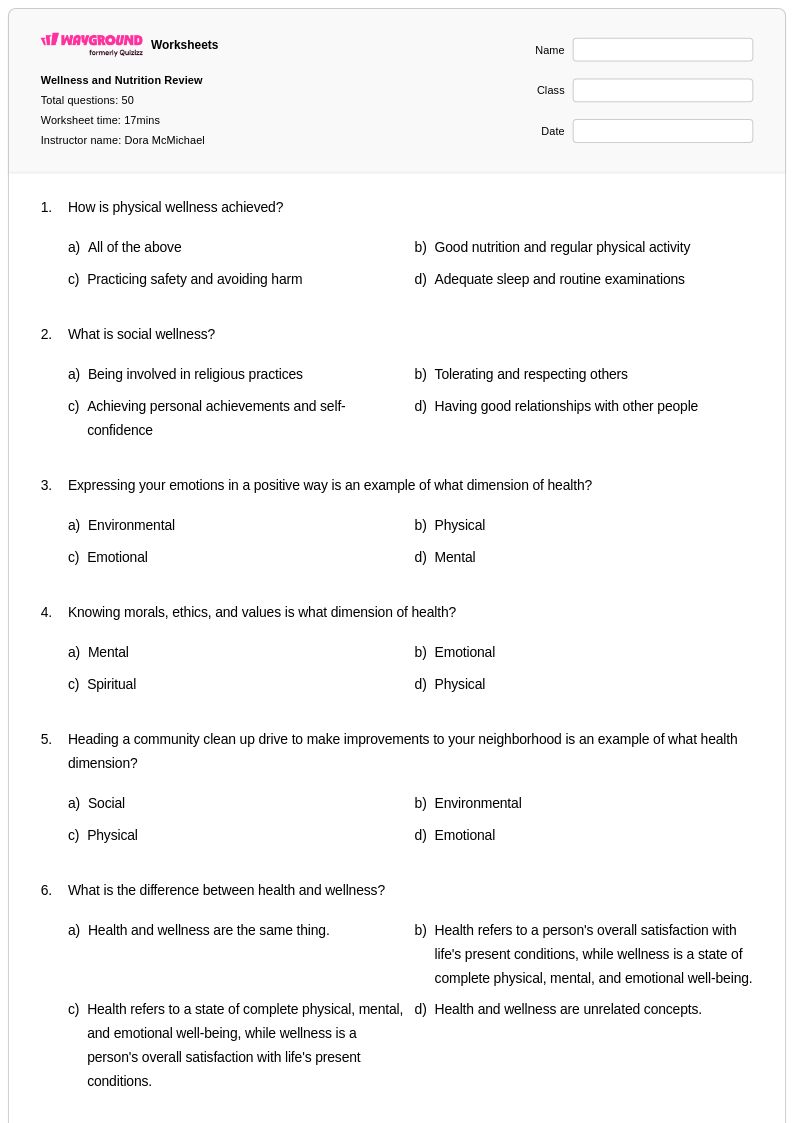
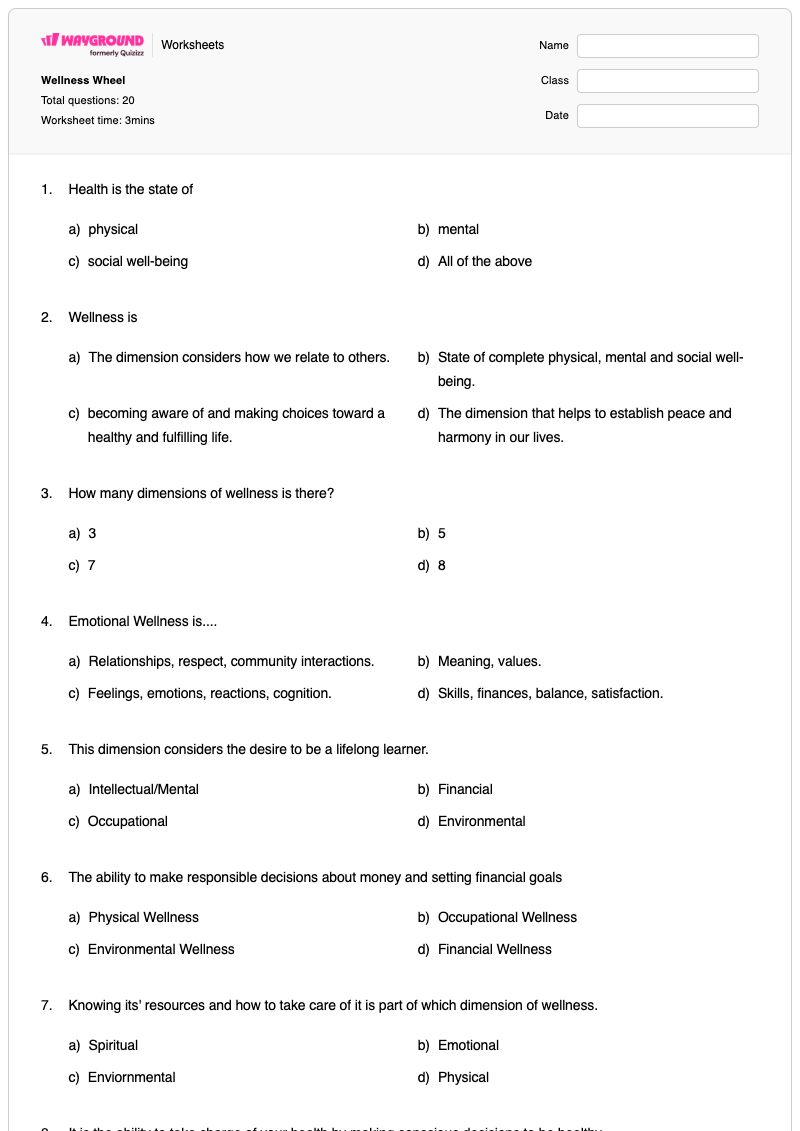
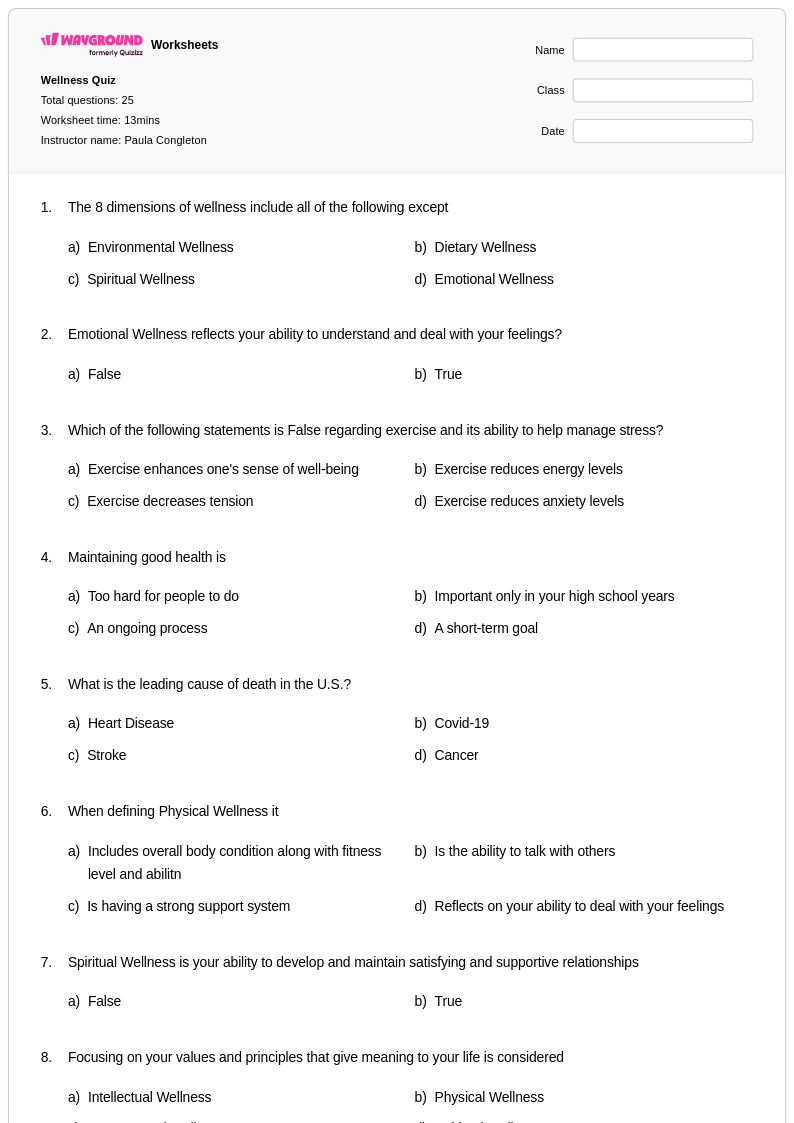
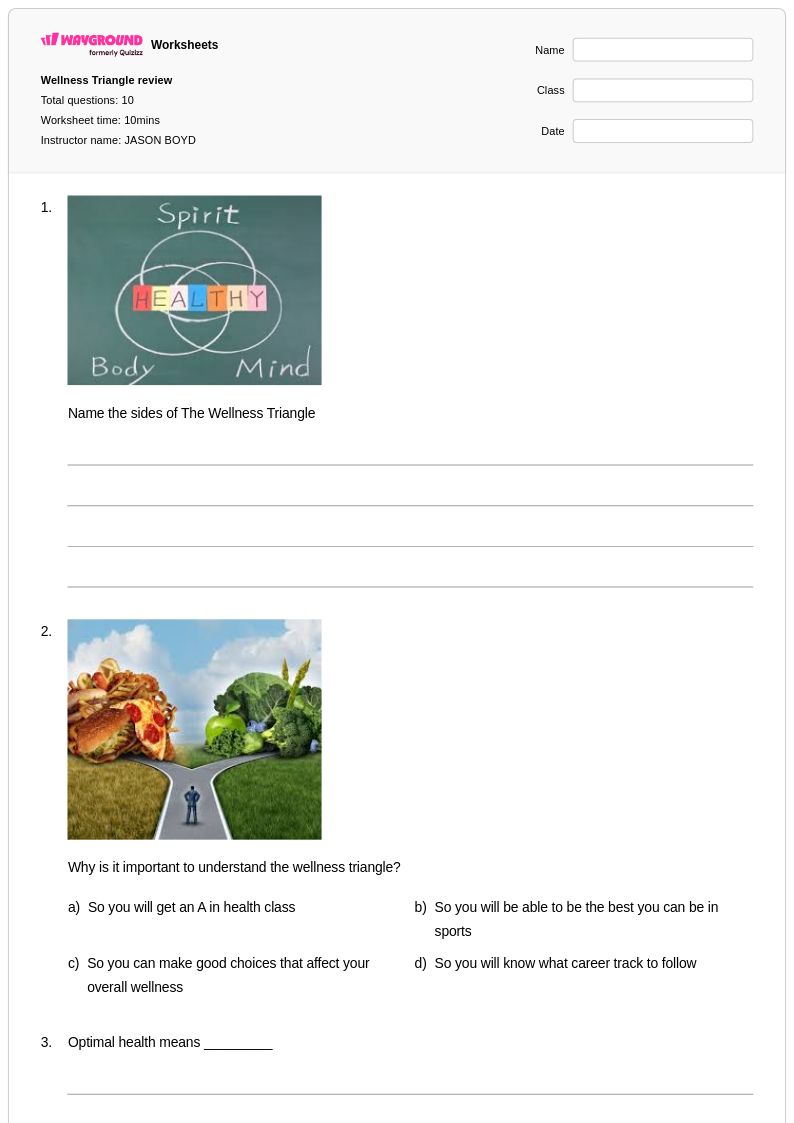
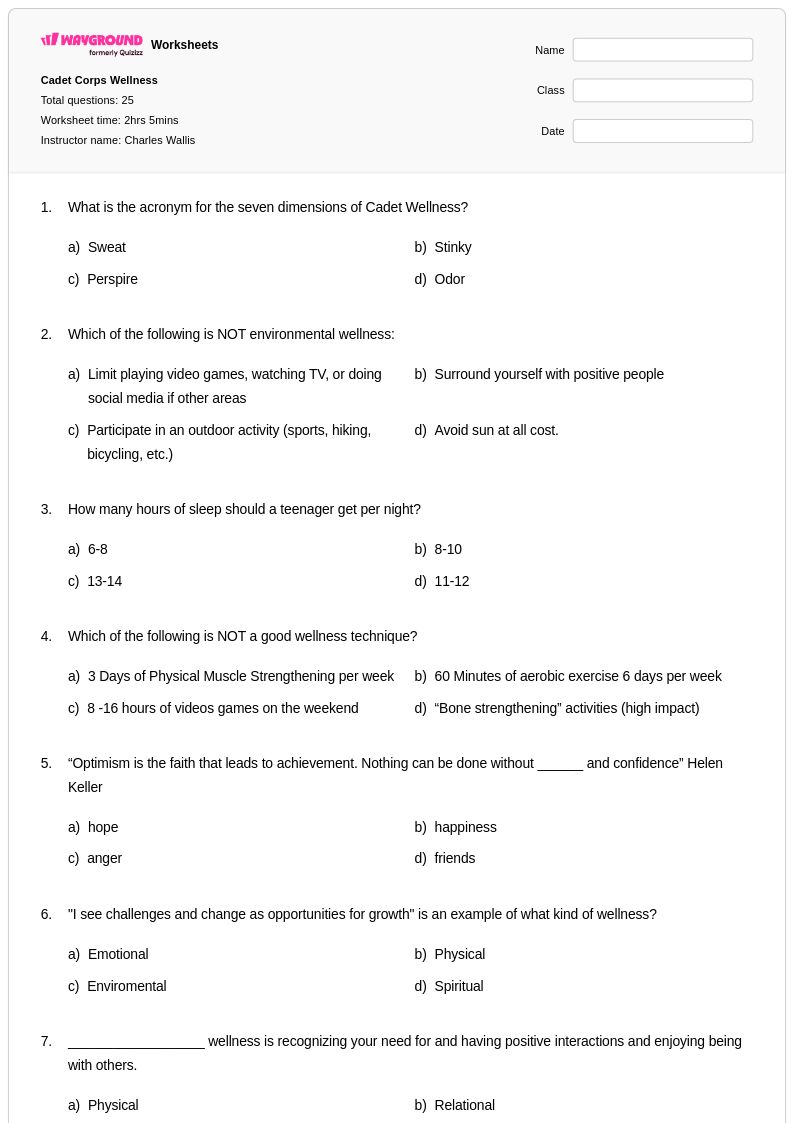
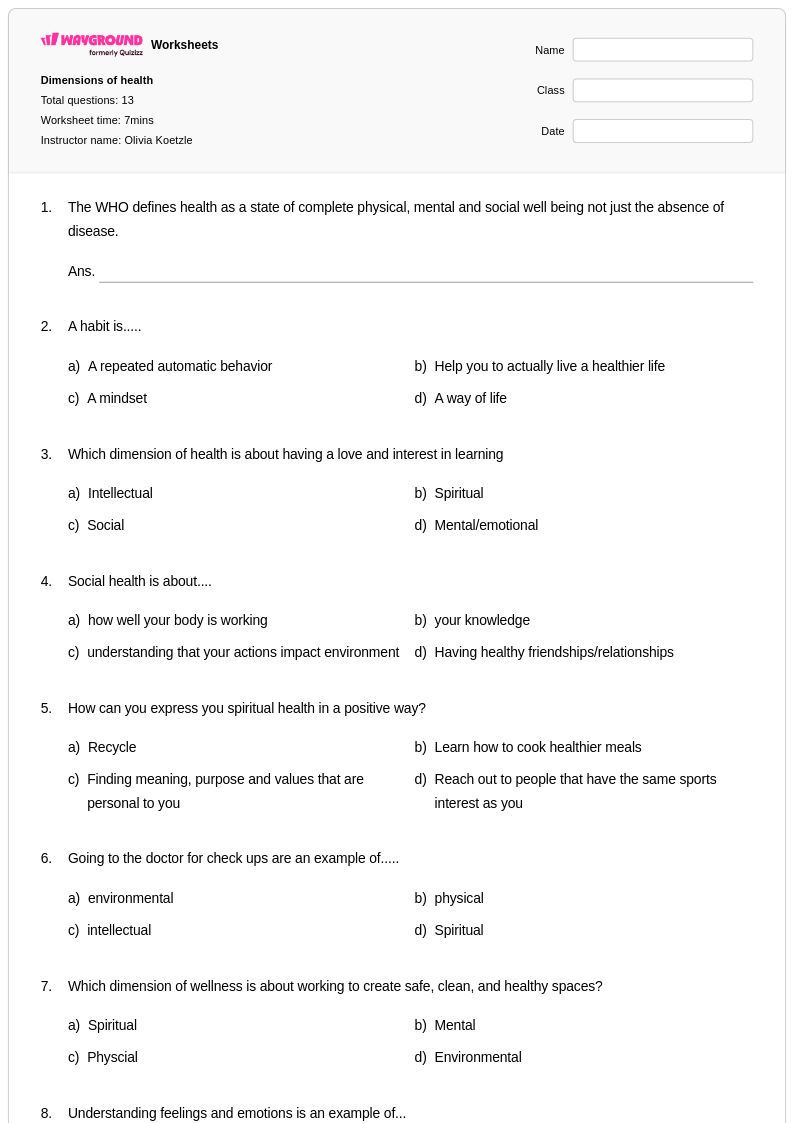
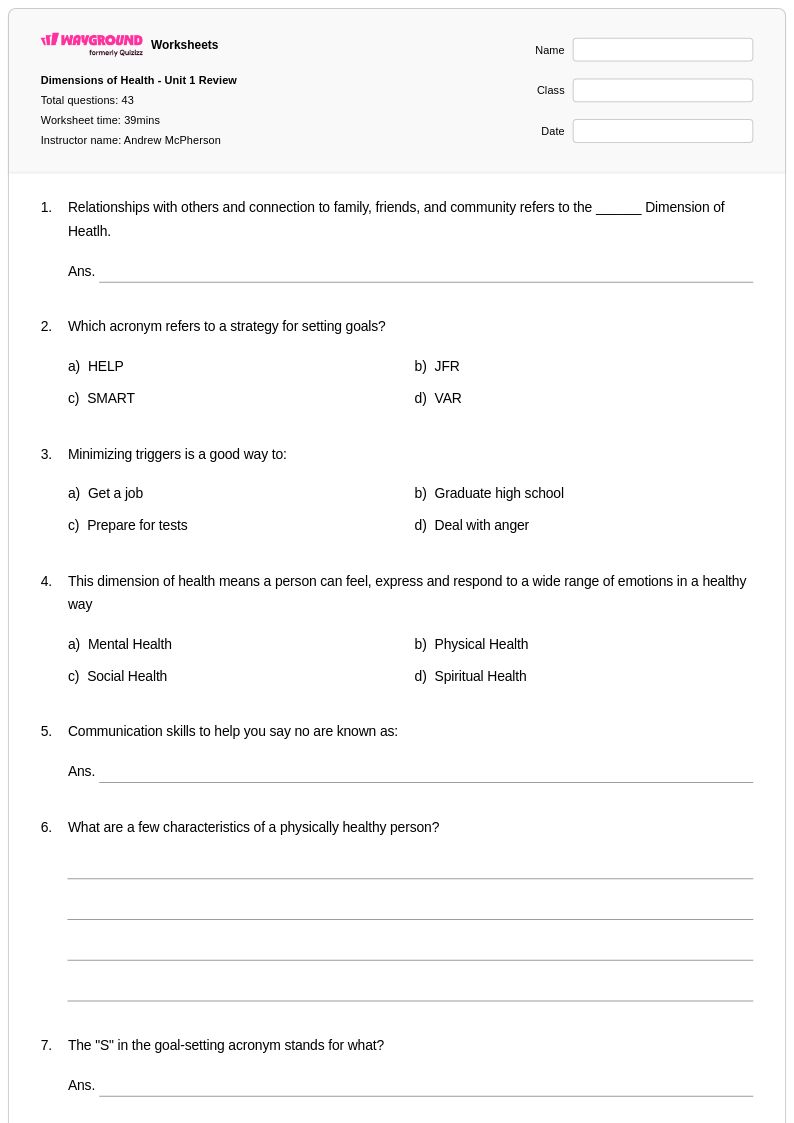
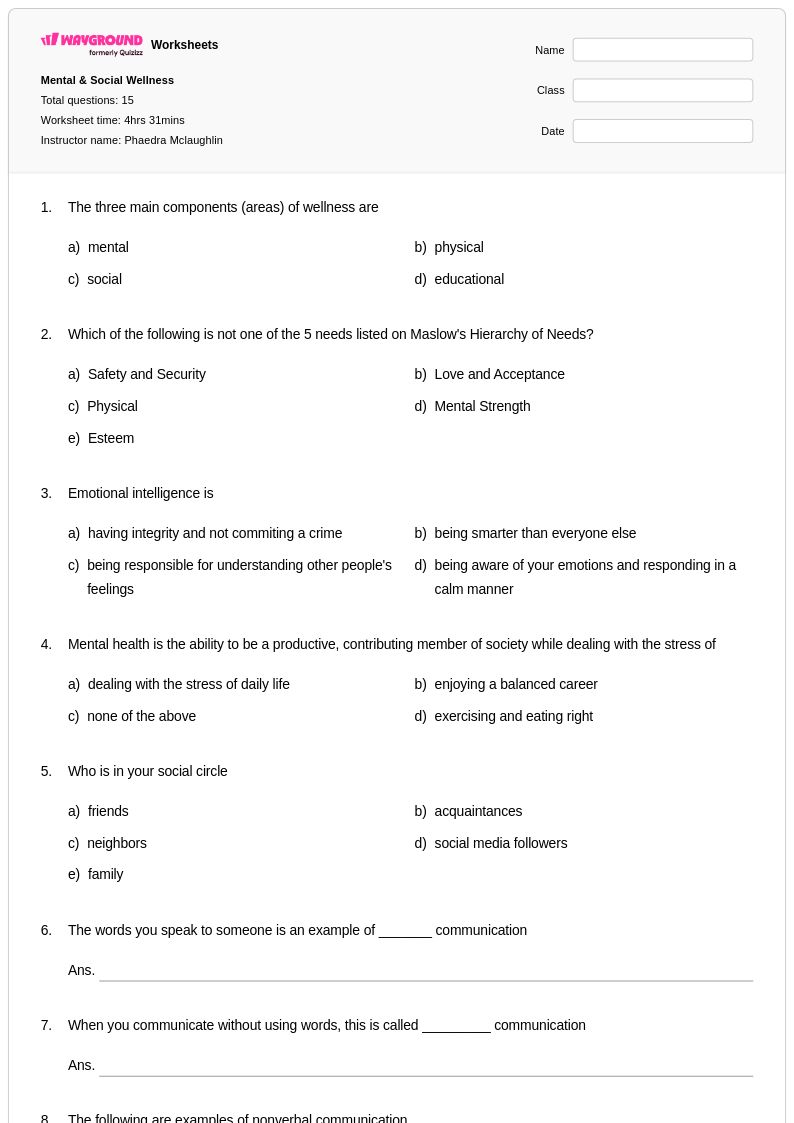
Dimensions of Wellness worksheets for Class 12 students available through Wayground provide comprehensive exploration of the multifaceted nature of personal well-being and health optimization. These educational resources systematically examine the interconnected components of wellness including physical, emotional, social, intellectual, spiritual, occupational, environmental, and financial dimensions, enabling students to develop sophisticated understanding of holistic health concepts. The worksheets strengthen critical thinking skills through practice problems that analyze real-world wellness scenarios, self-assessment activities, and evidence-based health decision-making exercises. Each printable resource includes detailed answer keys that support independent learning and facilitate meaningful discussions about personal wellness planning, while the free pdf format ensures accessibility for diverse learning environments and study preferences.
Wayground's extensive collection of teacher-created Dimensions of Wellness resources empowers educators with millions of professionally developed materials specifically designed for Class 12 Physical Education instruction. The platform's robust search and filtering capabilities enable teachers to quickly locate worksheets aligned with health education standards and customize content to meet diverse student needs through built-in differentiation tools. These comprehensive resources are available in both printable and digital pdf formats, providing flexibility for classroom instruction, remote learning, and hybrid educational models. Teachers utilize these materials for strategic lesson planning, targeted skill remediation, advanced student enrichment, and ongoing practice opportunities that reinforce essential wellness concepts while preparing students for lifelong health management and personal well-being optimization.
FAQs
How do I teach the dimensions of wellness in a health or PE class?
Start by introducing each dimension, such as physical, emotional, social, intellectual, spiritual, and environmental wellness, as distinct but interconnected components of overall health. Use real-world scenarios or self-reflection prompts to help students see how neglecting one dimension can affect others. Structured worksheets that ask students to analyze personal habits and evaluate wellness strategies work well as both introductory activities and ongoing practice tools.
What activities help students practice identifying the dimensions of wellness?
Effective practice activities include habit-sorting exercises where students categorize daily behaviors by wellness dimension, self-assessment inventories that prompt reflection on each area, and action-planning tasks where students set goals for holistic health improvement. Worksheets that combine scenario analysis with written reflection reinforce both conceptual understanding and personal application, which is especially useful in health education settings.
What misconceptions do students commonly have about the dimensions of wellness?
A common misconception is that wellness is primarily physical, leading students to overlook emotional, intellectual, or environmental dimensions as equally important contributors to overall health. Students also tend to treat the dimensions as independent rather than interconnected, missing how stress in one area, such as social isolation, can directly impact physical or emotional well-being. Worksheets that require students to trace cause-and-effect relationships across dimensions help address this gap.
How can I use dimensions of wellness worksheets to support students with different learning needs?
Wayground supports built-in accommodations that can be applied at the individual student level, including Read Aloud for students who need questions read to them, reduced answer choices to lower cognitive load, and extended time for students who need more processing time. These settings can be configured per student and carry over across sessions, so differentiation is built into the workflow rather than requiring separate preparation. Remaining students receive default settings without any notification, keeping the experience seamless for the whole class.
How do I use Wayground's dimensions of wellness worksheets in my classroom?
Wayground's dimensions of wellness worksheets are available as printable PDFs for traditional classroom use and in digital formats for technology-integrated environments, giving teachers flexibility depending on their instructional setup. Teachers can also host worksheets as a quiz directly on Wayground, enabling interactive assessment with automatic grading. Each worksheet includes a complete answer key, supporting both independent student work and teacher-led instruction.
How do dimensions of wellness worksheets help students develop self-assessment skills?
Dimensions of wellness worksheets often include self-assessment components where students evaluate their own habits across each wellness area, which builds metacognitive awareness and personal accountability. By prompting students to identify strengths and gaps in their lifestyle choices, these materials help translate abstract health concepts into concrete, actionable reflection. This makes them particularly effective for health education units focused on goal-setting and behavior change.