Free Printable Direct and Indirect Objects Worksheets for Class 3
Class 3 students can master direct and indirect objects with Wayground's free printable worksheets featuring engaging practice problems and comprehensive answer keys to strengthen grammar skills.
Explore printable Direct and Indirect Objects worksheets for Class 3
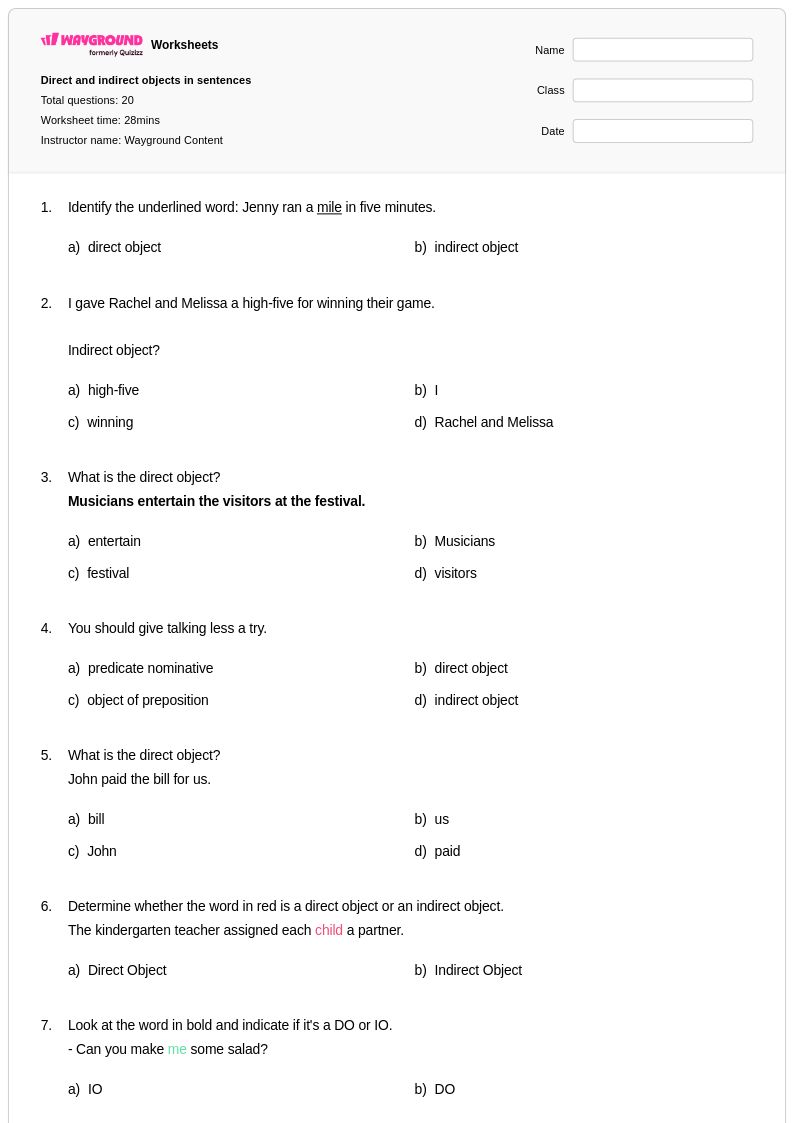
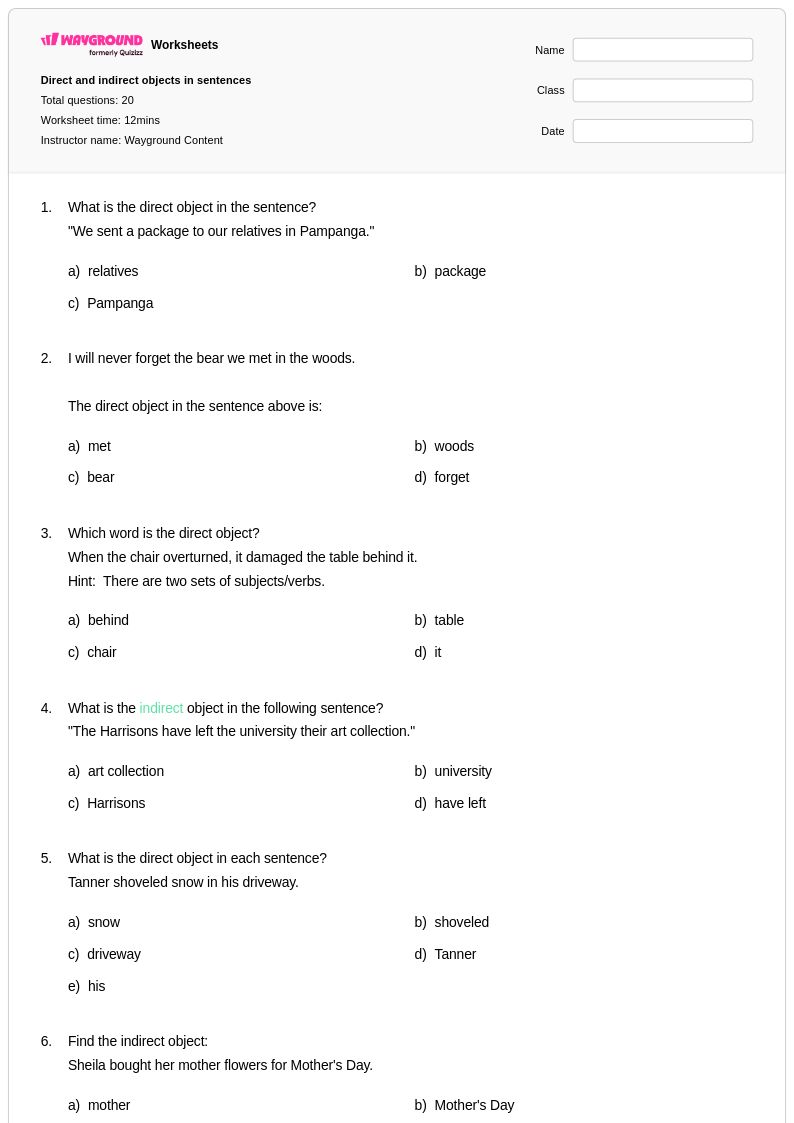
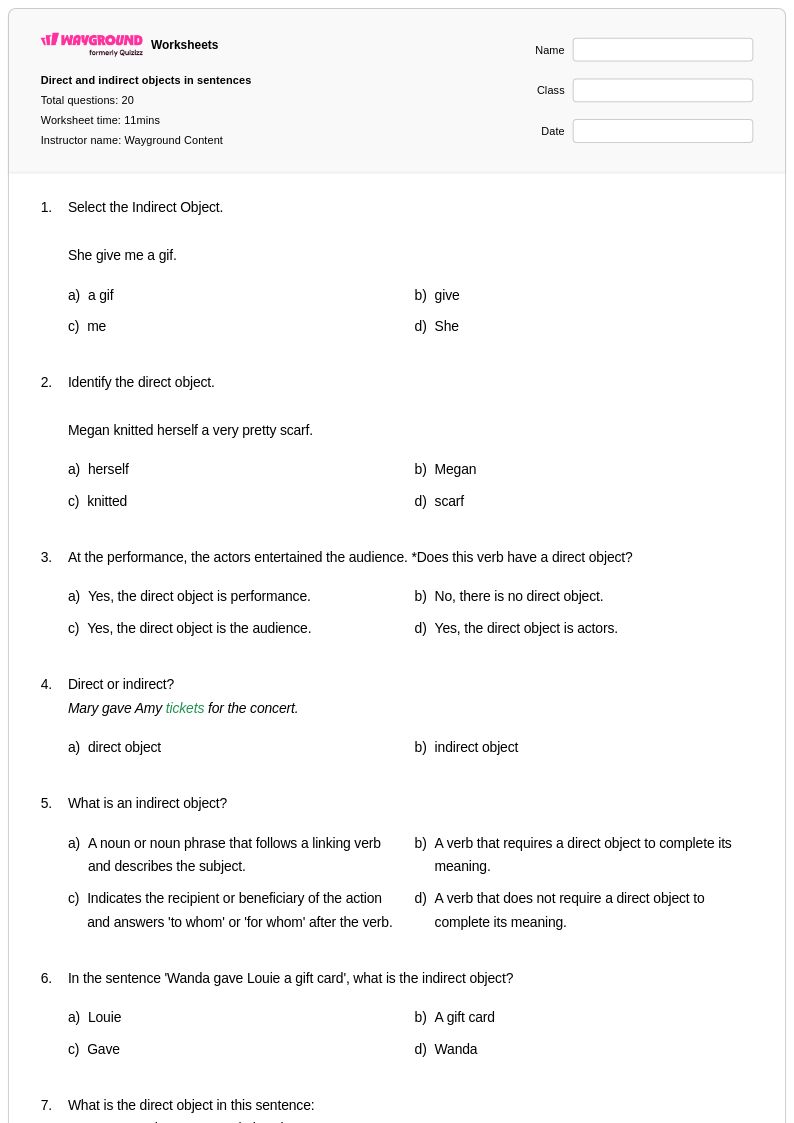
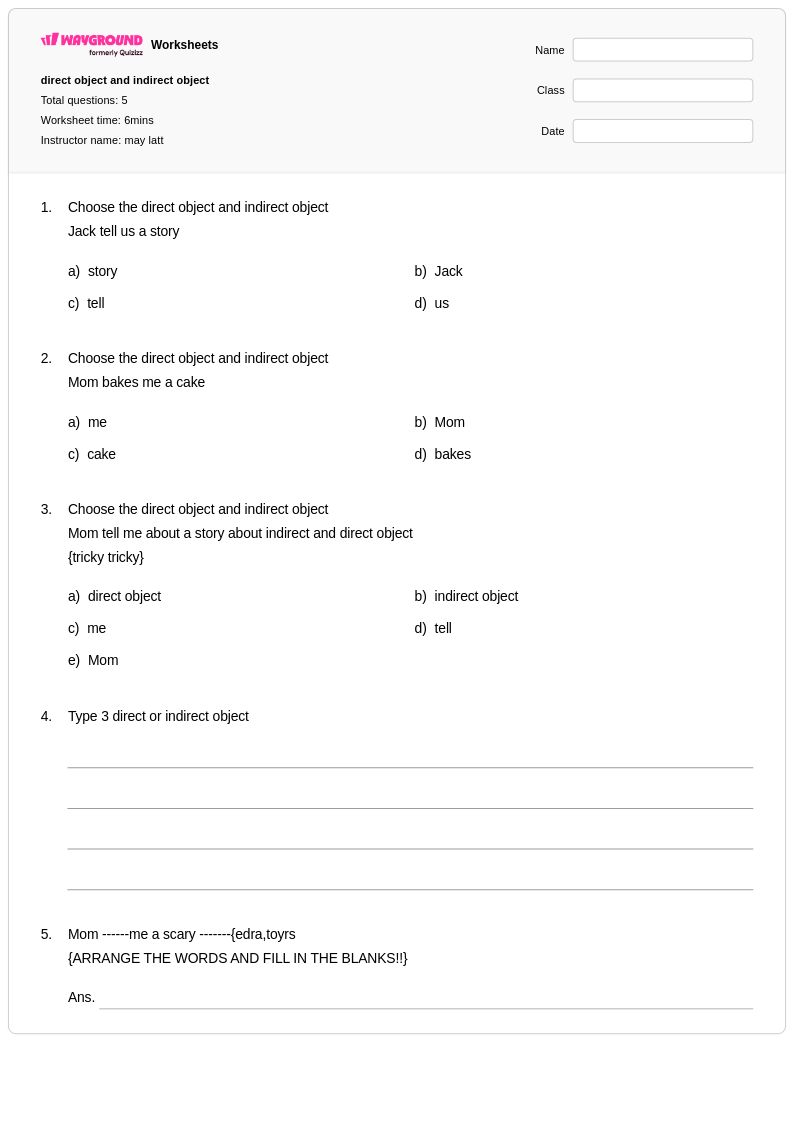
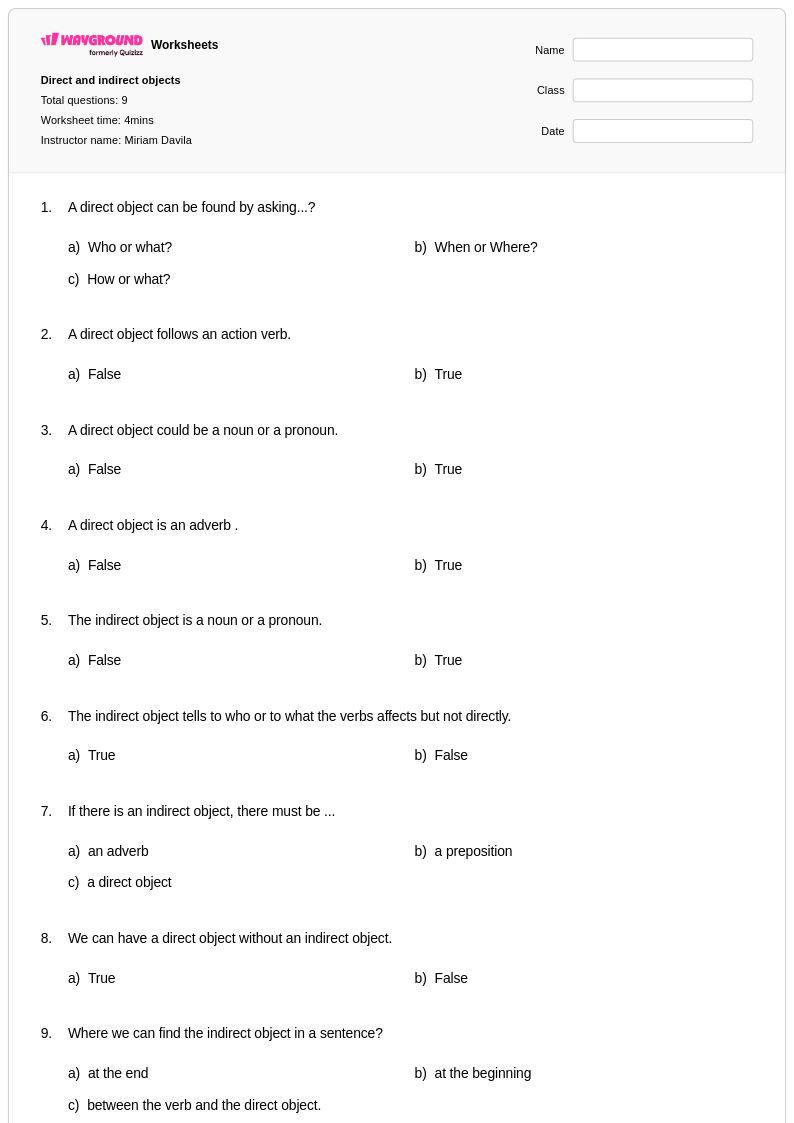
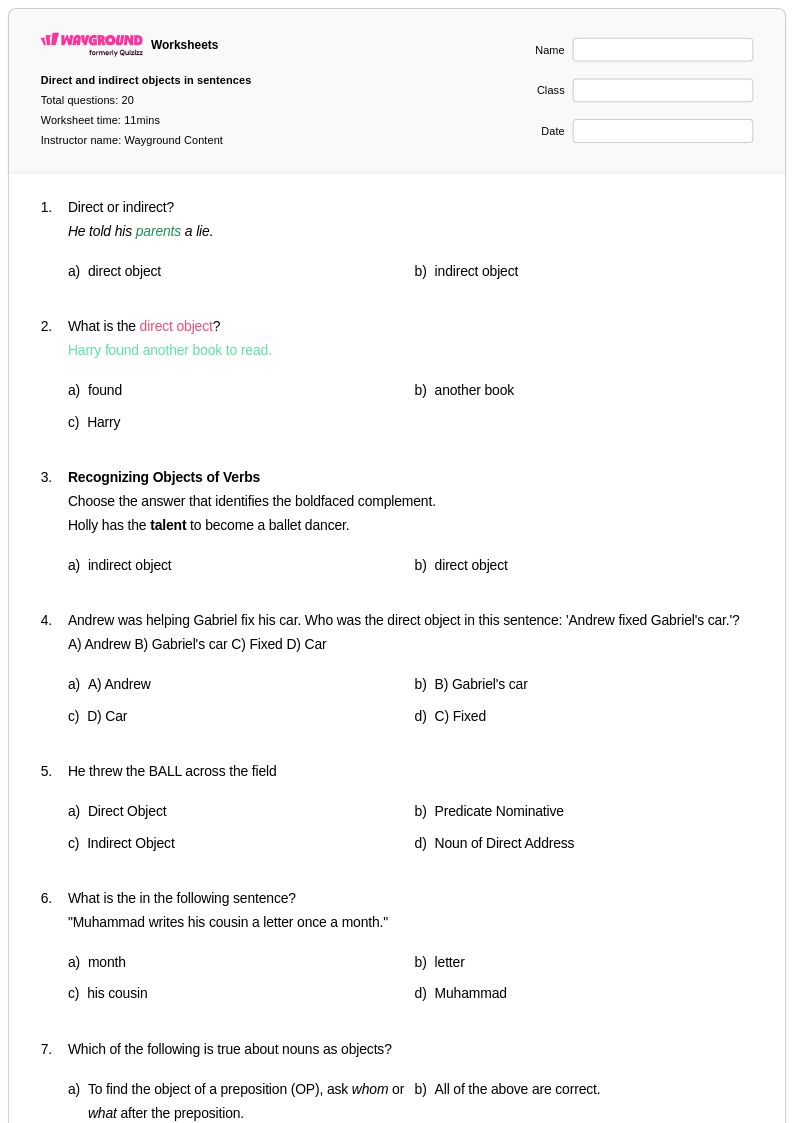
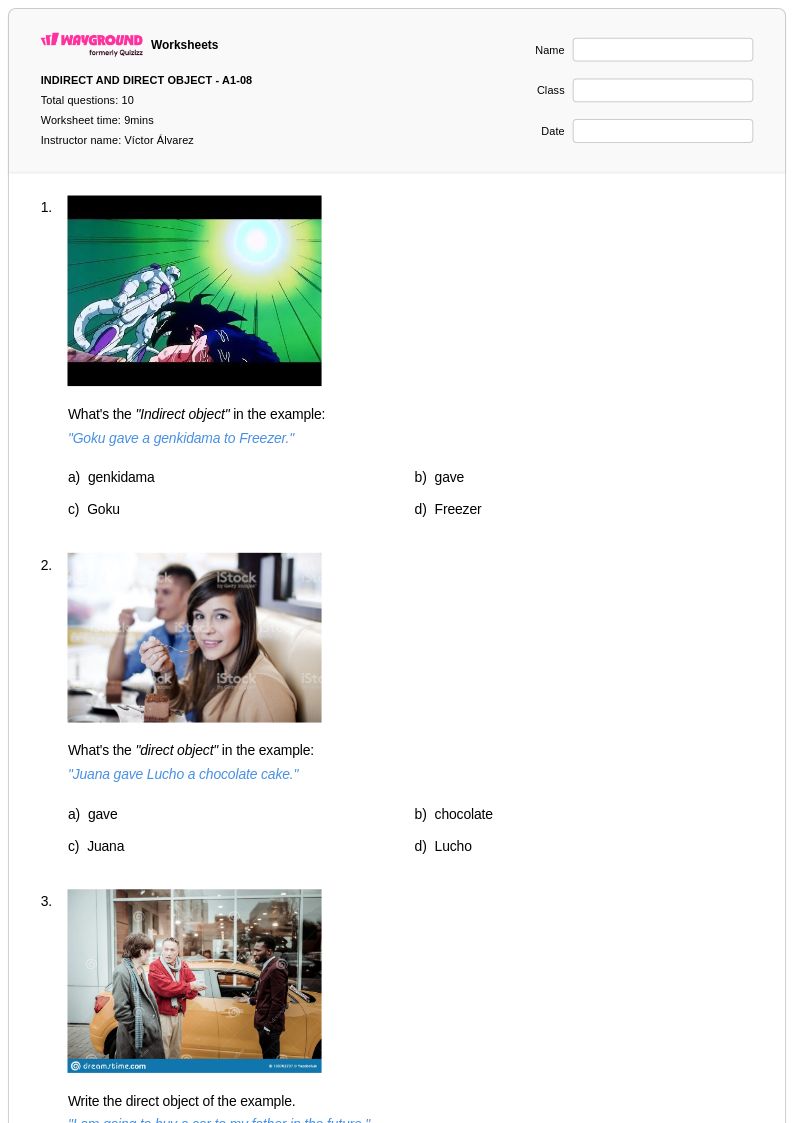
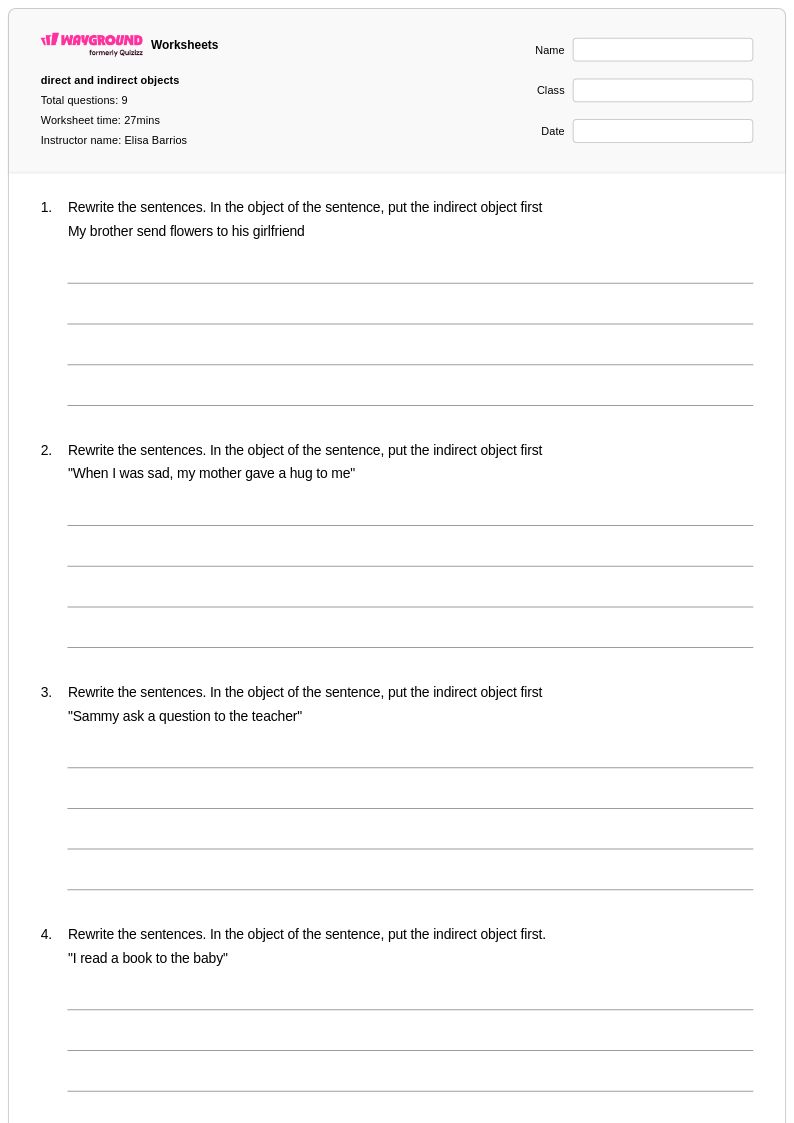
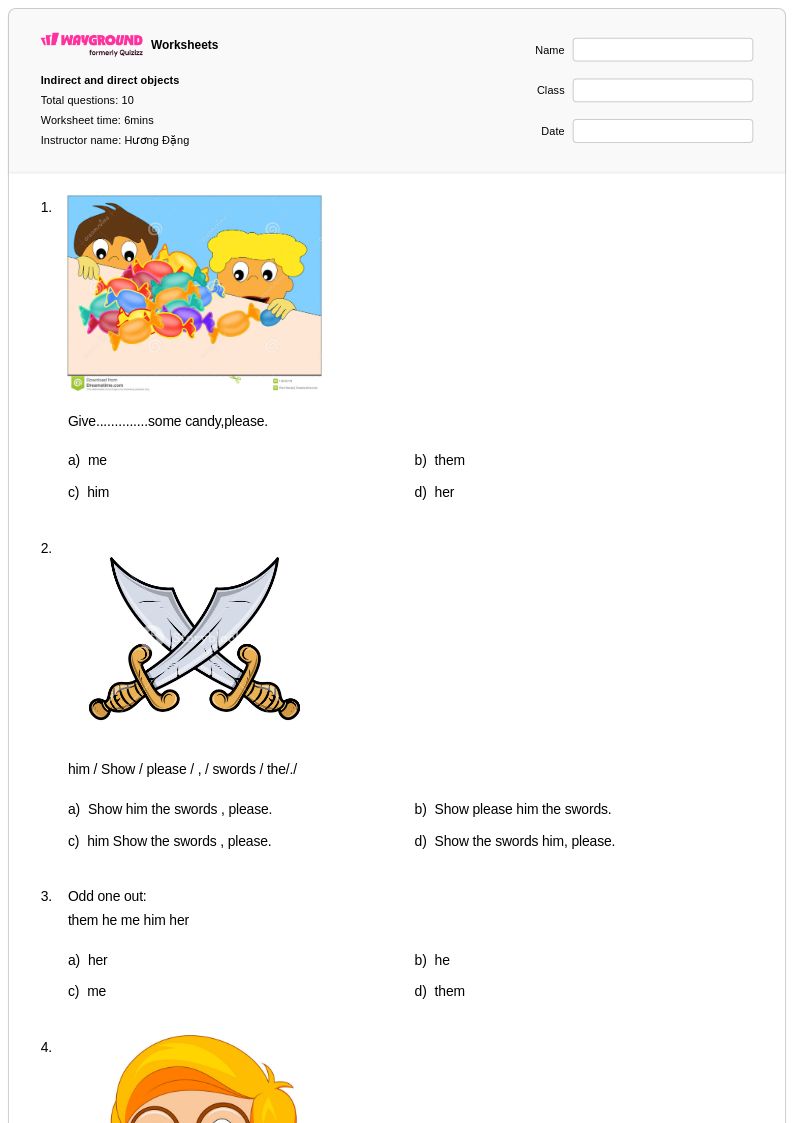
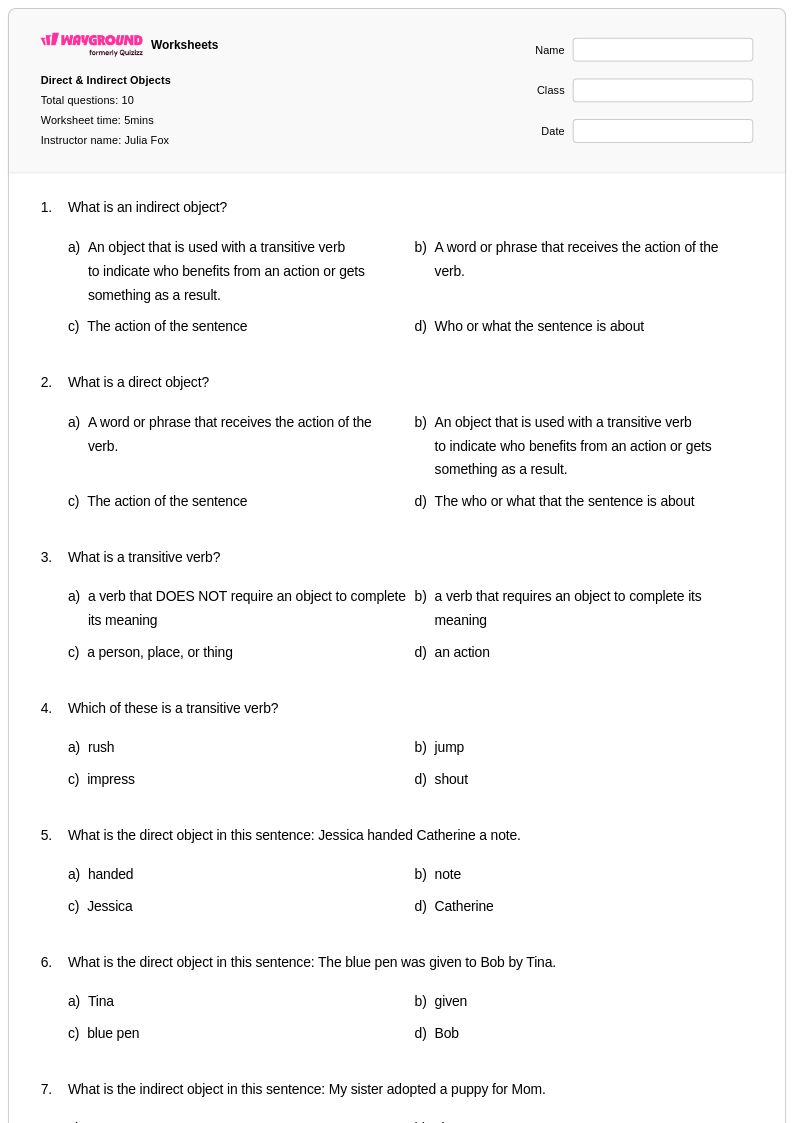
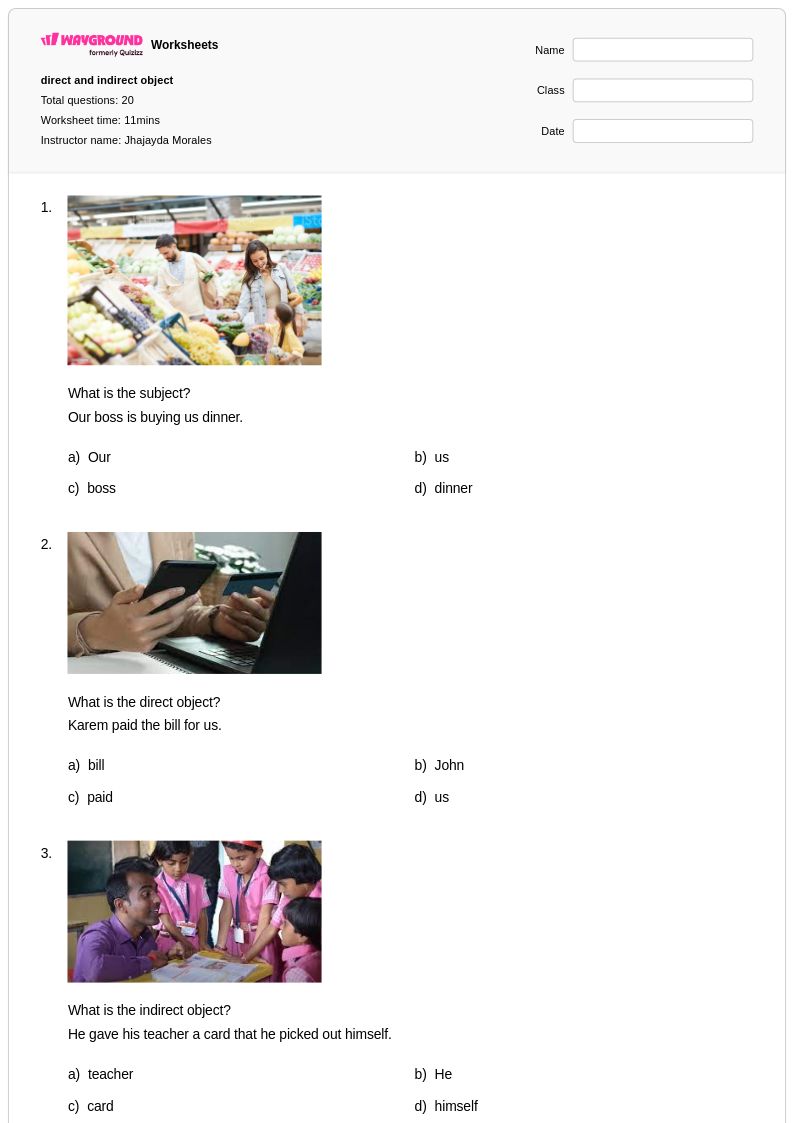
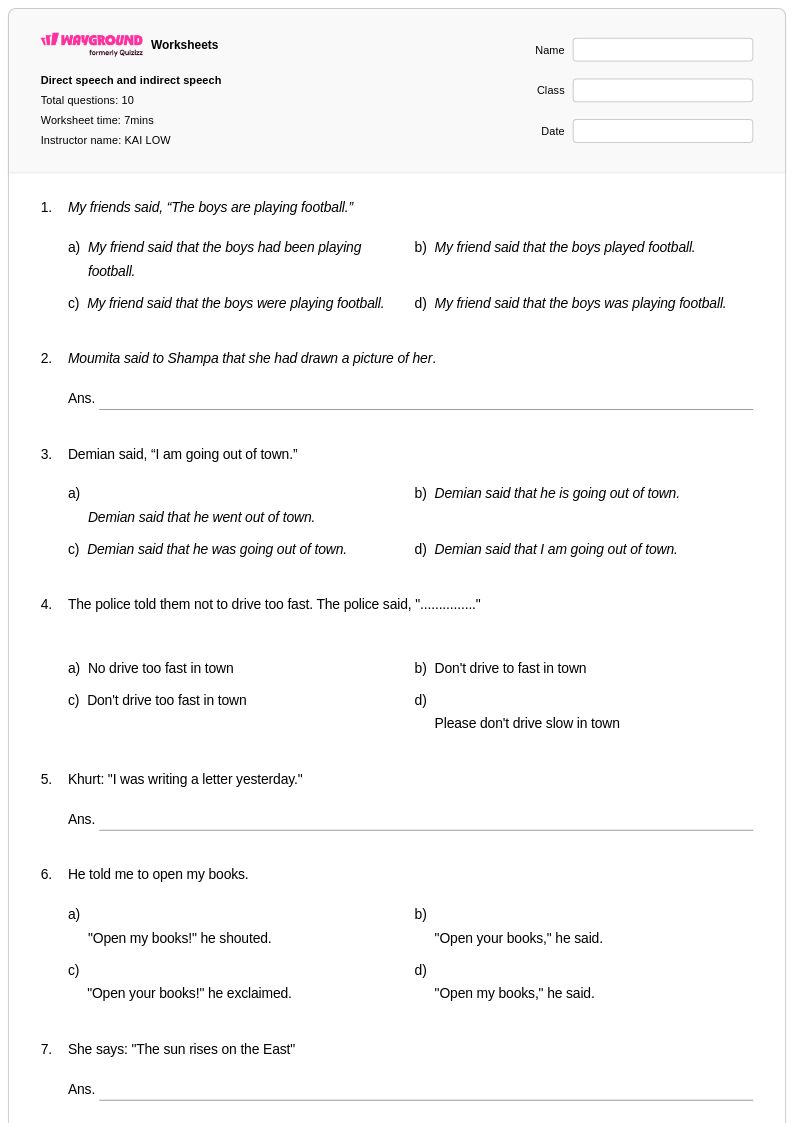
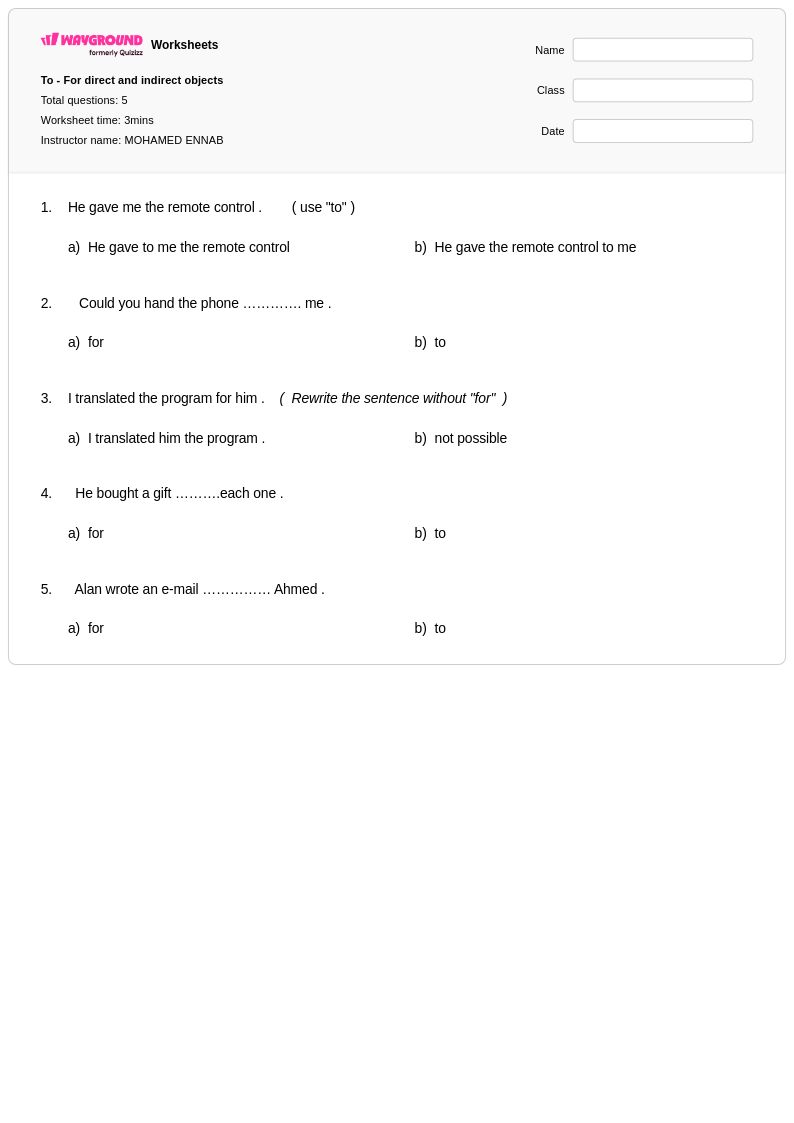
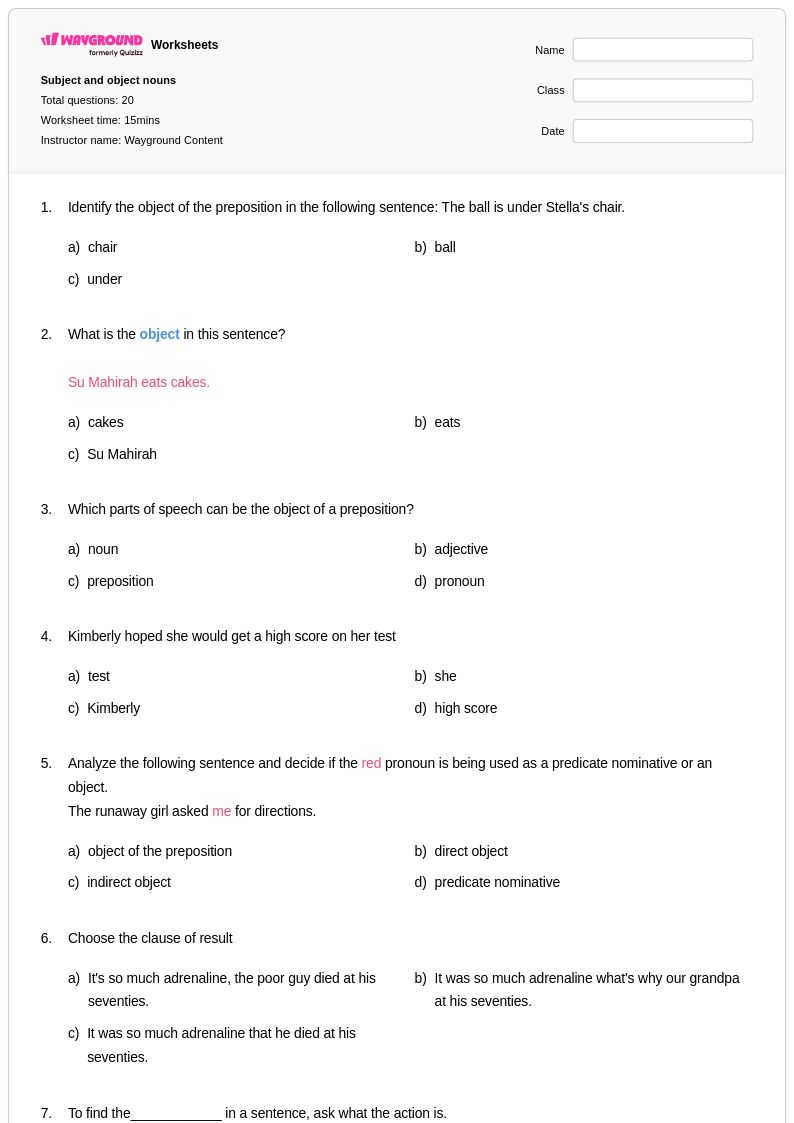
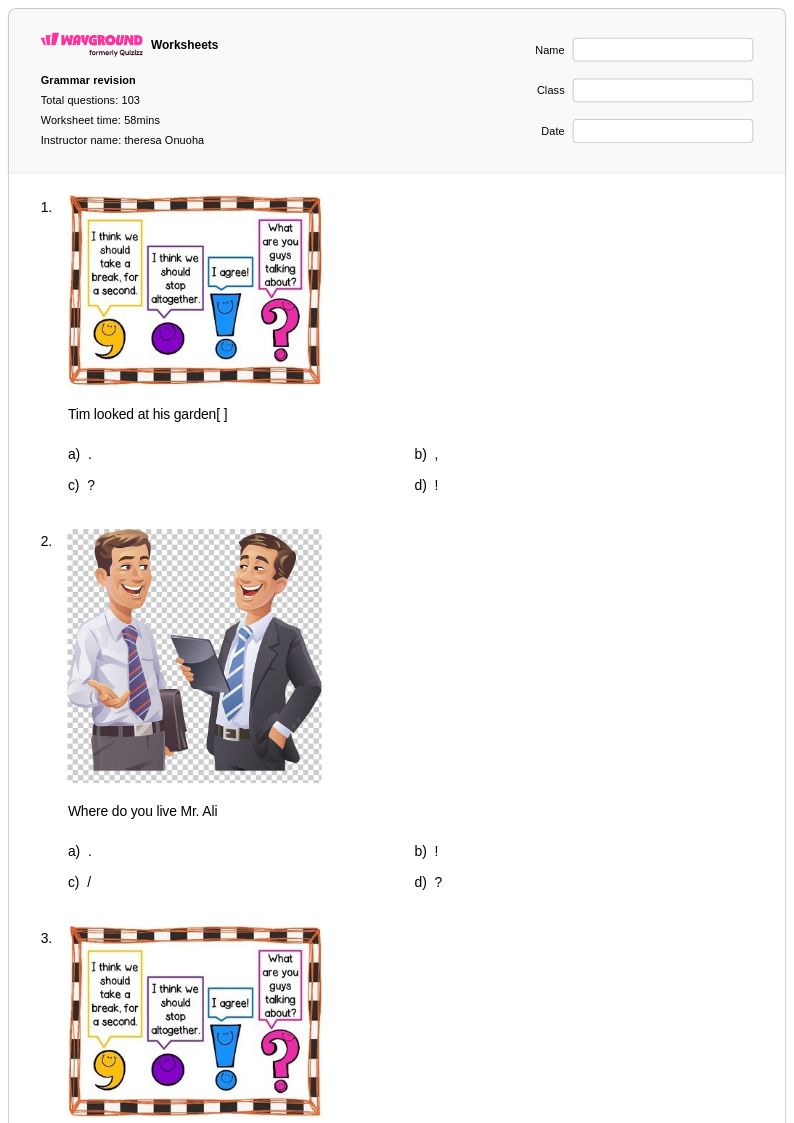
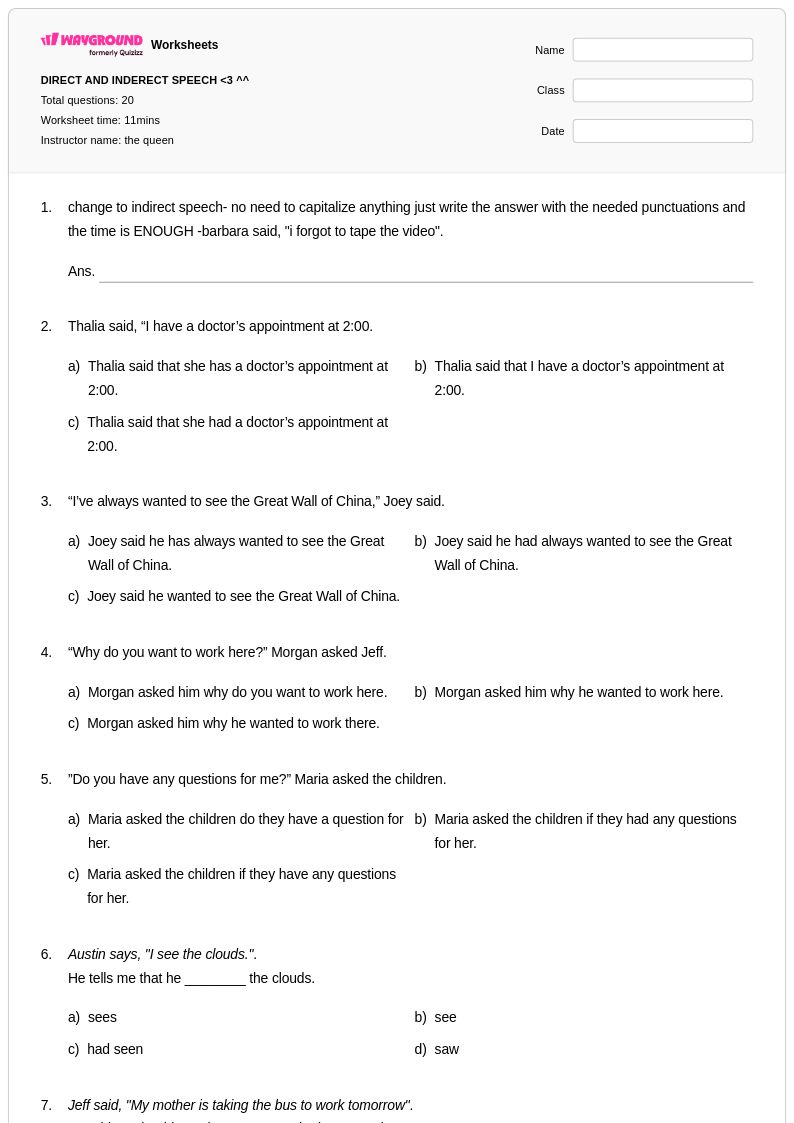
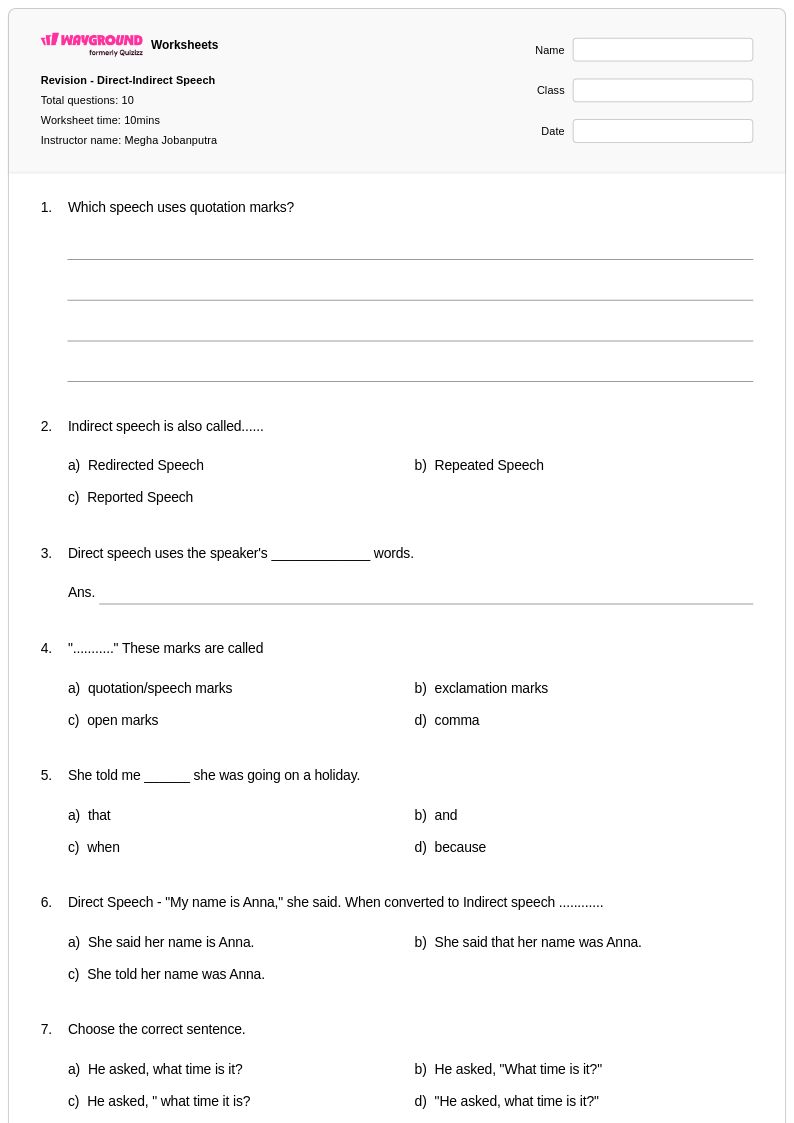
Direct and indirect objects form a crucial foundation in Class 3 grammar instruction, helping young learners understand how nouns and pronouns function beyond the basic subject-verb relationship in sentences. Wayground's comprehensive collection of direct and indirect objects worksheets provides third-grade students with systematic practice in identifying these essential sentence components through engaging activities and structured exercises. These printable resources strengthen students' ability to recognize when nouns receive the action of a verb directly or when they indicate to whom or for whom an action is performed, building critical analytical skills that support both reading comprehension and writing development. Each worksheet includes clear examples, progressive difficulty levels, and complete answer keys that enable independent practice while ensuring students can verify their understanding of these fundamental grammatical concepts through targeted practice problems.
Wayground's extensive library draws from millions of teacher-created resources specifically designed to support educators in delivering effective grammar and mechanics instruction at the third-grade level. The platform's advanced search and filtering capabilities allow teachers to quickly locate direct and indirect objects worksheets that align with specific learning objectives and curriculum standards, while built-in differentiation tools enable customization based on individual student needs and proficiency levels. These versatile materials are available in both digital and printable PDF formats, providing flexibility for classroom instruction, homework assignments, remediation sessions, and enrichment activities. Teachers can seamlessly integrate these resources into lesson planning, using them to reinforce grammatical concepts, assess student progress, and provide additional practice opportunities that help solidify understanding of how objects function within sentence structures.
FAQs
How do I teach direct and indirect objects to students who are new to the concept?
Start by teaching direct objects in isolation before introducing indirect objects, since students need to reliably identify what receives the action before they can distinguish who receives it. Use simple, familiar sentences (e.g., 'She threw the ball to Marcus') and have students ask 'what?' or 'whom?' after the verb to locate the direct object, then ask 'to whom?' or 'for whom?' to find the indirect object. Color-coding each grammatical role in practice sentences helps students visually separate the two elements before working with them analytically.
What exercises help students practice identifying direct and indirect objects?
Sentence-labeling exercises where students underline and annotate objects in varied sentence types are the most effective entry-level practice. Progressing to sentence construction tasks, where students must write original sentences using both a direct and indirect object, reinforces understanding at a deeper level. Varied exercise formats, from identification drills to sentence rewriting, help students internalize the distinction across different contexts rather than pattern-matching on a single sentence type.
What mistakes do students commonly make when identifying direct and indirect objects?
The most common error is confusing the indirect object with a prepositional phrase, particularly when the indirect object is expressed as 'to [person]' rather than placed before the direct object (e.g., 'She gave Marcus the book' vs. 'She gave the book to Marcus'). Students also frequently mislabel the indirect object as the direct object when both are present, usually because they stop searching after finding the first noun following the verb. Teaching students to always locate the direct object first and apply the 'to whom/for whom?' test afterward corrects both errors.
How do I use direct and indirect object worksheets effectively in my classroom?
These worksheets are available as printable PDFs for traditional classroom use and in digital formats for technology-integrated environments, which means you can assign them as independent practice, homework, or station work without reformatting. Start with identification-focused sheets to build foundational recognition, then move to construction tasks as students gain confidence. Wayground also allows you to host worksheets as a quiz directly on the platform, giving you built-in assessment data alongside the practice materials.
How do I differentiate direct and indirect object instruction for students at different ability levels?
For struggling students, reduce sentence complexity and focus exclusively on direct objects before introducing indirect objects, and consider using read-aloud support so that decoding difficulty does not interfere with grammar practice. Advanced learners benefit from sentence transformation tasks, such as converting sentences with prepositional phrases into those with indirect objects in canonical position, and vice versa. Wayground's accommodation tools allow teachers to assign reduced answer choices or extended time to individual students without alerting the rest of the class, making differentiation seamless within a shared assignment.
What is the difference between a direct object and an indirect object?
A direct object receives the action of a transitive verb directly and answers the question 'what?' or 'whom?' after the verb (e.g., 'She baked a cake'). An indirect object identifies to whom or for whom the action is performed and always appears in a sentence that also contains a direct object (e.g., 'She baked her sister a cake'). The indirect object can typically be rewritten as a prepositional phrase using 'to' or 'for' without changing the sentence's meaning, which is a reliable test students can apply.