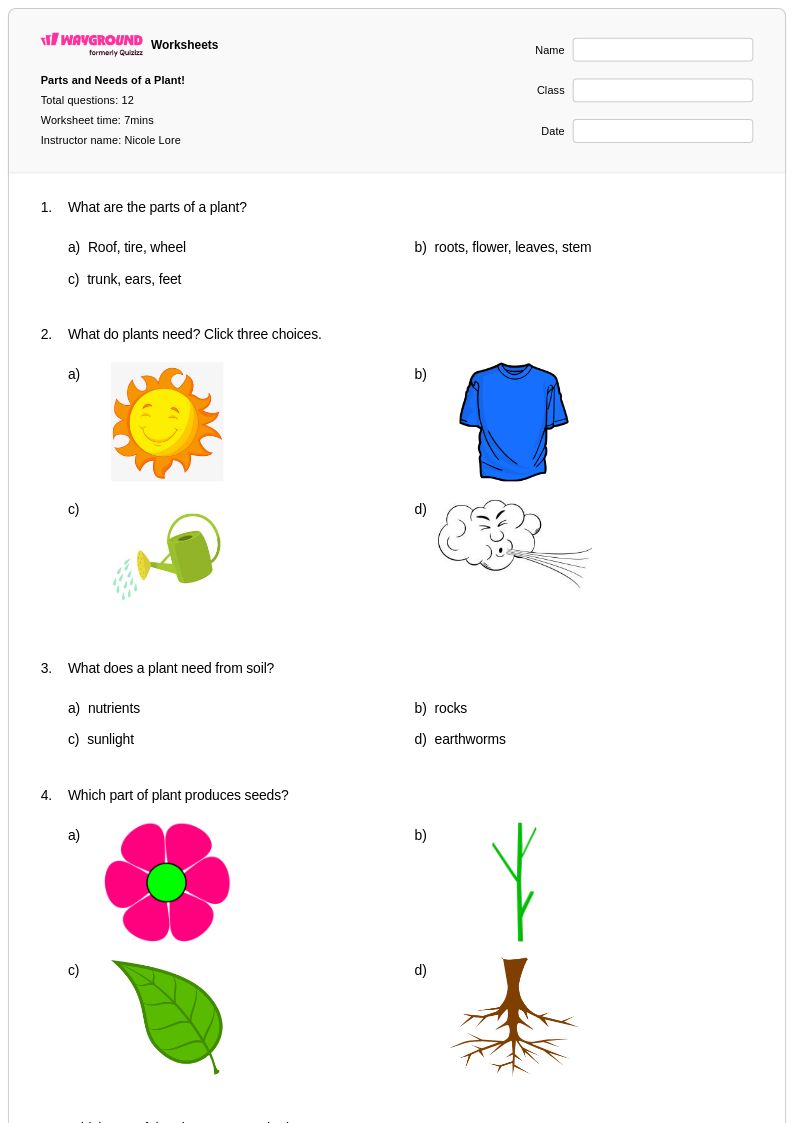
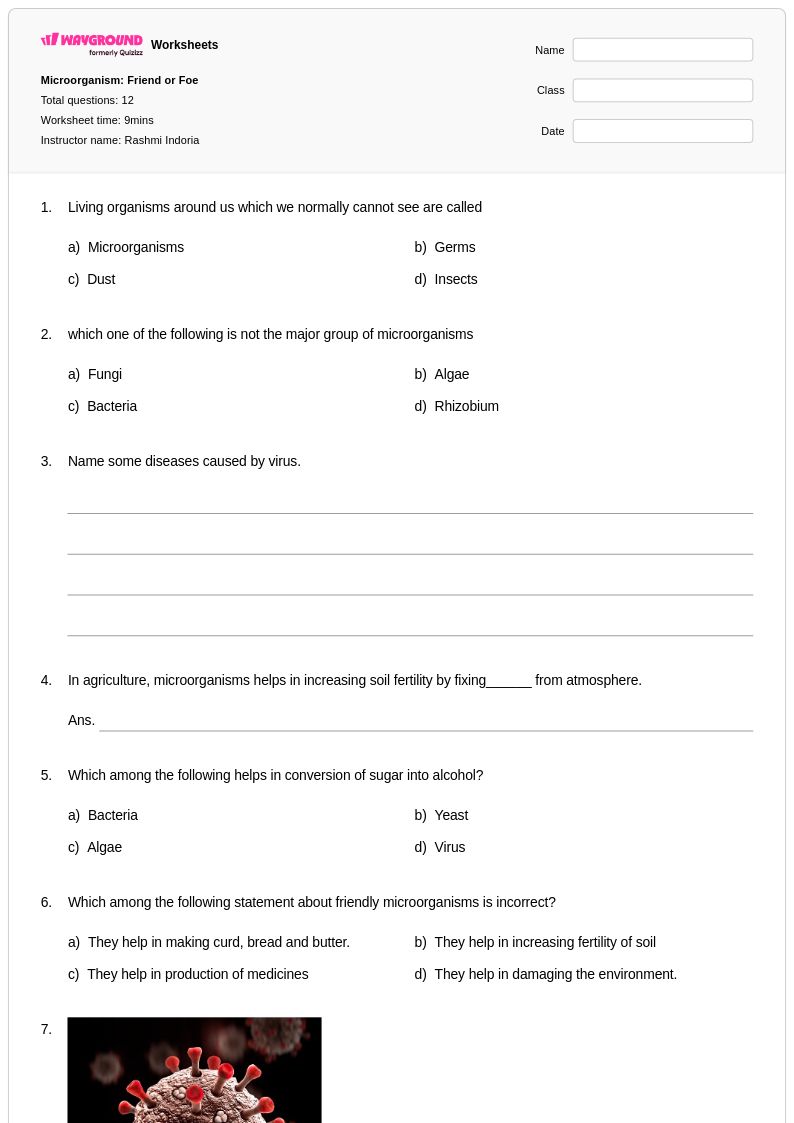
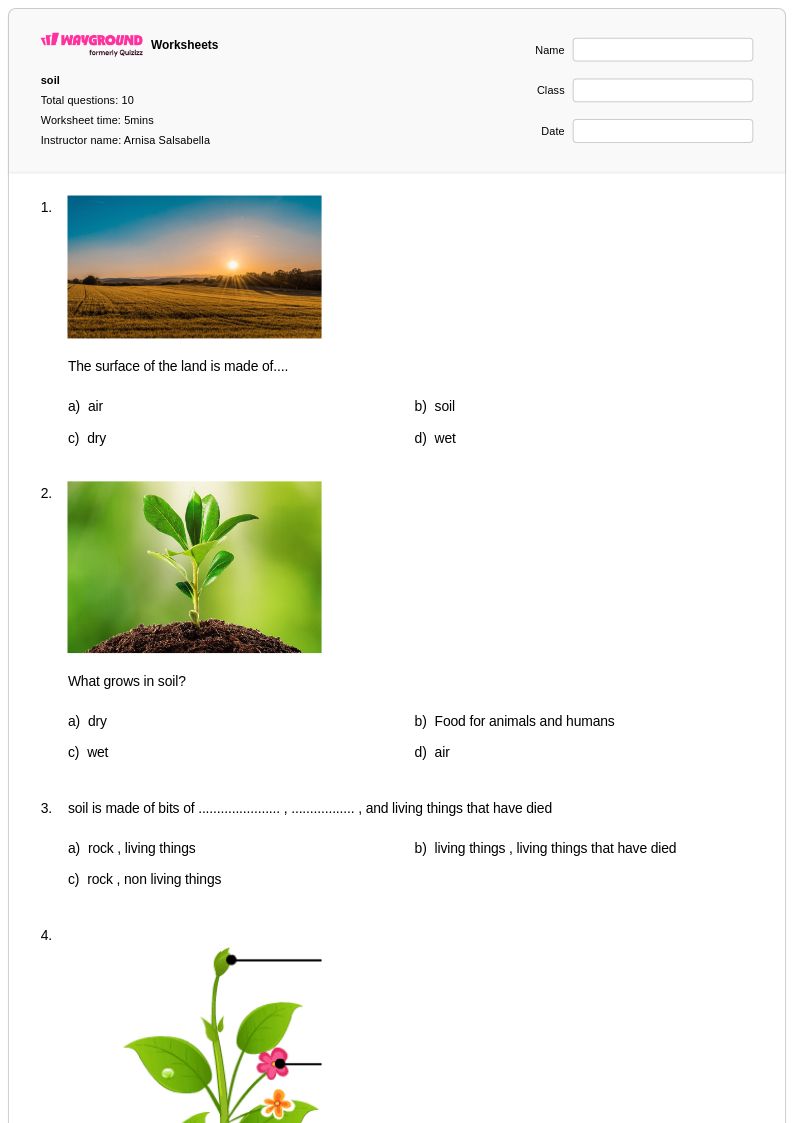
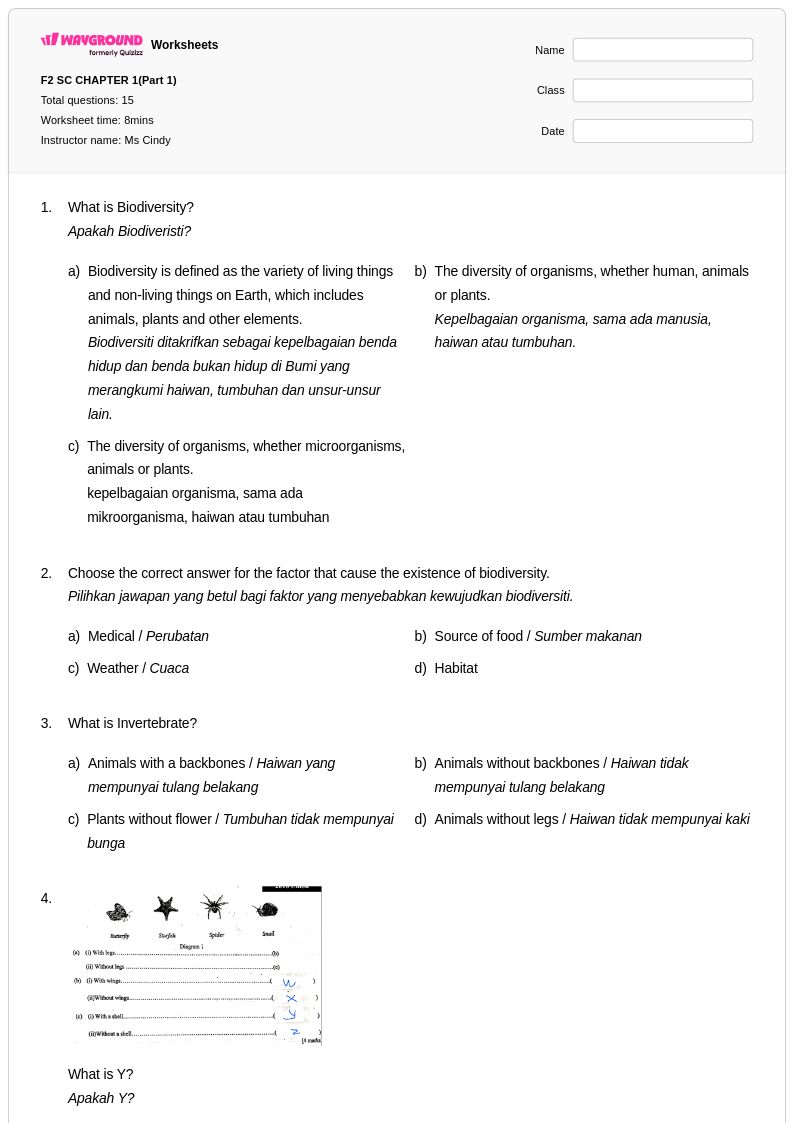
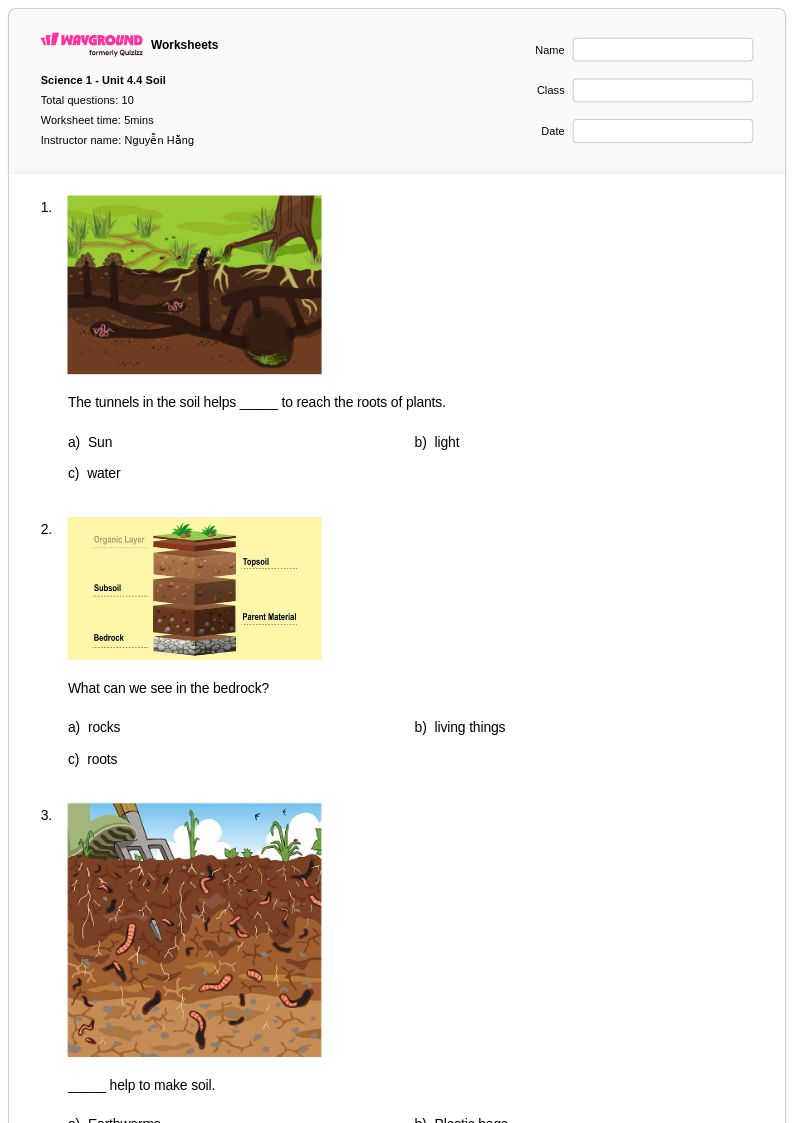
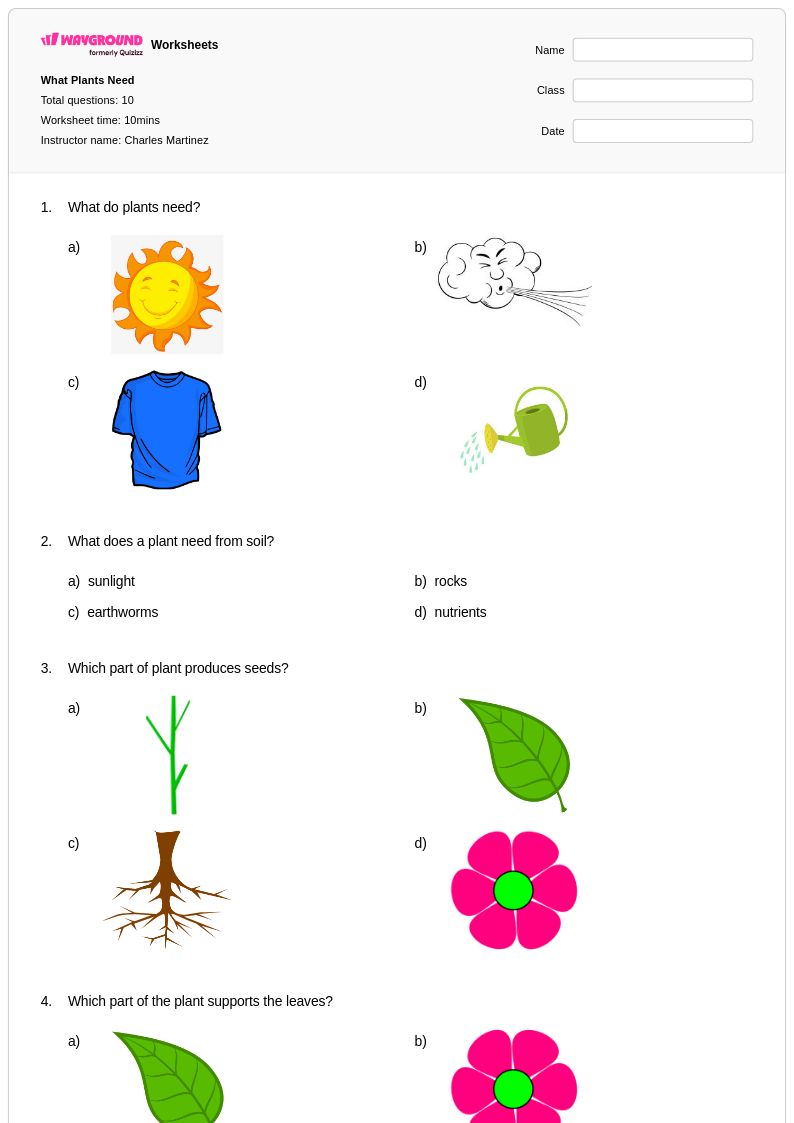
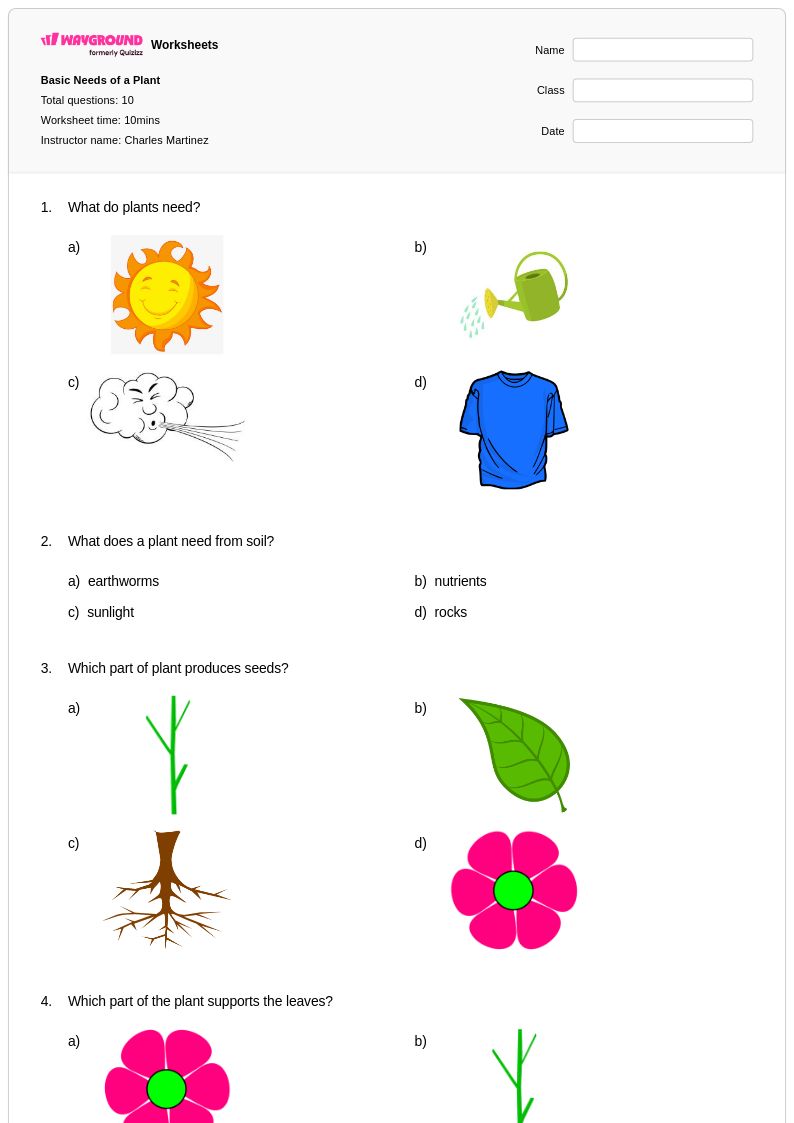
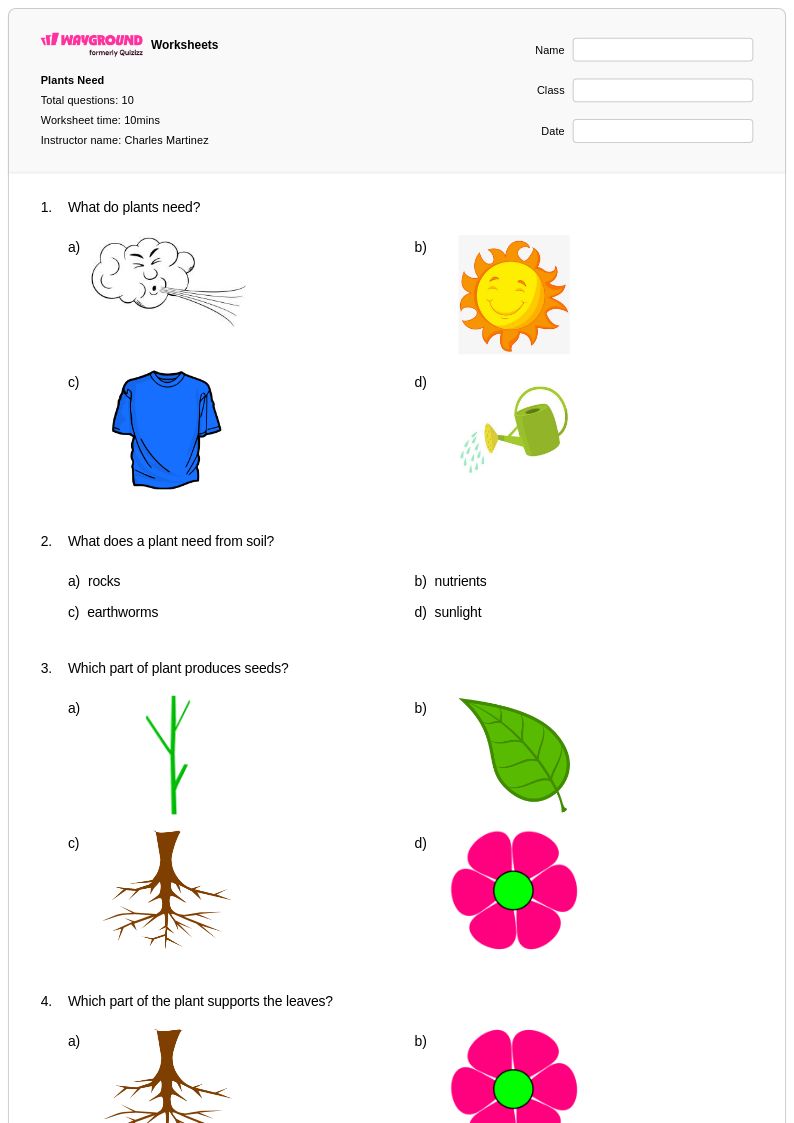
Discover free Class 1 earthworm worksheets and printables from Wayground that help young scientists learn about these fascinating creatures through engaging practice problems, activities, and comprehensive answer keys.
Explore printable Earthworm worksheets for Class 1
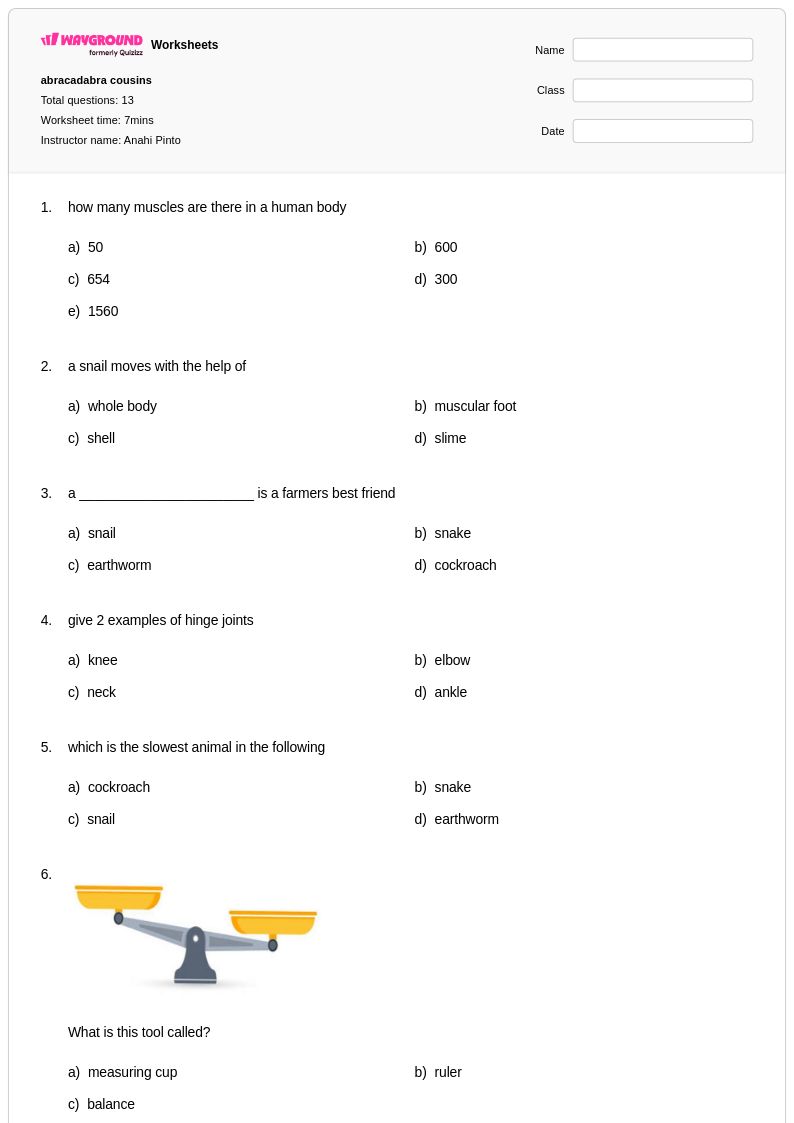
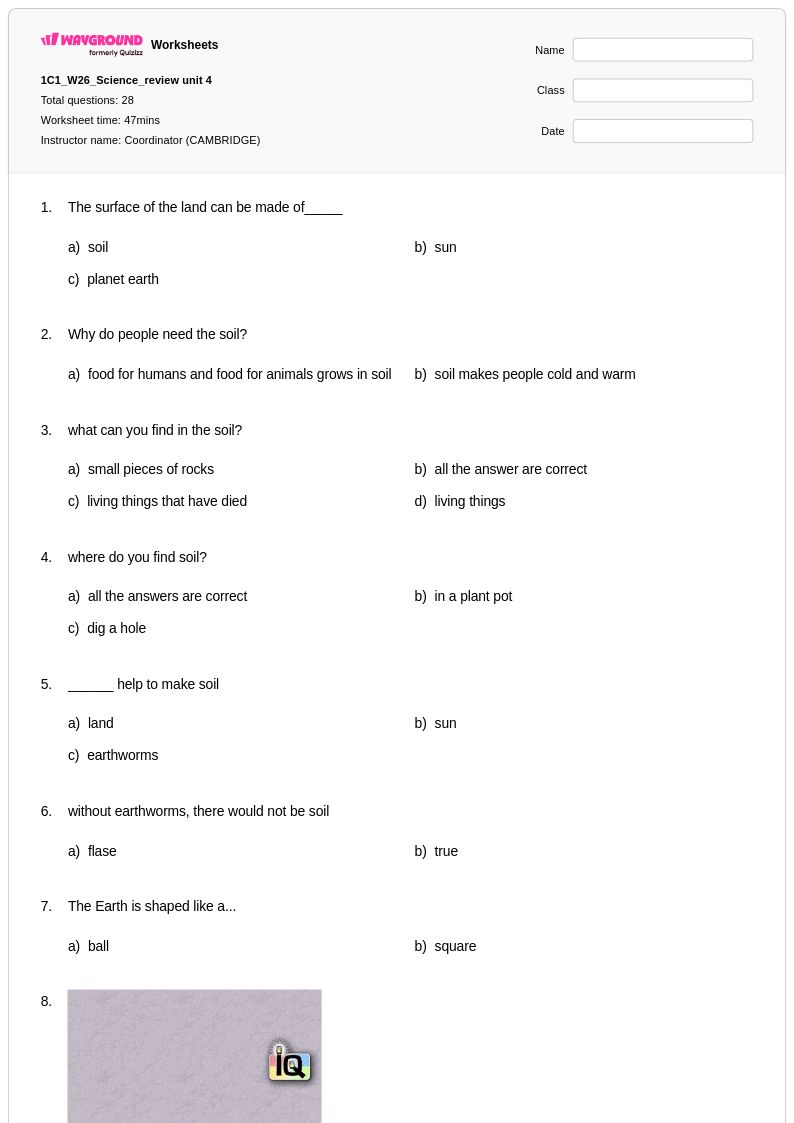
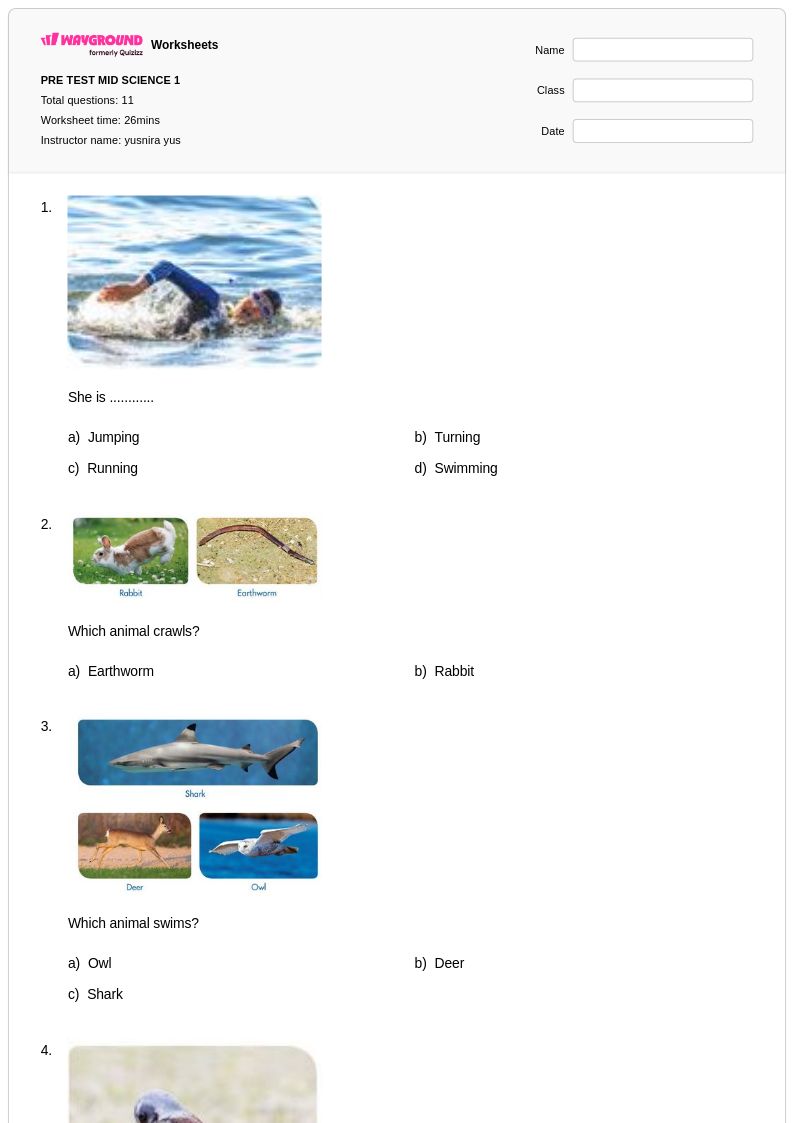
Class 1 earthworm worksheets available through Wayground provide young learners with engaging opportunities to explore these fascinating soil-dwelling creatures through age-appropriate scientific observation and inquiry. These carefully designed educational materials strengthen foundational life science skills by encouraging students to examine earthworm body parts, habitat requirements, and basic life processes through guided activities that promote scientific thinking and vocabulary development. The comprehensive collection includes practice problems that help first graders identify earthworm characteristics, understand their role in soil health, and make connections between living organisms and their environments. Teachers can access printable resources with accompanying answer keys, ensuring efficient lesson preparation and assessment, while free materials support classroom instruction with diverse learning activities presented in convenient pdf formats.
Wayground's extensive library supports educators with millions of teacher-created earthworm resources specifically curated for Class 1 life science instruction, featuring robust search and filtering capabilities that allow teachers to quickly locate materials aligned with curriculum standards and learning objectives. The platform's differentiation tools enable instructors to customize worksheets for varying ability levels within their classrooms, while flexible formatting options provide both printable and digital versions to accommodate different teaching preferences and technology availability. These comprehensive features streamline lesson planning by offering ready-to-use materials for skill practice, targeted remediation for struggling learners, and enrichment opportunities for advanced students, ultimately supporting effective instruction that helps first graders develop essential scientific observation skills while building foundational knowledge about earthworms and their ecological importance.
FAQs
How do I teach earthworm anatomy to my students?
Start by introducing the major external features of an earthworm, including its segments, clitellum, prostomium, and setae, before moving to internal structures like the digestive tract, circulatory system, and reproductive organs. Using labeled diagram worksheets helps students connect terminology to structure in a visual and organized way. Building from external to internal anatomy mirrors the scientific observation process and reduces cognitive overload for students encountering invertebrate biology for the first time.
What exercises help students practice understanding earthworm biology?
Effective practice exercises include labeling anatomical diagrams, matching functions to organ systems, sequencing the steps of earthworm digestion, and analyzing the earthworm's role in decomposition and soil health. Classification tasks that place earthworms within the annelid phylum and broader animal kingdom reinforce taxonomic reasoning alongside content knowledge. These varied exercise types ensure students practice both recall and application of core earthworm biology concepts.
What mistakes do students commonly make when learning about earthworms?
A frequent misconception is that earthworms breathe through lungs or gills when in fact they perform gas exchange through their moist skin, making cutaneous respiration a key concept to address explicitly. Students also commonly confuse the clitellum's reproductive role with a general body segment, and may struggle to distinguish the earthworm's closed circulatory system from the open systems found in other invertebrates. Pointing out these distinctions directly during instruction and using targeted practice problems helps students avoid carrying these errors forward.
Why are earthworms important to teach in life science?
Earthworms serve as an accessible and ecologically significant model organism for teaching core biology concepts including segmentation, organ system function, and decomposer roles in ecosystems. Their status as bioindicators of soil and environmental quality also connects life science content to real-world environmental literacy. Teaching earthworm biology gives students a concrete entry point into invertebrate zoology and ecological relationships within food webs and nutrient cycles.
How can I use earthworm worksheets in my classroom?
Earthworm worksheets on Wayground are available as printable PDFs for traditional classroom use and in digital formats for technology-integrated environments, making them flexible for in-person, hybrid, or remote instruction. Teachers can also host worksheets as a quiz directly on Wayground, enabling real-time student responses and immediate feedback. Each worksheet includes a corresponding answer key, supporting both teacher-led review and independent student self-assessment.
How do I differentiate earthworm instruction for students at different levels?
For introductory learners, focus on basic external anatomy and the earthworm's role in soil decomposition using simplified diagram worksheets and matching activities. More advanced students can engage with investigations of the earthworm's closed circulatory system, its classification within Annelida, and its ecological significance as a bioindicator of environmental quality. On Wayground, teachers can also apply individual accommodations such as read aloud support, reduced answer choices, or extended time to meet the needs of specific students without disrupting the rest of the class.