
Recommended Topics for you
- Capitalism
- Earned Income
- Economy
- Factors of Production
- Family Finances
- Food Production and Distribution
- Goods and Services
- Needs and Wants
- Parts of a Check
- Personal Allowance
- Producers and Consumers
- Scarcity
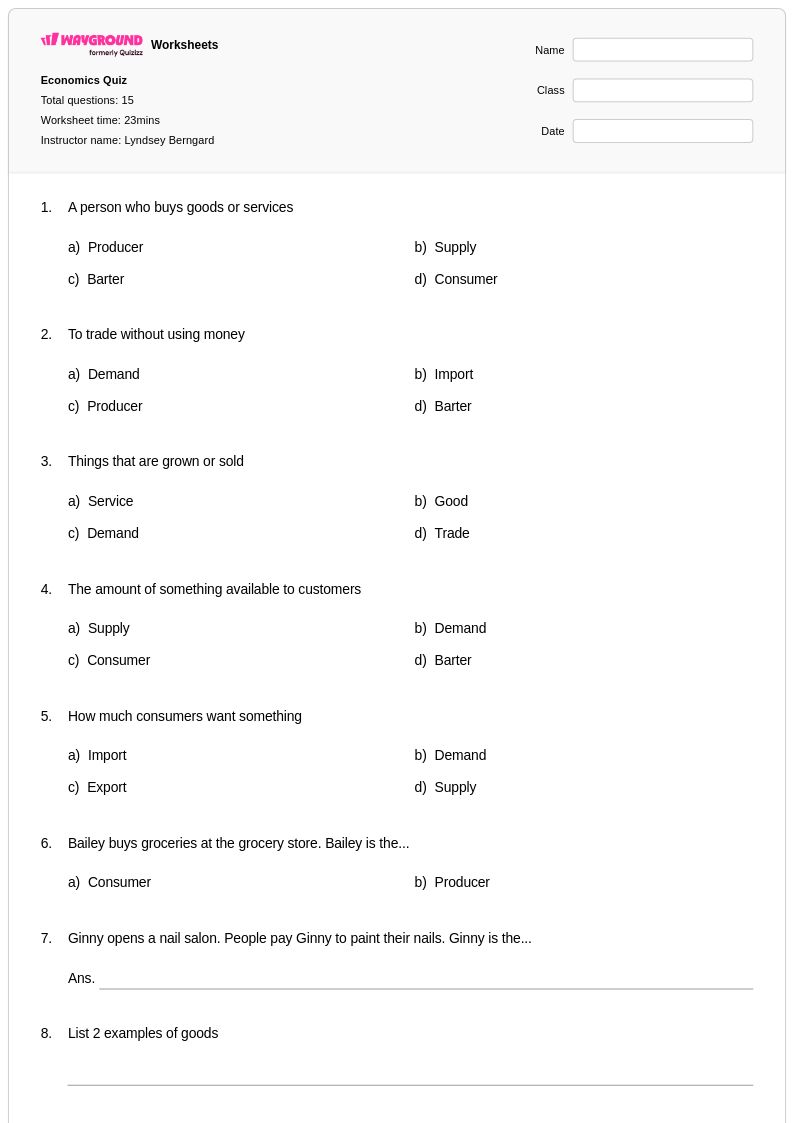
15 Q
3rd
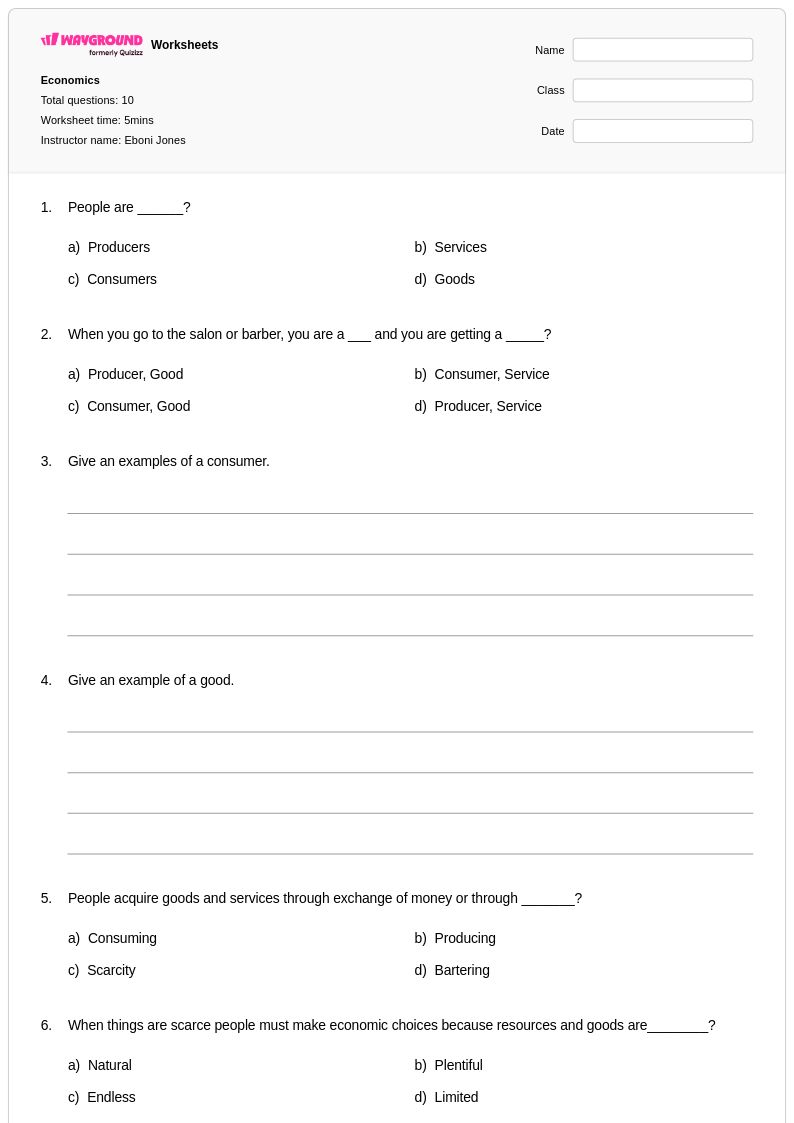
10 Q
KG - 3rd
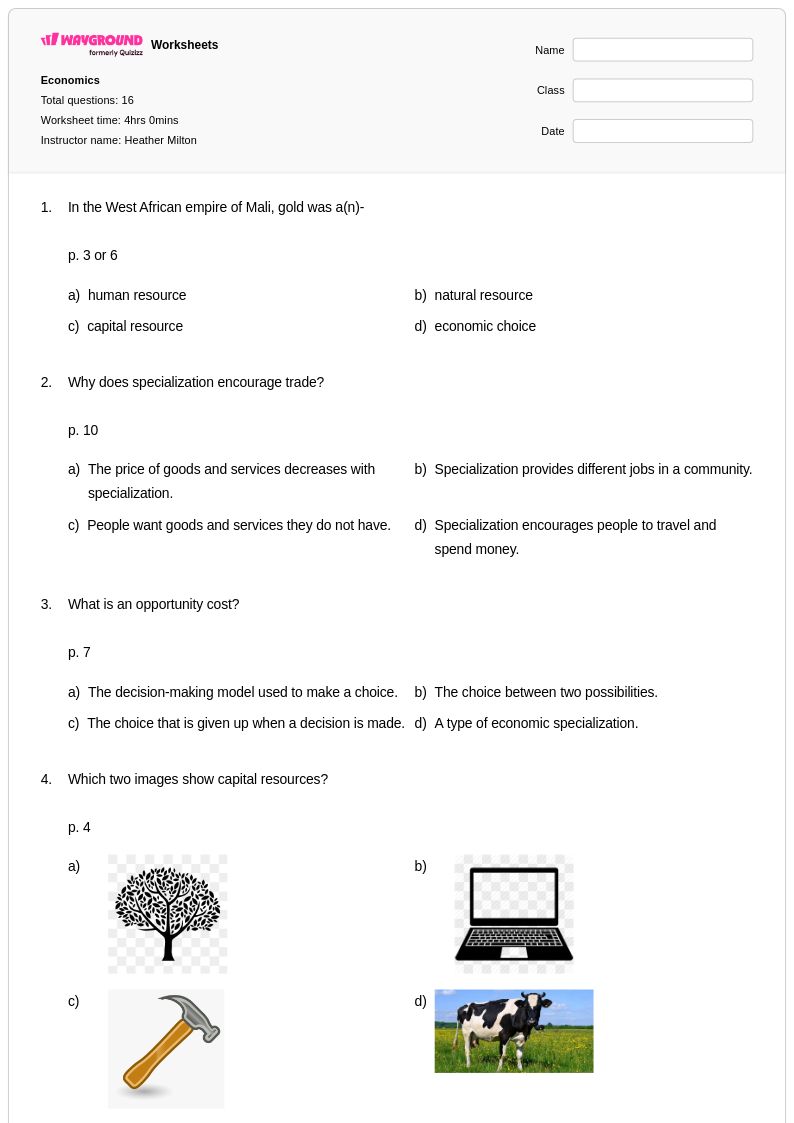
16 Q
3rd
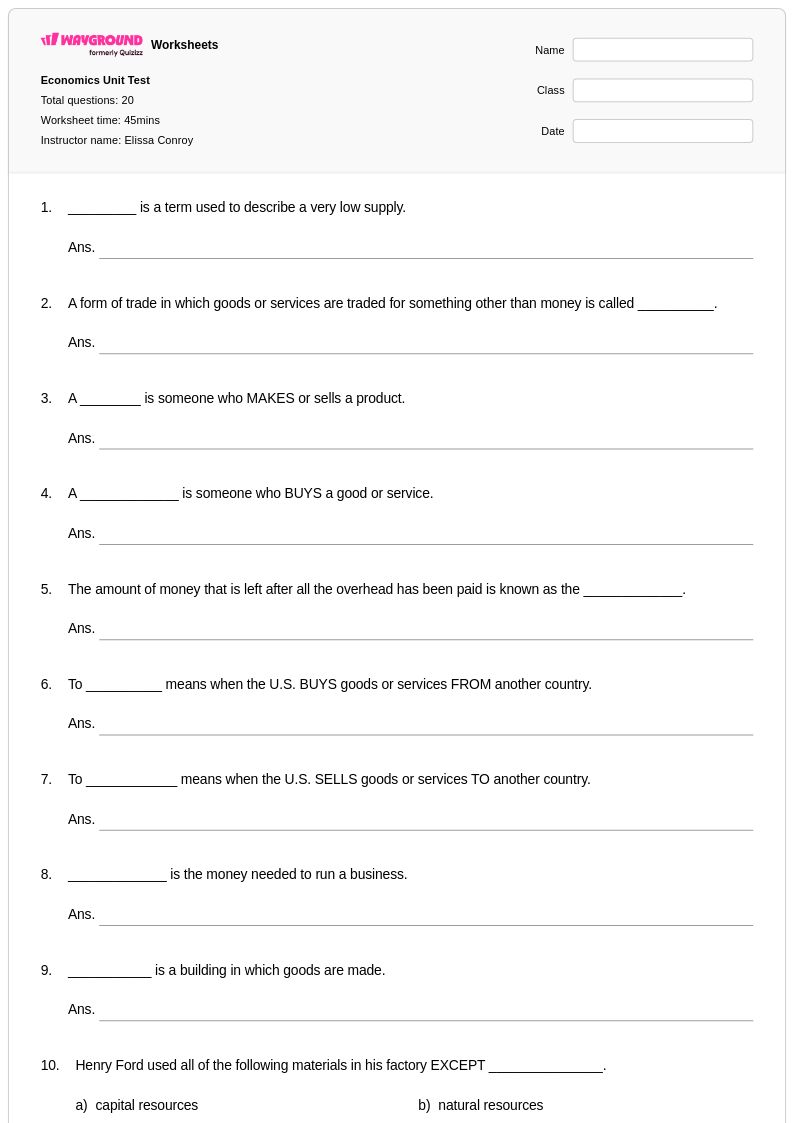
20 Q
3rd
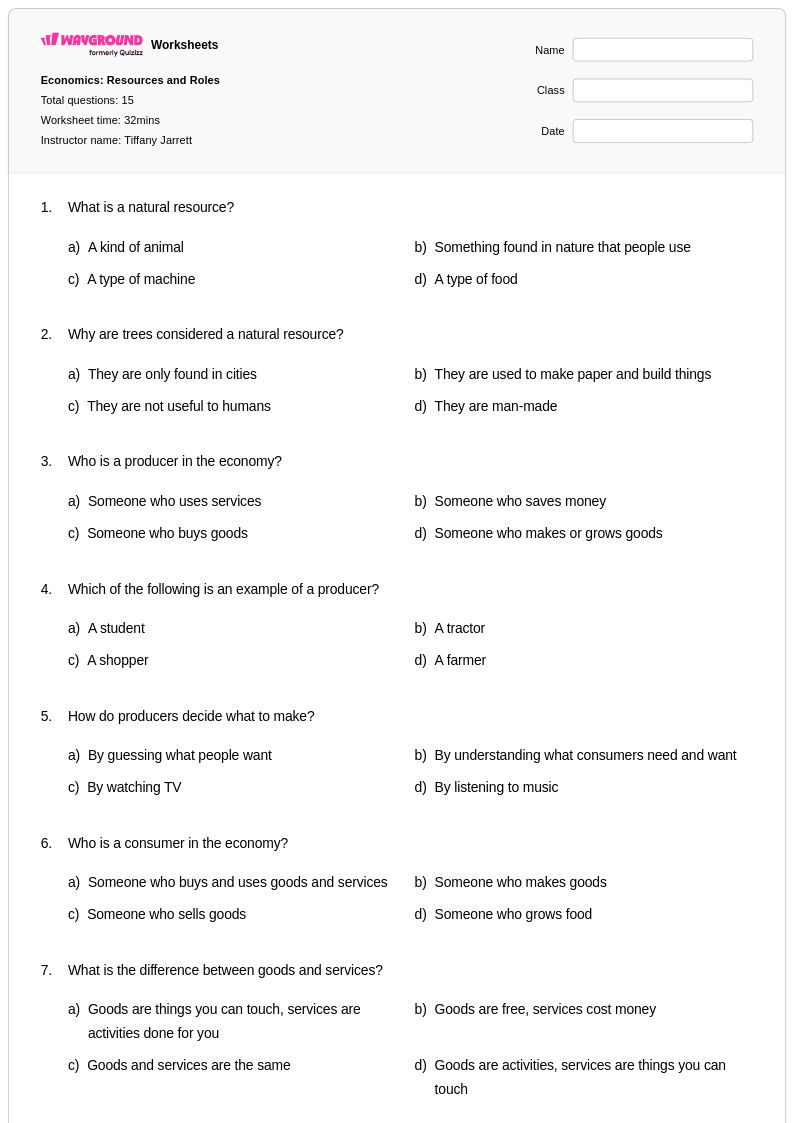
15 Q
3rd
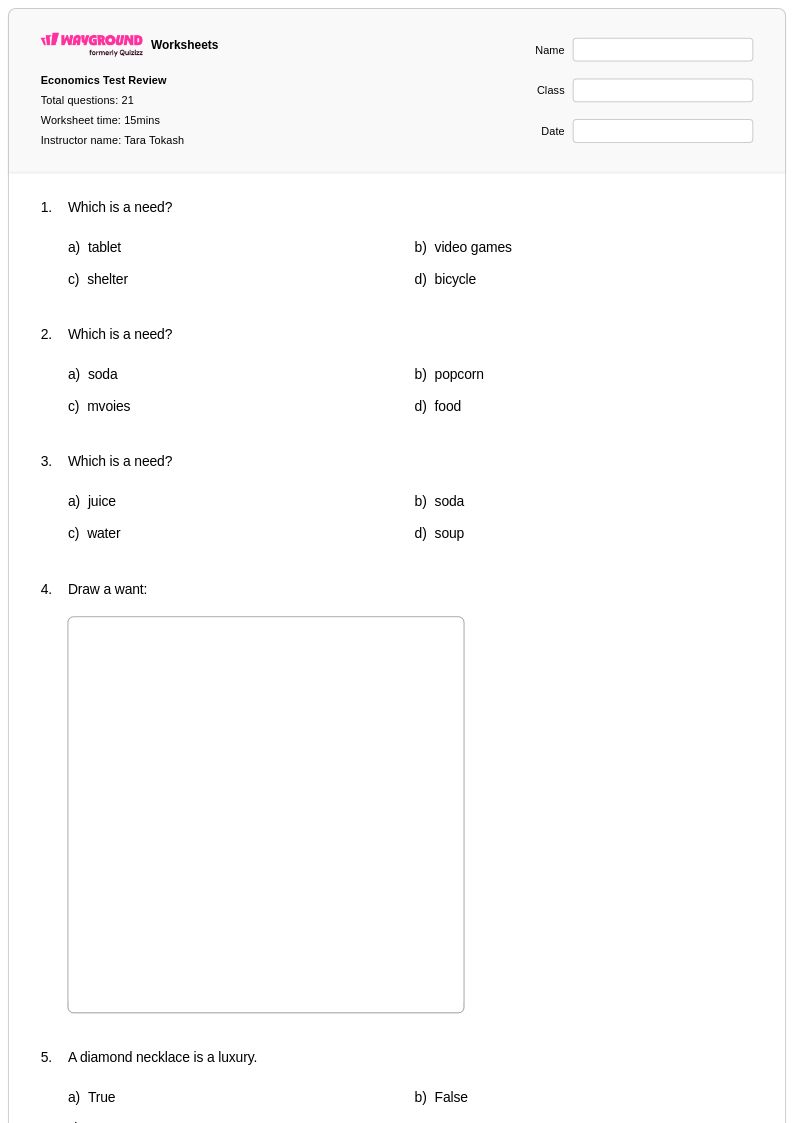
21 Q
3rd
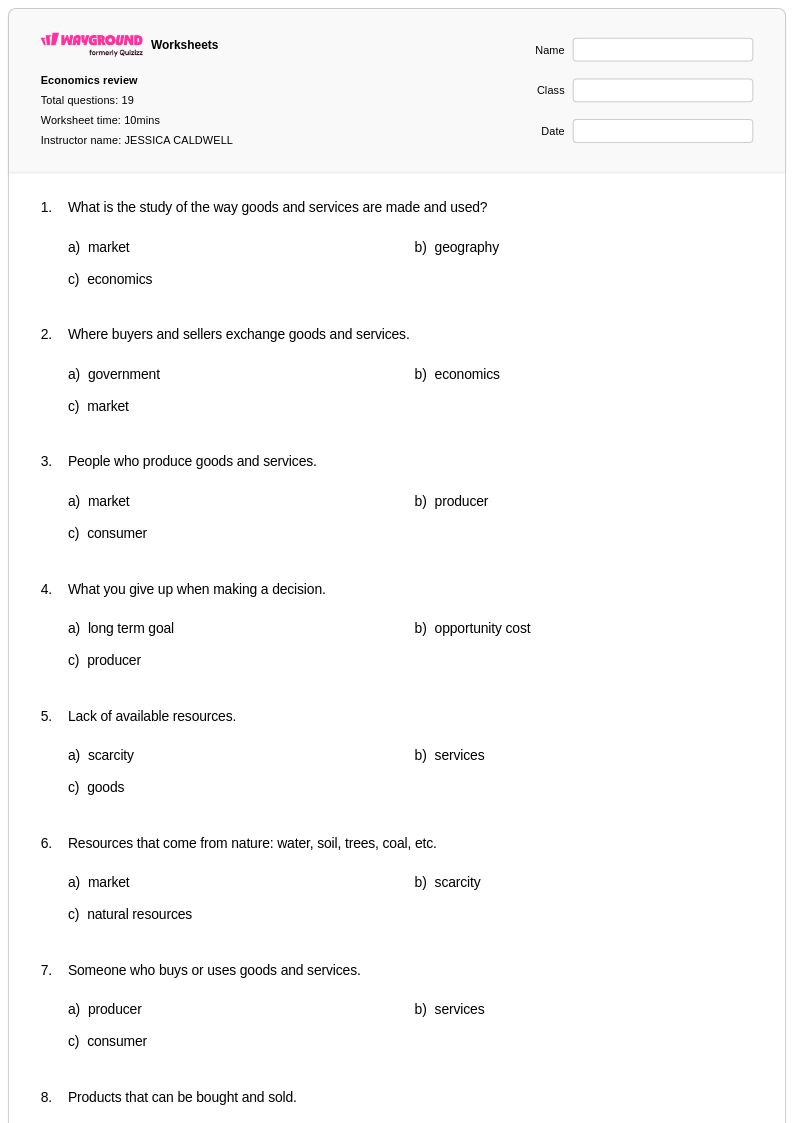
19 Q
3rd
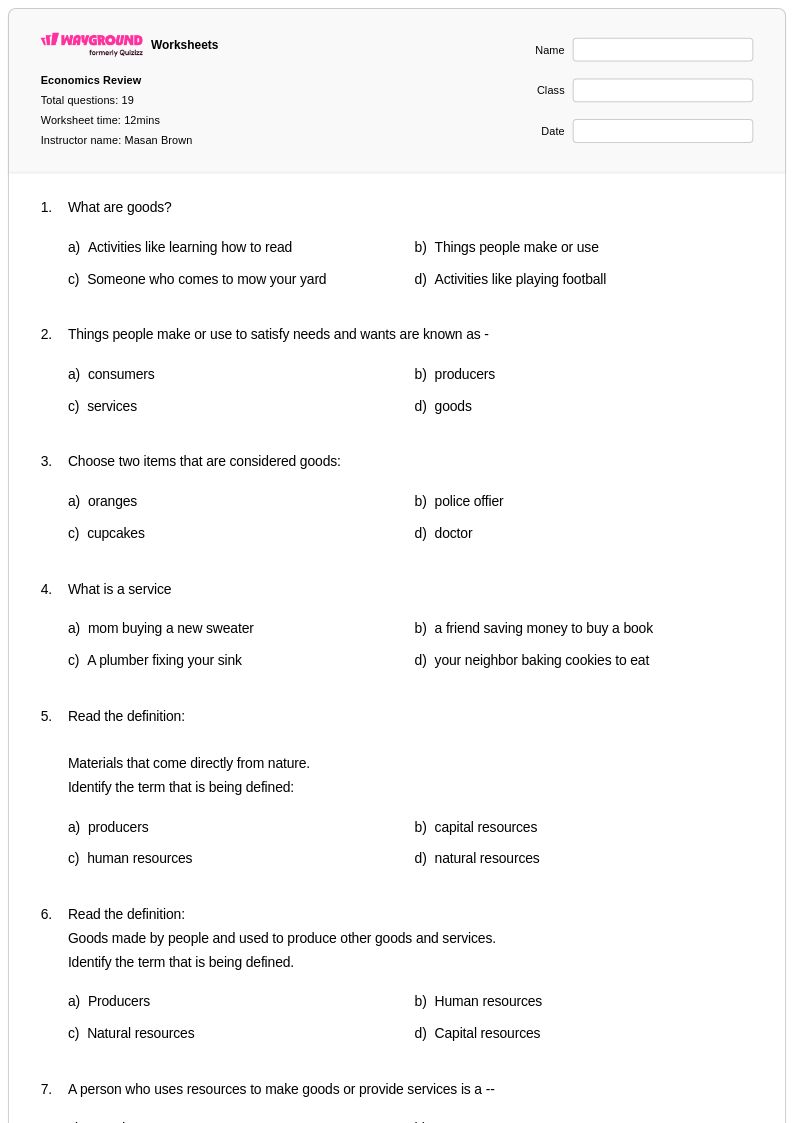
19 Q
3rd
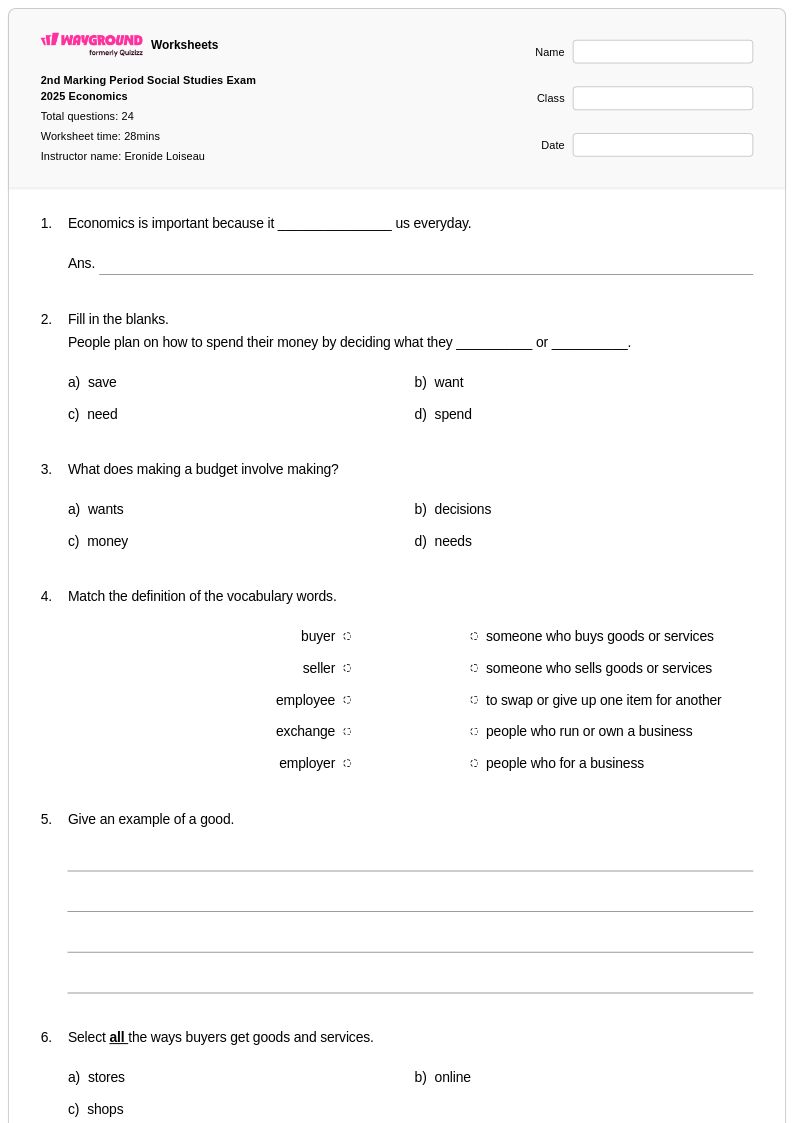
24 Q
3rd
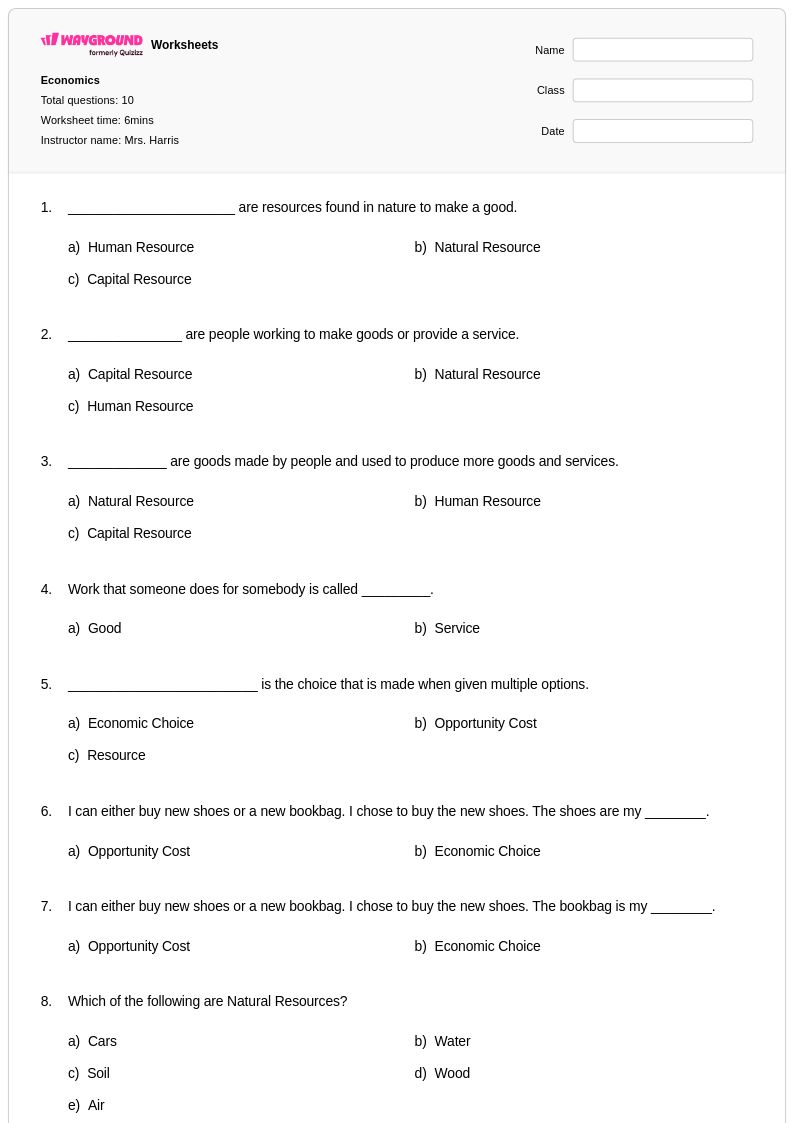
10 Q
3rd
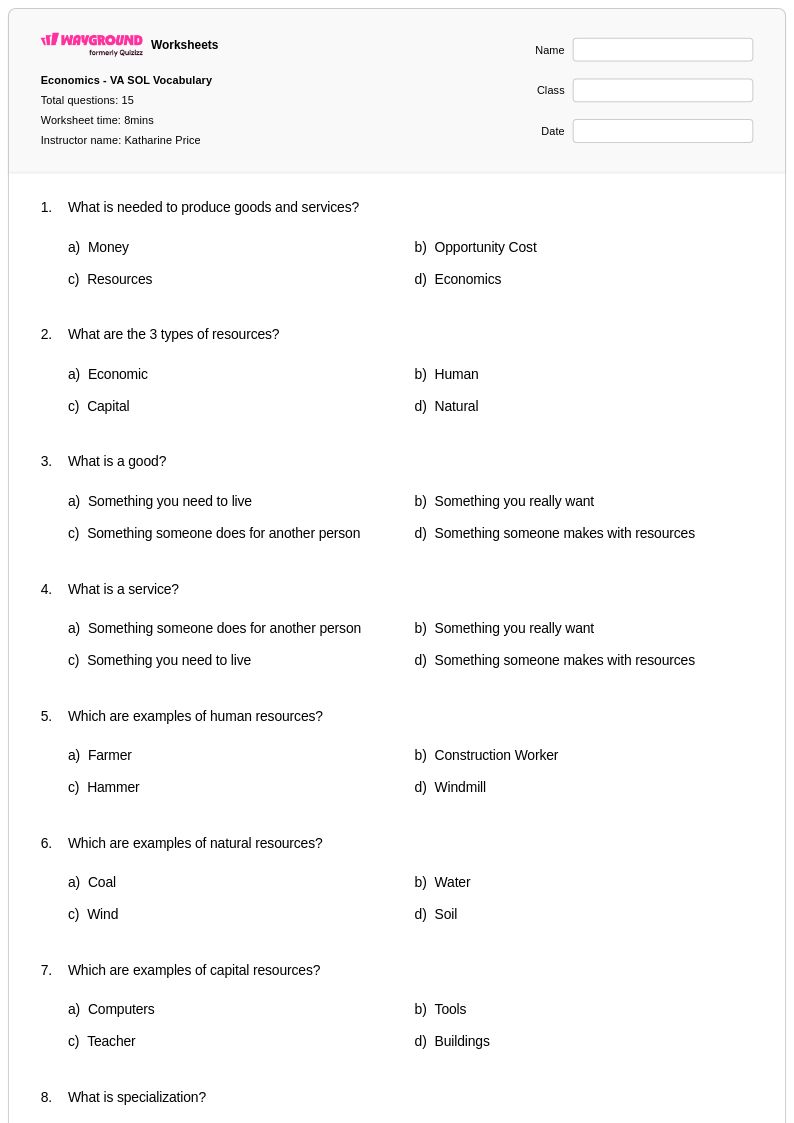
15 Q
3rd
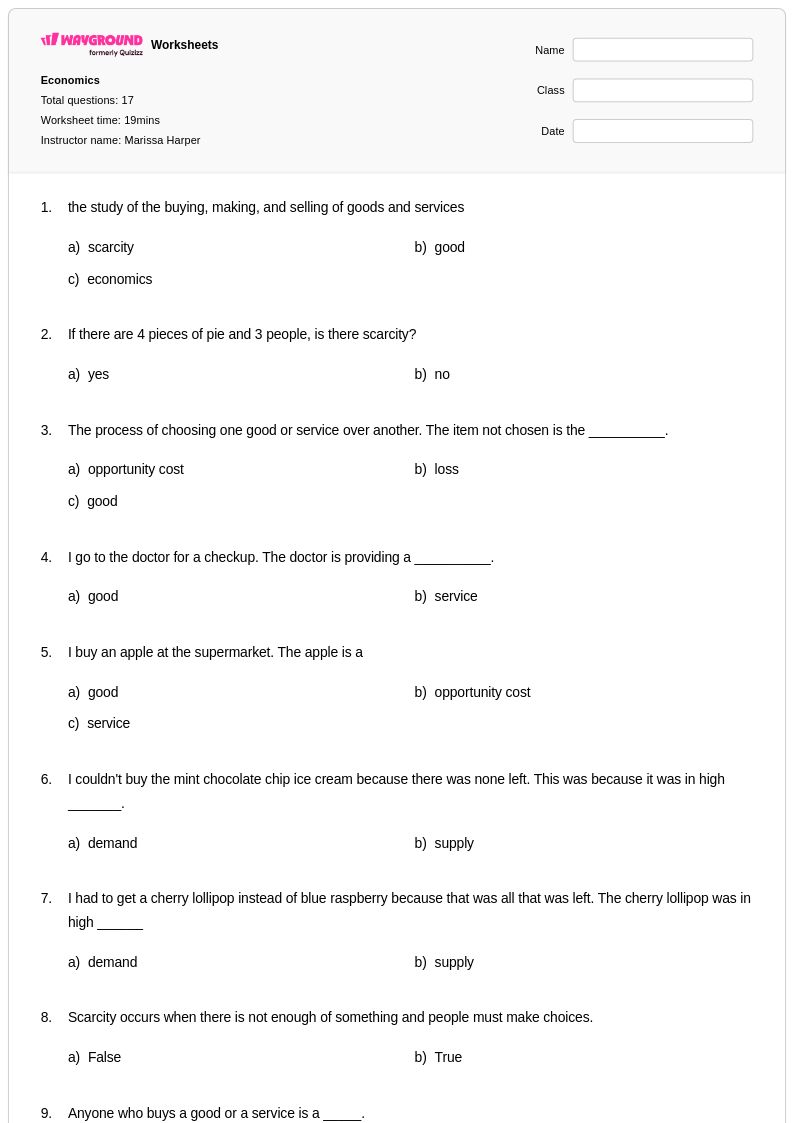
17 Q
3rd - 4th
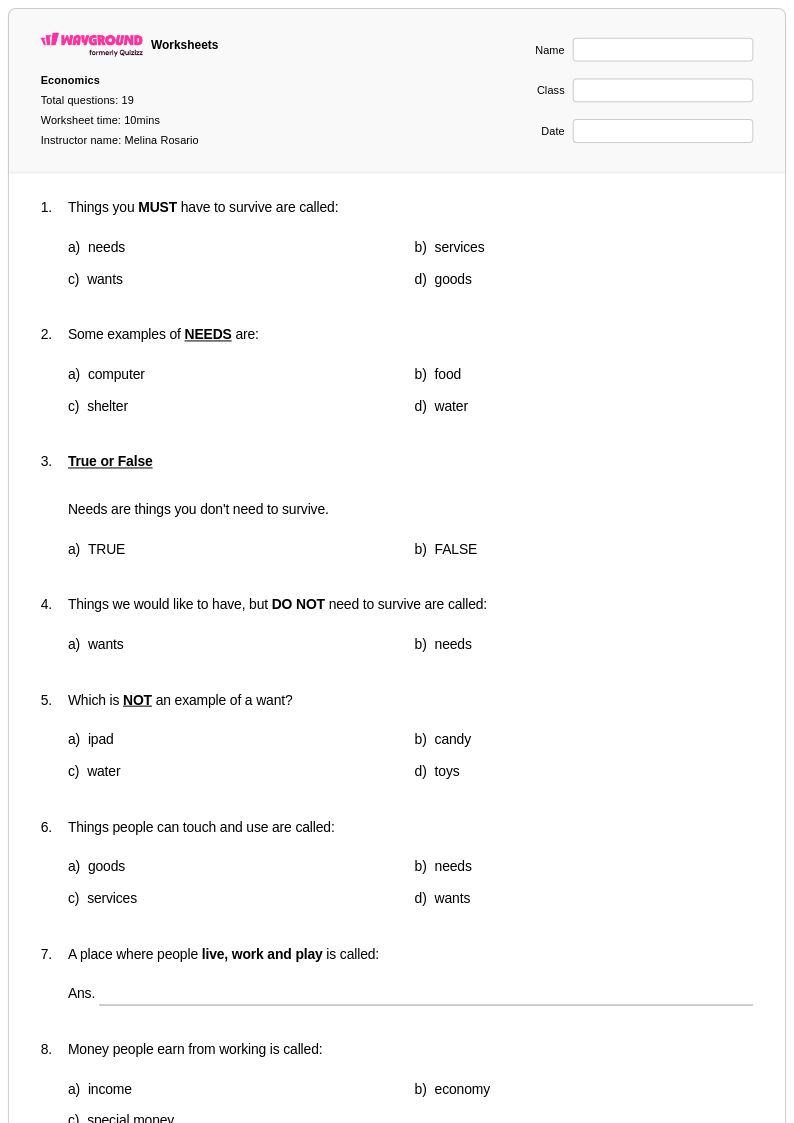
19 Q
3rd - 4th
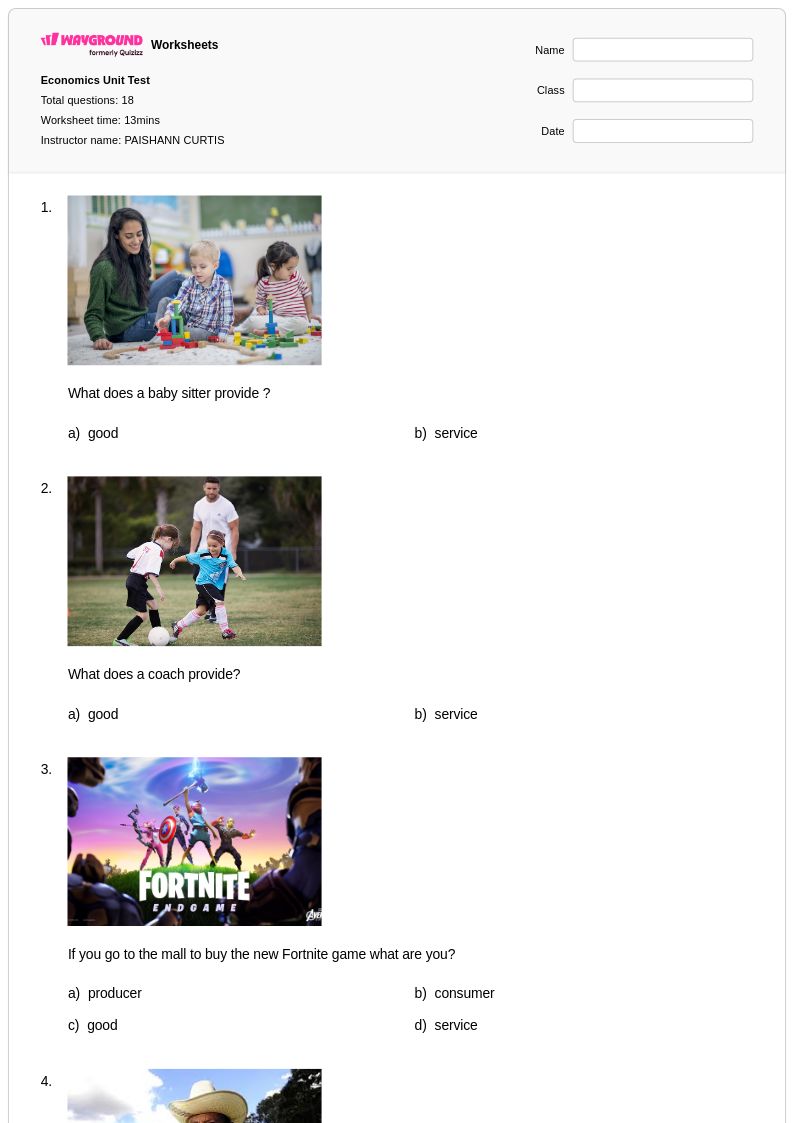
18 Q
3rd - 4th
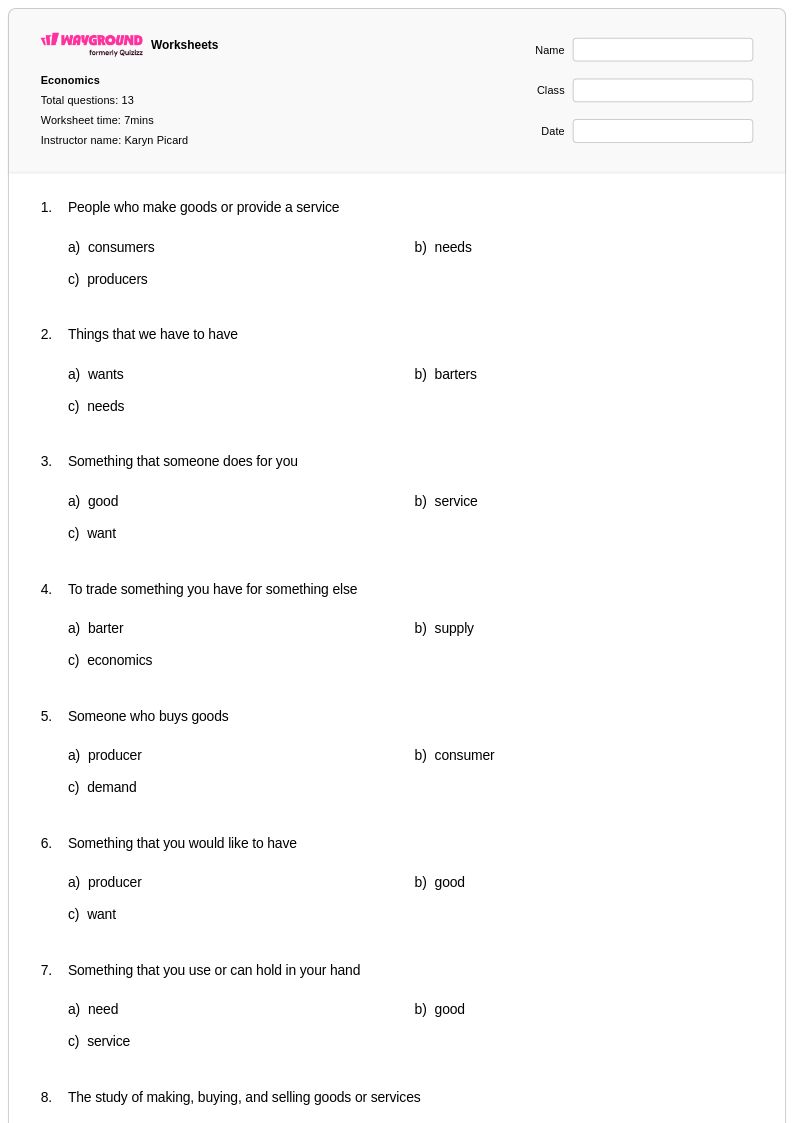
13 Q
1st - 3rd
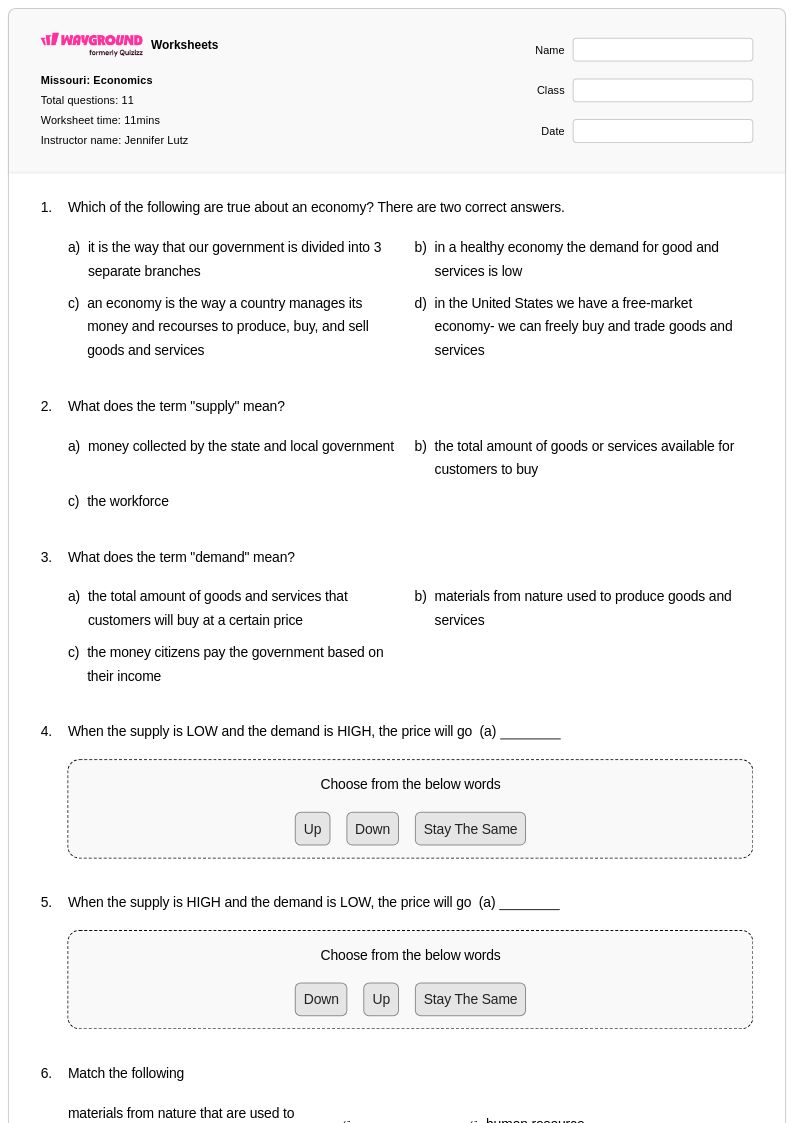
11 Q
3rd
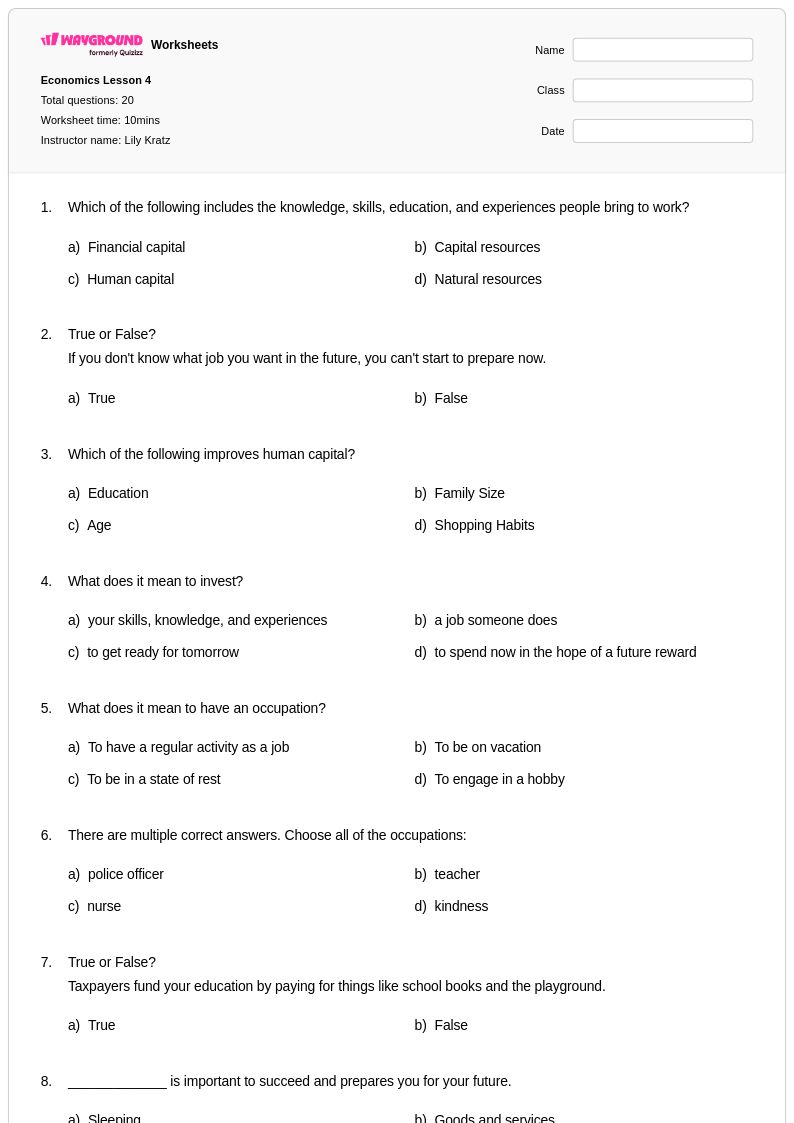
20 Q
3rd
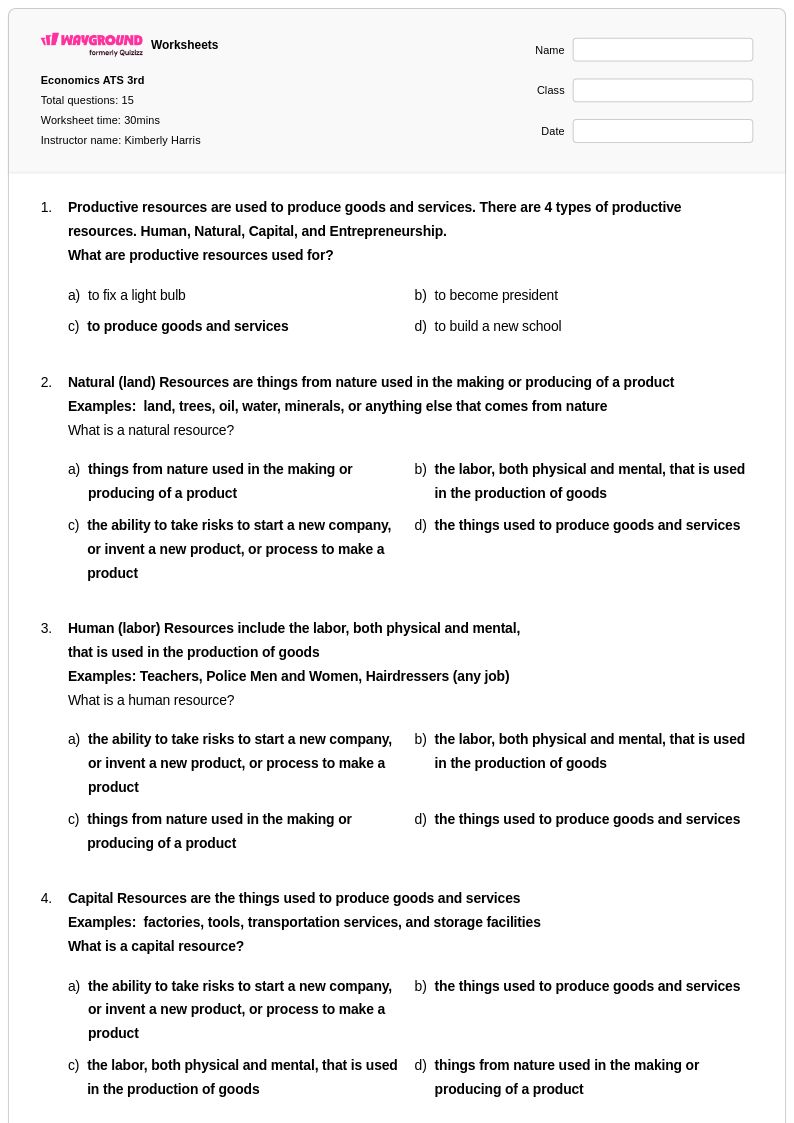
15 Q
3rd
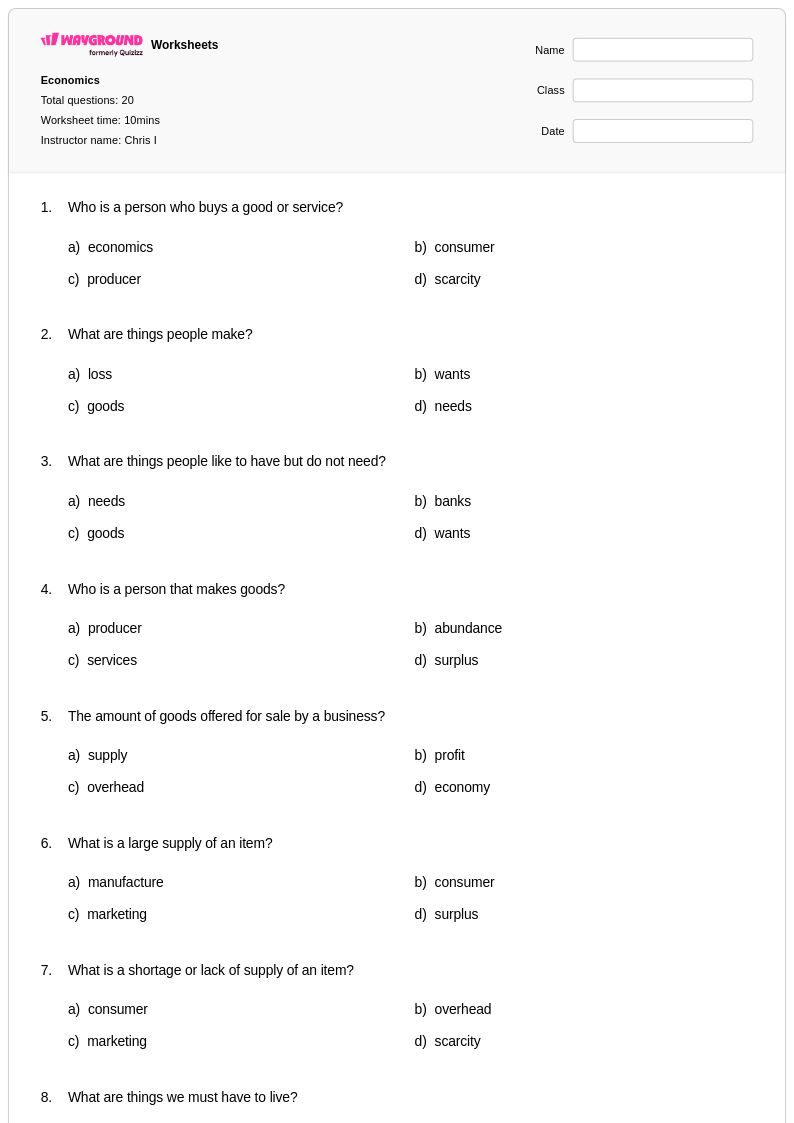
20 Q
3rd
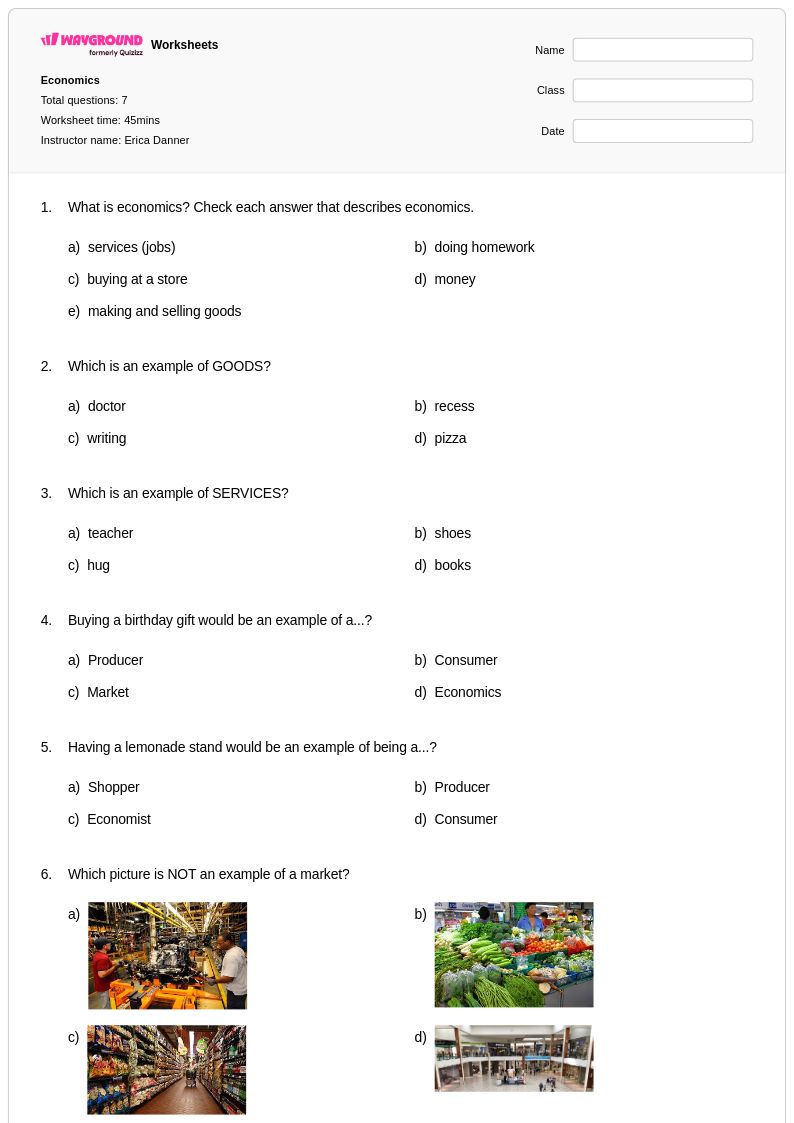
7 Q
1st - 3rd
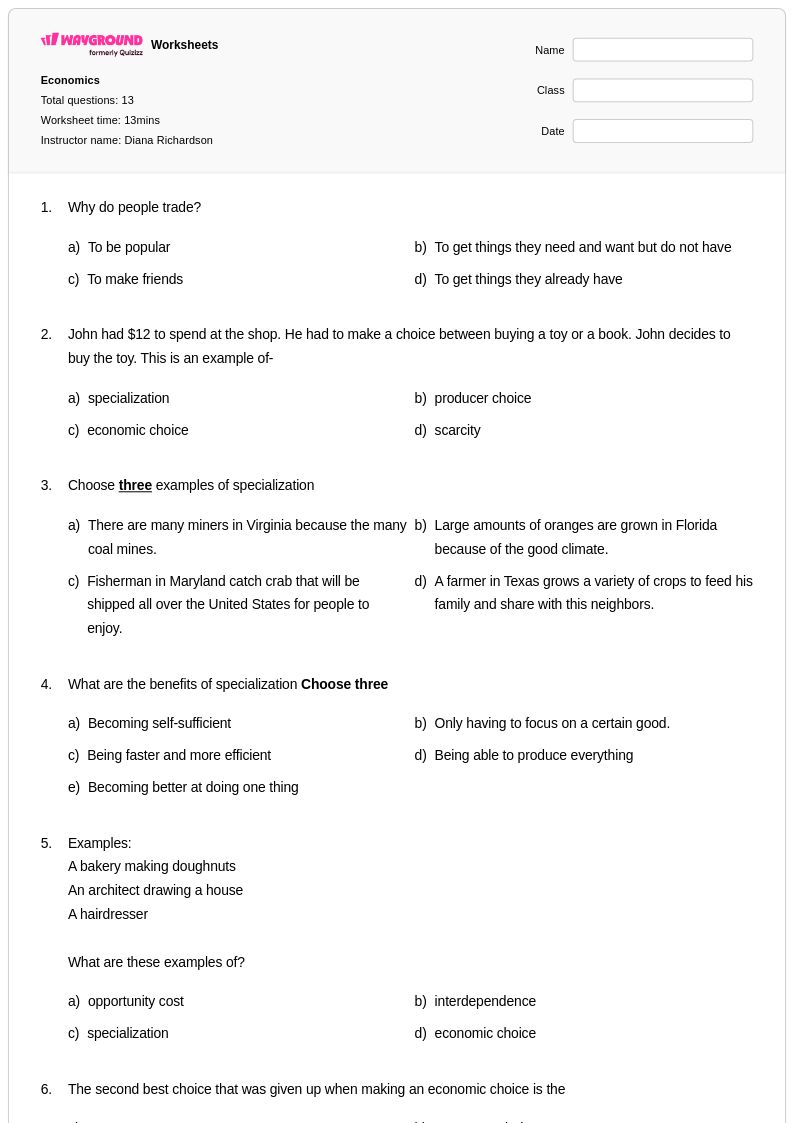
13 Q
3rd
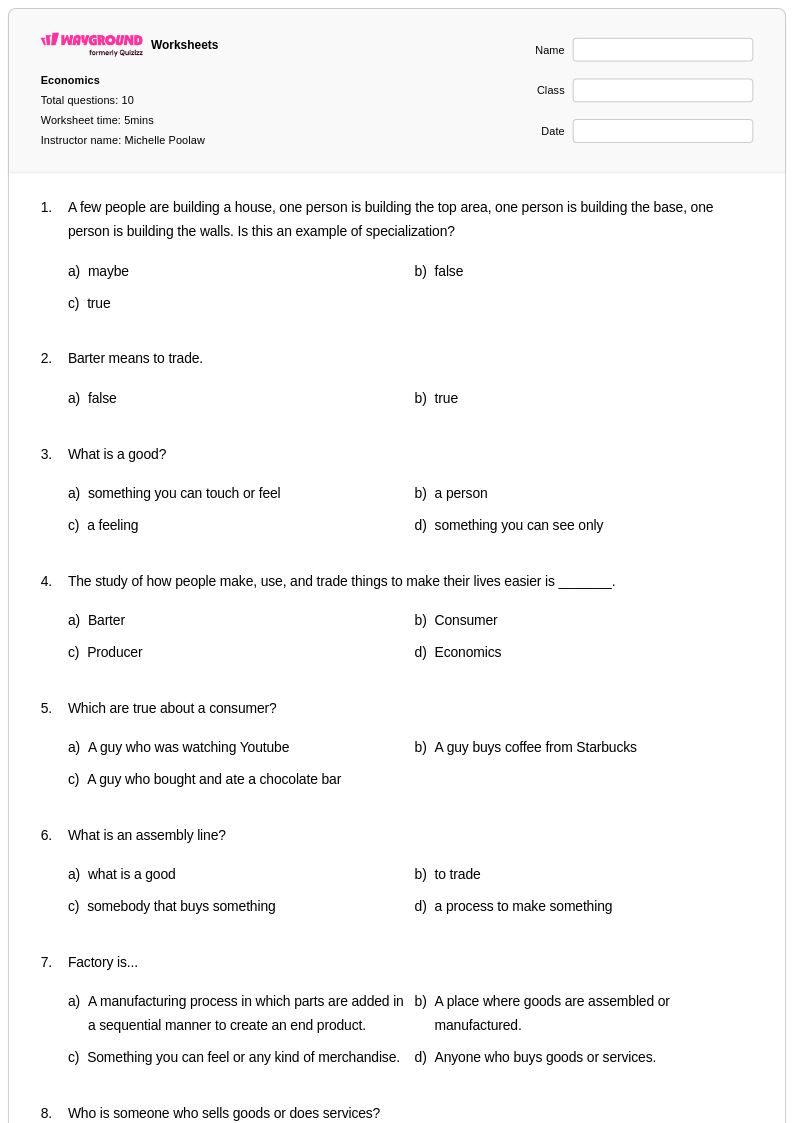
10 Q
3rd
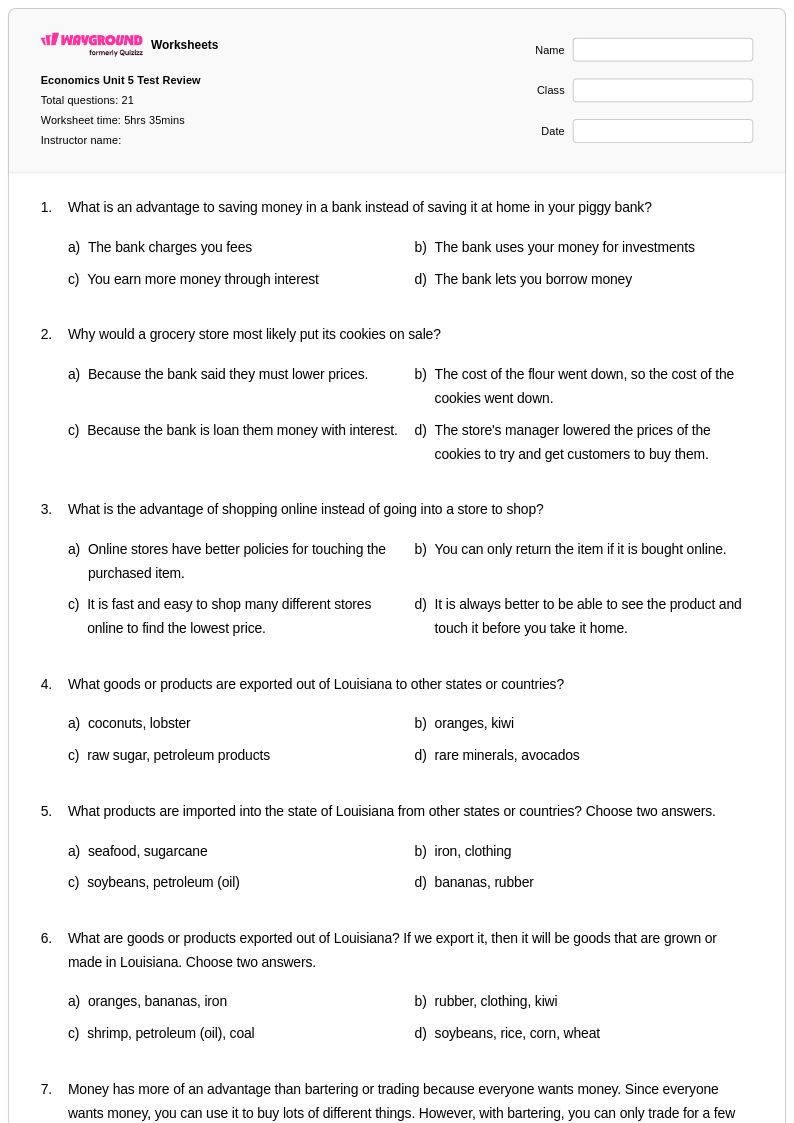
21 Q
3rd
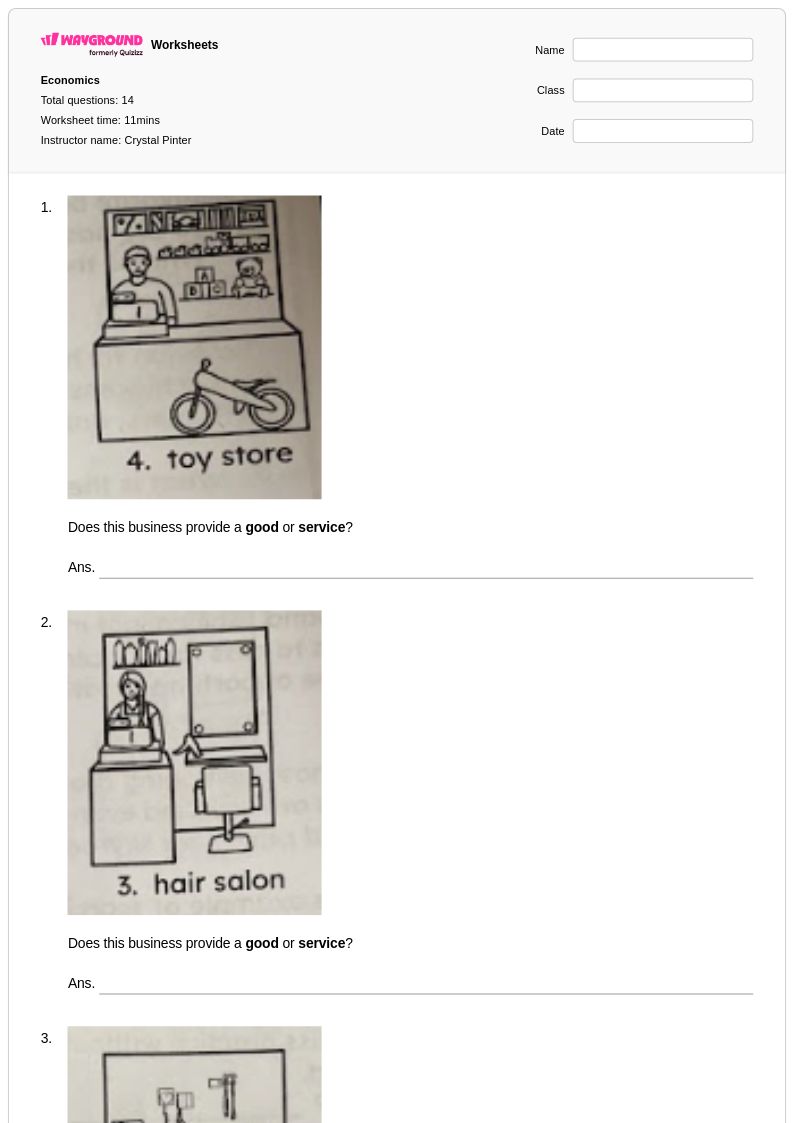
14 Q
3rd
Explore Economics Worksheets by Grades
Explore Economics Worksheets for class 3 by Topic
Explore Other Subject Worksheets for class 3
Explore printable Economics worksheets for Class 3
Class 3 economics worksheets available through Wayground (formerly Quizizz) provide young learners with essential foundations in understanding how money, goods, and services function in their daily lives. These carefully designed educational resources help students develop critical thinking skills about basic economic concepts such as needs versus wants, spending and saving decisions, different types of jobs in their community, and how goods travel from producers to consumers. Each worksheet collection includes comprehensive answer keys and is available as free printables in convenient pdf format, making it simple for educators to incorporate meaningful practice problems that connect economic principles to students' real-world experiences. The materials emphasize hands-on learning through scenarios third graders can easily relate to, such as running a classroom store, understanding why people work different jobs, and making smart choices about spending their allowance.
Wayground (formerly Quizizz) supports educators with an extensive library of millions of teacher-created economics resources specifically designed for elementary learners. The platform's robust search and filtering capabilities allow teachers to quickly locate materials that align with state standards and match their students' diverse learning needs. These differentiation tools enable instructors to customize worksheets for various skill levels within their classroom, supporting both remediation for struggling learners and enrichment opportunities for advanced students. Available in both printable and digital formats including pdf downloads, these flexible resources streamline lesson planning while providing multiple opportunities for skill practice. Teachers can seamlessly integrate these economics worksheets into their regular instruction, homework assignments, or assessment preparation, ensuring students build a solid foundation in economic literacy that will serve them throughout their academic journey.
FAQs
How do I teach economics concepts like supply and demand to high school students?
What worksheets are best for practicing personal finance and financial literacy skills?
What common mistakes do students make when learning about supply and demand?
How do I help students understand macroeconomics concepts like GDP, inflation, and fiscal policy?
How can I use economics worksheets on Wayground in my classroom?
How do I differentiate economics instruction for students at different skill levels?
What exercises help students practice understanding scarcity and opportunity cost?