Free Printable Electromagnetic Waves and Interference Worksheets for Class 10
Explore Class 10 electromagnetic waves and interference through Wayground's comprehensive collection of free physics worksheets, featuring printable PDFs with practice problems and answer keys to master wave properties, interference patterns, and electromagnetic spectrum concepts.
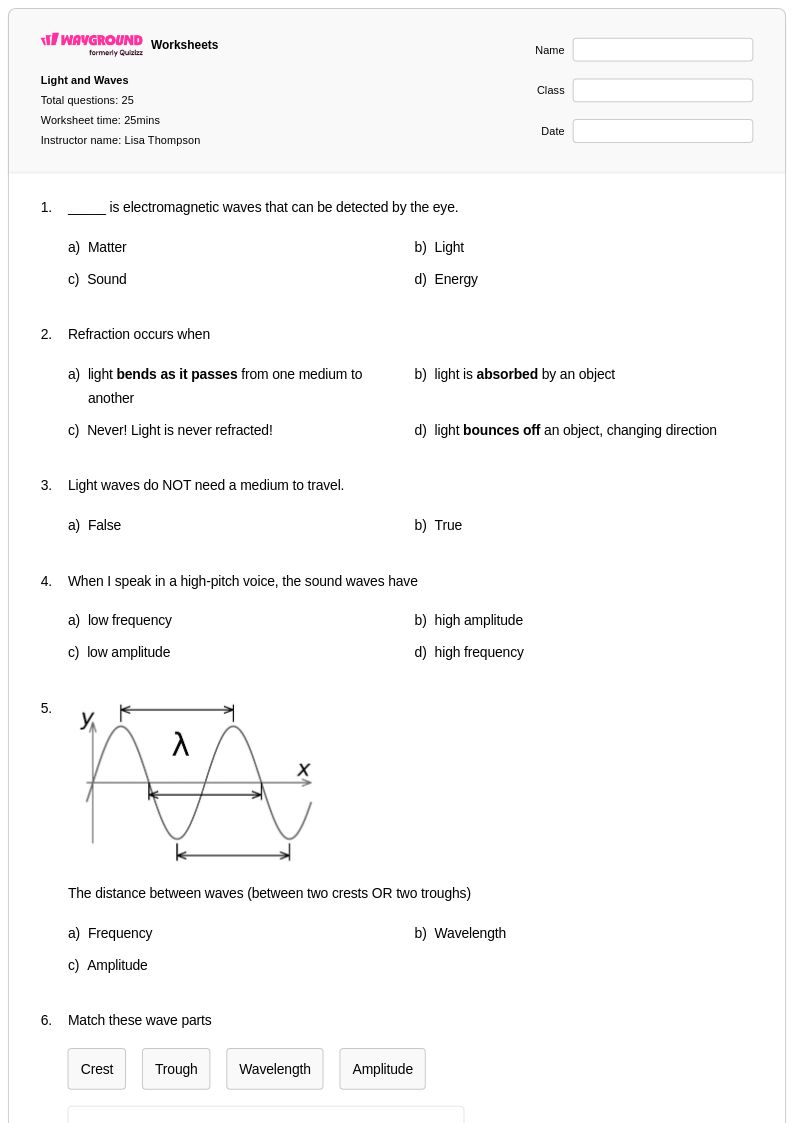
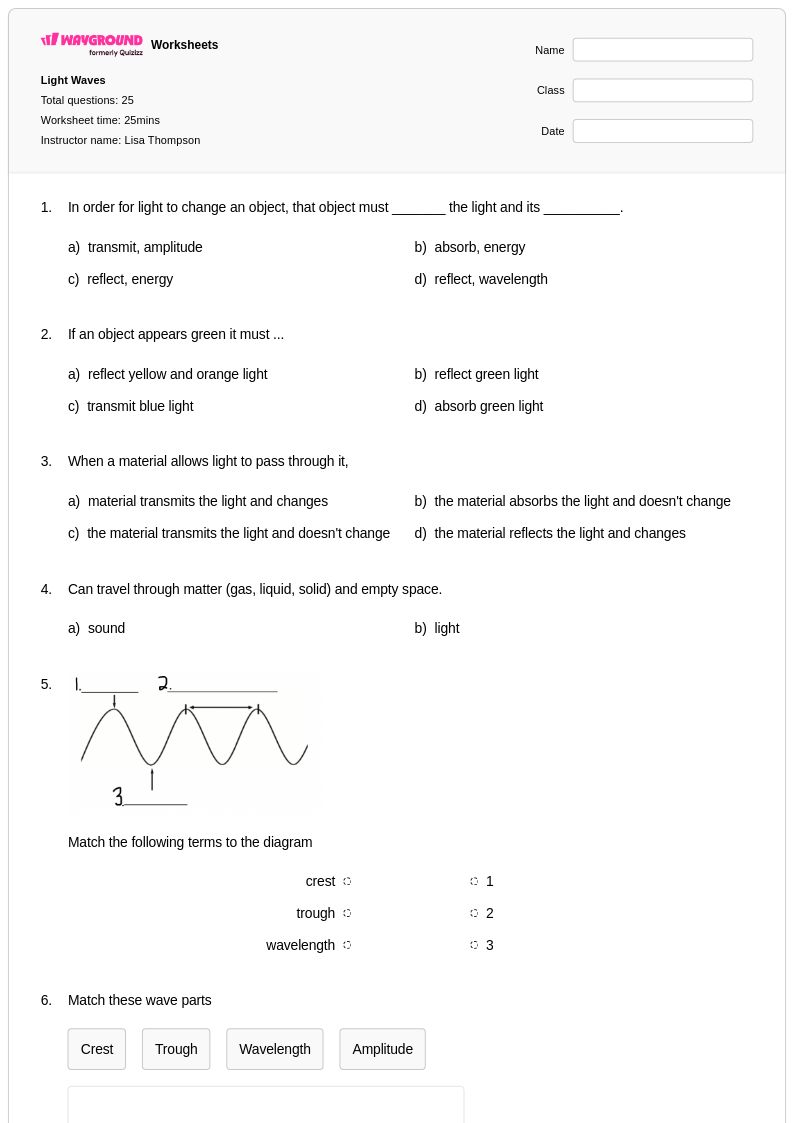
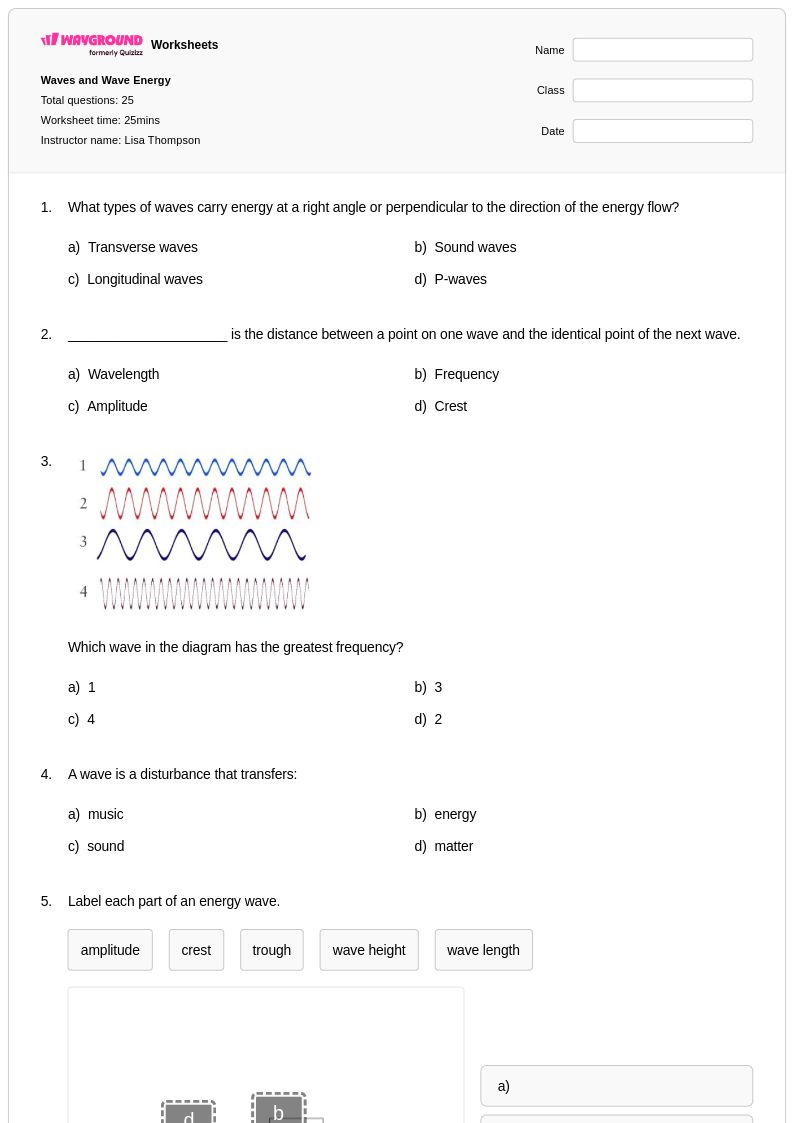
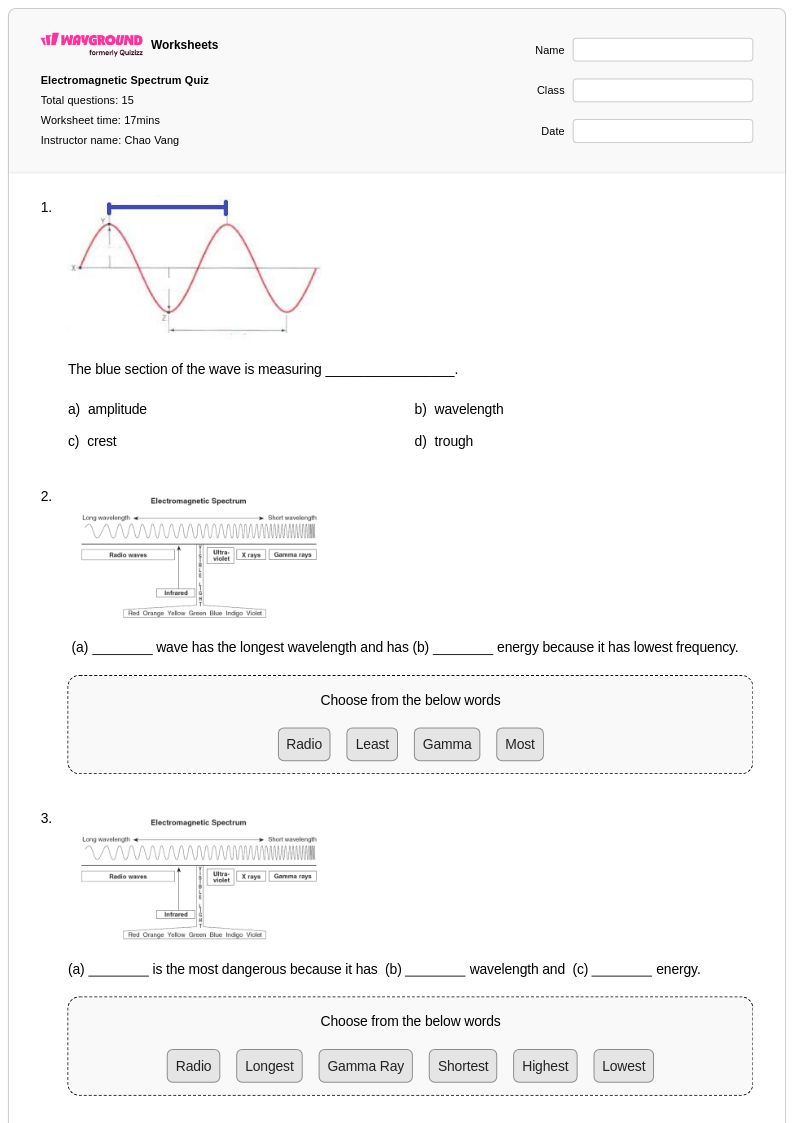
Explore printable Electromagnetic Waves and Interference worksheets for Class 10
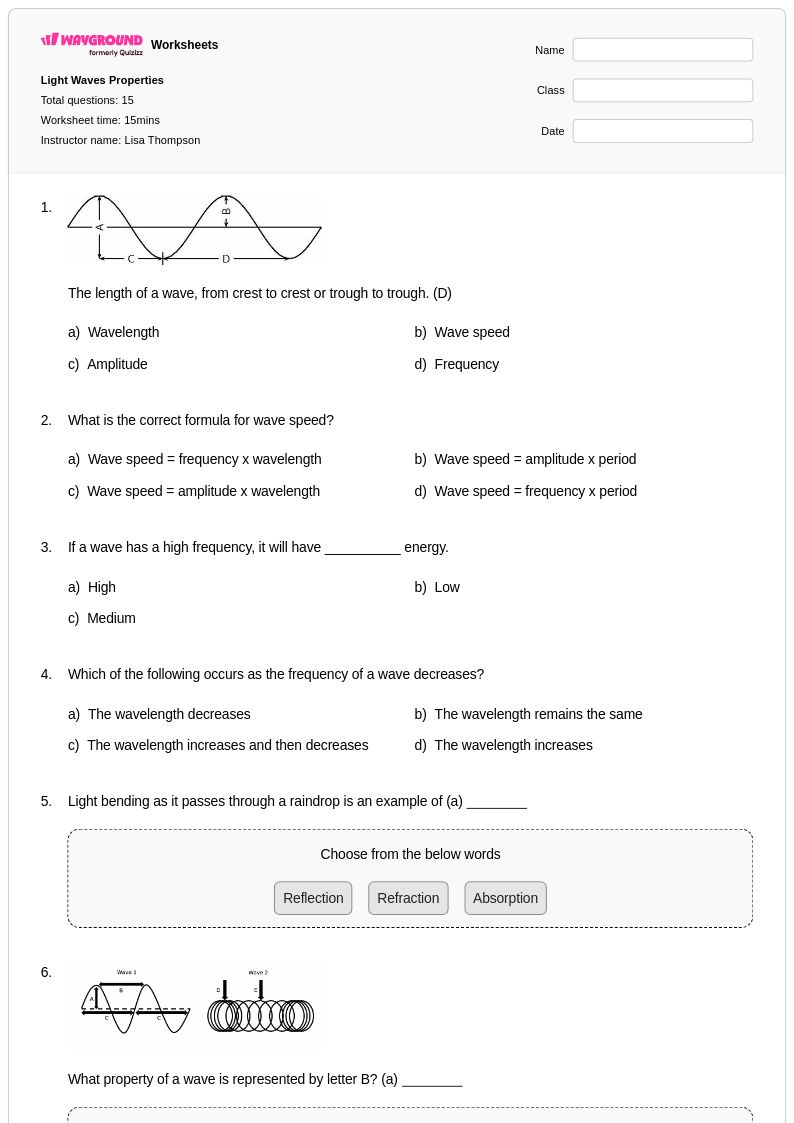
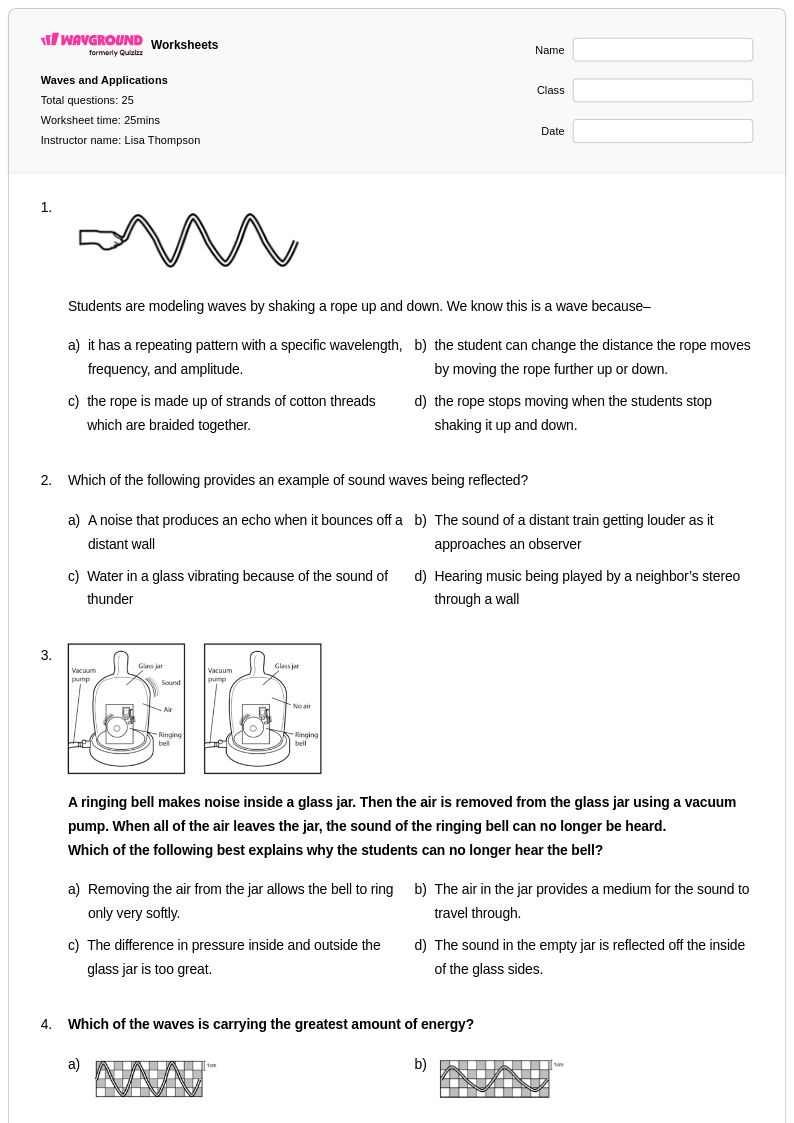
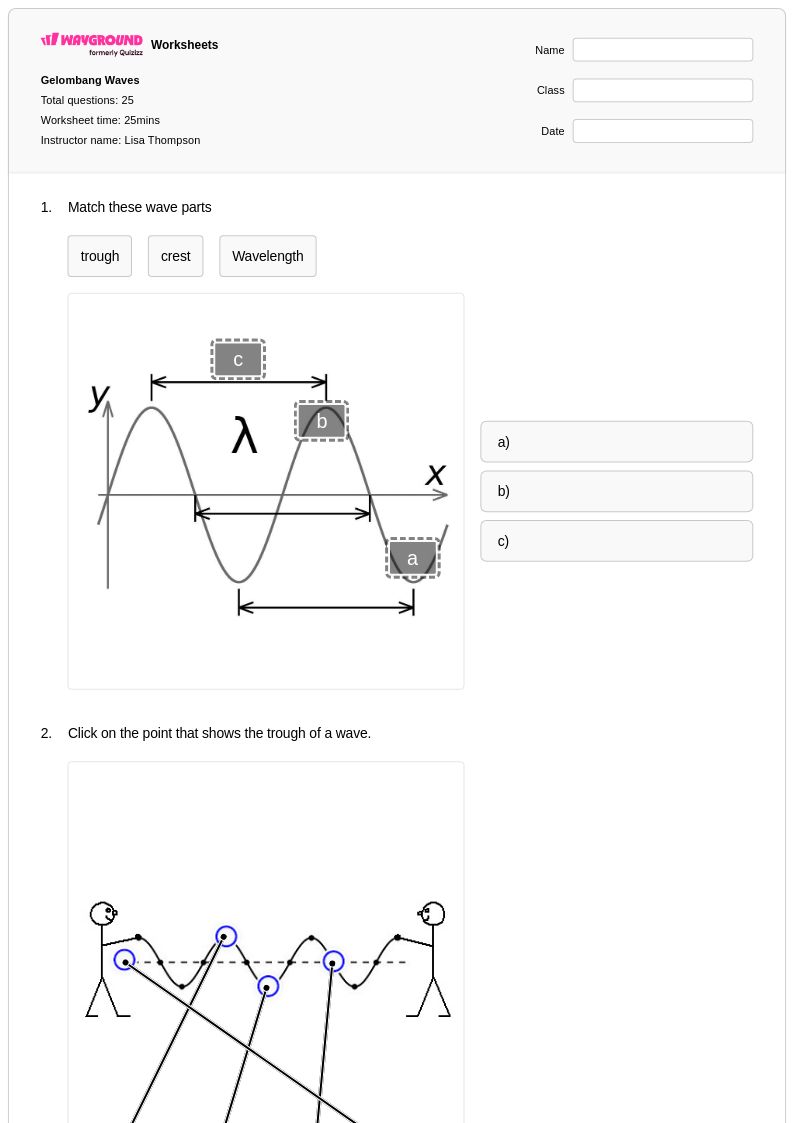
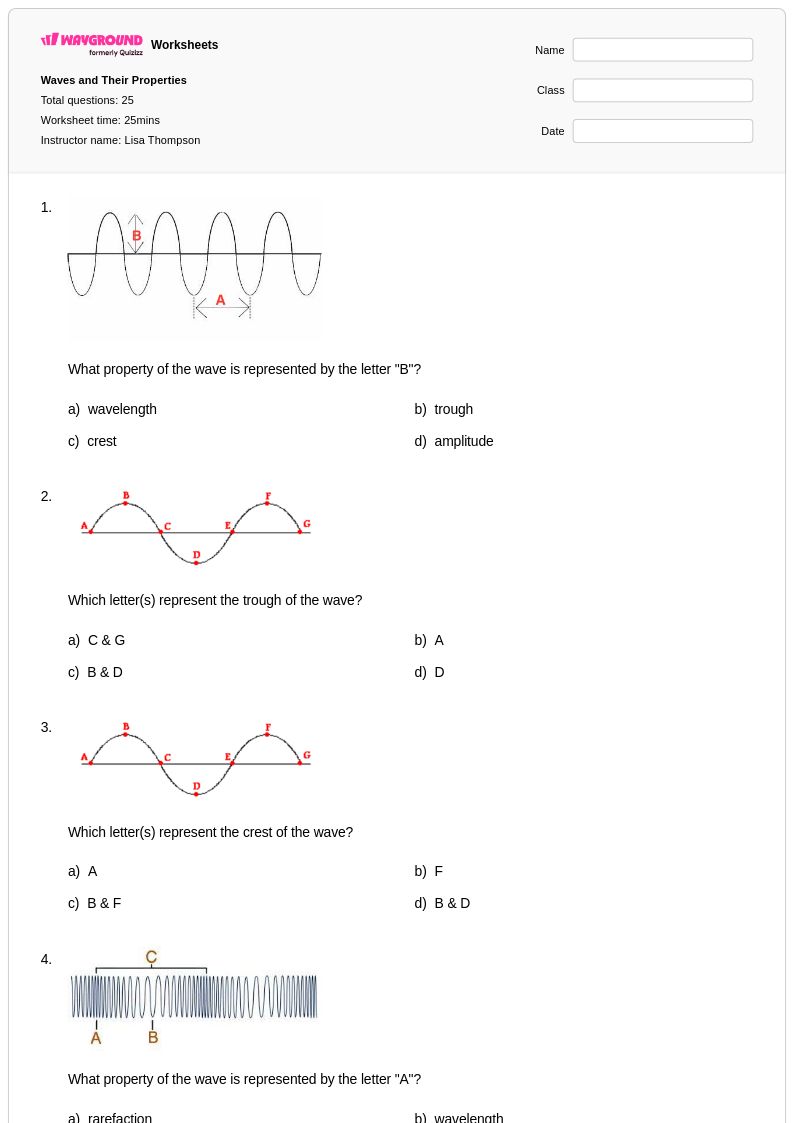
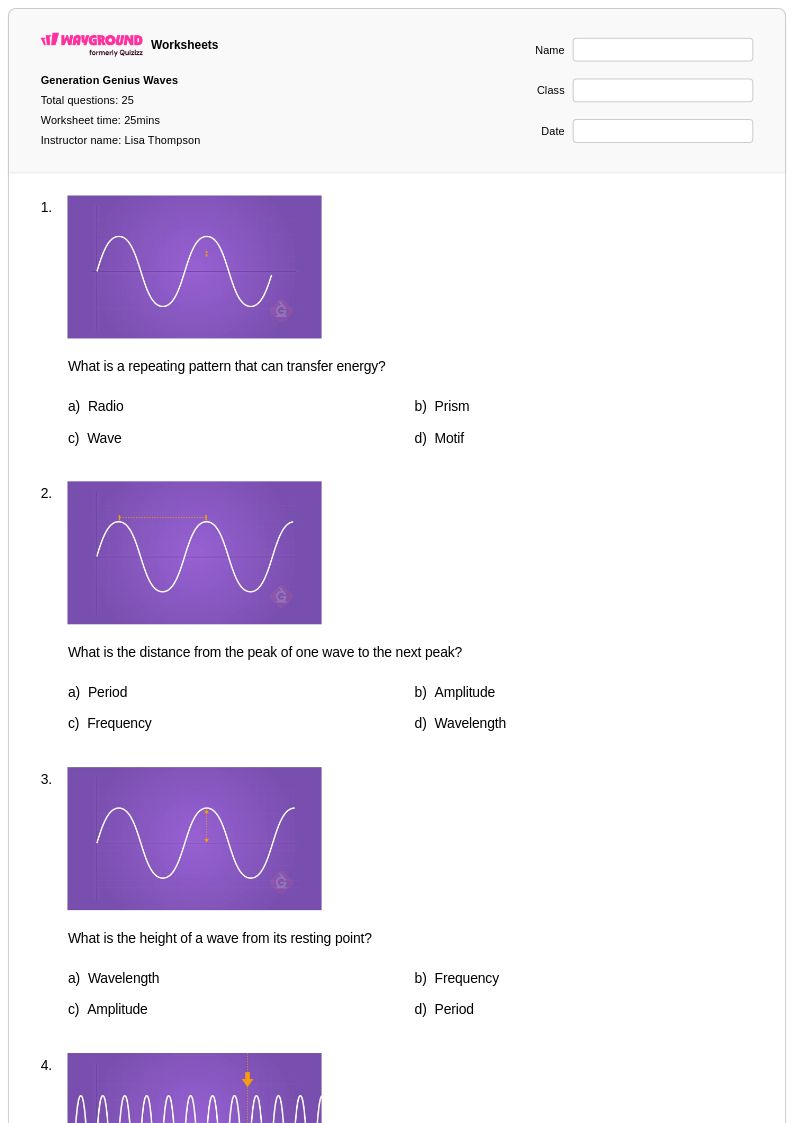
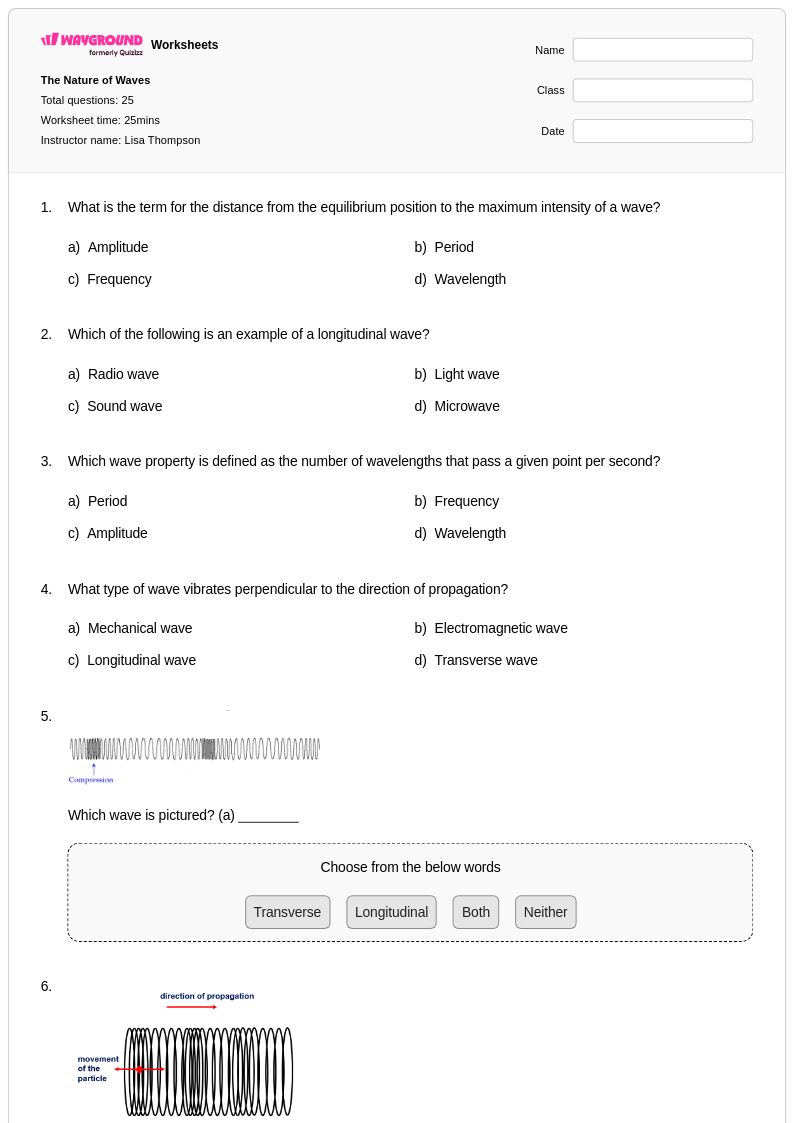
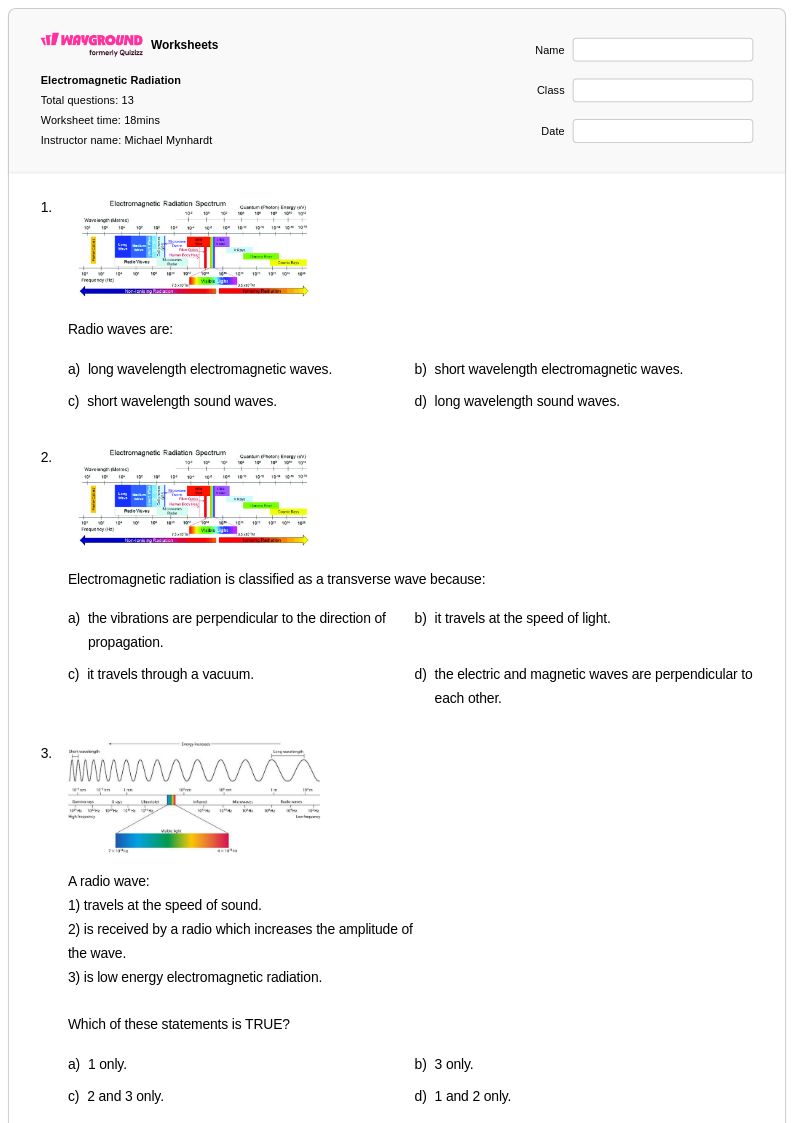
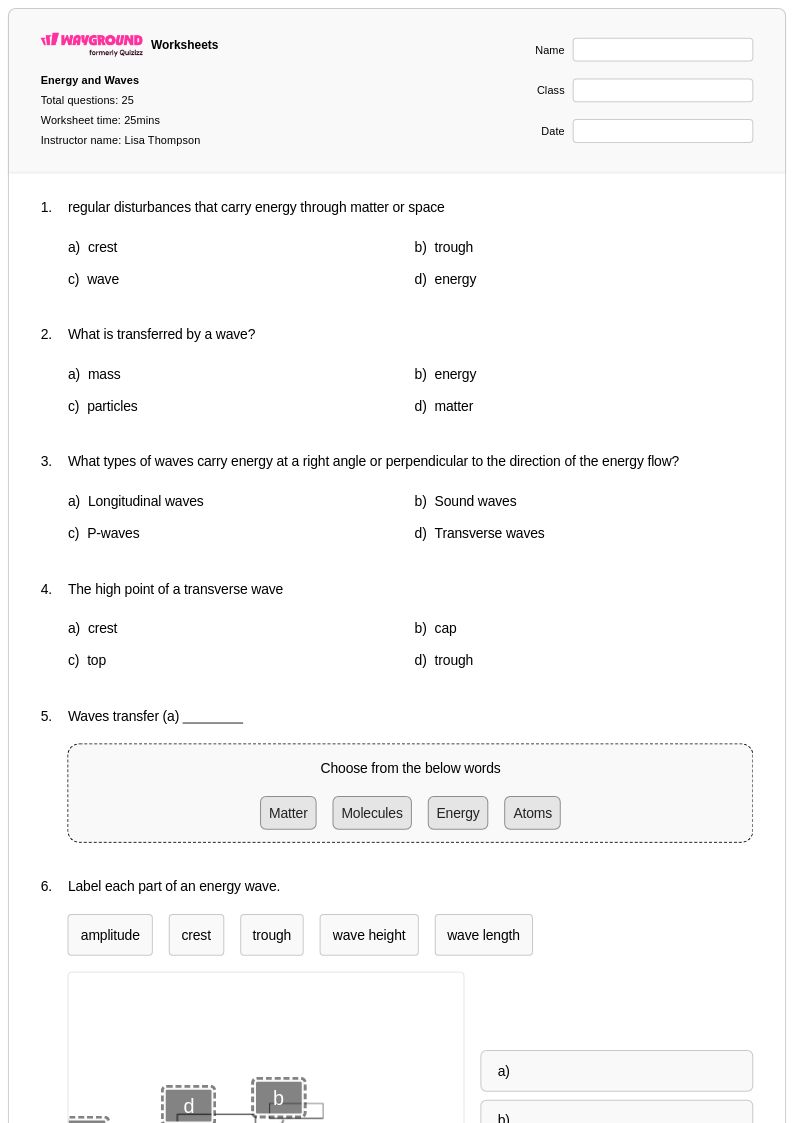
Electromagnetic waves and interference worksheets for Class 10 students through Wayground (formerly Quizizz) provide comprehensive coverage of wave behavior, electromagnetic spectrum properties, and interference patterns that are fundamental to advanced physics understanding. These carefully designed practice problems strengthen students' ability to analyze wave characteristics including frequency, wavelength, and amplitude across the electromagnetic spectrum, while developing critical thinking skills needed to understand constructive and destructive interference phenomena. The free printable worksheets include detailed answer keys that support independent learning and self-assessment, covering essential concepts from radio waves through gamma rays, along with practical applications of interference principles in technologies like wireless communication and optical devices. Students engage with authentic problem-solving scenarios that require them to calculate wave properties, predict interference outcomes, and connect electromagnetic wave theory to real-world applications in physics and engineering.
Wayground (formerly Quizizz) empowers educators with millions of teacher-created electromagnetic waves and interference resources that streamline lesson planning and enhance Class 10 physics instruction through robust search and filtering capabilities aligned to national and state science standards. Teachers can efficiently locate materials that match their specific curriculum requirements while utilizing differentiation tools to modify worksheets for diverse learning needs, ensuring both struggling students and advanced learners receive appropriate challenge levels. The platform's flexible customization options allow educators to adapt existing resources or create targeted practice sets, with seamless availability in both printable PDF formats for traditional classroom use and digital formats for technology-integrated learning environments. This comprehensive worksheet collection supports effective remediation of misconceptions about wave behavior, enrichment opportunities for students ready to explore advanced electromagnetic applications, and consistent skill practice that builds toward mastery of complex physics concepts essential for college preparation and STEM career pathways.
FAQs
How do I teach electromagnetic waves and interference to high school physics students?
Start by grounding students in the properties shared by all electromagnetic waves — speed, wavelength, frequency, and energy — before introducing the electromagnetic spectrum as a continuum organized by frequency. Once students can calculate wave relationships using the equation c = fλ, introduce interference by demonstrating constructive and destructive superposition with visual diagrams or simulations. Real-world applications like radar, Wi-Fi signal overlap, and medical imaging (MRI, X-rays) make interference patterns tangible and motivate deeper engagement with the math.
What practice problems help students get better at electromagnetic wave calculations?
Students benefit most from problems that require them to move fluently between wavelength, frequency, and energy using the relationships c = fλ and E = hf. Effective practice includes identifying the correct region of the electromagnetic spectrum given a frequency or wavelength, comparing energy levels across wave types, and solving multi-step problems that combine both relationships. Interference problems should progress from single-variable calculations — such as finding path length differences — to full constructive and destructive interference predictions.
What mistakes do students commonly make when learning about electromagnetic waves?
The most persistent misconception is that electromagnetic waves require a medium to travel — students often confuse them with mechanical waves like sound. A second common error is conflating frequency and wavelength as directly proportional, when in fact they are inversely related at constant wave speed. Students also frequently misapply interference conditions, assuming constructive interference always produces a brighter or louder result without understanding that it depends entirely on the phase relationship and amplitude of the interacting waves.
How do students typically confuse constructive and destructive interference?
Students frequently apply the labels 'constructive' and 'destructive' based on intuition about addition and subtraction rather than on phase relationships and path length differences. A common error is assuming that two waves with different amplitudes always produce destructive interference, when in reality only waves that are exactly out of phase by half a wavelength produce complete cancellation. Reinforcing interference with visual wave superposition diagrams — showing crest-to-crest and crest-to-trough alignment — helps students connect the conceptual rule to what they calculate.
How can I use these electromagnetic waves and interference worksheets in my classroom?
Wayground's electromagnetic waves and interference worksheets are available as printable PDFs for traditional classroom use and in digital formats that support technology-integrated instruction, giving teachers flexibility across in-person, hybrid, and remote settings. Teachers can also host the worksheets as a live or assigned quiz directly on Wayground, enabling real-time student response tracking. Wayground's differentiation tools allow teachers to customize difficulty and accommodate students with varying skill levels within the same class session.
How do electromagnetic waves differ from mechanical waves, and how do I explain this to students?
Electromagnetic waves are self-propagating disturbances in electric and magnetic fields that require no medium, which is what allows them to travel through the vacuum of space. Mechanical waves, by contrast, require a physical medium — such as air, water, or a solid — to transfer energy. A useful classroom entry point is asking students why sound cannot travel in space but light from the Sun reaches Earth with no problem; this forces them to articulate the distinction themselves rather than simply memorize it.