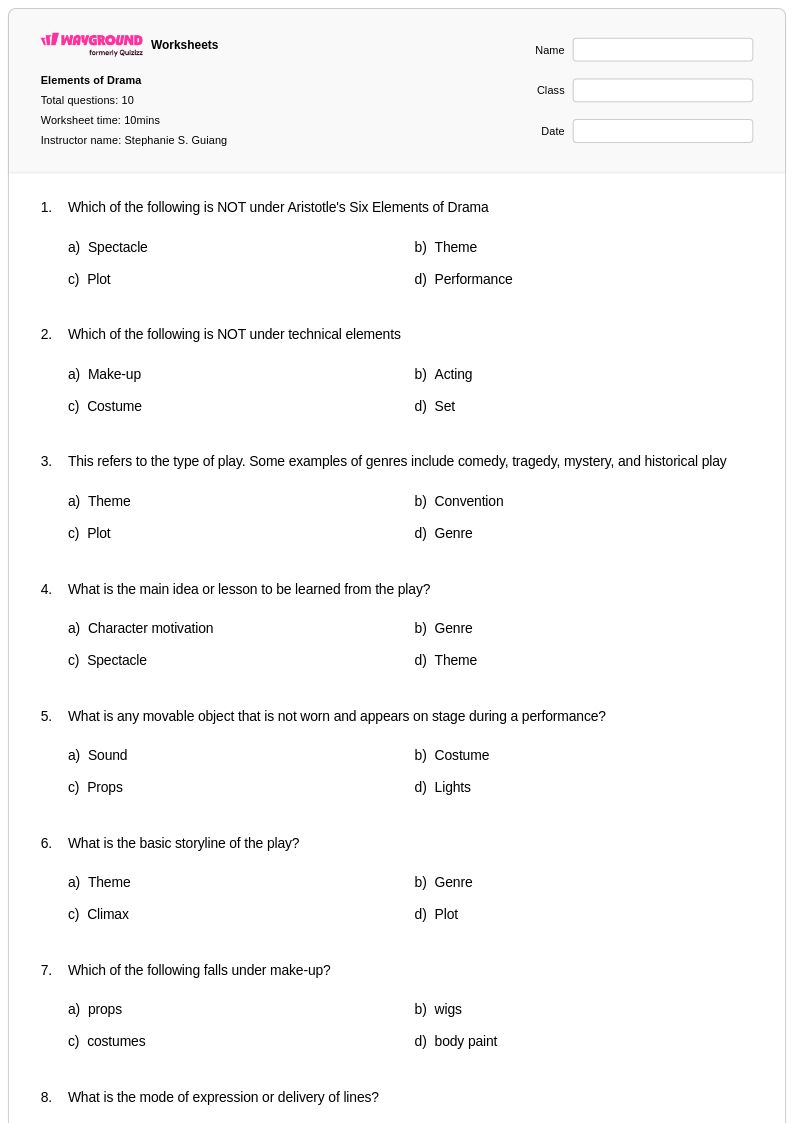
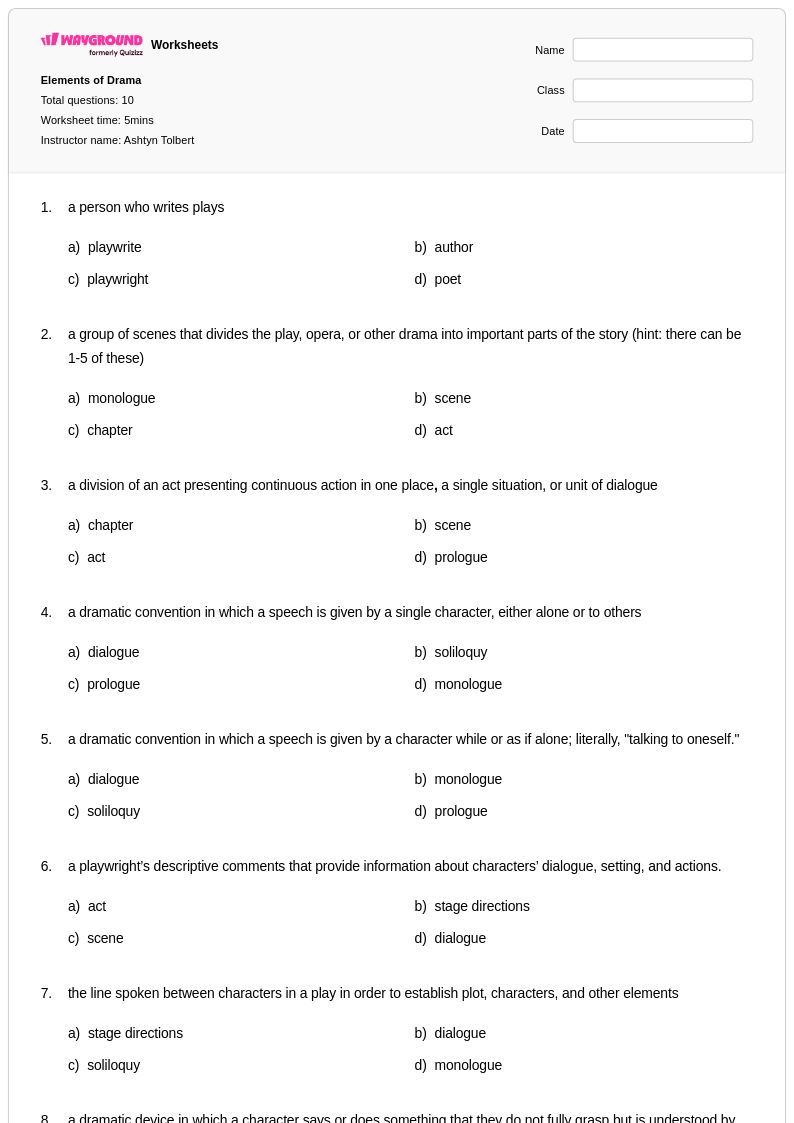
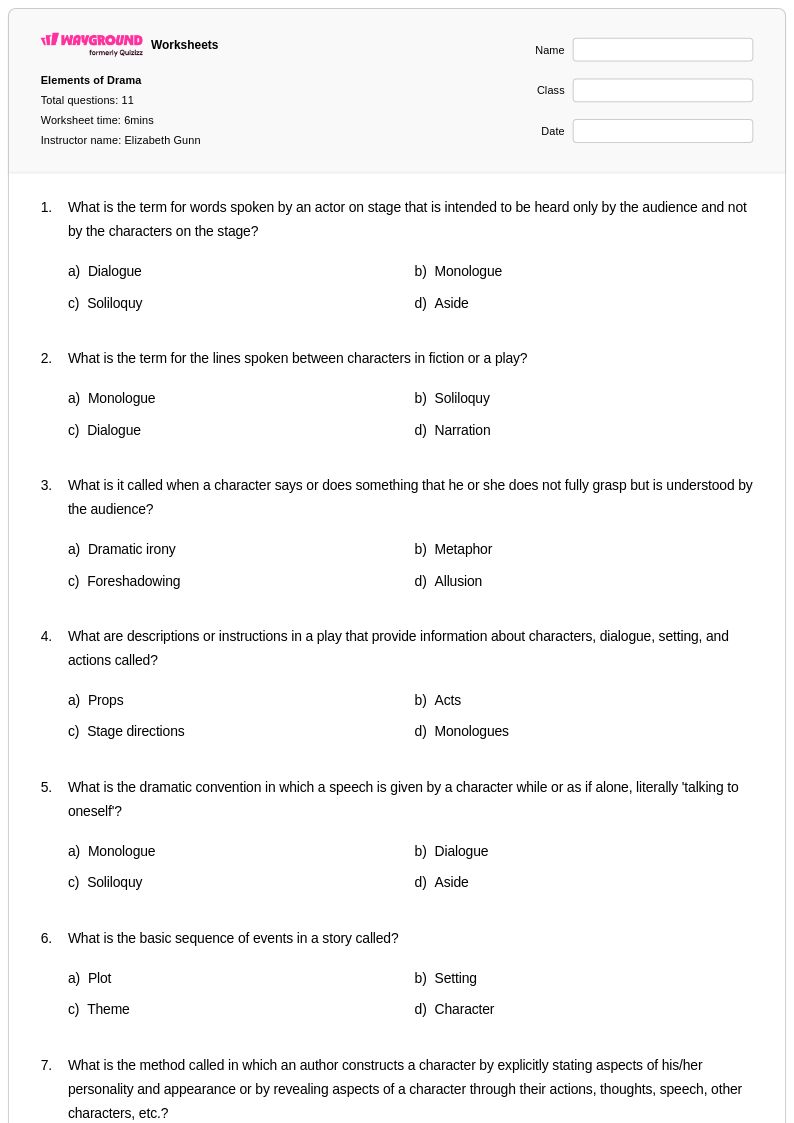
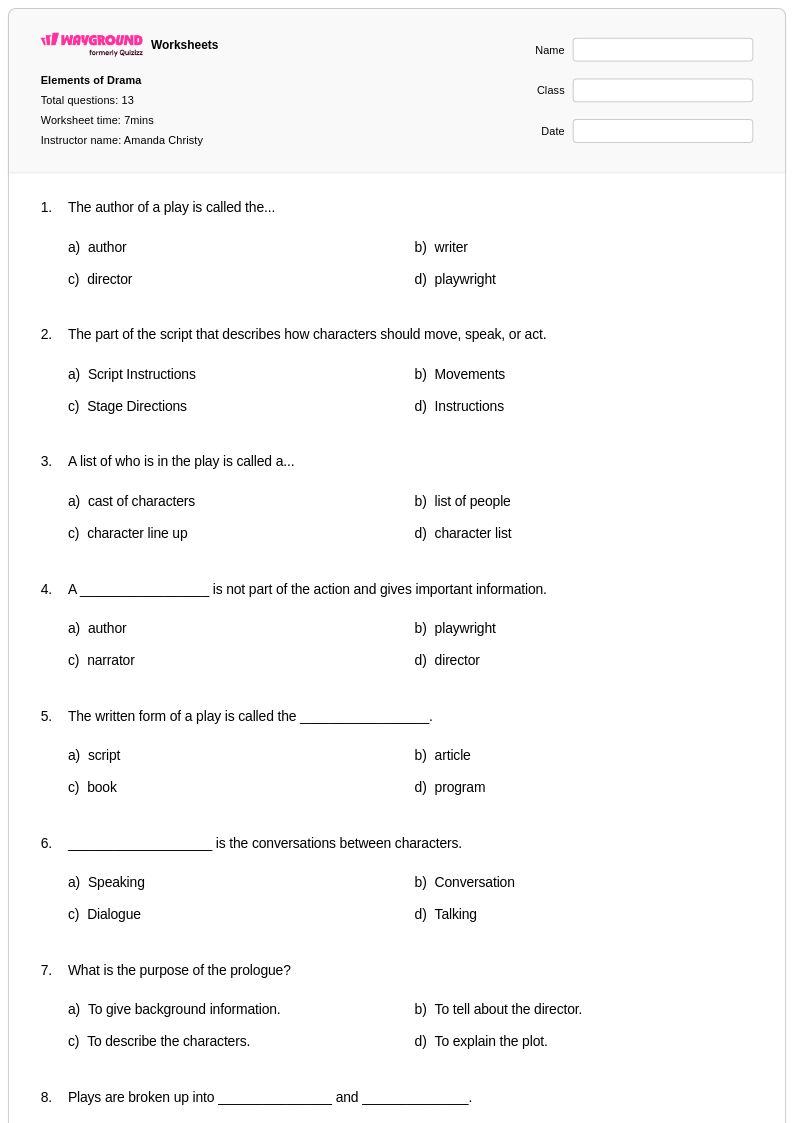
Free Printable Elements of Drama Worksheets for Class 9
Class 9 students can master elements of drama through Wayground's comprehensive collection of free worksheets and printables, featuring practice problems and answer keys that develop understanding of theatrical components.
Explore printable Elements of Drama worksheets for Class 9
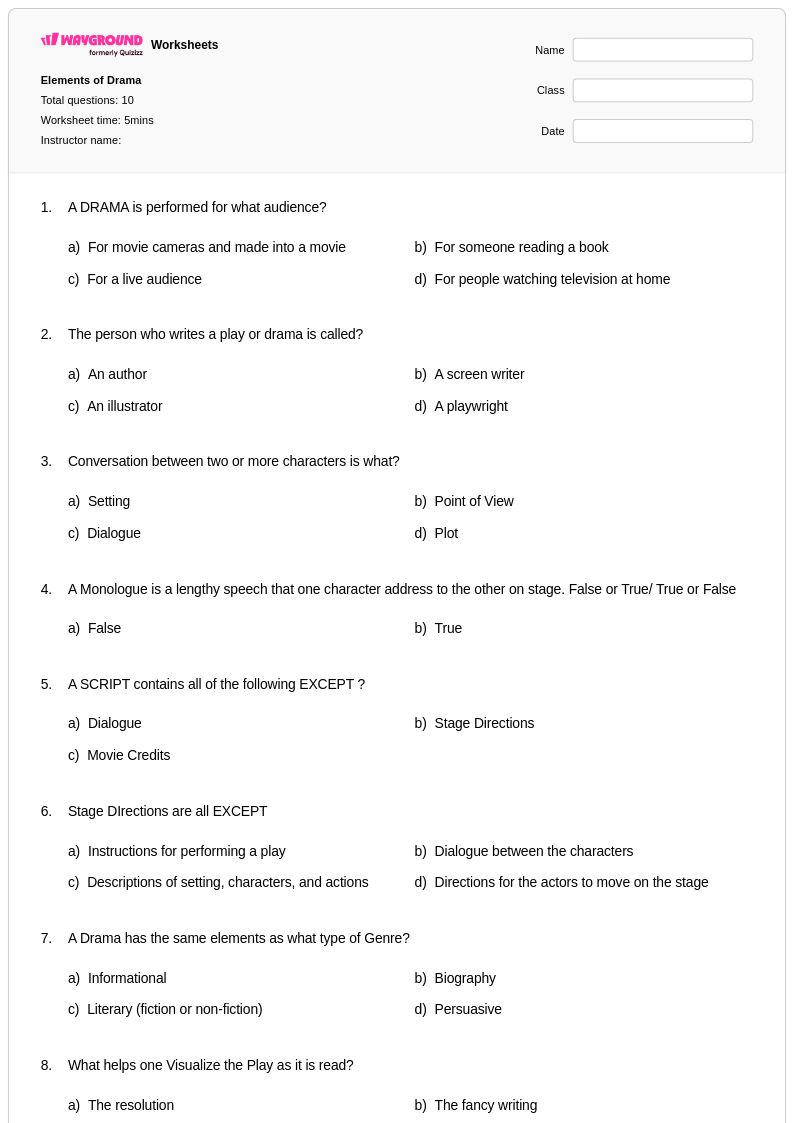
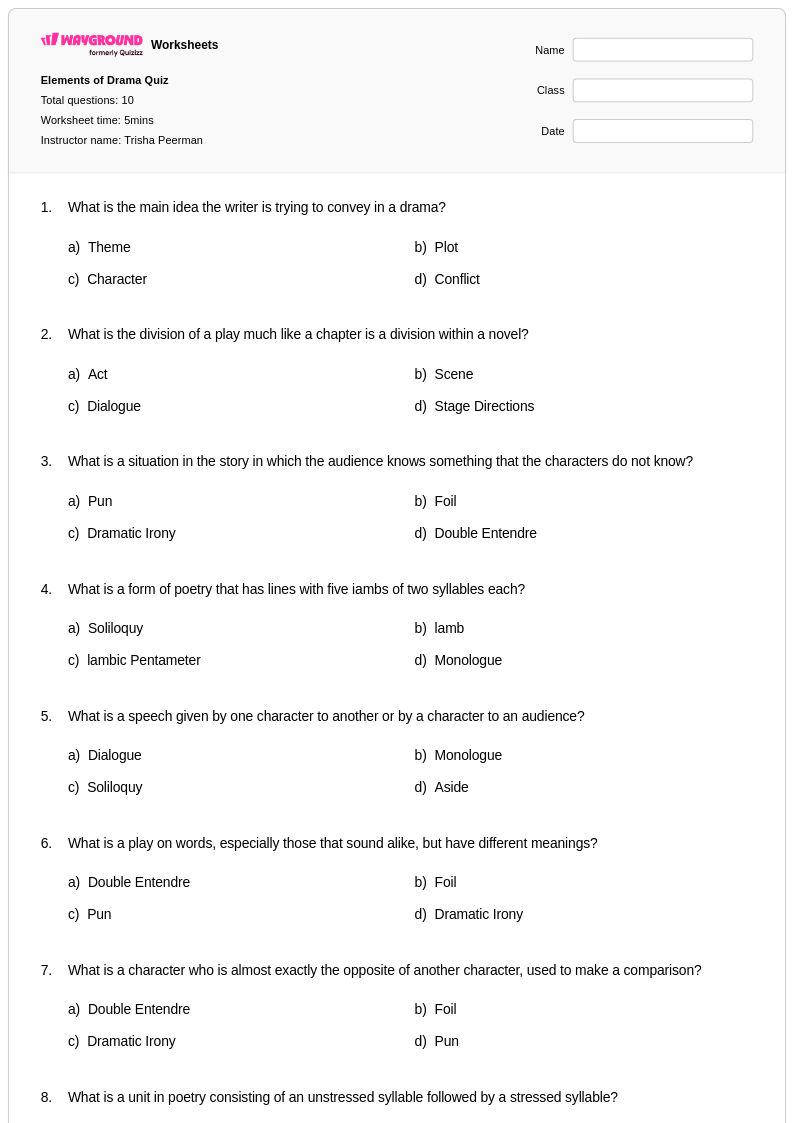
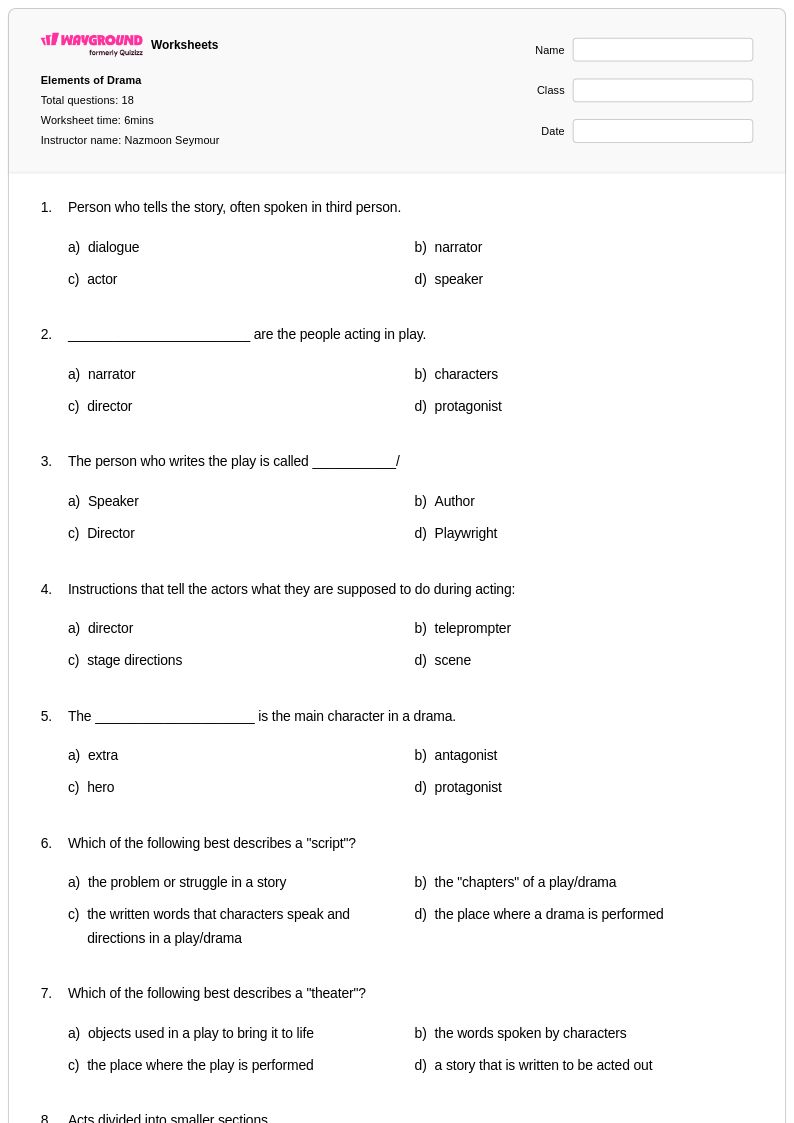
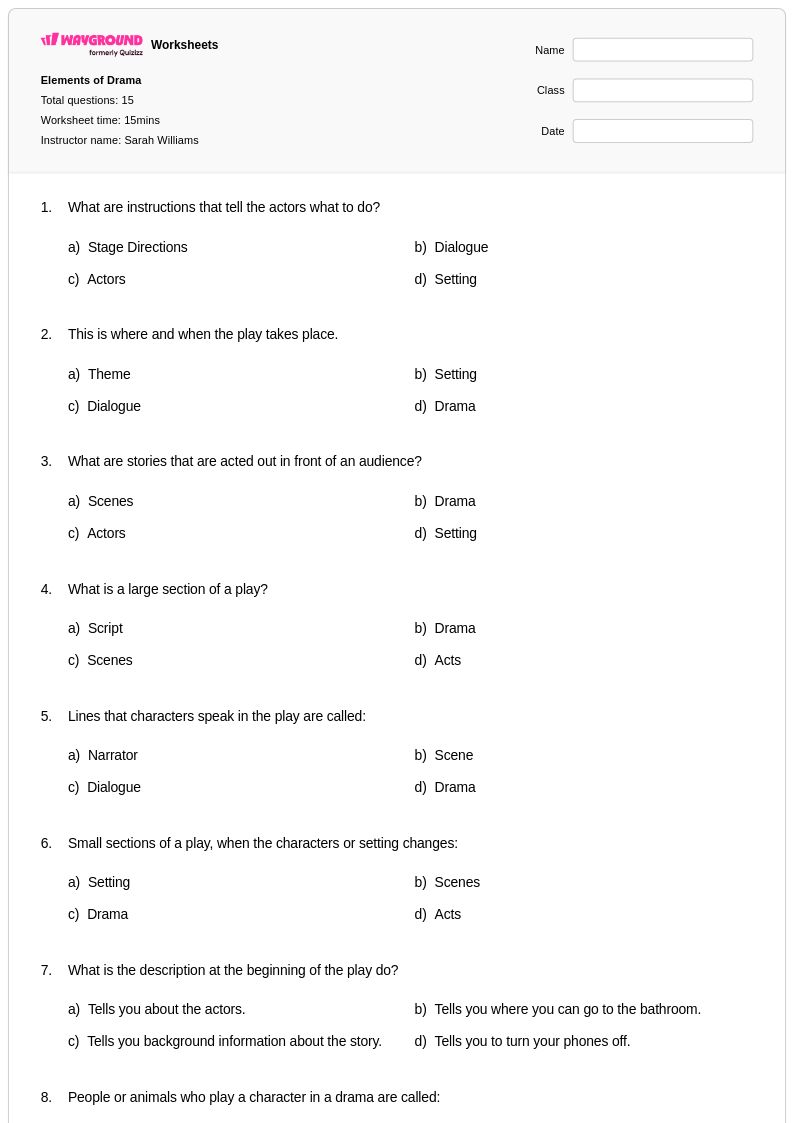
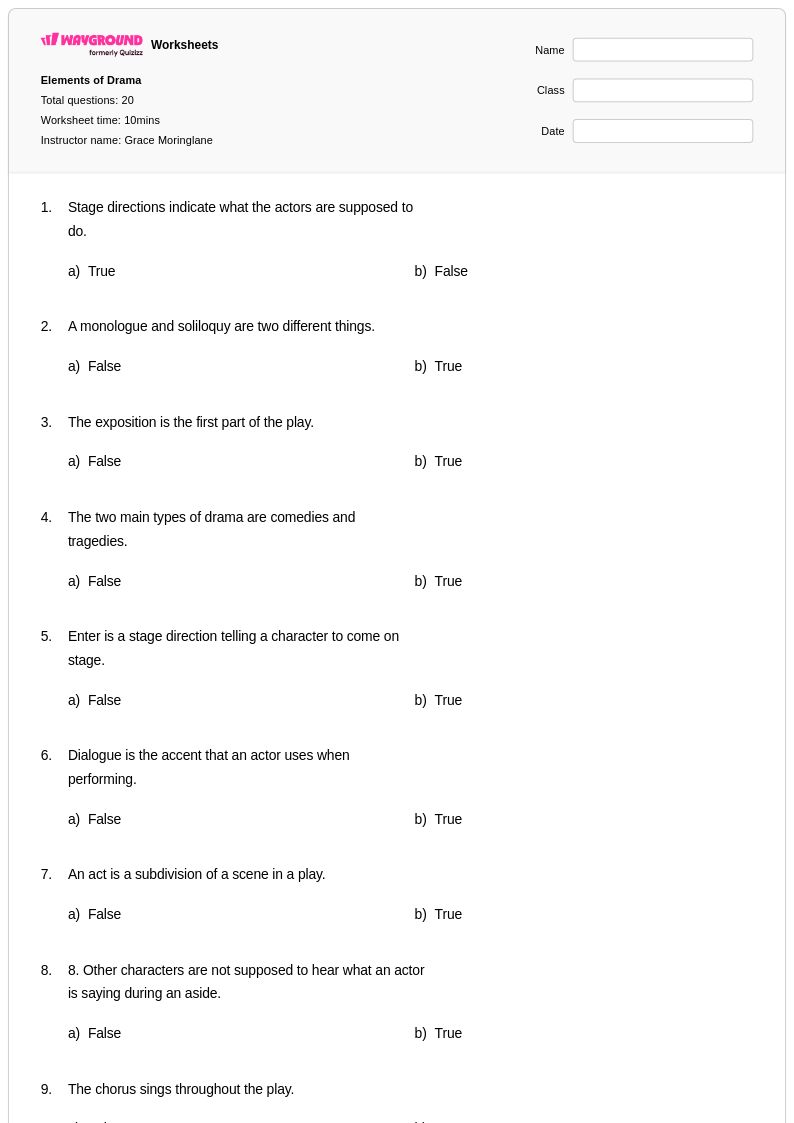
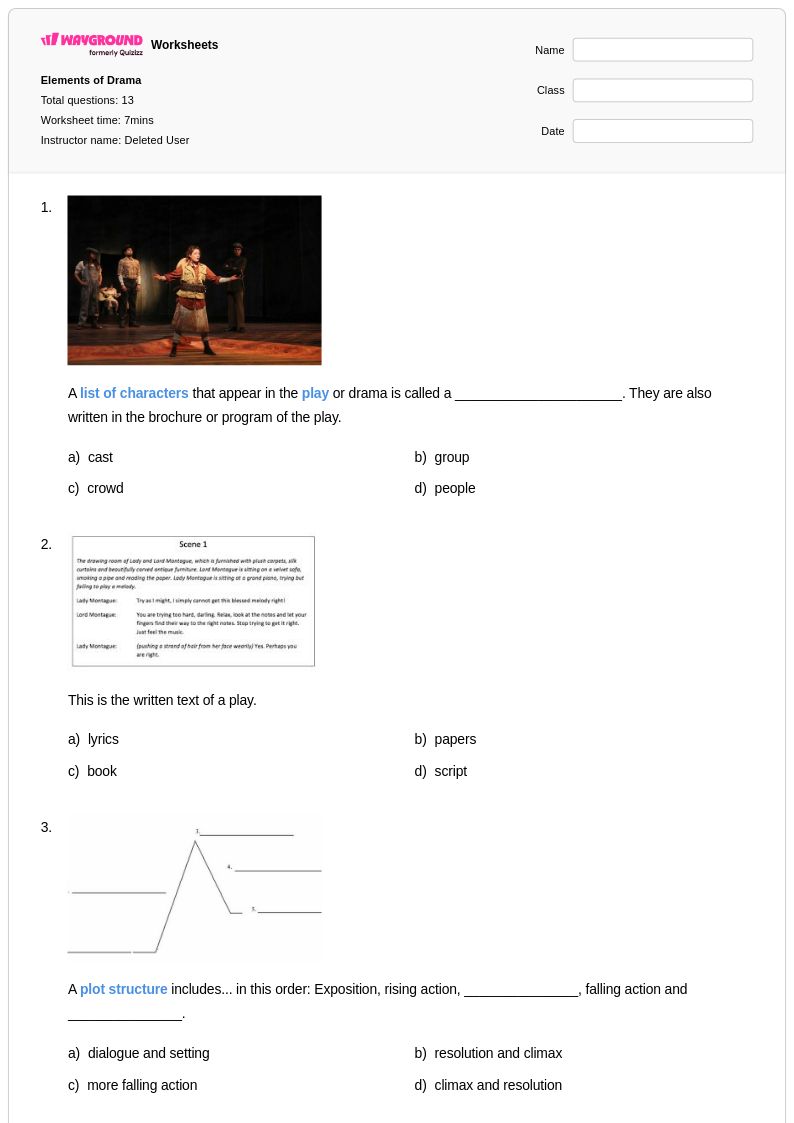
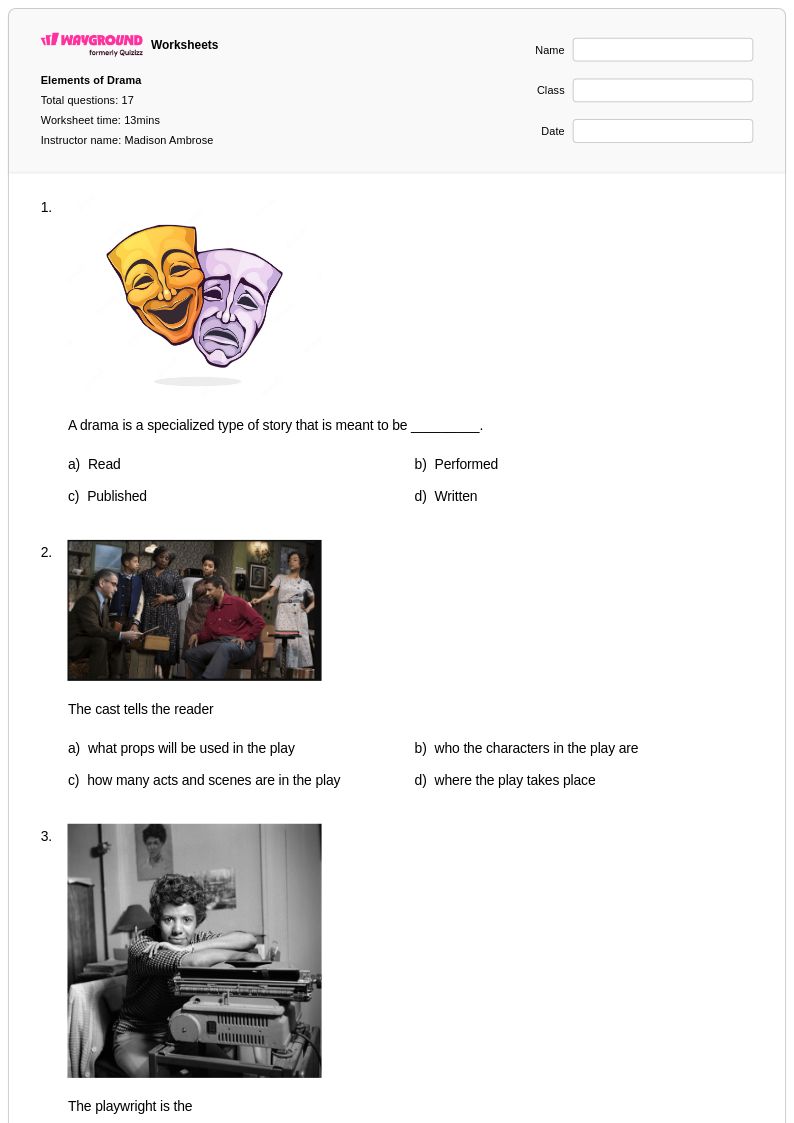
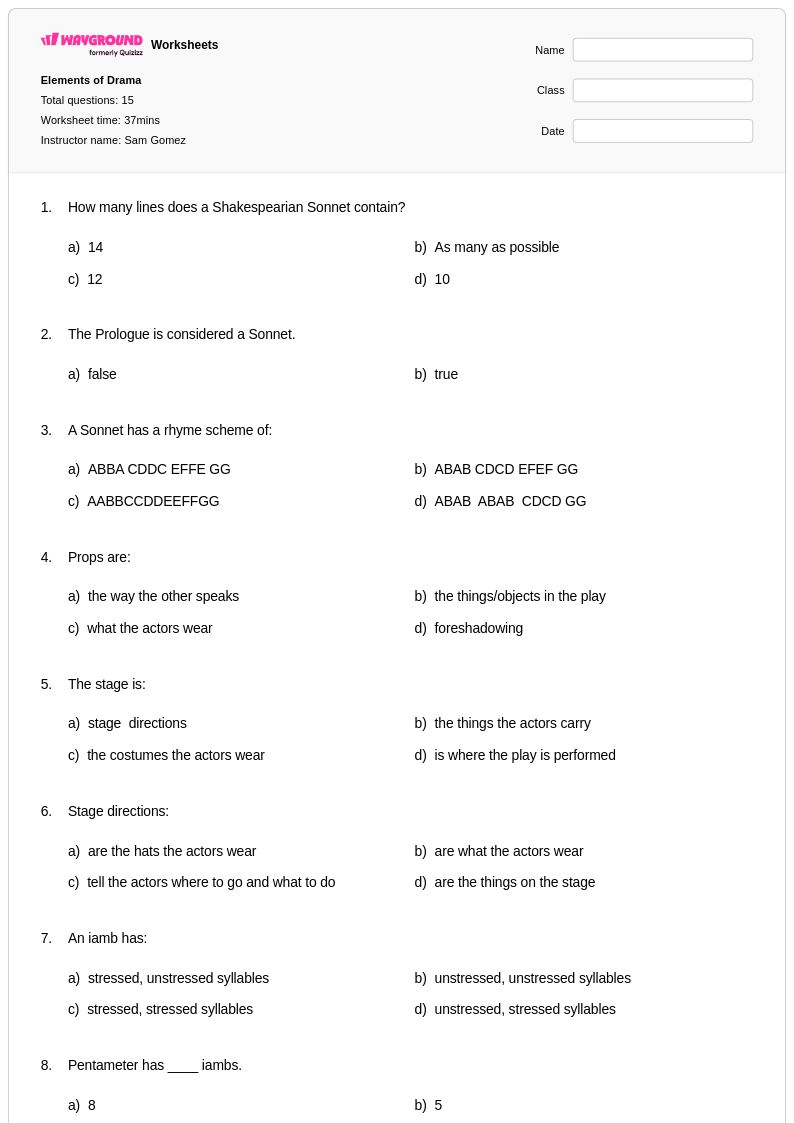
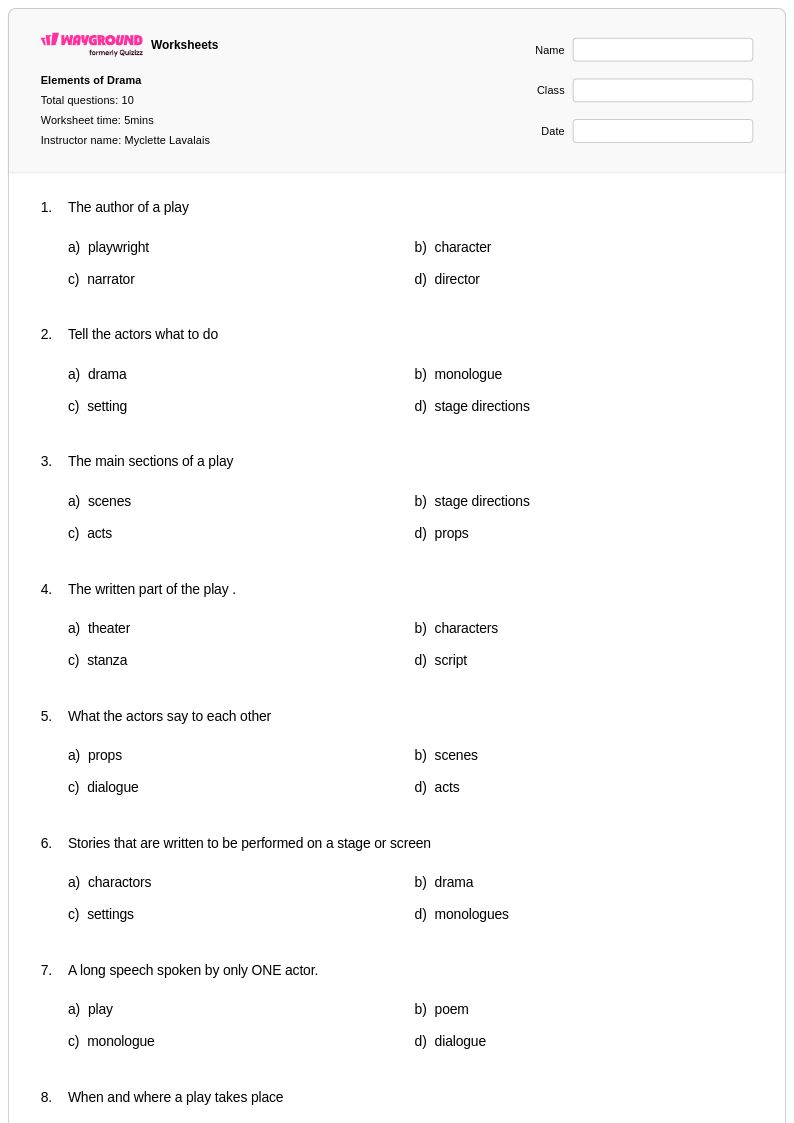
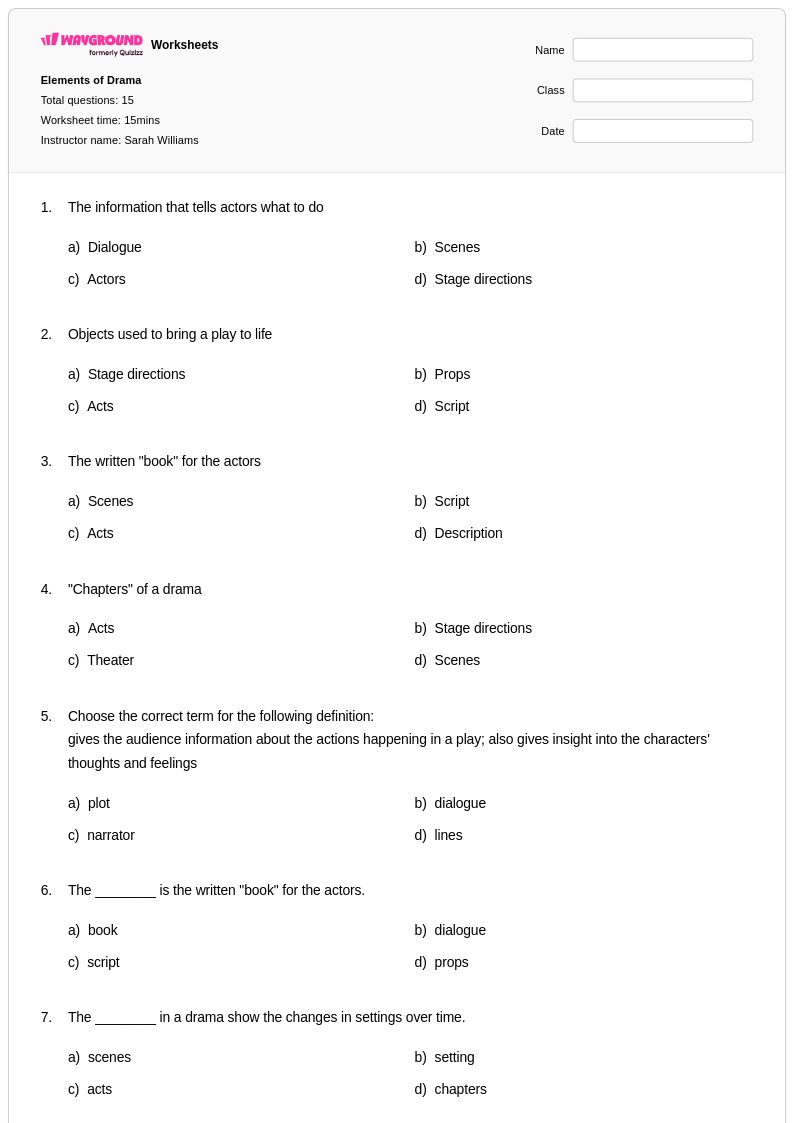
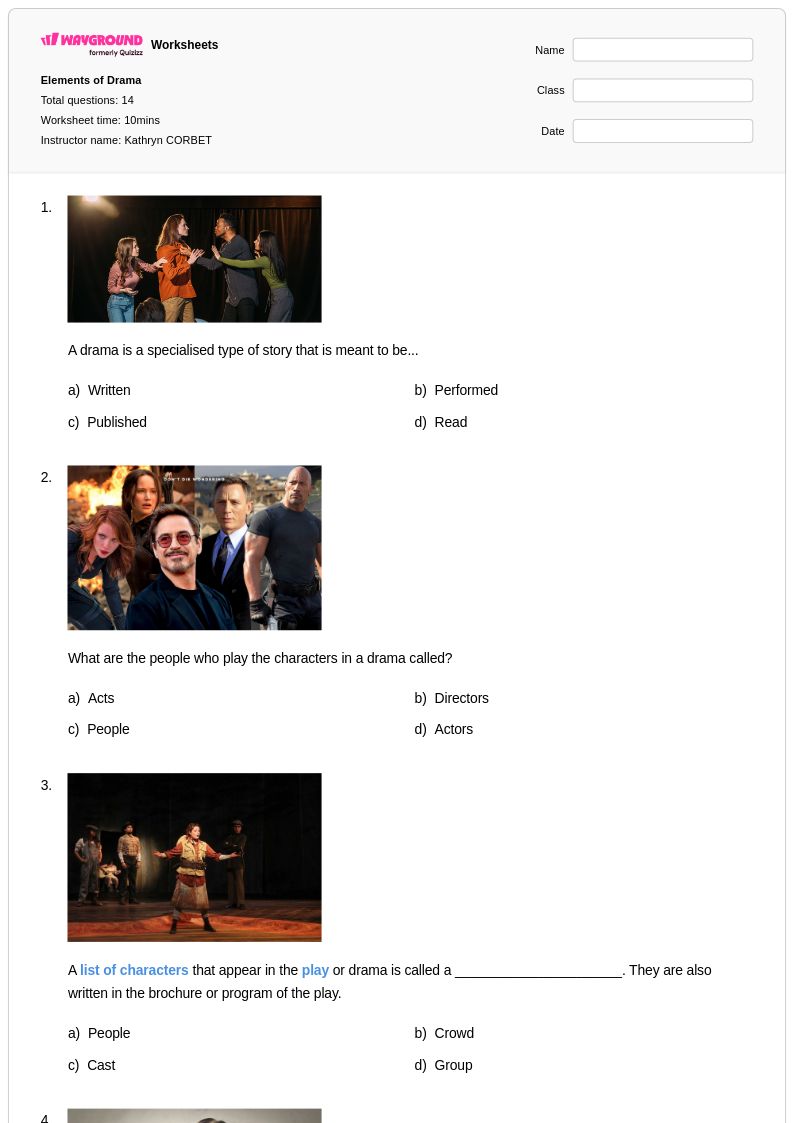
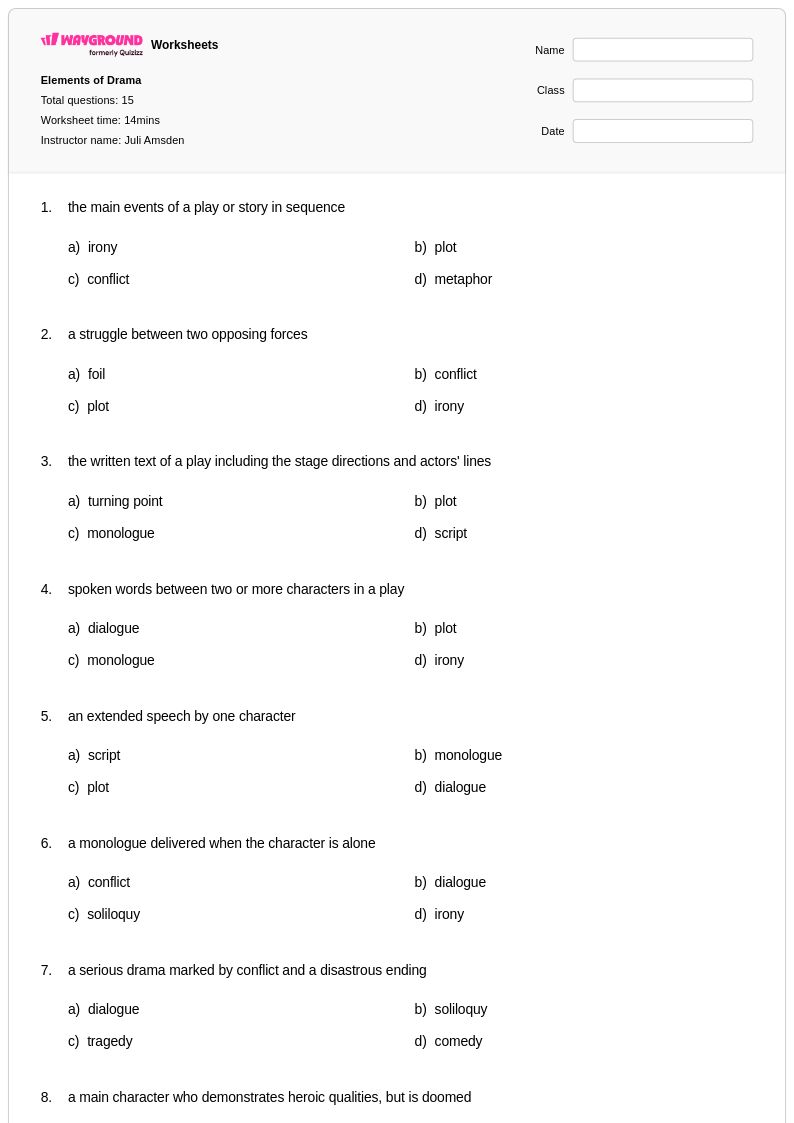
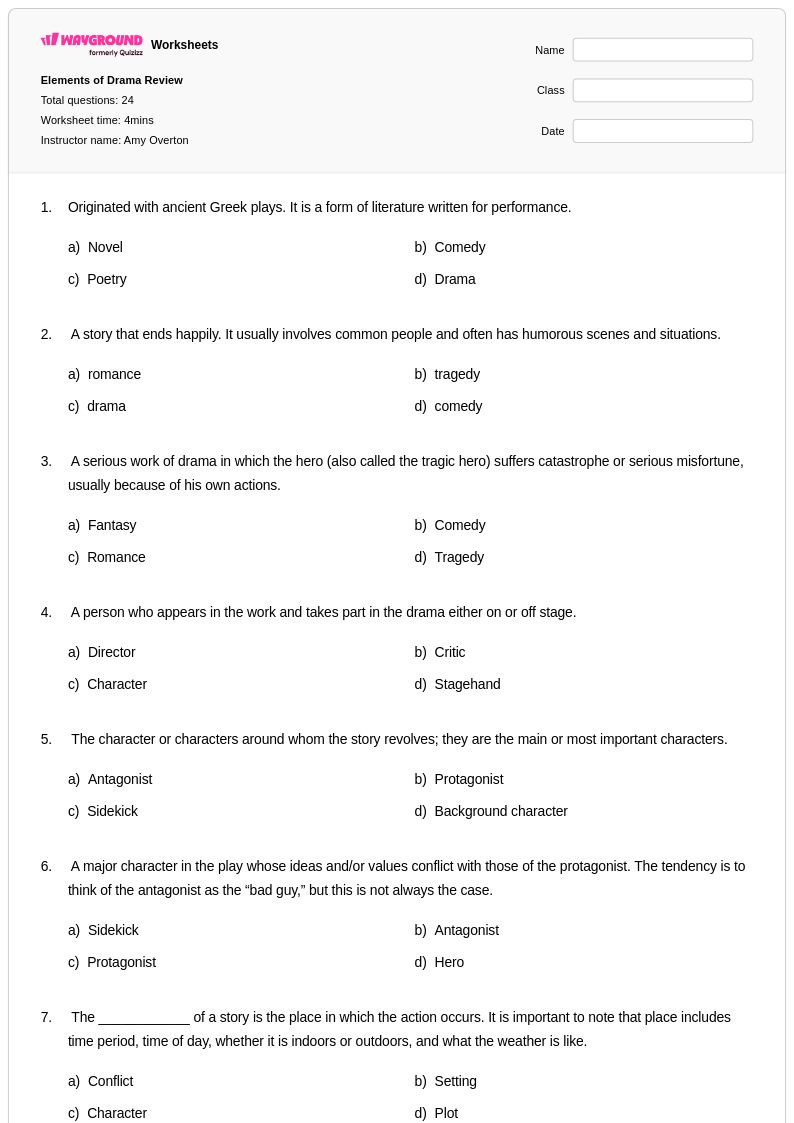
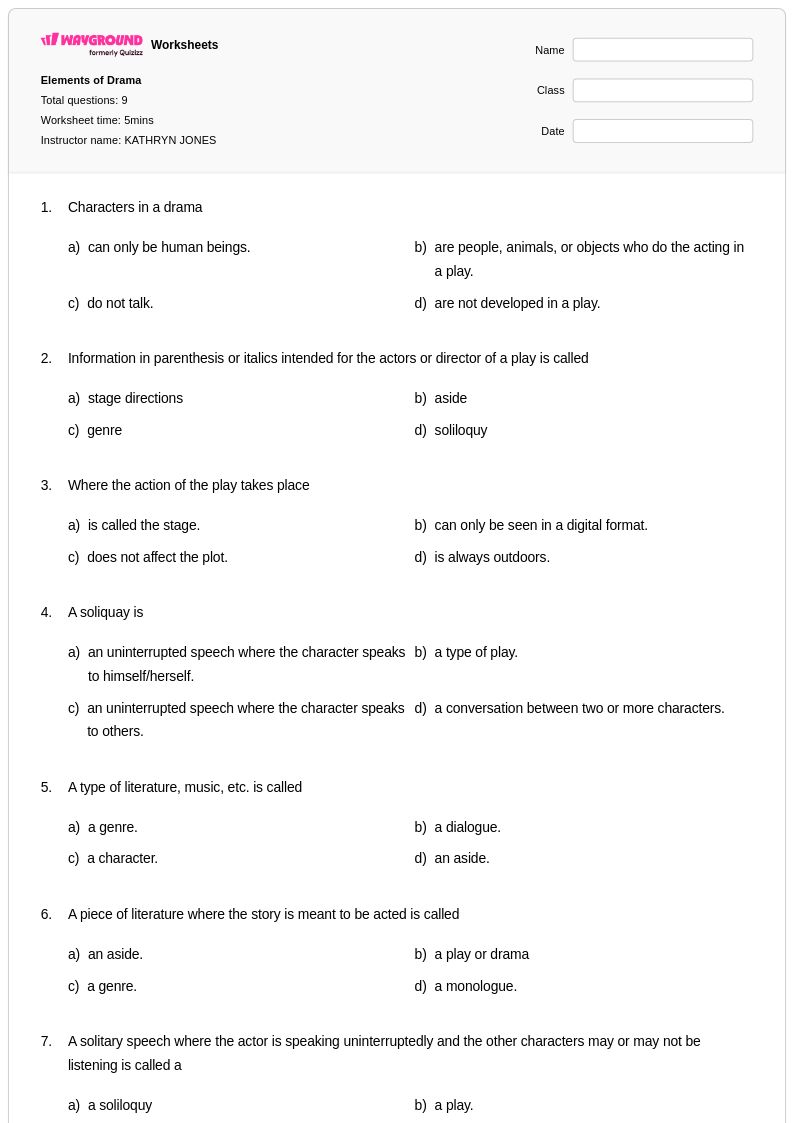
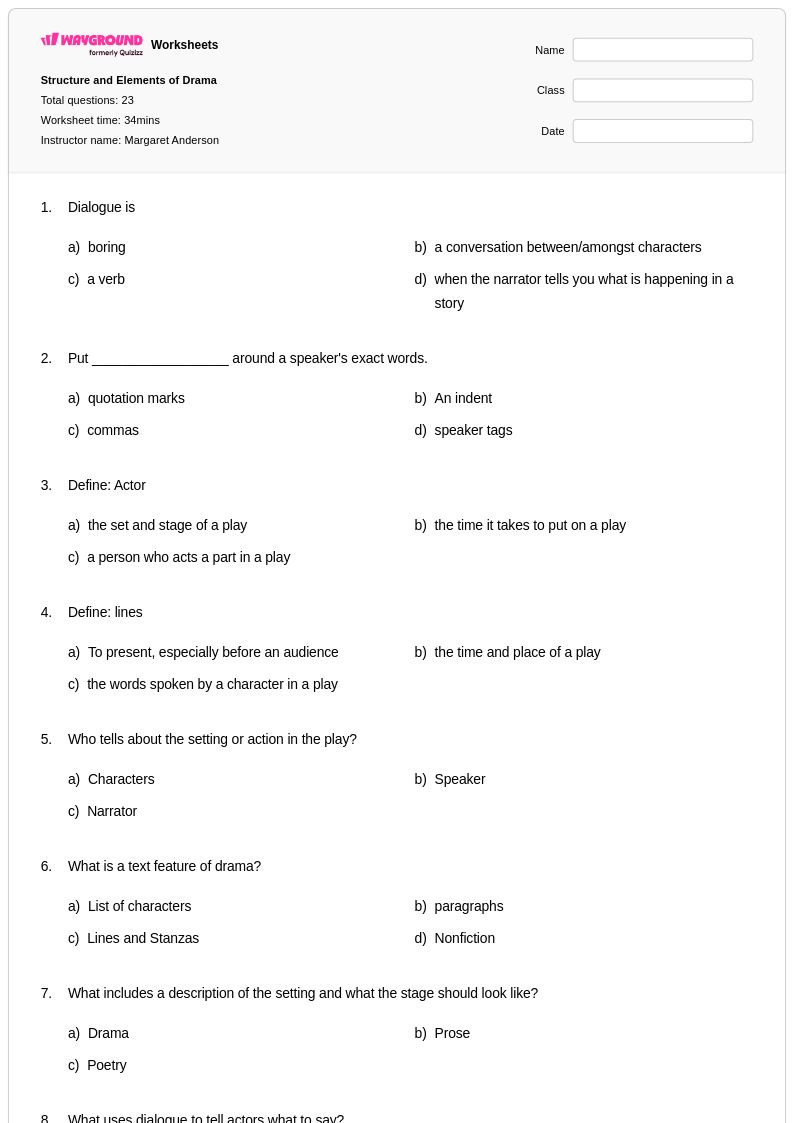
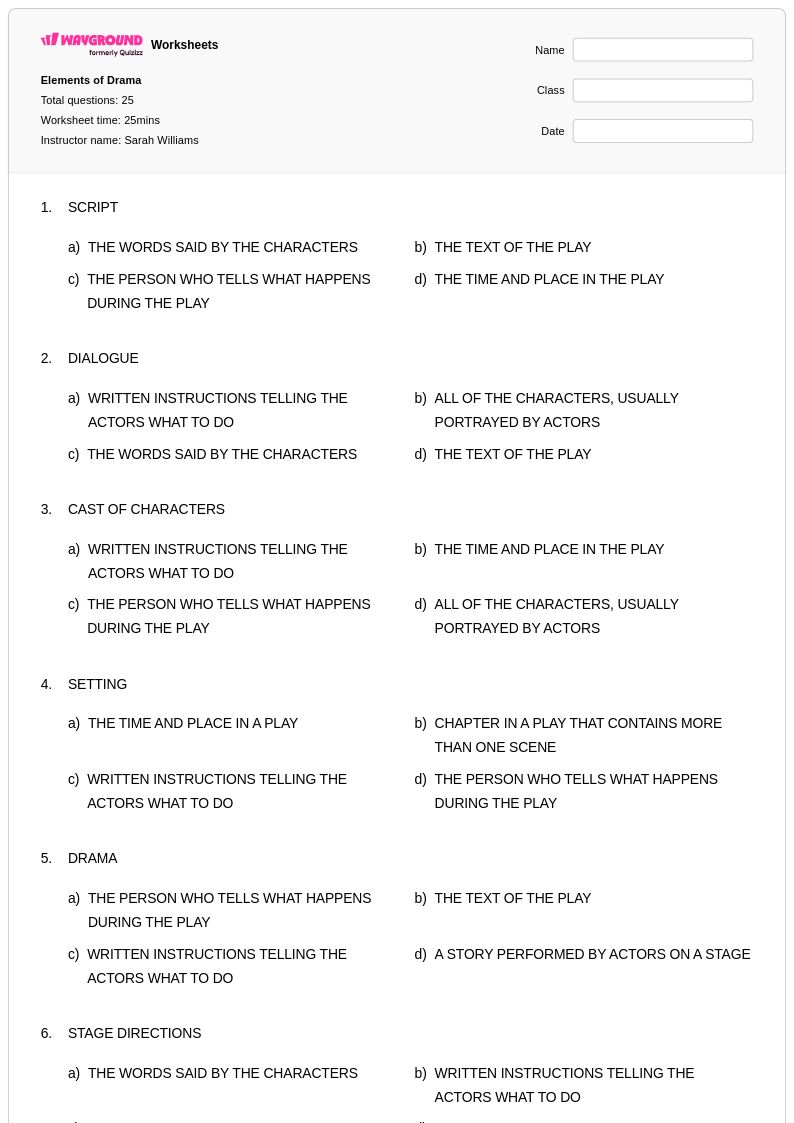
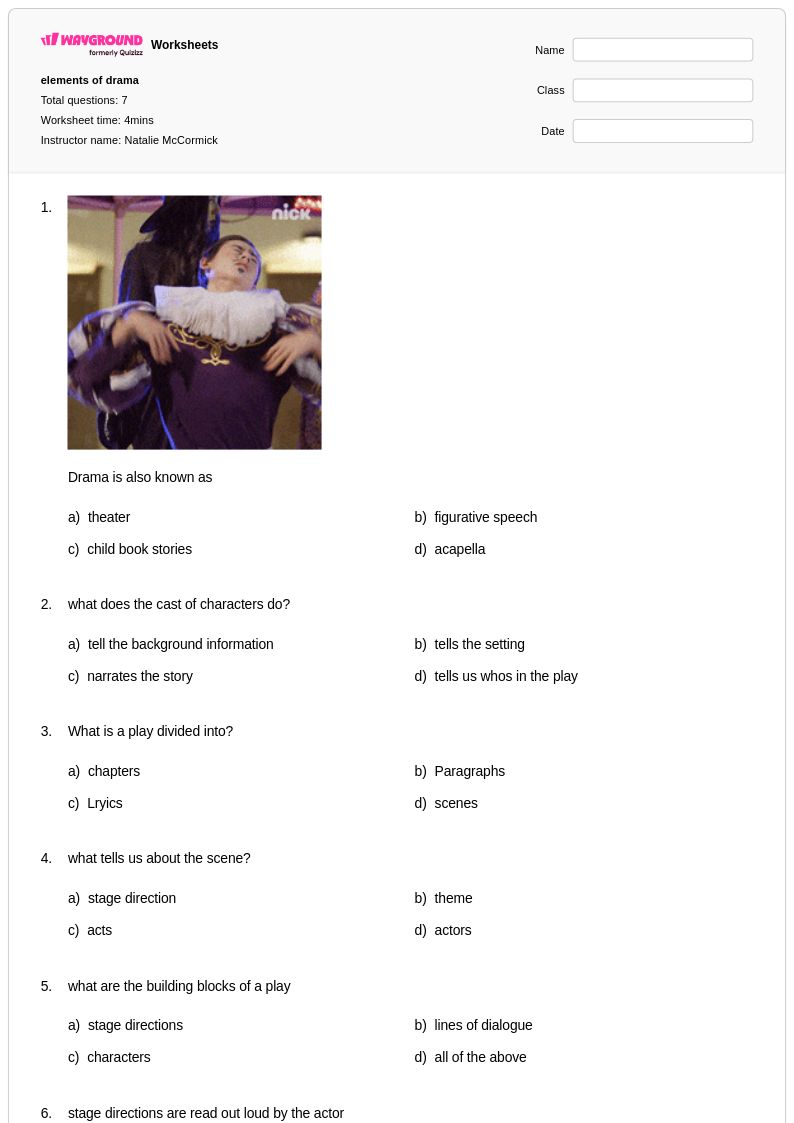
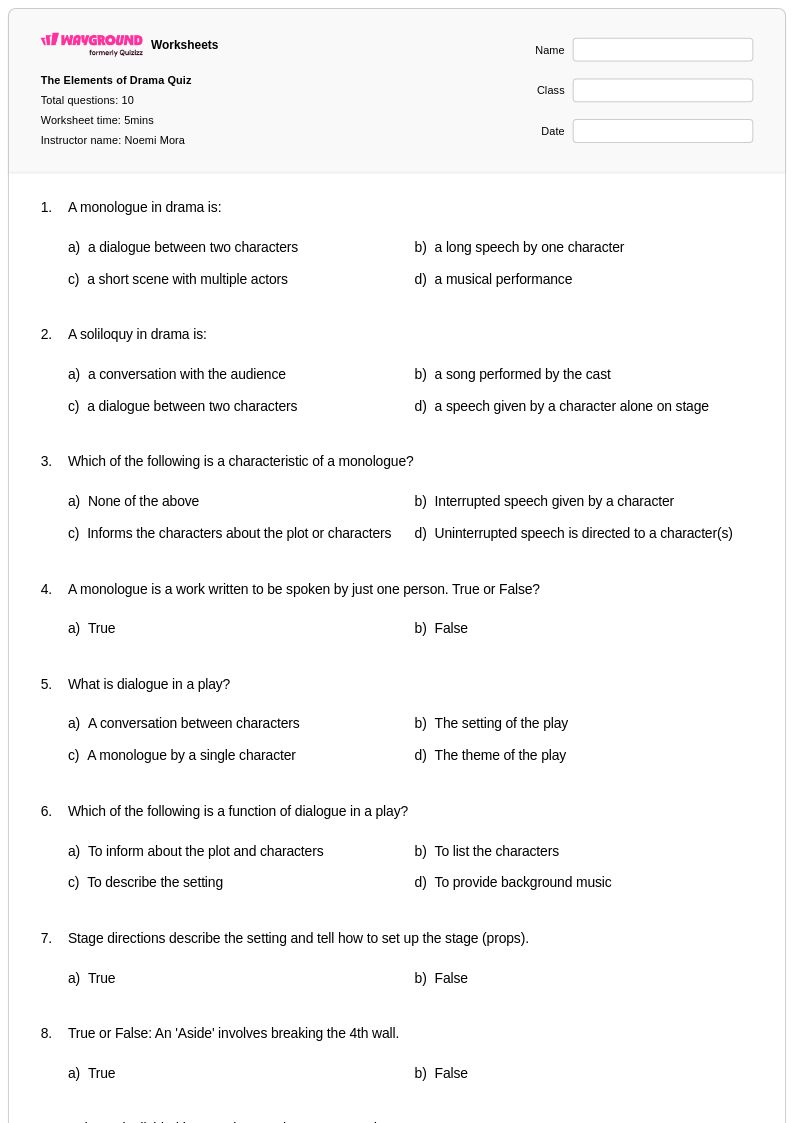
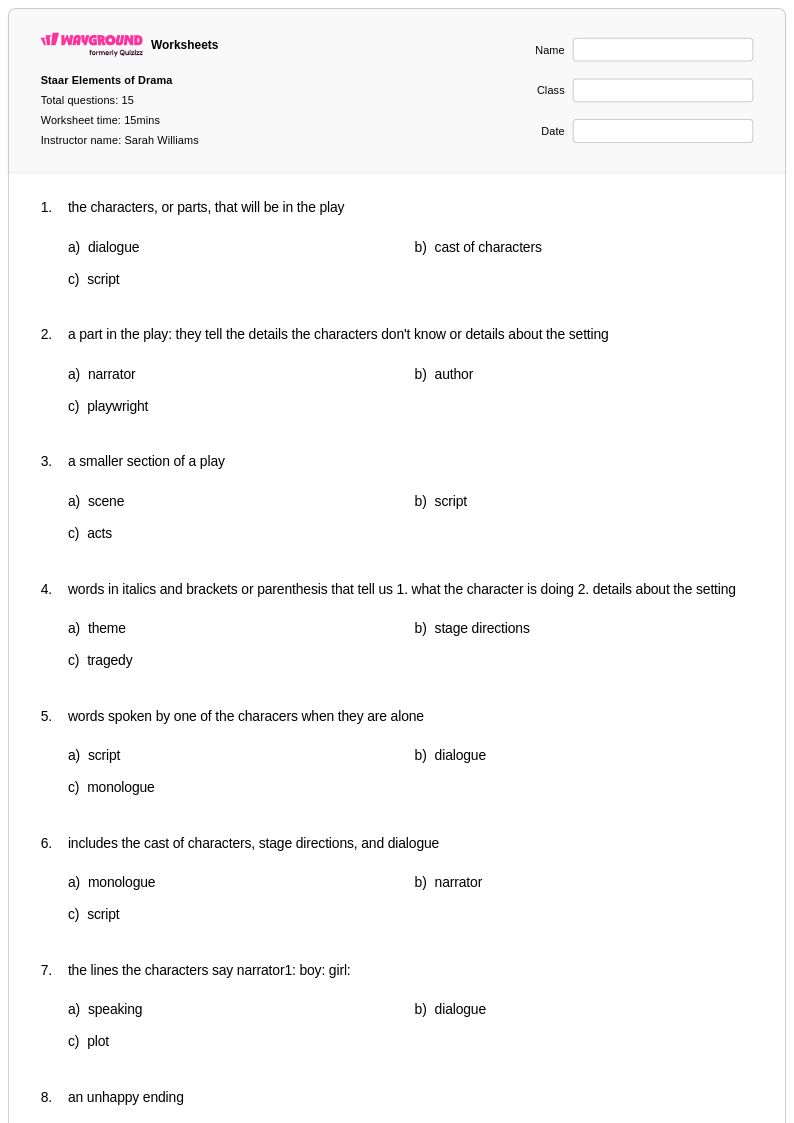
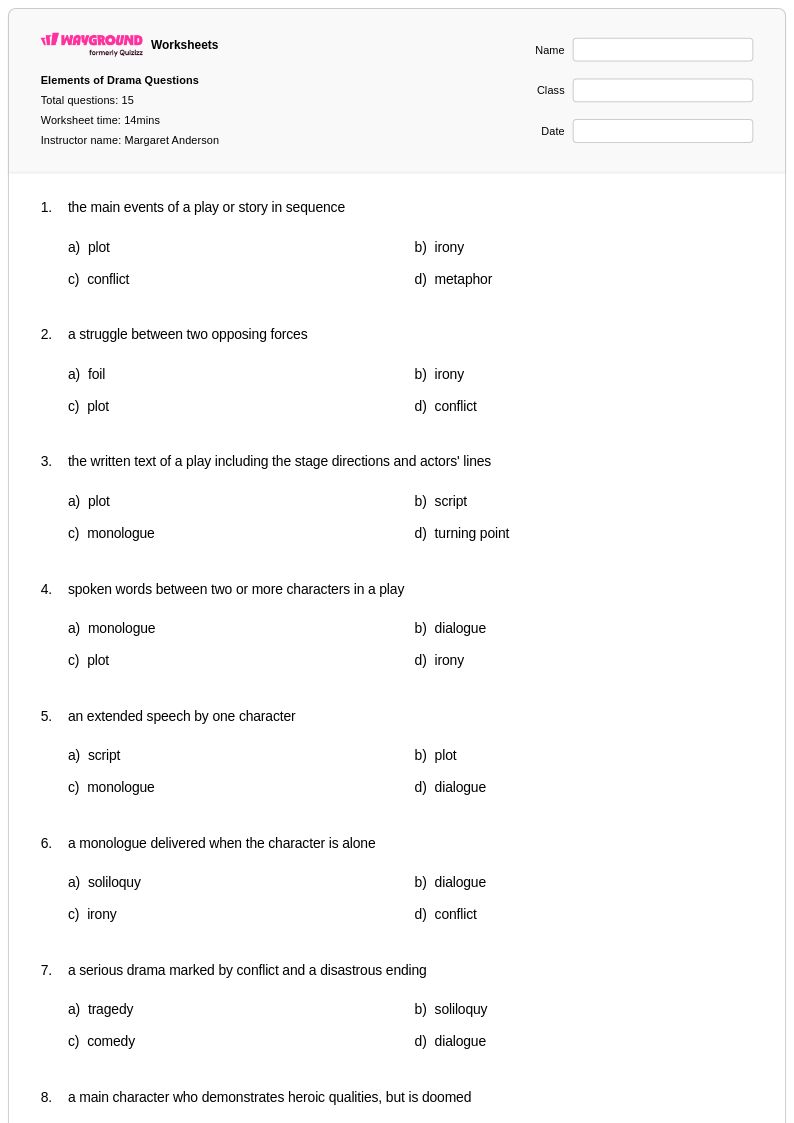
Elements of drama worksheets for Class 9 students through Wayground (formerly Quizizz) provide comprehensive coverage of theatrical literature's fundamental components, helping students master the structural and artistic elements that define dramatic works. These expertly designed resources guide ninth-grade learners through detailed analysis of character development, plot structure, dialogue techniques, stage directions, and thematic elements that distinguish drama from other literary genres. Students engage with practice problems that challenge them to identify dramatic irony, analyze soliloquies and monologues, examine conflict resolution, and understand how playwrights use theatrical conventions to convey meaning. Each worksheet comes with a complete answer key and is available as a free printable pdf, enabling students to develop critical thinking skills while building confidence in their ability to interpret and analyze dramatic literature.
Wayground's extensive collection of elements of drama worksheets draws from millions of teacher-created resources, offering educators powerful search and filtering capabilities to locate materials perfectly aligned with Class 9 curriculum standards and individual student needs. The platform's differentiation tools allow teachers to customize worksheets for various skill levels, supporting both remediation for struggling readers and enrichment opportunities for advanced students ready to tackle more complex dramatic analysis. Available in both printable and digital formats, including downloadable pdf versions, these resources streamline lesson planning while providing flexible options for classroom instruction, homework assignments, and independent practice sessions. Teachers can efficiently organize skill-building activities that progress from basic identification of dramatic elements to sophisticated analysis of how these components work together to create powerful theatrical experiences.
FAQs
How do I teach the elements of drama to my students?
Start by introducing each dramatic element individually — character, plot, setting, theme, dialogue, stage directions, and conflict — before asking students to analyze how these elements work together in a short, familiar play or script excerpt. Anchor instruction in close reading of actual dramatic texts so students can see each element in action rather than learning definitions in isolation. Pairing direct instruction with structured analysis activities helps students internalize how playwrights use these tools intentionally to build tension and convey meaning.
What activities help students practice identifying elements of drama?
Worksheet-based practice that asks students to locate and label specific dramatic elements within a script excerpt is highly effective for building recognition skills. Activities that require students to compare how two different playwrights handle conflict or character development push beyond identification toward genuine literary analysis. Practice problems that move from single-element identification to multi-element analysis help students develop the layered thinking drama study demands.
What mistakes do students commonly make when analyzing elements of drama?
One of the most frequent errors is confusing plot with theme — students often summarize what happens rather than identifying the deeper meaning a playwright is constructing. Students also tend to treat stage directions as incidental rather than recognizing them as deliberate authorial choices that shape mood, pacing, and character. Another common misconception is viewing dialogue purely as conversation rather than as a tool playwrights use to reveal character motivation and advance conflict.
How does studying elements of drama support broader ELA skills?
Analyzing dramatic elements directly reinforces close reading, textual evidence, and literary analysis skills that transfer across genres. Because drama externalizes conflict and character through dialogue and action rather than narration, it gives students a concrete entry point for understanding how authors construct meaning — a skill equally applicable to prose fiction and nonfiction. Drama study also strengthens students' ability to infer motivation and interpret subtext, which are high-demand skills in standardized assessments.
How can I use elements of drama worksheets in my classroom?
Elements of drama worksheets on Wayground are available as printable PDFs for traditional classroom use and in digital formats for technology-integrated or hybrid learning environments, and teachers can also host them as a quiz directly on Wayground. The included answer keys make them effective for independent practice, homework assignments, or self-paced review. For teachers who need to support diverse learners, Wayground's digital format allows accommodations such as read aloud, extended time, and reduced answer choices to be applied to individual students without disrupting the rest of the class.
How can I differentiate elements of drama instruction for students at different skill levels?
For students who are newer to drama analysis, begin with highly structured worksheets that isolate one element at a time before moving to comparative or multi-element tasks. More advanced students benefit from open-ended analysis prompts that ask them to evaluate how effectively a playwright uses specific elements to achieve a dramatic purpose. On Wayground's digital platform, teachers can assign accommodations such as reduced answer choices or read aloud to individual students, allowing the same worksheet to serve multiple learning levels simultaneously.