Free Printable Elevation Maps Worksheets for Class 10
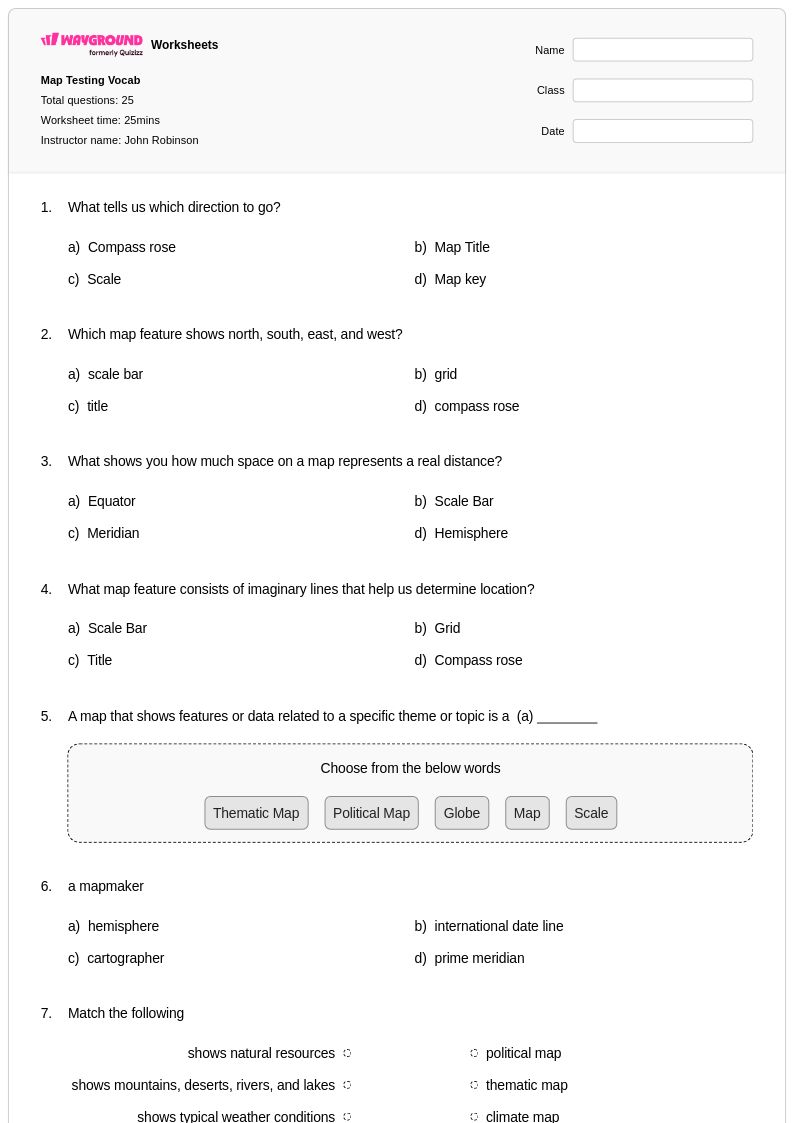
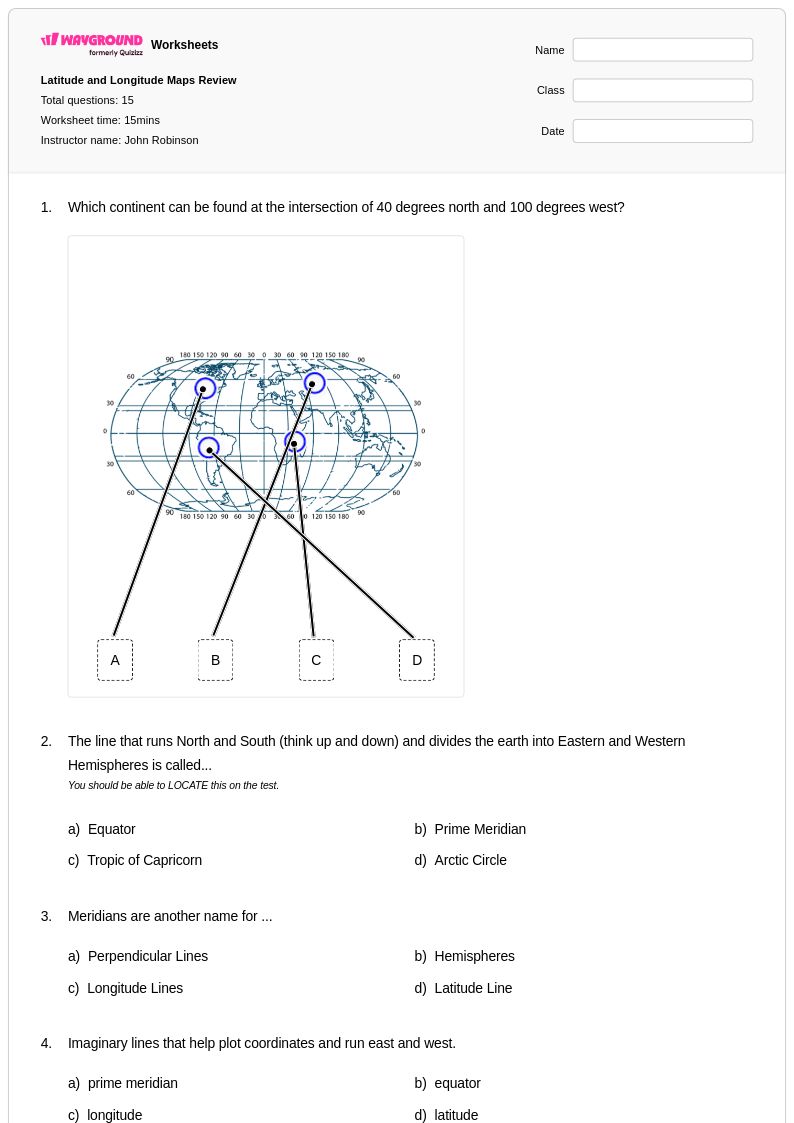
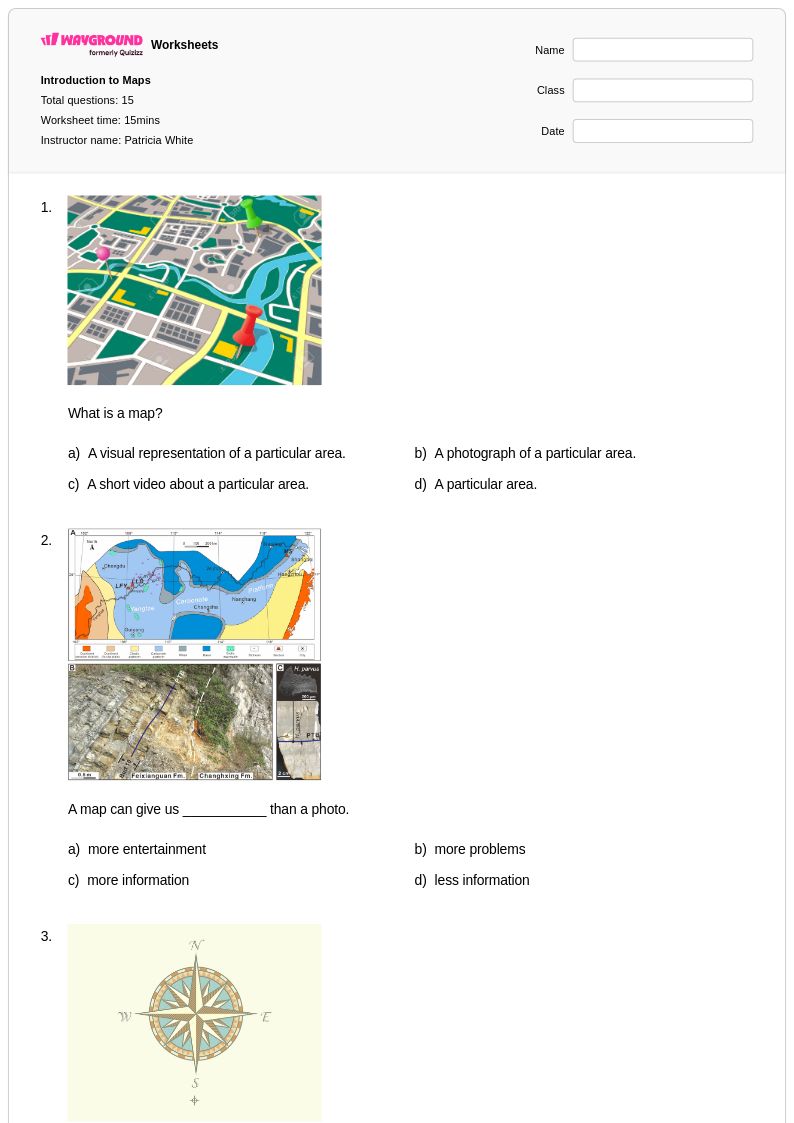
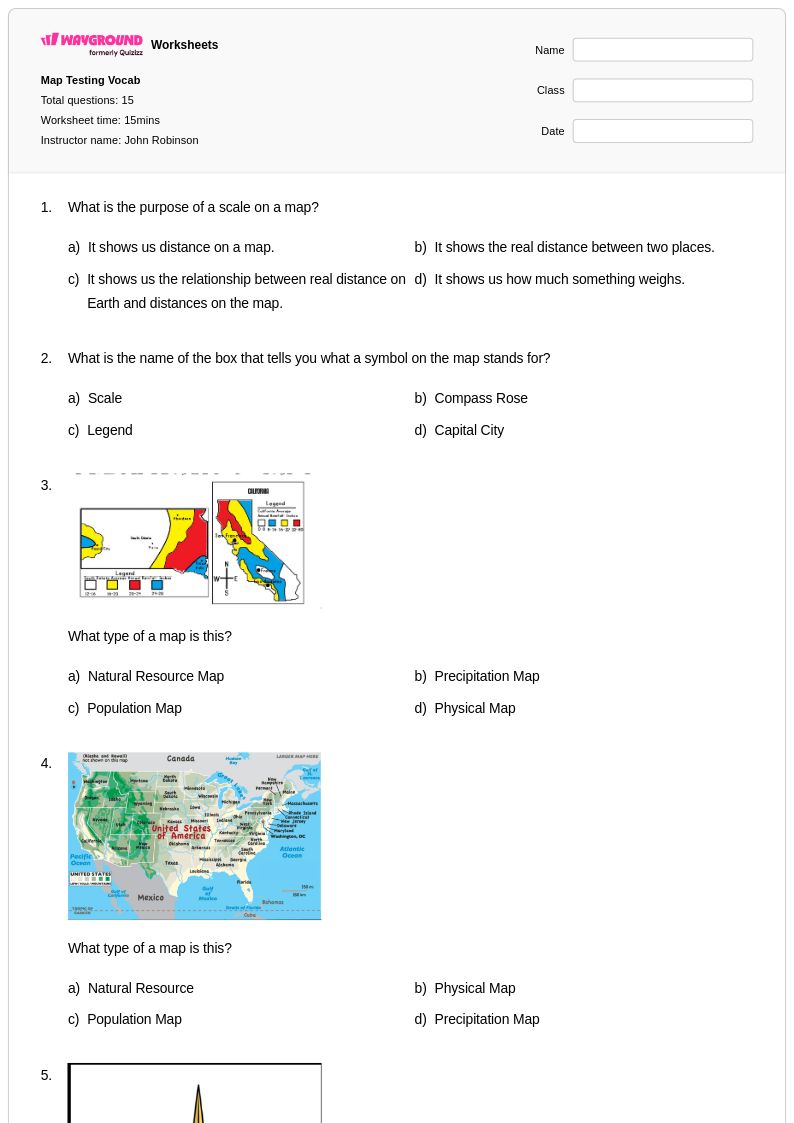
Class 10 elevation maps worksheets from Wayground help students master topographic reading skills through printable practice problems, free PDF resources, and comprehensive answer keys for effective geography learning.
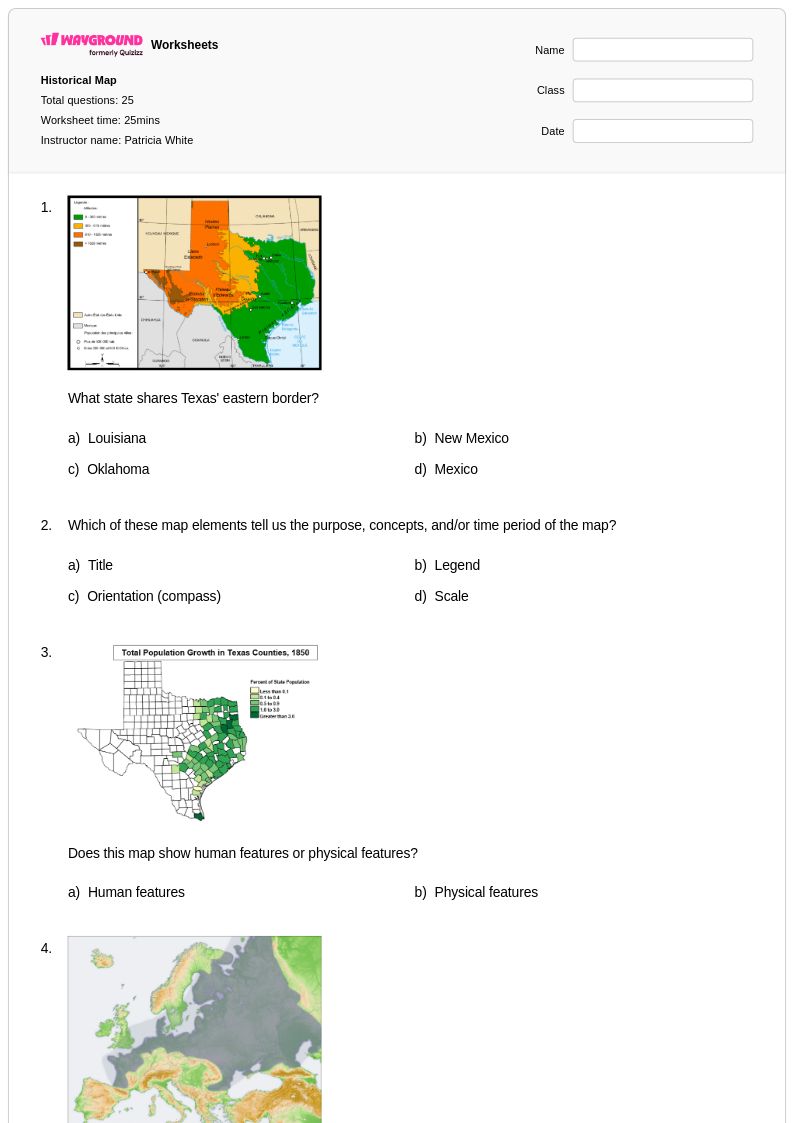
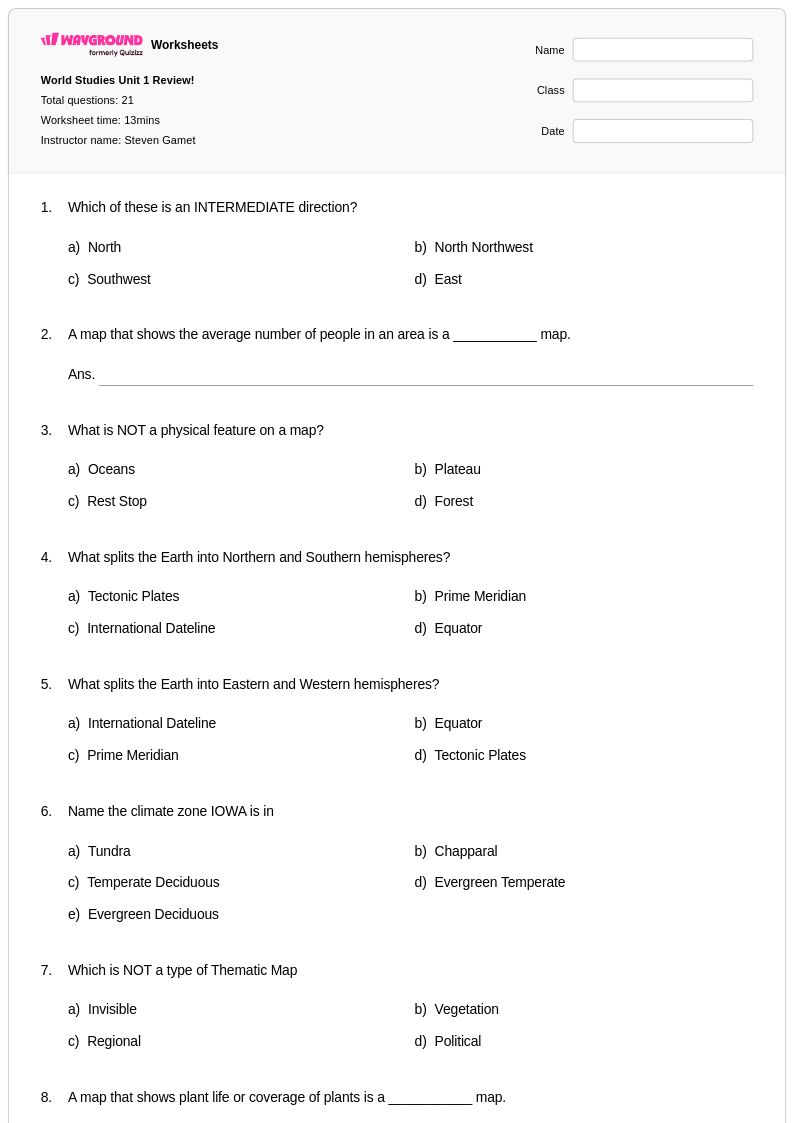
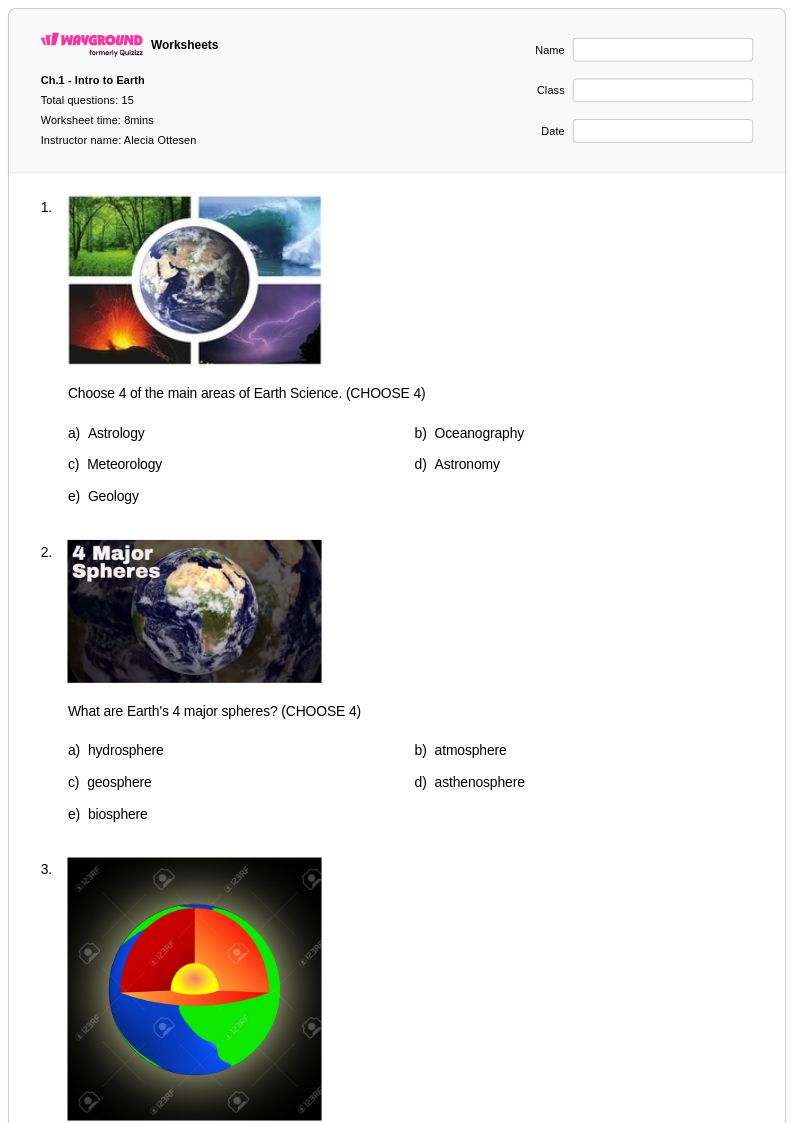
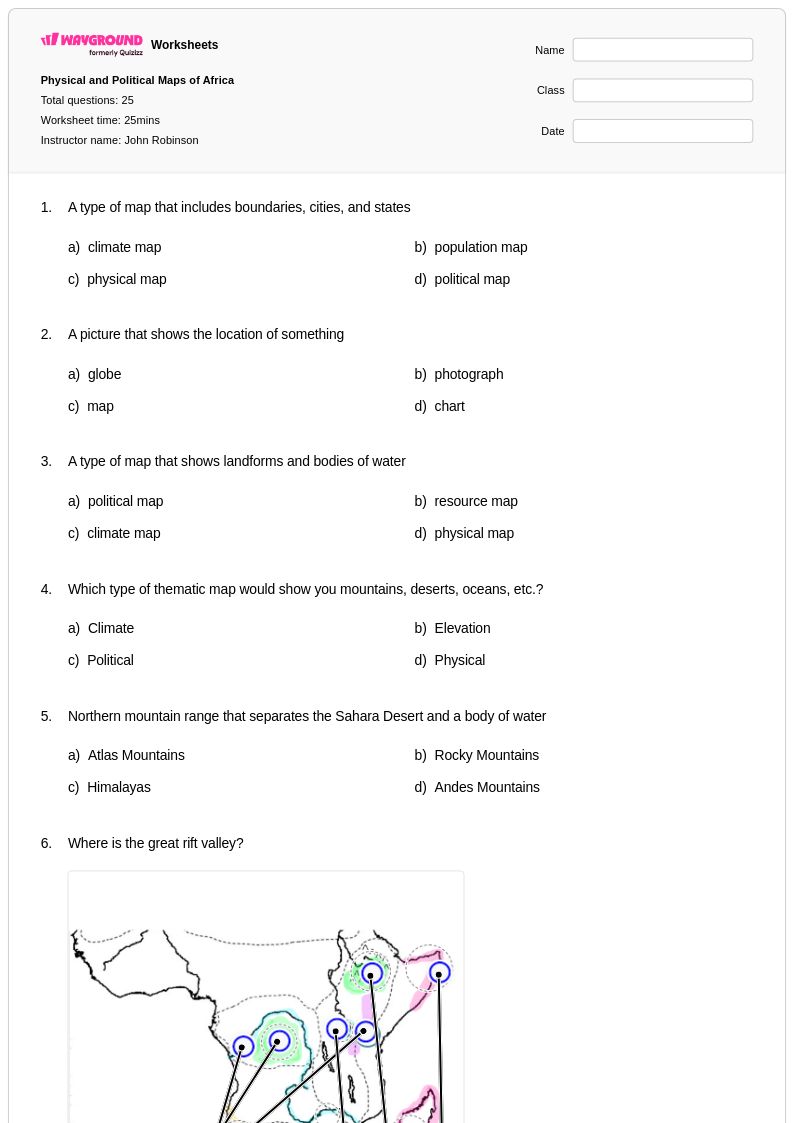
Explore printable Elevation Maps worksheets for Class 10
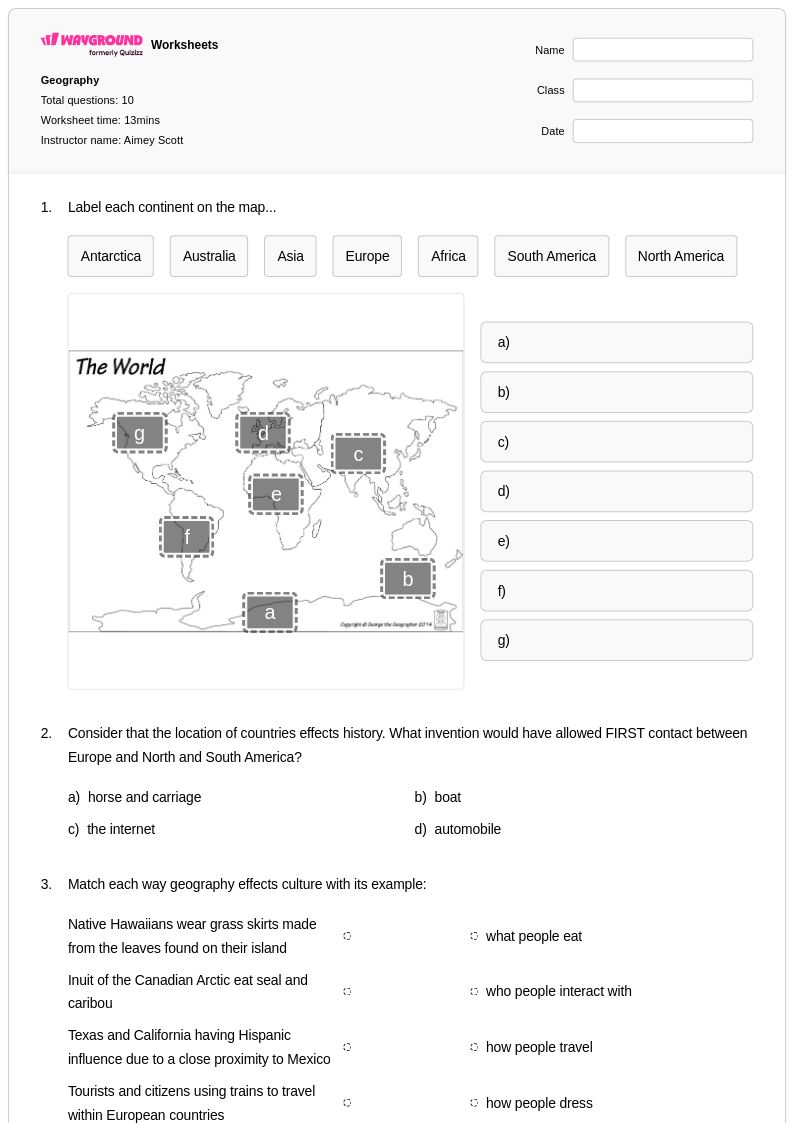
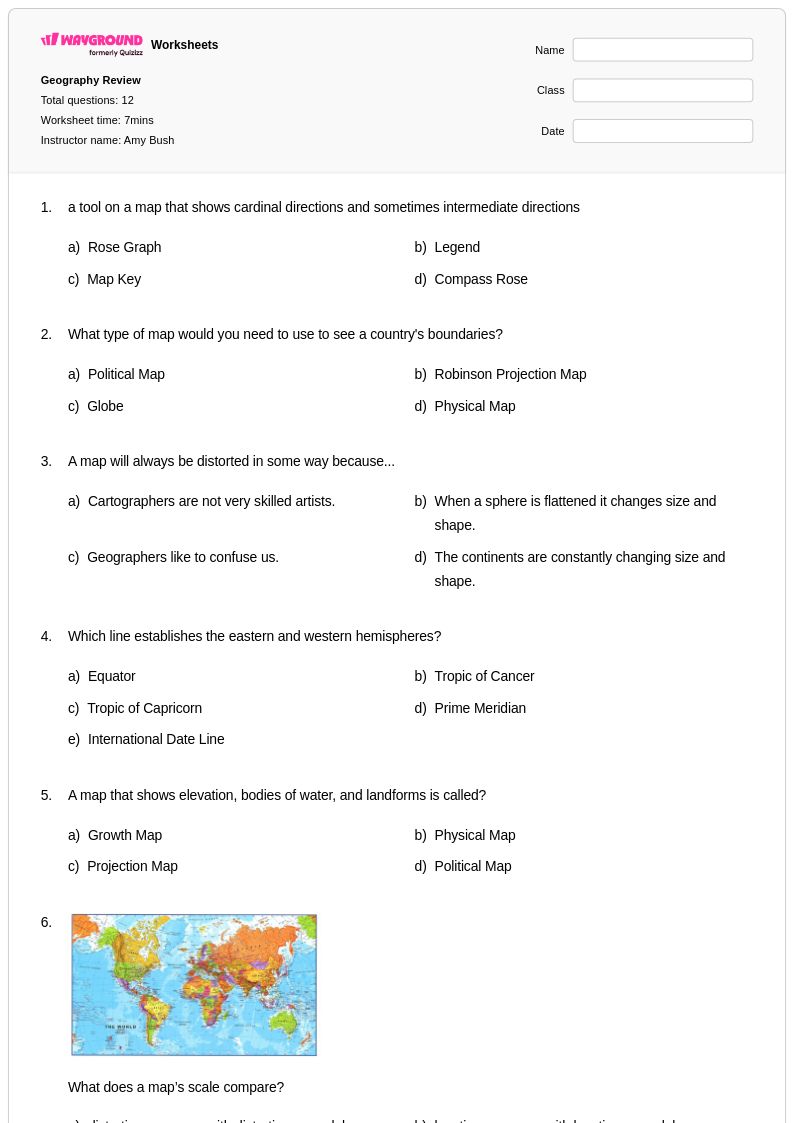
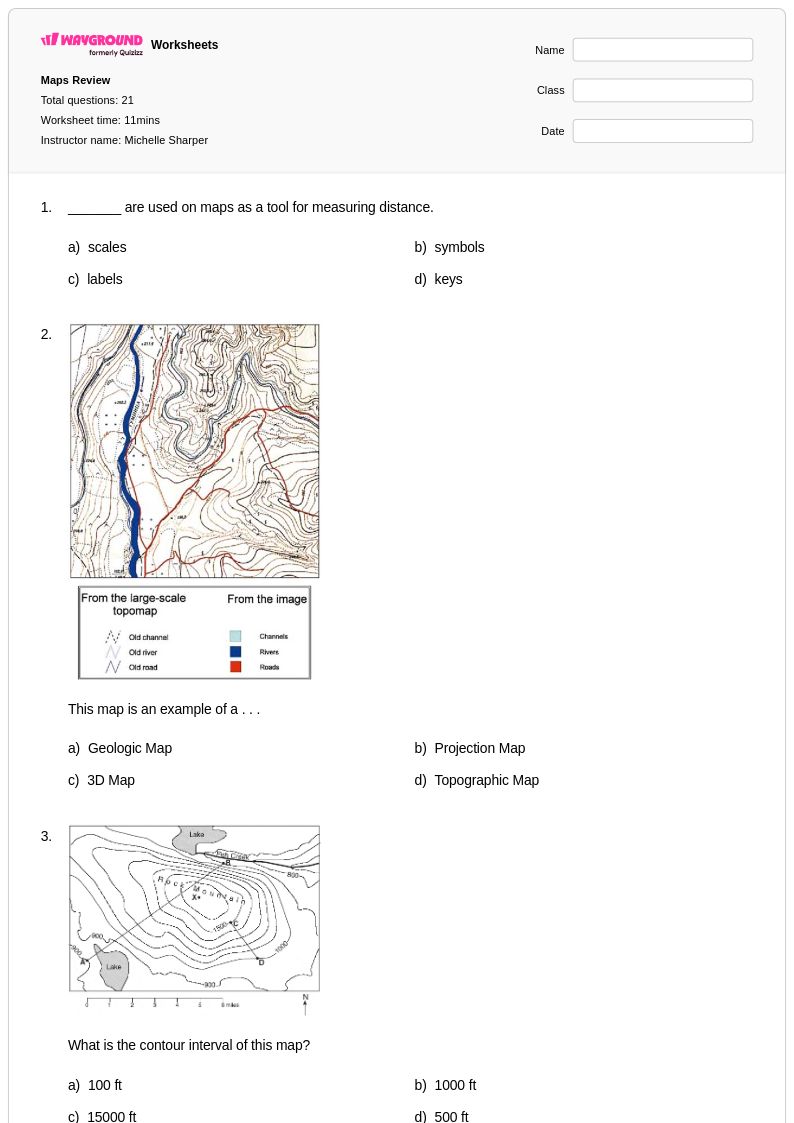
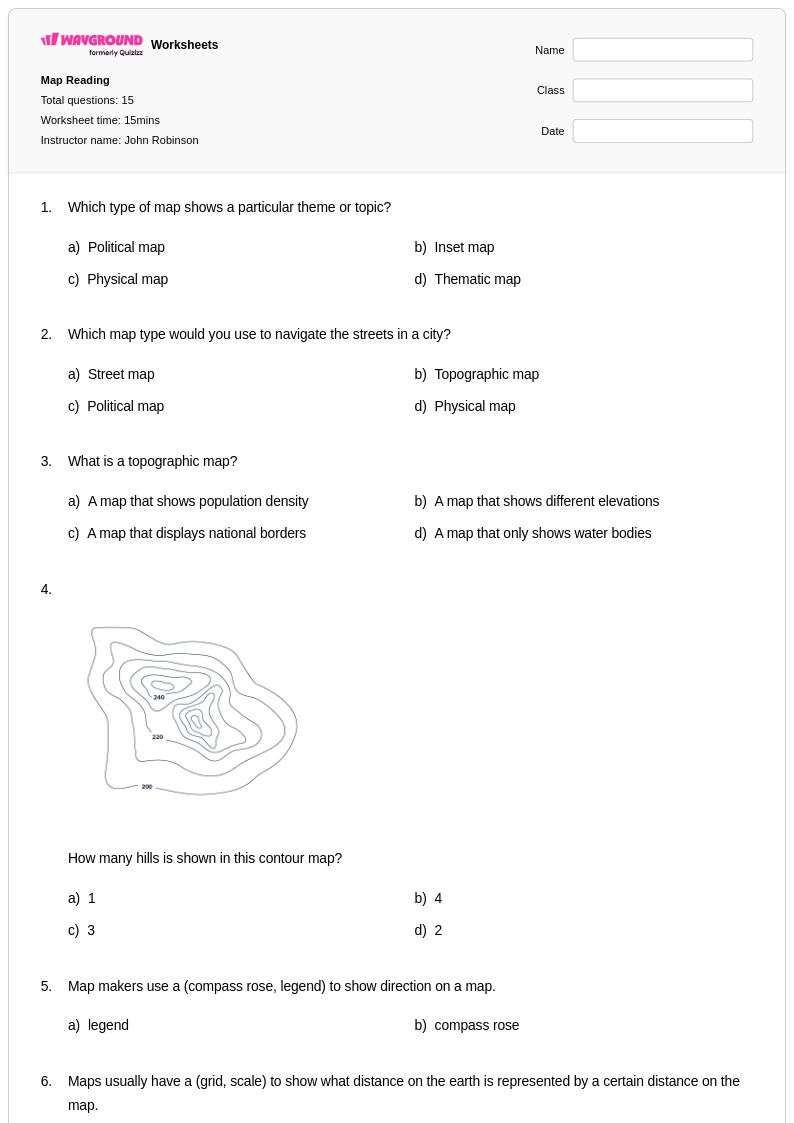
Elevation maps represent a fundamental component of Class 10 geography education, requiring students to develop sophisticated spatial analysis skills and topographic interpretation abilities. Wayground's comprehensive collection of elevation map worksheets provides students with essential practice in reading contour lines, calculating elevation differences, identifying landform patterns, and understanding three-dimensional terrain representation on two-dimensional surfaces. These carefully designed printables incorporate answer keys that enable self-assessment and immediate feedback, while the free pdf format ensures accessibility for both classroom instruction and independent study. The practice problems progress systematically from basic contour line identification to complex topographic profile construction, helping students master the critical thinking skills necessary for advanced geographic analysis and real-world applications in fields such as urban planning, environmental science, and geological surveying.
Wayground, formerly Quizizz, empowers educators with millions of teacher-created resources specifically designed to support elevation map instruction at the Class 10 level. The platform's robust search and filtering capabilities allow teachers to quickly locate worksheets that align with specific curriculum standards and learning objectives, while differentiation tools enable customization based on individual student needs and ability levels. These elevation map resources are available in both printable and digital pdf formats, providing flexibility for traditional classroom settings, hybrid learning environments, and remote instruction scenarios. Teachers can efficiently plan comprehensive lesson sequences, implement targeted remediation for struggling students, offer enrichment opportunities for advanced learners, and provide ongoing skill practice through the platform's extensive library of topographic analysis exercises, making it an indispensable tool for geography educators seeking to enhance student understanding of elevation mapping concepts.
FAQs
How do I teach students to read elevation maps?
Start by helping students understand that elevation maps use contour lines to represent three-dimensional terrain on a two-dimensional surface. Teach students that lines close together indicate steep slopes while lines far apart indicate gradual terrain. From there, introduce key features like peaks, valleys, ridges, and depressions before asking students to interpret real topographic examples. Hands-on practice identifying elevation changes between labeled contour intervals builds the spatial reasoning students need to read these maps independently.
What exercises help students practice reading contour lines on elevation maps?
Effective practice exercises include identifying the highest and lowest points on a given map, calculating the elevation difference between two locations, and determining the direction water would flow across a landscape. Students also benefit from drawing cross-section profiles, which require them to translate contour line data into a side-view elevation diagram. Worksheets that move from basic elevation identification to full topographical analysis give students structured, progressive practice with these skills.
What mistakes do students commonly make when interpreting elevation maps?
The most common error is misreading contour intervals, which leads students to miscalculate actual elevation values between lines. Students also frequently confuse closely spaced contour lines with widely spaced ones, misidentifying steep slopes as gentle and vice versa. Another persistent misconception is assuming that contour lines that form closed circles always represent hills, when they can also indicate depressions marked with hachure lines. Targeted practice with labeled answer keys helps students identify and correct these specific errors.
How does understanding elevation maps connect to other geography concepts?
Elevation is foundational to understanding how physical geography shapes climate, ecosystems, and human settlement patterns. Higher elevations generally produce cooler temperatures and different precipitation patterns, which directly influence vegetation zones and land use. Teaching elevation maps alongside units on climate regions, river systems, or human geography gives students a concrete tool for explaining why landscapes and communities look the way they do.
How can I use Wayground's elevation maps worksheets in my classroom?
Wayground's elevation maps worksheets are available as printable PDFs for traditional classroom use and in digital formats for technology-integrated or remote learning environments, including the option to host them as an interactive quiz on Wayground. Teachers can use these worksheets for direct instruction support, independent practice, homework assignments, or formative assessment. Each worksheet includes a complete answer key, making it straightforward to review student work and identify where additional instruction is needed.
How can I support struggling students who have difficulty with topographic map reading?
Students who struggle with elevation maps often need additional scaffolding around spatial visualization and vocabulary before tackling full contour line interpretation. On Wayground, teachers can apply accommodations such as Read Aloud to support students who need question content read to them, or reduce answer choices to lower cognitive load for individual students without affecting the rest of the class. Pairing these accommodations with foundational elevation identification exercises gives struggling learners a structured path toward proficiency.