Free Printable Esperanza Rising Worksheets for Class 3
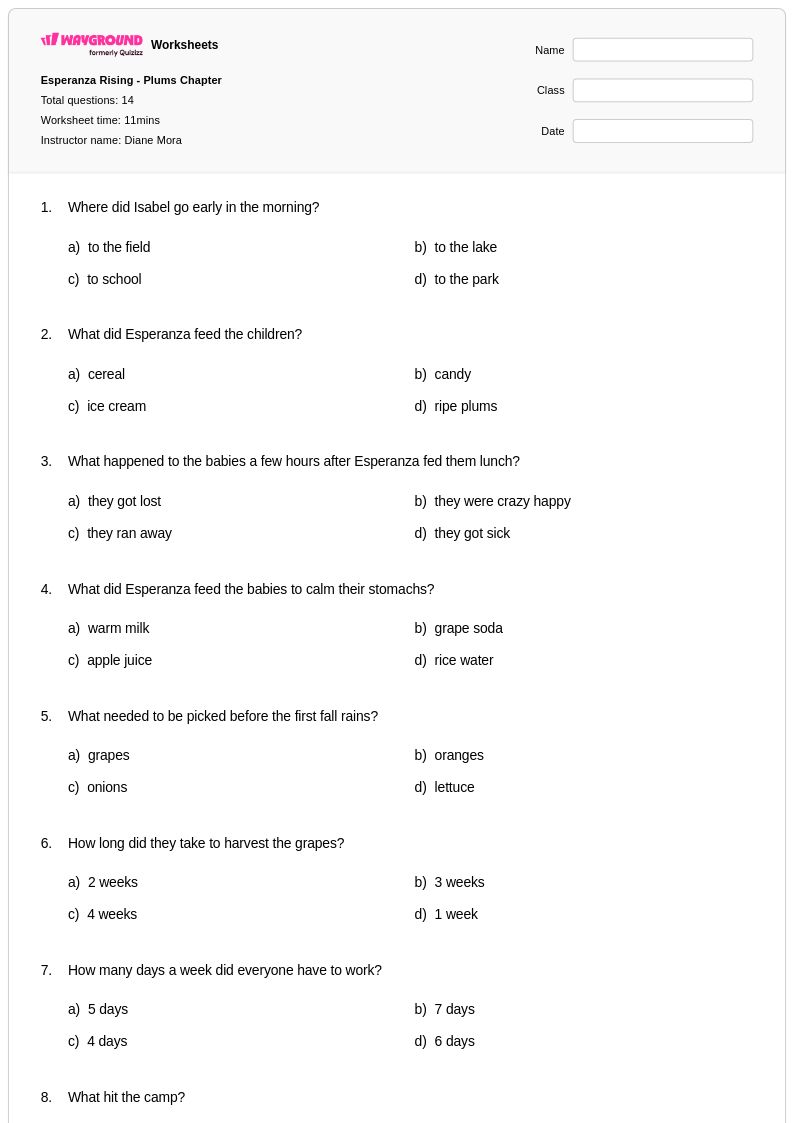
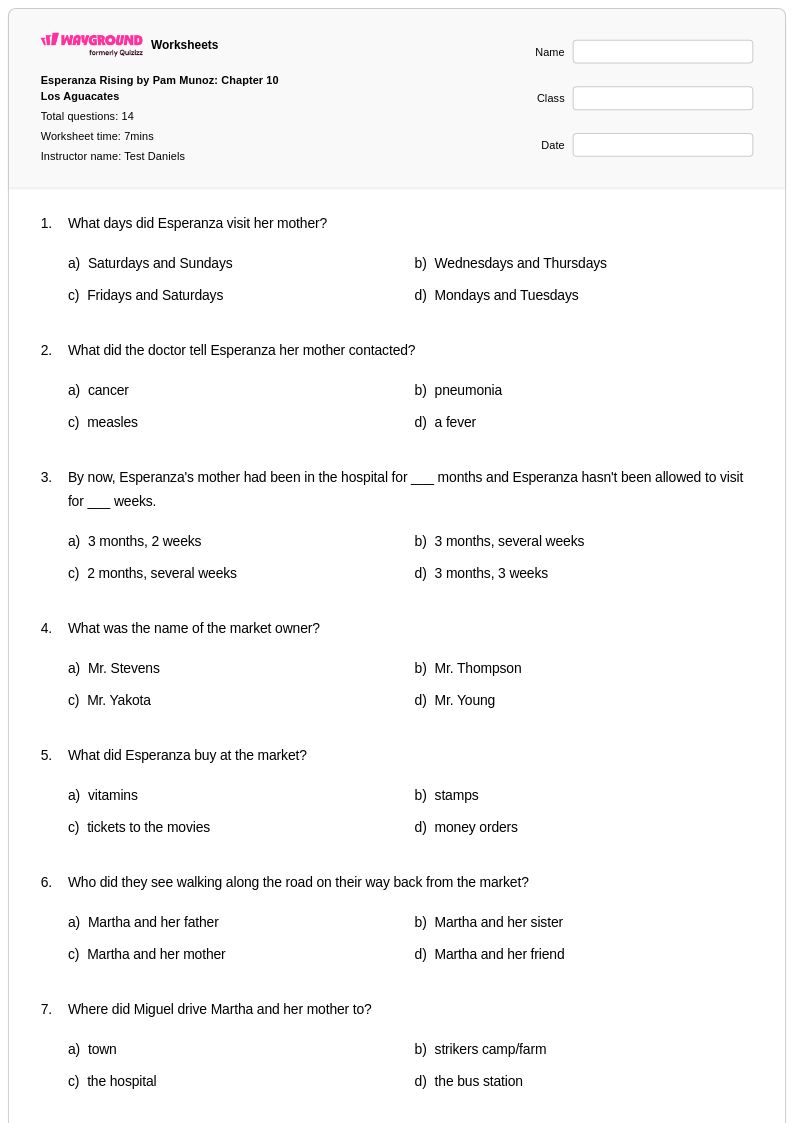
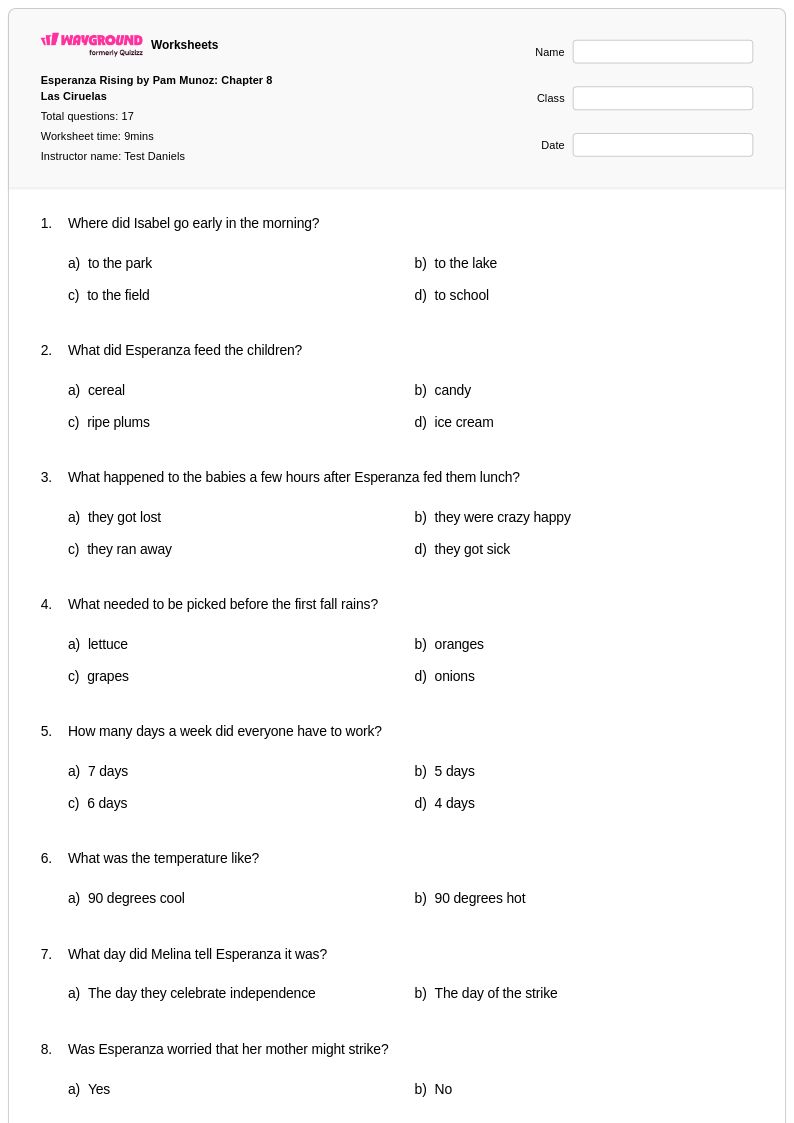
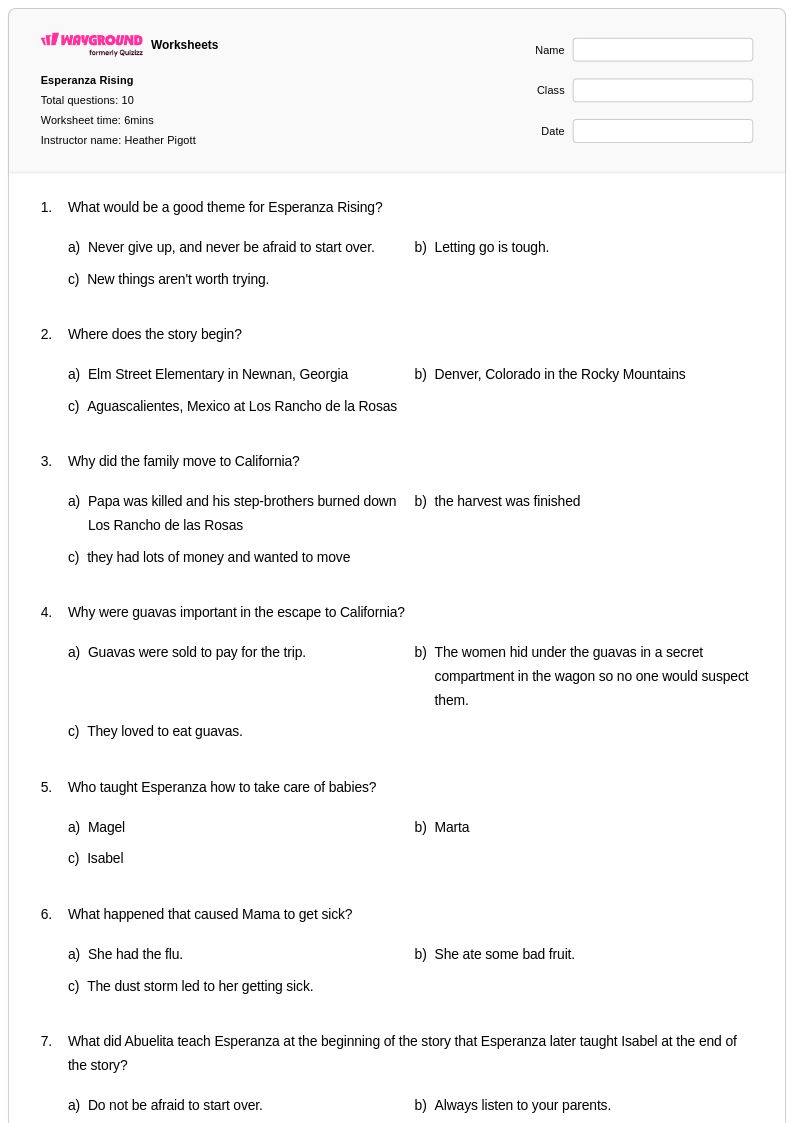
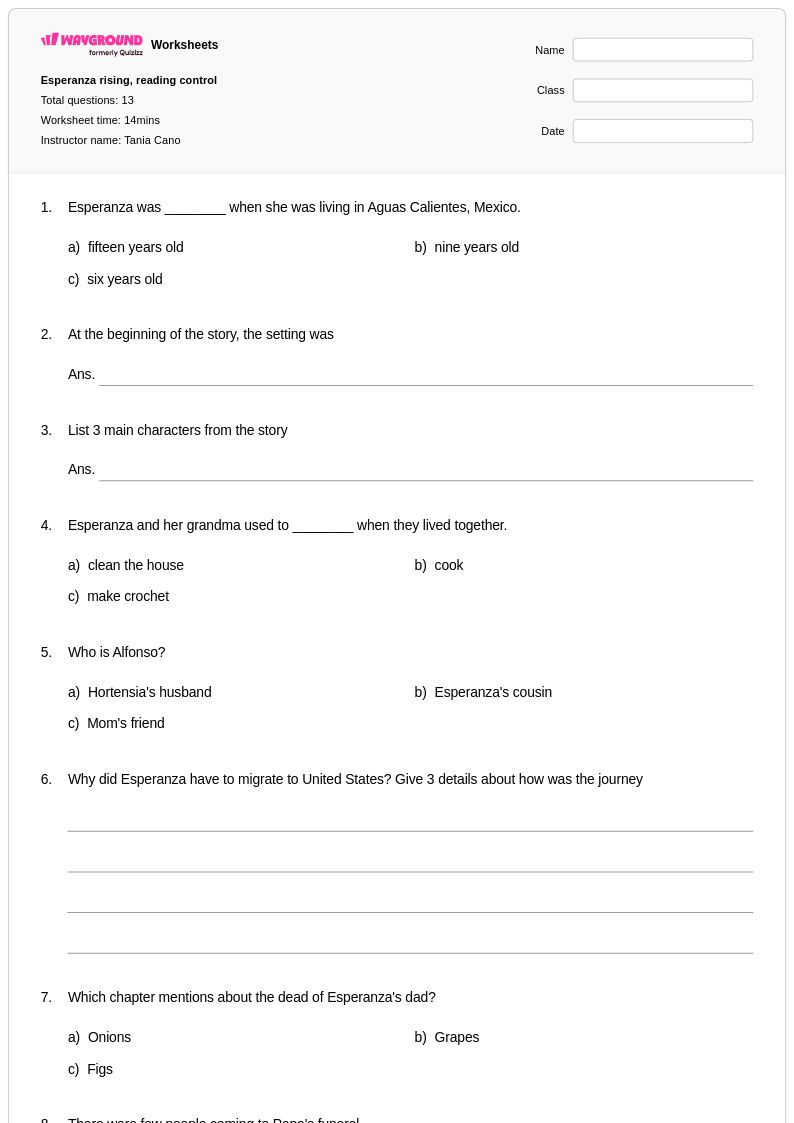
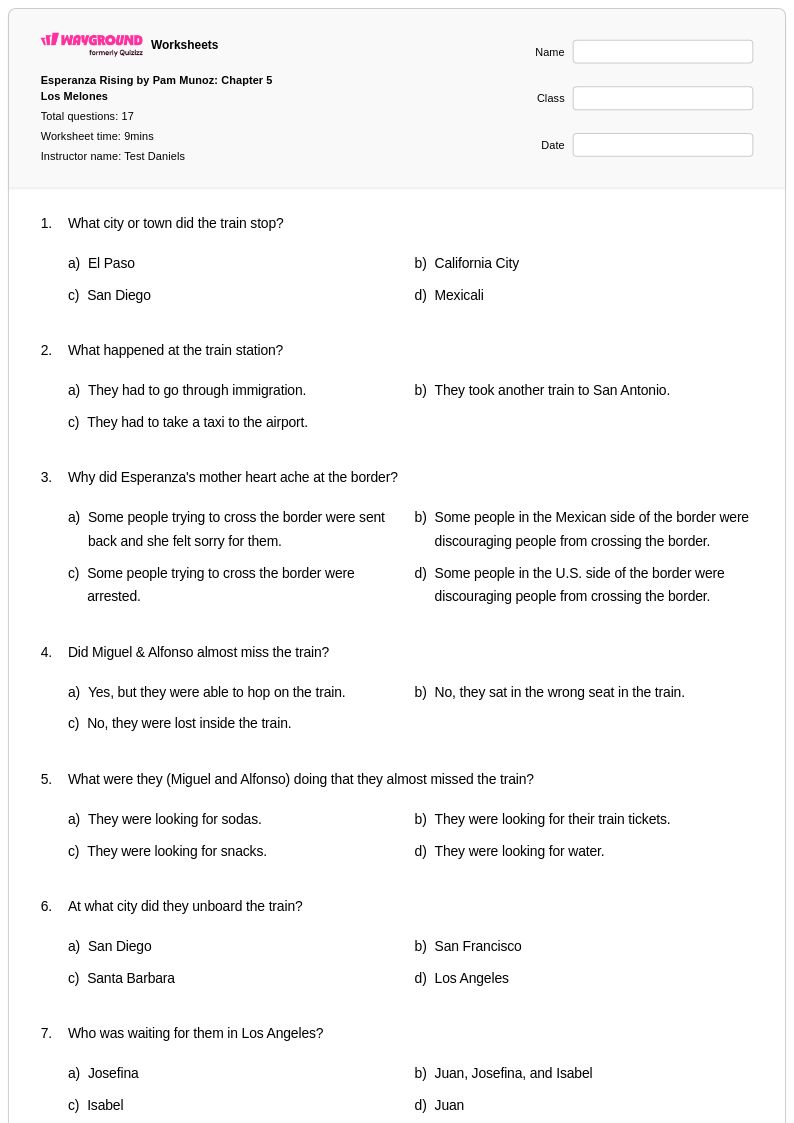
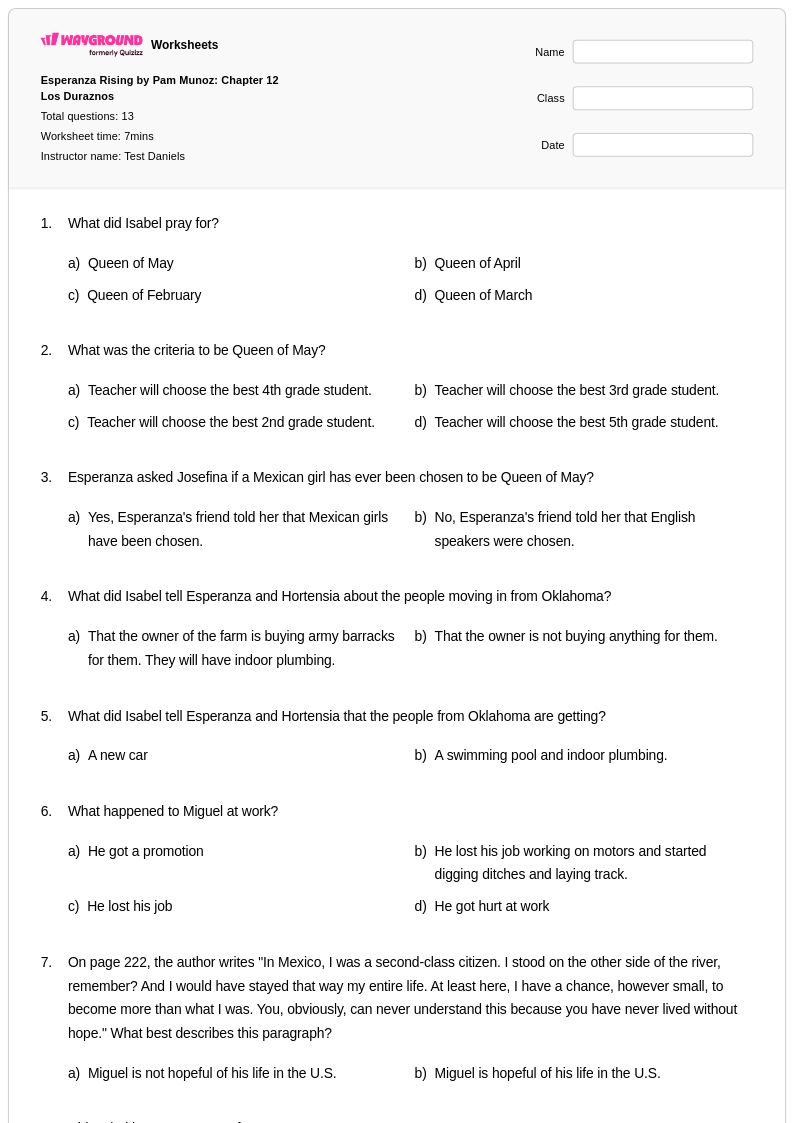
Class 3 Esperanza Rising worksheets and printables help students explore character development, themes, and comprehension through engaging practice problems with complete answer keys available as free PDFs.
Explore printable Esperanza Rising worksheets for Class 3
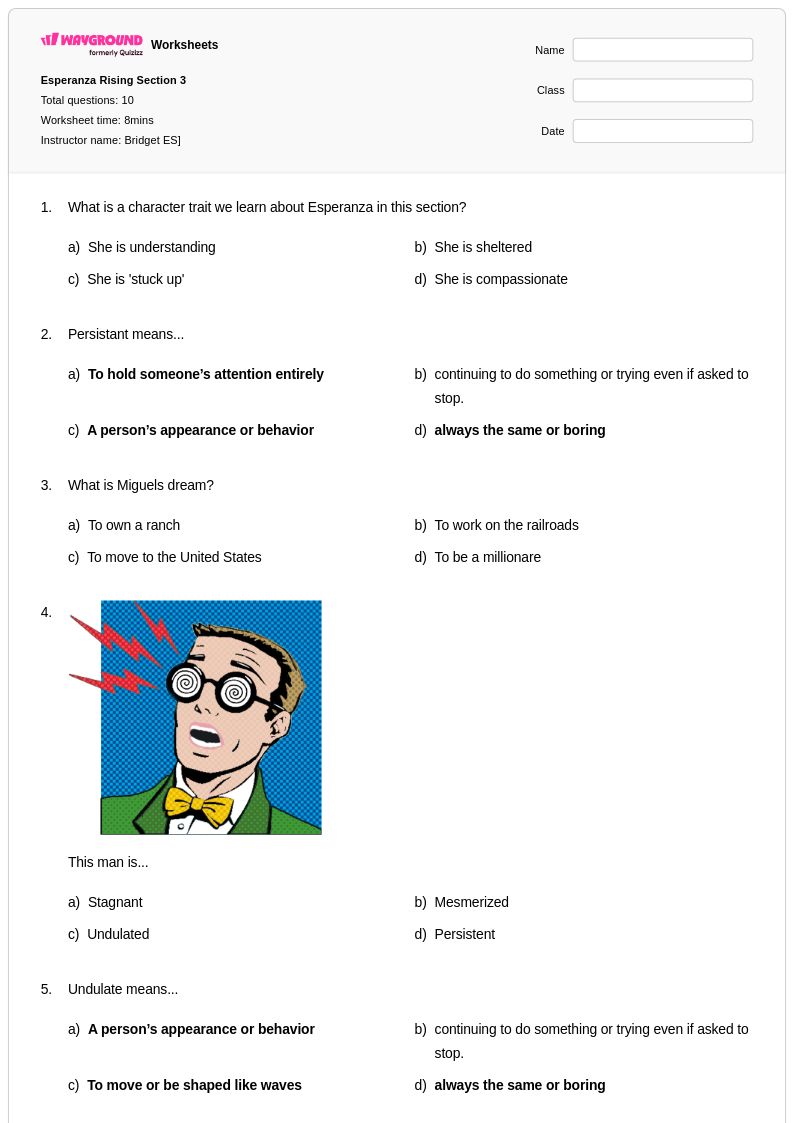
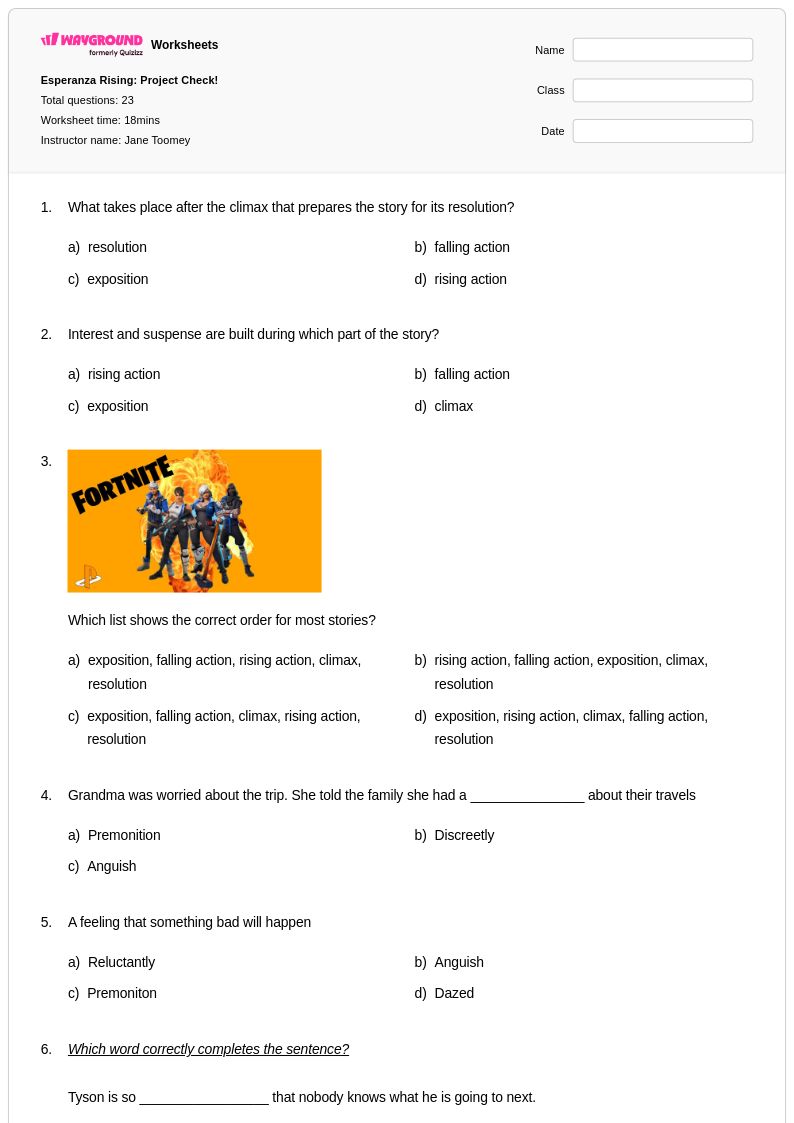
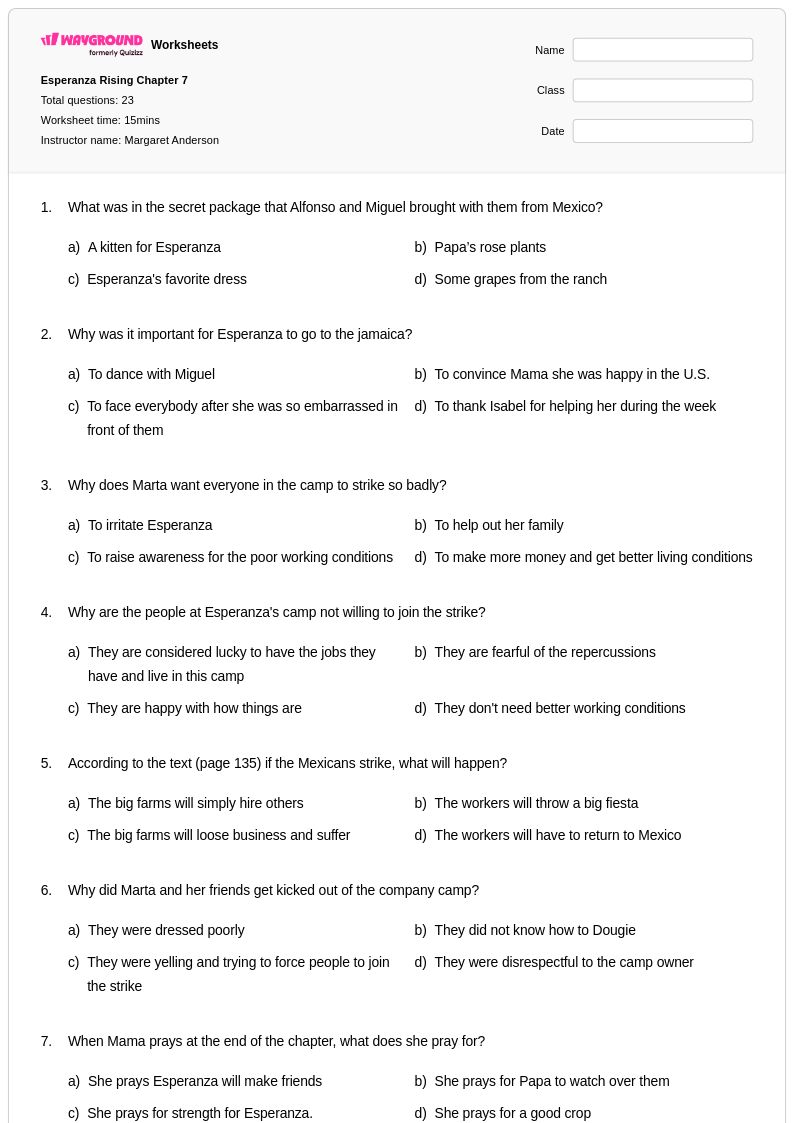
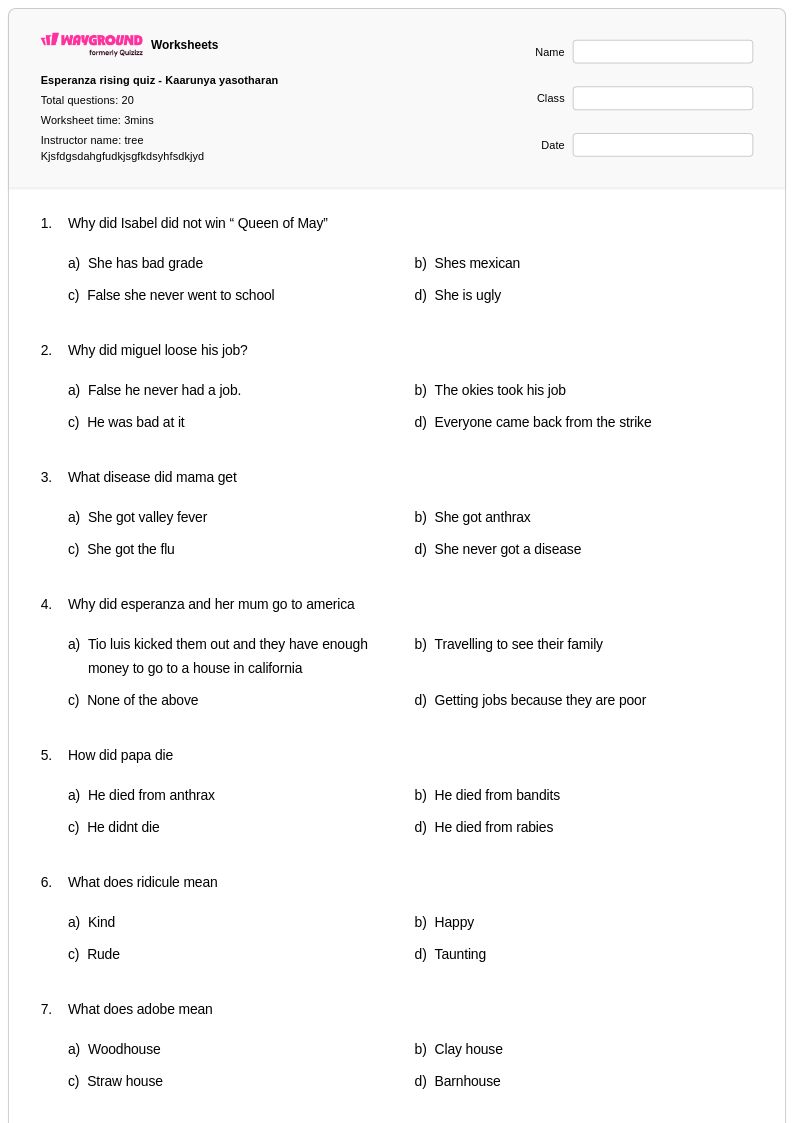
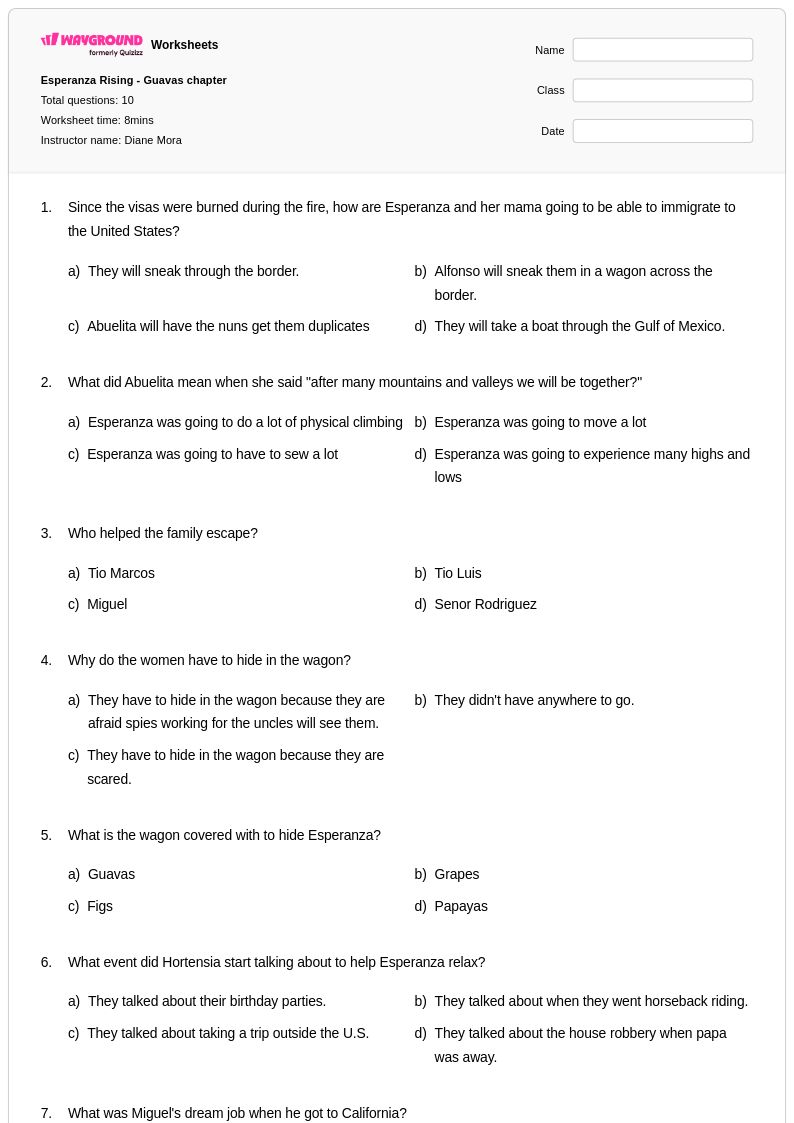
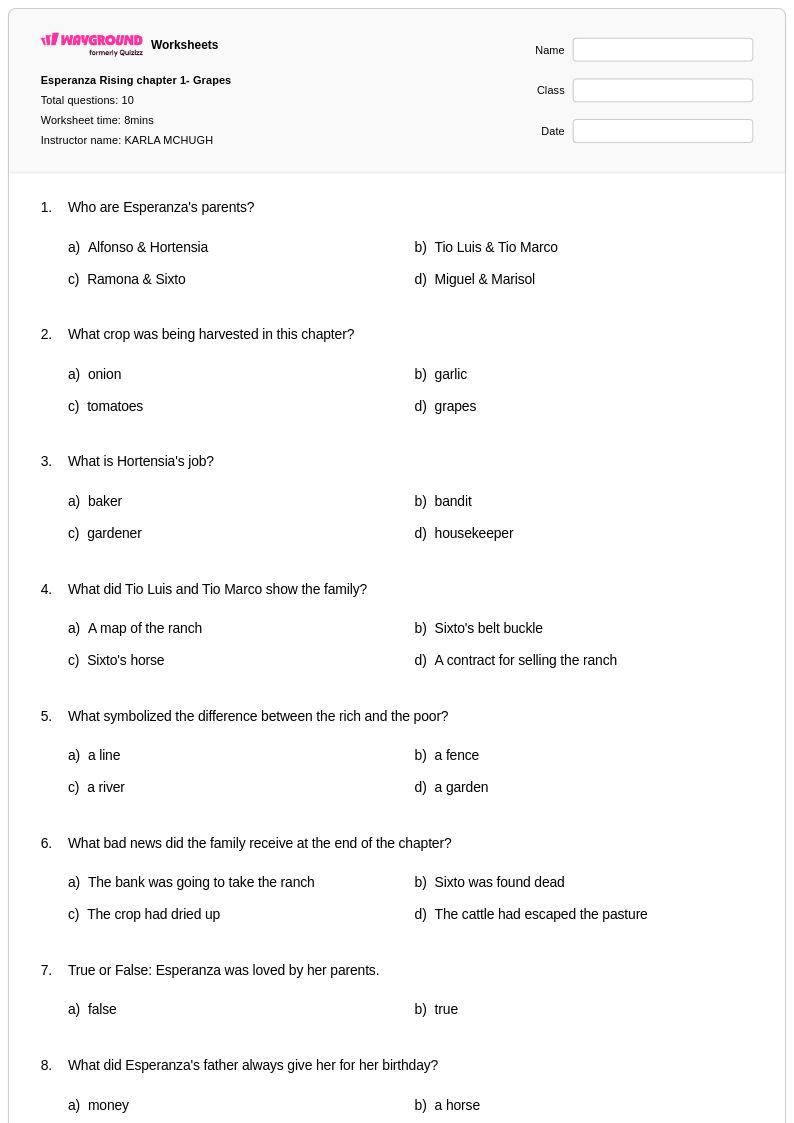
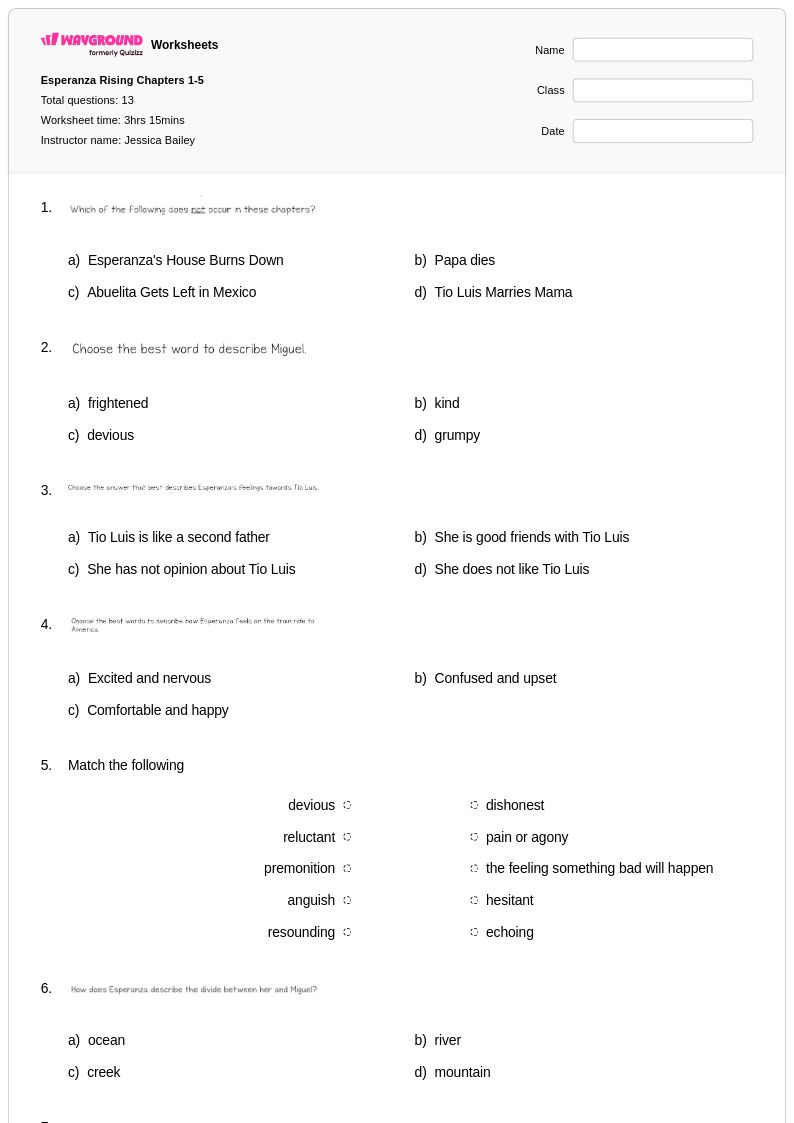
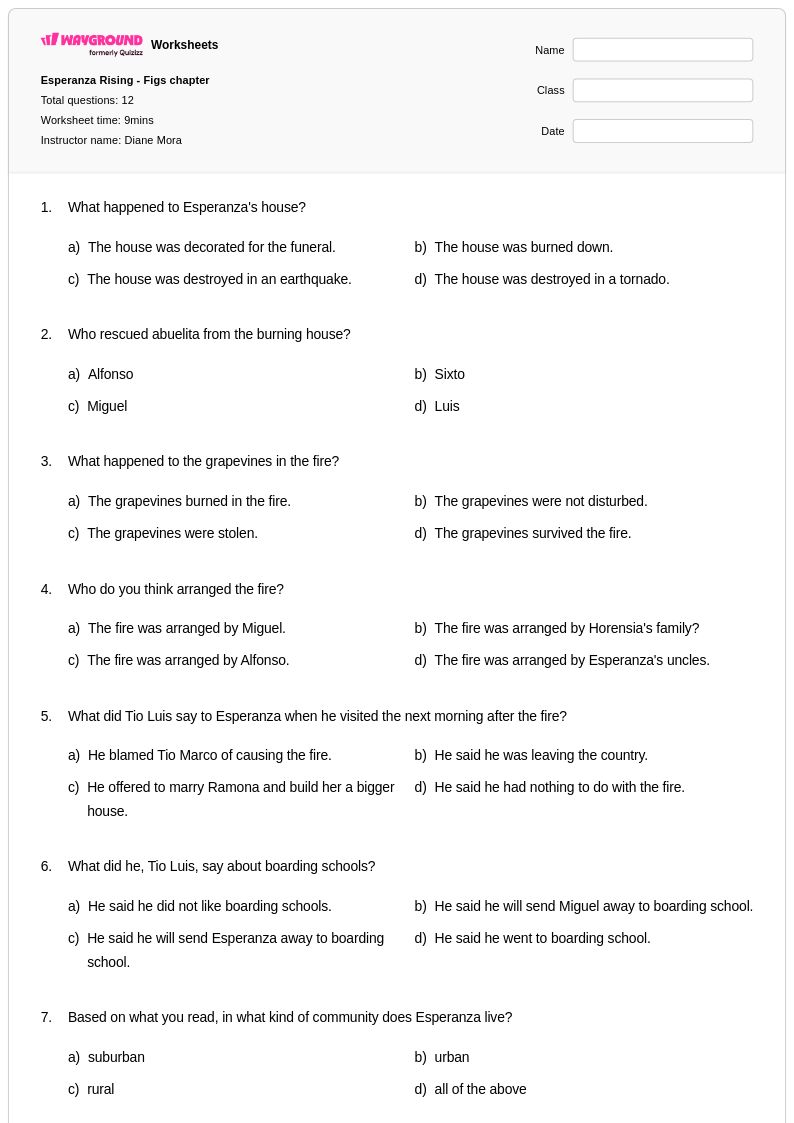
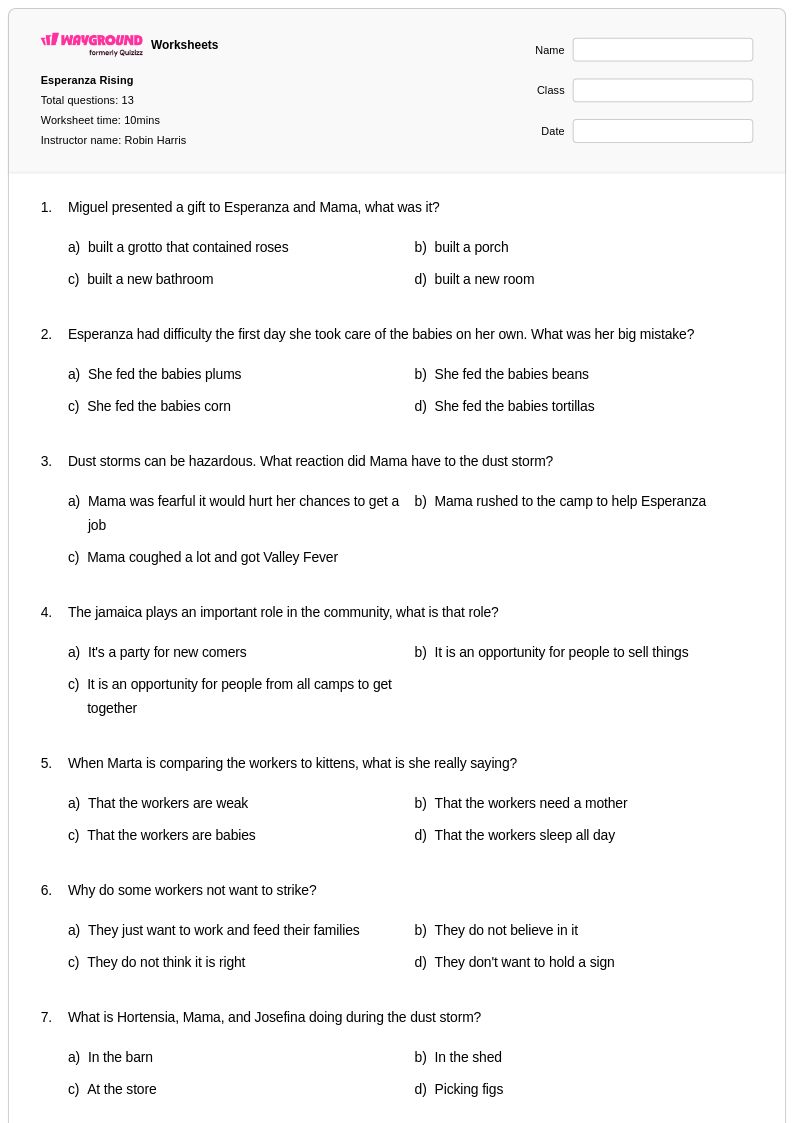
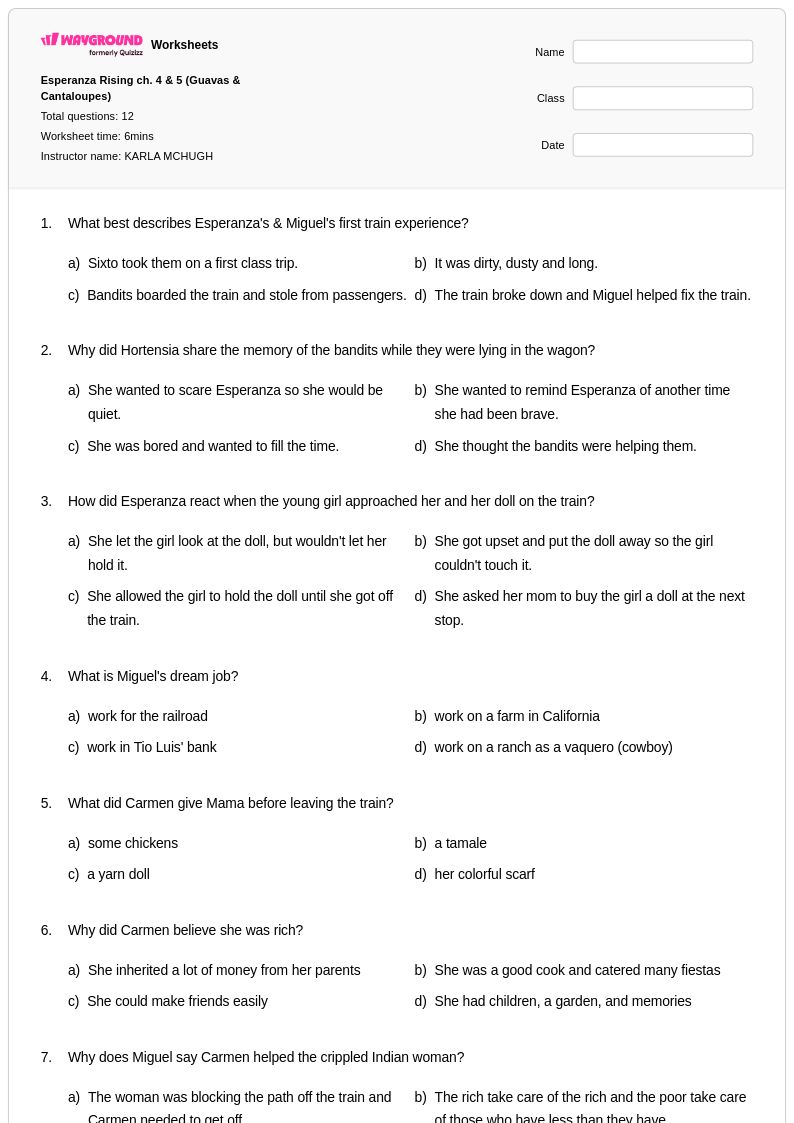
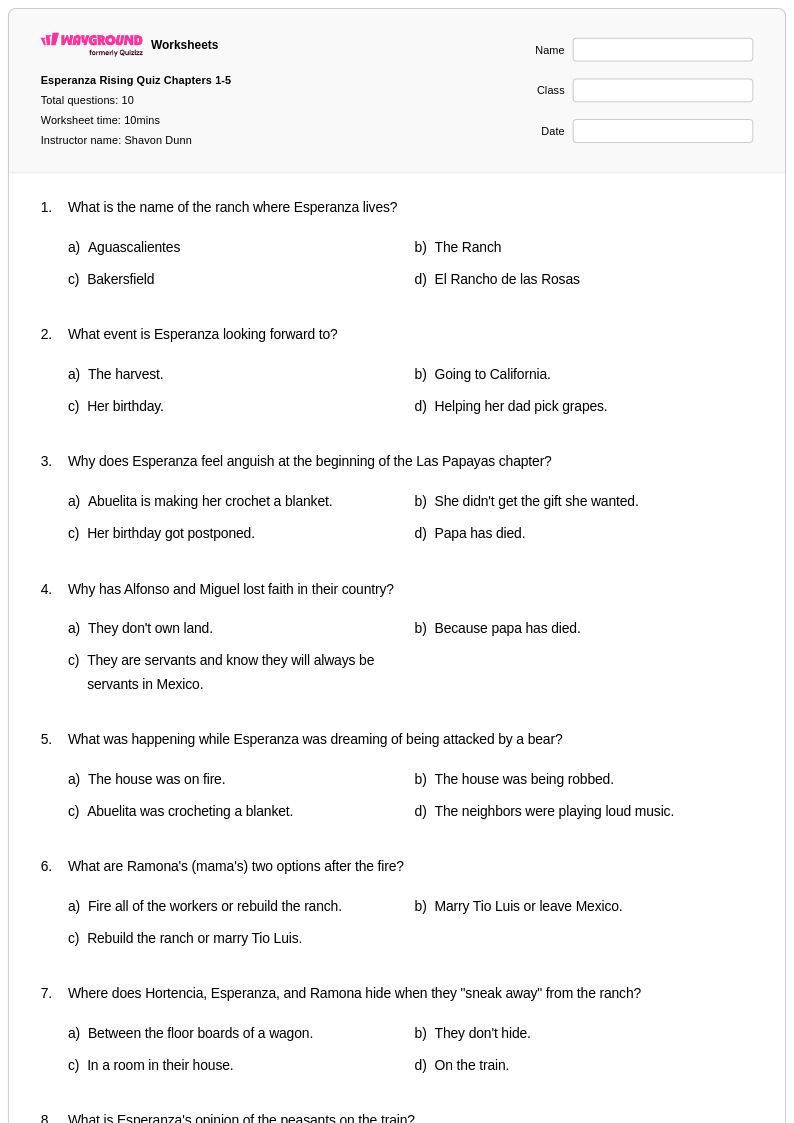
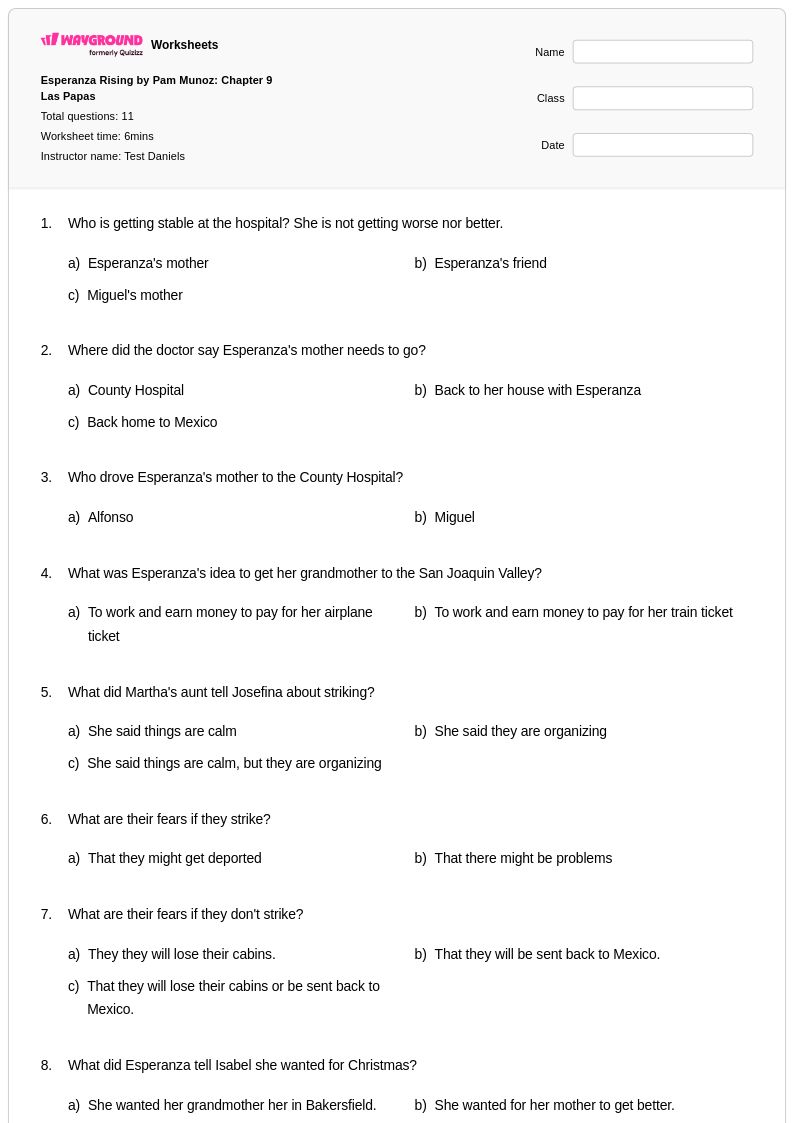
Esperanza Rising worksheets for Class 3 students provide comprehensive literacy activities that deepen understanding of Pam Muñoz Ryan's beloved novel while strengthening essential reading comprehension skills. These educational resources guide young readers through character analysis, plot development, and thematic exploration as they follow Esperanza's journey from privilege to perseverance during the Great Depression. The worksheets include vocabulary practice problems that reinforce new terms encountered in the text, comprehension questions that assess understanding of key events, and creative writing prompts that encourage personal connections to the story. Teachers can access these materials as free printables with corresponding answer keys, making it simple to implement meaningful literature activities that align with third-grade reading standards and support independent practice.
Wayground (formerly Quizizz) empowers educators with an extensive collection of teacher-created Esperanza Rising resources, featuring millions of worksheets and activities specifically designed for Class 3 literature instruction. The platform's robust search and filtering capabilities enable teachers to quickly locate materials that match their specific classroom needs, whether focusing on character development, historical context, or reading fluency. These standards-aligned resources offer flexible customization options and differentiation tools that support diverse learning styles, allowing educators to modify content for remediation or enrichment as needed. Available in both printable pdf format and interactive digital versions, these comprehensive worksheet collections streamline lesson planning while providing targeted skill practice that helps students develop critical thinking abilities and deeper appreciation for quality literature.
FAQs
How do I teach Esperanza Rising in a middle school ELA classroom?
Teaching Esperanza Rising works best when instruction is organized around the novel's chapter-based structure, each named after a harvest cycle, which provides natural stopping points for close reading and discussion. Teachers typically anchor lessons in three interconnected areas: character development (especially Esperanza's transformation from privileged daughter to resilient worker), thematic analysis of social justice and immigration, and historical context around the Great Depression and Mexican labor rights. Pairing each chapter with targeted guided reading questions helps students track how Ryan uses literary devices like symbolism and foreshadowing to develop these themes across the novel.
What exercises help students practice analyzing themes in Esperanza Rising?
Effective practice exercises for Esperanza Rising ask students to trace recurring motifs, particularly the symbolism of roses and the act of crocheting, and connect them to the novel's central themes of resilience, identity, and rebirth. Thematic analysis worksheets that prompt students to identify evidence from the text, explain its significance, and connect it to a broader universal idea are especially useful for building literary analysis skills. Text-to-world connection activities that link the novel's depiction of immigration and labor conditions to real historical events deepen comprehension and critical thinking simultaneously.
What literary devices should students be able to identify in Esperanza Rising?
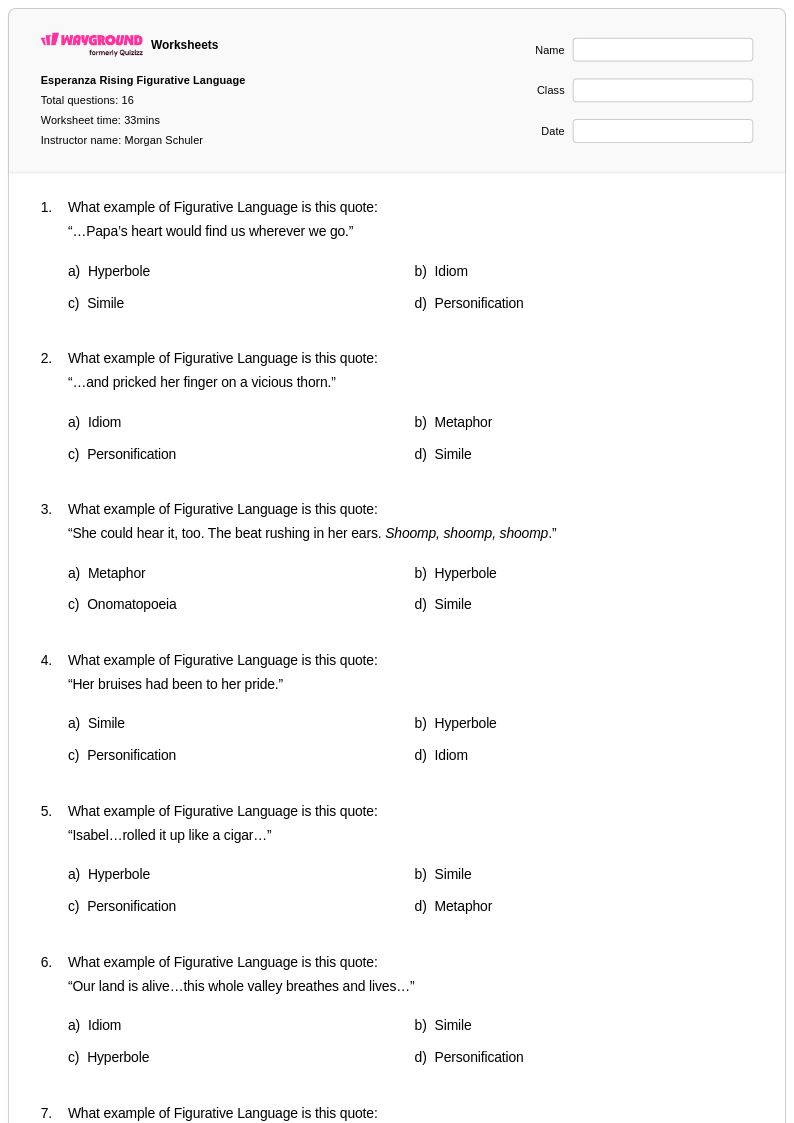
Students reading Esperanza Rising should be able to identify and analyze foreshadowing, symbolism, imagery, and metaphor as core literary devices in the novel. The recurring imagery of roses, the motif of rising and falling, and the symbolic weight of the crocheting pattern are among the most teachable examples. Worksheets that ask students to locate specific passages and explain how the literary device contributes to character development or theme give students practice with both identification and interpretation, the two skills most commonly assessed in literary analysis.
What mistakes do students commonly make when analyzing Esperanza Rising?
A frequent error is treating Esperanza's character arc as straightforward rather than recognizing how Ryan complicates her growth through setbacks, pride, and cultural displacement. Students also commonly confuse theme statements with topic labels, writing 'the theme is resilience' rather than articulating what the novel argues about resilience. Another common misconception is reading the novel's historical setting as background detail rather than as an active force shaping character choices and social dynamics, which leads to surface-level analysis that misses the novel's deeper critique of class and immigration policy.
How can I use Esperanza Rising worksheets to support struggling readers in my class?
For struggling readers, scaffolded worksheets that break literary analysis into step-by-step prompts, such as 'find a quote, identify the device, explain the effect,' reduce cognitive load while still building the target skill. On Wayground, teachers can apply individual accommodations including Read Aloud support, which allows questions and content to be read to students who need it, and reduced answer choices for multiple-choice items to make tasks more accessible. These settings can be assigned to individual students without notifying the rest of the class, so differentiation happens seamlessly within a shared assignment.
How do I use Wayground's Esperanza Rising worksheets in my classroom?
Wayground's Esperanza Rising worksheets are available as printable PDFs for traditional paper-based instruction and in digital formats for technology-integrated classrooms, giving teachers flexibility based on their setup. Teachers can also host worksheets as a live or self-paced quiz directly on Wayground, which enables real-time data collection on student performance. Each worksheet includes a complete answer key, making them practical for independent practice, small group instruction, or summative assessment preparation.