Free Printable Fahrenheit 451 Worksheets for Class 12
Explore Wayground's comprehensive Class 12 Fahrenheit 451 worksheets featuring free printables, practice problems, and answer keys to help students analyze Ray Bradbury's dystopian masterpiece and develop critical literary skills.
Explore printable Fahrenheit 451 worksheets for Class 12
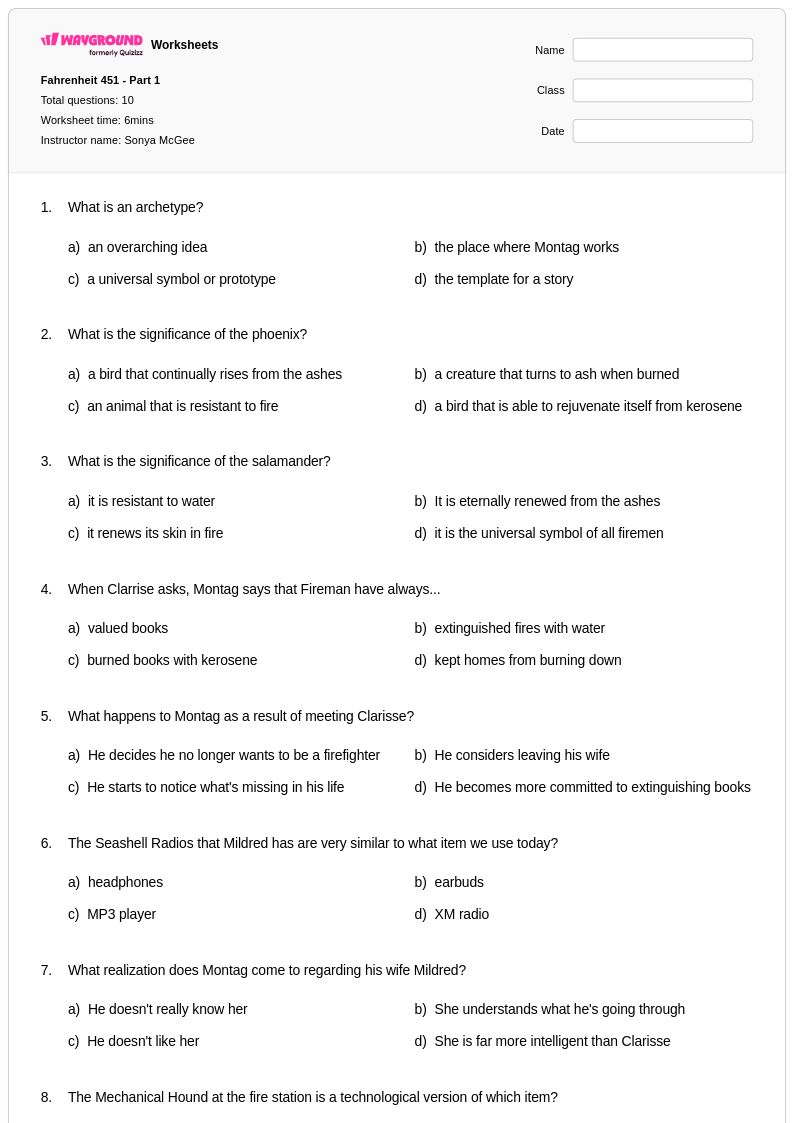
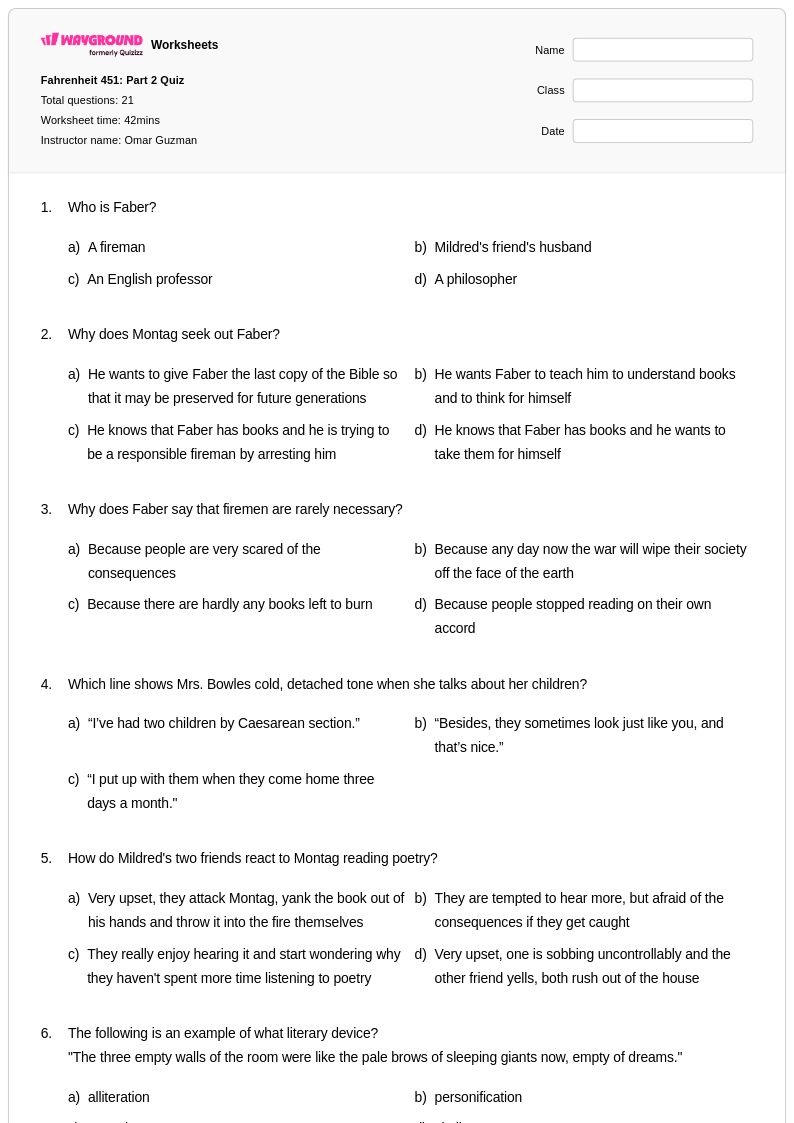
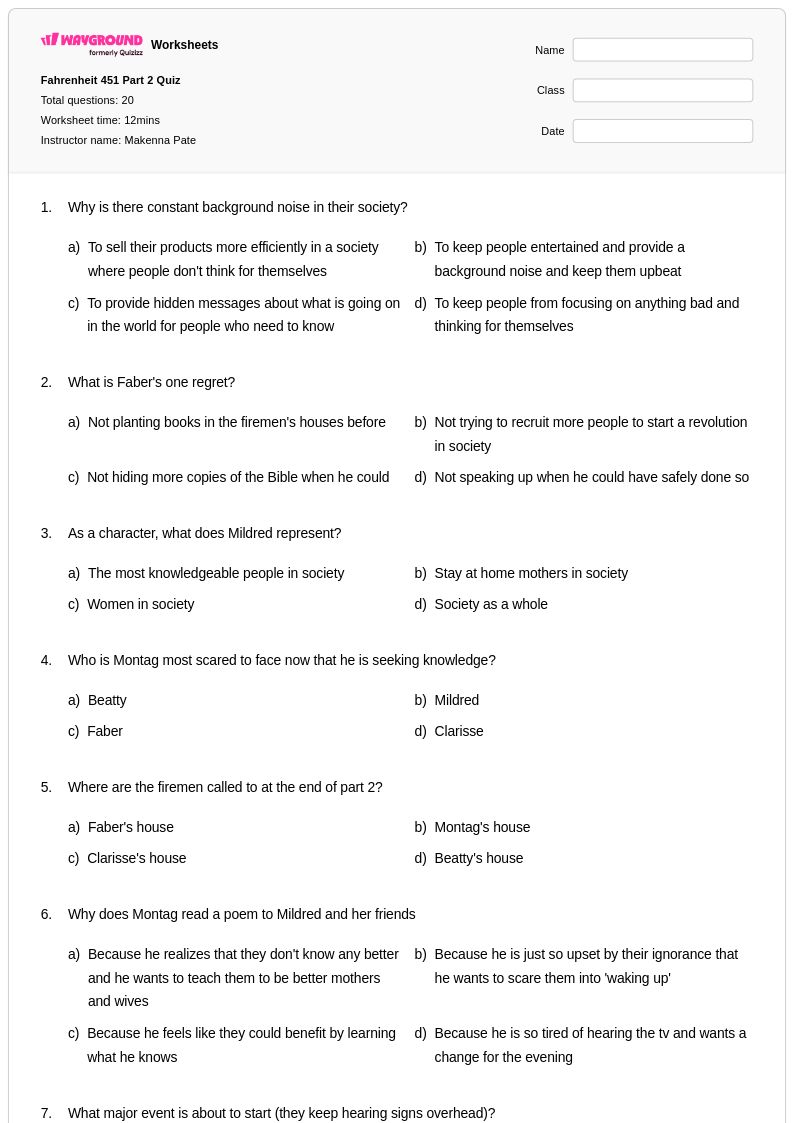
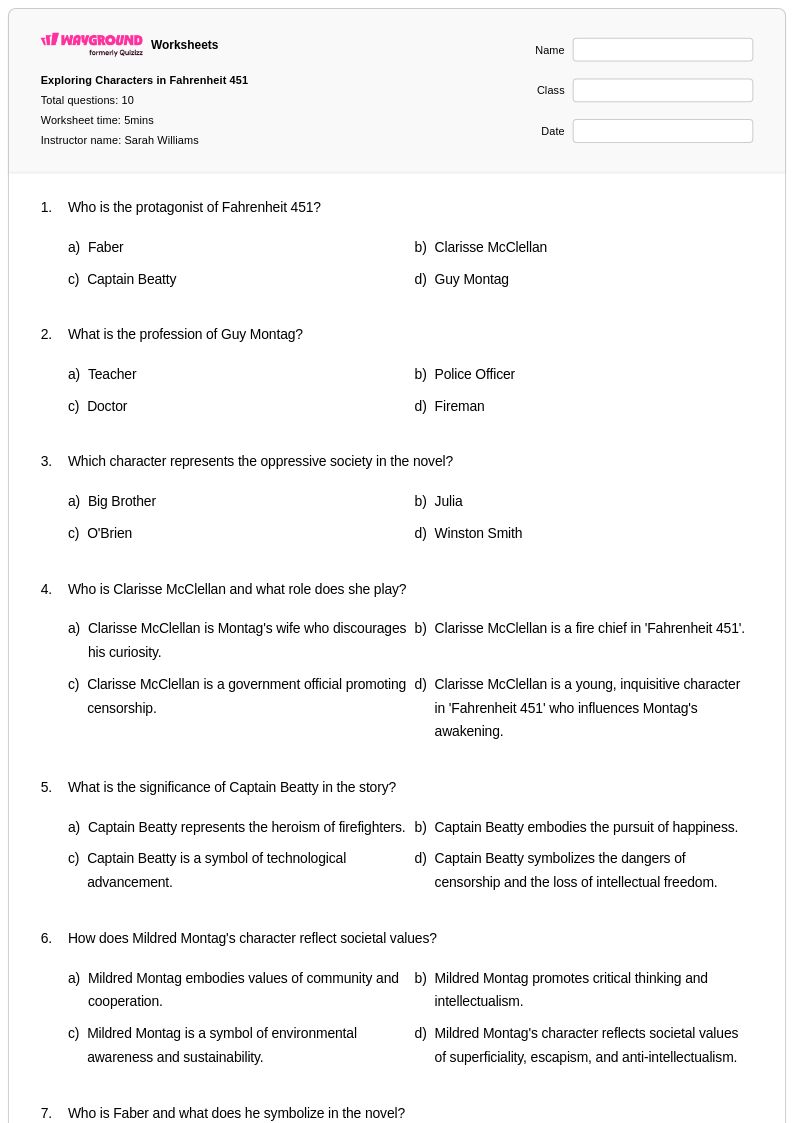
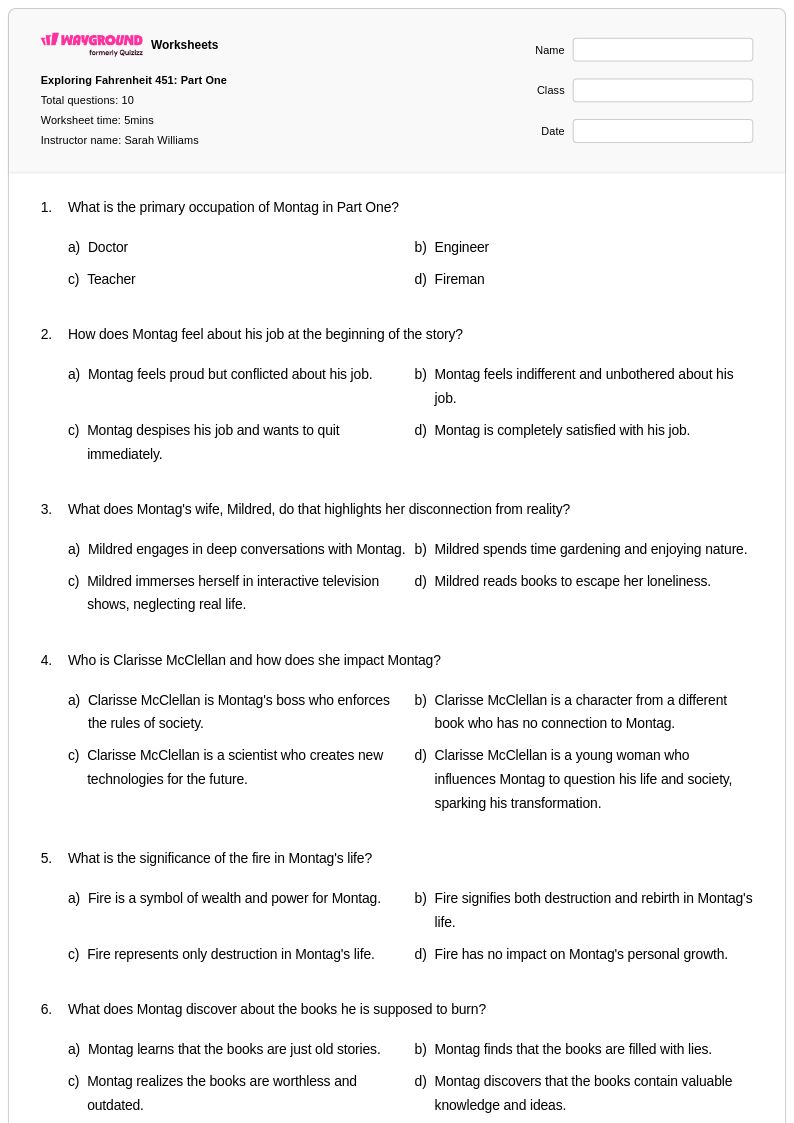
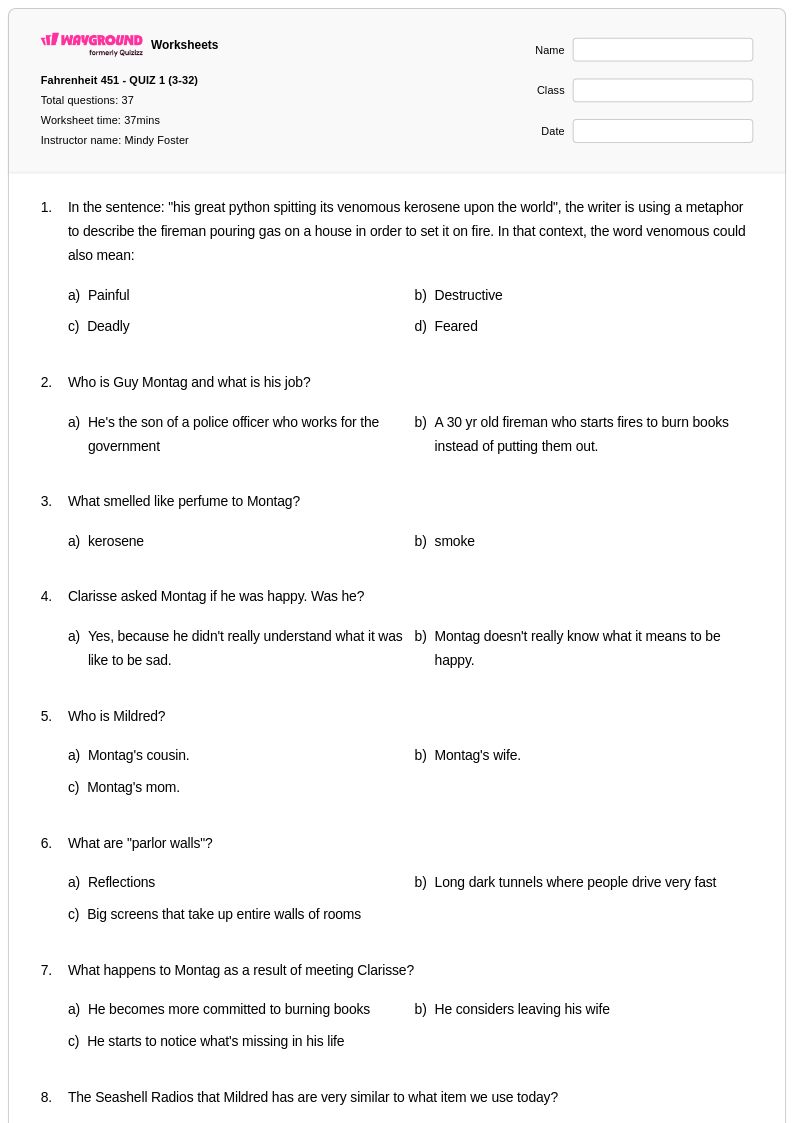
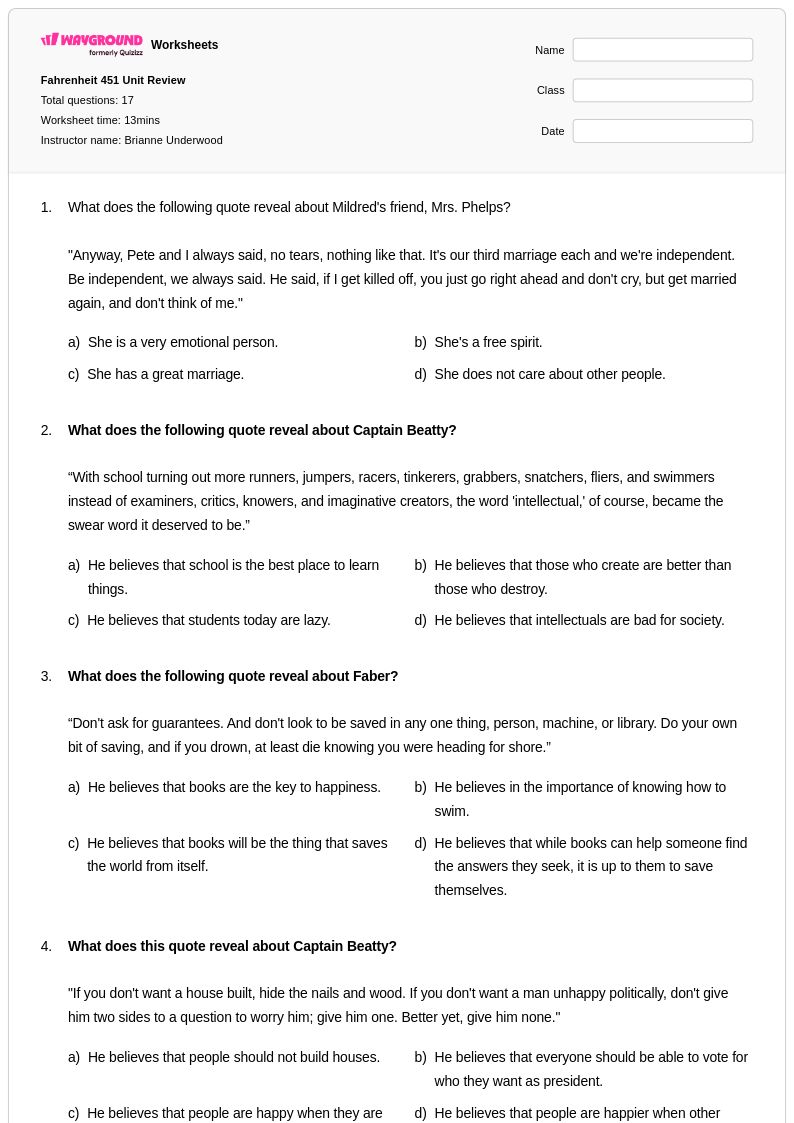
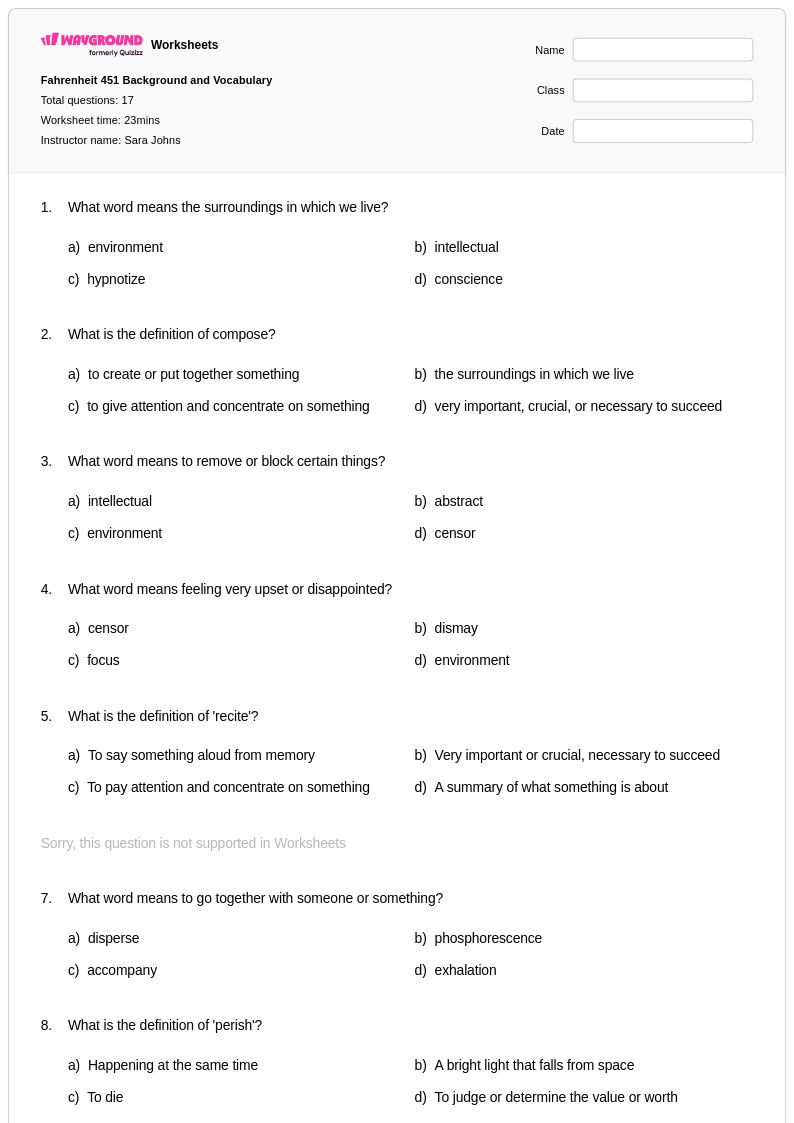
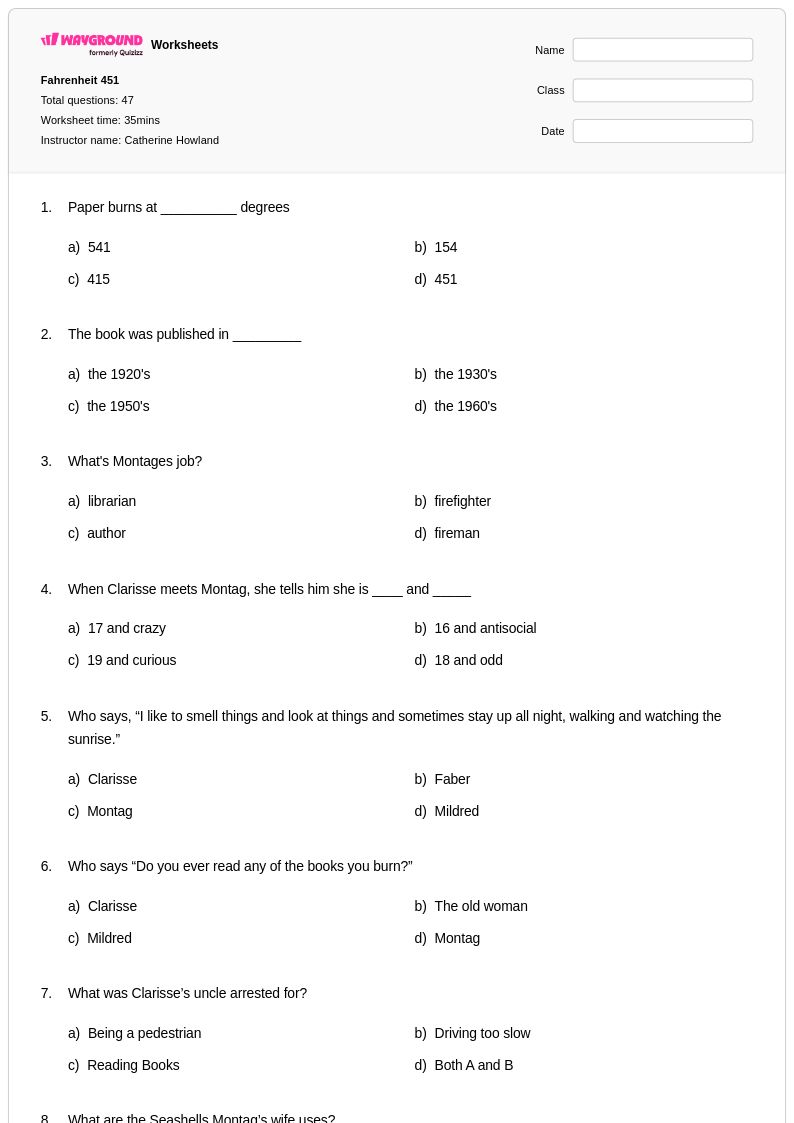
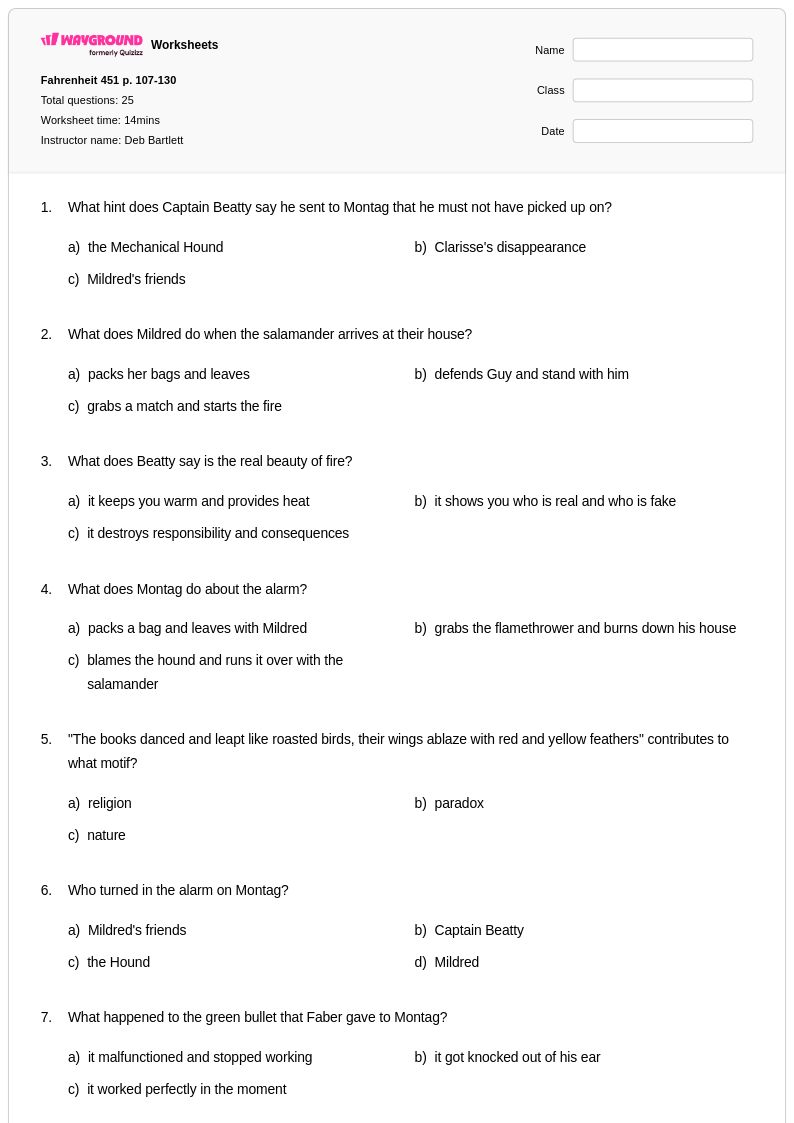
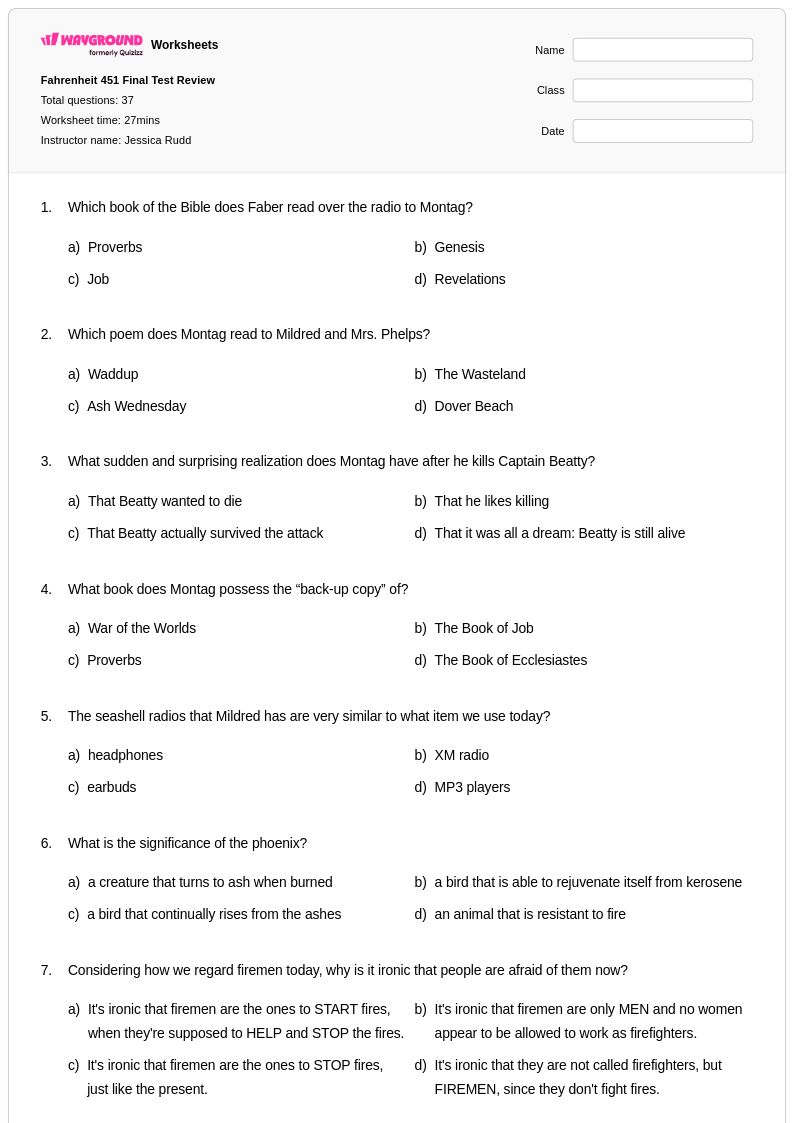
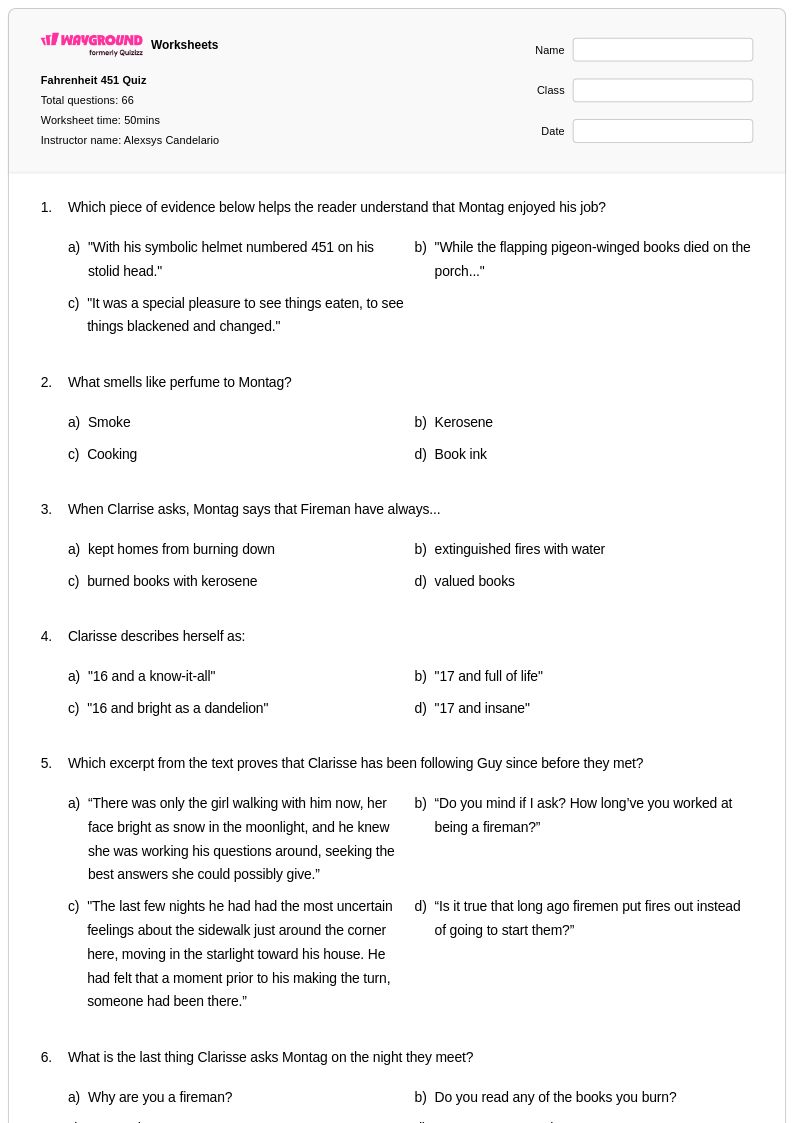
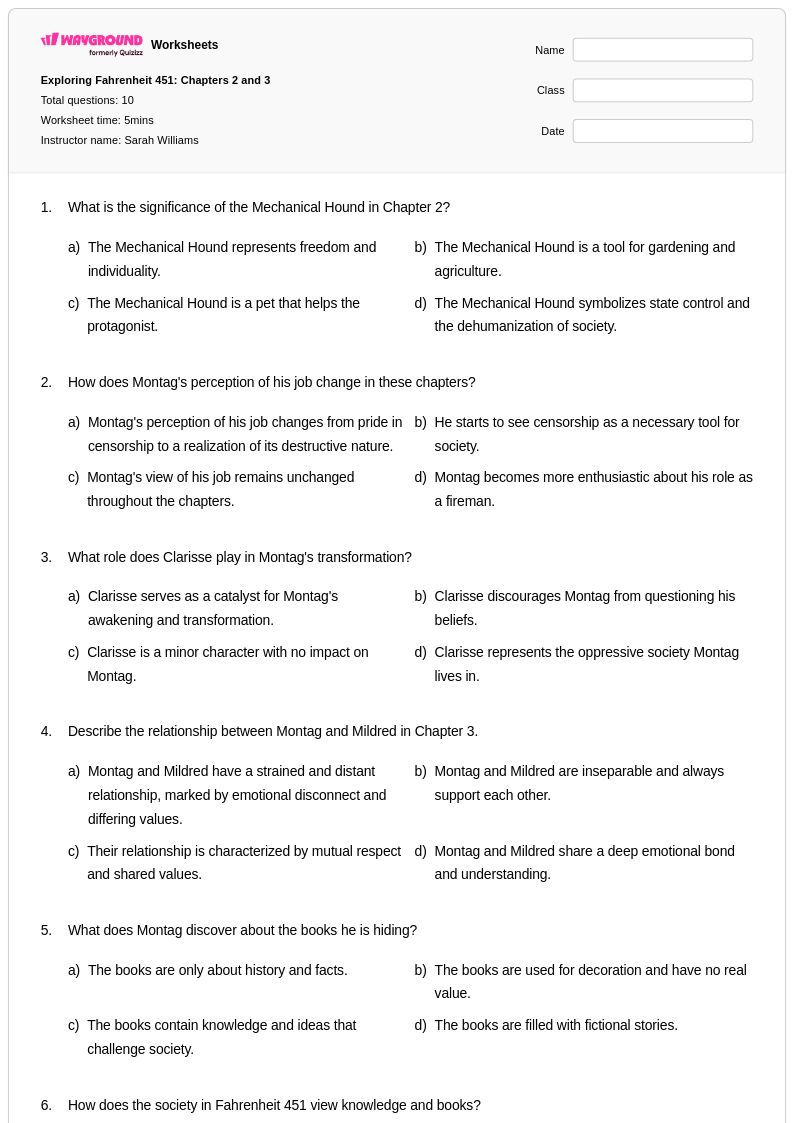
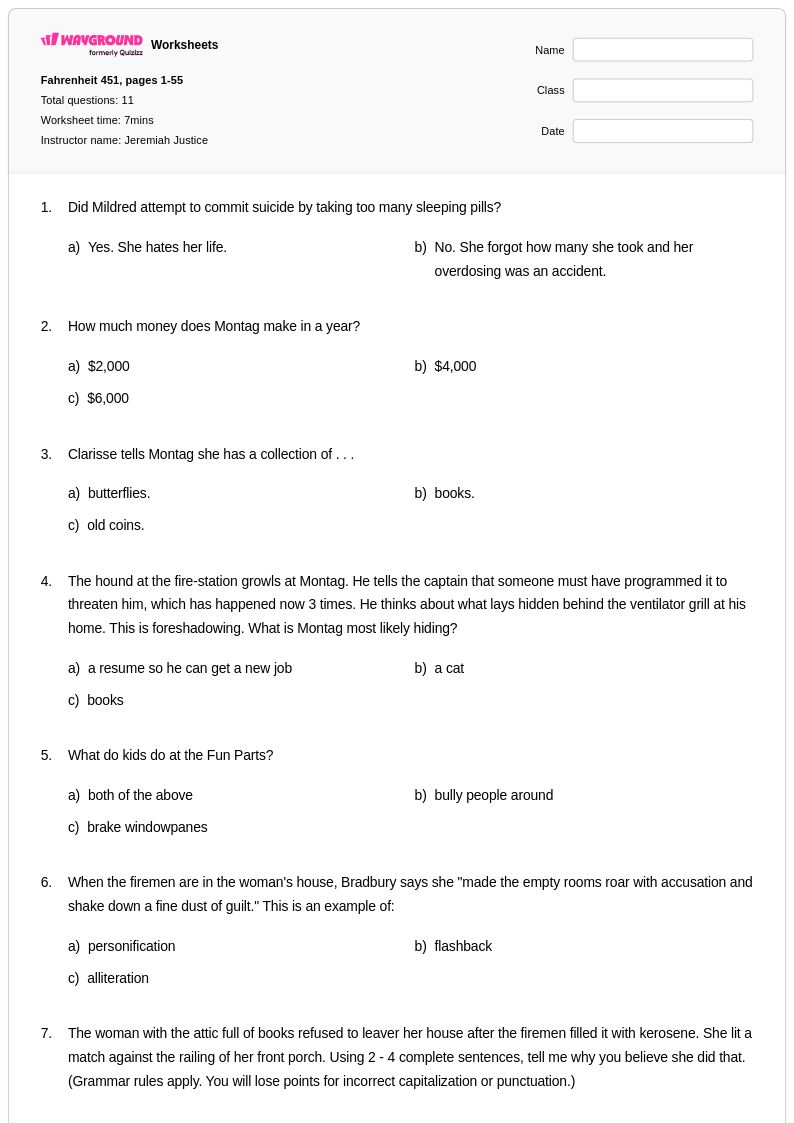
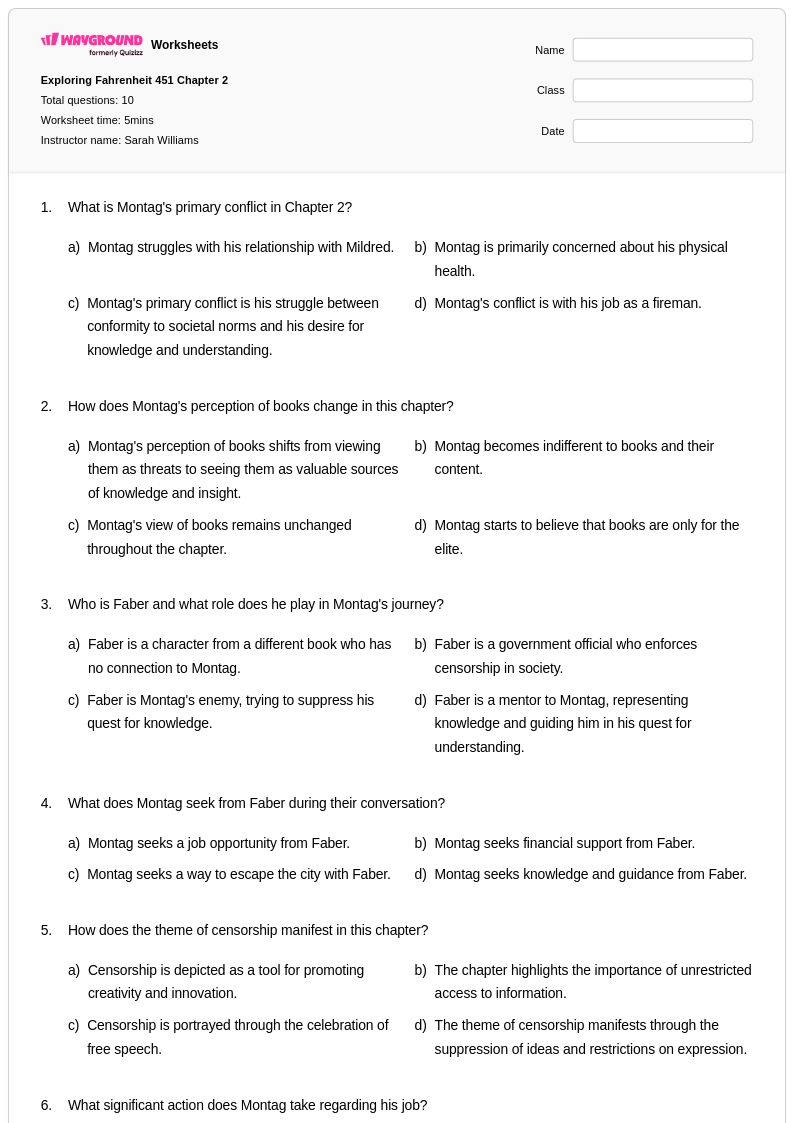
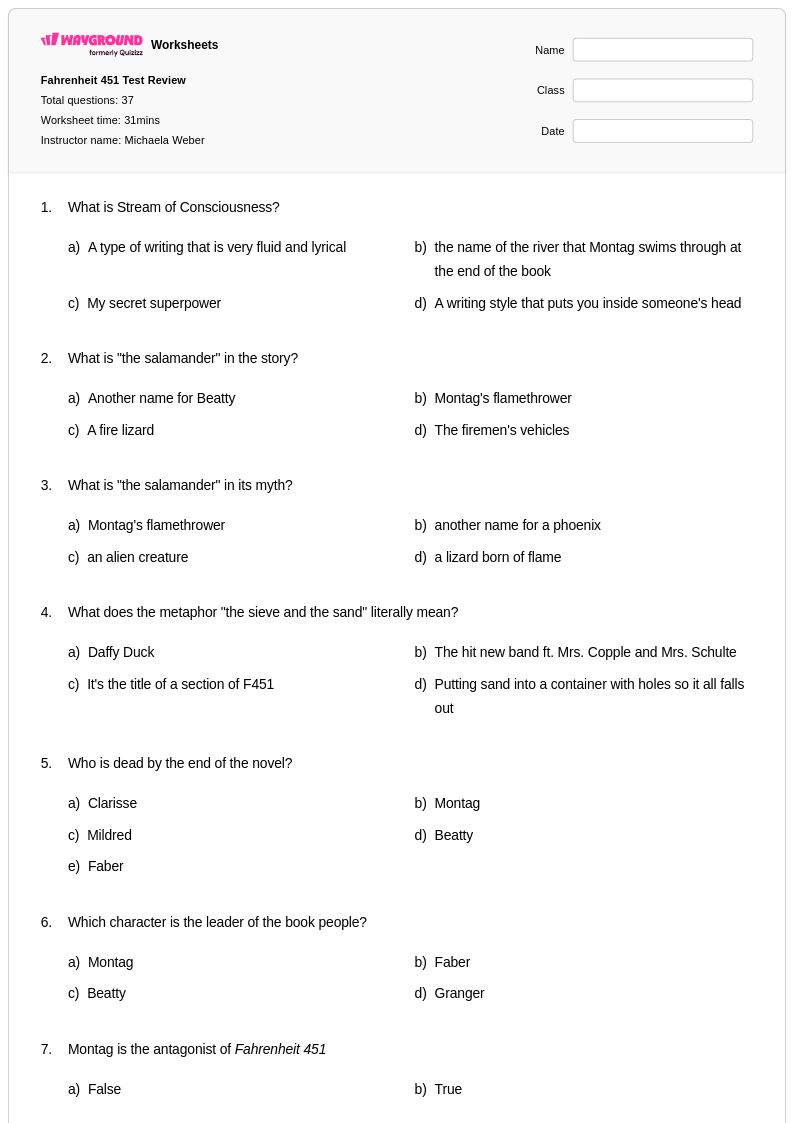
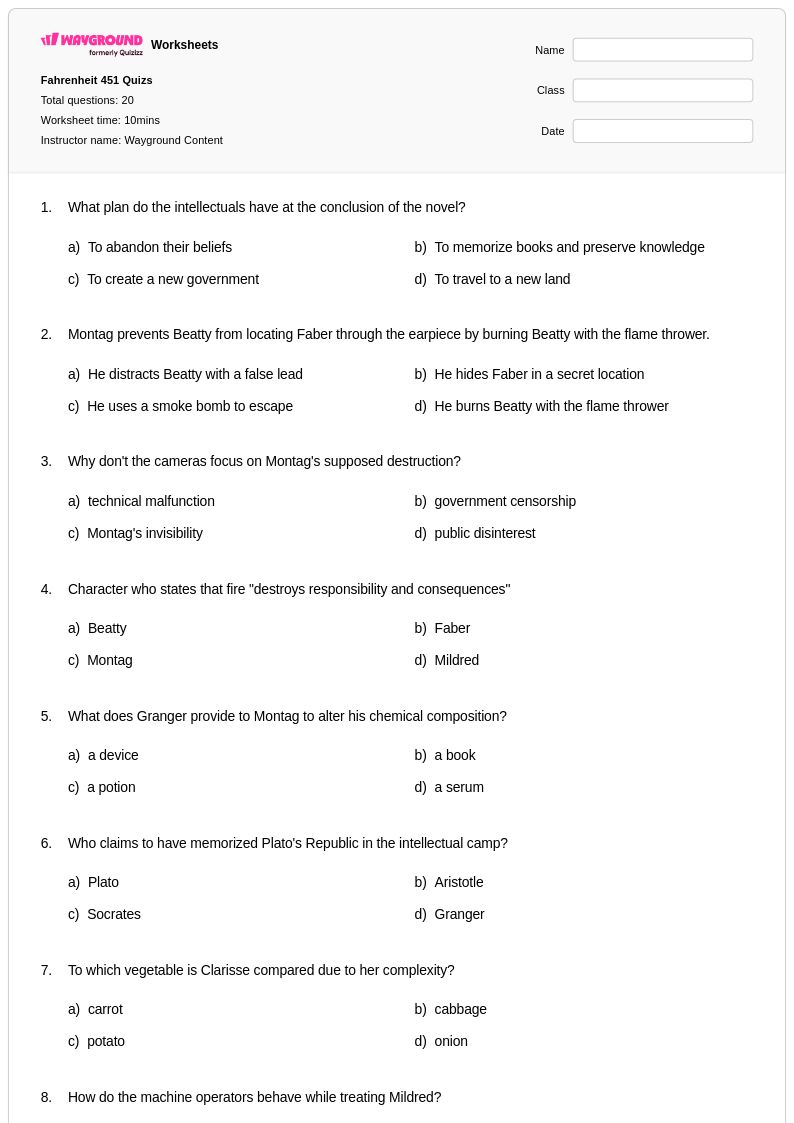
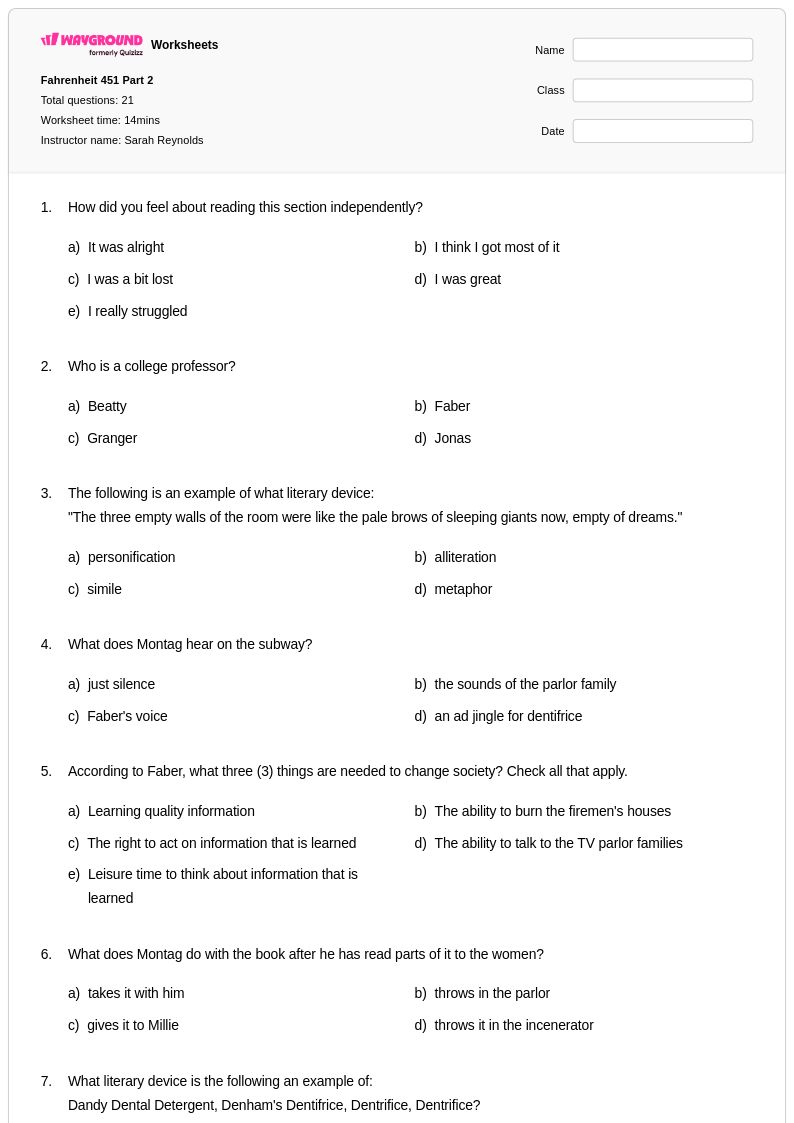
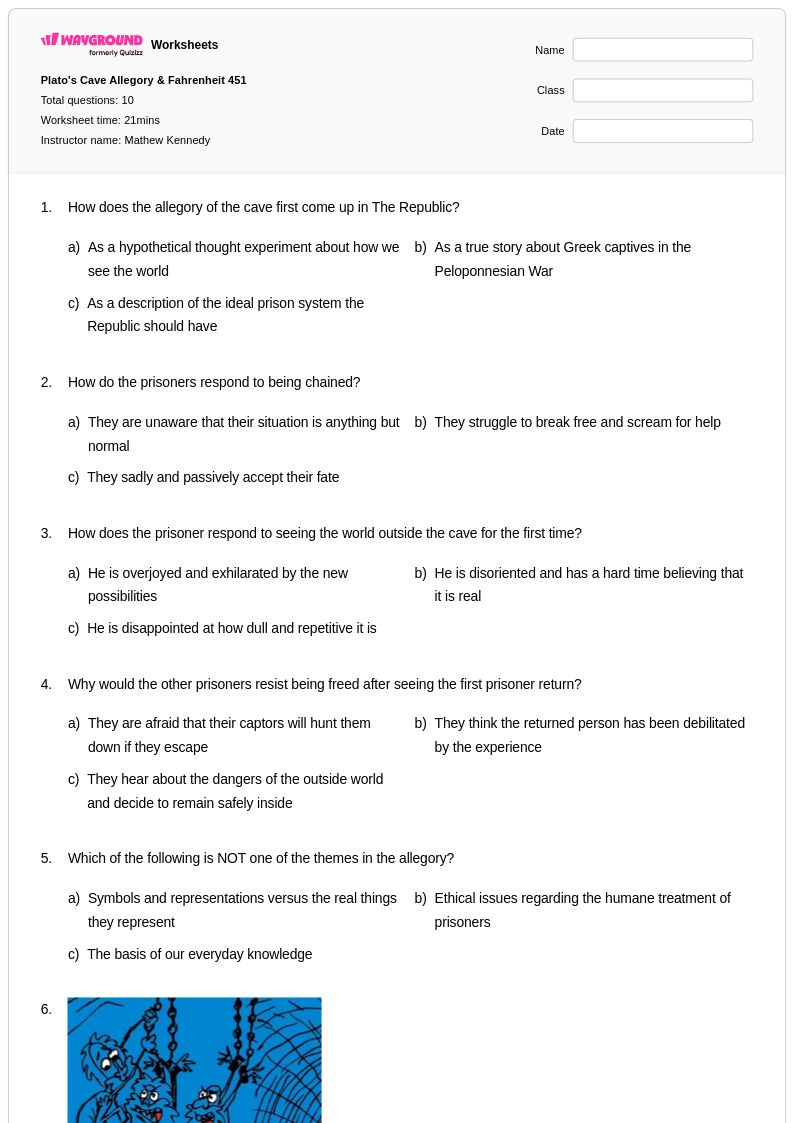
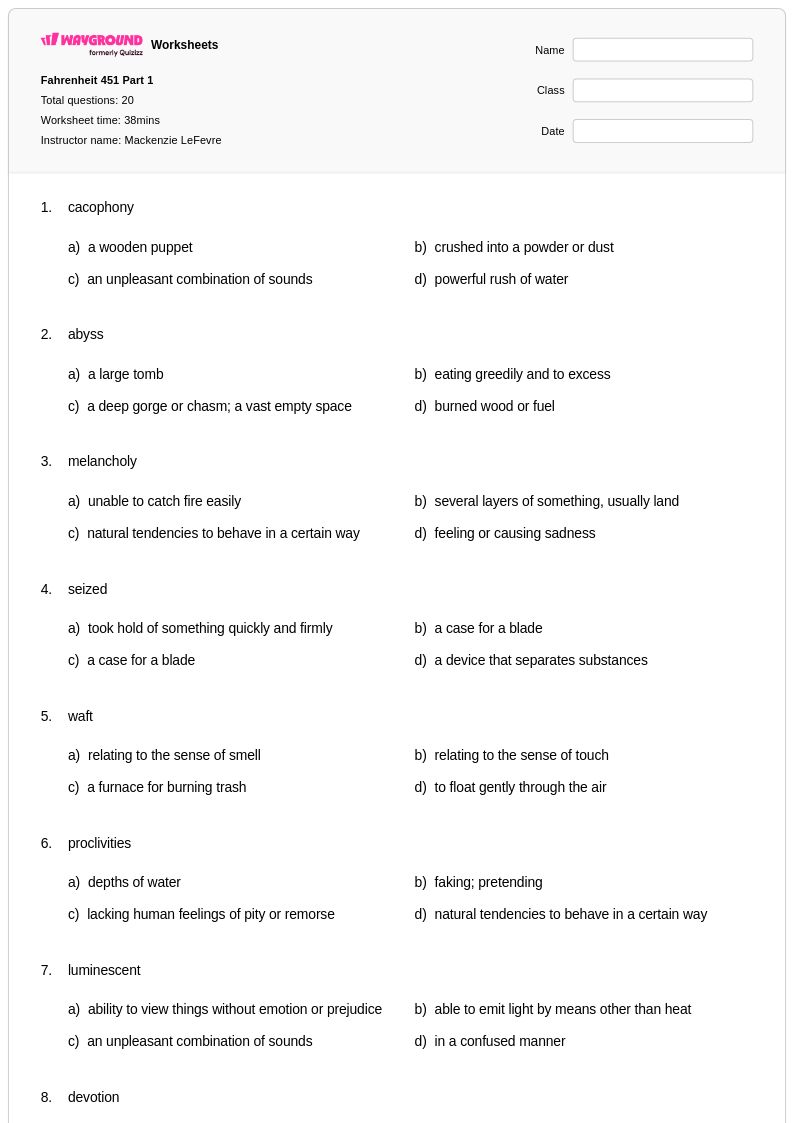
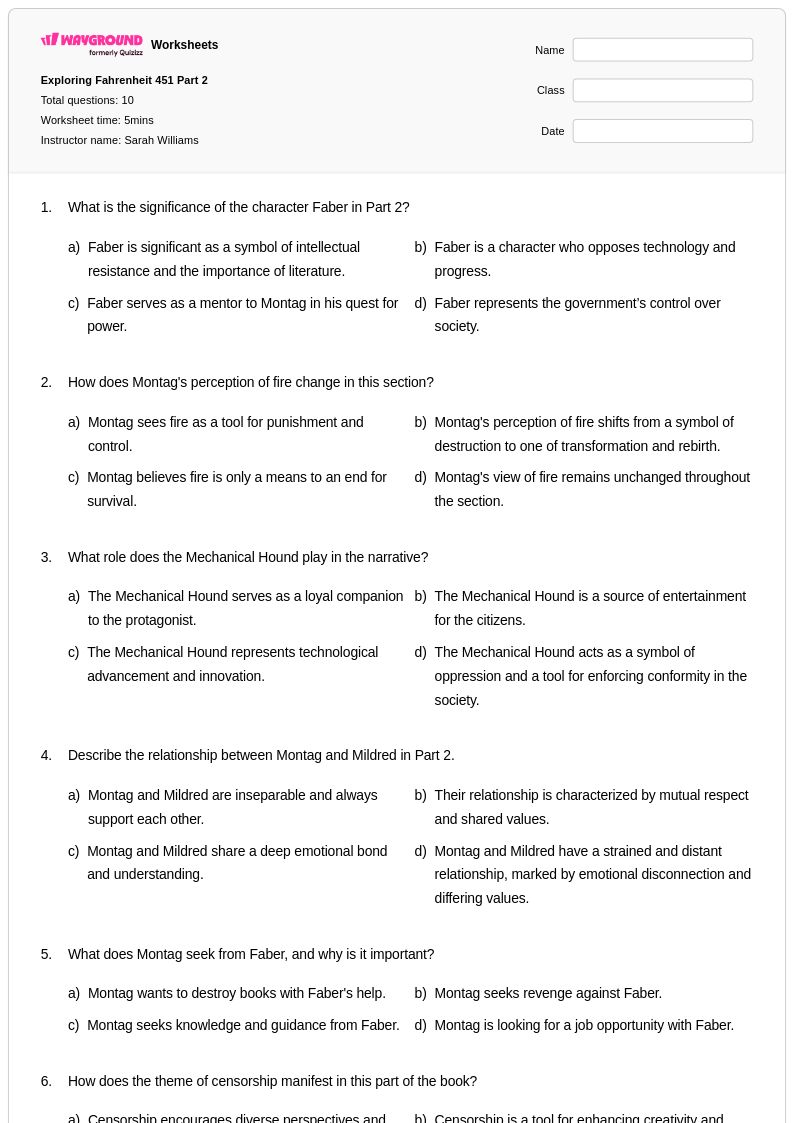
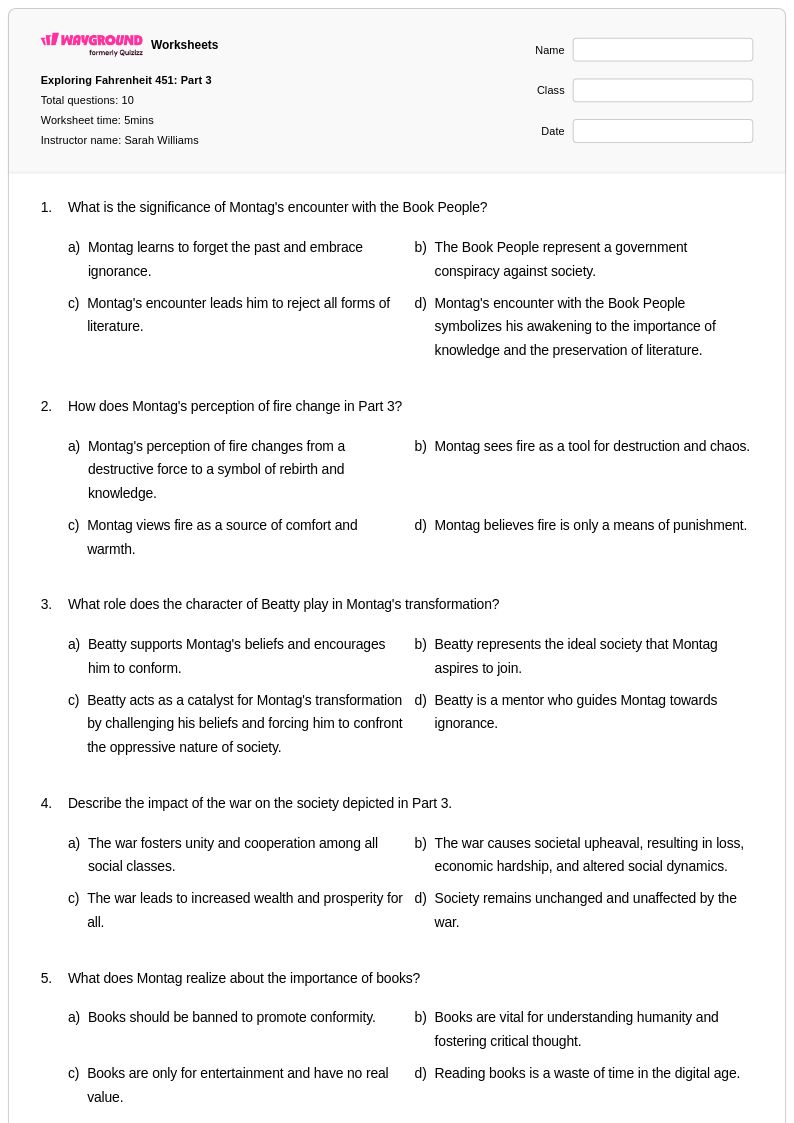
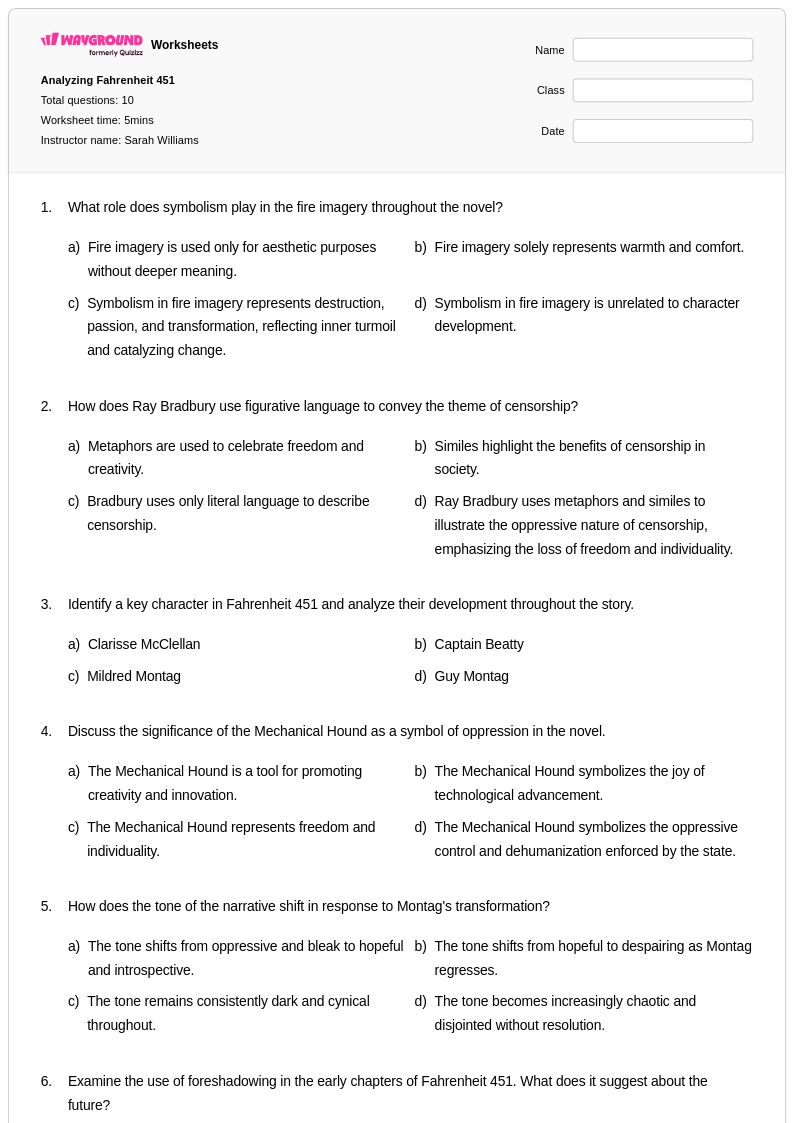
Fahrenheit 451 worksheets for Class 12 students available through Wayground (formerly Quizizz) provide comprehensive analysis tools for Ray Bradbury's dystopian masterpiece. These carefully designed resources strengthen critical thinking skills through close reading exercises, character development analysis, and thematic exploration of censorship, technology's impact on society, and the power of literature. Students engage with complex literary concepts through guided practice problems that examine Montag's transformation, the symbolism of fire and books, and Bradbury's commentary on mass media and intellectual freedom. The collection includes answer keys for efficient grading, free printable options for classroom flexibility, and pdf formats that support both individual study and collaborative discussion activities focused on the novel's enduring relevance to contemporary society.
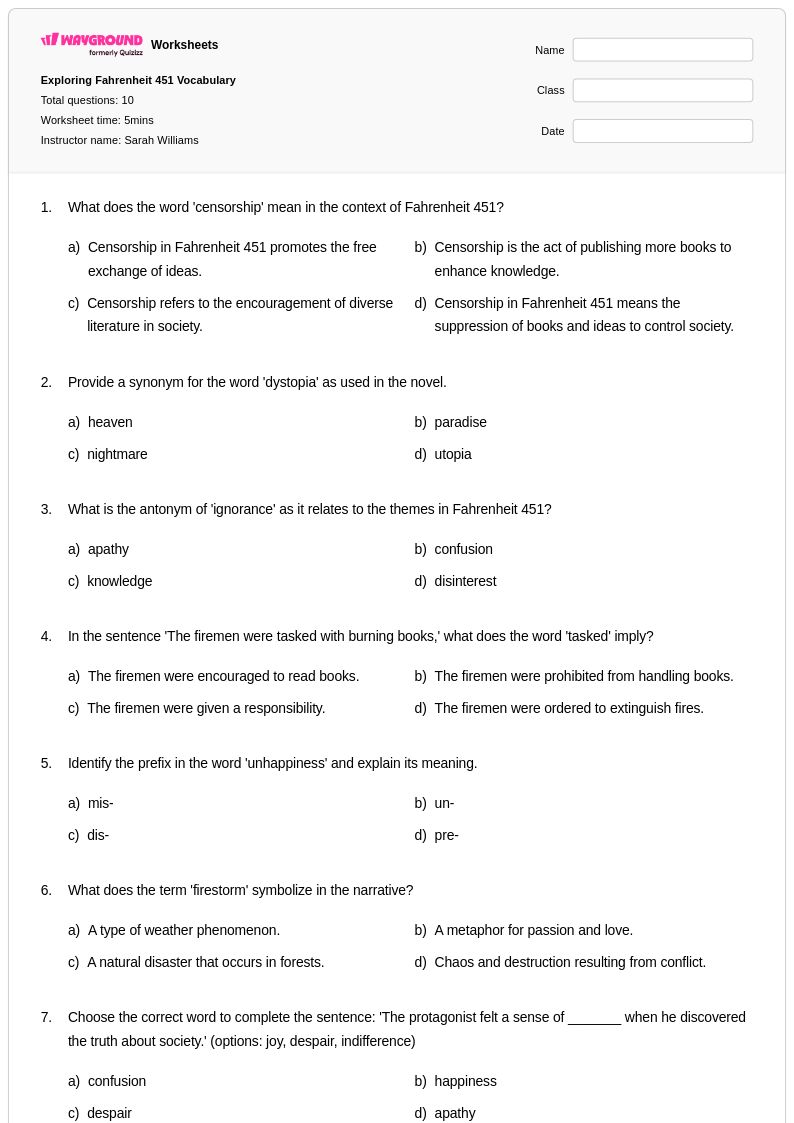
Wayground (formerly Quizizz) empowers educators with millions of teacher-created Fahrenheit 451 resources that streamline lesson planning and enhance student comprehension of this challenging Class 12 text. The platform's robust search and filtering capabilities allow teachers to quickly locate materials aligned with specific learning standards, whether focusing on literary analysis, vocabulary development, or essay writing skills. Differentiation tools enable instructors to customize worksheets for varying reading levels and learning needs, while the availability of both printable and digital formats, including downloadable pdfs, ensures seamless integration into any classroom environment. These versatile resources support targeted remediation for struggling readers, enrichment opportunities for advanced students, and consistent skill practice that builds the analytical foundations essential for success in advanced literature courses and standardized assessments.
FAQs
How do I teach Fahrenheit 451 in a high school English class?
Teaching Fahrenheit 451 effectively means structuring instruction around its three central tensions: censorship versus intellectual freedom, technology's numbing effect on society, and Montag's internal transformation. Begin with contextual framing around McCarthyism and 1950s America so students understand Bradbury's satirical intent, then move through the novel in parts, pausing to analyze key symbols like fire, mirrors, and the salamander. Close reading activities that ask students to trace how Bradbury's imagery evolves across the narrative help build both comprehension and analytical writing skills.
What are the most important literary devices to teach in Fahrenheit 451?
The most instructionally rich literary devices in Fahrenheit 451 include symbolism (fire as both destruction and enlightenment), irony (firemen who start fires), and extended metaphor (Mildred's seashell radios as a symbol of societal disconnection). Bradbury also uses foreshadowing heavily, particularly in Clarisse's early conversations with Montag, making this novel an excellent vehicle for teaching students to recognize how an author plants meaning across a text. Worksheets that ask students to track a single symbol or device across all three parts of the novel are especially effective for building this skill.
What exercises help students practice analyzing themes in Fahrenheit 451?
Thematic analysis exercises that ask students to identify textual evidence and connect it to a broader argument are the most effective for Fahrenheit 451. Structured activities work well here: for example, asking students to find three passages that develop the theme of censorship and then write a claim-evidence-reasoning paragraph for each. Exercises that ask students to connect Bradbury's themes to contemporary events, such as book banning debates or social media's effect on attention spans, push students from comprehension into genuine critical thinking.
What mistakes do students commonly make when analyzing Fahrenheit 451?
The most common error students make is treating Fahrenheit 451 as a straightforward plot narrative rather than a symbolic and thematic text, which leads to surface-level reading responses that summarize events instead of analyzing meaning. Students also frequently misread the role of technology in the novel, reducing it to a simple anti-technology message rather than understanding Bradbury's more nuanced critique of passive consumption. Another common misconception is viewing Captain Beatty as a one-dimensional villain rather than recognizing him as a deeply conflicted character who has read widely and chosen conformity, a distinction that is central to the novel's argument.
How do I use Fahrenheit 451 worksheets to support both struggling and advanced readers?
For struggling readers, start with plot comprehension and vocabulary worksheets that build the foundational knowledge needed to access the text's themes, and use Wayground's Read Aloud feature so students can hear questions and content read to them as they work. For advanced readers, move quickly to interpretive exercises that ask students to construct arguments about how Bradbury's dystopian vision connects to present-day society. Wayground also supports reduced answer choices for students who need scaffolded support, reducing cognitive load while keeping them engaged with the same core content as their peers.
How do I use Fahrenheit 451 worksheets from Wayground in my classroom?
Wayground's Fahrenheit 451 worksheets are available as printable PDFs for traditional classroom use and in digital formats for technology-integrated or hybrid learning environments. Teachers can assign them as independent practice, guided reading activities, or formative assessments, and can also host them as a quiz directly on Wayground. All worksheets include complete answer keys, which supports both self-paced independent study and efficient classroom grading.