
10 Q
7th
15 Q
7th - Uni
25 Q
7th
22 Q
7th
19 Q
7th
25 Q
7th - Uni
15 Q
7th - Uni
8 Q
7th - Uni
10 Q
9th
45 Q
9th - 12th
20 Q
7th
10 Q
7th
11 Q
8th - Uni
25 Q
7th - Uni
24 Q
10th
20 Q
9th
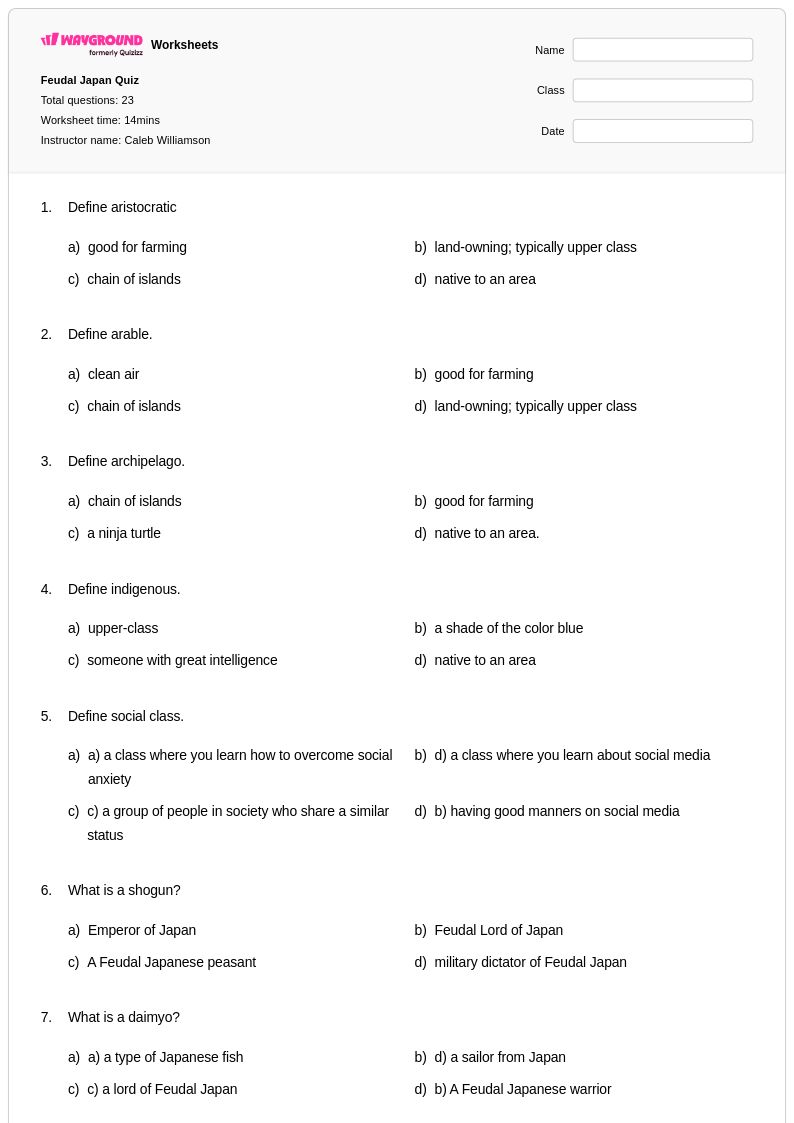
23 Q
7th
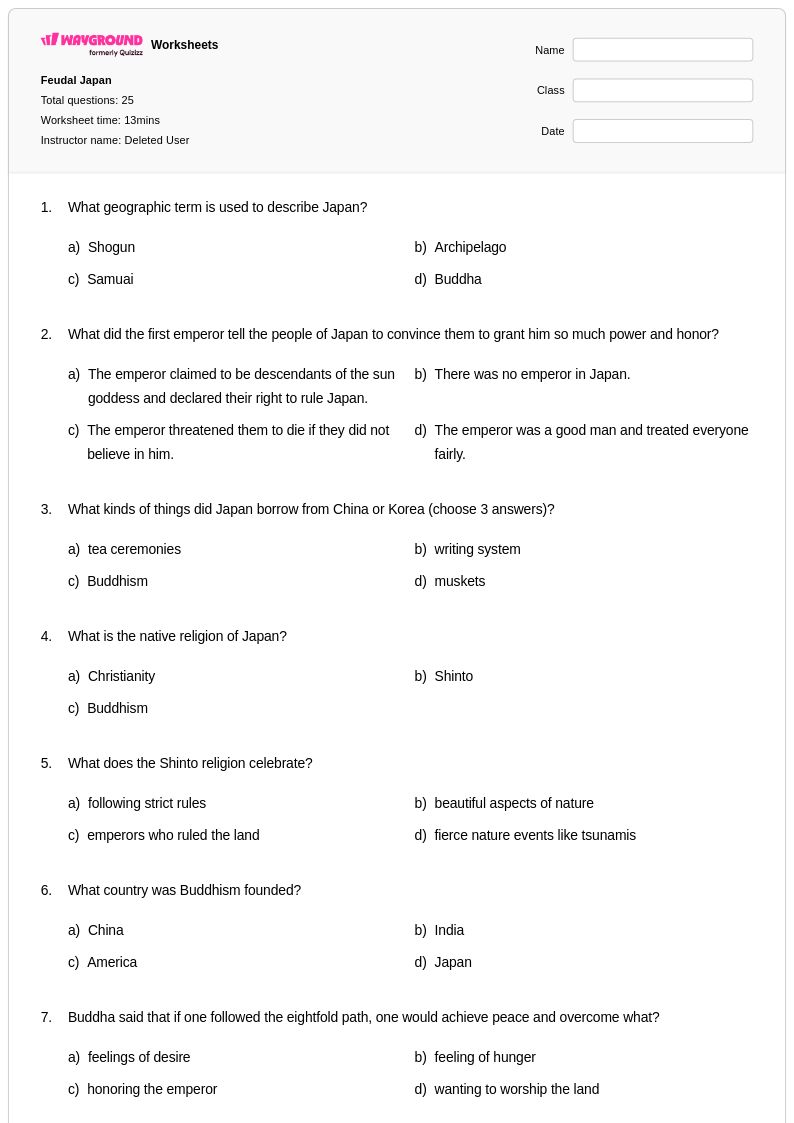
25 Q
5th
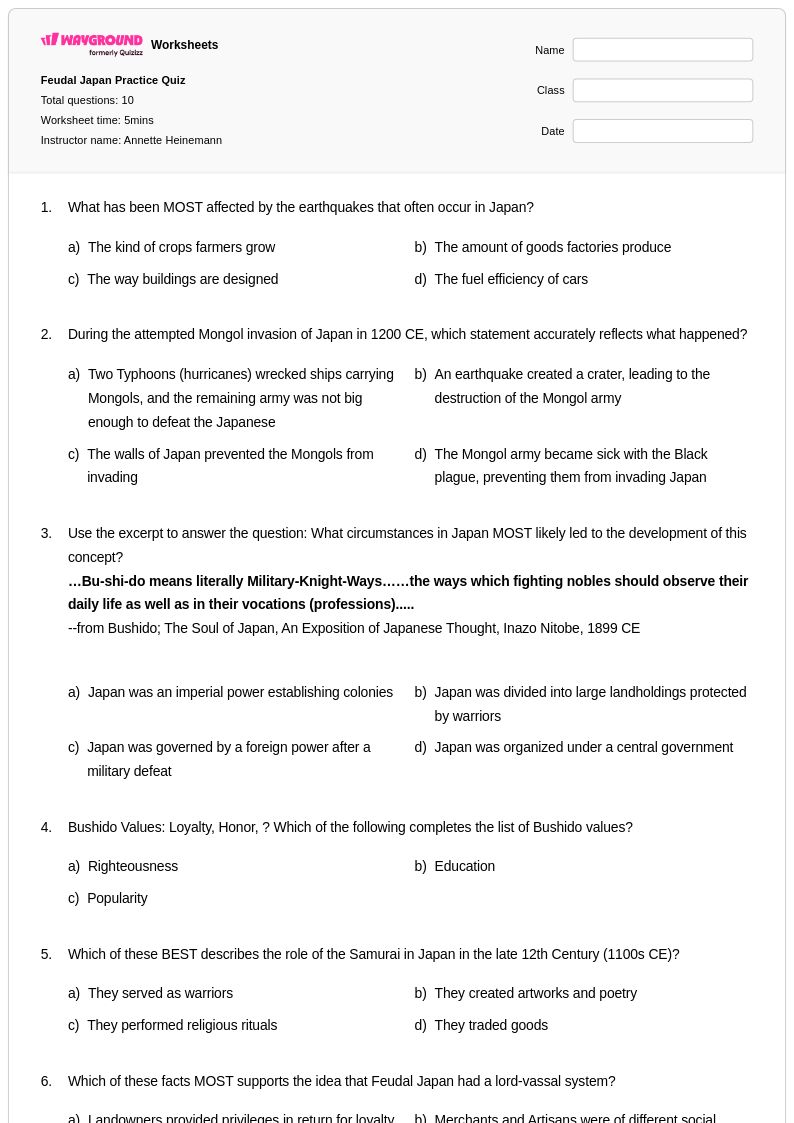
10 Q
7th
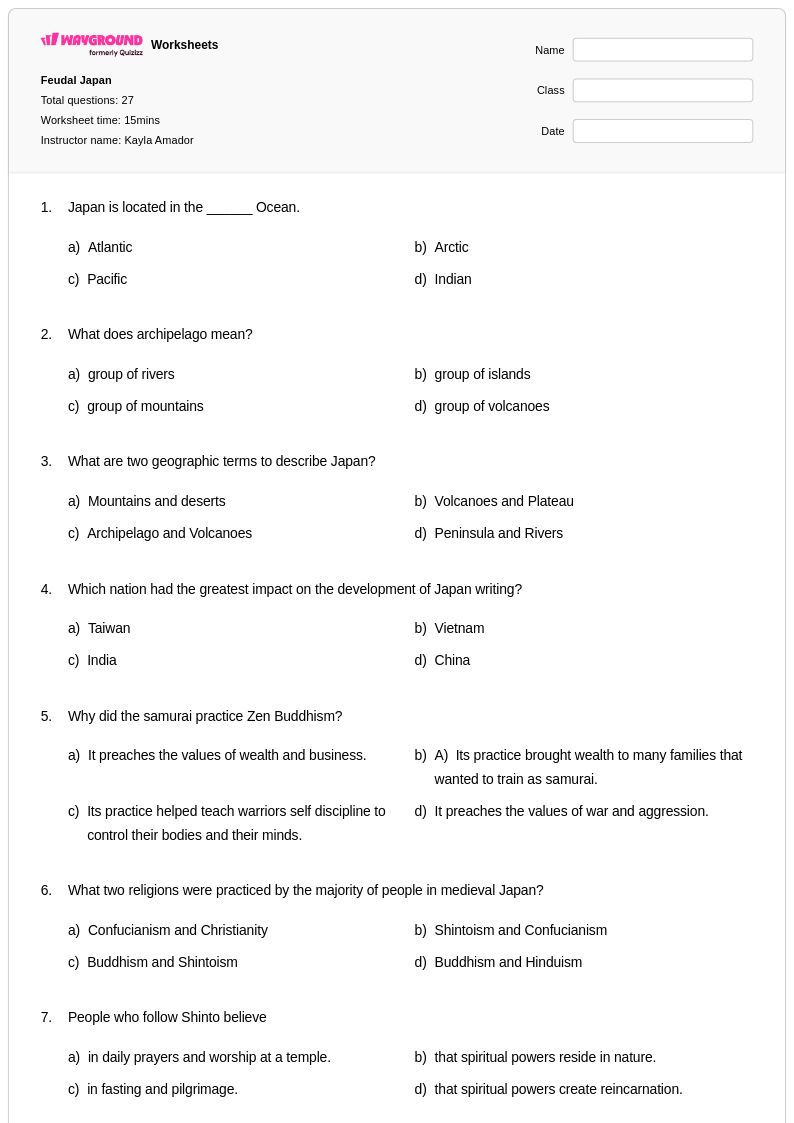
27 Q
7th
15 Q
7th - Uni
34 Q
6th - 8th
8 Q
7th
10 Q
7th
Explore Worksheets by Subjects
Explore printable Feudal Japan worksheets
Feudal Japan worksheets available through Wayground (formerly Quizizz) provide comprehensive educational resources that immerse students in the complex social, political, and cultural systems of medieval Japanese society. These expertly crafted materials strengthen critical thinking skills by guiding students through the hierarchical structure of the feudal system, from the powerful shogun and daimyo lords to the disciplined samurai warriors and hardworking peasants. Students develop analytical abilities as they examine primary source documents, maps, and visual artifacts that illuminate the daily lives, beliefs, and practices of feudal Japanese society. The collection includes practice problems that challenge students to compare feudal systems across cultures, timeline activities that reinforce chronological thinking, and engaging scenarios that bring historical concepts to life. Each worksheet comes with a comprehensive answer key to support effective assessment and self-directed learning, while the free printable pdf format ensures accessibility for all classrooms and learning environments.
Wayground (formerly Quizizz) empowers teachers with millions of teacher-created resources specifically designed to make feudal Japan come alive in the classroom through robust search and filtering capabilities that help educators quickly locate materials aligned with their specific curriculum standards and learning objectives. The platform's differentiation tools enable teachers to customize worksheets based on individual student needs, whether providing additional scaffolding for struggling learners or enrichment activities for advanced students ready to explore deeper historical connections. These versatile resources are available in both printable and digital formats, including downloadable pdf files that facilitate seamless integration into lesson planning, homework assignments, and assessment strategies. Teachers can efficiently address diverse learning styles and pacing requirements while building students' understanding of feudal Japan's lasting impact on modern Japanese culture, making these worksheets invaluable for remediation, skill practice, and enrichment activities that support comprehensive historical literacy.
FAQs
How do I teach the feudal Japan social hierarchy to middle school students?
What activities help students practice understanding the feudal Japan social system?
What common mistakes do students make when learning about feudal Japan?
How can I use feudal Japan worksheets to compare medieval societies across cultures?
How do I use Wayground's feudal Japan worksheets in my classroom?
How can I differentiate feudal Japan instruction for students at different levels?