Free Printable Figurative Writing Worksheets for Class 6
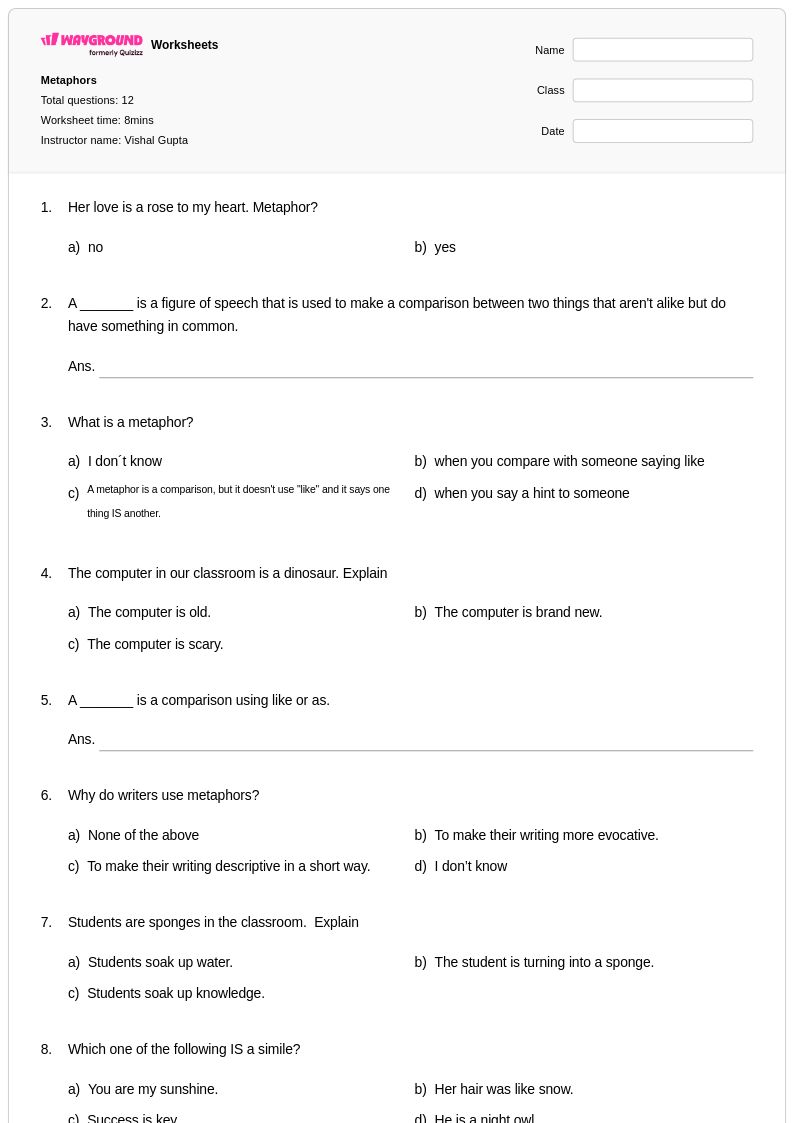
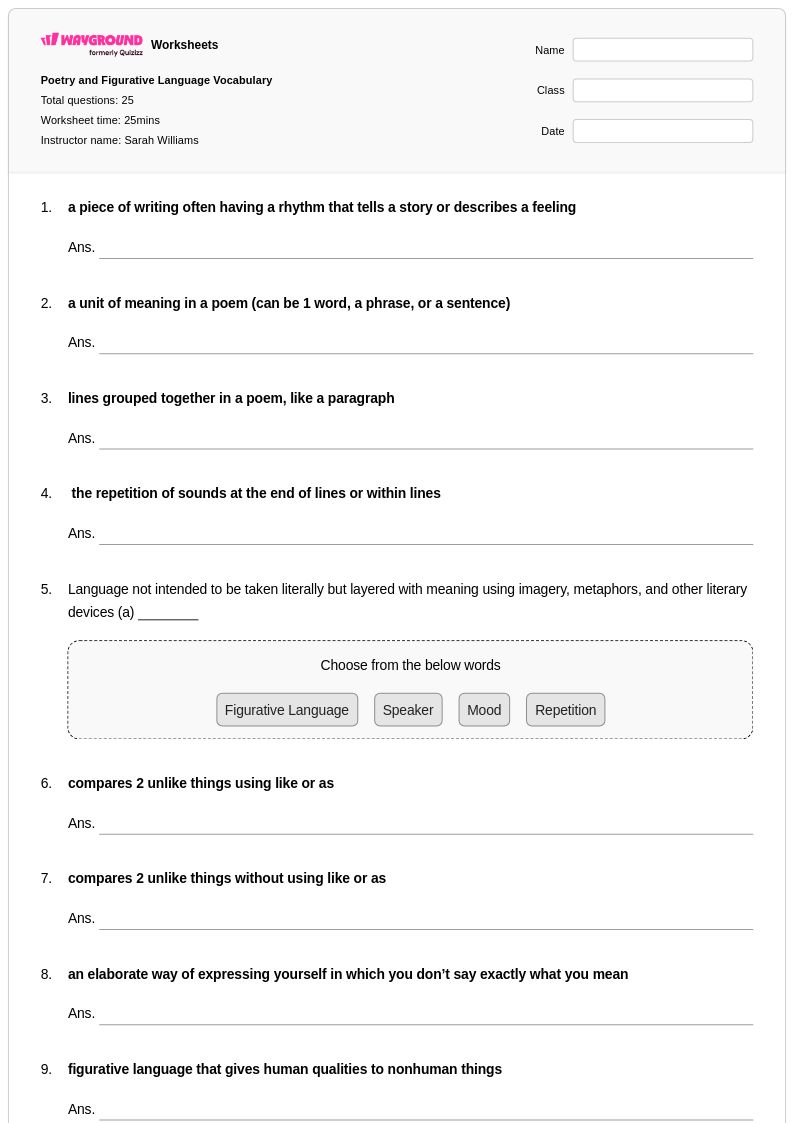
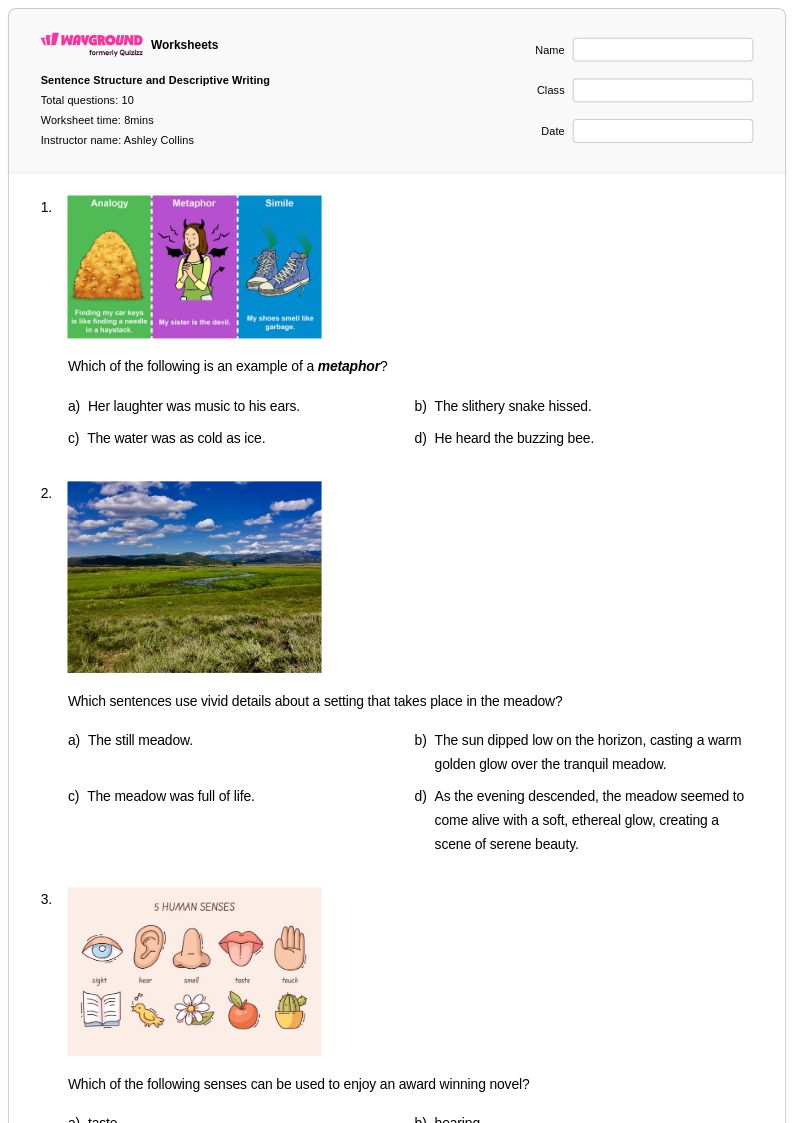
Class 6 figurative writing worksheets from Wayground help students master metaphors, similes, and literary devices through engaging printables, practice problems, and comprehensive answer keys.
Explore printable Figurative Writing worksheets for Class 6
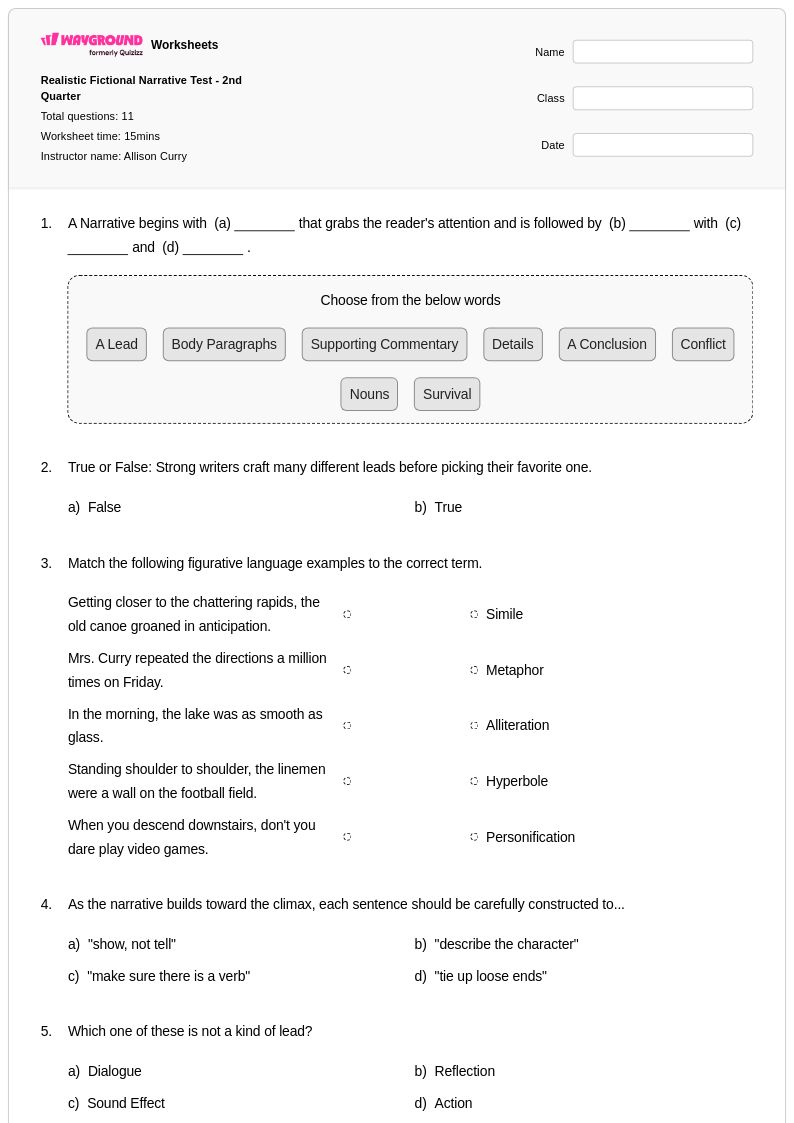
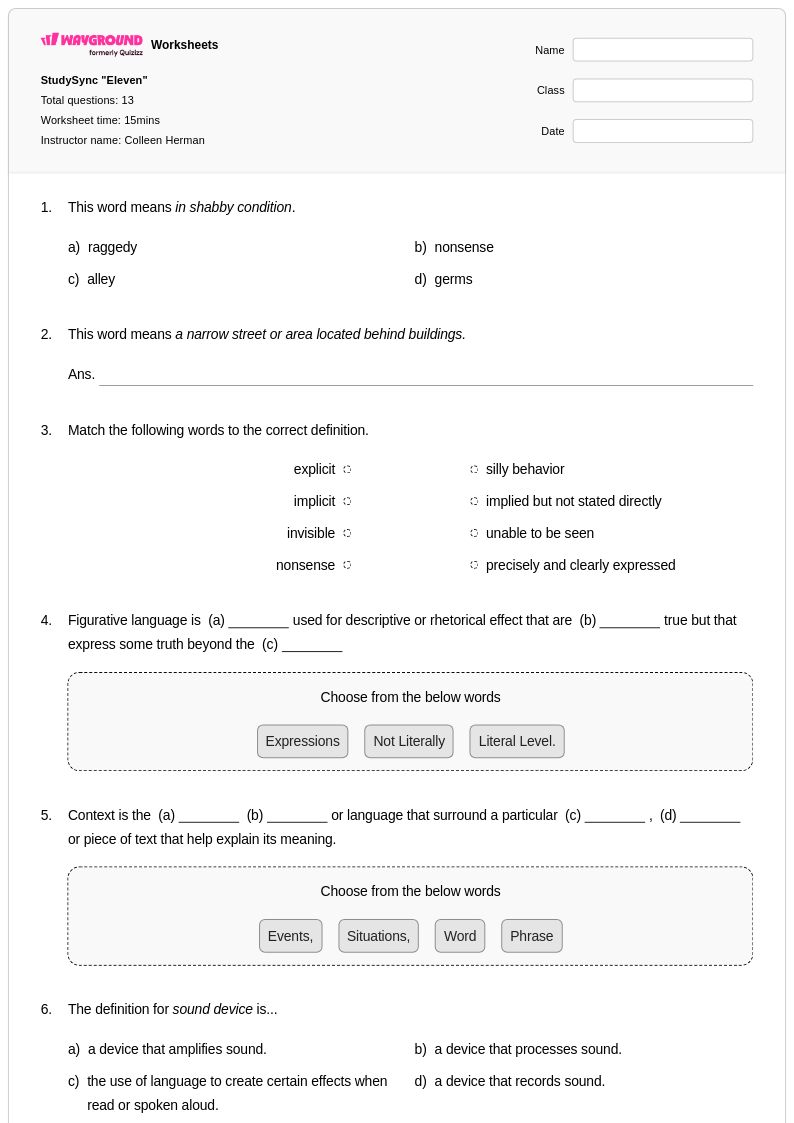
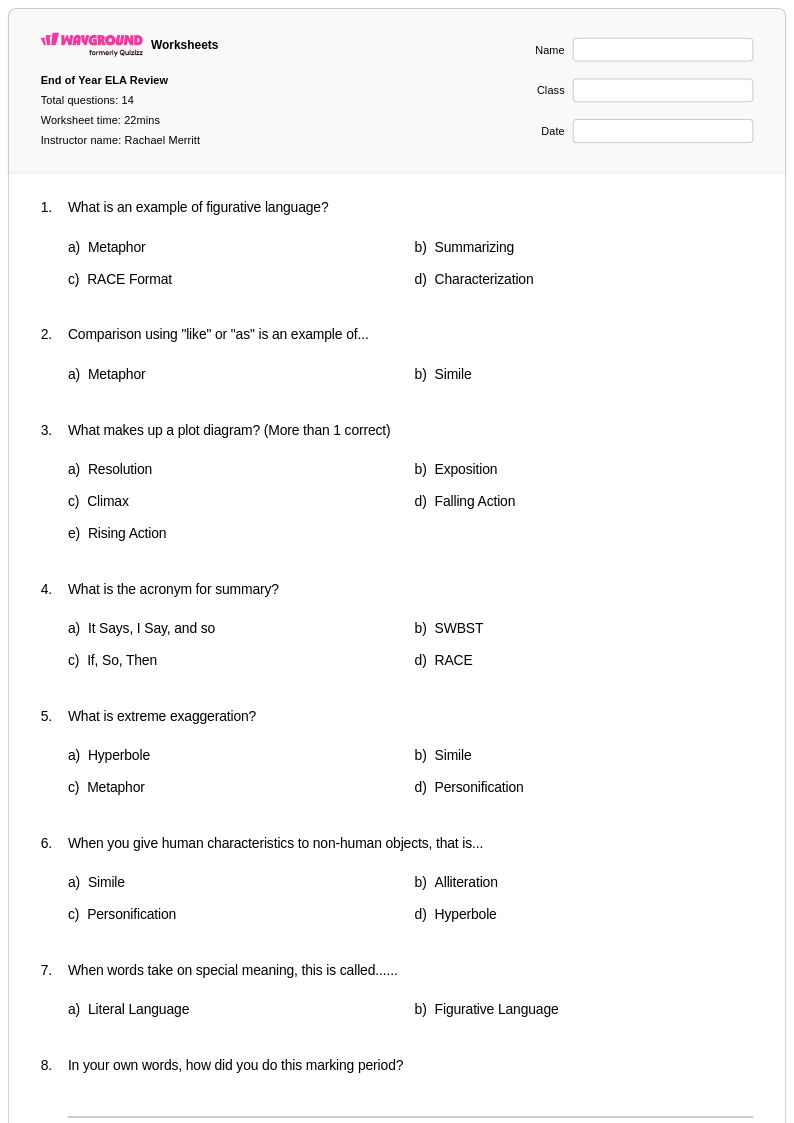
Figurative writing worksheets for Class 6 students available through Wayground (formerly Quizizz) provide comprehensive practice opportunities for mastering metaphors, similes, personification, hyperbole, and other literary devices essential to expressive writing. These carefully designed resources strengthen students' ability to recognize, analyze, and create figurative language while developing their overall writing sophistication and creativity. Each worksheet collection includes detailed answer keys and practice problems that guide students through increasingly complex examples, helping them understand how figurative language enhances meaning and creates vivid imagery in their own compositions. Available as free printables and downloadable pdf resources, these materials support both classroom instruction and independent practice, allowing students to build confidence in using literary devices effectively across various writing genres.
Wayground (formerly Quizizz) empowers teachers with millions of educator-created figurative writing resources that streamline lesson planning and provide targeted skill practice for Class 6 students. The platform's robust search and filtering capabilities enable teachers to quickly locate materials aligned with specific standards and learning objectives, while built-in differentiation tools allow for seamless customization based on individual student needs and reading levels. These worksheet collections are available in both printable and digital formats, including convenient pdf downloads, making them ideal for remediation sessions, enrichment activities, and regular classroom practice. Teachers can easily modify content, track student progress, and create personalized learning experiences that help students master the nuanced art of figurative language while developing stronger overall writing organization and structure skills.
FAQs
How do I teach figurative writing to students who struggle with abstract language?
Start with concrete, familiar comparisons before introducing terminology — ask students to describe how their morning felt, then show them how that description becomes a simile or metaphor. Anchor each device to a real-world example students already know, such as 'the classroom was a zoo,' before asking them to produce original ones. Gradually move from identification in mentor texts to guided imitation and then independent composition, so students build confidence at each stage.
What exercises help students practice using figurative language in their own writing?
Effective practice moves through three stages: identifying devices in published excerpts, explaining the effect each device creates, and then generating original examples within a structured prompt. Sentence-level exercises — where students rewrite a literal sentence using a specific device — build muscle memory before paragraph-level tasks. Progressively challenging worksheets that escalate from recognition to creation are especially effective at bridging comprehension and independent application.
What mistakes do students commonly make when using figurative language in writing?
The most common error is mixing or muddling figurative devices — for example, writing a simile that collapses into a cliché, or confusing personification with hyperbole. Students also frequently identify a device correctly but cannot explain why the author chose it, which signals surface-level understanding rather than genuine command. Another persistent issue is overuse: students who discover metaphor often stack devices until writing feels cluttered rather than expressive.
How can I differentiate figurative writing practice for students at different skill levels?
For emerging writers, reduce the number of devices introduced at once and provide sentence frames or word banks that scaffold original composition. Proficient students benefit from open-ended prompts that require them to select the most effective device for a given effect and justify their choice. On Wayground, teachers can apply accommodations such as read aloud, reduced answer choices, and extended time to individual students without alerting the rest of the class, making differentiation practical within a single assignment.
How do I use Wayground's figurative writing worksheets in my classroom?
Wayground's figurative writing worksheets are available as printable PDFs for traditional classroom use and in digital formats for tech-integrated or remote learning environments. Teachers can also host the material as a live or assigned quiz directly on Wayground, giving students immediate feedback while generating class-level data on which devices need reteaching. Each worksheet includes a complete answer key, so they work equally well for independent practice, small-group instruction, or homework.
How do I help students understand the difference between similes and metaphors?
The clearest explanation is structural: similes use 'like' or 'as' to signal a comparison, while metaphors state it directly as fact. What matters more, however, is helping students understand that both devices create the same effect — they transfer meaning from one thing to another — but metaphors do so with greater immediacy and force. Have students write the same comparison first as a simile, then convert it to a metaphor, and discuss which version feels more vivid, which builds both understanding and intentional craft.