Free Printable Foreshadowing Worksheets for Class 10
Master foreshadowing techniques with Class 10 English worksheets featuring practice problems, printable PDFs, and answer keys to help students identify literary clues and enhance reading comprehension skills through Wayground's free worksheets.
Explore printable Foreshadowing worksheets for Class 10
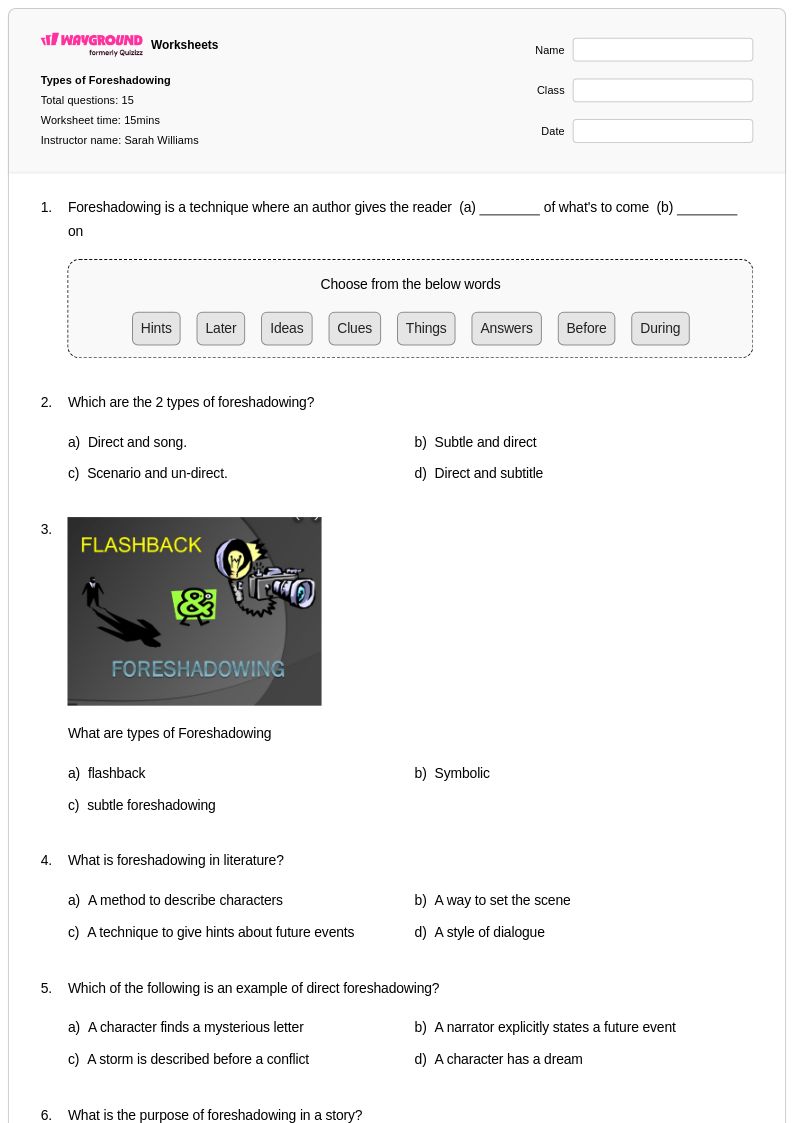
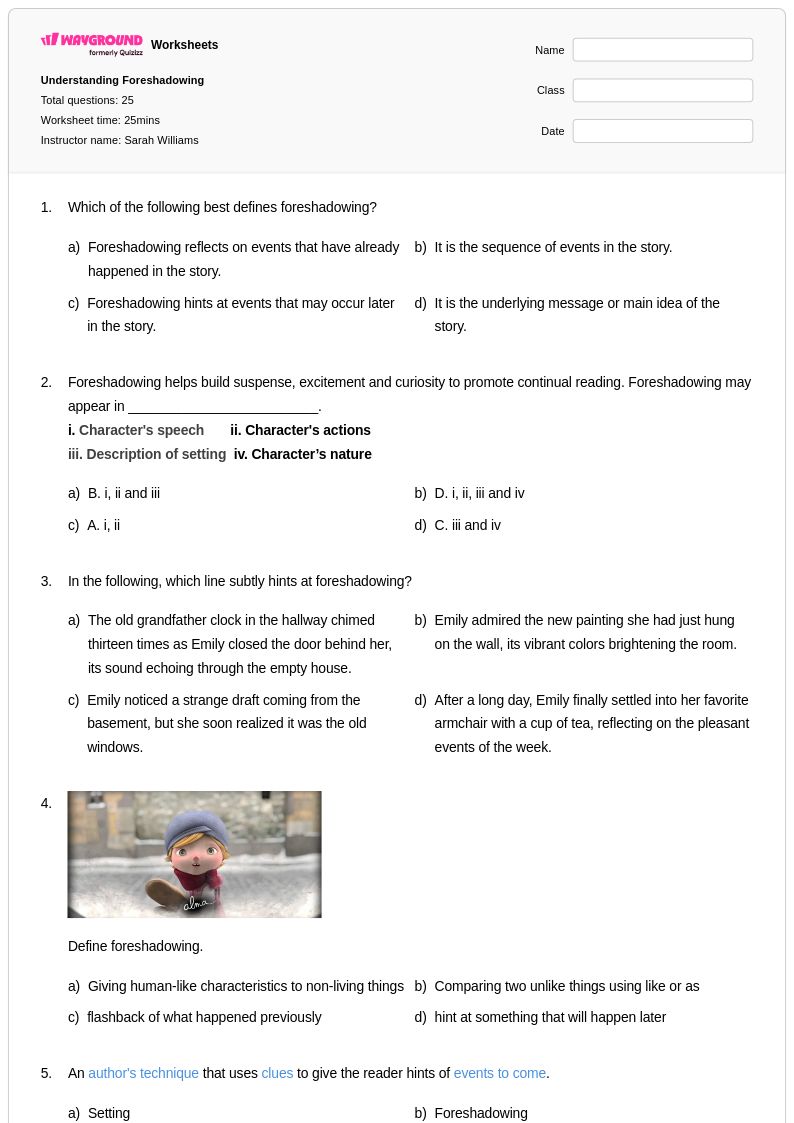
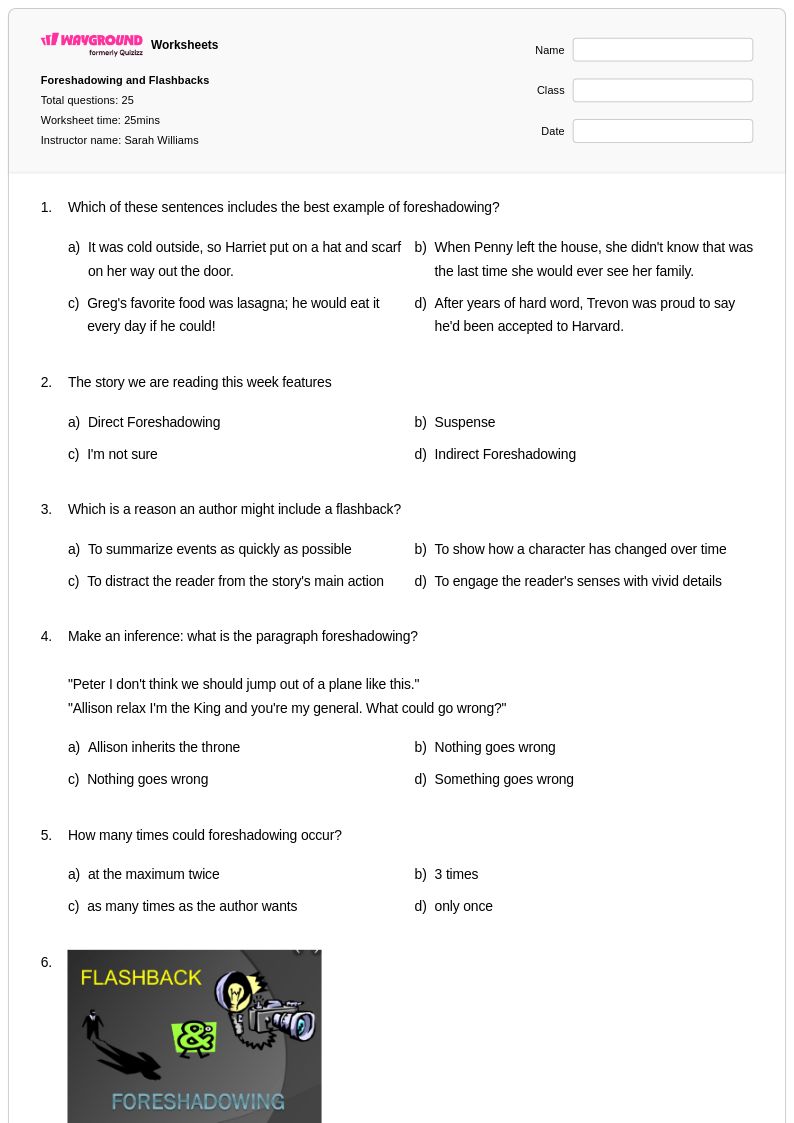
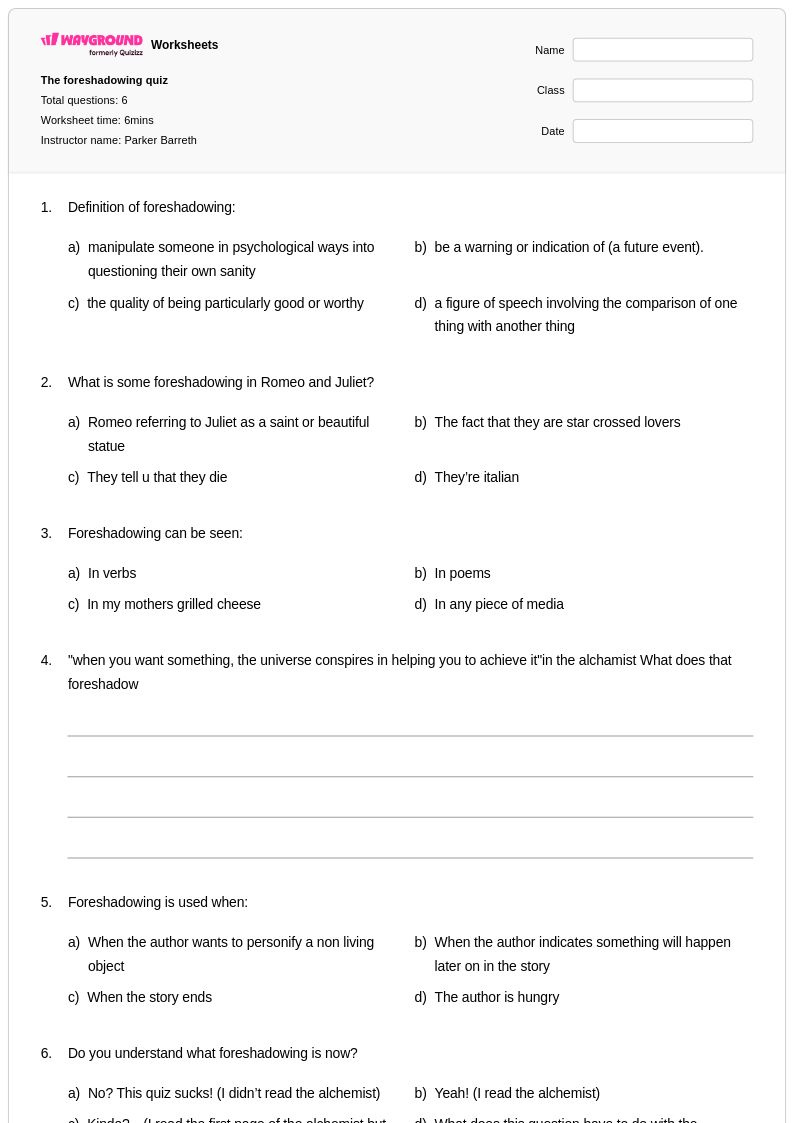
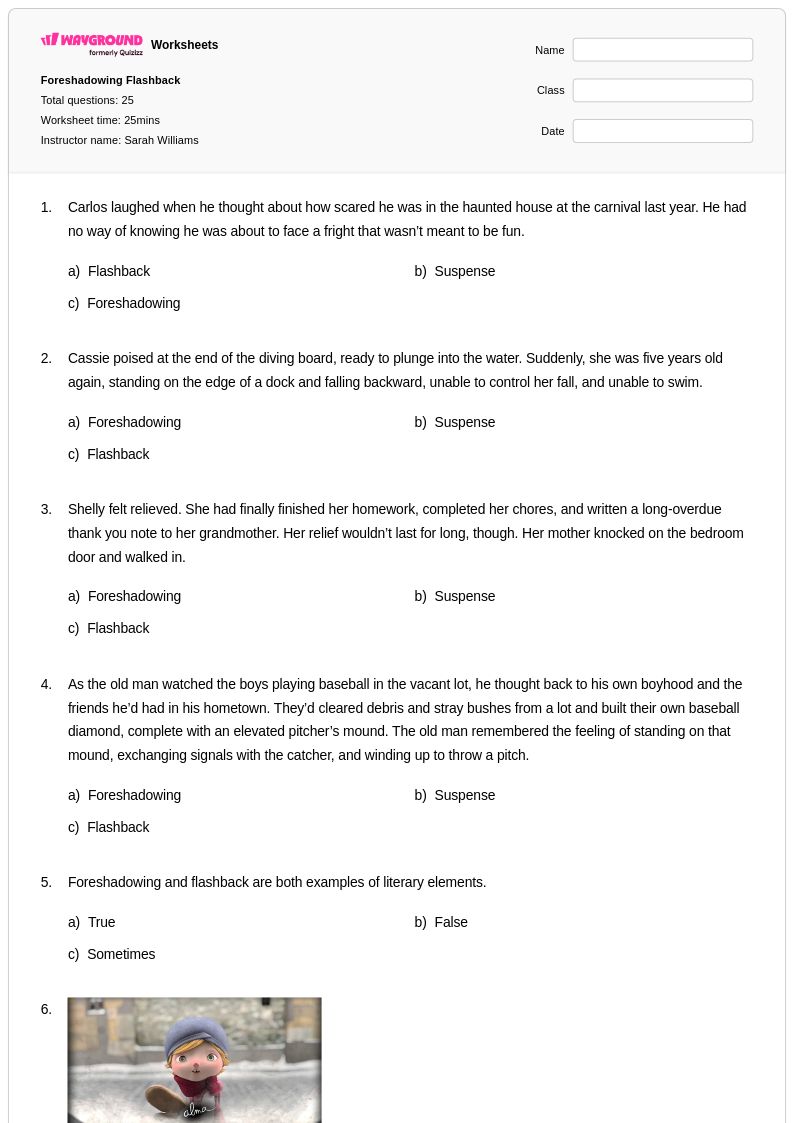
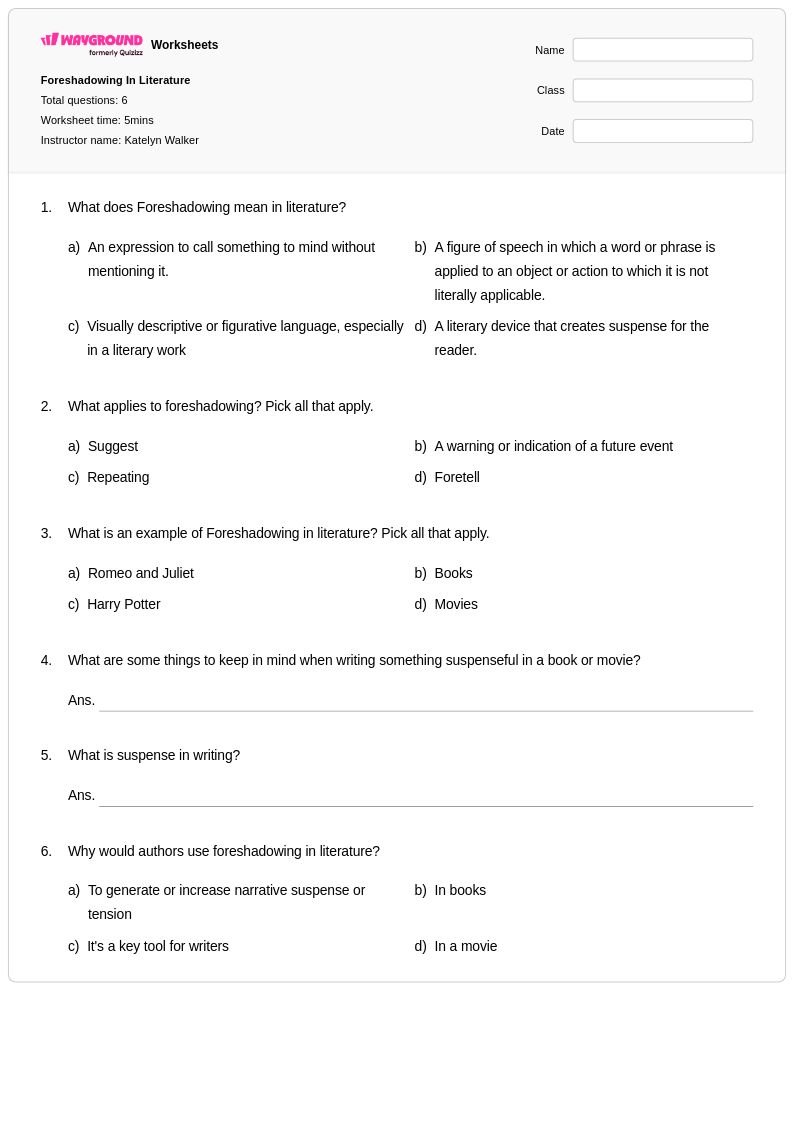
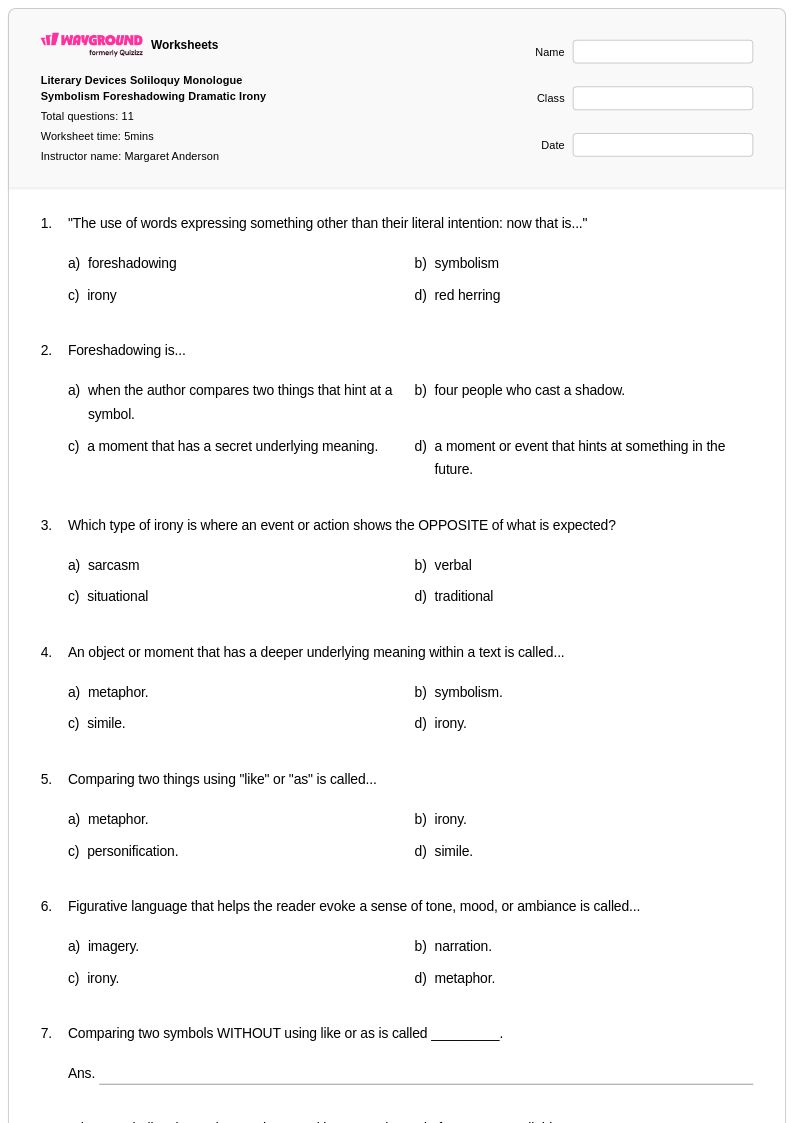
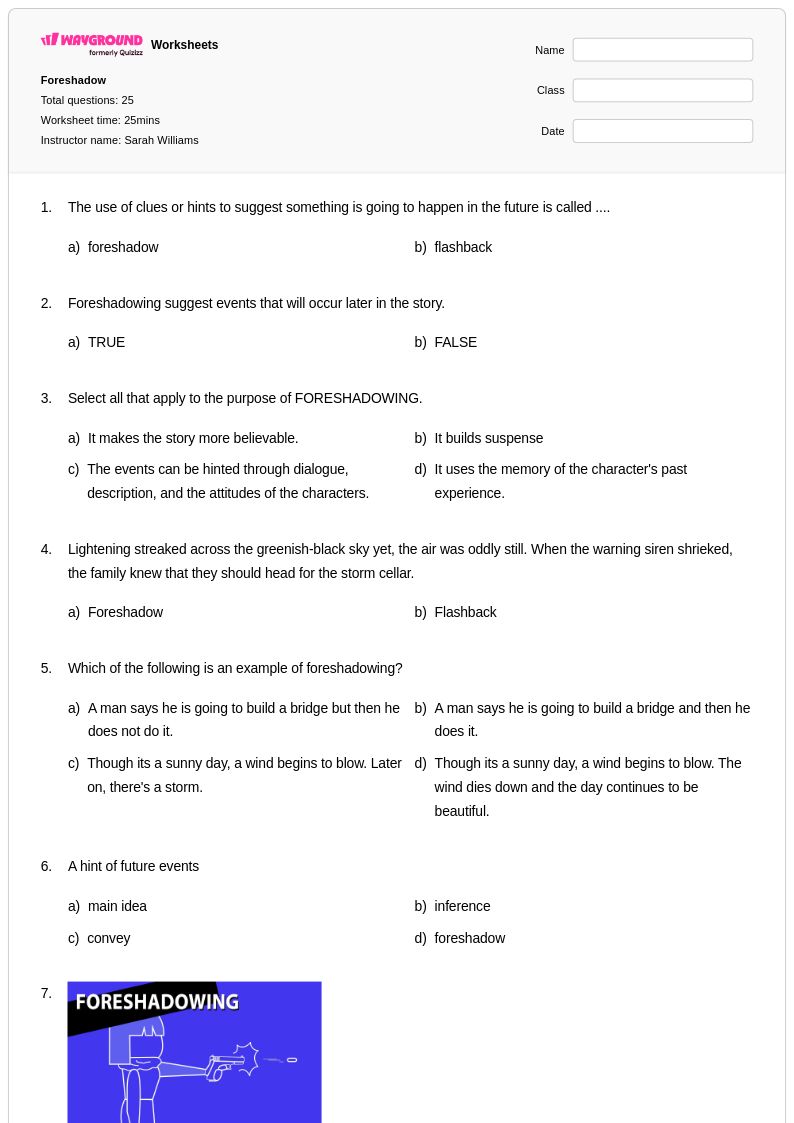
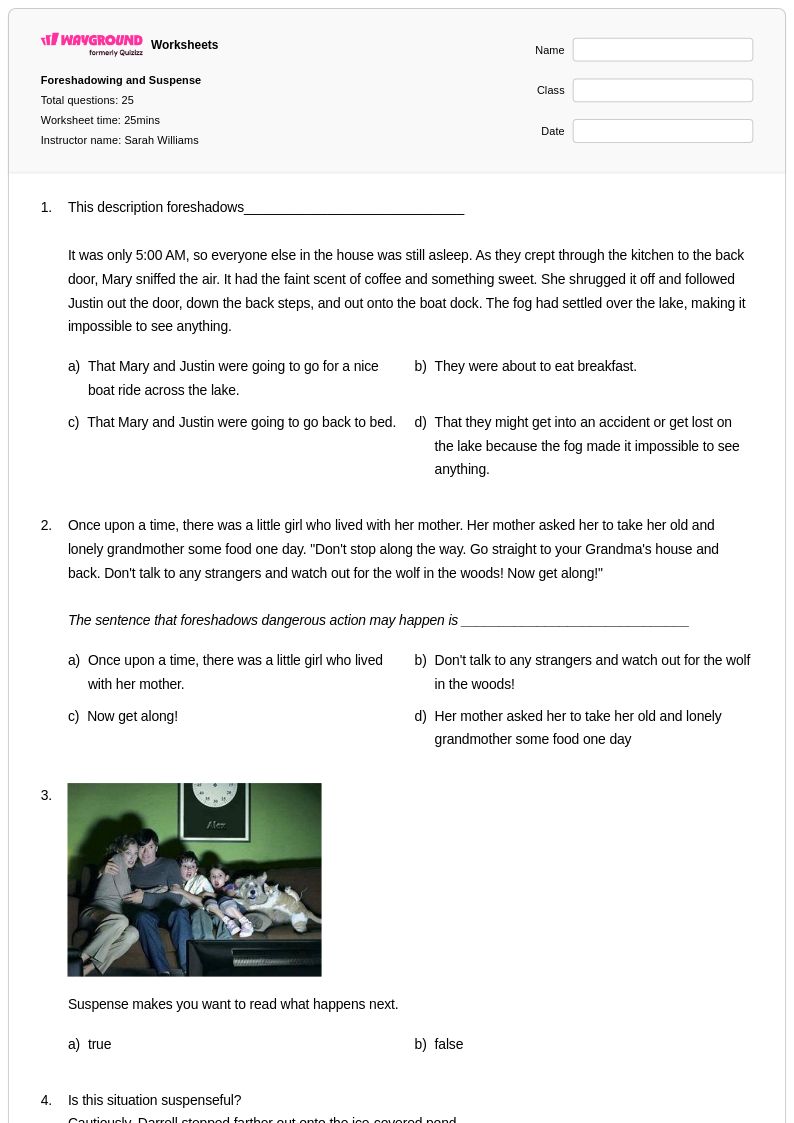
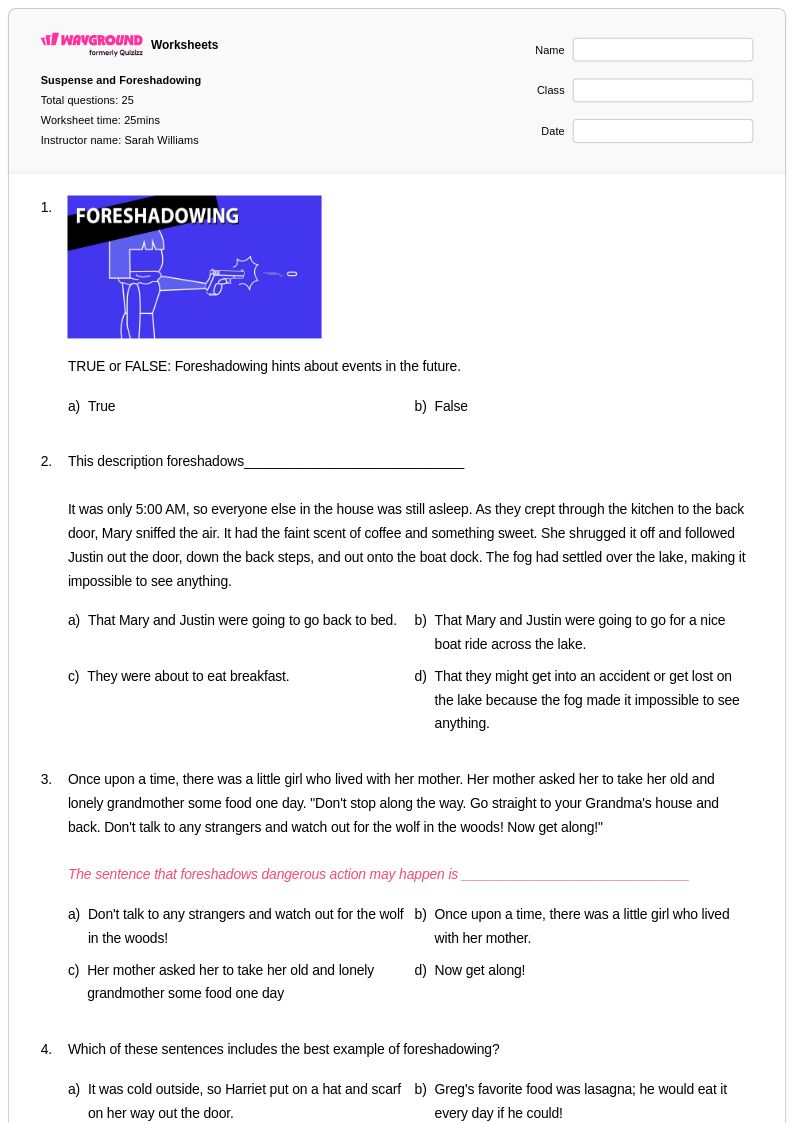
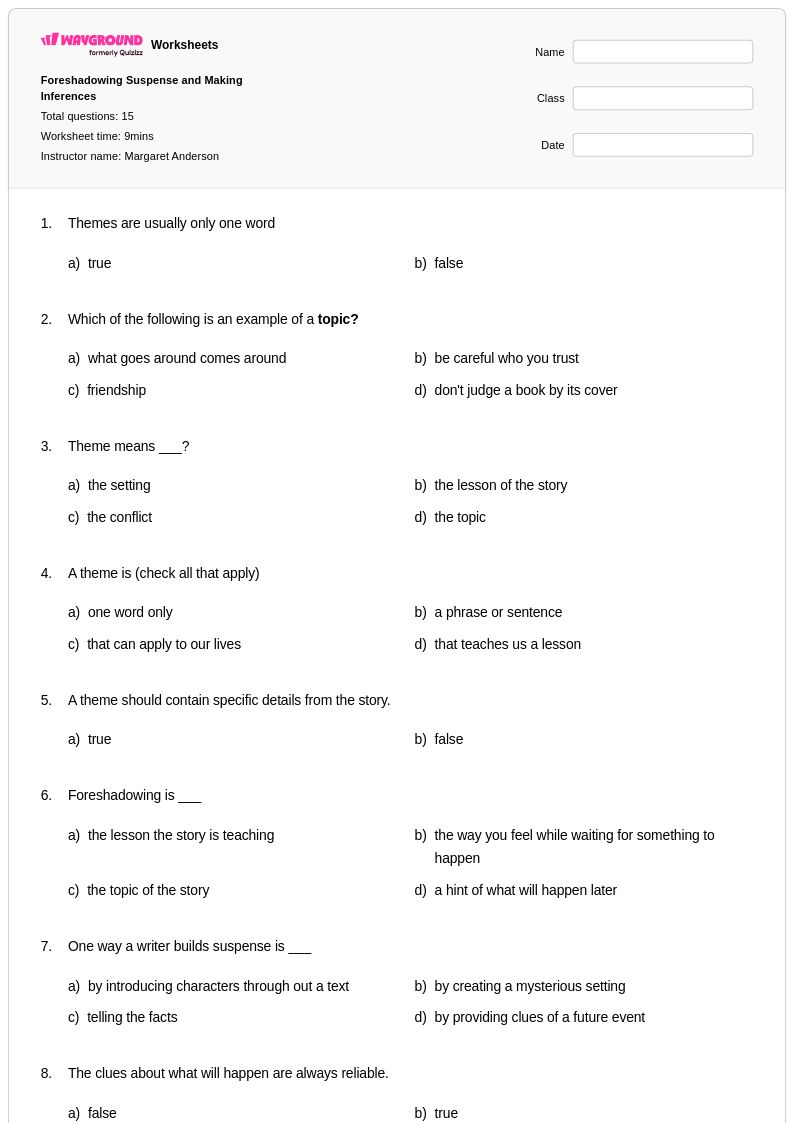
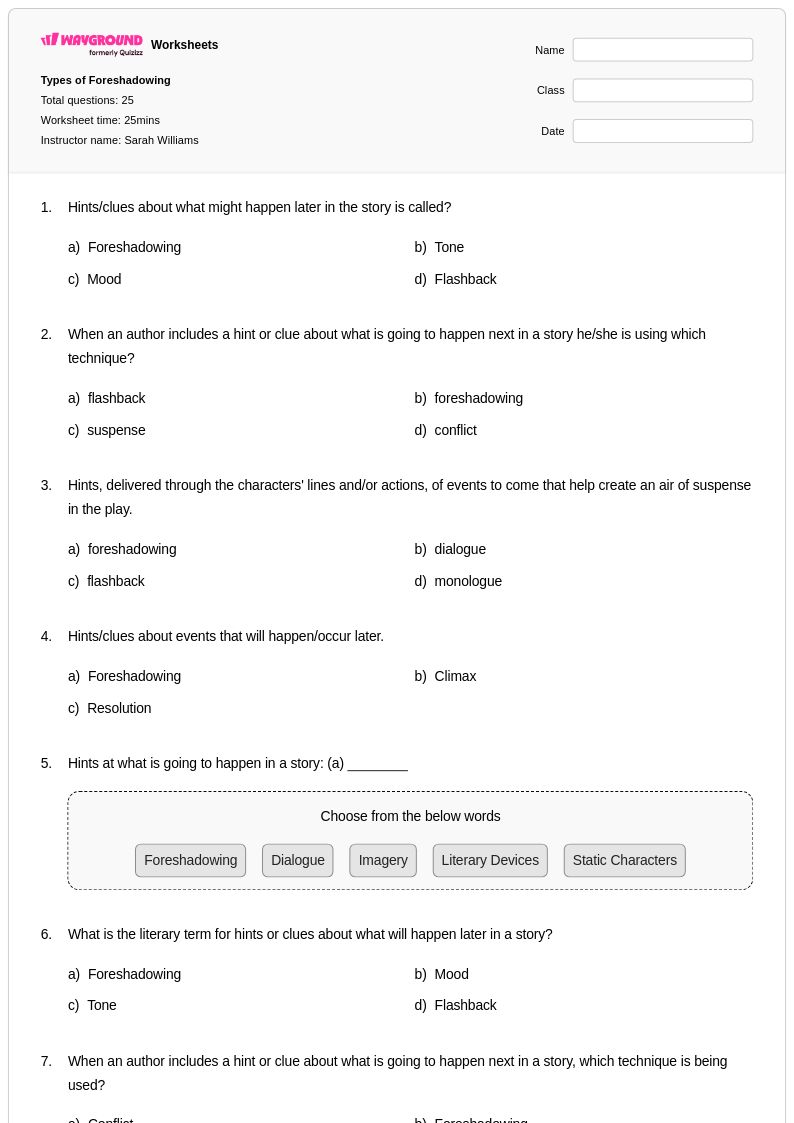
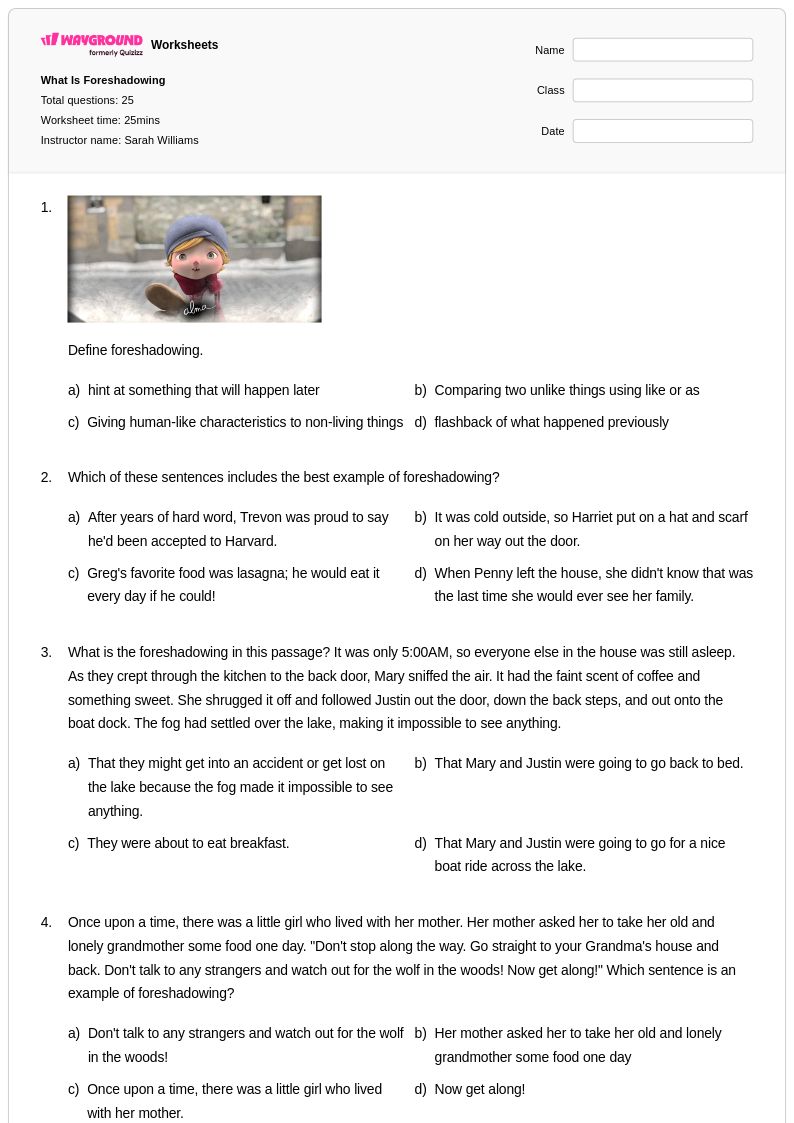
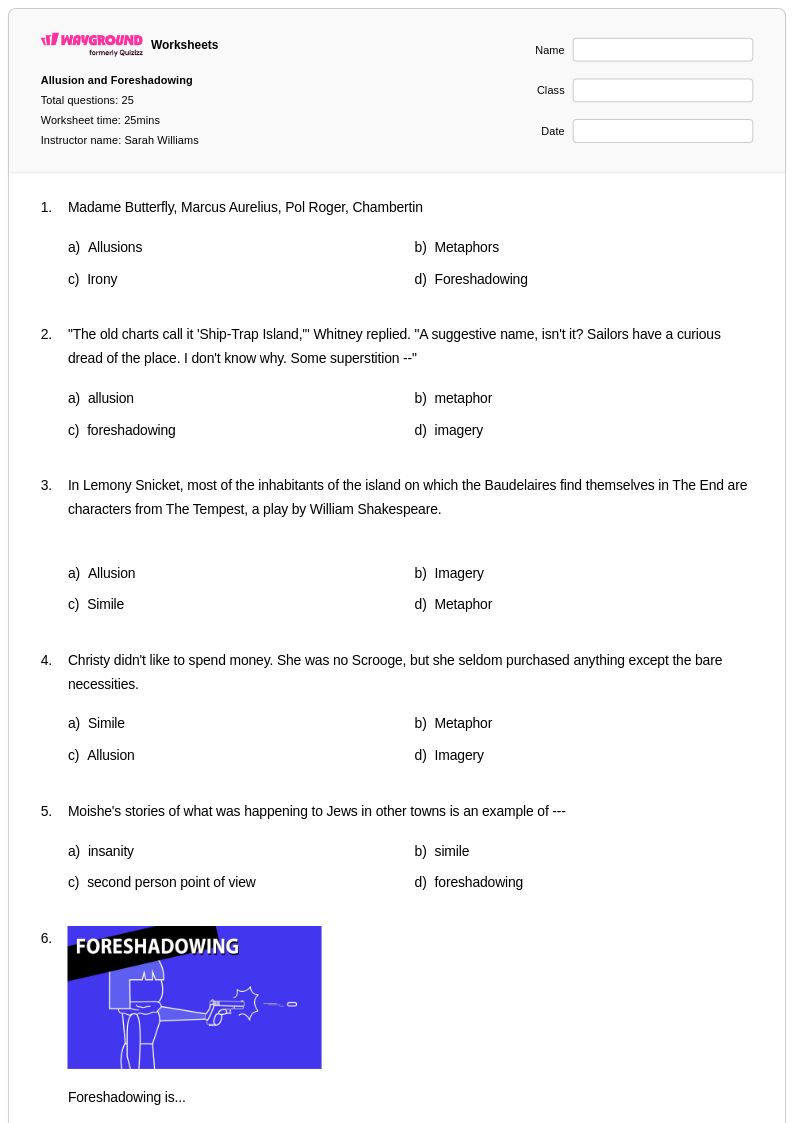
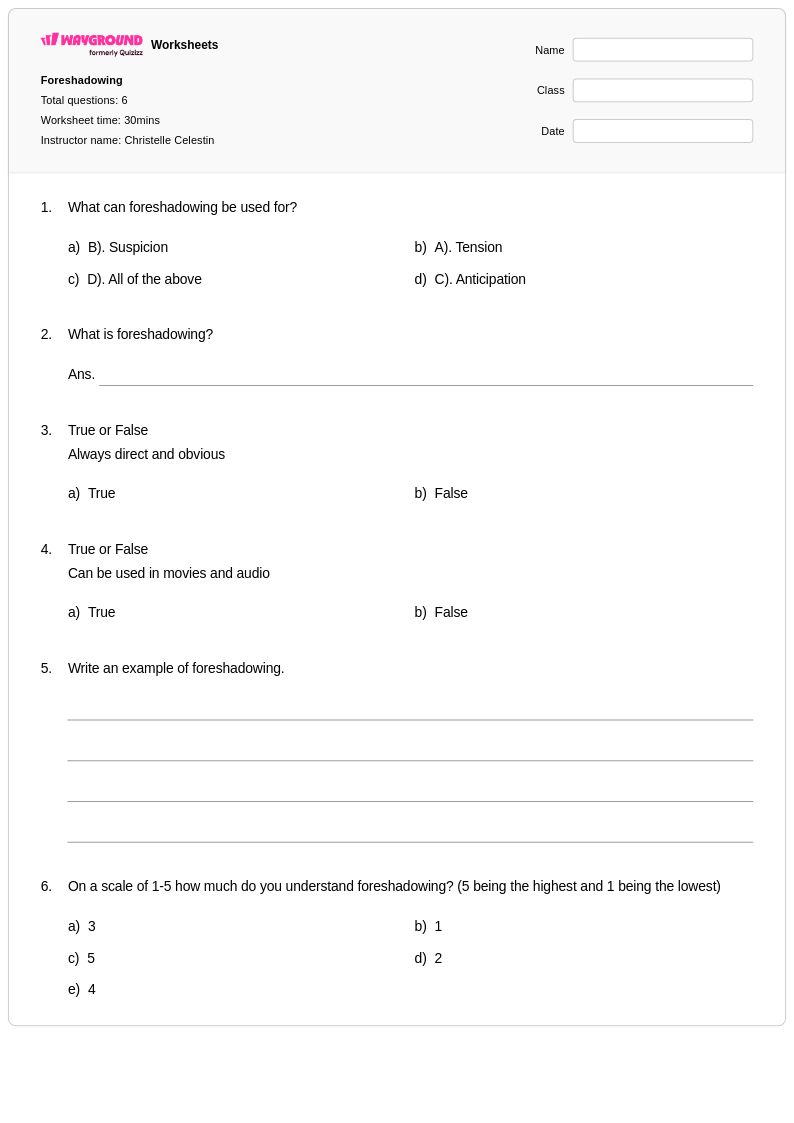
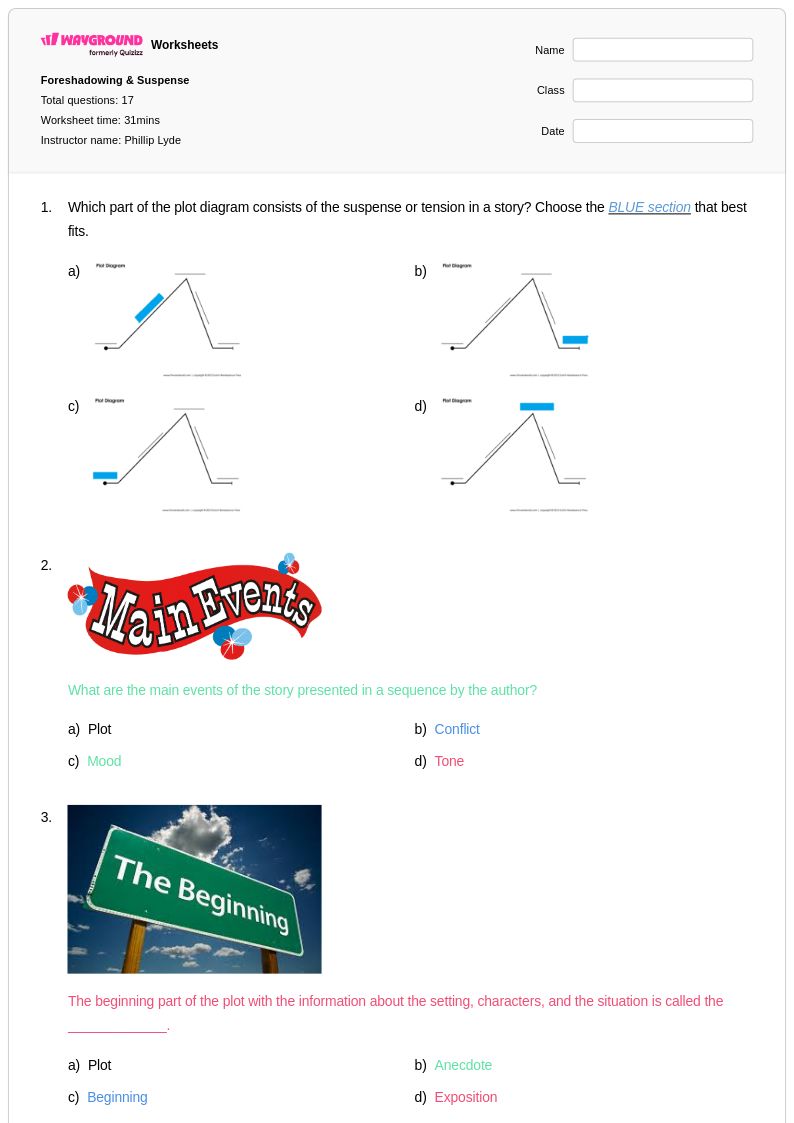
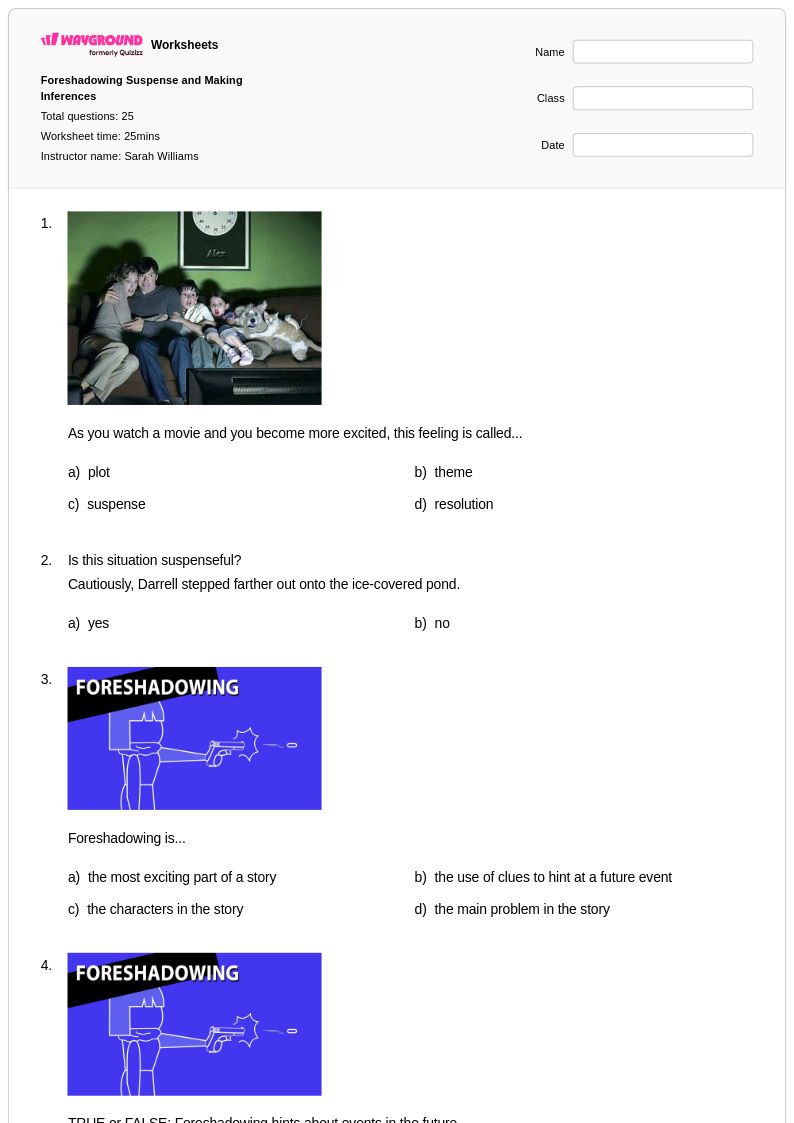
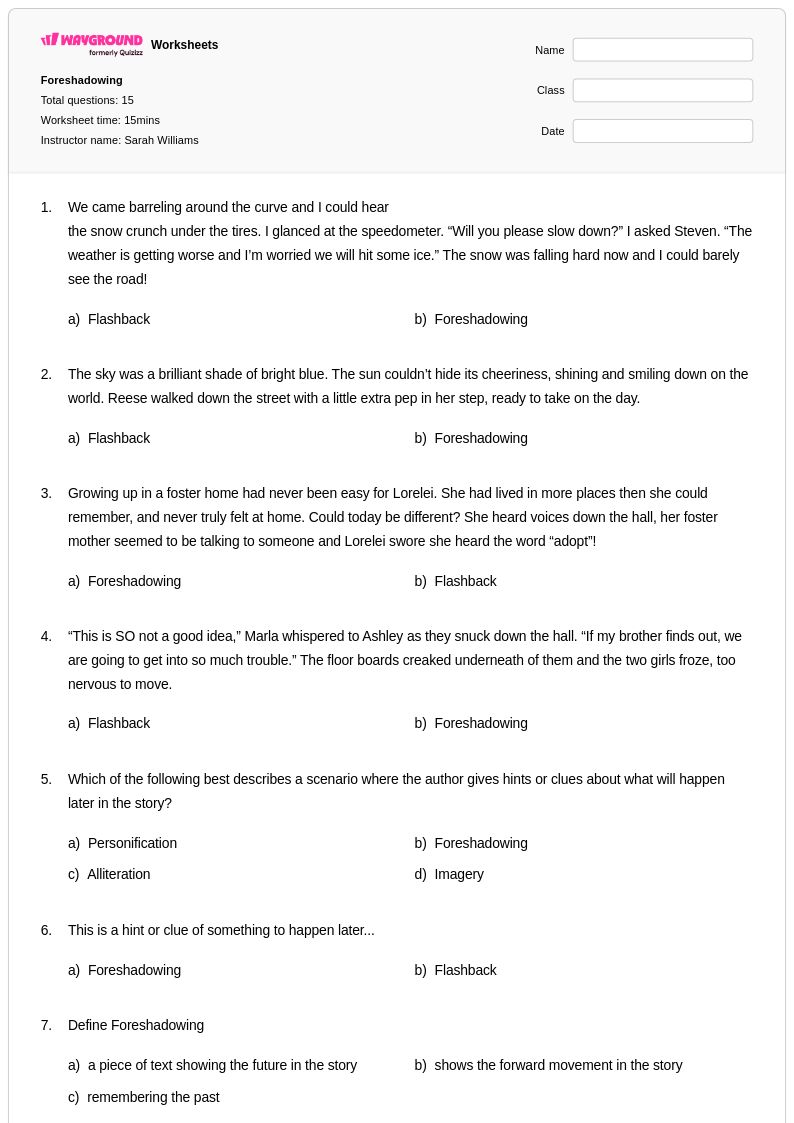
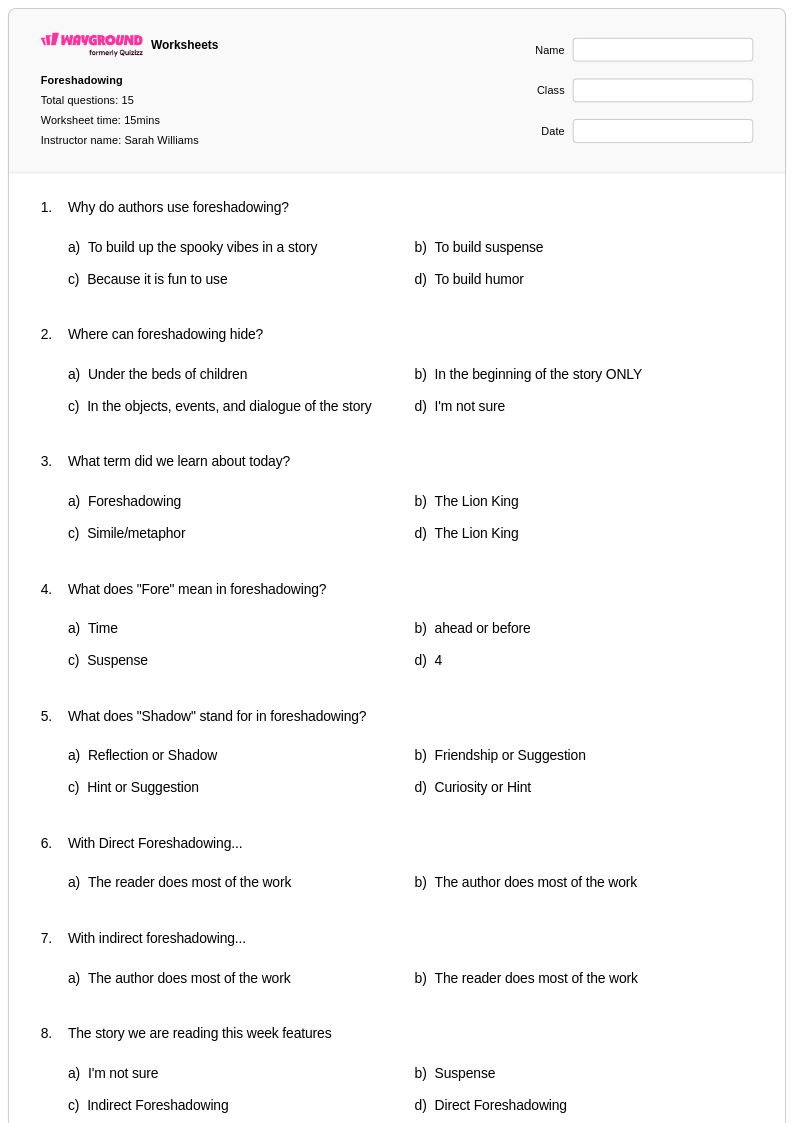
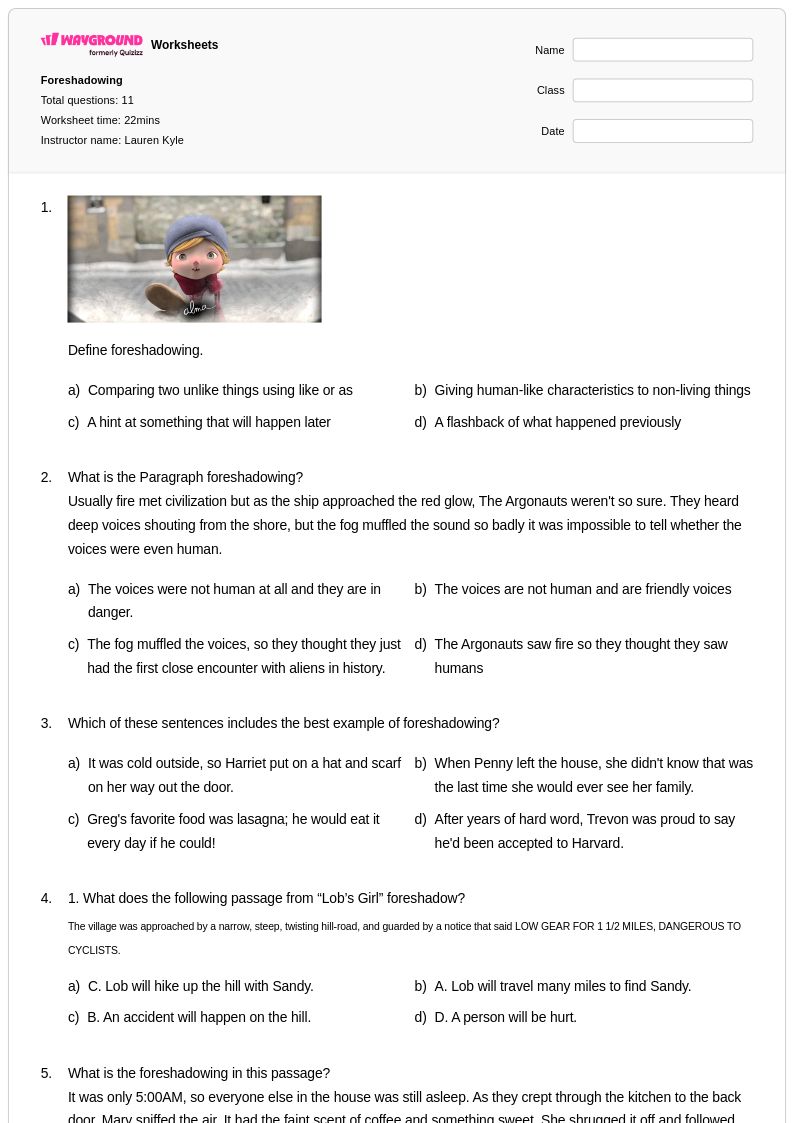
Foreshadowing worksheets for Class 10 students available through Wayground (formerly Quizizz) provide comprehensive practice in identifying and analyzing this essential literary device across various text types. These expertly designed resources strengthen students' ability to recognize subtle hints and clues that authors embed within narratives to suggest future events, building critical reading comprehension and analytical thinking skills. The worksheet collections include practice problems that guide students through examining dialogue, imagery, symbolism, and narrative details that serve as foreshadowing elements, while comprehensive answer keys support both independent study and classroom instruction. Students work with excerpts from classic and contemporary literature, learning to distinguish between obvious and subtle forms of foreshadowing while developing their ability to make predictions and connections that enhance overall reading comprehension. These free printable resources in pdf format ensure accessibility for diverse learning environments and study preferences.
Wayground's extensive collection of teacher-created foreshadowing worksheets draws from millions of educational resources, offering educators powerful search and filtering capabilities to locate materials perfectly suited to their Class 10 English curriculum needs. The platform's robust differentiation tools enable teachers to customize worksheets for varying skill levels within their classrooms, while standards alignment features ensure content meets established learning objectives for literary analysis and vocabulary development. These versatile resources are available in both printable and digital formats, including downloadable pdf versions that facilitate seamless integration into lesson planning, targeted remediation for struggling readers, and enrichment opportunities for advanced students. Teachers can efficiently scaffold instruction by selecting from worksheet collections that progress from basic identification exercises to complex analytical tasks, supporting systematic skill development while accommodating diverse learning styles and pacing requirements throughout their foreshadowing instruction units.
FAQs
How do I teach foreshadowing to students who struggle to distinguish it from other literary devices?
The most effective approach is to teach foreshadowing alongside contrast examples from related devices like flashback and symbolism, so students learn to distinguish by function rather than surface features. Start with obvious, explicit foreshadowing in familiar texts before moving to subtle or implied examples. Guided practice problems that walk students through the identification process step by step help build the analytical habit before asking students to work independently.
What exercises help students practice identifying foreshadowing in a text?
Effective practice exercises include annotation tasks where students highlight potential foreshadowing moments and explain what future event each hint might suggest, as well as compare-and-confirm activities where students revisit their predictions after reading. Short passage analysis with targeted questions about word choice and tone helps students recognize how authors embed clues without stating them directly. Repeated exposure across multiple text types and complexity levels builds the pattern recognition needed for strong literary analysis.
What mistakes do students commonly make when identifying foreshadowing?
The most common error is confusing foreshadowing with general mood-setting or descriptive language — students often flag atmospheric details that create tension but do not actually hint at a specific future event. Another frequent mistake is identifying foreshadowing only in retrospect, after the outcome is revealed, rather than developing the skill of forward-reading during a first encounter with a text. Students also tend to overlook dialogue-based foreshadowing, focusing almost exclusively on descriptive passages.
How can I differentiate foreshadowing instruction for students at different reading levels?
For struggling readers, begin with shorter passages containing explicit, close-to-the-surface foreshadowing and provide sentence starters that scaffold the analytical response. Advanced readers benefit from complex literary texts where foreshadowing is subtle, layered, or ironically deployed. On Wayground, teachers can apply accommodations such as read-aloud support for students who need text read to them, reduced answer choices to lower cognitive load, and extended time settings — all configurable per individual student without notifying the rest of the class.
How do I use Wayground's foreshadowing worksheets in my classroom?
Wayground's foreshadowing worksheets are available as printable PDFs for traditional classroom use and in digital formats for technology-integrated learning environments, and teachers can also host them directly as a quiz on Wayground. The included answer keys support both independent student practice and teacher-led instruction, making the materials flexible for homework, in-class skill work, or assessment preparation. The collection spans varying complexity levels, so teachers can select materials suited to initial concept introduction or more advanced literary analysis.
How do I assess whether students truly understand foreshadowing versus just memorizing the definition?
True understanding shows when students can identify foreshadowing in an unseen text and articulate what specific future event the hint points toward — not just label it. Assessment tasks that require students to explain the author's intent and describe the effect of the foreshadowing on a reader's experience reveal deeper comprehension than simple identification tasks. Common misconceptions, such as treating any tense or ominous language as foreshadowing, surface quickly in written response tasks and can guide targeted reteaching.