Free Printable Genre Writing Worksheets for Class 3
Class 3 genre writing worksheets from Wayground help students explore different writing styles through engaging printables and practice problems, complete with answer keys for effective learning.
Explore printable Genre Writing worksheets for Class 3
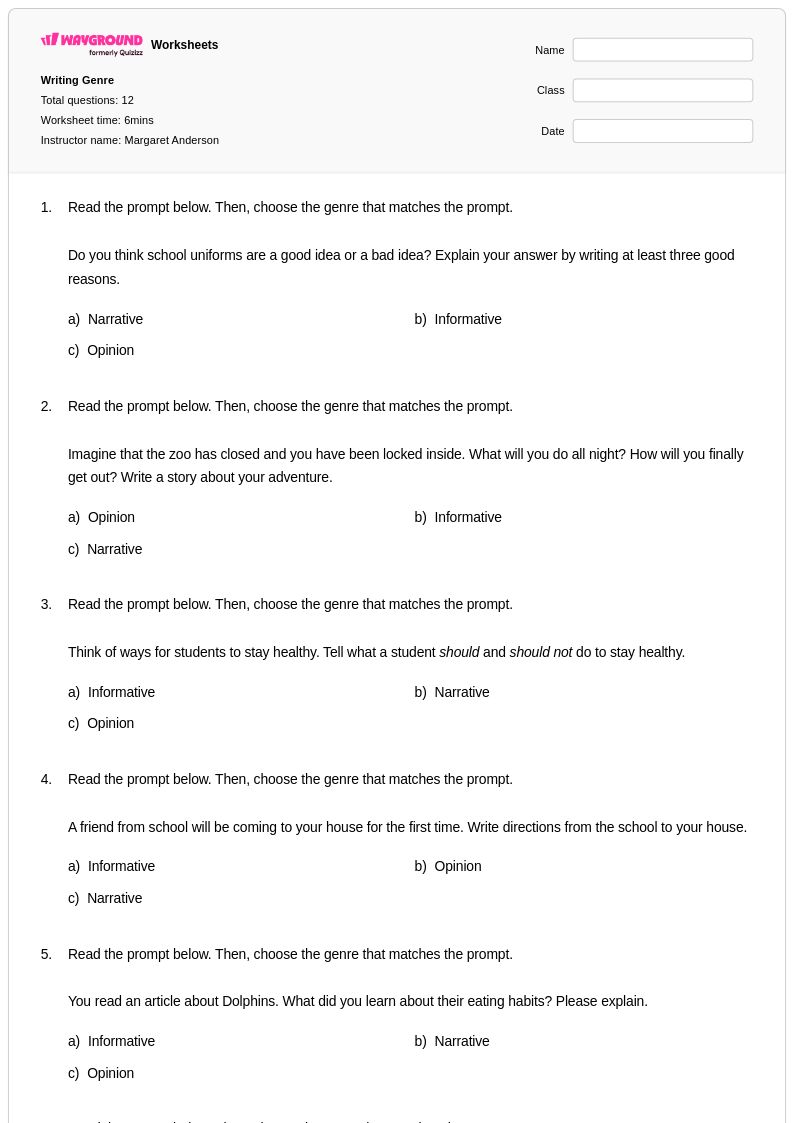
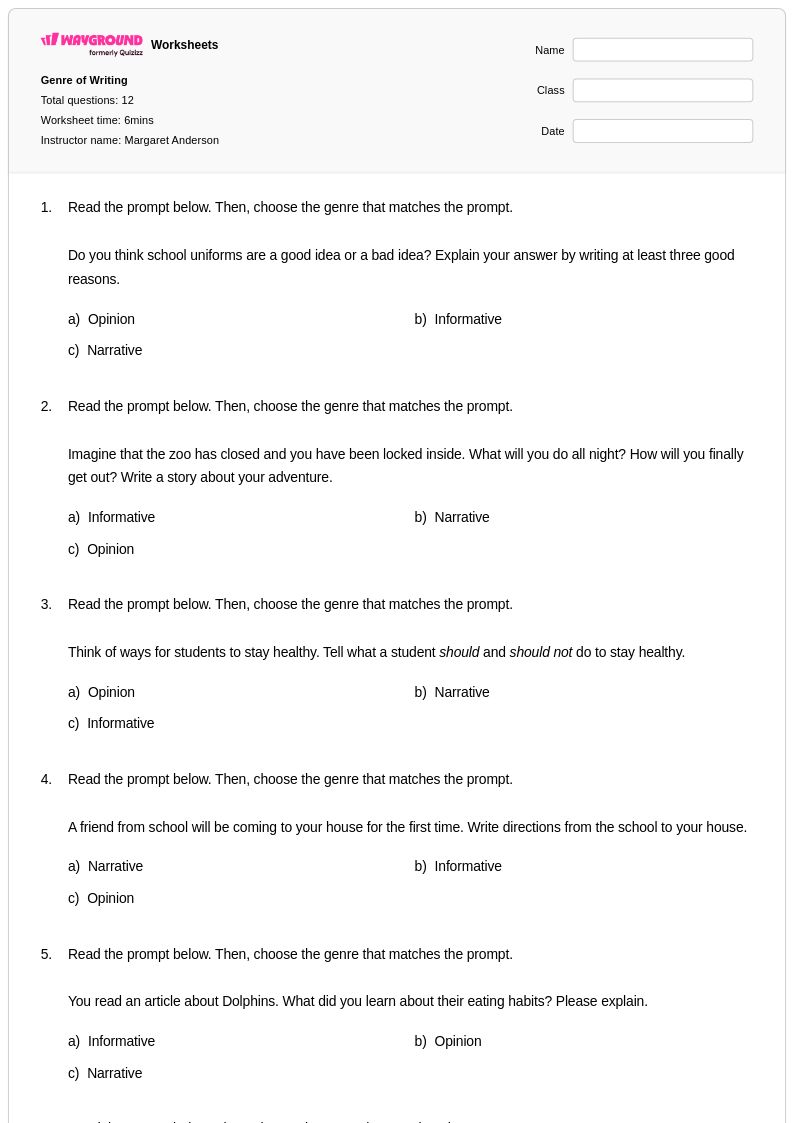
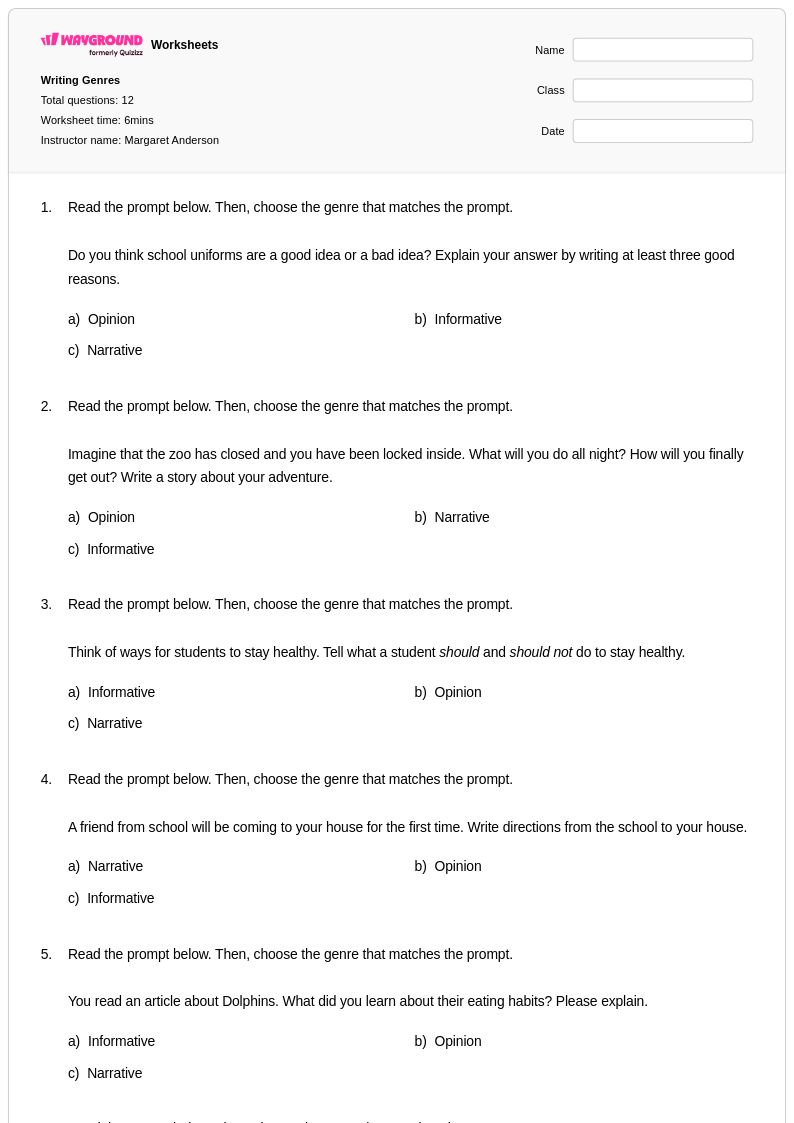
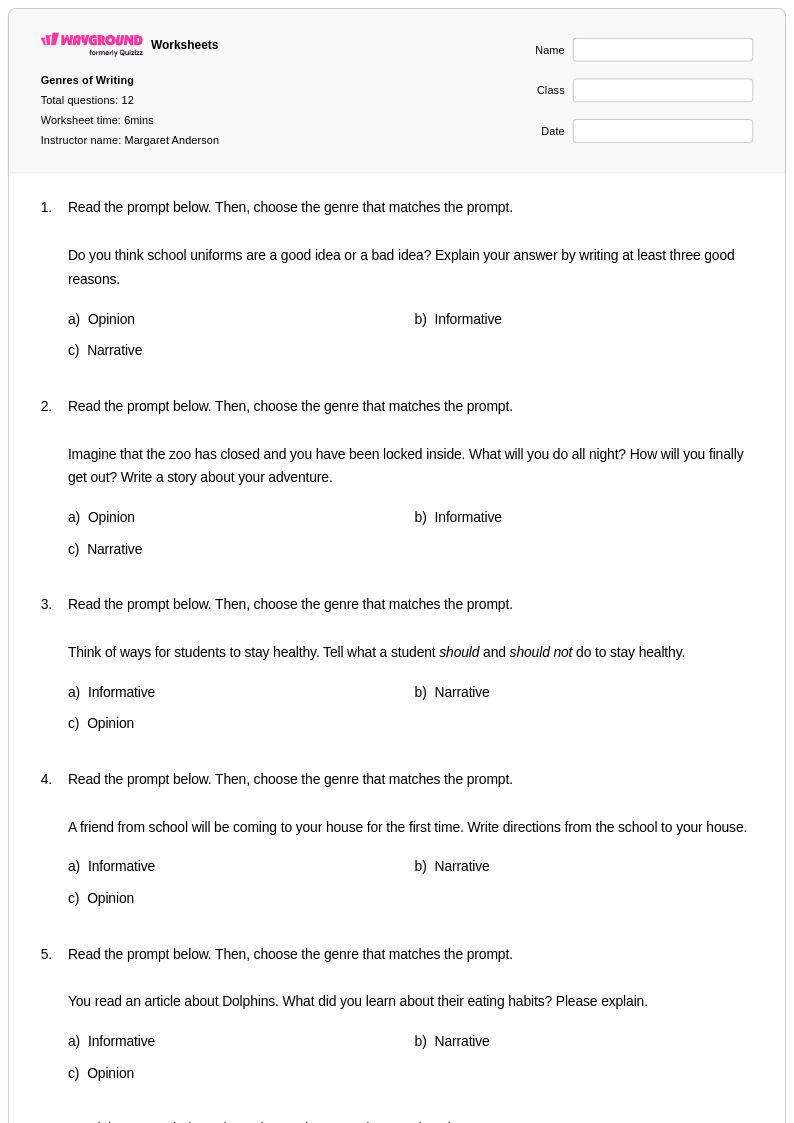
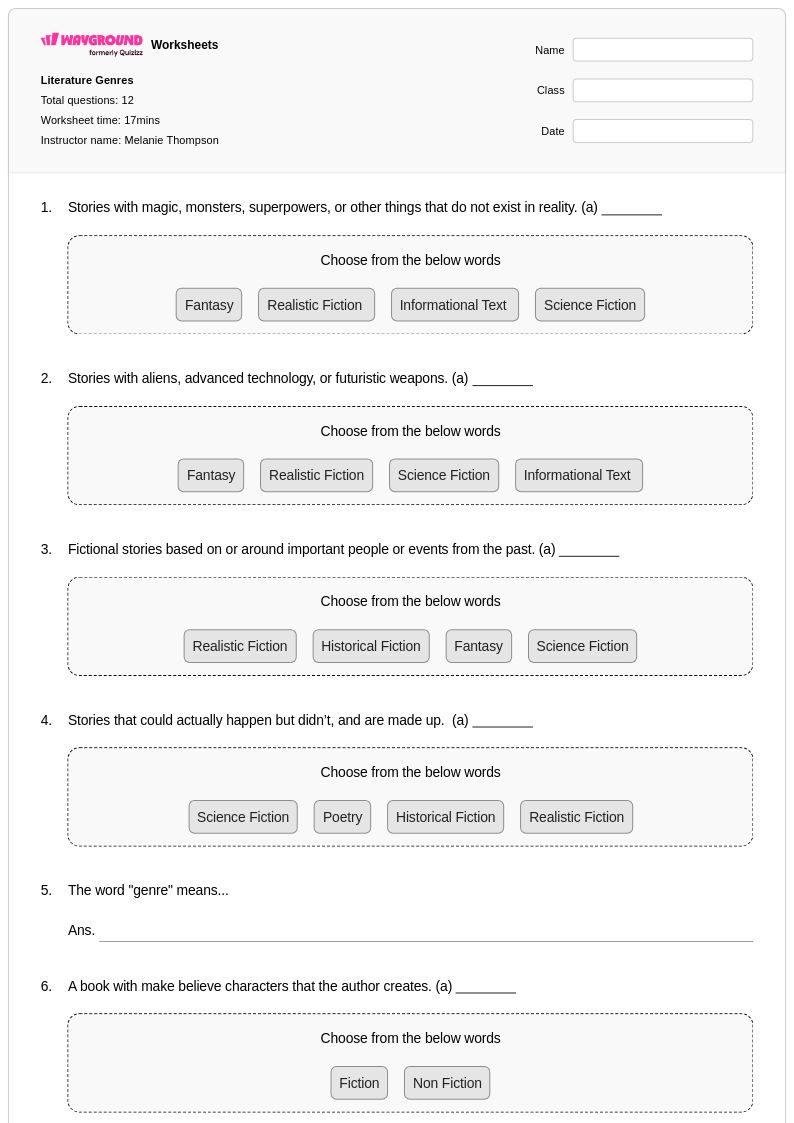
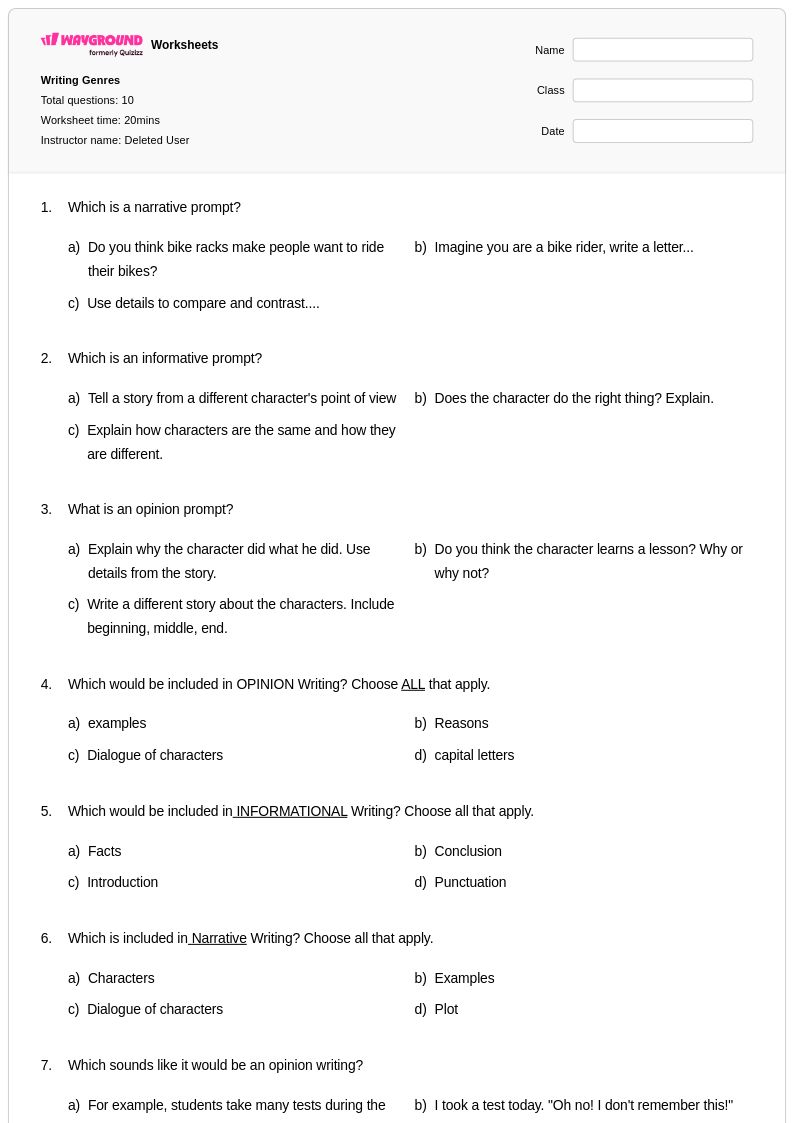
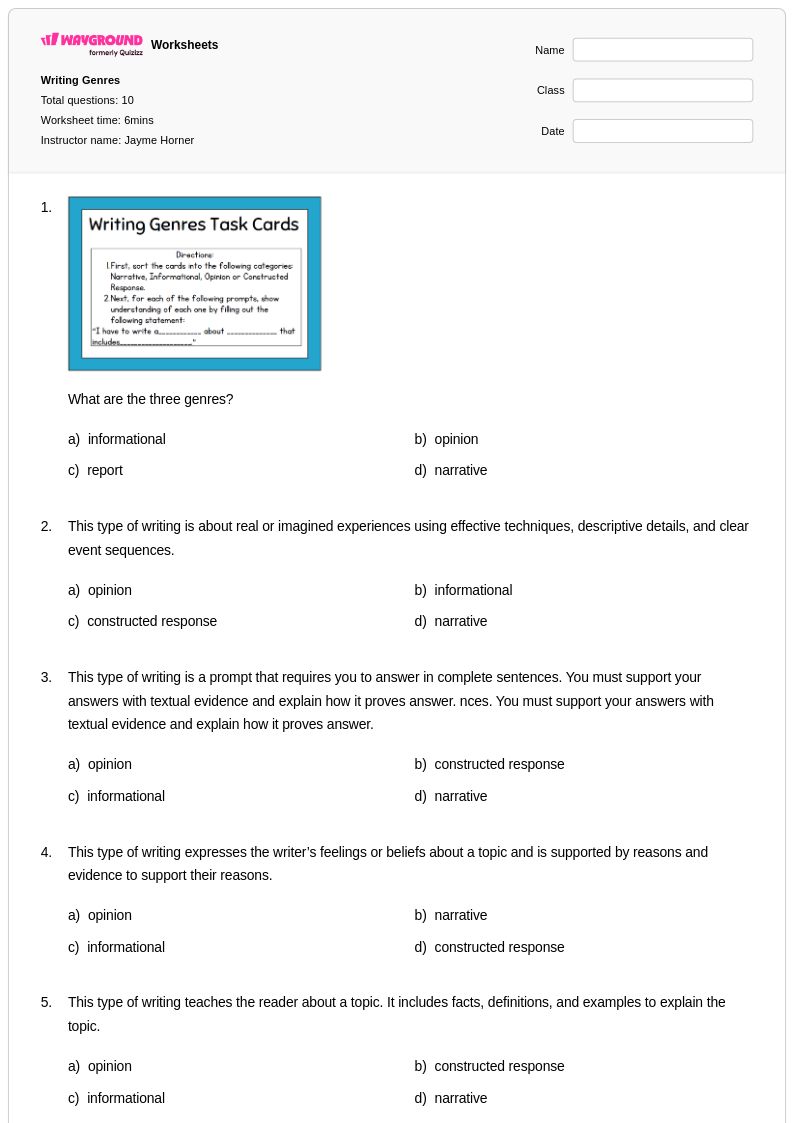
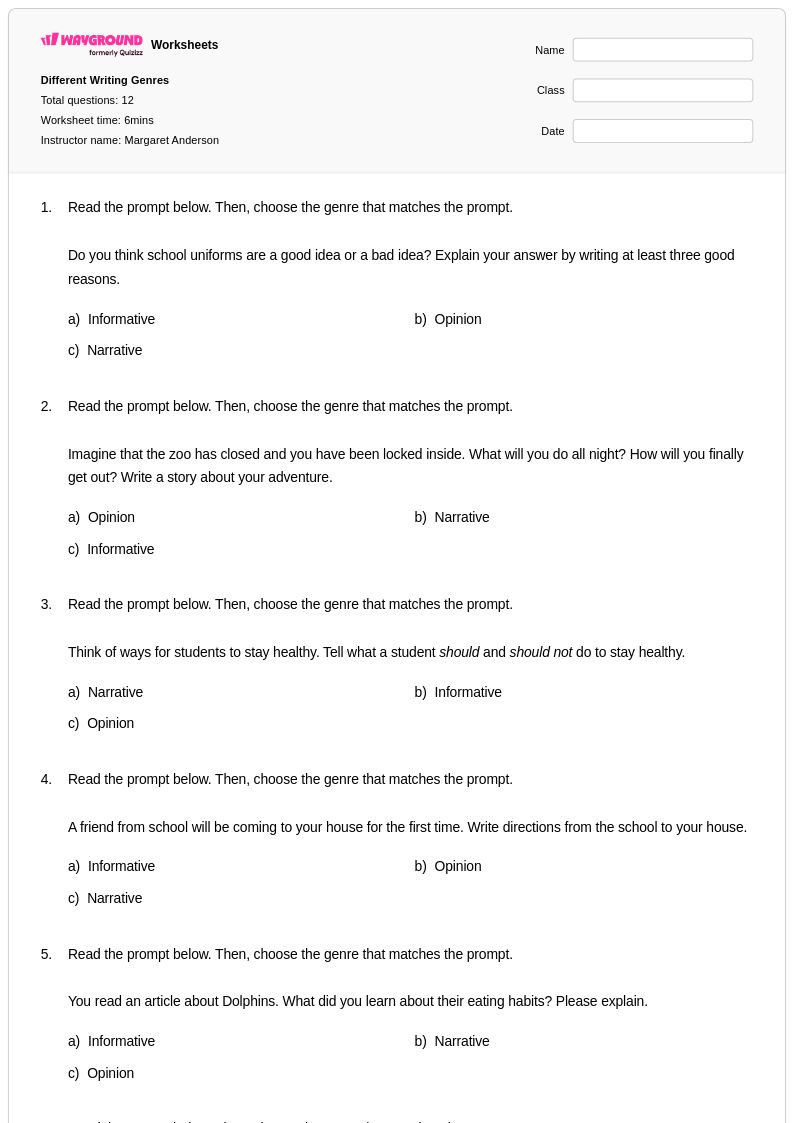
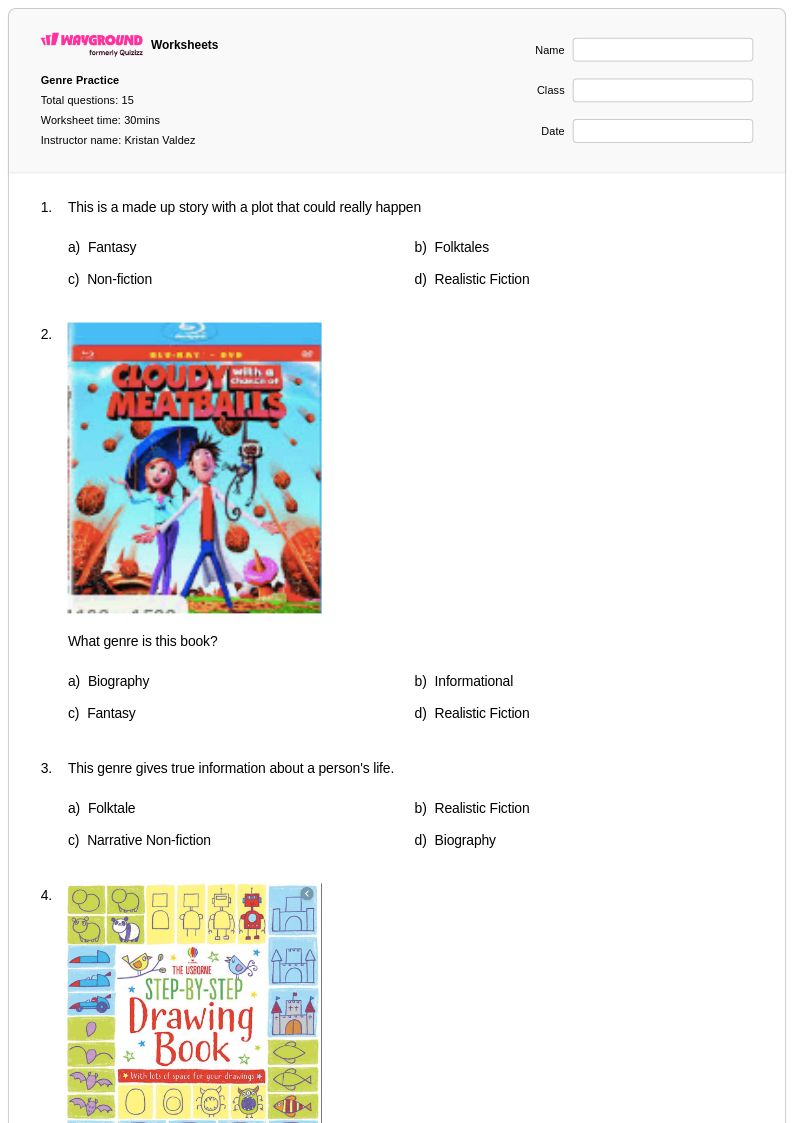
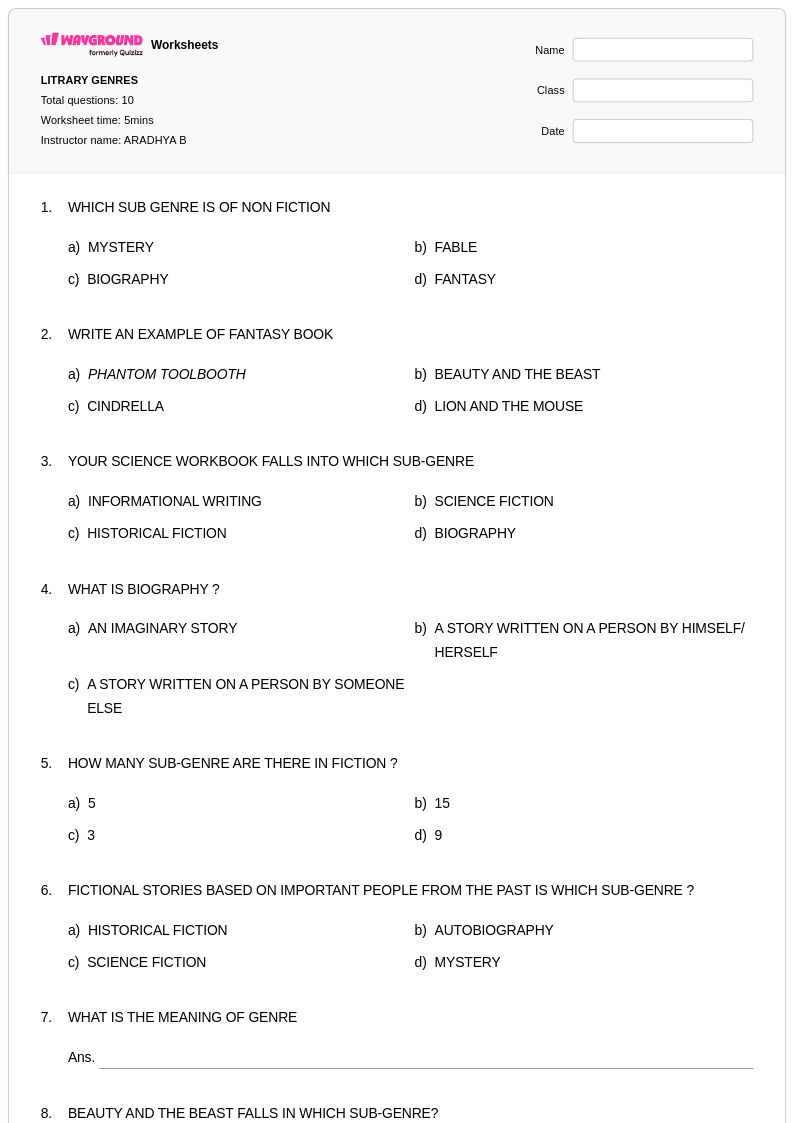
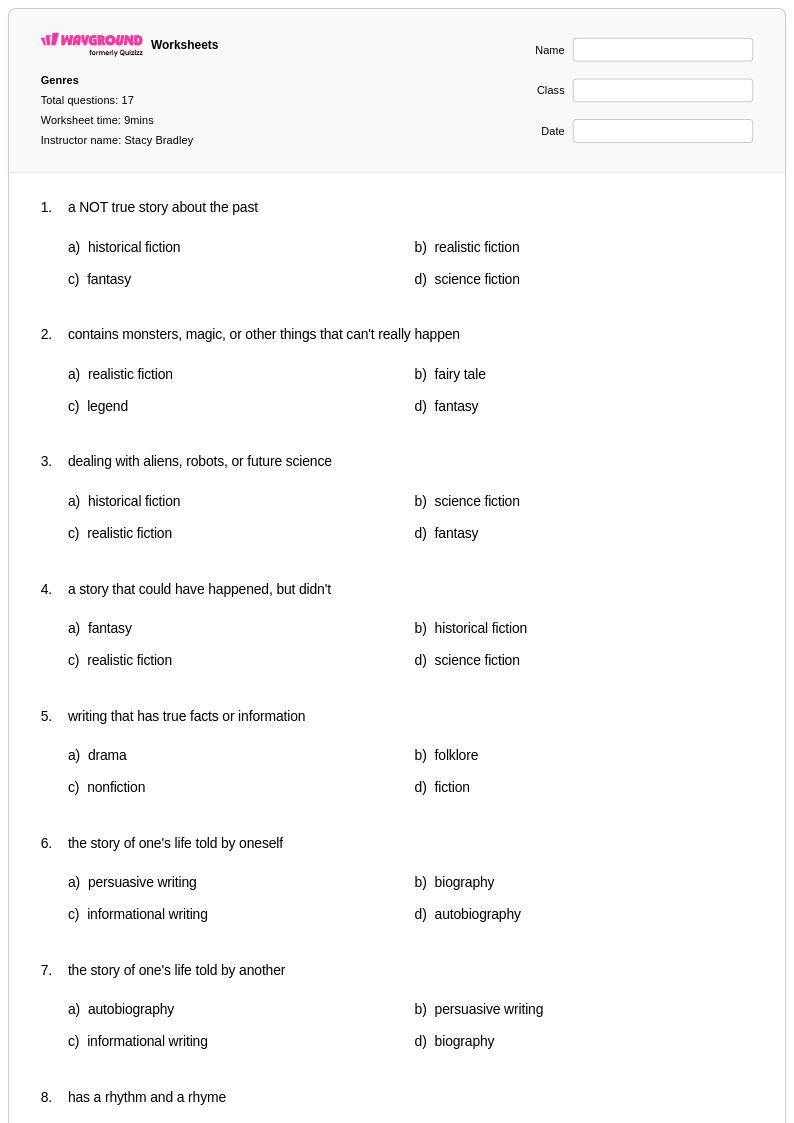
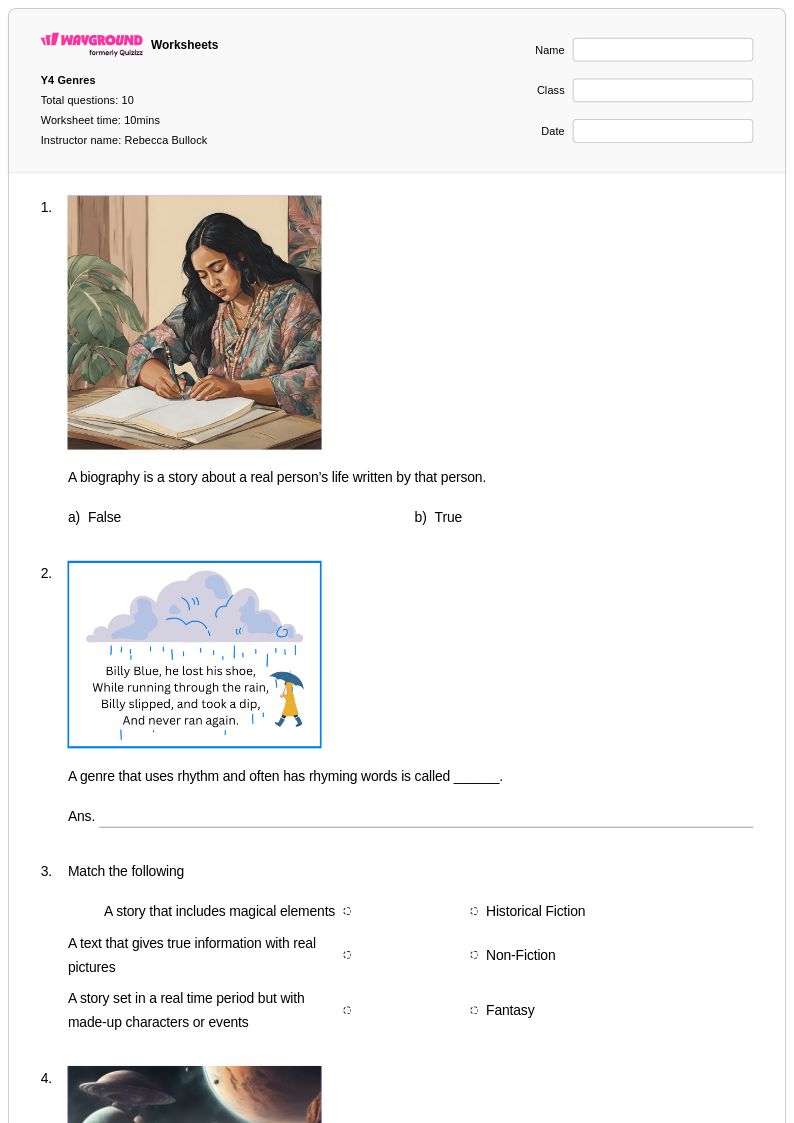
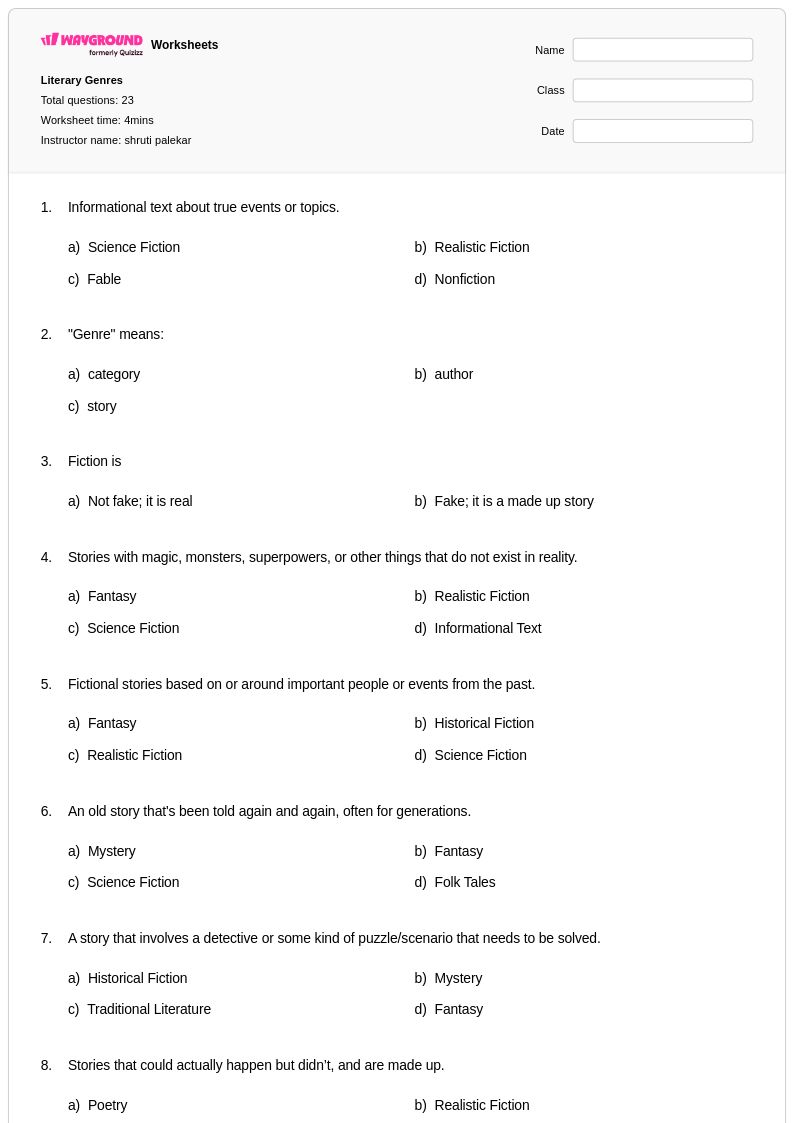
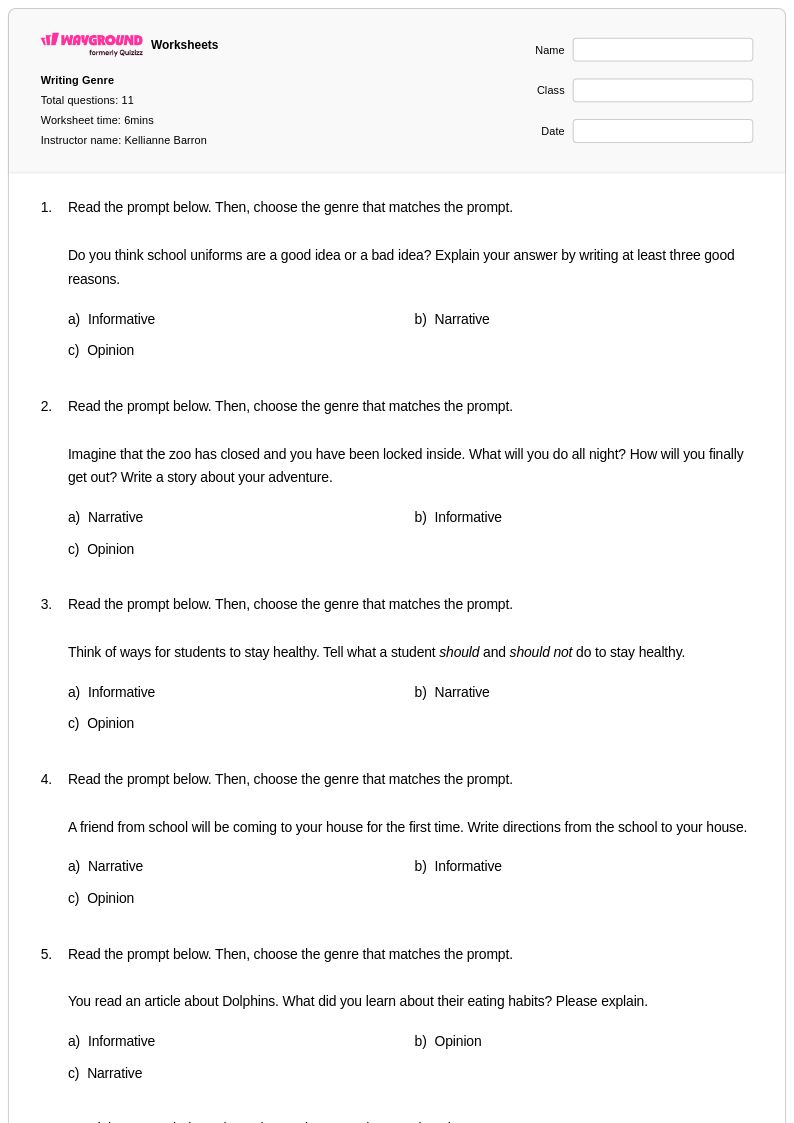
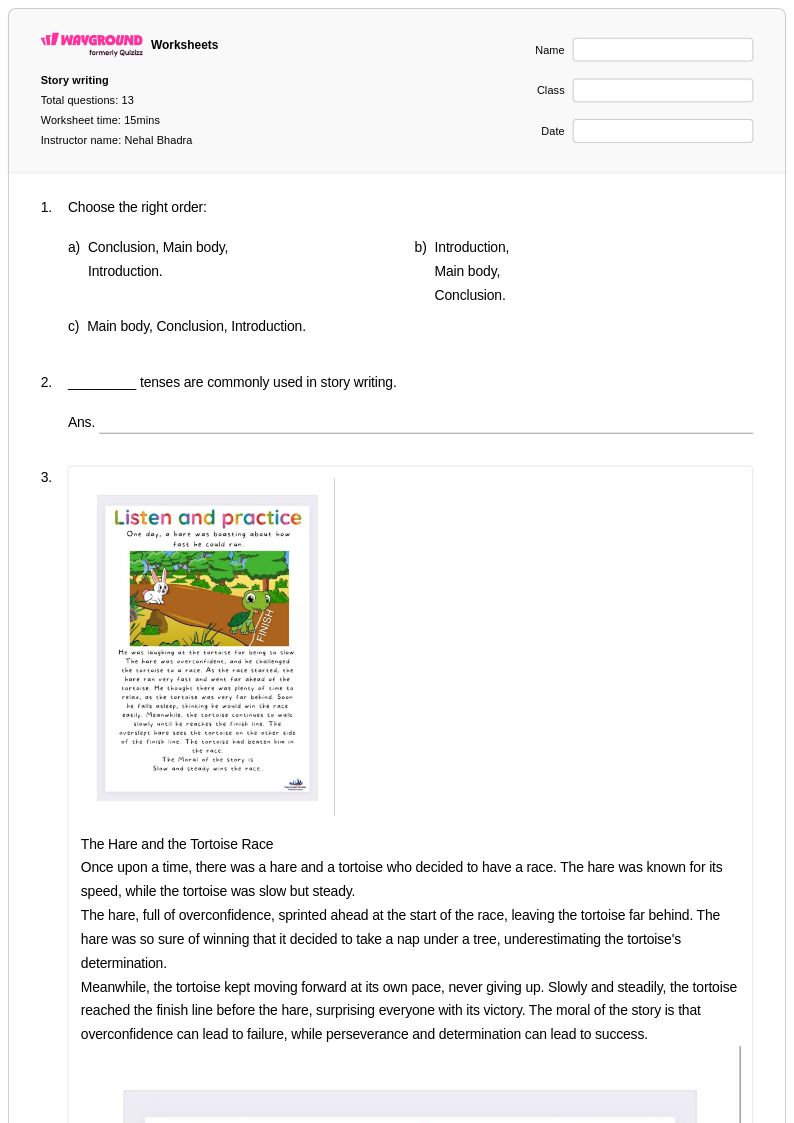
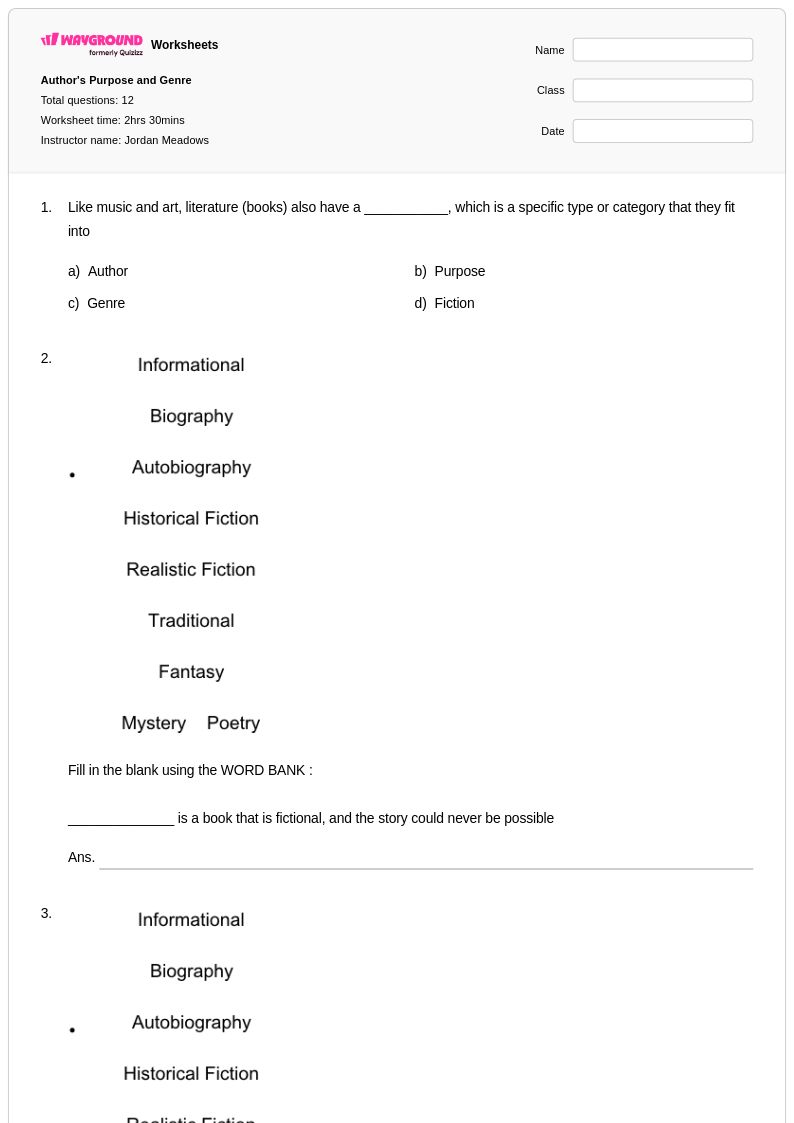
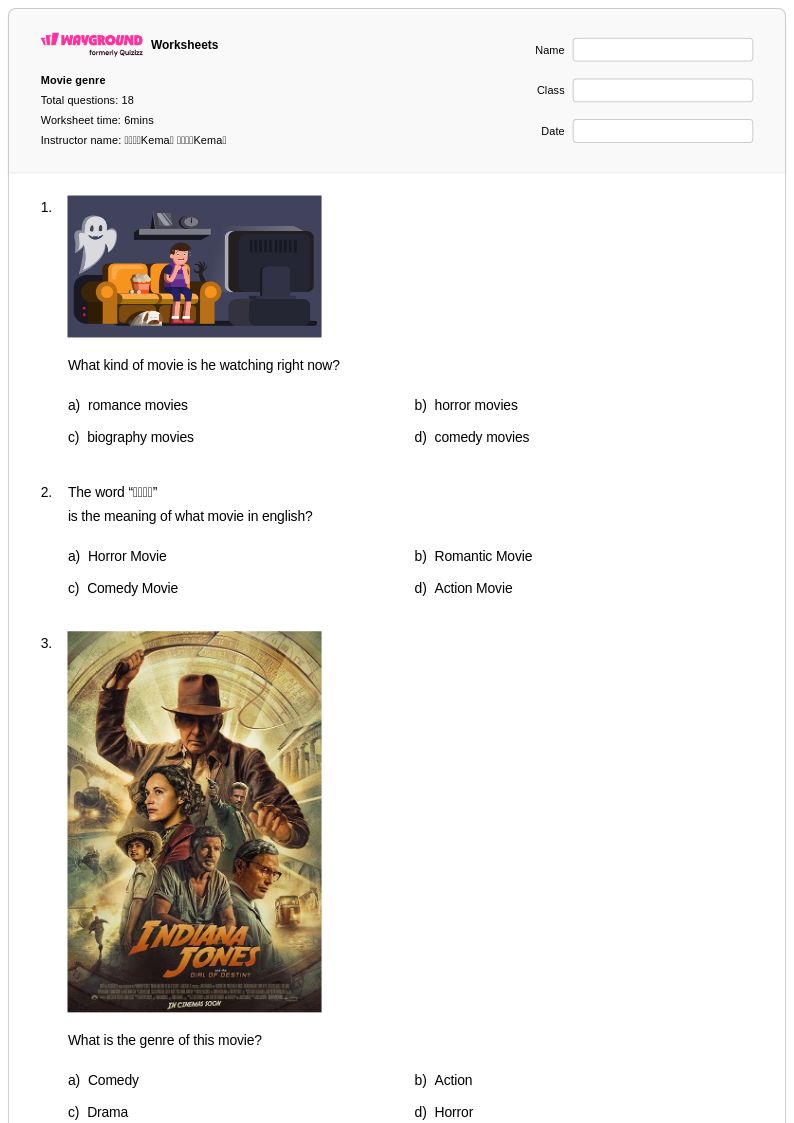
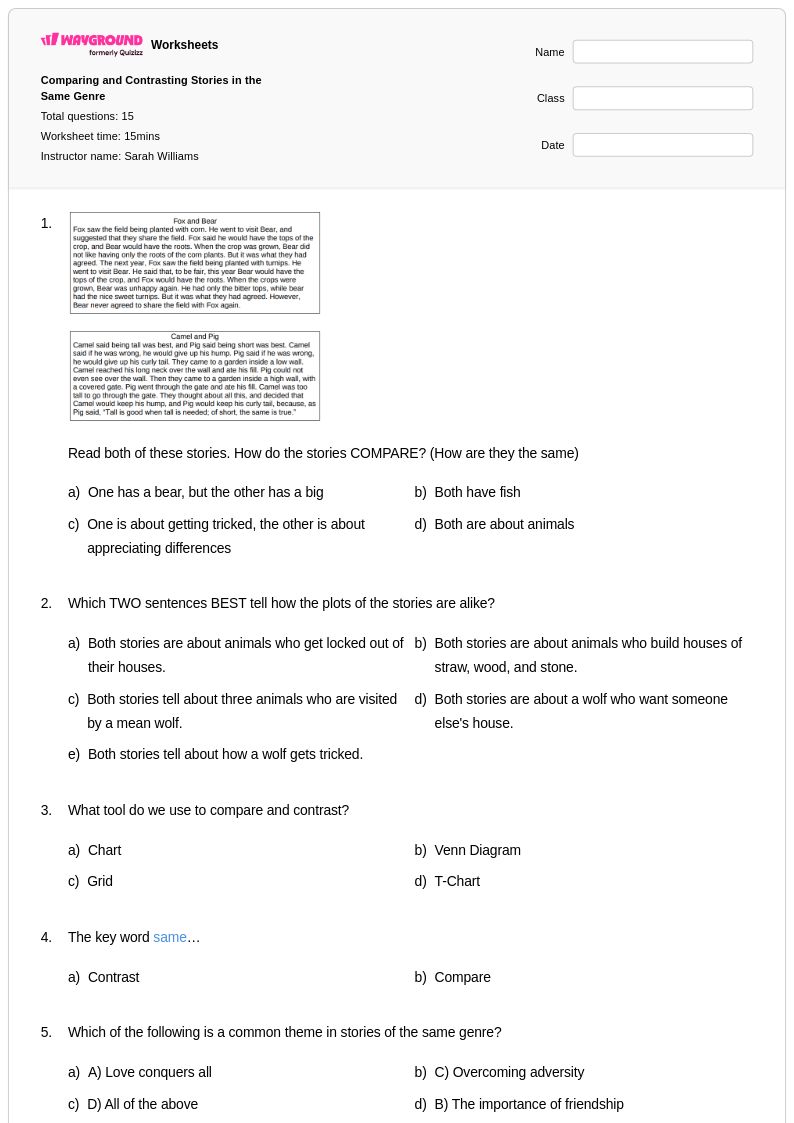
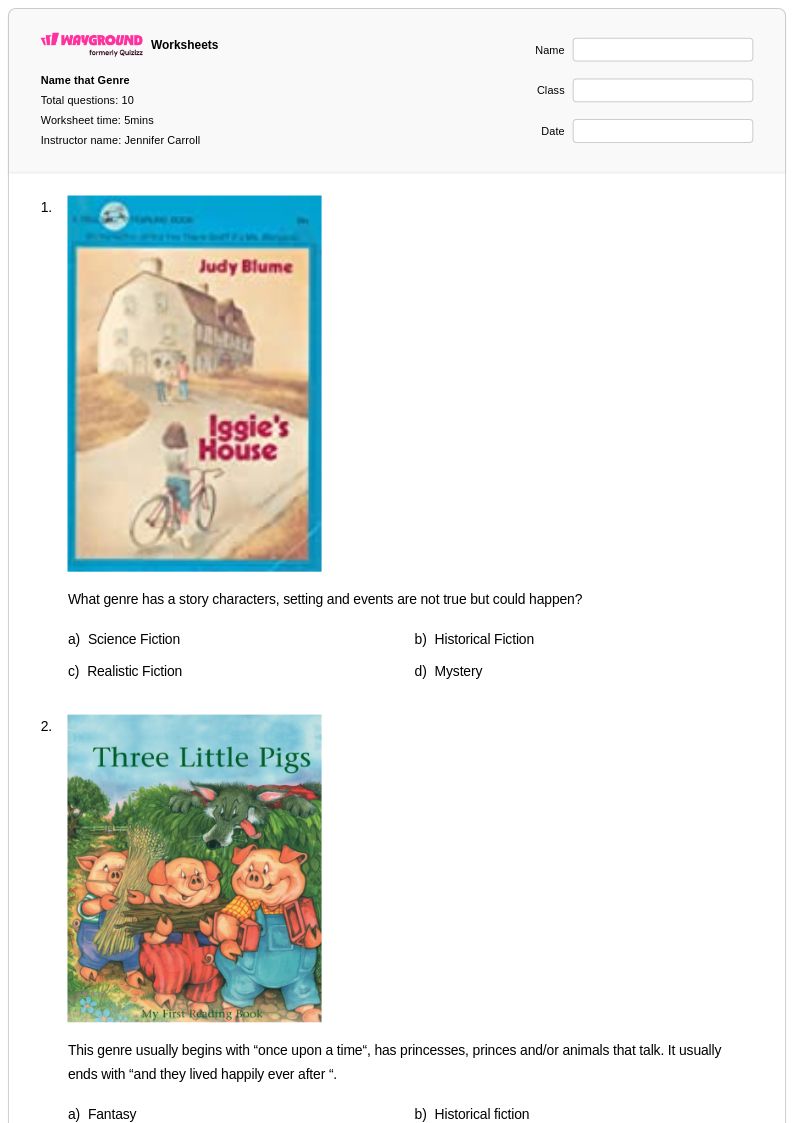
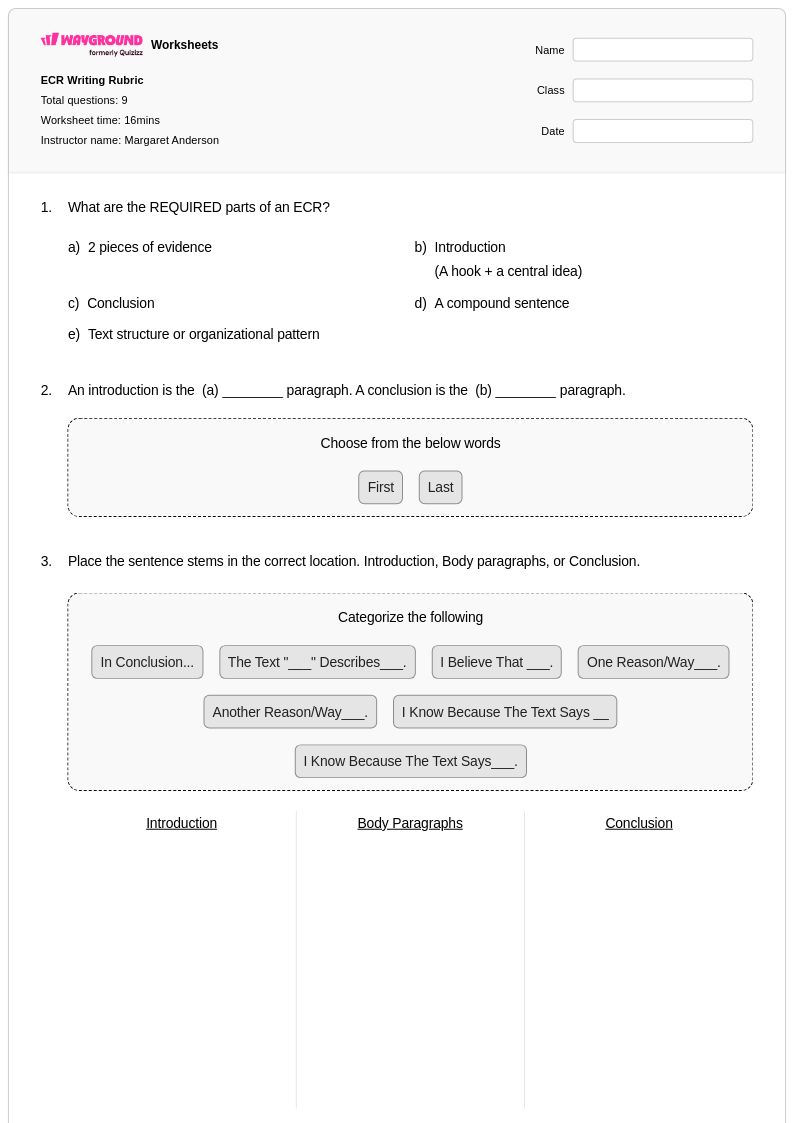
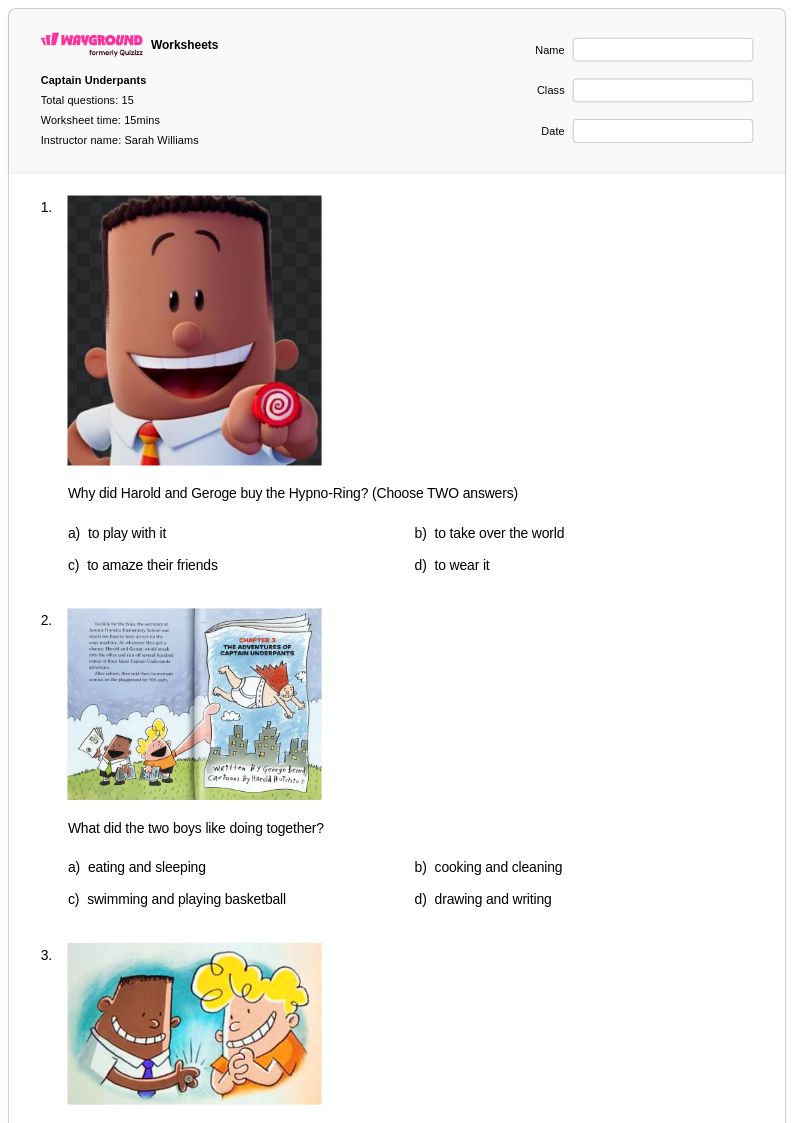
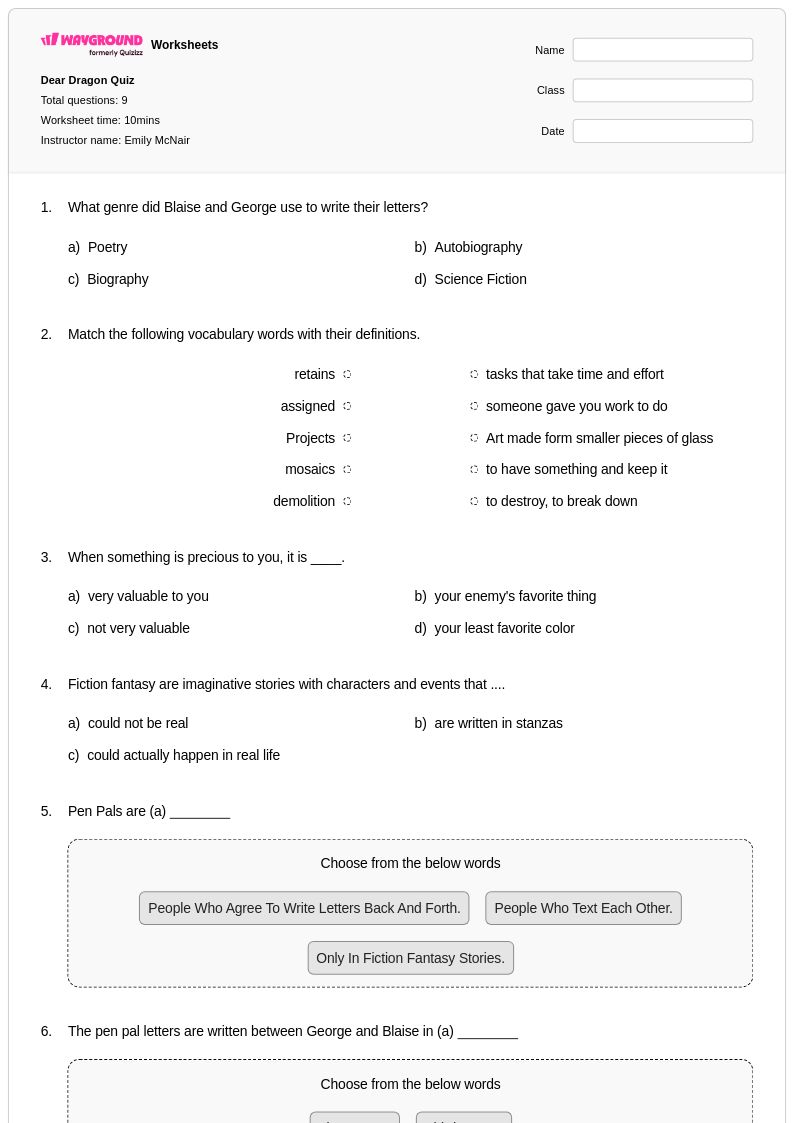
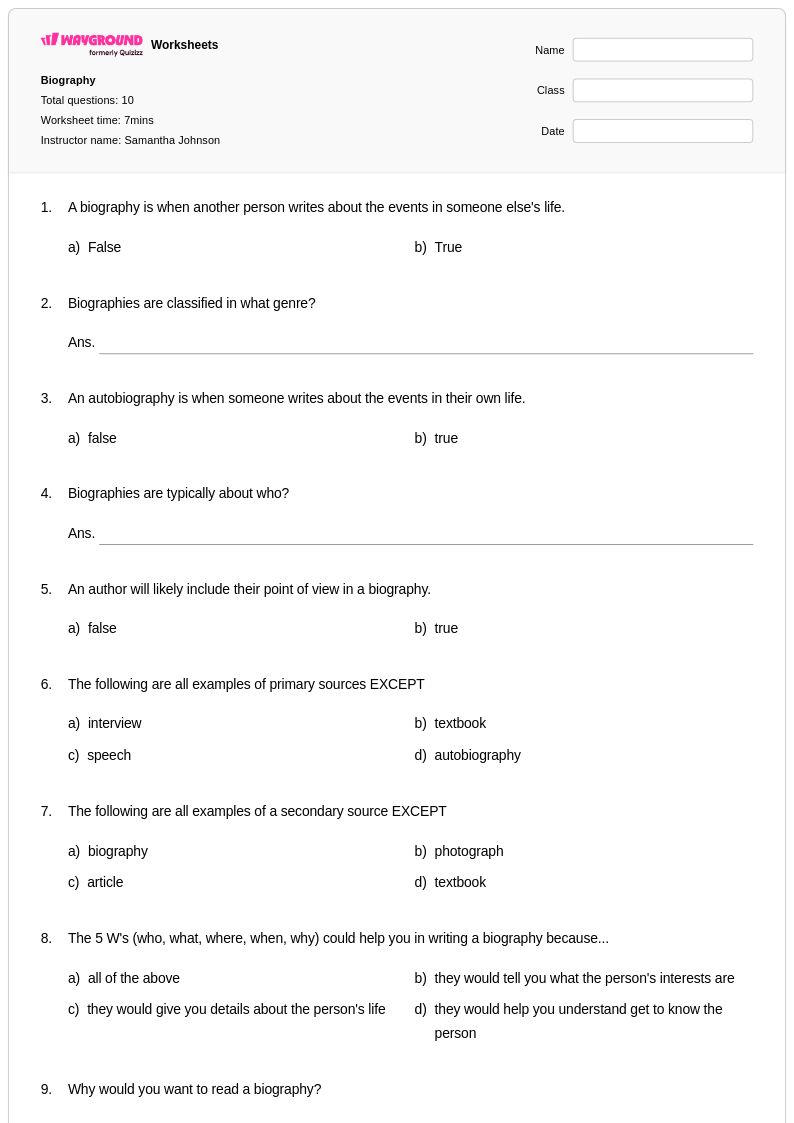
Genre writing worksheets for Class 3 students available through Wayground (formerly Quizizz) provide comprehensive practice opportunities that help young writers explore and master different types of writing forms. These carefully designed printables focus on developing essential skills across narrative, informational, and opinion writing genres, allowing third-grade students to understand the unique characteristics, structures, and purposes of each writing style. The worksheets include guided practice problems that walk students through genre-specific elements such as story beginnings and endings for narratives, fact organization for informational texts, and persuasive language for opinion pieces. Each free worksheet comes with a detailed answer key that supports both independent practice and teacher-guided instruction, while pdf format ensures easy access and consistent formatting for classroom or home use.
Wayground (formerly Quizizz) empowers teachers with an extensive collection of millions of teacher-created genre writing resources specifically designed for Class 3 instruction. The platform's robust search and filtering capabilities allow educators to quickly locate worksheets that align with specific curriculum standards and match their students' developmental needs. Teachers can easily differentiate instruction by selecting from various complexity levels within each genre, while the flexible customization tools enable modifications to meet individual learning objectives. These comprehensive worksheet collections are available in both printable and digital formats, including downloadable pdf versions, making them ideal for lesson planning, targeted skill remediation, and enrichment activities that strengthen students' understanding of genre conventions and writing techniques.
FAQs
How do I teach different writing genres in the same classroom?
Teaching multiple writing genres effectively requires anchoring each genre to its defining structural and stylistic conventions before expecting students to produce original work. For example, persuasive writing instruction should explicitly cover argumentative structure and rhetorical appeals, while narrative instruction focuses on point of view, pacing, and characterization. Rotating genre-specific mentor texts alongside structured practice worksheets helps students internalize what makes each genre distinct rather than applying a one-size-fits-all approach to all writing tasks.
What exercises help students practice genre writing skills?
Effective genre writing practice goes beyond free-writing prompts and should include exercises that isolate specific conventions, such as identifying sensory details in descriptive passages, analyzing the argumentative structure of a persuasive essay, or practicing chronological organization in procedural texts. Structured worksheets that target genre-specific elements like literary devices, point of view, and analytical frameworks give students concrete scaffolding before they attempt independent writing. Repeated, focused practice across genres builds transferable writing skills and prepares students for standardized writing assessments.
What mistakes do students commonly make when writing across different genres?
The most common error students make in genre writing is blending conventions from multiple genres without intentional purpose, such as inserting personal narrative into an expository essay or using informal tone in a journalistic piece. Students also frequently struggle with maintaining consistent point of view in narrative fiction and with constructing logically sequenced arguments in persuasive writing. Targeting these specific misconceptions with focused practice on genre-defining features, rather than general writing feedback, produces more durable improvement.
How can I use genre writing worksheets to support debate and rhetoric skills?
Debate and rhetoric instruction benefits from genre writing worksheets that explicitly address argumentative structure, rhetorical appeals (ethos, pathos, logos), and the ability to analyze and respond to opposing viewpoints. Debate analysis and rhetorical triangle worksheets build the analytical vocabulary students need to both deconstruct arguments they encounter and construct persuasive ones of their own. Pairing these written exercises with oral debate practice reinforces the connection between structured argumentation on paper and effective spoken persuasion.
How do I differentiate genre writing instruction for students at different skill levels?
Differentiation in genre writing instruction works best when teachers adjust the level of scaffolding rather than the core learning objective, so all students engage with the same genre conventions but with varying degrees of support. Struggling writers benefit from sentence frames, graphic organizers, and partially completed examples, while advanced students can be challenged with open-ended analysis or multi-genre comparison tasks. On Wayground, teachers can apply accommodations such as read aloud support and reduced answer choices to individual students, ensuring each learner accesses genre writing practice at an appropriate level of challenge.
How do I use Wayground's genre writing worksheets in my classroom?
Wayground's genre writing worksheets are available as printable PDFs for traditional classroom use and in digital formats for technology-integrated or remote learning environments, giving teachers flexibility in how they deploy the materials. Each worksheet includes a complete answer key, supporting both independent student practice and teacher-led instruction. Teachers can also host genre writing worksheets as a quiz directly on Wayground, enabling real-time student interaction and built-in progress tracking across subtopics like descriptive essay, journalism, and debate skills.