Free Printable Graph Analysis Worksheets for Class 10
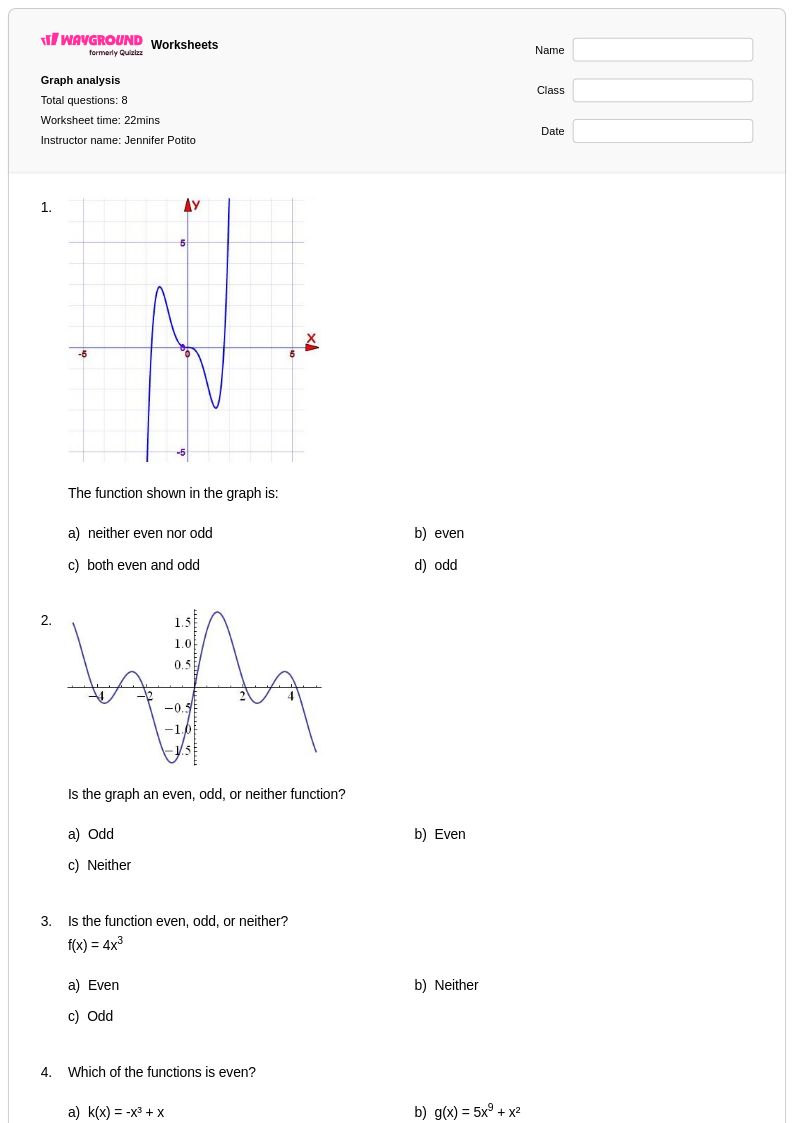
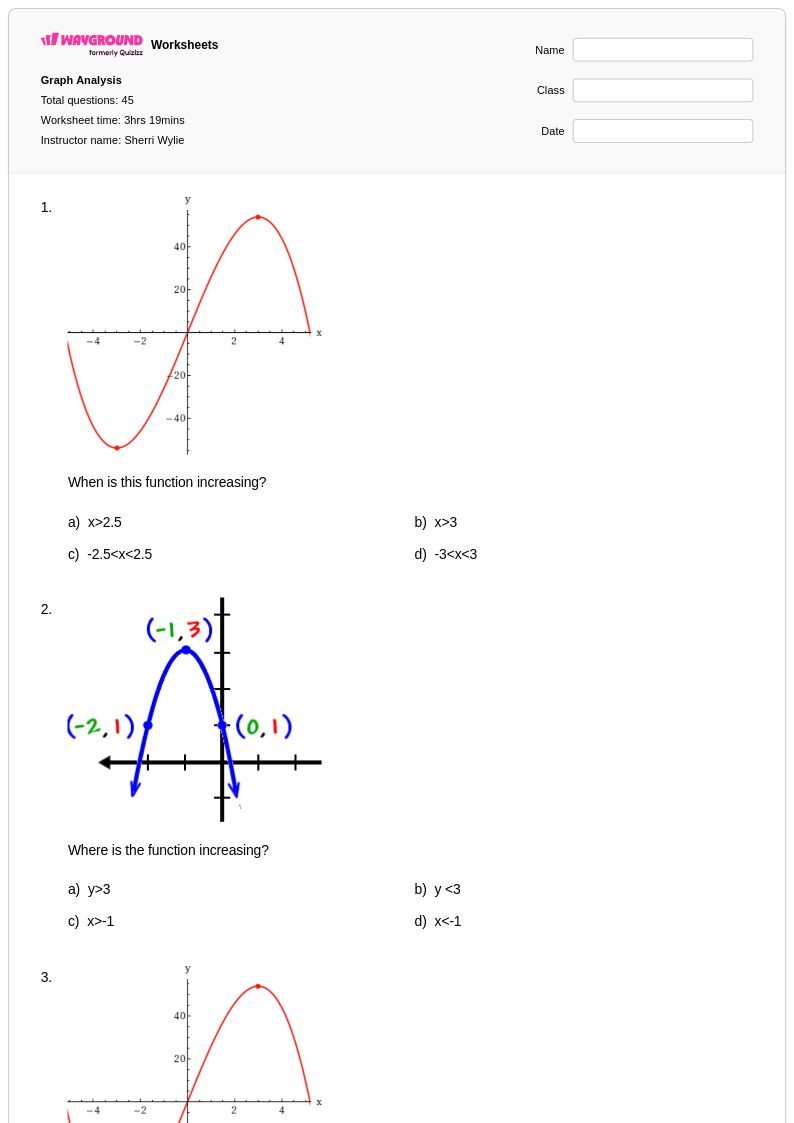
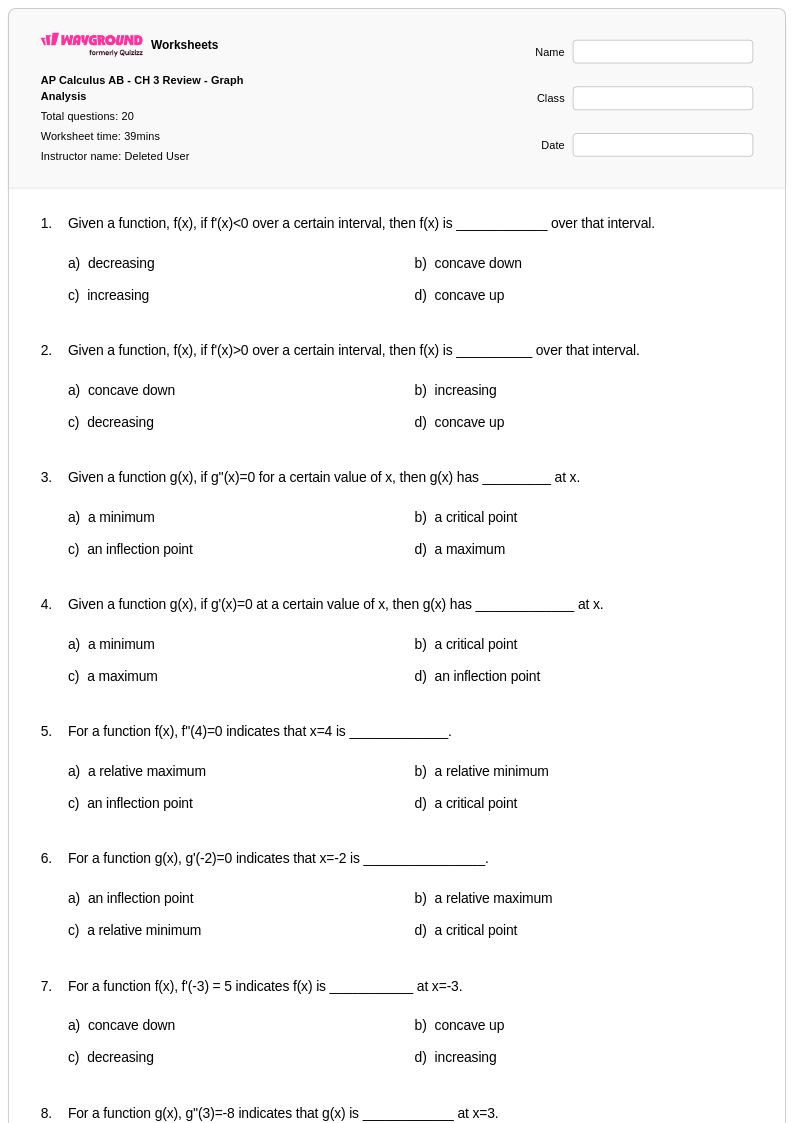
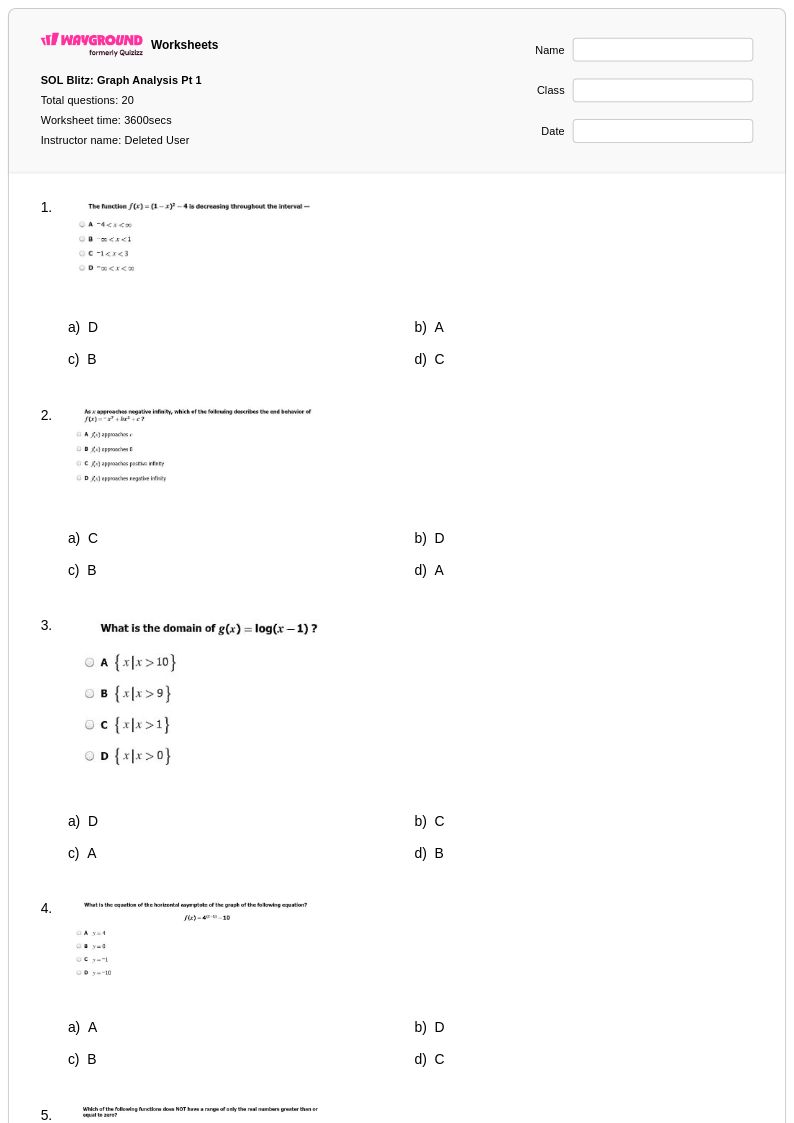
Access free Class 10 graph analysis worksheets and printables from Wayground to help students master interpreting data visualizations, reading coordinate graphs, and analyzing mathematical relationships through comprehensive practice problems with answer keys.
Explore printable Graph Analysis worksheets for Class 10
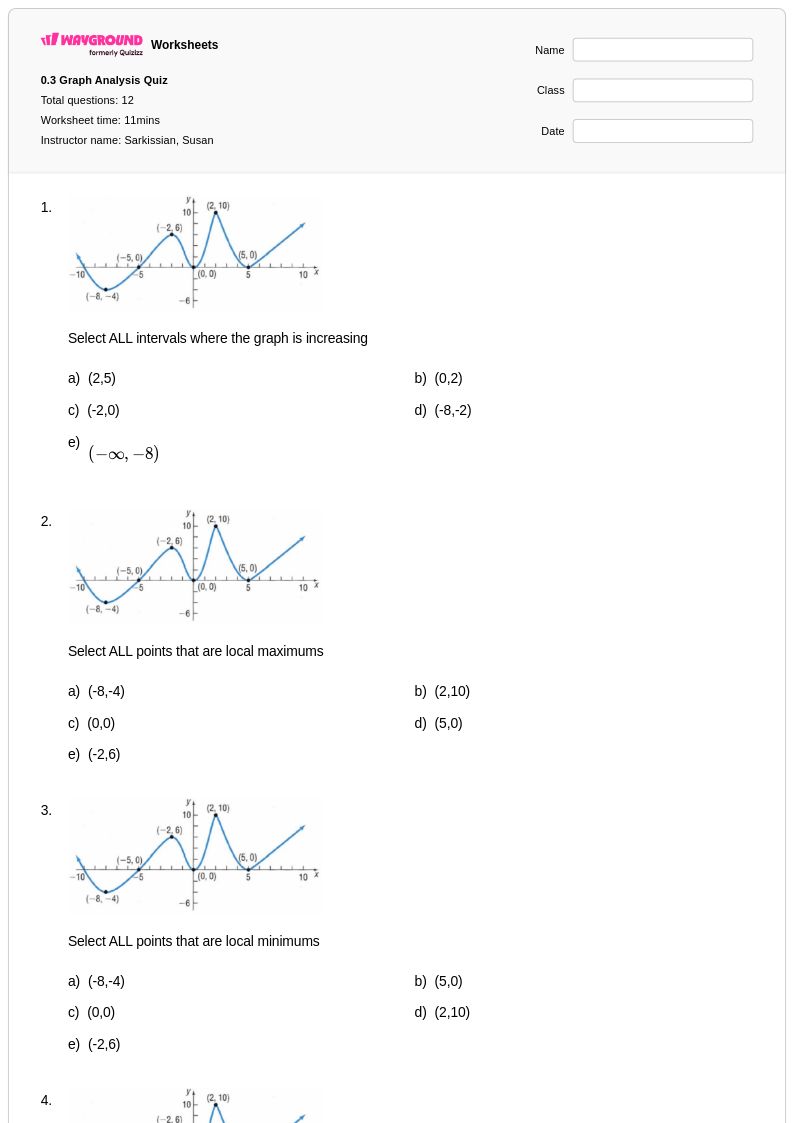
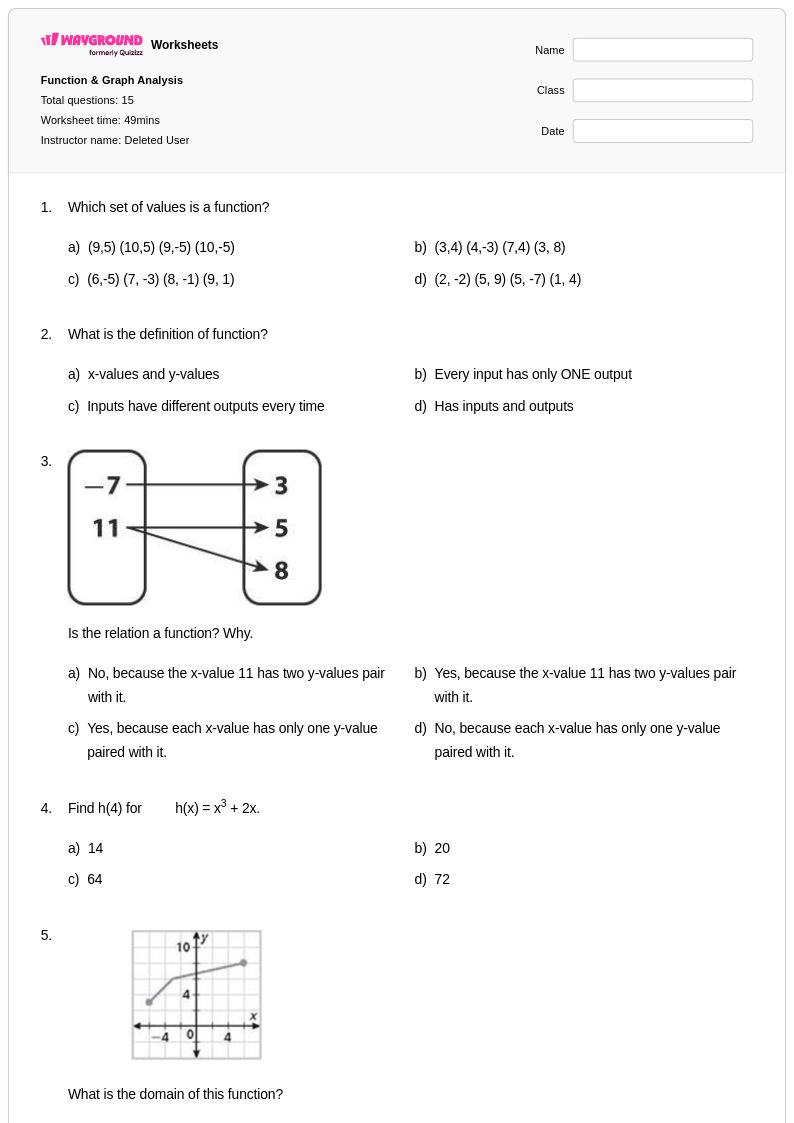
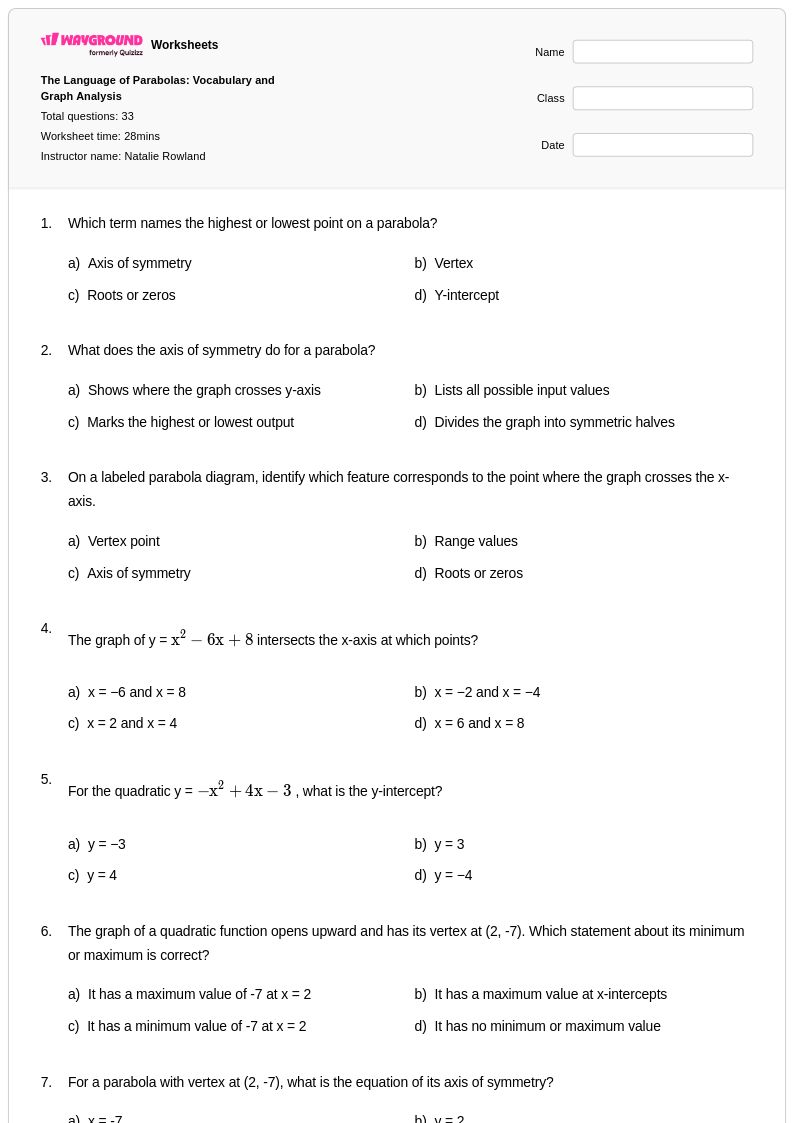
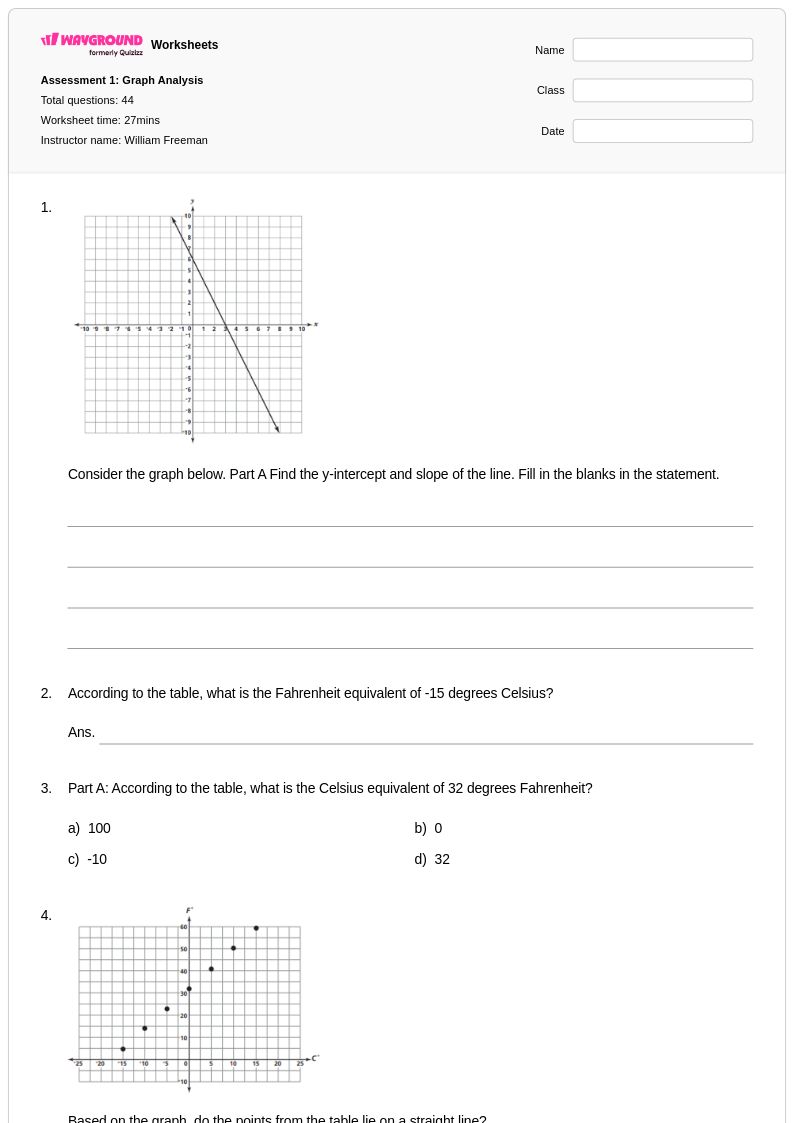
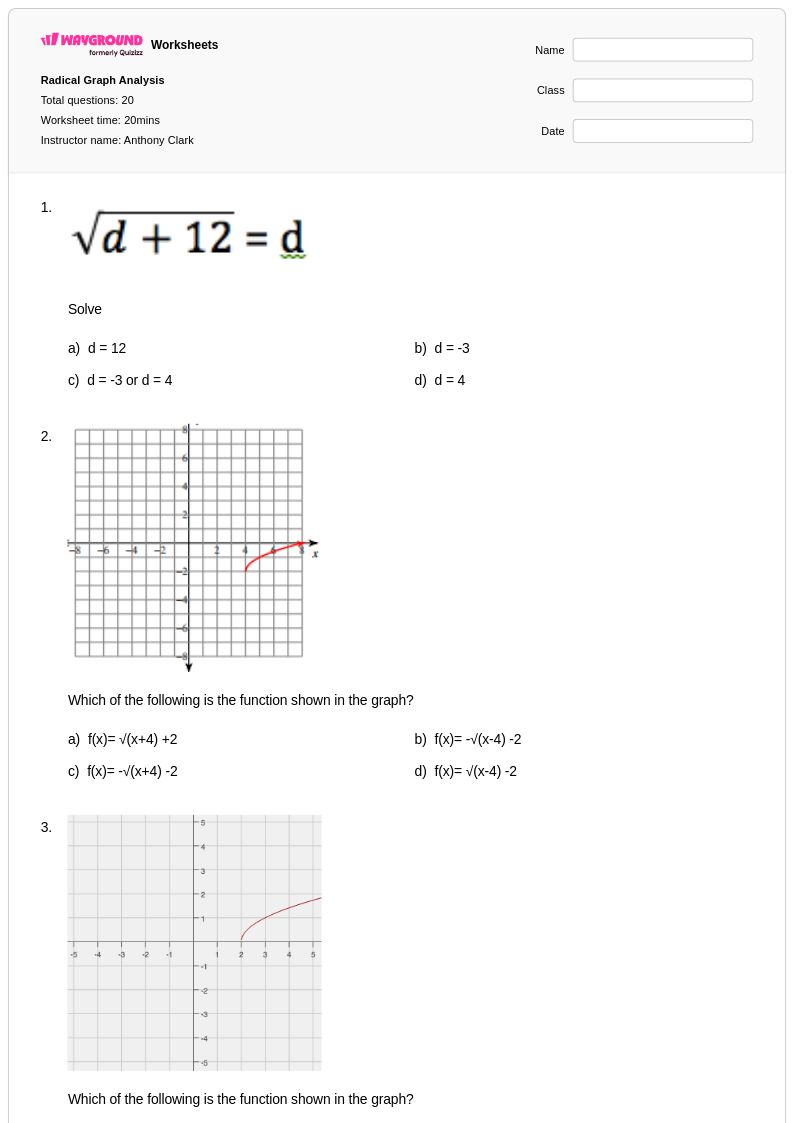
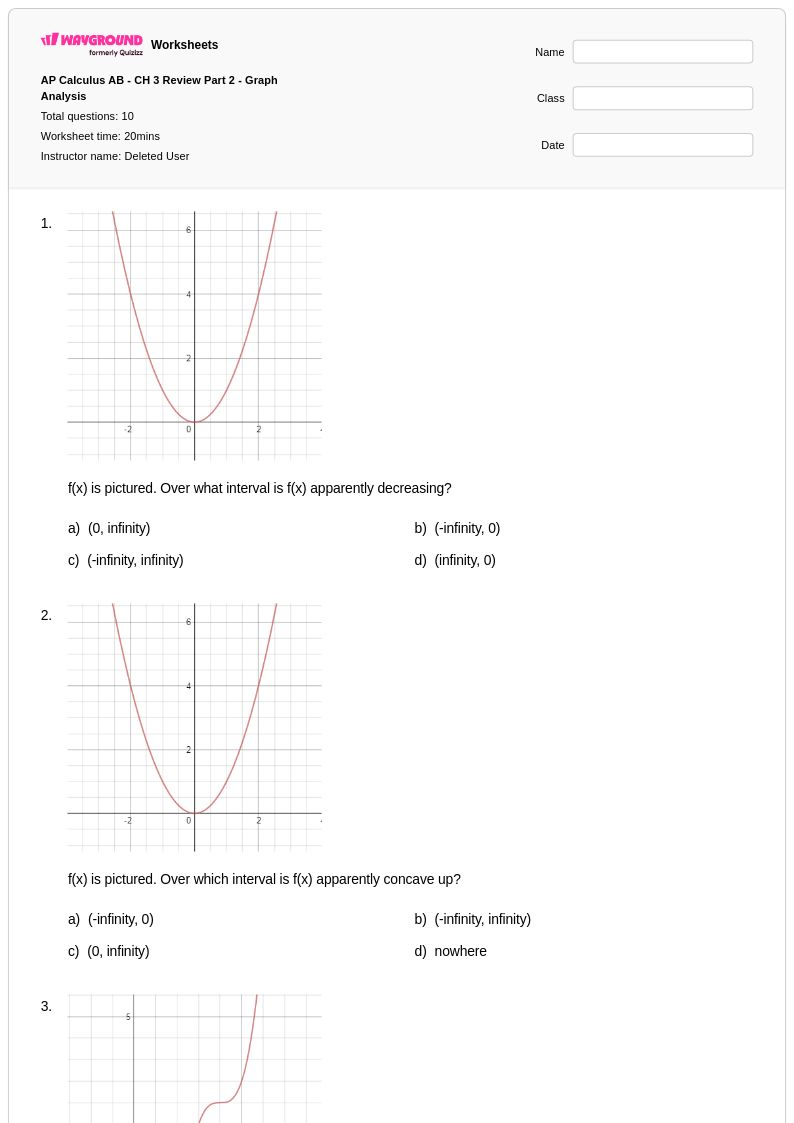
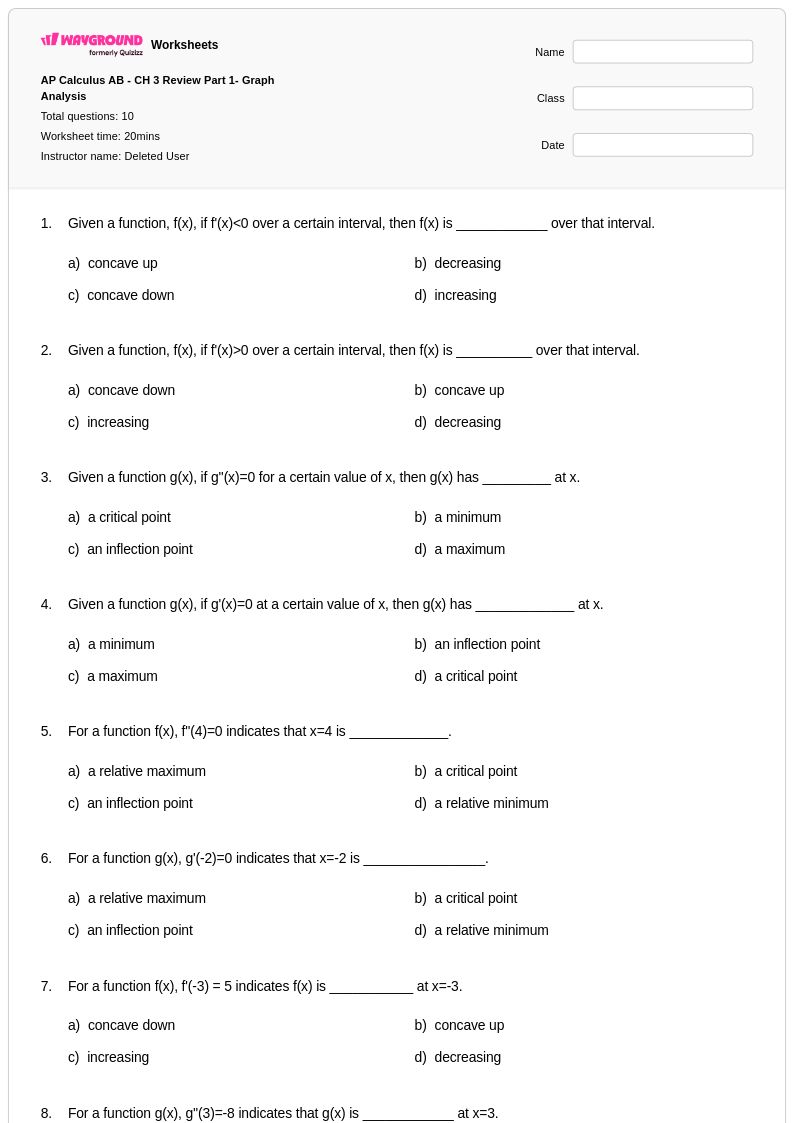
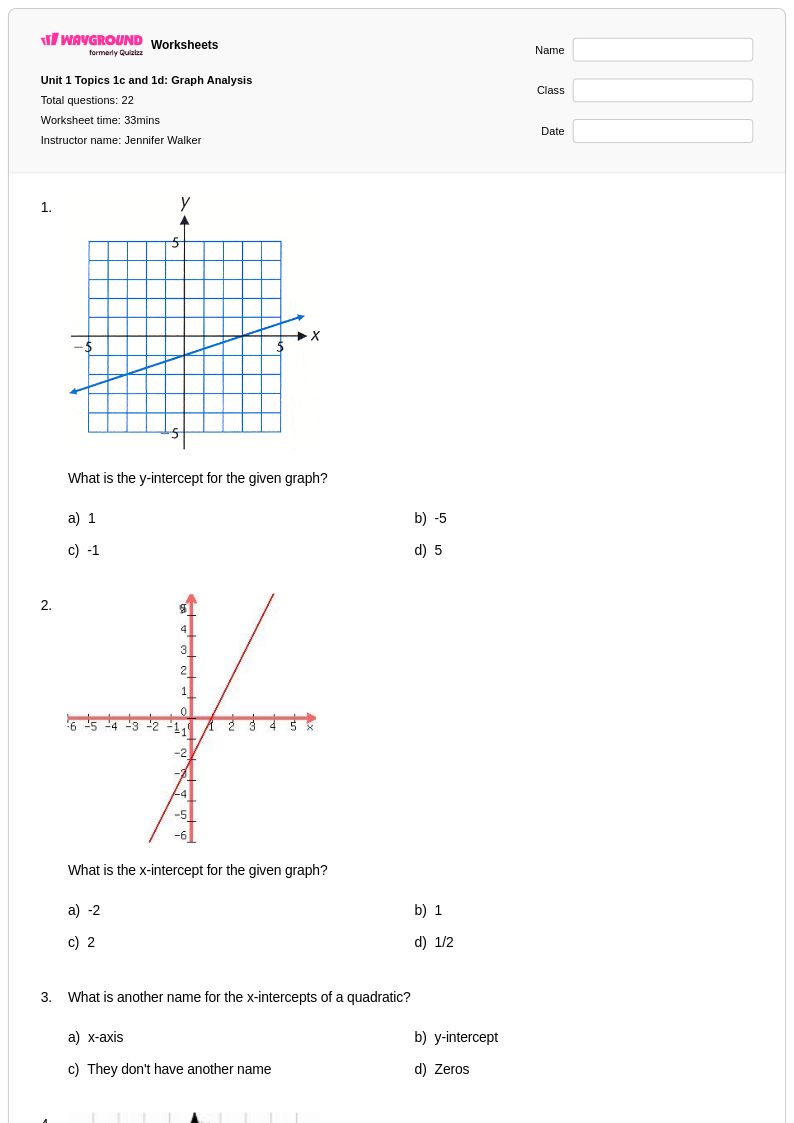
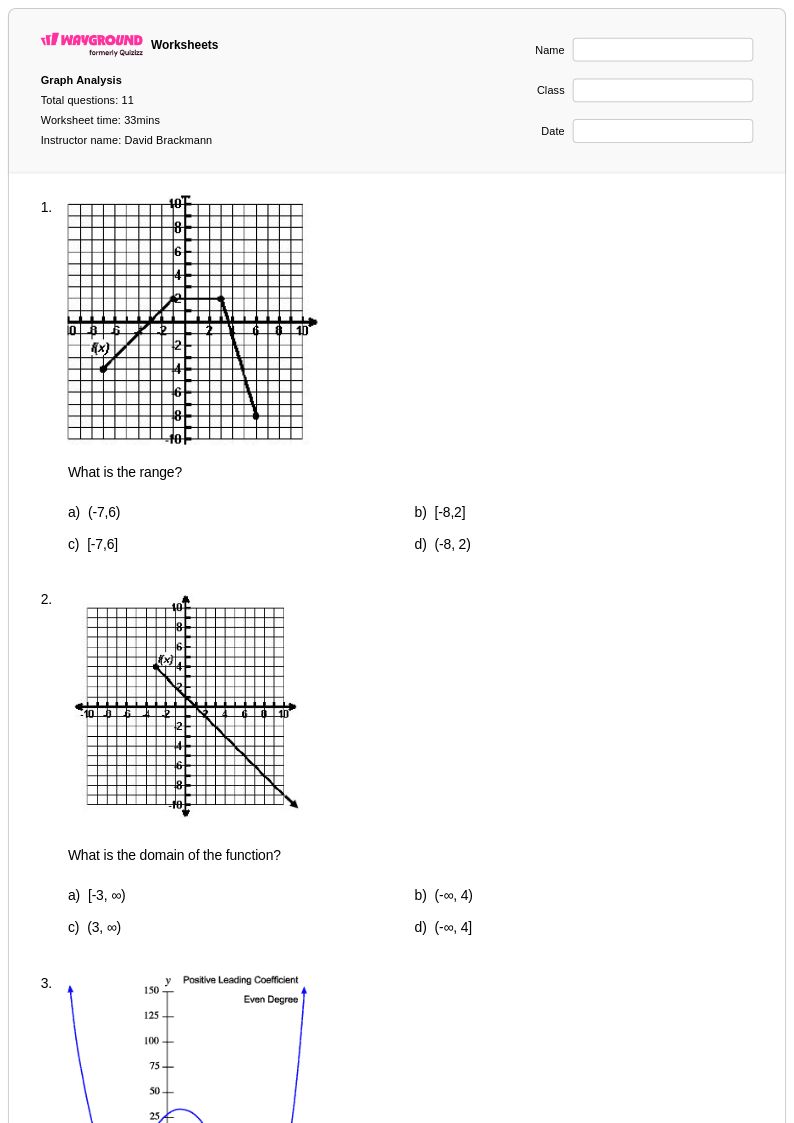
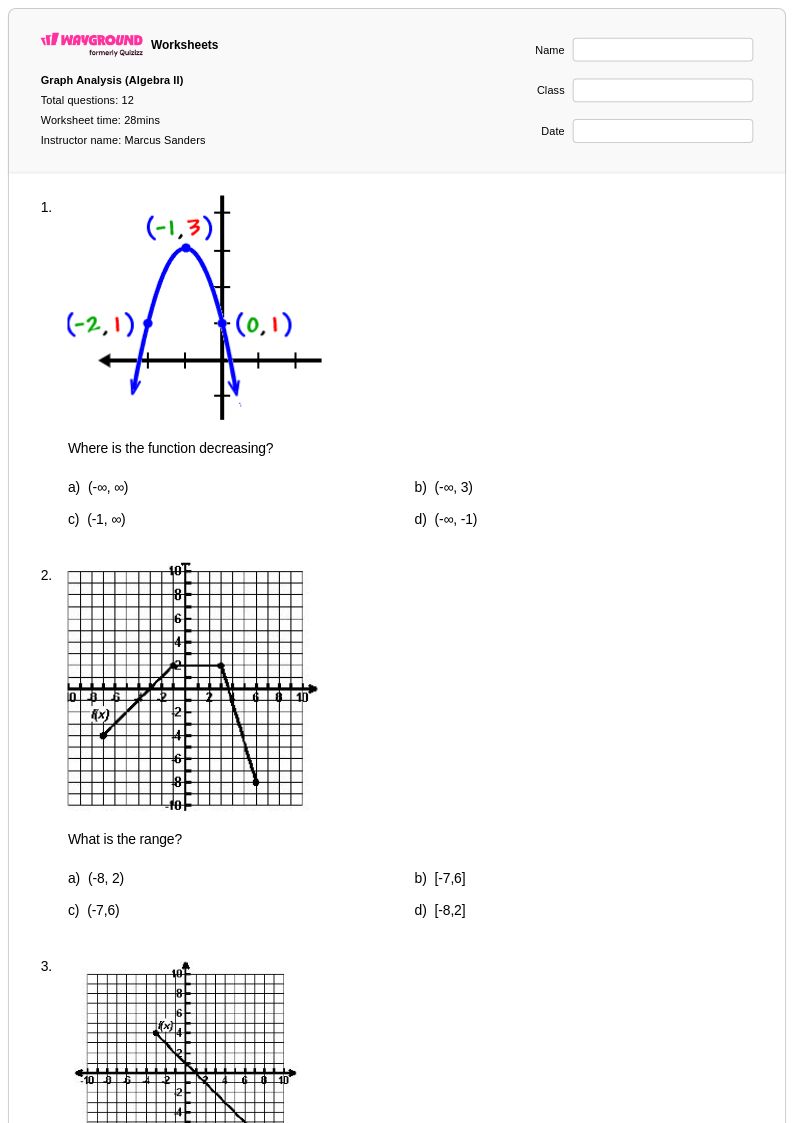
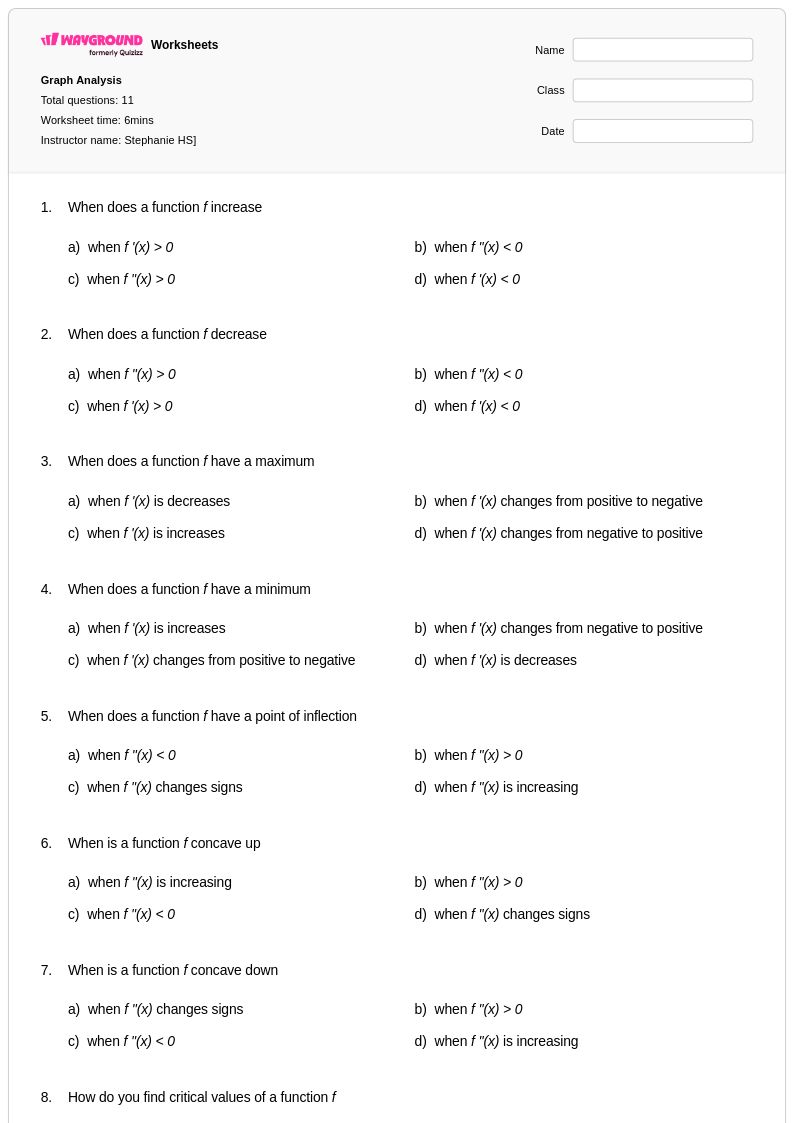
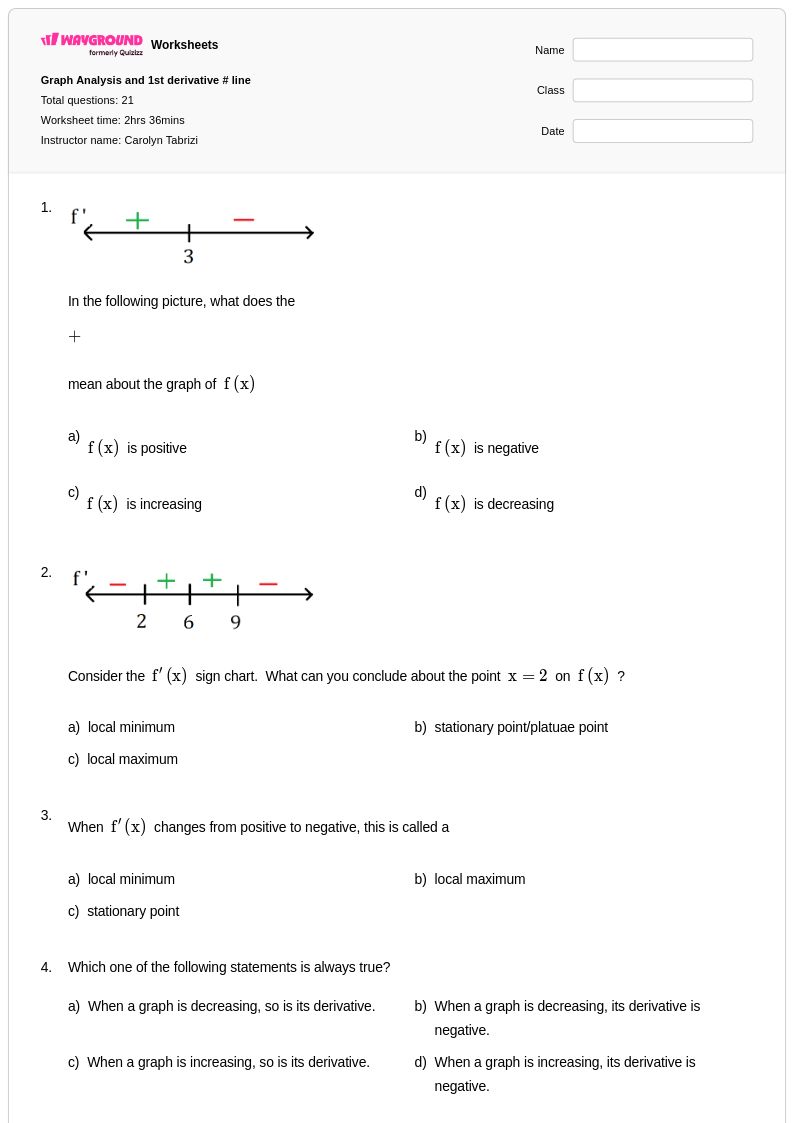
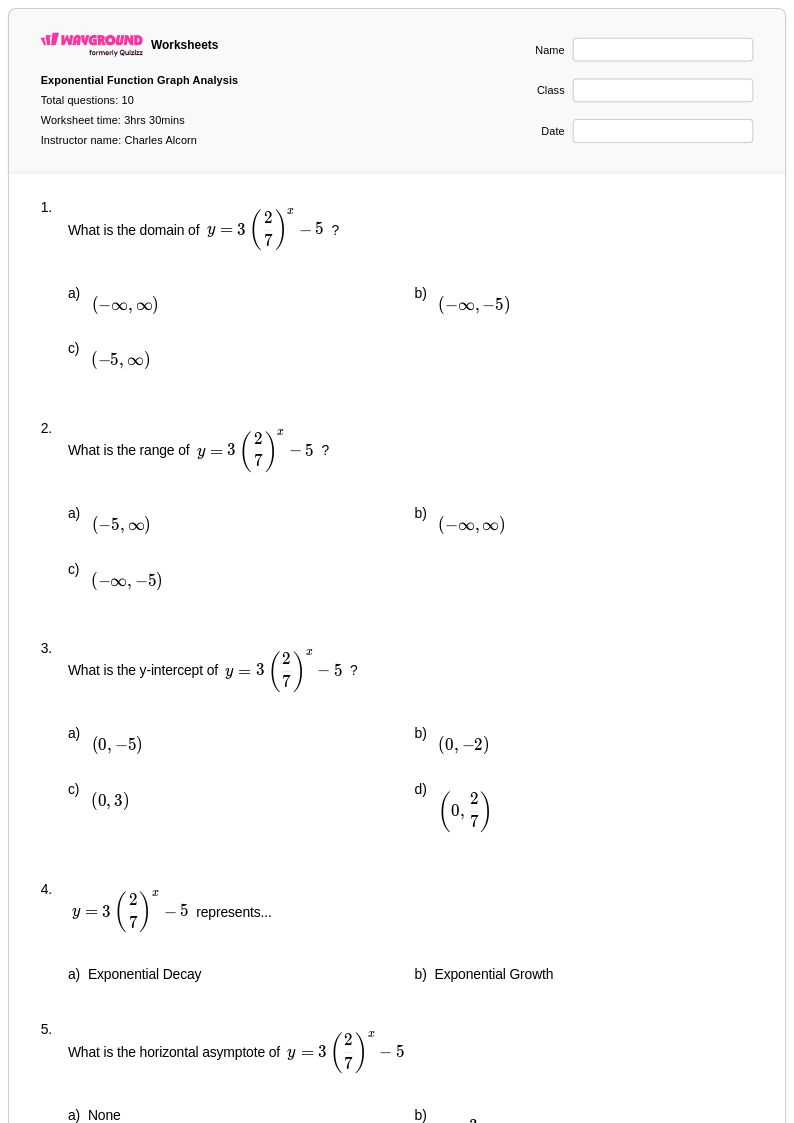
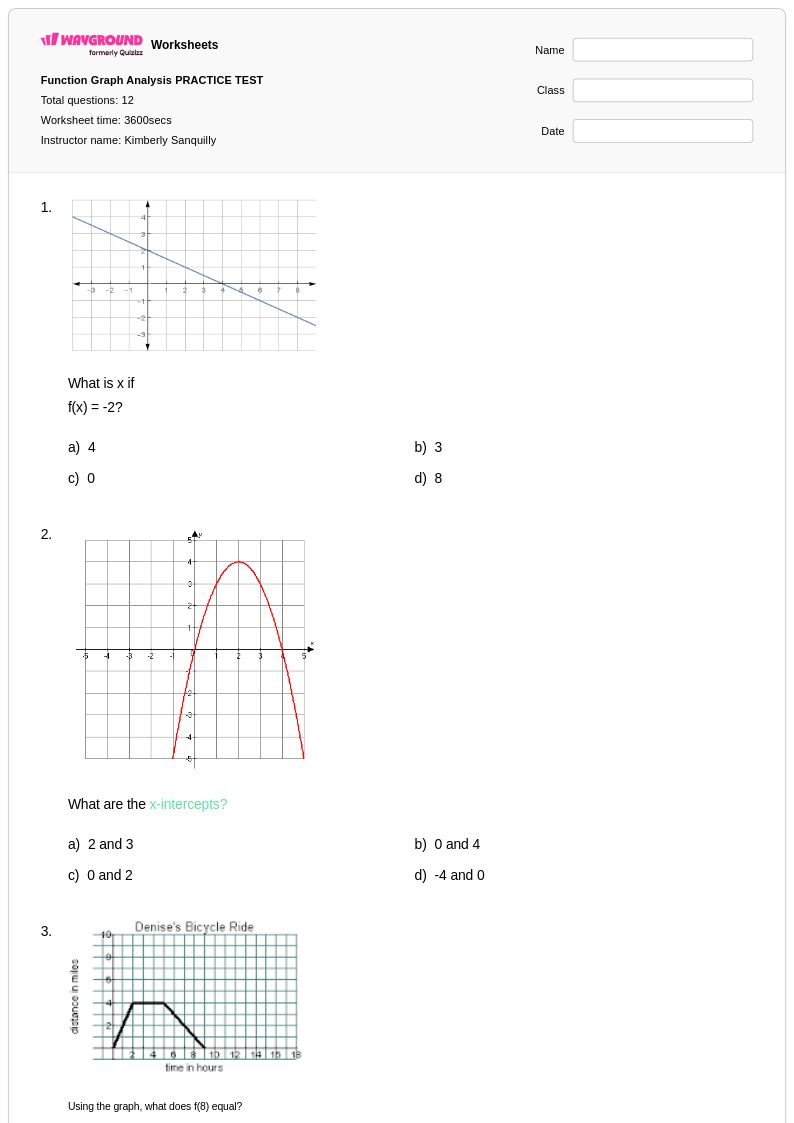
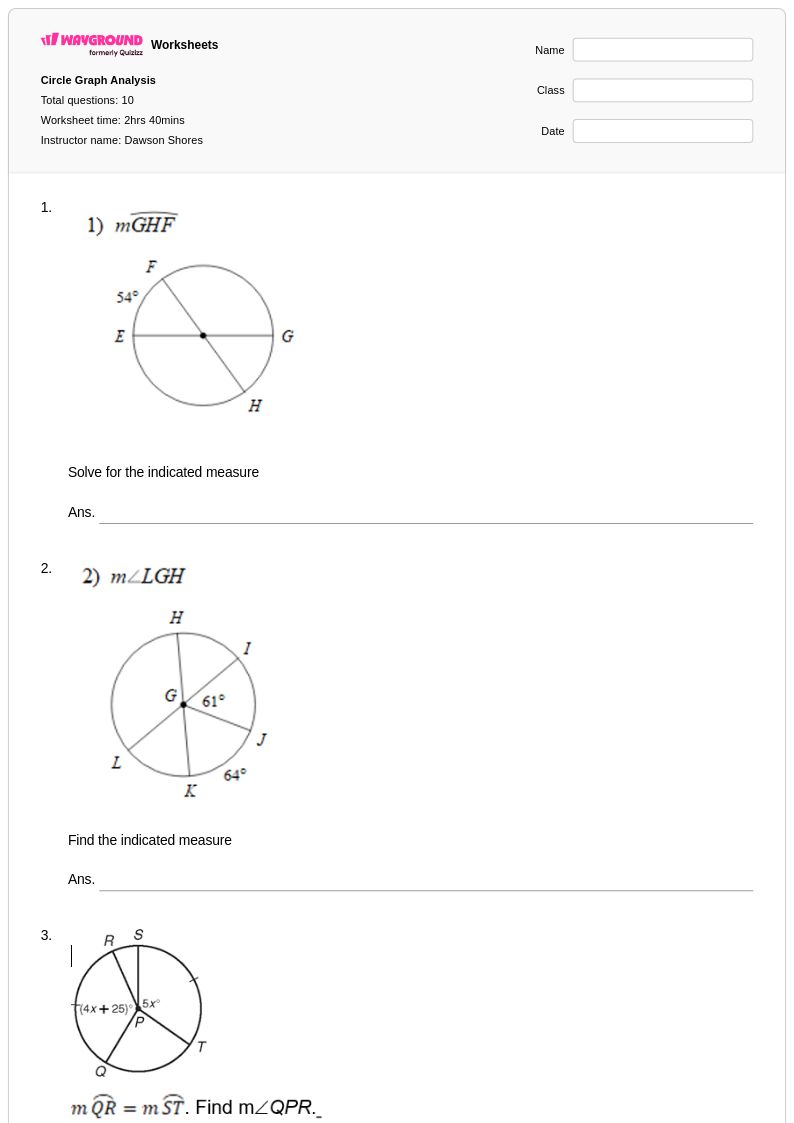
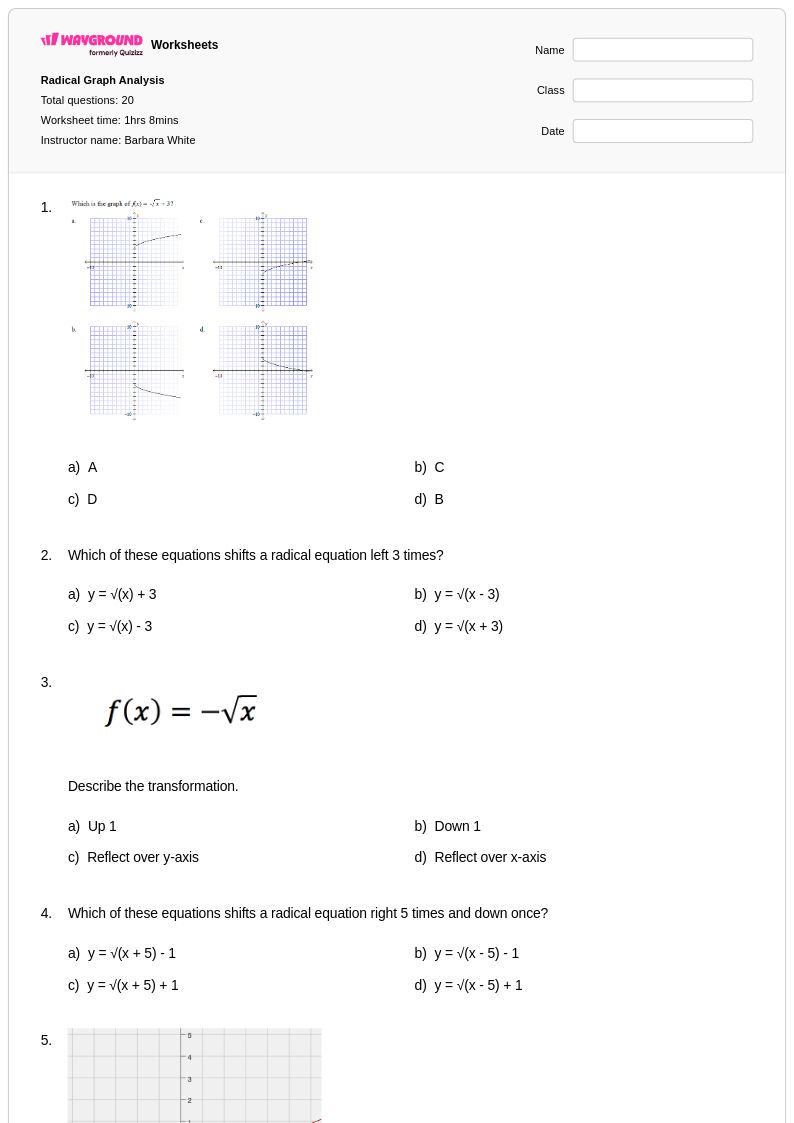
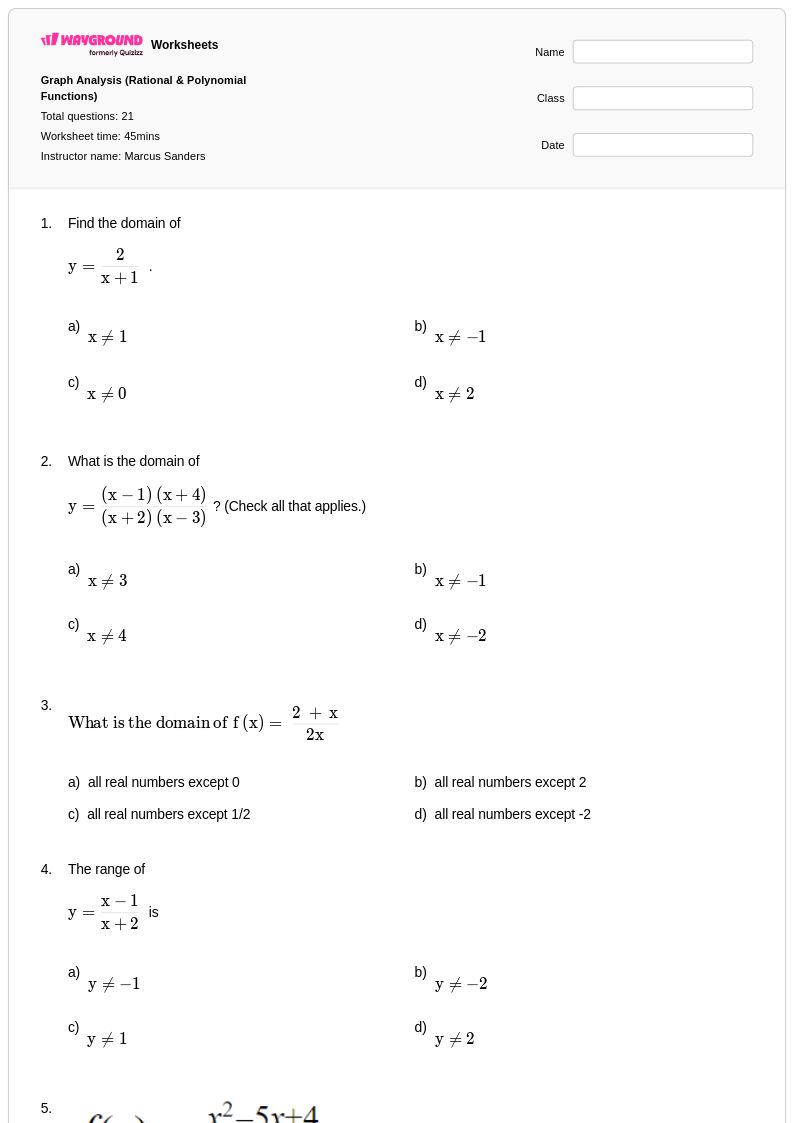
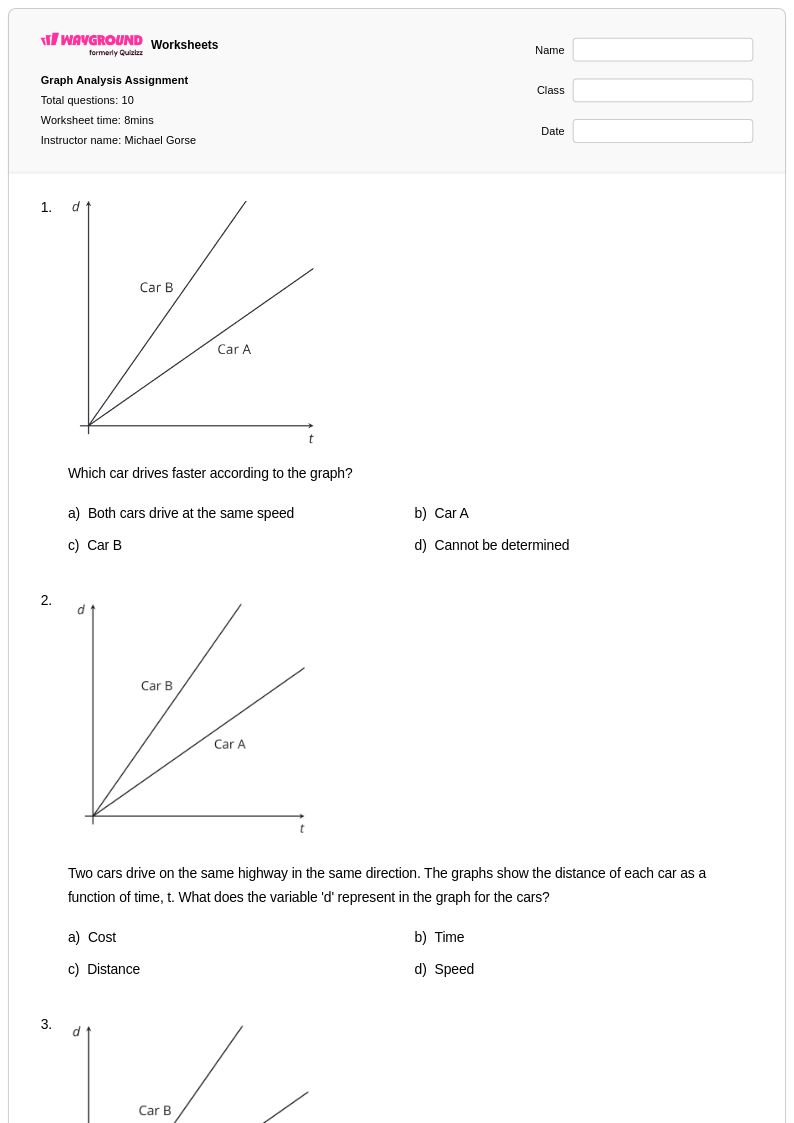
Graph analysis worksheets for Class 10 students available through Wayground (formerly Quizizz) provide comprehensive practice in interpreting, evaluating, and drawing conclusions from various types of mathematical graphs and data representations. These expertly designed resources strengthen critical analytical skills by challenging students to examine linear and nonlinear functions, identify key features such as intercepts and asymptotes, determine domain and range, and analyze relationships between variables in real-world contexts. The collection includes free printable worksheets with detailed answer keys, allowing students to practice interpreting scatter plots, exponential graphs, quadratic functions, and piecewise functions while developing the mathematical reasoning skills essential for advanced coursework and standardized assessments.
Wayground (formerly Quizizz) empowers educators with millions of teacher-created graph analysis resources specifically designed for Class 10 mathematics instruction, featuring robust search and filtering capabilities that align with curriculum standards and learning objectives. Teachers can easily differentiate instruction by accessing worksheets at varying complexity levels, from basic graph interpretation to advanced analysis of composite functions and transformations, all available in both printable pdf format and interactive digital versions. These flexible customization tools enable educators to efficiently plan targeted lessons, provide remediation for struggling students, offer enrichment opportunities for advanced learners, and deliver focused skill practice that builds the foundational graph analysis competencies required for success in higher-level mathematics courses.
FAQs
How do I teach students to analyze graphs effectively?
Start by teaching students a consistent reading protocol: identify the graph type, read the title and axis labels, examine the scale, and then interpret the data. Modeling this step-by-step process with bar graphs and line graphs before moving to scatter plots and histograms builds the transferable habits students need for any data visualization. Explicit vocabulary instruction around terms like trend, interval, and scale is essential before students can reason independently from graphical data.
What exercises help students practice reading and interpreting graphs?
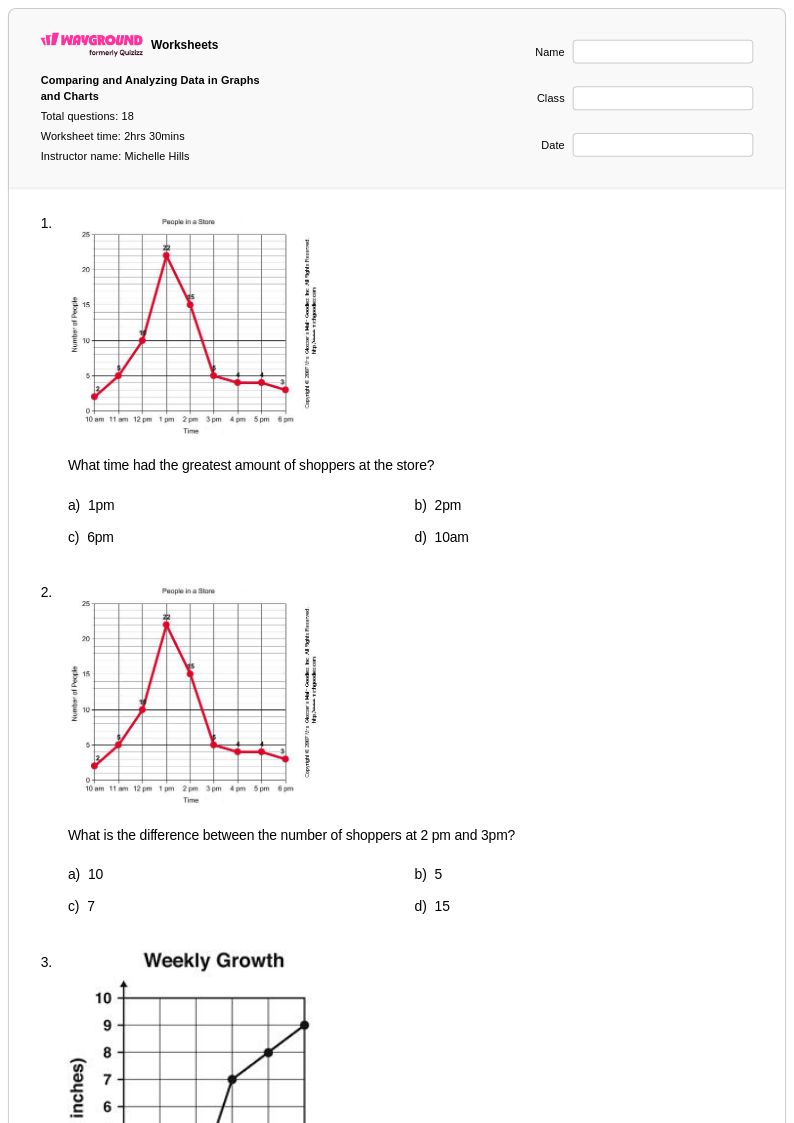
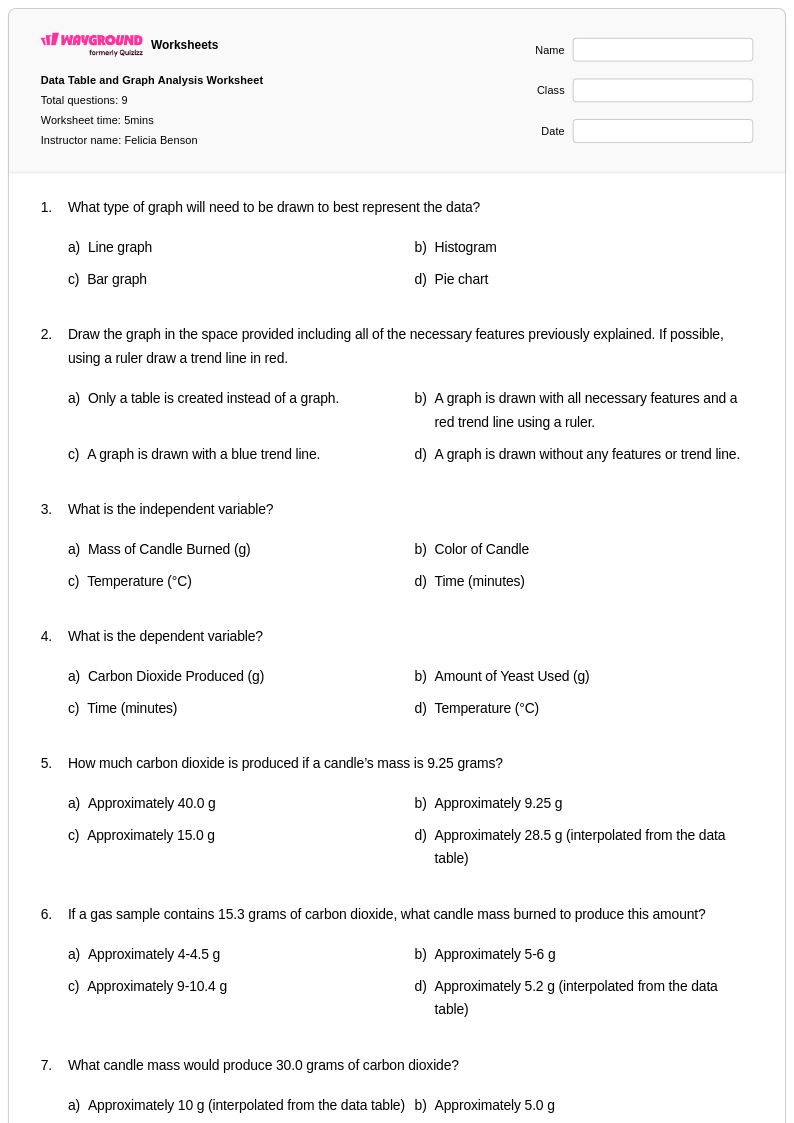
Effective graph analysis practice includes exercises where students extract specific data points, identify trends over time, compare categories, and make predictions based on visual patterns. Structured worksheets that present a single graph alongside a graduated set of questions, moving from recall to inference, give students repeated practice with the full range of interpretation skills. Mixing graph types, such as bar graphs, line graphs, pie charts, and scatter plots, within a practice set reinforces flexible thinking across different data formats.
What mistakes do students commonly make when interpreting graphs?
One of the most common errors is misreading the scale, particularly when intervals are not labeled at every unit or when a graph uses a broken axis. Students also frequently confuse correlation with causation on scatter plots and struggle to distinguish between a graph showing change over time versus a graph comparing categories. Teaching students to always read axis labels and units before attempting to answer questions about a graph significantly reduces these errors.
How can I differentiate graph analysis instruction for students at different skill levels?
For students who need additional support, begin with single-variable bar graphs using whole numbers and clear, evenly spaced scales before introducing more complex formats. Advanced students can be challenged with scatter plots requiring line-of-best-fit interpretation or multi-panel graphs that demand cross-referencing. On Wayground, teachers can apply accommodations such as read aloud, reduced answer choices, and extended time to individual students, allowing the same graph analysis activity to serve the full range of learners in a class without singling anyone out.
How do I use Wayground's graph analysis worksheets in my classroom?
Wayground's graph analysis worksheets are available as printable PDFs for traditional classroom use and in digital formats for technology-integrated environments, including the option to host them as a quiz directly on Wayground. Teachers can assign worksheets for direct instruction, independent practice, or assessment, and each worksheet includes a complete answer key to support self-checking and efficient grading. The platform's search and filtering tools make it straightforward to locate materials aligned to specific graph types or curriculum standards.
How do I help students make predictions and draw conclusions from graphs?
Teach students to distinguish between what a graph directly shows and what it implies by practicing explicit inference questions, such as asking what would likely happen next in a line graph showing a consistent trend. Requiring students to write one-sentence conclusions in their own words, rather than just circling an answer, builds the explanatory reasoning that graph analysis demands. Pairing this with class discussion of multiple valid interpretations helps students understand that graphical reasoning involves evidence-based thinking, not single correct answers.