Free Printable Hair and Fiber Analysis Worksheets for Class 9
Class 9 Hair and Fiber Analysis worksheets from Wayground help students master forensic evidence examination through engaging printables and practice problems with comprehensive answer keys.
Explore printable Hair and Fiber Analysis worksheets for Class 9
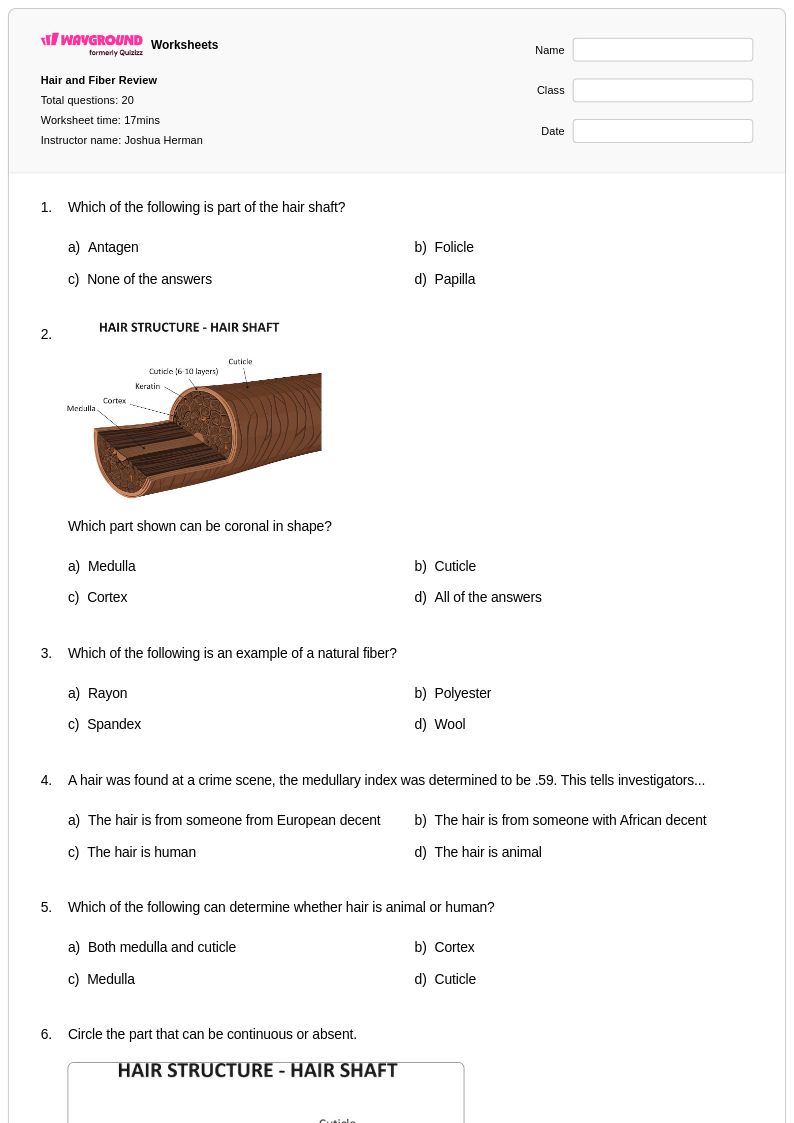
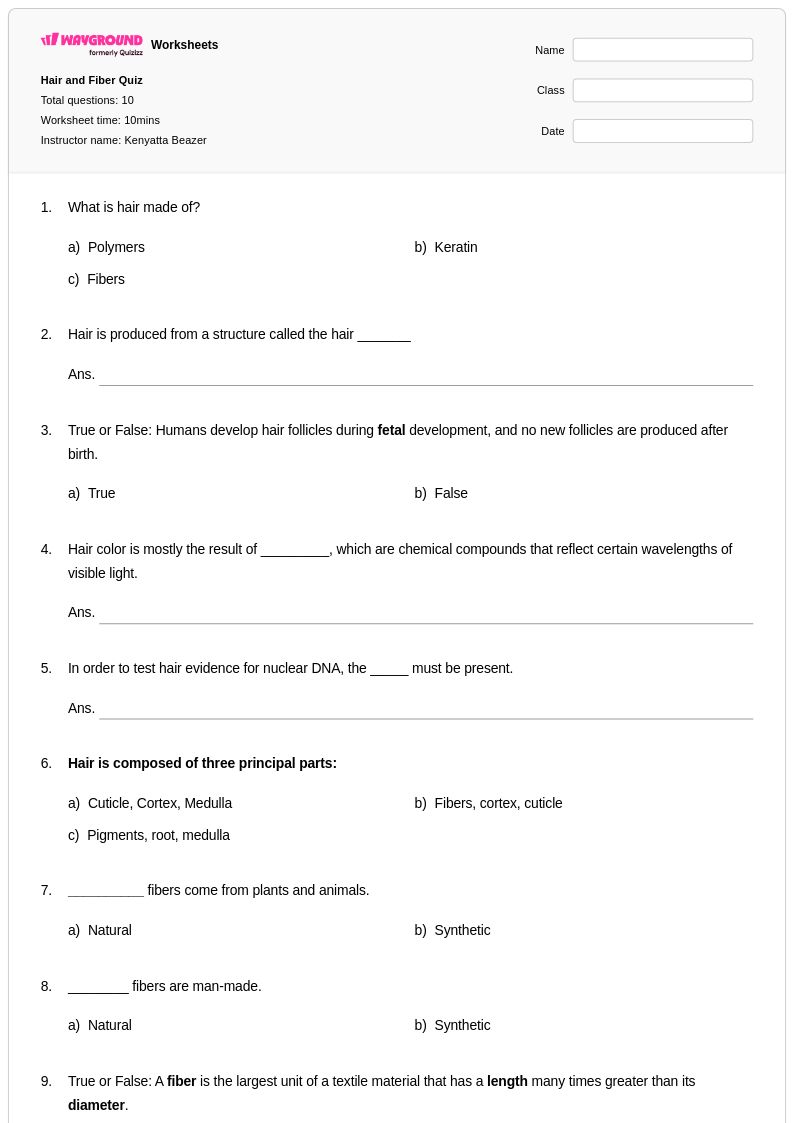
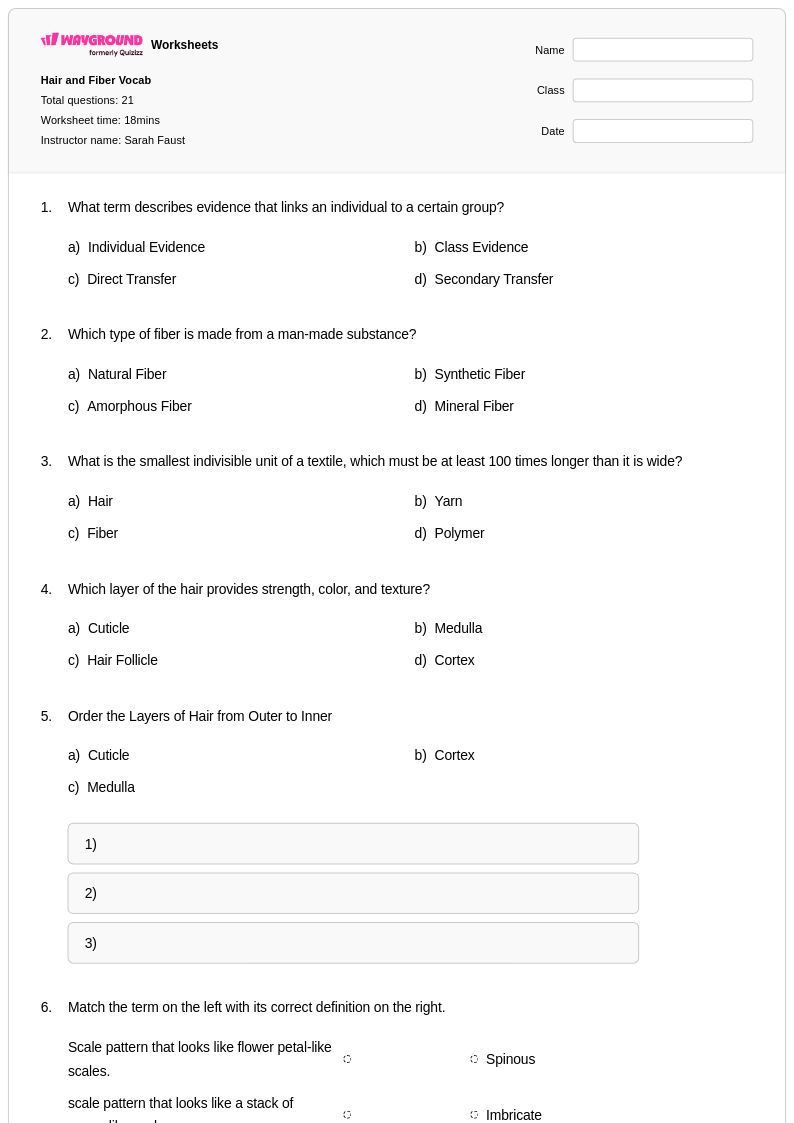
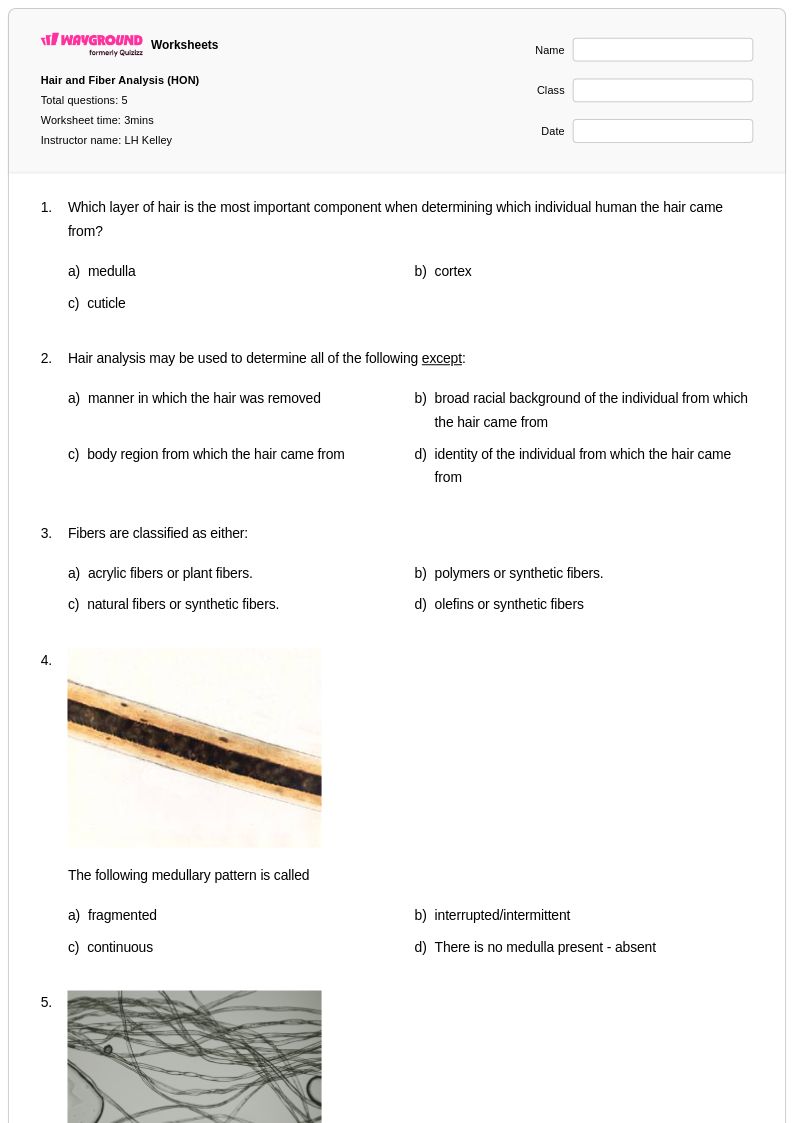
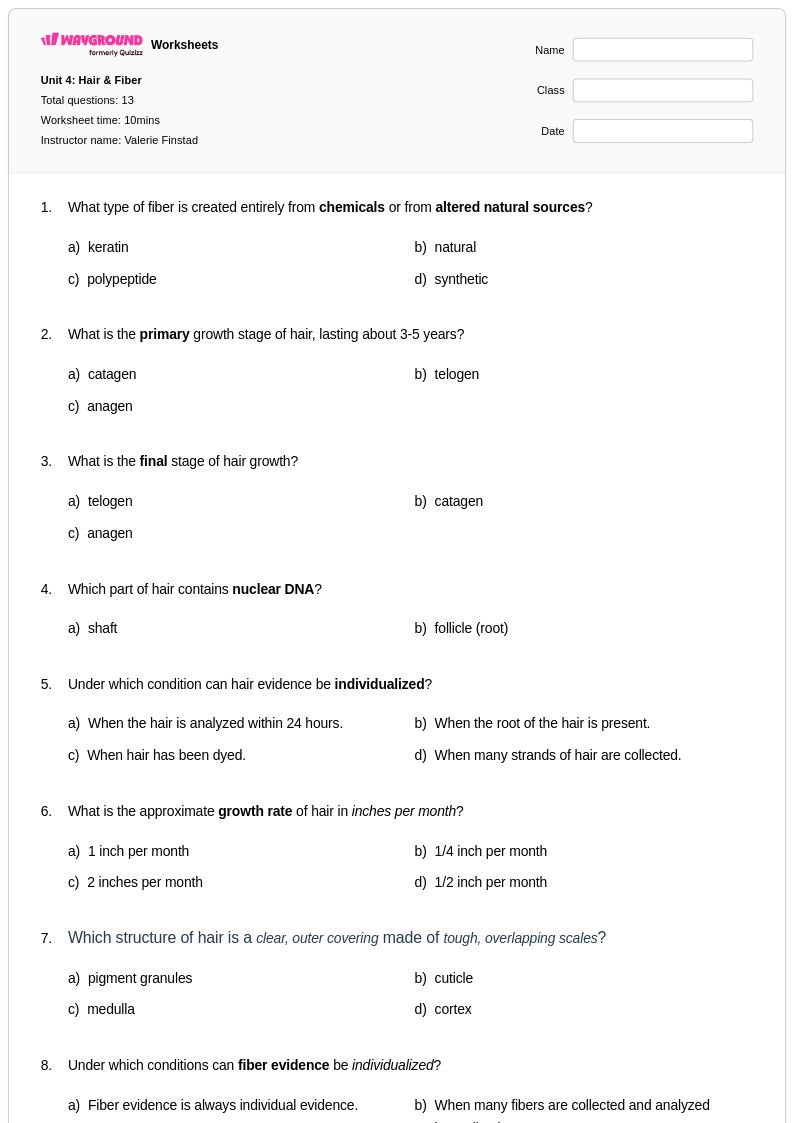
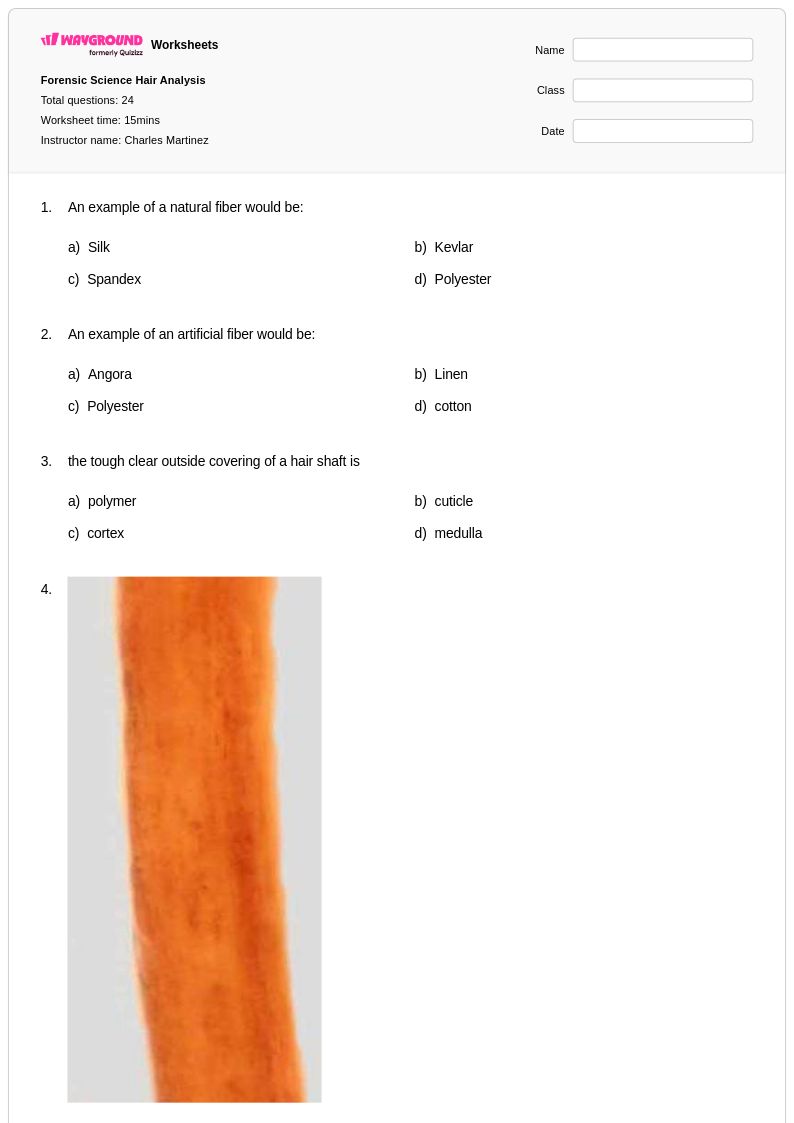
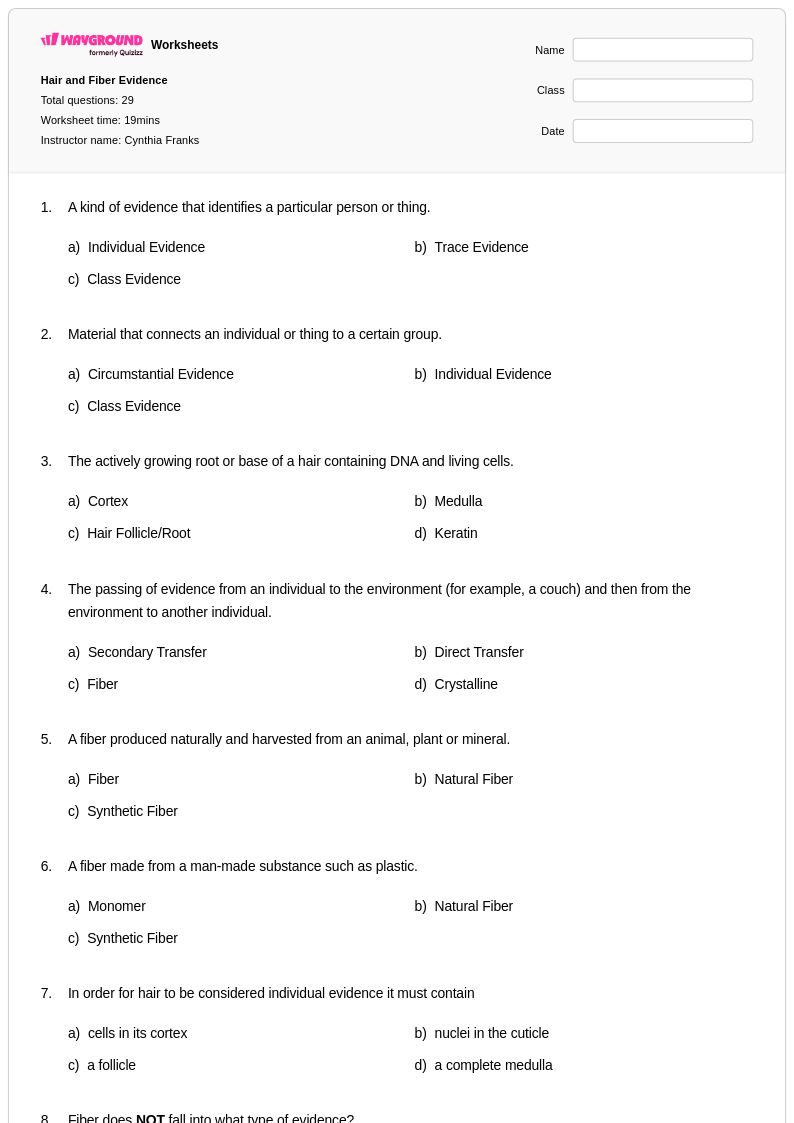
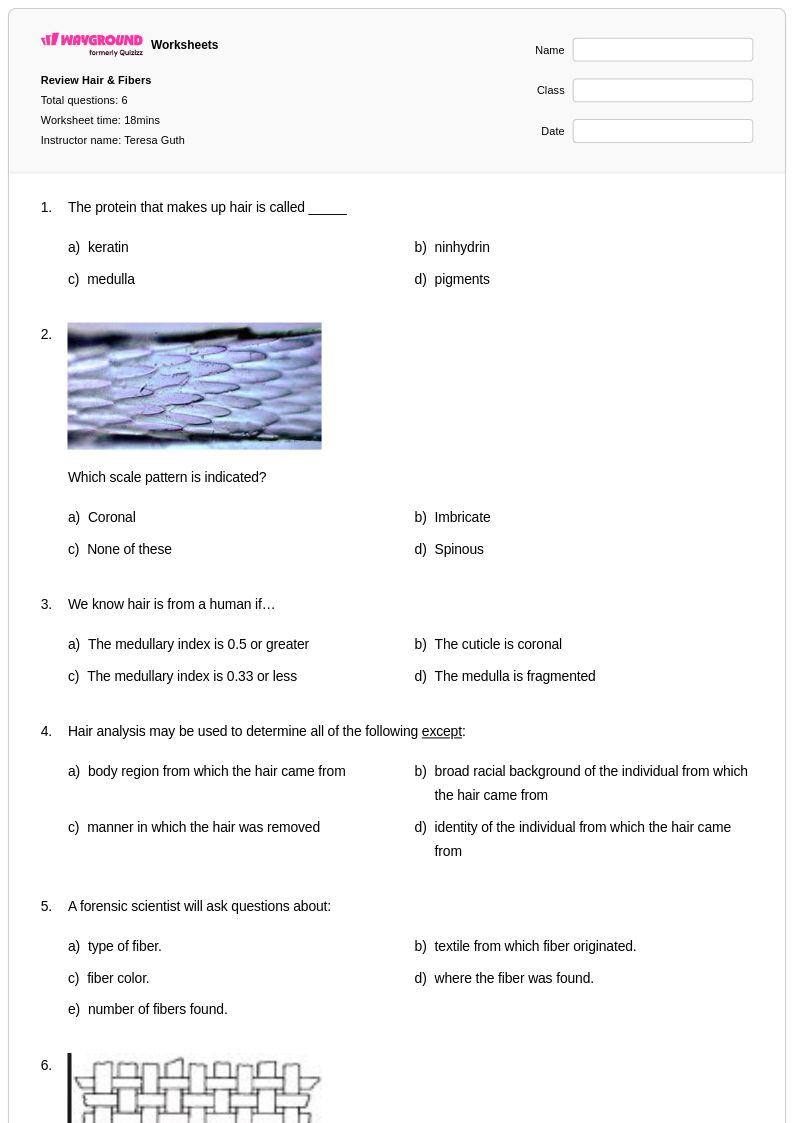
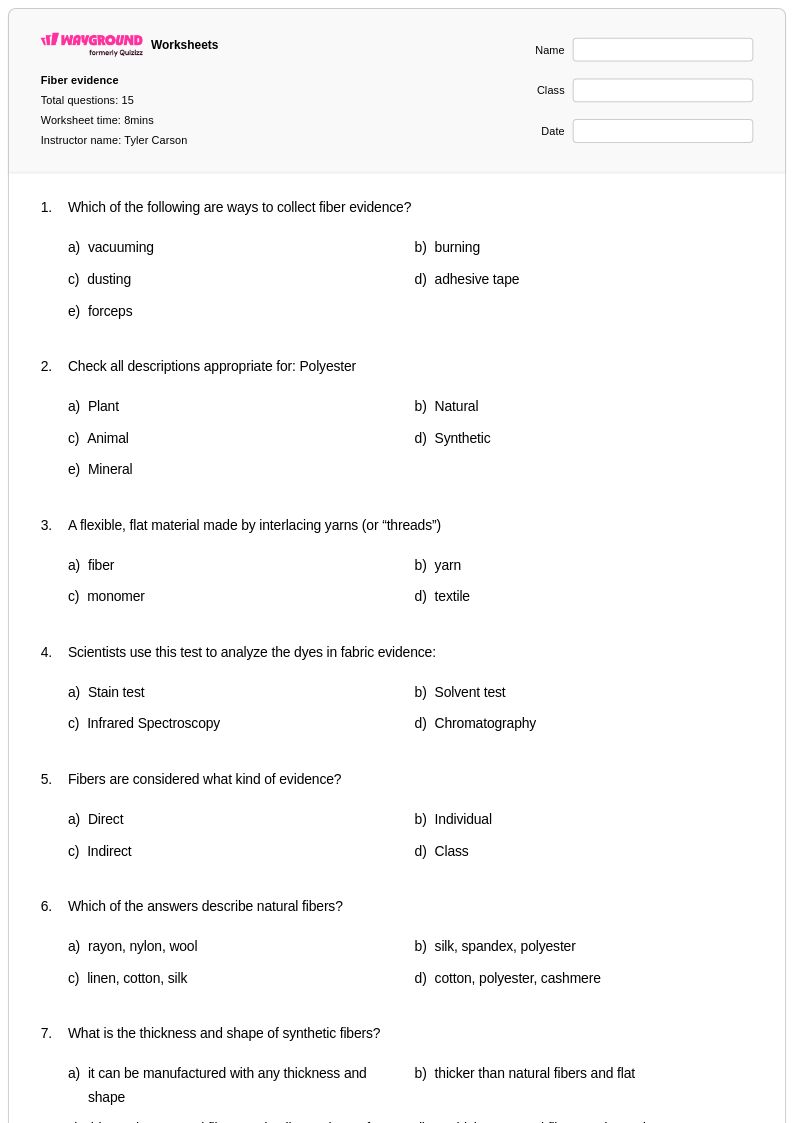
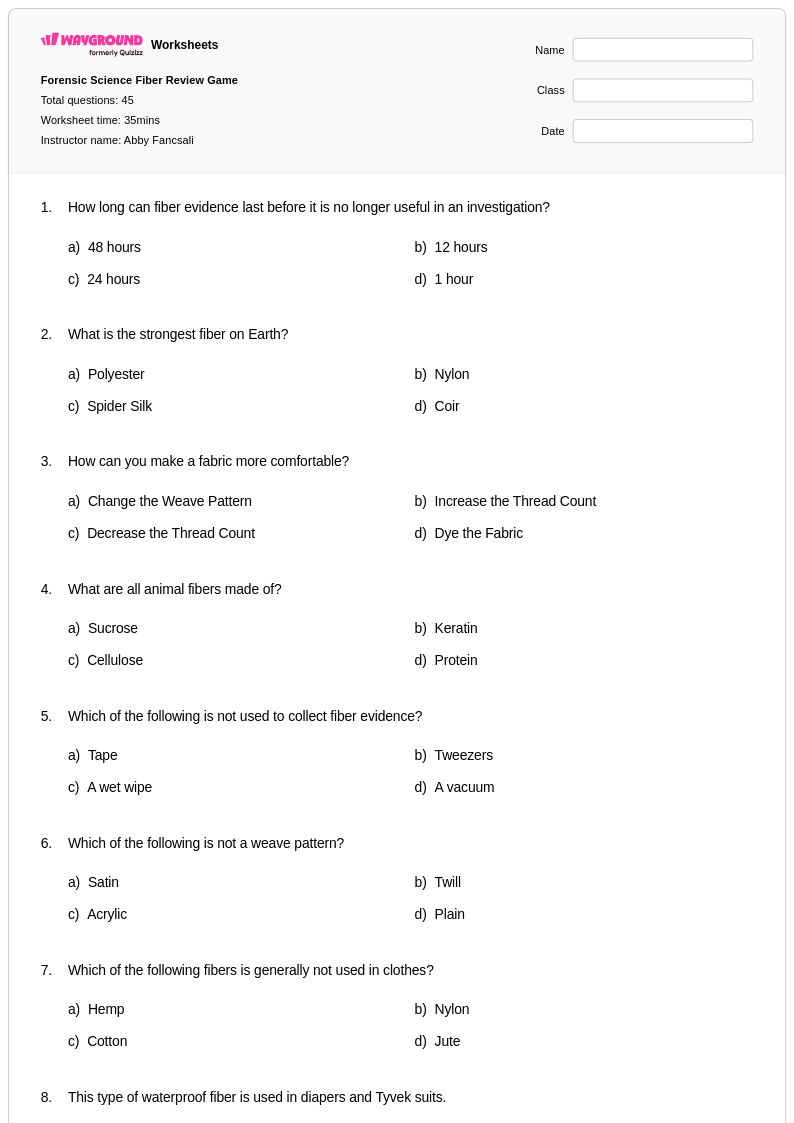
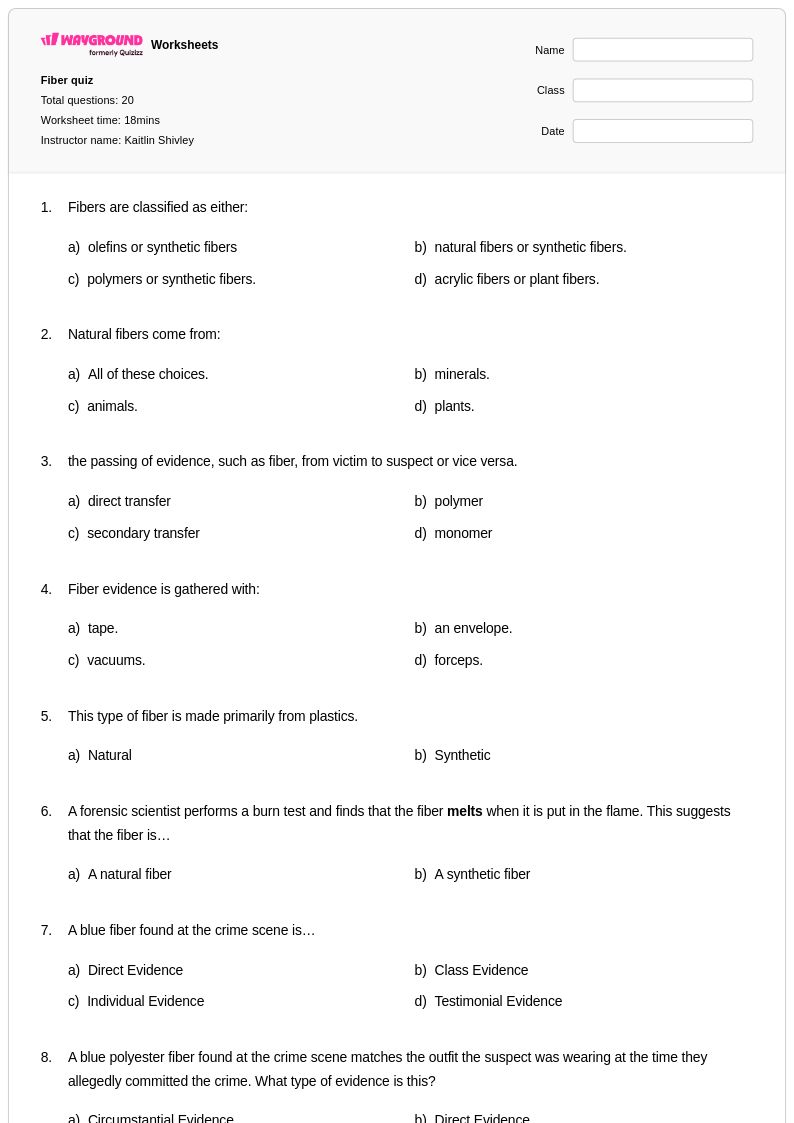
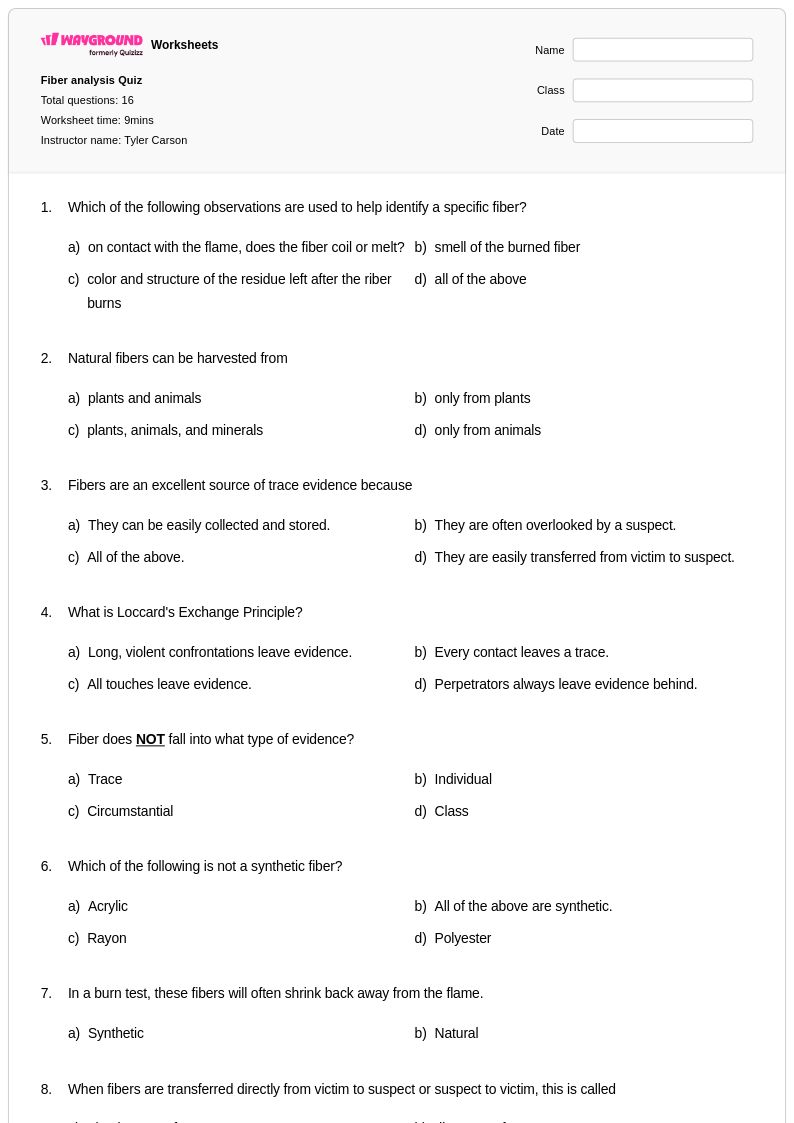
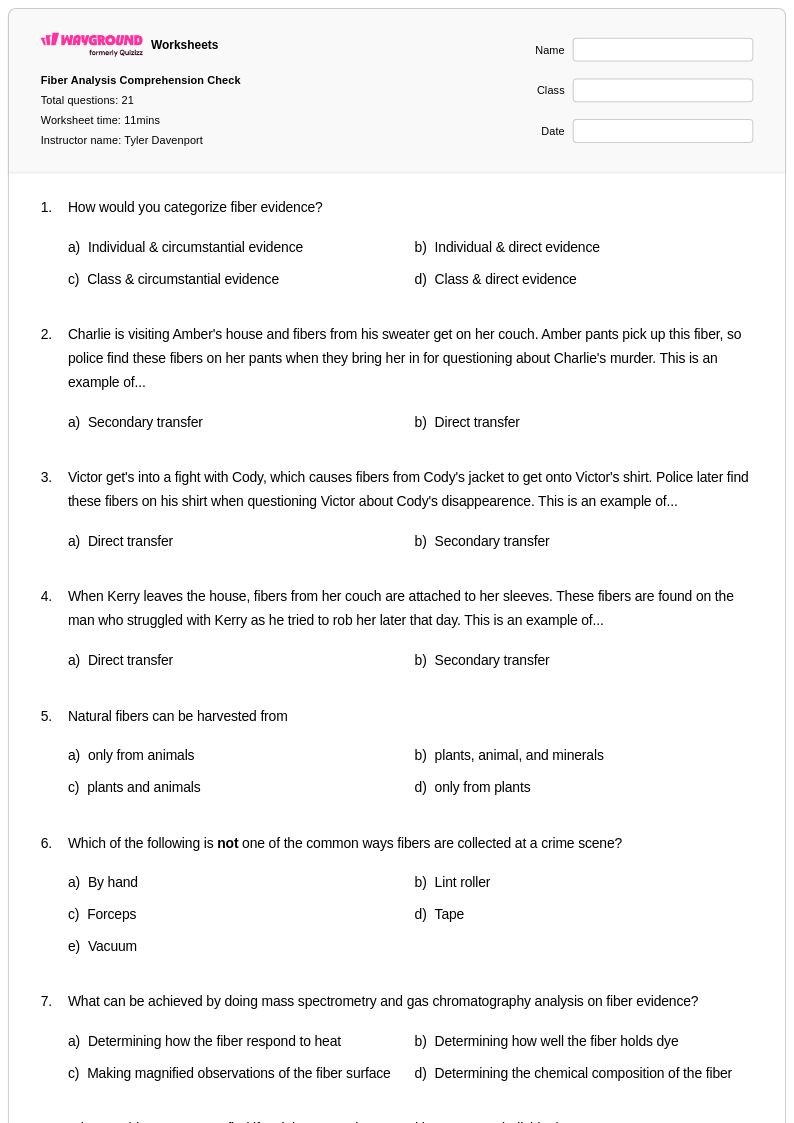
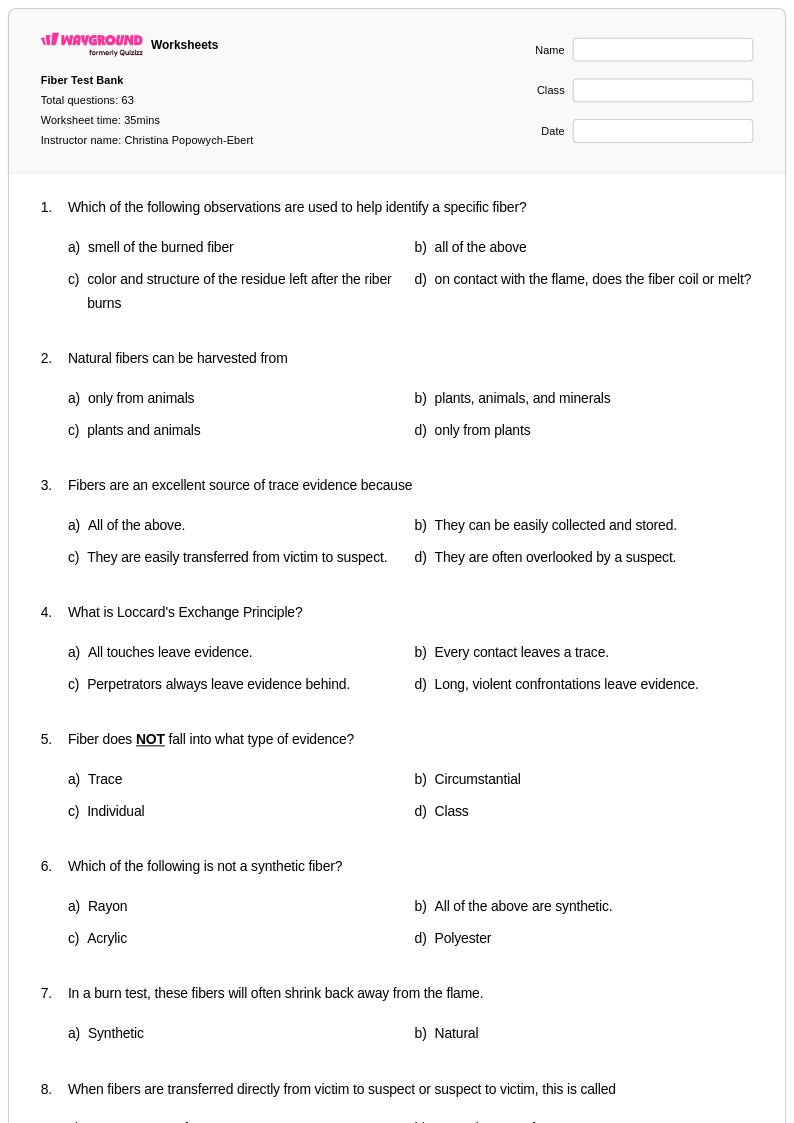
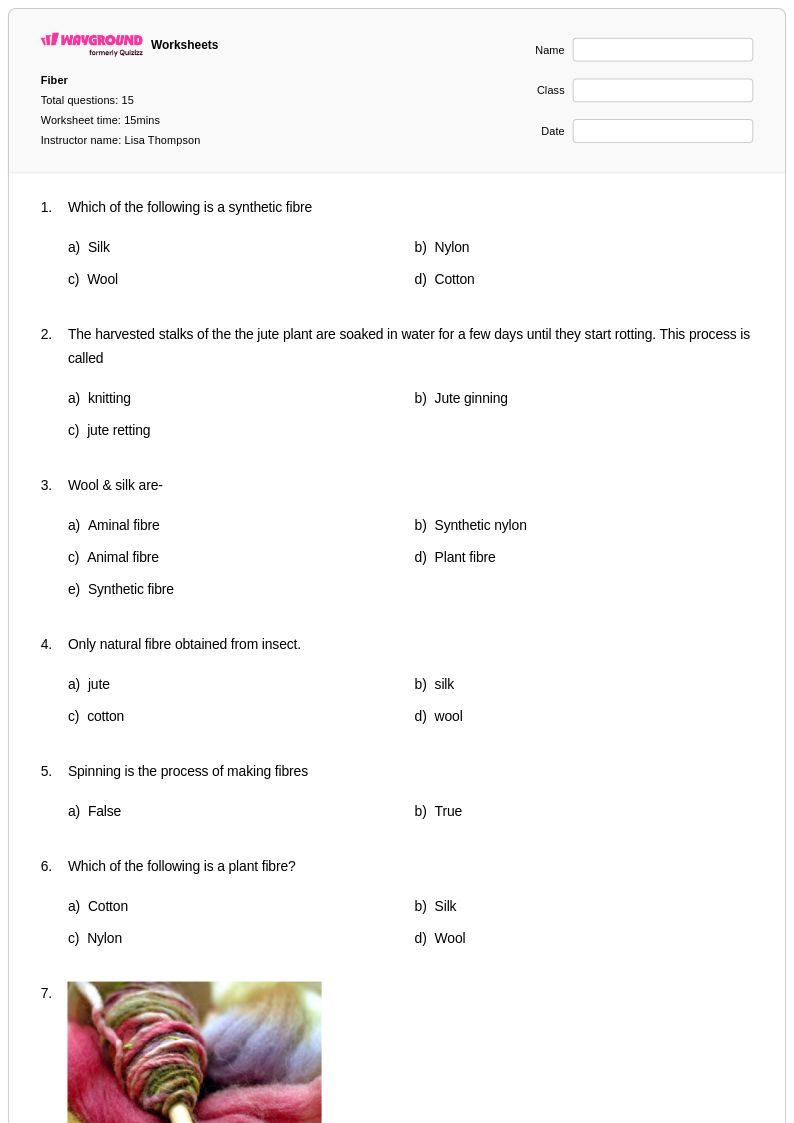
Hair and fiber analysis worksheets for Class 9 students provide comprehensive practice in one of forensic science's most fundamental investigative techniques. These educational resources from Wayground (formerly Quizizz) guide students through the systematic examination of microscopic evidence, teaching them to identify fiber types, analyze hair structure, and draw logical conclusions from physical evidence. Students develop critical observation skills while learning to distinguish between natural and synthetic fibers, examine hair cuticle patterns, and understand how these materials can link suspects to crime scenes. The worksheets include detailed practice problems with answer keys, allowing students to master evidence collection protocols, microscopy techniques, and proper documentation methods essential for forensic analysis. These free printable resources strengthen analytical thinking and scientific reasoning while introducing students to real-world applications of materials science within criminal investigations.
Wayground (formerly Quizizz) supports educators with an extensive collection of teacher-created hair and fiber analysis worksheets that streamline lesson planning and enhance student engagement in Class 9 forensic science curricula. The platform's millions of educational resources include customizable materials that align with science standards and accommodate diverse learning needs through built-in differentiation tools. Teachers can easily search and filter content to find age-appropriate forensic scenarios, modify existing worksheets to match their classroom requirements, and access materials in both digital and printable PDF formats for flexible implementation. These comprehensive resources support targeted skill practice, provide structured remediation opportunities for struggling students, and offer enrichment activities for advanced learners, enabling educators to create dynamic learning experiences that prepare students for advanced forensic science concepts while building foundational knowledge in evidence analysis and scientific methodology.
FAQs
How do I teach hair and fiber analysis in a forensic science class?
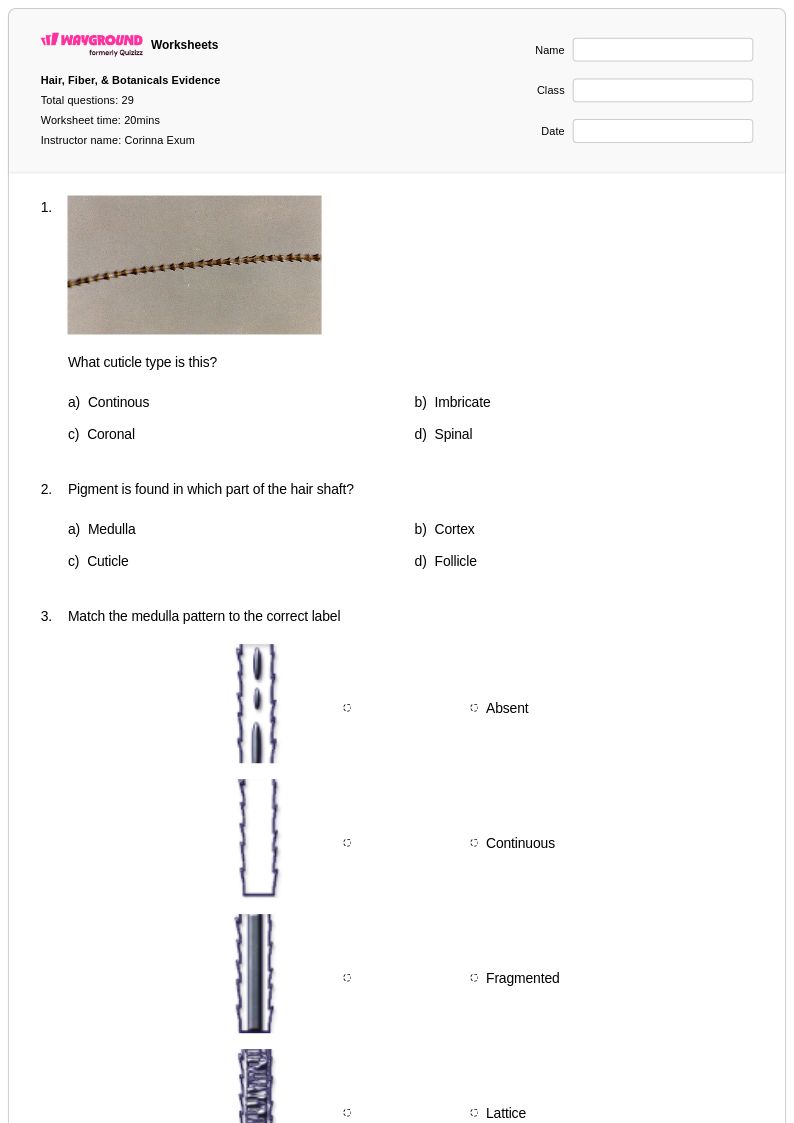
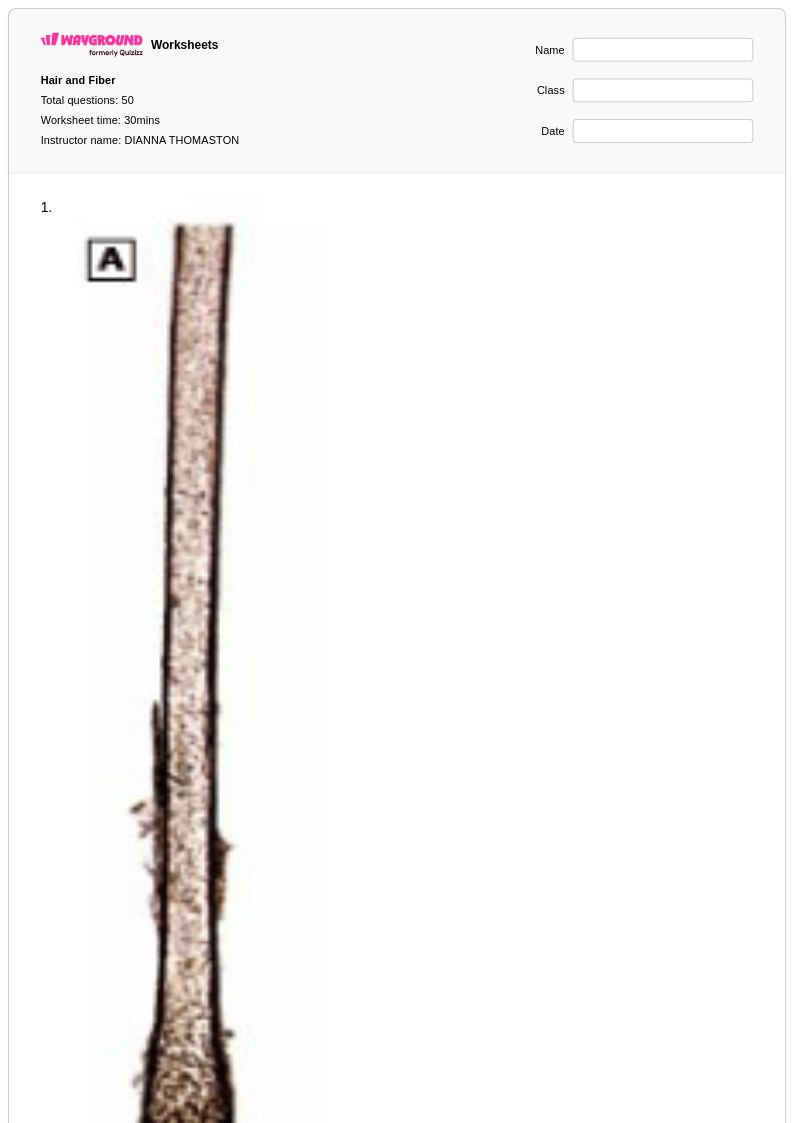
Start by grounding students in the microscopic differences between human and animal hair, focusing on medulla patterns, cortex structures, and cuticle scale arrangements. From there, introduce fiber analysis by distinguishing natural fibers (cotton, wool, silk) from synthetic ones (nylon, polyester) based on physical and optical properties. Connecting each concept to real case examples helps students understand why these distinctions matter in criminal investigations, and hands-on comparison activities reinforce observation skills before moving to formal evidence documentation.
What exercises help students practice hair and fiber analysis?
Effective practice activities include guided comparison exercises where students match hair samples based on medulla, cortex, and cuticle characteristics, as well as fiber identification drills that require distinguishing natural from synthetic materials. Chain of custody documentation tasks give students structured practice with evidence handling procedures used in actual forensic investigations. Worksheets that walk students through step-by-step comparative analysis methods are particularly useful because they mirror the workflow forensic examiners follow in real casework.
What common mistakes do students make when learning hair and fiber analysis?
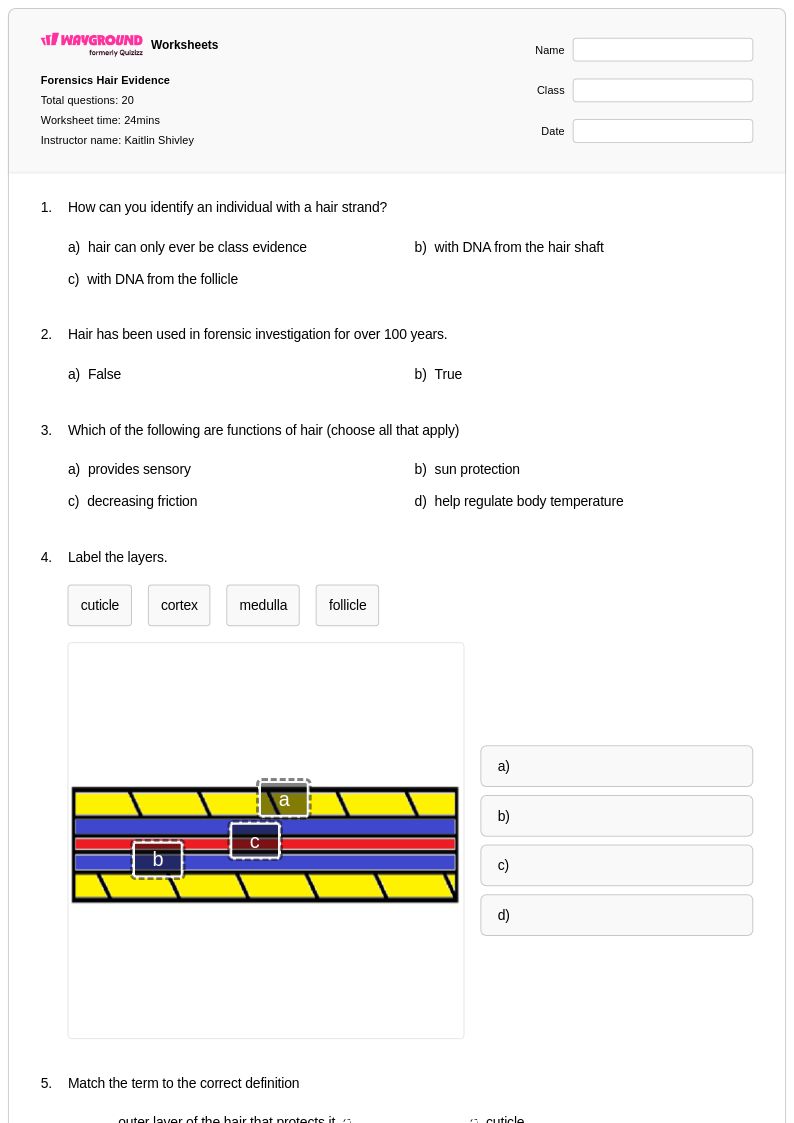
A frequent misconception is that hair analysis alone can definitively identify a suspect, when in reality it is considered class evidence rather than individual evidence. Students also struggle to consistently distinguish medulla patterns (continuous, interrupted, fragmented, or absent) and often confuse cortex pigmentation with overall hair color. In fiber analysis, a common error is conflating the physical appearance of a fiber with its chemical composition, which requires different identification techniques entirely.
How can I differentiate hair and fiber analysis instruction for students at different skill levels?
For students who need additional support, reduce the number of variables in a comparison task, such as focusing solely on medulla patterns before introducing cortex and cuticle features simultaneously. Advanced learners can be challenged with multi-evidence scenarios that require synthesizing hair and fiber findings alongside other forensic evidence types. On Wayground, teachers can apply accommodations such as read aloud, reduced answer choices, and extended time to individual students, allowing the rest of the class to work at standard settings without disruption.
How do I use Wayground's hair and fiber analysis worksheets in my classroom?
Wayground's hair and fiber analysis worksheets are available as printable PDFs for traditional classroom use and in digital formats for technology-integrated environments, giving you flexibility depending on your classroom setup. You can also host them directly as a quiz on Wayground, which allows you to track student performance and apply individual accommodations such as extended time or read aloud for students who need them. Each worksheet includes a complete answer key, so the materials are ready to deploy with minimal preparation time.
How does hair and fiber evidence actually get used in criminal investigations?
In criminal investigations, hair and fiber evidence is collected from crime scenes, victims, and suspects and then examined microscopically to determine whether samples share the same characteristics. Because hair and fiber are transfer evidence, they can place a suspect at a scene or link two people or locations together, even when no other physical evidence is present. Students should understand that these findings contribute to a broader body of evidence rather than serving as standalone proof of guilt or innocence.