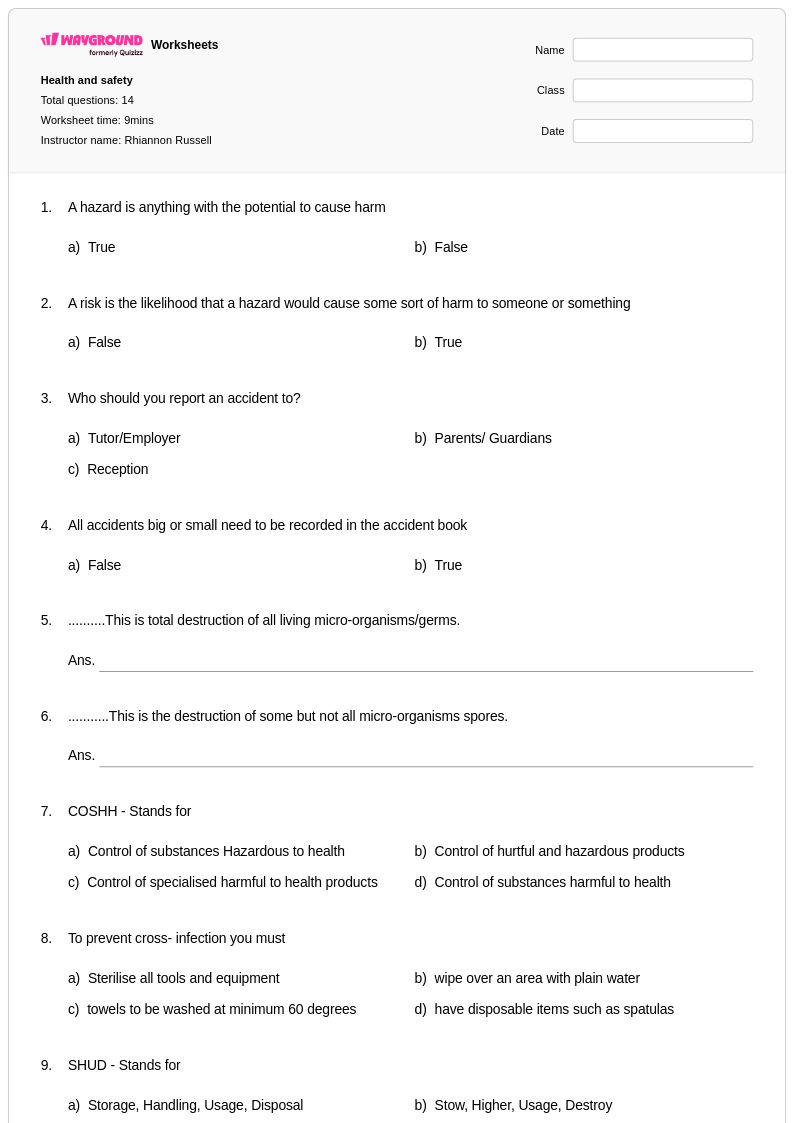
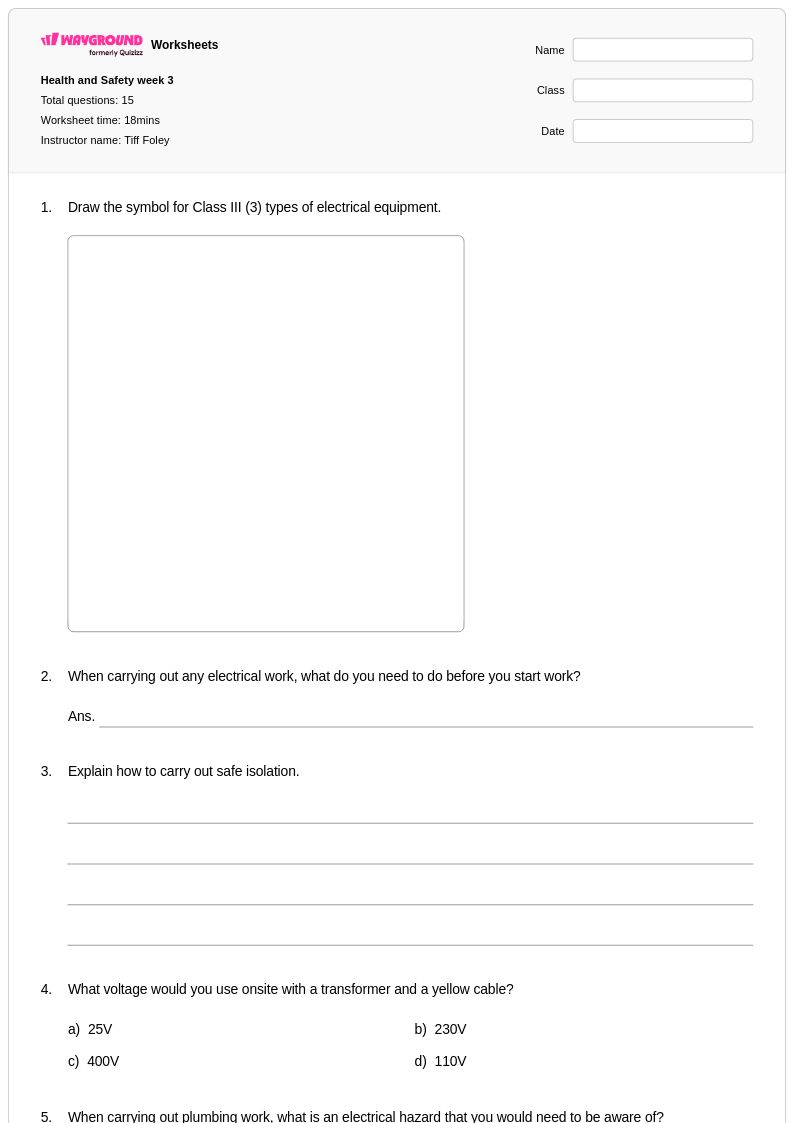
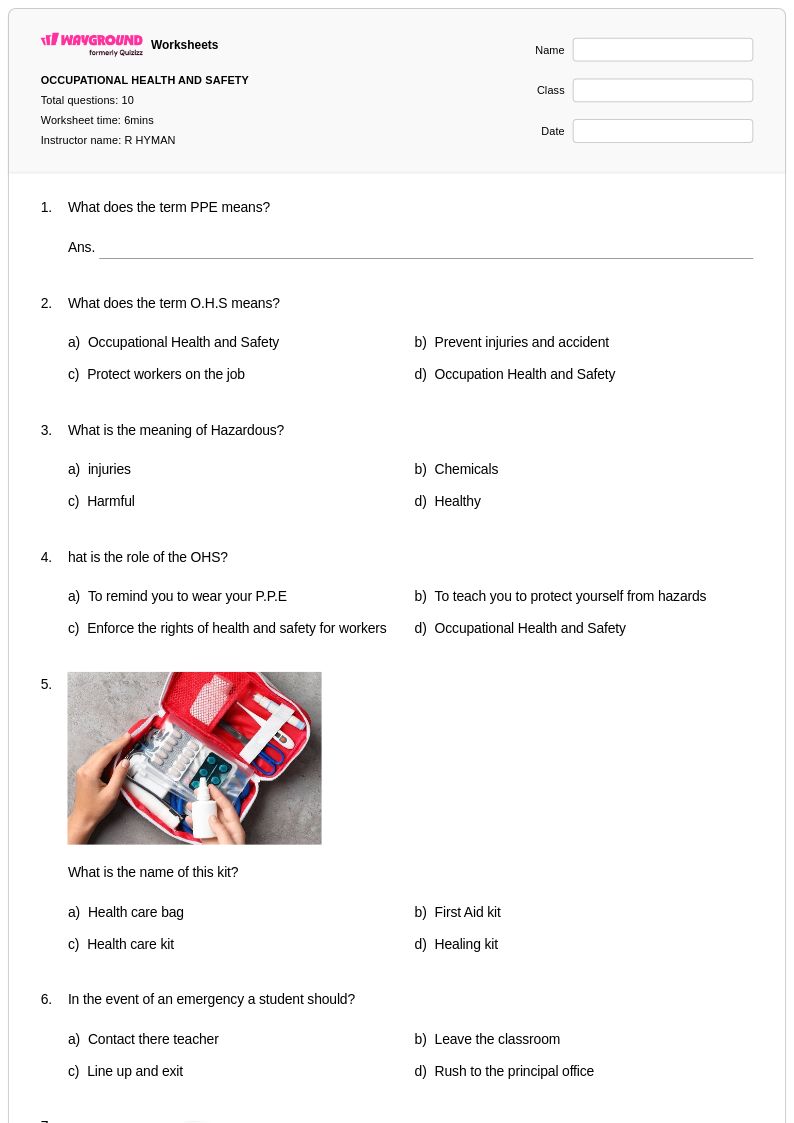
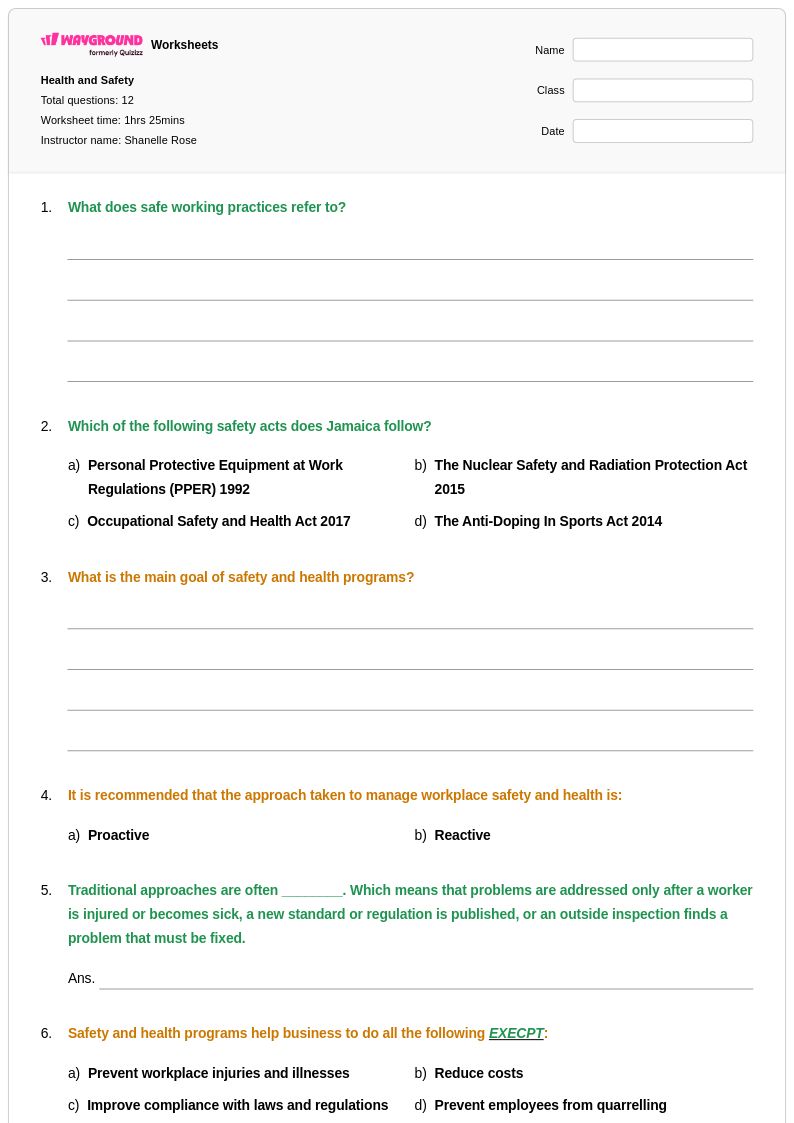
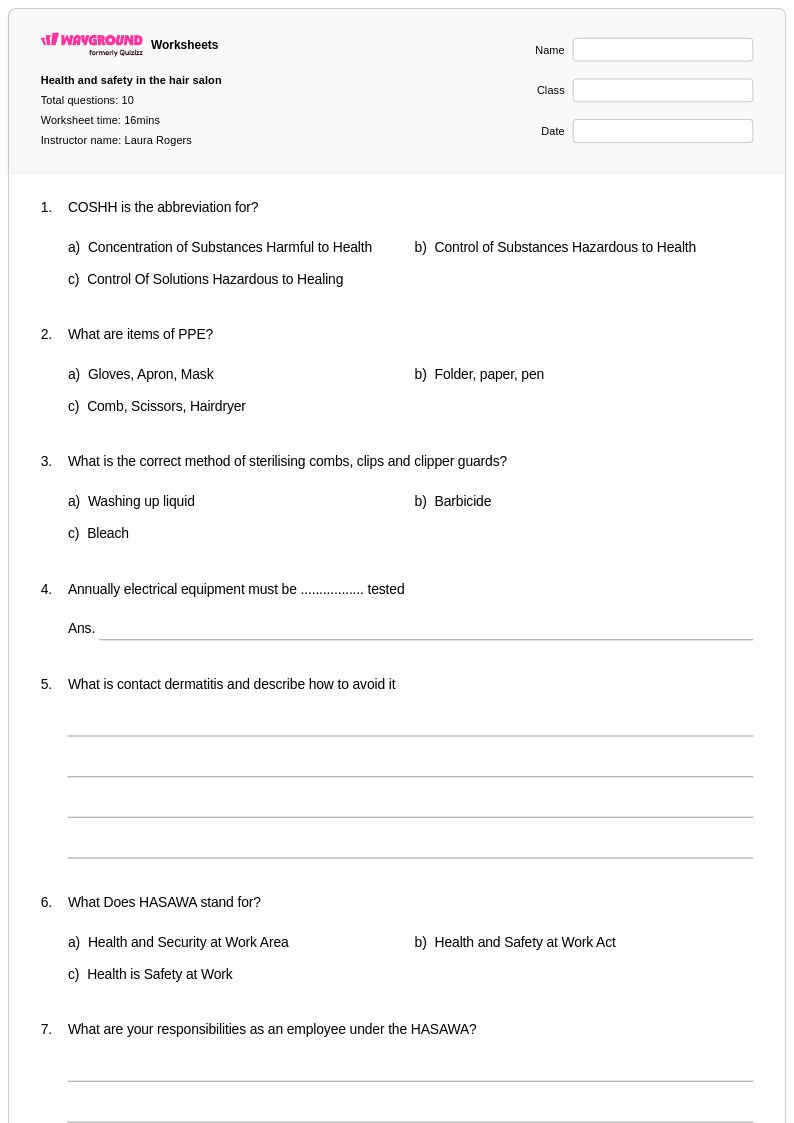
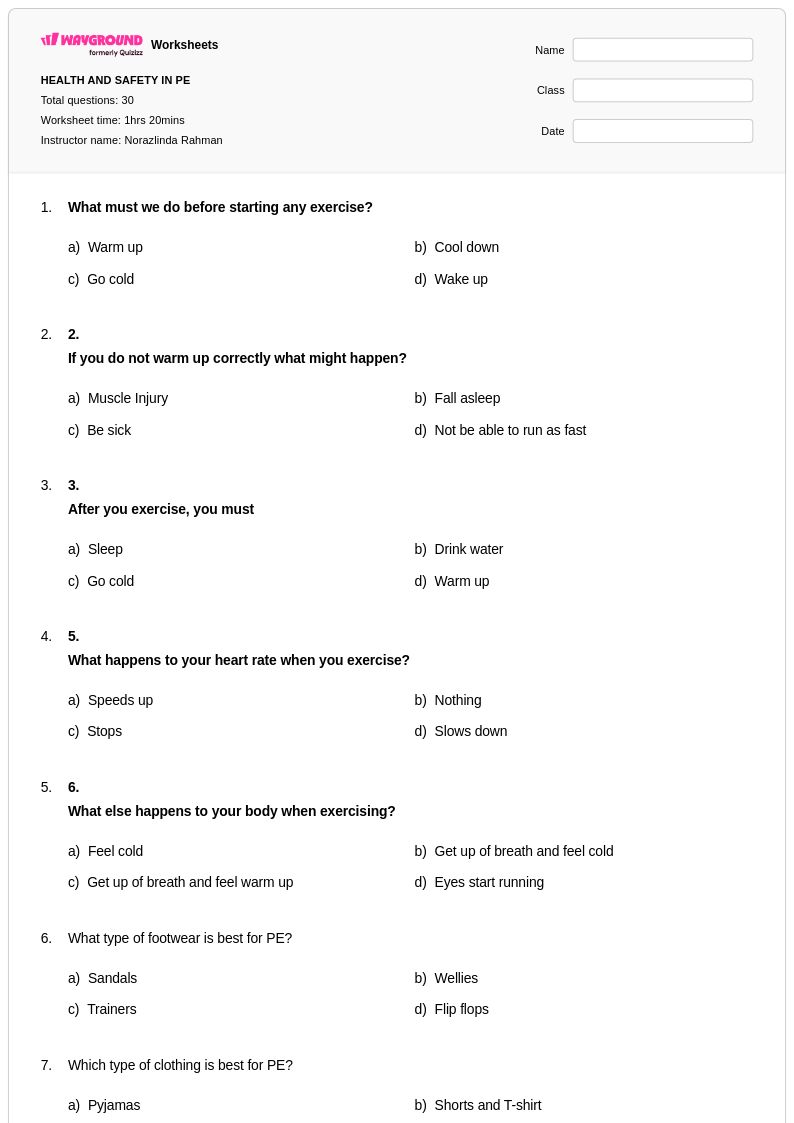
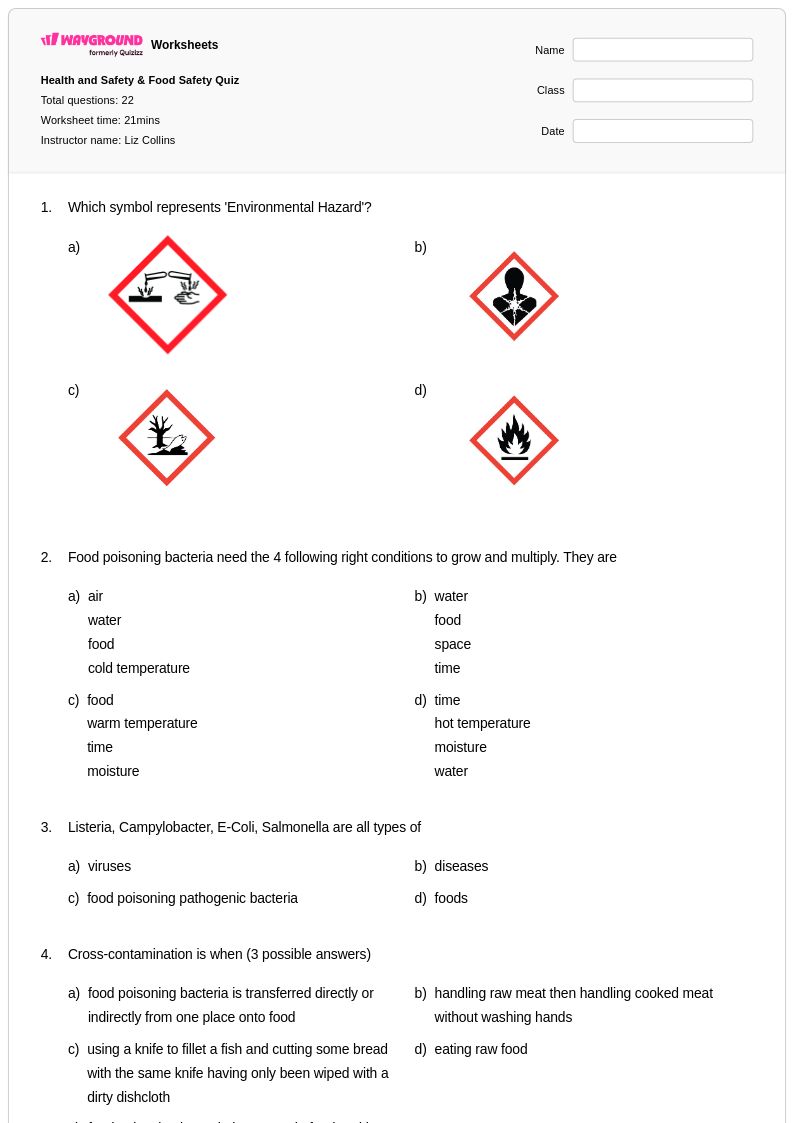
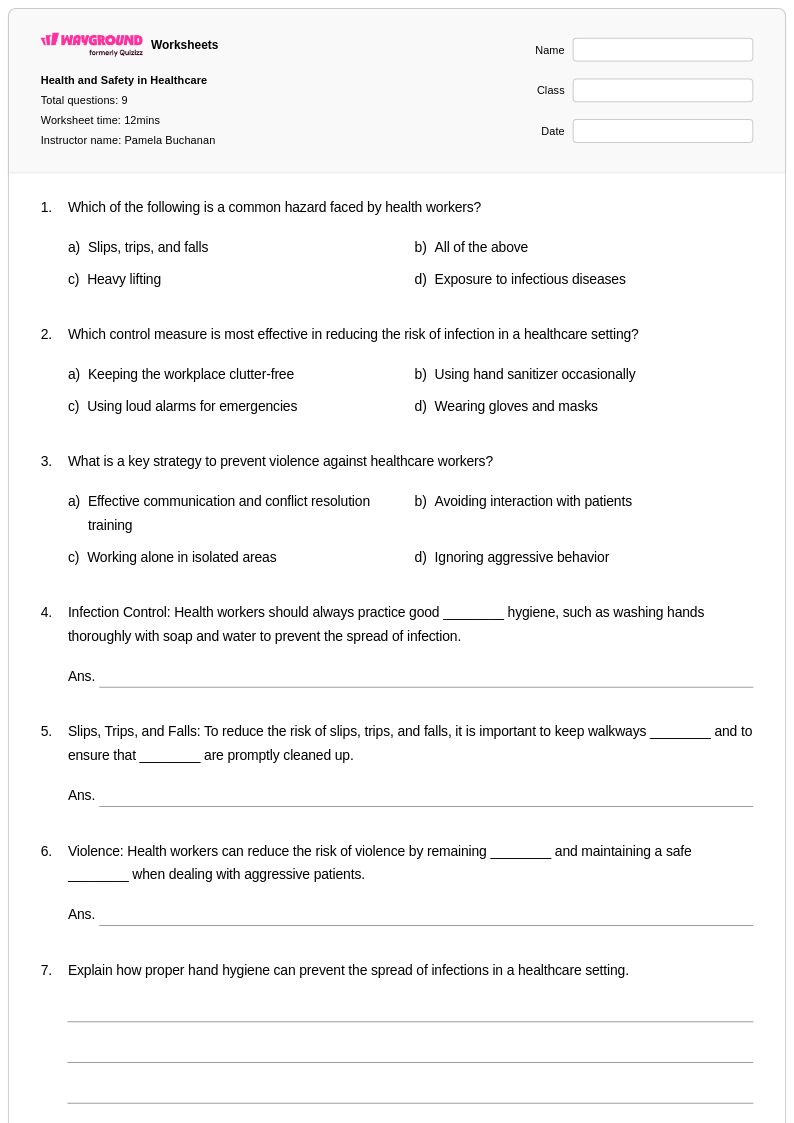
Explore Wayground's comprehensive collection of free Health and Safety worksheets and printables that help students develop essential knowledge about personal wellness, injury prevention, and safe practices through engaging practice problems and detailed answer keys.
Health and Safety worksheets available through Wayground (formerly Quizizz) provide comprehensive educational resources that help students develop critical knowledge and skills for maintaining personal well-being and preventing injuries. These expertly crafted worksheets cover essential topics including emergency procedures, first aid basics, nutrition fundamentals, personal hygiene practices, substance abuse prevention, and environmental safety awareness. Each worksheet collection includes detailed answer keys that enable both independent learning and guided instruction, while the free printable format ensures accessibility for all educational settings. Students engage with practice problems that range from identifying safety hazards in various environments to analyzing real-world scenarios that require quick decision-making skills, building the foundation for lifelong health and safety consciousness.
Wayground (formerly Quizizz) supports Physical Education teachers with millions of teacher-created Health and Safety resources that streamline lesson planning and enhance student engagement across diverse learning environments. The platform's robust search and filtering capabilities allow educators to quickly locate age-appropriate materials that align with state and national health education standards, while built-in differentiation tools ensure that worksheets can be adapted for students with varying ability levels and learning styles. Teachers benefit from flexible customization options that allow them to modify existing content or create personalized assessments, with all materials available in both printable pdf format and interactive digital versions. These comprehensive features enable educators to effectively implement targeted remediation for struggling learners, provide enrichment opportunities for advanced students, and deliver consistent skill practice that reinforces critical health and safety concepts throughout the academic year.
FAQs
How do I teach health and safety concepts to students effectively?
Effective health and safety instruction combines direct teaching of core concepts with scenario-based practice so students can apply knowledge in realistic situations. Cover foundational topics in a logical sequence: personal hygiene and body safety first, then first aid basics, fire safety, kitchen safety, and emergency response procedures like CPR. Embedding real-world decision-making scenarios into lessons helps students move beyond memorization toward genuine preparedness.
What topics should a health and safety unit cover?
A well-rounded health and safety unit should include body safety, personal safety, first aid basics, CPR fundamentals, fire safety protocols, and kitchen safety practices. Each area addresses a distinct risk environment students encounter at home, at school, or in the community. Covering all six ensures students build a comprehensive foundation for injury prevention and emergency response.
What exercises help students practice health and safety skills?
Worksheets that present hazard identification scenarios, first aid decision trees, and step-by-step emergency procedure guides are highly effective for practicing health and safety skills. Having students analyze real-world situations, such as identifying fire hazards in a kitchen diagram or sequencing CPR steps correctly, builds the critical thinking needed for quick, accurate responses. Regular practice with varied scenarios reinforces retention and reduces hesitation in actual emergencies.
What mistakes do students commonly make when learning health and safety content?
Students frequently confuse the order of steps in emergency procedures, such as reversing compression-to-breath ratios in CPR or skipping the step of calling emergency services before administering first aid. Another common error is treating safety rules as abstract rather than situational, which makes it harder to apply them when context changes. Worksheets that require students to justify their answers or sequence steps in order help surface and correct these misconceptions before they become ingrained.
How can I differentiate health and safety worksheets for students with different learning needs?
Differentiation in health and safety instruction can include reducing the number of answer choices for students who need lower cognitive load, providing read-aloud support for questions and scenarios, and adjusting time limits for students who need extended processing time. On Wayground, these accommodations can be assigned to individual students without alerting the rest of the class, so differentiation happens seamlessly. Teachers can configure extended time, read aloud, reduced answer choices, and reading mode adjustments from the Students tab or session settings page.
How do I use Wayground's health and safety worksheets in my classroom?
Wayground's health and safety worksheets are available as printable PDFs for traditional classroom use and in digital formats for technology-integrated or hybrid learning environments. Teachers can assign them as independent practice, guided review, or formal assessments, and can also host them as a quiz directly on the Wayground platform. Each worksheet includes a complete answer key, making them practical for both teacher-led instruction and self-paced student work.