Free Printable Instrument Precision Worksheets for Class 12
Class 12 instrument precision worksheets from Wayground help students master measurement accuracy and significant figures through comprehensive printables, practice problems, and answer keys in convenient PDF format.
Explore printable Instrument Precision worksheets for Class 12
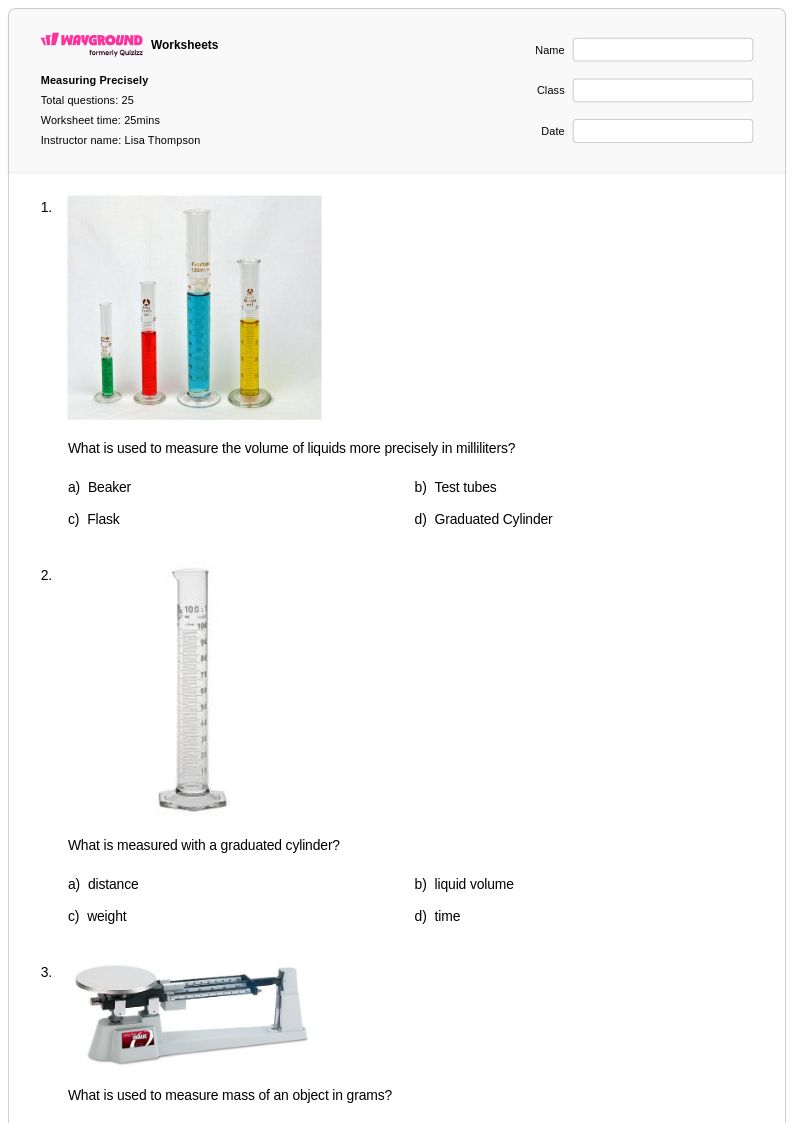
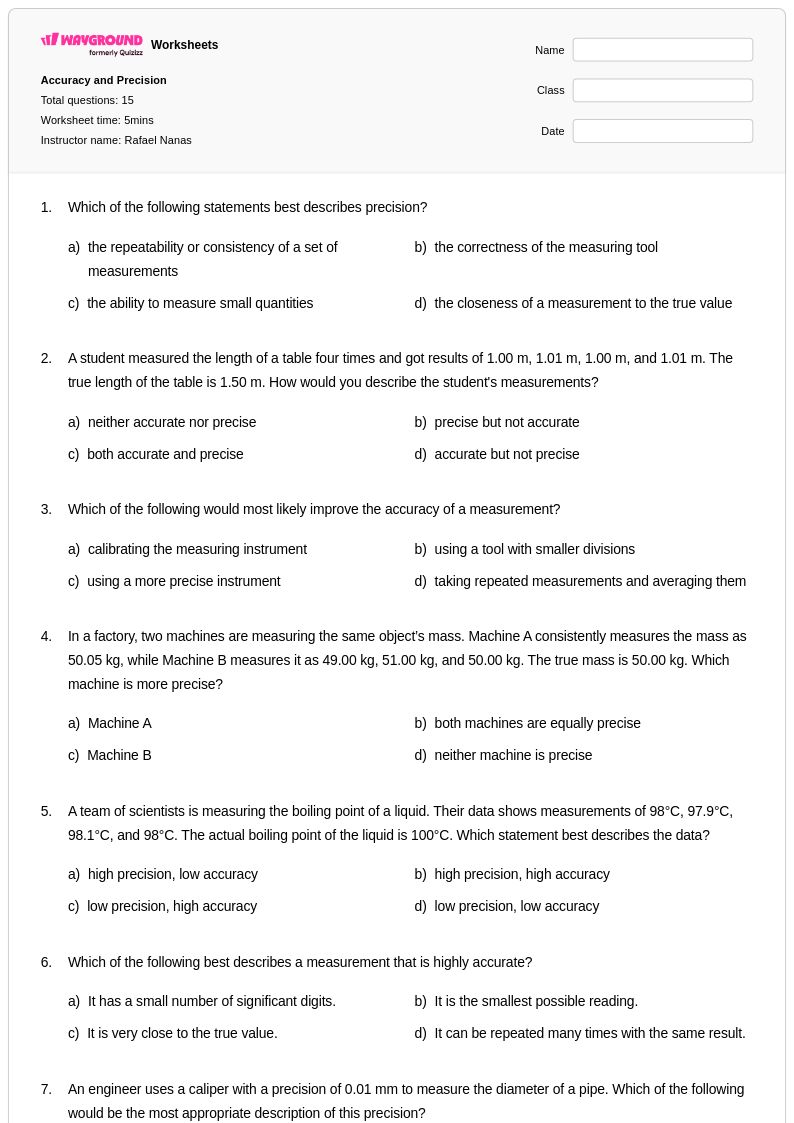
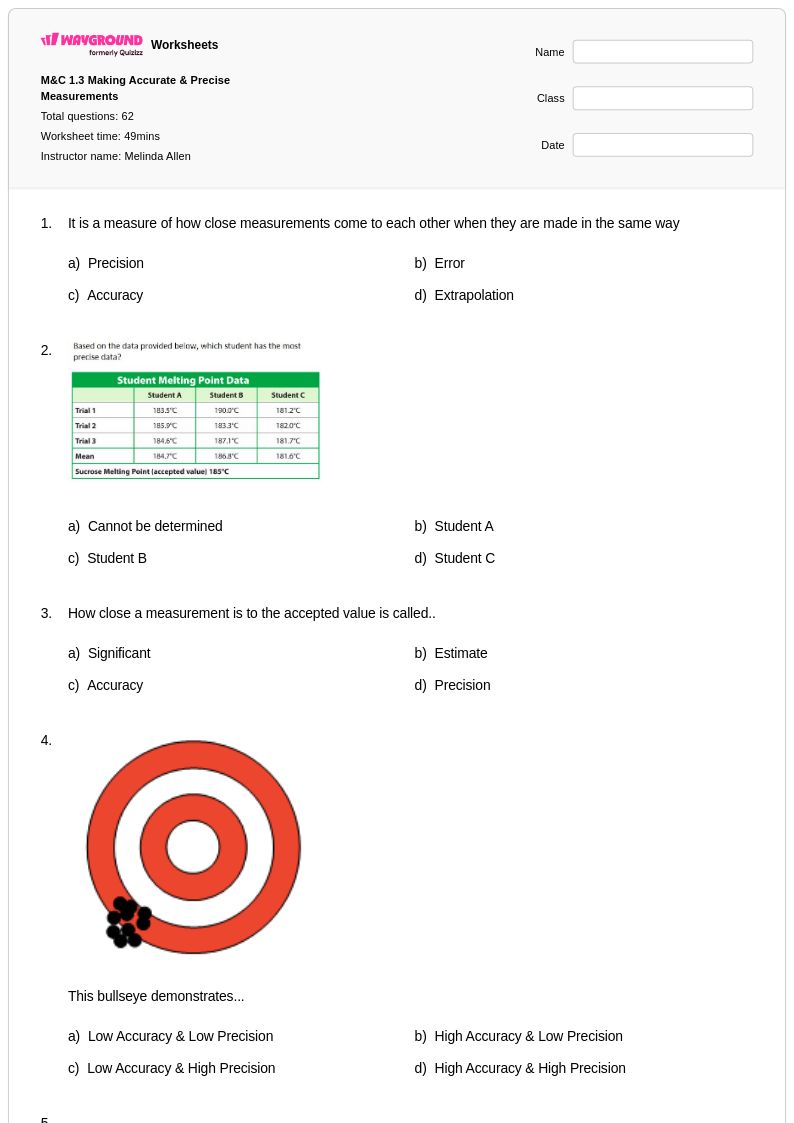
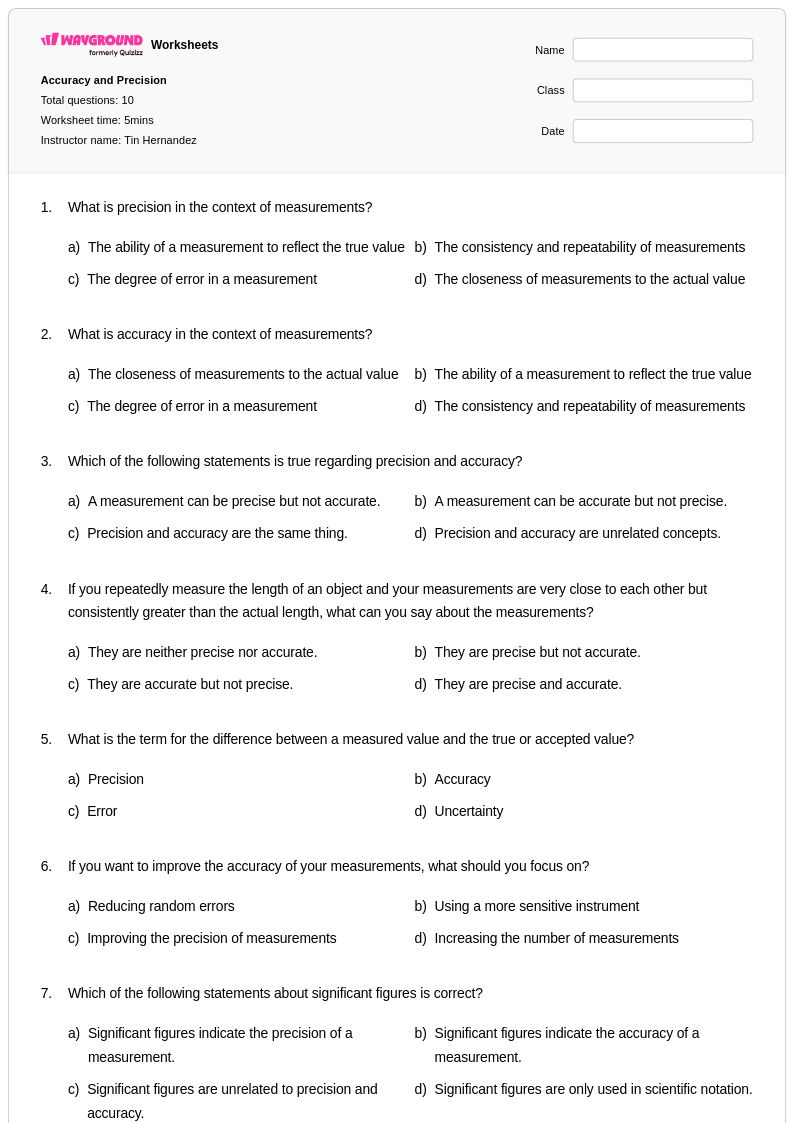
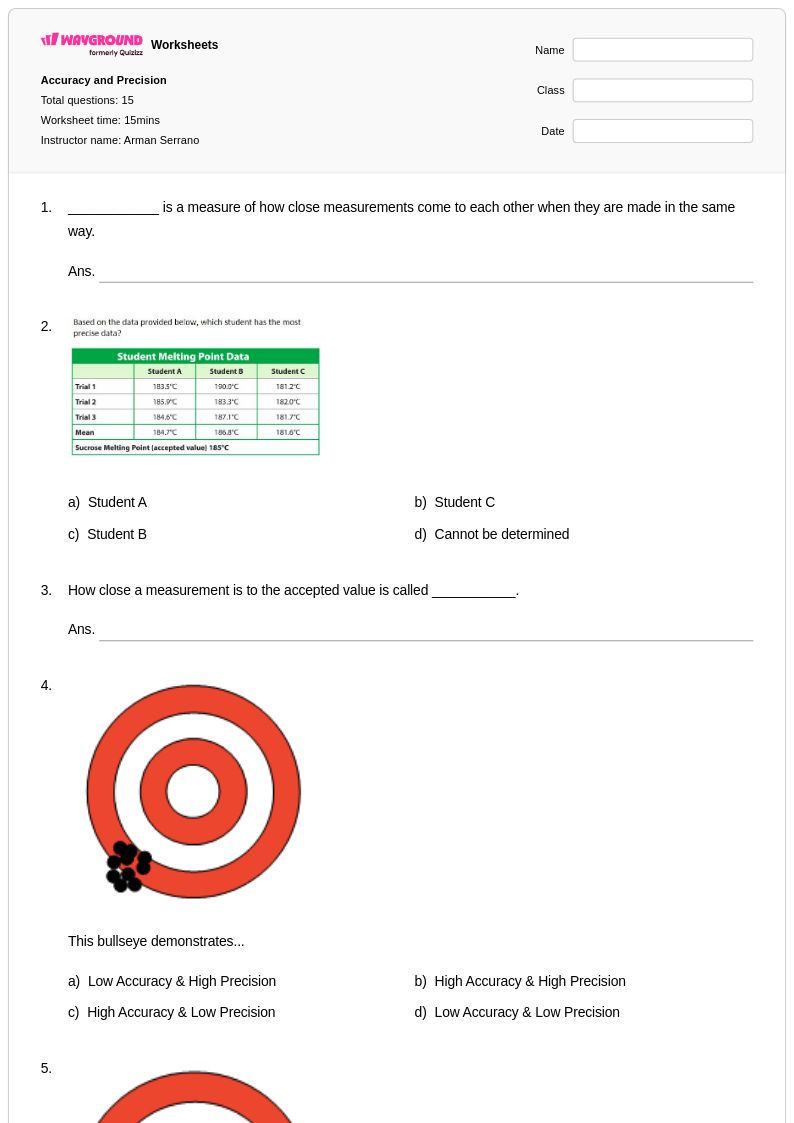
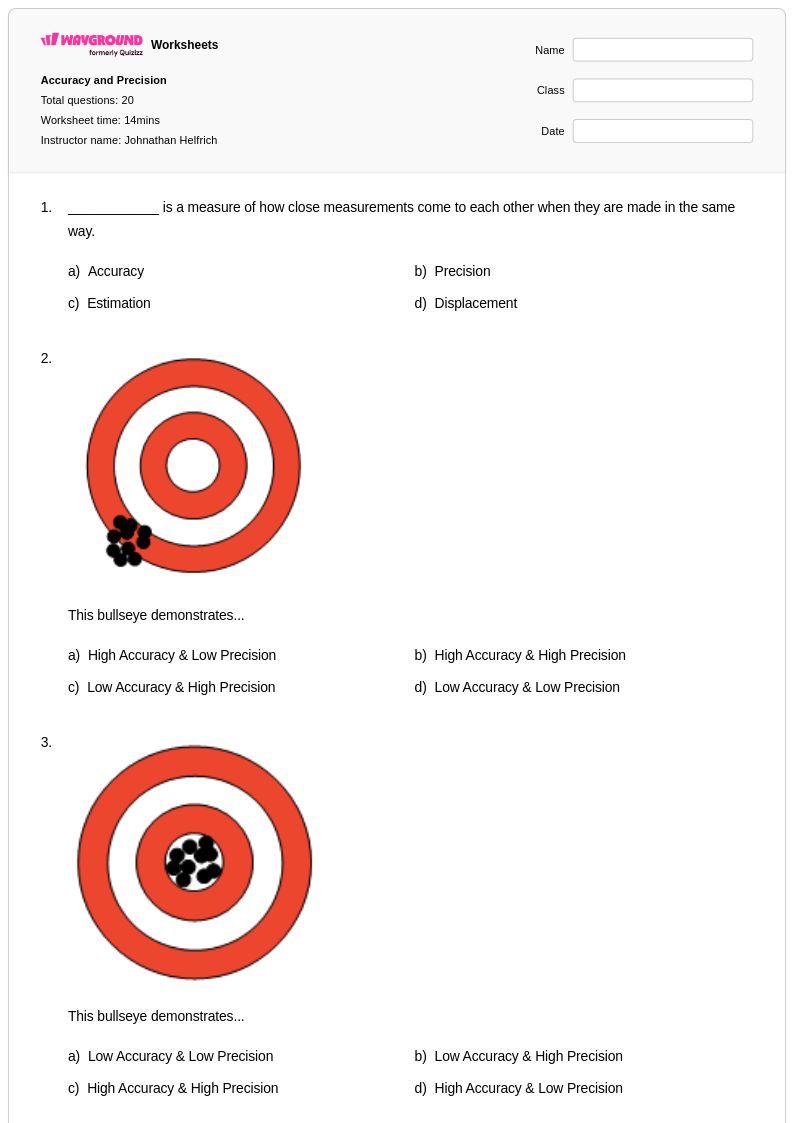
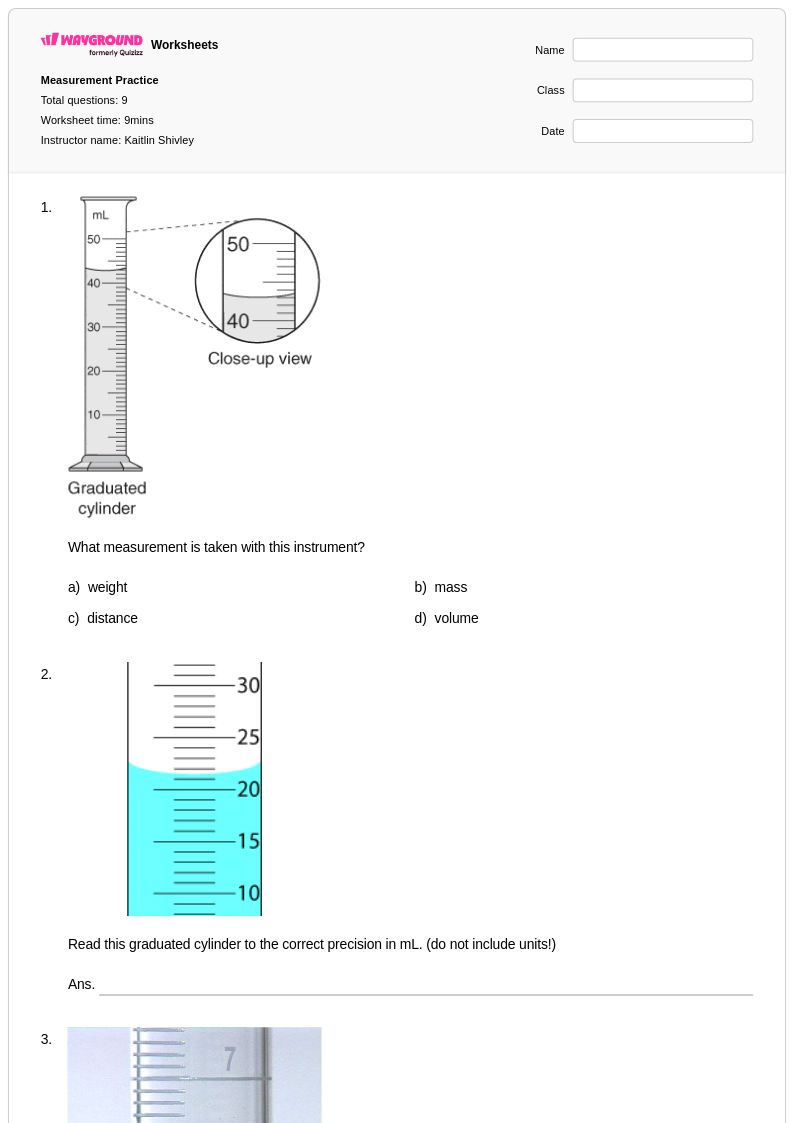
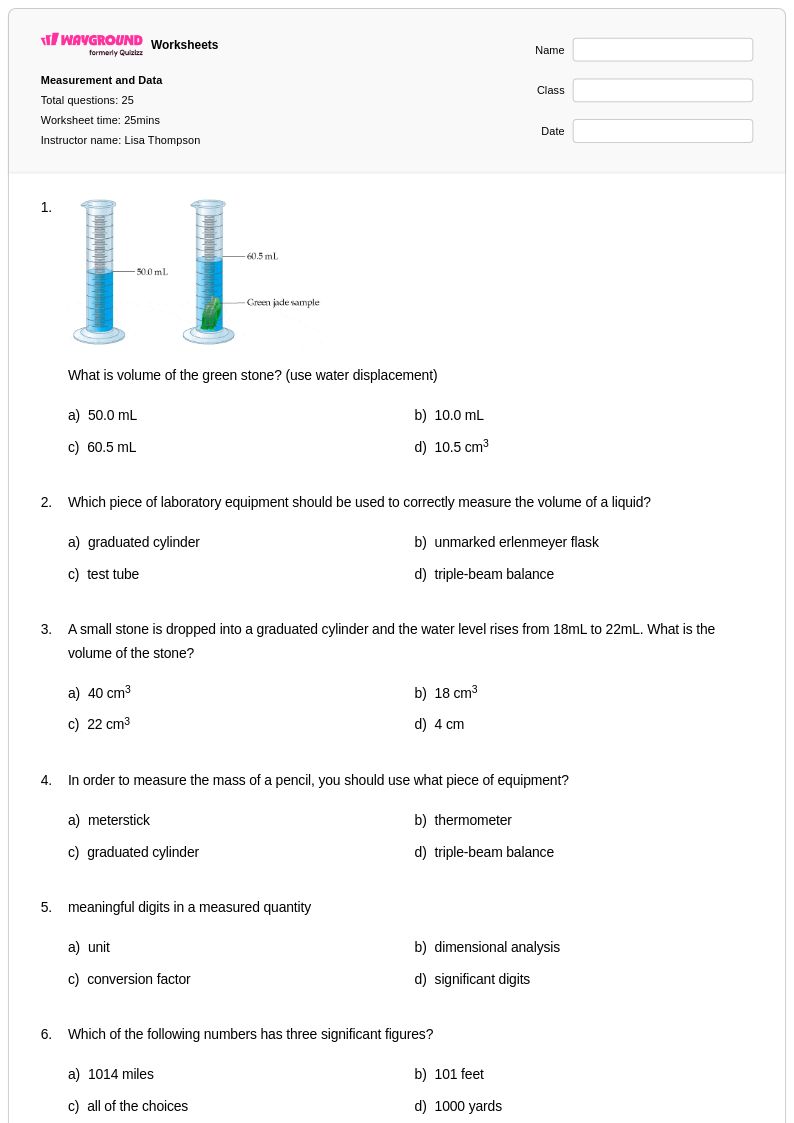
Instrument precision worksheets for Class 12 science students provide essential practice in understanding measurement accuracy, uncertainty analysis, and the proper use of scientific instruments. These comprehensive worksheets available through Wayground (formerly Quizizz) focus on developing critical skills in reading instrument scales, calculating significant figures, determining measurement uncertainty, and evaluating precision versus accuracy in experimental data. Students work through practice problems that involve various measuring devices including calipers, graduated cylinders, balances, and digital instruments, learning to identify the limitations and appropriate precision levels of each tool. The collection includes detailed answer keys and free printable pdf resources that guide students through complex concepts such as instrumental error, least count determination, and proper data recording techniques essential for advanced scientific work.
Wayground (formerly Quizizz) supports science educators with an extensive library of millions of teacher-created instrument precision worksheets specifically designed for Class 12 level instruction. The platform's robust search and filtering capabilities allow teachers to quickly locate resources aligned with specific curriculum standards and learning objectives, while differentiation tools enable customization for students at varying skill levels. These versatile worksheet collections are available in both printable and digital pdf formats, providing flexibility for classroom instruction, homework assignments, laboratory preparation, and assessment purposes. Teachers can efficiently plan targeted skill practice sessions, design remediation activities for students struggling with measurement concepts, and create enrichment opportunities that challenge advanced learners to explore complex precision and uncertainty calculations used in professional scientific research.
FAQs
How do I teach instrument precision to science students?
Teaching instrument precision effectively starts with hands-on exposure to a range of measuring tools, from rulers and graduated cylinders to digital balances and thermometers. Have students identify the smallest measurable unit on each instrument before taking any readings, since precision is determined by the instrument's scale, not the student's estimation. Pair this with repeated measurement exercises so students can observe variability firsthand and understand why consistency matters in scientific inquiry. Building from simple to sophisticated instruments helps students develop a transferable framework for evaluating any measuring device they encounter.
What exercises help students practice reading measurement instruments accurately?
Effective practice exercises include identifying the least count of a given instrument, reading scales to the correct number of decimal places, and determining the appropriate number of significant figures based on instrument limitations. Students benefit from problems that ask them to compare measurements taken with two different instruments and explain which is more precise and why. Repeated measurement problems, where students calculate the range or average of a data set, also reinforce how precision affects the reliability of experimental results.
What mistakes do students commonly make when working with instrument precision?
One of the most common errors is confusing precision with accuracy, treating them as interchangeable when they describe fundamentally different qualities of measurement. Students also frequently record more decimal places than an instrument can reliably provide, or round to fewer places than the instrument supports, both of which misrepresent precision. Another widespread mistake is failing to account for parallax error when reading analog scales, particularly with graduated cylinders and rulers. These misconceptions need to be addressed explicitly and early, since they compound in error analysis and significant figures work.
How do I differentiate instrument precision practice for students at different skill levels?
For students who are still building foundational skills, start with single-scale instruments like rulers and simple thermometers before introducing tools with more complex scales. Advanced learners can be challenged with measurement uncertainty calculations, propagation of error problems, and comparisons across multiple instrument types within a single lab context. On Wayground, teachers can apply accommodations such as reduced answer choices for students who need additional support, or enable Read Aloud for students who benefit from audio delivery of questions, without signaling any changes to the rest of the class.
How can I use Wayground's instrument precision worksheets in my classroom?
Wayground's instrument precision worksheets are available as printable PDFs for traditional classroom use and in digital formats for technology-integrated environments, making them flexible for both in-person and remote instruction. Teachers can also host the worksheets as a quiz directly on Wayground, giving students an interactive experience while automatically collecting results. Each worksheet includes a complete answer key, supporting both teacher-led review and independent student self-assessment.
How does instrument precision connect to significant figures and experimental error?
Instrument precision directly determines how many significant figures are appropriate when recording a measurement, since students should never report more digits than the instrument can reliably detect. When students understand this connection, significant figures stop feeling like an arbitrary rule and become a logical extension of how measuring tools work. In lab contexts, instrument precision also sets a lower bound on experimental error, meaning that even a perfectly executed procedure carries inherent uncertainty tied to the tools used. Teaching these concepts together gives students a more coherent understanding of measurement and data quality in science.