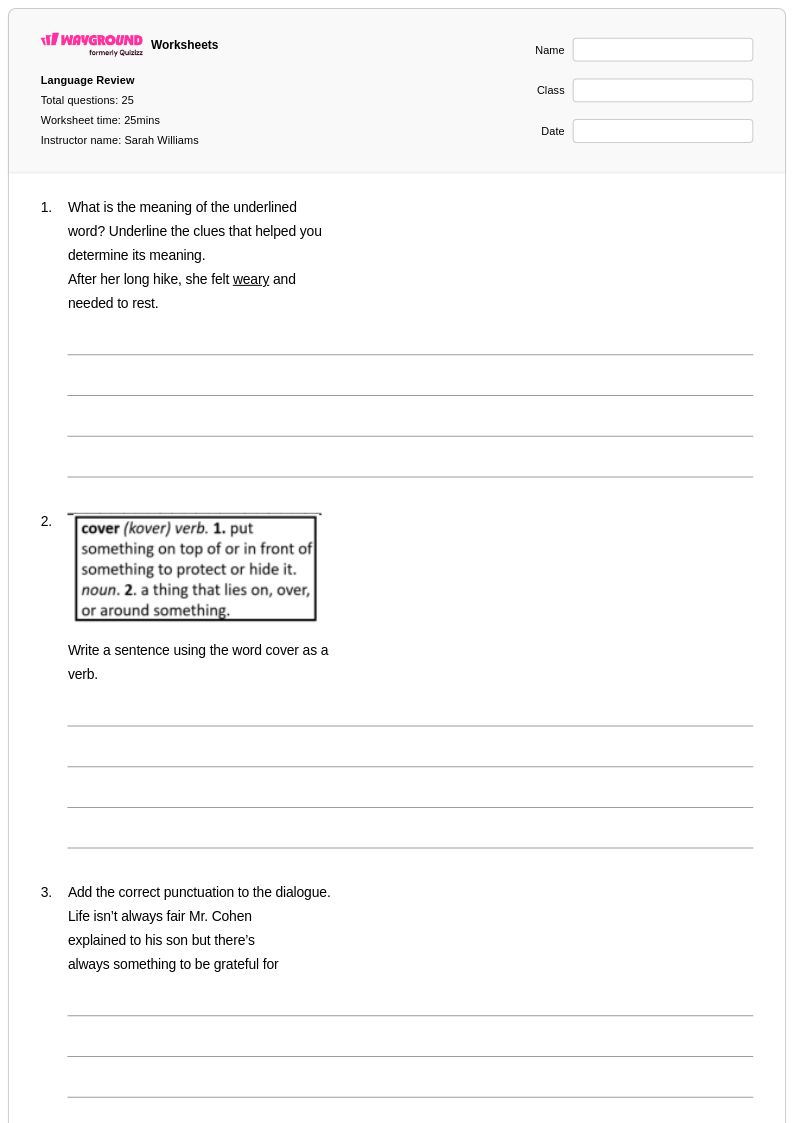
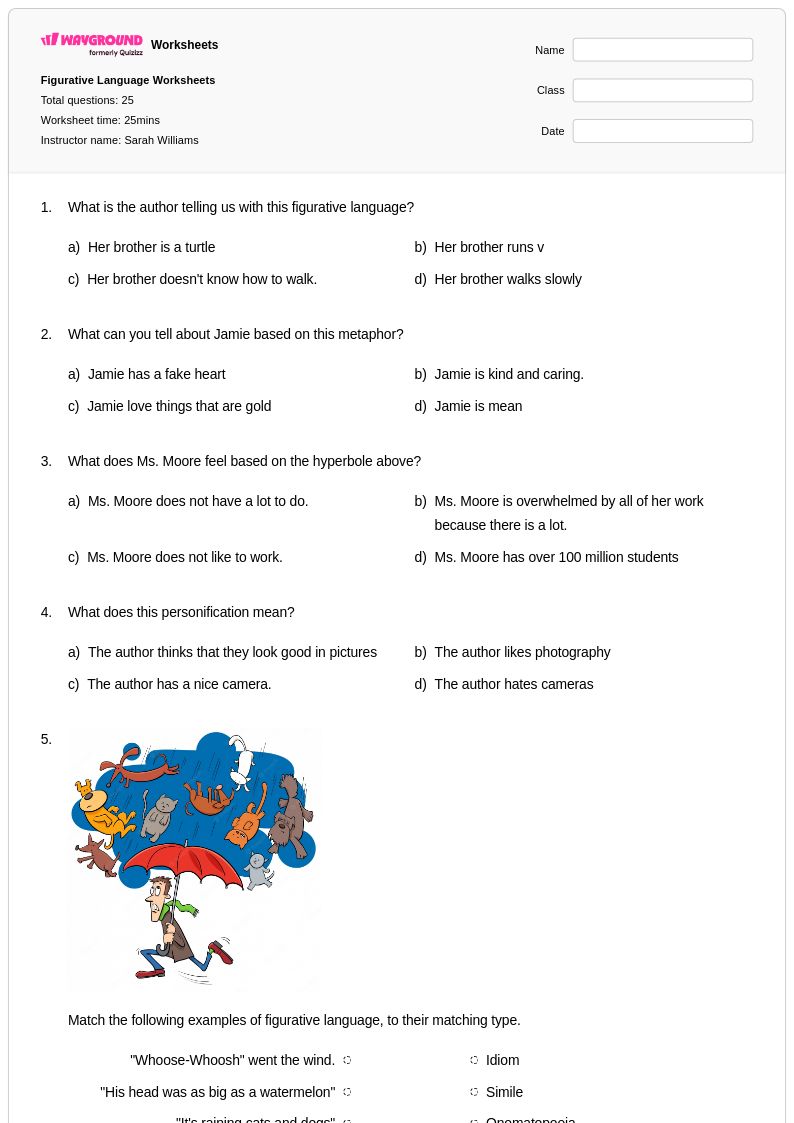
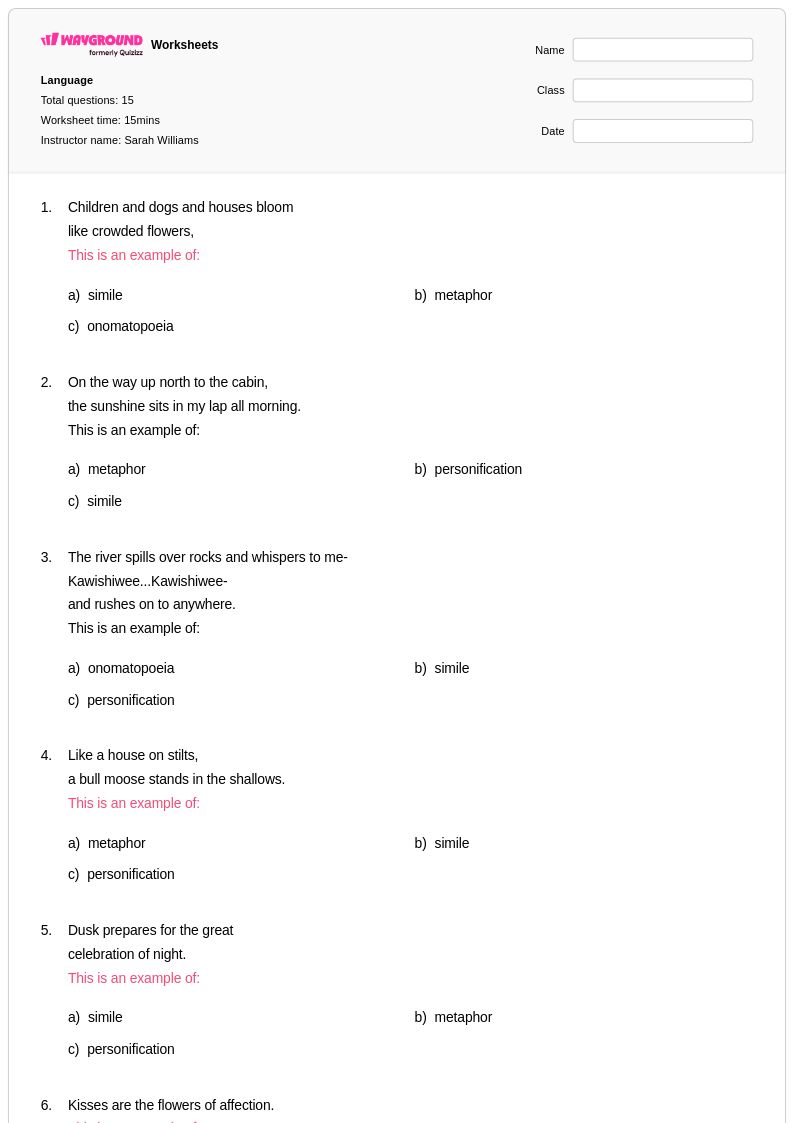
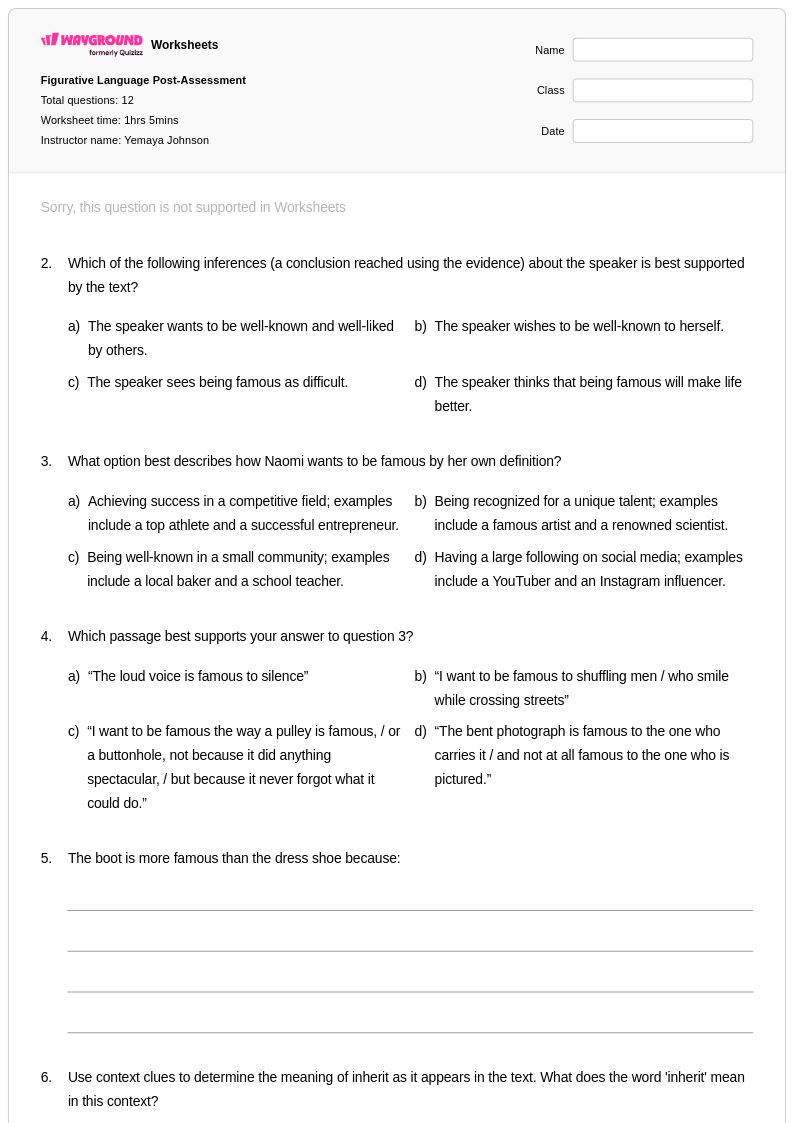
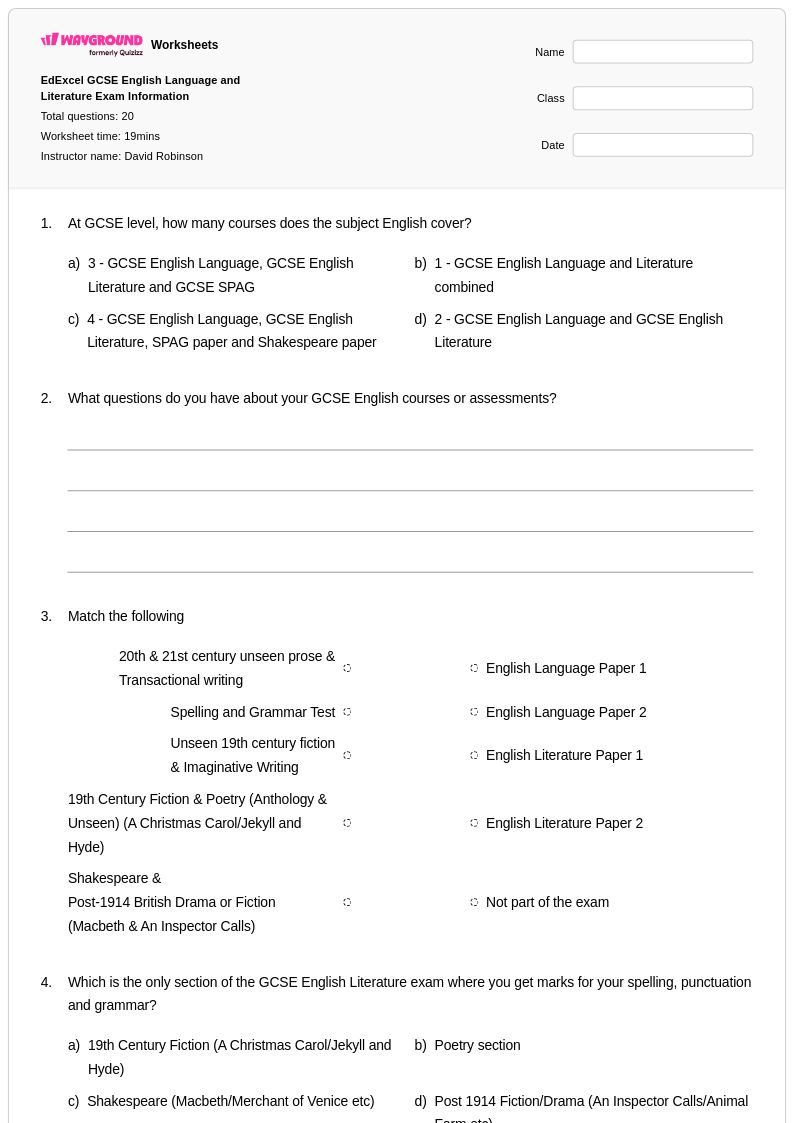
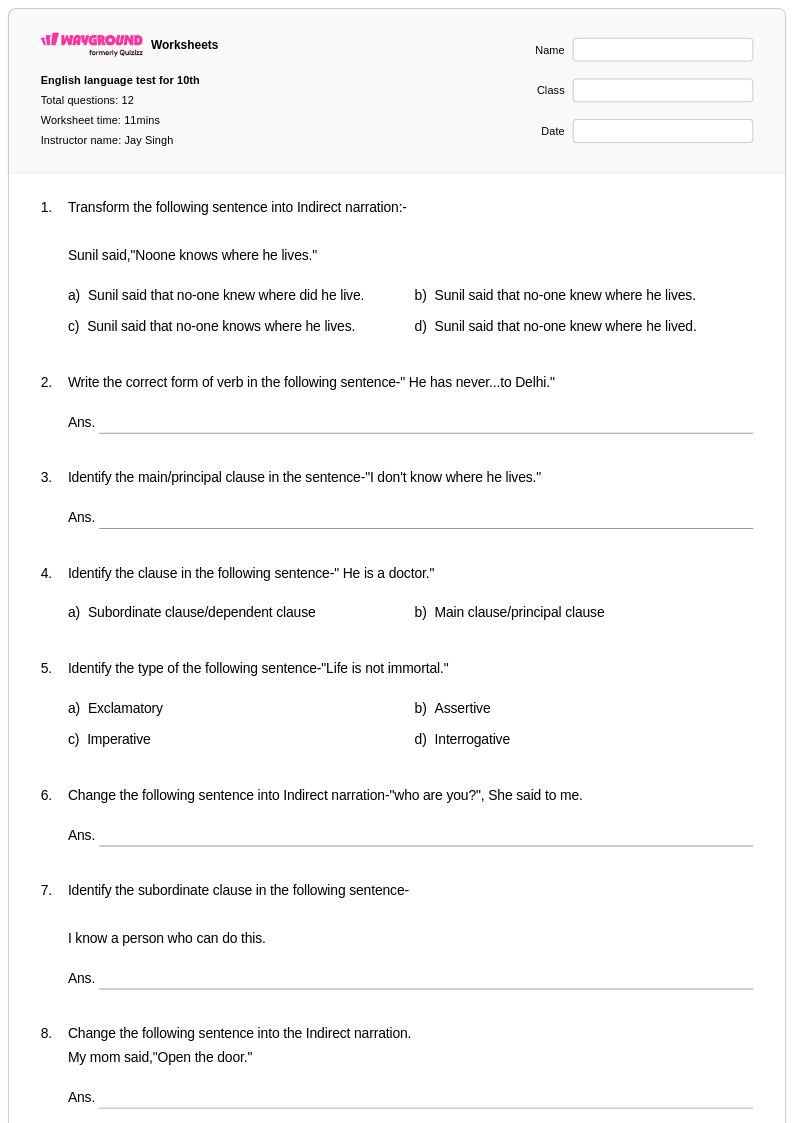
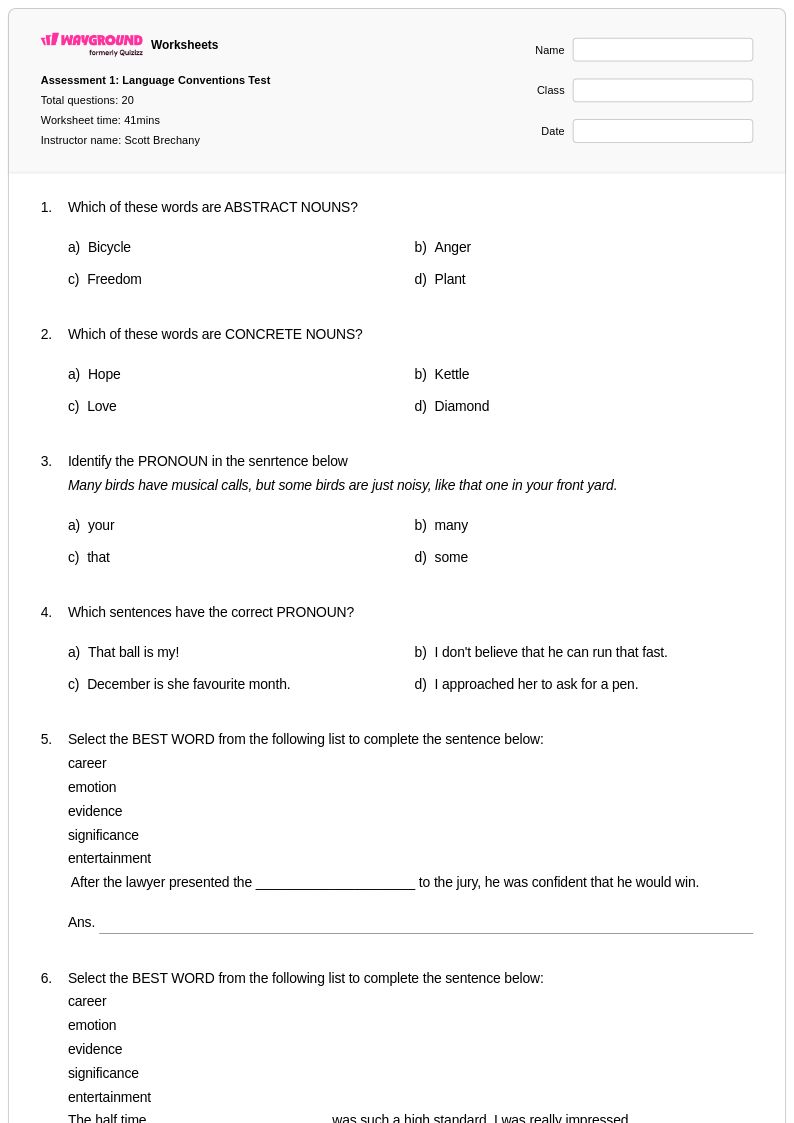
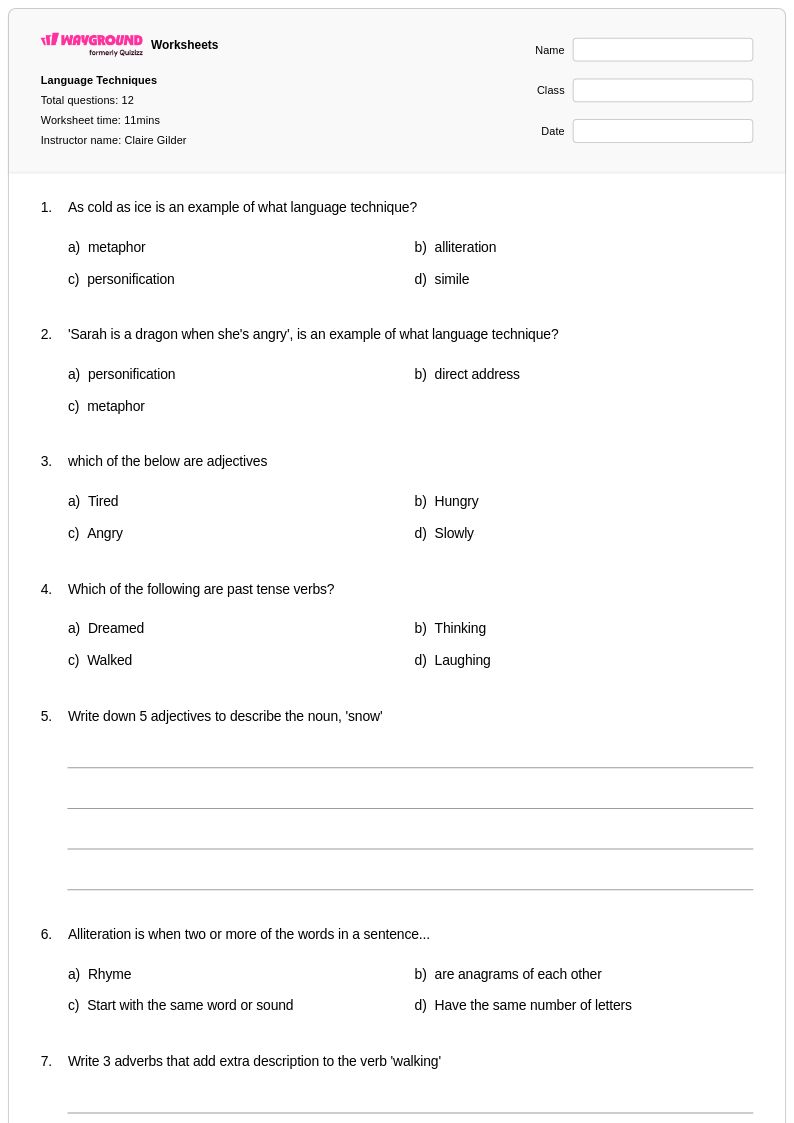
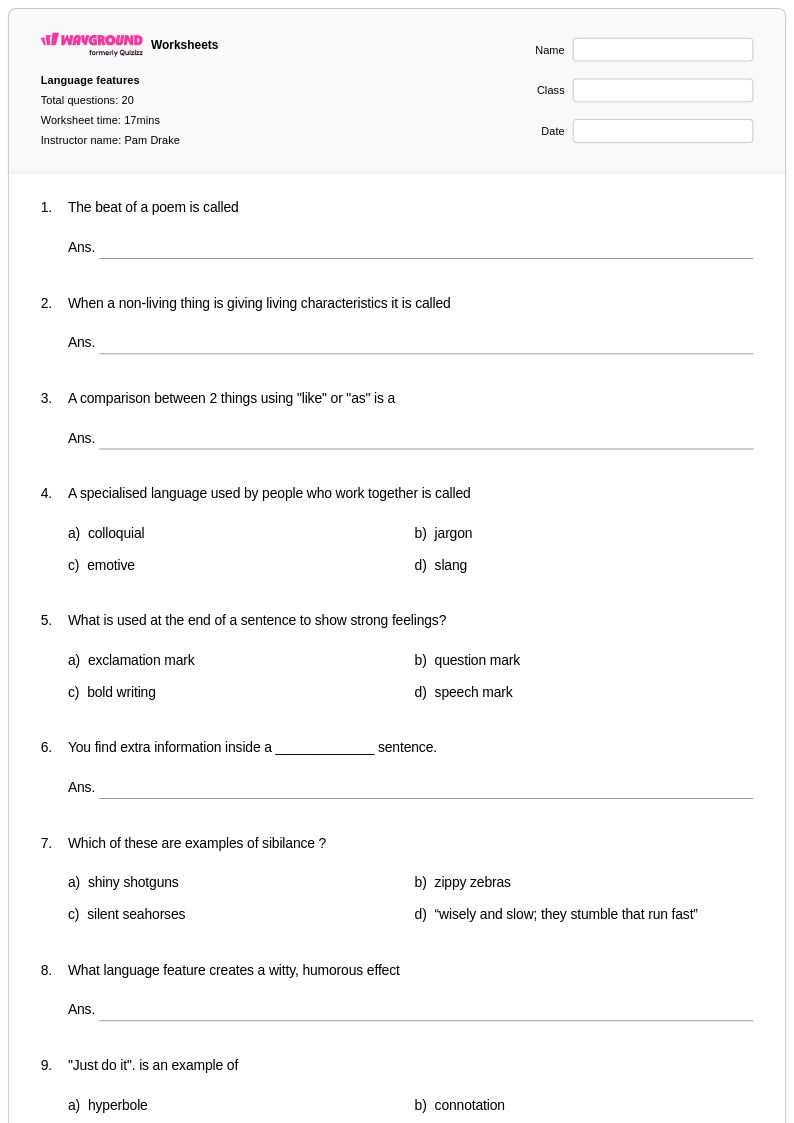
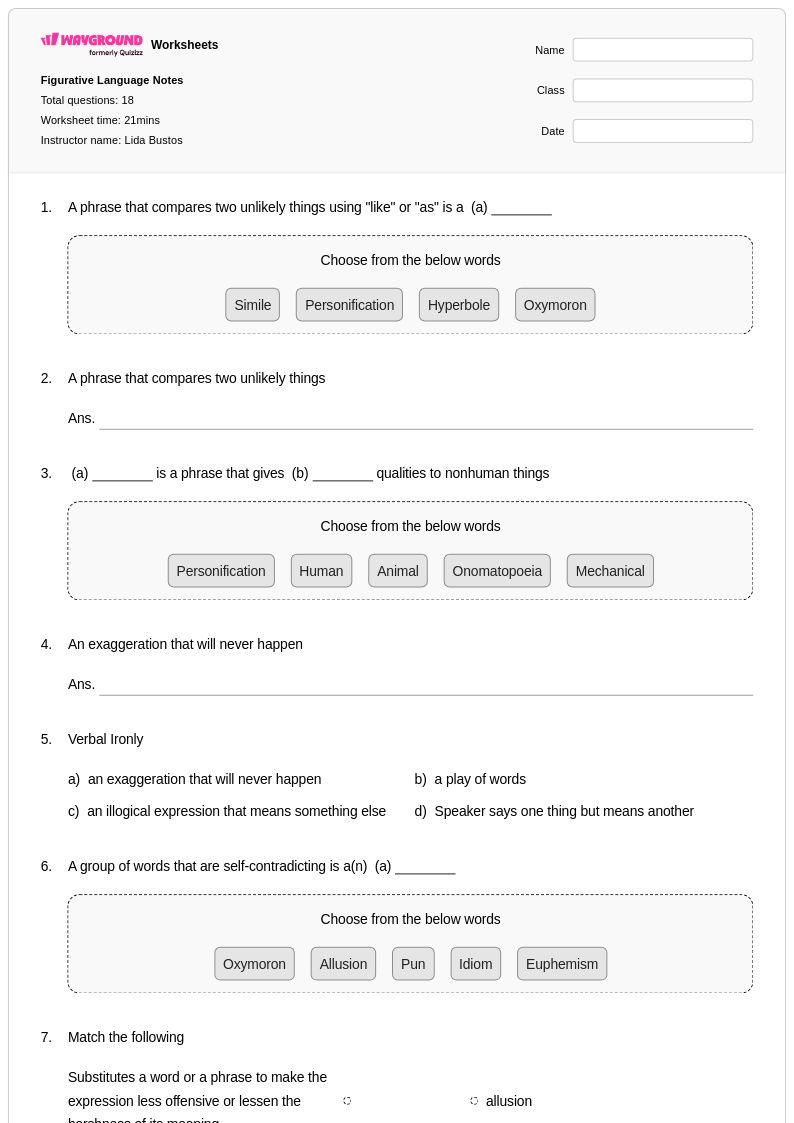
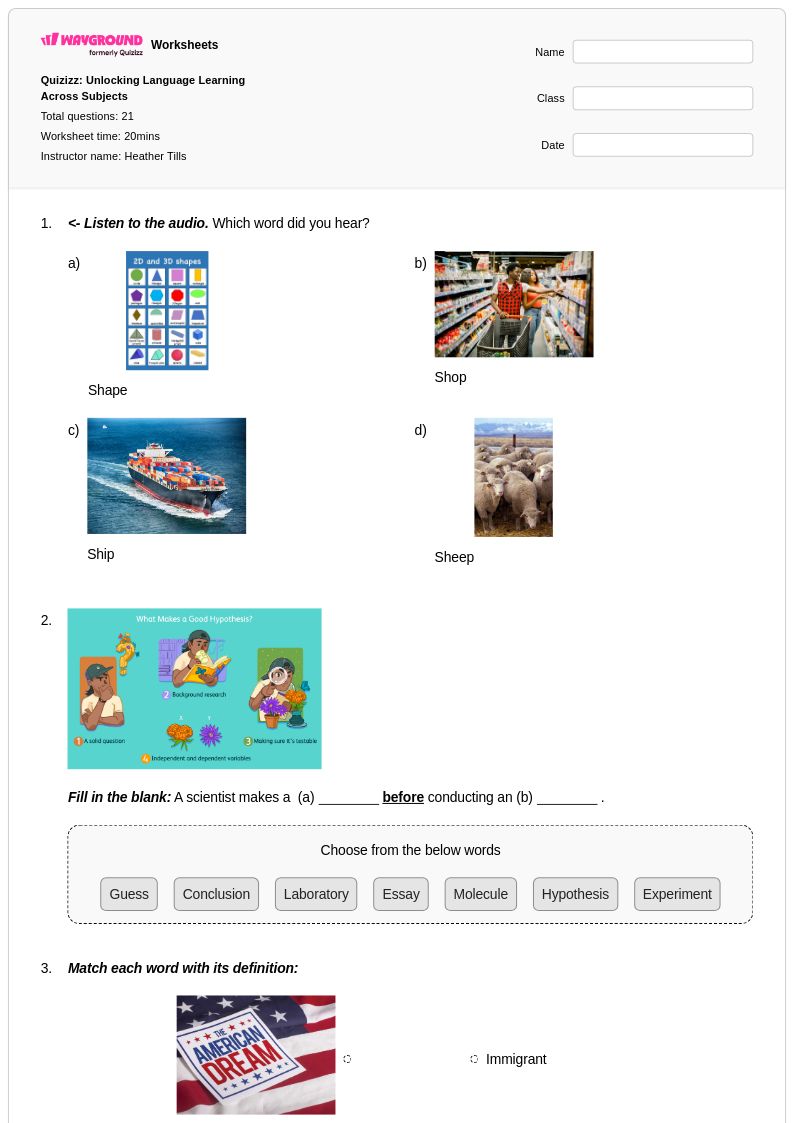
Master Class 9 language fundamentals with Wayground's comprehensive collection of free worksheets and printables, featuring targeted practice problems and answer keys to strengthen essential communication skills.
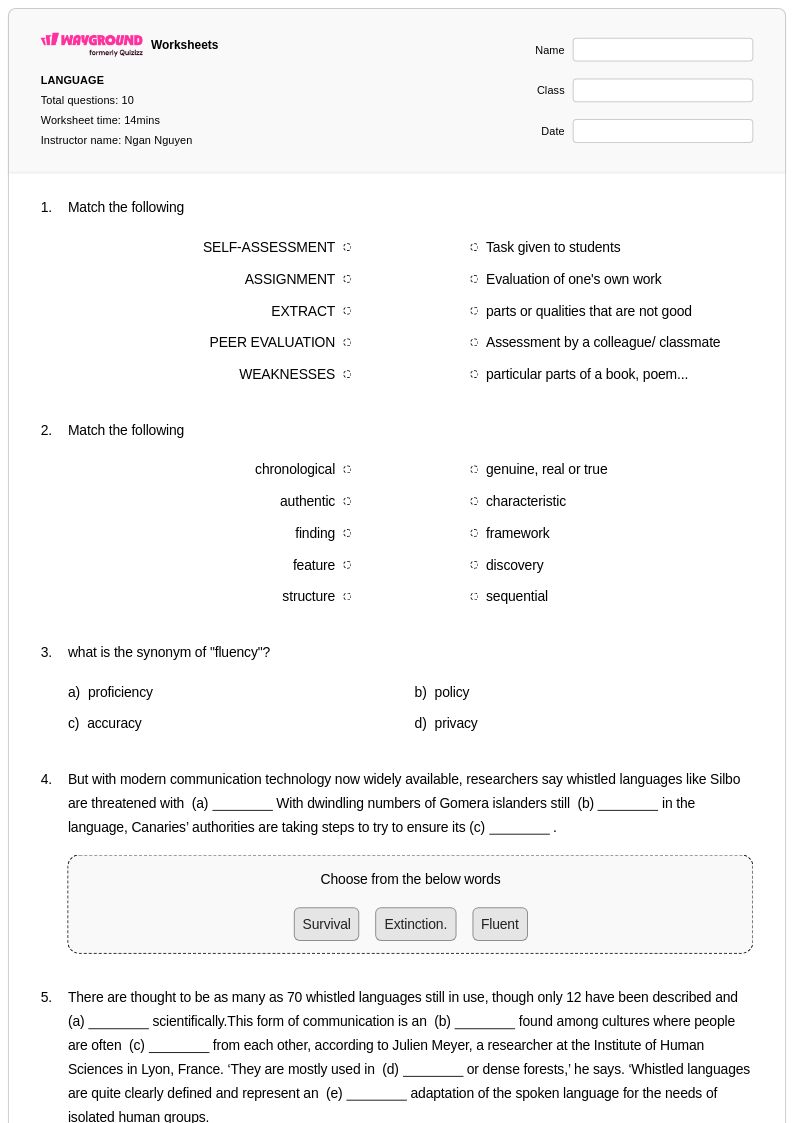
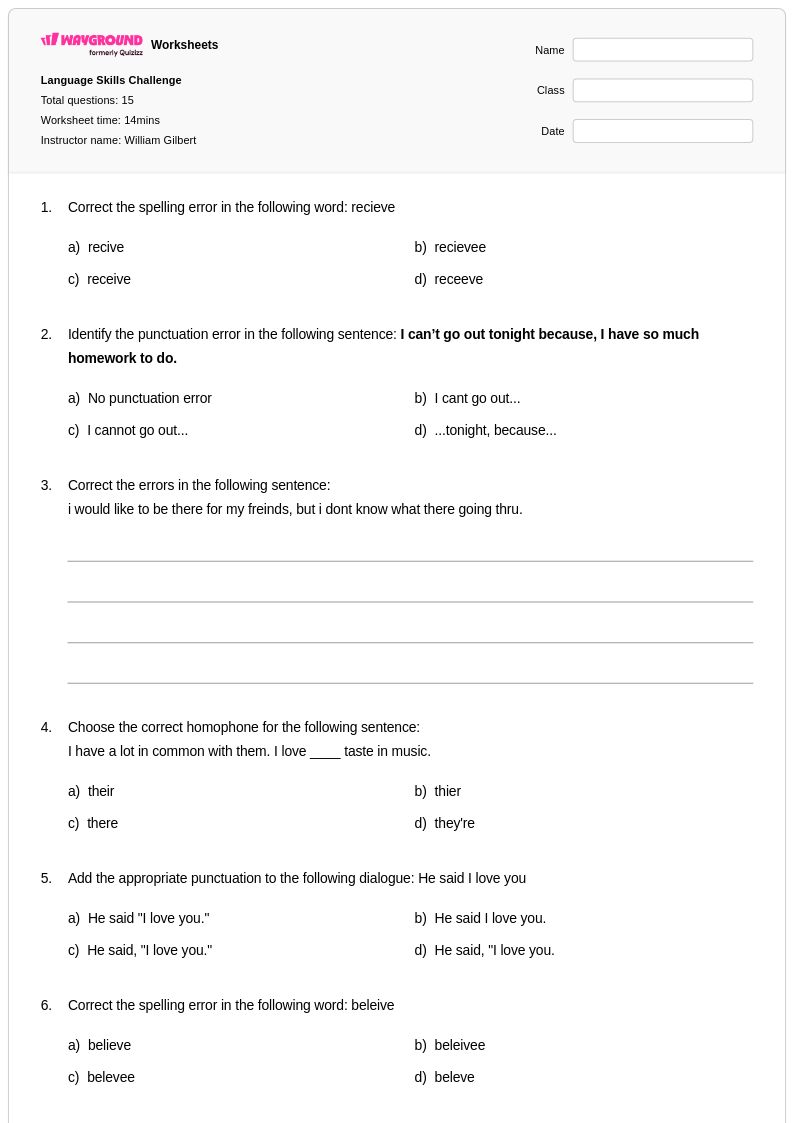
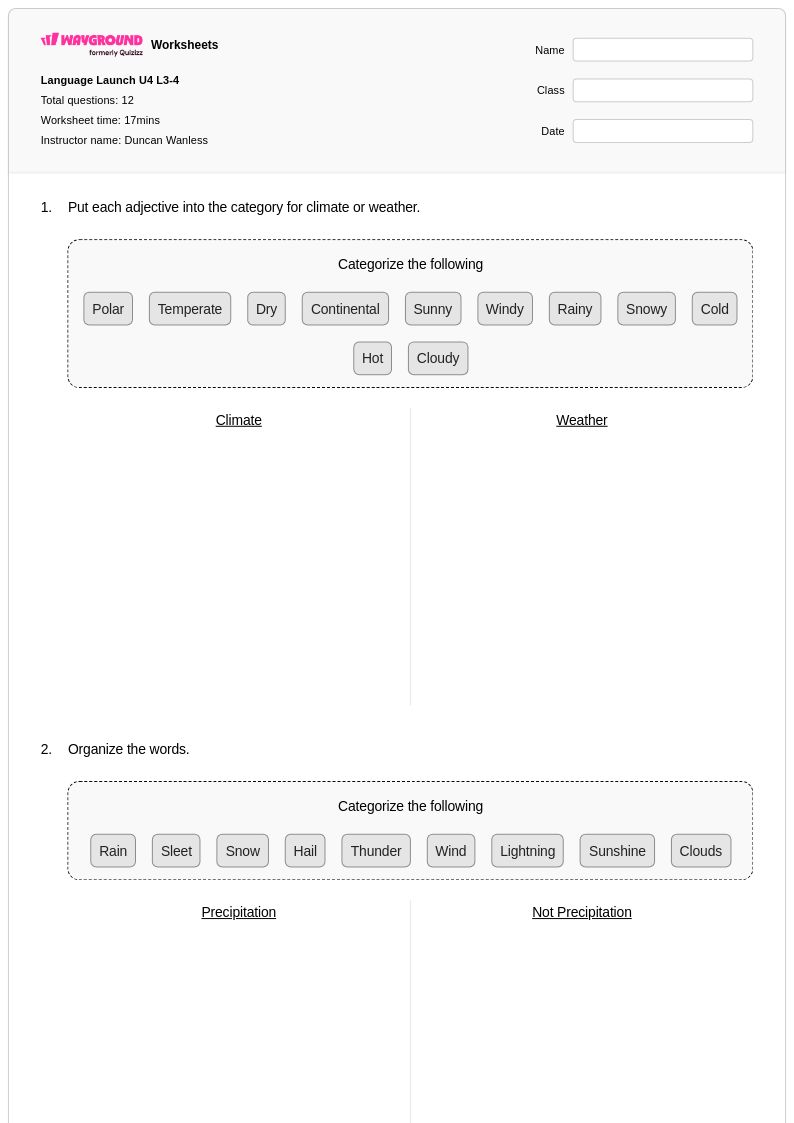
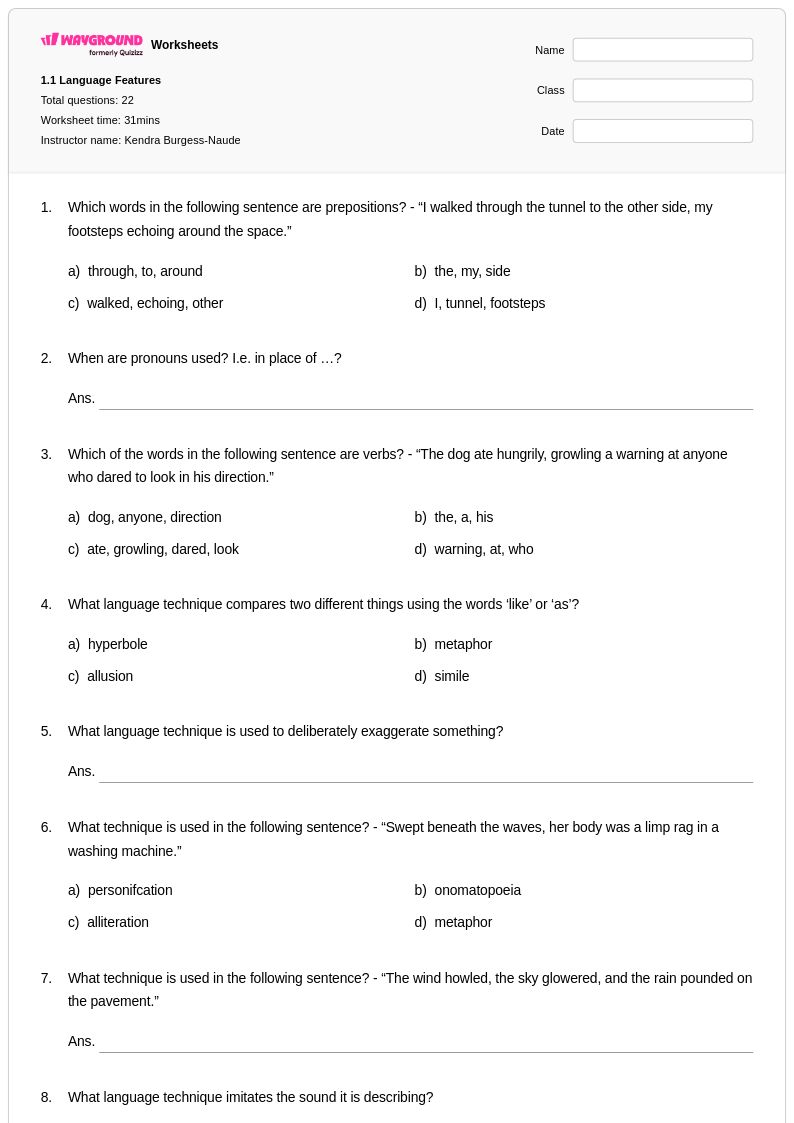
Class 9 language worksheets available through Wayground (formerly Quizizz) provide comprehensive coverage of essential linguistic concepts that form the foundation of advanced English communication skills. These expertly designed resources target critical areas including grammar mechanics, sentence structure analysis, parts of speech identification, and syntactic patterns that ninth-grade students must master for academic success. Each worksheet collection includes detailed answer keys and is available as free printables in convenient pdf format, allowing educators to seamlessly integrate focused practice problems into their curriculum. The materials emphasize practical application of language rules through varied exercises that strengthen students' ability to recognize and correct common grammatical errors, analyze complex sentence constructions, and apply proper usage conventions in both written and oral communication contexts.
Wayground's extensive platform supports educators with millions of teacher-created language resources specifically curated for Class 9 instruction, featuring robust search and filtering capabilities that enable quick identification of materials aligned with specific learning objectives and curriculum standards. The comprehensive collection offers exceptional differentiation tools and flexible customization options, allowing teachers to modify worksheets according to individual student needs and classroom requirements. Available in both printable pdf formats and interactive digital versions, these resources facilitate seamless lesson planning while providing targeted support for remediation, enrichment, and skill reinforcement activities. The platform's sophisticated organization system empowers educators to efficiently locate age-appropriate language practice materials that address diverse learning styles and academic proficiency levels within their ninth-grade classrooms.
FAQs
How do I teach figurative language and literary devices to elementary and middle school students?
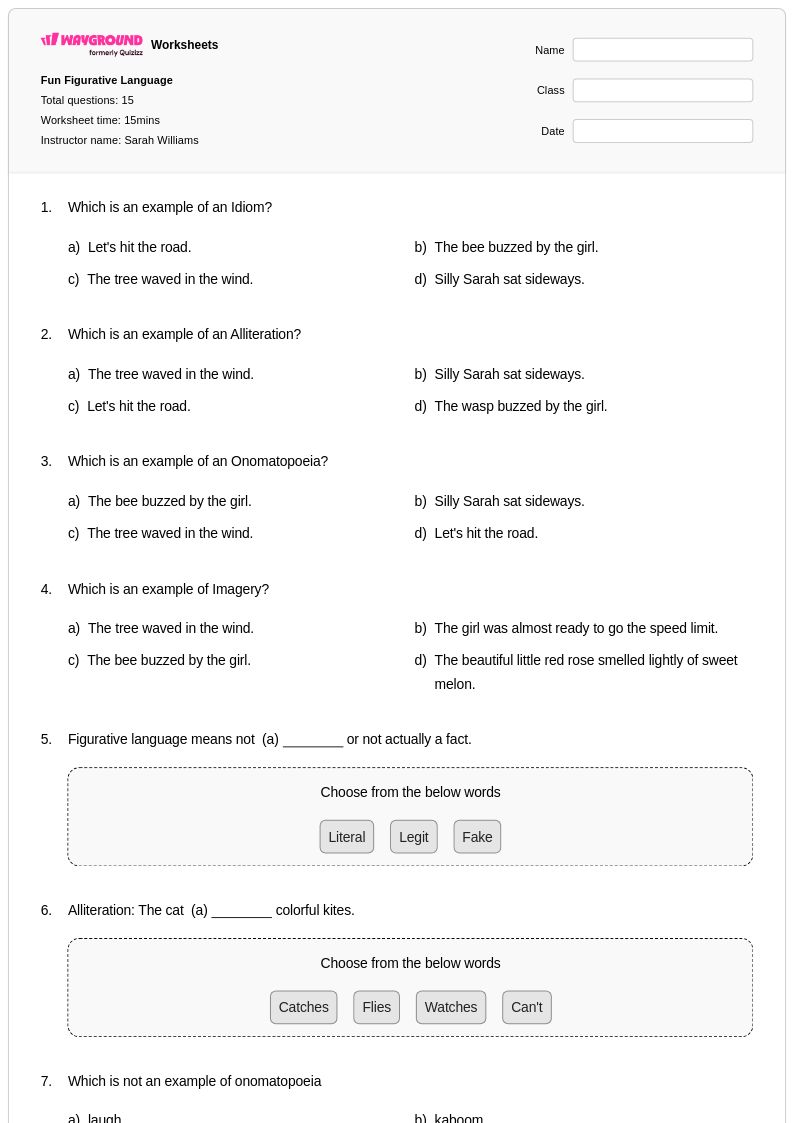
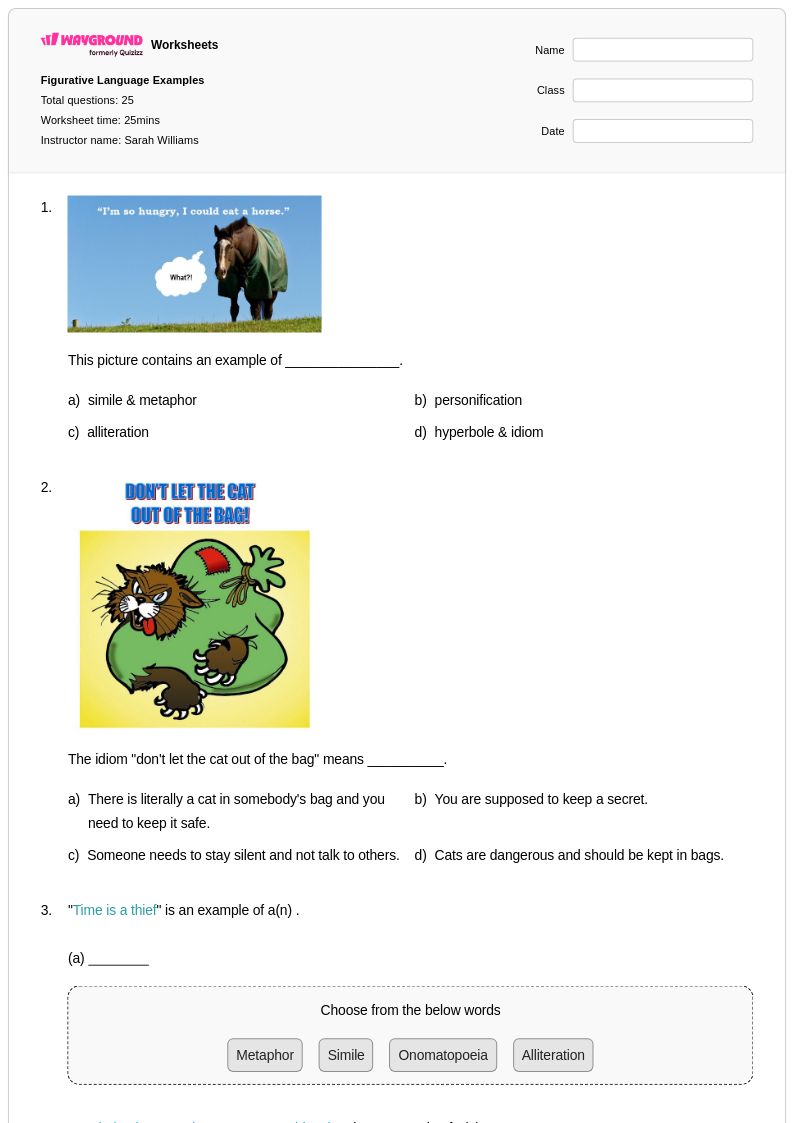
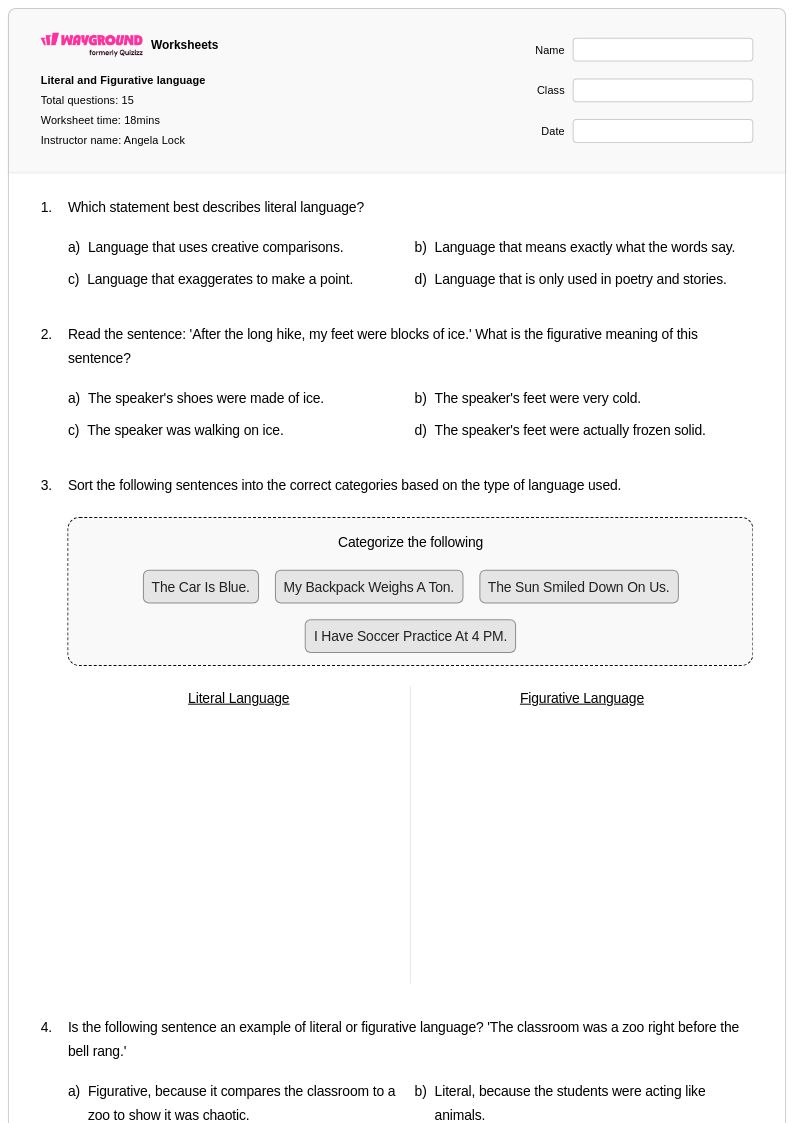
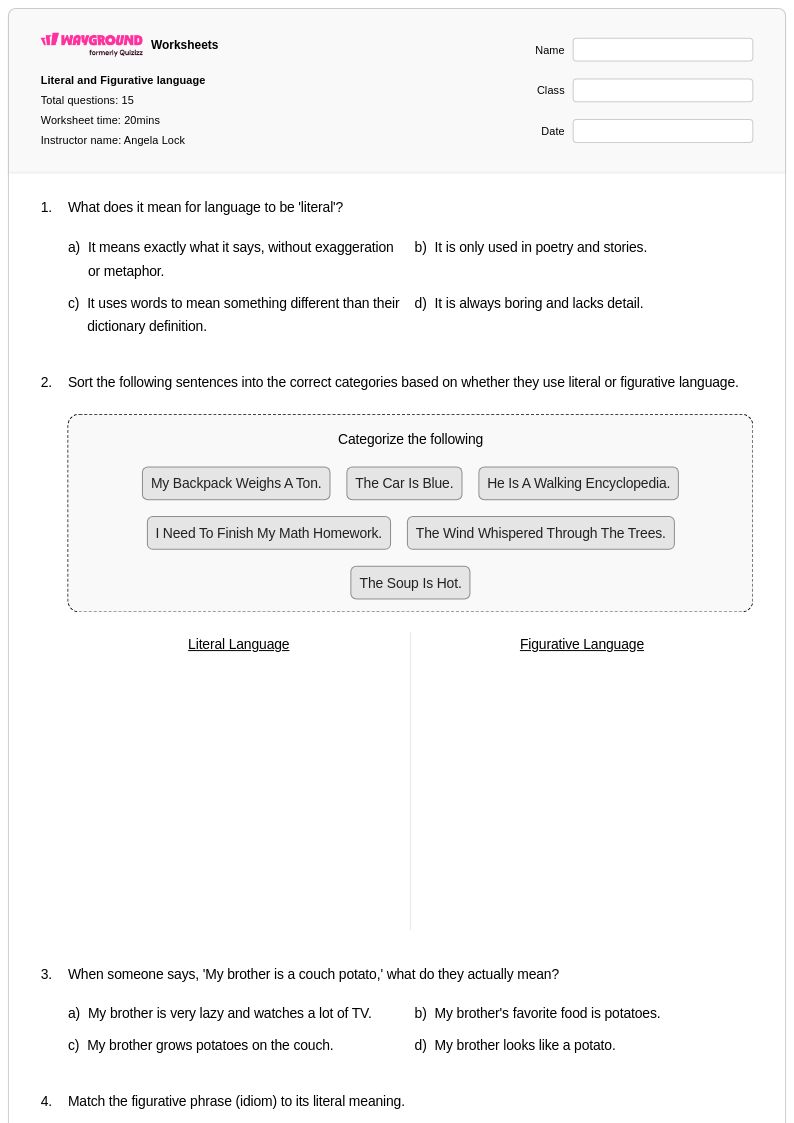
Start by grounding students in concrete examples before introducing abstract definitions — show them a familiar simile or metaphor from a text they already know, then name the device. From there, build outward to devices like personification, hyperbole, and alliteration using short, recognizable passages. Repeated exposure across reading and writing activities is more effective than isolated definition memorization.
What exercises help students practice synonyms, antonyms, and analogies?
Synonym and antonym exercises work best when students are asked to replace words in context rather than match isolated pairs, because meaning shifts depending on usage. Analogy practice should progress from simple category relationships (e.g., hot:cold :: day:night) to more complex functional or part-to-whole relationships. Worksheets that mix both skill types in a single exercise help students develop flexible vocabulary thinking.
What common mistakes do students make with homophones and compound words?
With homophones, students most frequently confuse their/there/they're and your/you're because the words sound identical and the grammatical distinction requires understanding of possession and contractions. With compound words, a common error is treating open compounds (e.g., 'ice cream') as separate unrelated words rather than a single concept. Direct instruction that pairs homophones and compound words with sentence-level context — not just definitions — reduces these errors significantly.
How do I help students understand comparatives and superlatives without confusing the two?
Students most often confuse comparatives and superlatives when they misread the number of items being compared — comparatives are used for two things, superlatives for three or more. A reliable classroom strategy is to always tie the form to the comparison context explicitly: 'Which of these two is faster?' versus 'Which of all three is the fastest?' Visual anchor charts and fill-in-the-blank exercises that specify the comparison group help reinforce the distinction.
What activities help students identify and use sensory words in their writing?
Sensory word practice is most effective when students analyze a published passage first, identifying which sense each word appeals to, before attempting to incorporate sensory language into their own writing. Activities like 'sense sorting' — categorizing words under sight, sound, smell, taste, and touch — build awareness before application. Combining this with short descriptive writing prompts gives students an immediate opportunity to transfer the skill.
How can I use language worksheets on Wayground to support students with different learning needs?
Wayground's language worksheets are available in both printable PDF format and digital formats, making them flexible for in-class, homework, or hybrid use. When hosting a worksheet as a digital quiz on Wayground, teachers can apply student-level accommodations including read aloud support, extended time, and reduced answer choices — each configurable per individual student so that the rest of the class is unaffected. These settings are saved and reusable across future sessions, reducing setup time for recurring accommodations.
How do I assess whether students have a solid grasp of abbreviations and identifying opposites before moving on?
For abbreviations, a reliable quick check is asking students to both decode an abbreviation and produce it from the full form — if they can only do one direction, their understanding is incomplete. For opposites, watch for students who confuse antonyms with words that are merely different rather than directly opposite (e.g., listing 'small' as the opposite of 'tall' rather than 'short'). A short exit-ticket worksheet targeting both skills in context gives you actionable data before moving to the next concept.