
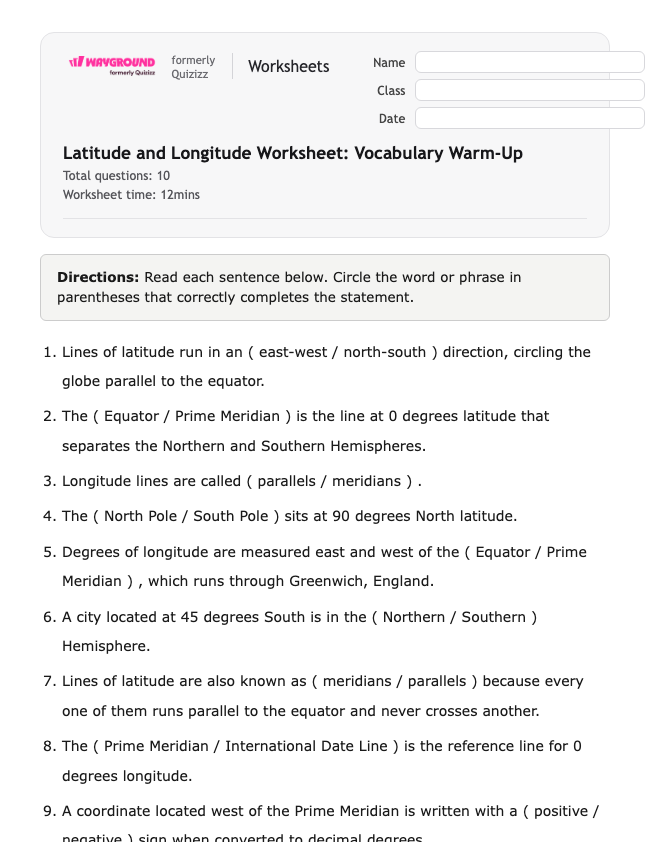
10 P
7th
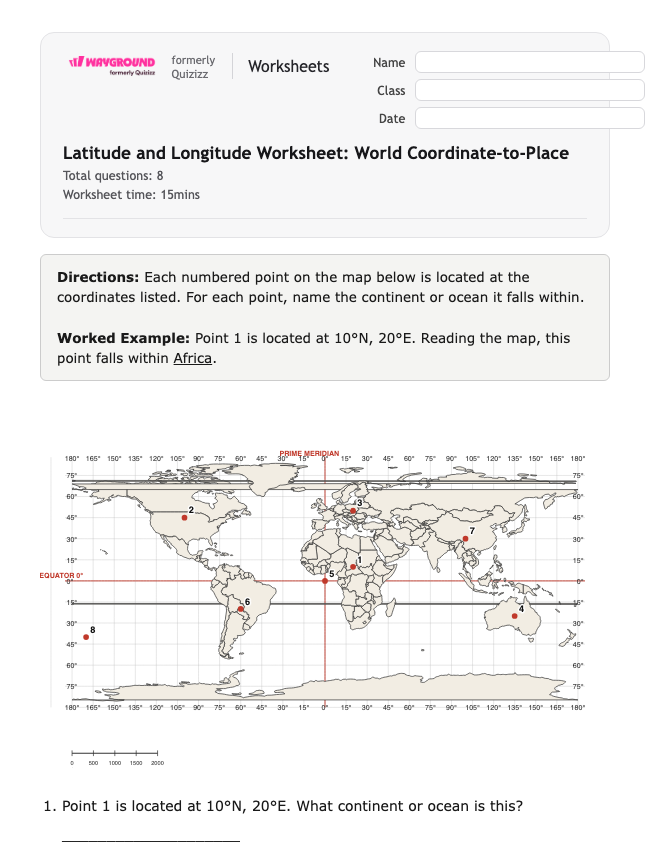
8 P
7th
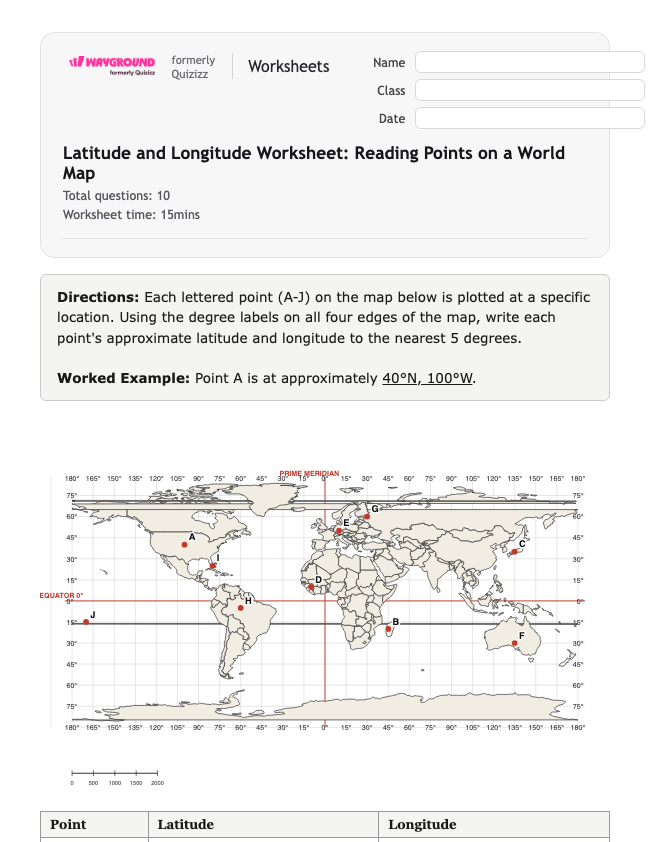
10 P
7th
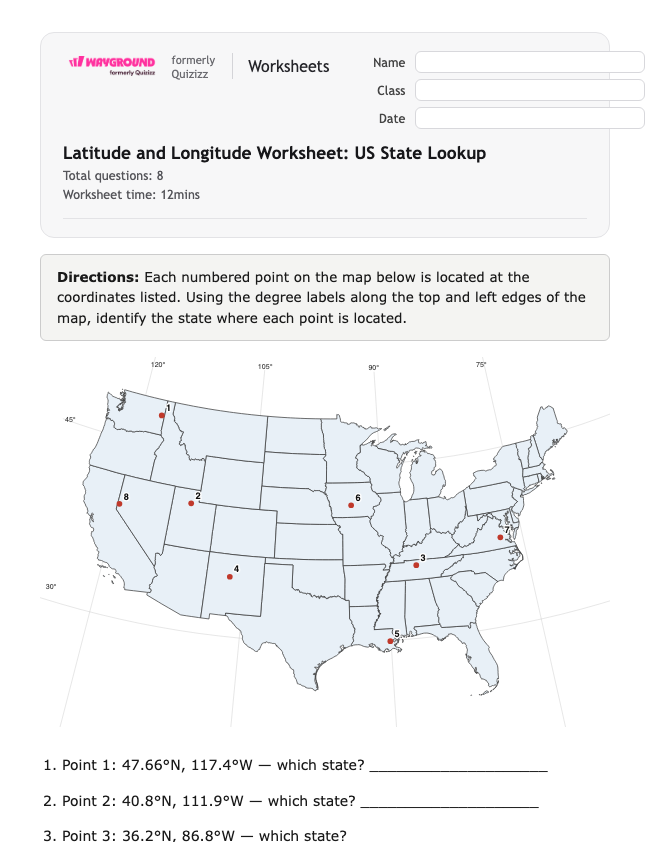
8 P
7th
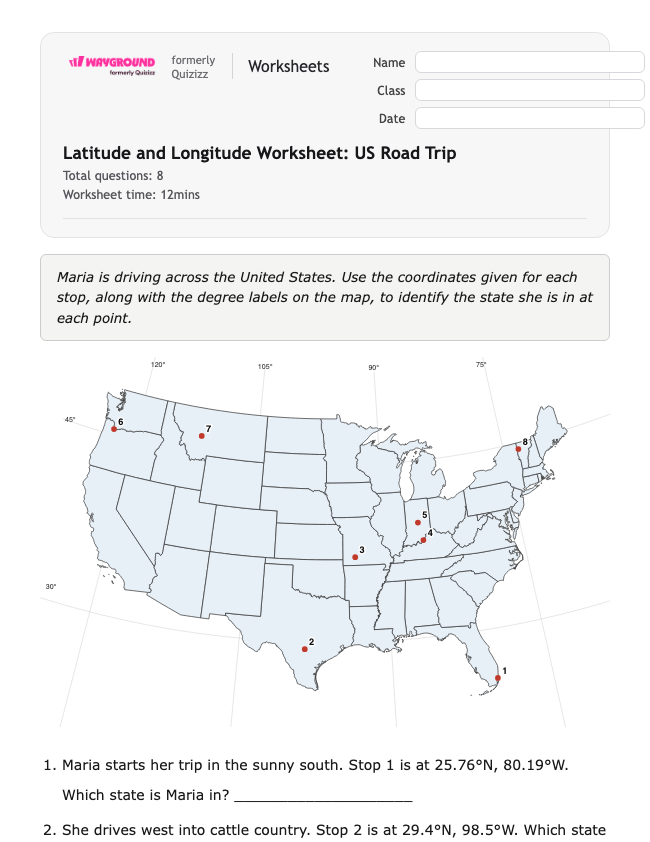
8 P
7th
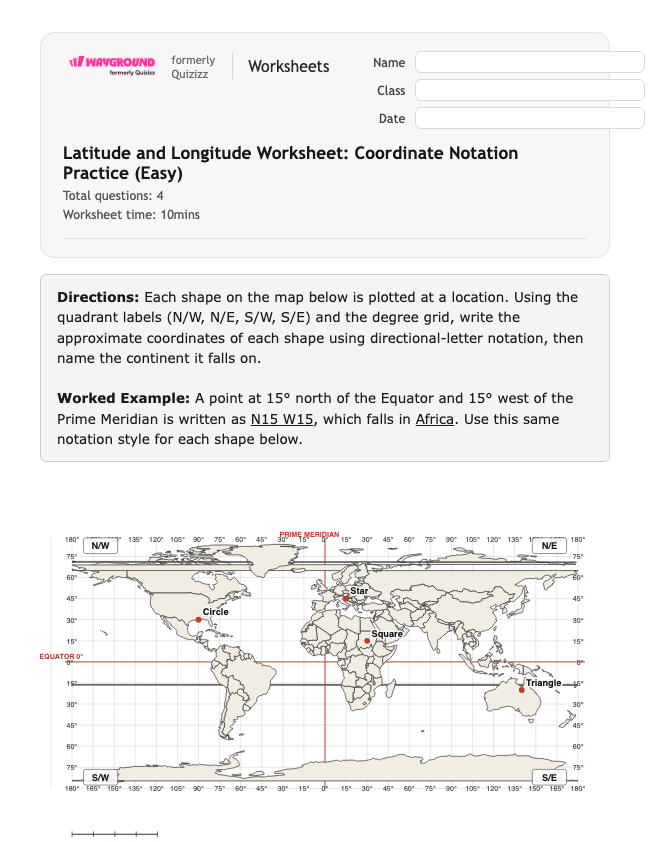
4 P
7th
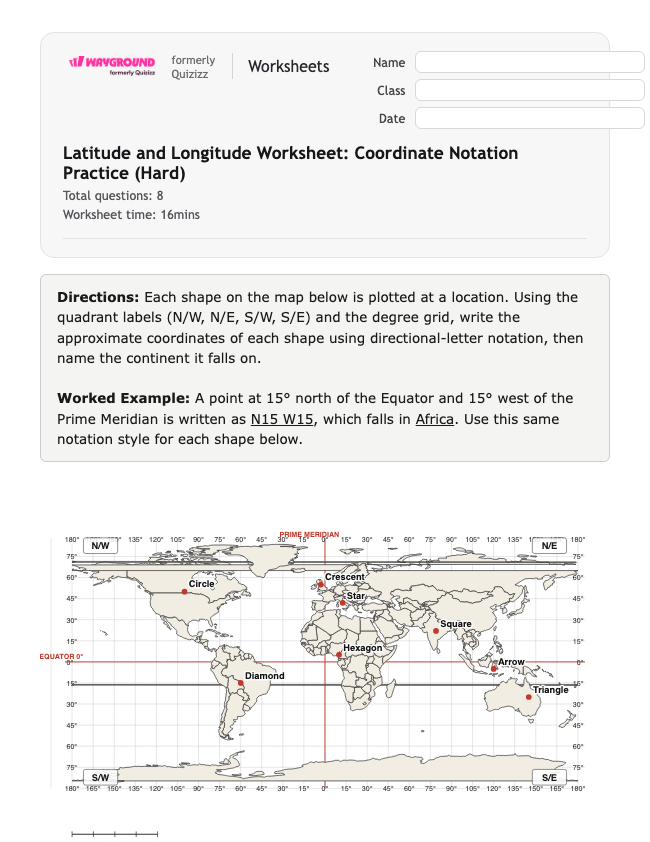
8 P
7th
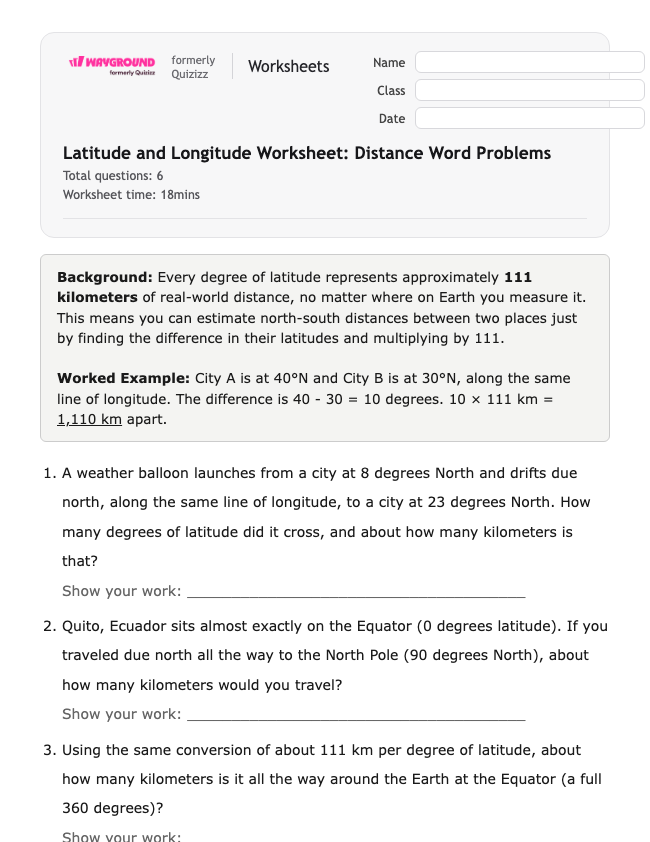
6 P
7th
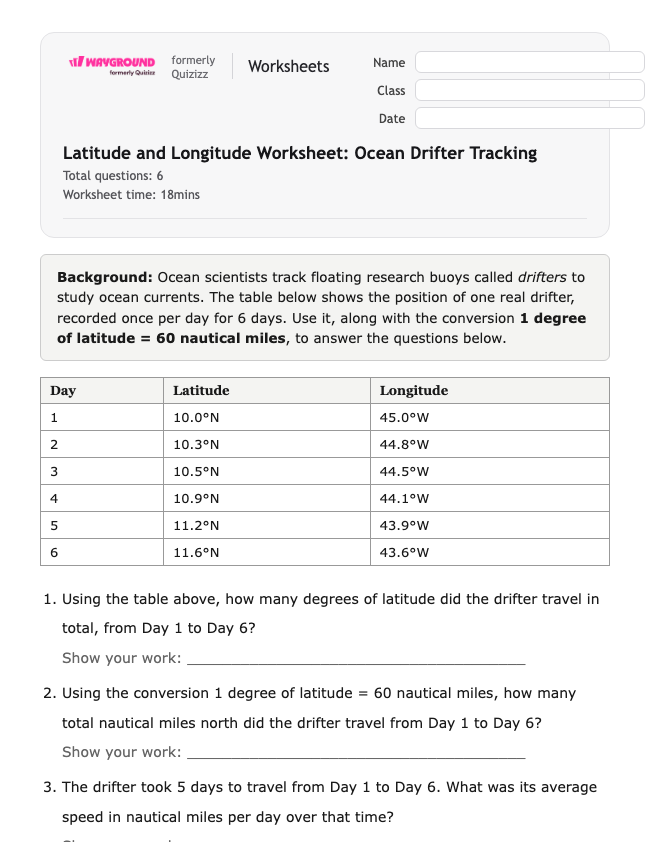
6 P
7th
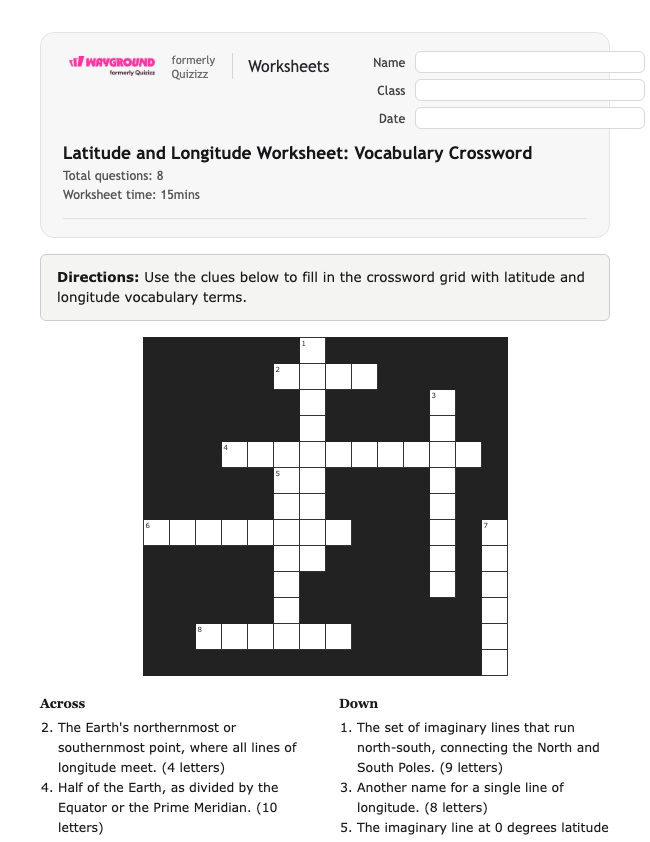
8 P
7th
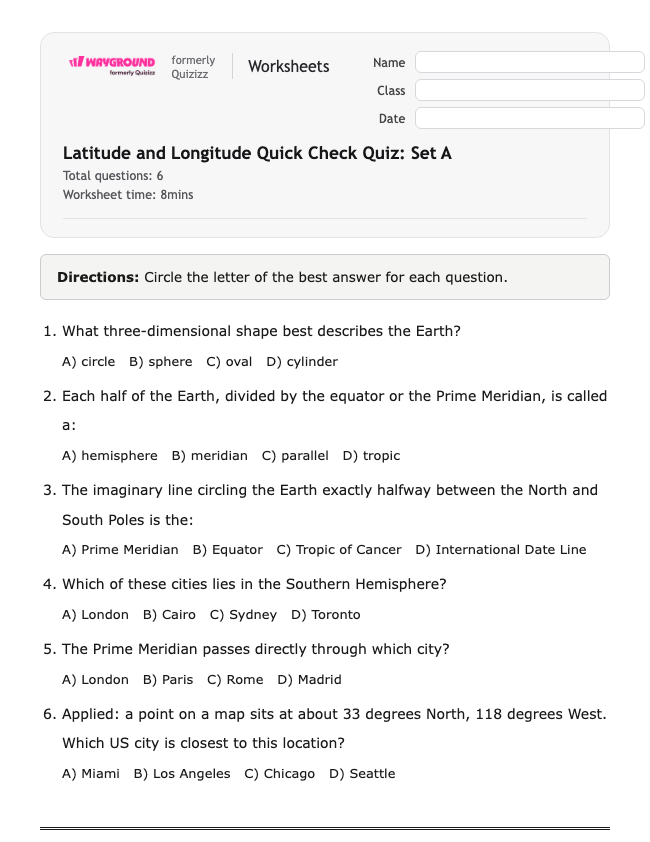
6 P
7th
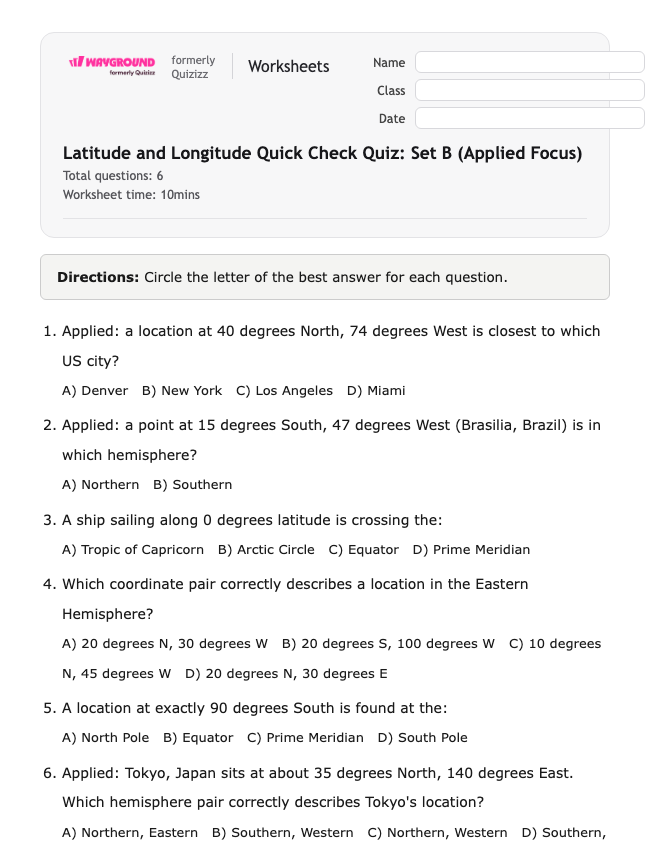
6 P
7th
8 P
7th
25 P
5th - Uni
25 P
6th - Uni
15 P
6th - Uni
13 P
6th - 8th
25 P
6th - Uni
20 P
7th
15 P
6th - Uni
8 P
6th - 8th
25 P
6th - Uni
22 P
6th - 8th
15 P
6th - Uni
15 P
6th - 8th
15 P
6th - Uni
16 P
7th
12 P
6th - 8th
17 P
6th - 8th
15 P
6th - Uni
9 P
4th - 7th
44 P
6th - 8th
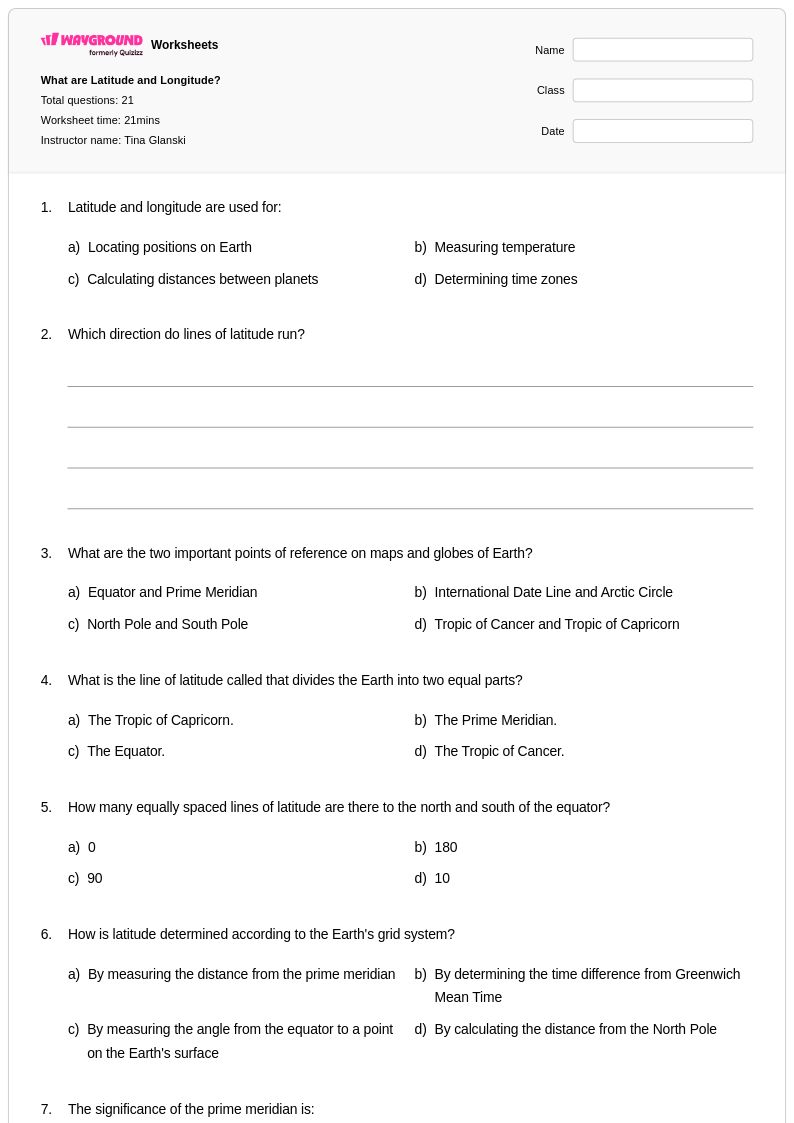
21 P
7th
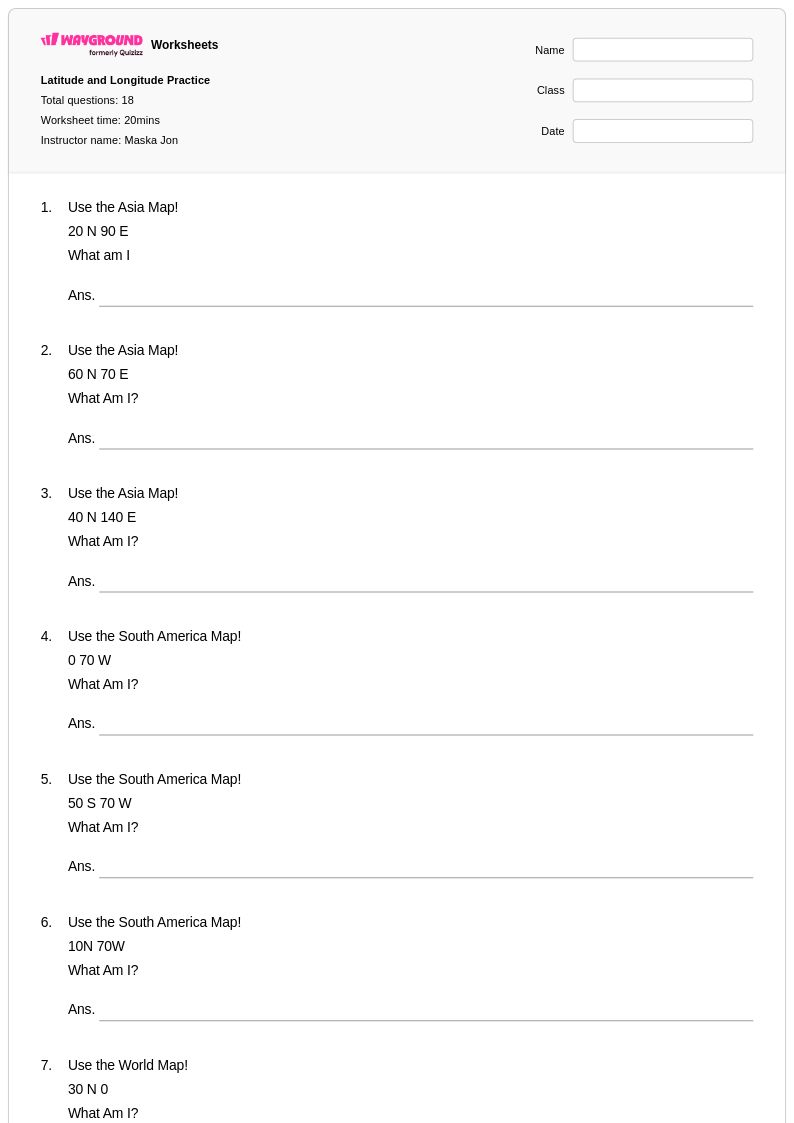
18 P
7th
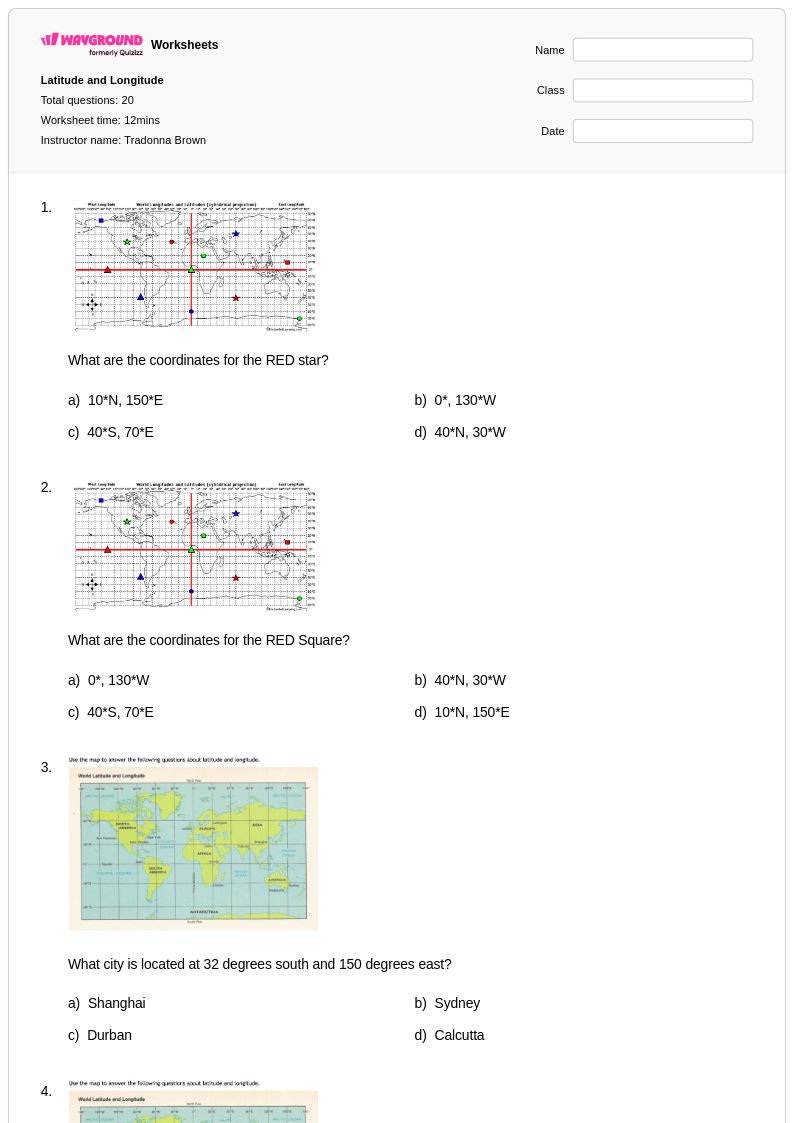
20 P
6th - 8th
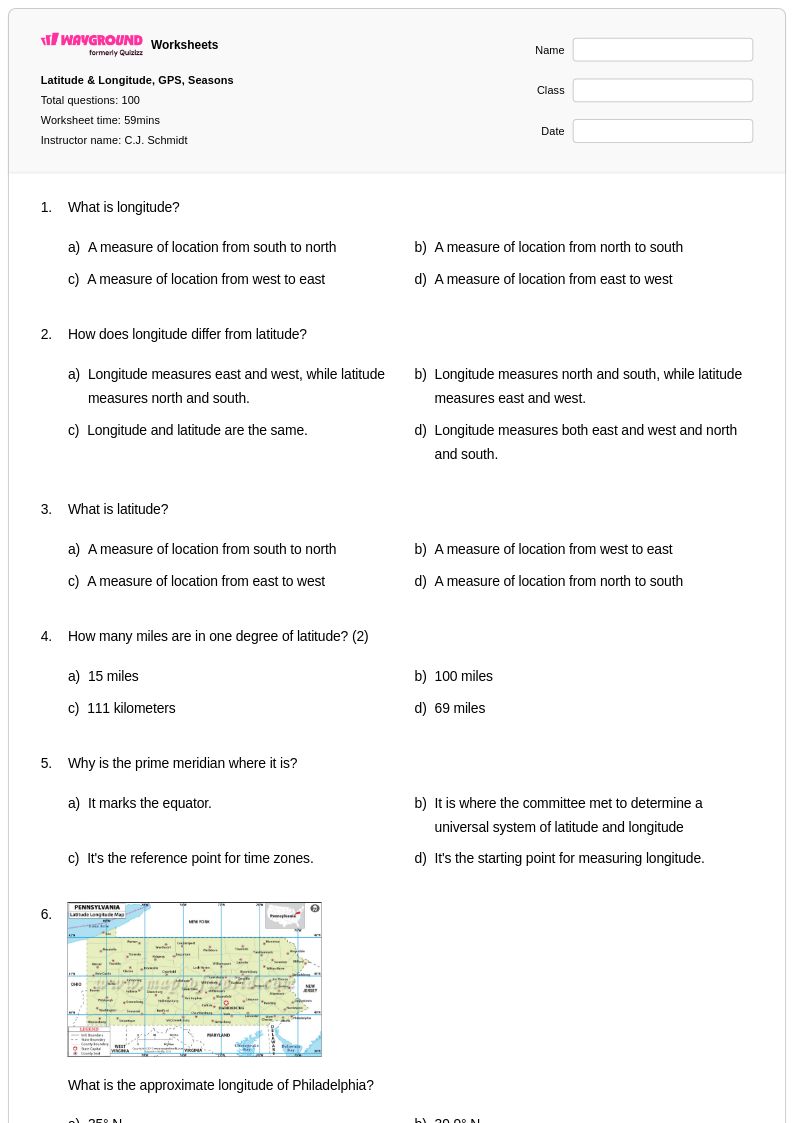
100 P
7th
Przeglądaj inne arkusze tematyczne dla class 7
Explore printable Latitude and Longitude worksheets for Class 7
Latitude and longitude worksheets for Class 7 students available through Wayground (formerly Quizizz) provide comprehensive practice in understanding Earth's coordinate system and developing essential geographic skills. These educational resources strengthen students' abilities to locate places precisely using degrees, minutes, and seconds, interpret global positioning systems, and analyze spatial relationships between different locations worldwide. The collection includes practice problems that challenge seventh graders to identify coordinates for major cities, plot points on world maps, and calculate distances using geographic grids. Teachers can access these printable materials with complete answer keys, making assessment and feedback more efficient while ensuring students master this fundamental geography concept through structured exercises available in convenient pdf formats.
Wayground (formerly Quizizz) supports educators with an extensive library of millions of teacher-created latitude and longitude resources specifically designed for middle school instruction. The platform's advanced search and filtering capabilities allow teachers to quickly locate worksheets that align with state geography standards and match their students' specific learning needs. These differentiation tools enable instructors to customize coordinate system activities for various skill levels, from basic hemisphere identification to complex calculations involving time zones and great circle routes. The flexible format options include both digital assignments for interactive learning and printable pdf worksheets for traditional classroom use, supporting teachers in planning comprehensive lessons, providing targeted remediation for struggling students, offering enrichment opportunities for advanced learners, and delivering consistent skill practice that builds geographic literacy throughout the academic year.
FAQs
How do I teach latitude and longitude to students who have never used a coordinate system before?
What exercises help students practice reading latitude and longitude coordinates?
What mistakes do students commonly make when working with latitude and longitude?
How can I differentiate latitude and longitude instruction for students at different skill levels?
How do I use Wayground's latitude and longitude worksheets in my classroom?
How do latitude and longitude connect to other geography skills students need?