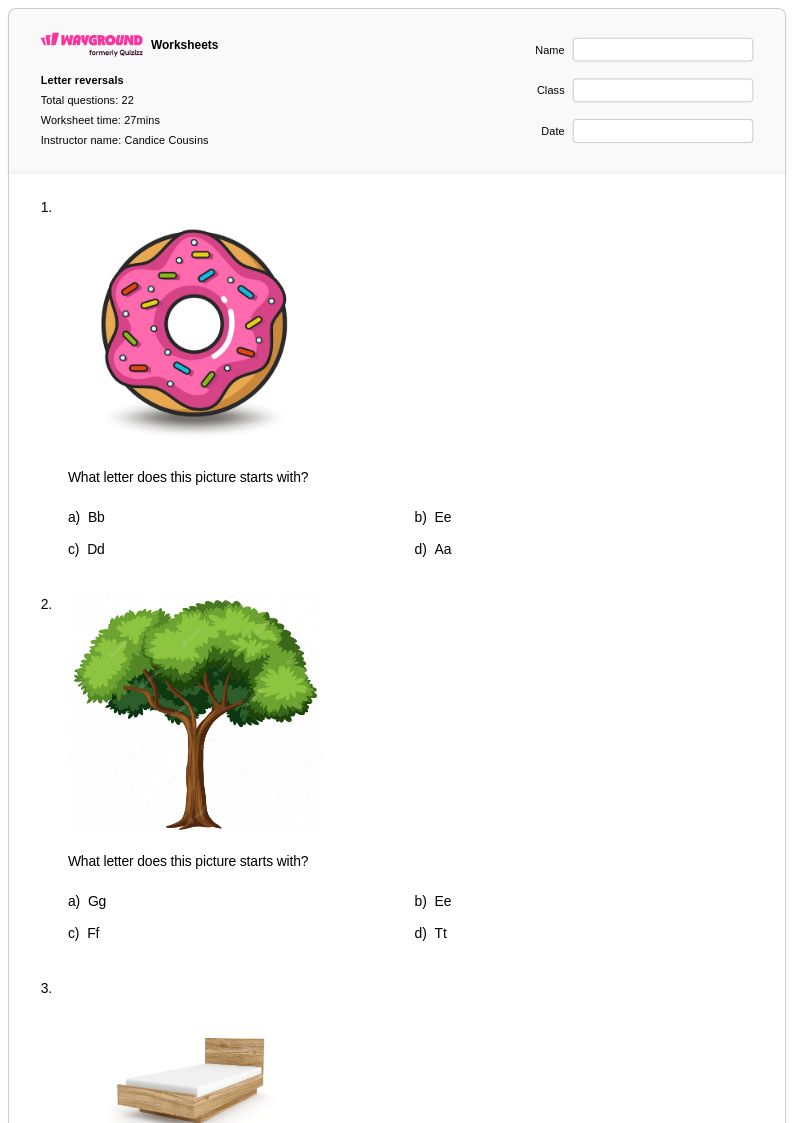
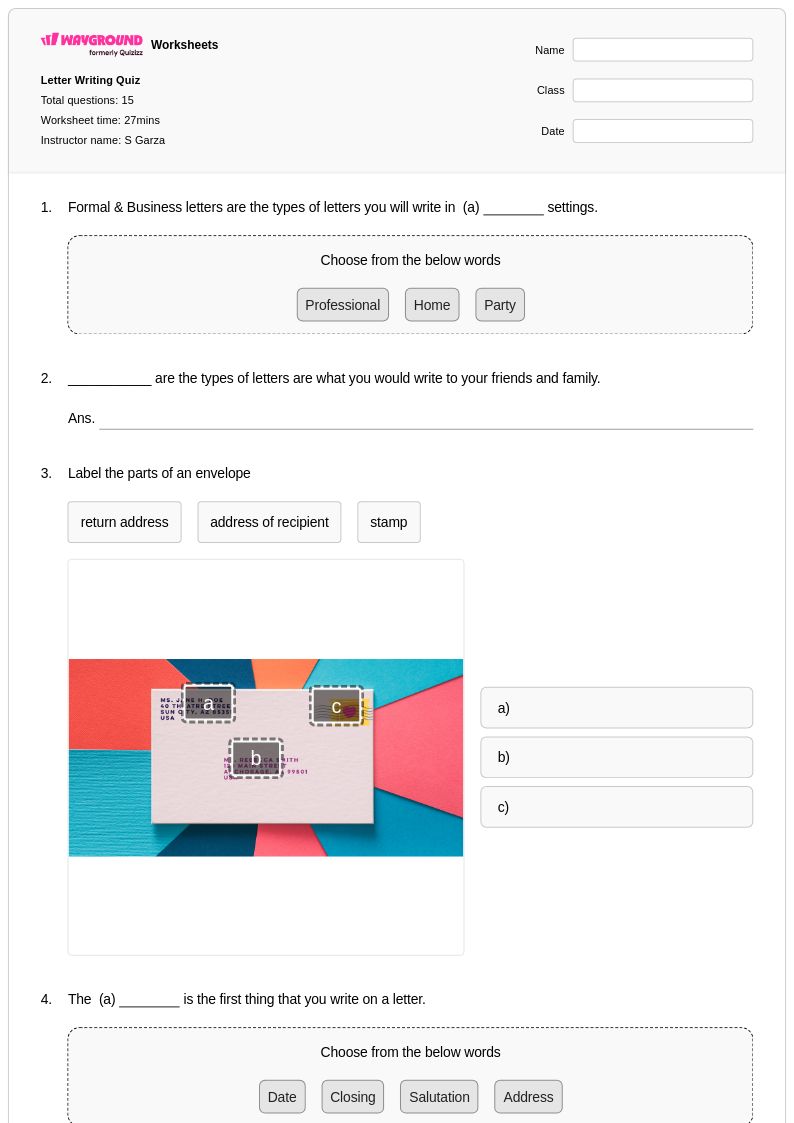
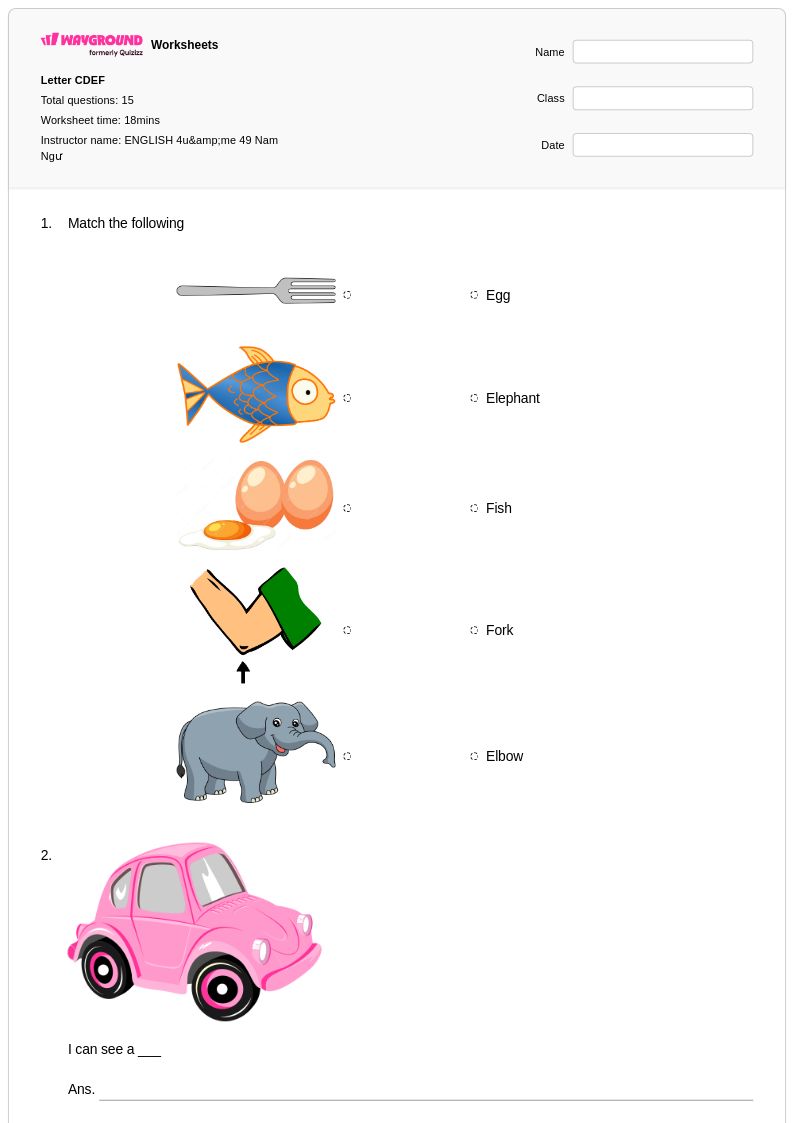
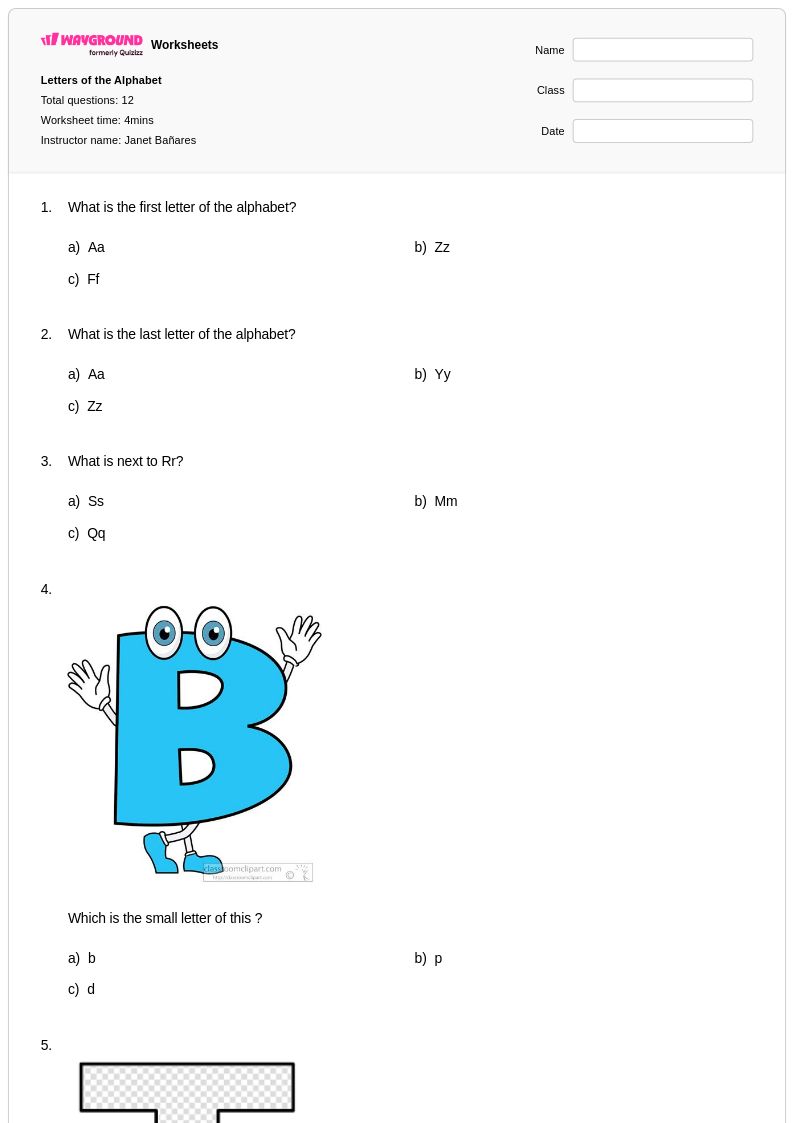
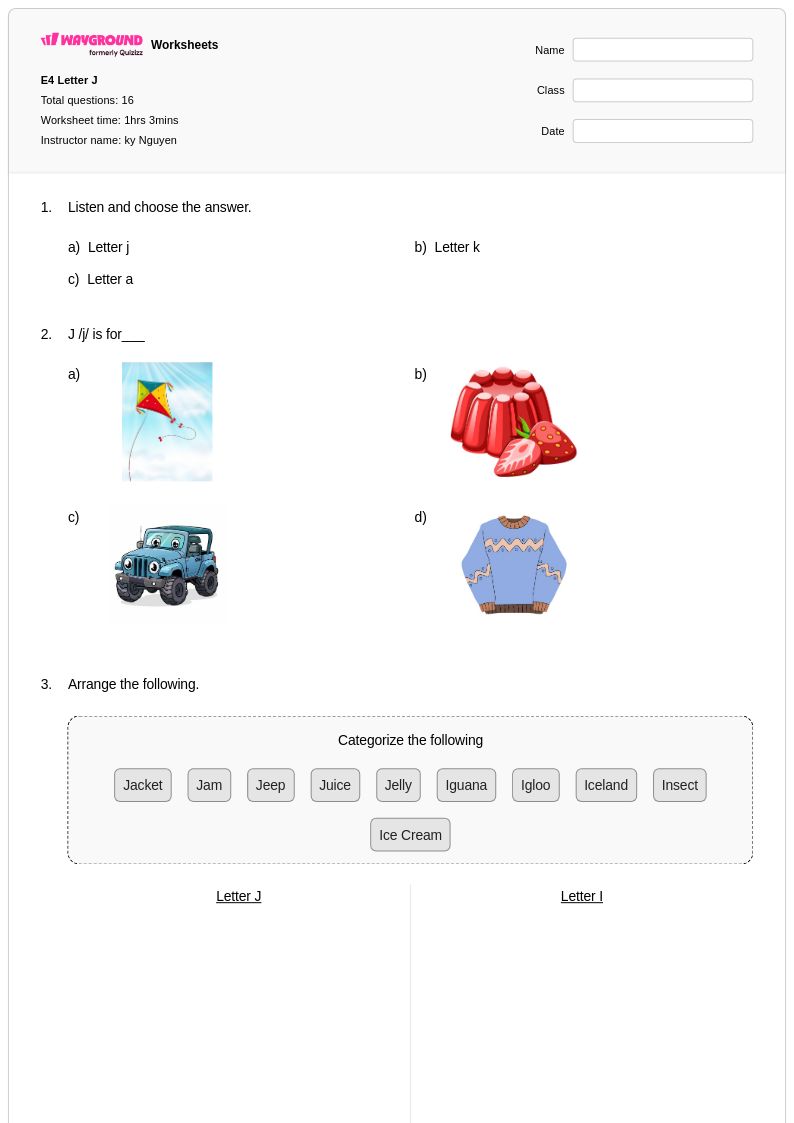
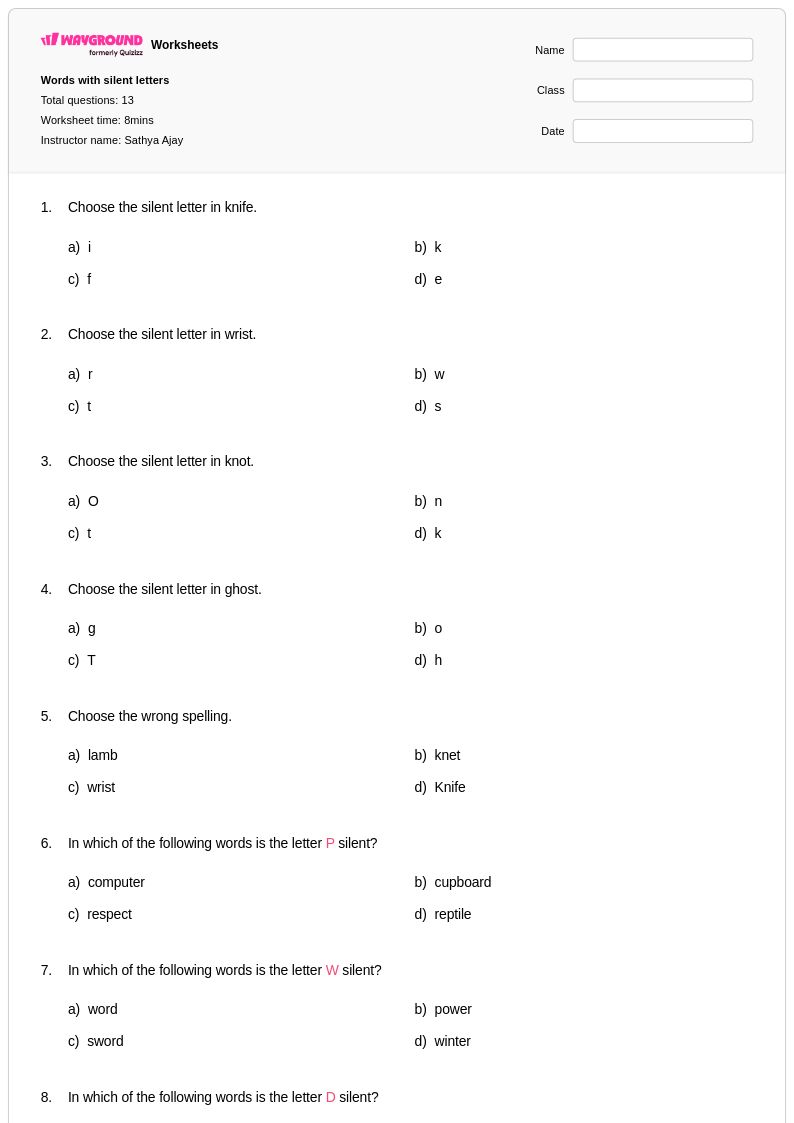
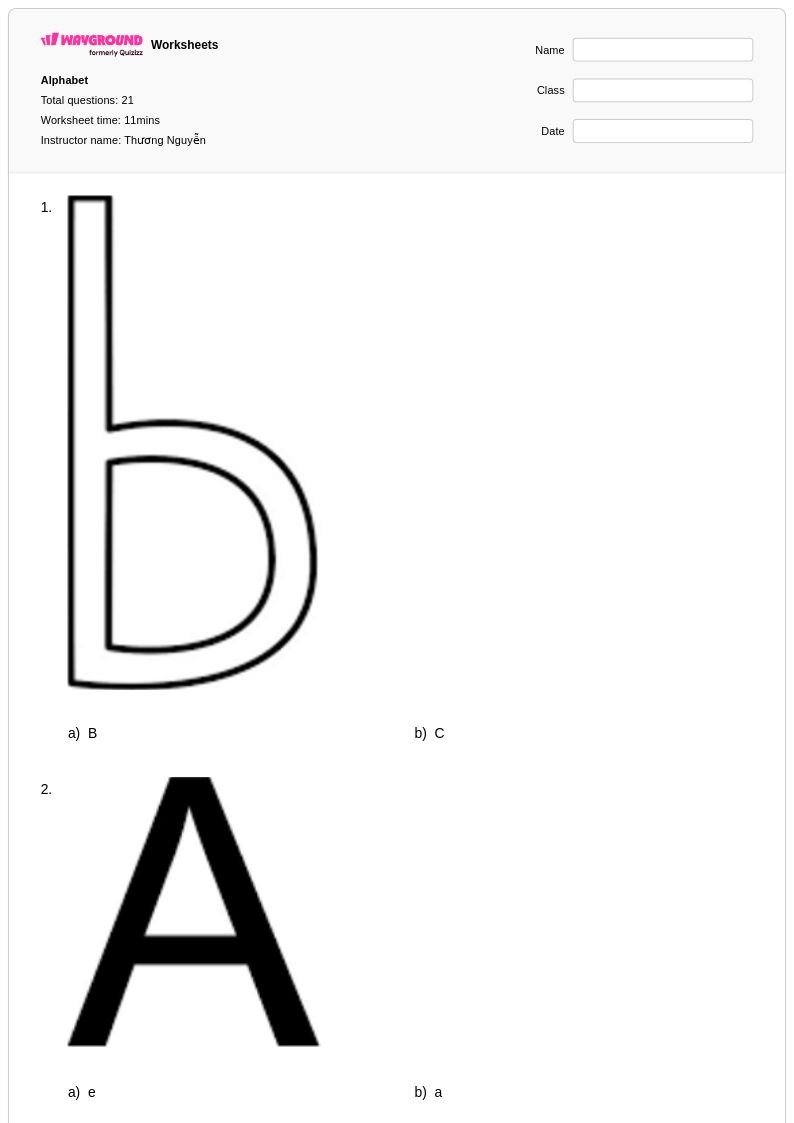
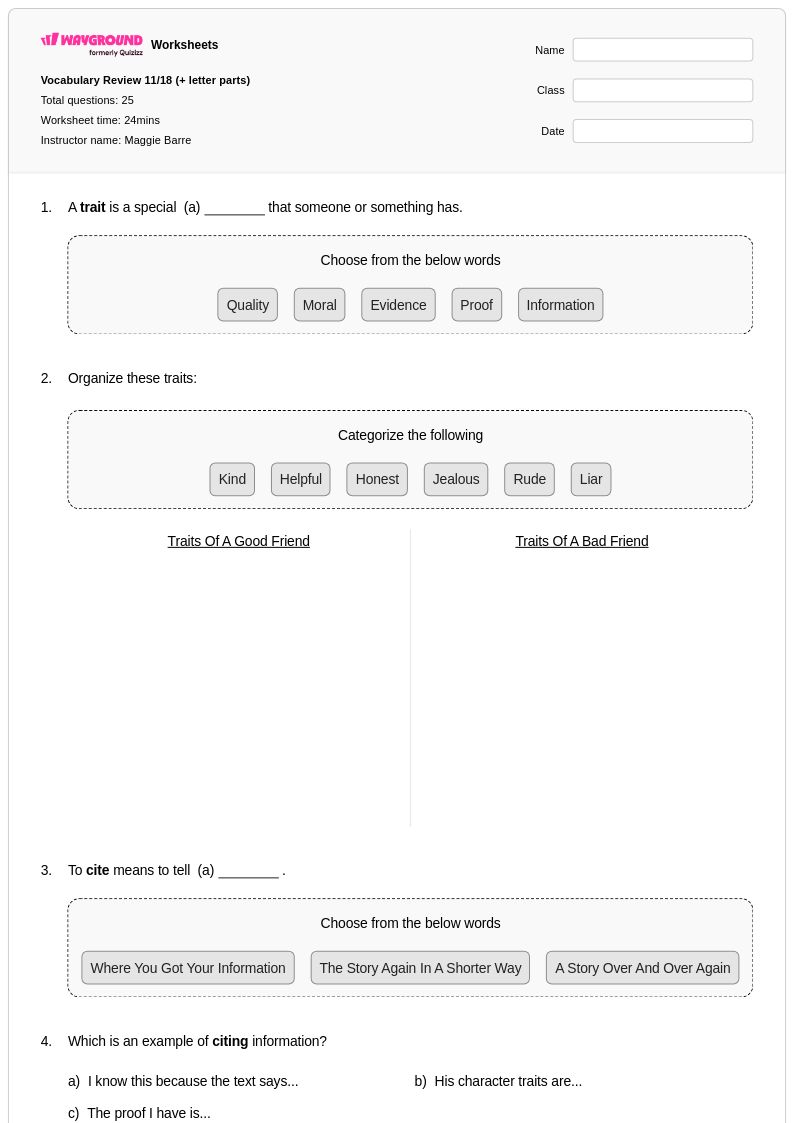
Explore Wayground's comprehensive collection of free letter reversal worksheets and printables designed to help students overcome common letter confusion through targeted practice problems and detailed answer keys.
Letter reversal worksheets available through Wayground (formerly Quizizz) provide targeted practice for young learners who struggle with distinguishing between commonly confused letters such as b and d, p and q, or m and w. These carefully designed printables address a fundamental early literacy challenge by offering systematic exercises that help students develop visual discrimination skills and letter recognition accuracy. The worksheets feature a variety of engaging activities including letter identification tasks, word completion exercises, and sentence correction practice problems that reinforce proper letter orientation. Each worksheet comes with a comprehensive answer key, making it easy for educators to assess student progress and identify areas needing additional support. Available as free pdf downloads, these practice materials serve as essential tools for building the foundational skills necessary for successful reading and writing development.
Wayground's extensive collection of letter reversal worksheets draws from millions of teacher-created resources, ensuring educators have access to diverse, high-quality materials that address varying student needs and learning styles. The platform's robust search and filtering capabilities allow teachers to quickly locate worksheets that align with specific curriculum standards and differentiate instruction based on individual student requirements. These customizable resources are available in both printable pdf format and interactive digital versions, providing flexibility for classroom instruction, homework assignments, and intervention programs. Teachers can easily modify existing worksheets or combine multiple resources to create comprehensive lesson plans that support remediation for struggling learners while offering enrichment opportunities for advanced students. This versatility makes the platform an invaluable resource for systematic skill practice and targeted instruction in early literacy development.
FAQs
How do I teach students to stop reversing letters like b and d?
The most effective approach combines multisensory strategies with repeated, structured practice. Teach students a memory anchor first, such as forming the letters using their hands or associating 'b' with a bat-and-ball image and 'd' with a drum. From there, targeted exercises that require students to identify, sort, and produce these letters in isolation and within words help reinforce correct orientation over time.
At what age should I be concerned about letter reversals?
Letter reversals are developmentally normal through age 7 or roughly second grade. When reversals persist beyond that point, or appear frequently in a student who is otherwise progressing in reading and writing, they may signal a need for targeted intervention or further evaluation. Early, systematic practice with commonly confused letters such as b/d and p/q can prevent reversals from becoming a habituated error pattern.
What exercises help students practice distinguishing between b, d, p, and q?
Effective practice exercises include letter identification tasks where students circle or cross out a specified letter within a mixed set, word completion activities that require choosing the correct letter to complete a word, and sentence-level correction tasks where students identify and fix reversed letters. Varying the exercise type within a single session helps students apply visual discrimination skills across different contexts rather than memorizing a single drill format.
What mistakes do students commonly make with letter reversals?
The most common errors involve b/d confusion, followed by p/q and less frequently m/w or n/u. Students often default to whichever orientation they first memorized rather than processing the letter's directionality in context. A frequent misconception is that reversals are purely a vision problem, when in most cases they reflect underdeveloped visual-spatial processing and letter-sound mapping, both of which respond well to targeted literacy practice.
How can I use letter reversal worksheets to support students with different needs in the same classroom?
Letter reversal worksheets can be differentiated by task complexity, starting some students on letter-level identification exercises while others work on word or sentence-level correction tasks. On Wayground, teachers can also apply individual accommodations such as Read Aloud support, reduced answer choices, or extended time to specific students, so every learner engages with the material at an appropriate level without drawing attention to those differences in a mixed classroom setting.
How do I use Wayground's letter reversal worksheets in my classroom?
Wayground's letter reversal worksheets are available as free printable PDF downloads for traditional classroom or homework use, and in interactive digital formats that can be hosted as a quiz directly on the Wayground platform. Teachers can assign them for whole-group instruction, small-group intervention, or independent practice, and each worksheet includes a complete answer key to streamline scoring and progress monitoring.