Free Printable Literary Analysis Worksheets for Class 10
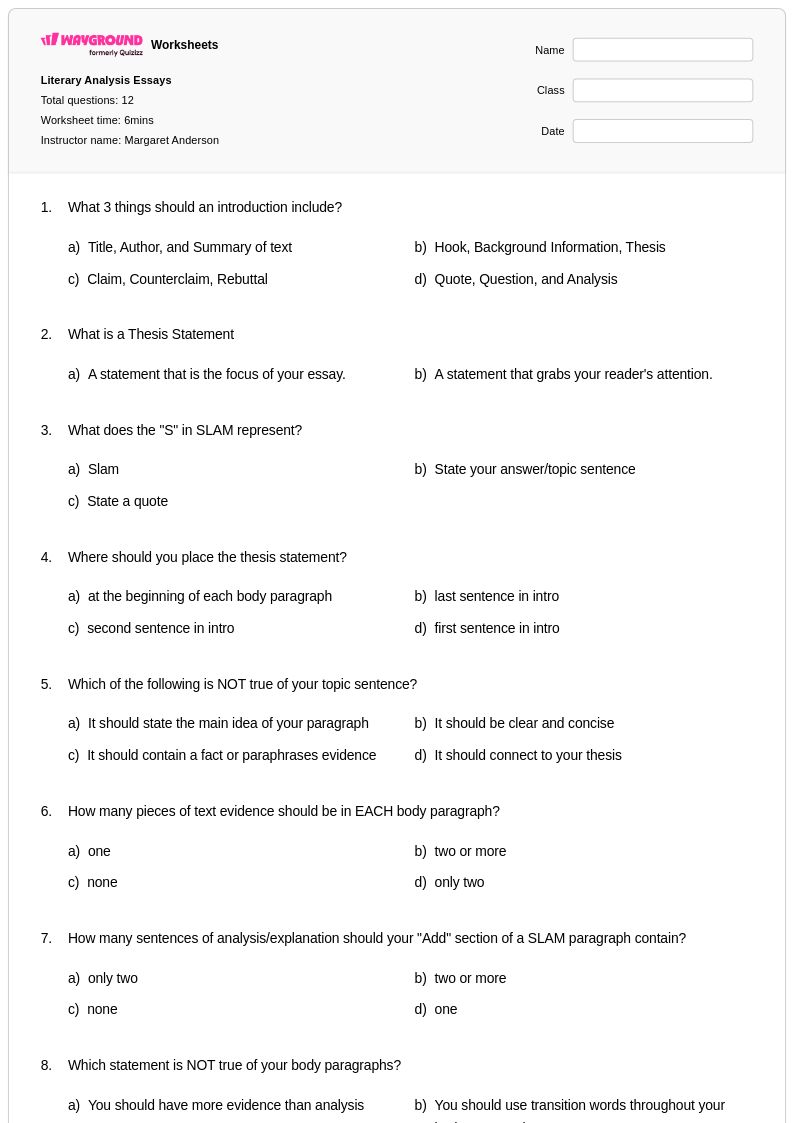
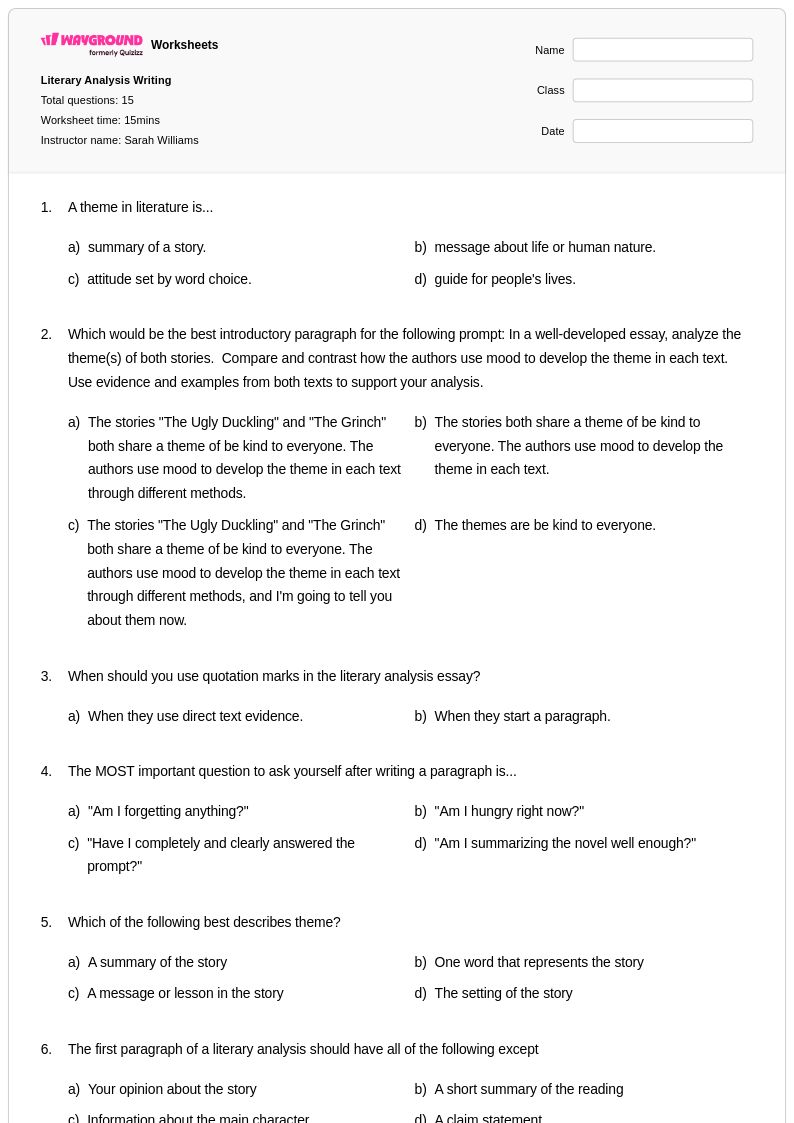
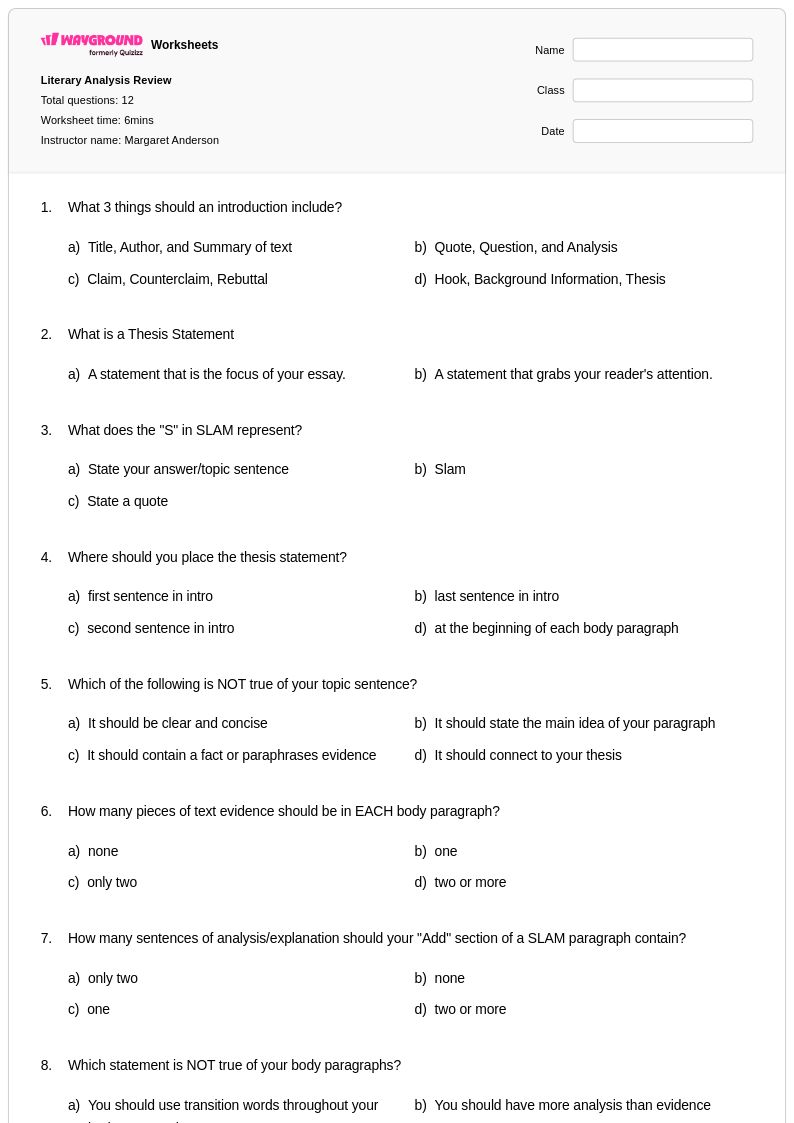
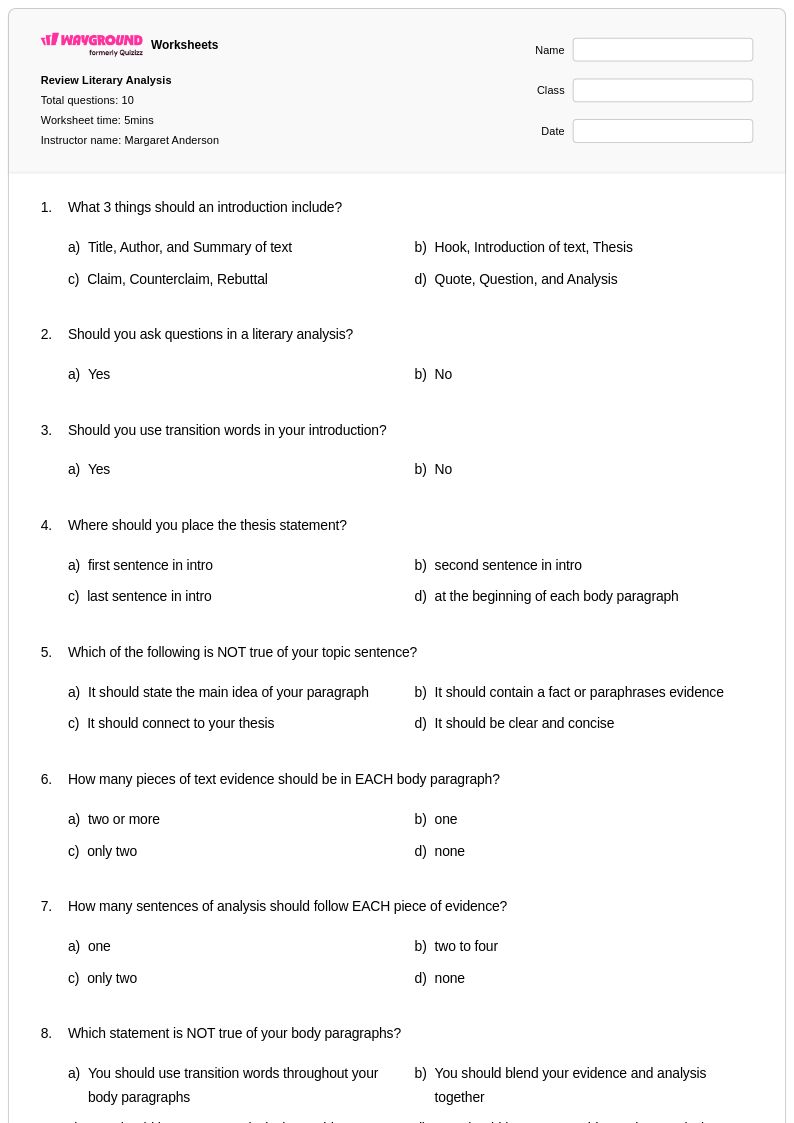
Class 10 literary analysis worksheets from Wayground provide comprehensive printables and practice problems to help students master critical reading skills, complete with answer keys and free PDF resources.
Explore printable Literary Analysis worksheets for Class 10
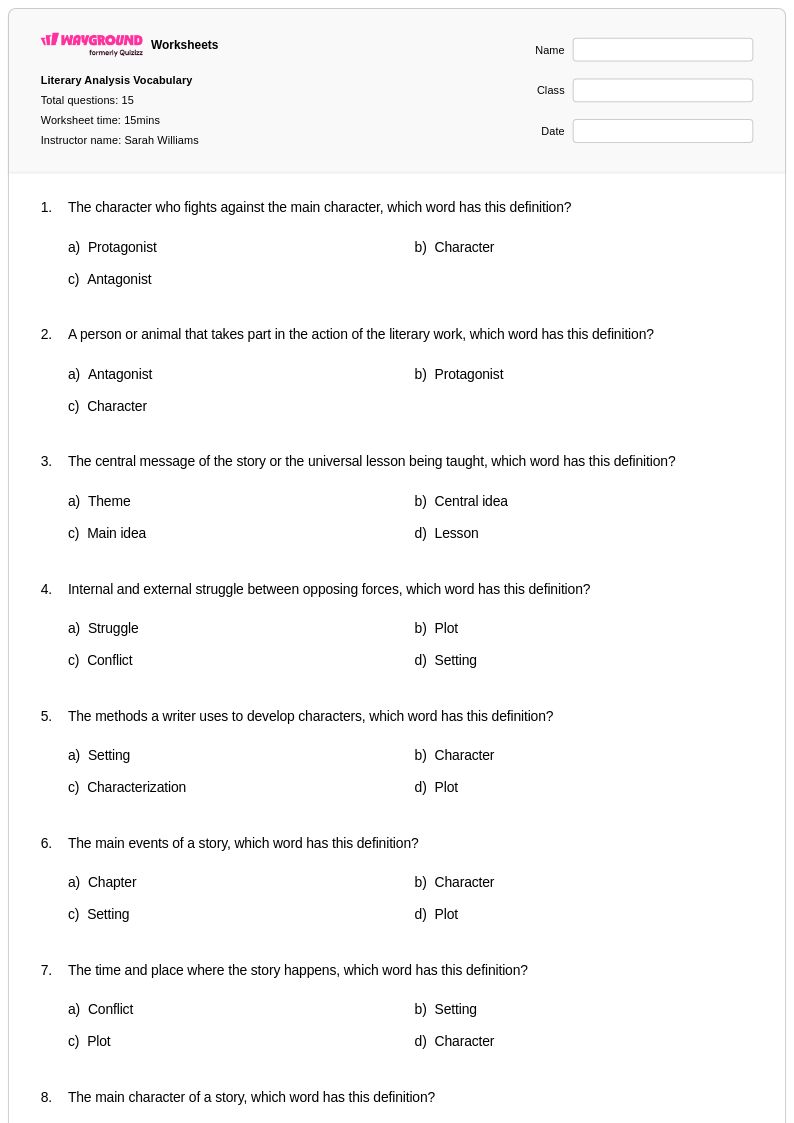
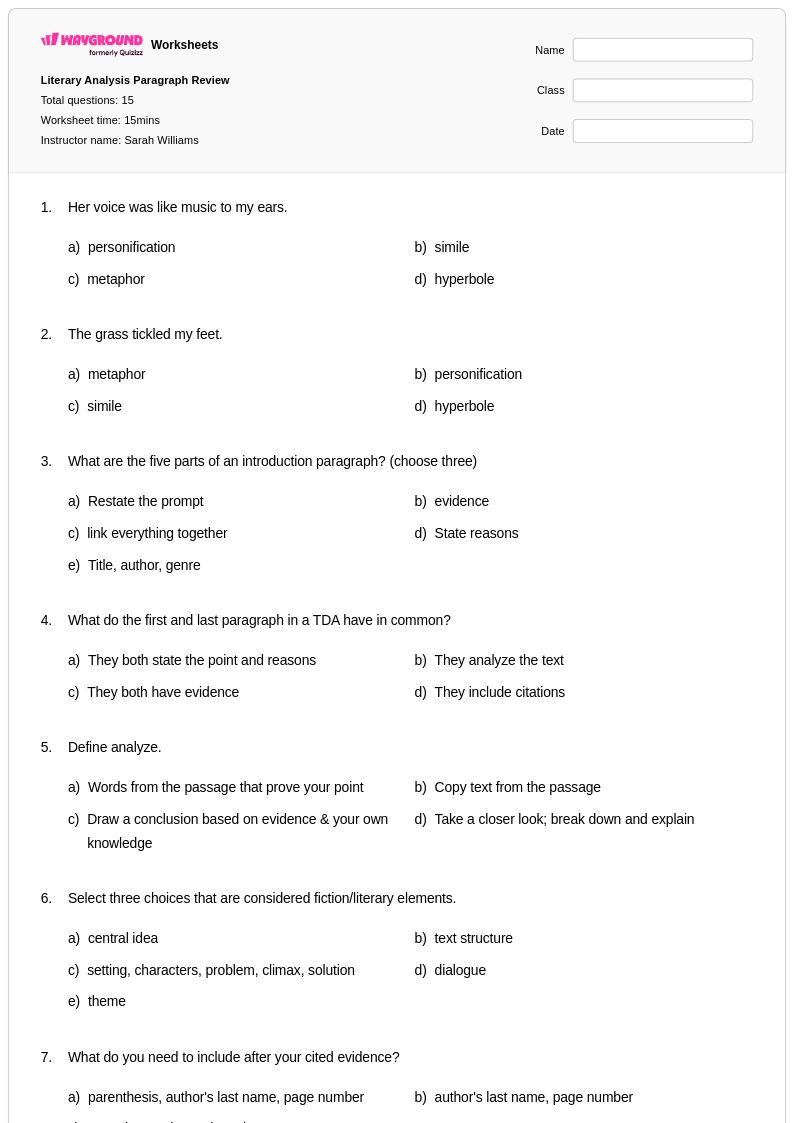
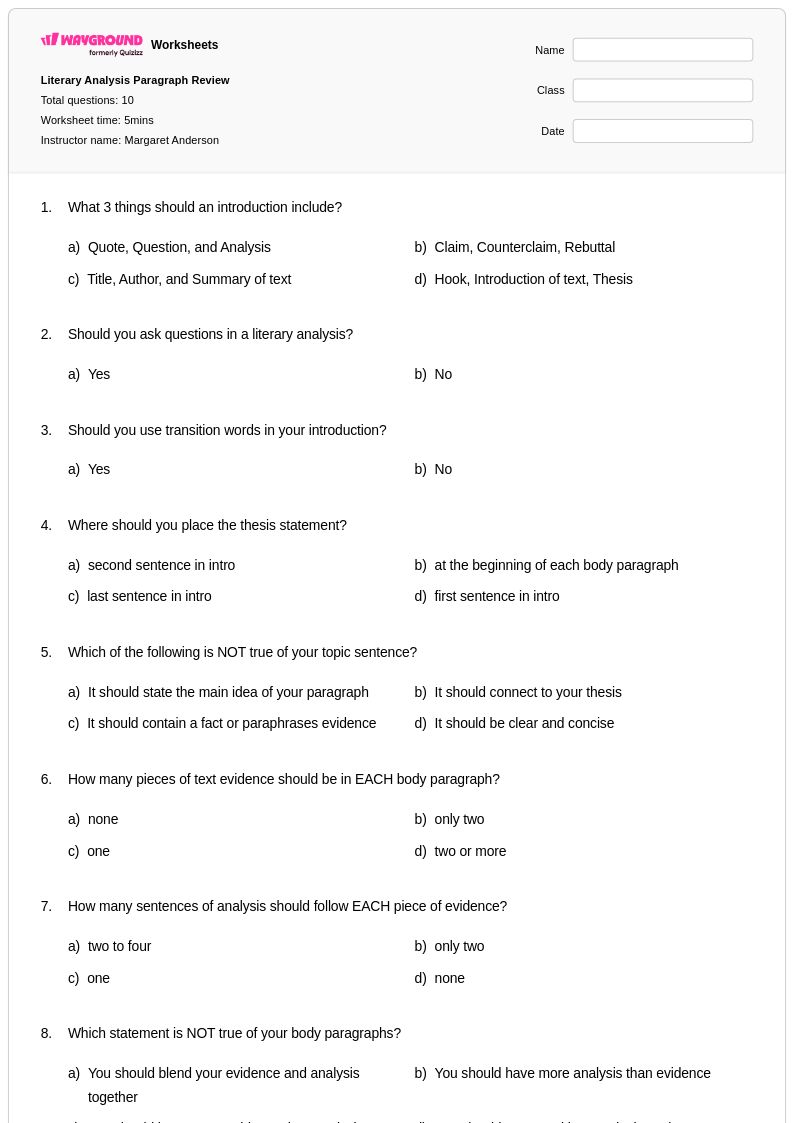
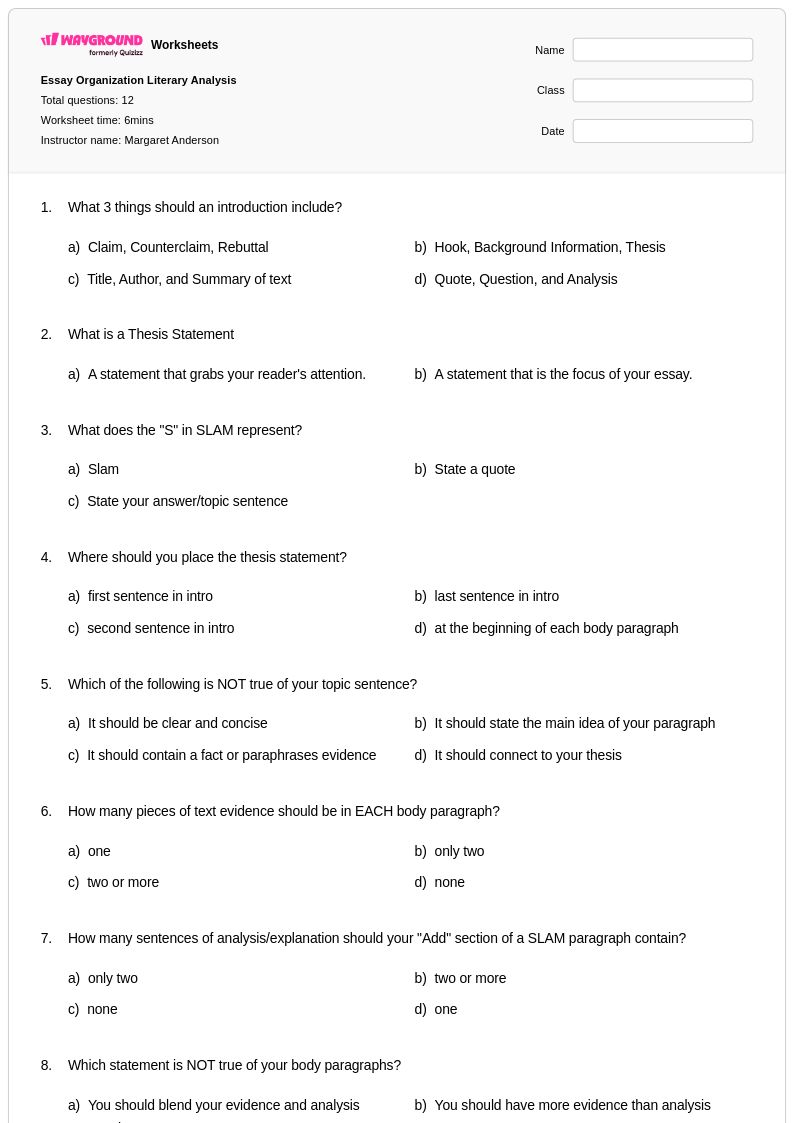
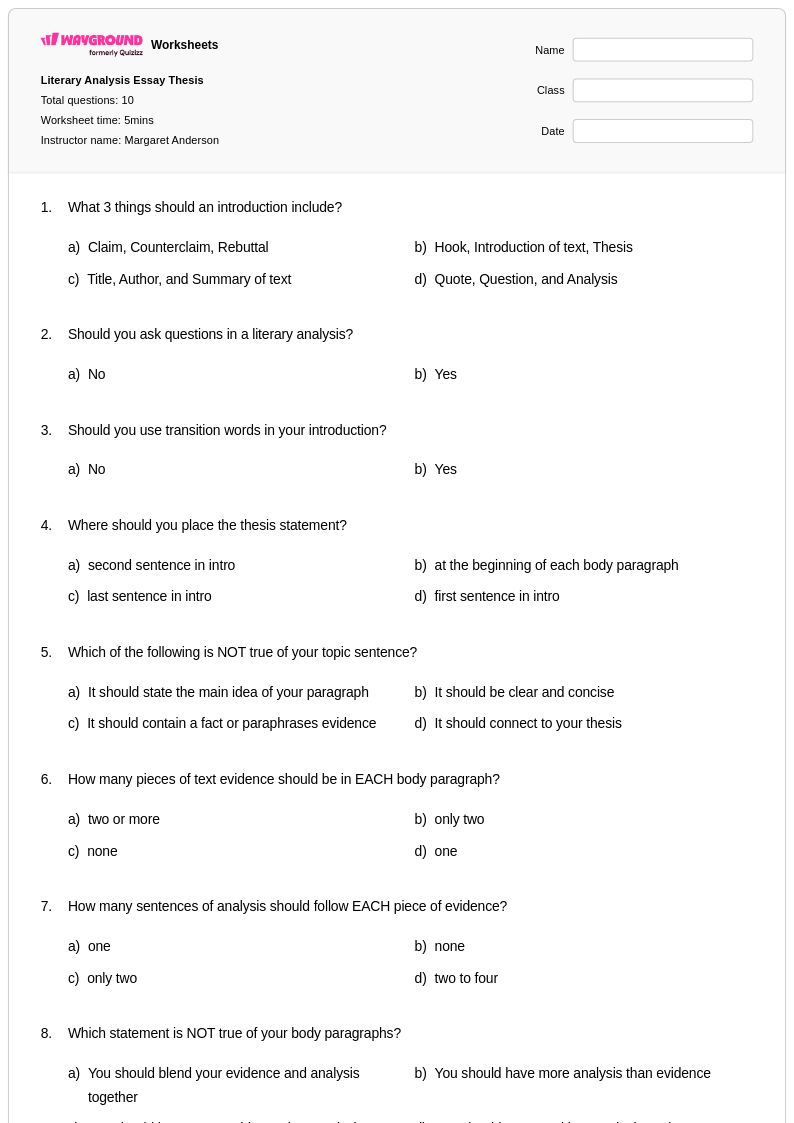
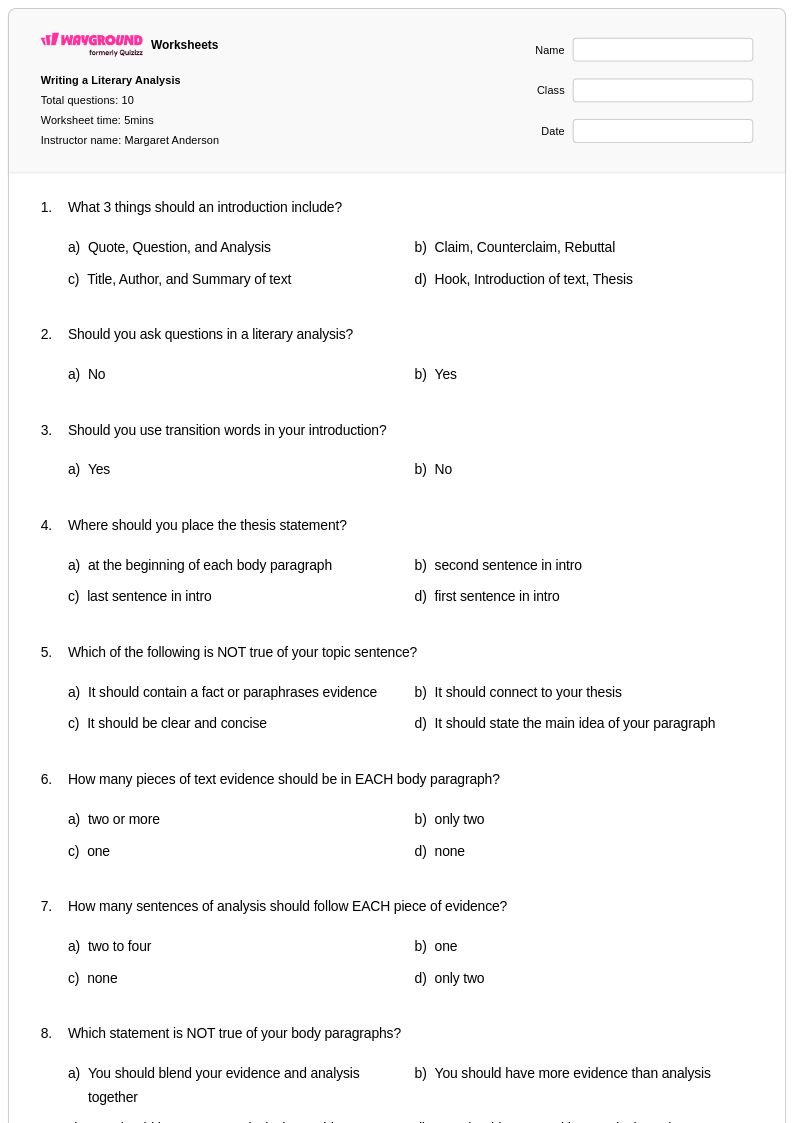
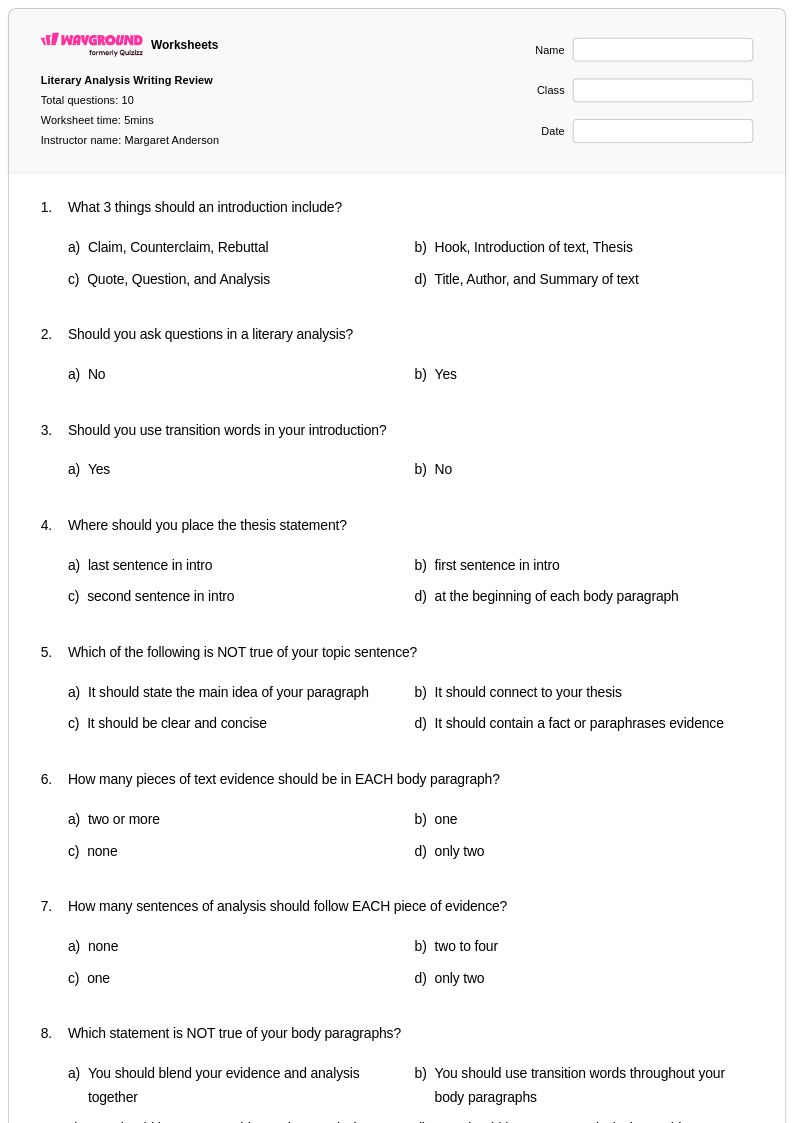
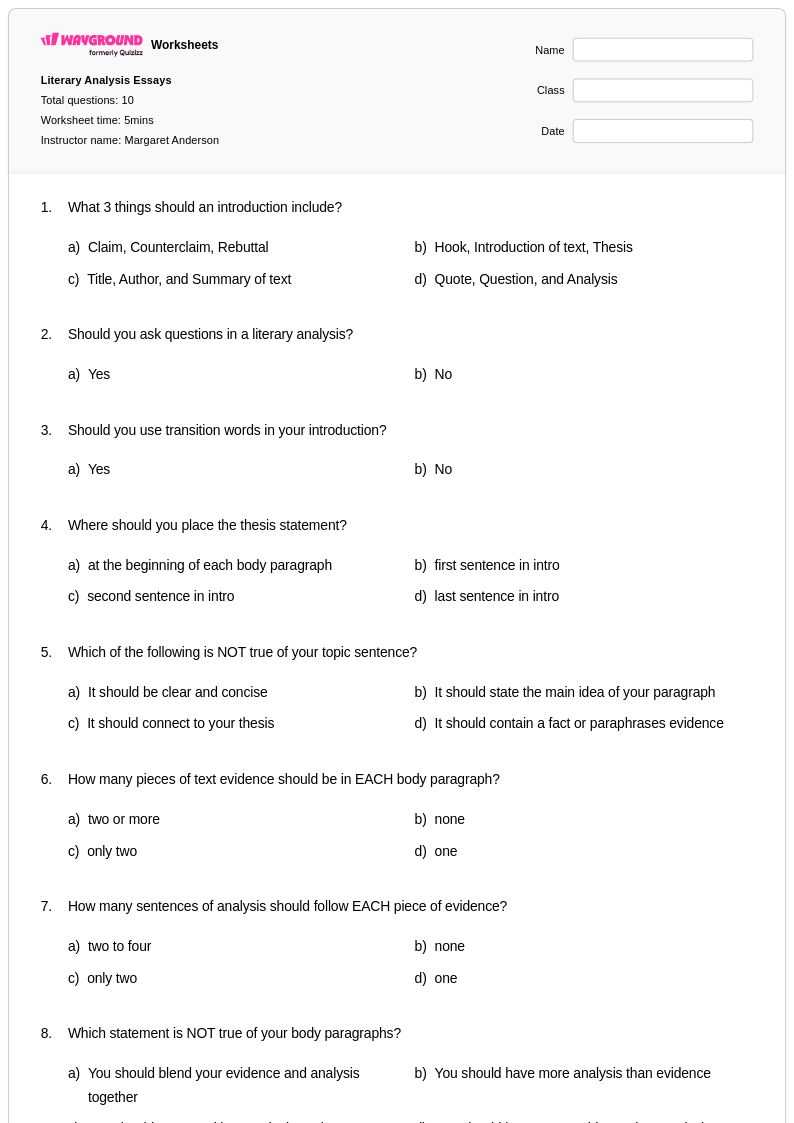
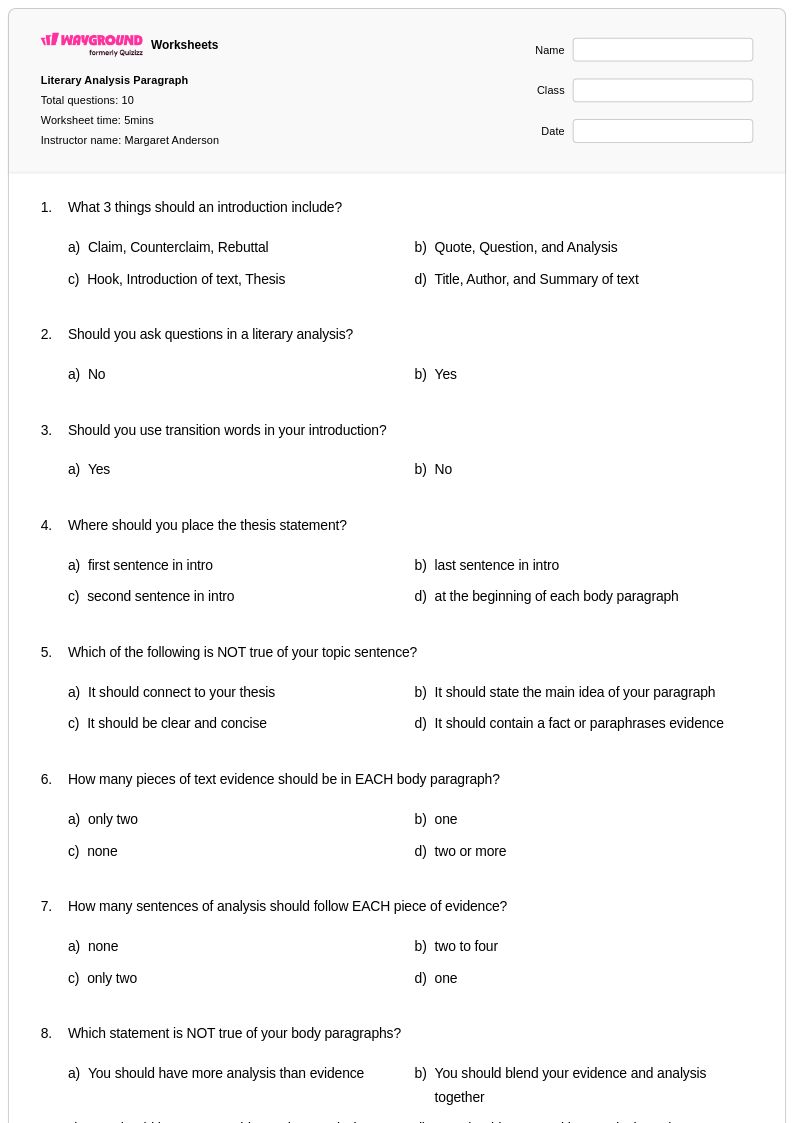
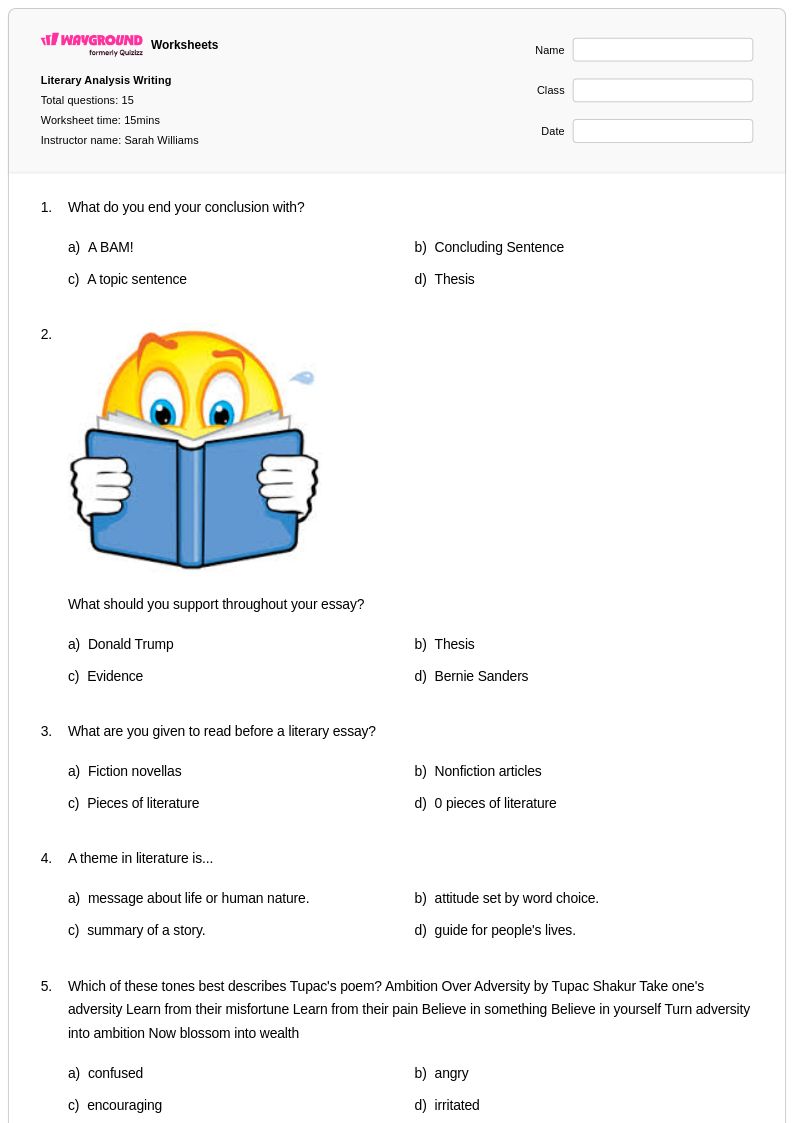
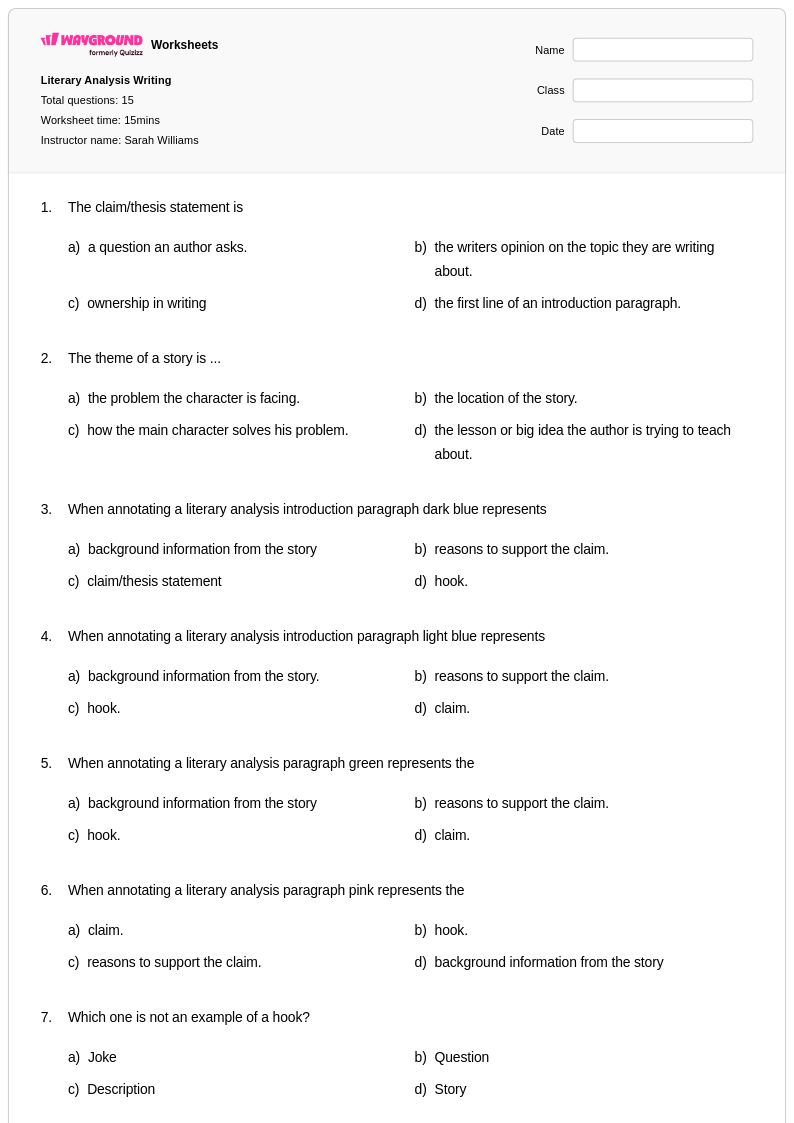
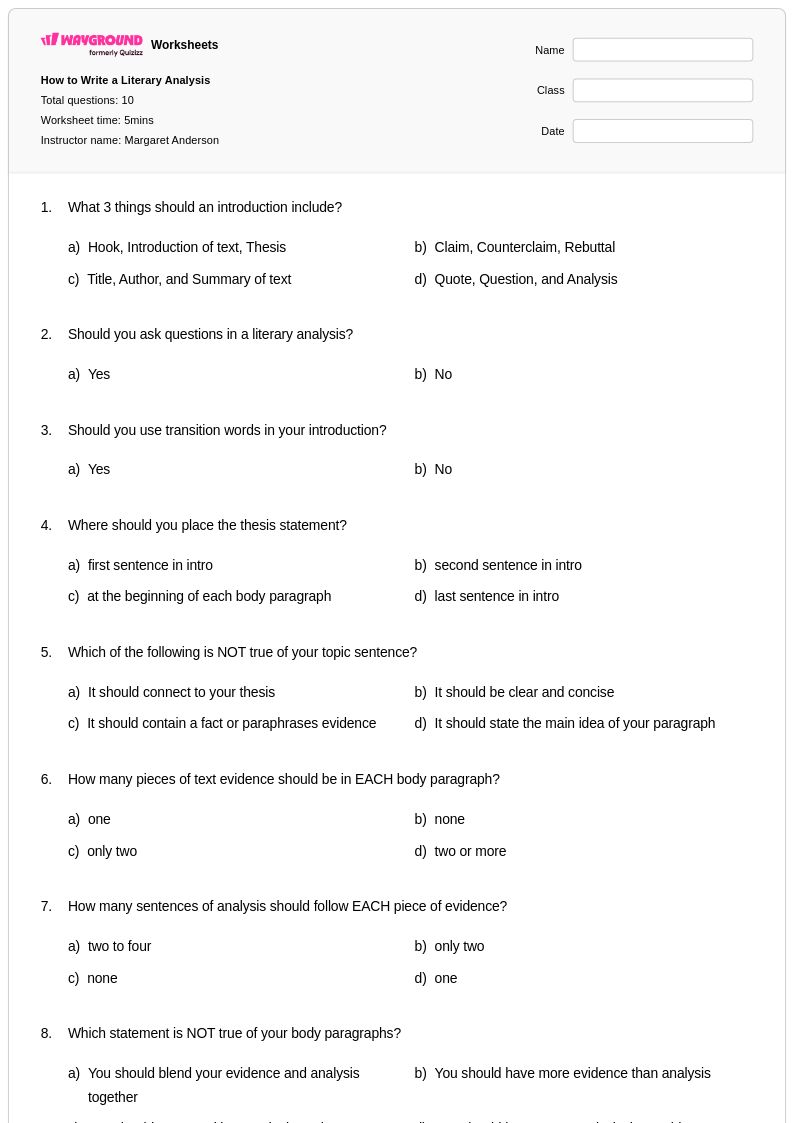
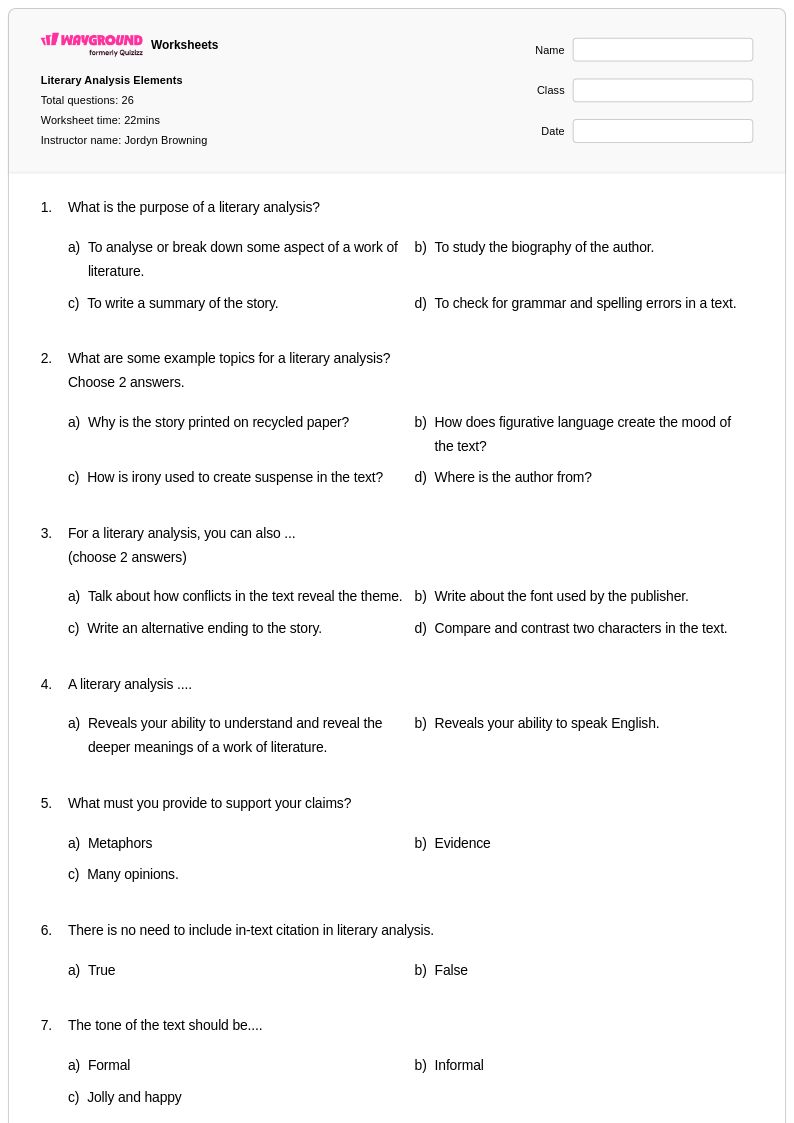
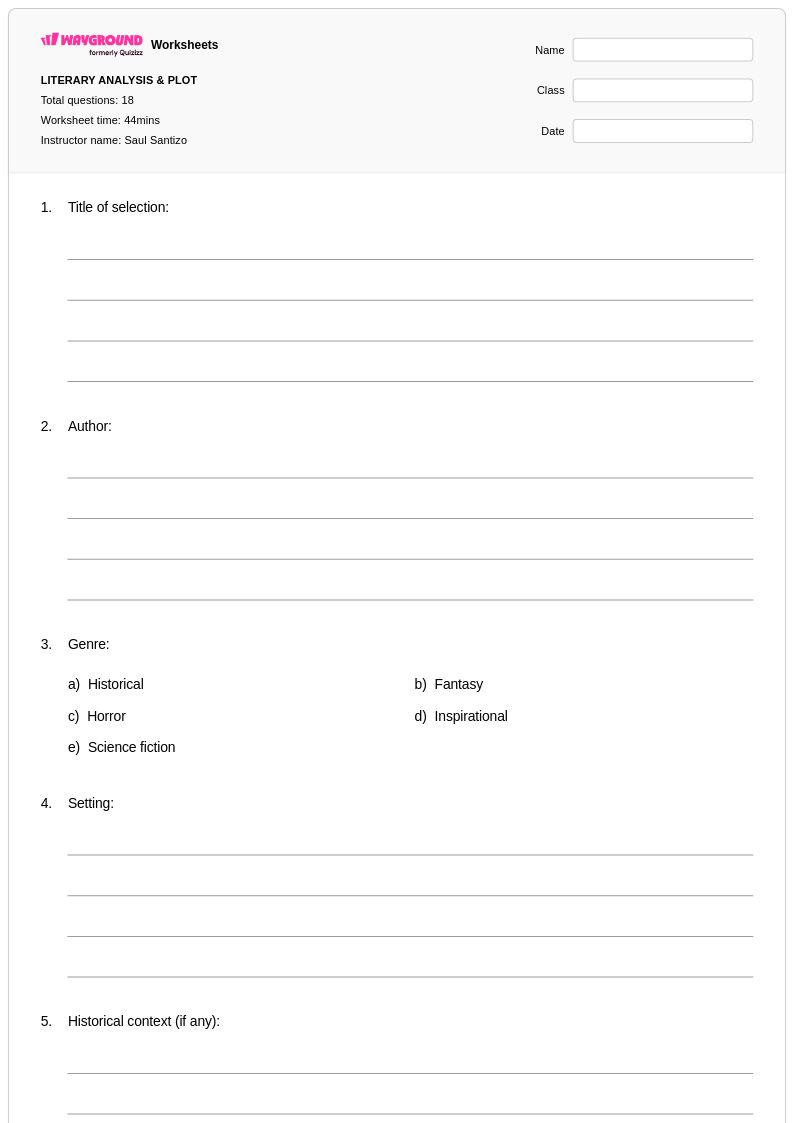
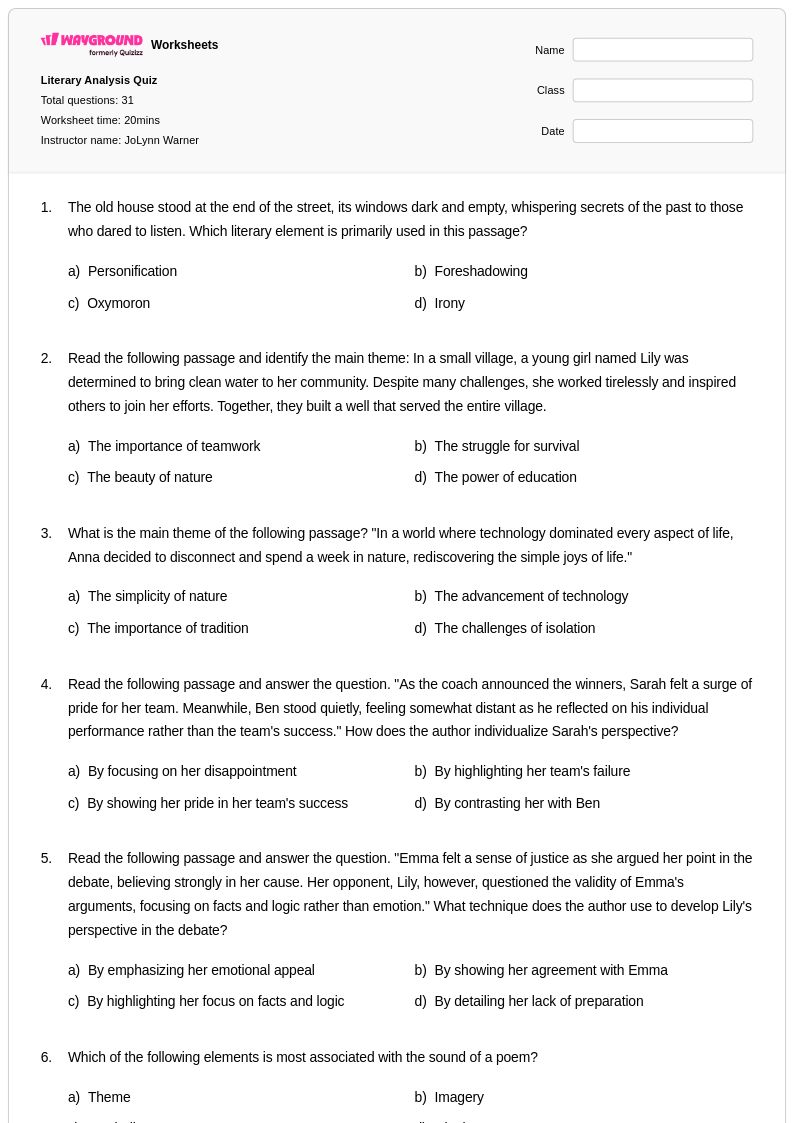
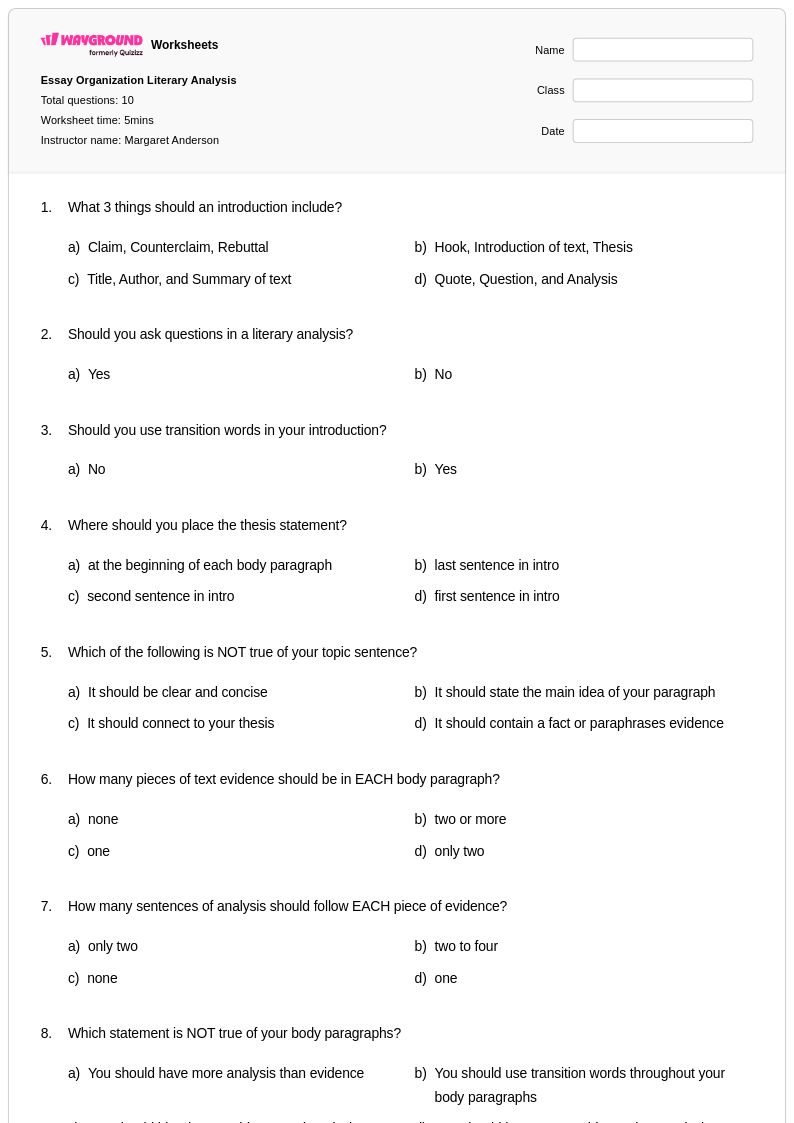
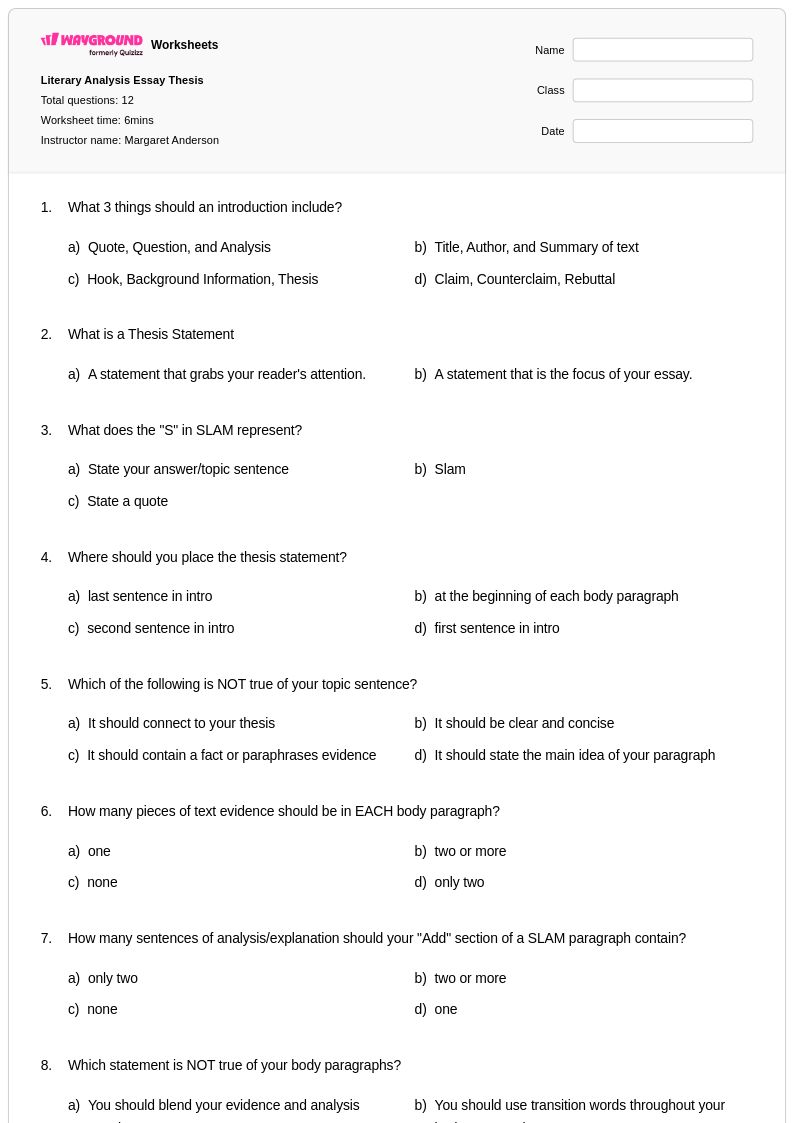
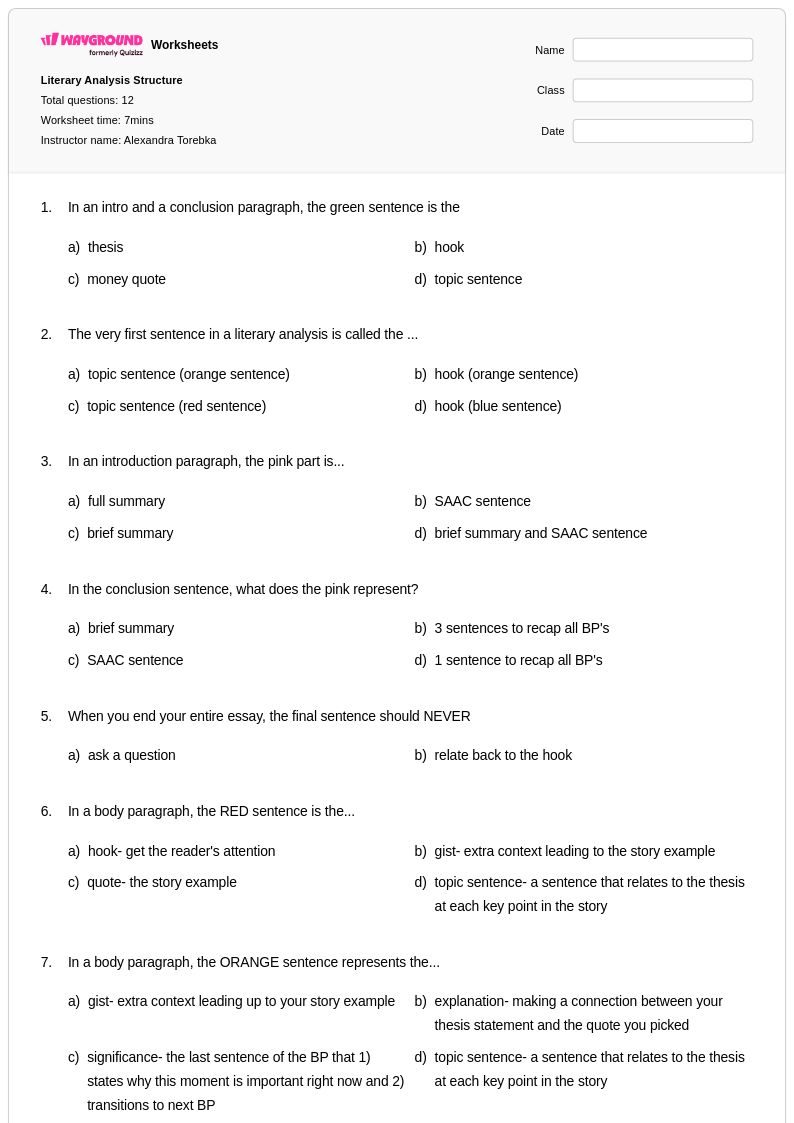
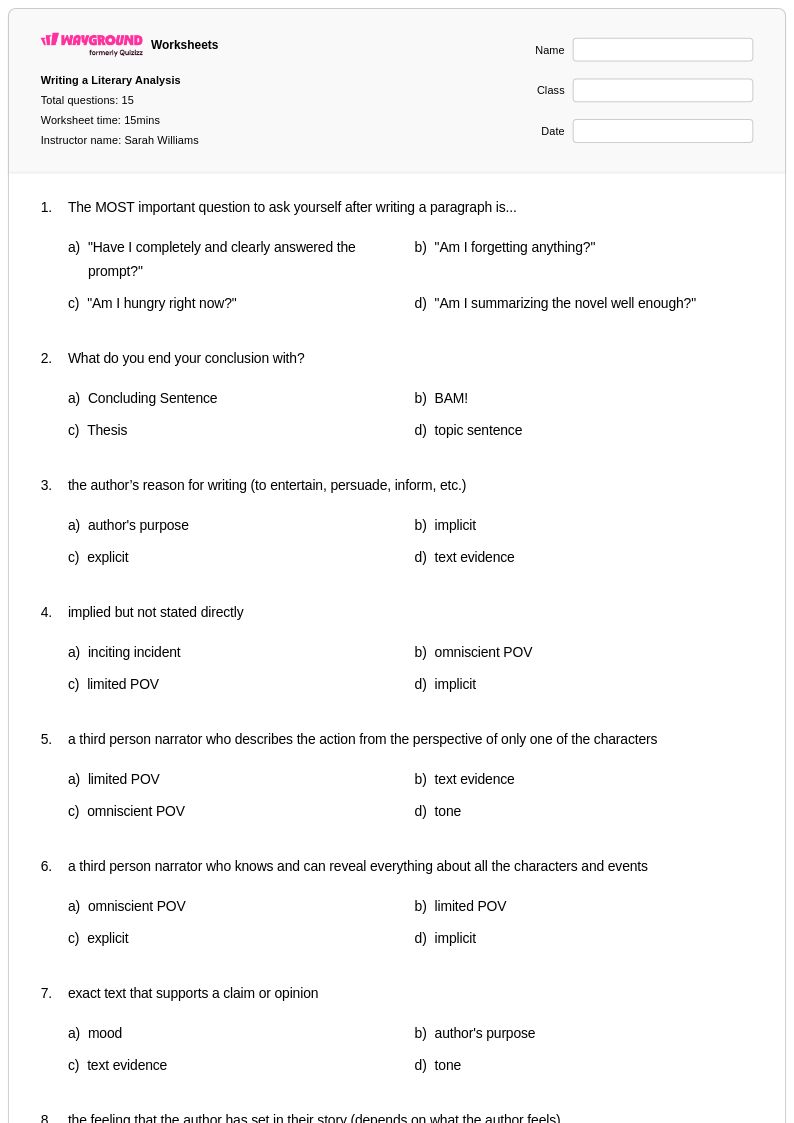
Literary analysis worksheets for Class 10 students available through Wayground (formerly Quizizz) provide comprehensive practice in examining and interpreting various reading genres and types with sophisticated analytical techniques. These expertly designed resources strengthen critical thinking skills essential for advanced English study, including identifying literary devices, analyzing character development, evaluating thematic elements, and constructing evidence-based arguments about textual meaning. Students engage with complex practice problems that require close reading of poetry, drama, fiction, and nonfiction texts, developing the analytical vocabulary and interpretive skills necessary for college-level literary study. Each worksheet includes detailed answer keys that support independent learning and self-assessment, while the free printable format ensures accessibility for diverse classroom environments and study situations.
Wayground (formerly Quizizz) empowers educators with millions of teacher-created literary analysis resources specifically tailored for Class 10 English instruction, featuring robust search and filtering capabilities that allow quick identification of materials aligned with specific standards and learning objectives. The platform's differentiation tools enable teachers to customize worksheet difficulty levels and question types to meet individual student needs, supporting both remediation for struggling readers and enrichment opportunities for advanced learners. Available in both printable pdf format and interactive digital versions, these comprehensive worksheet collections facilitate flexible lesson planning whether teachers need targeted skill practice, formative assessment tools, or supplementary materials for literary analysis instruction. The extensive database of peer-reviewed resources saves valuable preparation time while ensuring students receive high-quality practice in the complex analytical skills that form the foundation of advanced literary study.
FAQs
How do I teach literary analysis to students who struggle with reading comprehension?
Start by anchoring literary analysis in concrete, observable text evidence before asking students to interpret or evaluate. Teach one element at a time — such as character motivation or theme — using short, high-interest passages before moving to longer texts. Scaffolded worksheets that move from identification tasks to open-ended analysis help build confidence and analytical habits progressively.
What are the key literary elements students need to know for literary analysis?
Core literary elements include theme, character development, setting, plot structure, point of view, tone, figurative language, and symbolism. Students should be able to not only identify these elements but also explain how they interact and contribute to the text's overall meaning. Proficiency across all these elements is typically expected by middle and high school, though foundational exposure begins in upper elementary grades.
What exercises help students practice literary analysis skills?
Effective practice exercises include close-reading annotations, character motivation charts, theme identification tasks with textual evidence, and comparative analysis between two texts or genres. Structured worksheets that prompt students to move from observation to inference to interpretation are particularly effective because they model the thinking process rather than just testing for a final answer.
What mistakes do students commonly make when analyzing literature?
The most common error is summarizing the plot instead of analyzing how literary elements create meaning — students describe what happens rather than explaining why it matters. Another frequent mistake is making unsupported claims, where students state a theme or interpretation without grounding it in specific textual evidence. Students also tend to treat symbolism and figurative language as decorative rather than purposeful, missing how these devices reinforce the author's central ideas.
How can I differentiate literary analysis instruction for advanced and struggling readers in the same class?
Use tiered worksheets that address the same literary element at different levels of complexity — struggling readers may focus on identifying character traits from explicit text clues, while advanced students analyze how those traits evolve and connect to theme. On Wayground, teachers can apply individual accommodations such as Read Aloud support for students who need text read to them, or reduced answer choices to lower cognitive load, without alerting other students to those adjustments.
How do I use Wayground's literary analysis worksheets in my classroom?
Wayground's literary analysis worksheets are available as printable PDFs for traditional classroom use and in digital formats for technology-integrated environments, giving teachers flexibility depending on their setup. You can also host any worksheet as a live quiz directly on Wayground, which allows you to track student responses in real time. Each worksheet includes a detailed answer key, making them practical for independent practice, homework, small group work, or whole-class instruction.