
Recommended Topics for you
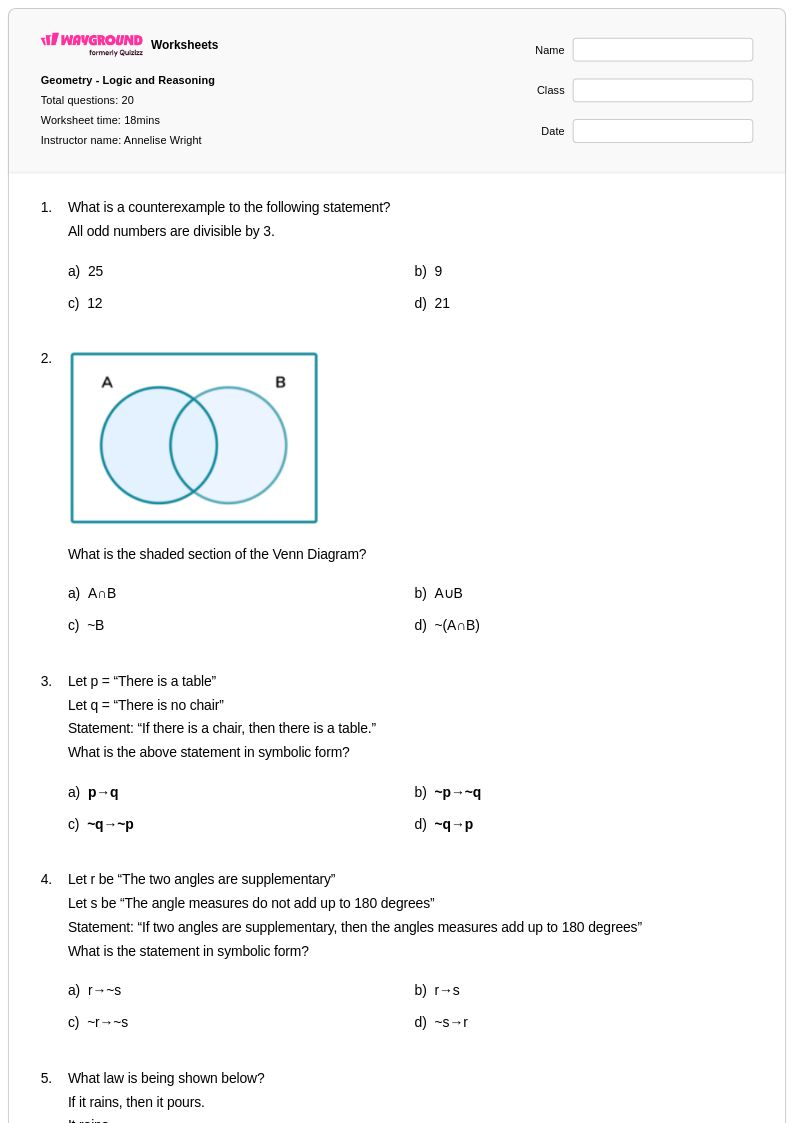
20 Q
9th - 12th
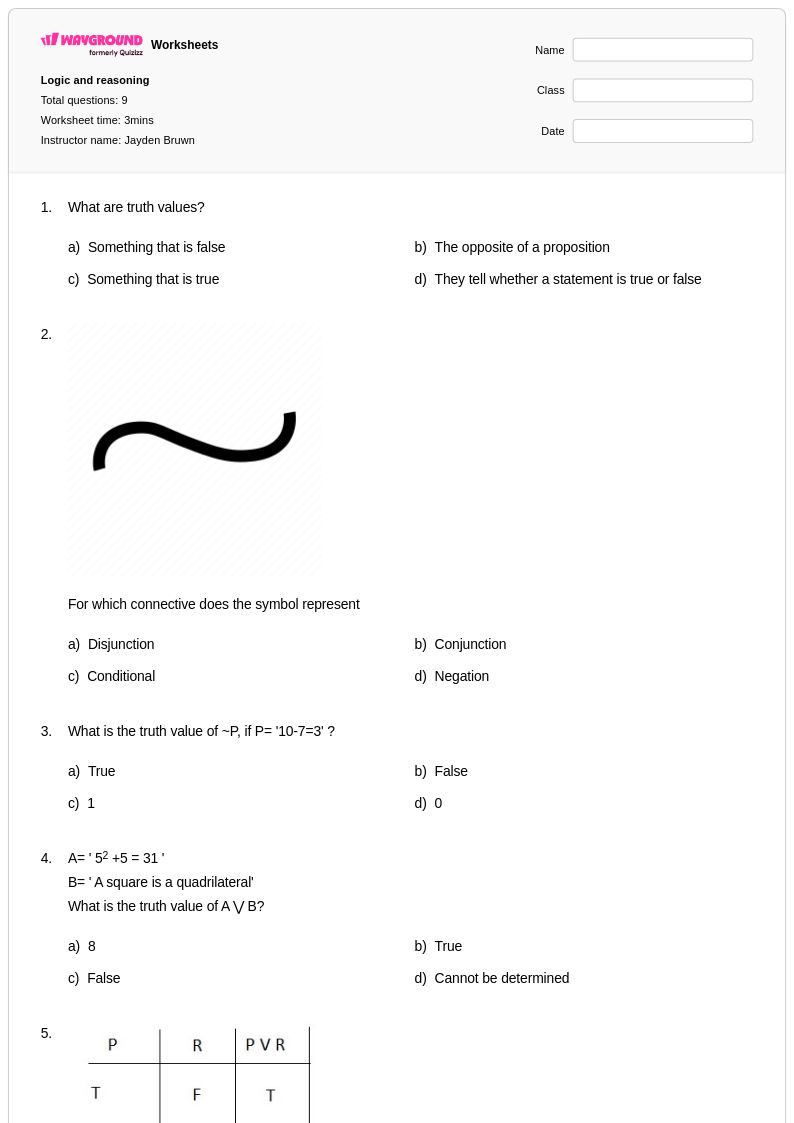
9 Q
12th
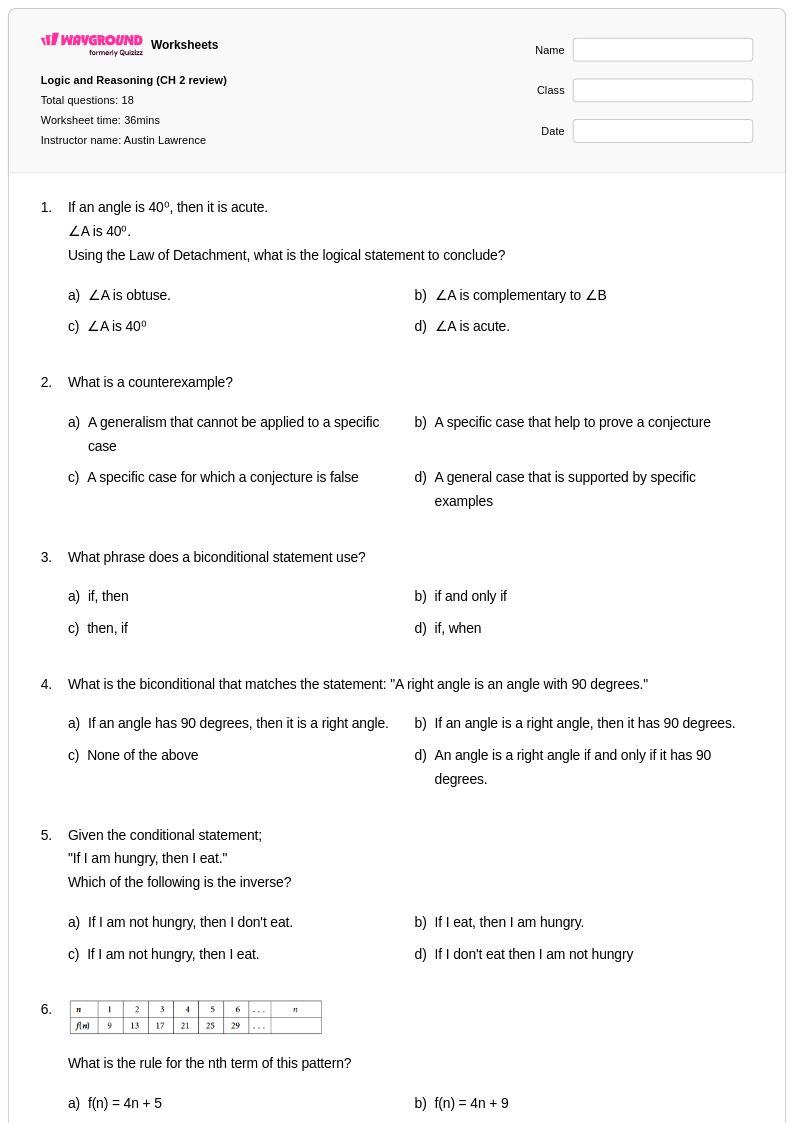
18 Q
9th - 12th
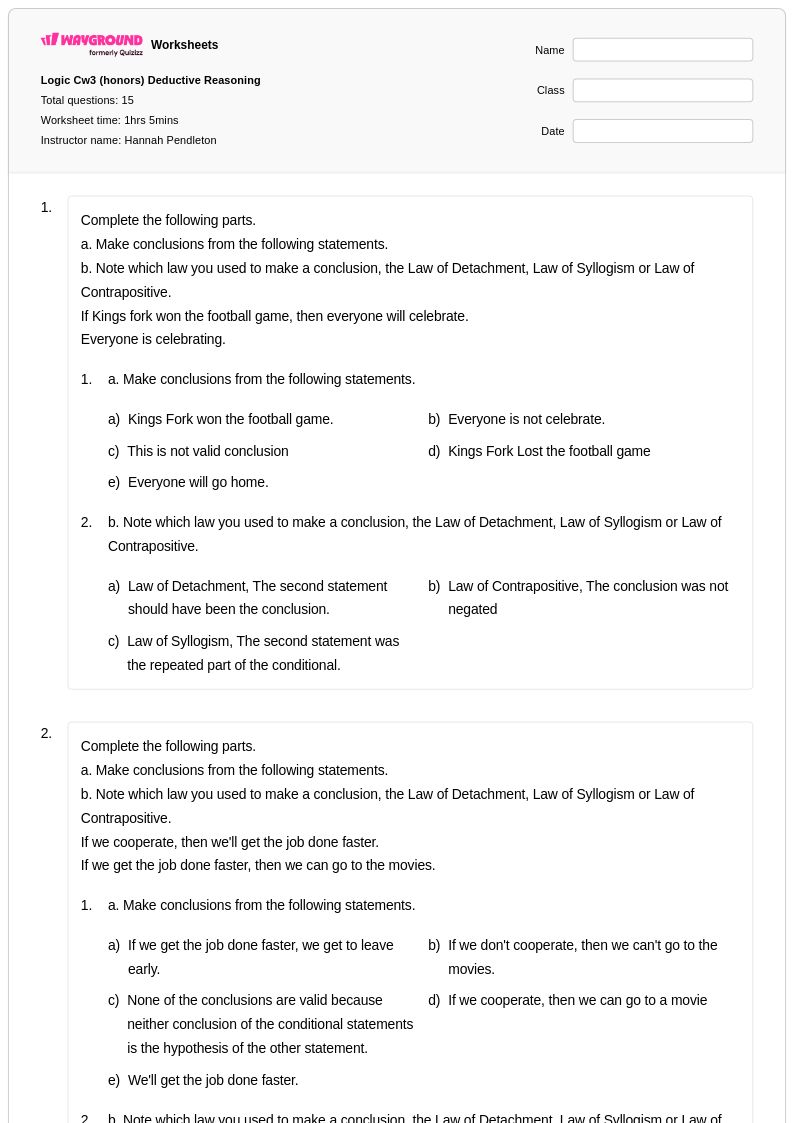
19 Q
9th - 12th
10 Q
12th
11 Q
12th - Uni
20 Q
9th - 12th
10 Q
9th - 12th
26 Q
9th - 12th
20 Q
1st - 12th
48 Q
9th - 12th
12 Q
9th - 12th
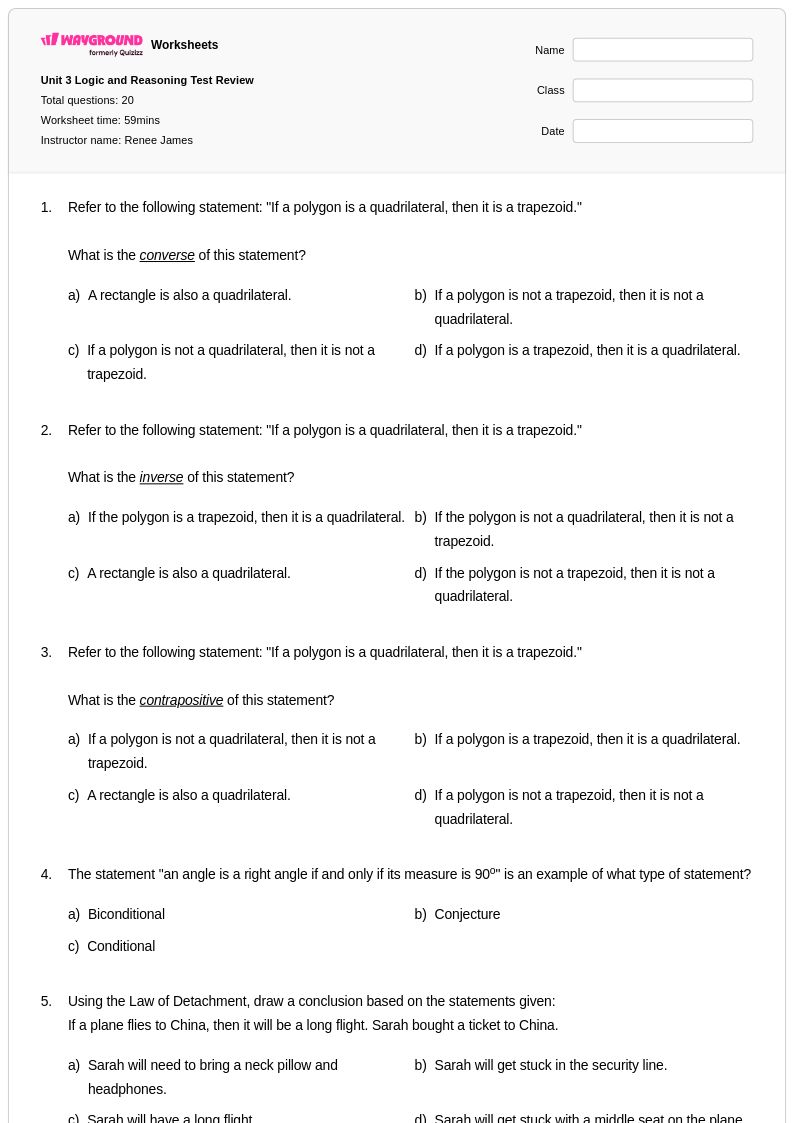
20 Q
9th - 12th
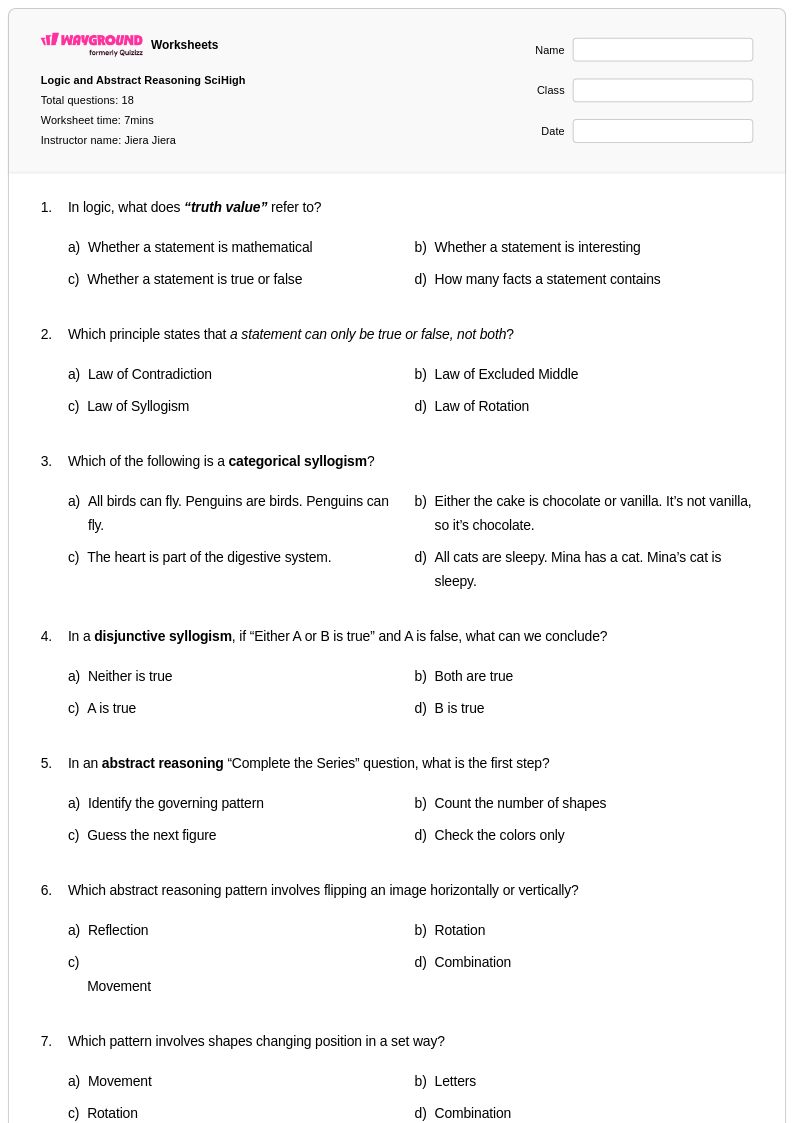
18 Q
9th - 12th
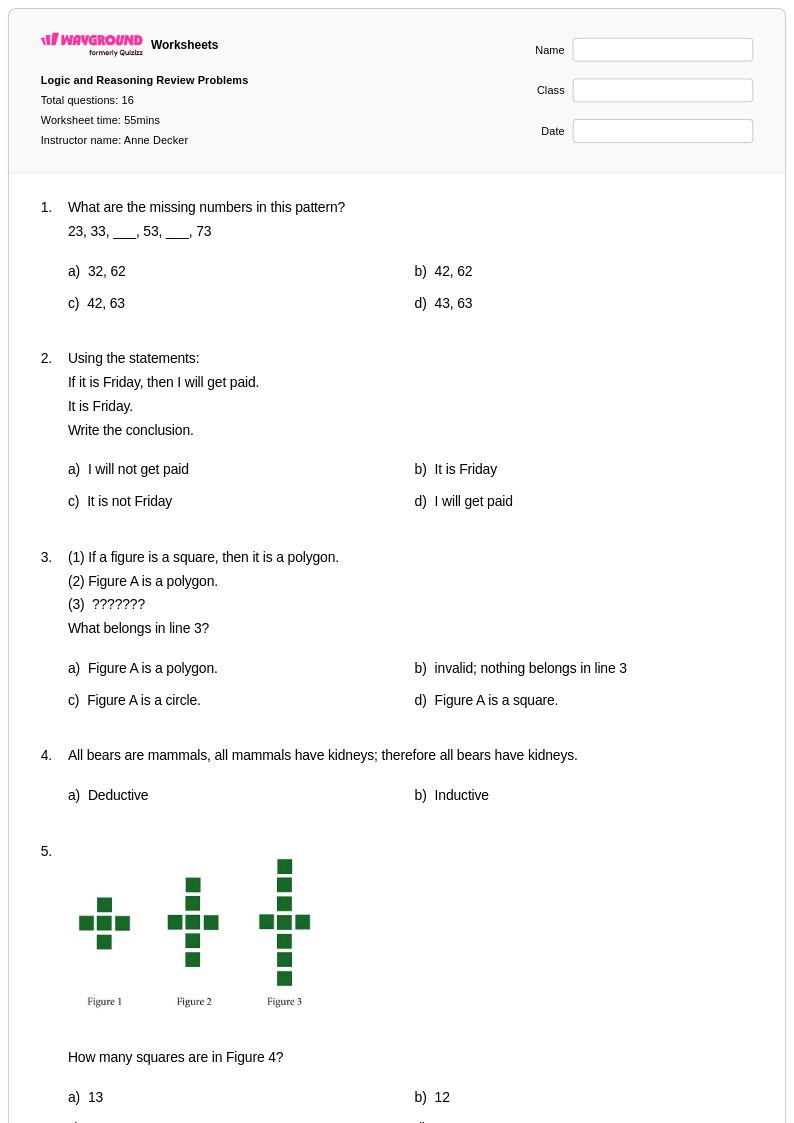
16 Q
9th - 12th
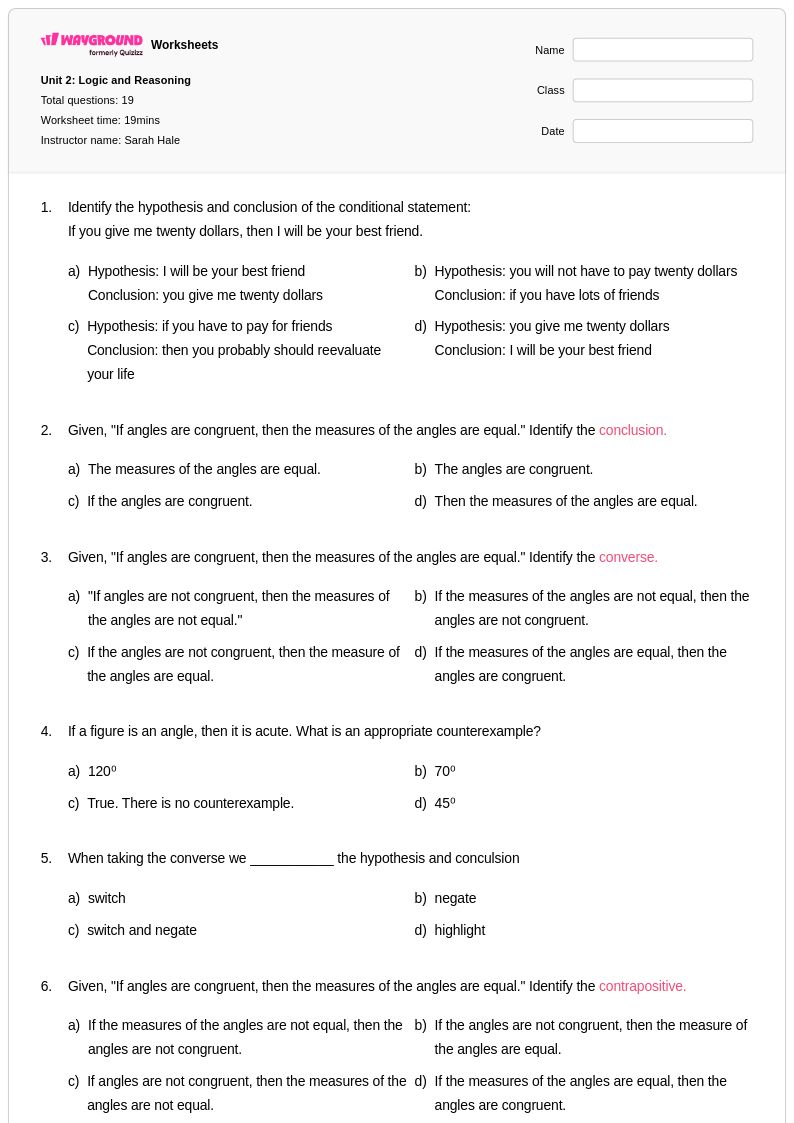
19 Q
9th - 12th
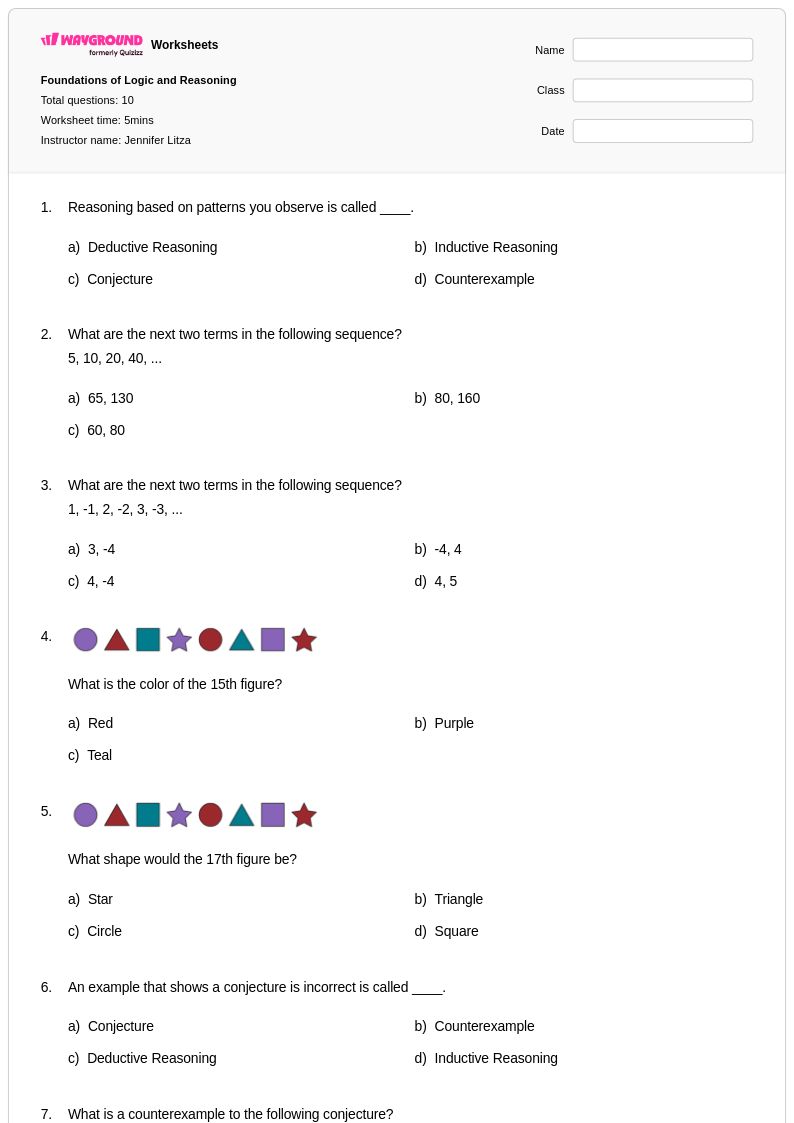
10 Q
9th - 12th
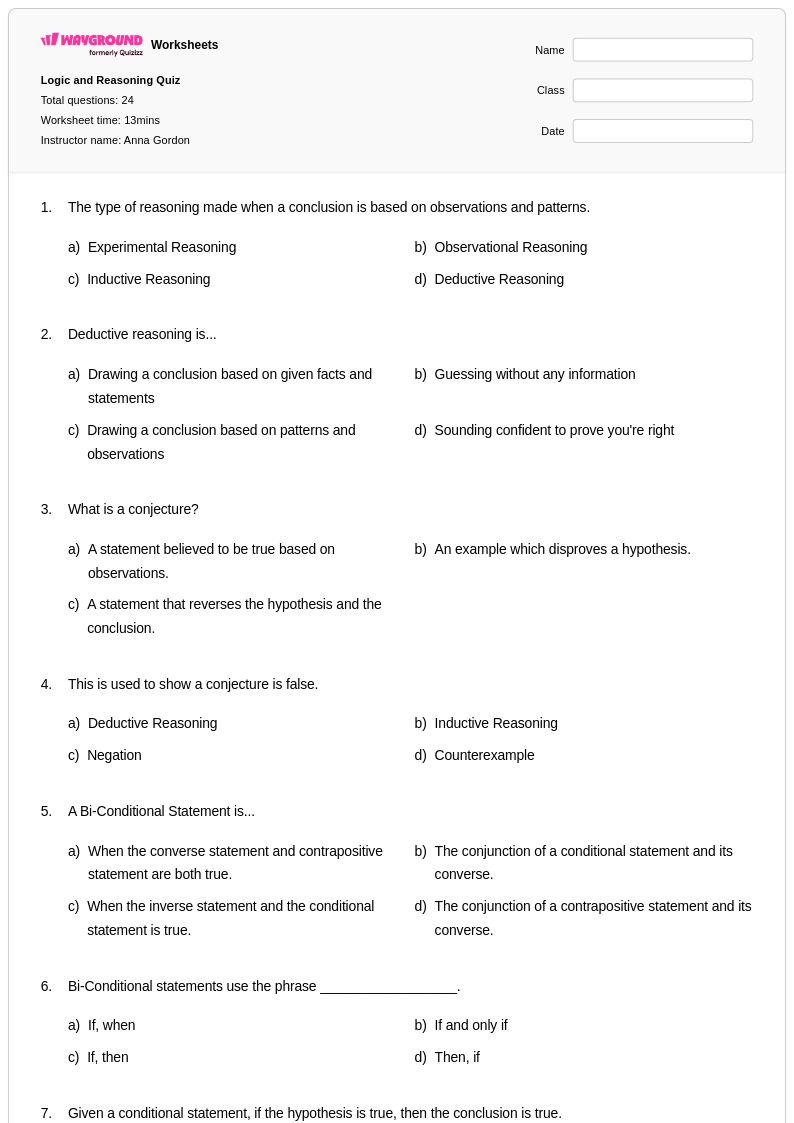
24 Q
9th - 12th
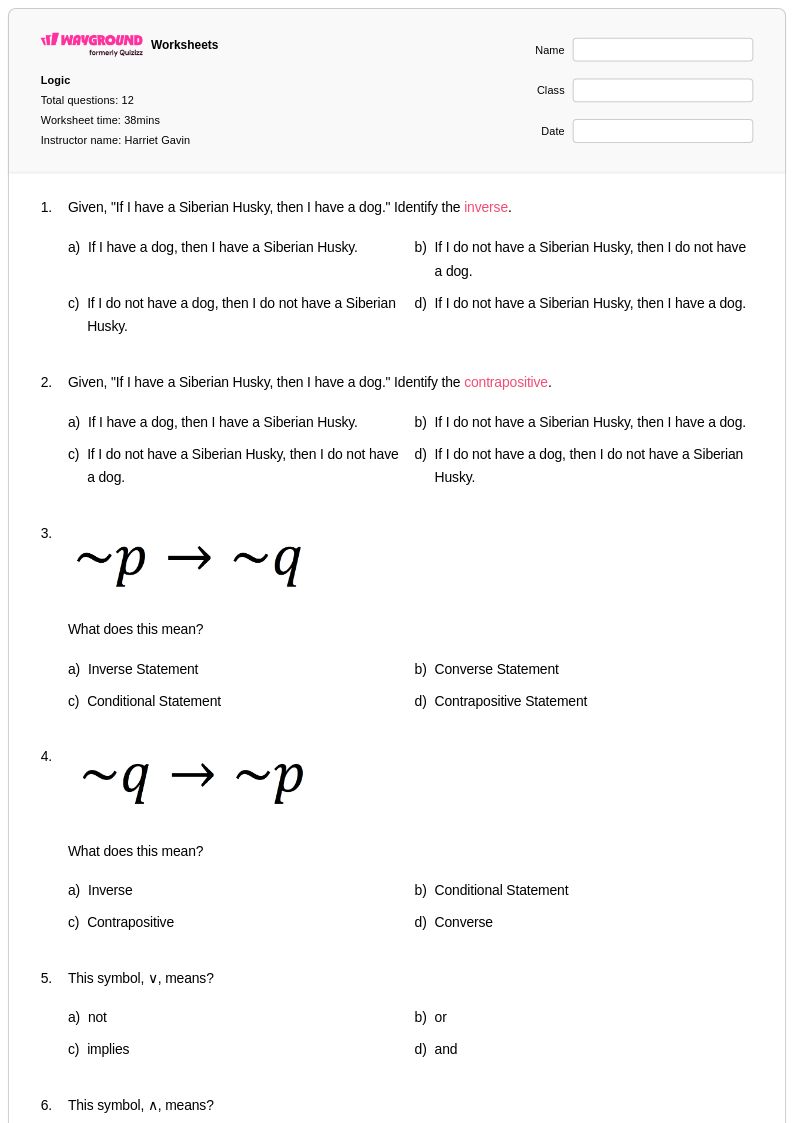
12 Q
9th - 12th
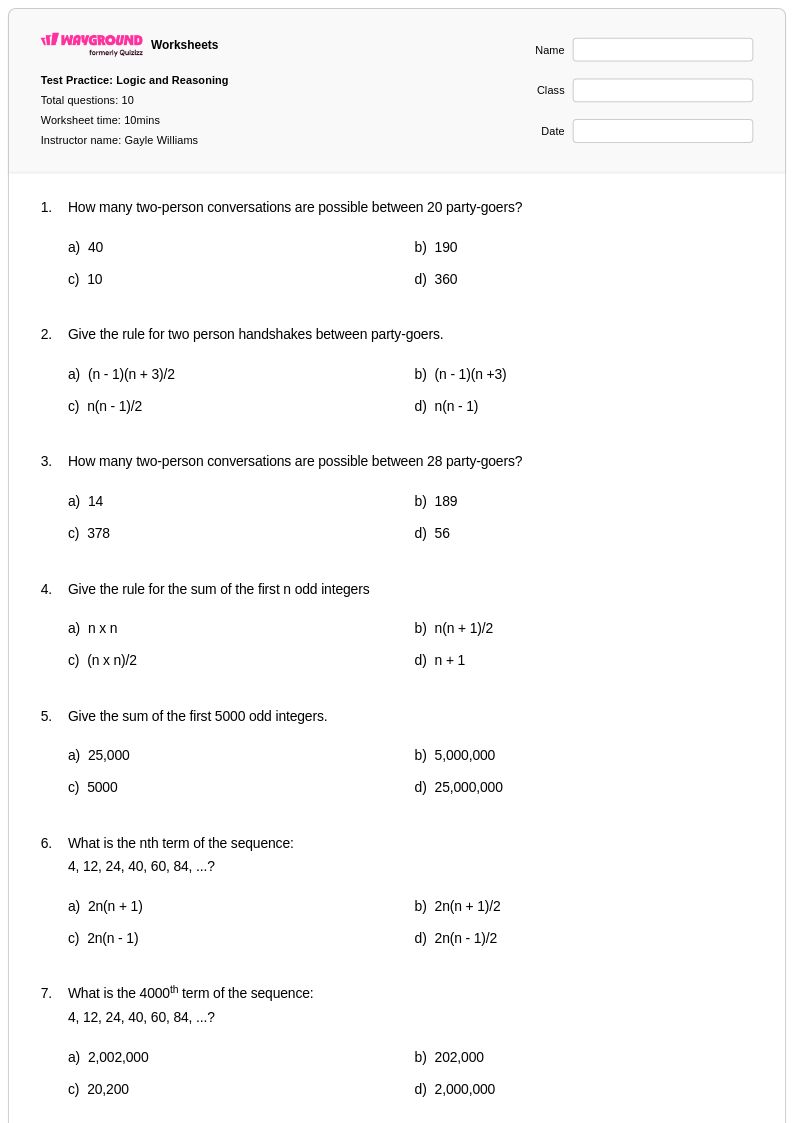
10 Q
12th
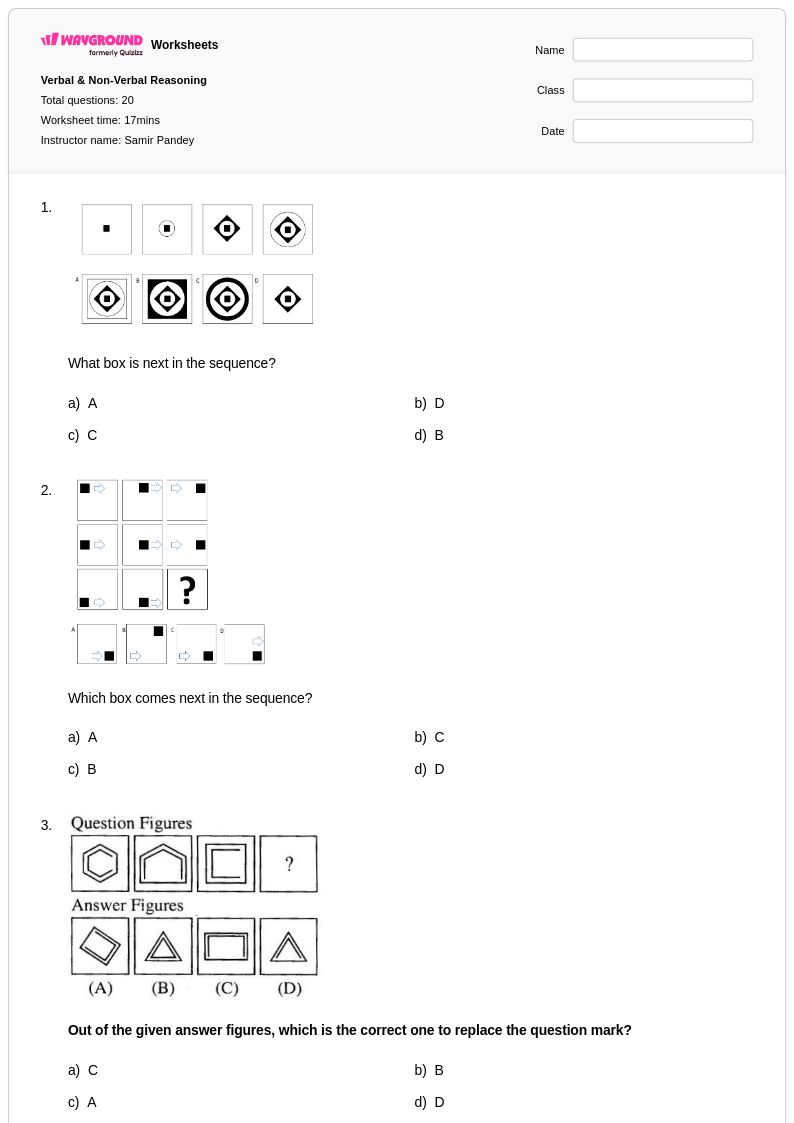
20 Q
10th - Uni
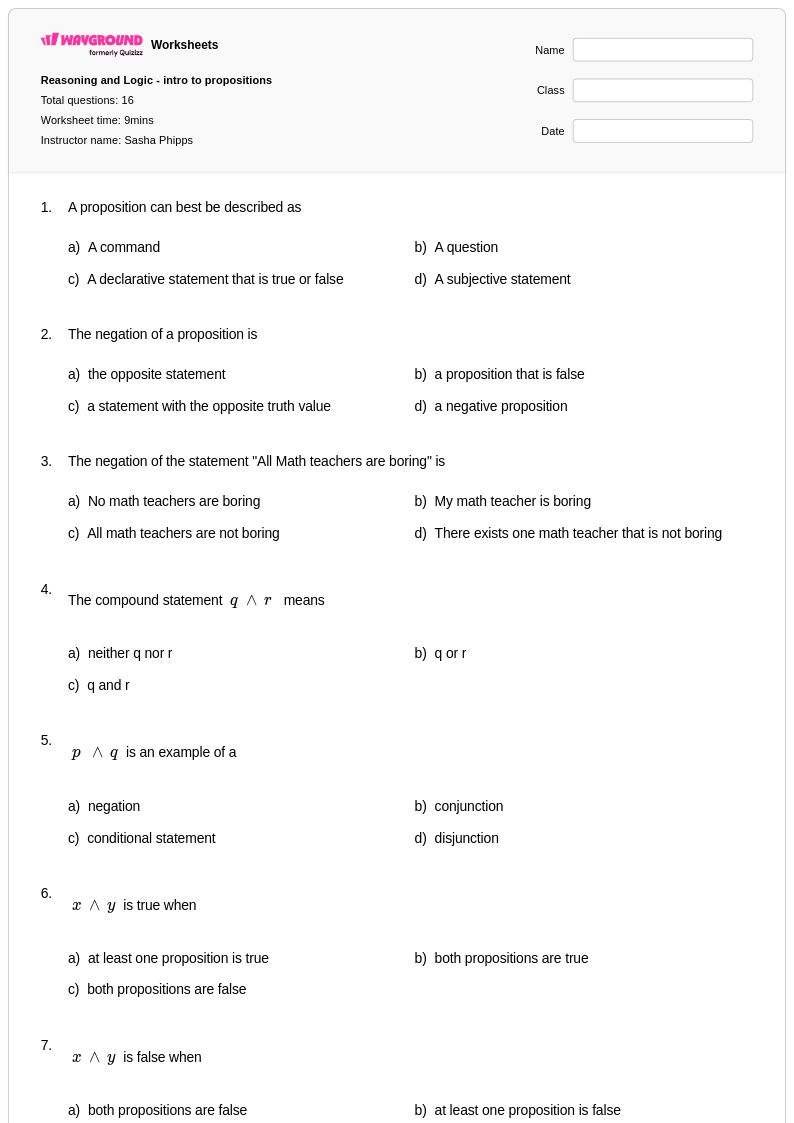
16 Q
11th - 12th
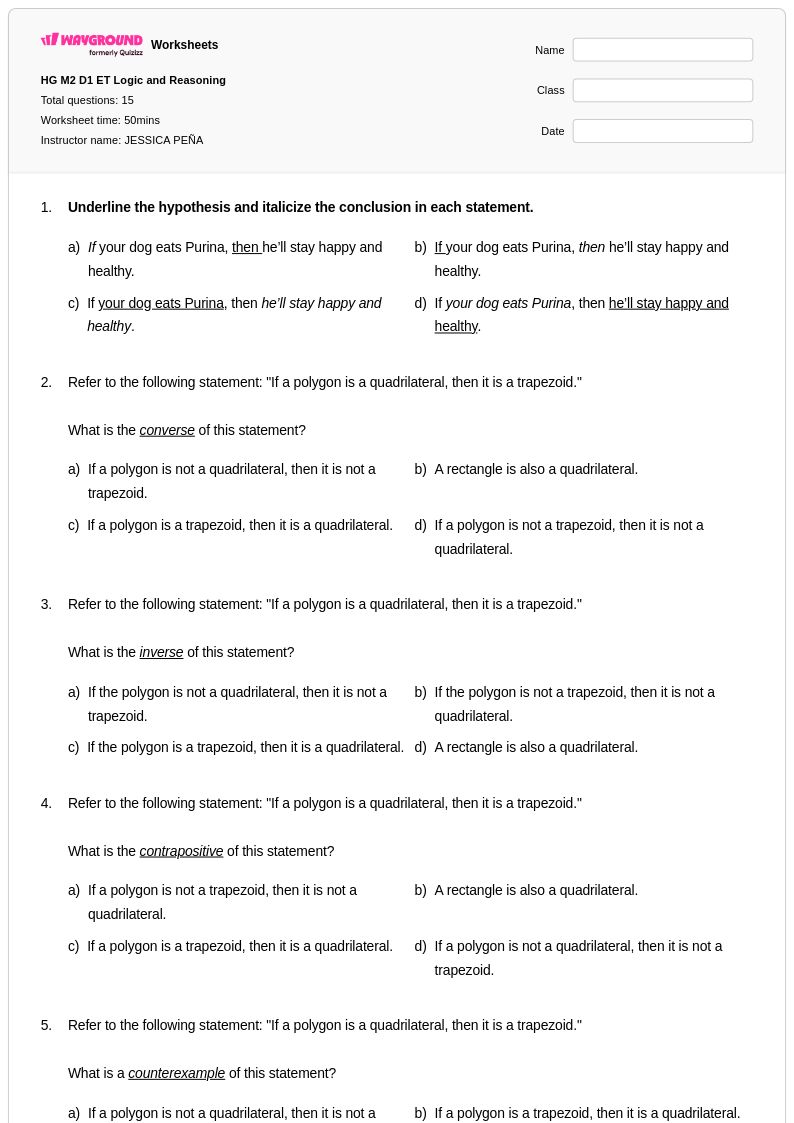
15 Q
9th - 12th
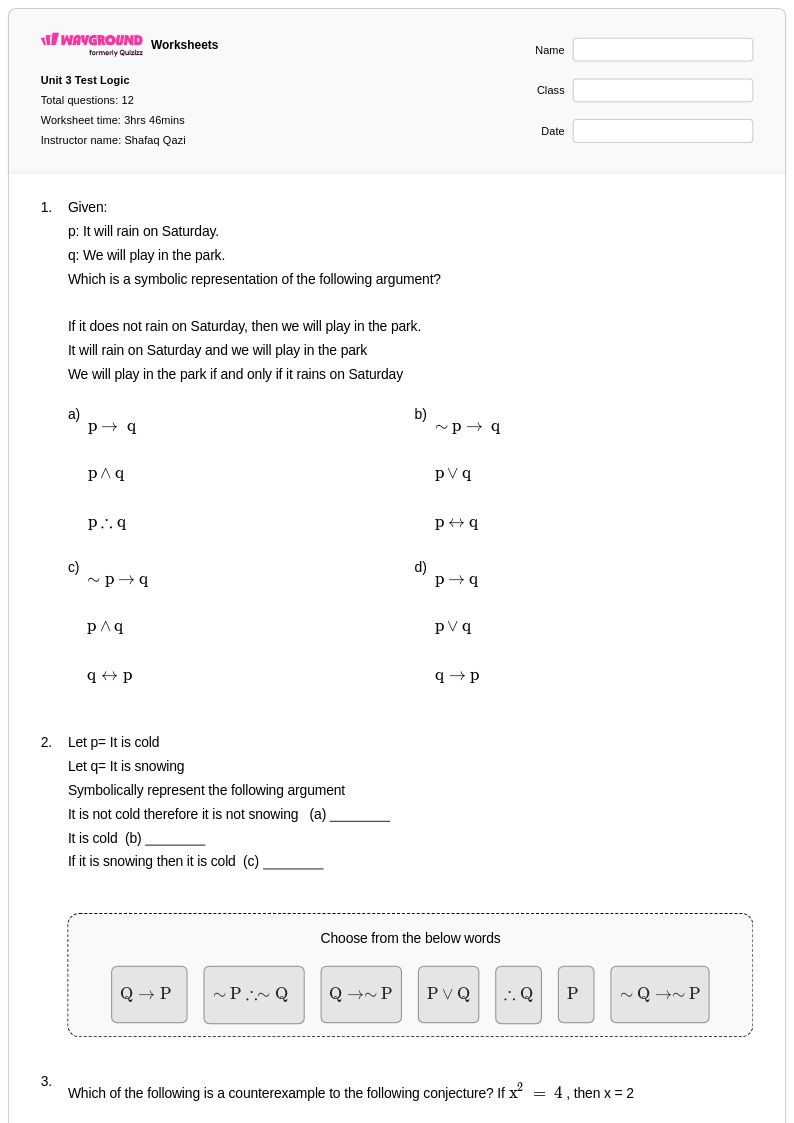
12 Q
9th - 12th
Explore Logic and Reasoning Worksheets by Grades
Explore Logic and Reasoning Worksheets for class 12 by Topic
Explore Other Subject Worksheets for class 12
Explore printable Logic and Reasoning worksheets for Class 12
Logic and Reasoning worksheets for Class 12 mathematics provide students with essential practice in developing critical thinking skills that form the foundation of advanced mathematical concepts. These comprehensive worksheets available through Wayground (formerly Quizizz) focus on strengthening students' ability to construct valid arguments, analyze logical statements, and apply deductive and inductive reasoning processes. Students work through practice problems that cover conditional statements, logical equivalences, truth tables, proof techniques, and mathematical reasoning patterns. Each worksheet includes detailed answer keys that guide students through step-by-step solutions, helping them understand the underlying logical structure of mathematical arguments. The free printable resources offer extensive practice with counterexamples, syllogistic reasoning, and the application of logical principles to geometric and algebraic contexts, ensuring students develop the analytical skills necessary for success in higher-level mathematics and standardized assessments.
Wayground (formerly Quizizz) supports mathematics educators with millions of teacher-created Logic and Reasoning worksheets specifically designed for Class 12 students, offering robust search and filtering capabilities that allow teachers to quickly locate resources aligned with their curriculum standards and learning objectives. The platform's differentiation tools enable educators to customize worksheets based on individual student needs, modifying complexity levels and focusing on specific reasoning skills such as proof writing, logical analysis, or argument validation. Teachers can access these resources in both printable pdf formats for traditional classroom use and digital formats for online learning environments, making lesson planning more efficient and flexible. The extensive collection supports targeted remediation for students struggling with logical concepts, provides enrichment opportunities for advanced learners, and offers consistent skill practice that reinforces the connection between logical reasoning and mathematical problem-solving across various mathematical domains including calculus, statistics, and discrete mathematics.
FAQs
How do I teach advanced logic and reasoning to Grade 12 students?
What worksheet problems build Grade 12 logical reasoning skills?
What errors should I look for when assessing Grade 12 reasoning?
How can teachers use these Grade 12 logic and reasoning worksheets?
How does Grade 12 logic and reasoning connect to Common Core math?
How can I differentiate Grade 12 proof and logic worksheets?
What logic and reasoning skills are appropriate for Grade 12?