Master logical fallacies with Wayground's comprehensive collection of free worksheets and printables, featuring practice problems and answer keys to help students identify and avoid common reasoning errors in writing.
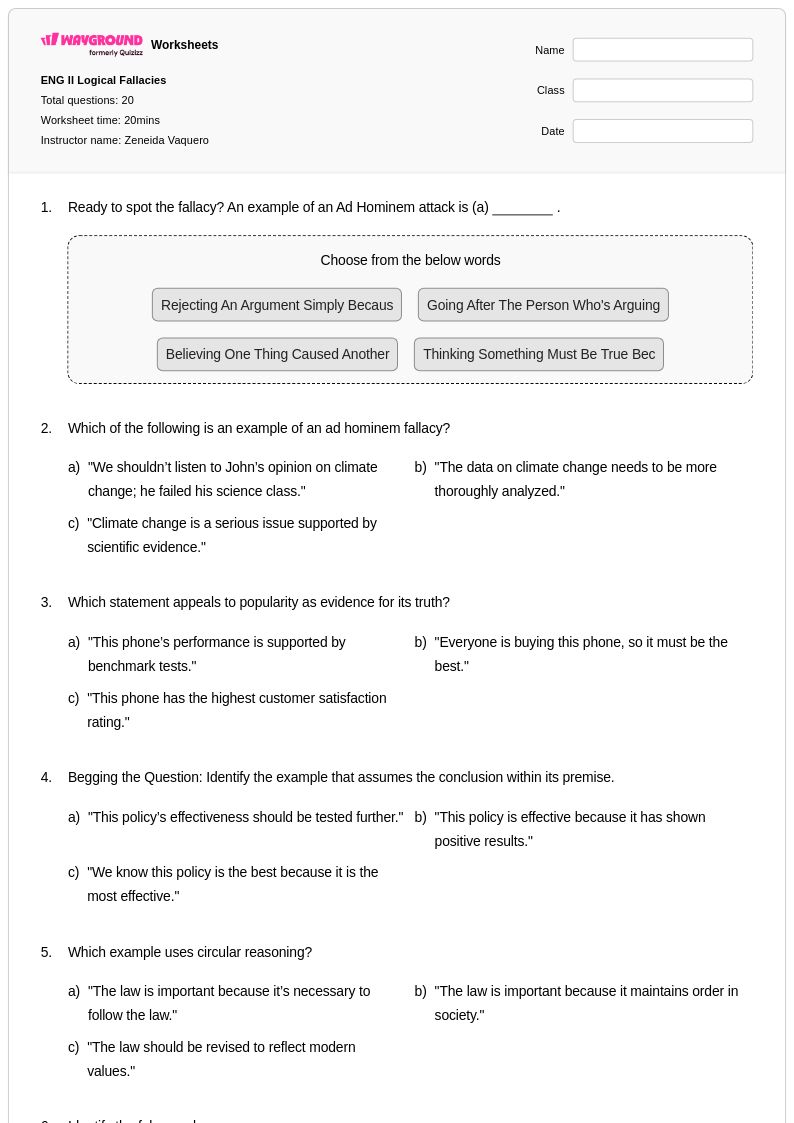
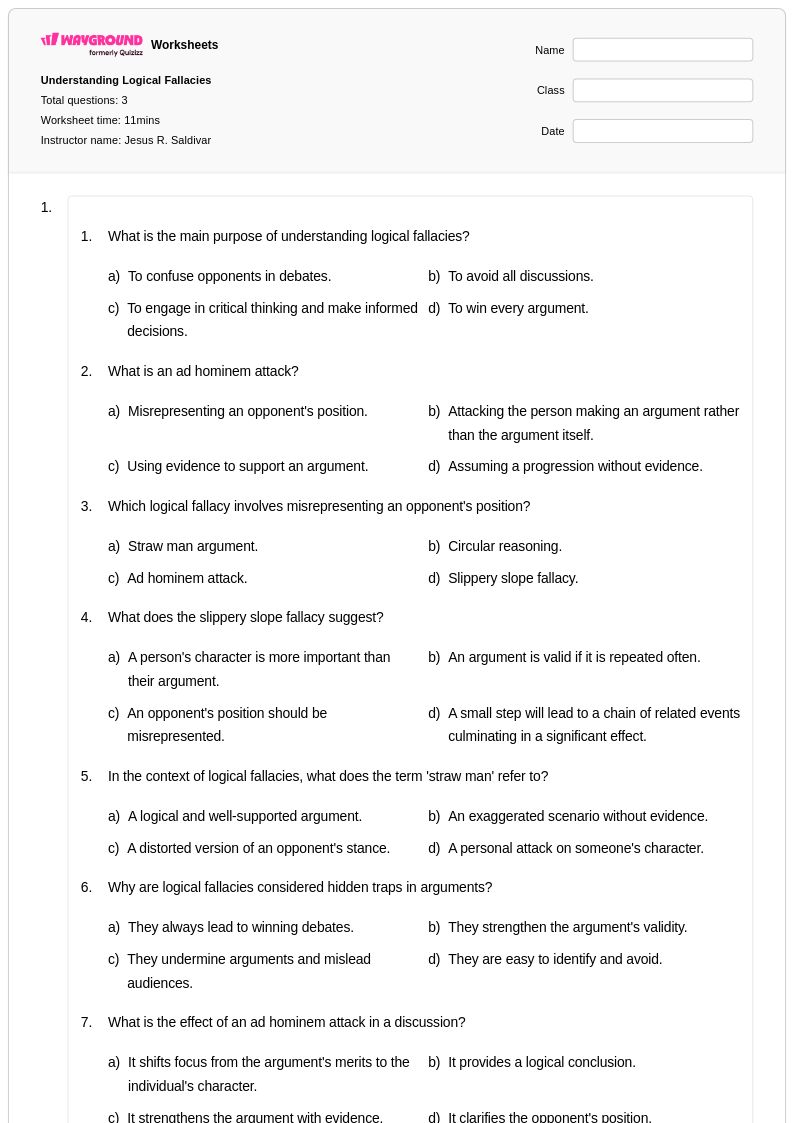
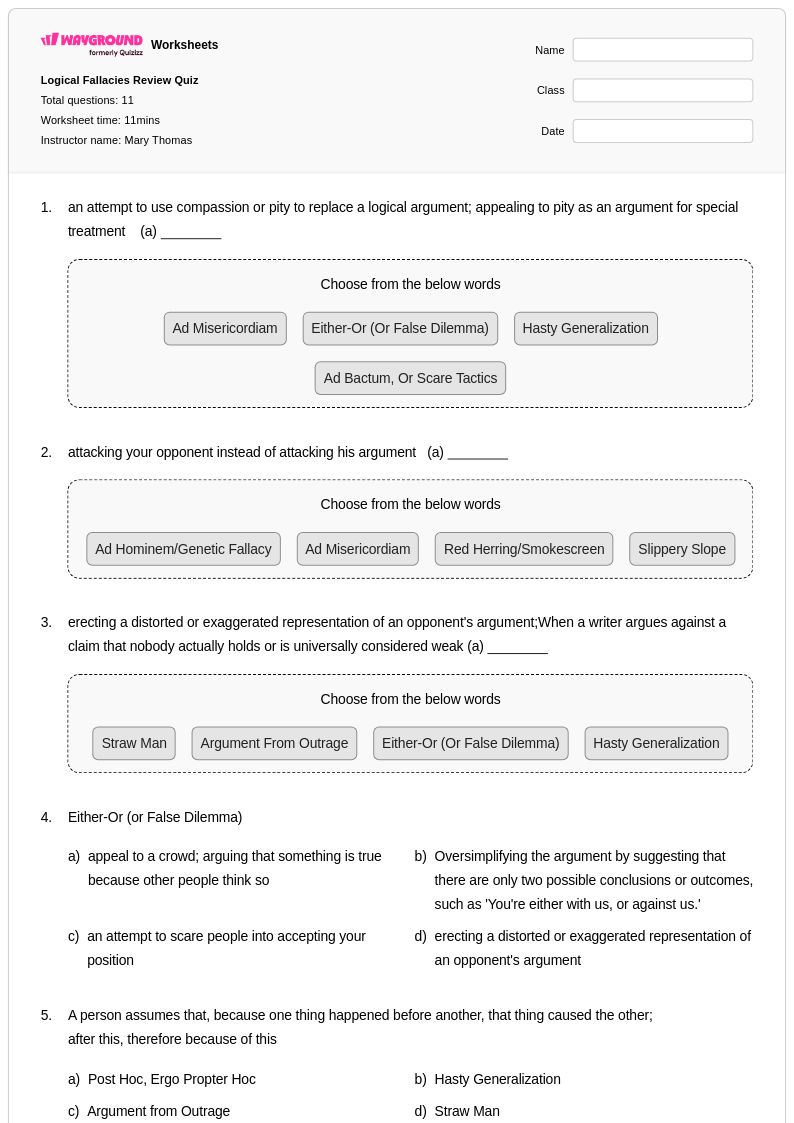
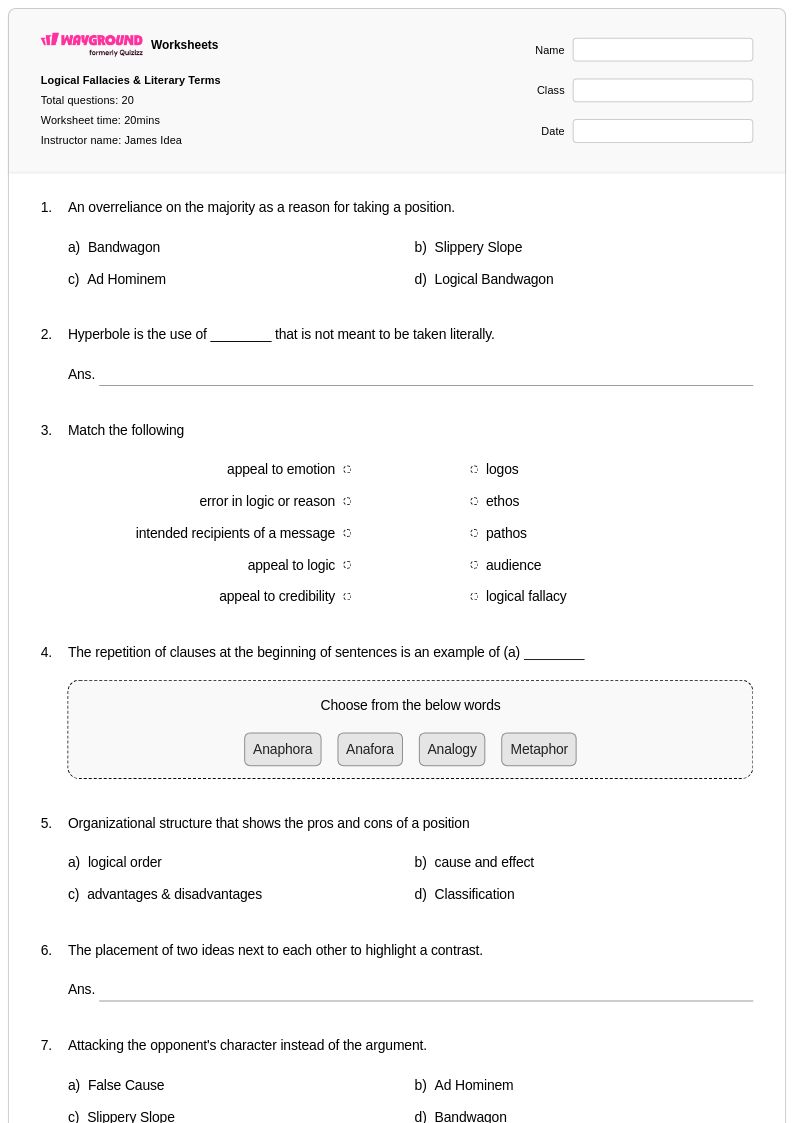
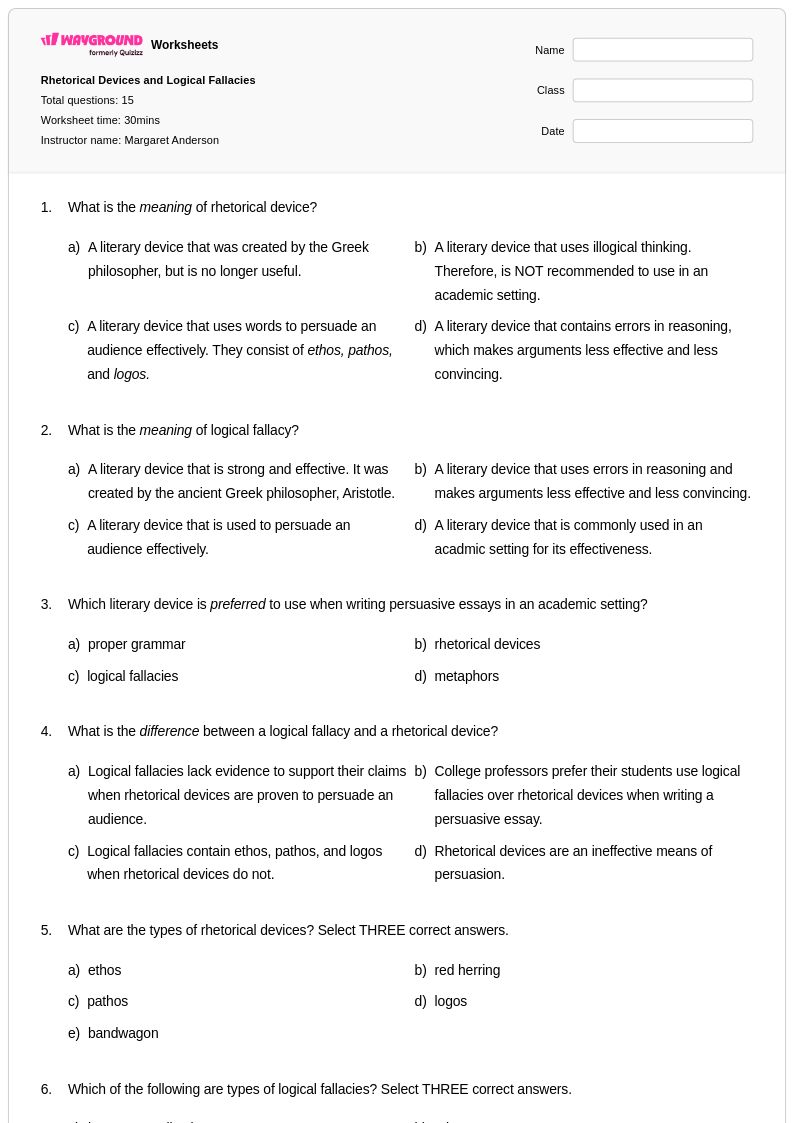
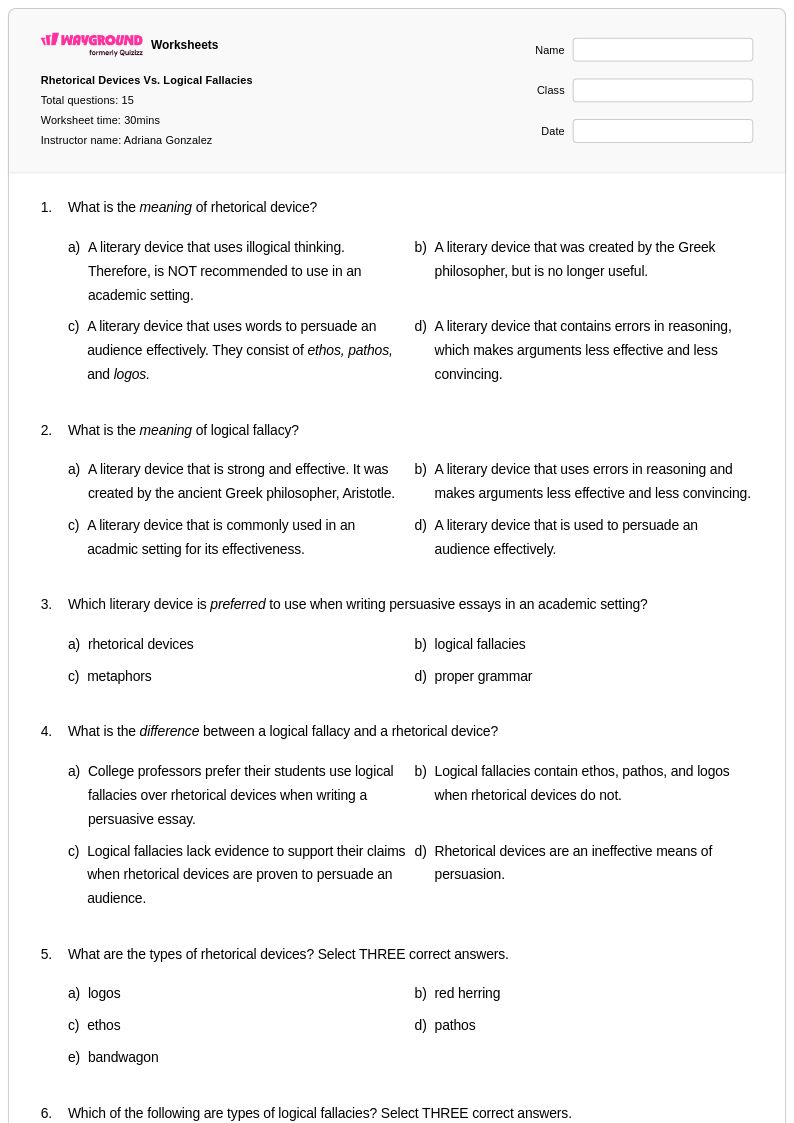
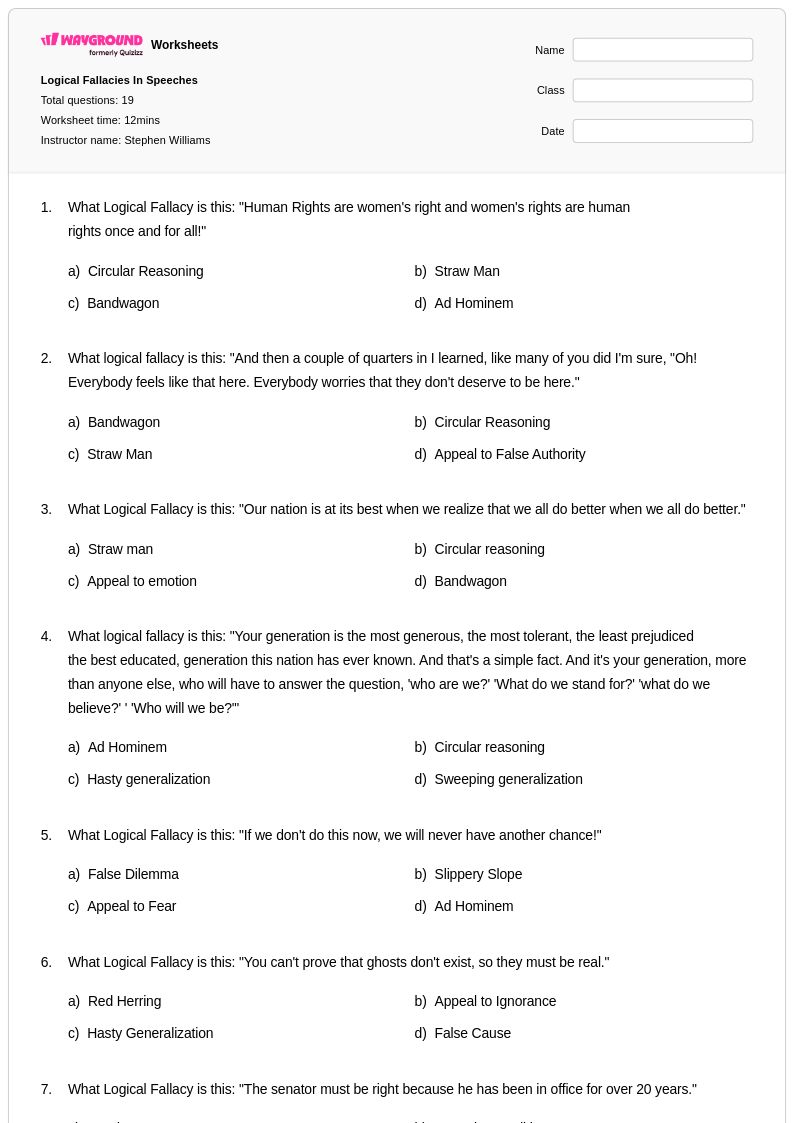
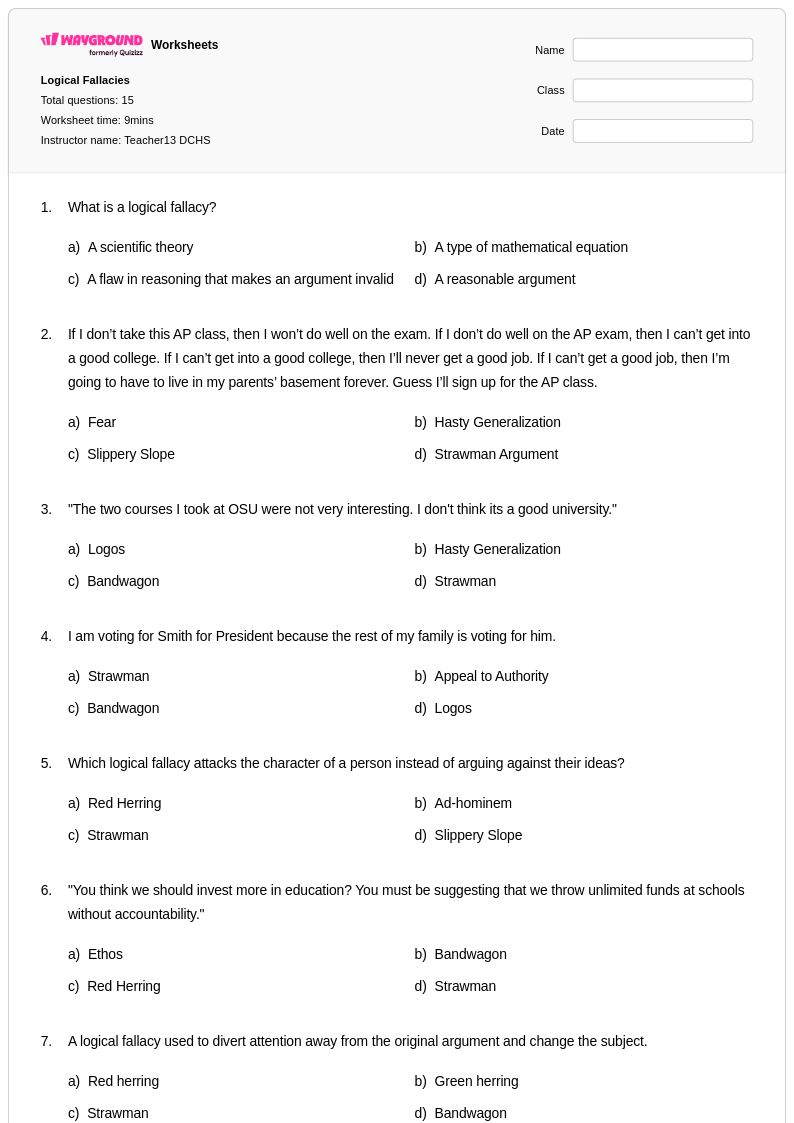
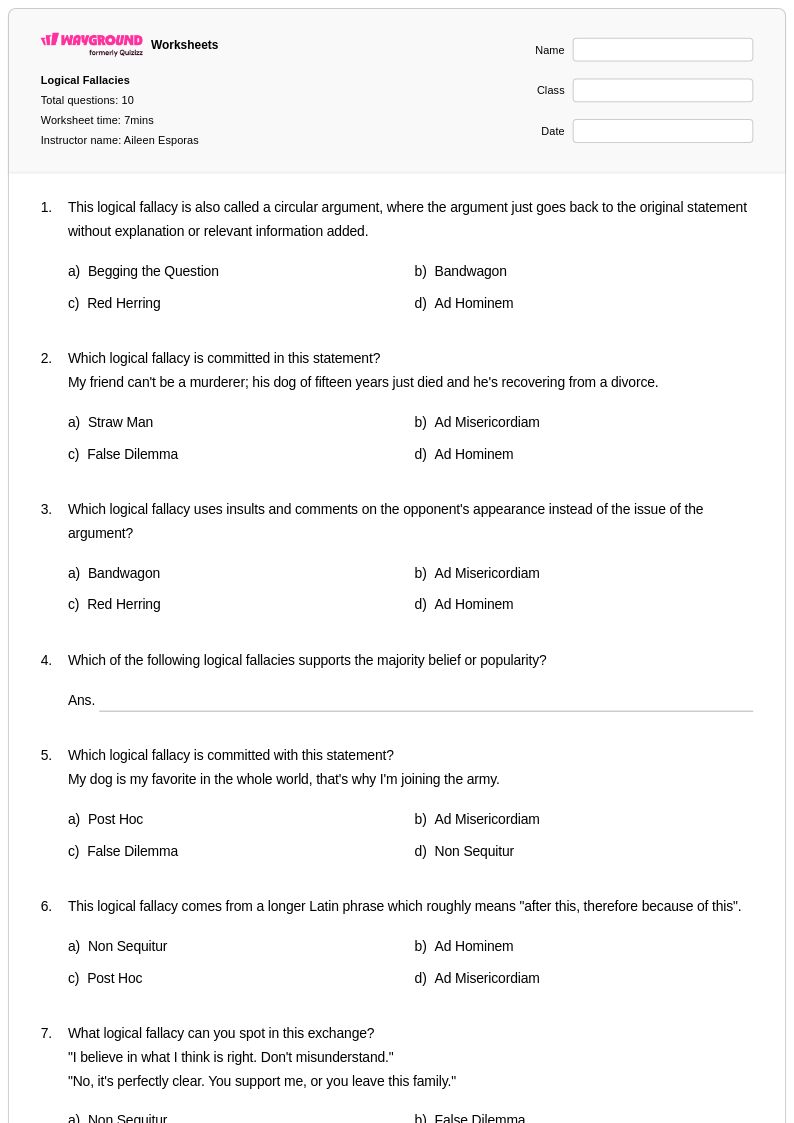
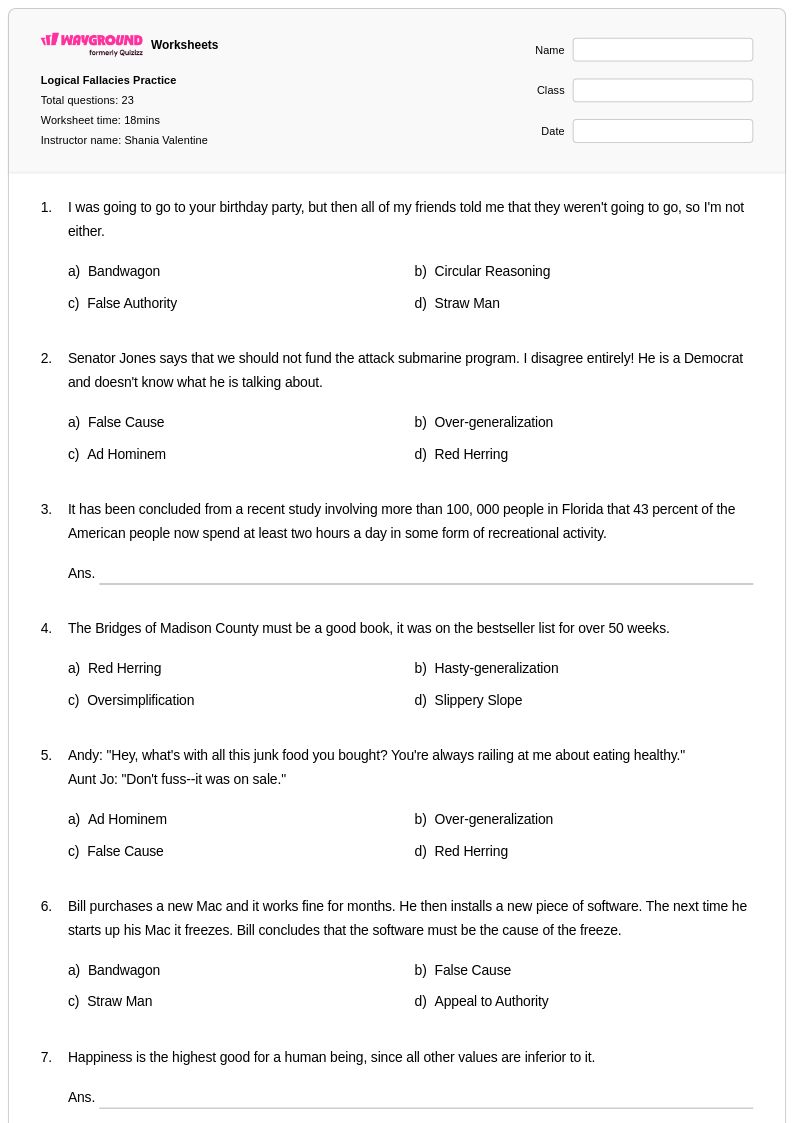
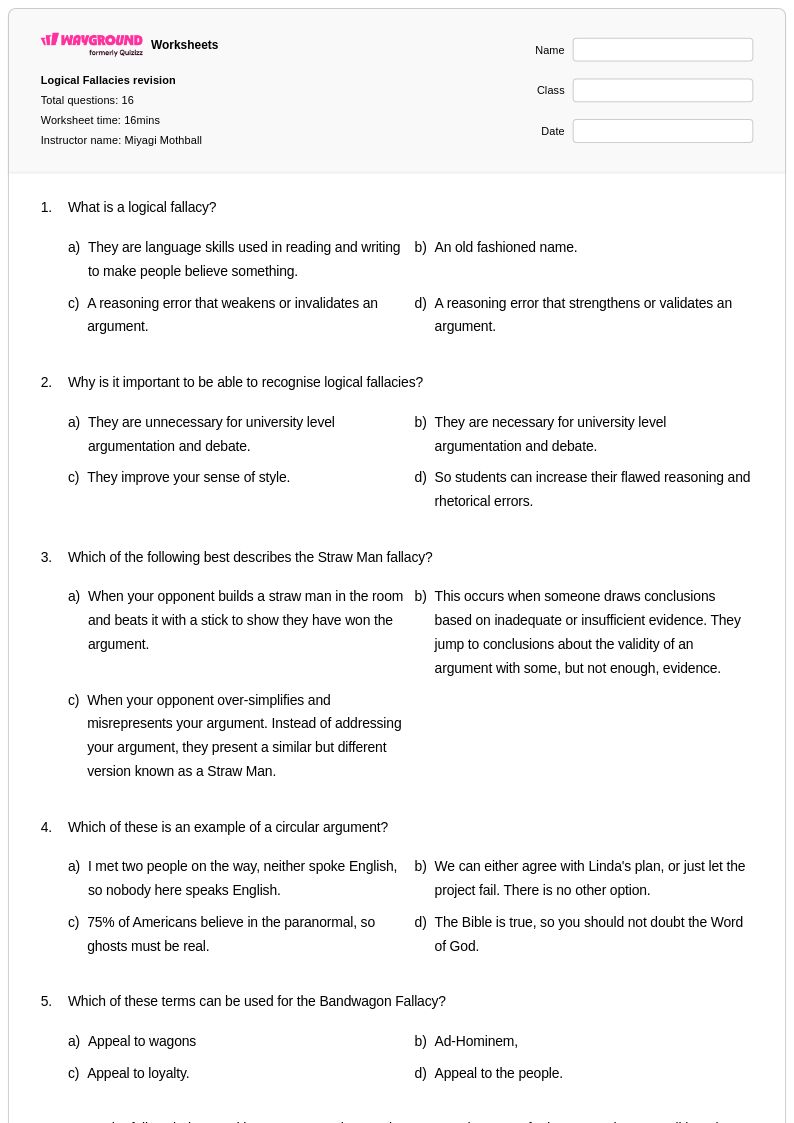
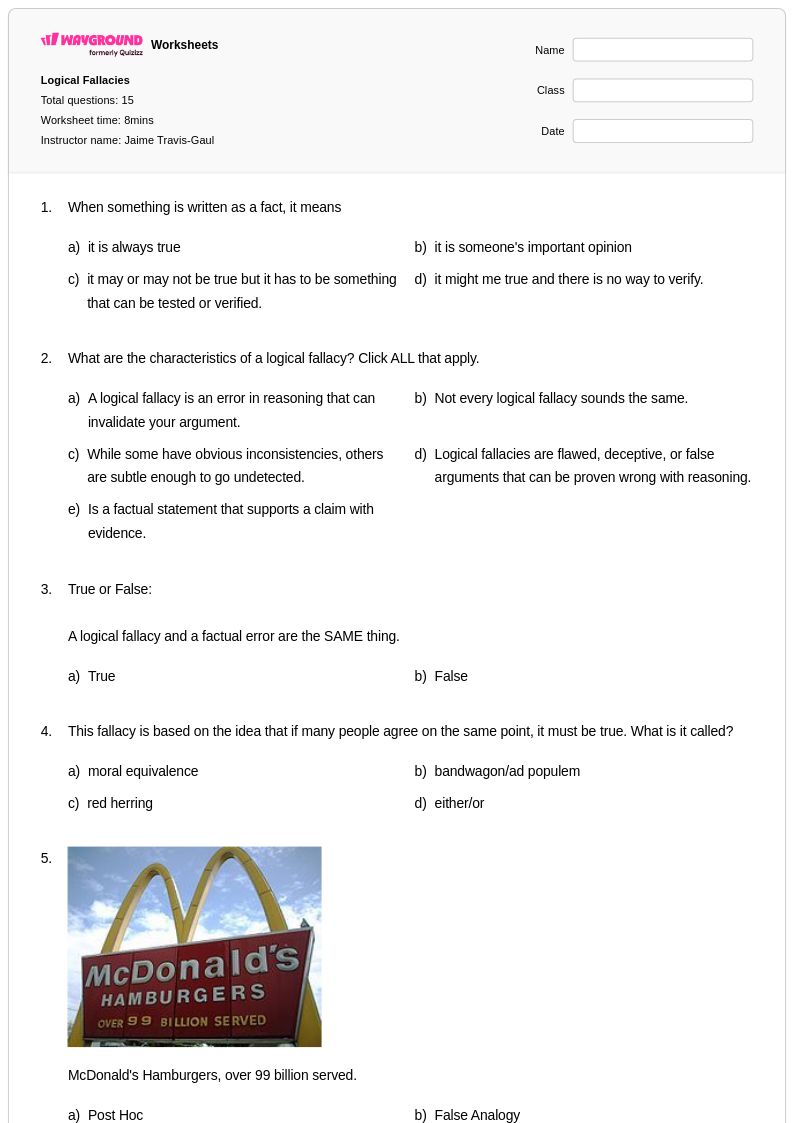
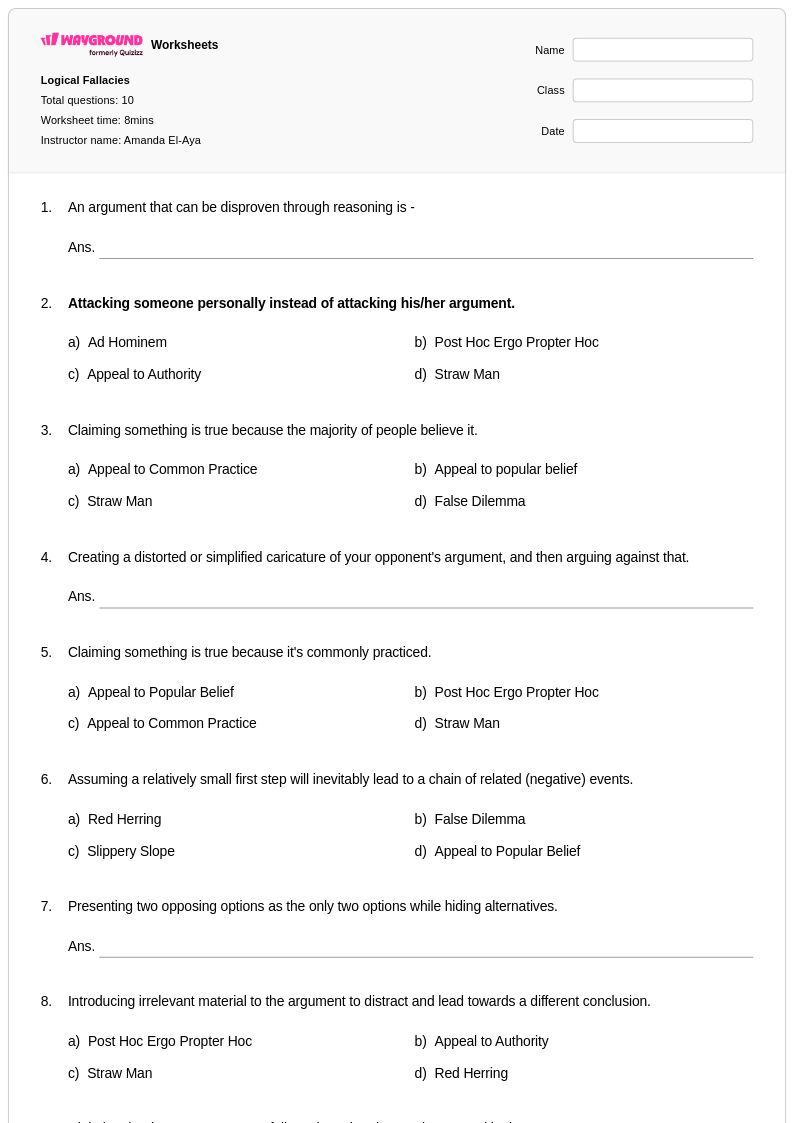
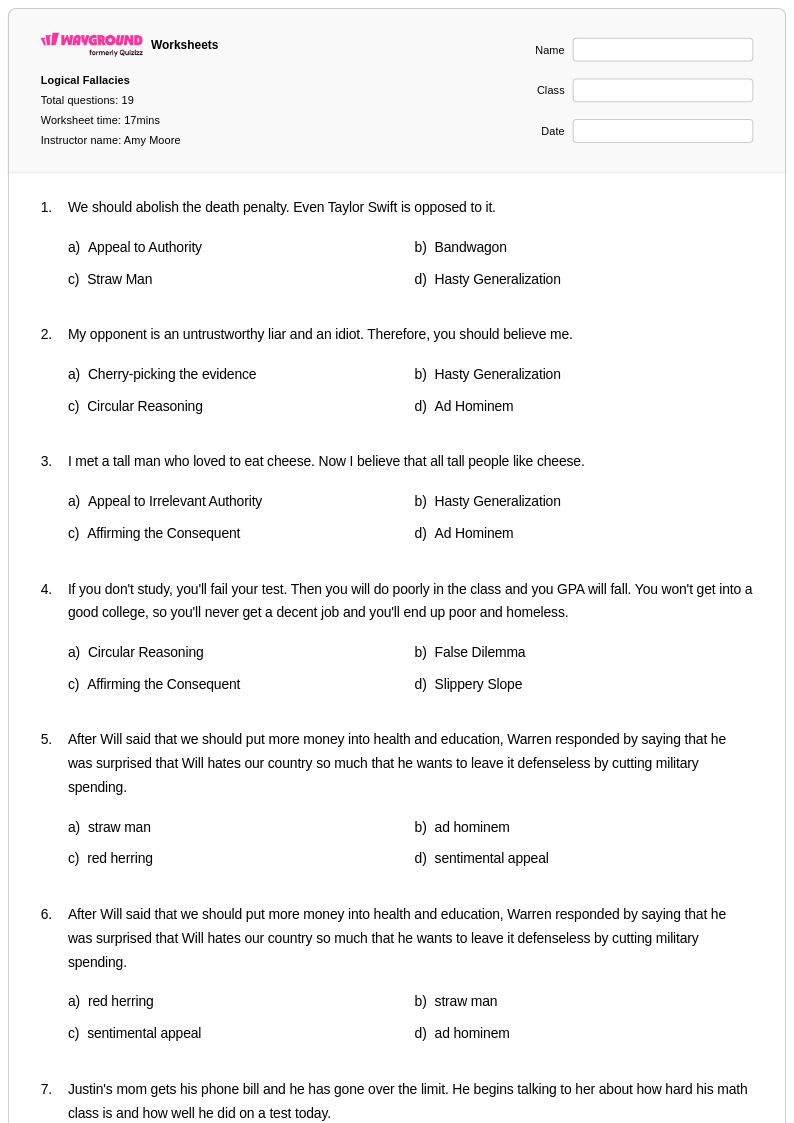
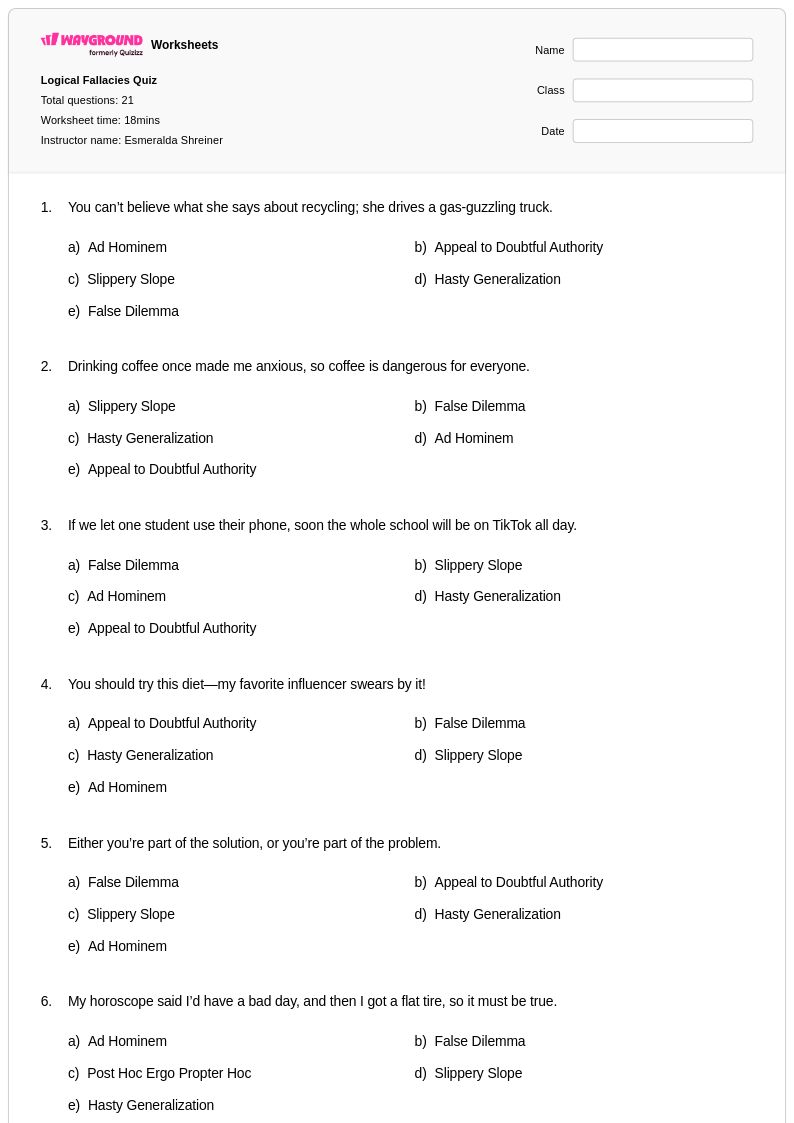
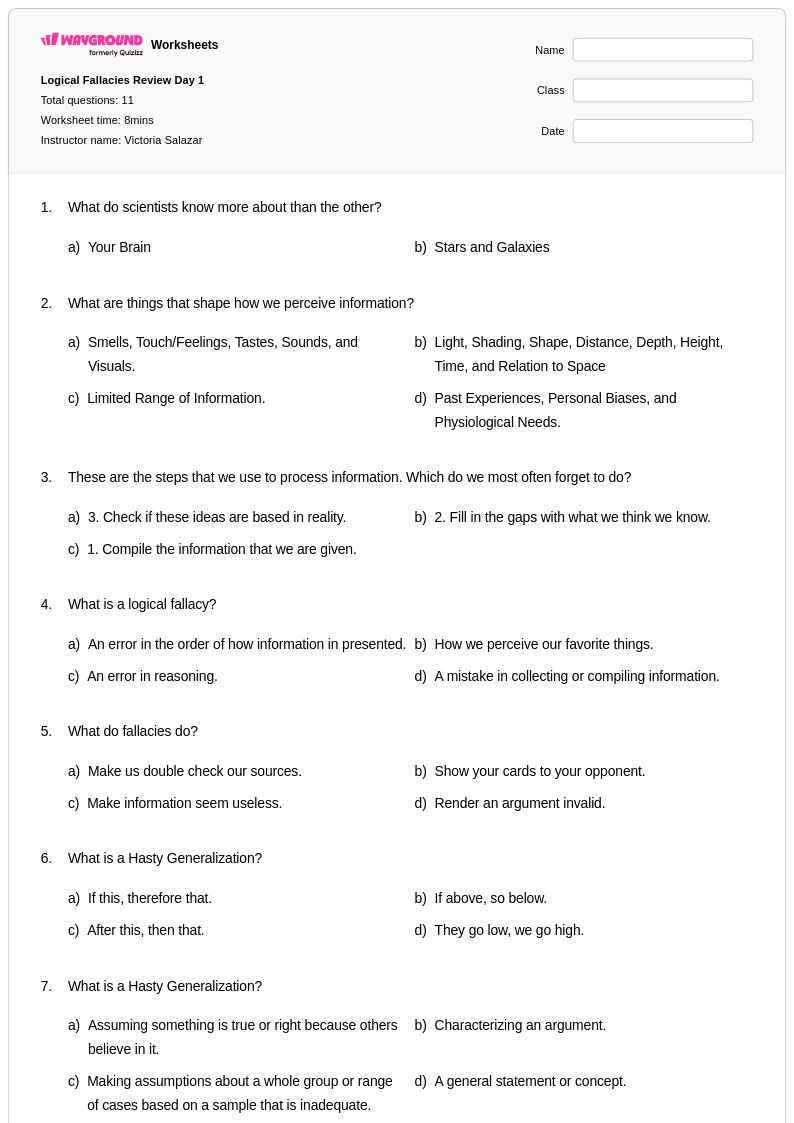
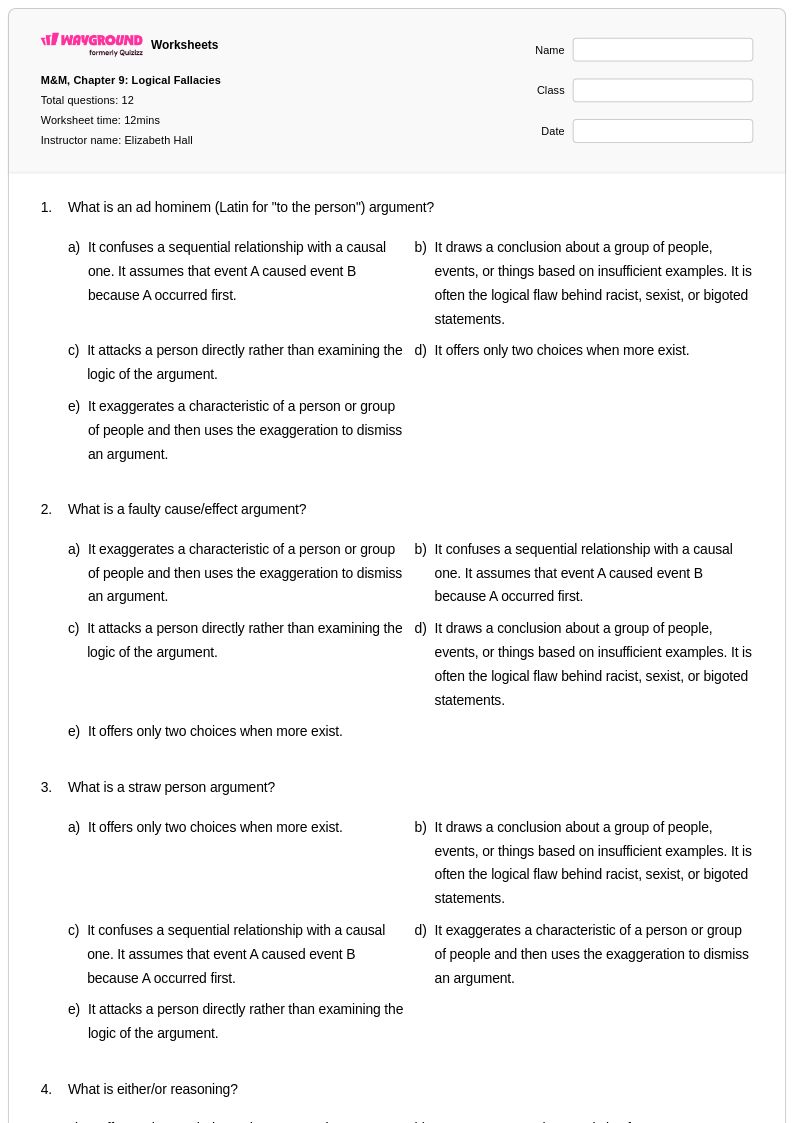
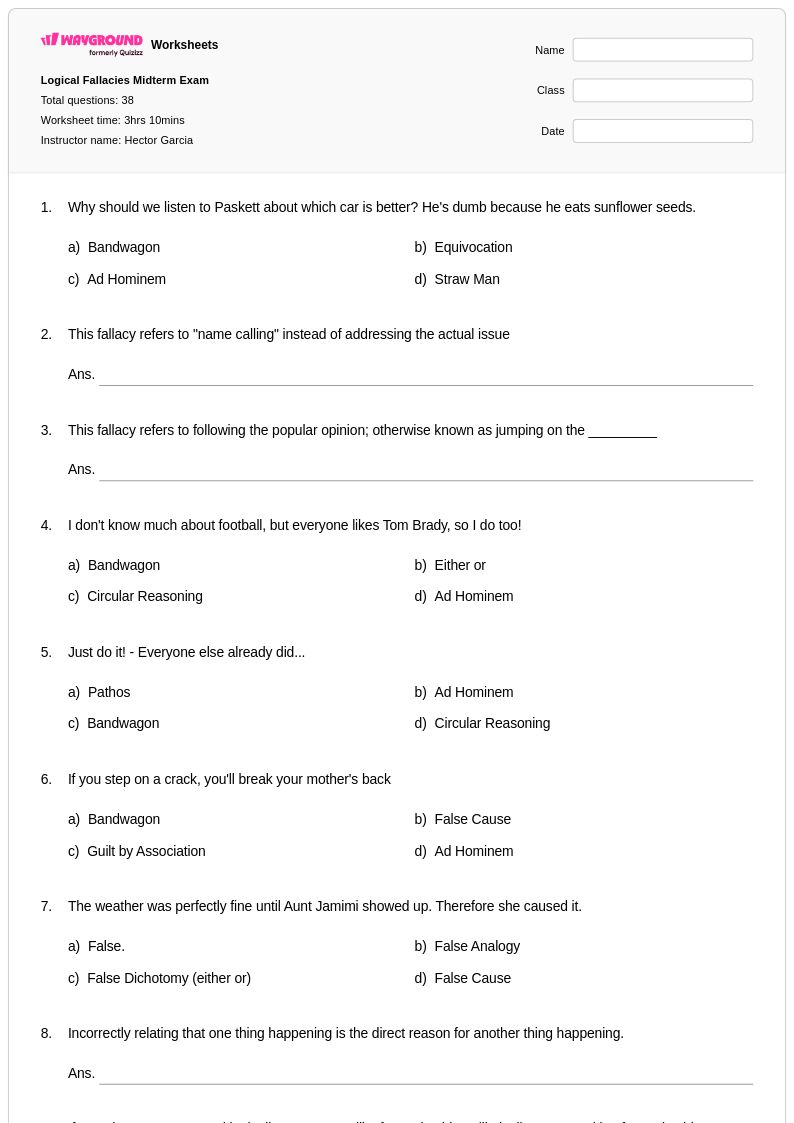
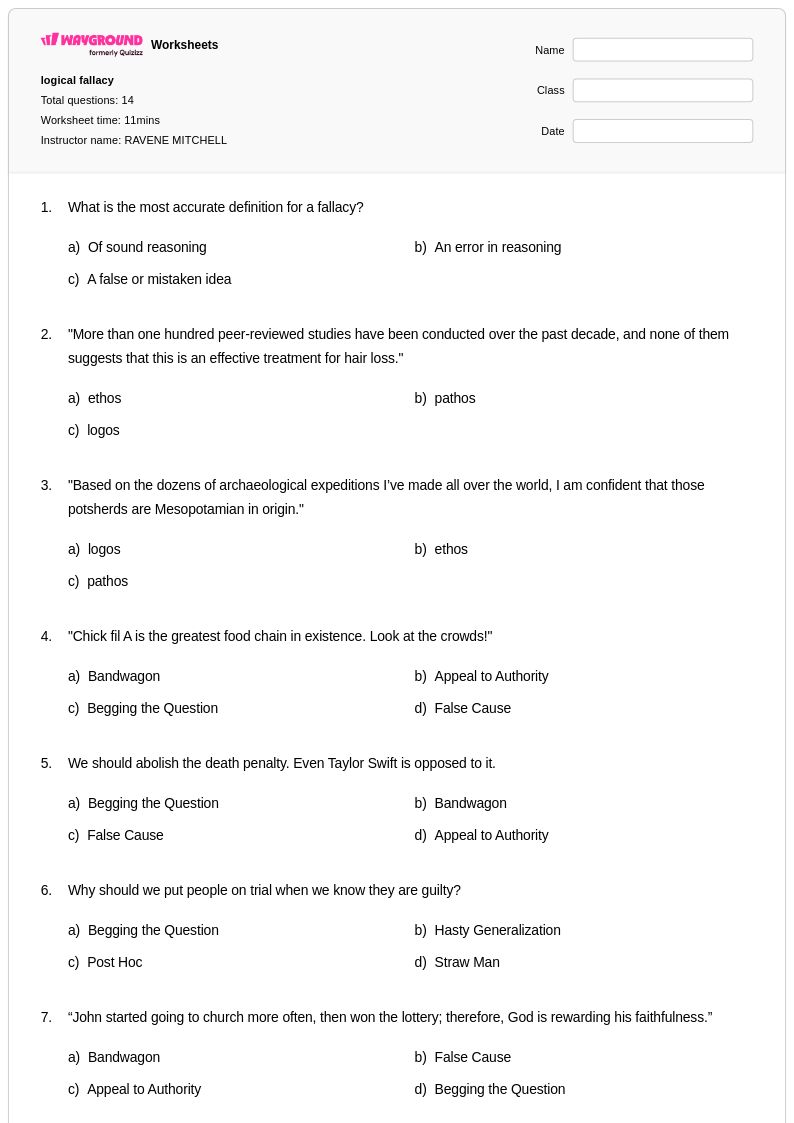
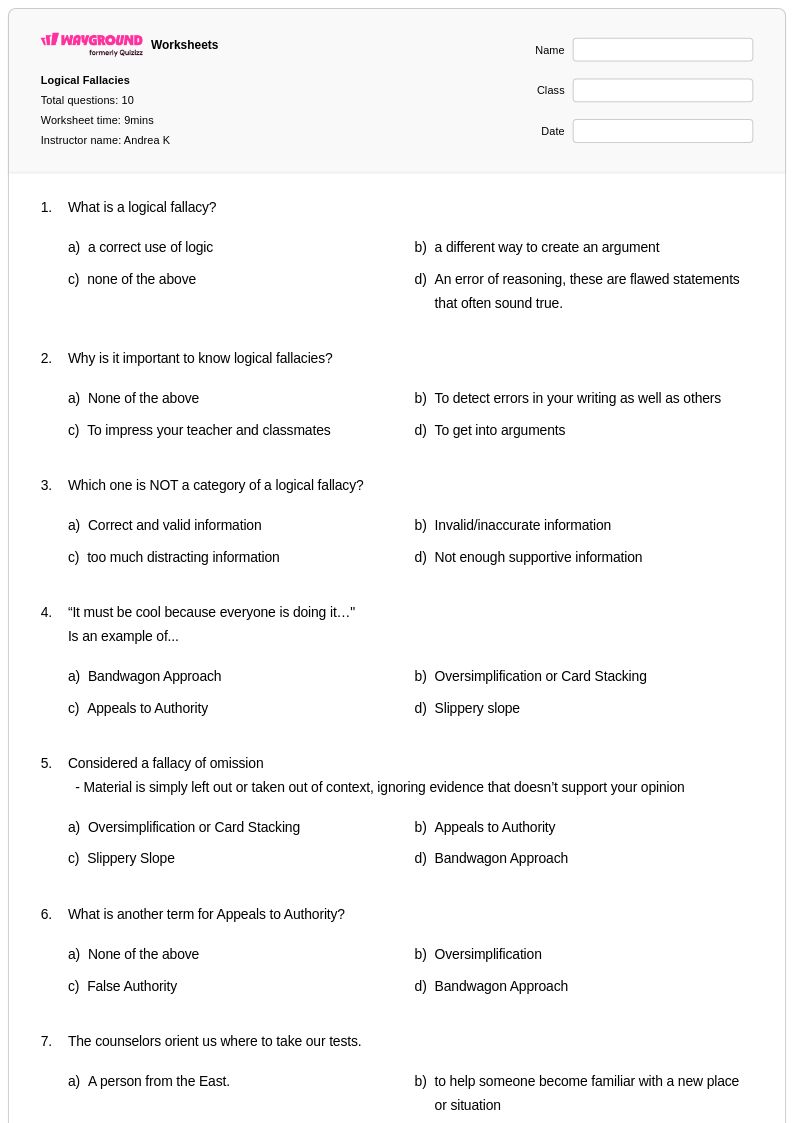
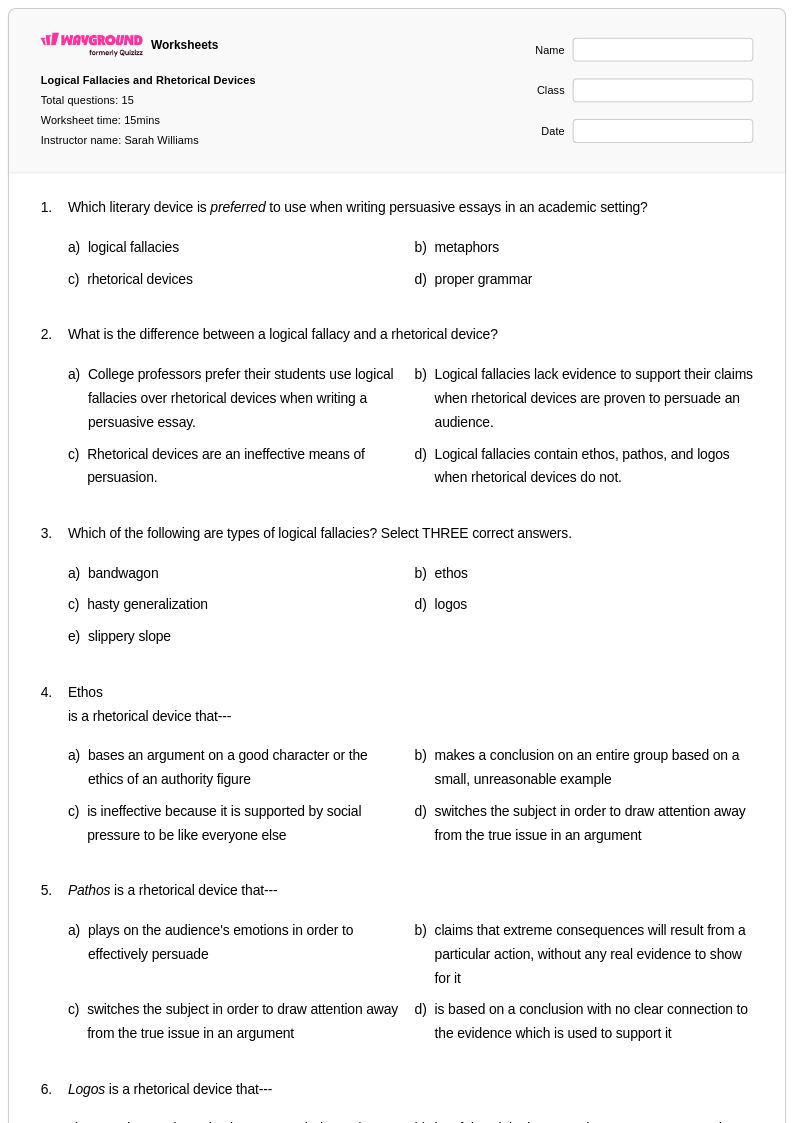
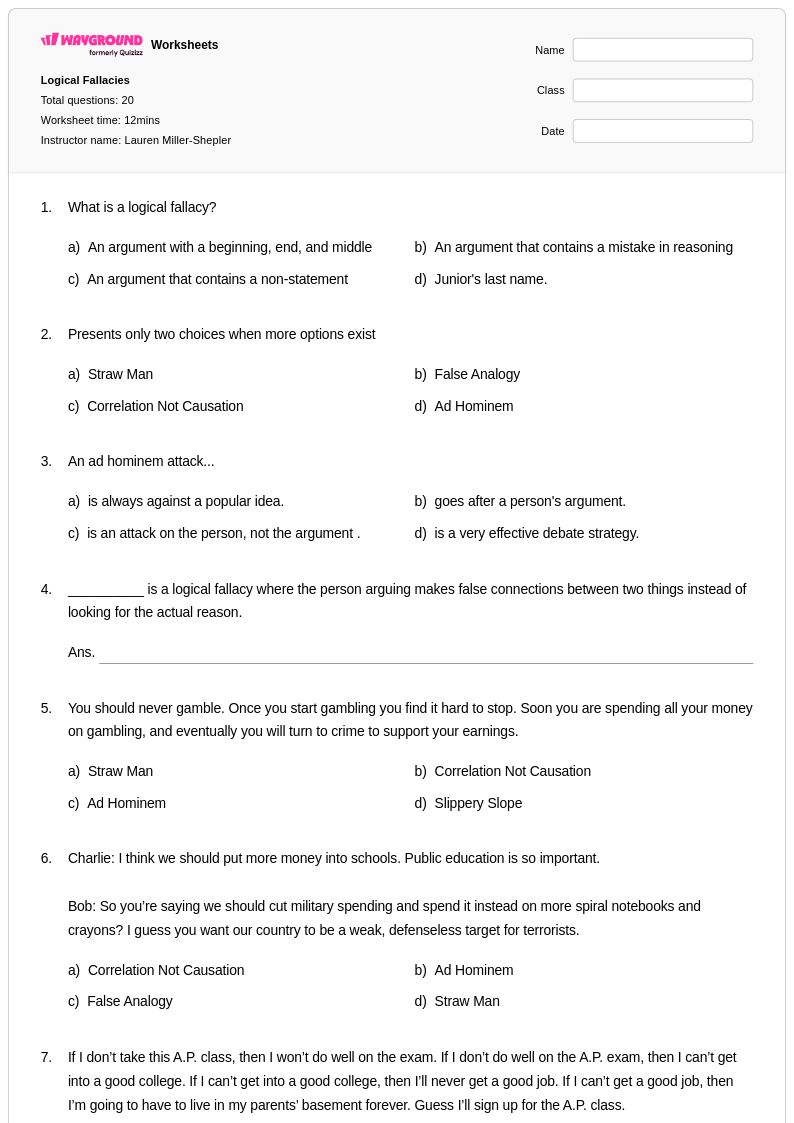
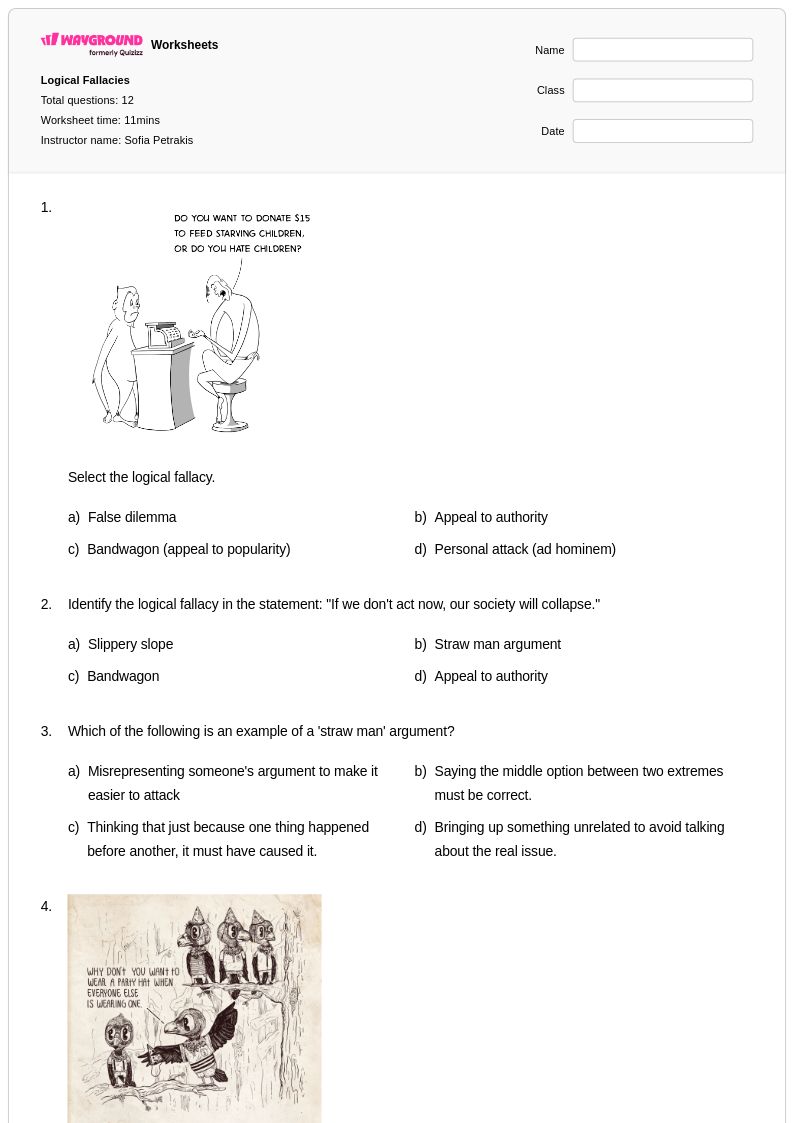
Logical fallacies worksheets available through Wayground (formerly Quizizz) provide comprehensive practice in identifying and analyzing flawed reasoning patterns that commonly appear in arguments, debates, and persuasive writing. These educational resources strengthen students' critical thinking abilities by teaching them to recognize deceptive reasoning techniques such as ad hominem attacks, false dichotomies, straw man arguments, and circular reasoning. The worksheets feature diverse practice problems that present real-world examples of fallacious arguments, challenging students to categorize different types of logical errors and explain why specific reasoning patterns are invalid. Each worksheet comes with a detailed answer key that not only identifies the correct responses but also provides clear explanations of the underlying logical principles, making these free printables valuable tools for both guided instruction and independent study.
Wayground (formerly Quizizz) supports educators with an extensive collection of millions of teacher-created logical fallacies worksheets that can be easily accessed through robust search and filtering capabilities. Teachers can quickly locate materials that align with specific curriculum standards and learning objectives, while differentiation tools allow for seamless customization to meet diverse student needs and ability levels. These resources are available in both printable pdf formats for traditional classroom use and digital formats for online learning environments, providing maximum flexibility for lesson planning and implementation. The platform's comprehensive worksheet collection enables teachers to design targeted remediation activities for students struggling with logical reasoning concepts, create enrichment exercises for advanced learners, and provide consistent skill practice opportunities that reinforce critical thinking abilities across various academic contexts and real-world applications.
FAQs
How do I teach logical fallacies to students?
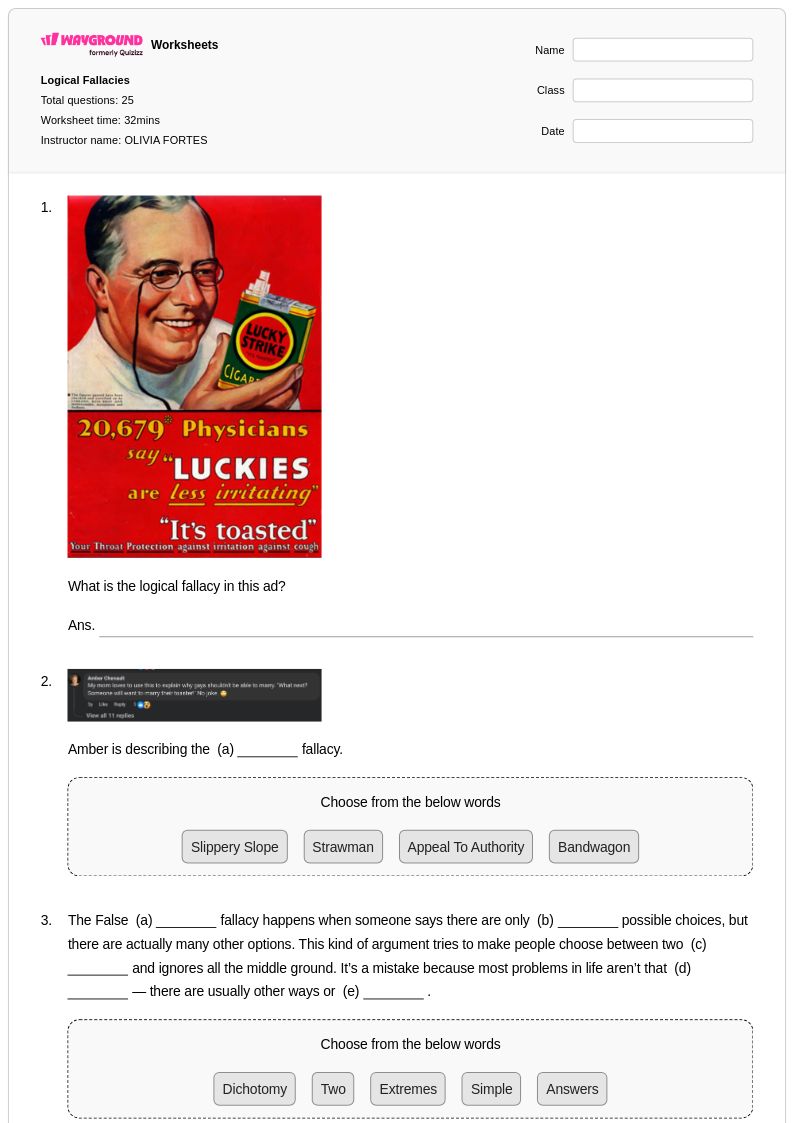
The most effective approach to teaching logical fallacies is to ground them in real-world examples students already encounter, such as advertisements, political speeches, and social media arguments. Start with a small set of high-frequency fallacies like ad hominem, false dichotomy, and straw man before expanding to less common types. Having students identify fallacies in authentic texts, rather than constructed examples alone, builds the transferable critical thinking skills they need for argumentation and debate.
What exercises help students practice identifying logical fallacies?
Worksheets that present real-world argumentative passages and ask students to categorize the fallacy and explain why the reasoning is flawed are among the most effective practice formats. Exercises that require students to not just label but also rewrite or correct the flawed argument deepen understanding by moving beyond recognition to analysis. Mixing multiple fallacy types within a single practice set also helps students avoid pattern-matching and forces genuine reasoning.
What mistakes do students commonly make when learning logical fallacies?
One of the most common errors is overapplying a single fallacy label, particularly ad hominem, to any argument that seems unfair or hostile, rather than analyzing the actual structure of the reasoning. Students also frequently confuse fallacies that share surface features, such as conflating a straw man argument with a false dichotomy, because both distort the original position. Requiring students to explain why a specific reasoning pattern is invalid, not just name it, helps correct these identification errors.
How can logical fallacies worksheets be used across different subjects?
Logical fallacies worksheets are directly applicable in English Language Arts for persuasive writing units, in Social Studies and History for evaluating primary sources and political rhetoric, and in Philosophy or Critical Thinking courses. Science classes can use them to examine pseudoscientific claims, while Media Literacy contexts benefit from applying fallacy analysis to advertising and news coverage. Because flawed reasoning appears across disciplines, these worksheets function as cross-curricular tools rather than subject-specific resources.
How do I use Wayground's logical fallacies worksheets in my classroom?
Wayground's logical fallacies worksheets are available as printable PDFs for traditional classroom use and in digital formats for online or hybrid learning environments, and can also be hosted as a quiz directly on Wayground. Each worksheet includes a detailed answer key with explanations of the underlying logical principles, making them suitable for both guided instruction and independent student practice. Teachers can use Wayground's search and filtering tools to locate worksheets aligned with specific curriculum standards, and differentiation settings allow individual accommodations such as read aloud, reduced answer choices, or extended time to be applied per student as needed.
How do I differentiate logical fallacies instruction for students at different ability levels?
For students newer to the concept, limit initial practice to three or four clearly distinct fallacies with strong, unambiguous examples before introducing subtler or overlapping types. Advanced learners benefit from open-ended tasks that ask them to construct their own fallacious arguments and then identify and refute them, which demands both production and analysis. On Wayground, teachers can apply accommodations such as reduced answer choices for students who need cognitive support or read aloud for accessibility, while other students continue with standard settings.