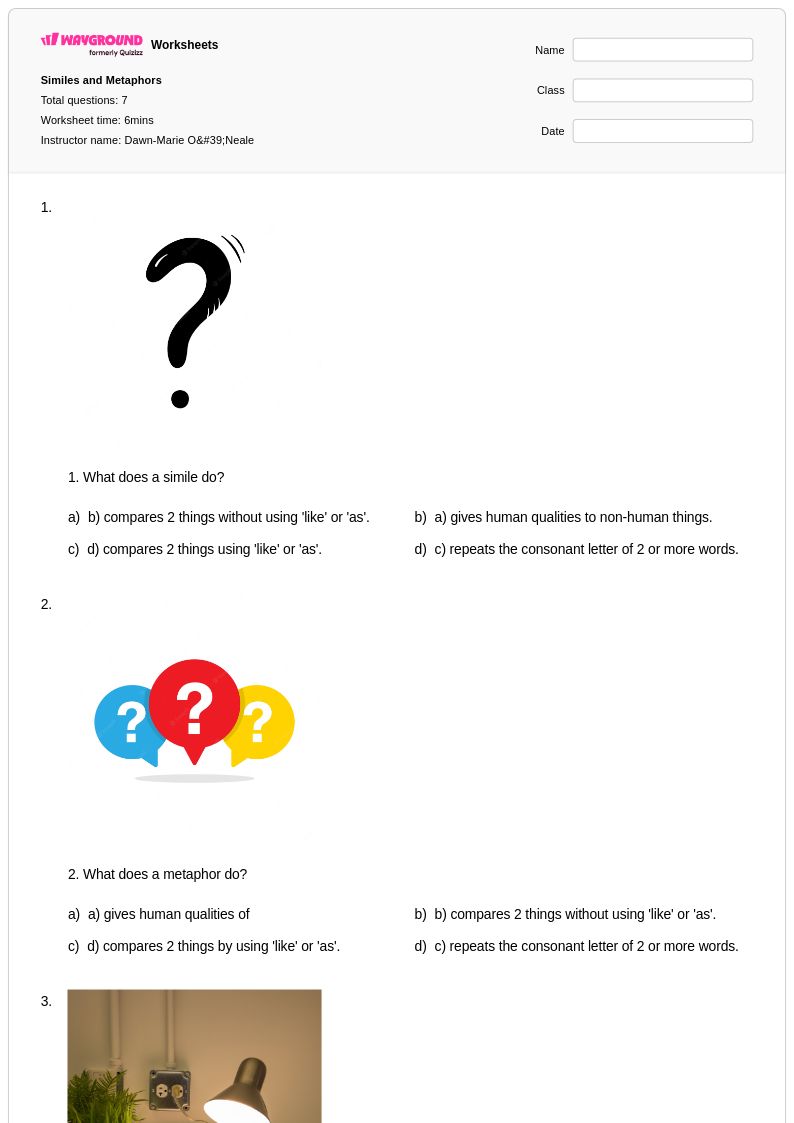
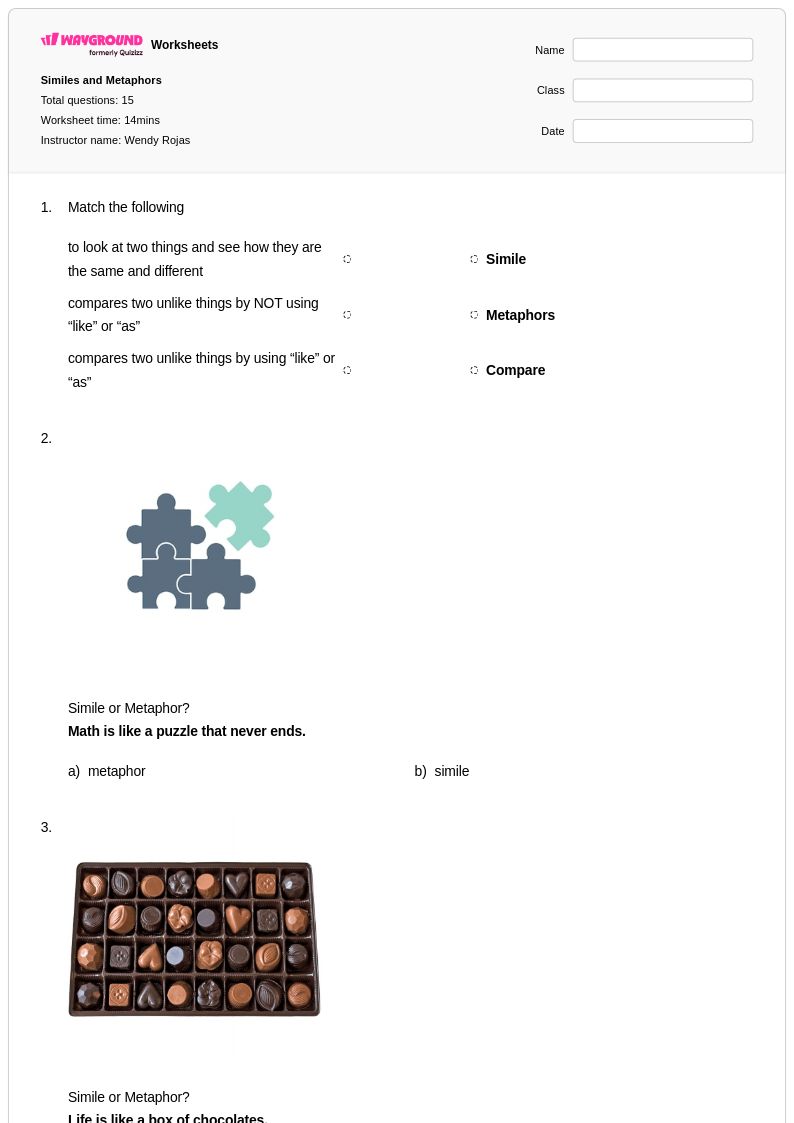
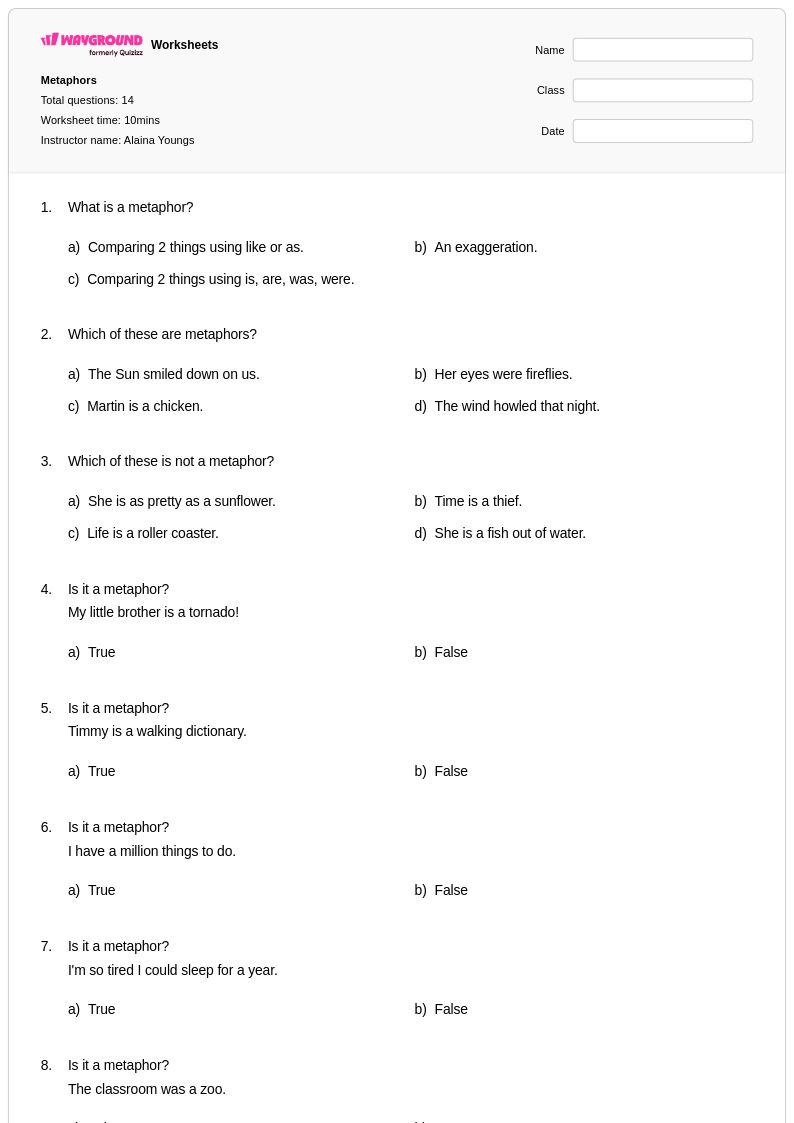
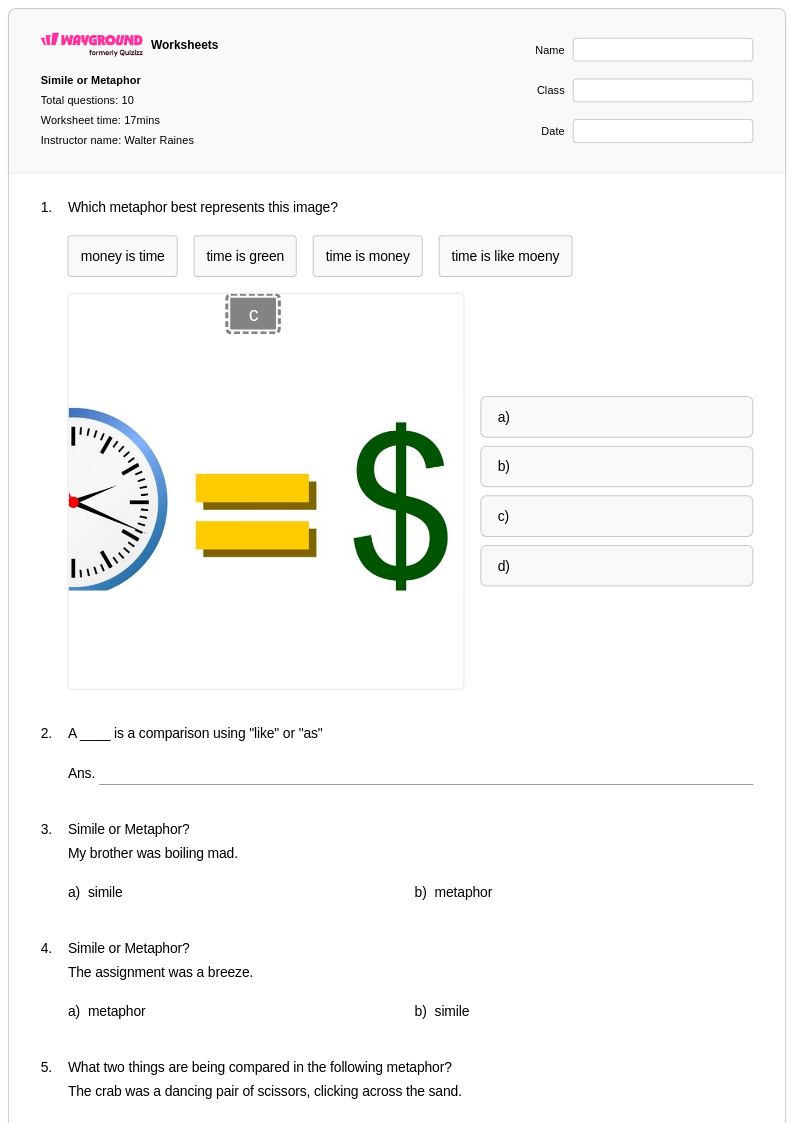
Class 8 metaphors worksheets from Wayground help students master figurative language through engaging printables, practice problems, and comprehensive answer keys in convenient PDF format.
Explore printable Metaphors worksheets for Class 8
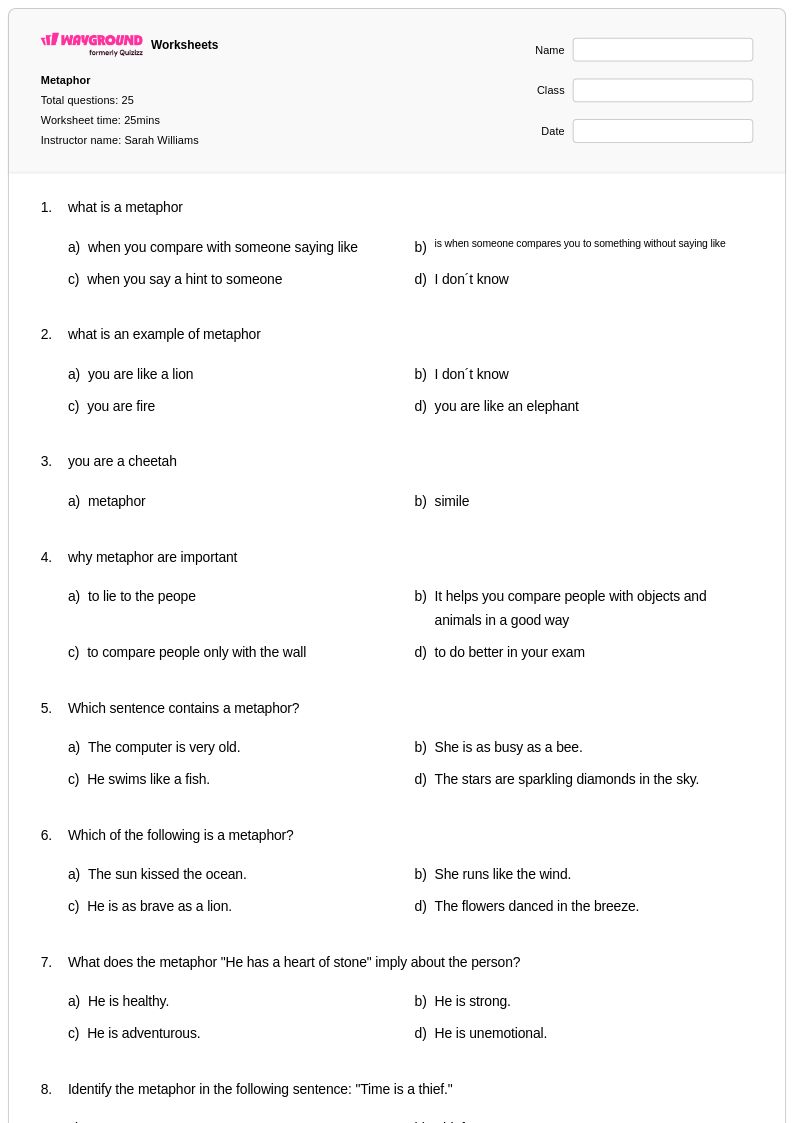
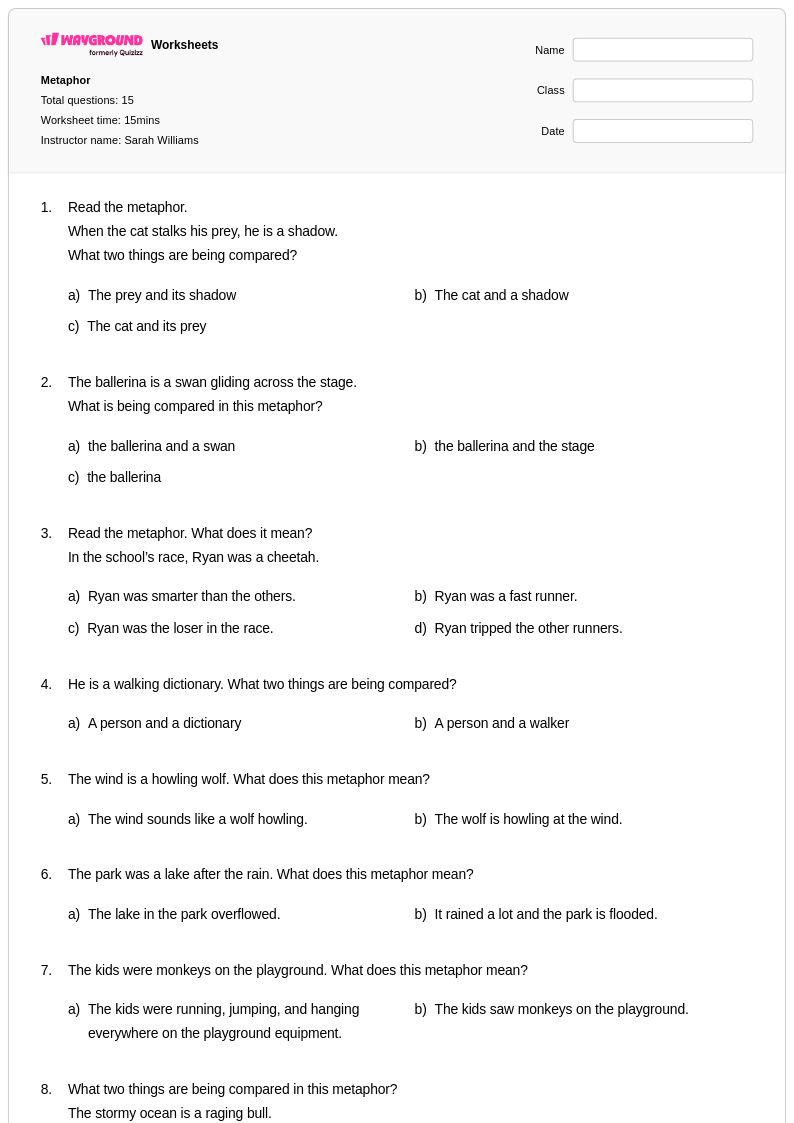
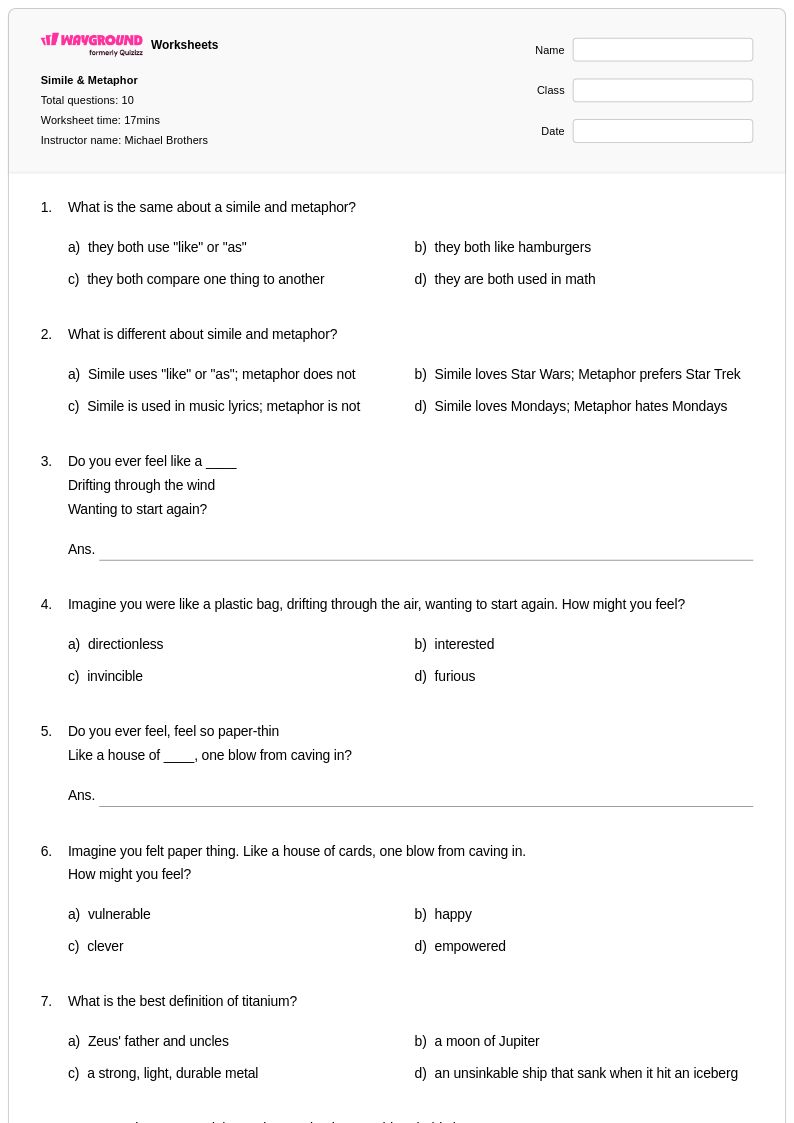
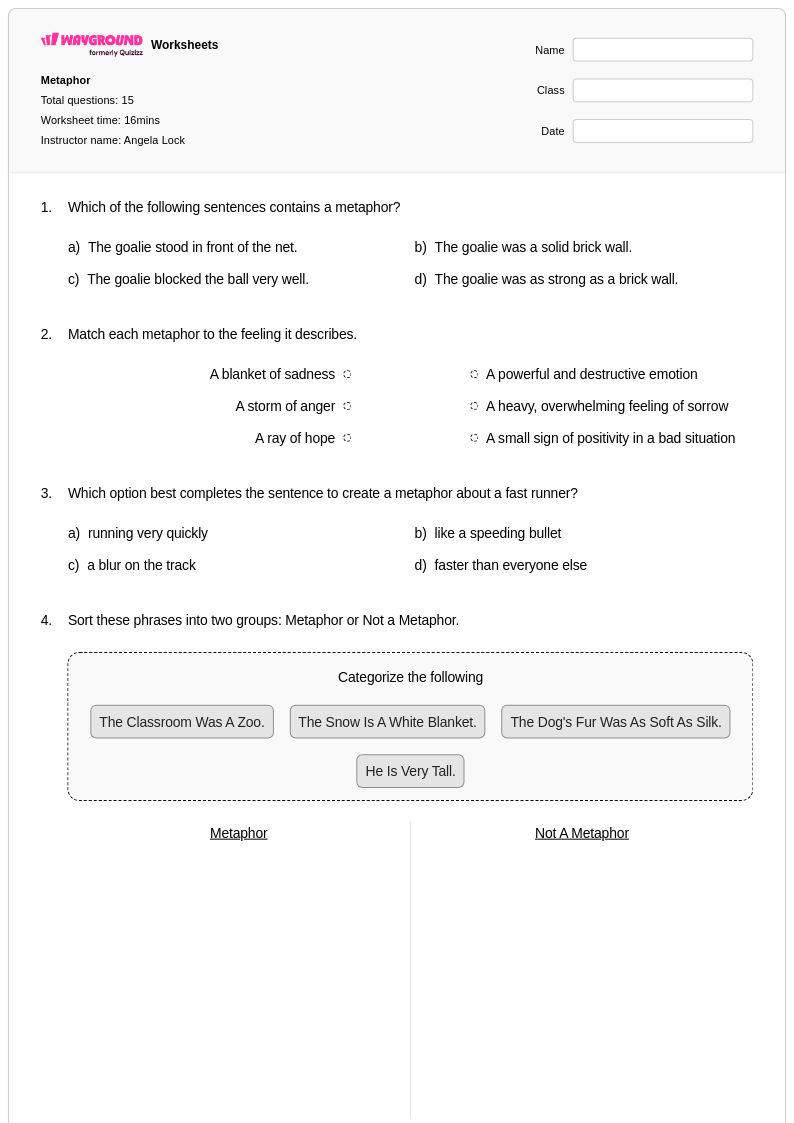
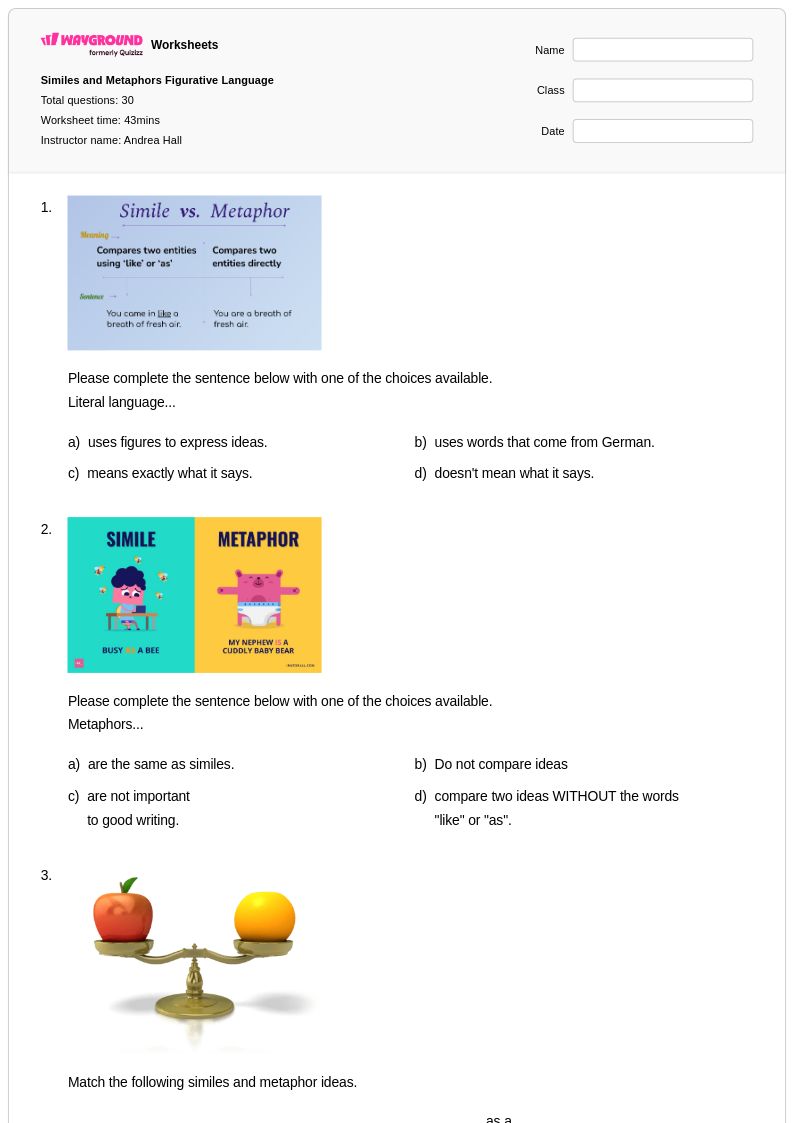
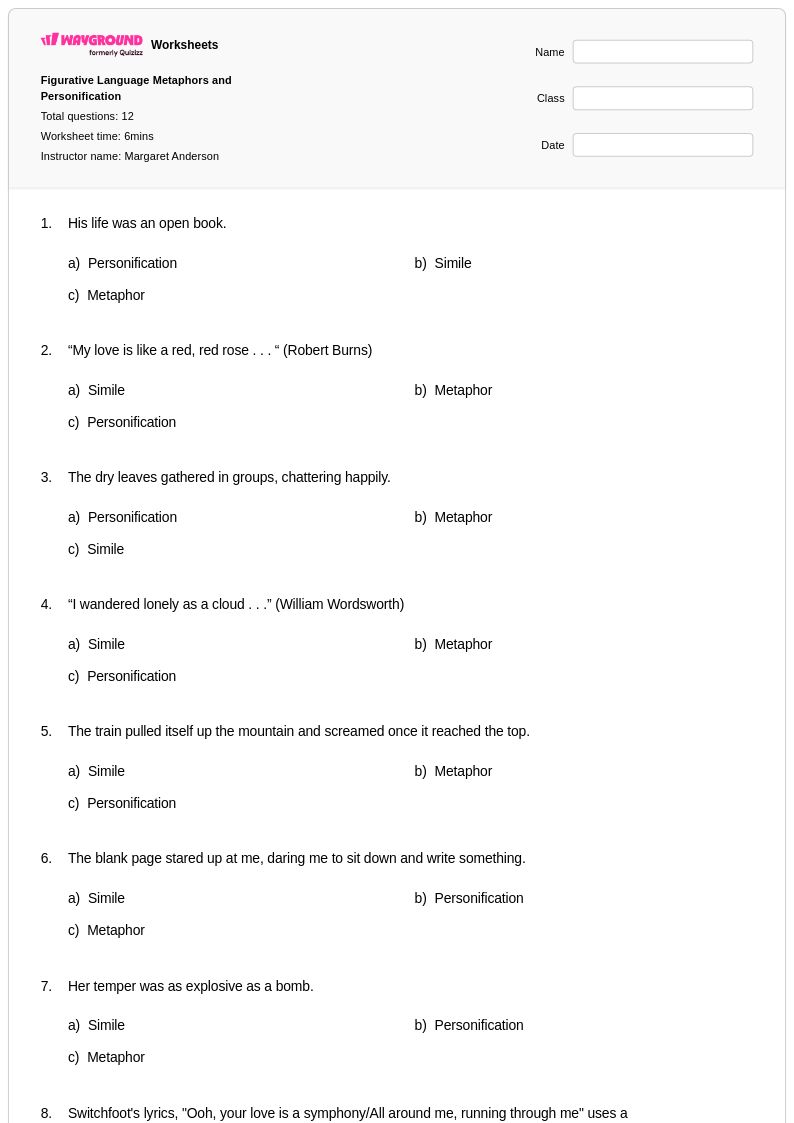
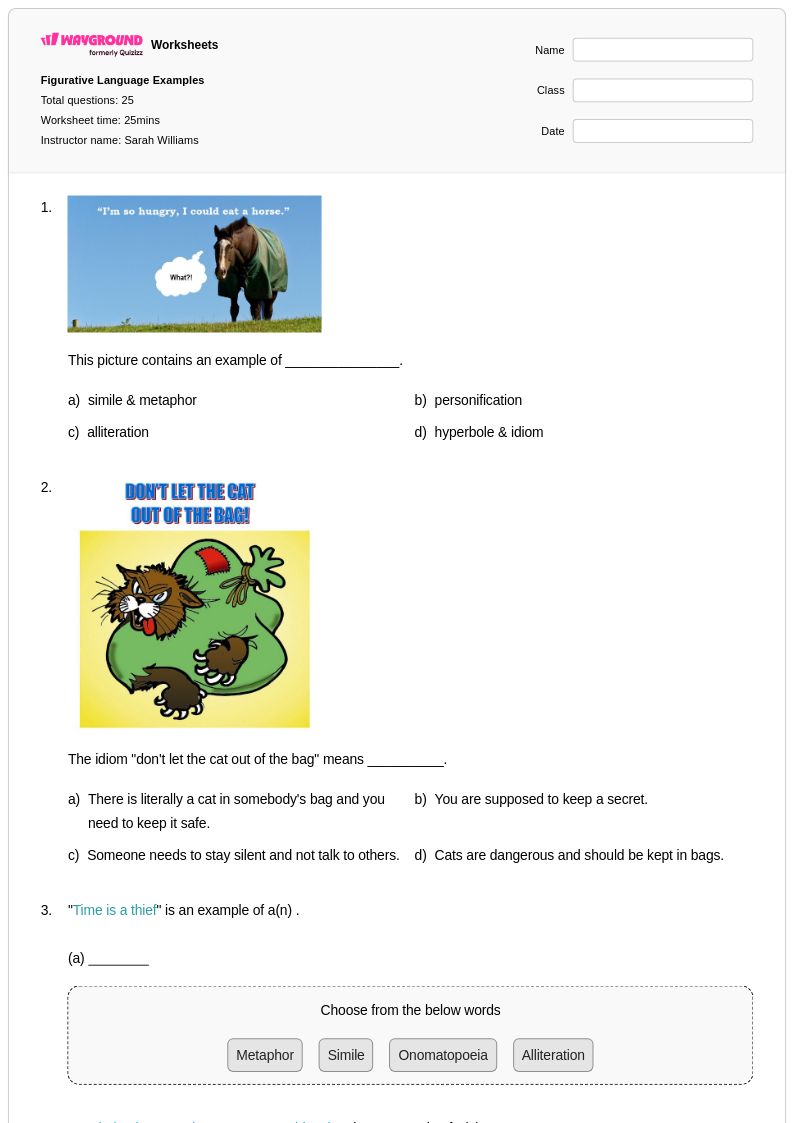
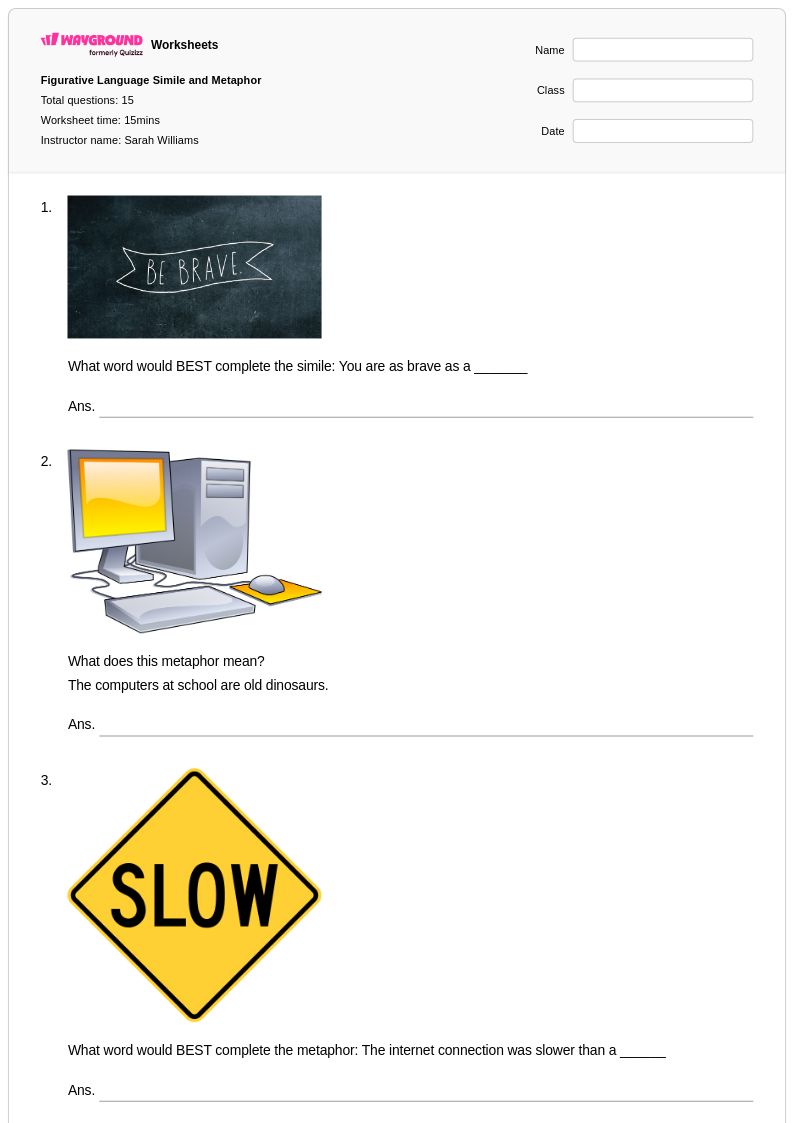
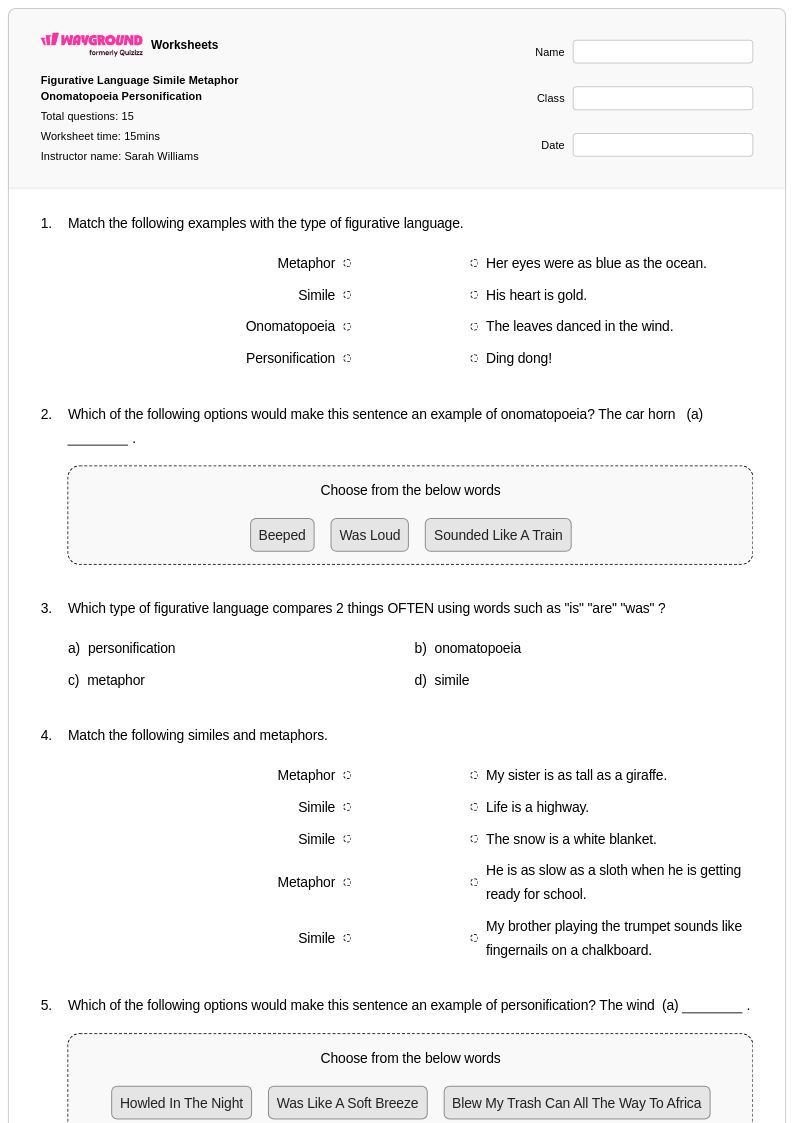
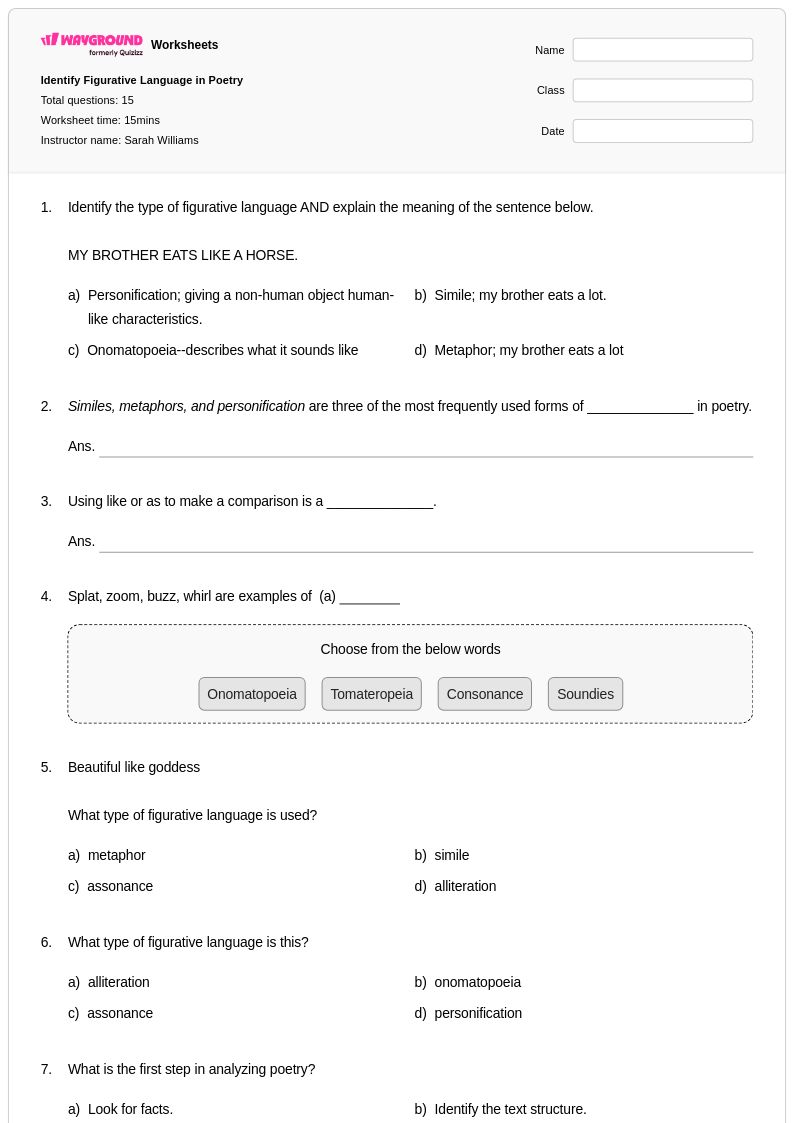
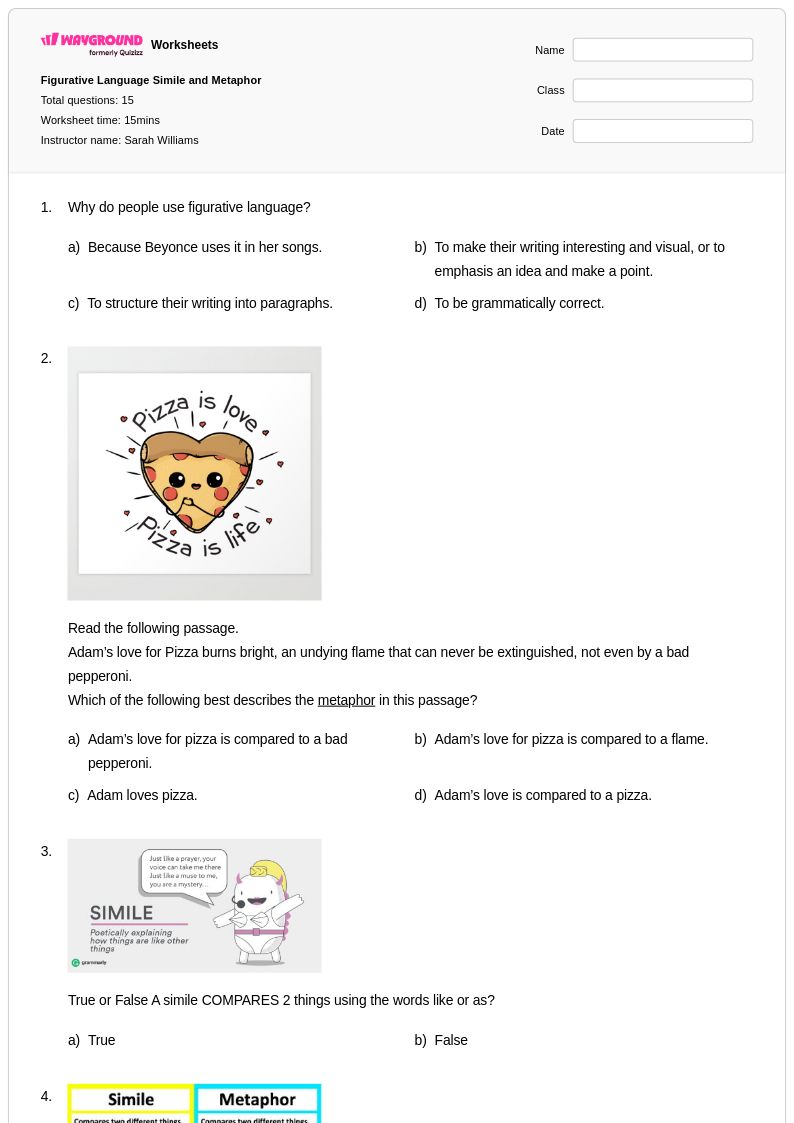
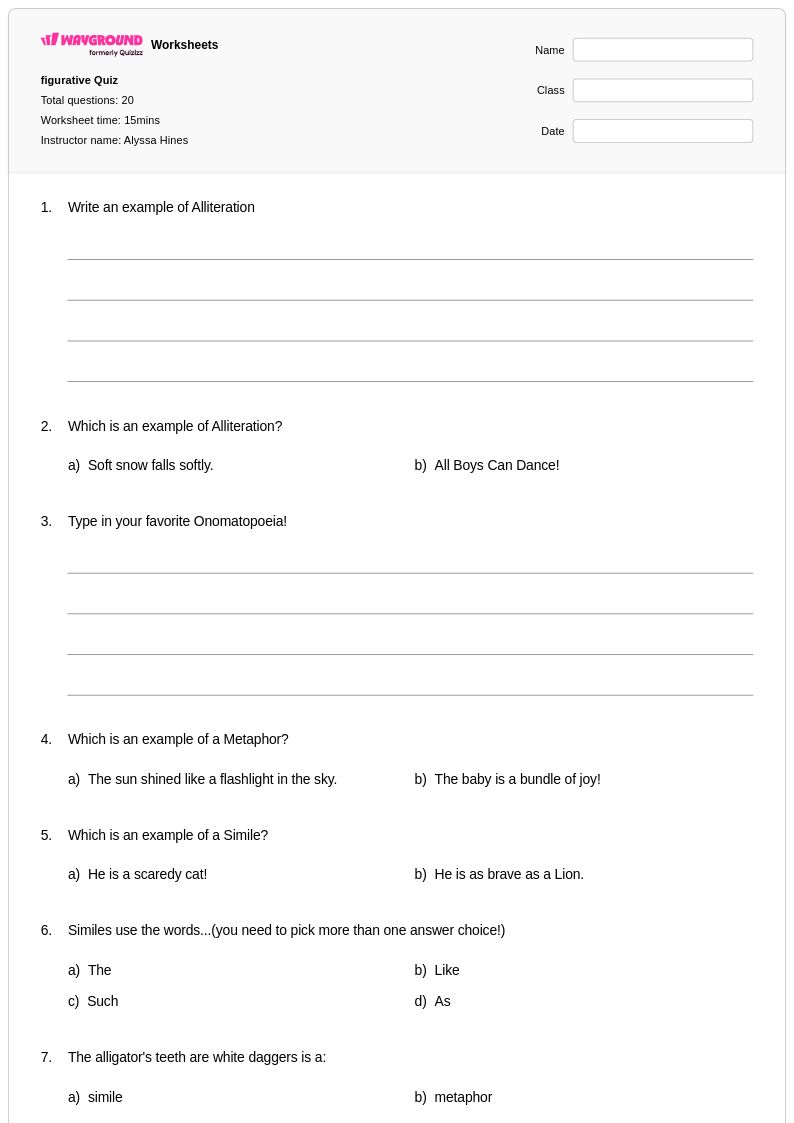
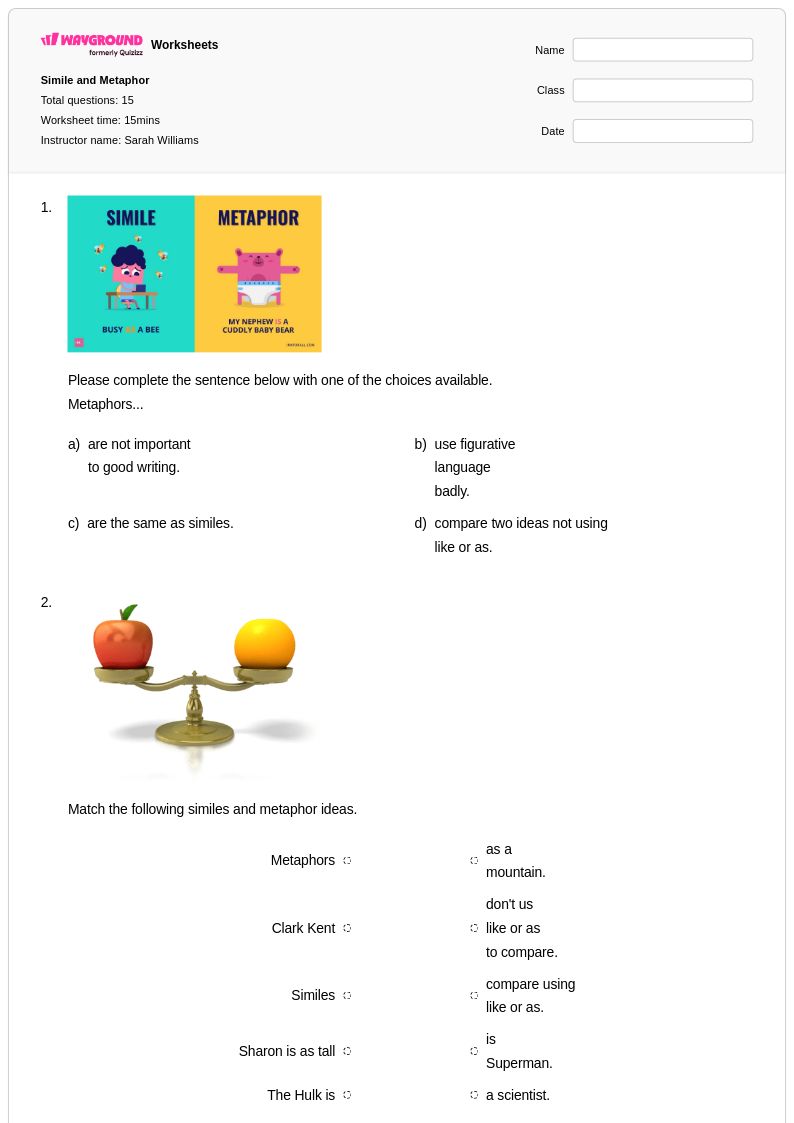
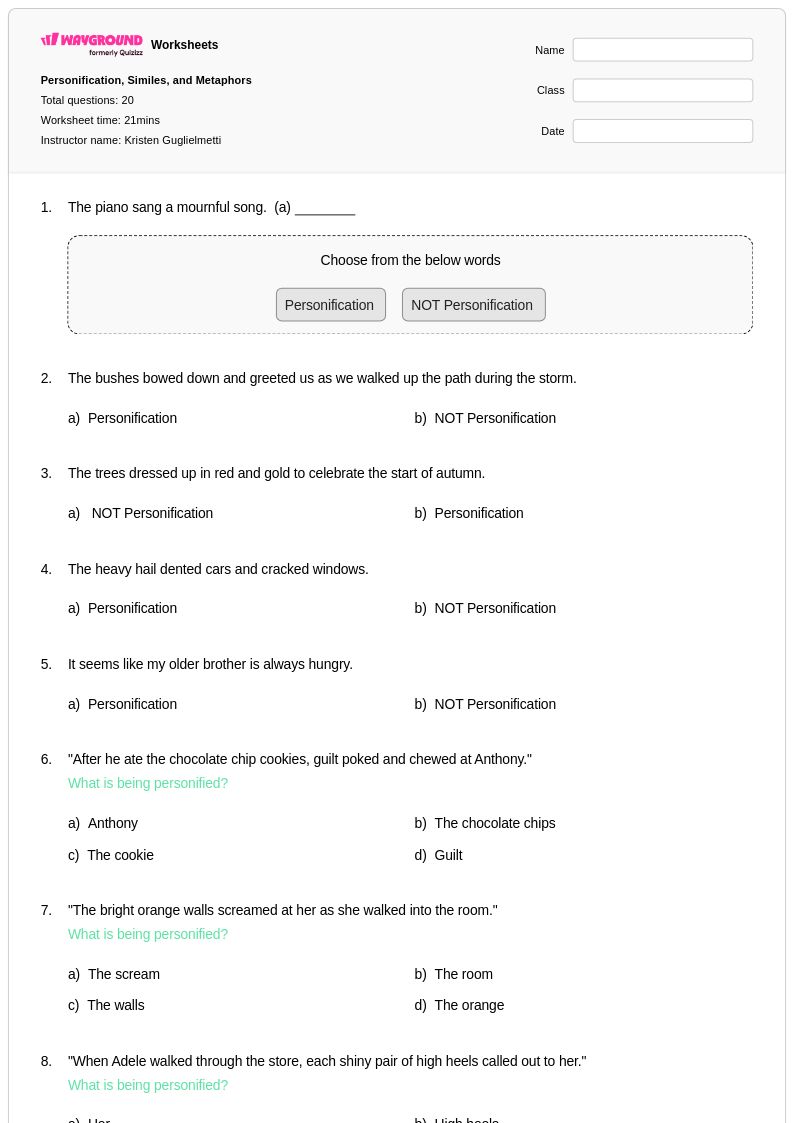
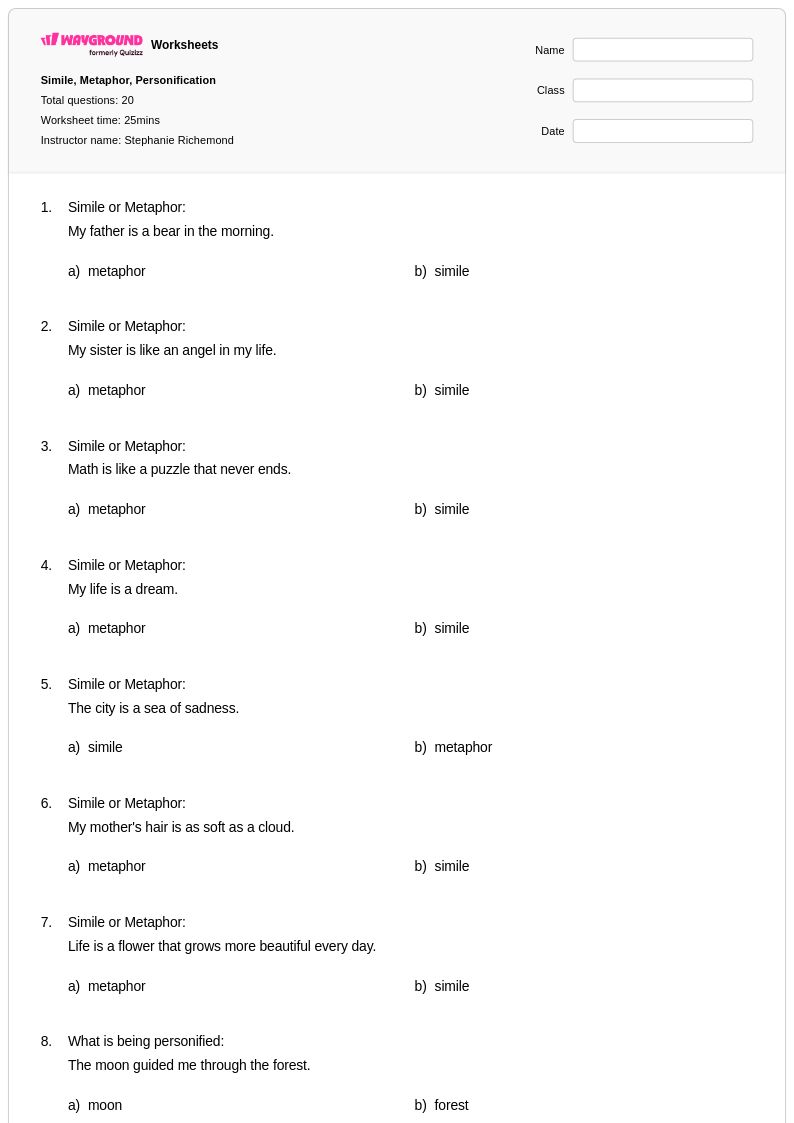
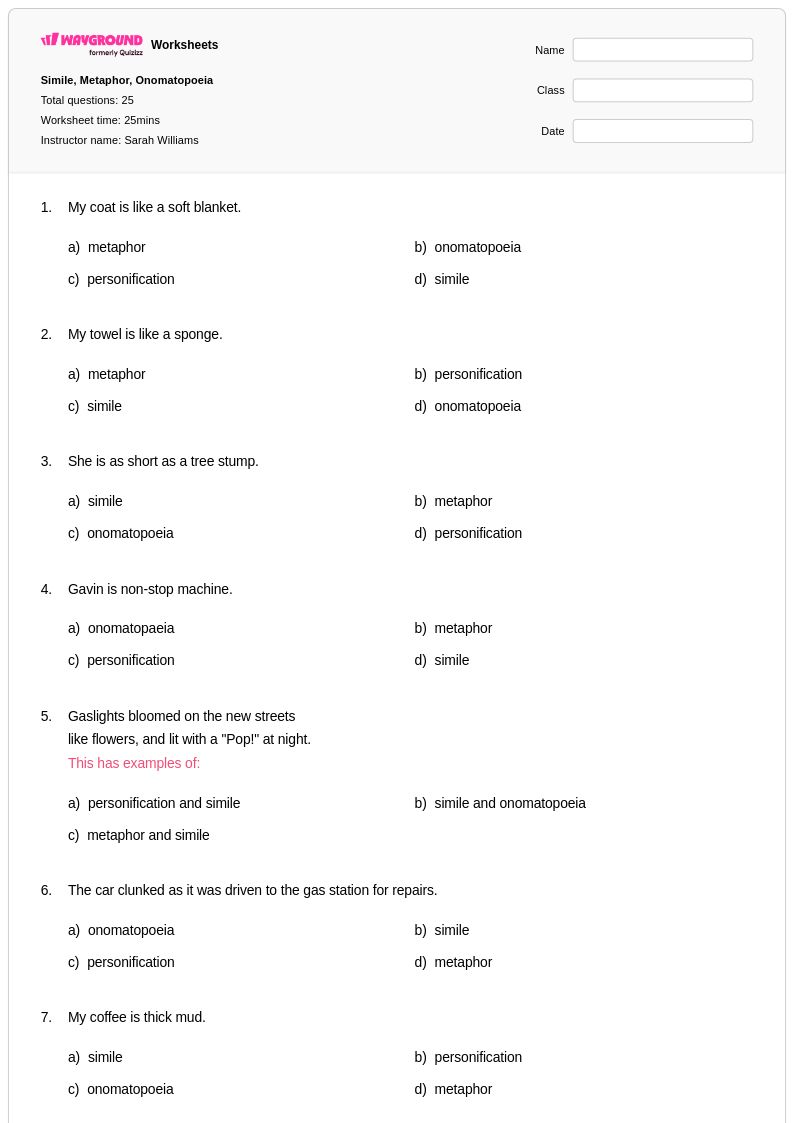
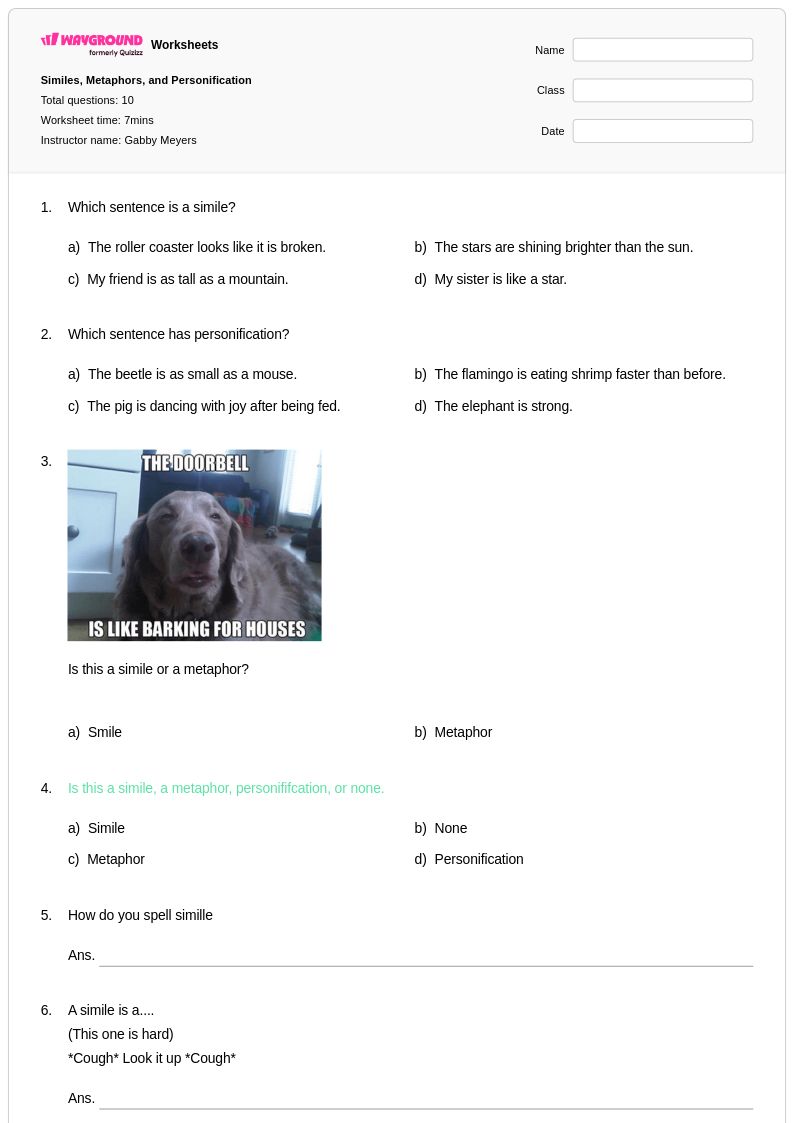
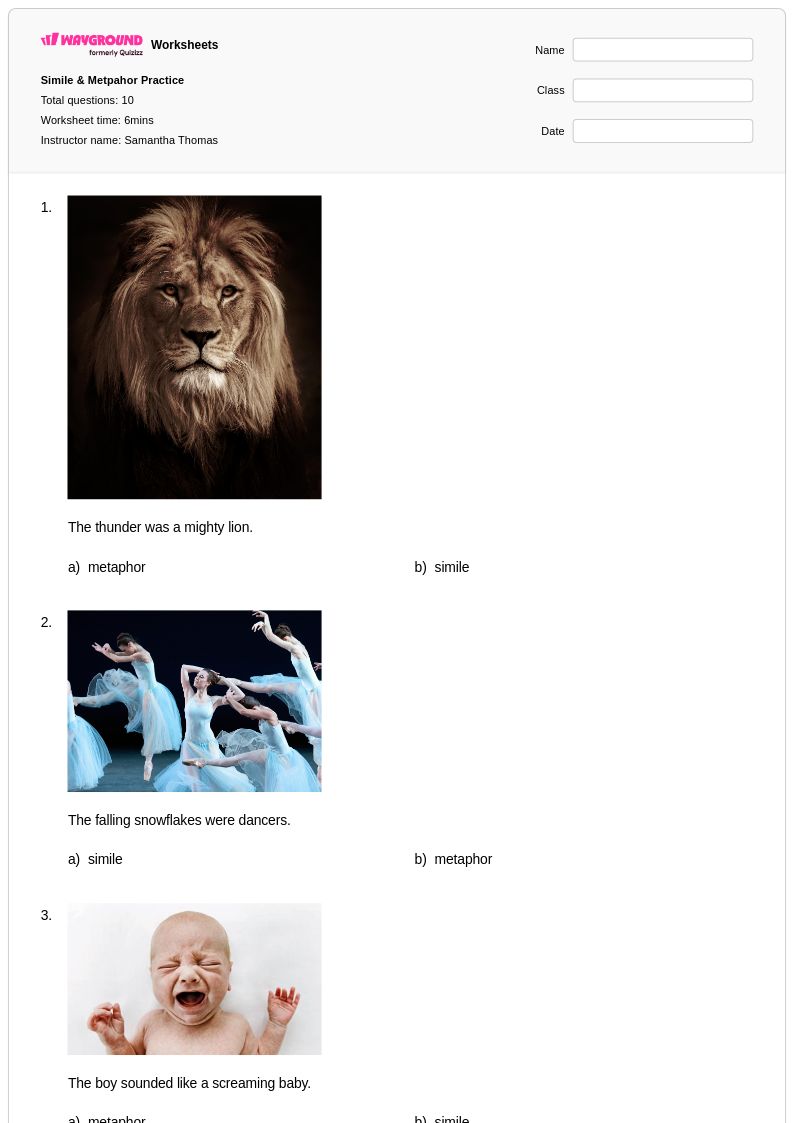
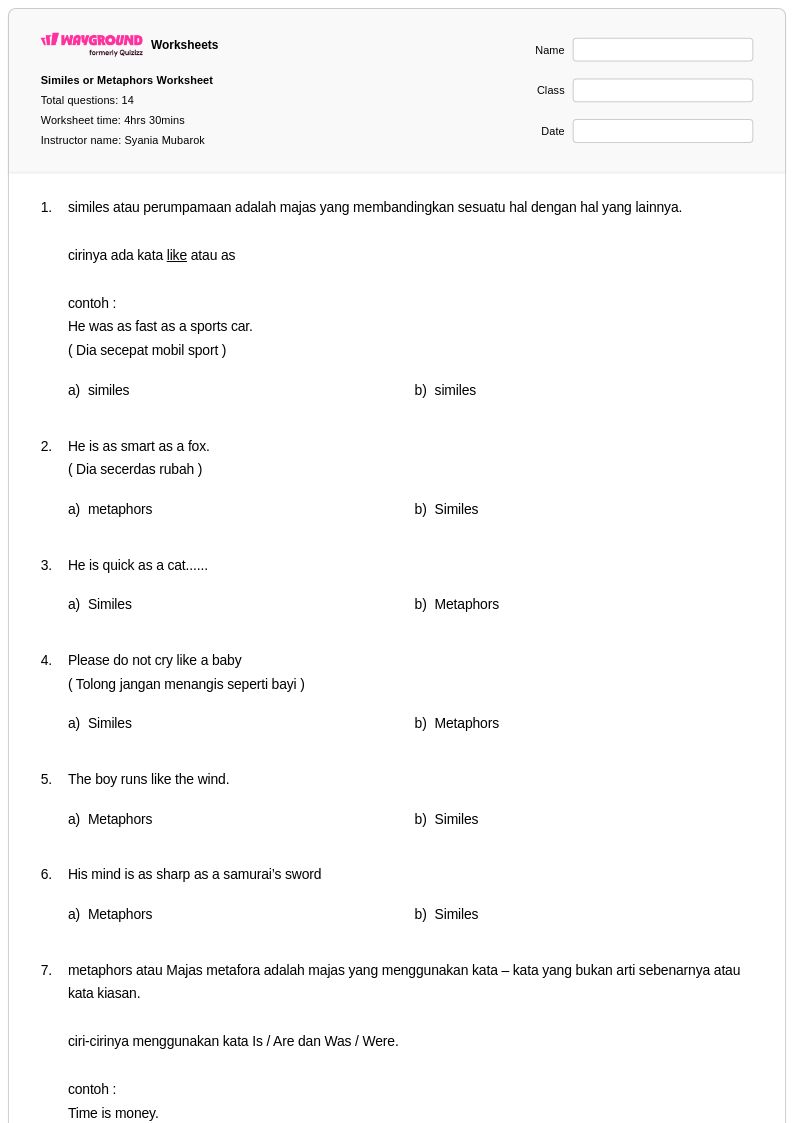
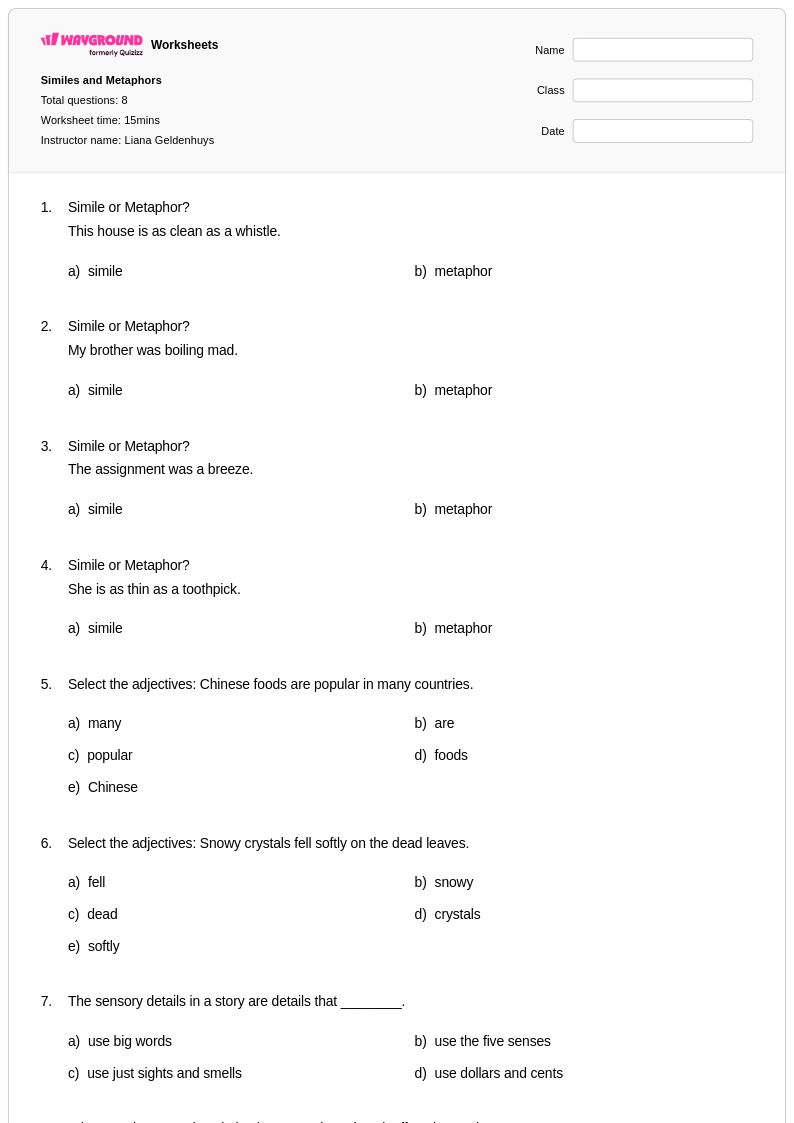
Metaphors for Class 8 students represent a crucial component of advanced figurative language comprehension, requiring learners to identify, analyze, and create sophisticated comparisons that reveal deeper meanings in literature and writing. Wayground's comprehensive collection of Class 8 metaphor worksheets provides targeted practice problems that strengthen students' ability to recognize implicit comparisons, distinguish metaphors from other figurative devices, and understand how authors use metaphorical language to convey complex themes and emotions. These expertly designed printables include varied exercises such as metaphor identification in literary passages, creative writing prompts that encourage original metaphor creation, and analytical activities that explore the effectiveness of metaphorical language in different contexts. Each worksheet comes with a detailed answer key that supports both independent learning and classroom instruction, while the free pdf format ensures easy access and distribution for educational use.
Wayground's extensive platform, built from the foundation of Quizizz, empowers educators with millions of teacher-created resources specifically designed to enhance Class 8 metaphor instruction through powerful search and filtering capabilities that allow quick location of standards-aligned materials. The platform's robust differentiation tools enable teachers to customize worksheets according to individual student needs, supporting both remediation for struggling learners and enrichment opportunities for advanced students ready to tackle more complex metaphorical analysis. Available in both printable and digital formats, including downloadable pdf versions, these resources seamlessly integrate into diverse classroom environments and teaching styles. Teachers benefit from flexible customization options that allow modification of existing worksheets to match specific curriculum requirements, lesson objectives, or student interests, making comprehensive metaphor skill practice both accessible and engaging for effective lesson planning across varied instructional contexts.
FAQs
How do I teach metaphors to students who confuse them with similes?
The clearest way to distinguish metaphors from similes is to focus on the absence of comparison words: metaphors state that one thing IS another, while similes use 'like' or 'as.' A useful classroom strategy is to present the same comparison in both forms side by side — 'Her voice is silk' versus 'Her voice is like silk' — and ask students to identify what changes in meaning or intensity. Once students internalize that metaphors make a direct, implicit claim rather than an explicit comparison, they can begin recognizing them independently in text.
What exercises help students practice identifying metaphors in literature?
Effective practice moves from recognition to analysis: start with targeted identification exercises where students locate metaphors in short passages, then progress to tasks that ask them to explain what two things are being compared and why the author chose that comparison. Adding a creation component — where students write their own metaphors about a given subject — cements understanding because it requires them to think like the author. Worksheets that span multiple genres, including poetry, prose, and informational text, give students exposure to the range of ways metaphors appear in real writing.
What mistakes do students commonly make when analyzing metaphors?
The most frequent error is literal interpretation: students read 'the classroom was a zoo' and focus on the zoo rather than unpacking what quality of a zoo the writer is attributing to the classroom. A related misconception is assuming all figurative comparisons are metaphors, which leads students to mislabel personification, hyperbole, or idioms. Students also struggle to articulate the implied comparison precisely — they can identify that a metaphor exists but cannot state both terms of the comparison clearly. Explicit practice naming the tenor (subject) and vehicle (the comparison) helps students develop more rigorous analytical habits.
How can I differentiate metaphor practice for students at different skill levels?
For emerging learners, focus on concrete, familiar metaphors with clearly identifiable subjects before introducing abstract or extended metaphors. Advanced students benefit from literary analysis tasks that ask them to evaluate why a specific metaphor is effective or how it contributes to theme. On Wayground, teachers can apply reduced answer choices for students who need additional scaffolding, lowering cognitive load while keeping them engaged with grade-appropriate content. Accommodation settings are saved per student and apply automatically across future sessions, so differentiation does not require additional setup each time.
How do I use Wayground's metaphor worksheets in my classroom?
Wayground's metaphor worksheets are available as printable PDFs for traditional classroom use and in digital formats for technology-integrated environments, making them flexible enough for independent work, whole-class instruction, or homework. Teachers can also host the worksheets as a live quiz on Wayground, which enables real-time participation and automatic scoring. The included answer keys support both teacher-led review and self-paced independent study, so the same resource works across different instructional contexts.
How do I help students move from identifying metaphors to creating their own?
Students transition more successfully to original creation when they first analyze the structure of professional examples: identify the two things being compared, name the shared quality, and consider why that comparison is more vivid than a literal description. From there, prompt students to select a familiar subject and brainstorm unexpected comparisons before committing to one. Scaffolded writing exercises that move from sentence-level metaphors to paragraph-length extended metaphors build confidence progressively and give students a clear sense of craft.