Free Printable Metric Prefixes Worksheets for Class 7
Class 7 metric prefixes worksheets from Wayground help students master unit conversions and scientific notation through engaging printables, practice problems, and comprehensive answer keys for effective science learning.
Explore printable Metric Prefixes worksheets for Class 7
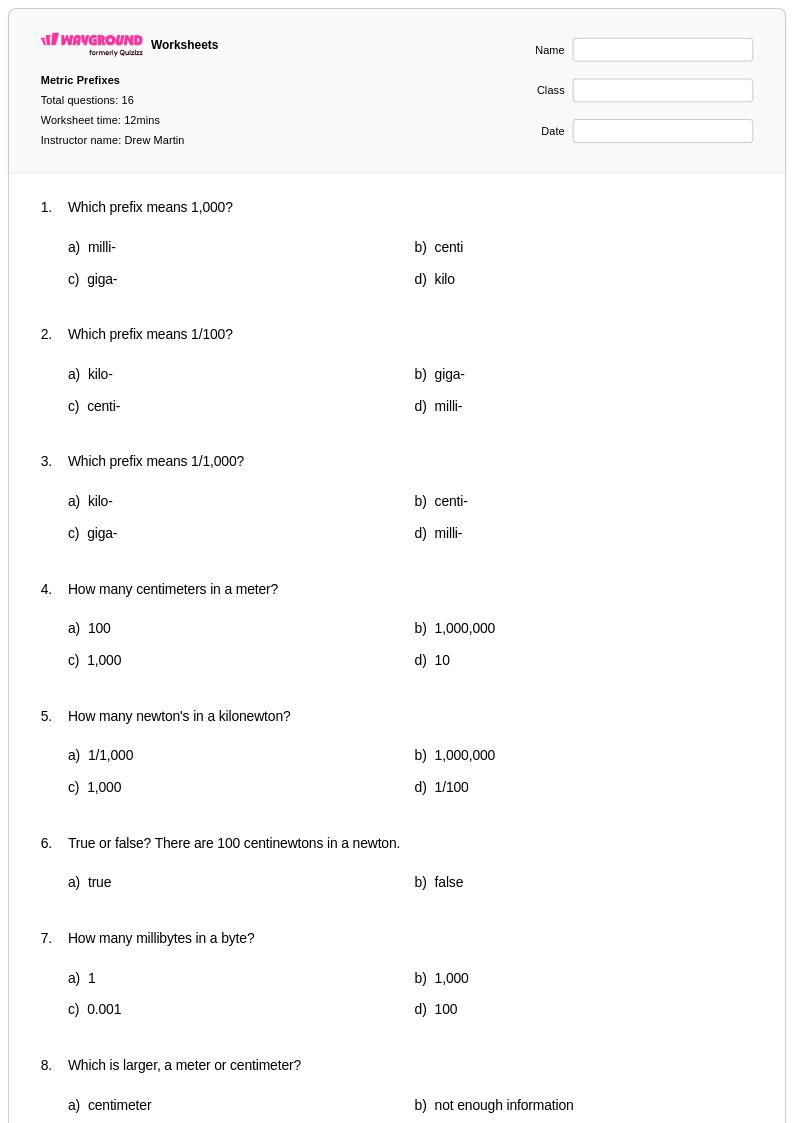
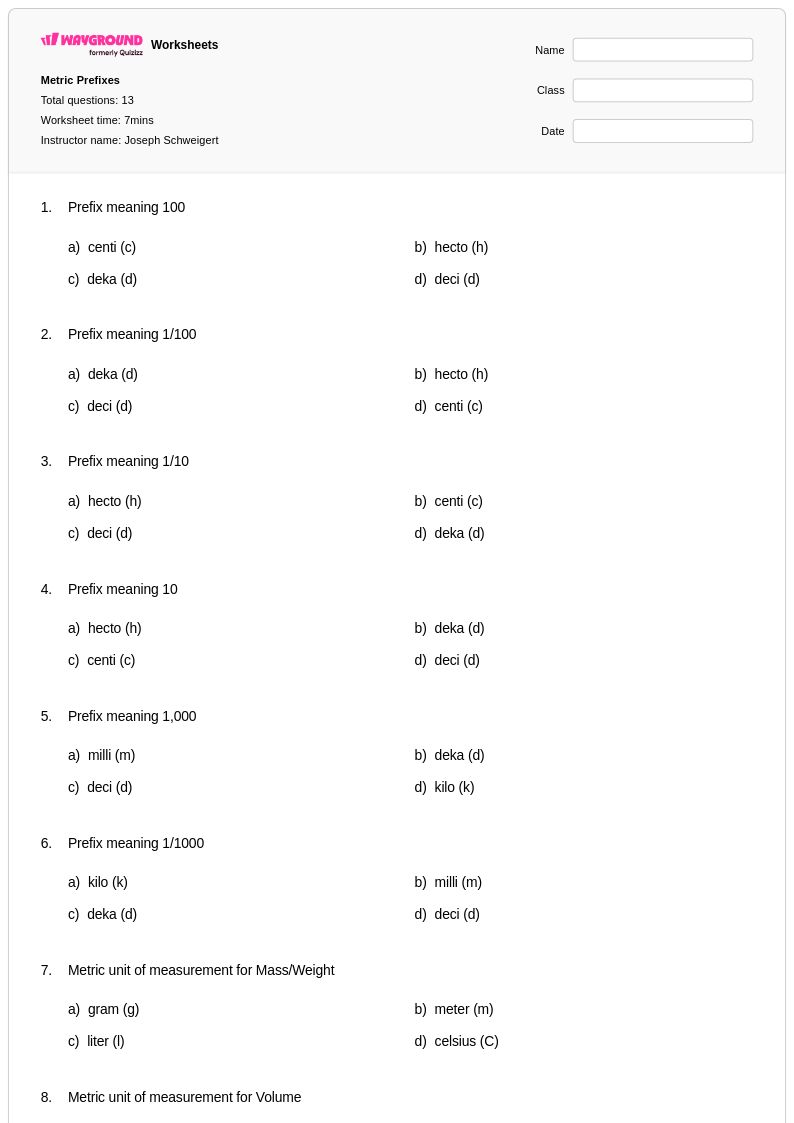
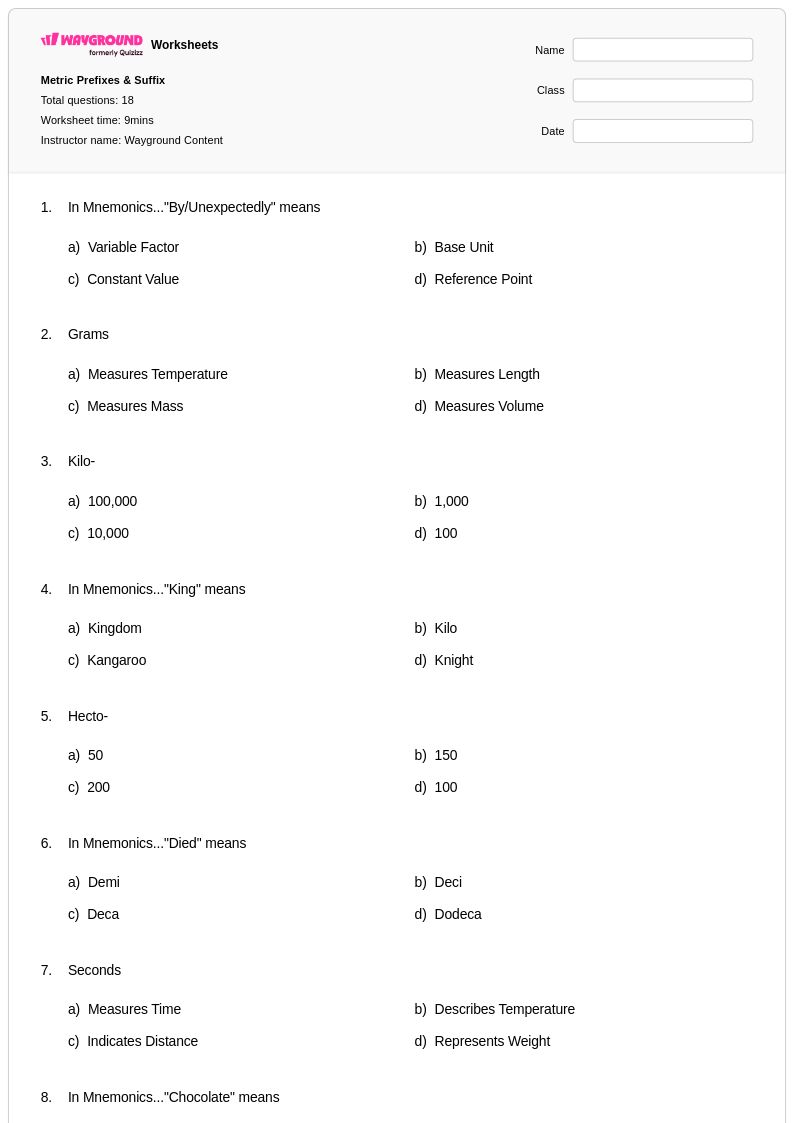
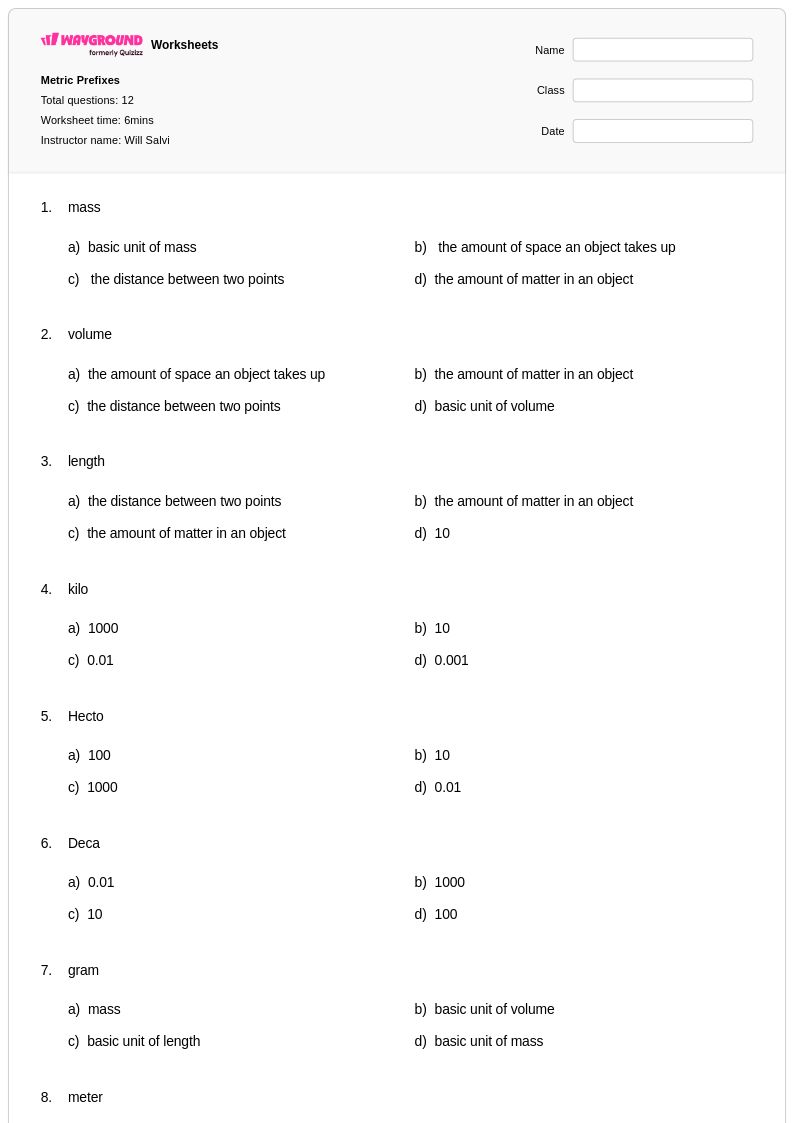
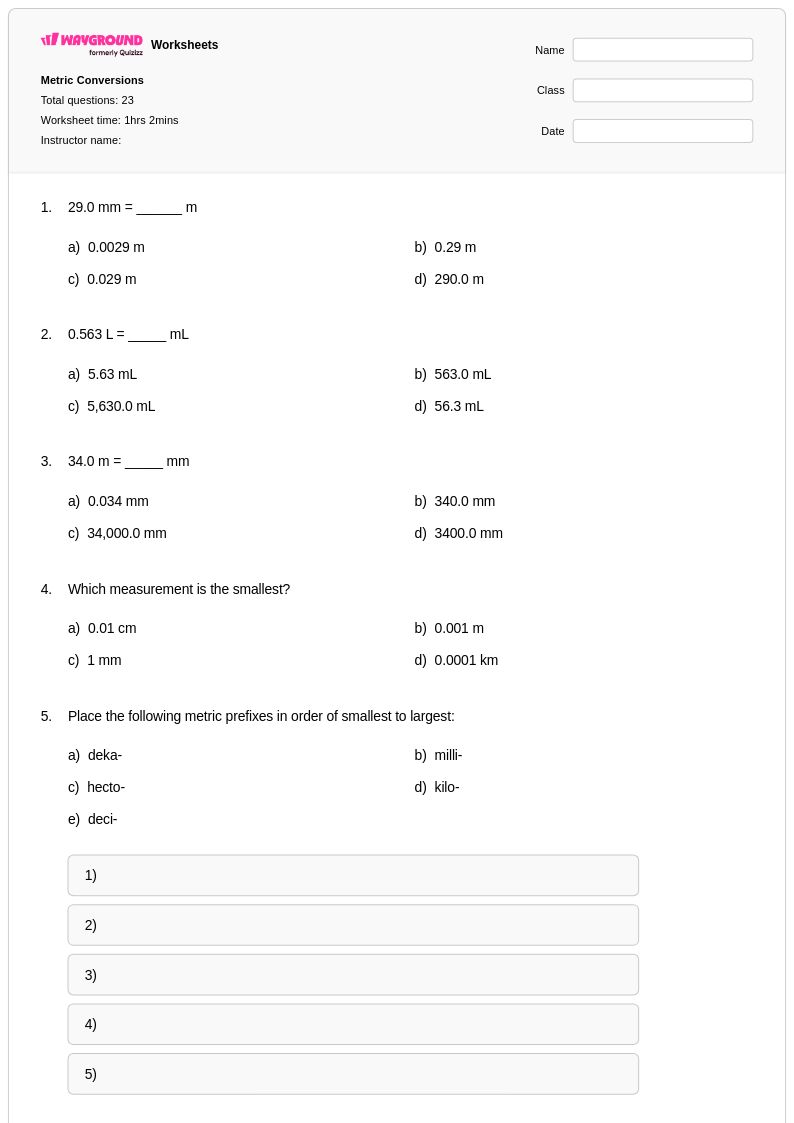
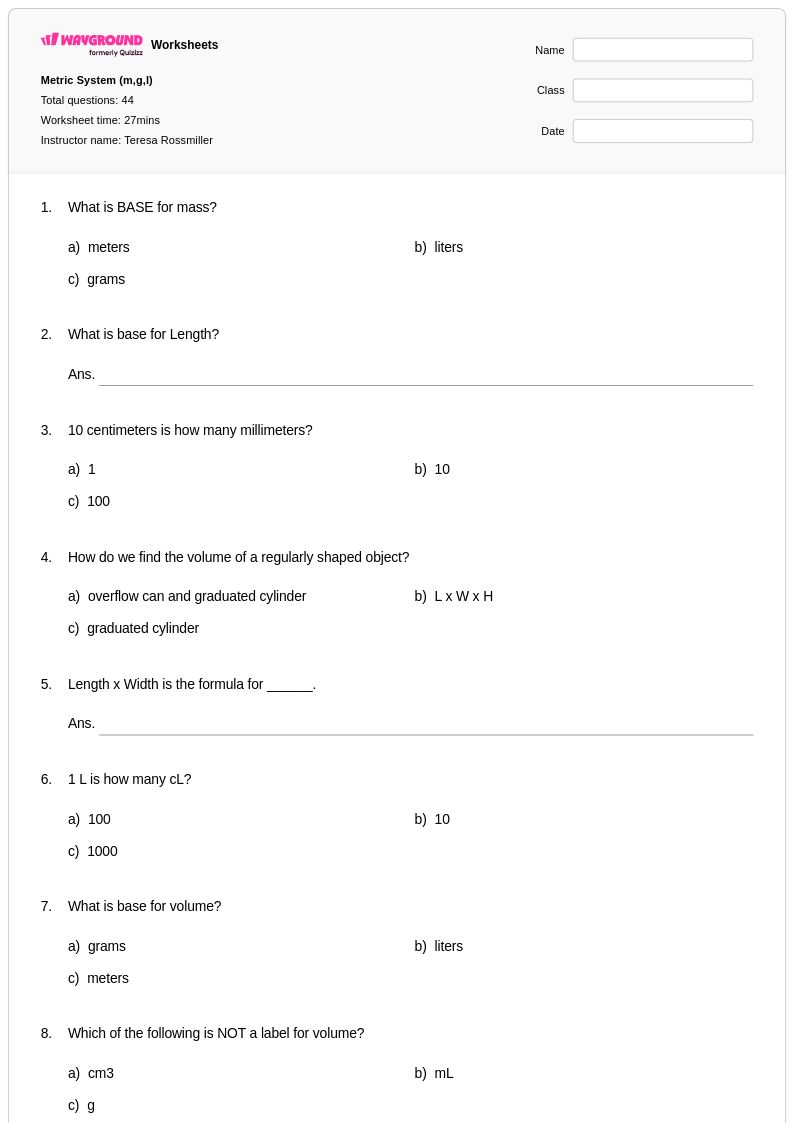
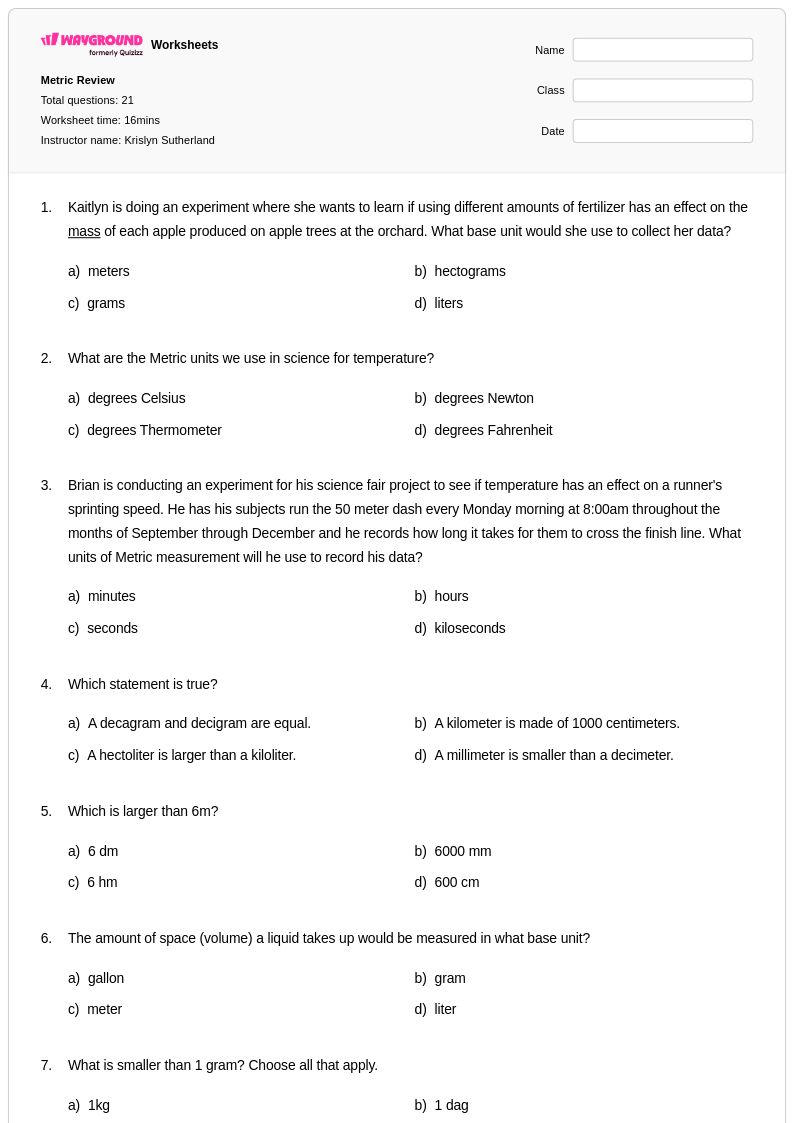
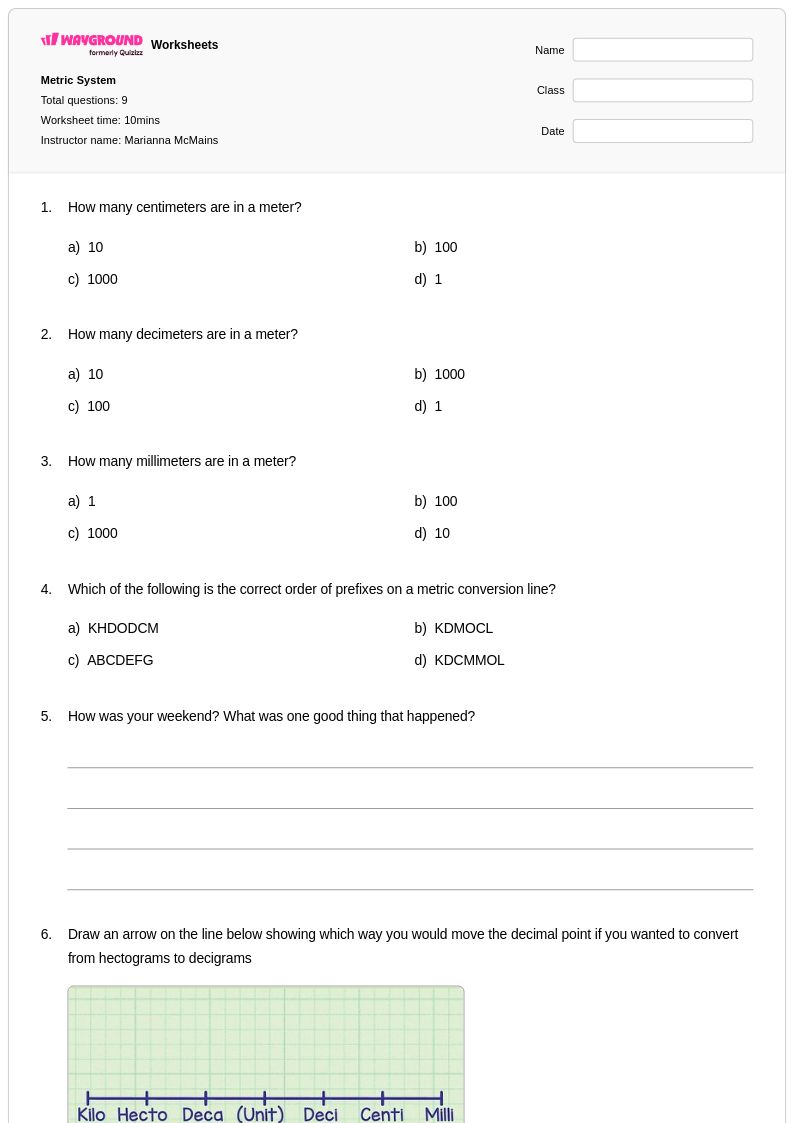
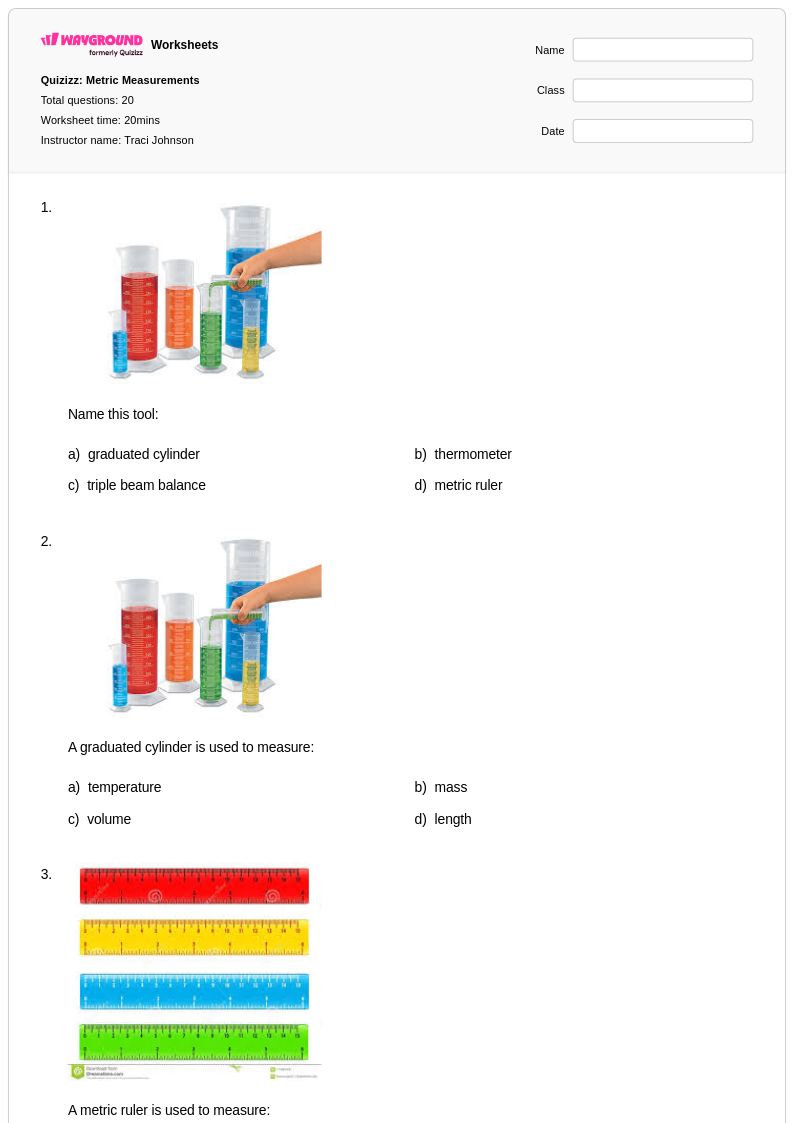
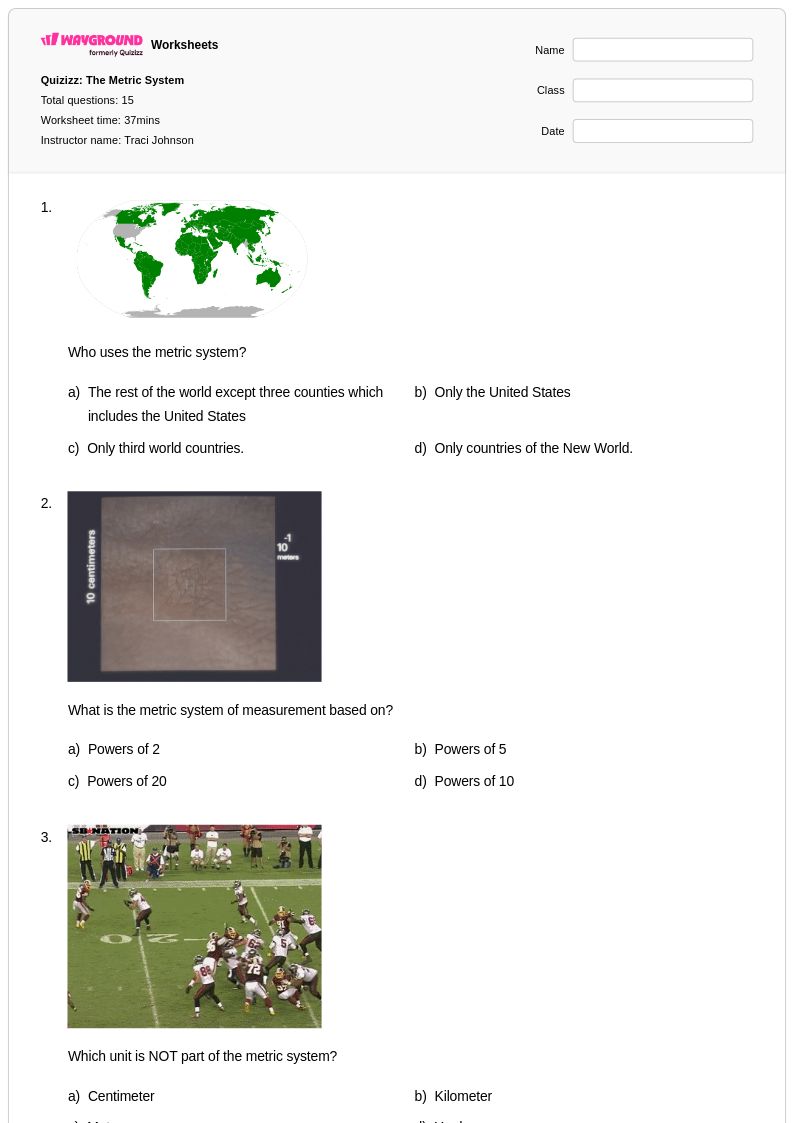
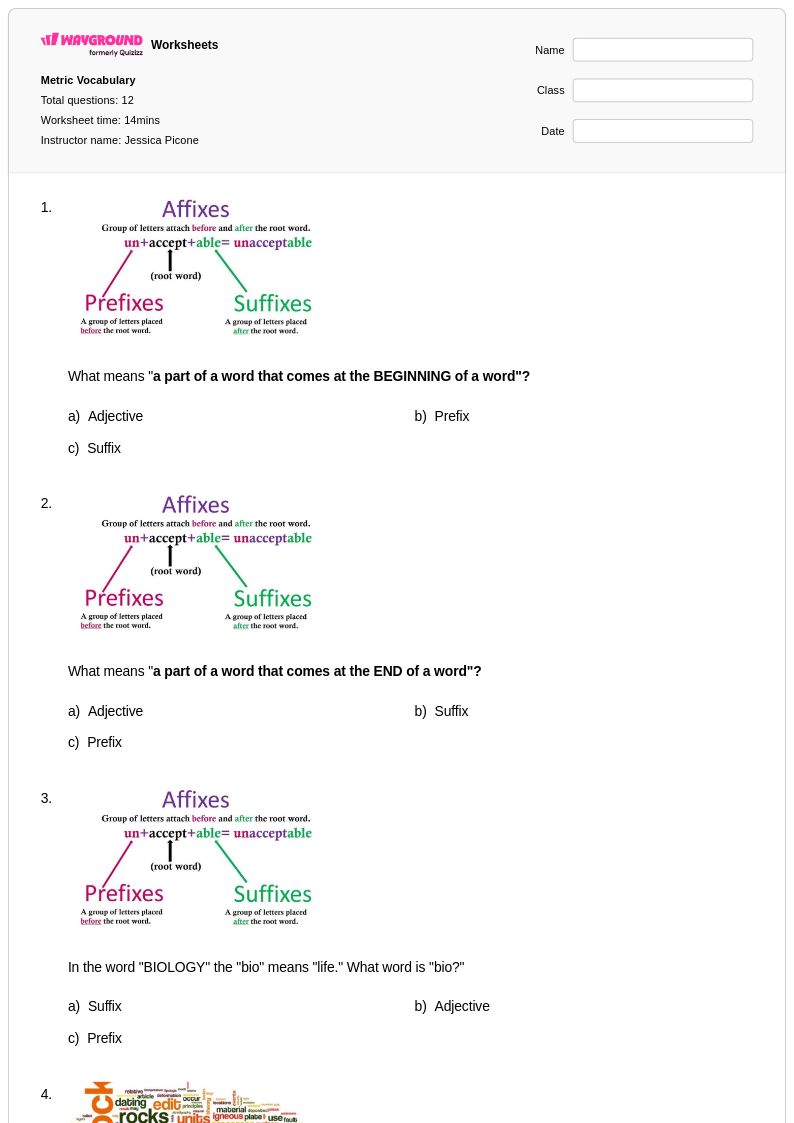
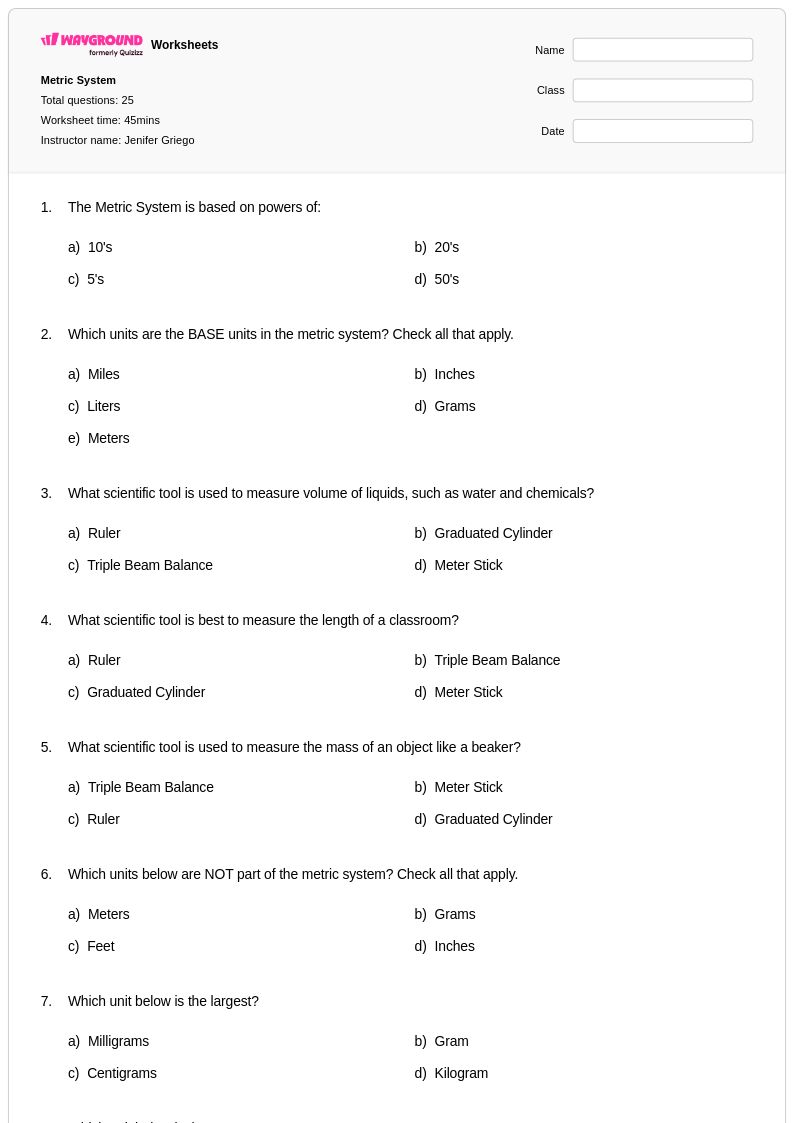
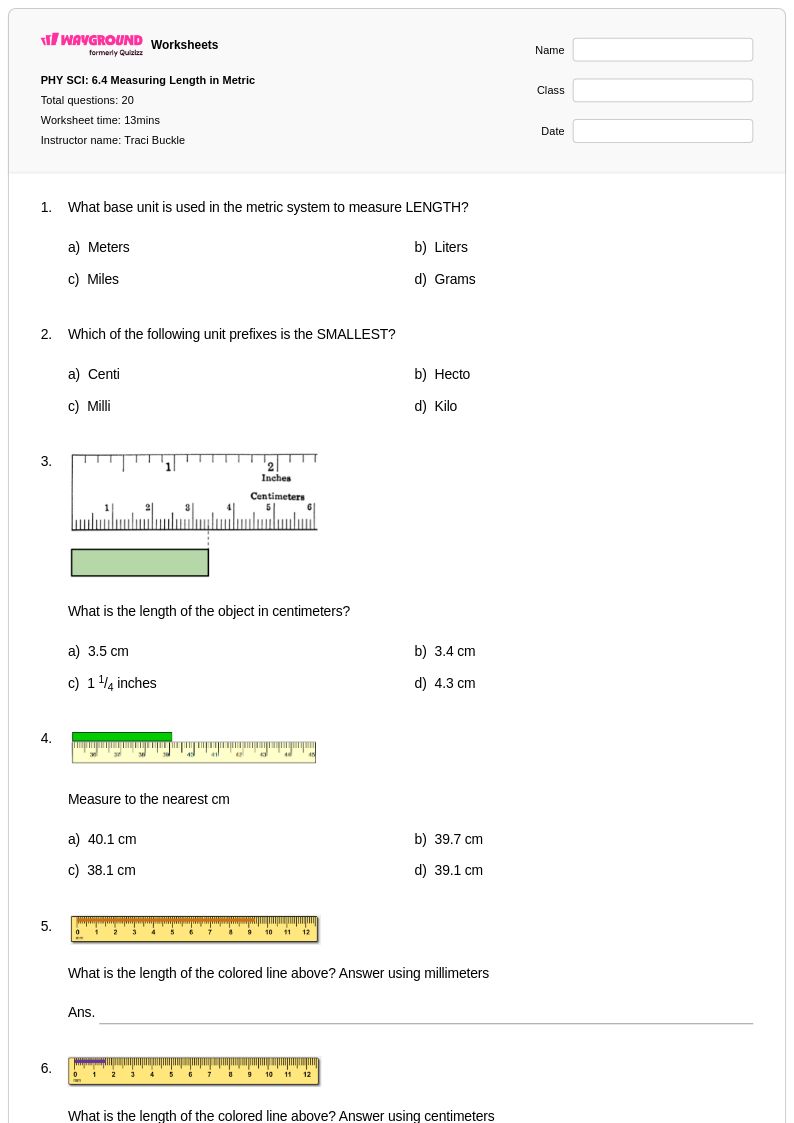
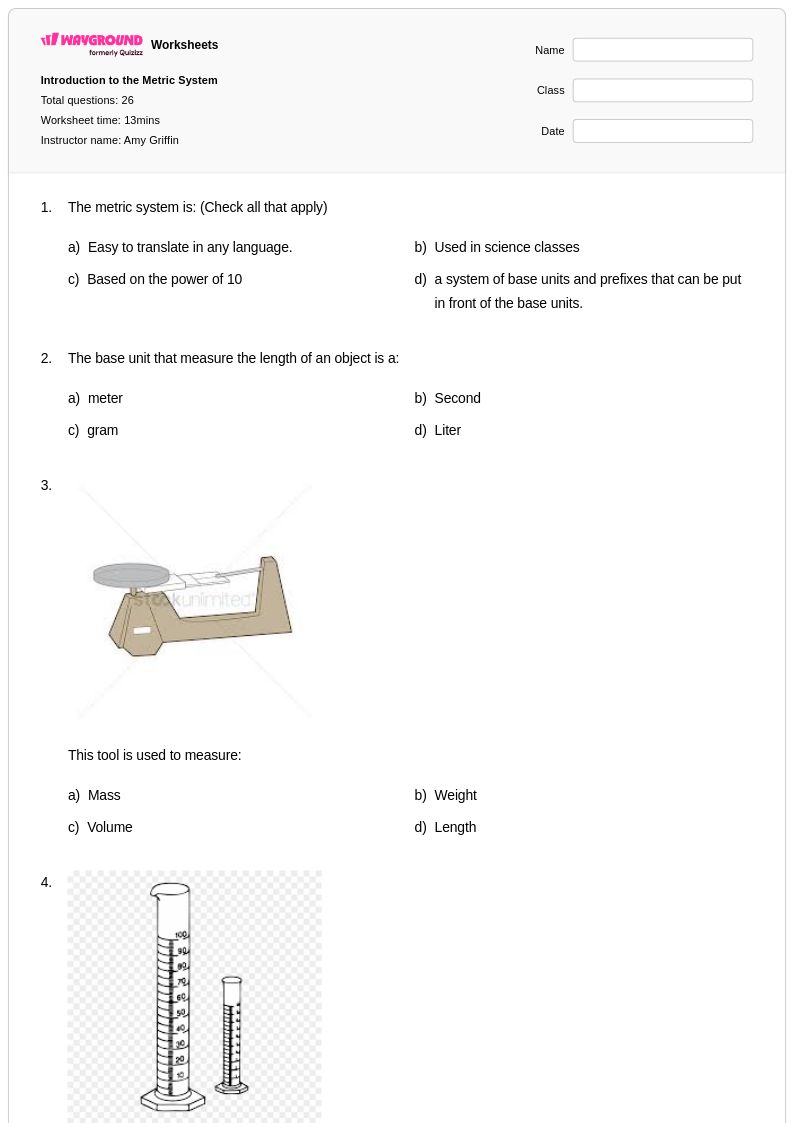
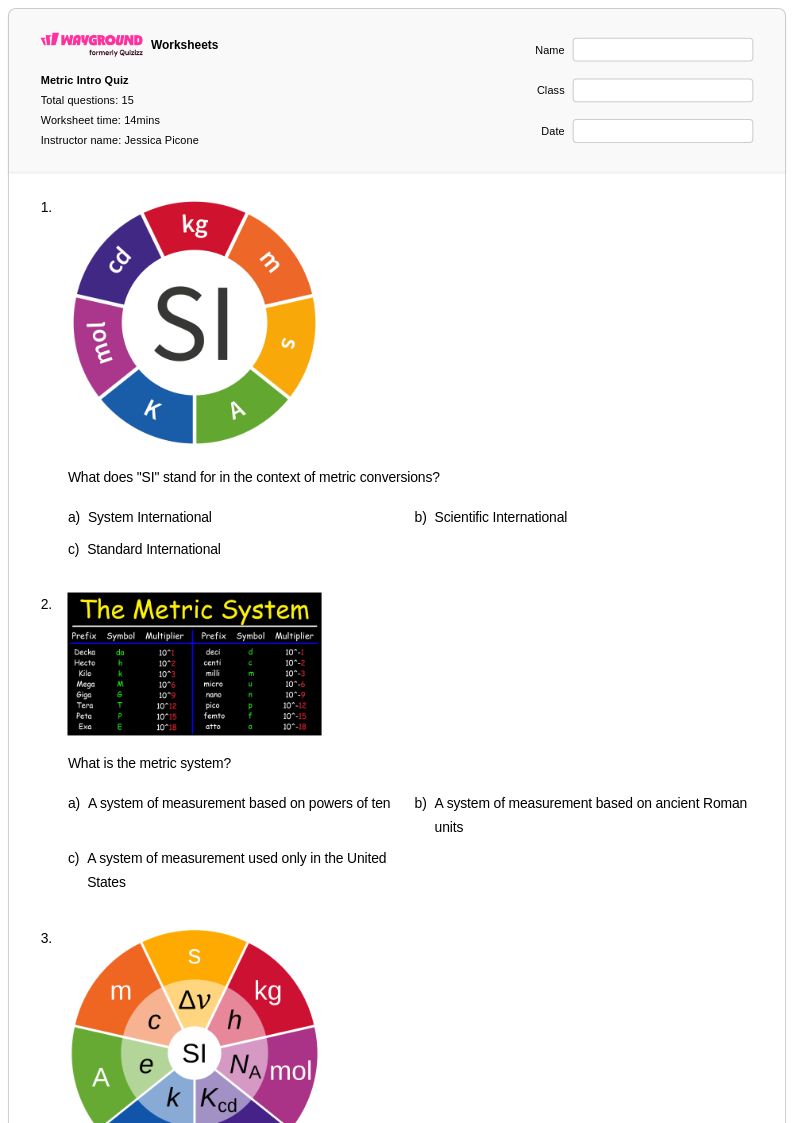
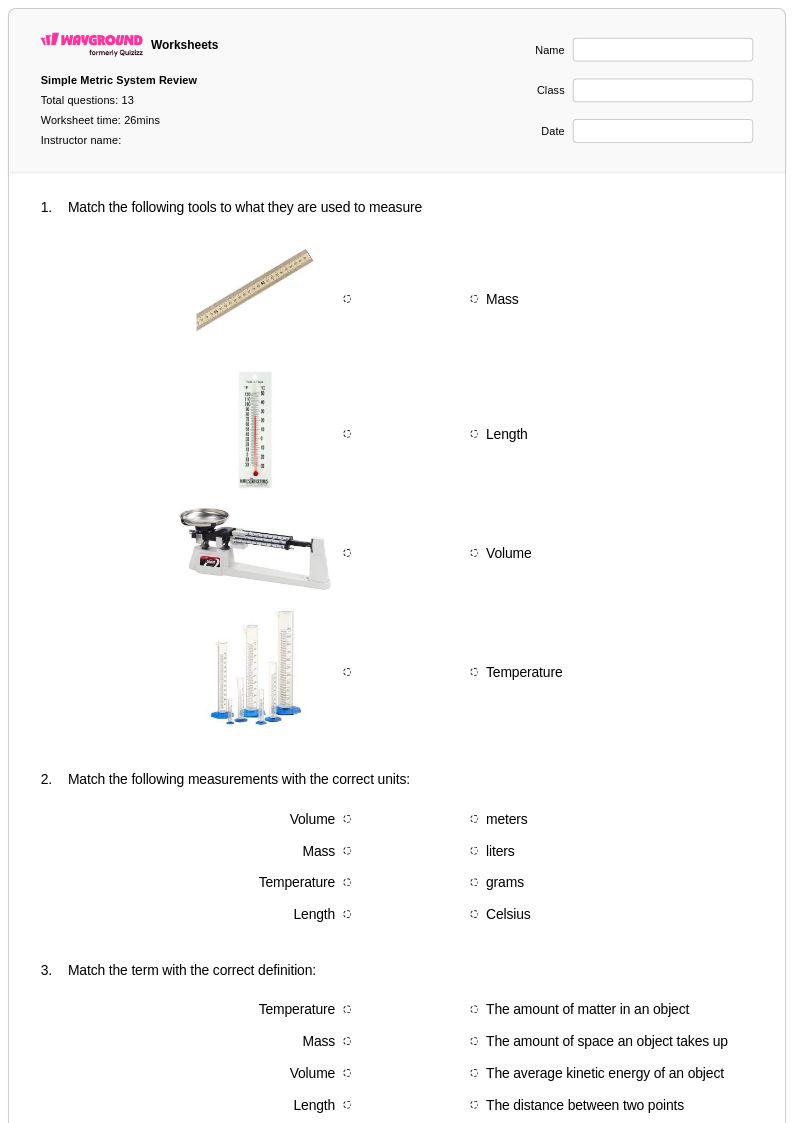
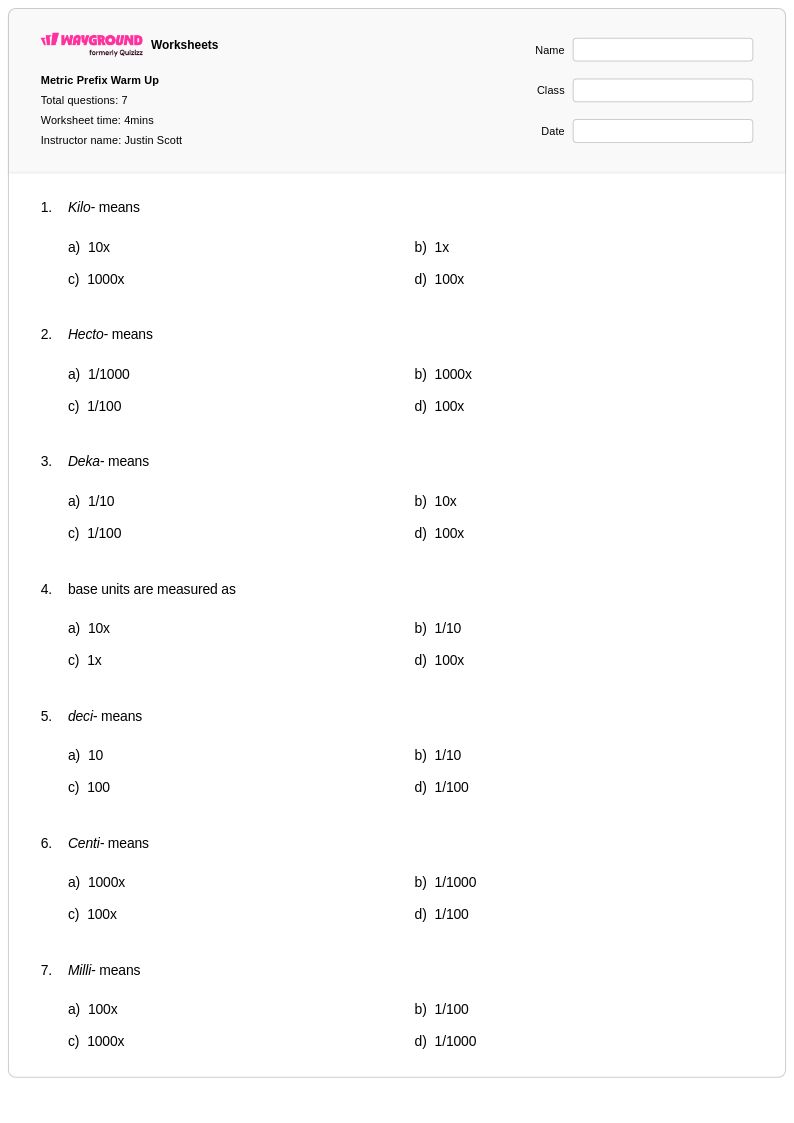
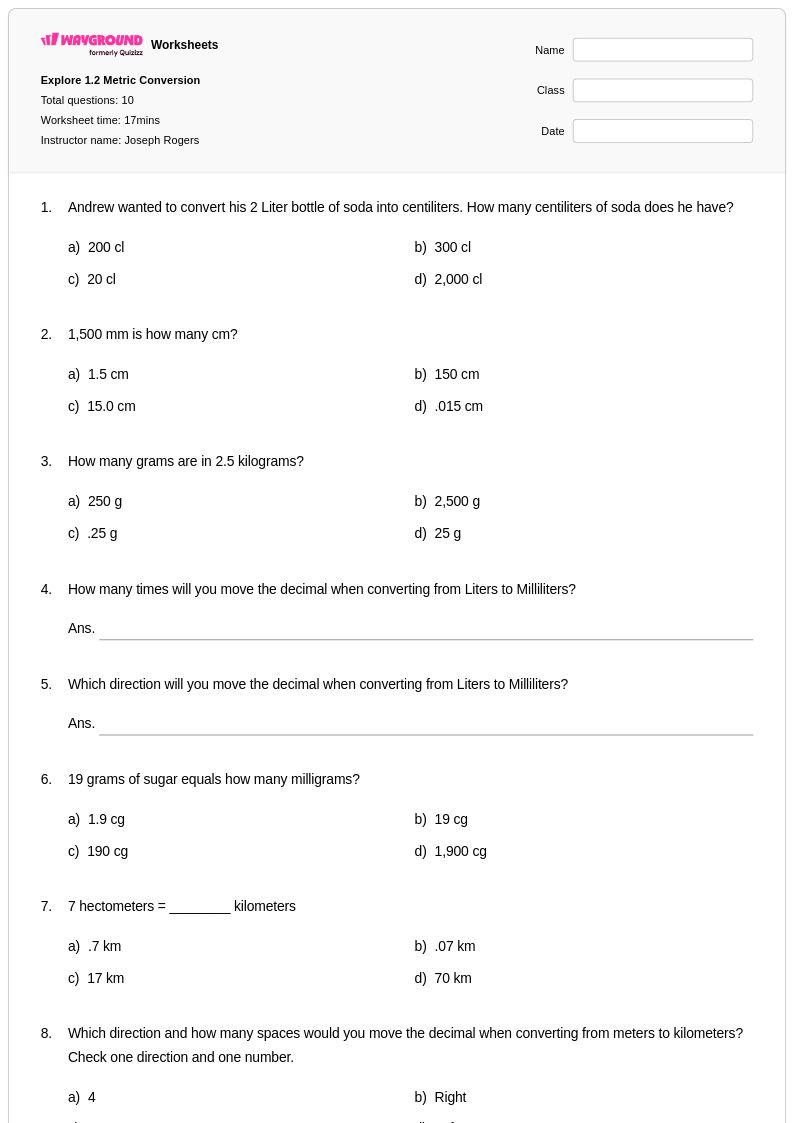
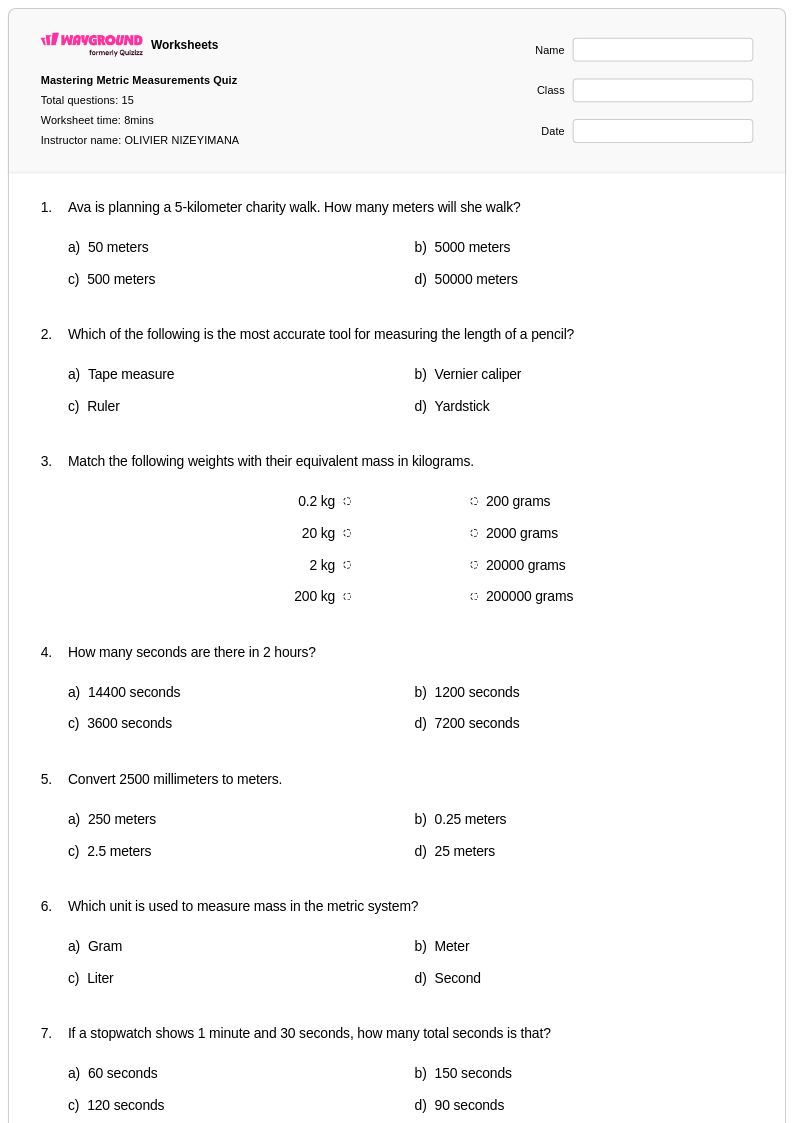
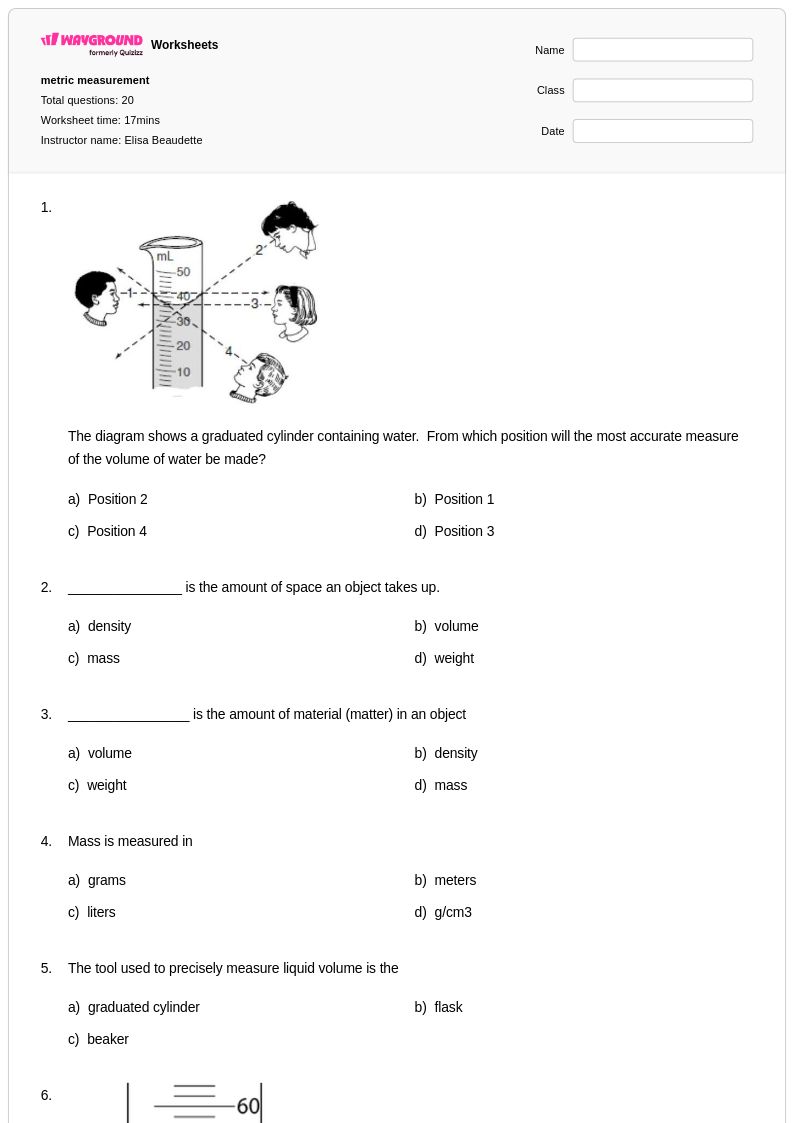
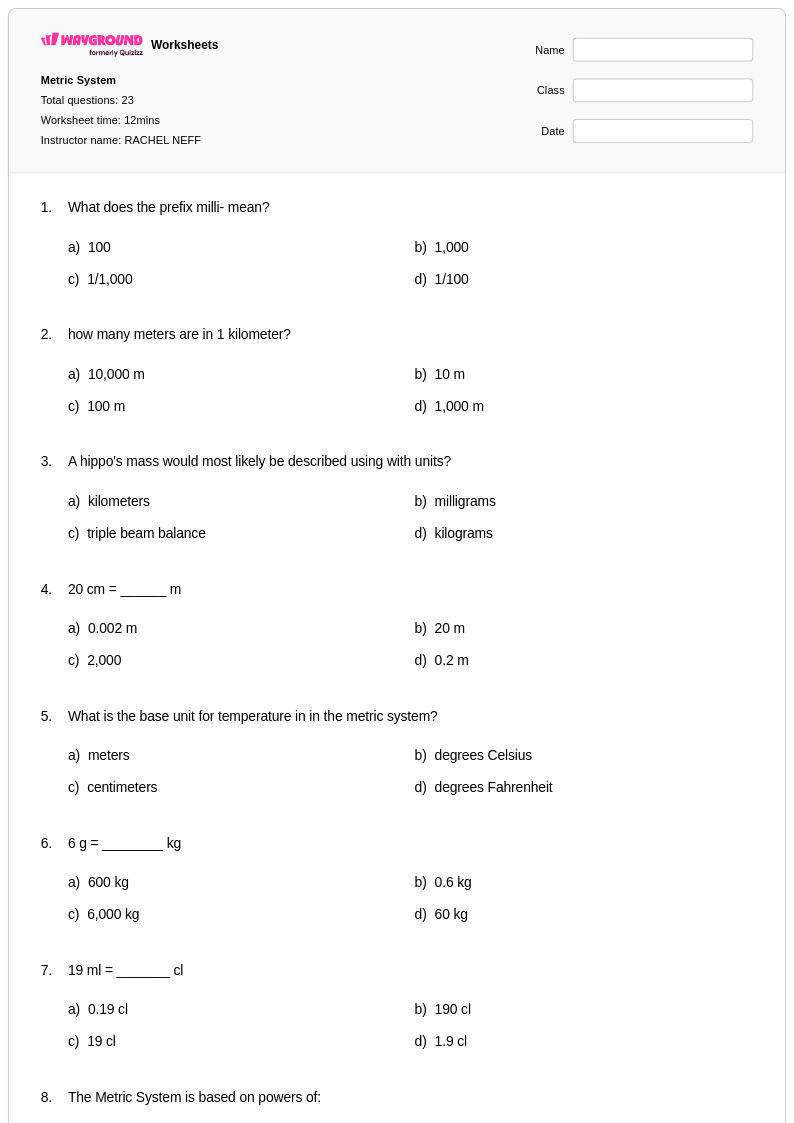
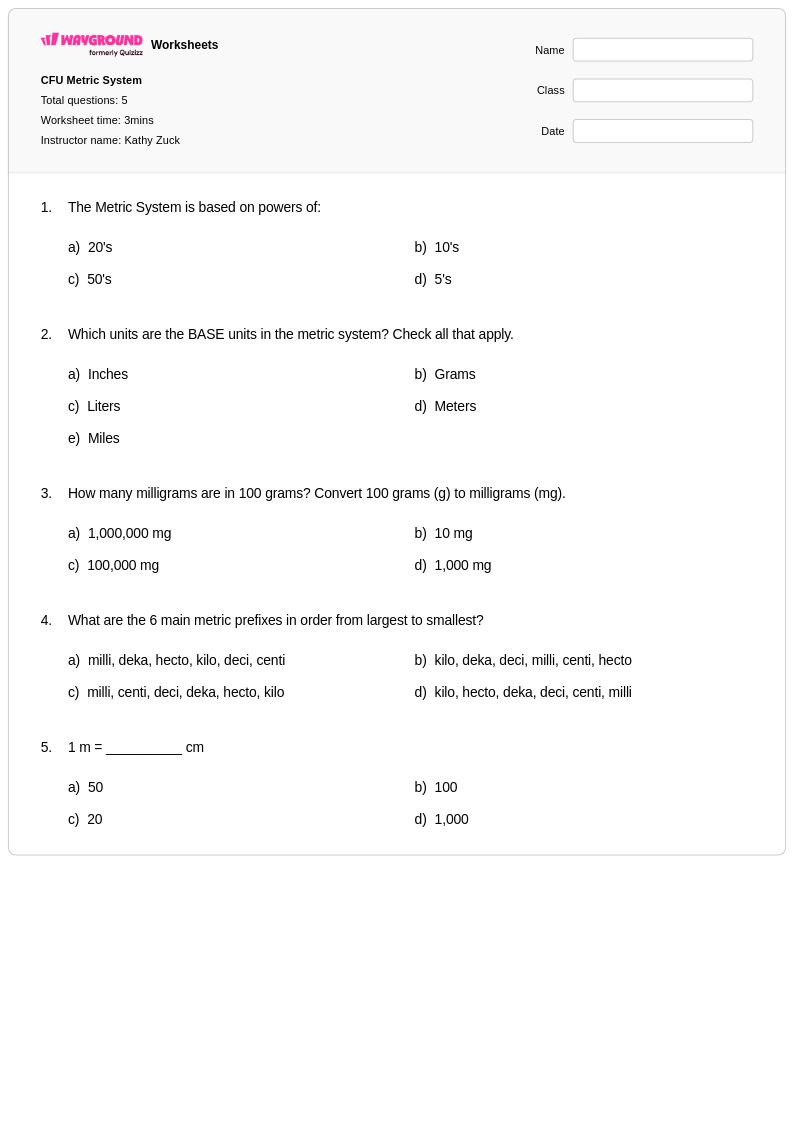
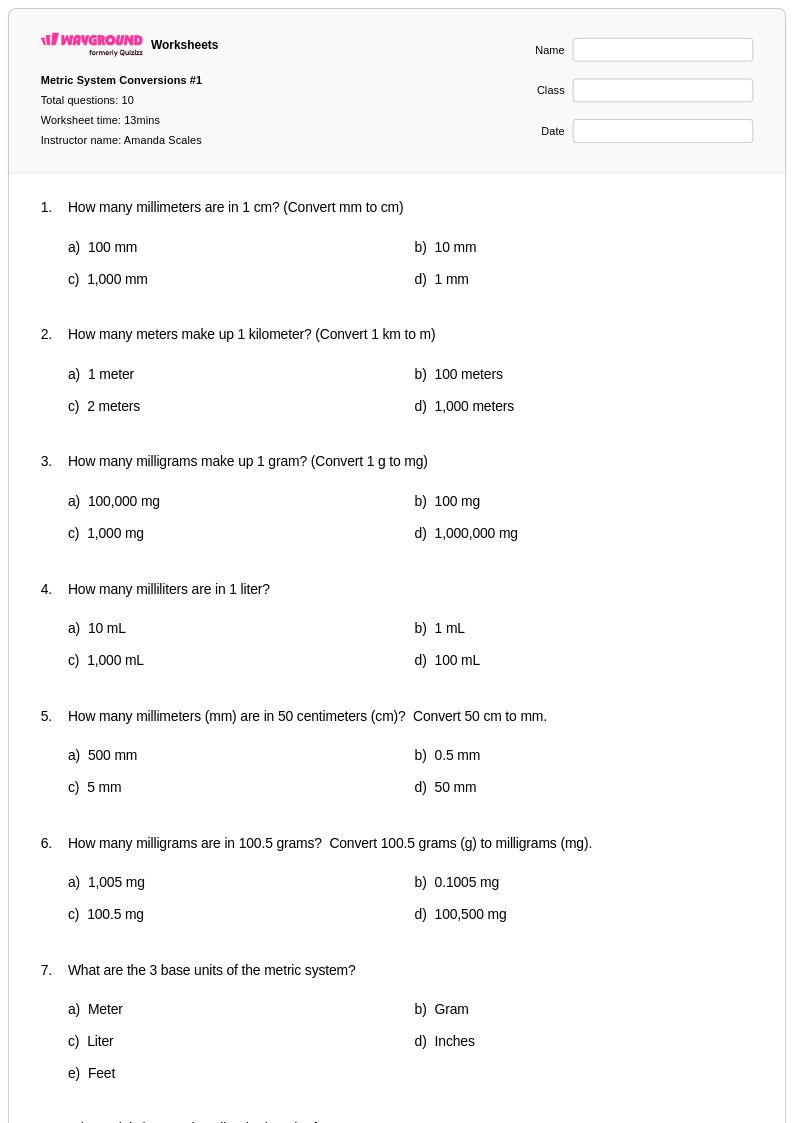
Metric prefixes worksheets for Class 7 students available through Wayground (formerly Quizizz) provide comprehensive practice with the fundamental building blocks of scientific measurement. These carefully designed resources help students master the essential skill of converting between different metric units by understanding prefixes like kilo-, centi-, milli-, micro-, and nano-. Each worksheet collection includes detailed answer keys and is available as free printable pdf resources, allowing students to work through practice problems that reinforce their understanding of how prefixes relate to powers of ten. The materials strengthen critical thinking skills by requiring students to apply prefix knowledge across various scientific contexts, from measuring microscopic cellular structures to calculating distances in space exploration scenarios.
Wayground (formerly Quizizz) empowers educators with access to millions of teacher-created metric prefix resources that can be seamlessly integrated into Class 7 science curriculum planning. The platform's robust search and filtering capabilities allow teachers to quickly locate materials aligned with specific learning standards and differentiate instruction based on individual student needs. These worksheet collections are available in both printable and digital pdf formats, providing flexibility for classroom instruction, homework assignments, and remote learning environments. Teachers can customize existing resources or combine multiple worksheets to create targeted practice sessions for remediation, enrichment, or skill reinforcement, ensuring that every student develops confidence in working with metric prefixes across diverse scientific applications.
FAQs
How do I teach metric prefixes to students who struggle with the concept of scale?
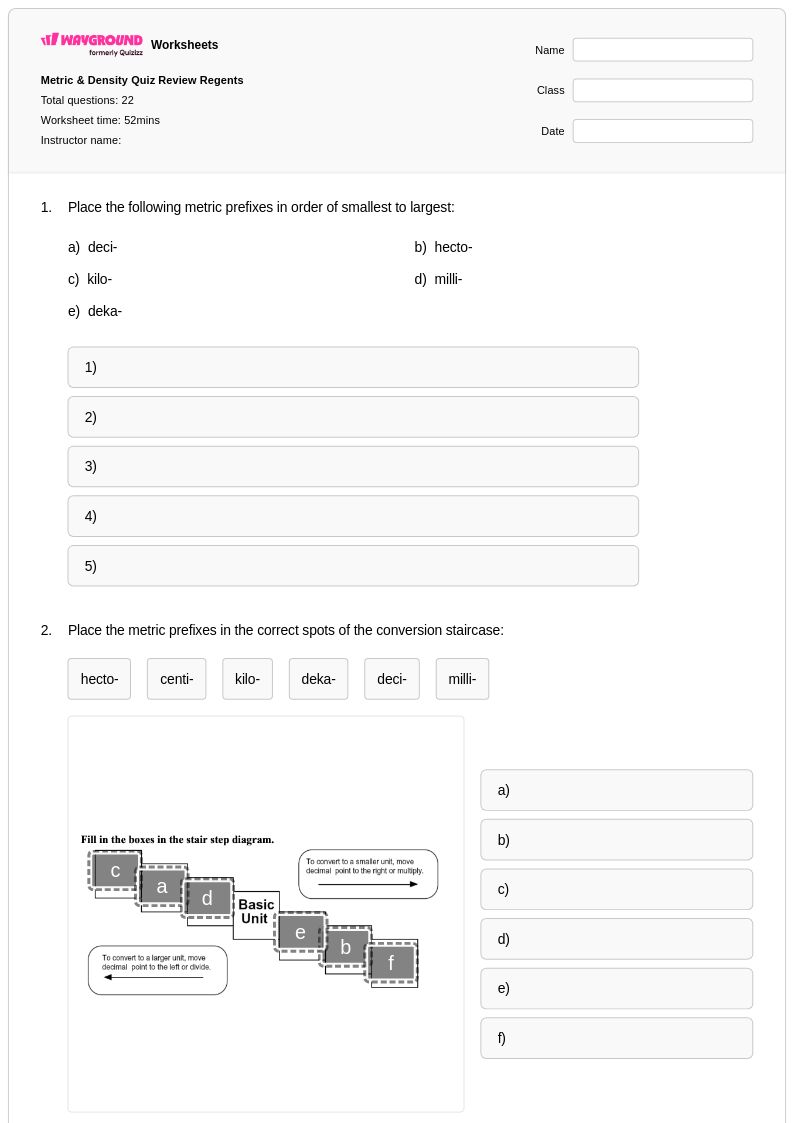
Start by anchoring each prefix to a concrete, real-world reference point before introducing numerical values. For example, connect 'kilo-' to kilometers (a familiar distance unit) and 'milli-' to millimeters on a ruler students have already used. Once students can visualize the scale difference between two familiar prefixes, introduce the powers-of-ten structure that connects them. A number line or prefix ladder chart displayed in the classroom helps students internalize the order and relative size of prefixes like micro-, milli-, centi-, deci-, deca-, hecto-, and kilo-.
What exercises help students practice metric prefix conversions?
Effective practice exercises include prefix-to-decimal conversion problems, unit scaling tasks where students rewrite a measurement using a different prefix, and matching activities that pair prefix symbols with their multiplier values. Real-world application problems, such as converting milligrams to grams in a medication dosage context or kilometers to meters in a distance problem, reinforce why these conversions matter. Systematic repetition across multiple prefix ranges, rather than drilling one prefix at a time, builds the flexible thinking students need for science and math coursework.
What mistakes do students commonly make when working with metric prefixes?
The most frequent error is moving the decimal point in the wrong direction when converting between prefixes, often because students confuse whether they are scaling up or down. Students also commonly mix up prefixes with similar-sounding names, such as 'milli-' and 'micro-', or misremember their corresponding powers of ten. Another persistent mistake is treating prefix conversions as addition or subtraction rather than multiplication by powers of ten, which leads to systematic errors across an entire problem set. Targeted practice that requires students to identify the direction of conversion before calculating can reduce these errors significantly.
How do metric prefixes connect to scientific notation?
Metric prefixes are directly mapped to powers of ten, making them a natural bridge to scientific notation. For example, 'kilo-' represents 10³, 'milli-' represents 10⁻³, and 'nano-' represents 10⁻⁹, so any measurement written with a prefix can be rewritten in scientific notation using the same exponent. Teaching both concepts together reinforces place value reasoning and helps students move fluidly between unit-based and exponential representations of the same quantity. This connection is especially valuable in chemistry and physics, where measurements span many orders of magnitude.
How can I use Wayground's metric prefixes worksheets in my classroom?
Wayground's metric prefixes worksheets are available as printable PDFs for traditional classroom use and in digital formats for technology-integrated learning environments, giving teachers flexibility depending on their setup. You can assign them as independent practice, use them for small-group review, or host them as a quiz directly on the Wayground platform to collect student responses digitally. For students who need additional support, Wayground's accommodation tools allow teachers to enable read-aloud features, extended time, or reduced answer choices on an individual basis without affecting the rest of the class.
How do I differentiate metric prefix instruction for students at different skill levels?
For students still building foundational understanding, limit practice to the most common prefixes (kilo-, centi-, milli-) before expanding to micro-, nano-, mega-, and giga-. For advanced students, introduce multi-step conversions that require moving across more than one prefix level or apply prefixes in scientific notation problems. On Wayground, teachers can adjust problem complexity and create targeted practice sets for remediation or enrichment, and individual accommodation settings such as reduced answer choices or extended time can be applied to specific students without disrupting the broader class workflow.