
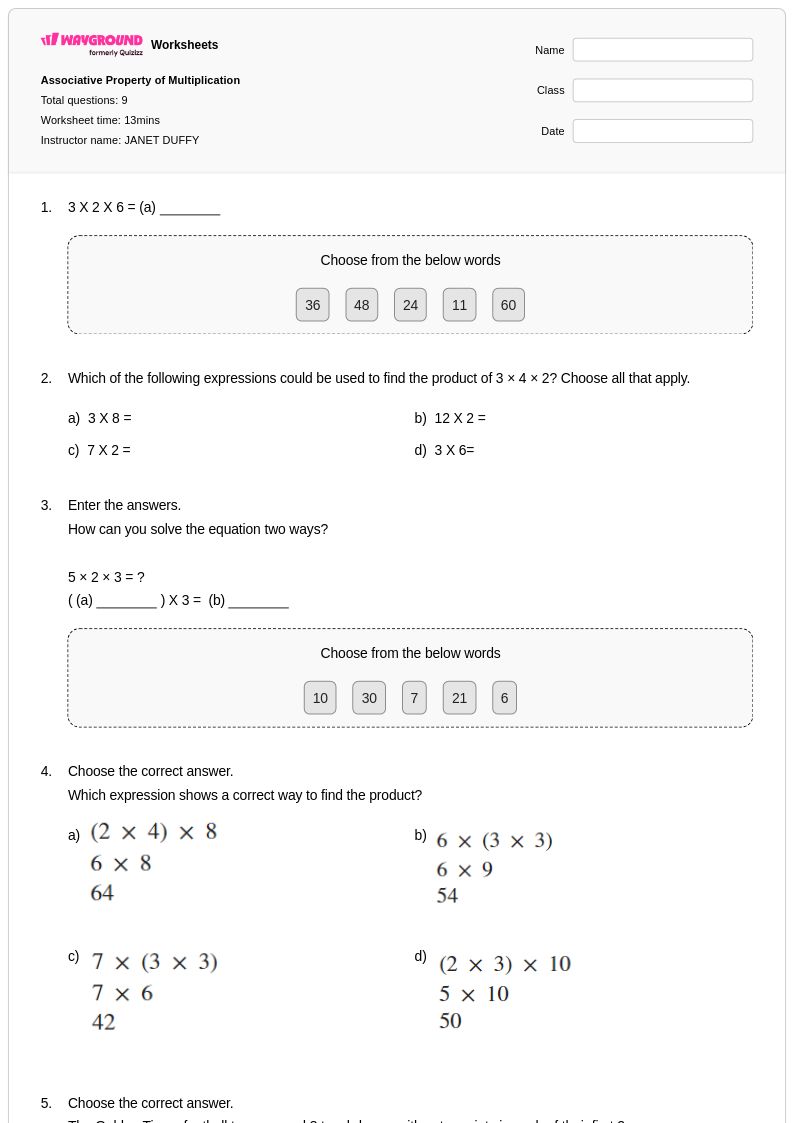
9Q
3rd
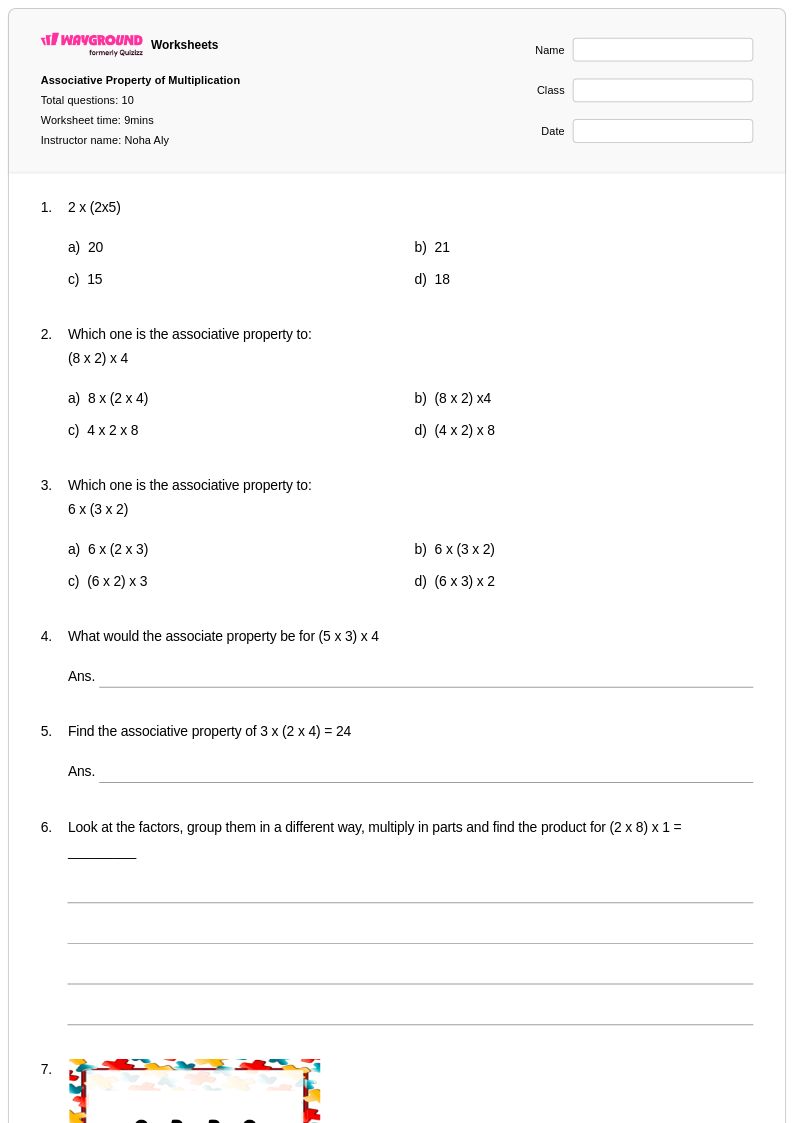
10Q
3rd
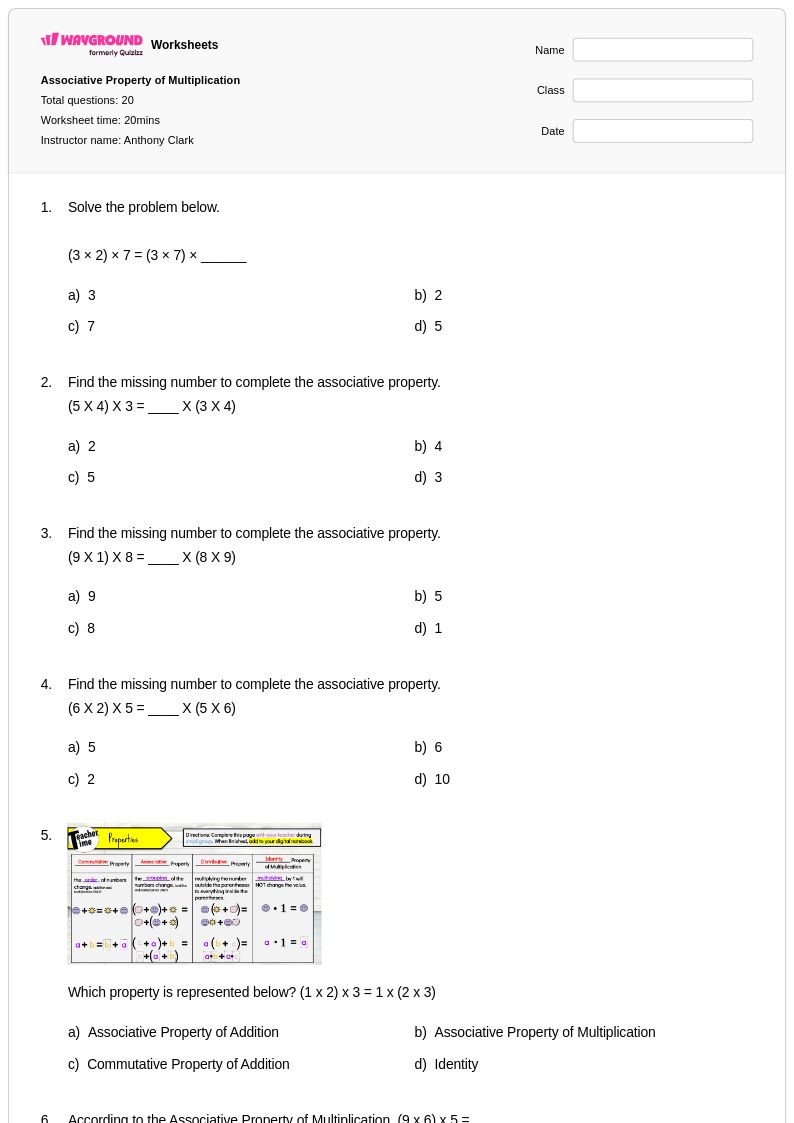
20Q
3rd - Uni
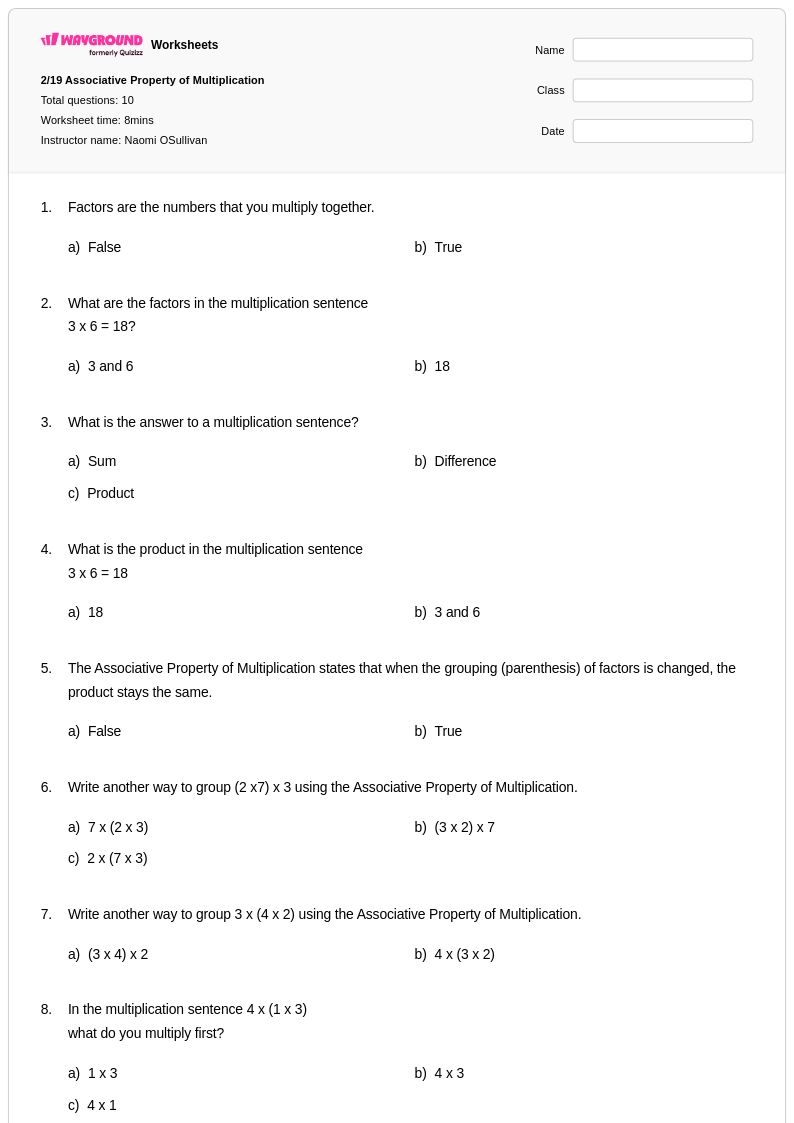
10Q
3rd
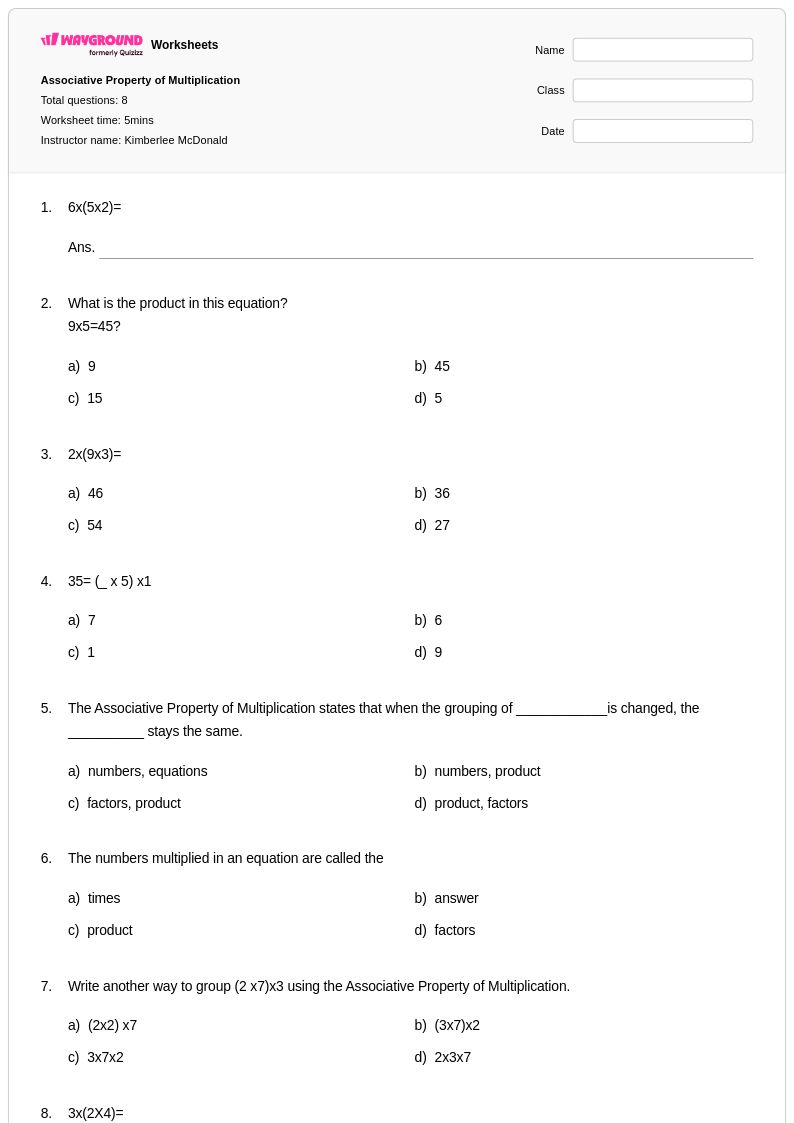
8Q
3rd
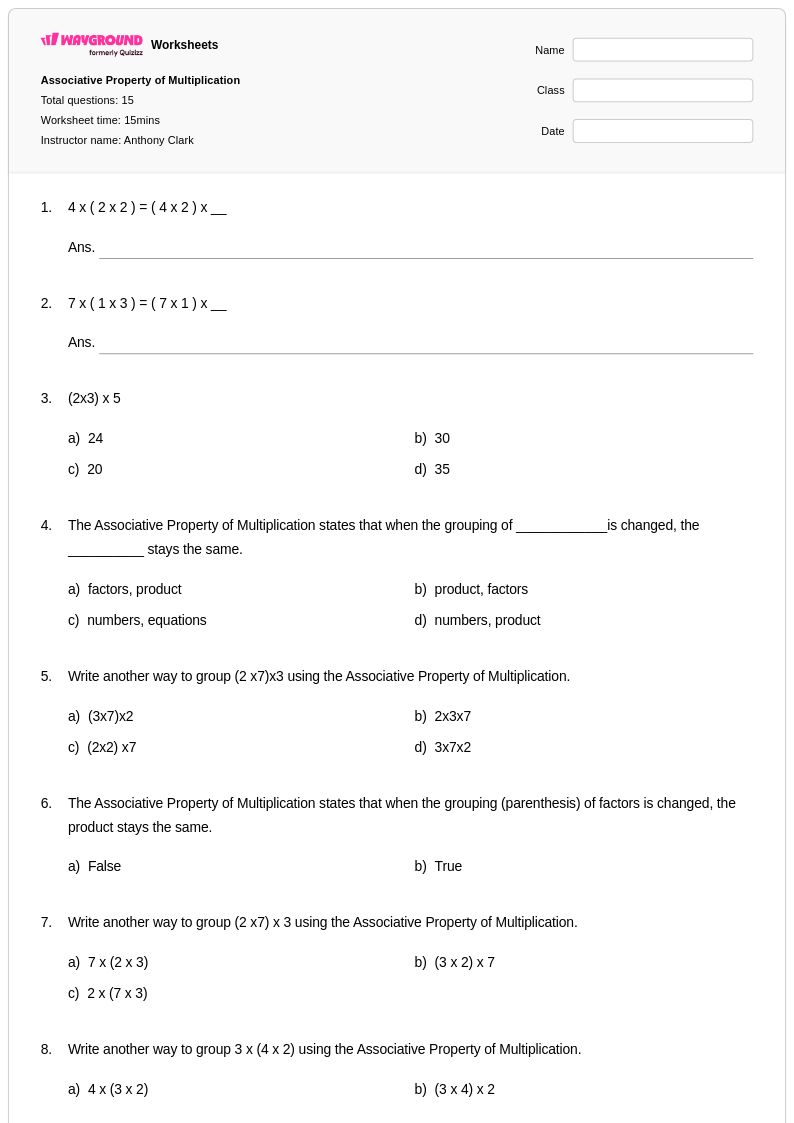
15Q
3rd - Uni
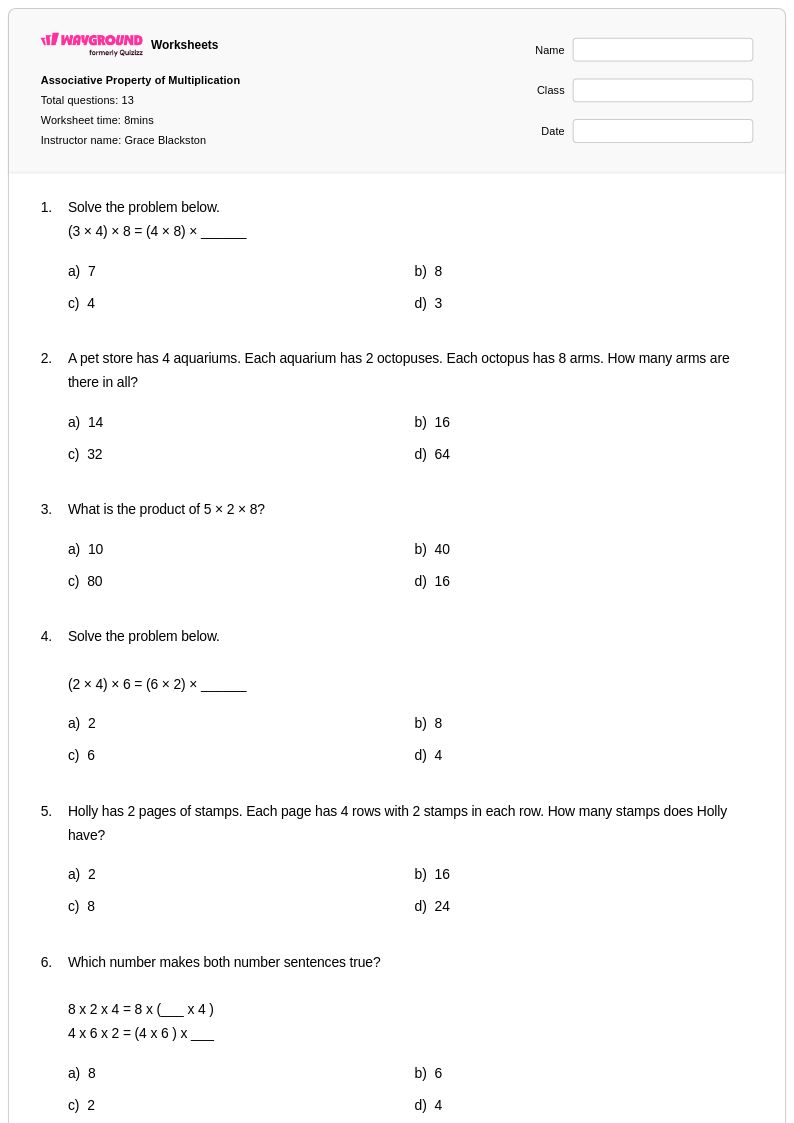
13Q
3rd
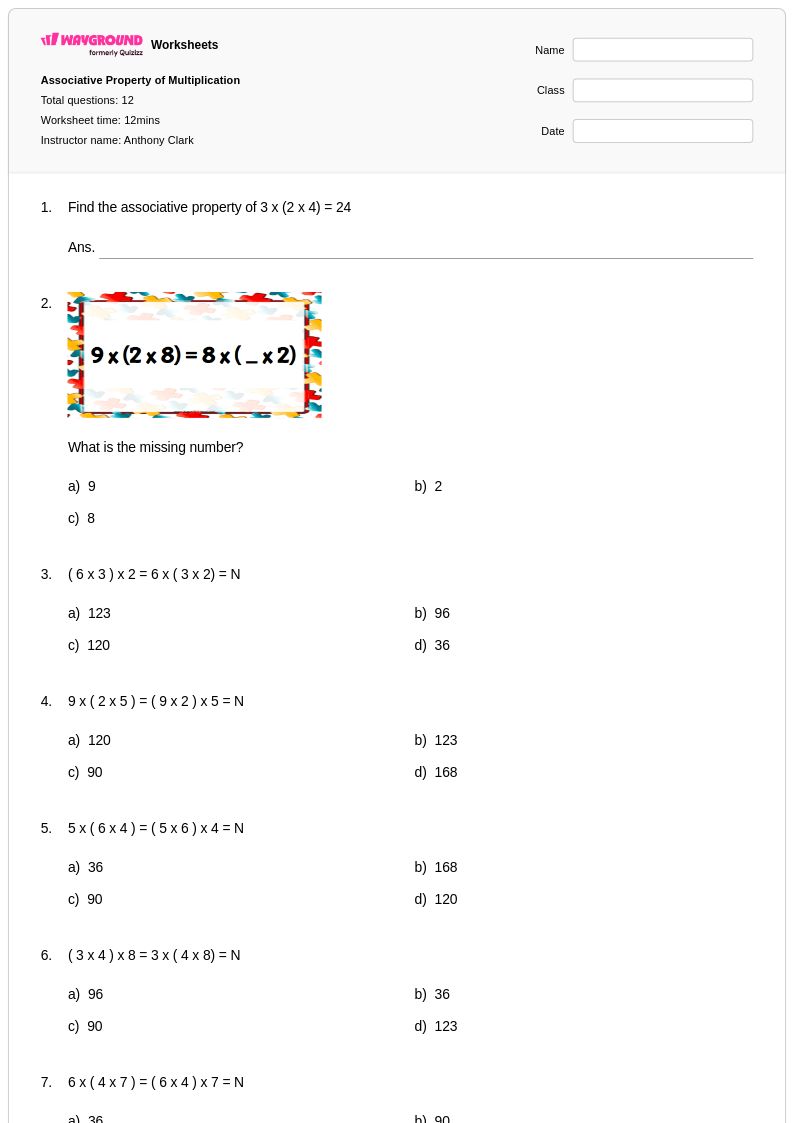
12Q
3rd - Uni
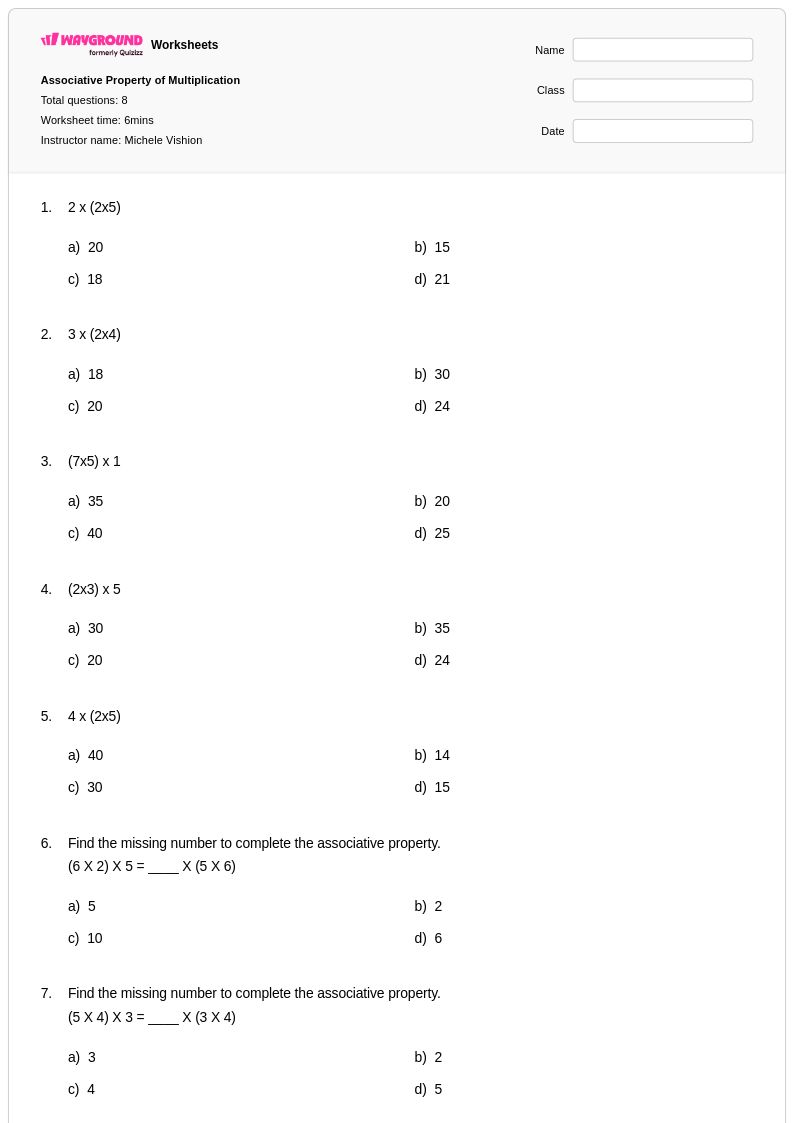
8Q
3rd
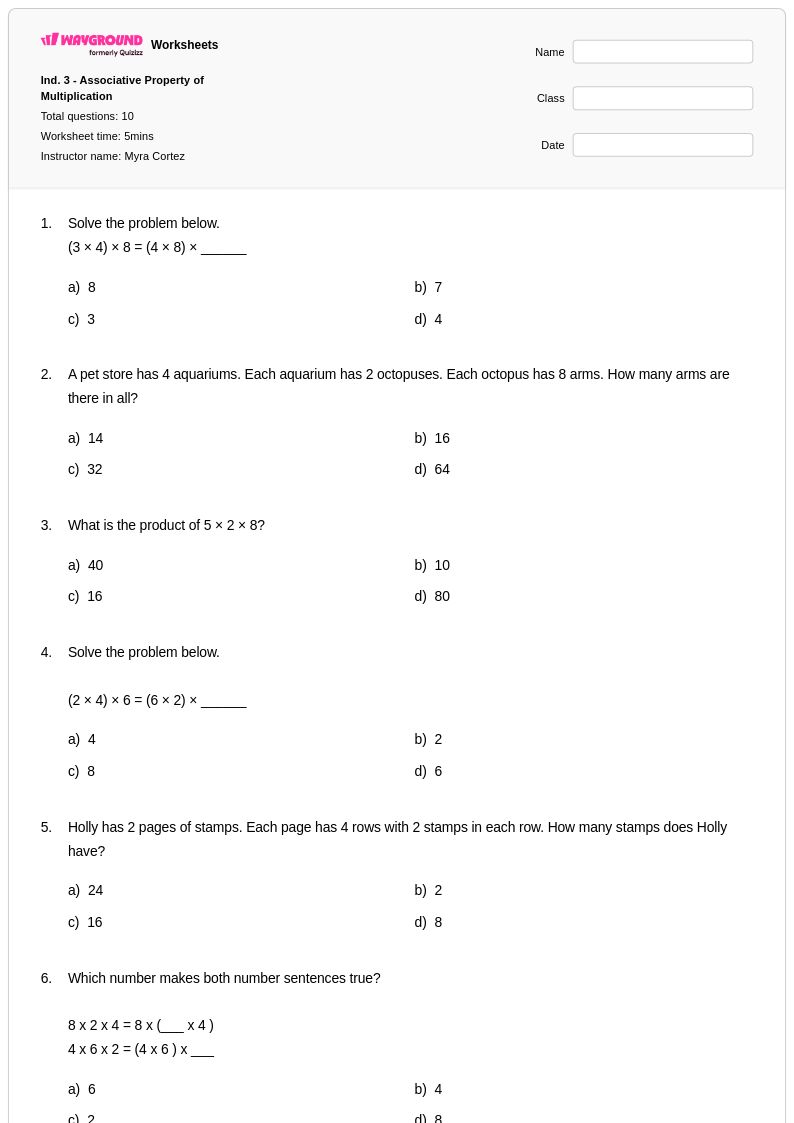
10Q
3rd
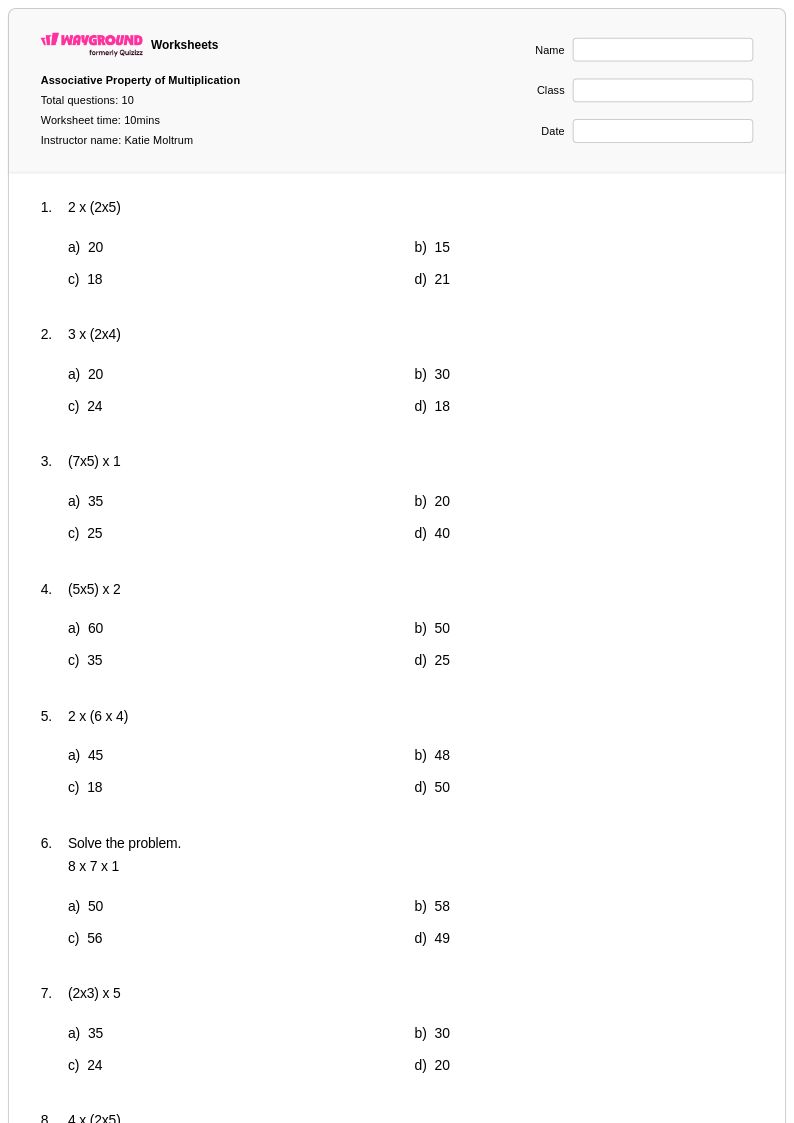
10Q
3rd
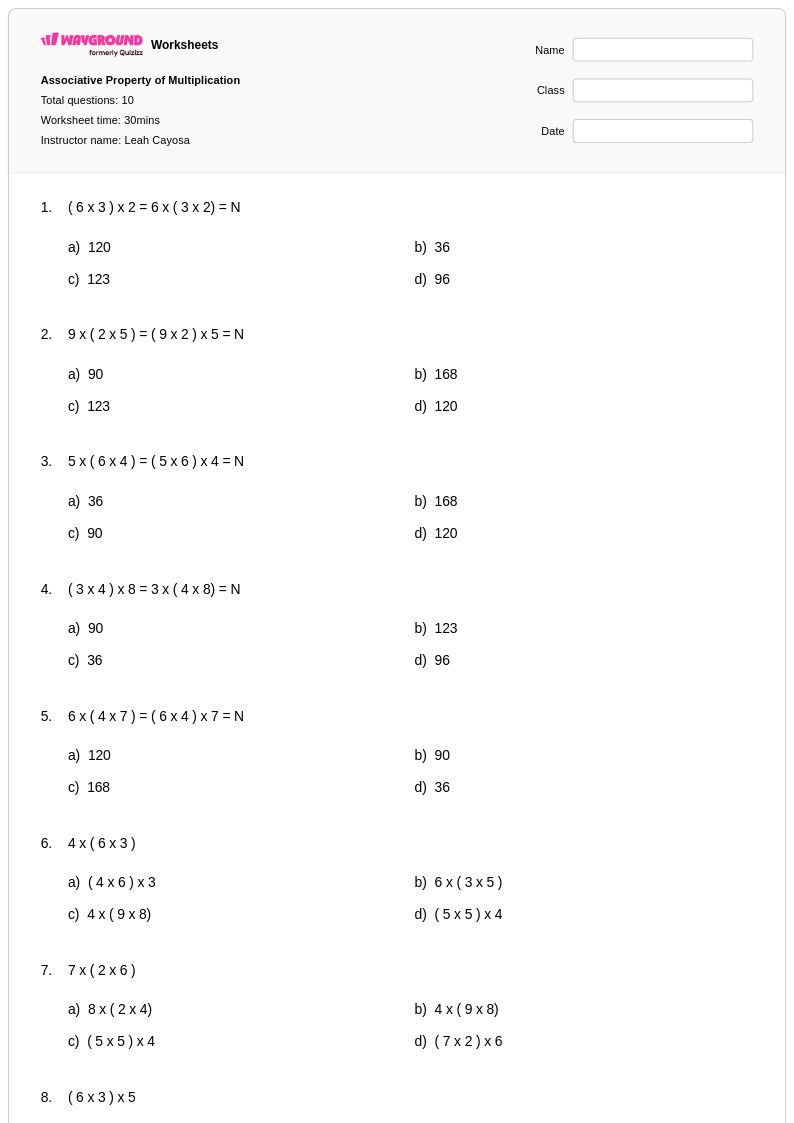
10Q
3rd
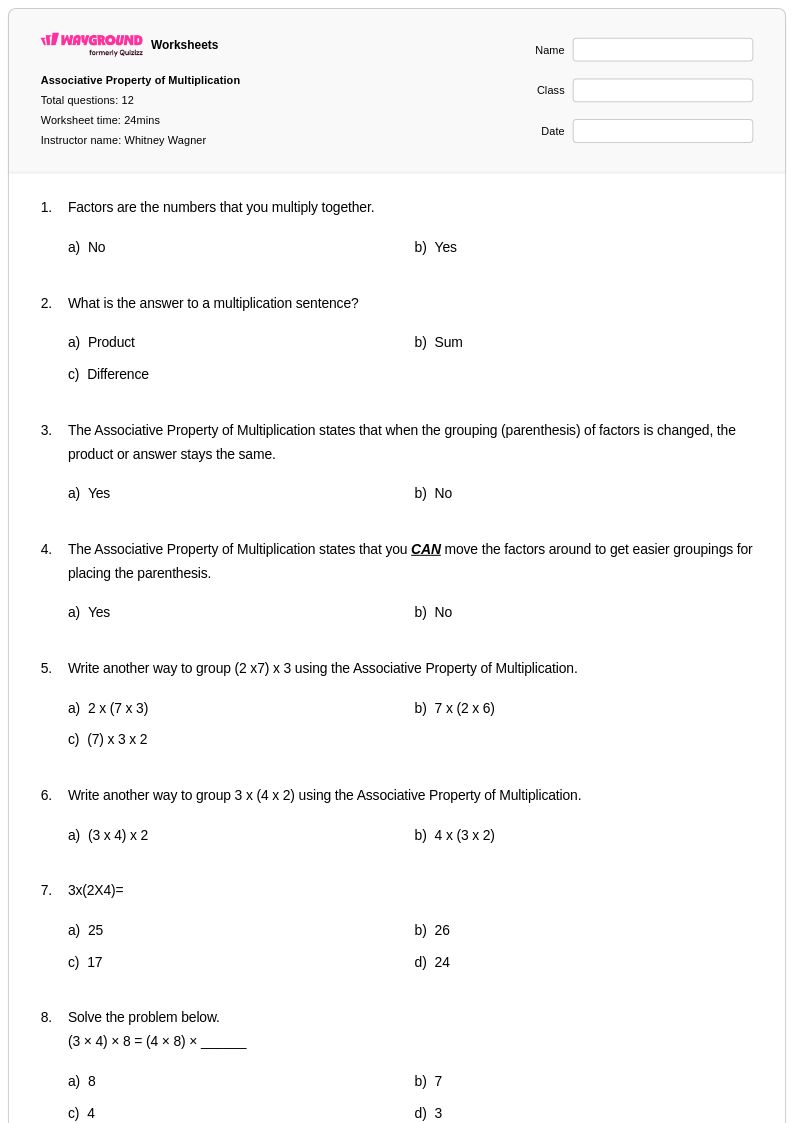
12Q
1st - 5th
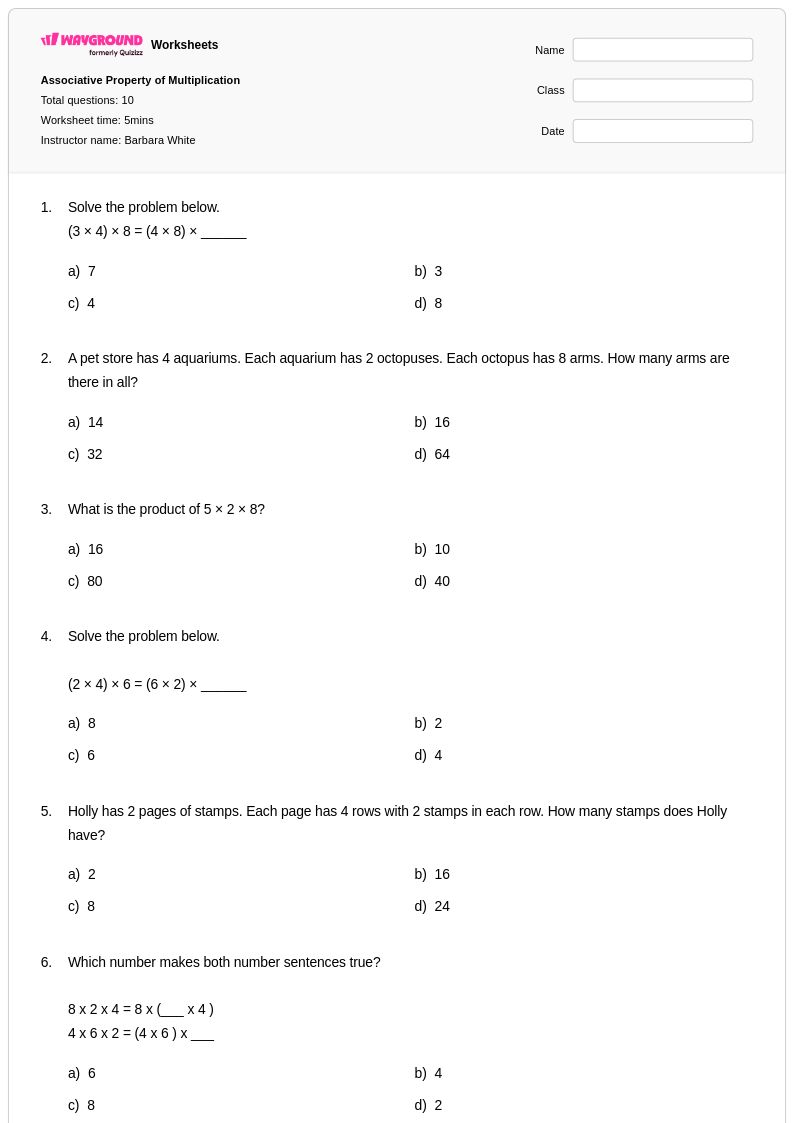
10Q
3rd
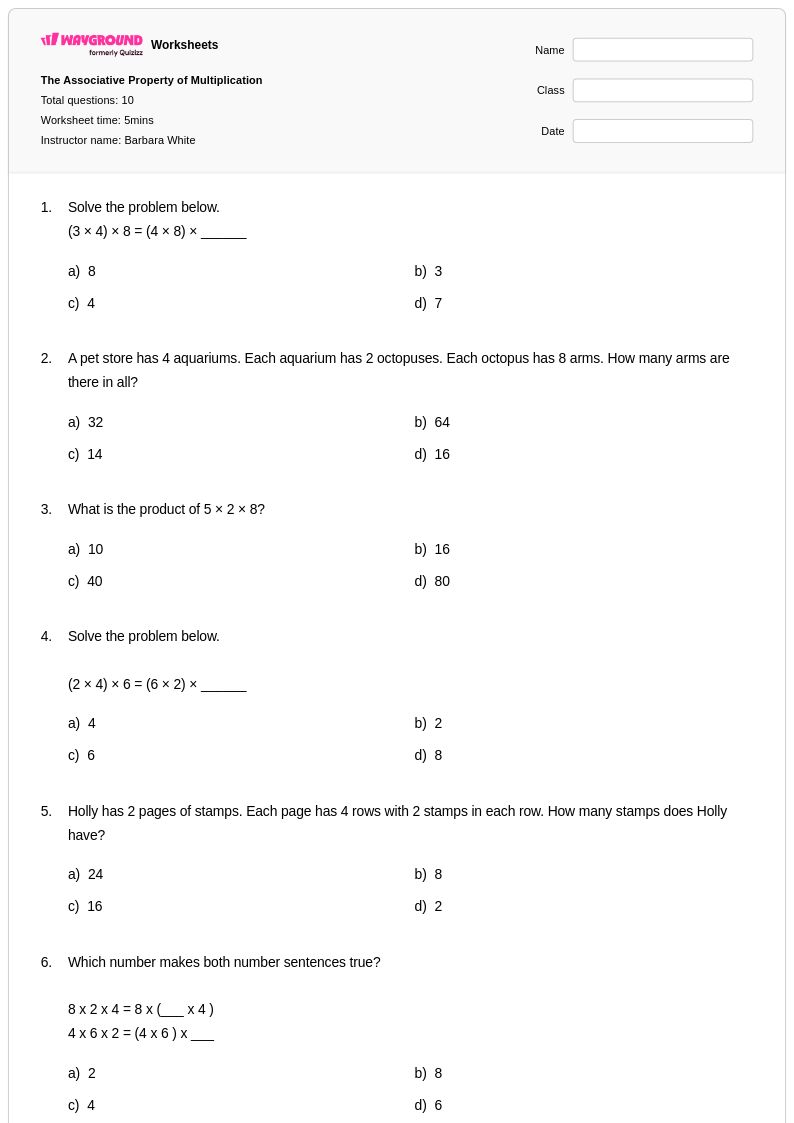
10Q
3rd
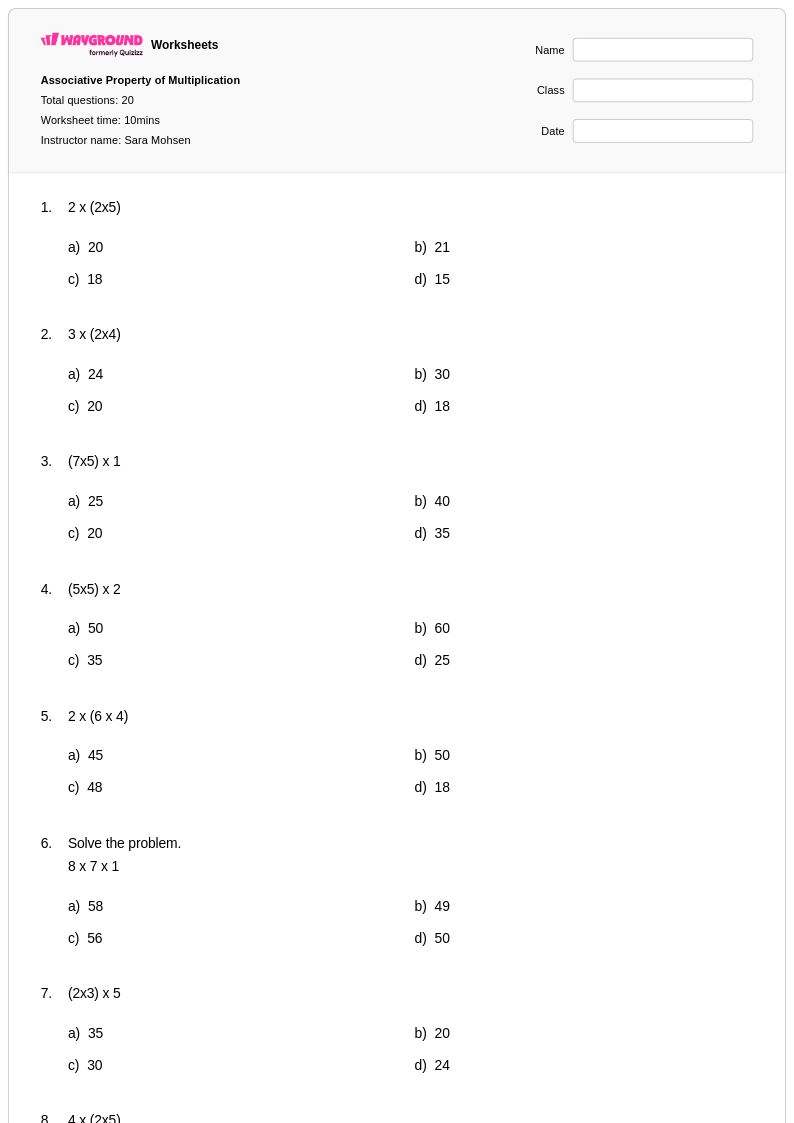
20Q
3rd - 5th
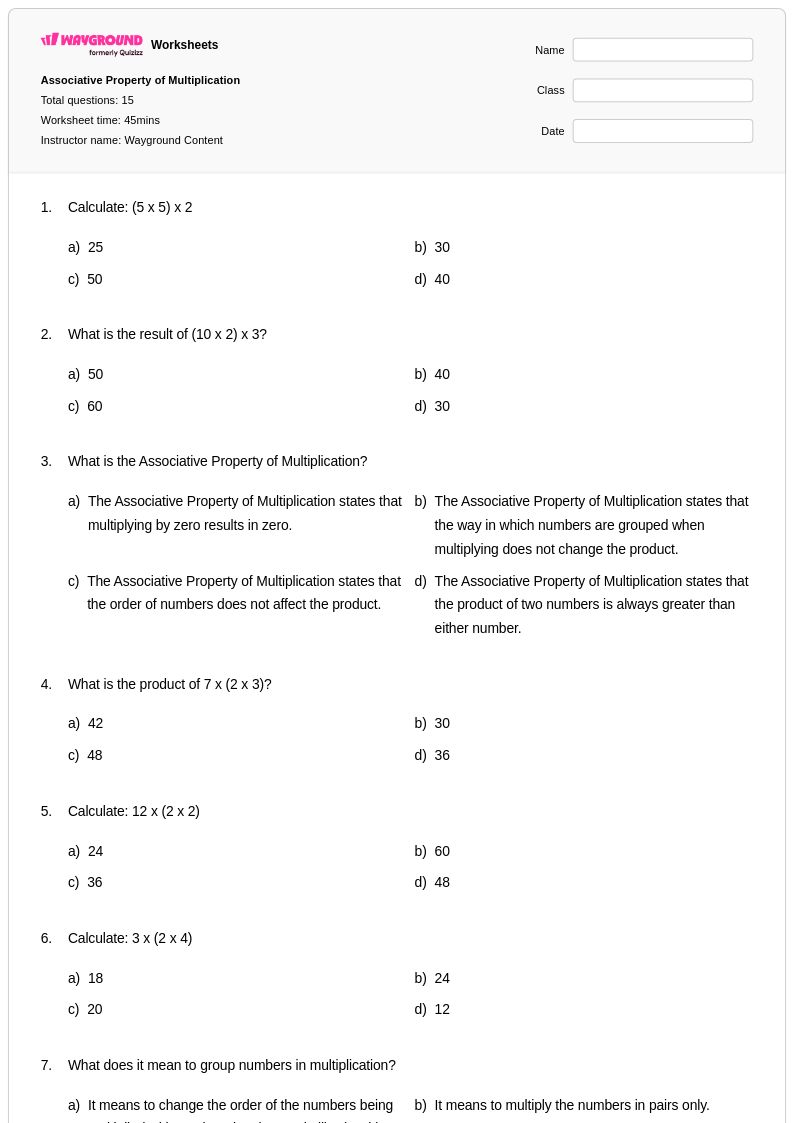
15Q
3rd
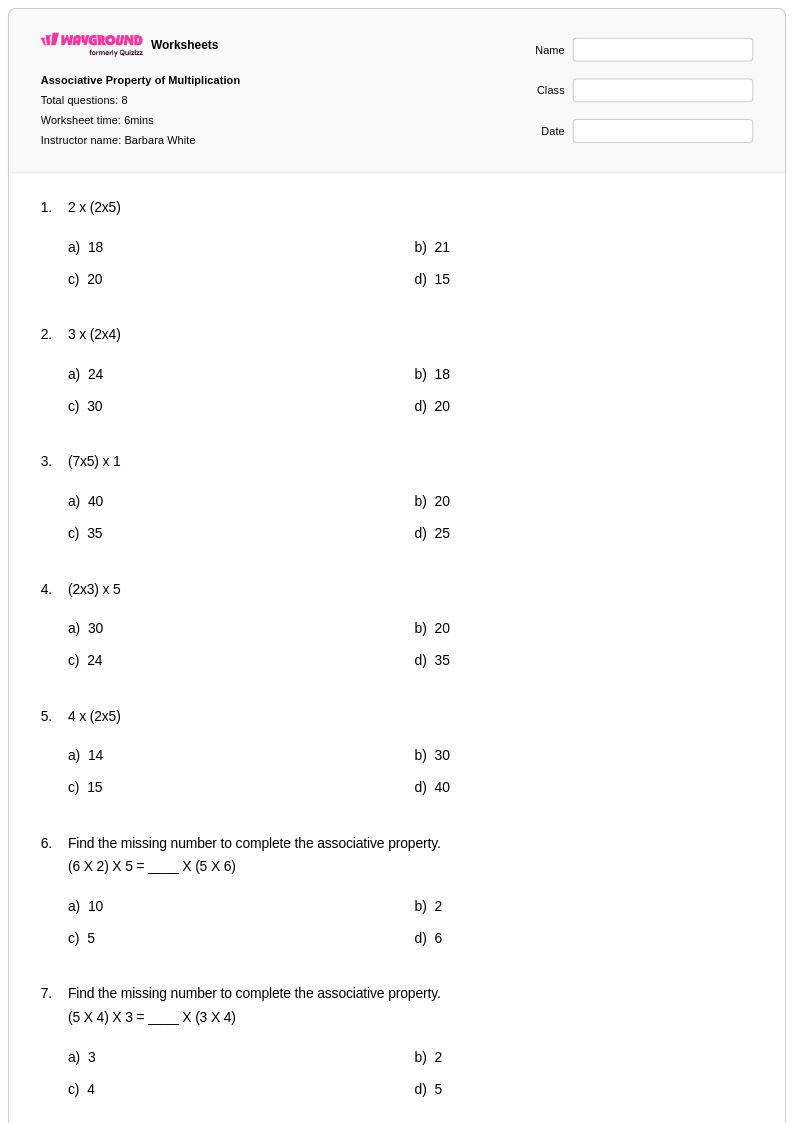
8Q
3rd
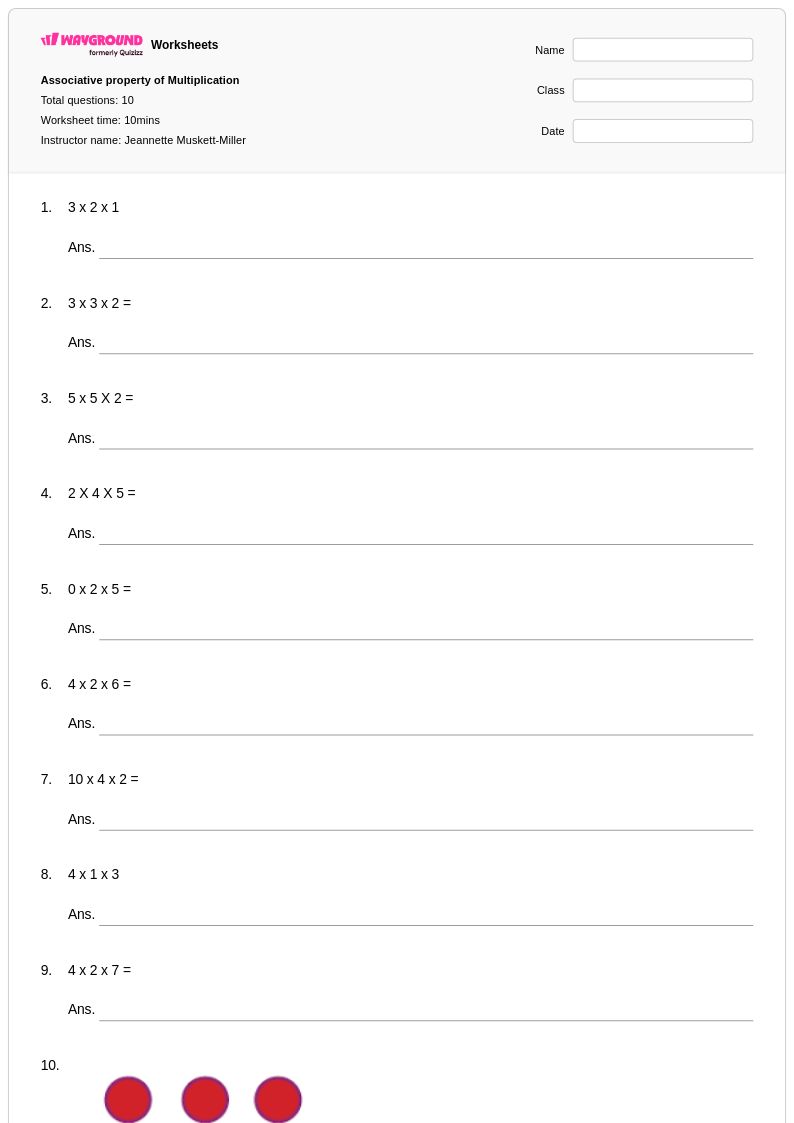
10Q
3rd
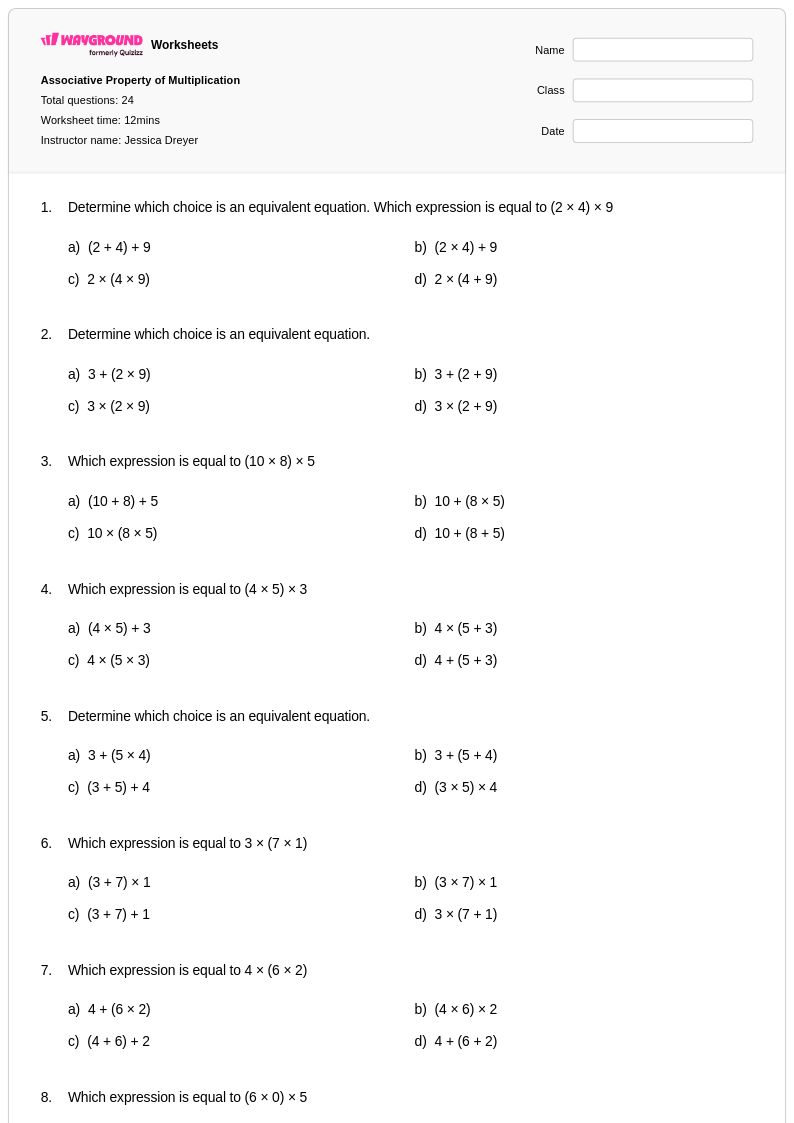
24Q
3rd
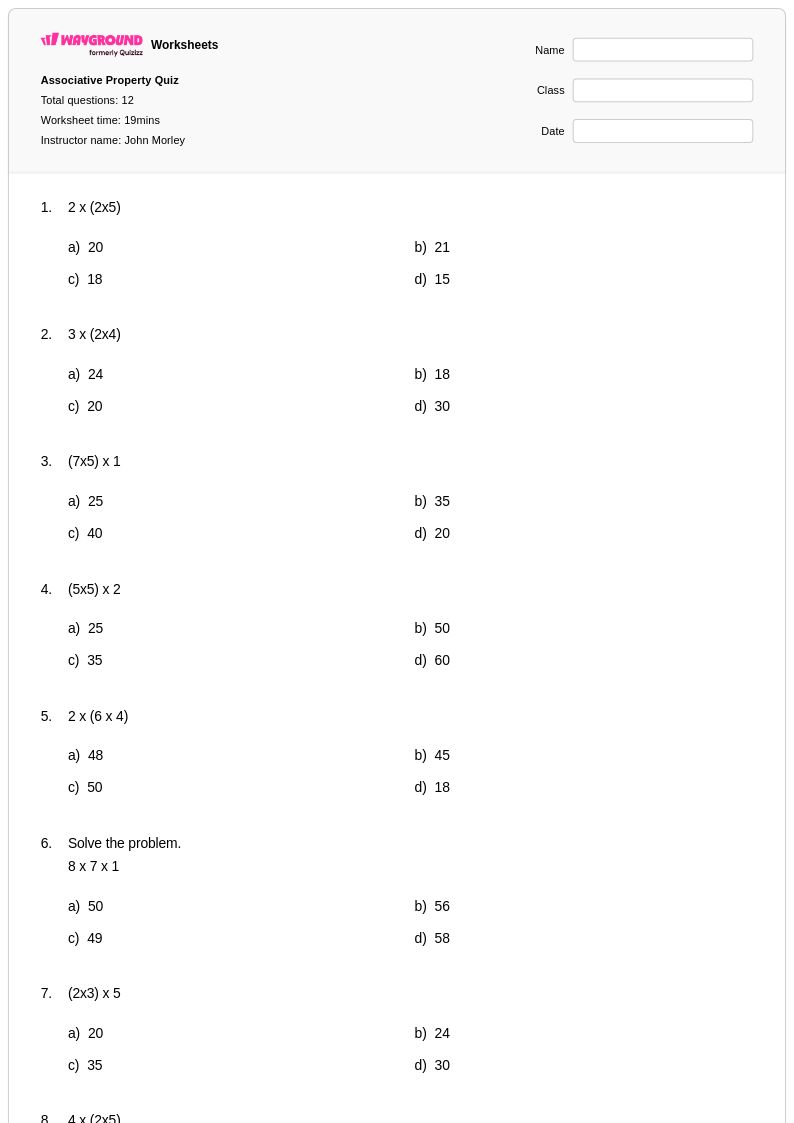
12Q
3rd
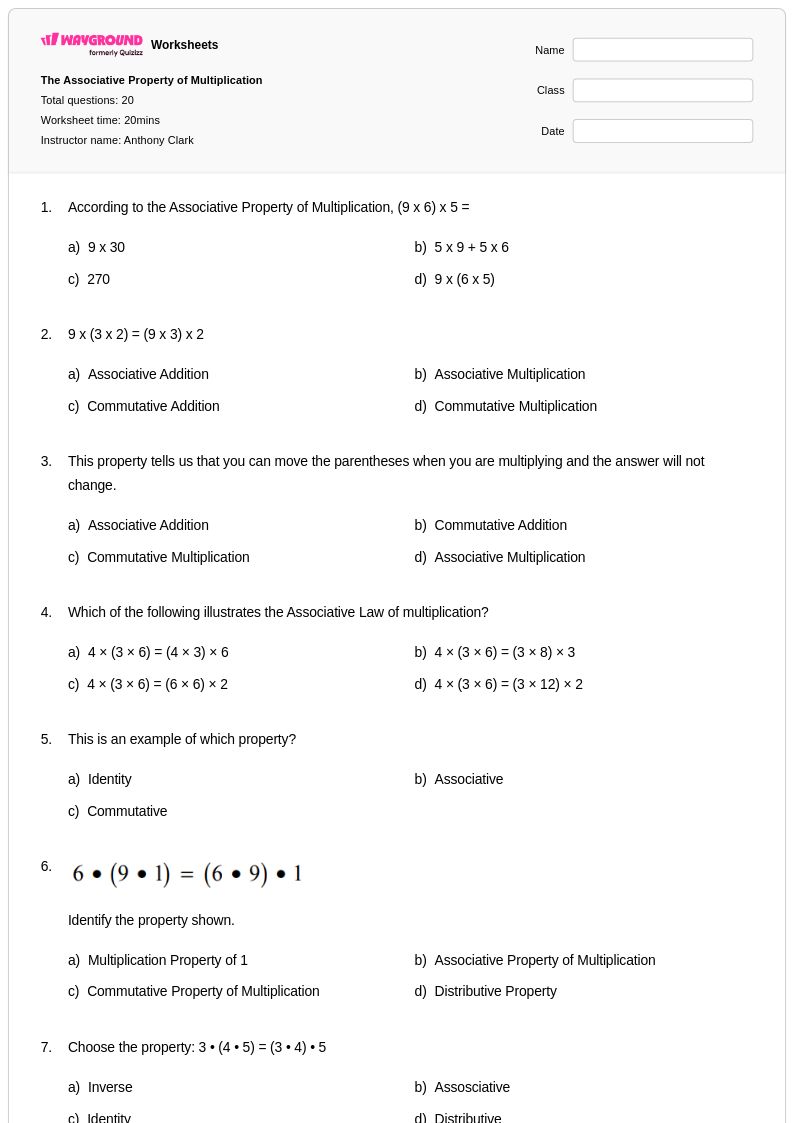
20Q
3rd - Uni
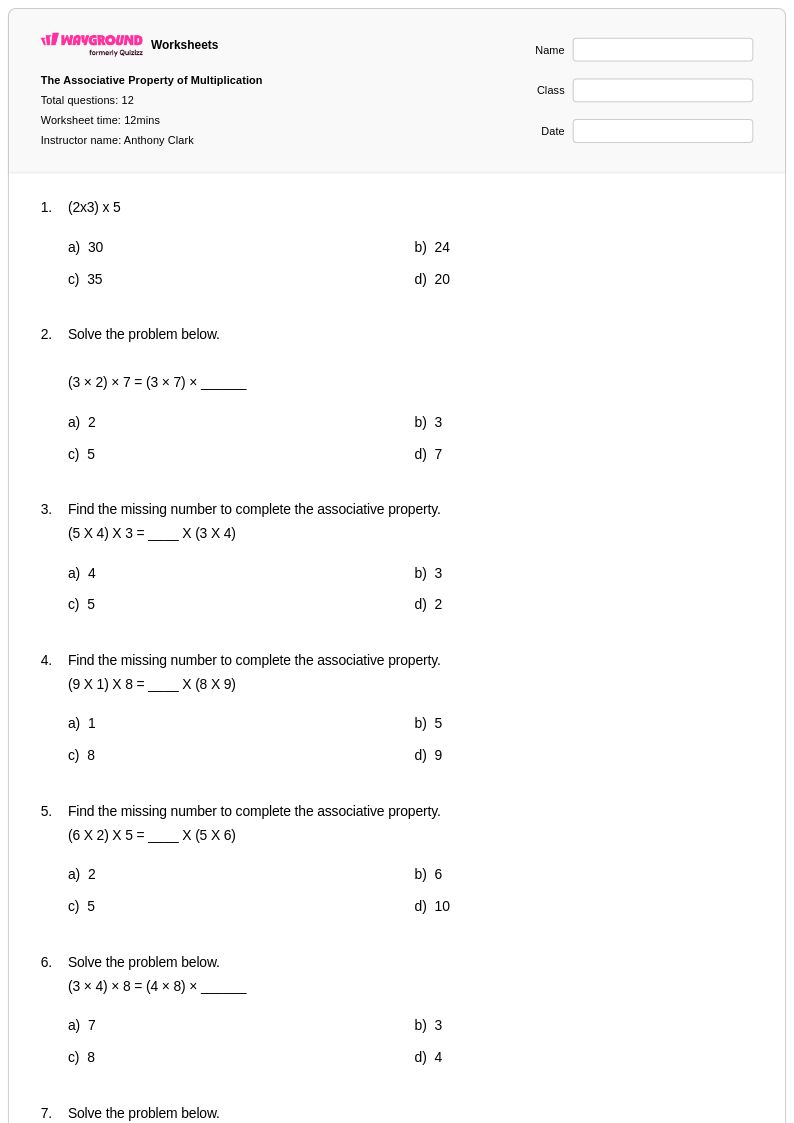
12Q
3rd - Uni
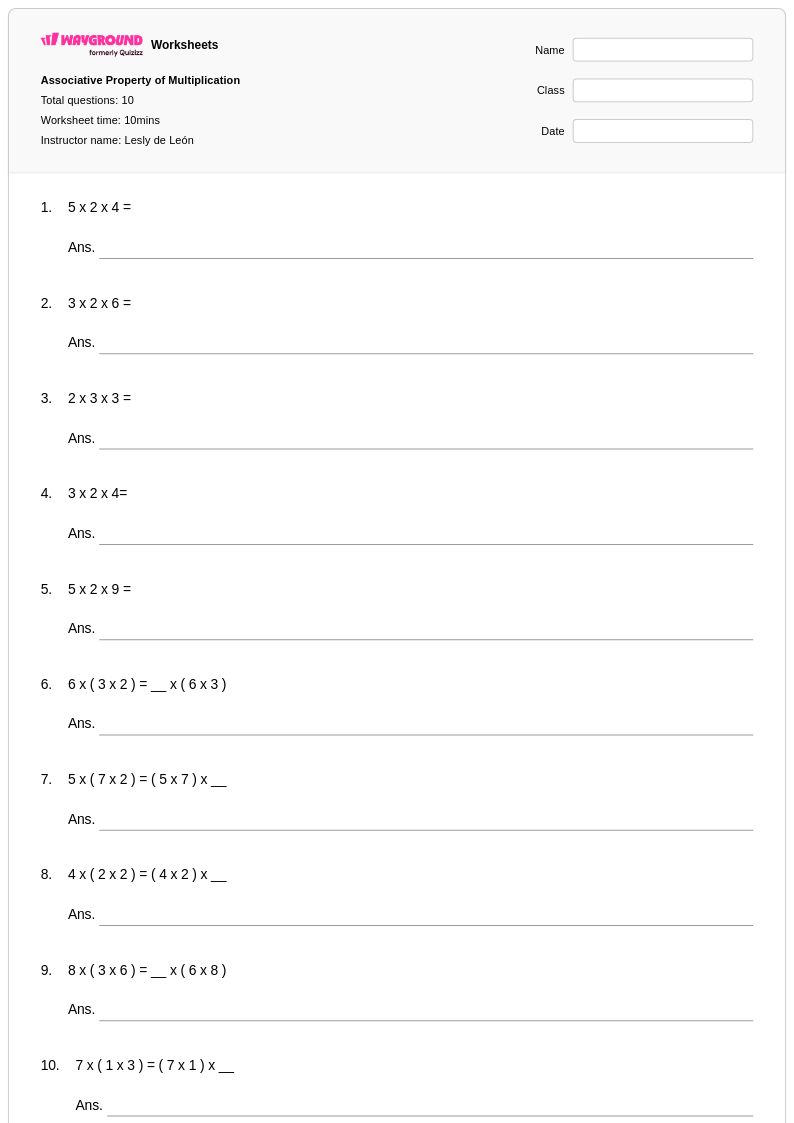
10Q
2nd - 3rd
Explorar Associative Property of Multiplication hojas de trabajo por grados
Explore otras hojas de trabajo de materias para class 3
Explore printable Associative Property of Multiplication worksheets for Class 3
Associative Property of Multiplication worksheets for Class 3 provide essential practice for students learning this fundamental mathematical concept. These comprehensive worksheet collections from Wayground (formerly Quizizz) help young learners understand that when multiplying three or more numbers, the grouping of factors does not change the product, such as recognizing that (2 × 3) × 4 equals 2 × (3 × 4). The worksheets strengthen critical thinking skills through carefully structured practice problems that guide students to discover patterns and develop computational fluency. Each worksheet comes with a complete answer key and is available as free printable pdfs, making them accessible resources for both classroom instruction and independent practice at home.
Wayground (formerly Quizizz) supports Class 3 mathematics educators with an extensive library of millions of teacher-created Associative Property of Multiplication worksheets that streamline lesson planning and differentiated instruction. The platform's robust search and filtering capabilities allow teachers to quickly locate worksheets aligned with specific learning standards and customize content to meet individual student needs. These versatile resources are available in both printable pdf format and interactive digital versions, enabling teachers to seamlessly integrate them into various instructional approaches for skill practice, remediation, and enrichment activities. The comprehensive collection ensures educators have access to high-quality materials that support systematic progression through multiplication concepts while accommodating diverse learning styles and academic levels within their Class 3 classrooms.