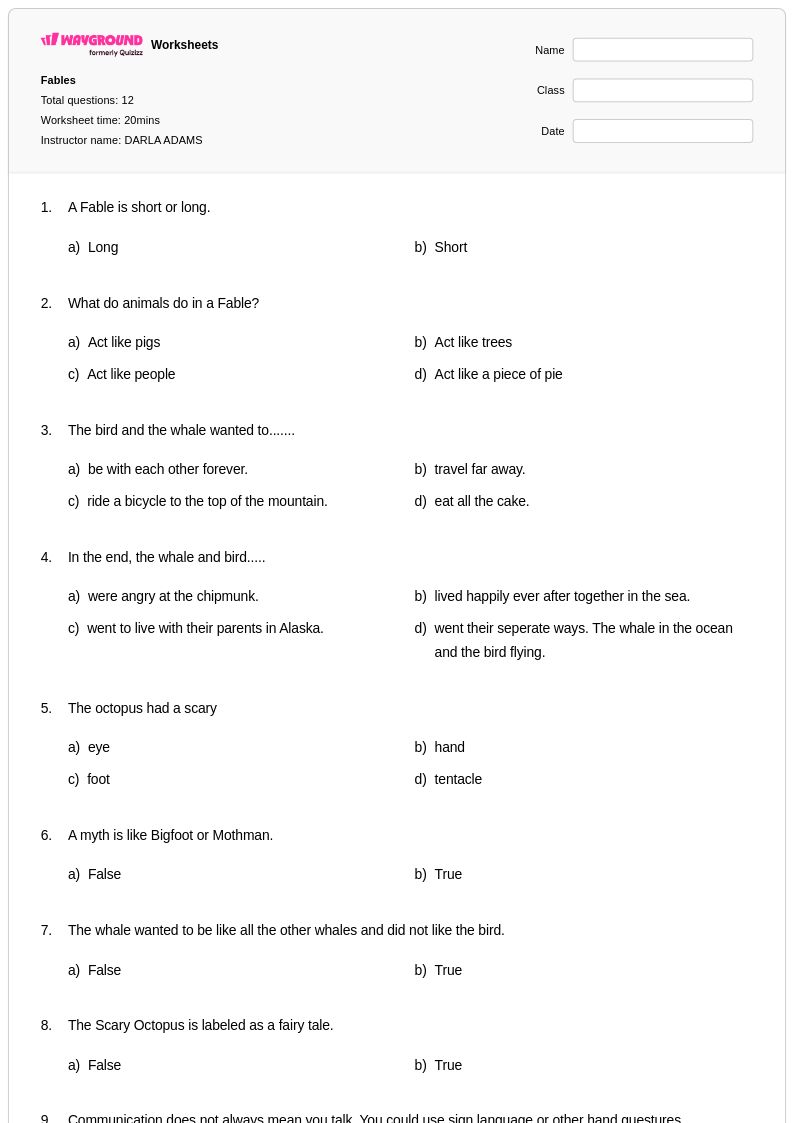
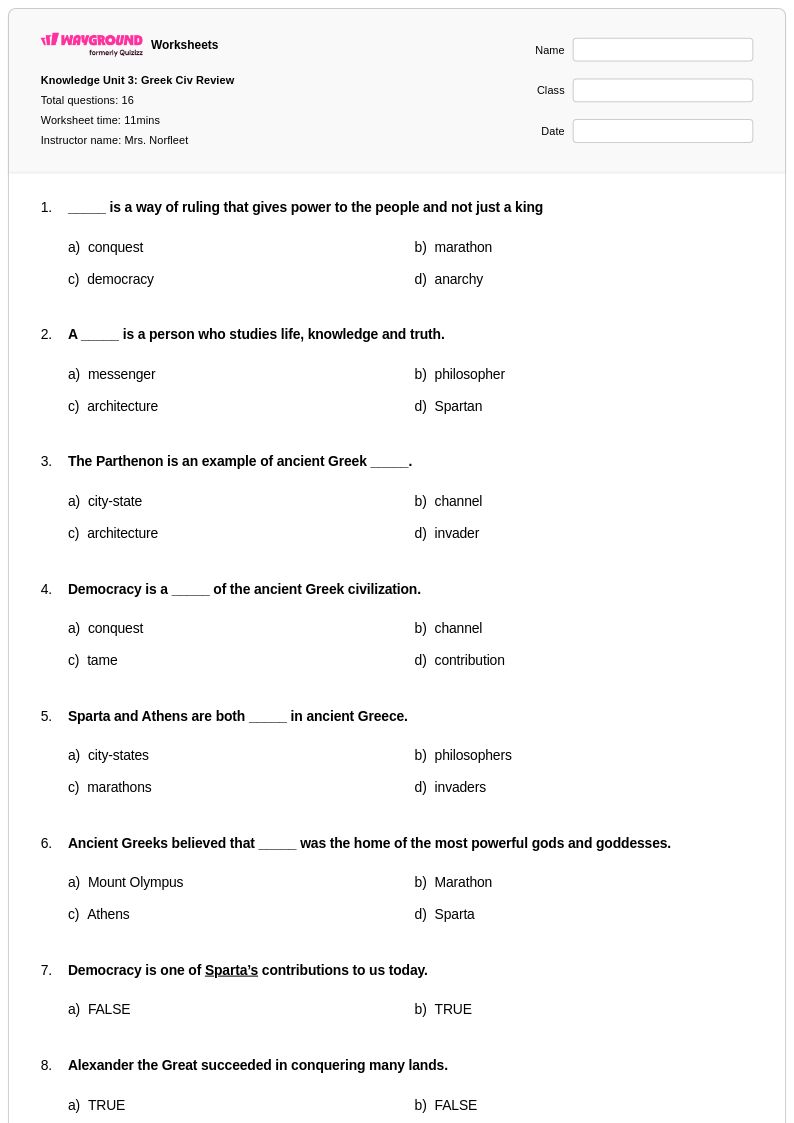
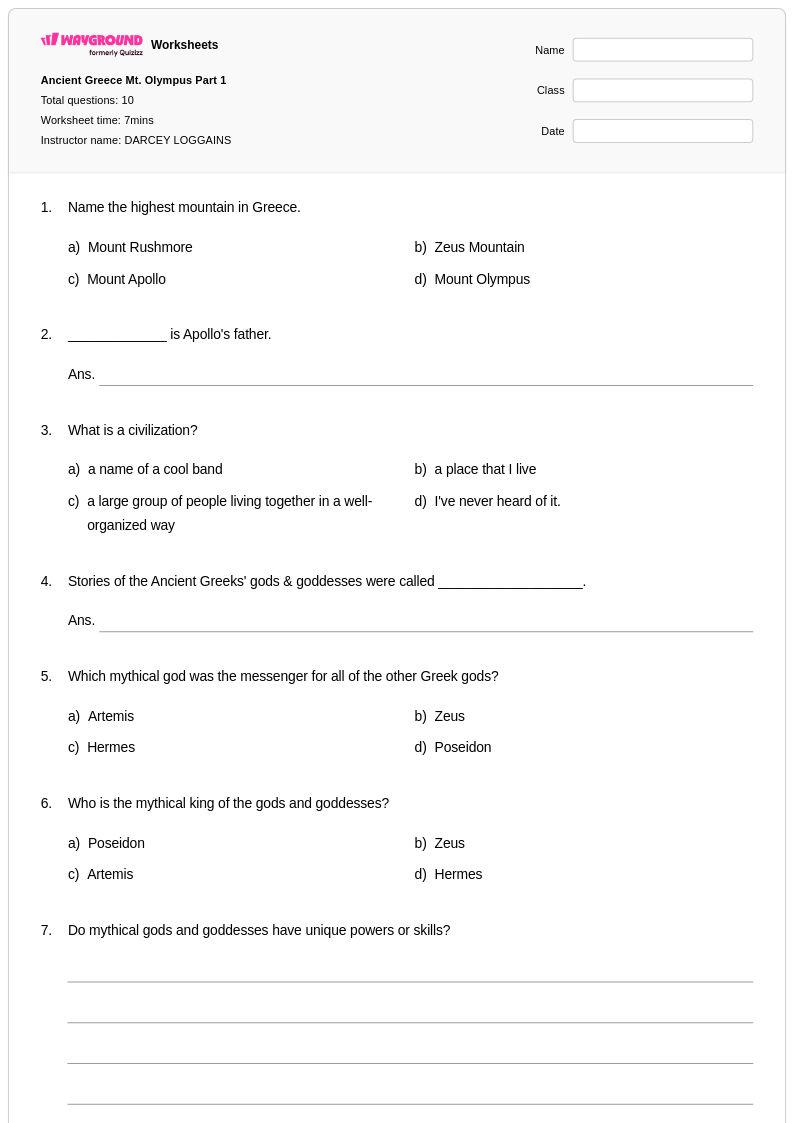
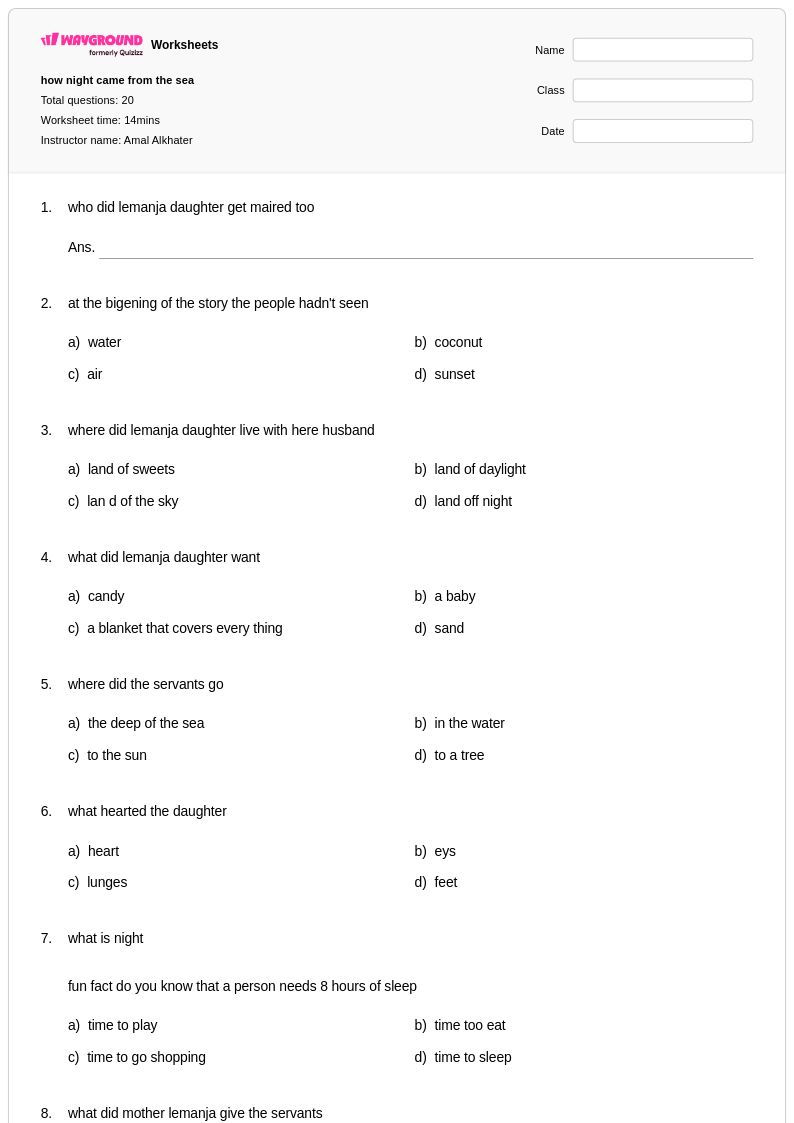
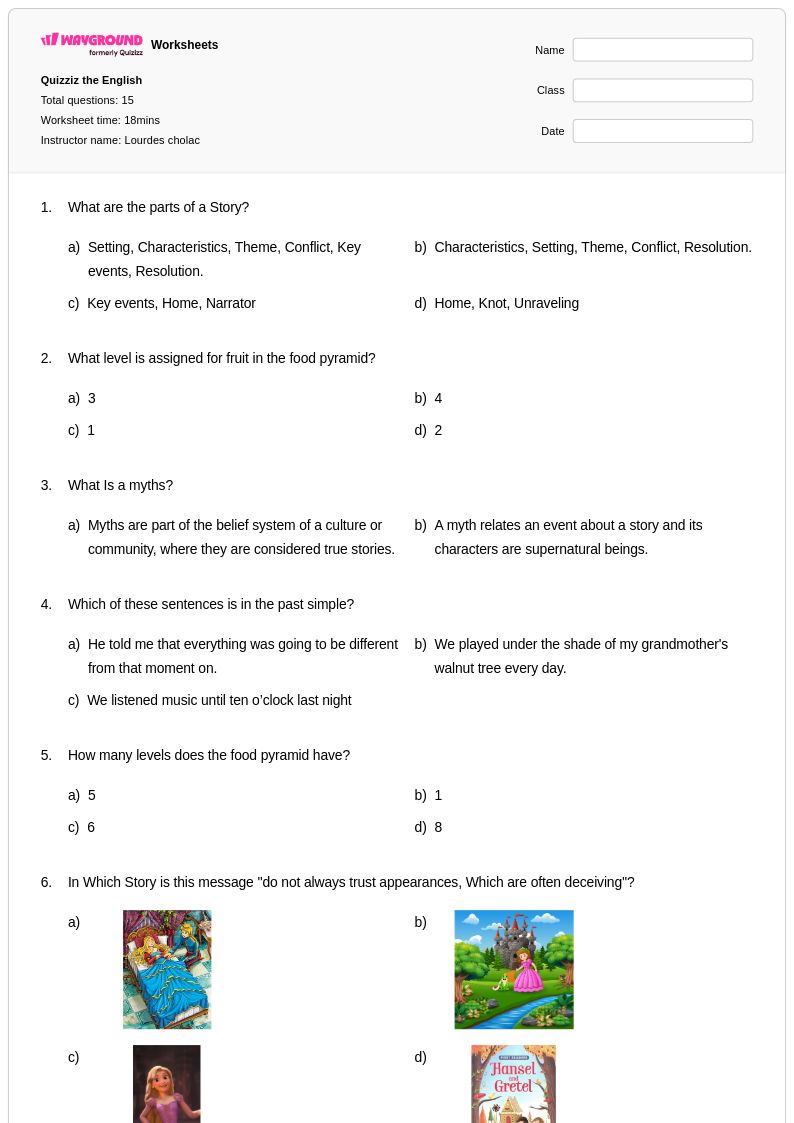
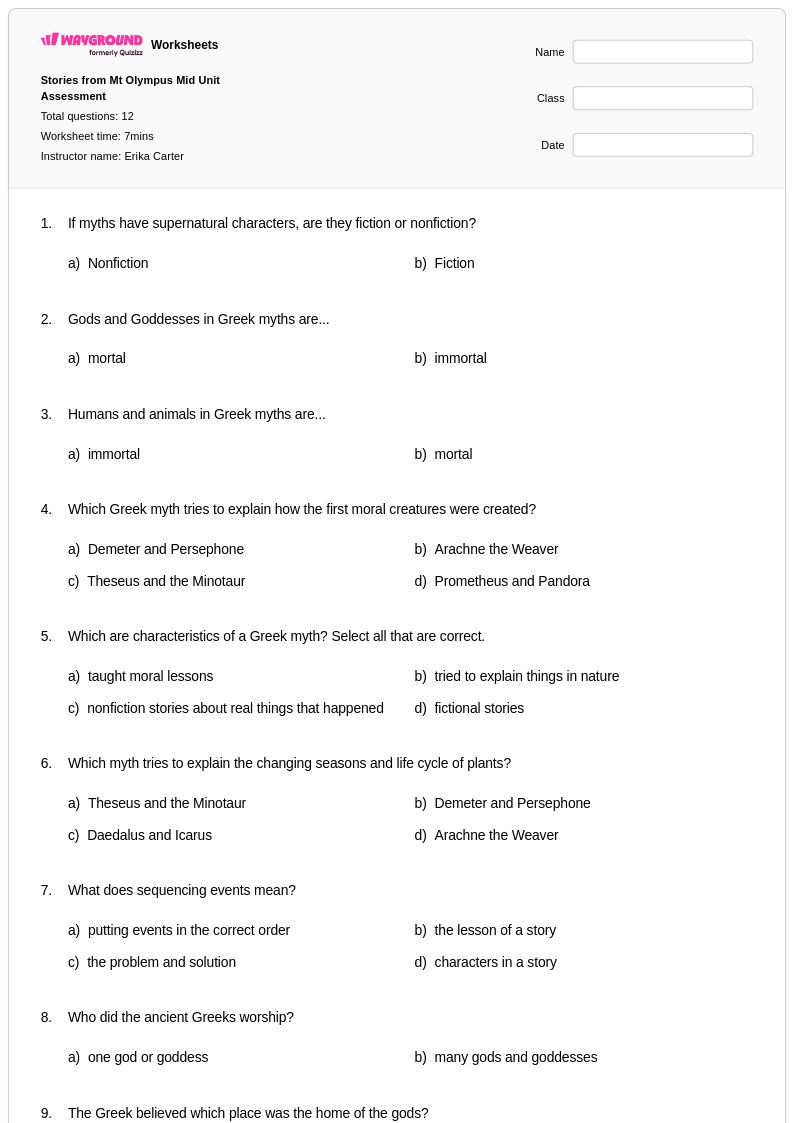
Discover Class 2 myths worksheets and printables from Wayground that help students explore legendary stories and characters while developing reading comprehension skills through engaging practice problems with answer keys.
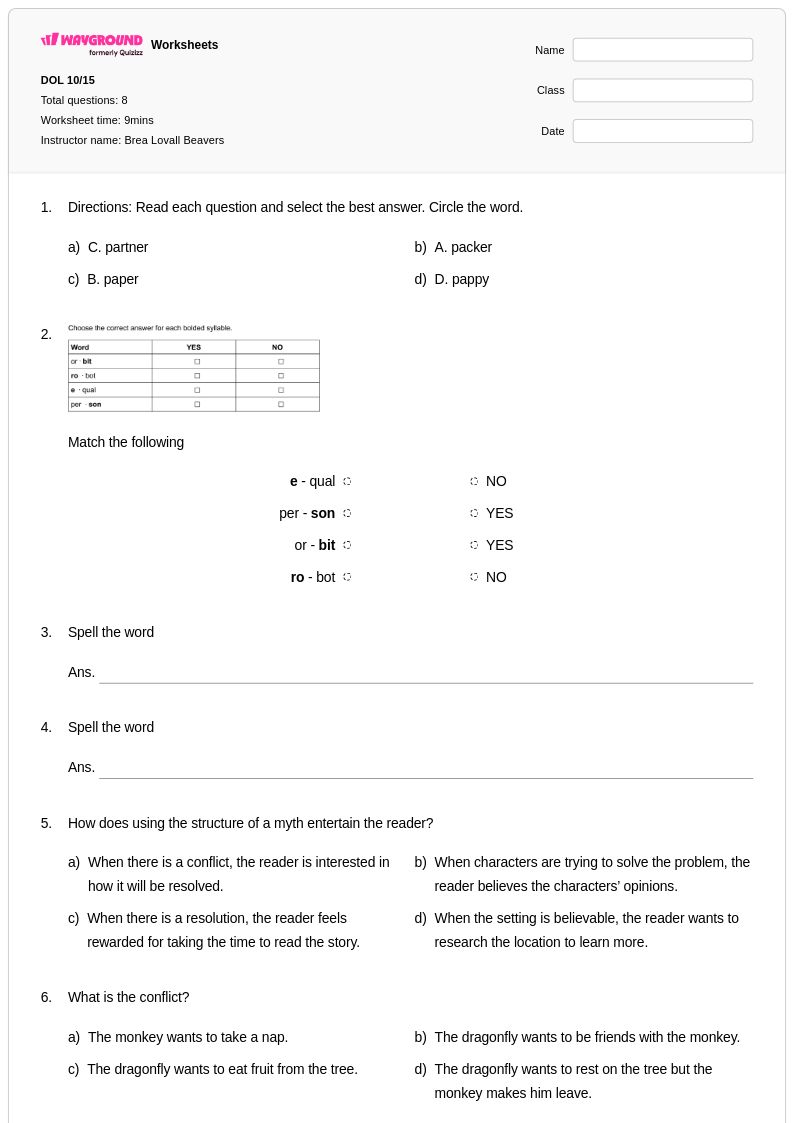
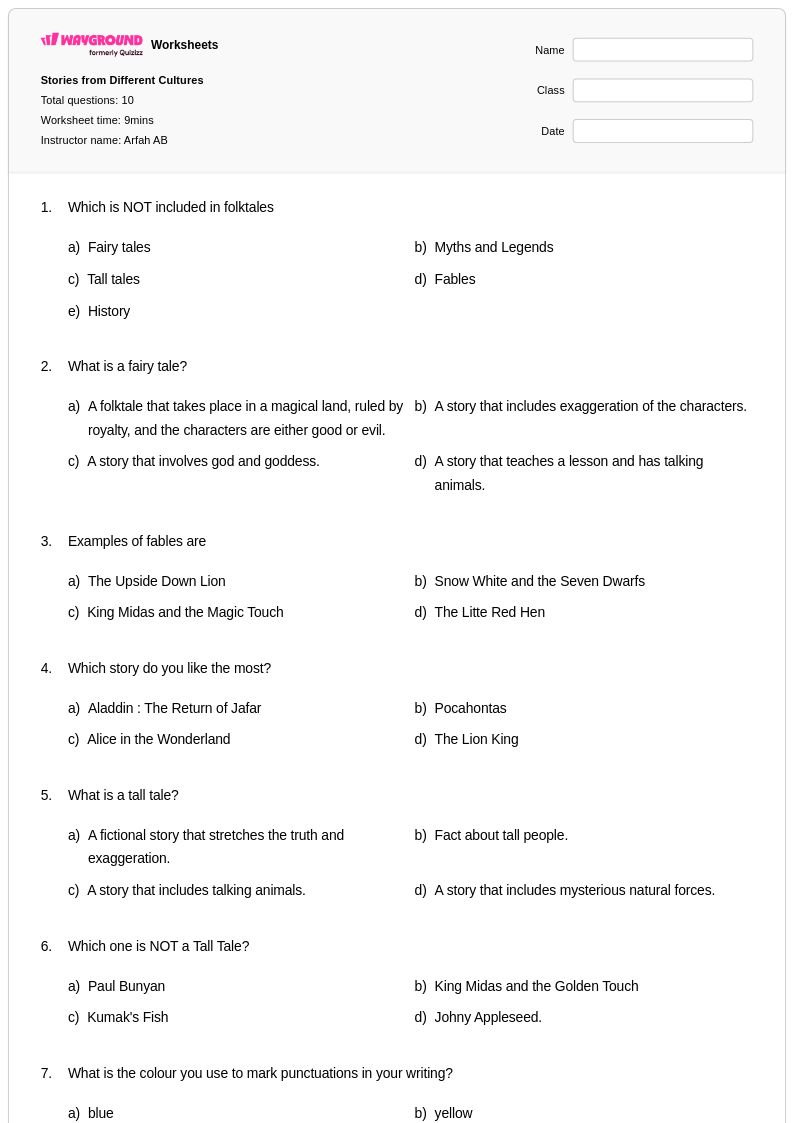
Myths worksheets for Class 2 students available through Wayground (formerly Quizizz) provide young learners with engaging opportunities to explore ancient stories and legendary tales that have shaped cultures worldwide. These carefully designed educational resources strengthen critical reading comprehension skills while introducing second graders to the unique characteristics of mythological literature, including magical elements, heroic characters, and moral lessons. Students develop their ability to identify story elements, sequence events, and understand cause-and-effect relationships through practice problems that feature age-appropriate myths from various cultures. Each worksheet collection includes comprehensive answer keys and is available as free printables in convenient PDF format, allowing educators to seamlessly integrate myth-based learning into their reading instruction while building students' cultural literacy and analytical thinking skills.
Wayground (formerly Quizizz) empowers teachers with an extensive library of millions of teacher-created myth worksheets specifically designed for Class 2 reading instruction. The platform's robust search and filtering capabilities enable educators to quickly locate resources that align with curriculum standards and match their students' specific learning needs. Teachers can easily differentiate instruction by selecting from various difficulty levels and customize worksheets to address individual student requirements, whether for remediation, enrichment, or regular skill practice. Available in both printable PDF format and interactive digital versions, these myth-focused materials support flexible lesson planning and can be seamlessly integrated into classroom instruction, independent work time, or homework assignments, ensuring that every second-grade student has access to high-quality practice materials that make exploring mythological literature both educational and enjoyable.
FAQs
How do I teach mythology to students who have no background in it?
Start by grounding students in the purpose myths served for ancient cultures, such as explaining natural phenomena, passing down moral codes, and establishing cultural identity. Introduce a single well-known myth, like a Greek creation story, and use it to identify recurring elements: archetypal characters, symbolic themes, and a narrative conflict with cultural stakes. Once students can name these features in a familiar text, they are better equipped to transfer that analysis to myths from other civilizations.
What reading comprehension skills do mythology worksheets help students practice?
Mythology worksheets target several layered comprehension skills, including identifying story structure, analyzing character archetypes, interpreting symbolic themes, and drawing inferences about cultural values from textual evidence. Because myths often carry meaning on both a literal and symbolic level, they are especially effective for pushing students beyond surface-level reading toward deeper interpretive thinking. Worksheets that ask students to compare creation stories across cultures also build skills in synthesis and cross-textual analysis.
What mistakes do students commonly make when analyzing myths?
The most common error is treating myths as simple stories rather than culturally embedded texts, which causes students to summarize plot instead of analyzing meaning. Students also frequently conflate myths from different cultures, such as mixing Greek and Roman traditions, without recognizing the distinct values each reflects. Another persistent misconception is assuming that symbolic elements, like a hero's journey or a trickster figure, are coincidental rather than archetypal patterns that appear intentionally across world mythologies.
How can I use mythology worksheets to compare creation stories from different cultures?
Use structured comparison worksheets that ask students to identify parallel elements across two or more creation myths, such as the role of chaos, divine figures, and the origin of humanity. Graphic organizers work well here because they make structural similarities and cultural differences visible side by side. After completing the comparison, prompt students to write a short analysis explaining what each culture's creation story reveals about its values, which moves the exercise from identification to interpretation.
How do I differentiate mythology instruction for students reading below grade level?
For below-grade readers, prioritize shorter myth excerpts with accessible vocabulary and pair them with scaffolded questions that build from literal comprehension toward inference. On Wayground, teachers can enable Read Aloud so audio support is available for students who need it, and Reduced Answer Choices can lower cognitive load on multiple-choice questions without changing the content standard. These accommodations can be applied to individual students while the rest of the class receives default settings, keeping differentiation discreet and manageable.
How do I use Wayground's myths worksheets in my classroom?
Wayground's myths worksheets are available as printable PDFs for traditional classroom use and in digital formats for technology-integrated environments, giving teachers flexibility depending on their instructional setup. Teachers can also host the worksheets as a live or assigned quiz directly on Wayground, which enables real-time tracking of student responses and automatic scoring. Each worksheet includes a complete answer key, making them practical for both guided instruction and independent practice or homework.