
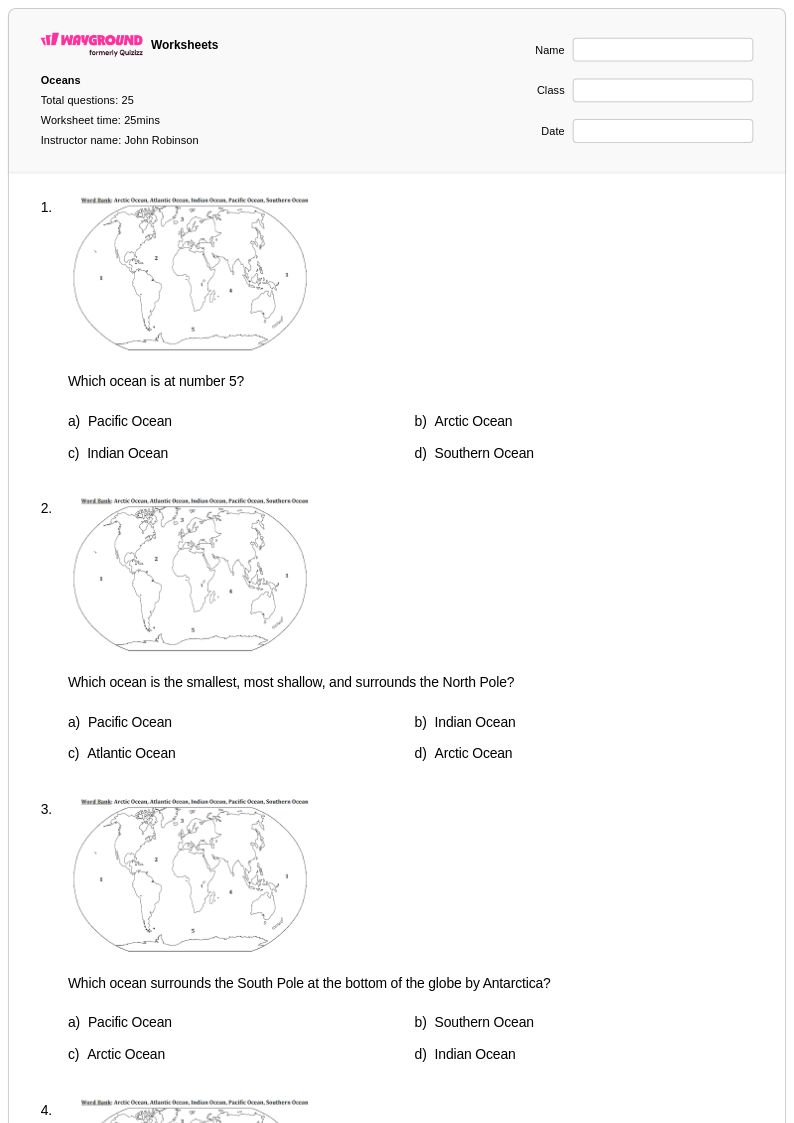
25 Q
3rd - Uni
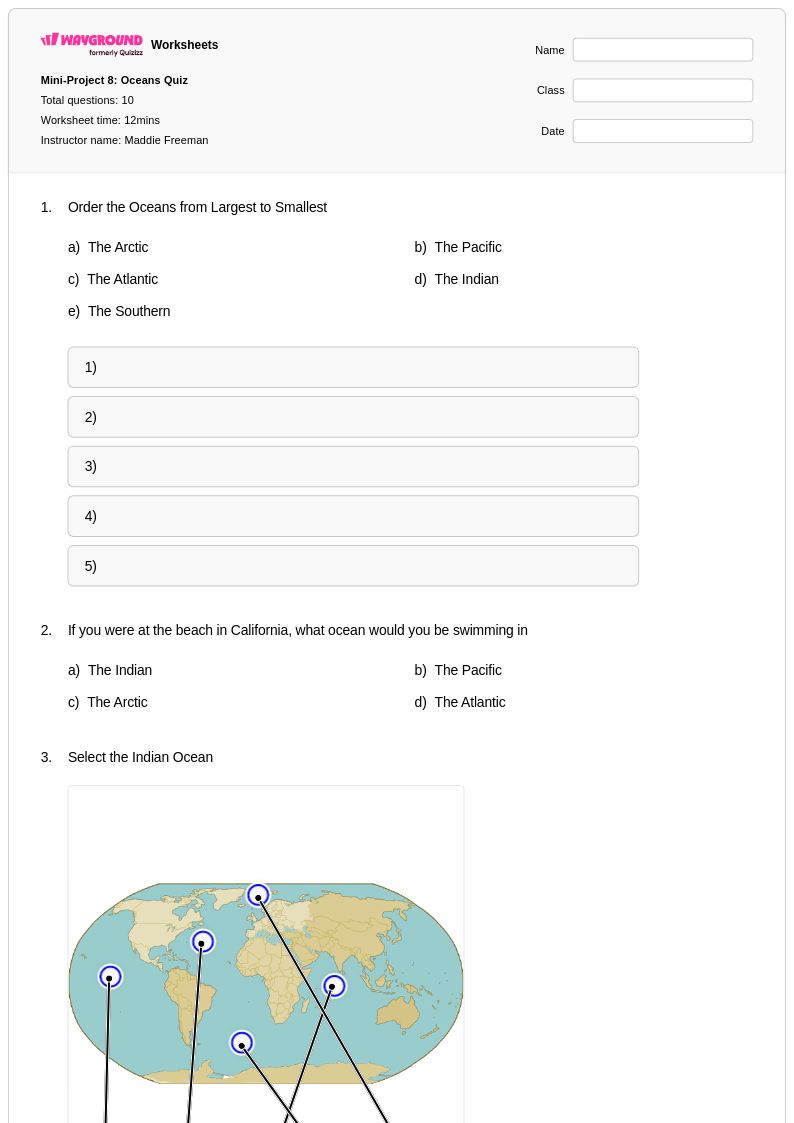
10 Q
2nd
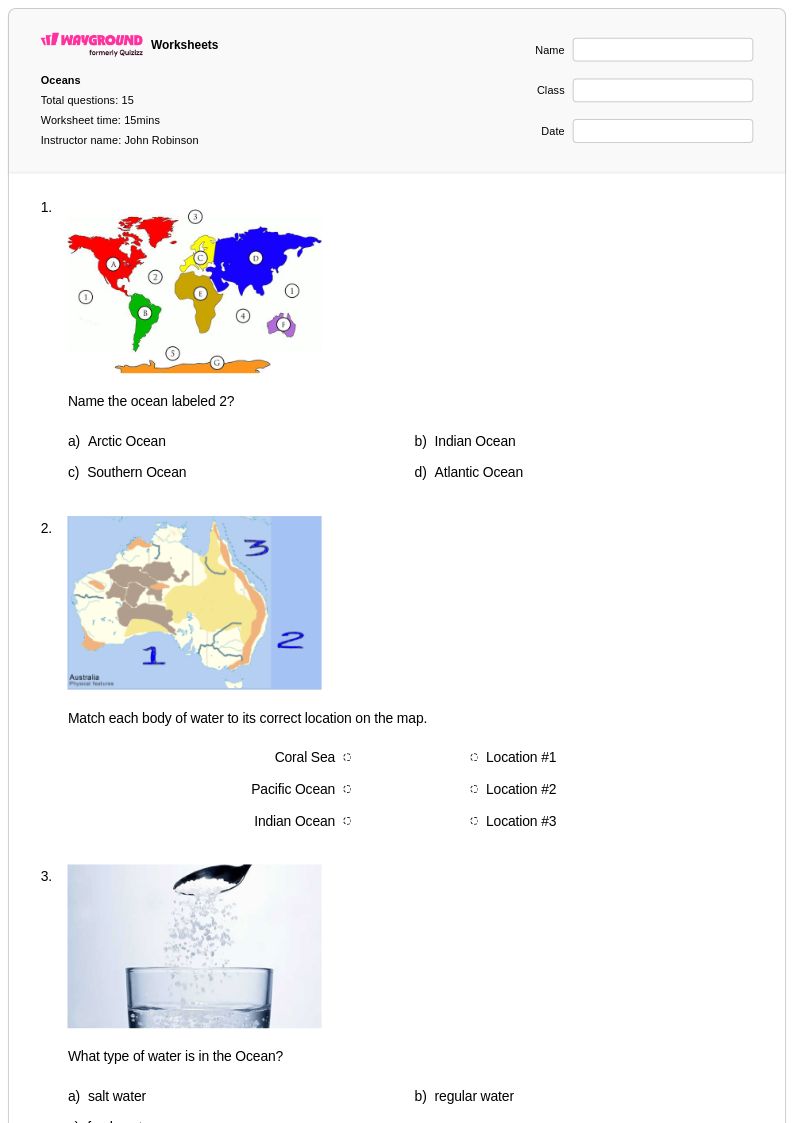
15 Q
4th - Uni
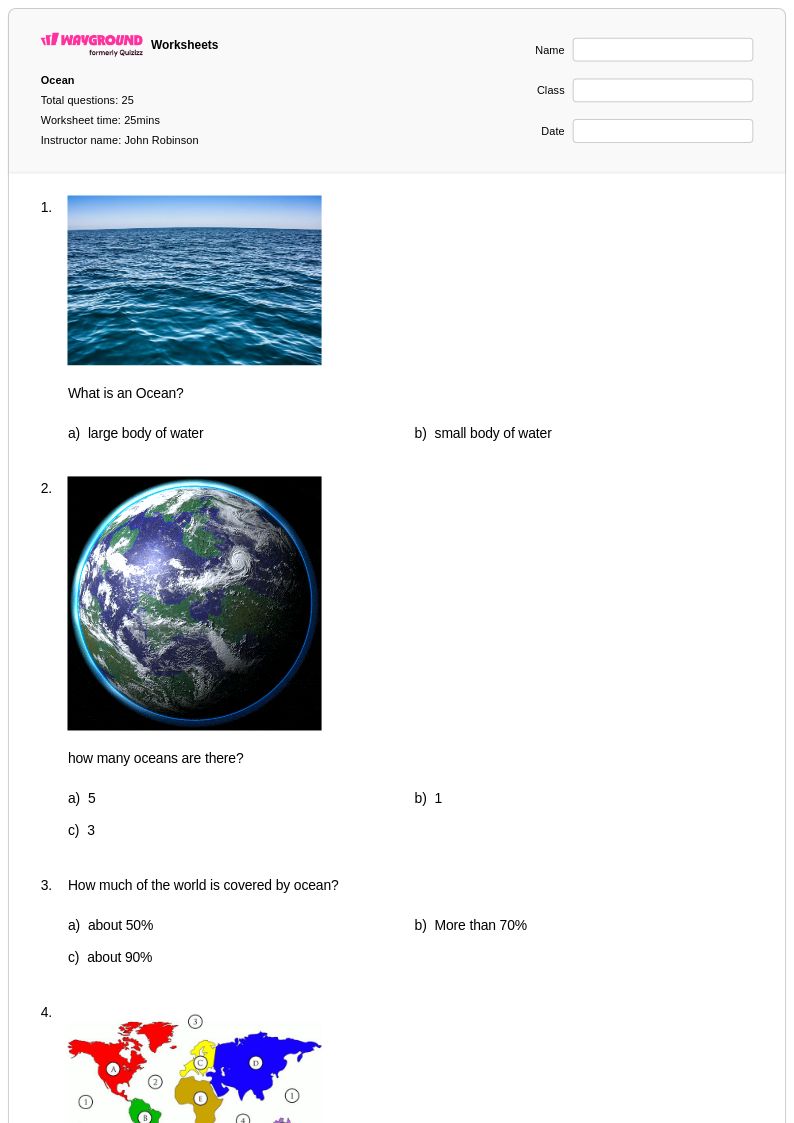
25 Q
4th - Uni
36 Q
7th
10 Q
3rd - 5th
13 Q
7th
12 Q
5th
20 Q
4th
17 Q
6th
7 Q
6th
11 Q
3rd
7 Q
3rd - 11th
22 Q
3rd
22 Q
7th
24 Q
1st - 5th
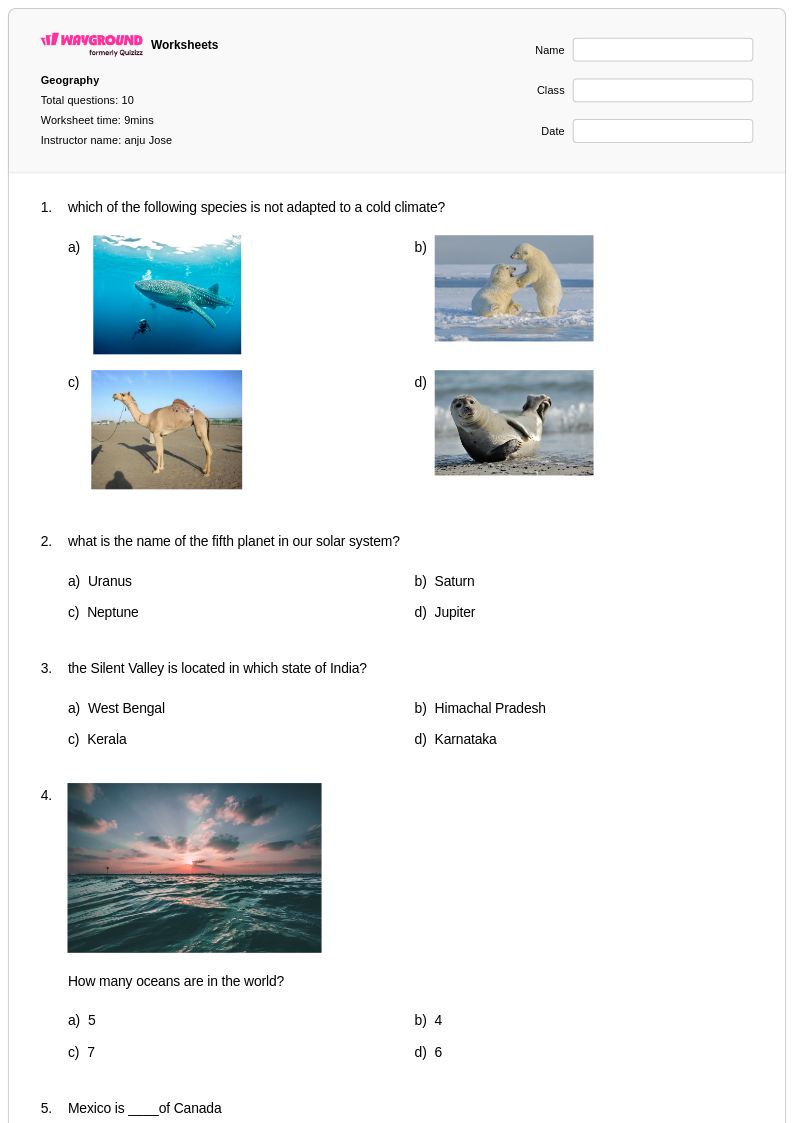
10 Q
8th
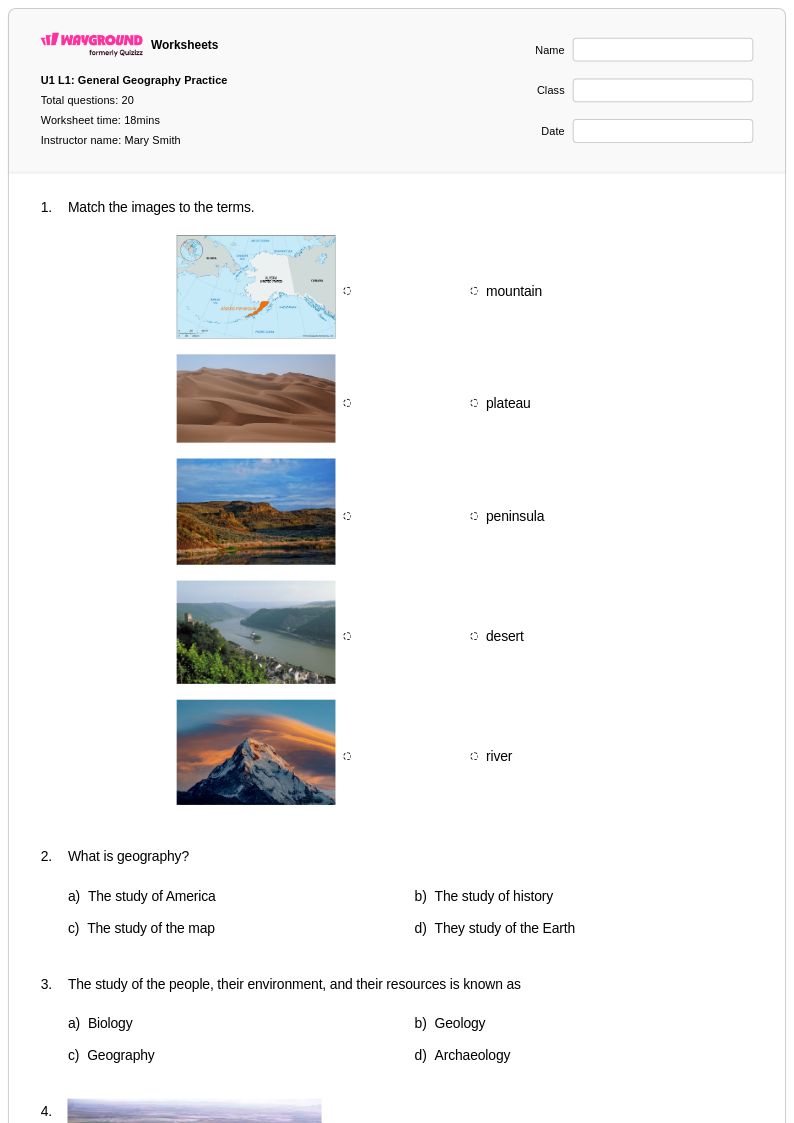
20 Q
7th
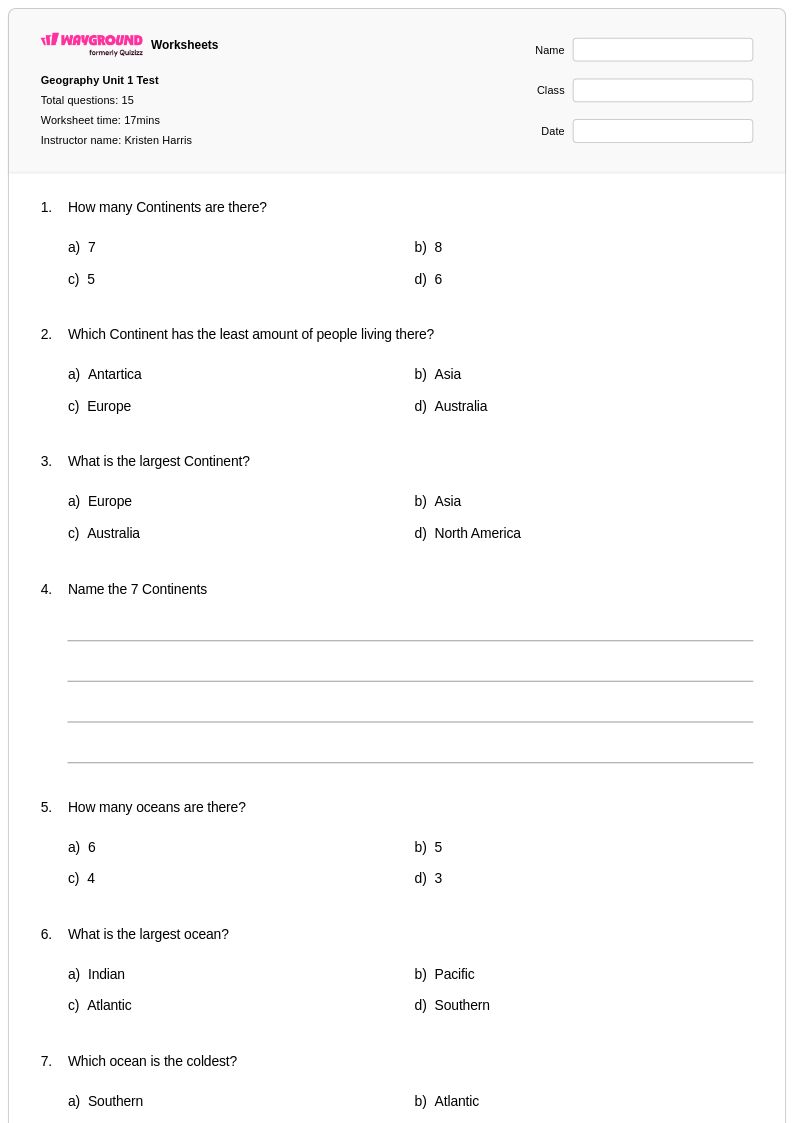
15 Q
2nd
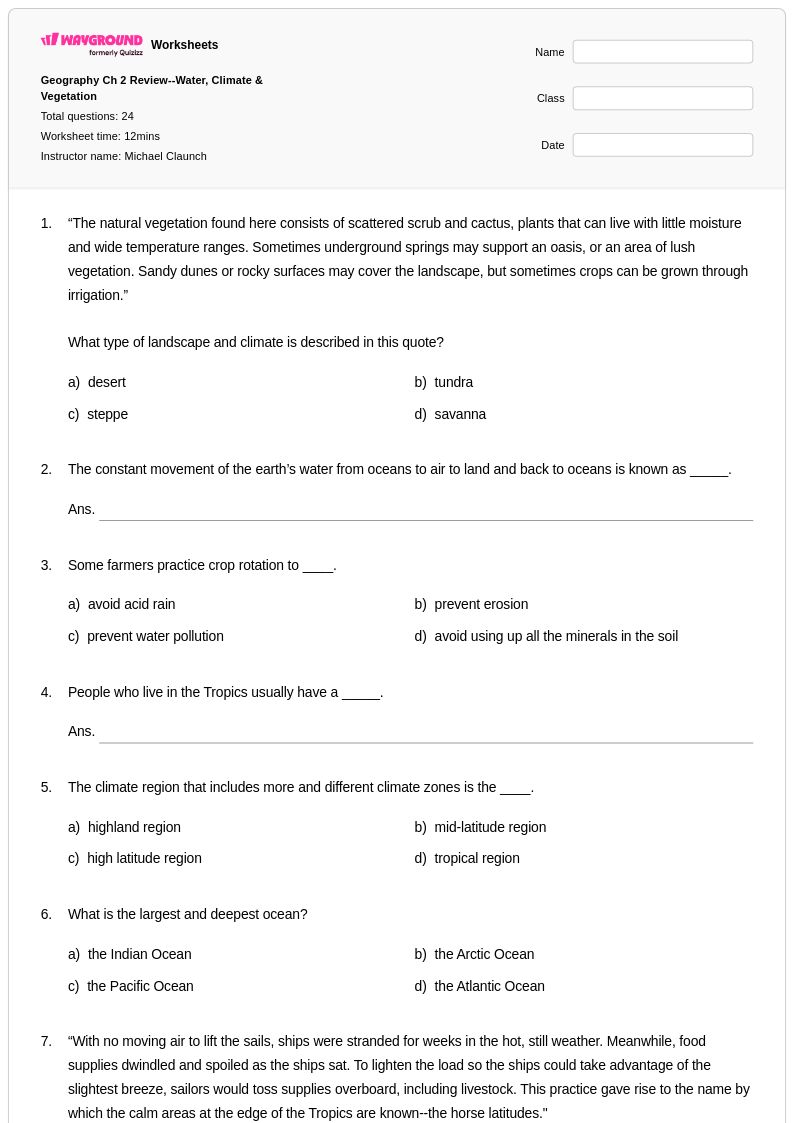
24 Q
7th
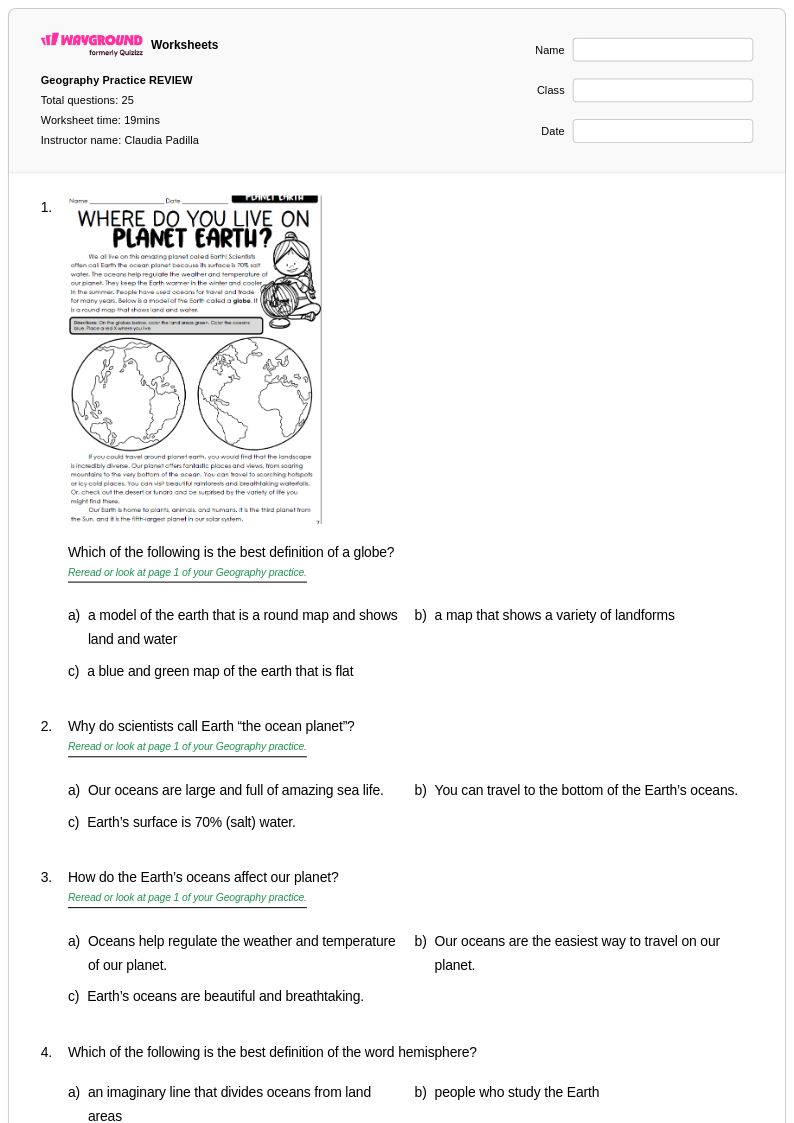
25 Q
7th
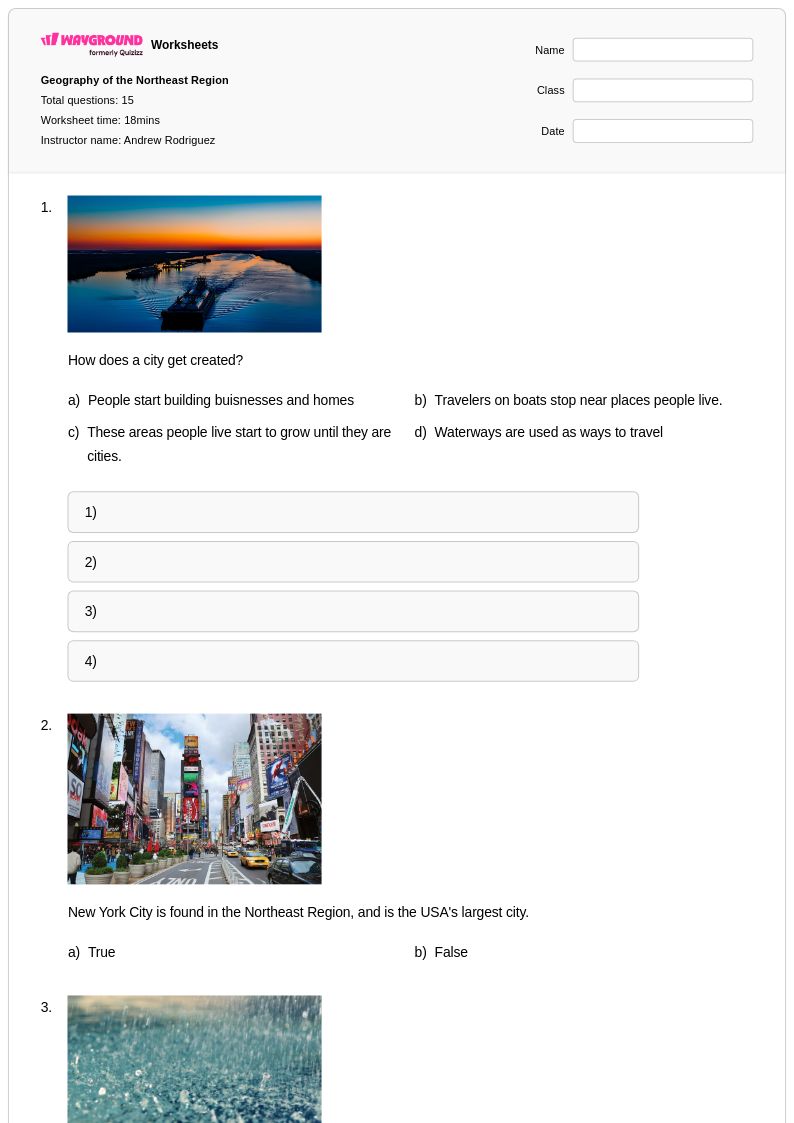
15 Q
4th
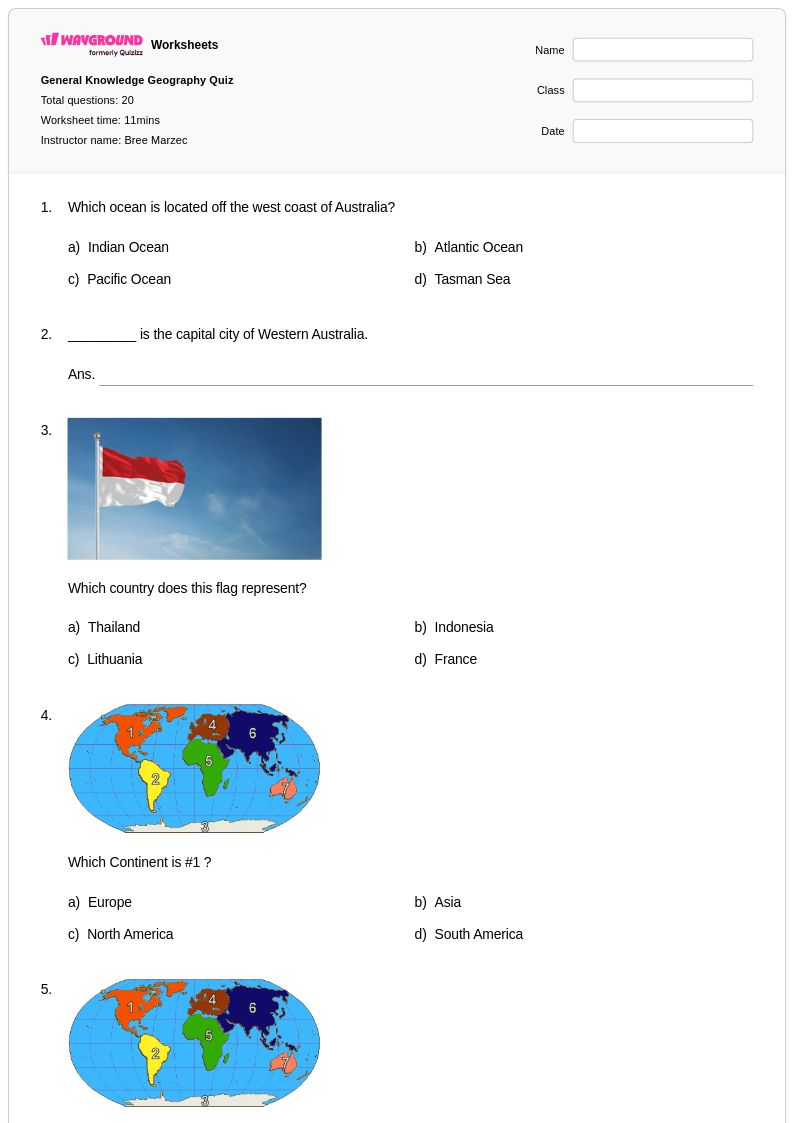
20 Q
7th
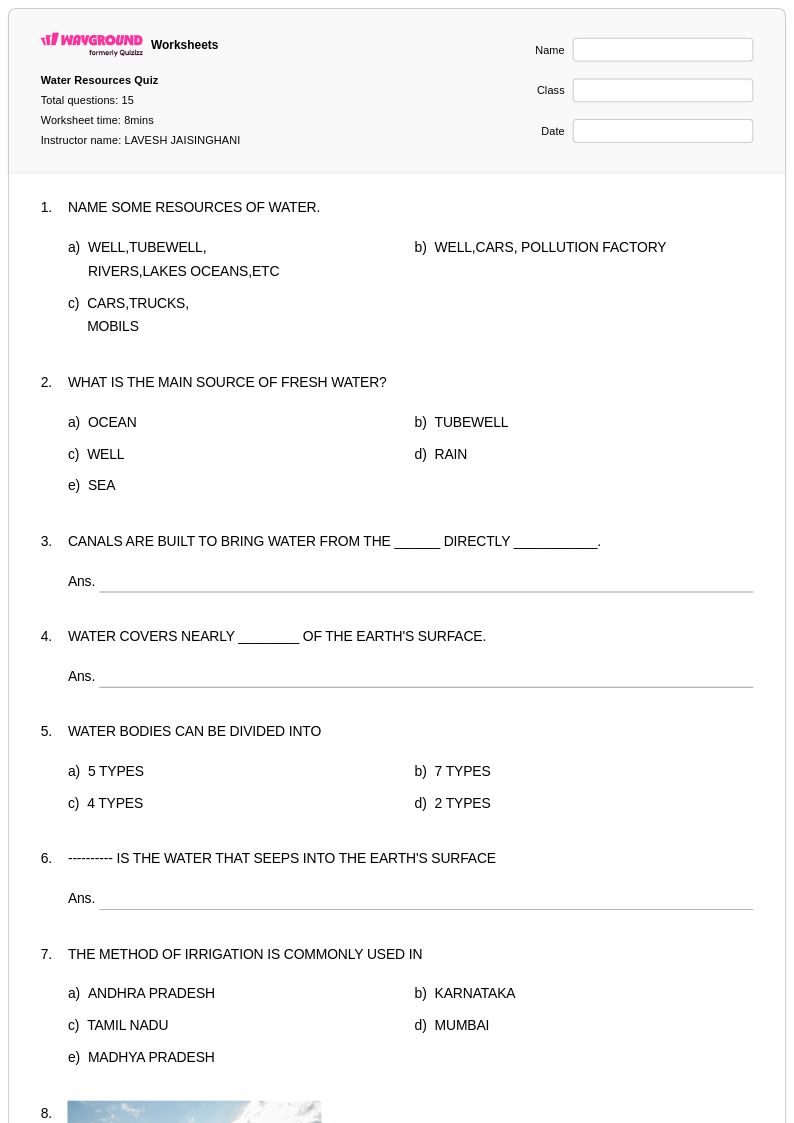
15 Q
4th
Explore Worksheets by Subjects
Explore printable Name of Oceans worksheets
Name of Oceans worksheets available through Wayground (formerly Quizizz) provide students with essential practice in identifying and understanding the world's major ocean bodies, a fundamental component of geographic literacy. These comprehensive worksheets strengthen critical map reading skills, spatial awareness, and global geographic knowledge as students learn to recognize the Pacific, Atlantic, Indian, Arctic, and Southern Oceans on various map projections and formats. Each worksheet collection includes detailed answer keys for efficient grading and assessment, with free printable pdf options that make classroom implementation seamless. The practice problems range from basic ocean identification exercises to more complex activities that explore ocean characteristics, boundaries, and their relationship to continental landmasses.
Wayground (formerly Quizizz) supports educators with an extensive collection of millions of teacher-created resources focused on ocean geography, featuring robust search and filtering capabilities that allow instructors to quickly locate materials aligned with specific curriculum standards and learning objectives. The platform's differentiation tools enable teachers to customize worksheets for various skill levels, making these resources ideal for planning comprehensive lessons, providing targeted remediation for struggling learners, and offering enrichment opportunities for advanced students. Available in both printable and digital formats including downloadable pdf versions, these ocean identification worksheets can be seamlessly integrated into traditional classroom instruction, homework assignments, or digital learning environments, ensuring flexible implementation that meets diverse teaching needs and student learning preferences.