Free Printable Observation and Inference Worksheets for Class 6
Class 6 observation and inference printables help students develop critical scientific thinking skills through engaging practice problems that distinguish between direct observations and logical conclusions, complete with answer keys and free PDF worksheets.
Explore printable Observation and Inference worksheets for Class 6
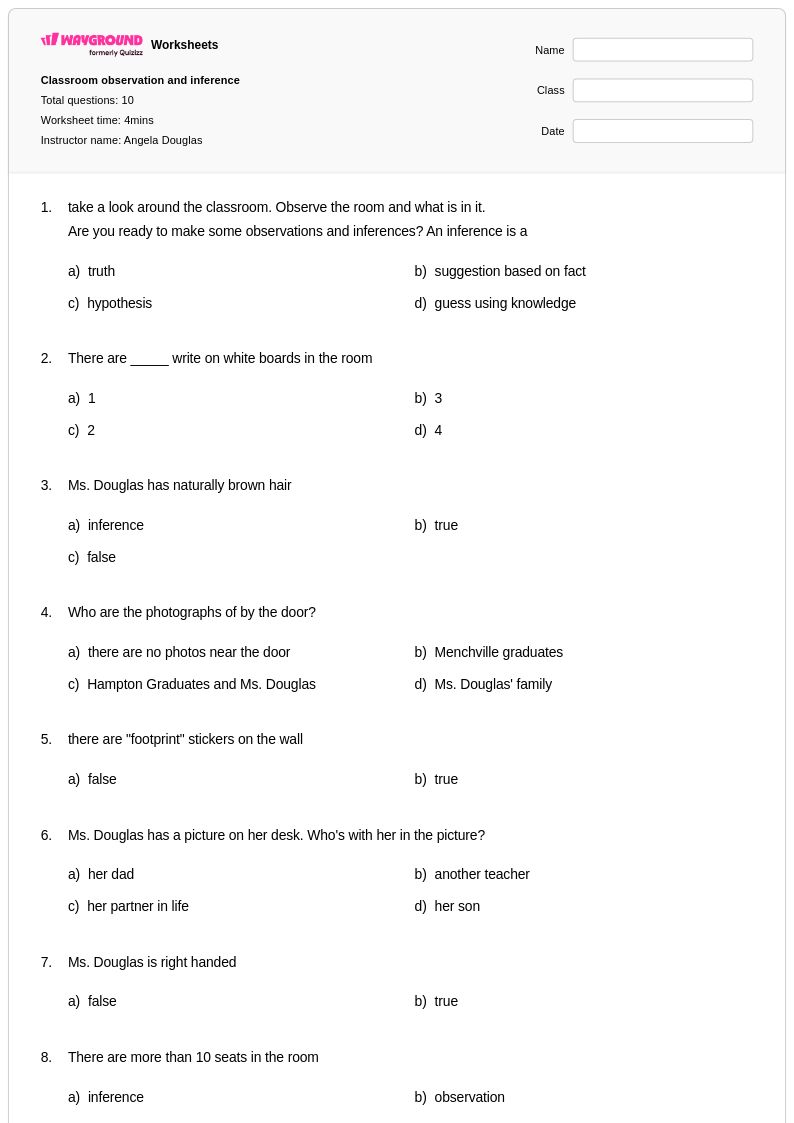
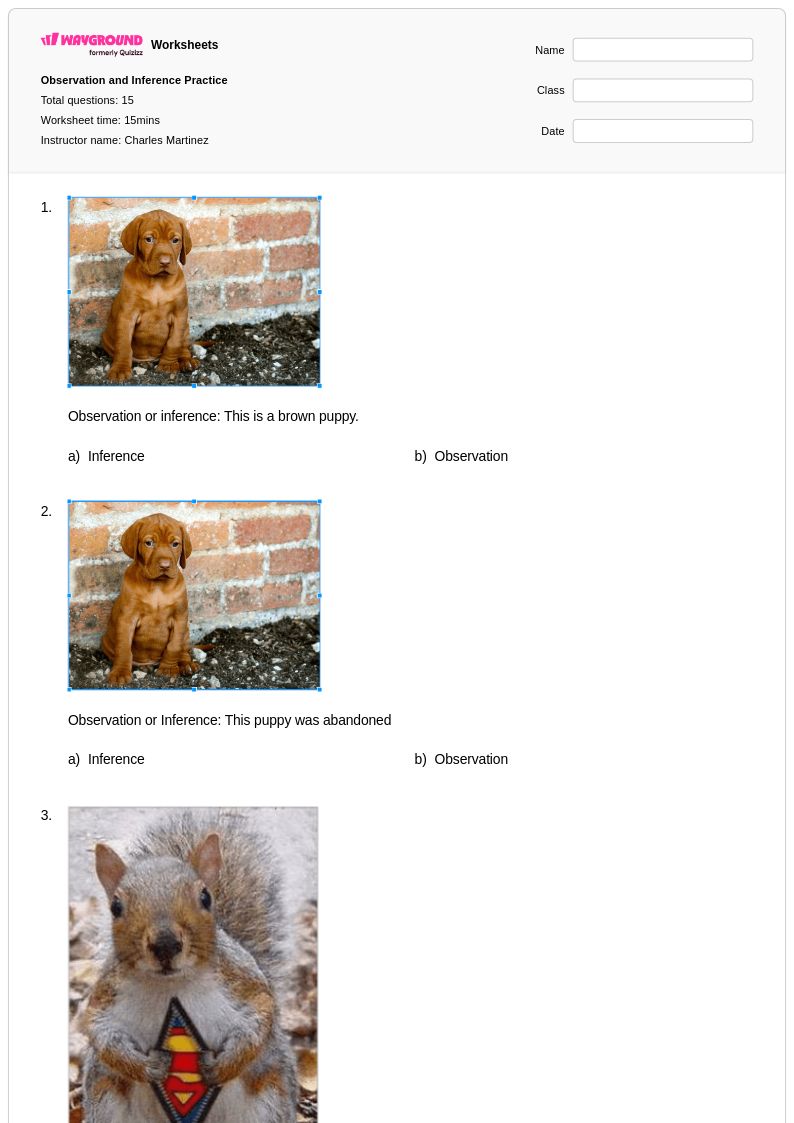
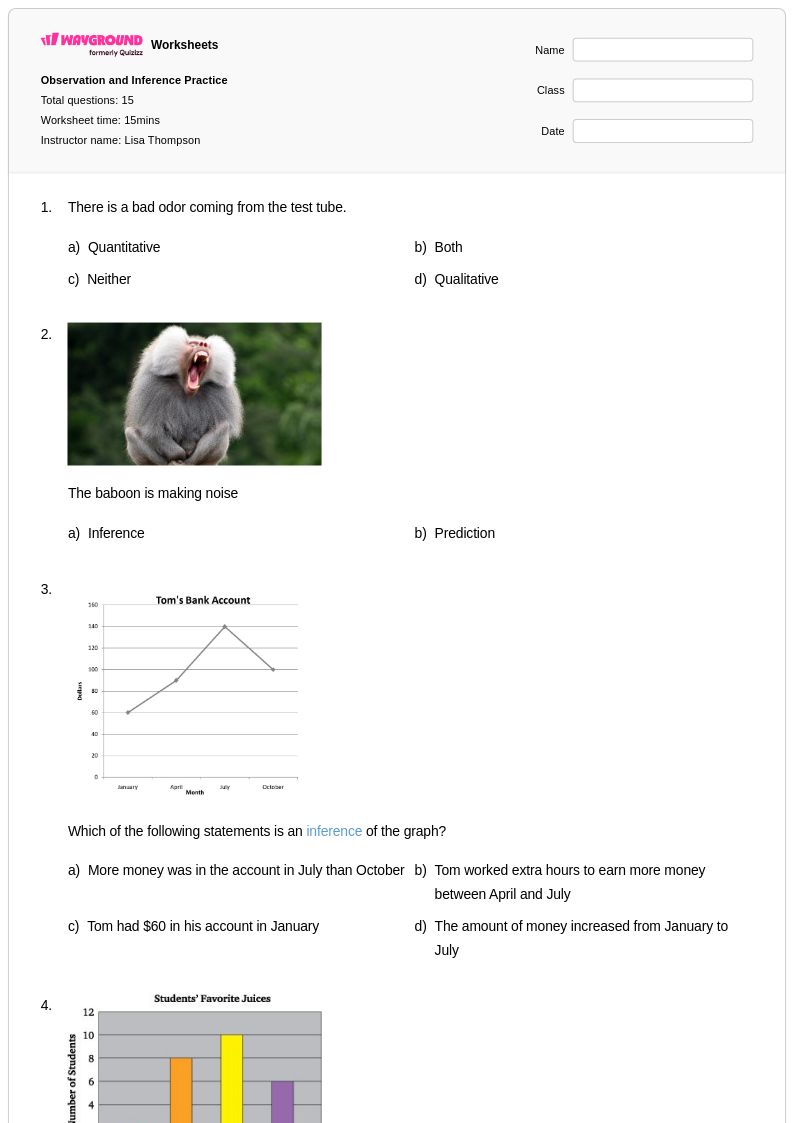
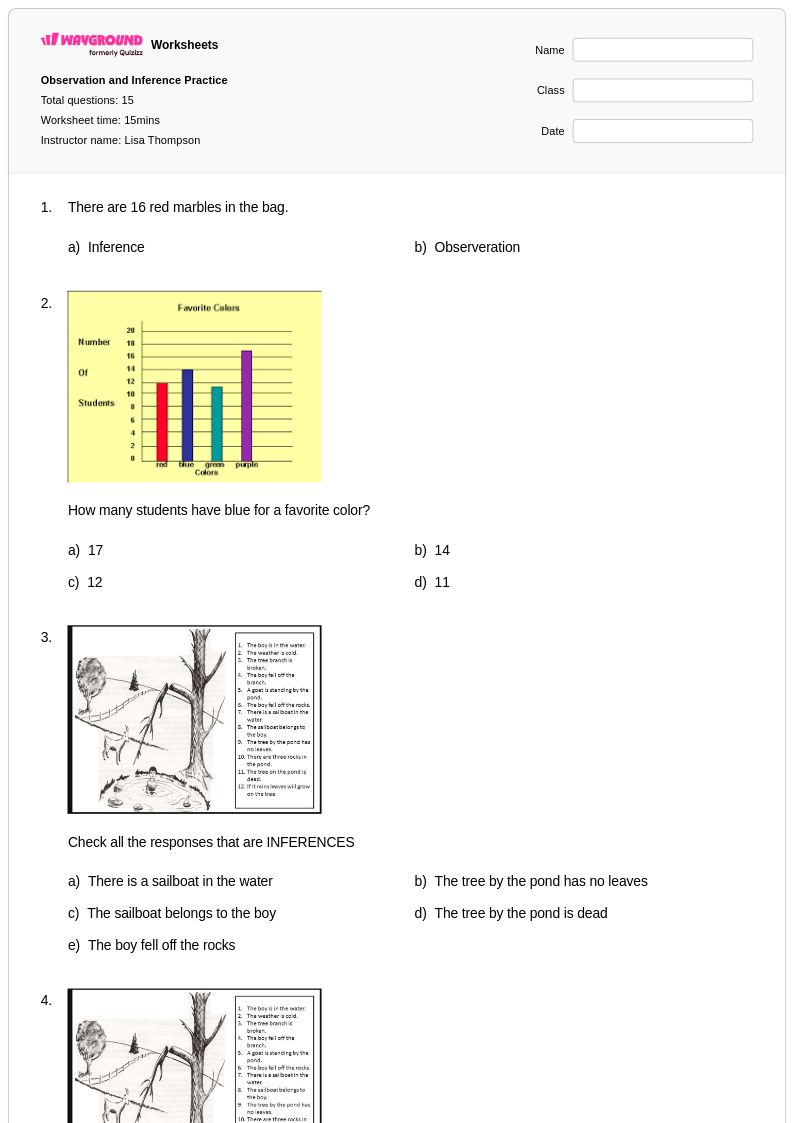
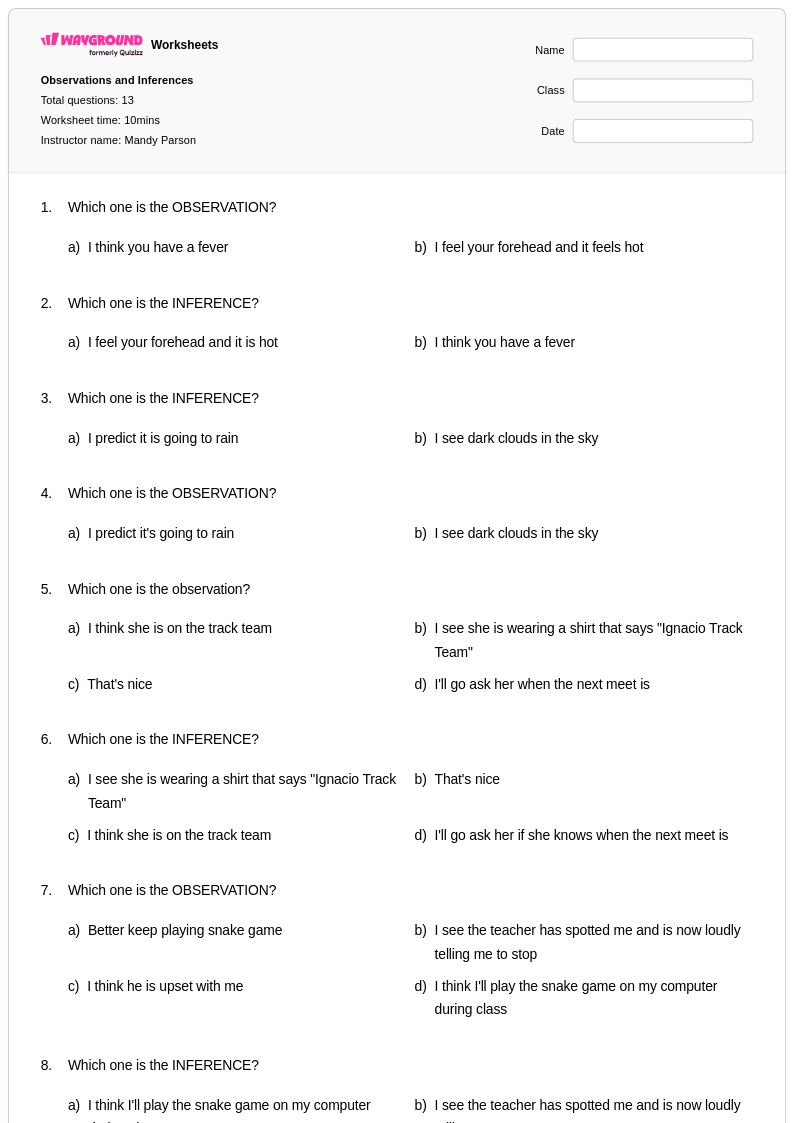
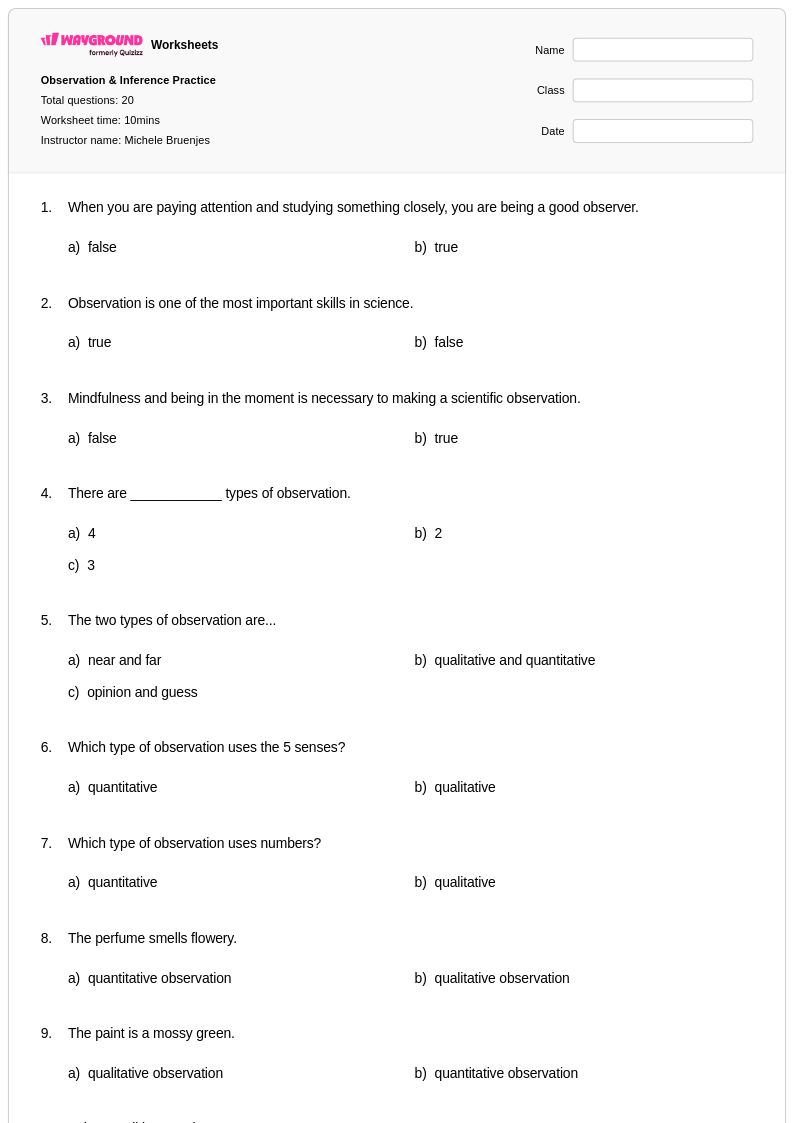
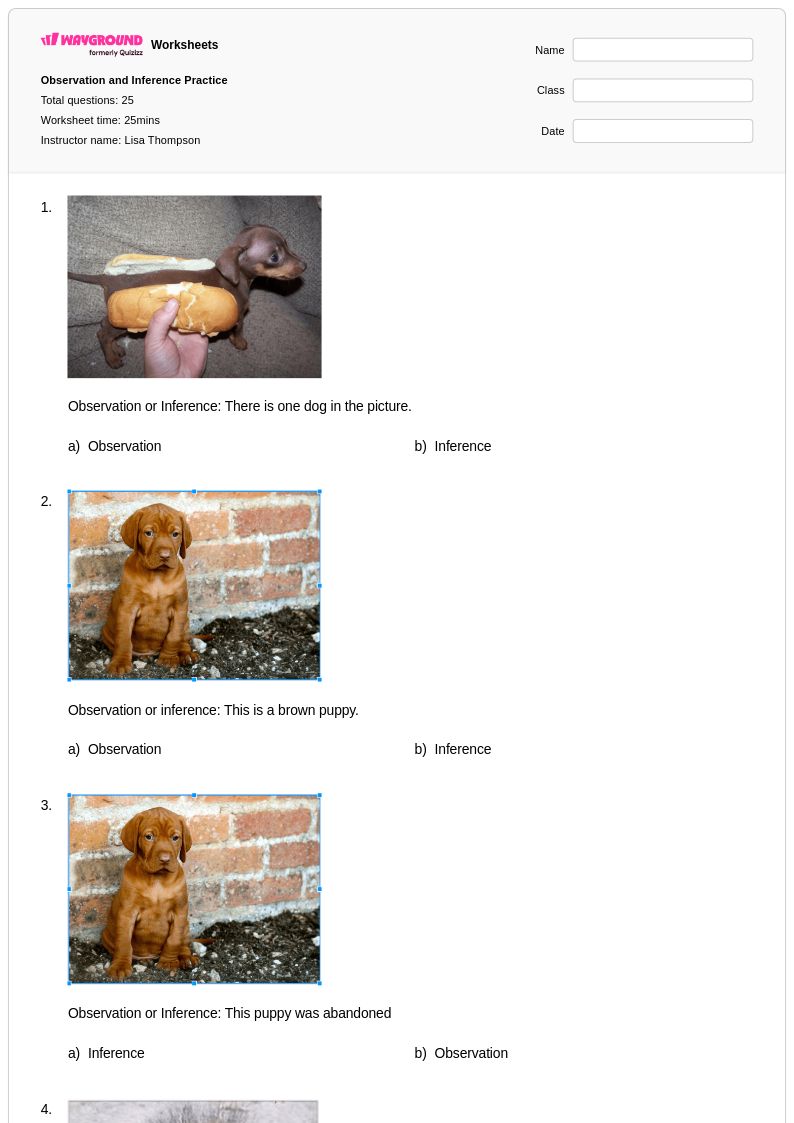
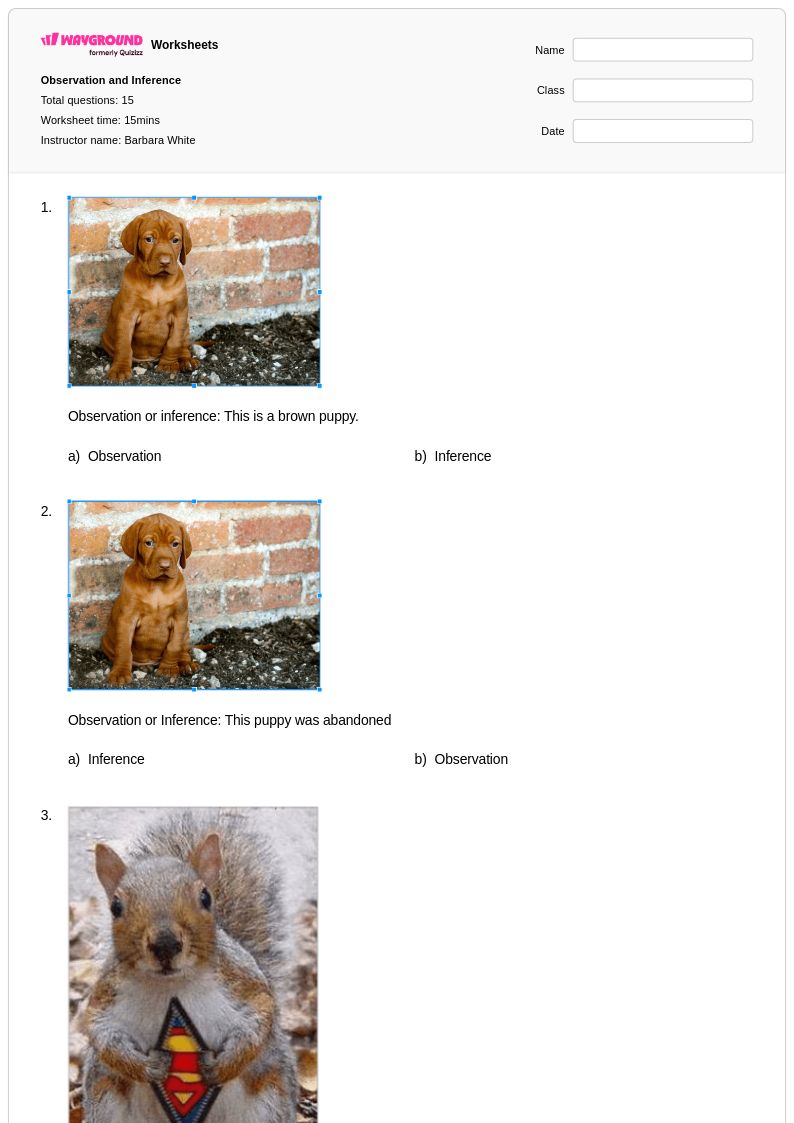
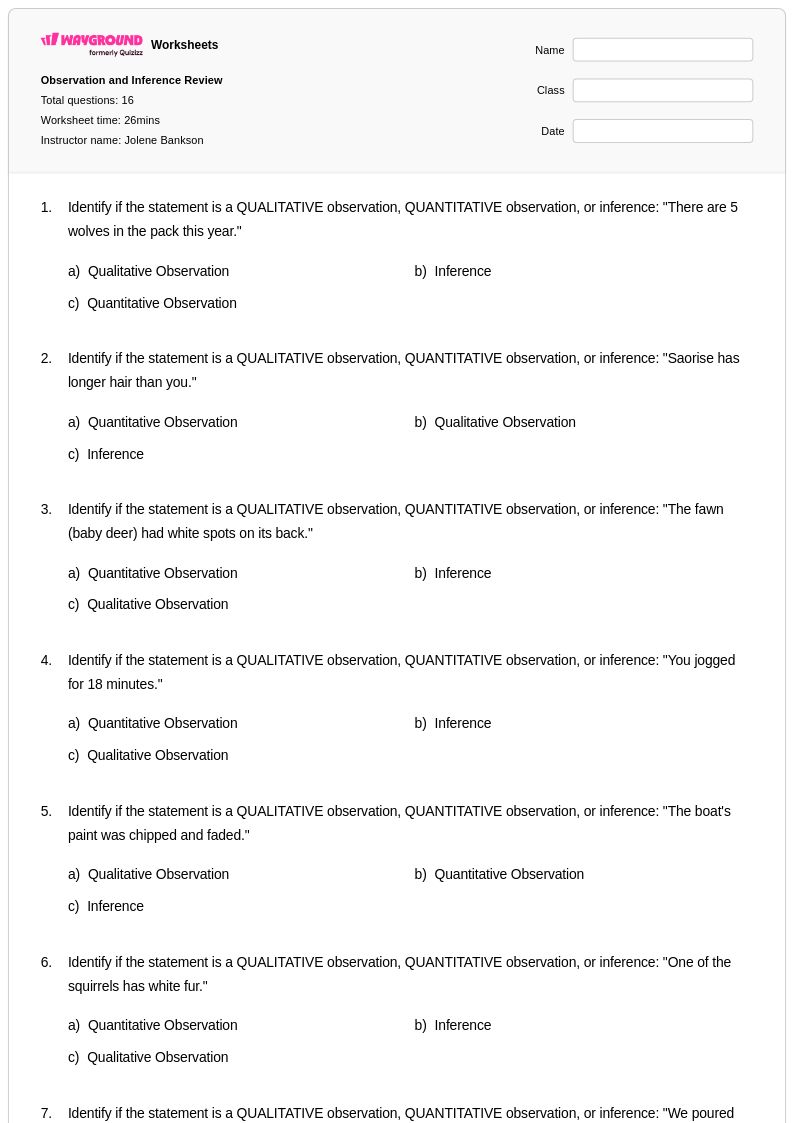
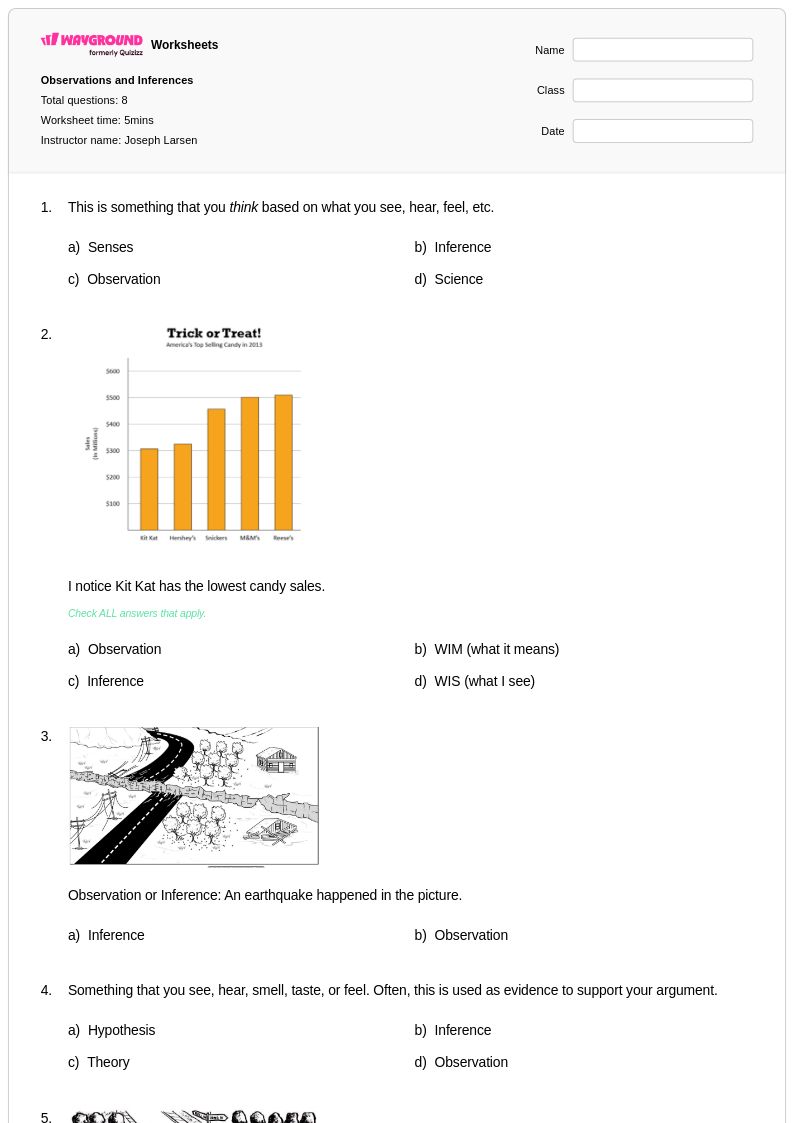
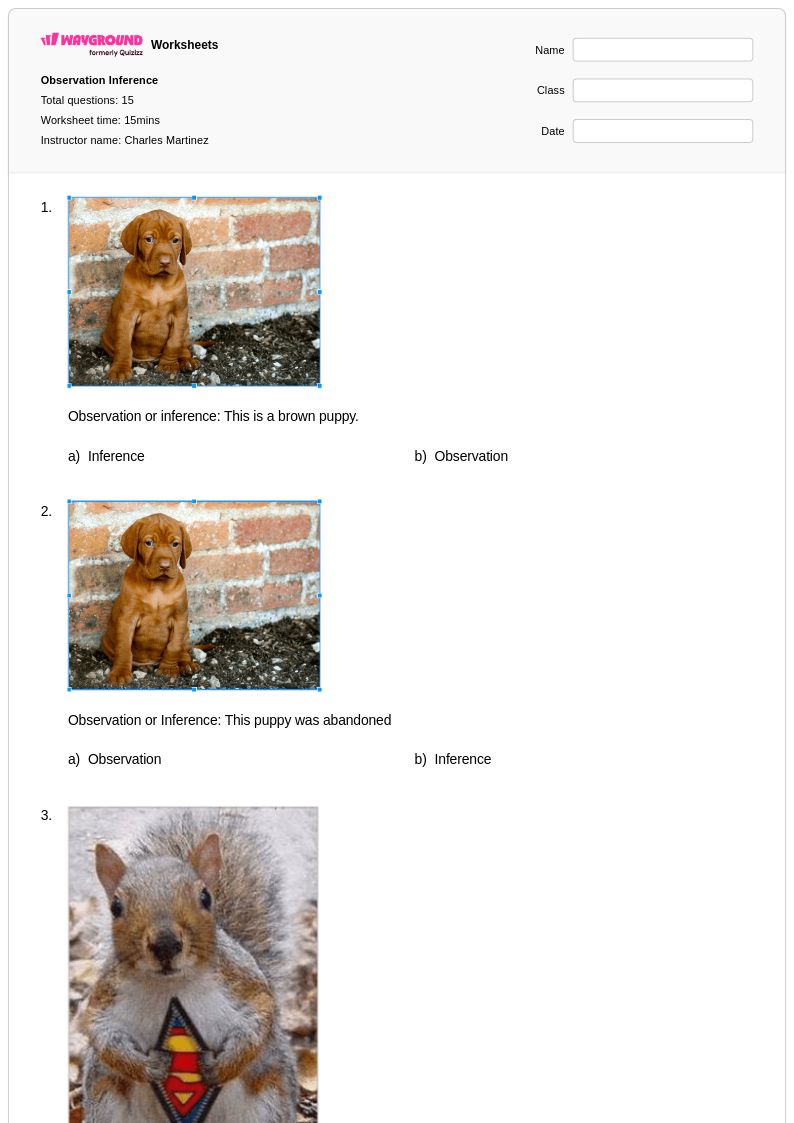
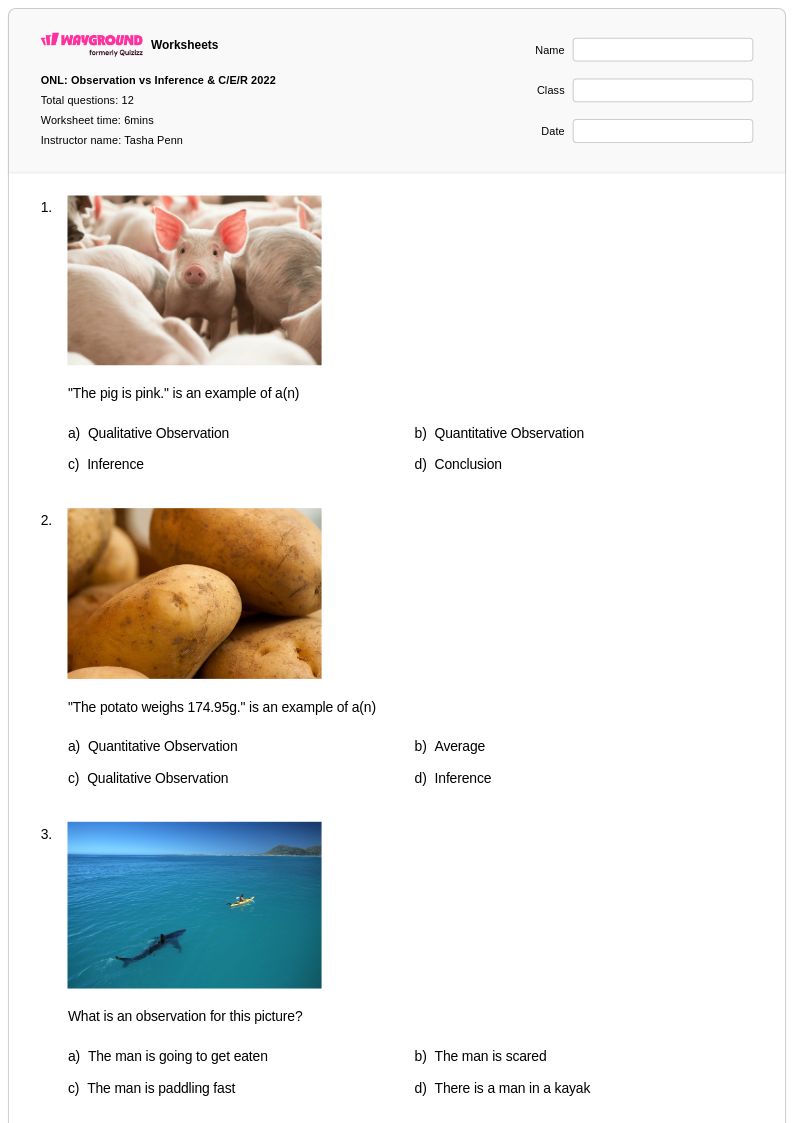
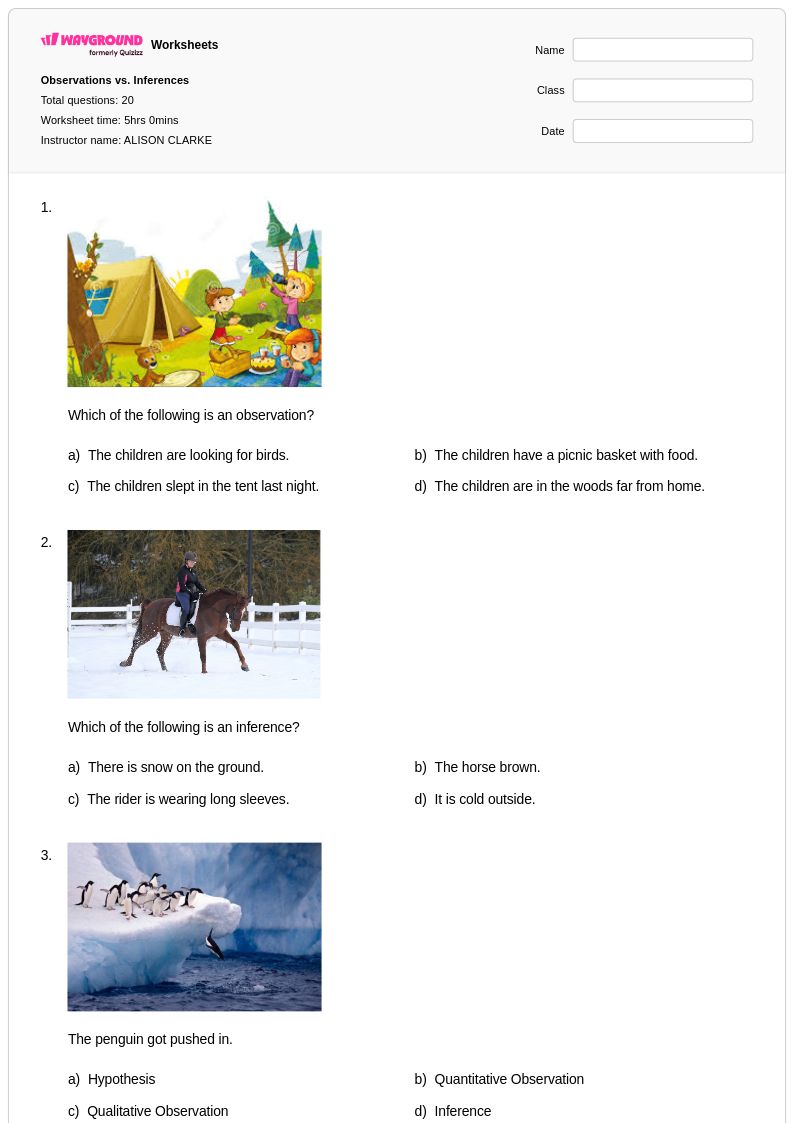
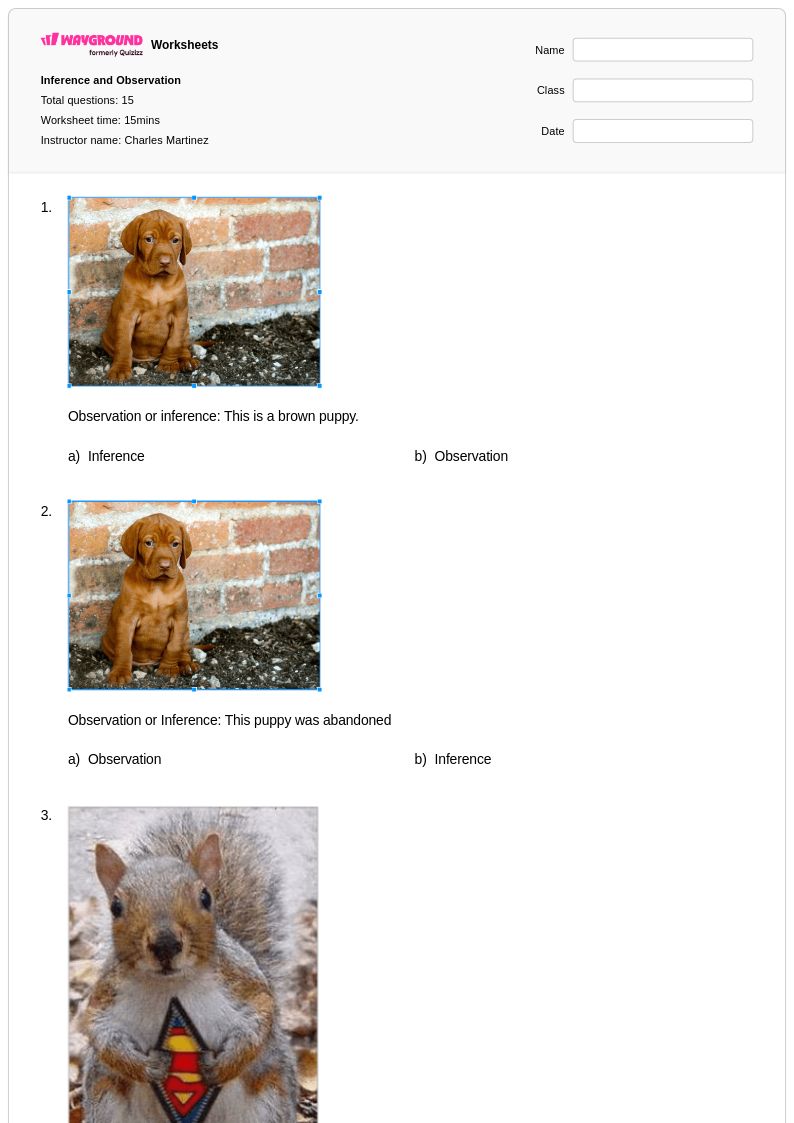
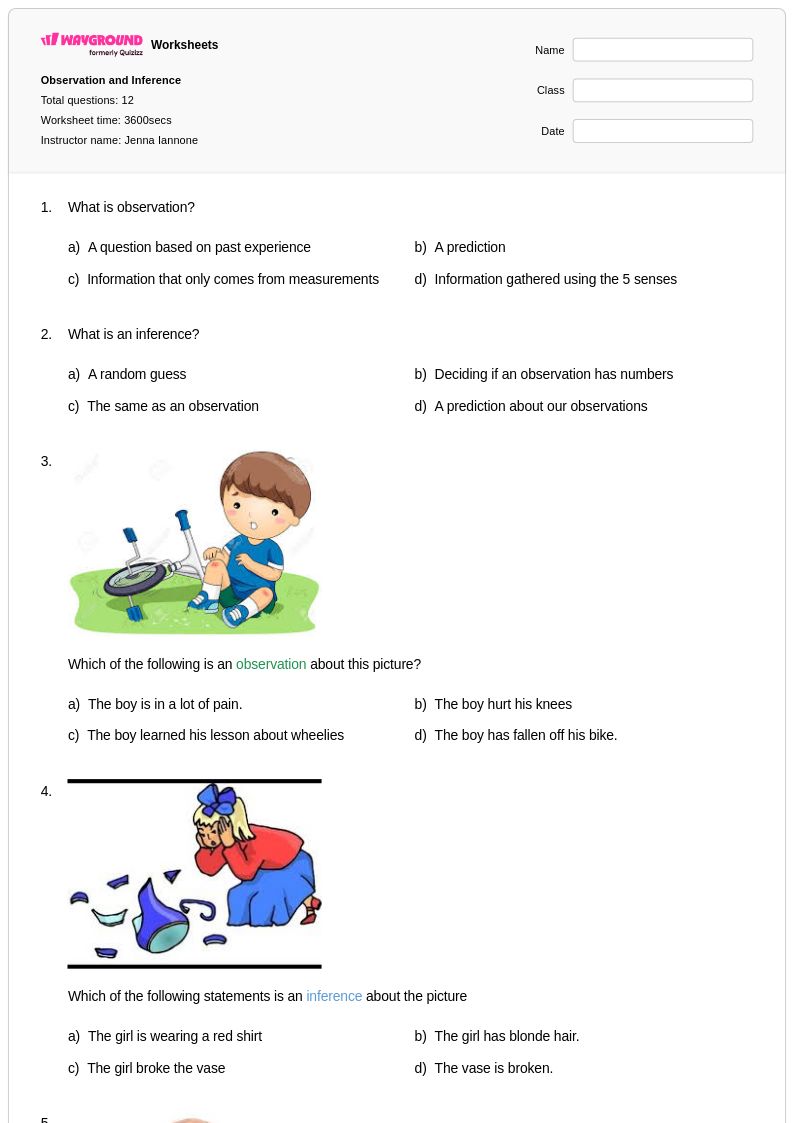
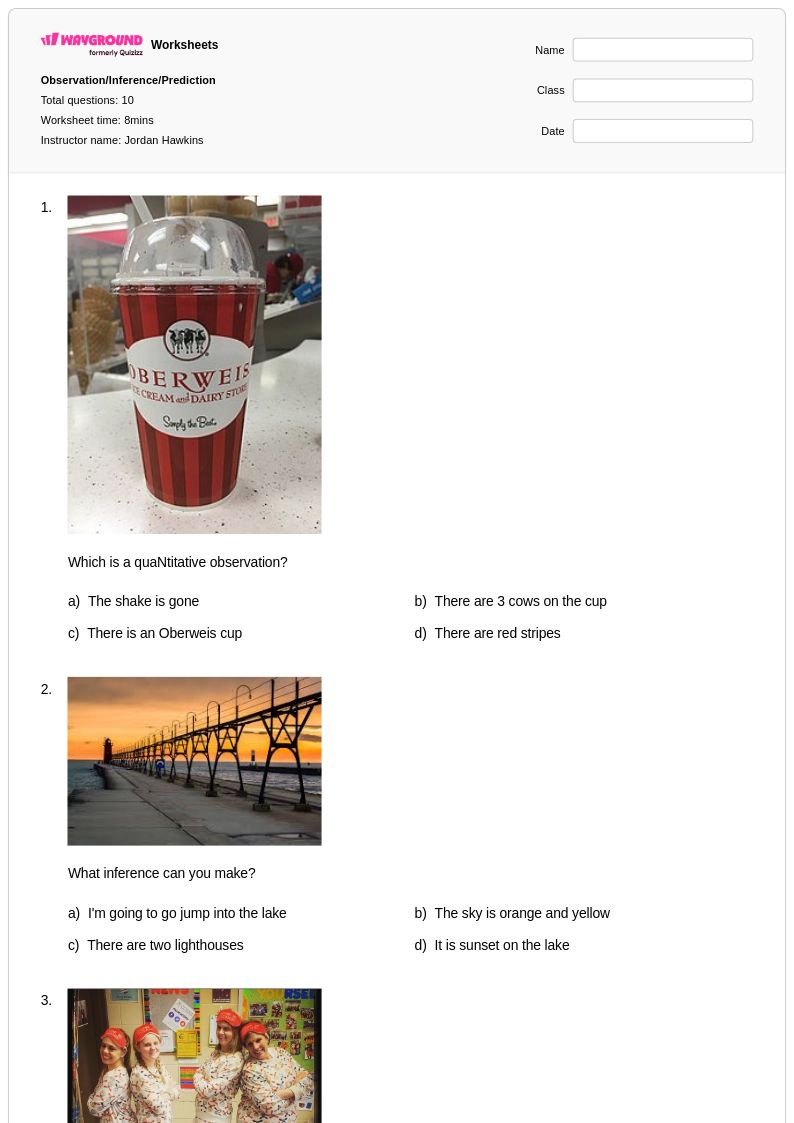
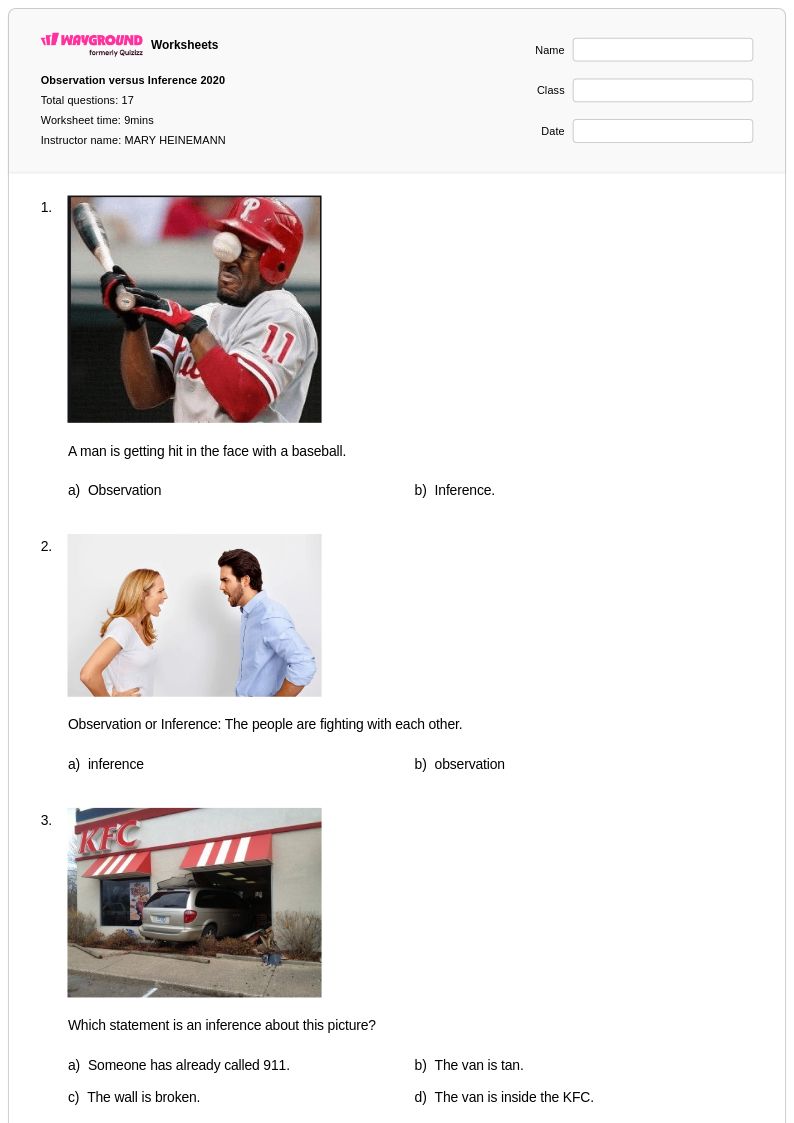
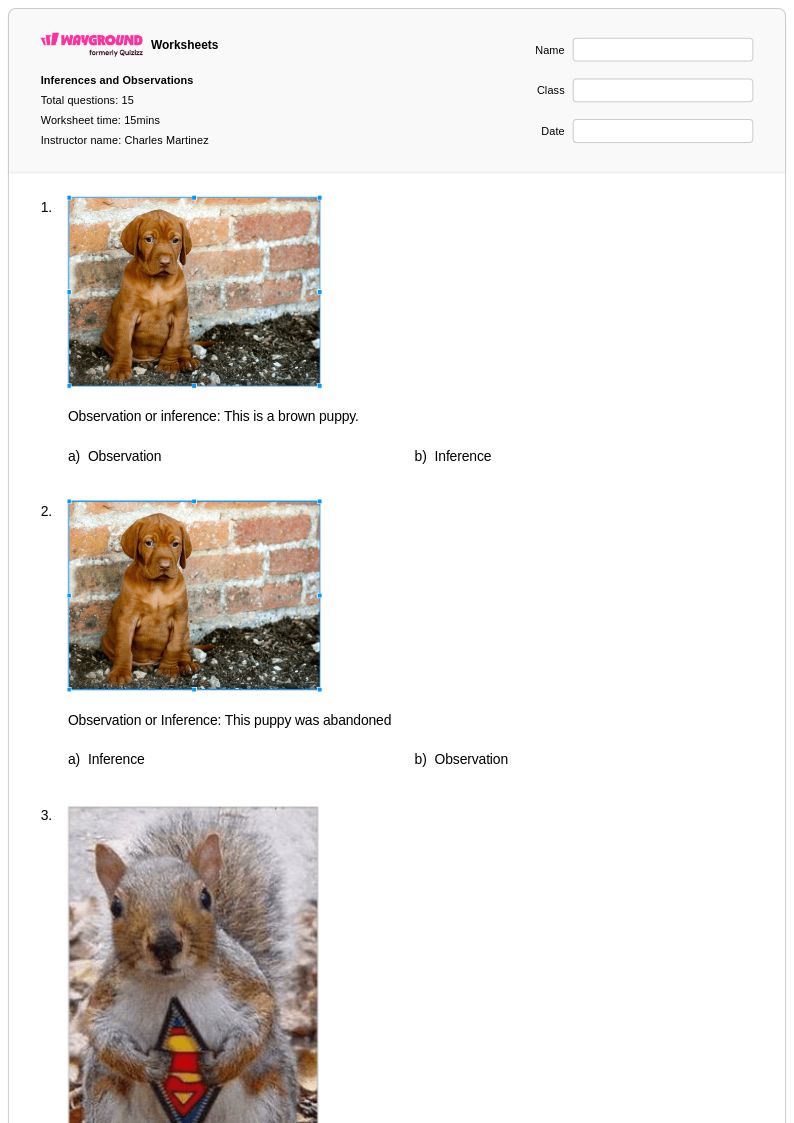
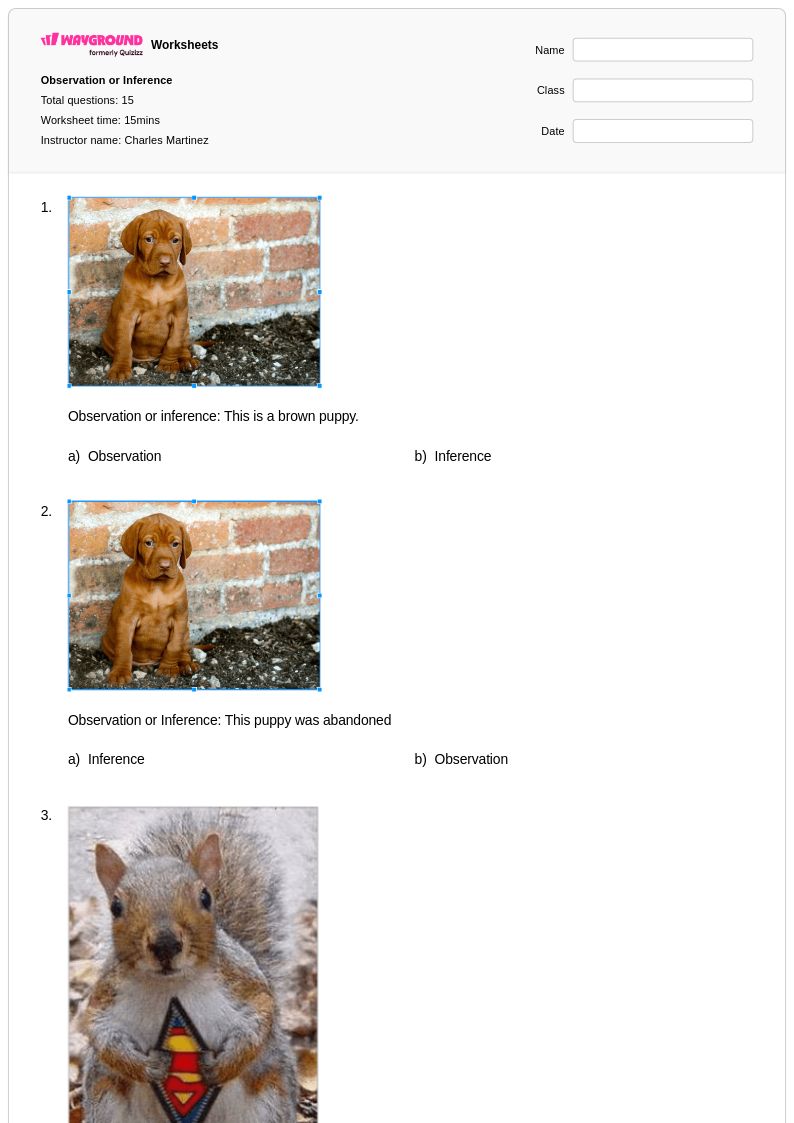
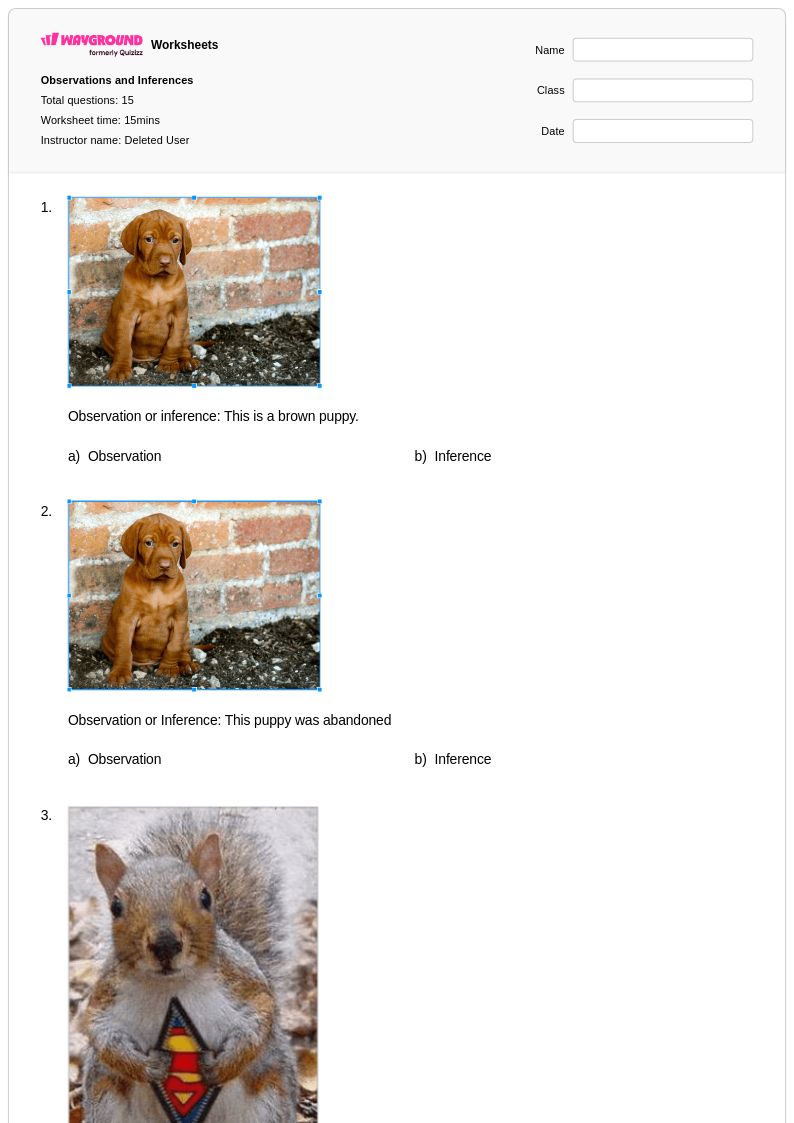
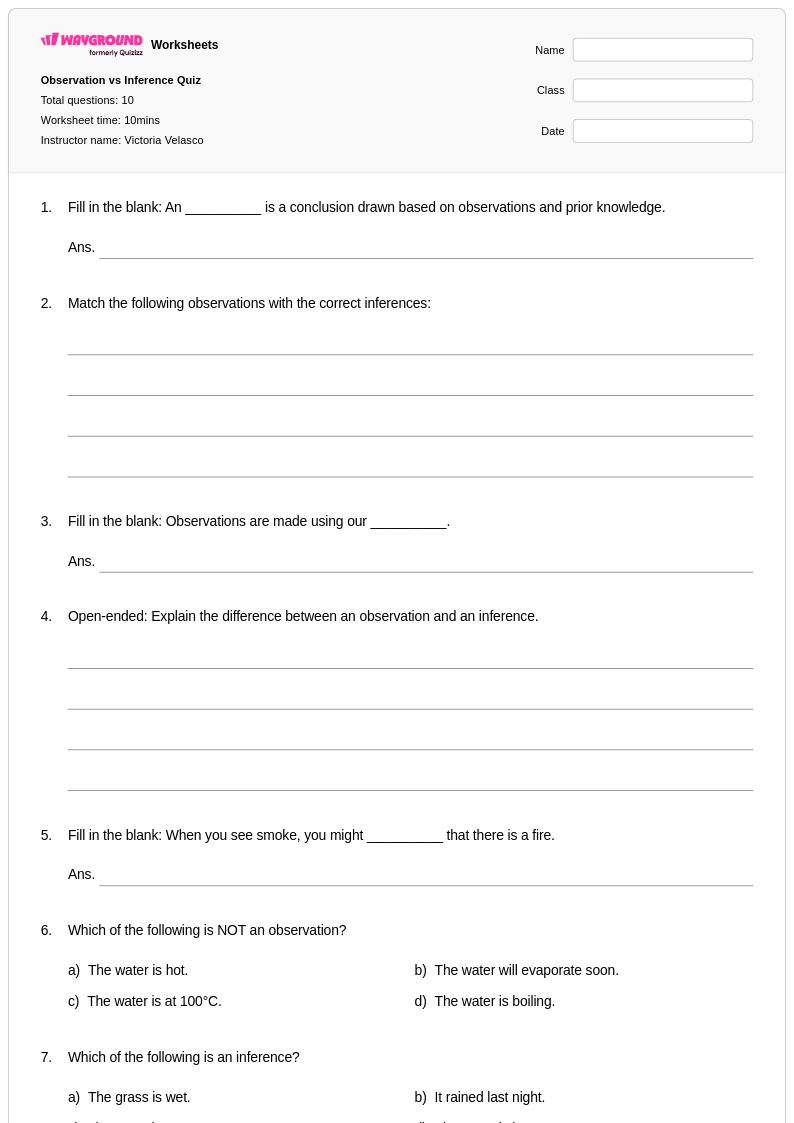
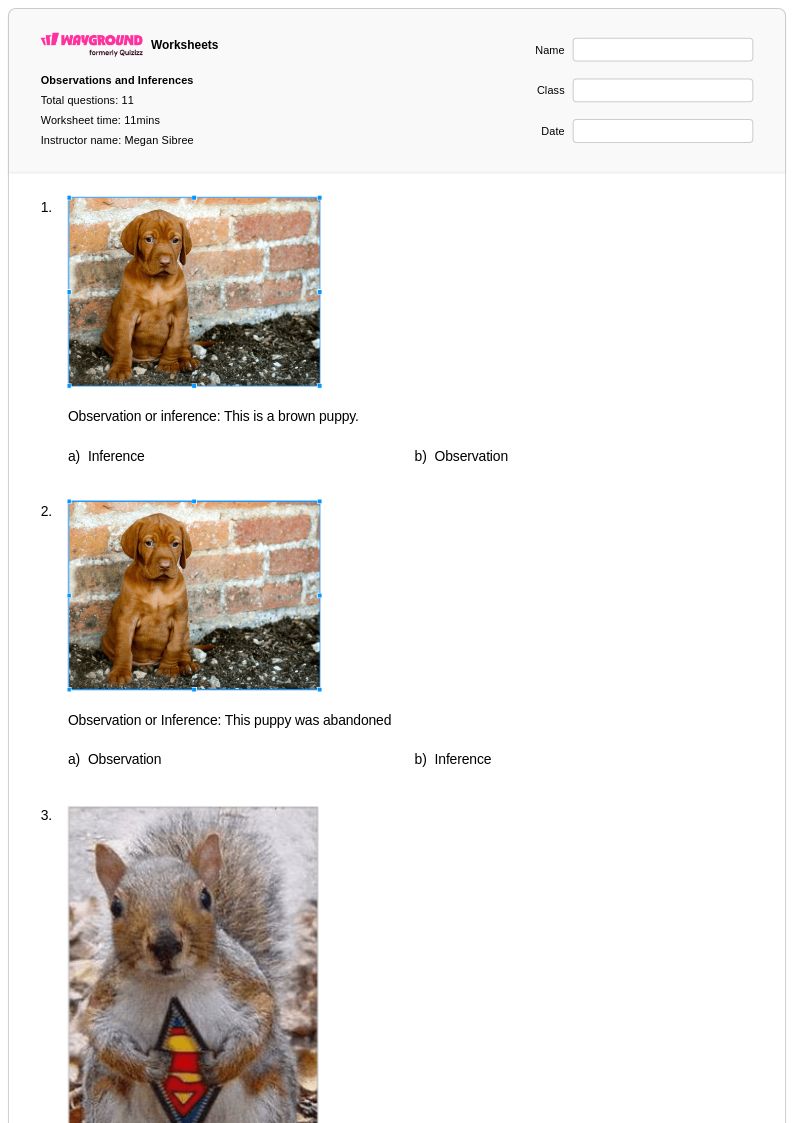
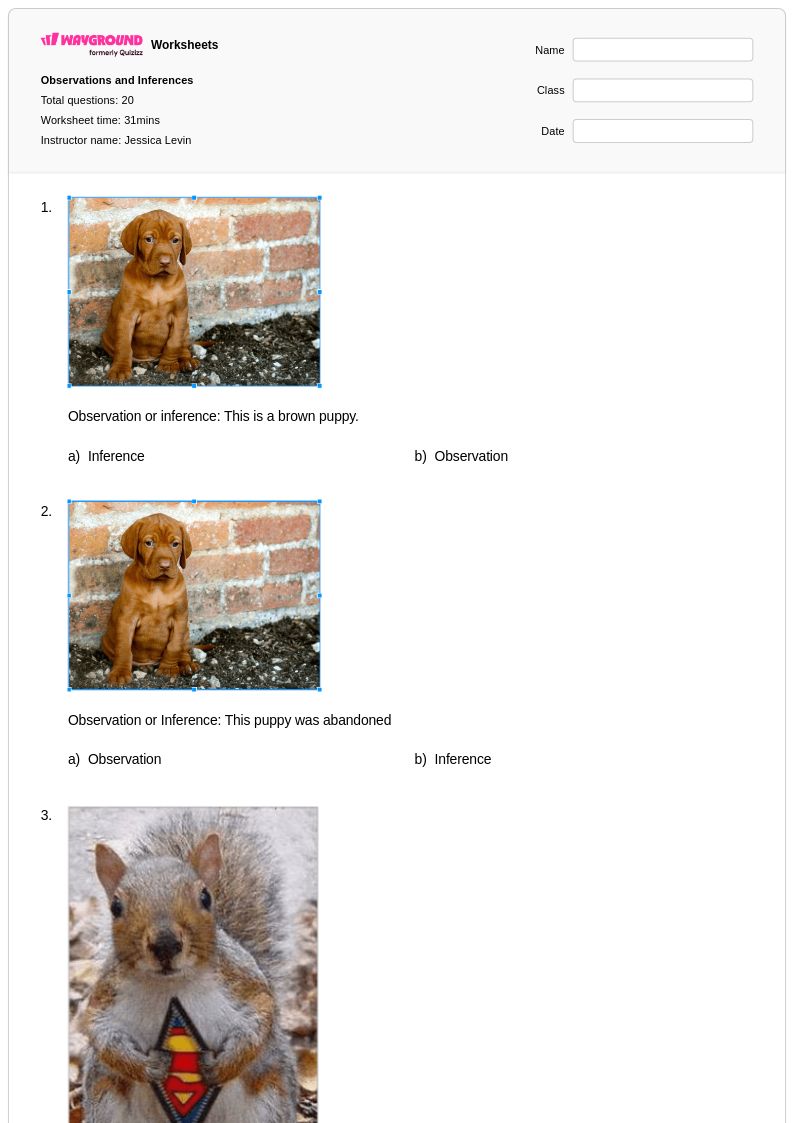
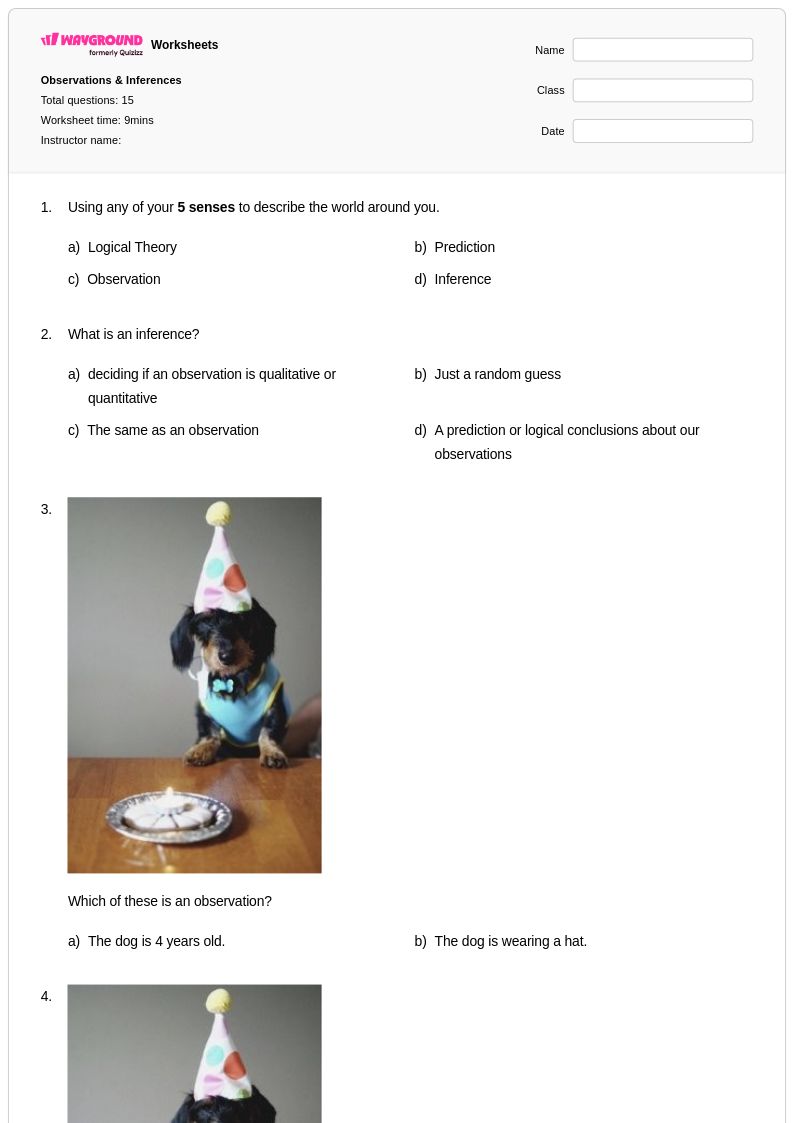
Observation and inference worksheets for Class 6 students available through Wayground (formerly Quizizz) provide essential foundation-building practice in scientific thinking and analysis. These comprehensive worksheets guide sixth-grade learners through the critical process of distinguishing between what they directly observe through their senses versus the logical conclusions they draw from those observations. Students engage with diverse scenarios ranging from laboratory experiments to real-world phenomena, developing their ability to record factual observations without bias while learning to support their inferences with evidence-based reasoning. Each worksheet includes detailed practice problems that challenge students to identify observation statements, craft reasonable inferences, and explain the connection between their observations and conclusions. Teachers can access complete answer keys and printable pdf versions to facilitate seamless classroom implementation and assessment of this fundamental scientific skill.
Wayground (formerly Quizizz) empowers educators with millions of teacher-created observation and inference resources specifically designed to strengthen Class 6 science instruction. The platform's robust search and filtering capabilities allow teachers to quickly locate worksheets aligned with Next Generation Science Standards and state curriculum requirements, ensuring that practice activities directly support classroom learning objectives. Advanced differentiation tools enable instructors to customize worksheet difficulty levels and content focus areas, making it simple to provide targeted remediation for struggling learners while offering enrichment opportunities for advanced students. Whether teachers prefer traditional printable formats or interactive digital versions, the flexible delivery options support diverse classroom environments and individual student needs. This extensive collection streamlines lesson planning while providing consistent, high-quality practice opportunities that build student confidence in applying observation and inference skills across various scientific contexts and investigations.
FAQs
How do I teach students the difference between observation and inference?
Start by anchoring the distinction in concrete, familiar examples: a student can observe that a glass is wet on the outside, but inferring that the liquid inside is cold requires reasoning beyond direct sensory data. Structured practice with photographs or experimental scenarios works well because students must explicitly justify whether a statement is supported by direct evidence or logical conclusion. Requiring students to cite the specific observation that supports each inference helps them internalize the difference before moving to abstract scientific contexts.
What exercises help students practice observation and inference skills?
Effective practice exercises present students with images, data tables, or short experimental descriptions and ask them to categorize statements as observations or inferences, then explain their reasoning. Scenarios that include plausible but unsupported conclusions are especially useful because they force students to distinguish between what the evidence actually shows and what seems likely. Worksheets that include a mix of straightforward and ambiguous cases build the critical thinking stamina students need for scientific reasoning.
What mistakes do students commonly make when distinguishing observations from inferences?
The most persistent error is treating a strongly logical inference as if it were a direct observation, particularly when the conclusion feels obvious. Students also frequently embed interpretation into their observation statements without realizing it, such as writing 'the plant is dying' rather than 'the plant's leaves are yellow and wilted.' A related mistake is assuming that all inferences are guesses rather than reasoned conclusions grounded in evidence, which can undermine their confidence in scientific reasoning.
How can I use observation and inference worksheets to support students with different learning needs?
Wayground allows teachers to apply student-level accommodations directly within the platform, including read aloud support for students who benefit from hearing questions read to them and reduced answer choices for students who need lower cognitive load. Extended time can be configured per student for those who require additional processing time, and reading mode offers adjustable font sizes and themes for accessibility. These settings are saved and reusable across future sessions, so differentiation does not need to be reconfigured each time a worksheet is assigned.
How do I use Wayground's observation and inference worksheets in my classroom?
Wayground's observation and inference worksheets are available as printable PDFs for traditional classroom use and in digital formats for technology-integrated environments, including the option to host them as a live quiz on the platform. Printable versions work well for guided note-taking and lab companion activities, while digital formats allow for immediate feedback and progress tracking. Both formats include detailed answer keys, making them practical for independent practice, small group review, or whole-class instruction.
At what point in a science unit should I introduce observation and inference practice?
Observation and inference skills are foundational to scientific inquiry and should be introduced early, ideally before students begin formal lab work or data analysis activities. Early exposure allows teachers to establish shared vocabulary around evidence-based reasoning that carries through the entire unit. Revisiting these skills mid-unit with increasingly complex scenarios, such as analyzing experimental results rather than photographs, helps students transfer the concept to authentic scientific contexts.