Free Printable Organizing Evidence Worksheets for Class 7
Class 7 students can master organizing evidence with Wayground's free worksheets and printables, featuring structured practice problems and comprehensive answer keys to develop strong argumentative writing skills.
Explore printable Organizing Evidence worksheets for Class 7
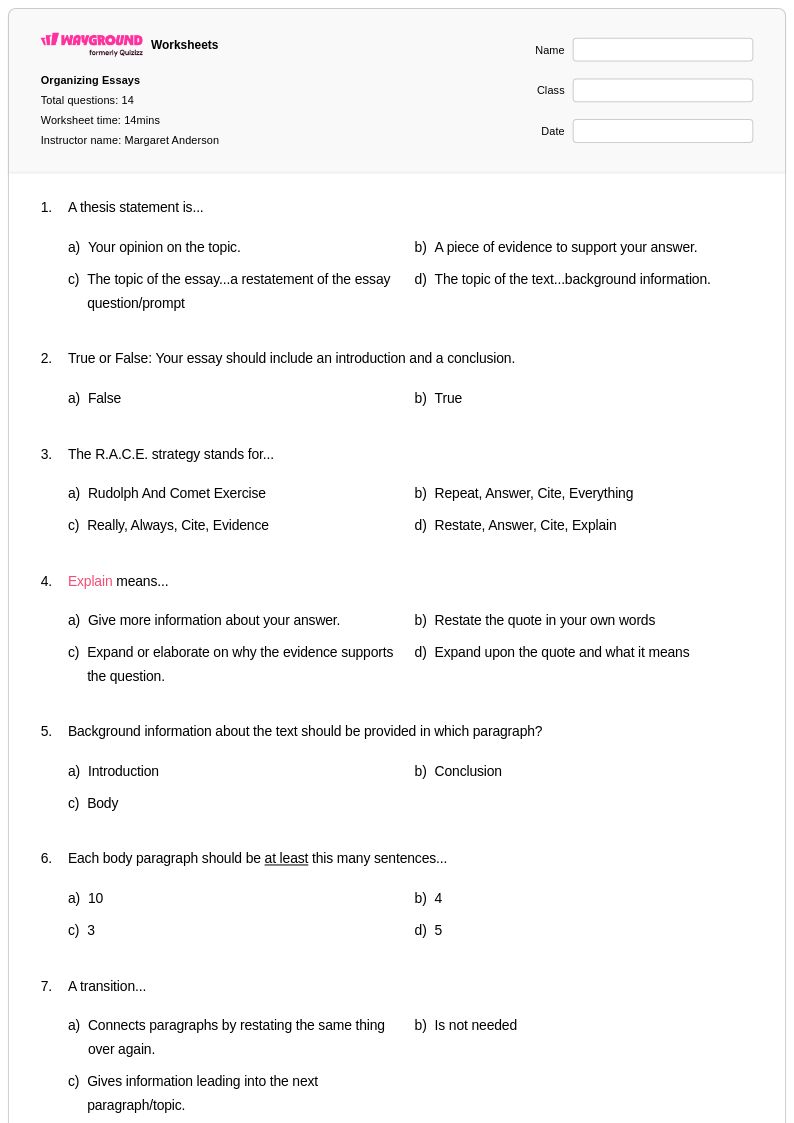
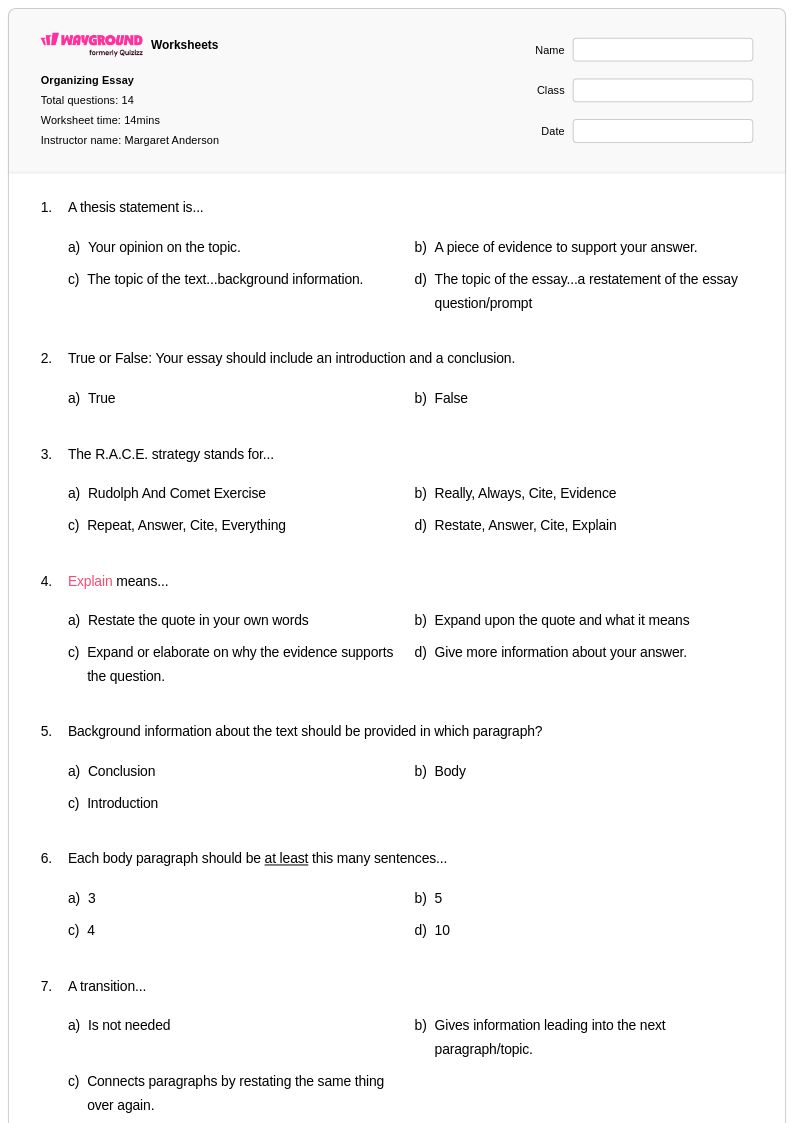
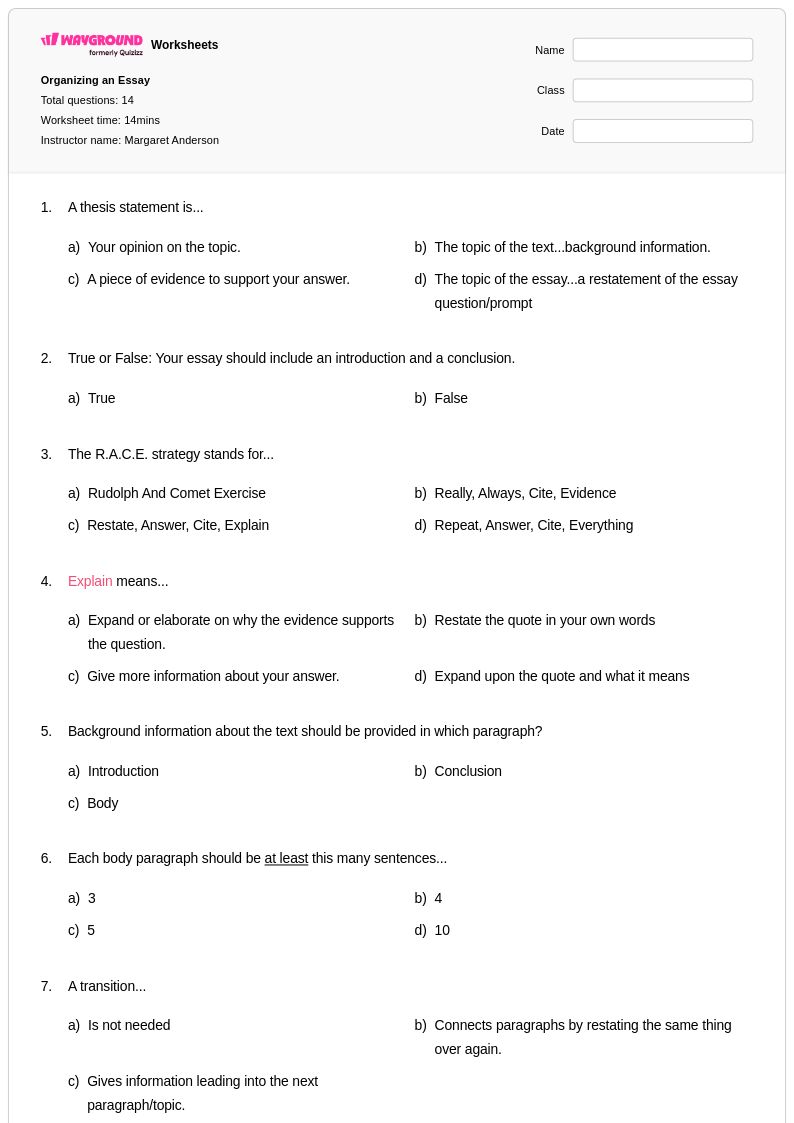
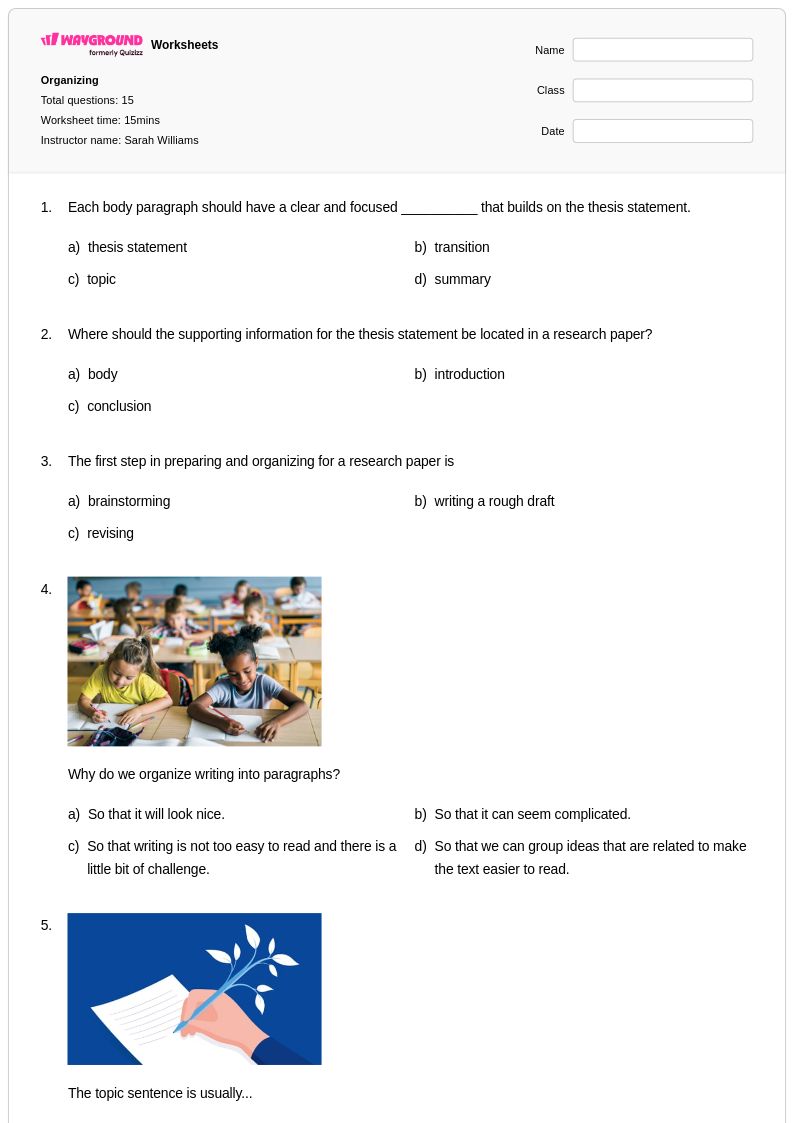
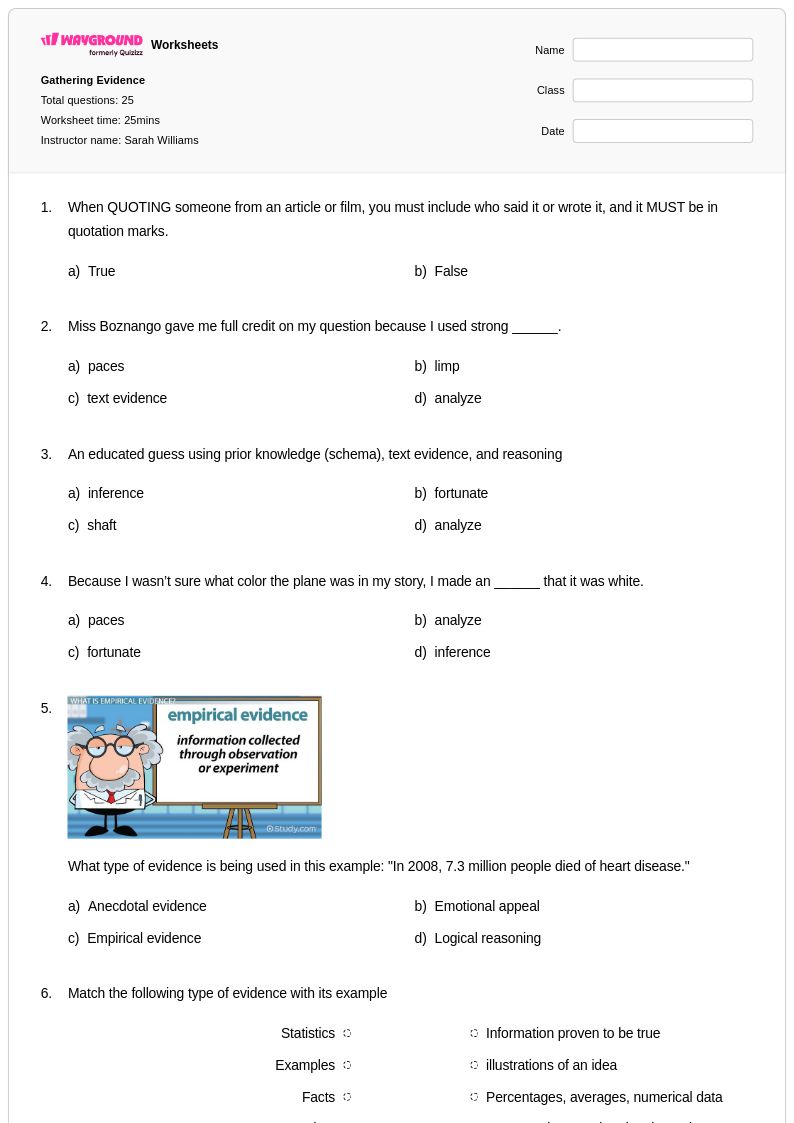
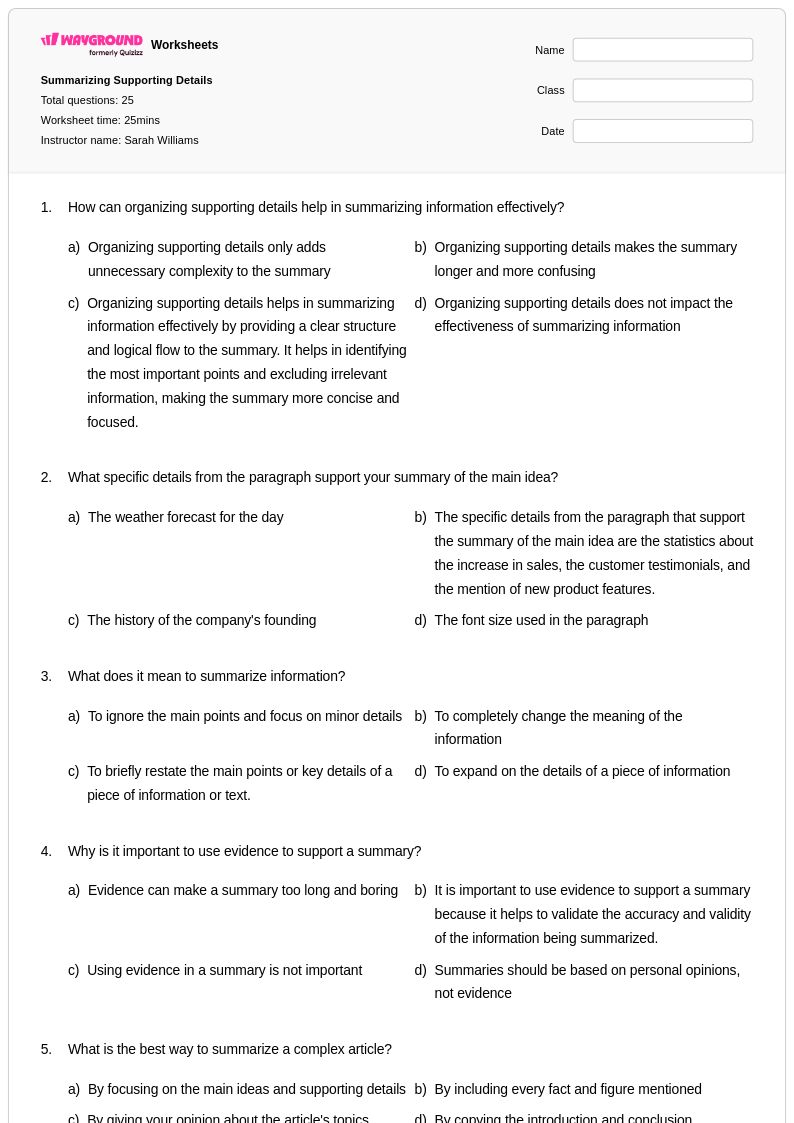
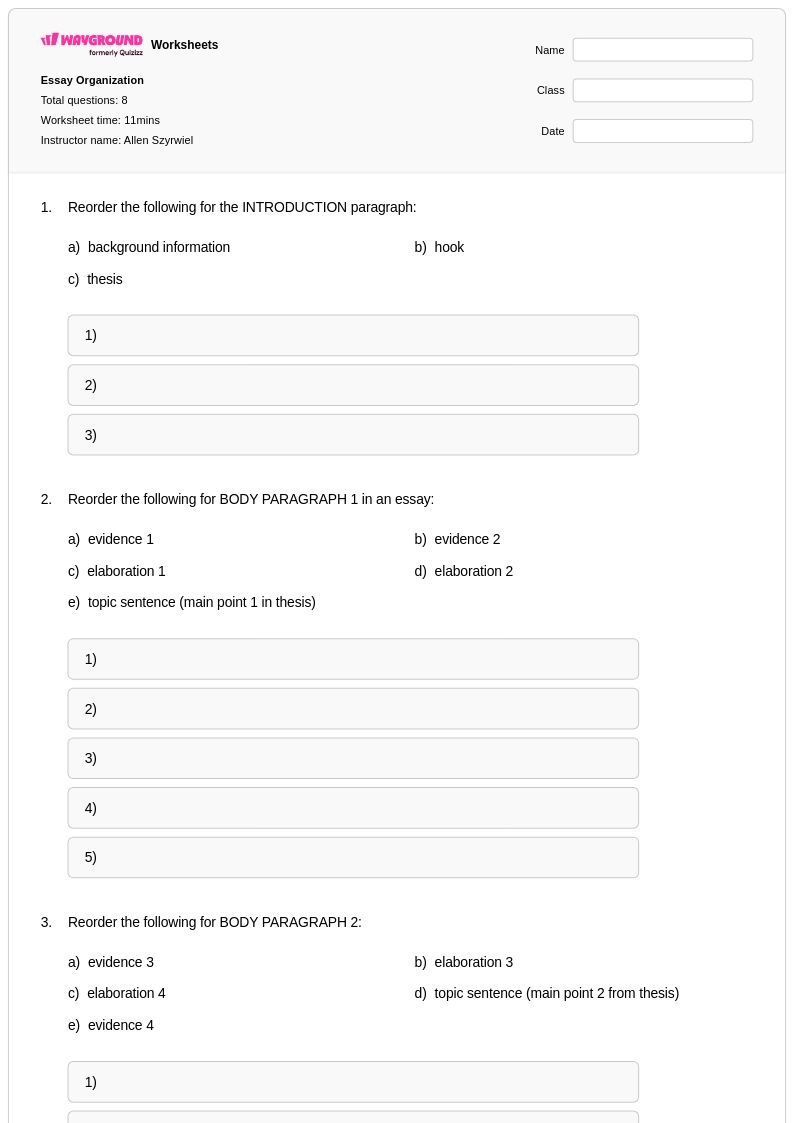
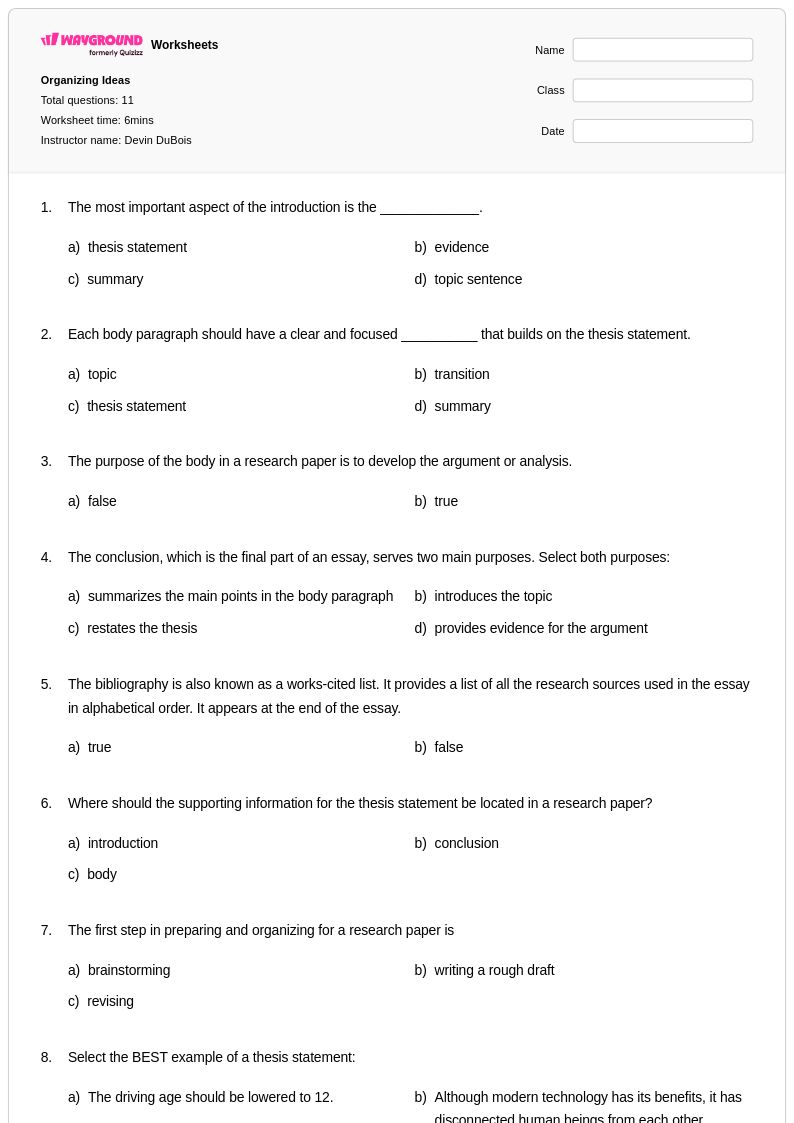
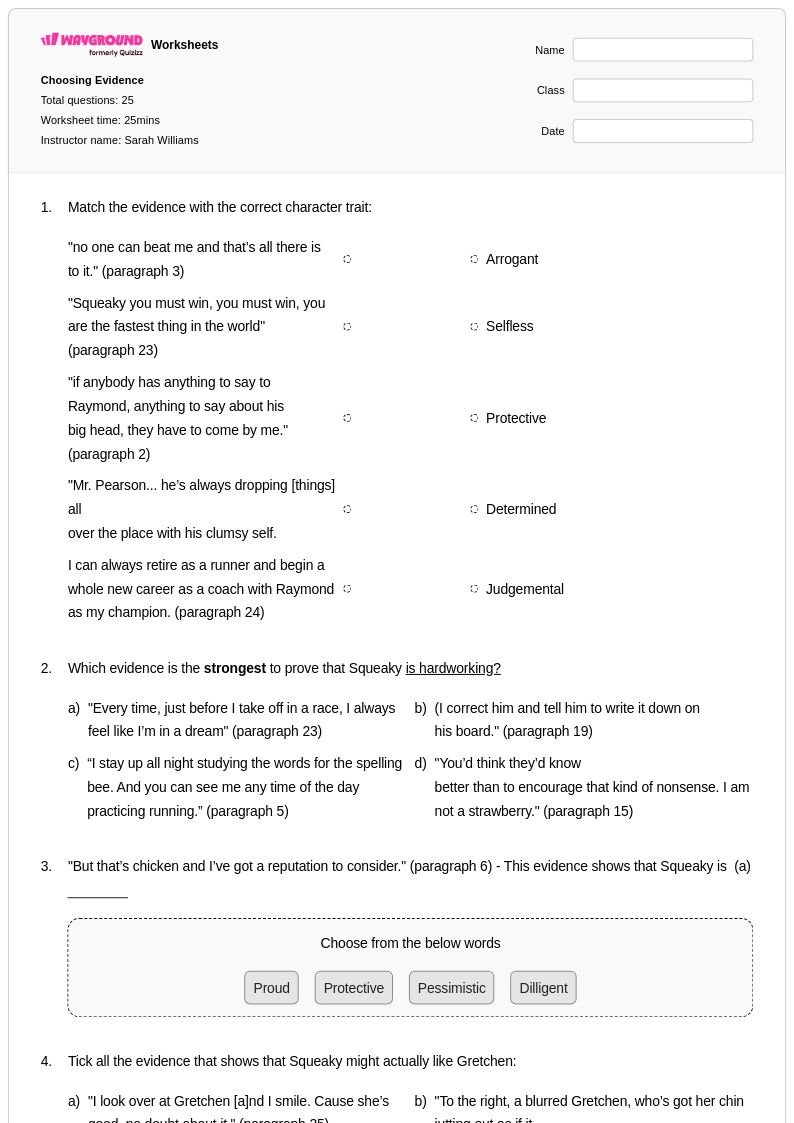
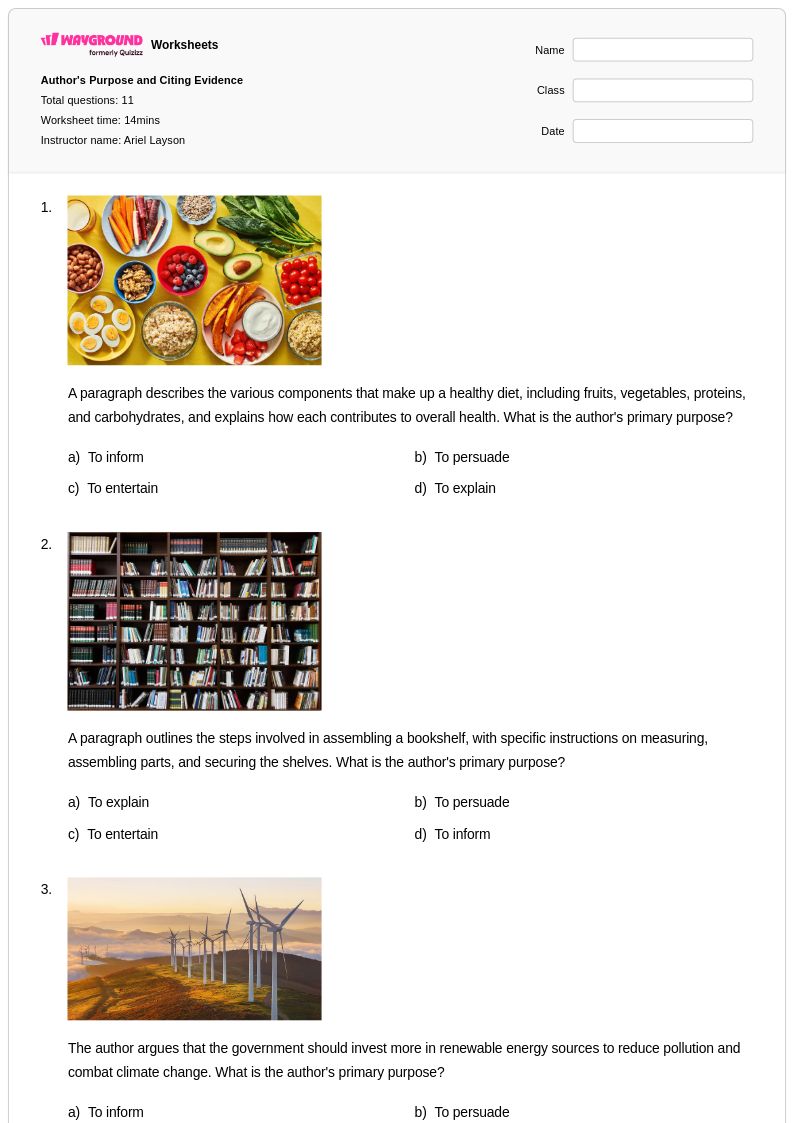
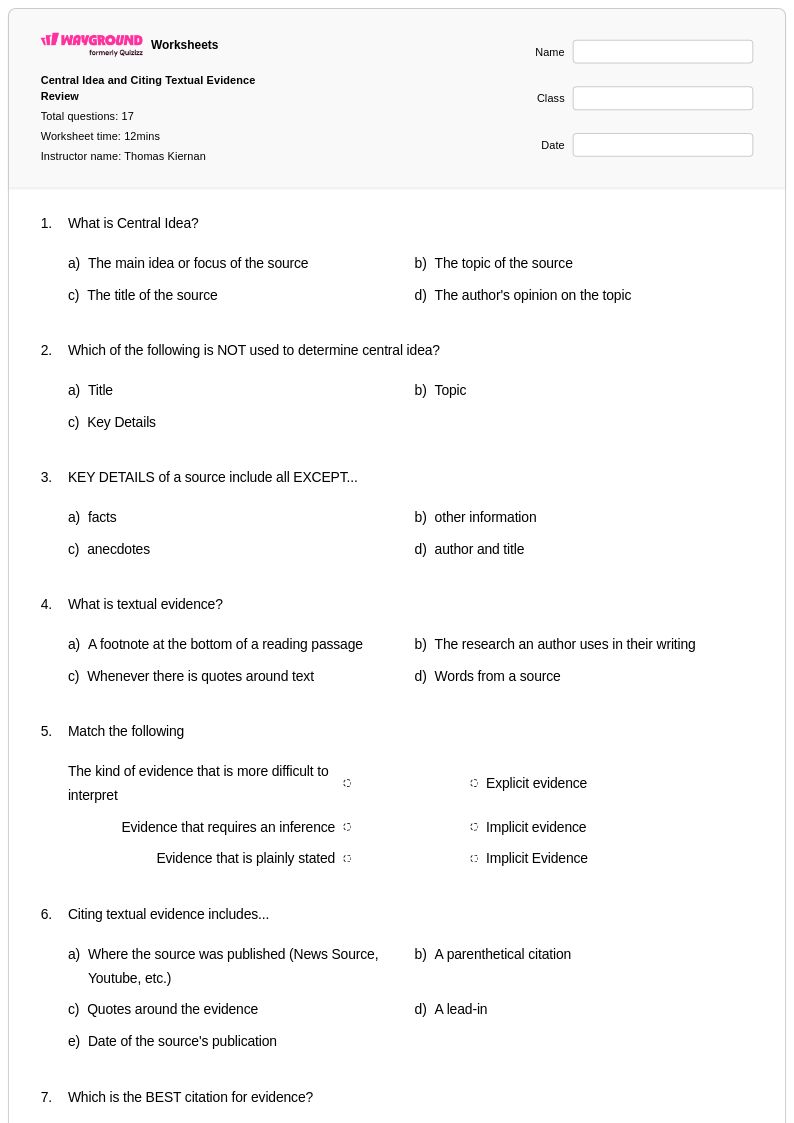
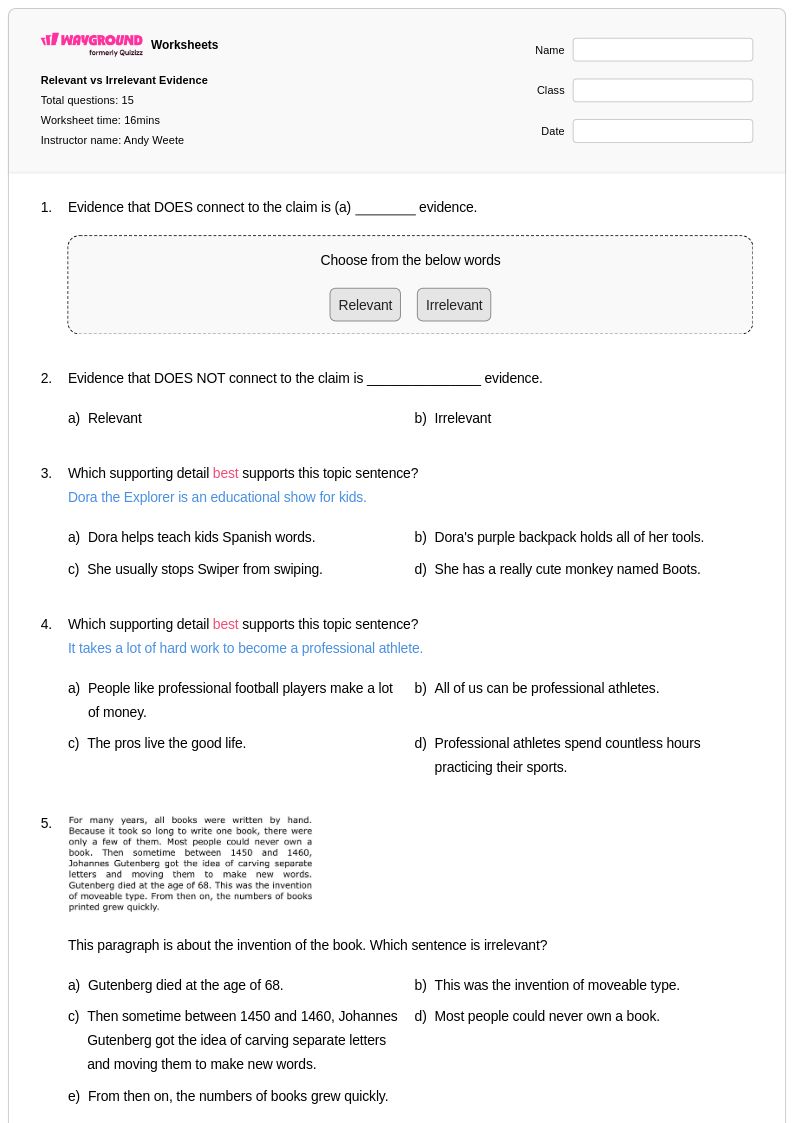
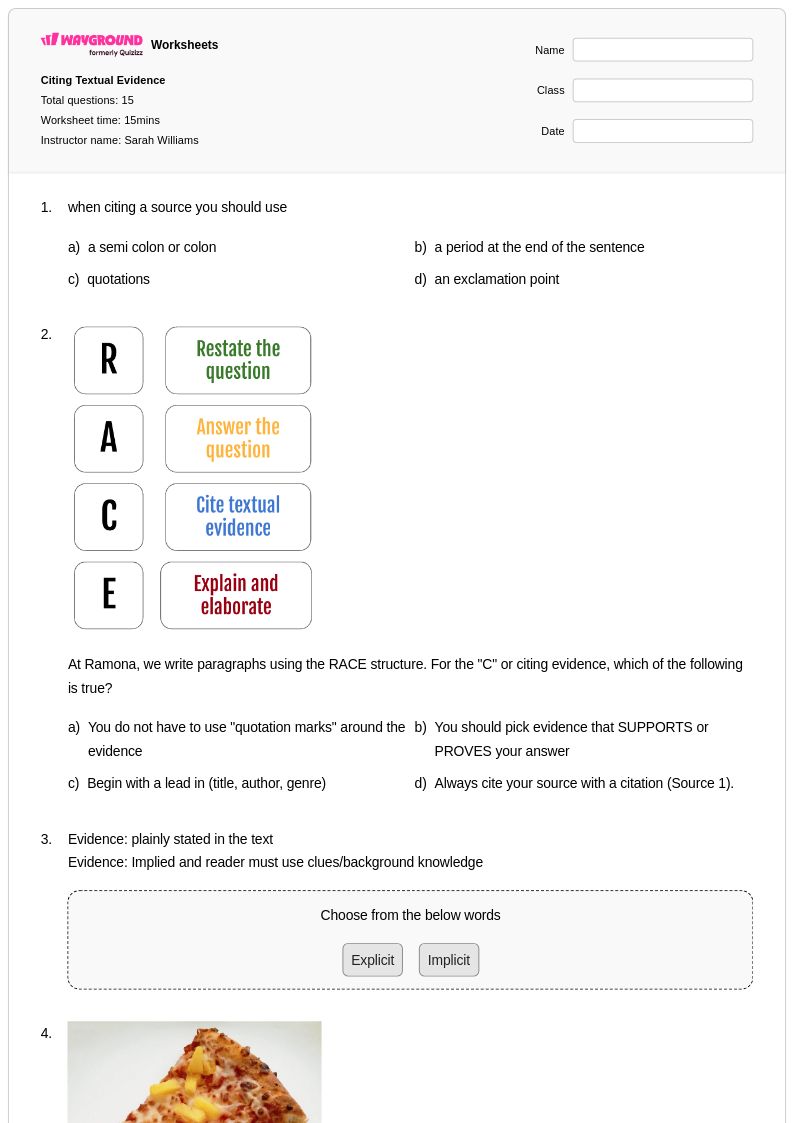
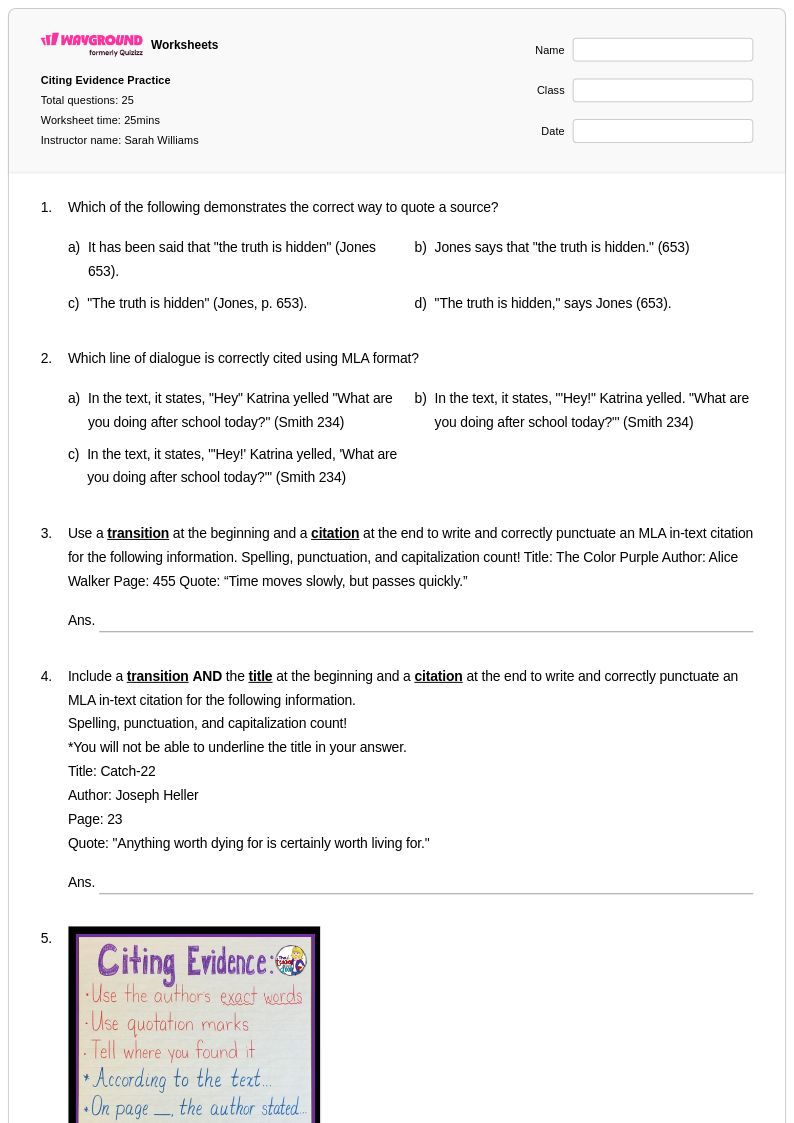
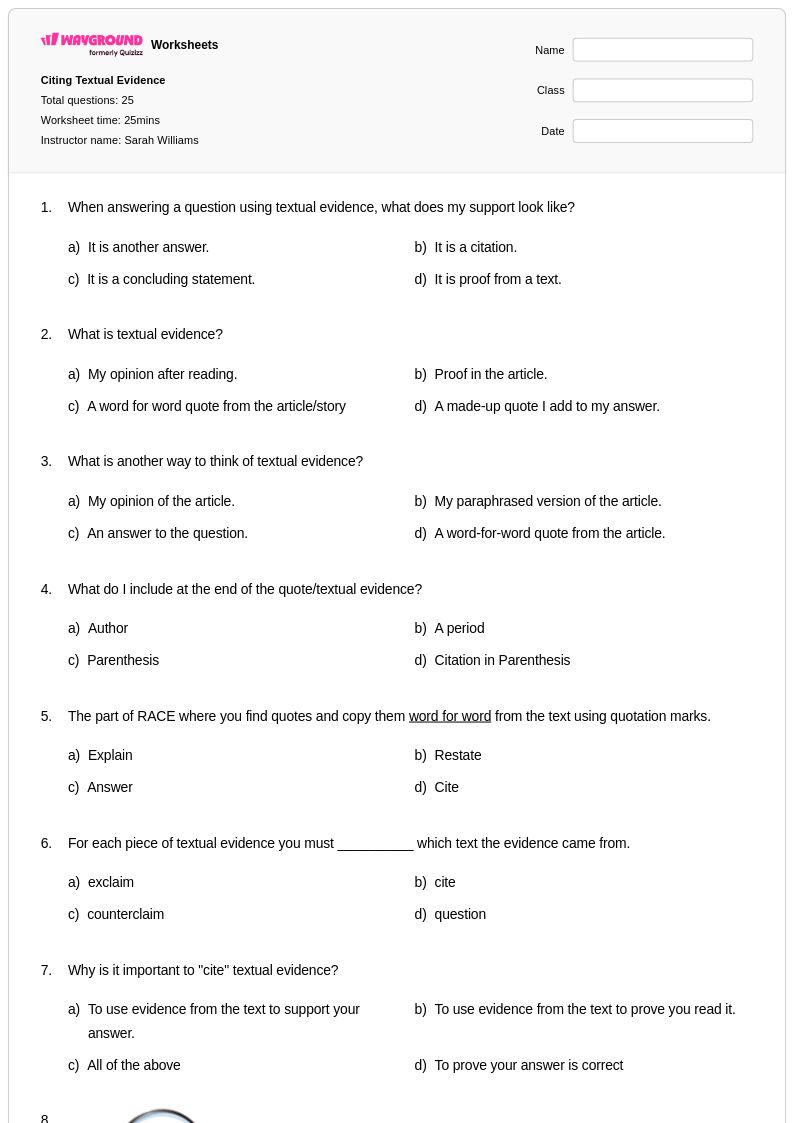
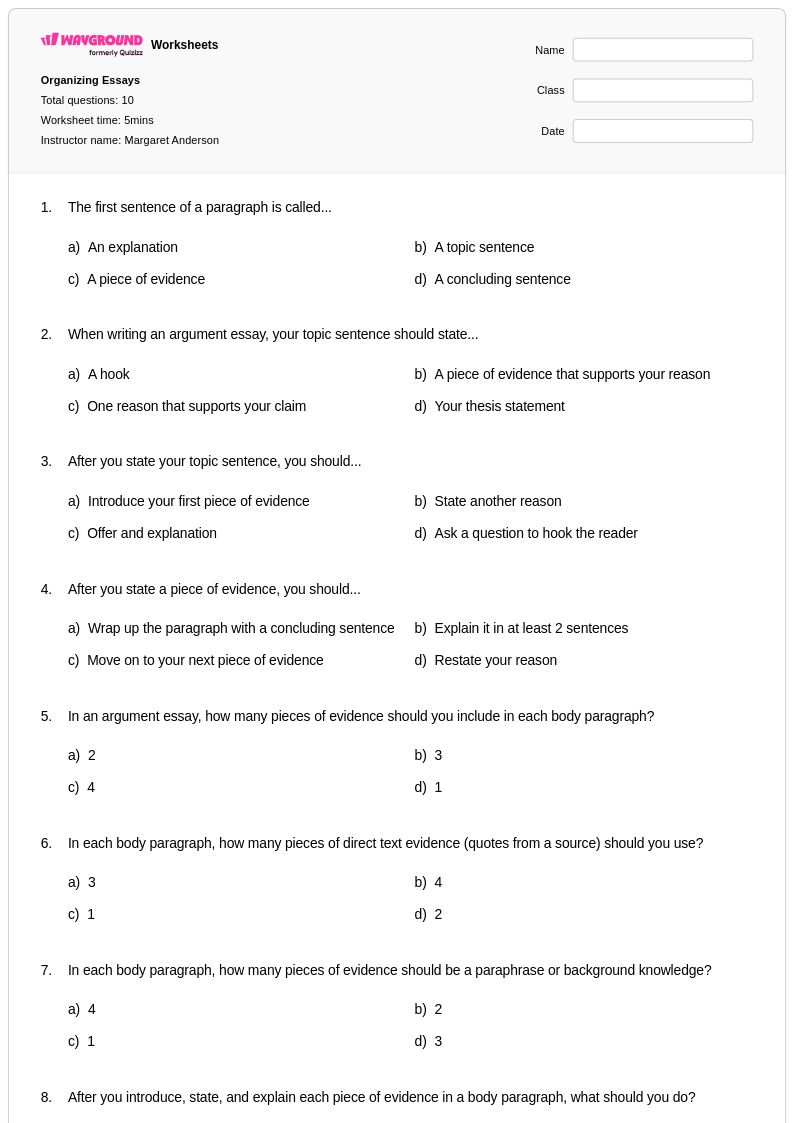
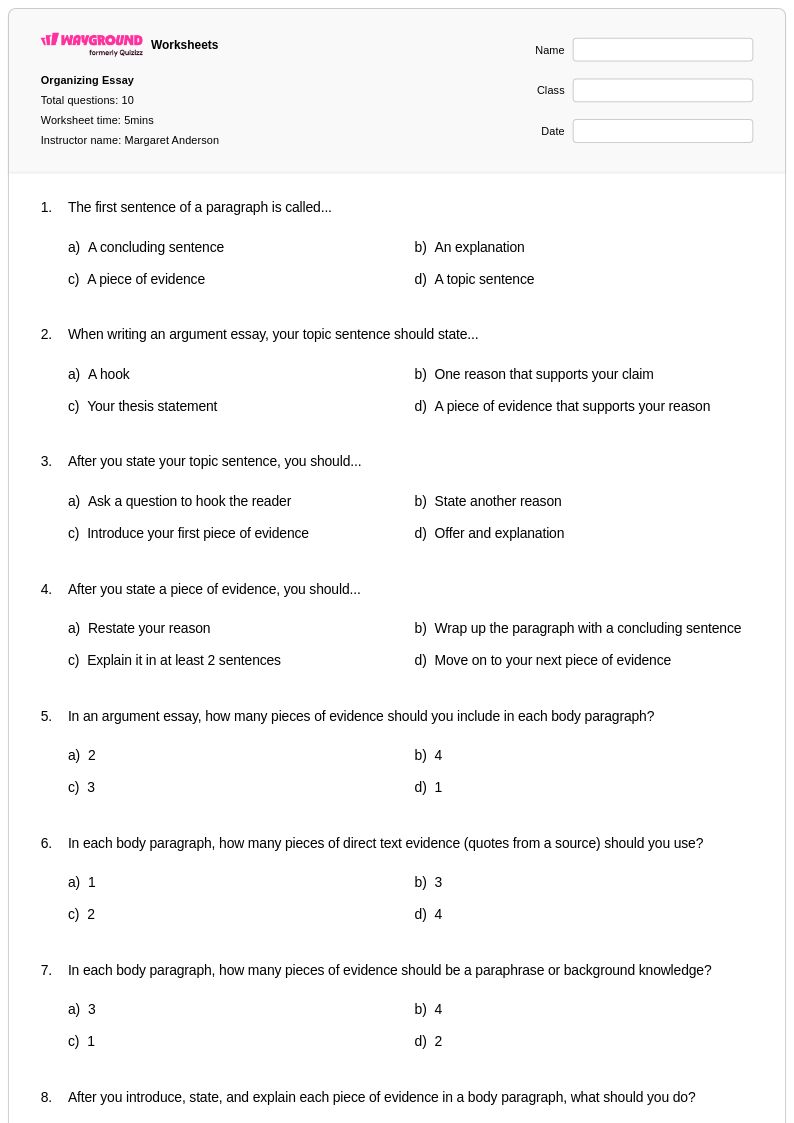
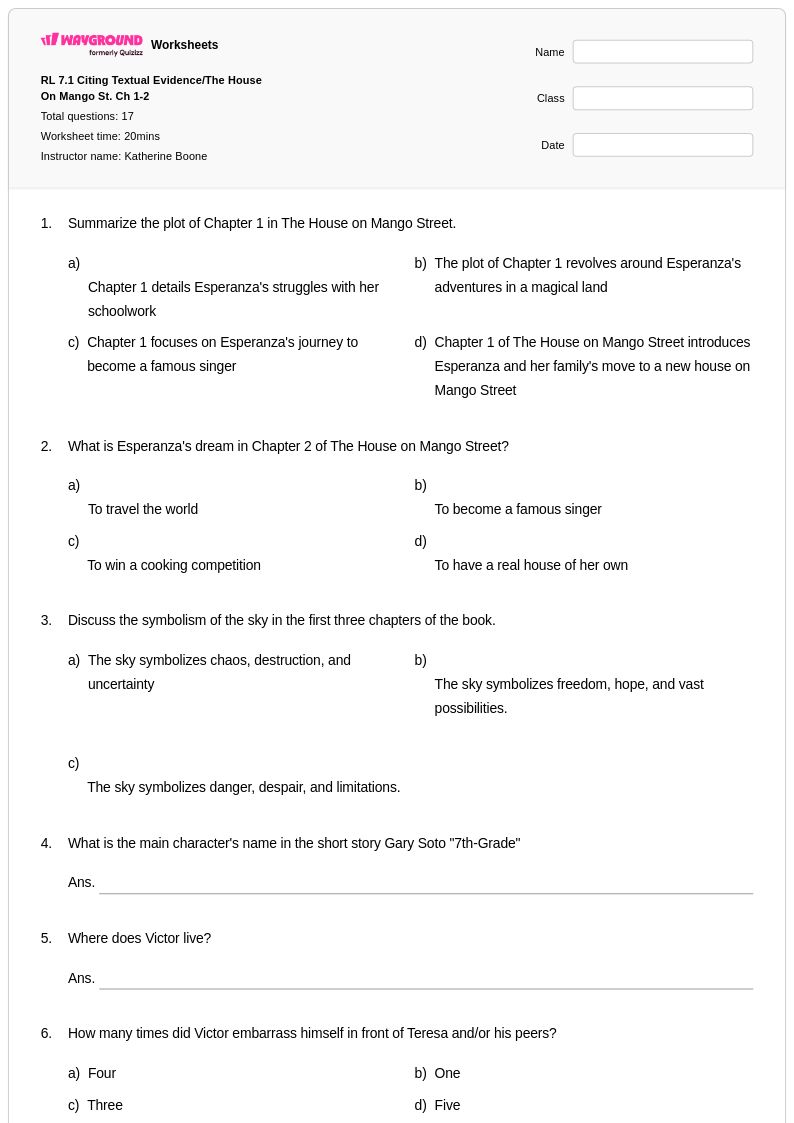
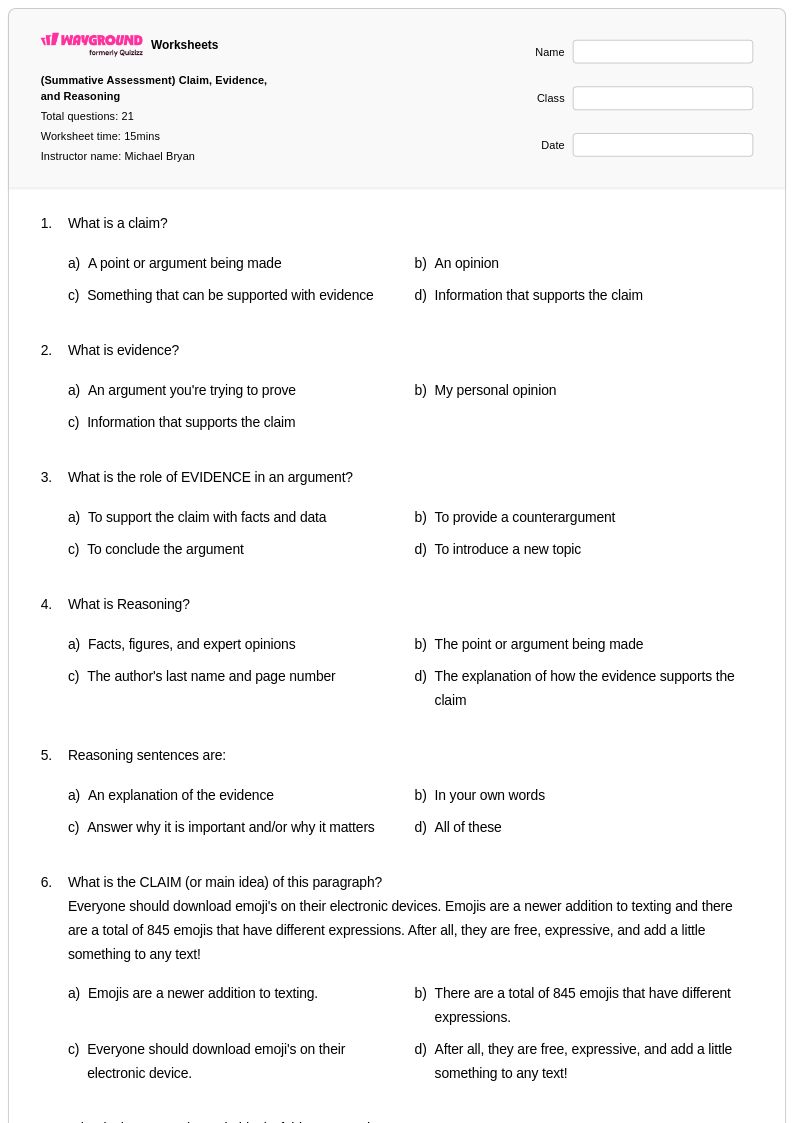
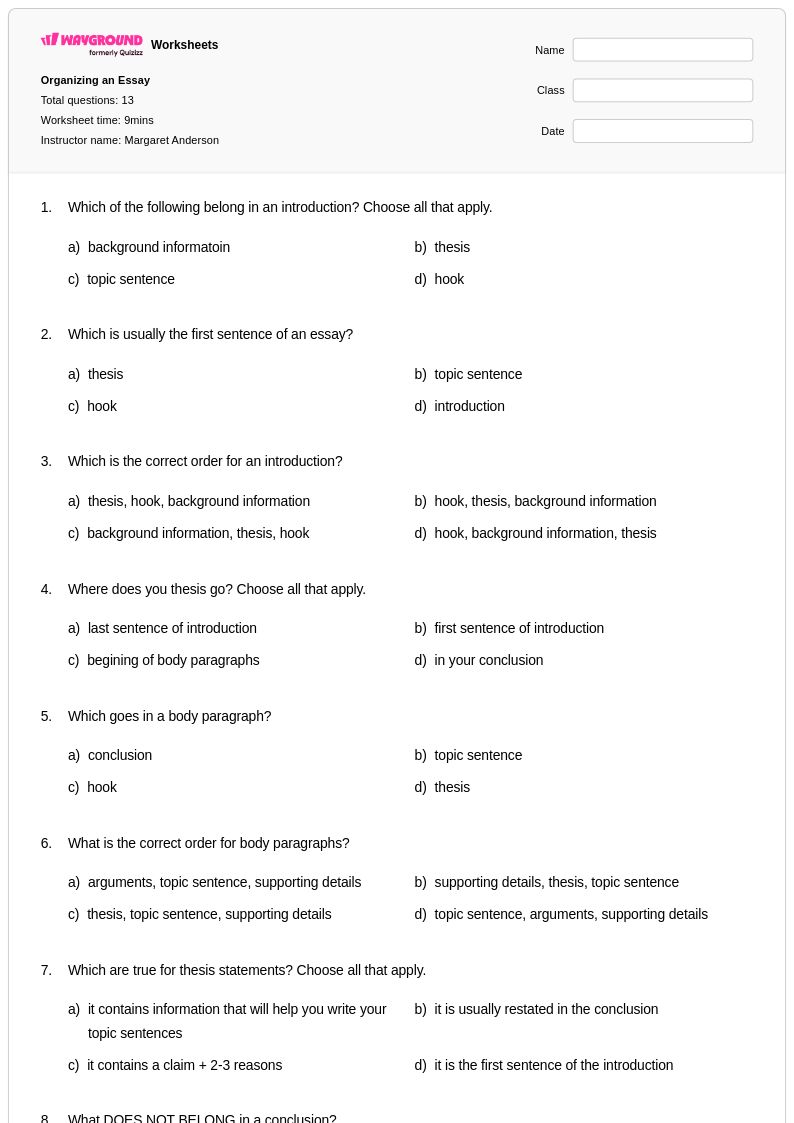
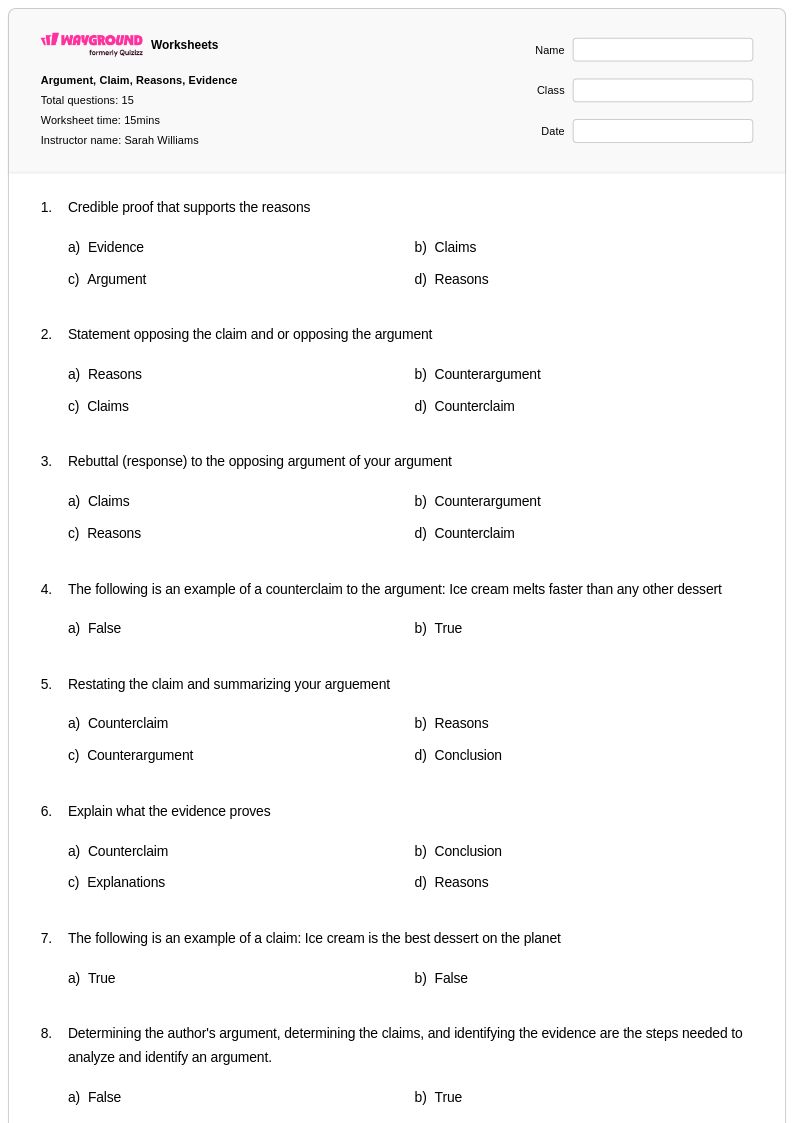
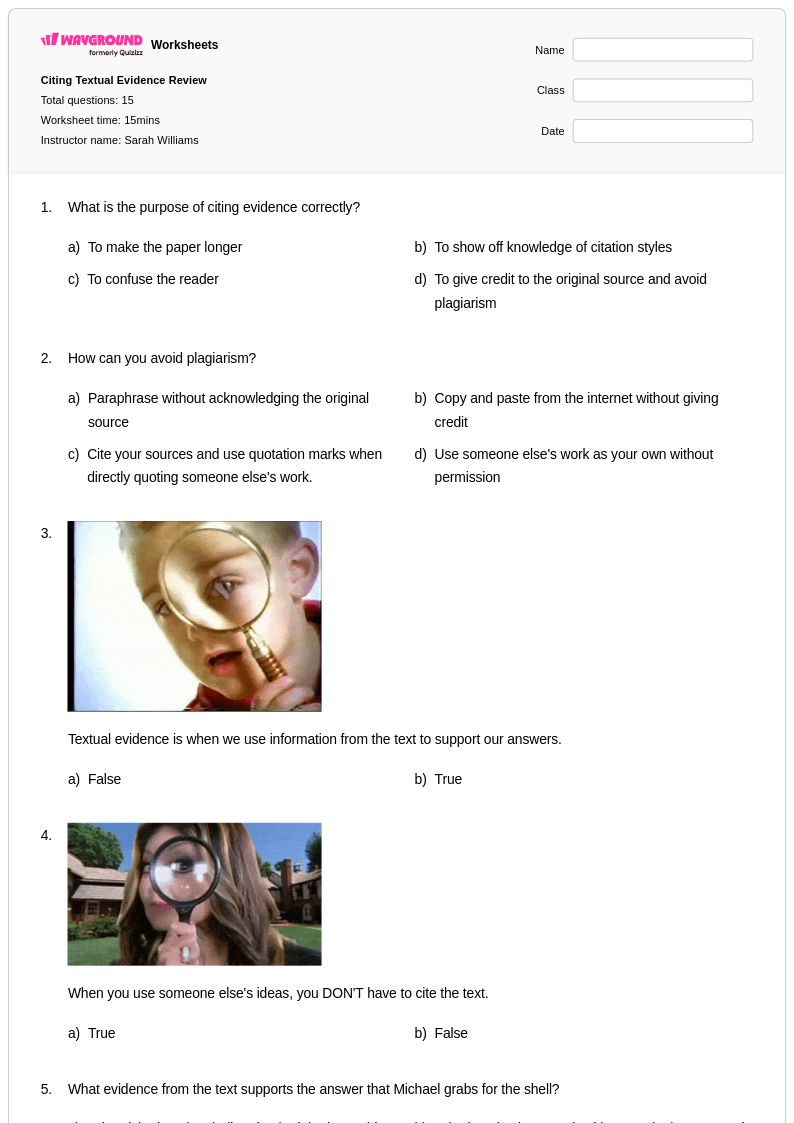
Organizing evidence represents a fundamental skill in Class 7 writing instruction, and Wayground's comprehensive worksheet collection provides targeted practice for students developing this critical competency. These carefully crafted worksheets guide seventh-grade students through the systematic process of gathering, evaluating, and arranging supporting details to strengthen their written arguments and explanations. Students engage with practice problems that challenge them to identify relevant evidence from multiple sources, determine the most compelling support for their claims, and sequence information logically within paragraphs and essays. Each worksheet includes a detailed answer key that allows for immediate feedback and self-assessment, while the free printable format ensures accessibility for all learning environments. The pdf resources encompass various text types and writing scenarios, helping students master evidence organization across narrative, informational, and argumentative writing contexts.
Wayground's extensive platform, formerly known as Quizizz, empowers educators with millions of teacher-created resources specifically designed to strengthen students' evidence organization abilities. The robust search and filtering capabilities allow teachers to quickly locate worksheets that align with specific curriculum standards and match their students' developmental needs, while differentiation tools enable customization for learners at various skill levels. Teachers can seamlessly adapt these materials for both remediation support and enrichment challenges, utilizing the flexible format options that include digital assignments and printable pdf versions for classroom or homework use. The platform's comprehensive approach to organizing evidence instruction supports systematic skill building through carefully sequenced practice opportunities, enabling educators to efficiently plan lessons that build students' confidence in structuring compelling, well-supported written work while addressing individual learning gaps through targeted worksheet selection.
FAQs
How do I teach students to organize evidence in their writing?
Teaching students to organize evidence starts with explicit instruction in structural frameworks such as order of importance, cause-and-effect, and chronological arrangement. Model how to group supporting details, examples, and textual evidence around a central claim before asking students to practice independently. Graphic organizers and structured worksheets are especially effective for making these invisible thinking processes visible, giving students a repeatable system they can apply across writing tasks.
What exercises help students practice organizing evidence?
Effective practice exercises include sorting activities where students categorize provided evidence under appropriate claims, sequencing tasks that ask them to arrange details in a logical order, and paragraph-building exercises where they select and arrange evidence to support a thesis. Repeated exposure to varied organizational structures, such as spatial, chronological, and cause-and-effect arrangements, builds the flexibility students need to match evidence structure to writing purpose.
What mistakes do students commonly make when organizing evidence?
The most common error is listing evidence without connecting it to a claim, producing a collection of facts rather than a supported argument. Students also frequently mix organizational structures within a single piece, disrupting logical flow and confusing the reader. Another persistent misconception is treating all evidence as equally weighted, rather than sequencing it strategically, such as placing the strongest point last for emphasis or first for immediate credibility.
How can I differentiate organizing evidence practice for students at different skill levels?
For students who struggle, provide pre-sorted evidence sets and ask them to choose the best arrangement with explanations, reducing the cognitive load of generating evidence while still building organizational reasoning. Advanced students can be challenged to evaluate multiple valid arrangements and argue for their preferred structure. On Wayground, teachers can apply accommodations such as reduced answer choices or read-aloud support to individual students, allowing the same worksheet activity to serve diverse learners simultaneously without drawing attention to differences.
How do I use organizing evidence worksheets from Wayground in my classroom?
Wayground's organizing evidence worksheets are available as printable PDFs for traditional classroom use and in digital formats for technology-integrated environments, making them flexible enough for whole-class instruction, independent practice, homework, or small-group remediation. Teachers can also host worksheets as a quiz directly on Wayground, enabling real-time student response tracking and immediate feedback. Answer keys are included with every worksheet, supporting both teacher-led review and student self-assessment.
At what grade level should students learn to organize evidence in writing?
Students typically begin structured evidence organization in upper elementary grades as they move into paragraph and essay writing, with expectations becoming more sophisticated through middle and high school as they engage with argumentative and analytical writing tasks. By the time students are writing literary analyses or research-based arguments, they are expected to independently select and sequence evidence with intentionality. Organizing evidence worksheets can be scaffolded for a wide range of skill levels, making them useful from roughly grades 4 through 12 depending on the complexity of the task.