Free Printable Participles Worksheets for Class 12
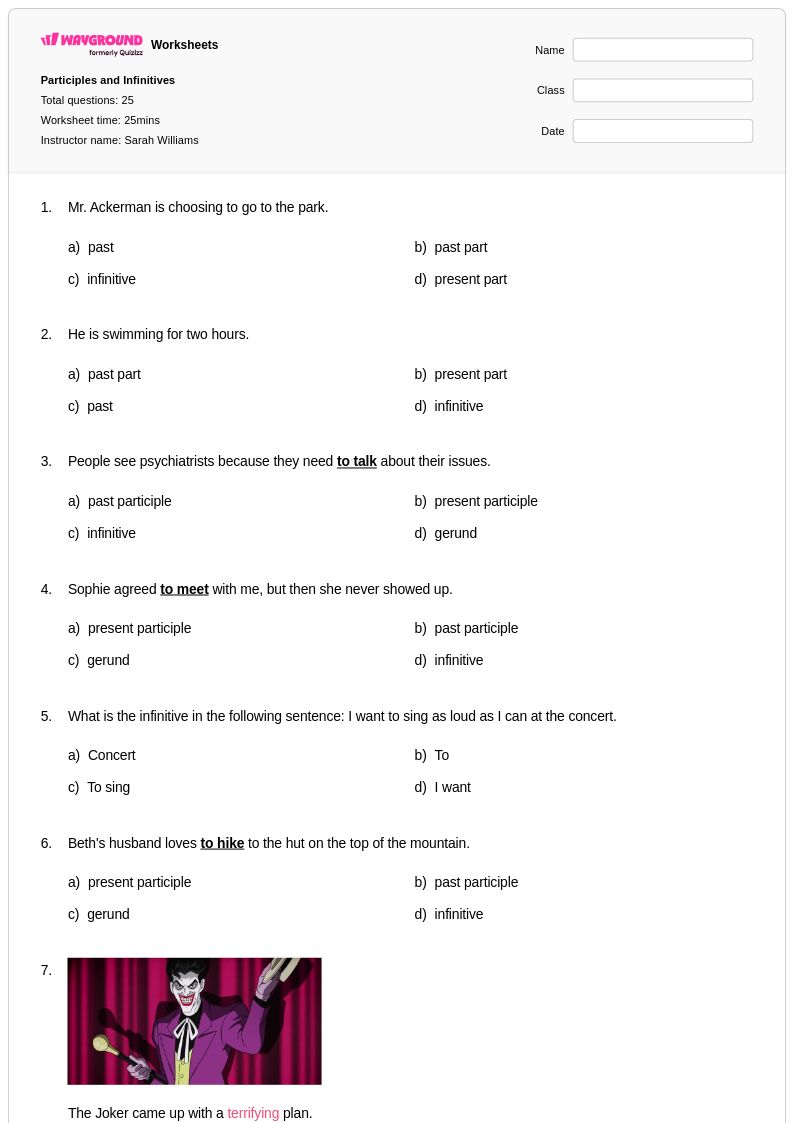
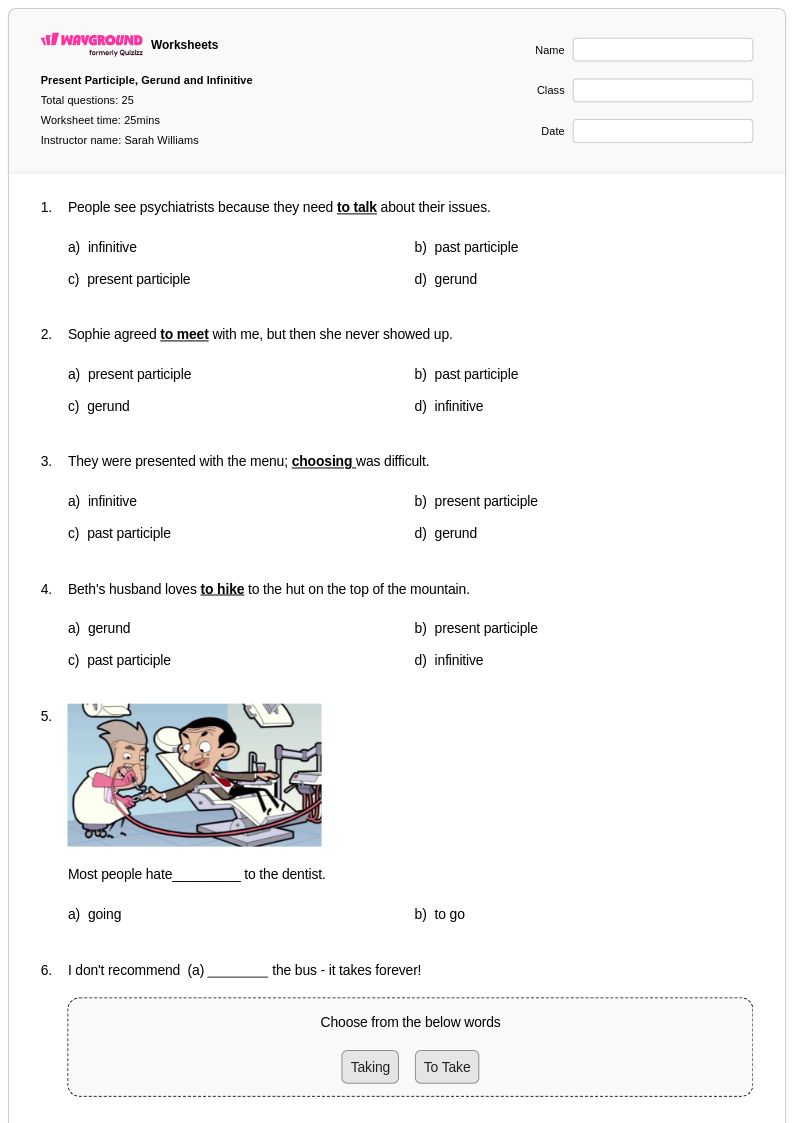
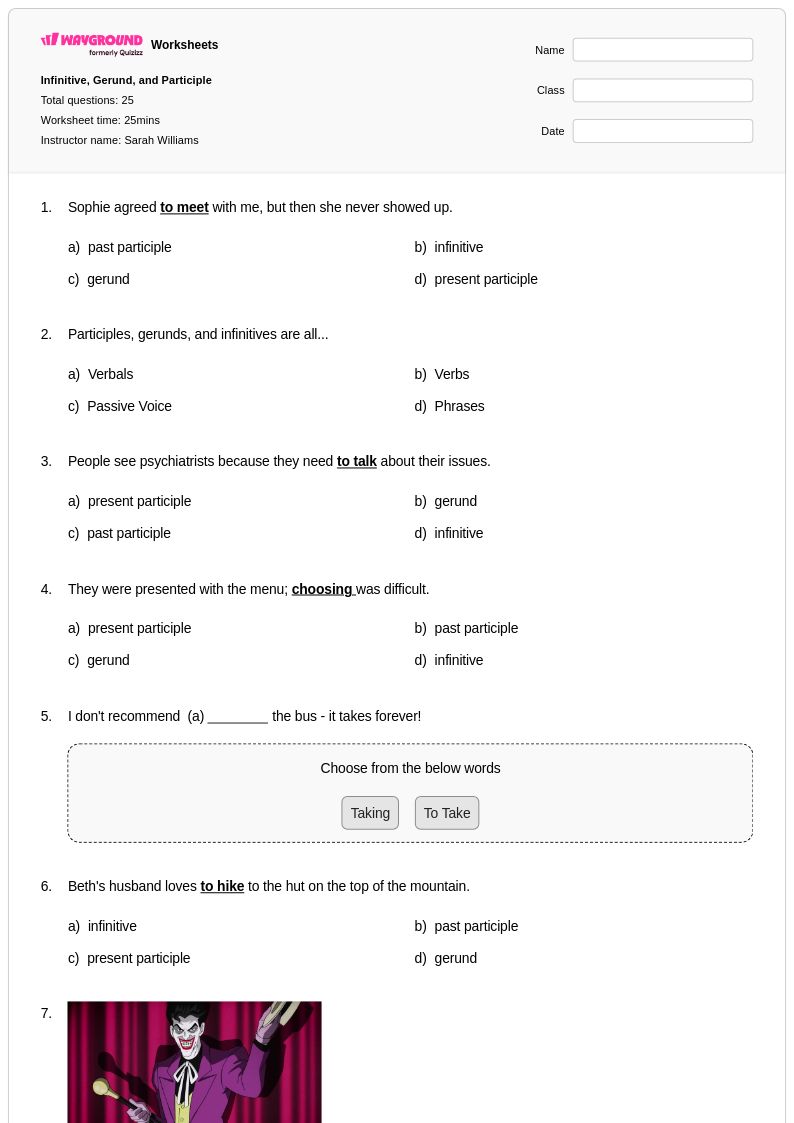
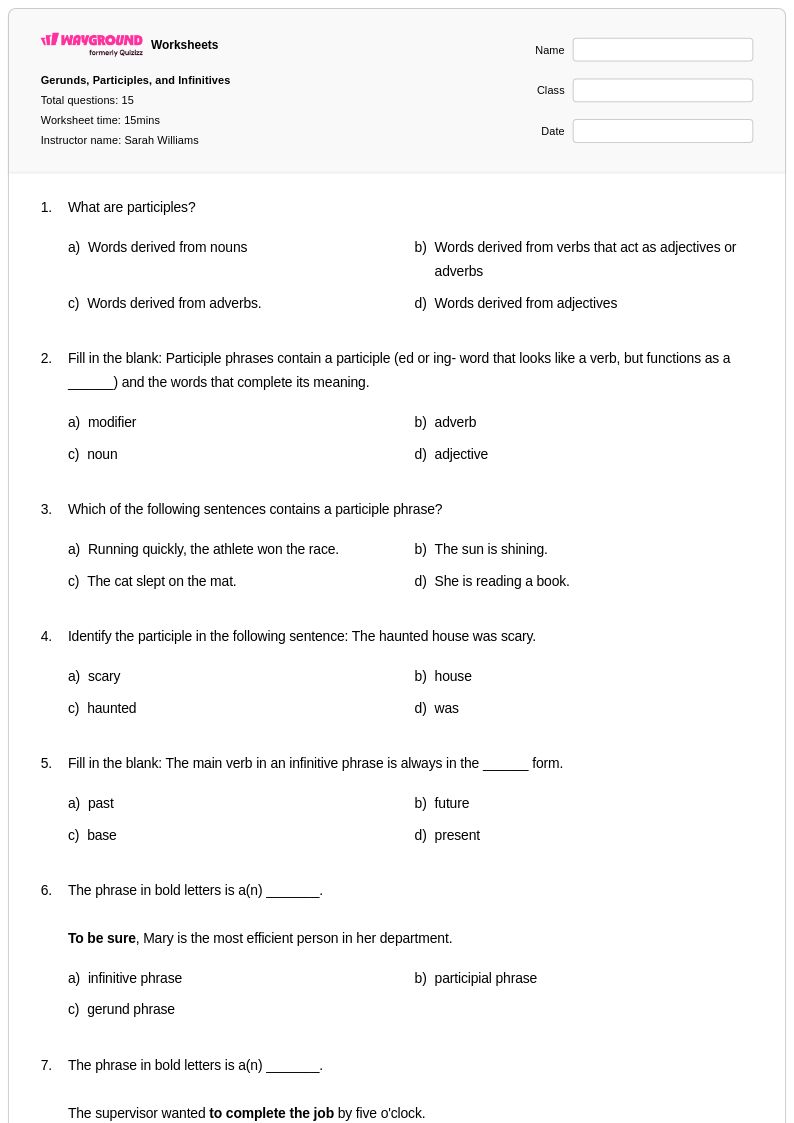
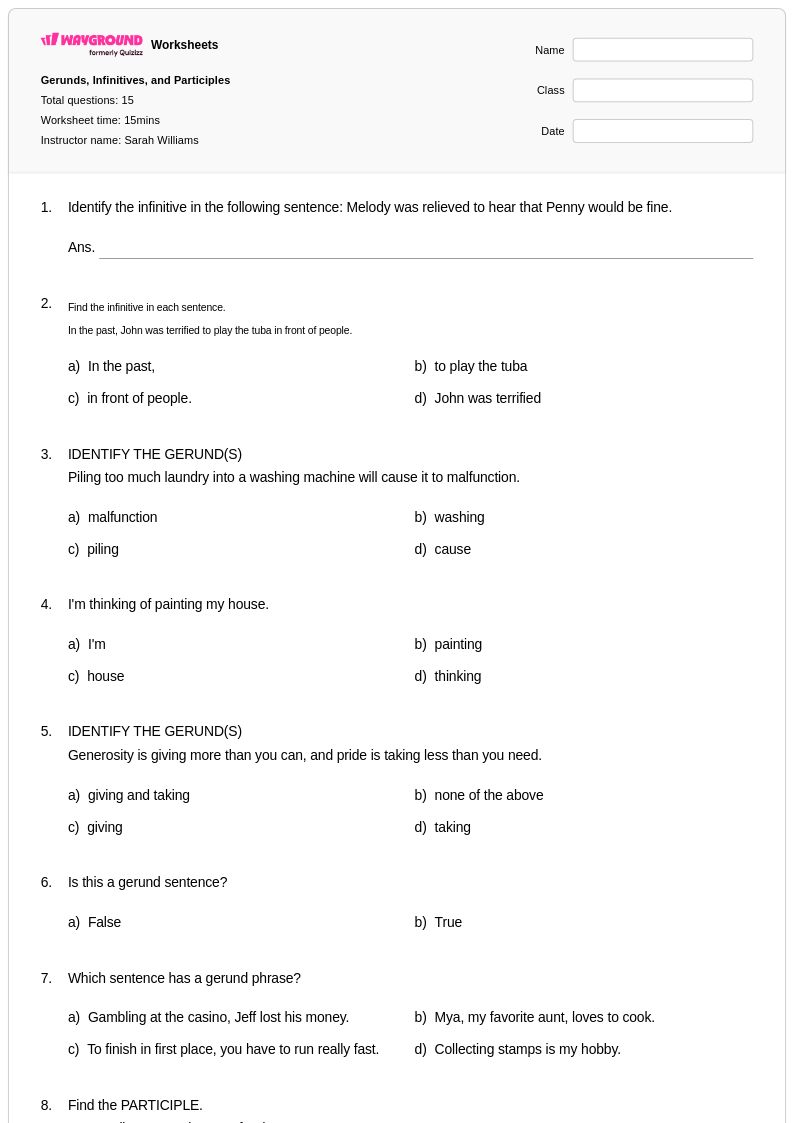
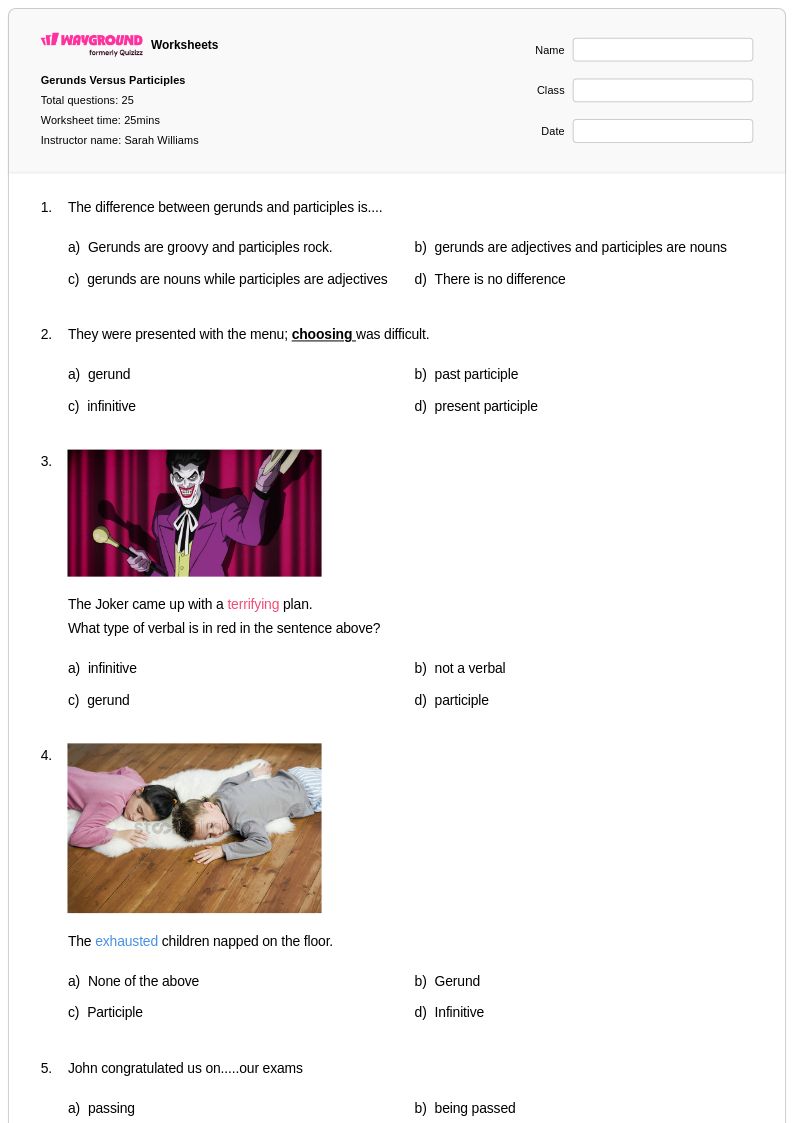
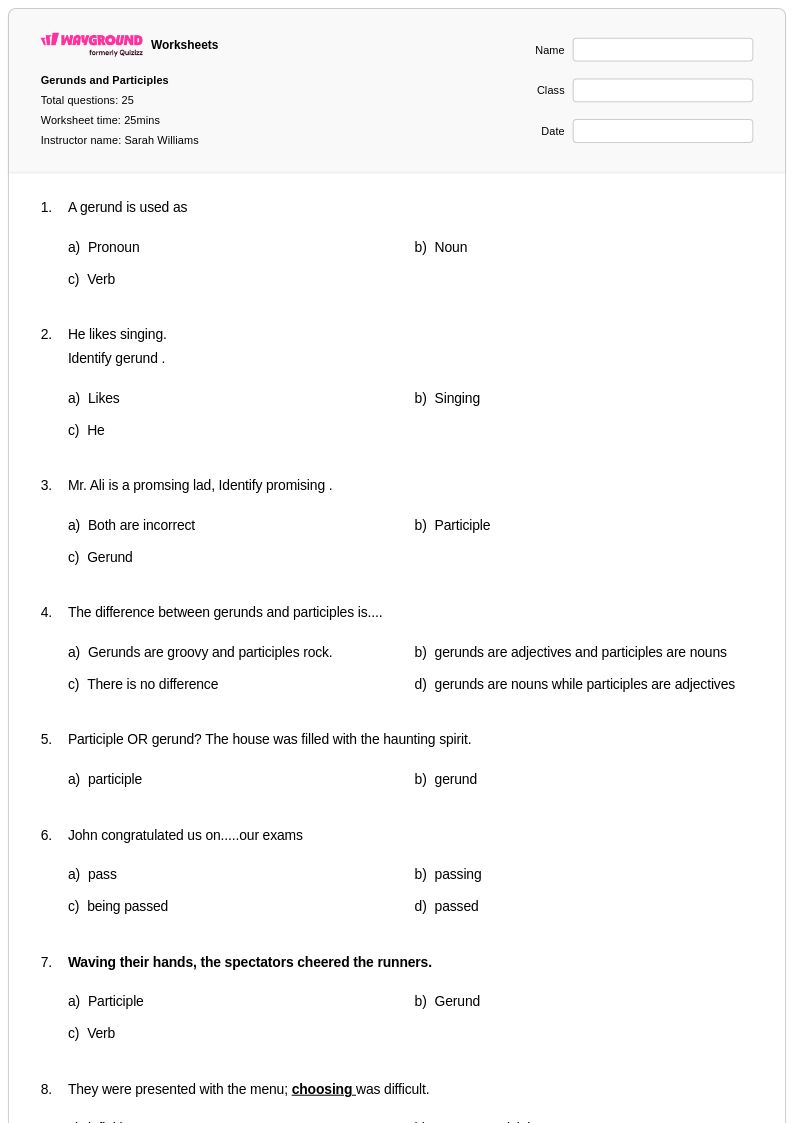
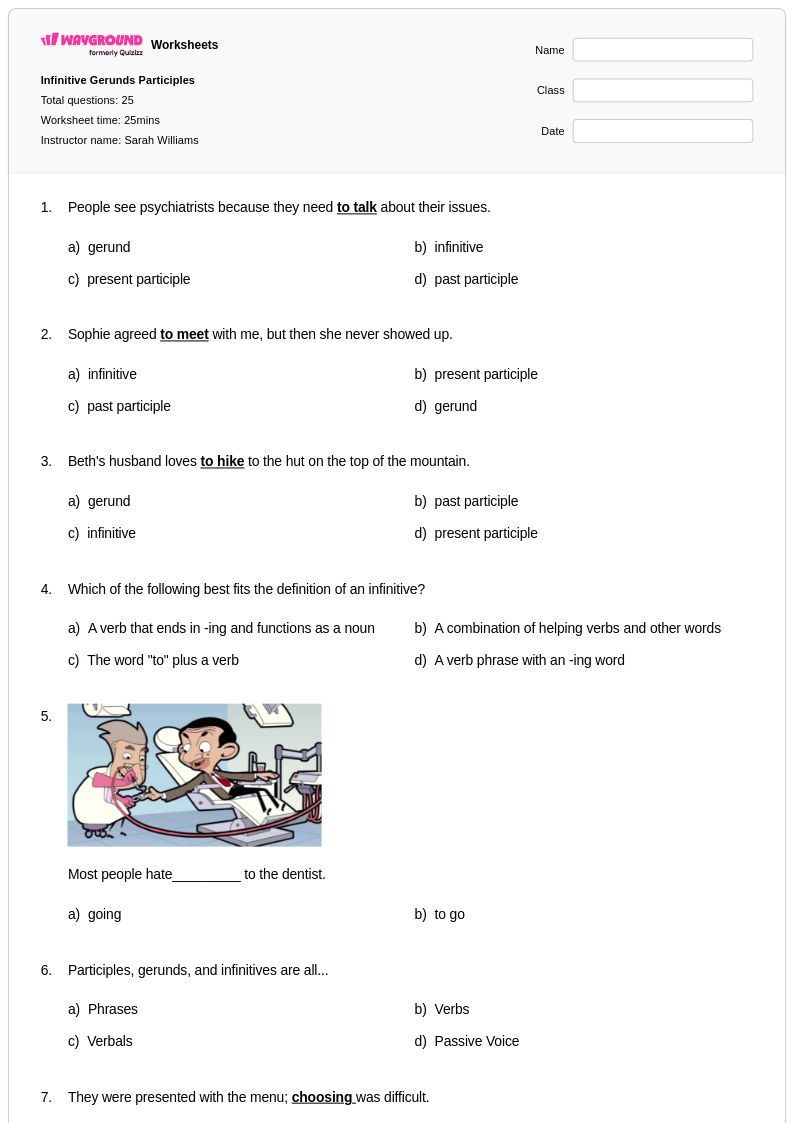
Class 12 participles worksheets from Wayground help students master verbal forms through comprehensive printables, practice problems, and answer keys that strengthen advanced English grammar skills.
Explore printable Participles worksheets for Class 12
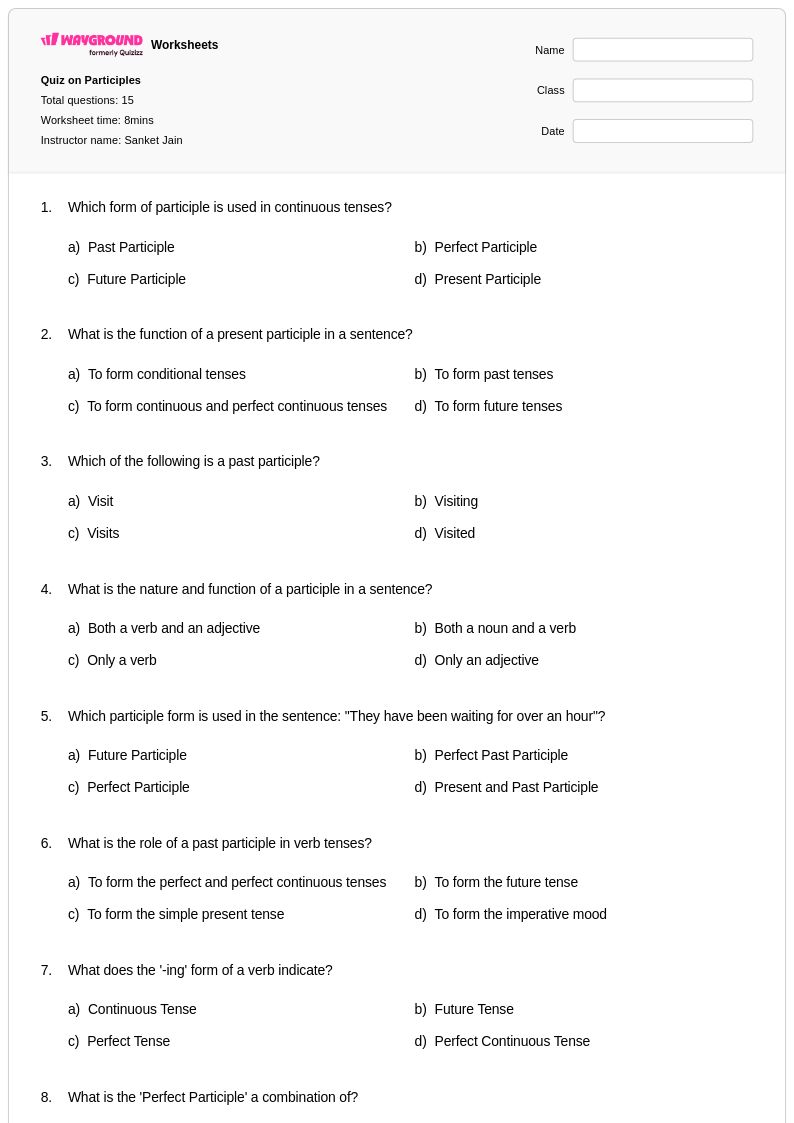
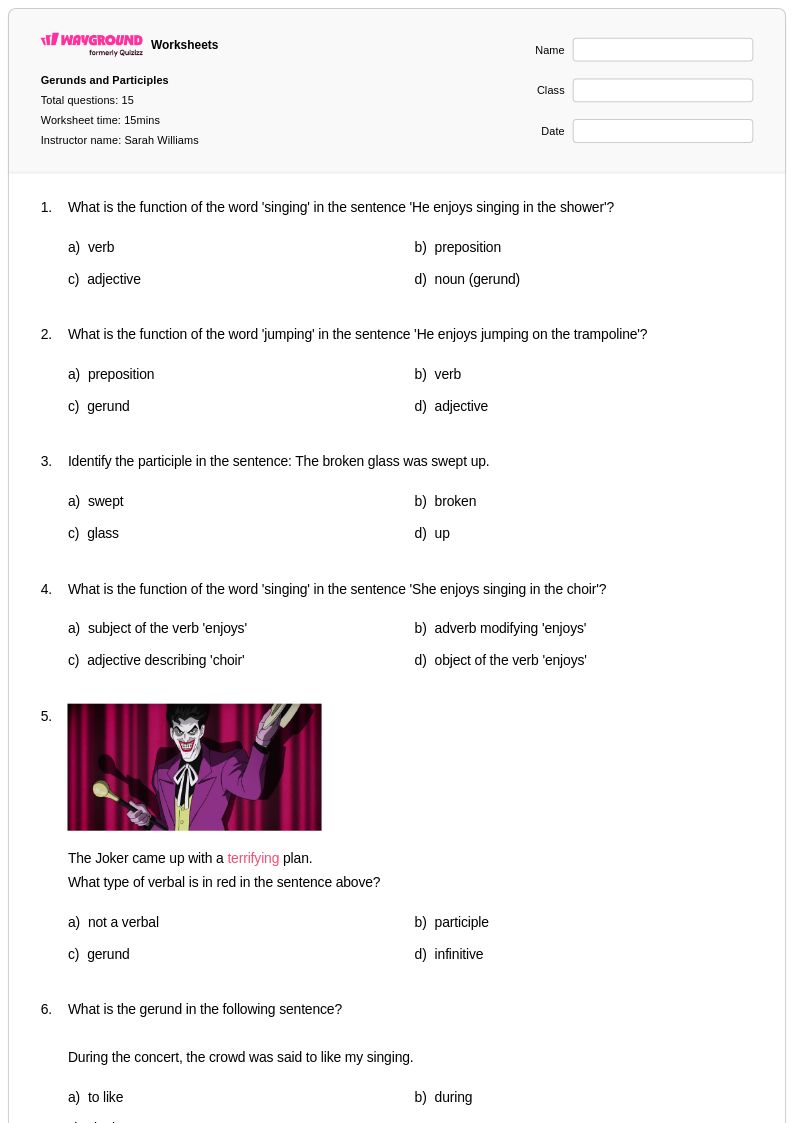
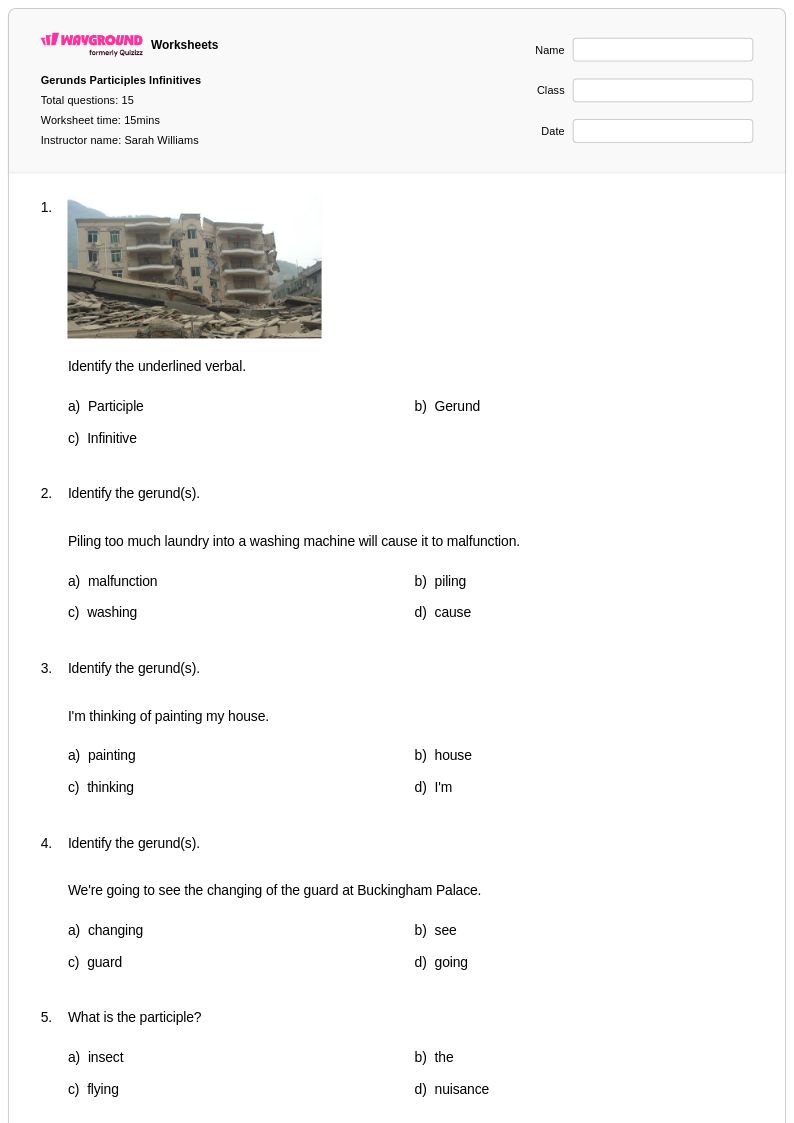
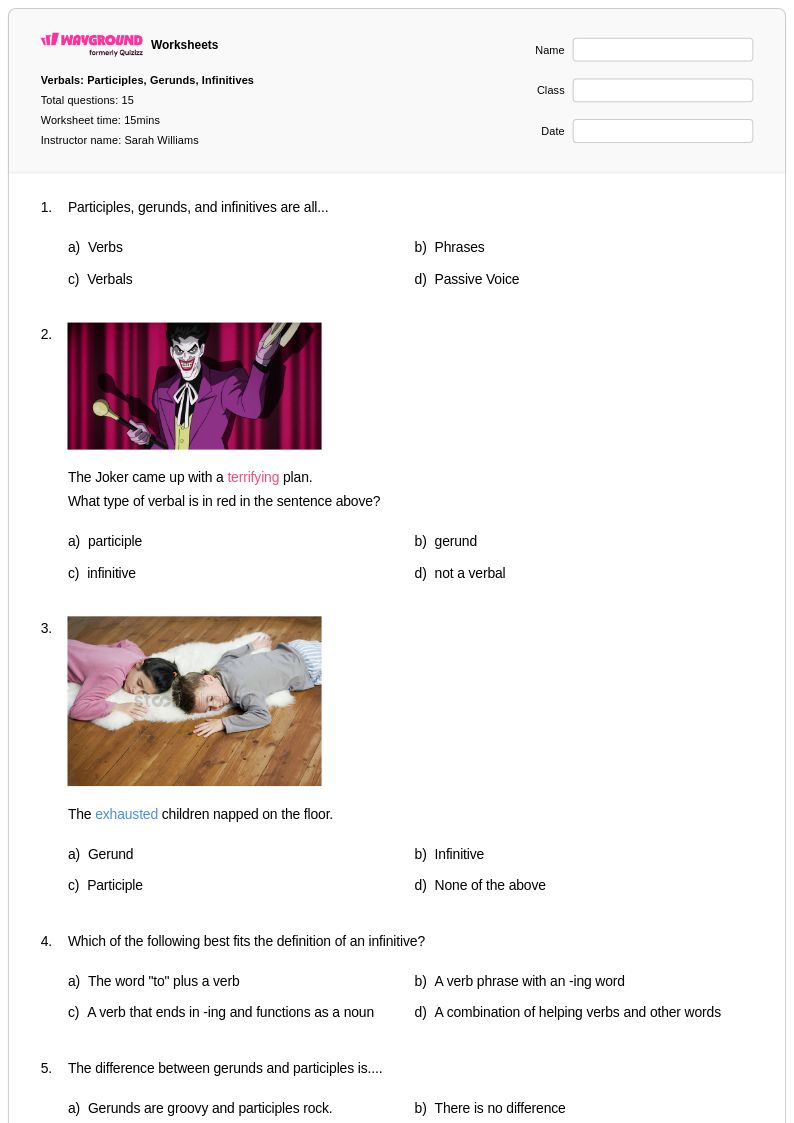
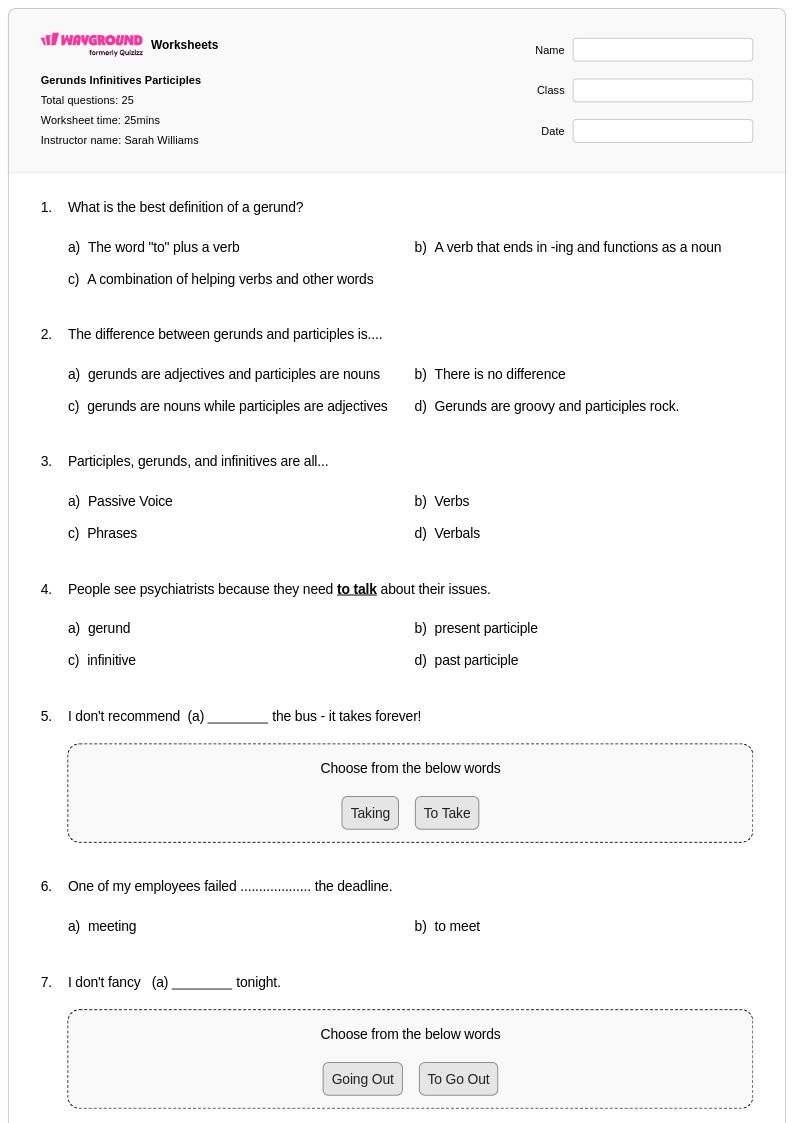
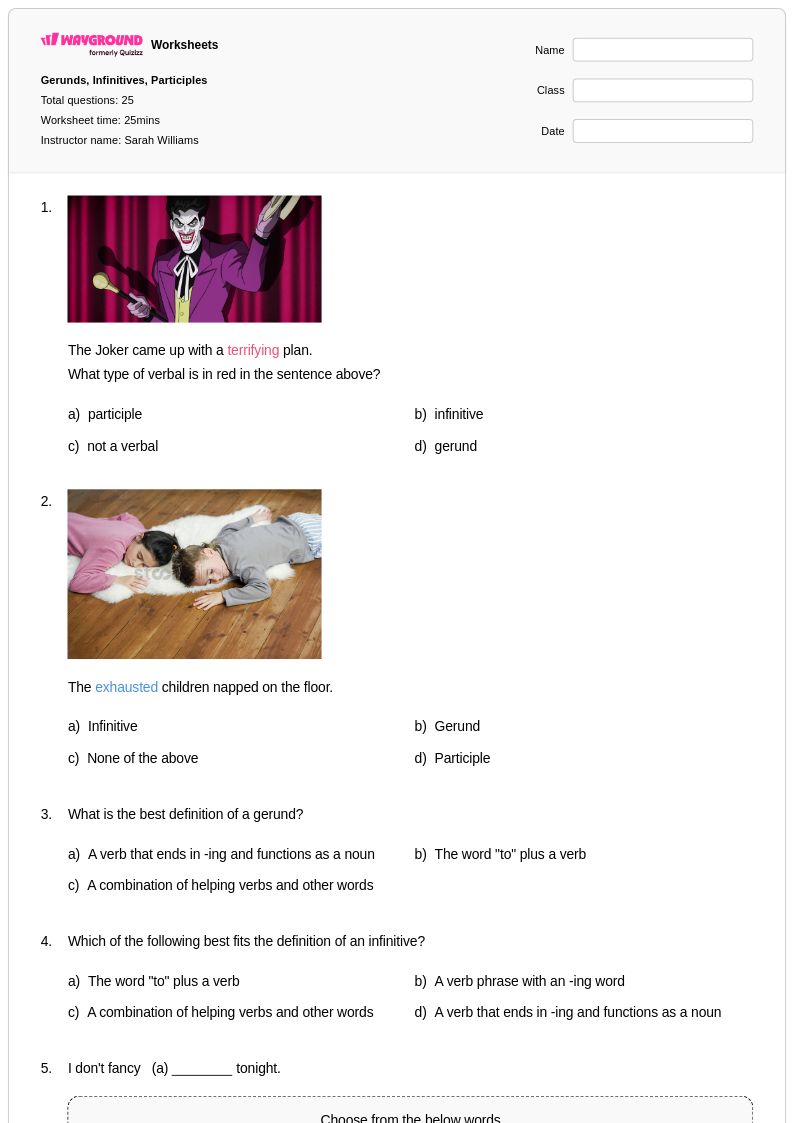
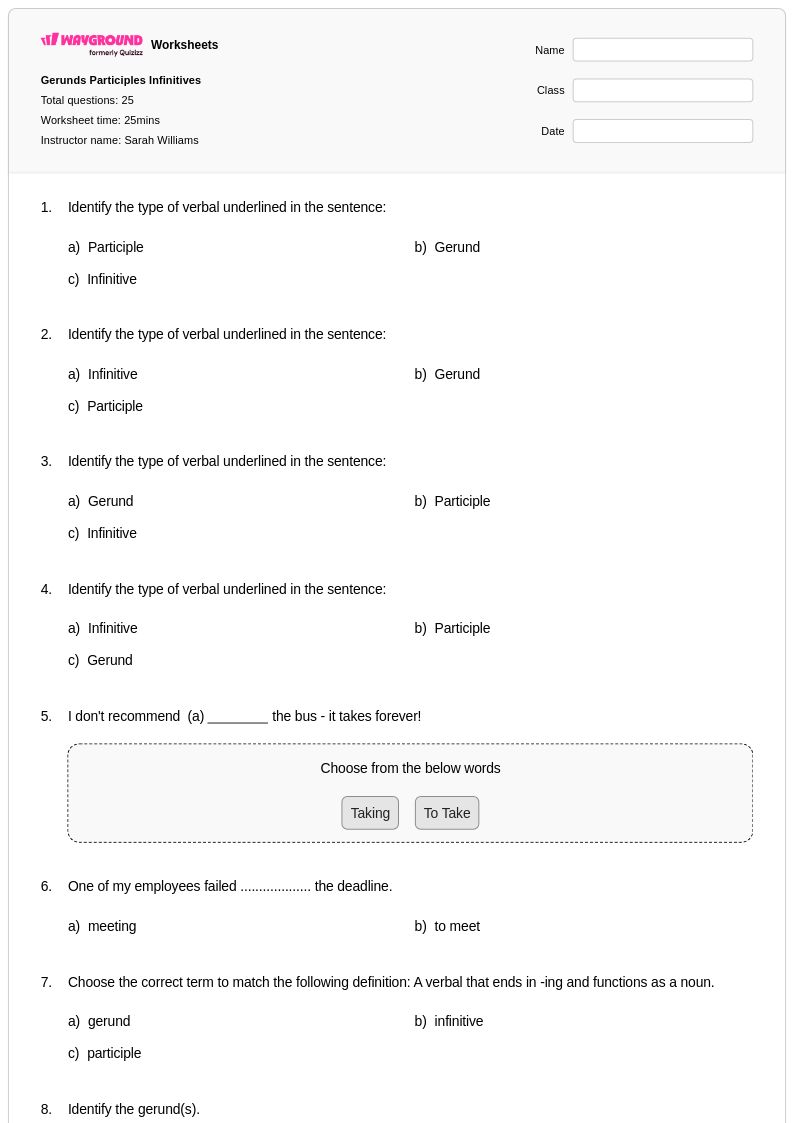
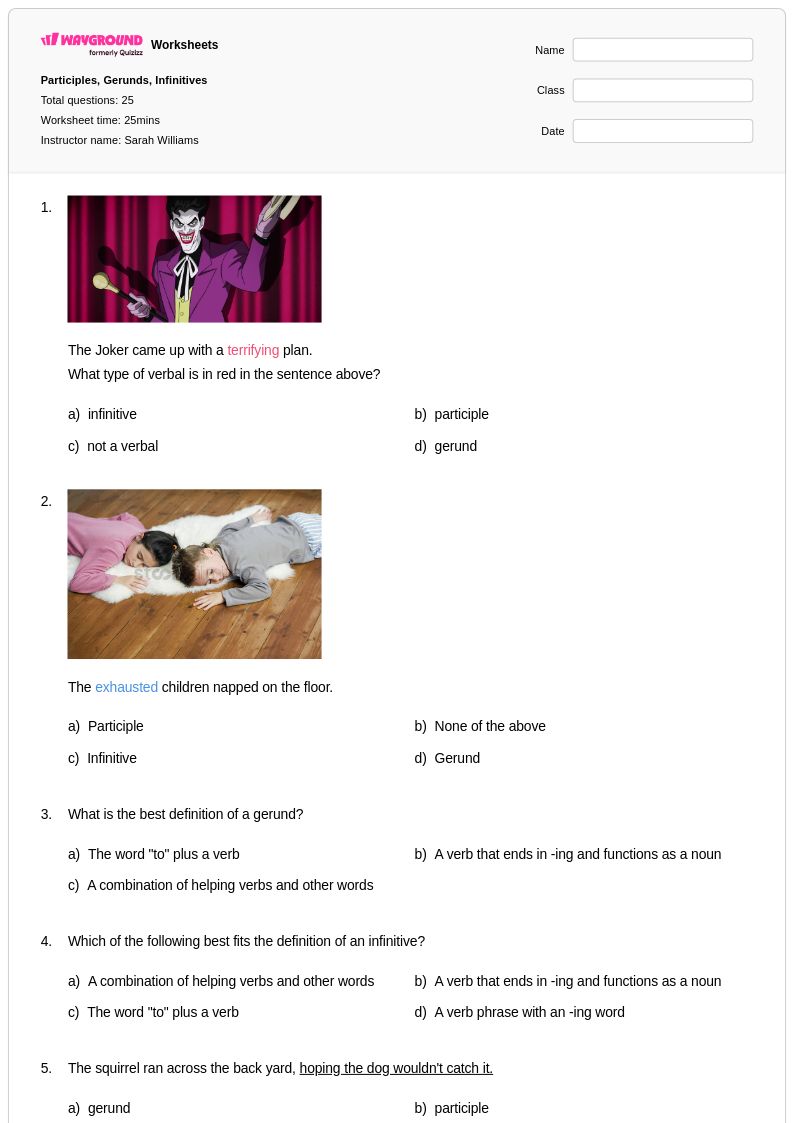
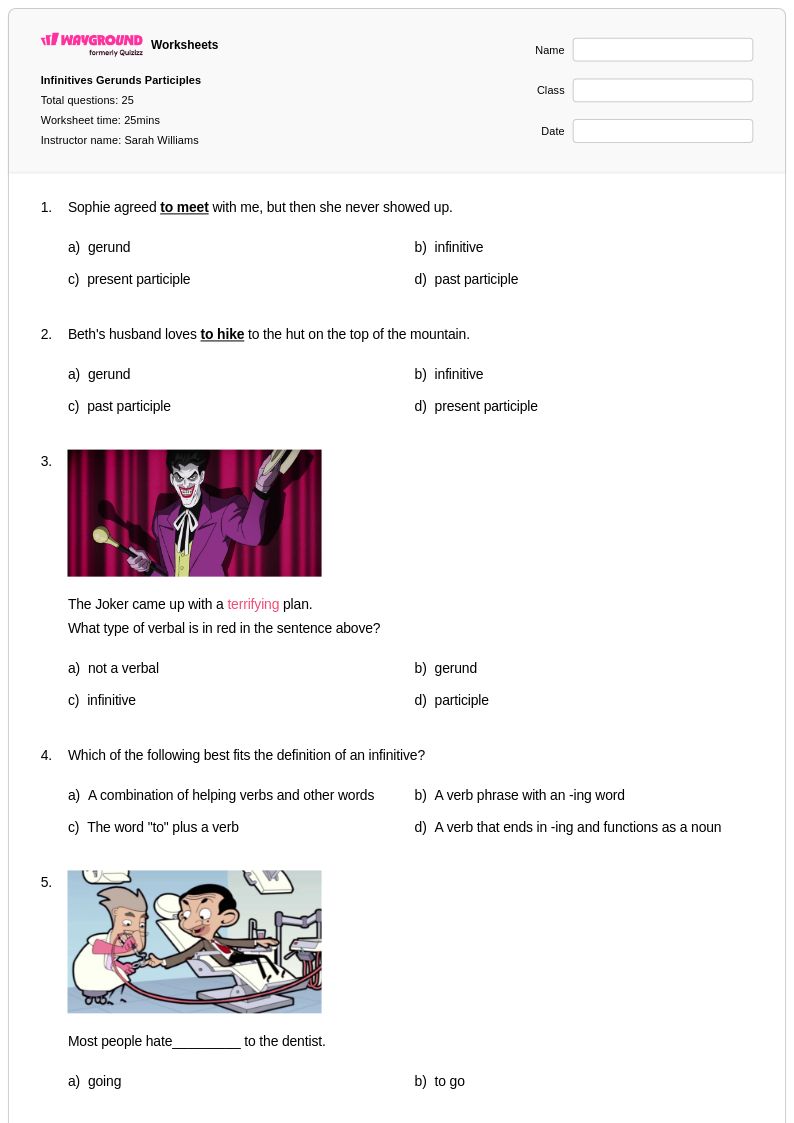
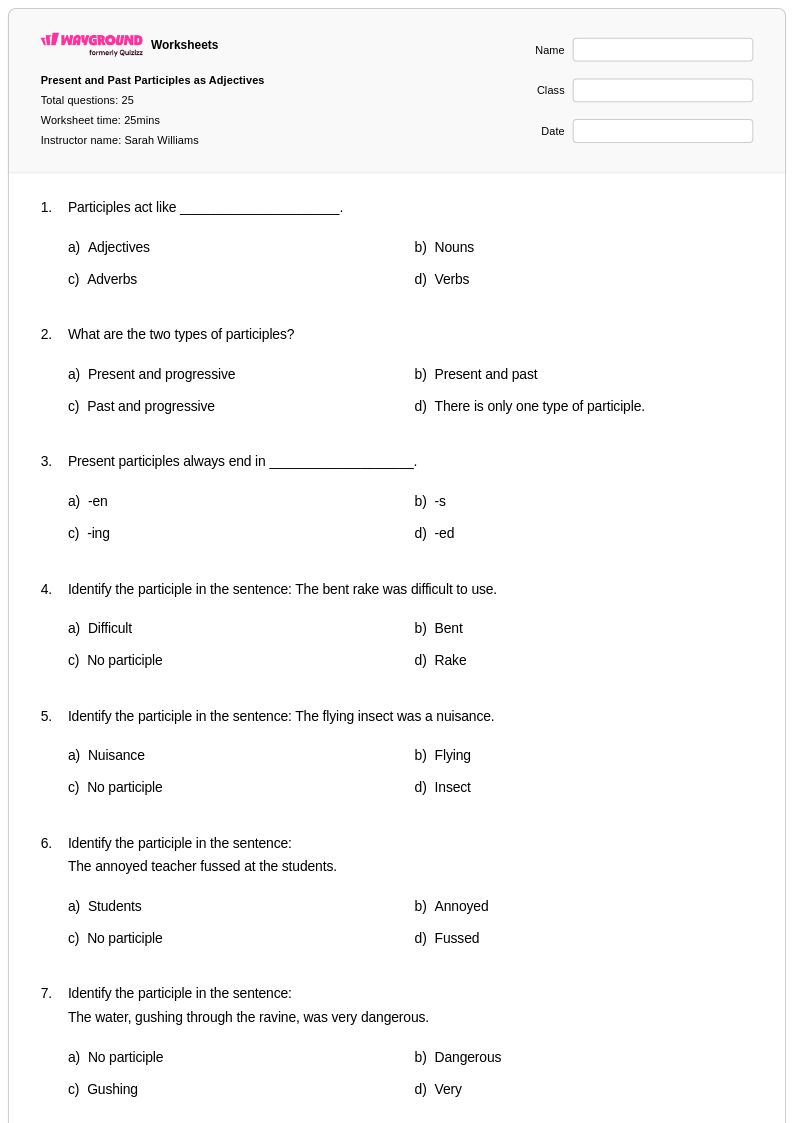
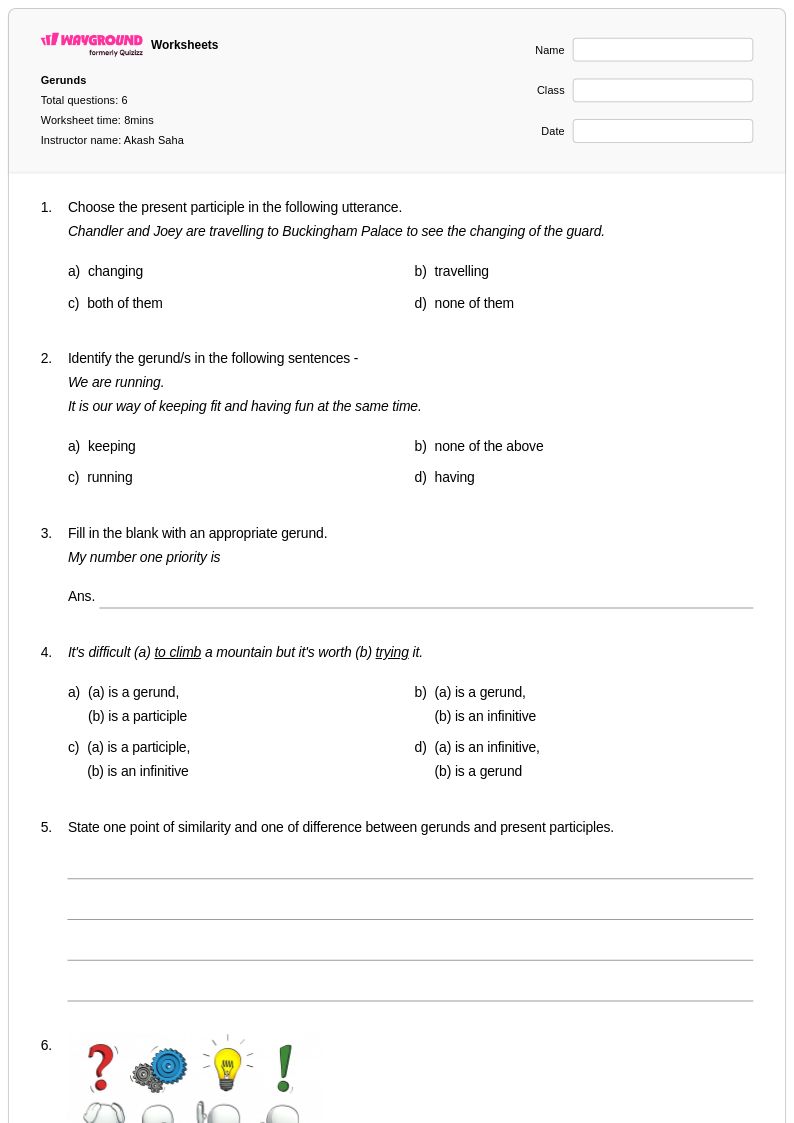
Participles represent a crucial component of verbal mastery for Class 12 students, bridging the gap between verb forms and their adjectival functions in sophisticated writing and analysis. Wayground's comprehensive participle worksheets provide extensive practice with present participles, past participles, and participial phrases, helping students recognize these versatile word forms in complex literary texts and incorporate them effectively in their own writing. These carefully crafted practice problems guide students through identifying participles in context, understanding their grammatical relationships, and avoiding common errors such as dangling participles that can obscure meaning. Each worksheet includes a detailed answer key and is available as a free printable pdf, making it easy for students to work independently while receiving immediate feedback on their understanding of these advanced grammatical concepts.
Wayground, formerly Quizizz, empowers educators with an extensive library of millions of teacher-created participle resources that streamline lesson planning and differentiated instruction for Class 12 English classes. The platform's robust search and filtering capabilities allow teachers to quickly locate worksheets that align with specific curriculum standards and target particular aspects of participial usage, from basic identification to advanced stylistic applications. Teachers can seamlessly customize existing materials or create new assessments that match their students' proficiency levels, supporting both remediation for struggling learners and enrichment opportunities for advanced writers. Available in both printable pdf format and interactive digital versions, these participle worksheets facilitate flexible classroom implementation while providing consistent skill practice that builds the grammatical sophistication essential for college-level writing and literary analysis.
FAQs
How do I teach participles to students who confuse them with regular verbs?
The key to teaching participles is helping students understand that a participle is a verbal form derived from a verb but functioning as an adjective, not a predicate. Start by showing students side-by-side examples: 'The running water' (participle modifying a noun) versus 'The water is running' (verb in a predicate). Having students physically highlight what the participle modifies in a sentence helps anchor this distinction before moving to participial phrases.
What exercises help students practice identifying and using participial phrases?
Effective practice moves from identification to production: begin with exercises where students underline participial phrases and draw arrows to the nouns they modify, then progress to sentence-combining tasks where two short sentences are merged using a participial phrase. Sentence revision tasks, where students add participial phrases to flat, simple sentences, are especially effective at building the skill of using these constructions in academic and creative writing.
What mistakes do students commonly make with participles?
The two most persistent errors are dangling participles and misplaced participles. A dangling participle occurs when the participial phrase has no clear noun to modify in the sentence, as in 'Running down the street, the bus was missed.' A misplaced participle occurs when the phrase is positioned too far from the noun it modifies, creating unintended meaning. Targeted practice with error-correction exercises, where students identify and rewrite flawed sentences, is the most reliable way to address both issues.
How do I differentiate participles instruction for students at different skill levels?
For students who are still building foundational grammar skills, focus on present and past participle identification in simple sentences before introducing phrases. For more advanced learners, assign tasks that require constructing complex sentences using participial phrases in varied positions, including introductory, mid-sentence, and end-of-sentence placement. On Wayground, teachers can use reduced answer choices for students who need additional support, which lowers cognitive load while keeping the same core learning objective in place.
How do I use Wayground's participles worksheets in my classroom?
Wayground's participles worksheets are available as printable PDFs for traditional classroom use and in digital formats for technology-integrated or hybrid learning environments. Teachers can also host worksheets directly as a quiz on Wayground, enabling real-time student responses and instant feedback. All worksheets include complete answer keys, making them practical for independent practice, homework, or structured in-class grammar lessons.
How do I help students understand the difference between present and past participles?
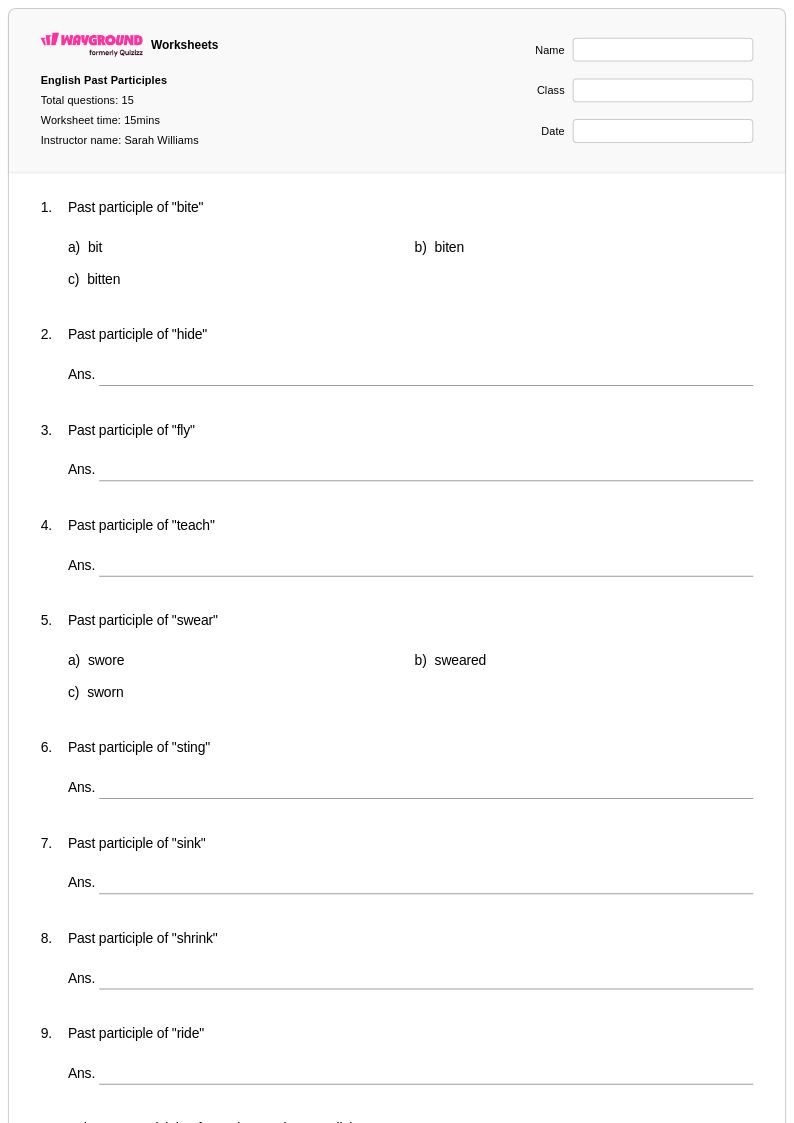
Present participles end in -ing and typically convey an active or ongoing quality, as in 'the glowing screen,' while past participles often end in -ed, -en, or -t and convey a completed or passive quality, as in 'the broken window.' A reliable instructional strategy is to provide students with a base verb and ask them to generate both forms, then use each in an adjective role within a sentence. This forces students to internalize the function, not just the form, of each type.