Free Printable Past Perfect Continuous Tense Worksheets for Class 8
Enhance Class 8 students' understanding of past perfect continuous tense with Wayground's comprehensive collection of free worksheets, printables, and practice problems featuring detailed answer keys and PDF downloads.
Explore printable Past Perfect Continuous Tense worksheets for Class 8
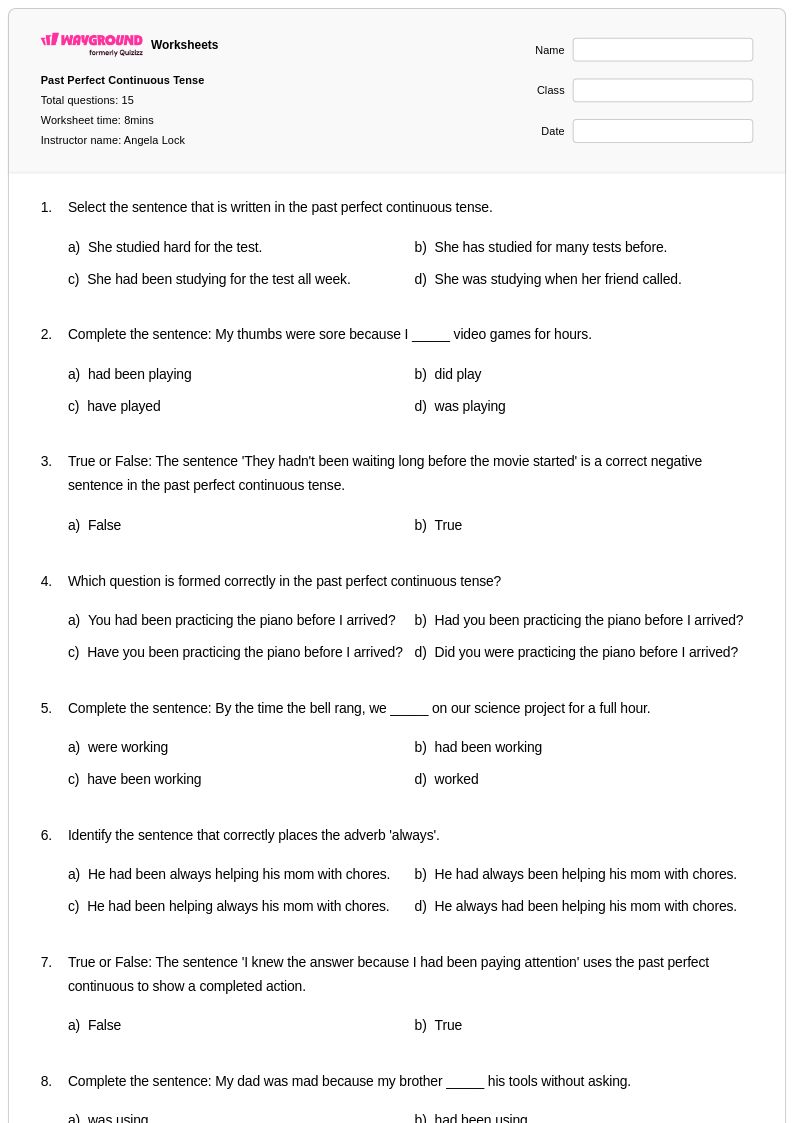
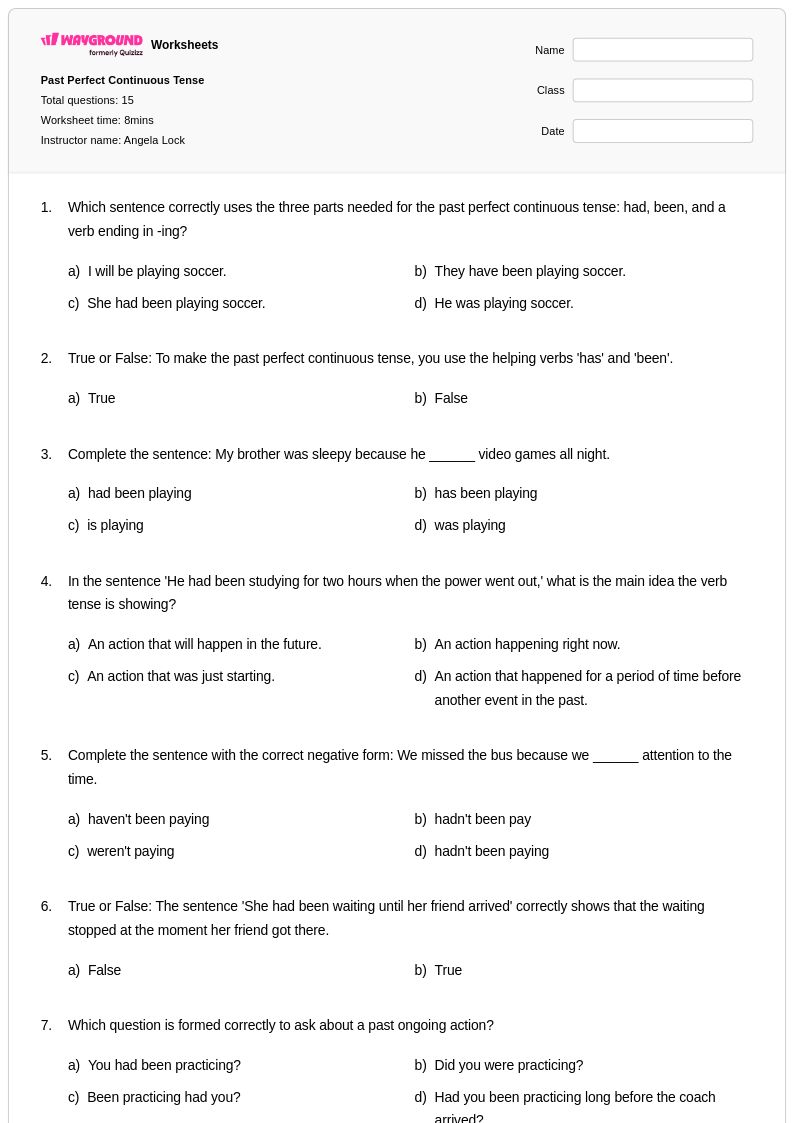
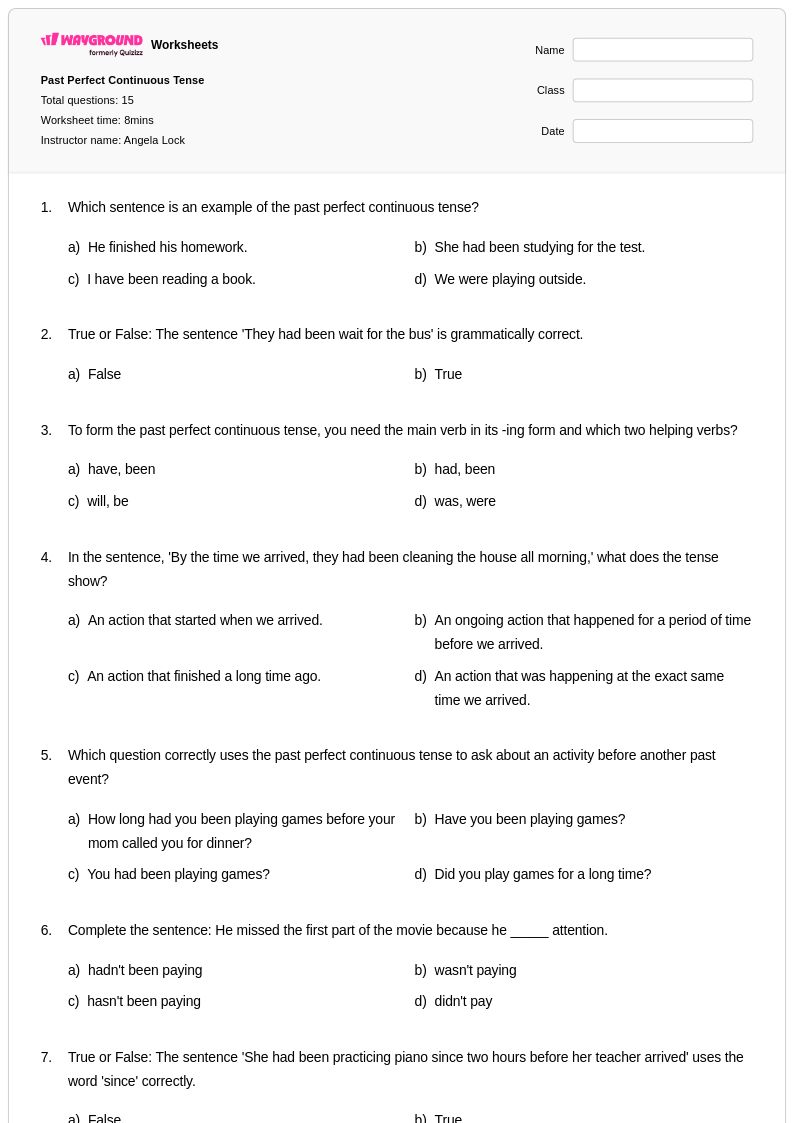
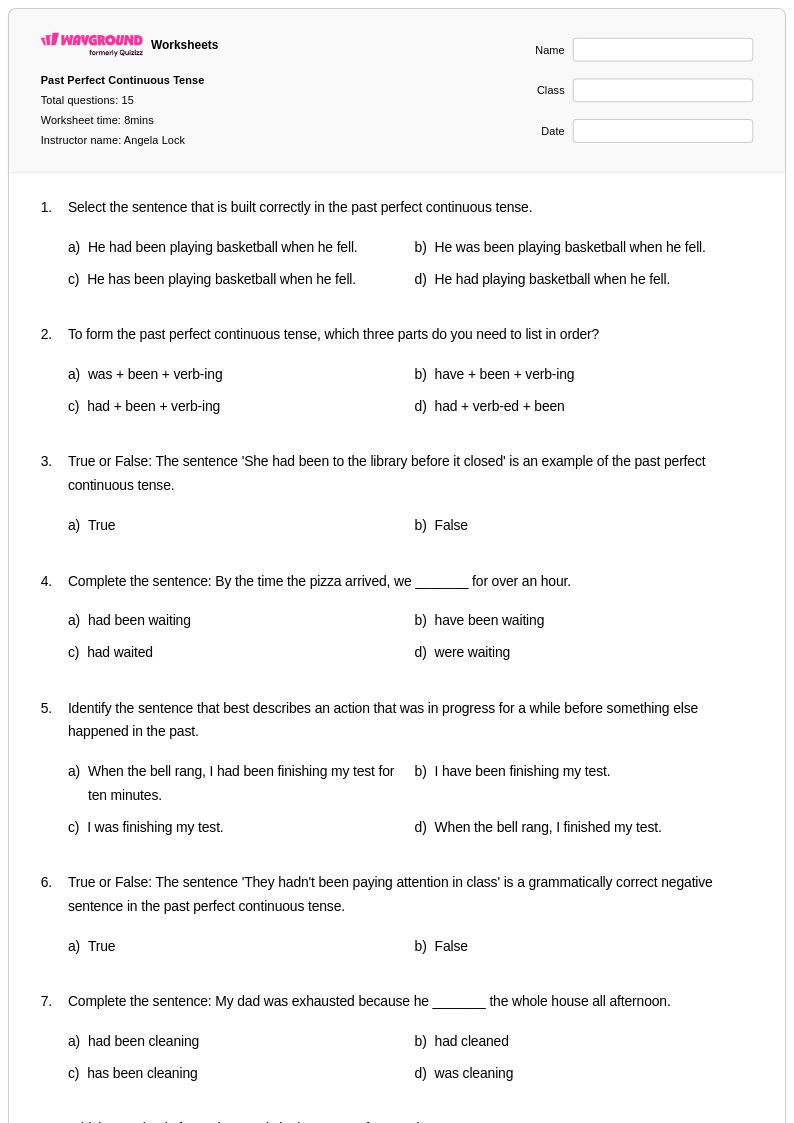
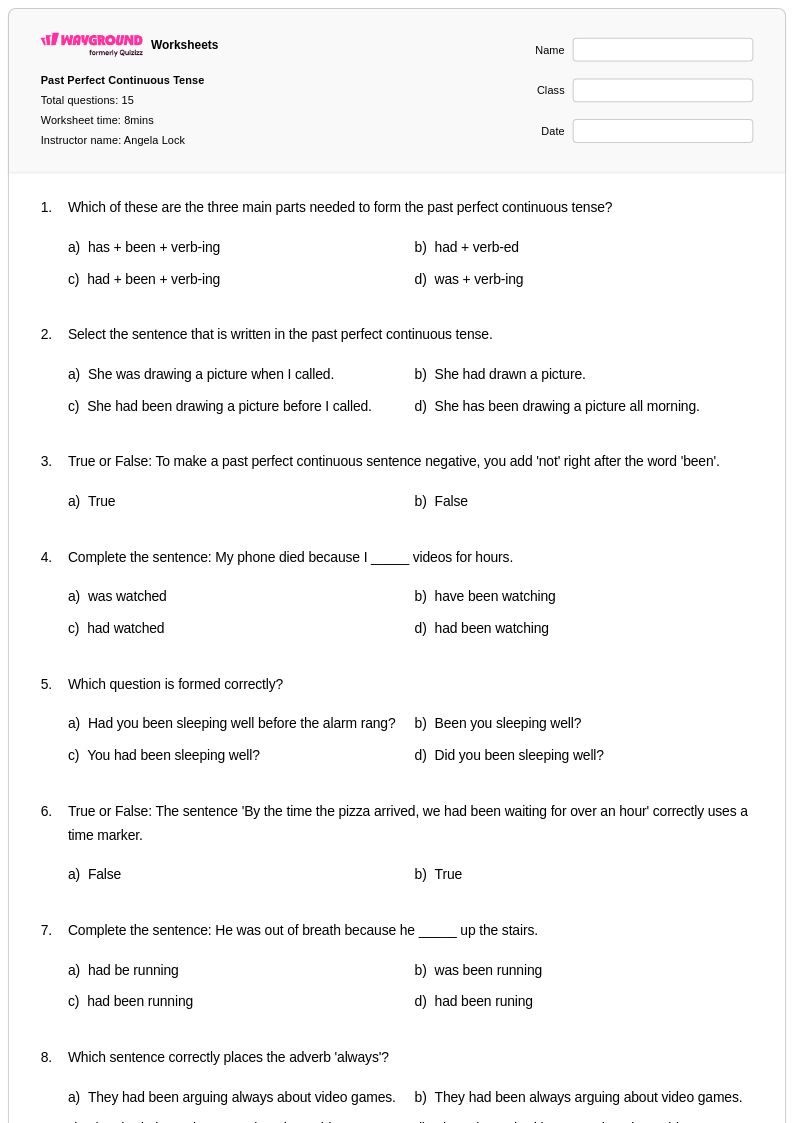
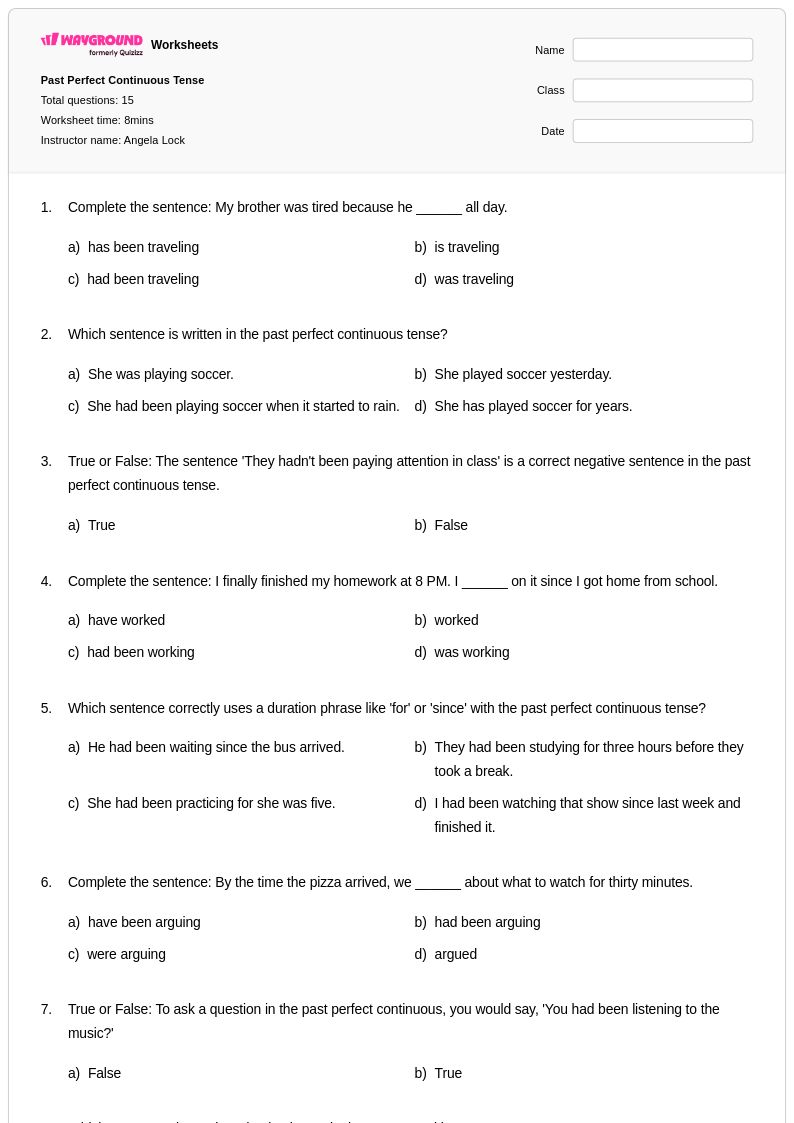
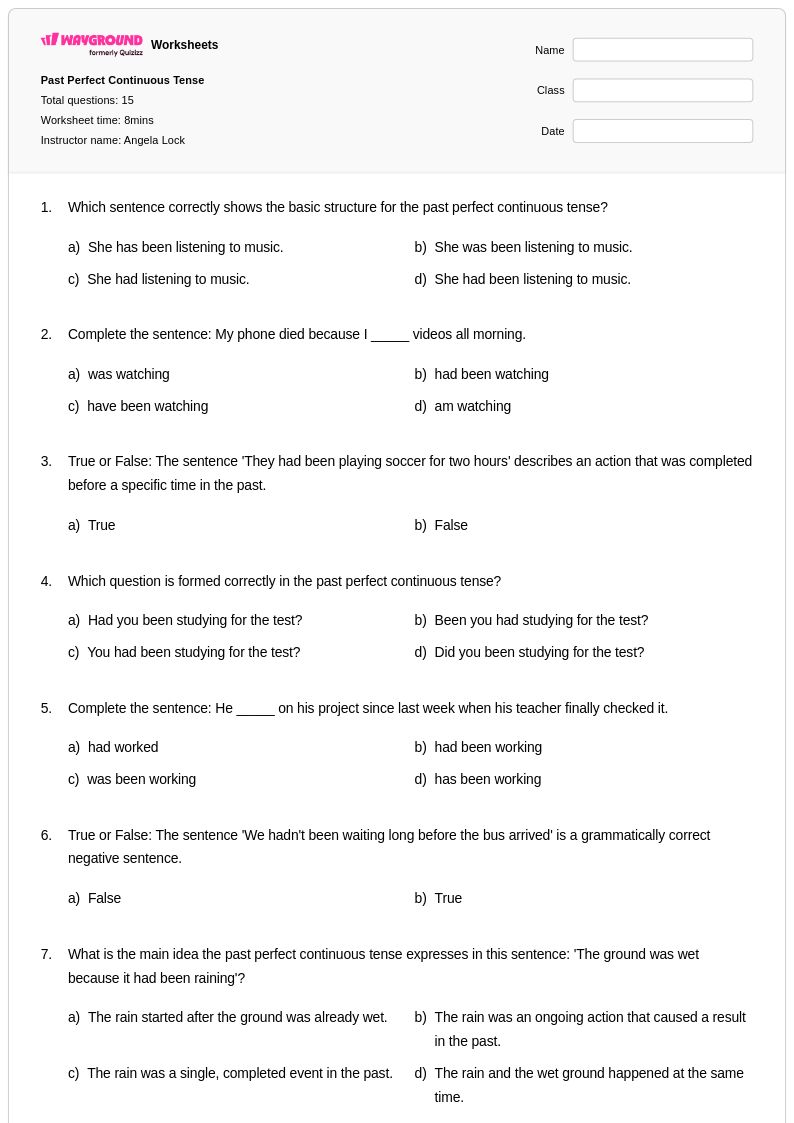
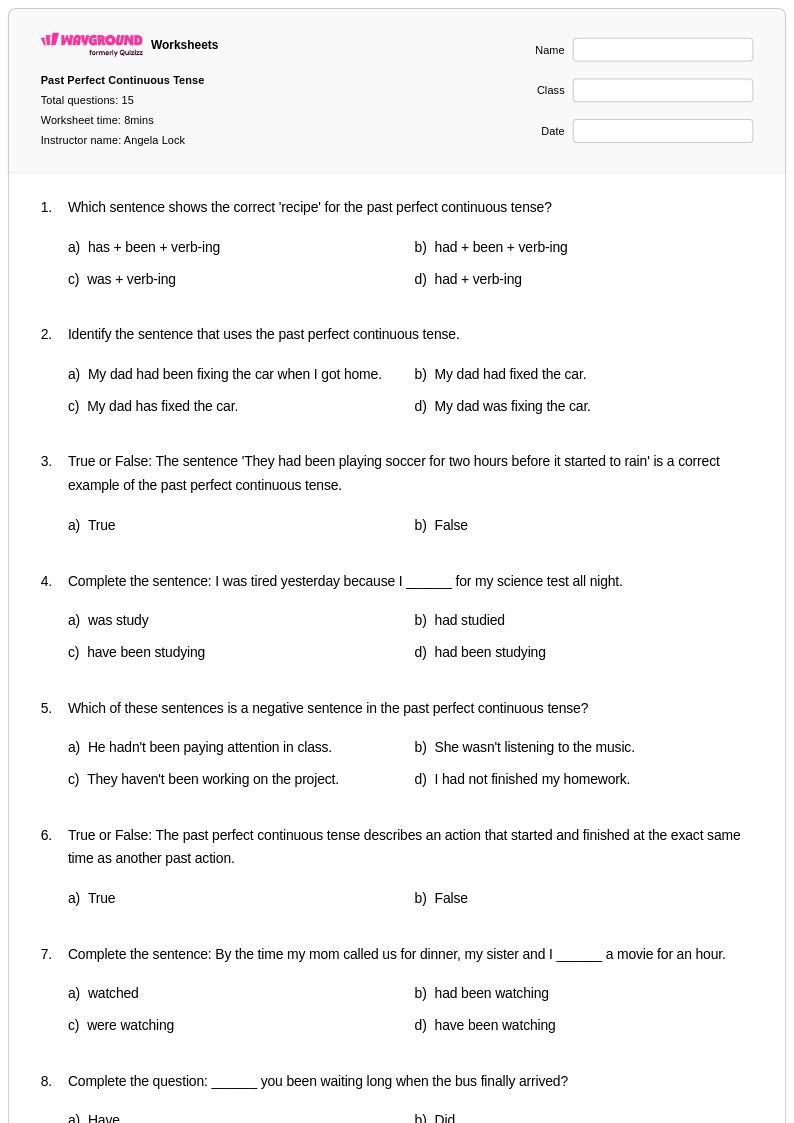
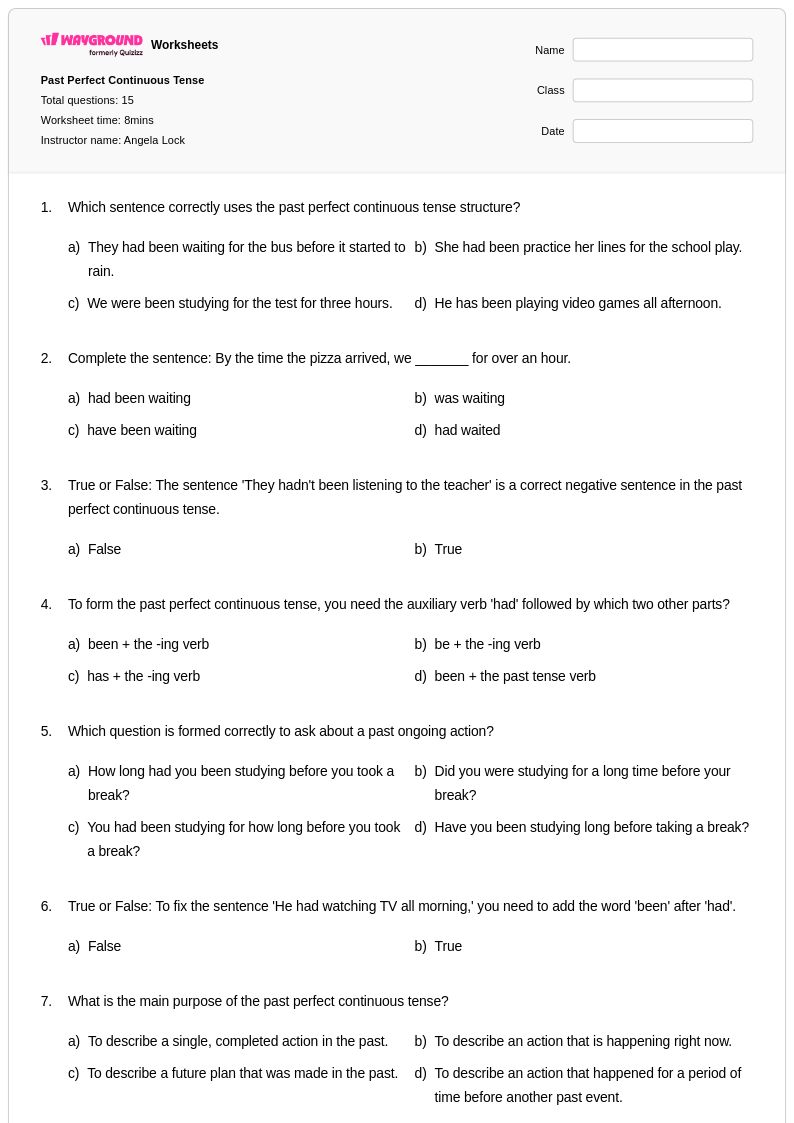
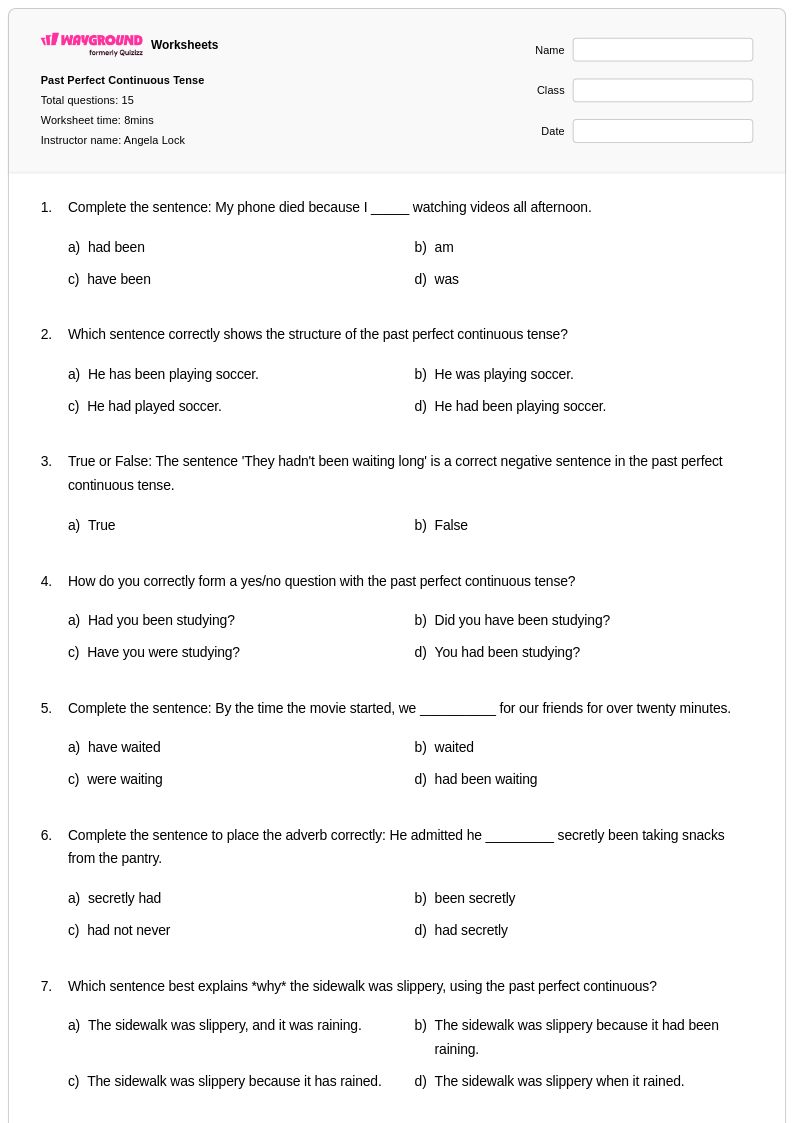
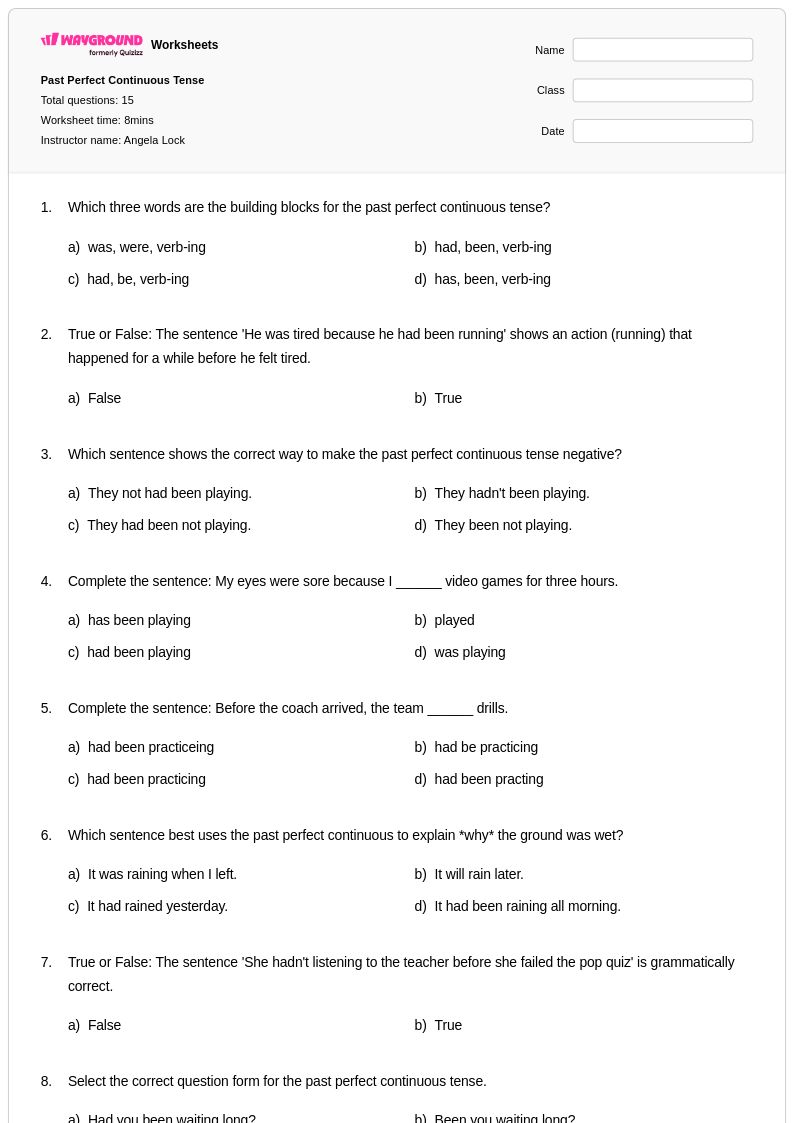
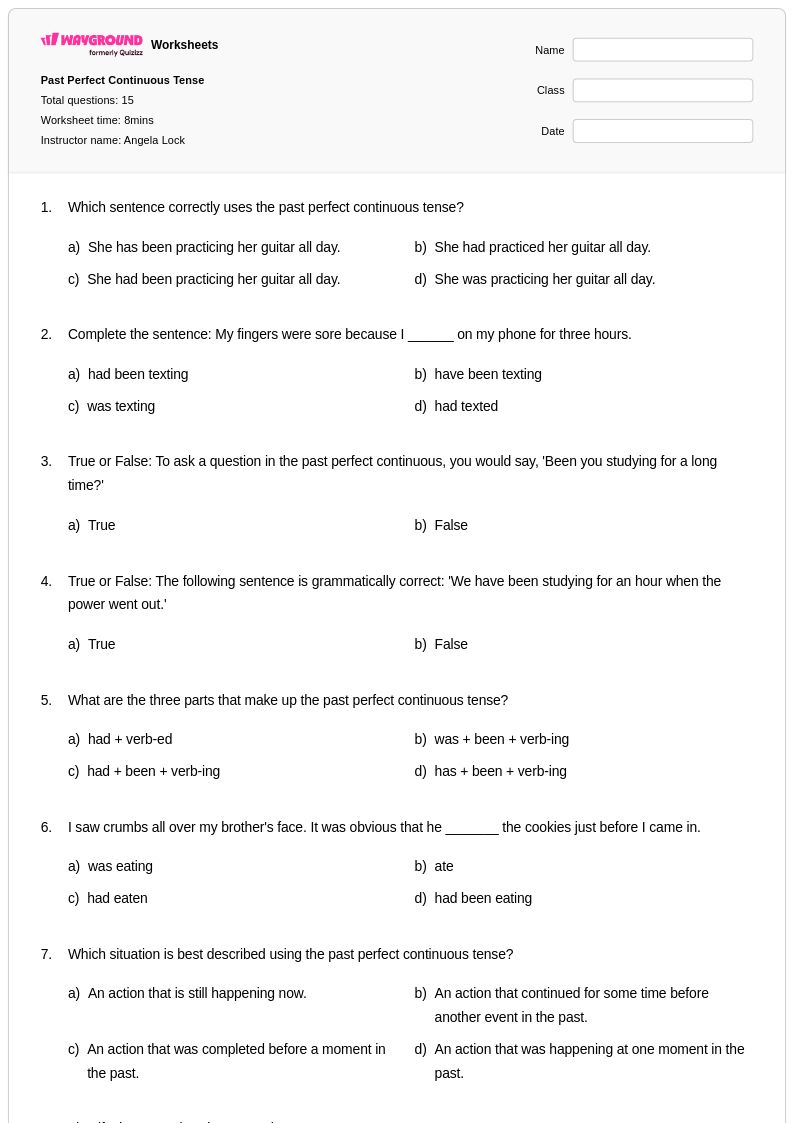
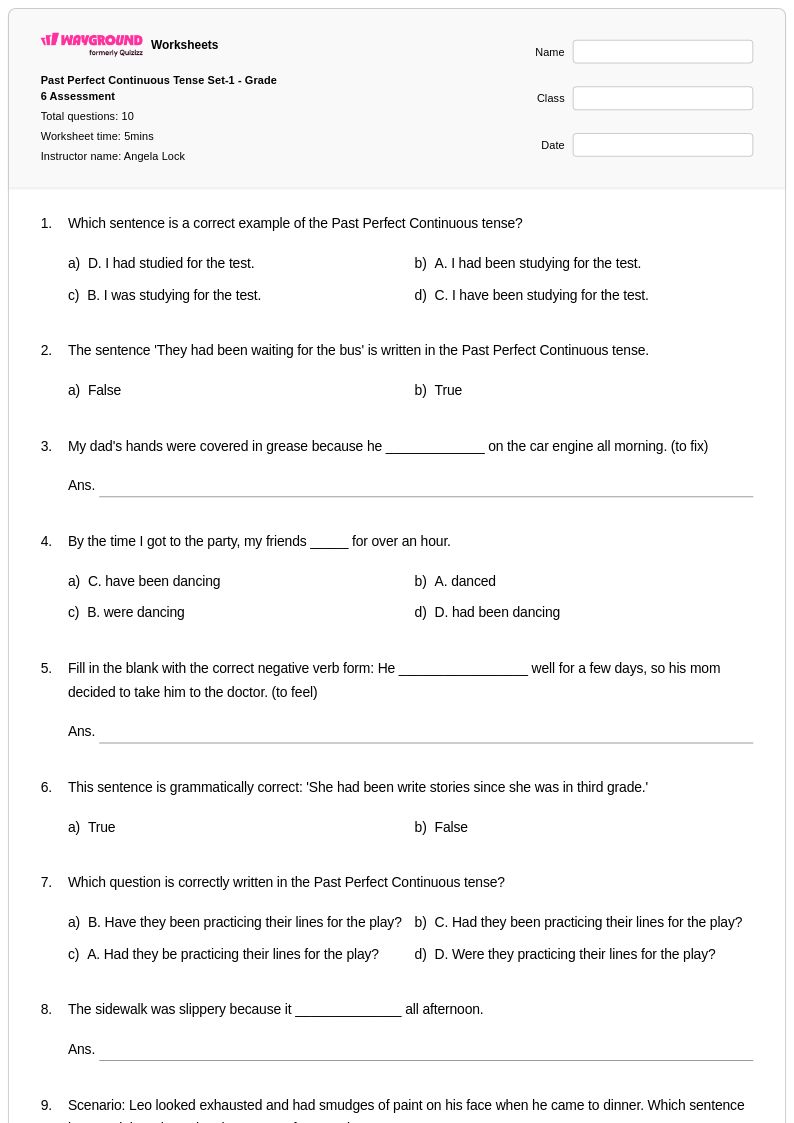
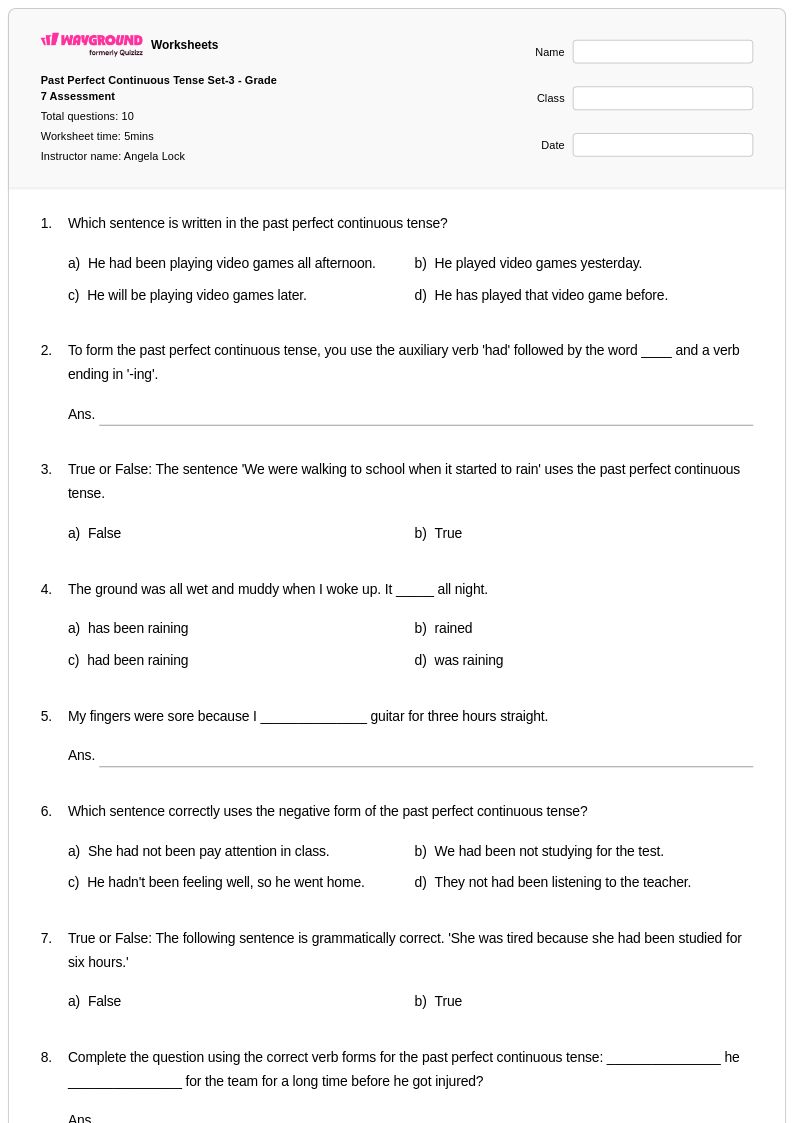
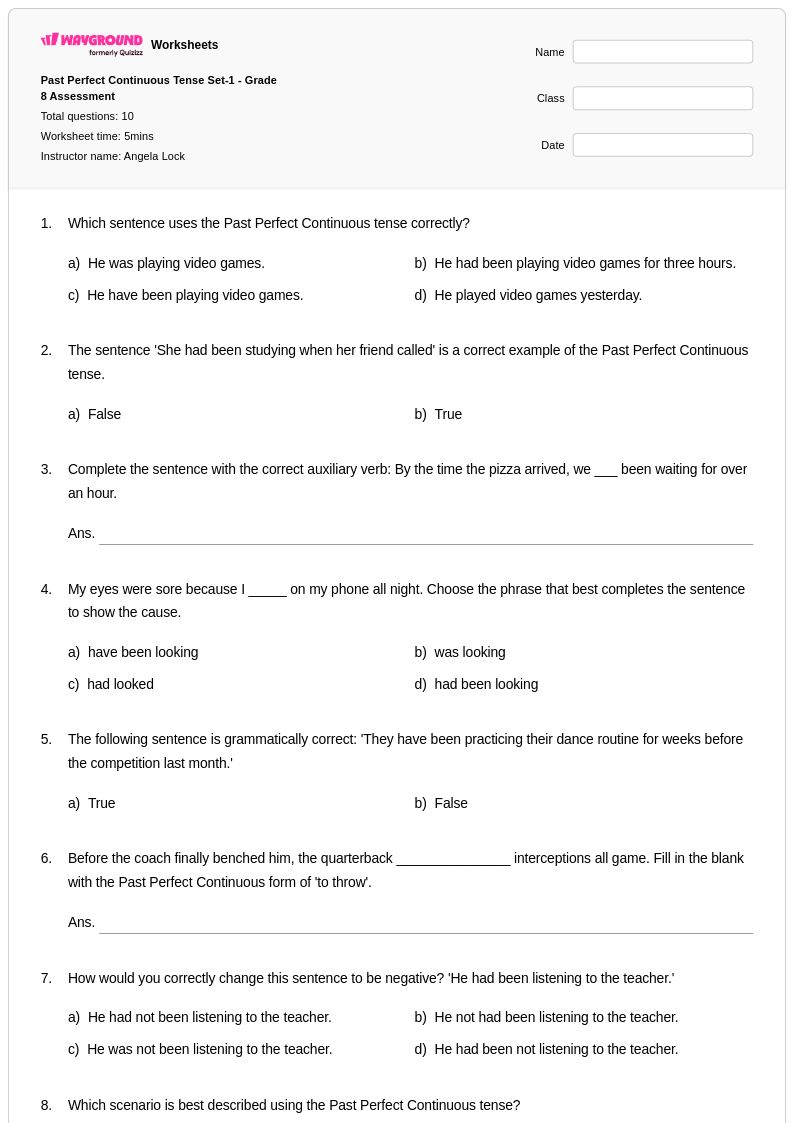
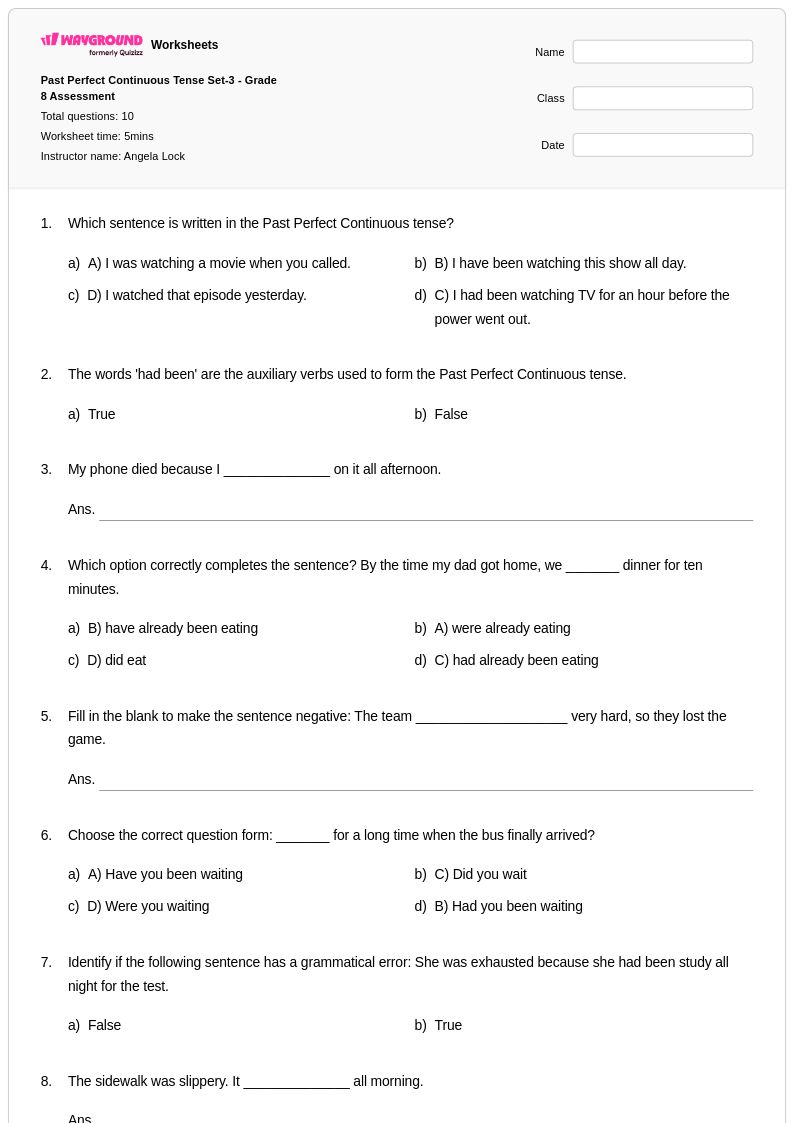
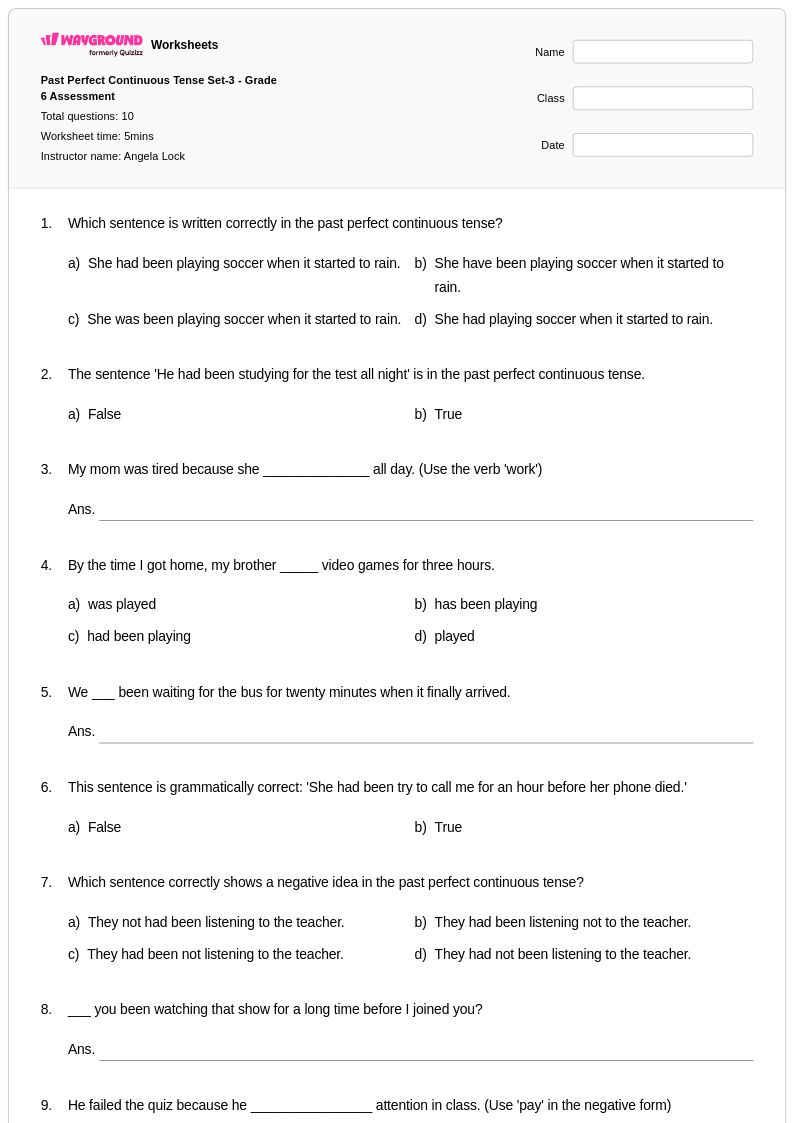
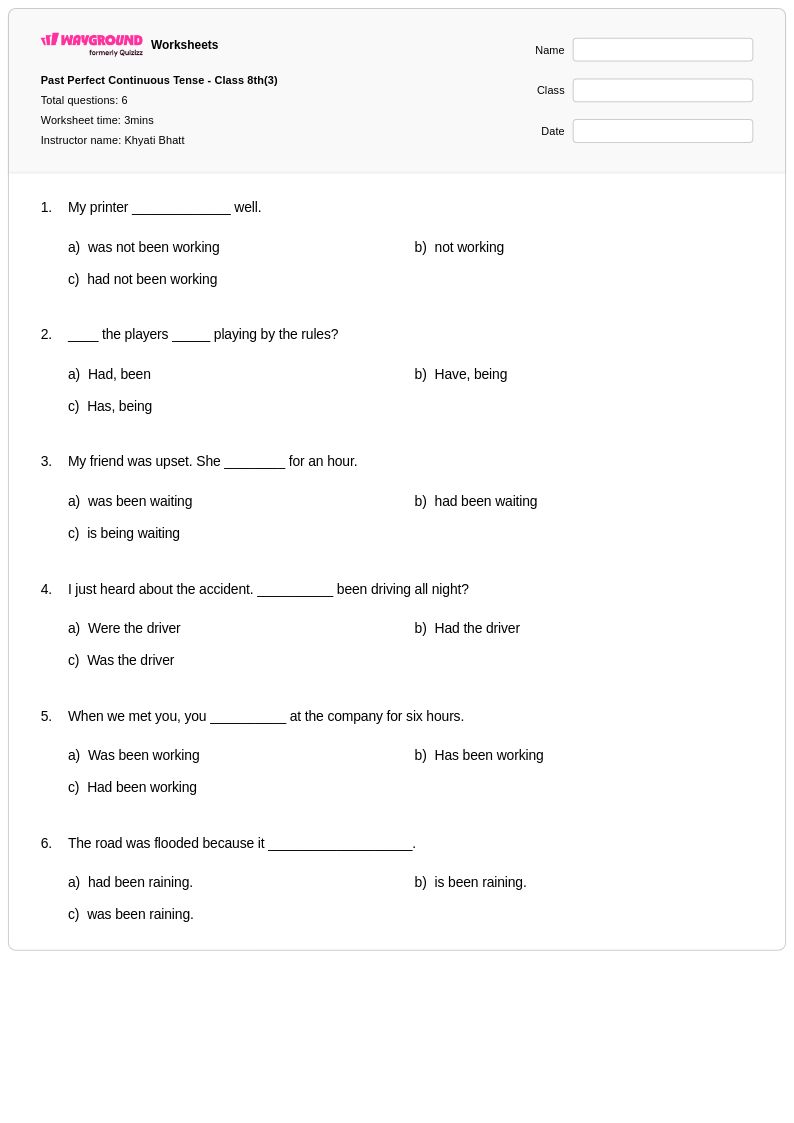
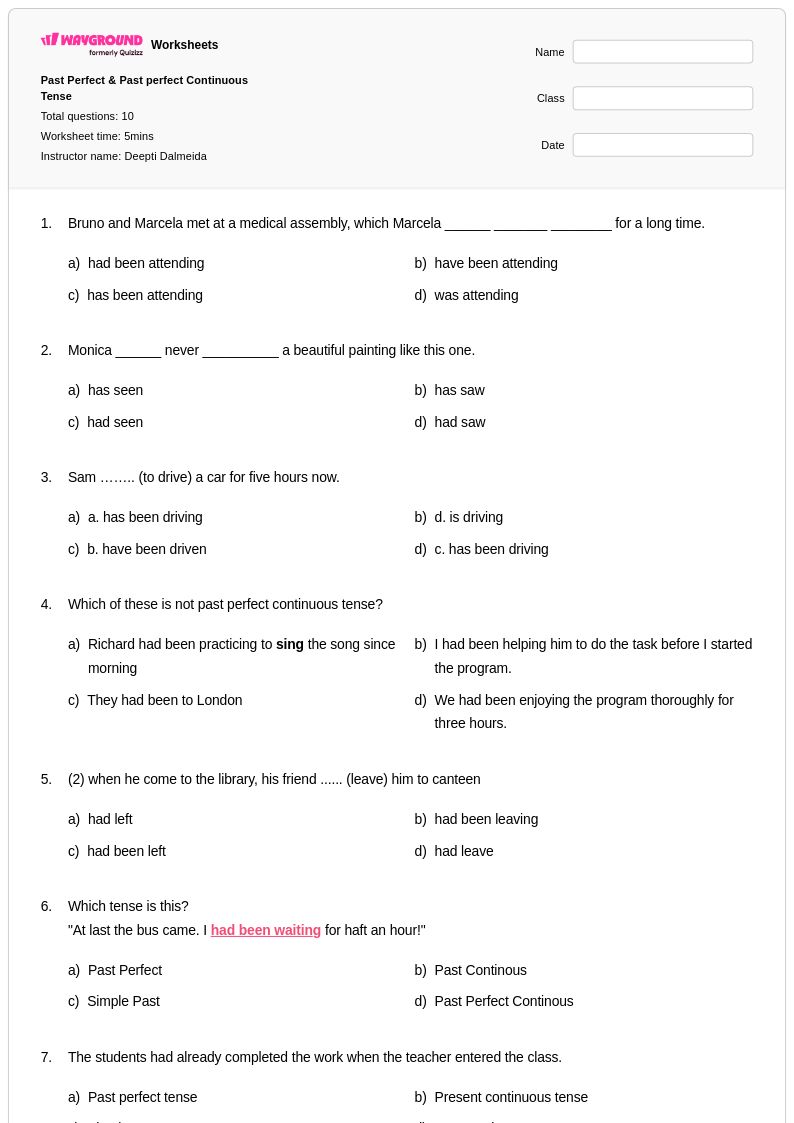
Past perfect continuous tense worksheets for Class 8 students available through Wayground (formerly Quizizz) provide comprehensive practice in mastering this complex verb form that describes ongoing actions completed before a specific point in the past. These expertly designed worksheets strengthen students' understanding of how to construct and use sentences with "had been" plus the present participle, helping them express duration and continuity in past narratives with precision. The practice problems guide eighth graders through recognizing when to apply the past perfect continuous versus other past tenses, while comprehensive answer keys support both independent study and classroom instruction. These free printable resources include varied exercises that challenge students to identify, complete, and create sentences using this advanced tense structure, building the grammatical sophistication essential for mature writing and communication.
Wayground (formerly Quizizz) empowers teachers with an extensive collection of millions of teacher-created past perfect continuous tense worksheets specifically designed for Class 8 English instruction, featuring robust search and filtering capabilities that allow educators to quickly locate materials aligned with curriculum standards and learning objectives. The platform's differentiation tools enable teachers to customize worksheets for diverse learning needs, while flexible formatting options provide both printable pdf versions for traditional classroom use and digital formats for modern learning environments. These comprehensive resources support effective lesson planning by offering varied approaches to tense instruction, facilitate targeted remediation for students struggling with complex verb forms, and provide enrichment opportunities for advanced learners ready to explore sophisticated grammatical concepts that enhance their written and spoken English proficiency.
FAQs
How do I teach the past perfect continuous tense to students?
Start by ensuring students have a solid grasp of the present participle and the auxiliary verb 'had been' before introducing the full construction. Use a clear timeline visual to show that the past perfect continuous describes an action that was ongoing up to a specific point in the past, distinguishing it from the simple past perfect. Pair the structure with common time expressions like 'for', 'since', and 'before' so students see it in context rather than in isolation. Gradually contrast it with the past perfect simple to help students understand when duration matters to the meaning.
What exercises help students practice the past perfect continuous tense?
Effective practice exercises include sentence completion tasks where students supply the correct 'had been + present participle' form, error correction activities that target common structural mistakes, and gap-fill paragraphs that require students to choose between the past perfect continuous and other past tenses. Timeline-based activities are especially useful because they force students to think about the sequence and duration of past events before constructing their answers. Contextual writing prompts that ask students to describe ongoing situations before a past event also reinforce authentic usage.
What mistakes do students commonly make with the past perfect continuous tense?
The most frequent error is confusing the past perfect continuous with the past perfect simple, particularly when students do not recognize that duration is central to the past perfect continuous. Students often omit 'been' and write 'had + present participle' instead of 'had been + present participle', collapsing the tense into a non-standard form. Another common mistake is using the past perfect continuous with stative verbs such as 'know' or 'believe', which do not typically appear in continuous forms. Students also misplace or omit time expressions, which weakens the tense's intended meaning of ongoing duration.
How do I help struggling students understand when to use the past perfect continuous versus the past simple?
The clearest way to differentiate these tenses is to focus students on the question of duration: if the action had ongoing length before a past moment, the past perfect continuous is appropriate; if the action is simply prior to another past event without emphasis on duration, the past simple or past perfect is preferred. Use sentence pairs that contrast the two forms with identical content so students can see how meaning shifts. Providing sentence stems with built-in time expressions like 'for three hours' or 'since morning' guides students toward choosing the continuous form correctly.
How can I use Wayground's past perfect continuous tense worksheets in my classroom?
Wayground's past perfect continuous tense worksheets are available as printable PDFs for traditional classroom use and in digital formats for technology-integrated environments, giving teachers flexibility for in-class practice, homework assignments, or structured grammar centers. Teachers can also host any worksheet as a live or assigned quiz directly on Wayground, making it easy to collect and review student responses in one place. Each worksheet includes a complete answer key, so grading and providing feedback is straightforward whether the activity is completed on paper or on screen.
How do I differentiate past perfect continuous tense instruction for students at different levels?
For students who are still building confidence, focus practice on controlled exercises such as sentence completion and form-identification before moving to open-ended production tasks. Advanced learners benefit from editing tasks that require them to identify unnecessary or incorrect use of the past perfect continuous within longer texts. On Wayground, teachers can apply individual accommodations such as read aloud support or reduced answer choices for students who need additional scaffolding, without affecting the experience of the rest of the class.