Free Printable Pathos in Rhetoric Worksheets for Class 12
Class 12 students can master pathos in rhetoric with Wayground's free worksheets and printables, featuring practice problems and answer keys to develop persuasive writing skills through emotional appeals.
Explore printable Pathos in Rhetoric worksheets for Class 12
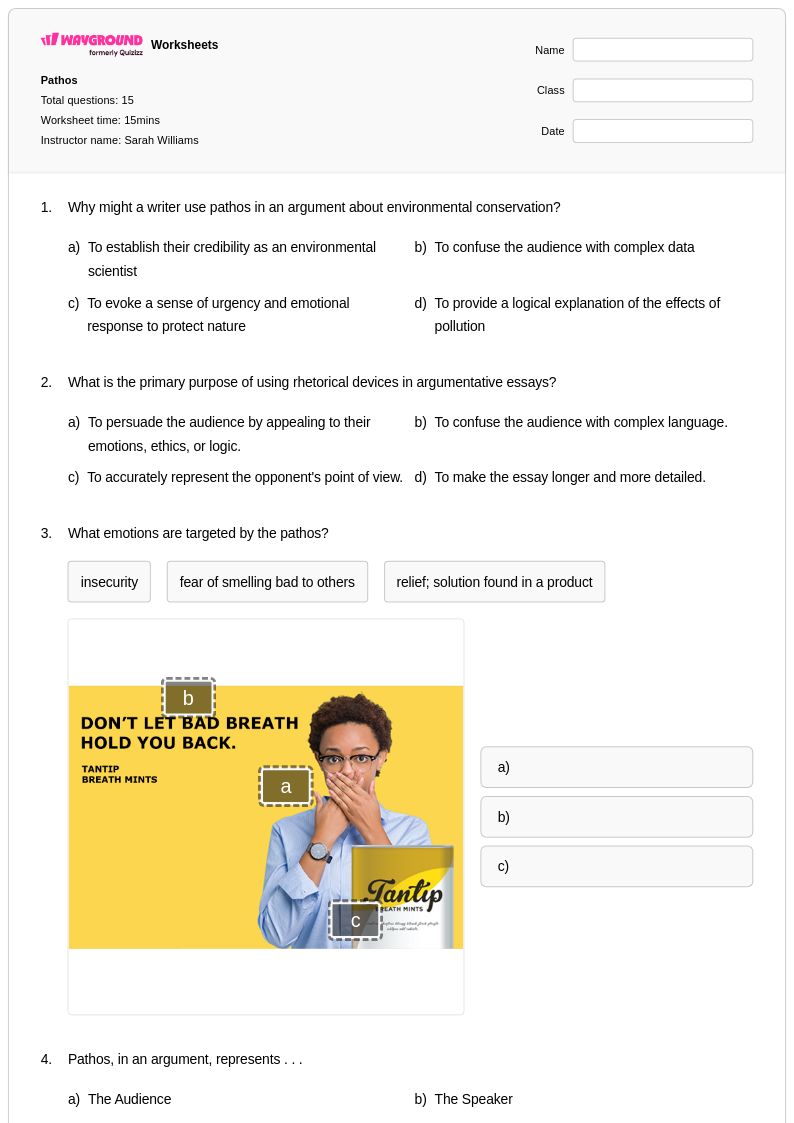
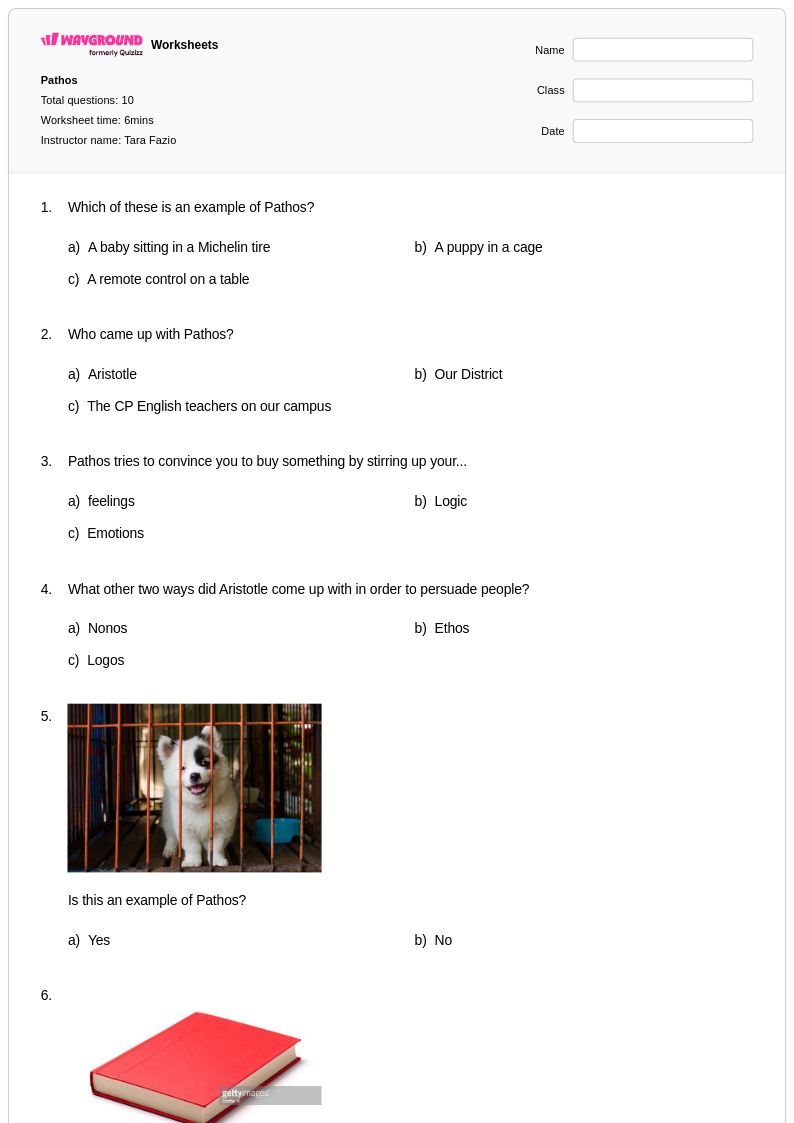
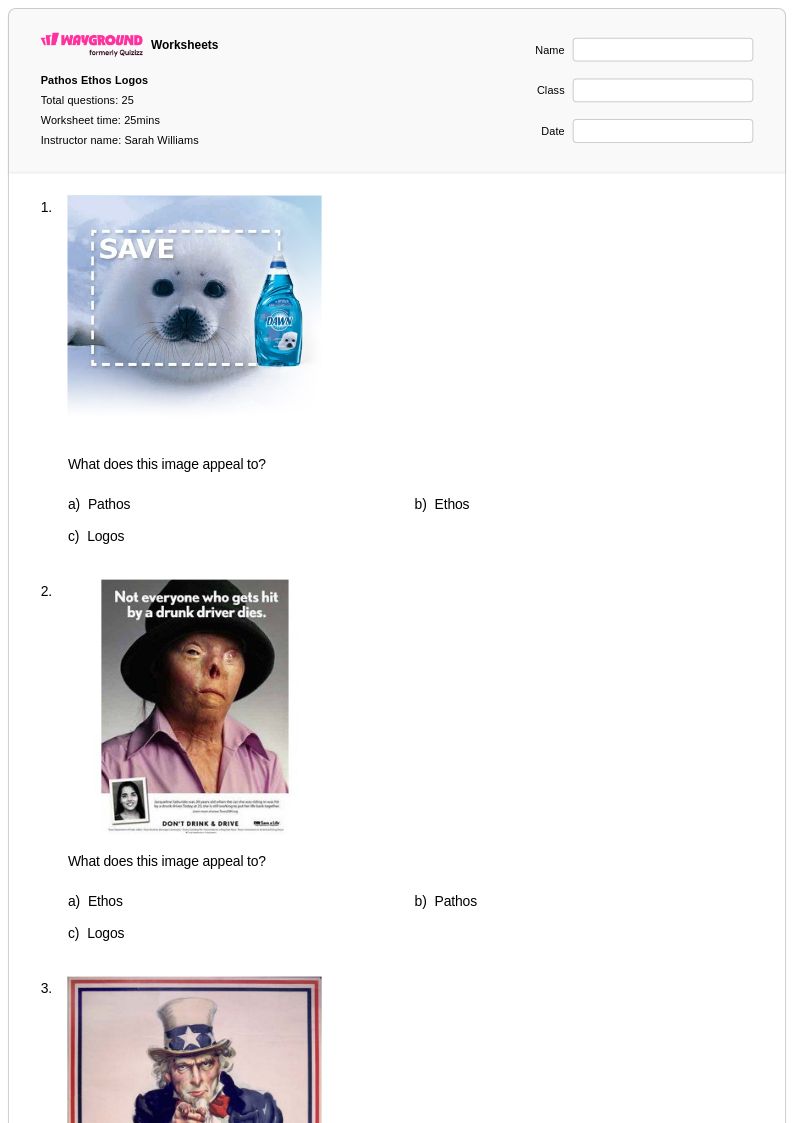
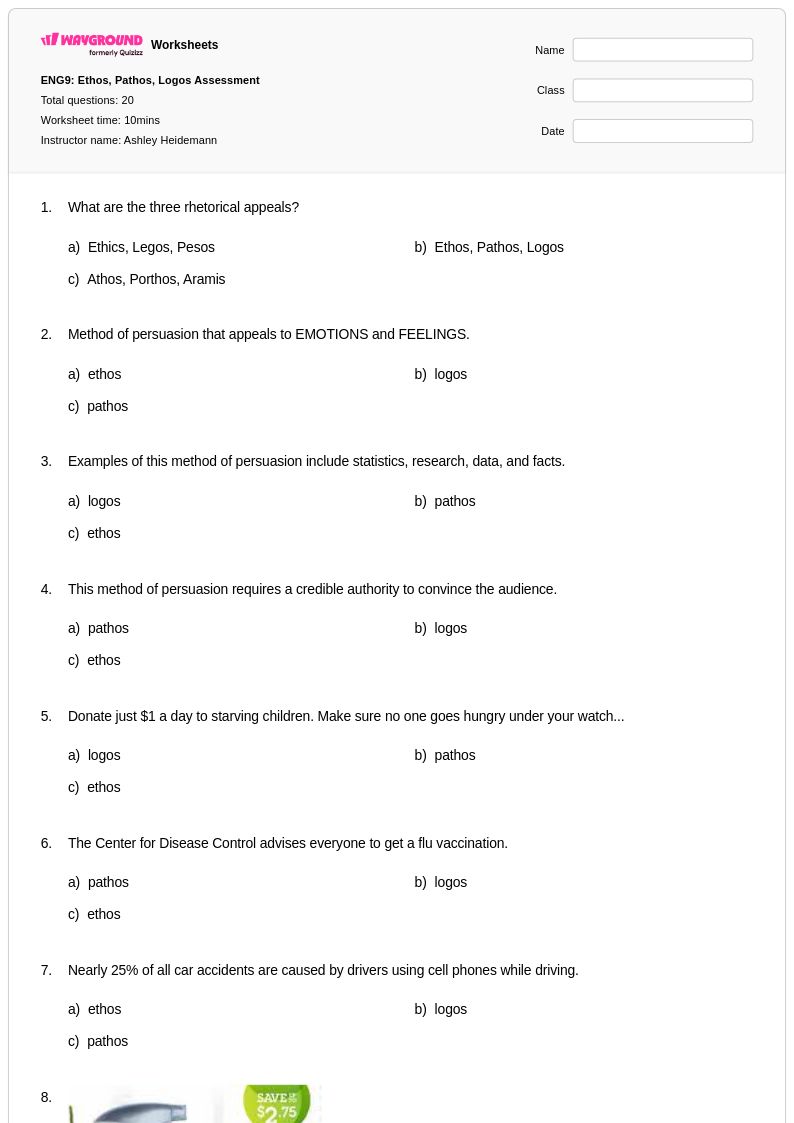
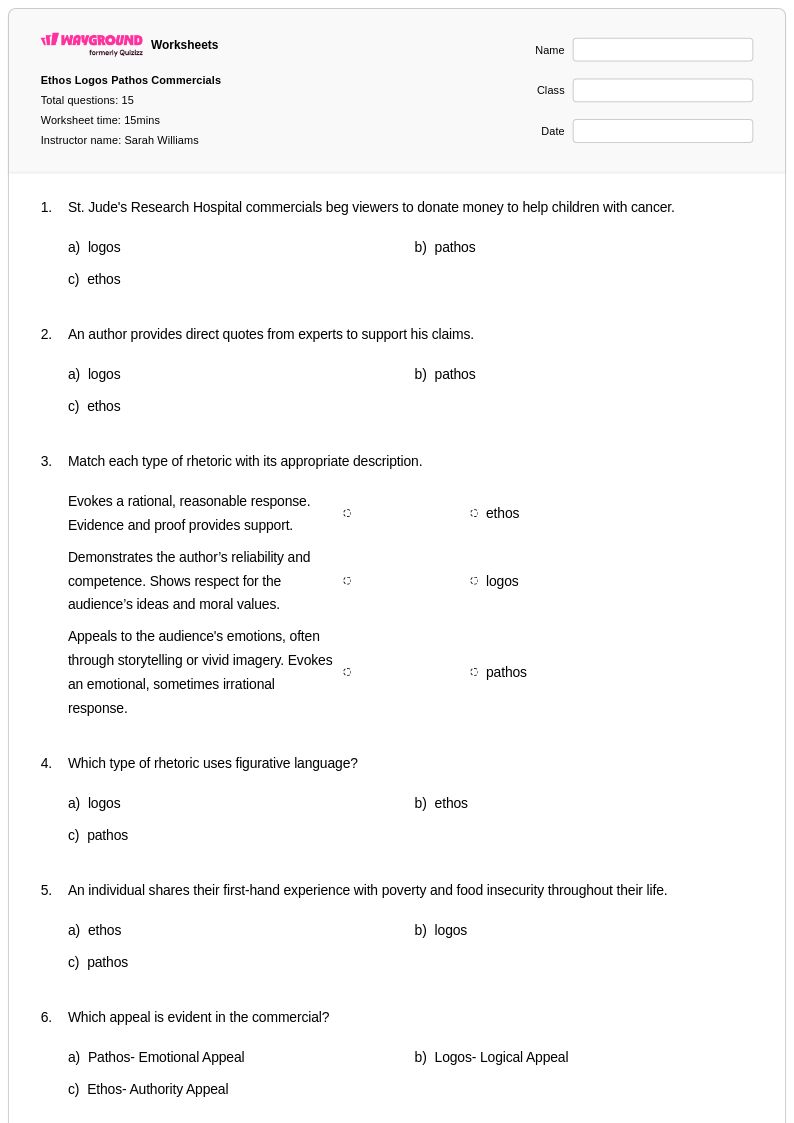
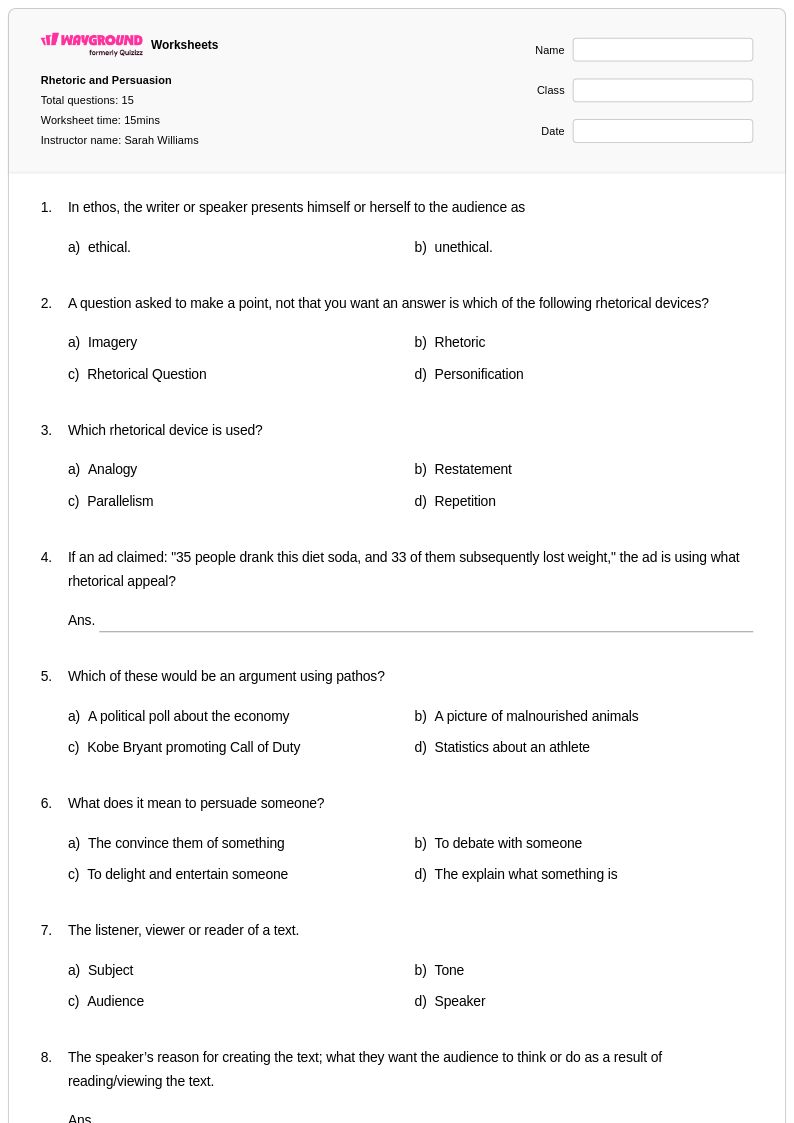
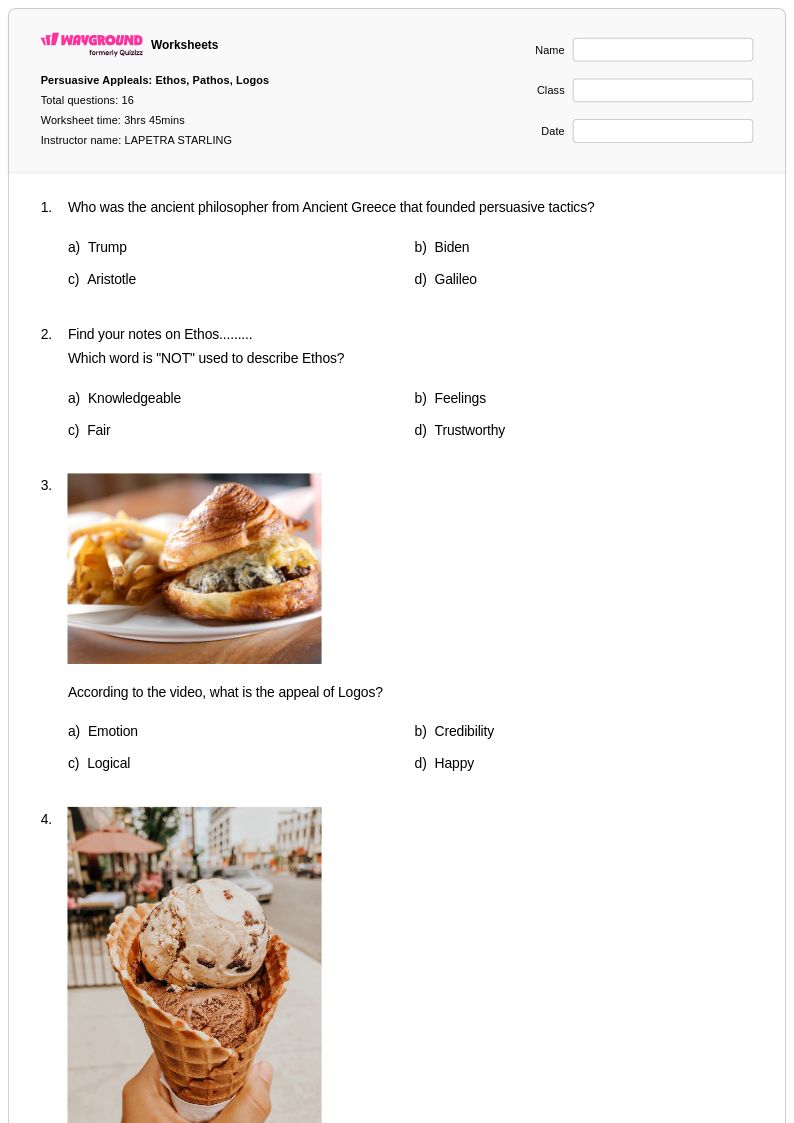
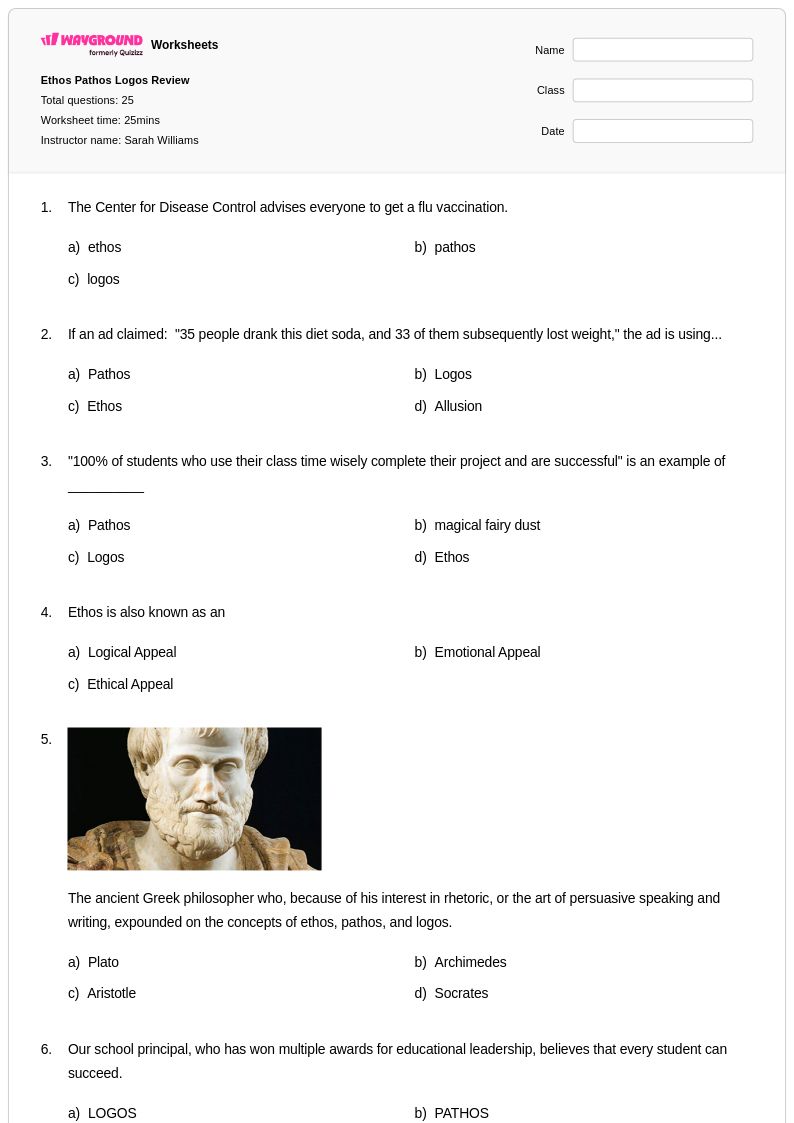
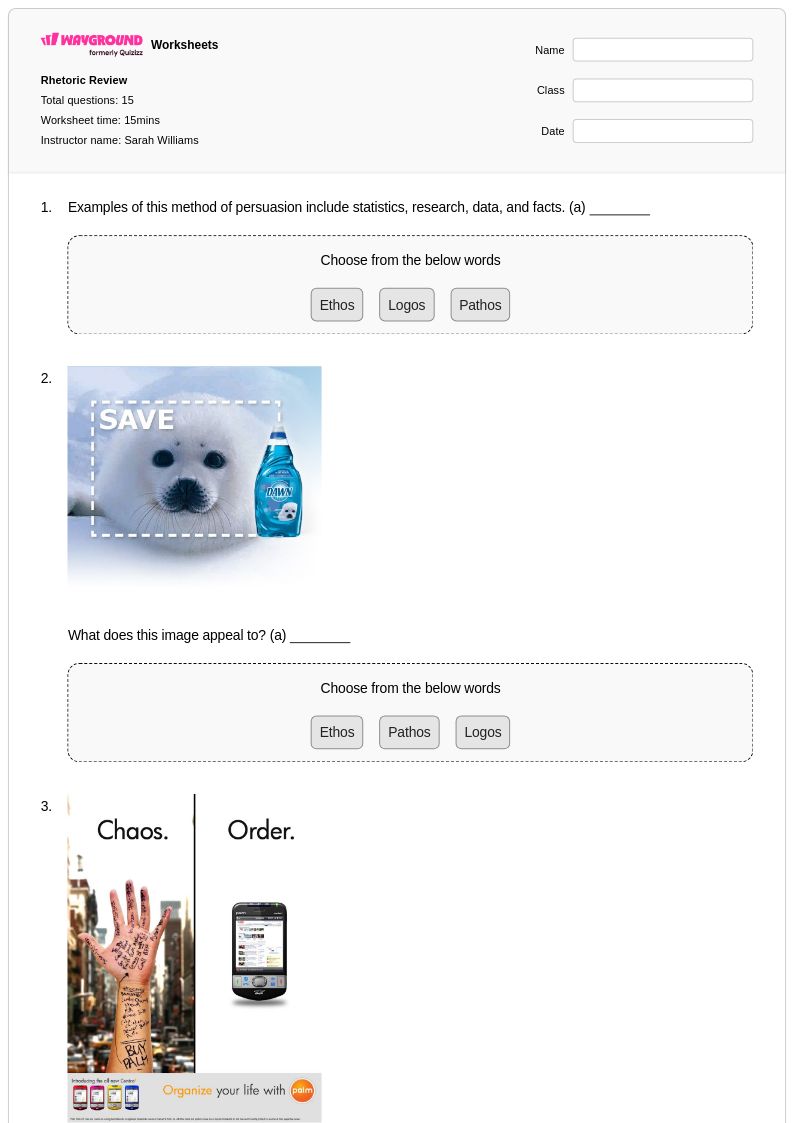
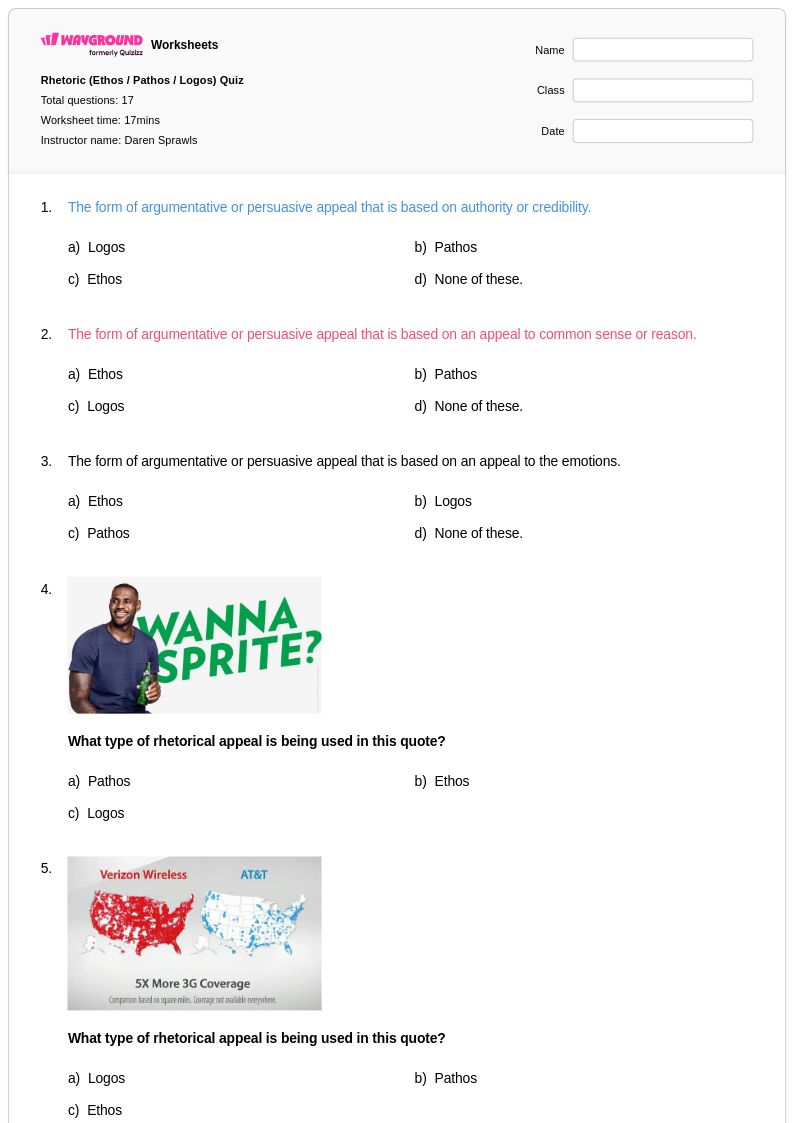
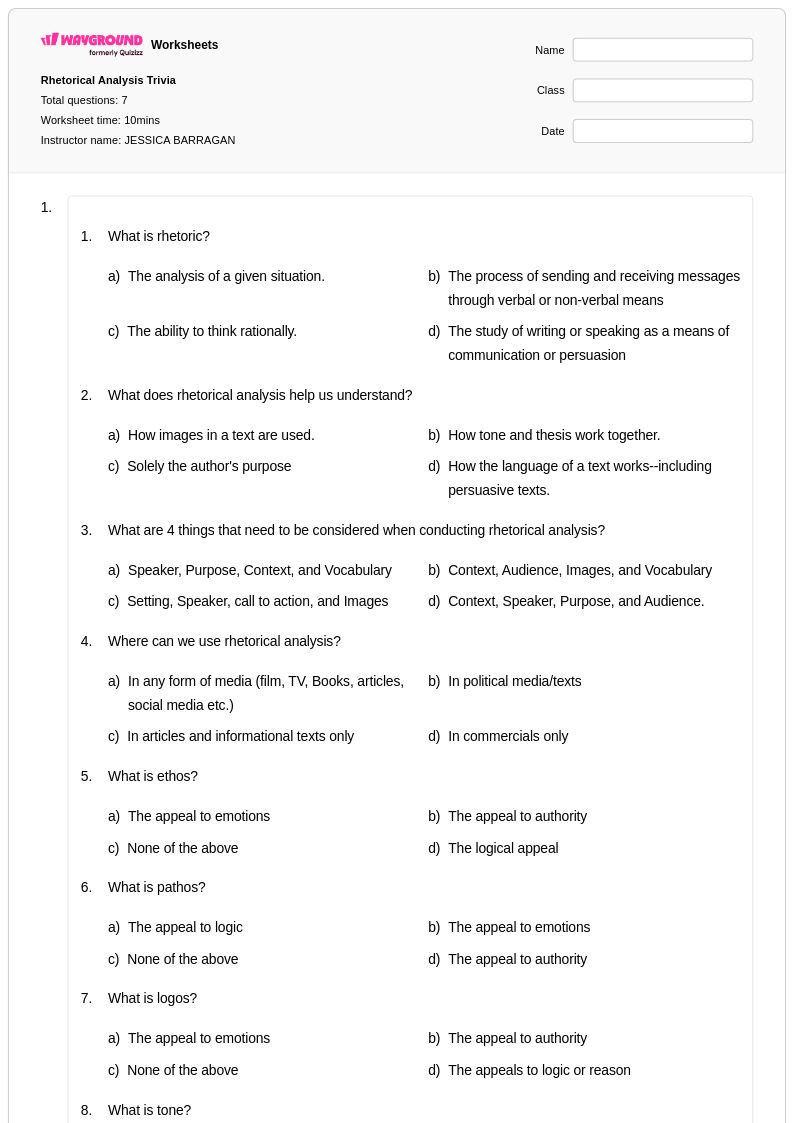
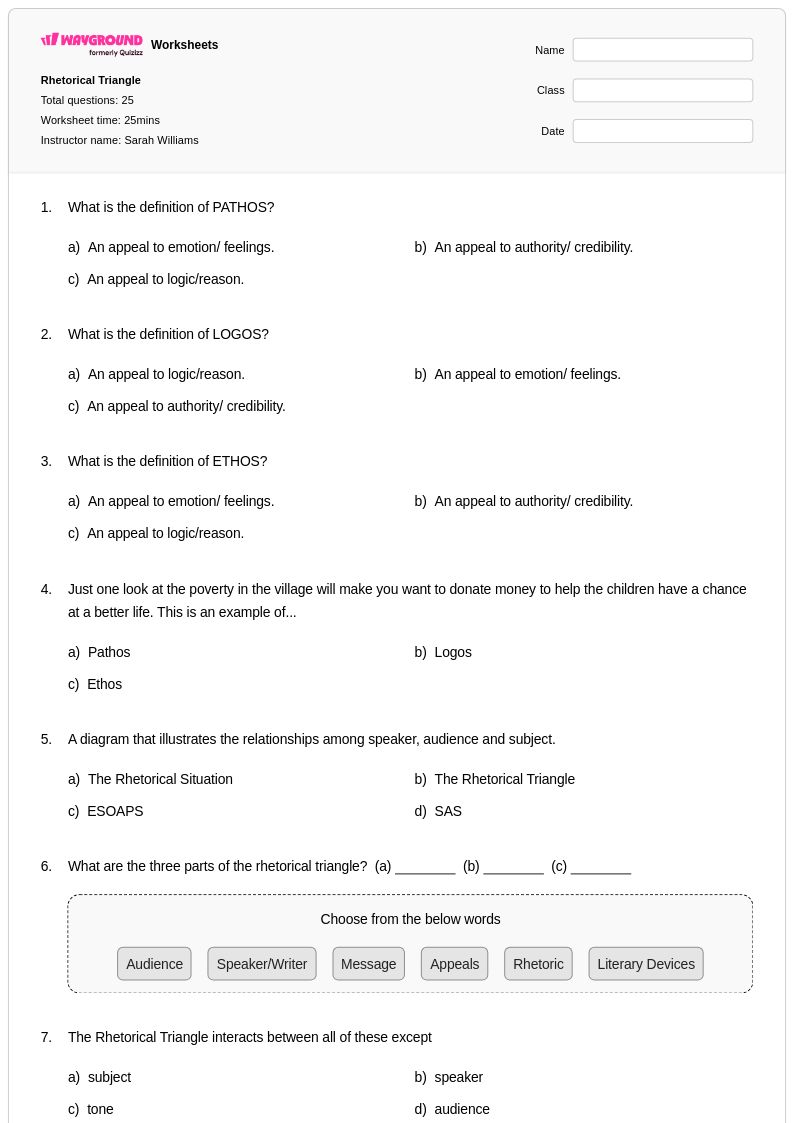
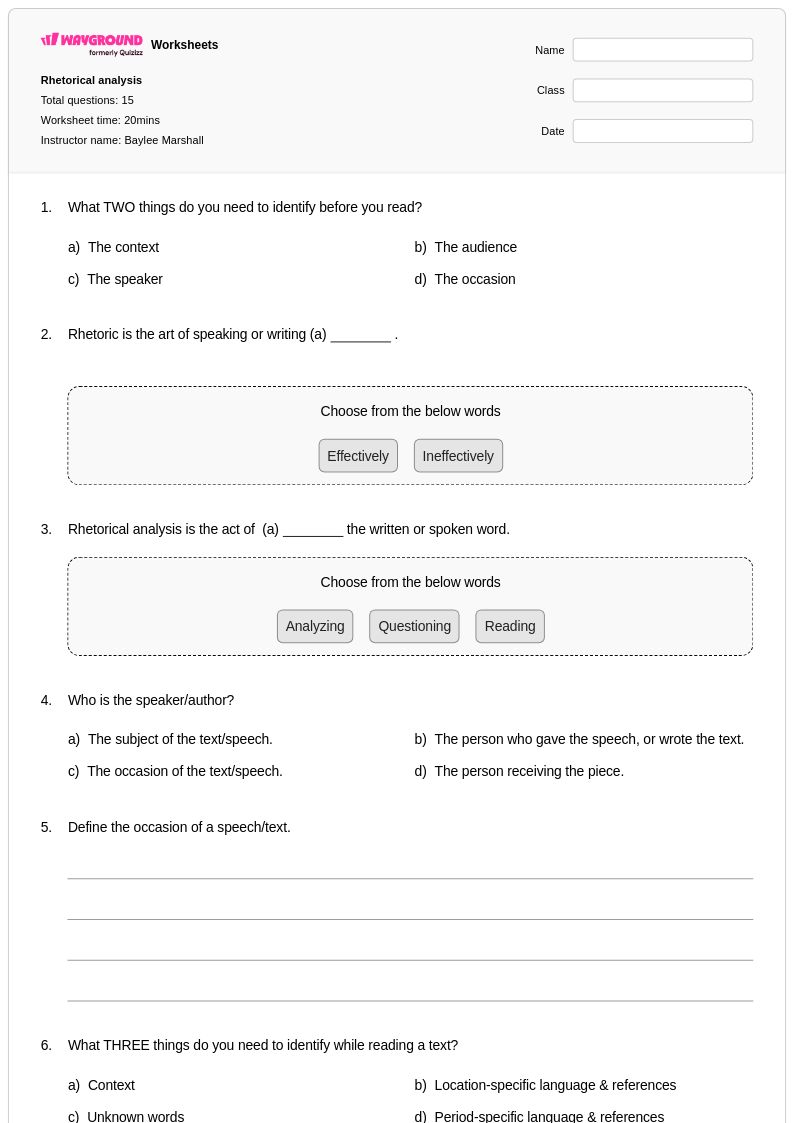
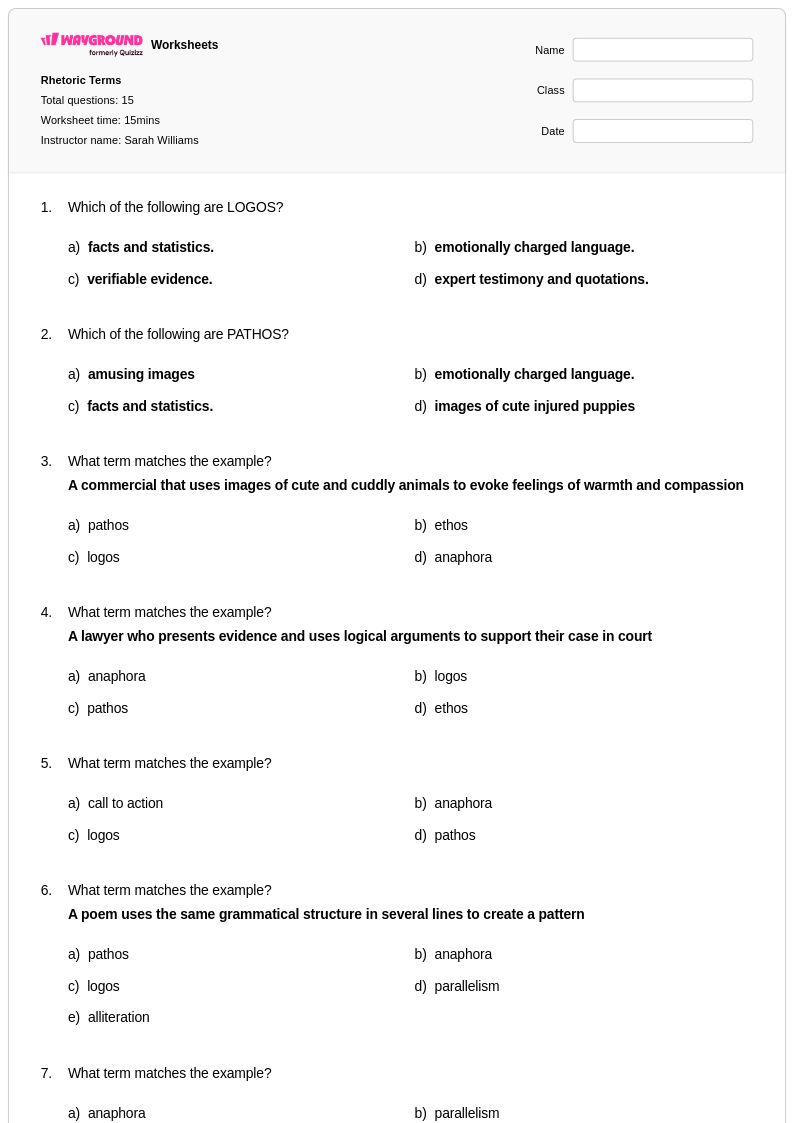
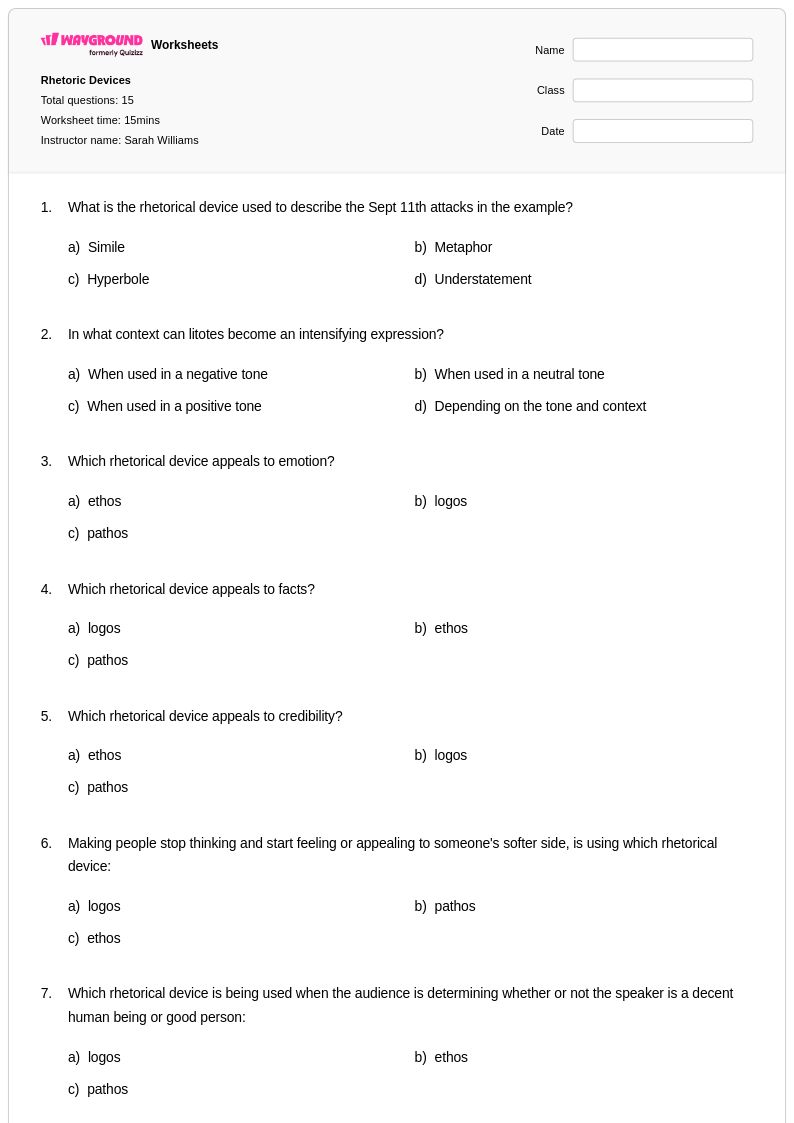
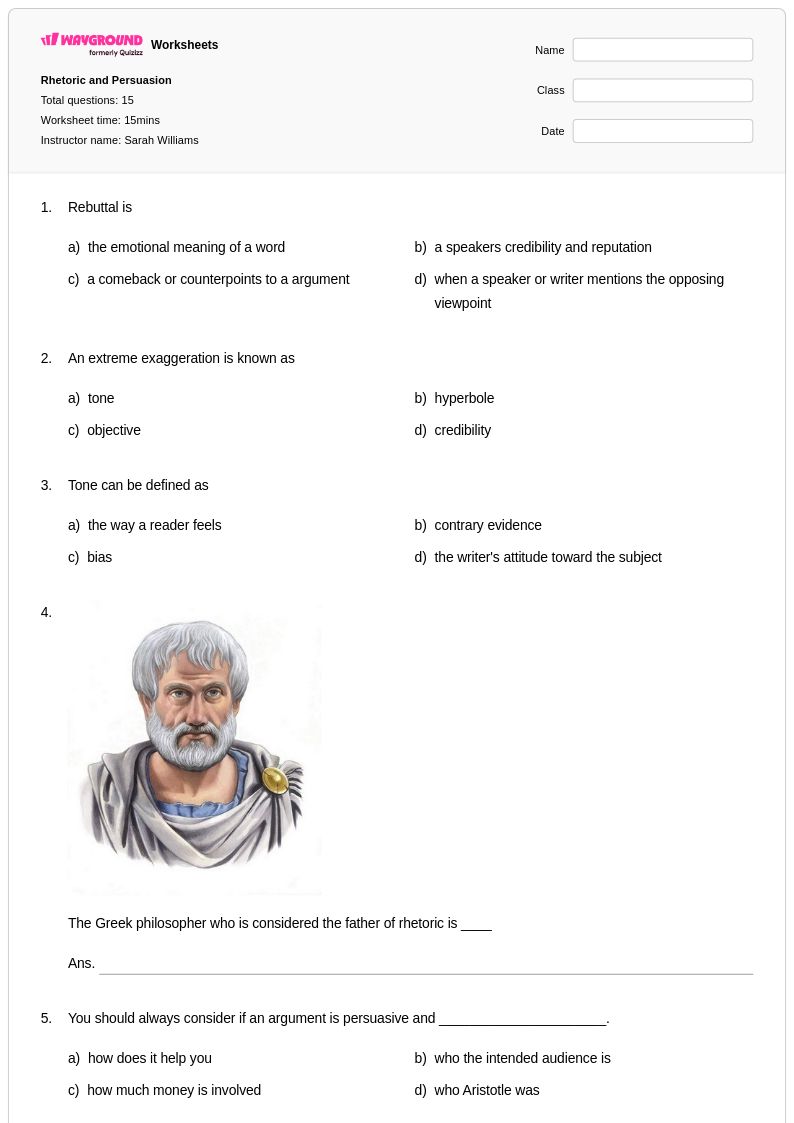
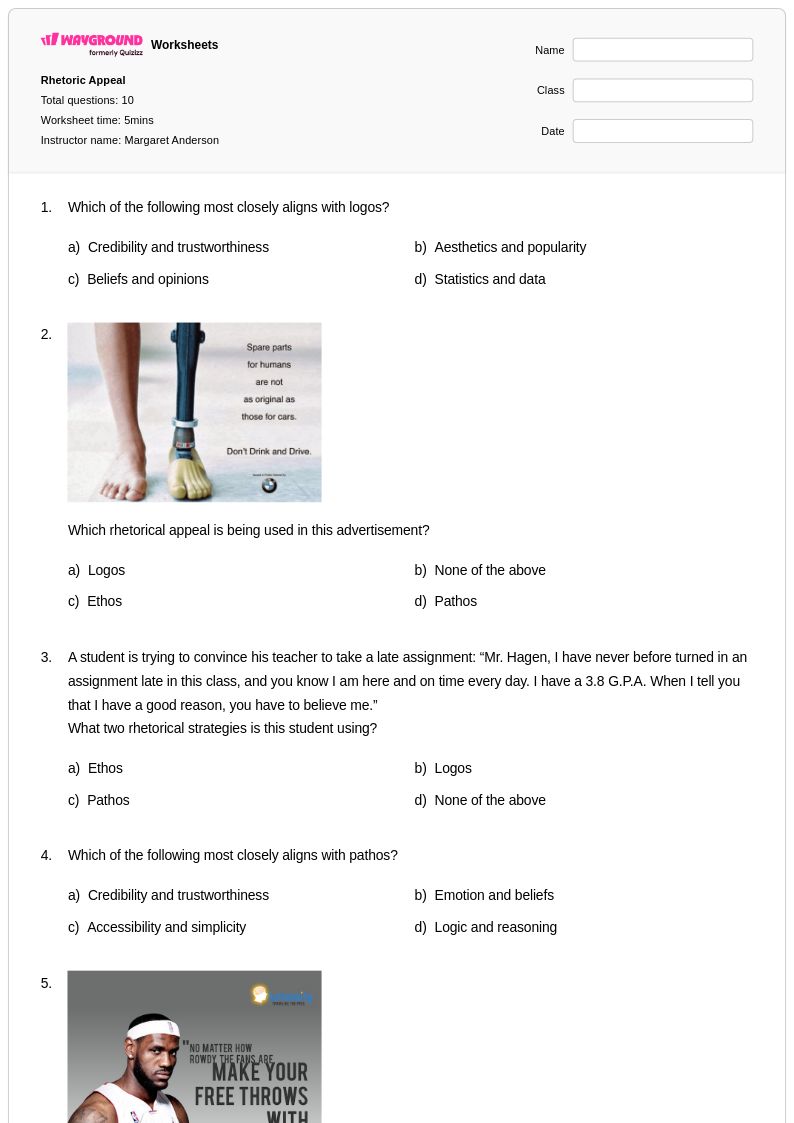
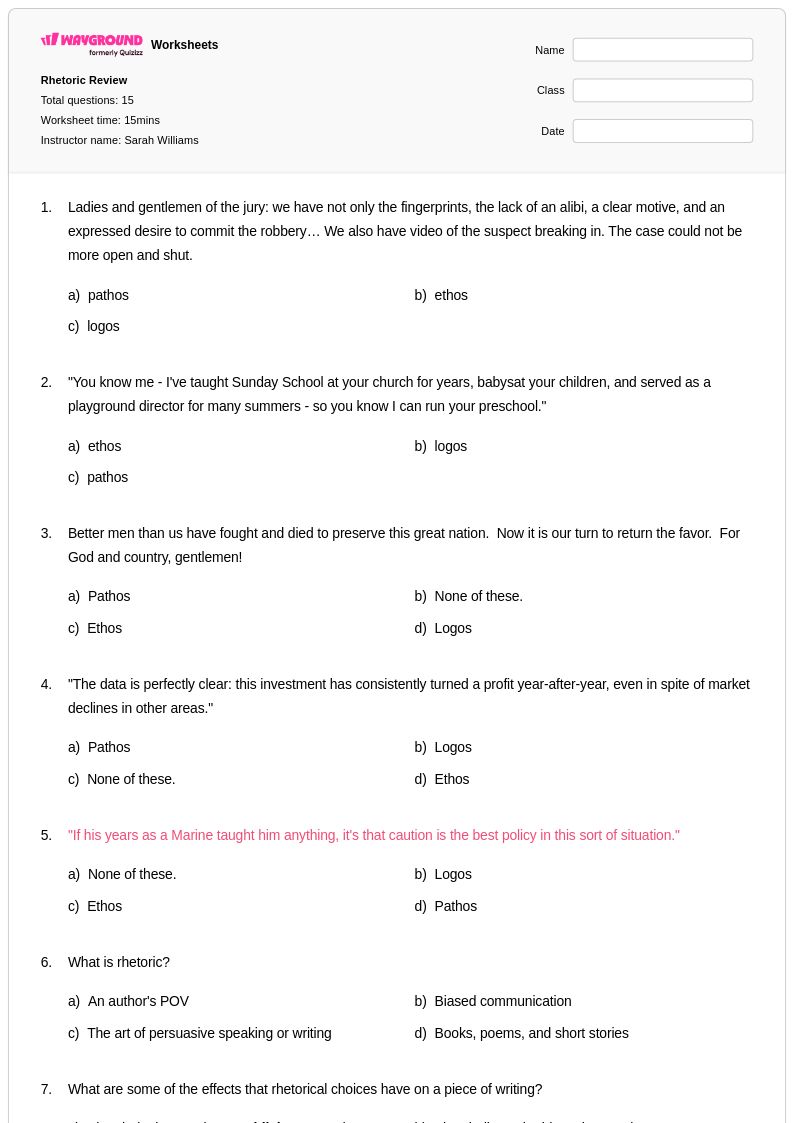
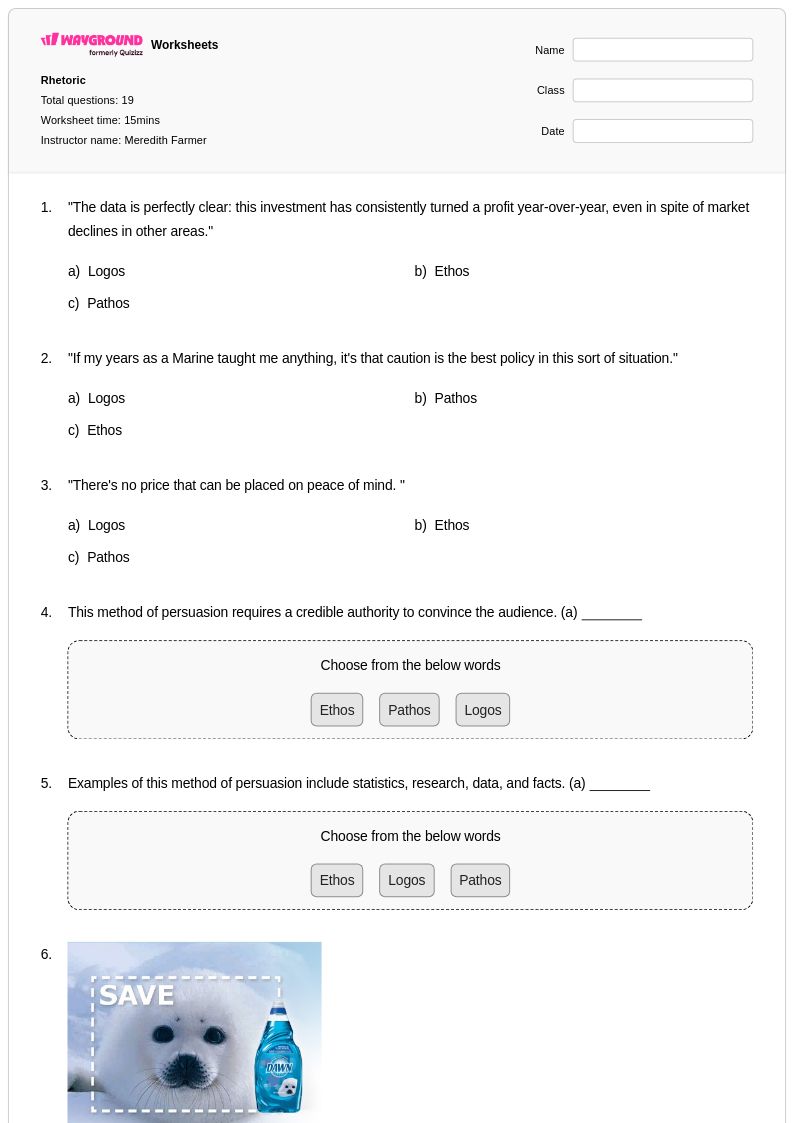
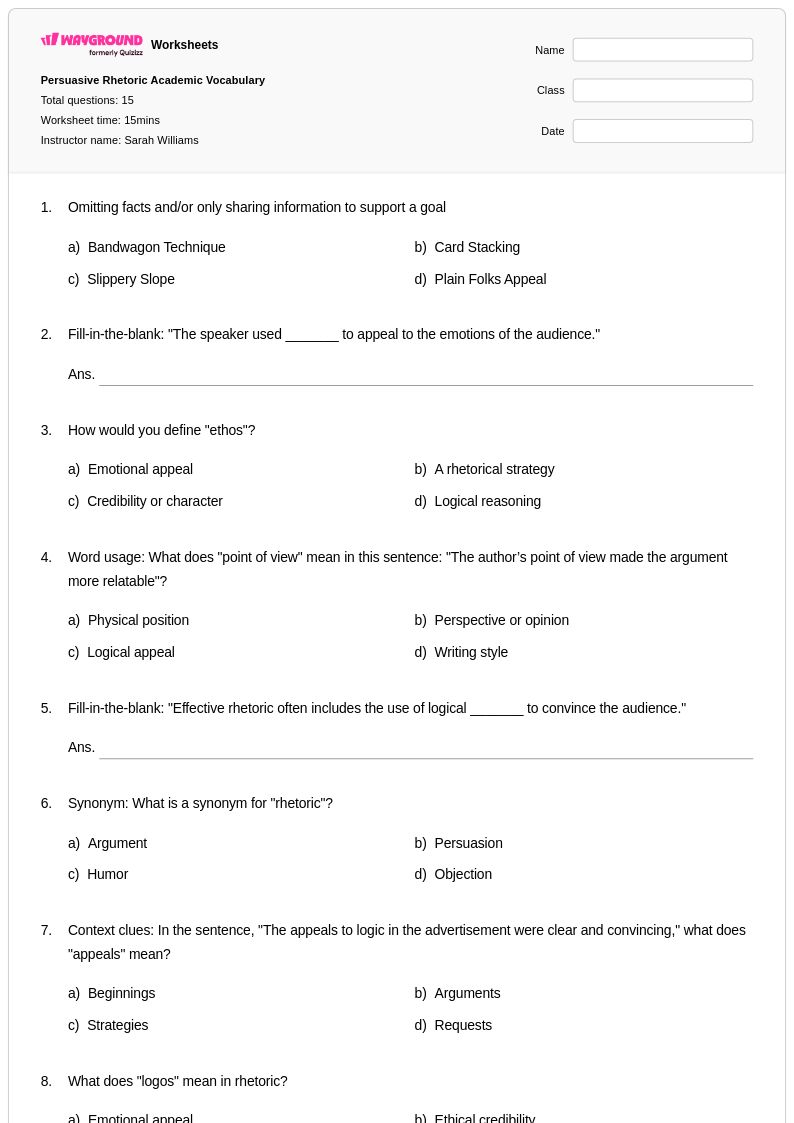
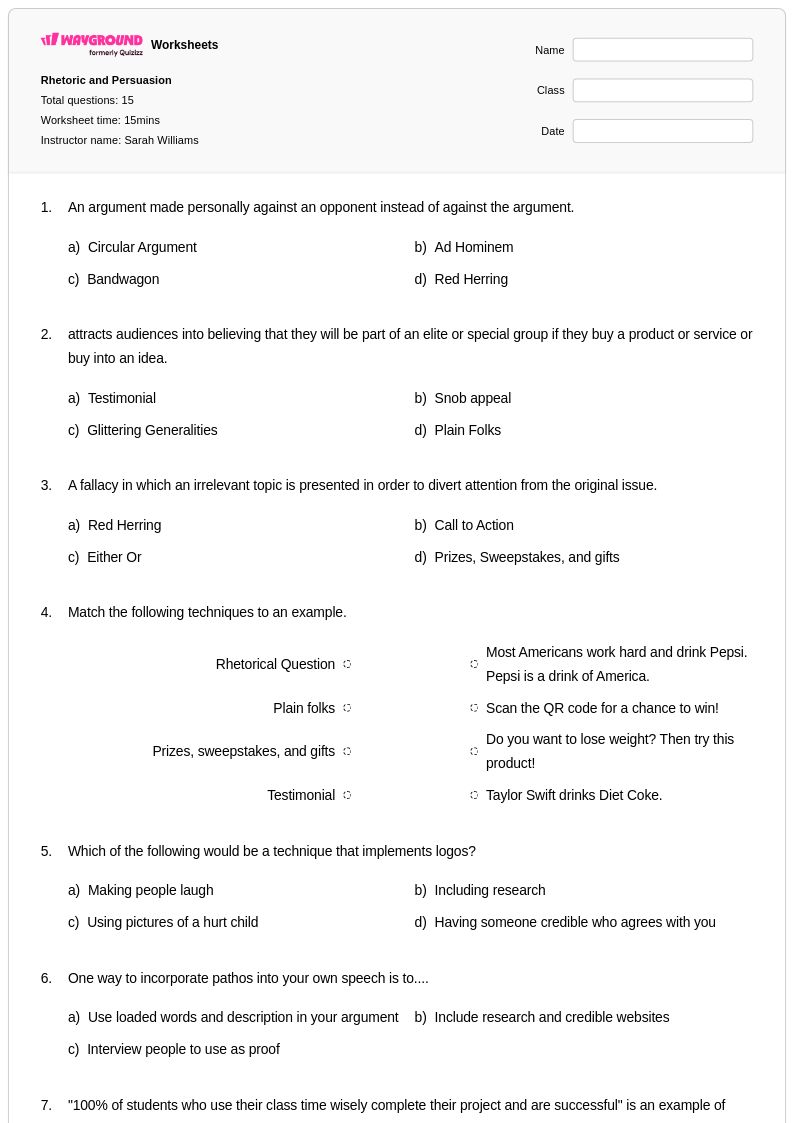
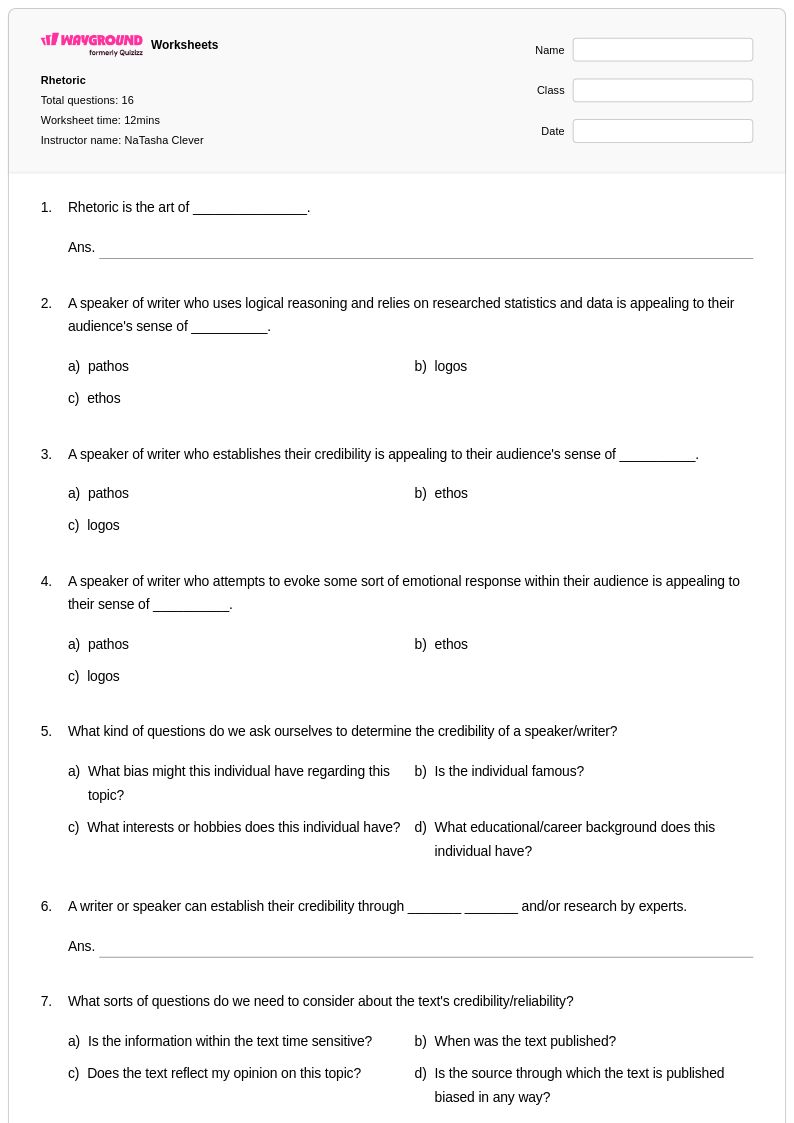
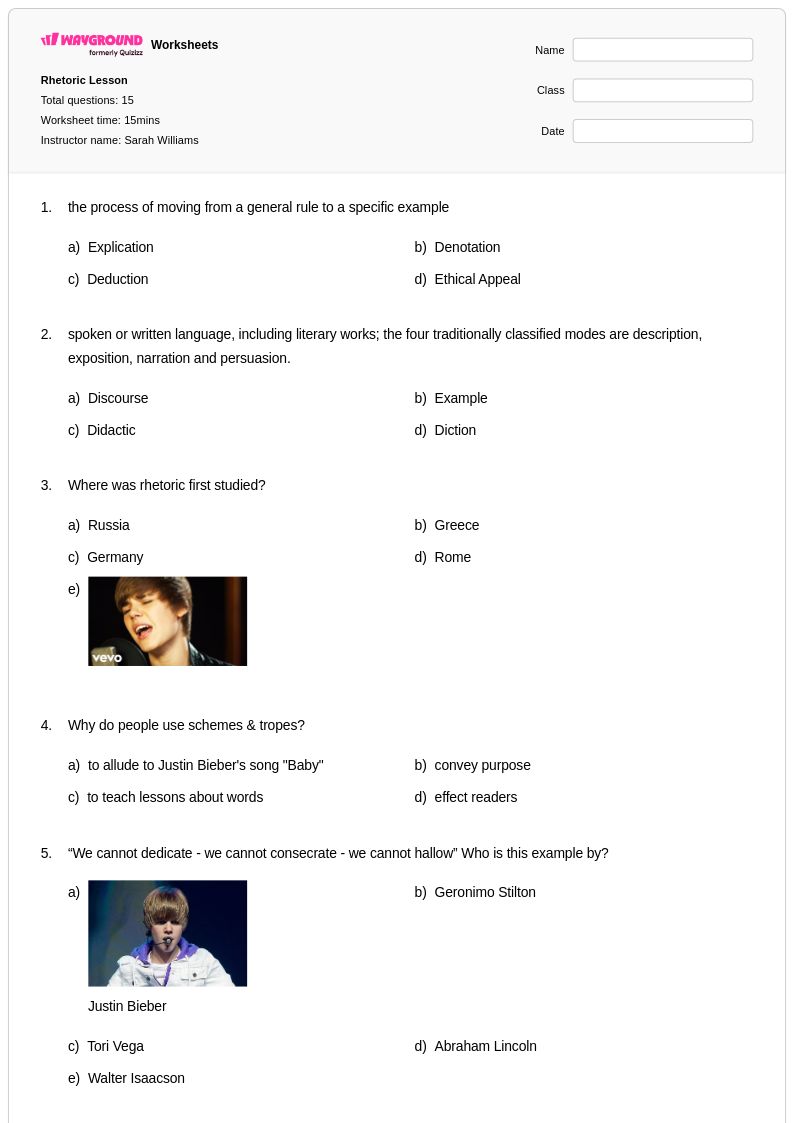
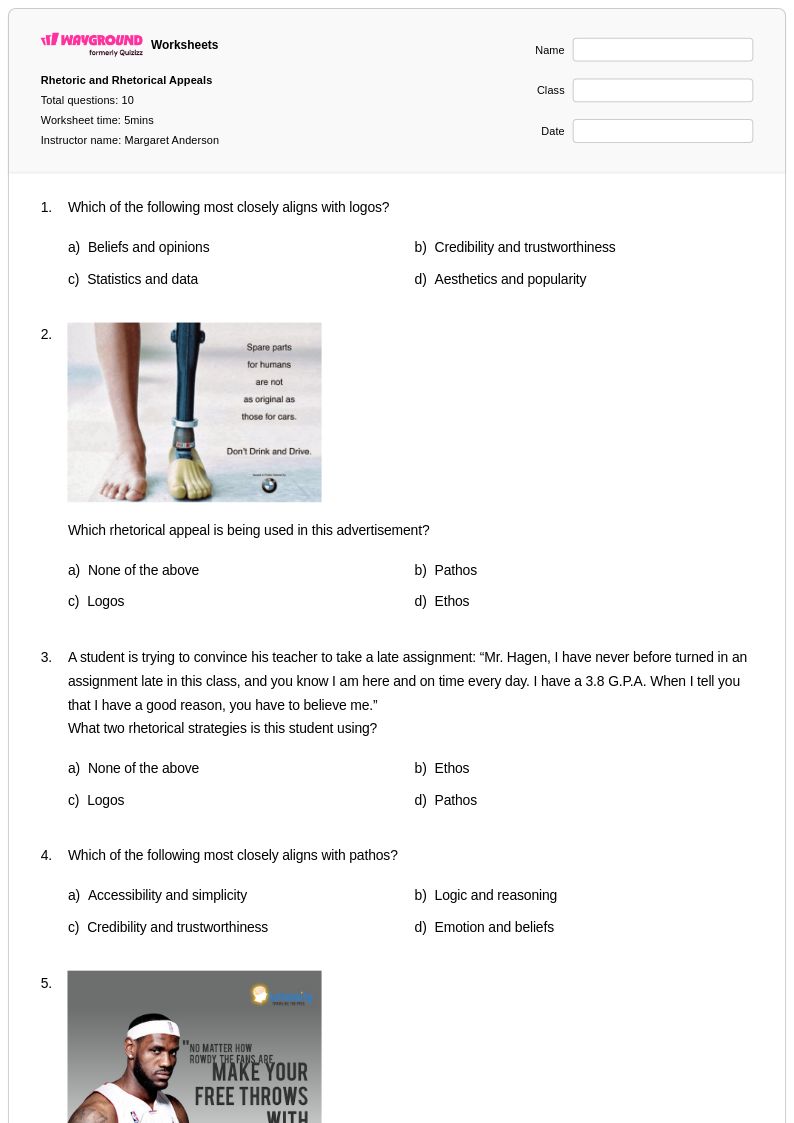
Pathos in rhetoric worksheets for Class 12 students available through Wayground (formerly Quizizz) provide comprehensive practice in identifying, analyzing, and employing emotional appeals in persuasive writing and speaking. These expertly designed worksheets strengthen students' ability to recognize how skilled orators and writers connect with audiences through strategic emotional language, vivid imagery, and compelling anecdotes that evoke specific feelings and responses. Students engage with practice problems that challenge them to dissect famous speeches, advertisements, and literary works to understand how pathos functions alongside ethos and logos in the rhetorical triangle. Each worksheet includes detailed answer keys that guide students through the nuanced process of evaluating emotional appeals, while free printable pdf formats ensure accessibility for both classroom instruction and independent study.
Wayground (formerly Quizizz) empowers educators with millions of teacher-created resources specifically focused on advanced rhetorical analysis, offering robust search and filtering capabilities that allow instructors to locate precisely targeted pathos worksheets aligned with Class 12 English standards. The platform's differentiation tools enable teachers to customize worksheet difficulty levels and modify practice exercises to meet diverse learning needs, from remediation for students struggling with rhetorical concepts to enrichment activities for advanced learners ready to create their own persuasive arguments. Available in both digital and printable pdf formats, these comprehensive worksheet collections support flexible lesson planning while providing educators with reliable resources for skill practice, formative assessment, and targeted instruction in the sophisticated art of emotional persuasion that Class 12 students must master for college-level writing and critical thinking success.
FAQs
How do I teach pathos in rhetoric to my students?
Start by grounding students in a clear definition: pathos is the rhetorical appeal that targets an audience's emotions to persuade. Use familiar, high-interest examples first — advertisements, political speeches, or social cause campaigns — before moving to literary or historical texts. Once students can identify emotional language and imagery in context, shift to analysis: ask them to explain why a specific word choice or anecdote creates an emotional response and what effect it has on the audience's opinion.
What exercises help students practice identifying pathos in persuasive writing?
The most effective practice exercises ask students to analyze real excerpts — historical speeches, advertisements, or op-eds — and identify specific techniques such as emotionally charged vocabulary, vivid imagery, personal anecdotes, and appeals to shared values. Annotation tasks work well because they require students to mark and label emotional appeals rather than just recognize them globally. Comparison exercises, where students evaluate two versions of the same argument with and without pathos, also build precise analytical skills.
What mistakes do students commonly make when analyzing pathos?
The most common error is confusing pathos with any emotional content — students often label a sad or exciting passage as pathos without explaining how the author deliberately constructed that emotional effect to persuade. A related mistake is over-generalizing: writing that a text 'uses pathos' without citing the specific word, image, or anecdote that creates the appeal. Students also frequently conflate pathos with ethos when a speaker shares a personal story, missing that the story's persuasive power comes from emotional resonance rather than credibility alone.
How do I use Wayground's pathos in rhetoric worksheets in my classroom?
Wayground's pathos worksheets are available as printable PDFs for traditional classroom use and in digital formats for technology-integrated environments, so you can assign them as in-class practice, homework, or assessments without changing your workflow. Digital versions can be hosted as a quiz directly on Wayground, giving you real-time visibility into student responses and making it easier to identify which students need additional support with emotional appeal identification. Answer keys are included with each worksheet, reducing your grading load and providing students with clear explanations of the reasoning behind each answer.
How can I differentiate pathos instruction for students at different reading and analytical levels?
For students who struggle with rhetorical analysis, reduce cognitive load by starting with shorter, highly accessible excerpts — a single advertisement or a two-sentence campaign slogan — before introducing full speeches or literary passages. On Wayground, teachers can filter worksheets by complexity and customize existing resources to adjust the difficulty of excerpts or the scaffolding in questions. For advanced learners, move beyond identification into production: ask students to draft their own persuasive paragraph and intentionally incorporate at least two distinct pathos techniques, then evaluate each other's choices.
How does pathos differ from ethos and logos, and why does the distinction matter for teaching?
Pathos appeals to the audience's emotions, ethos establishes the speaker's credibility and character, and logos relies on logic, evidence, and reasoning. Teaching the distinction matters because skilled rhetoricians often layer all three in a single argument, and students need to isolate each appeal to analyze how persuasion actually works. Without clear differentiation, students tend to default to calling everything 'ethos' when a speaker seems trustworthy or 'pathos' when a text feels intense — collapsing the three appeals undermines the precision that rhetorical analysis requires.