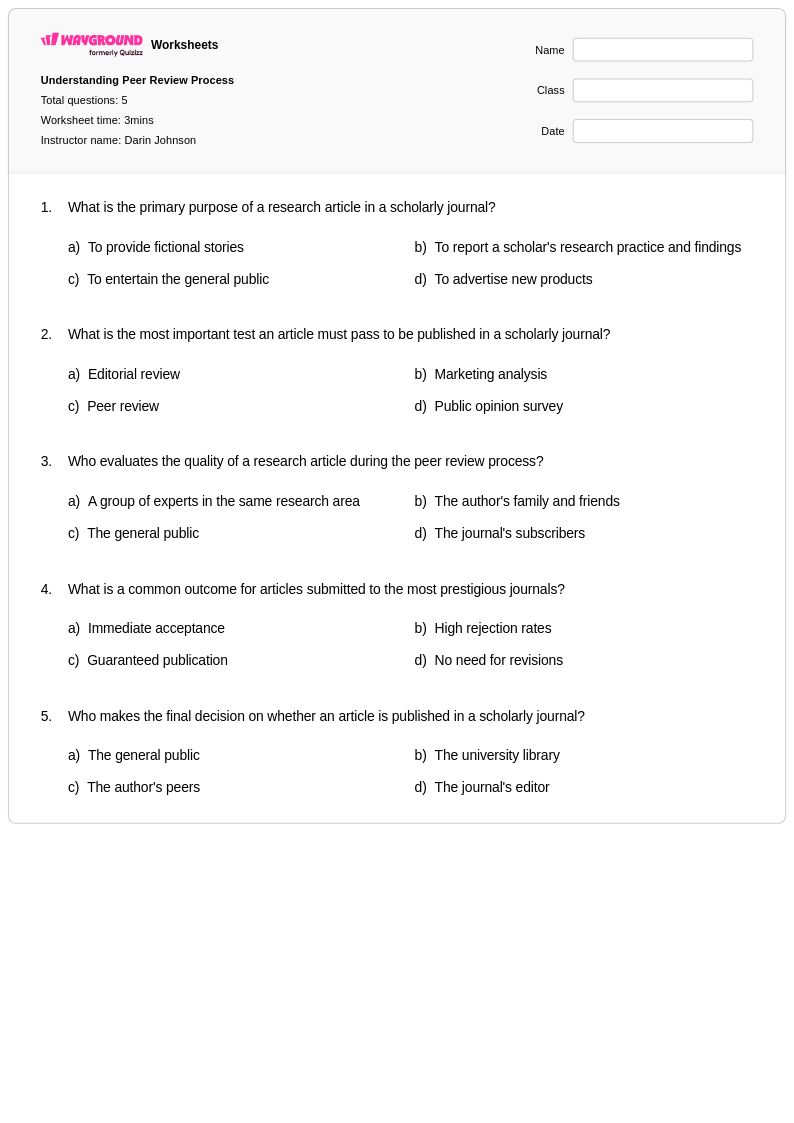
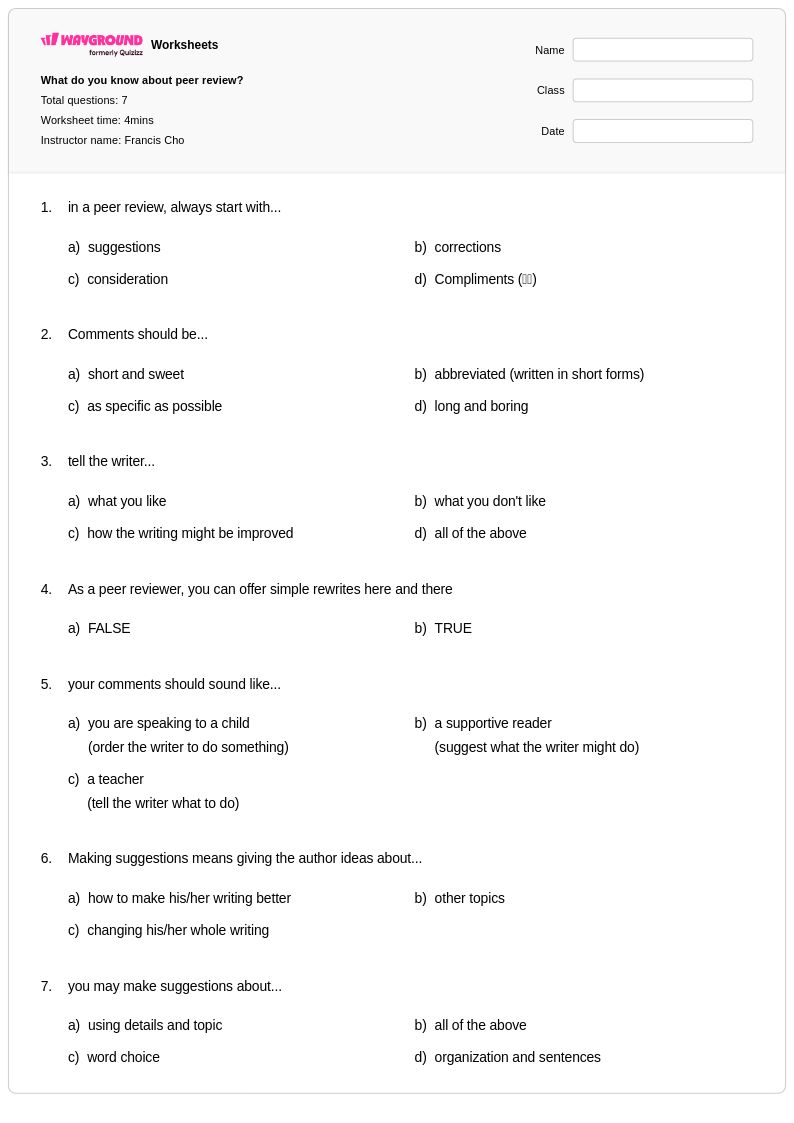
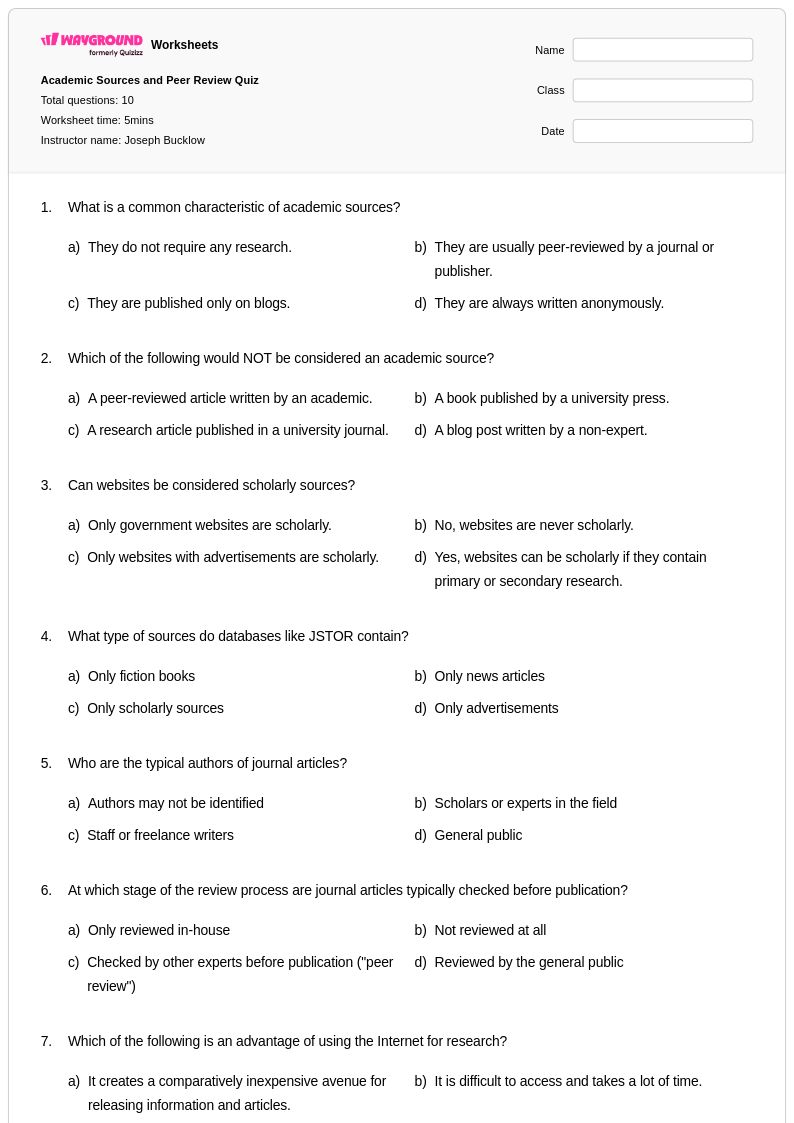
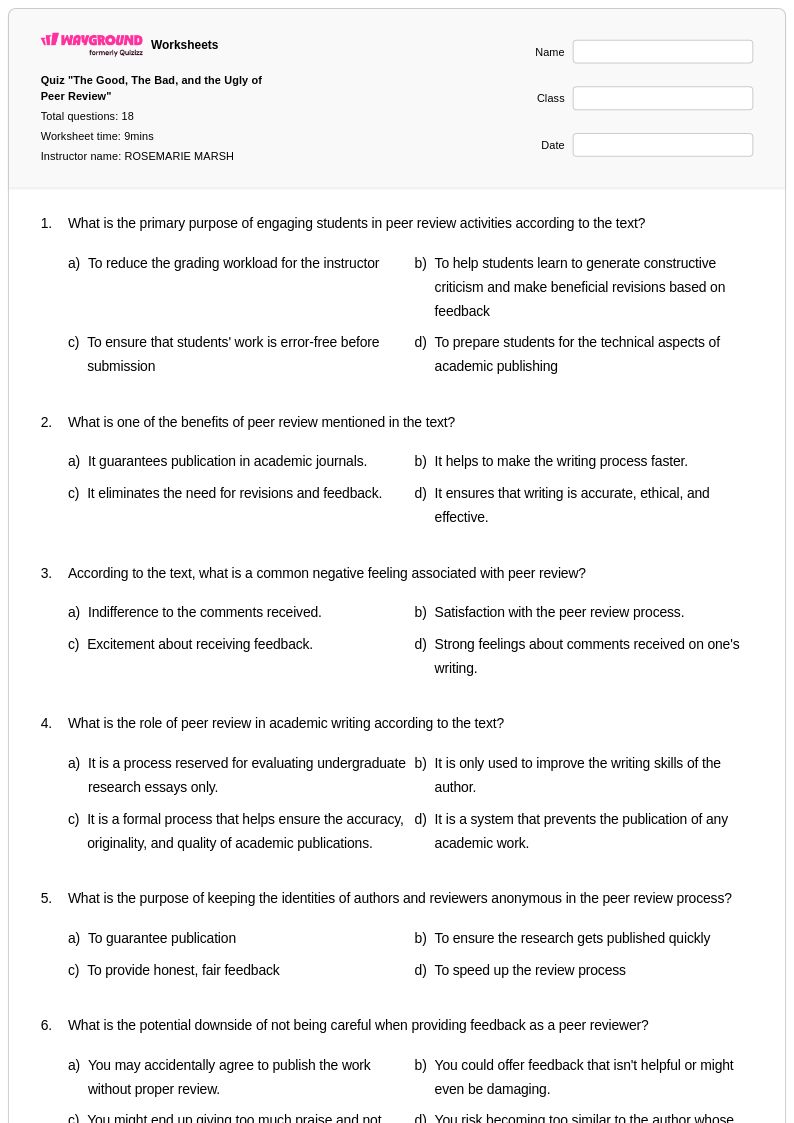
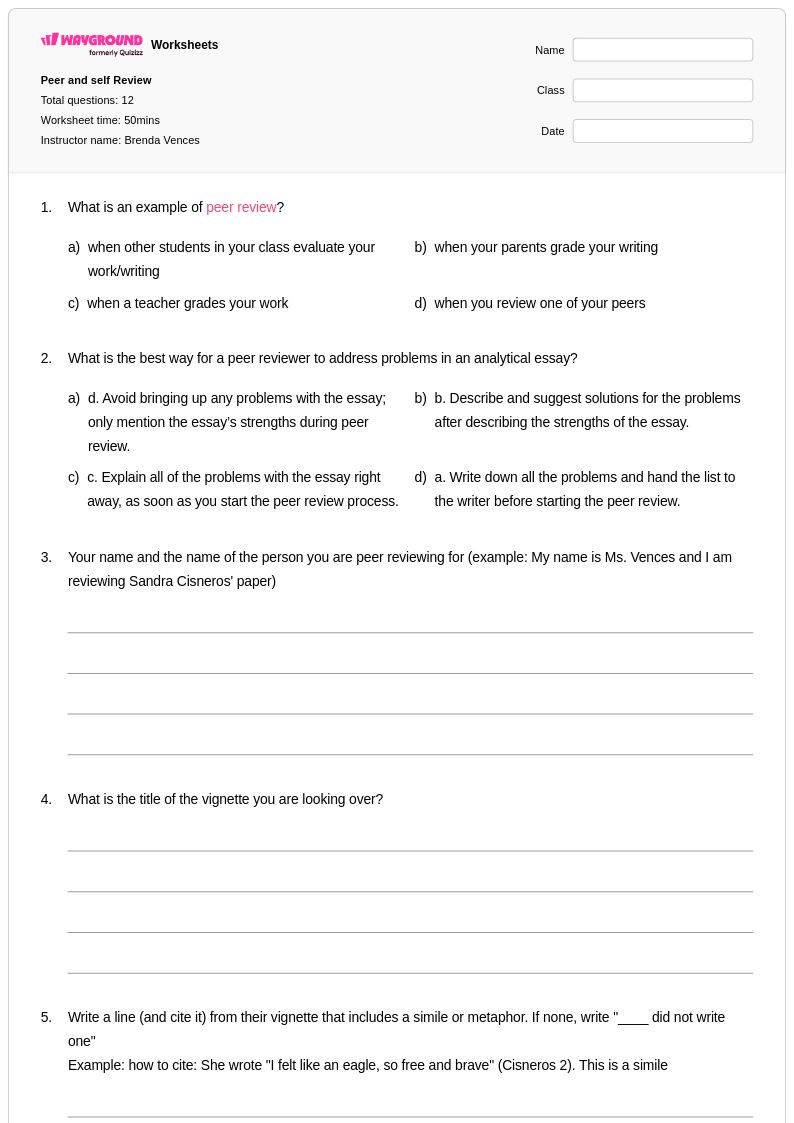
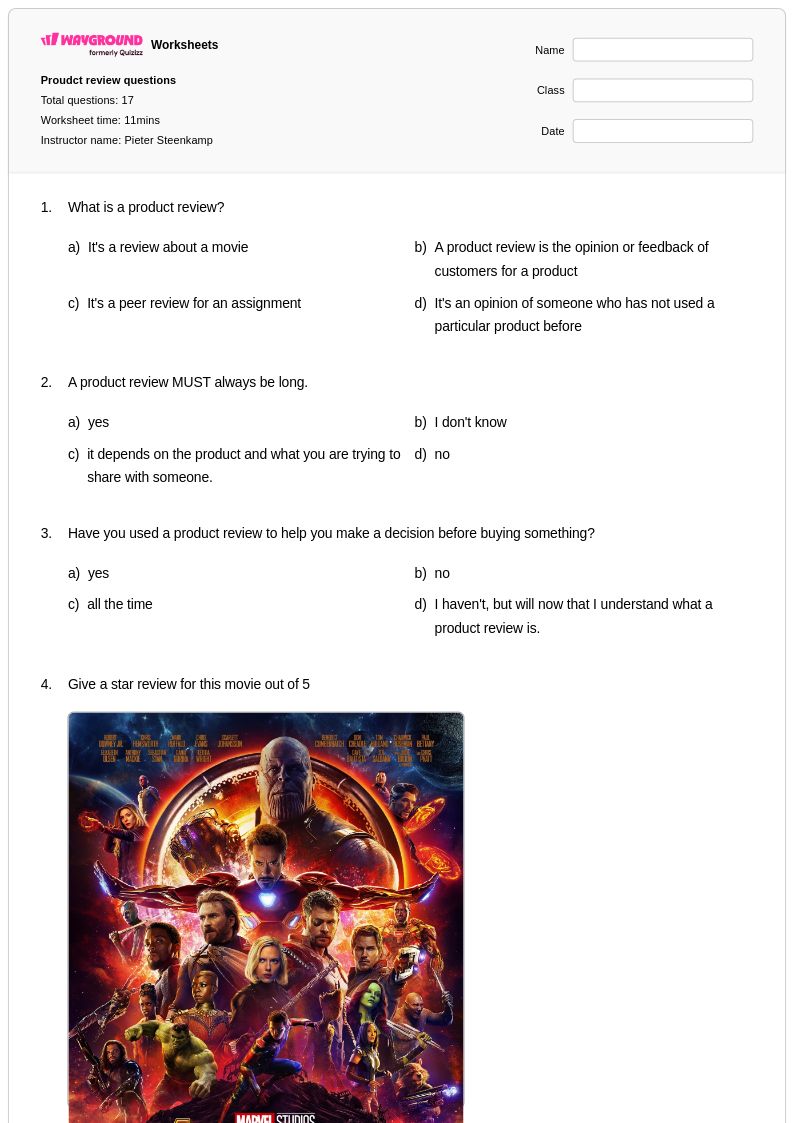
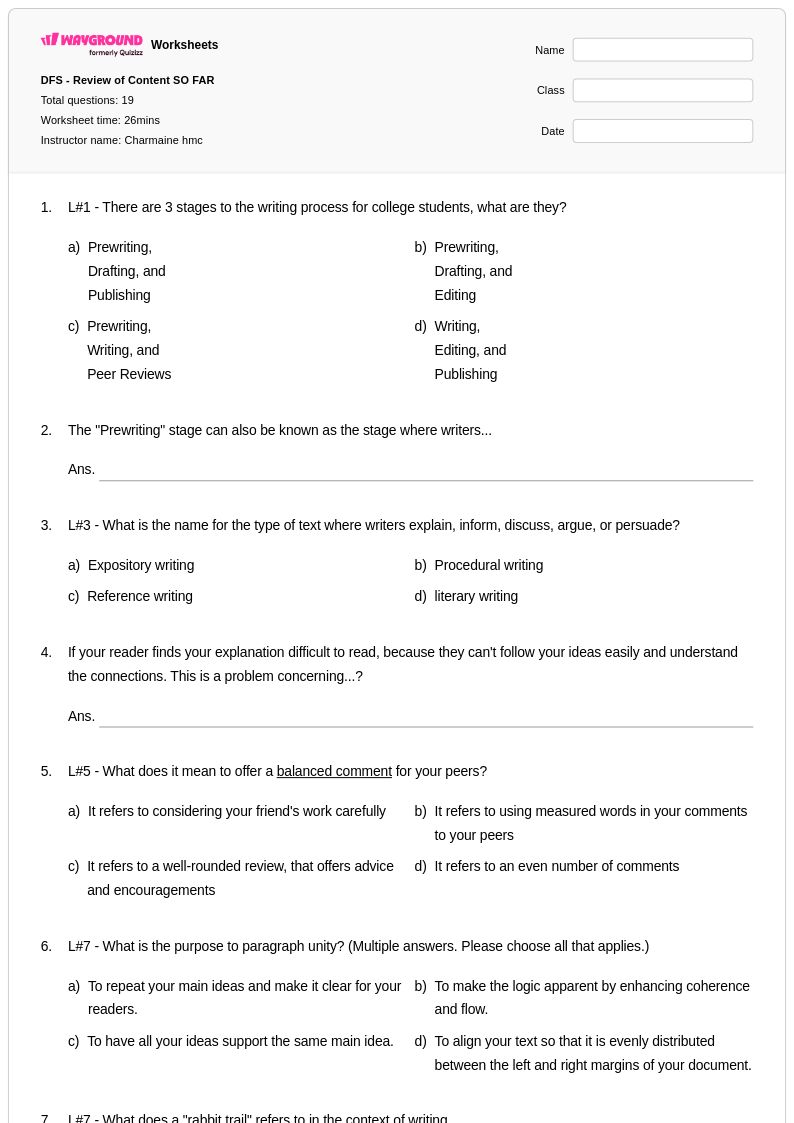
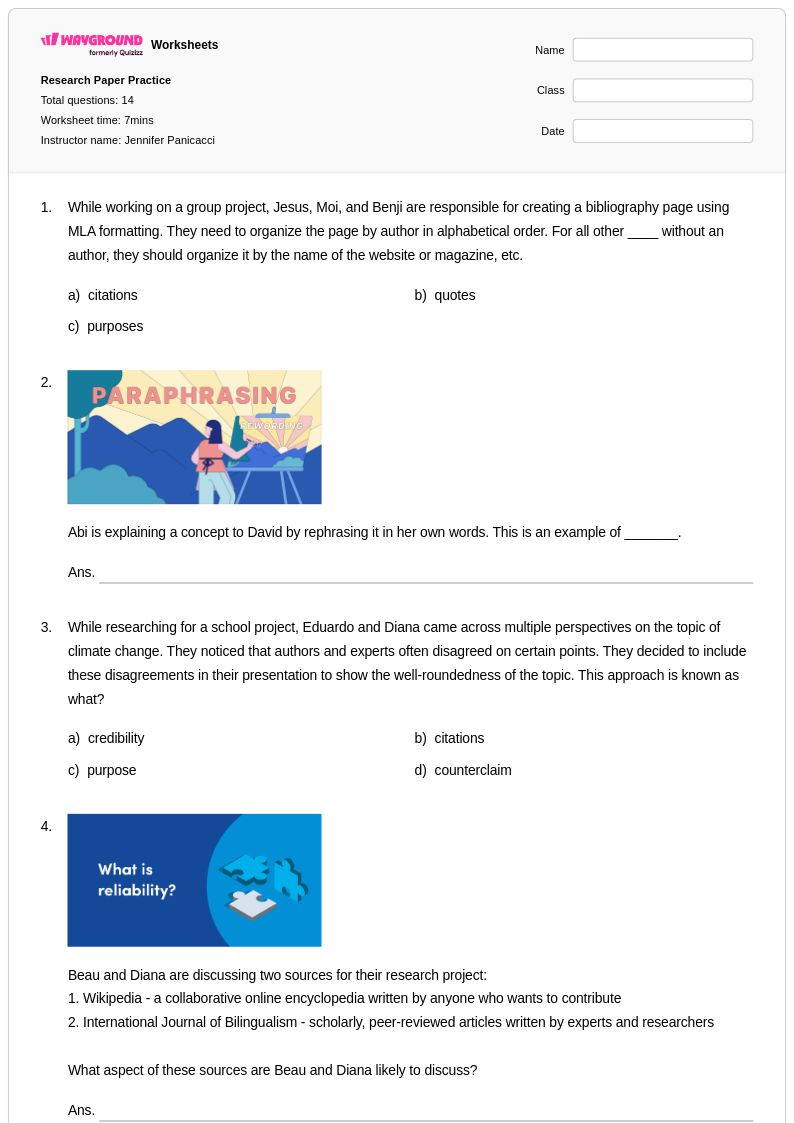
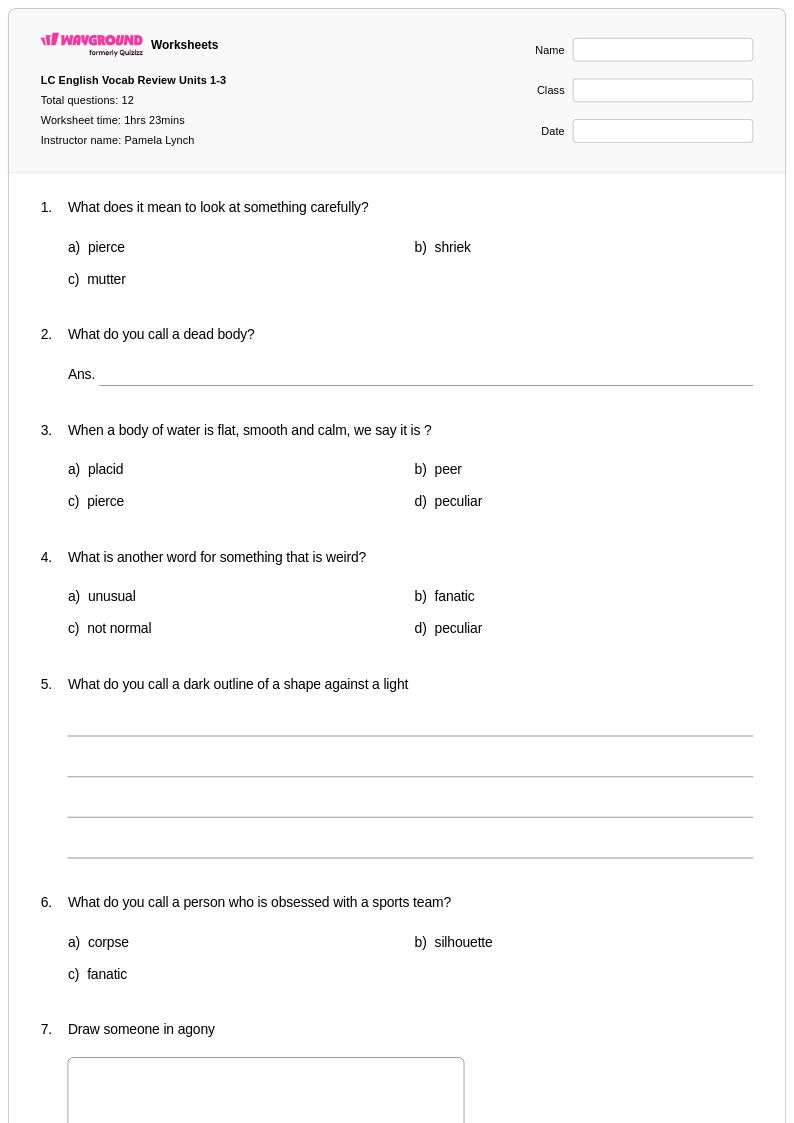
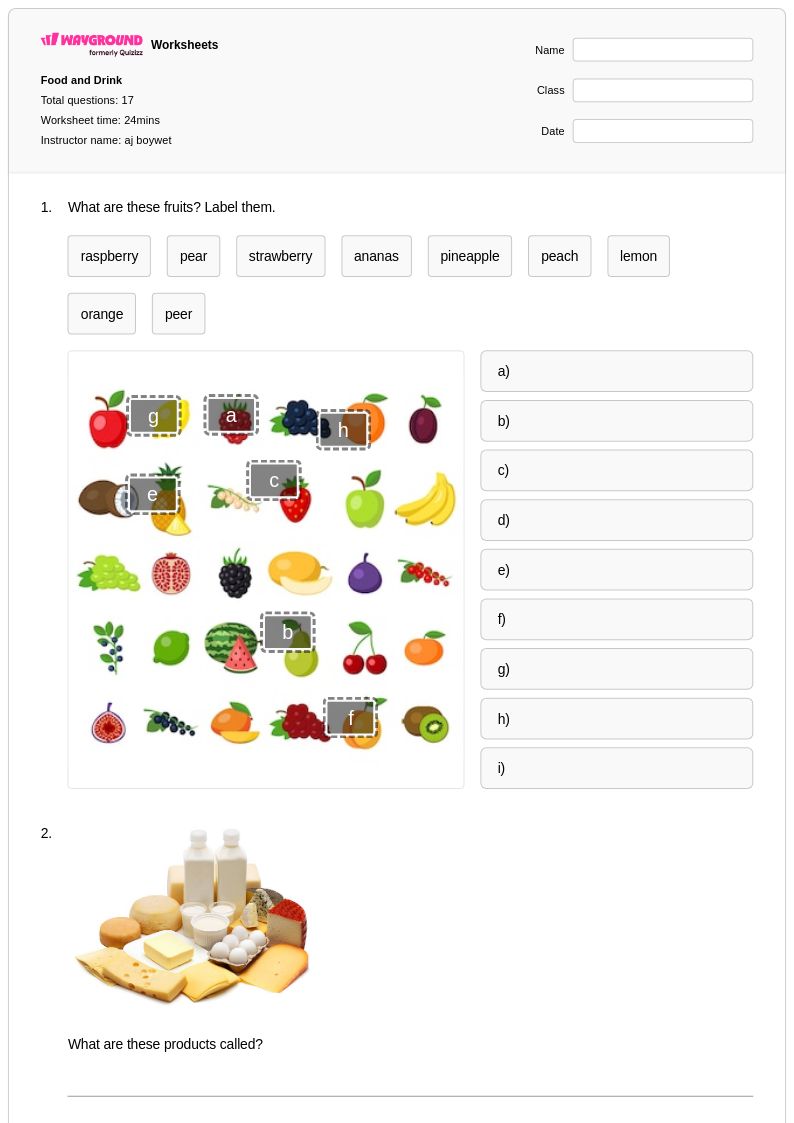
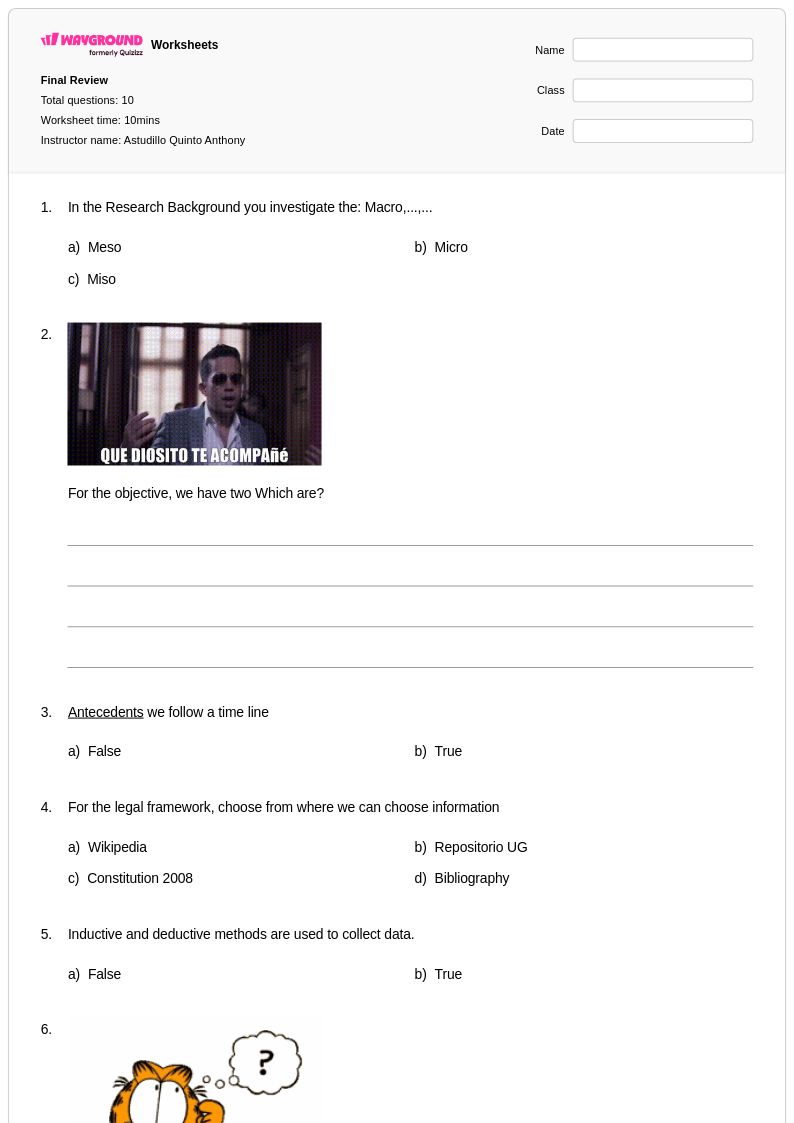
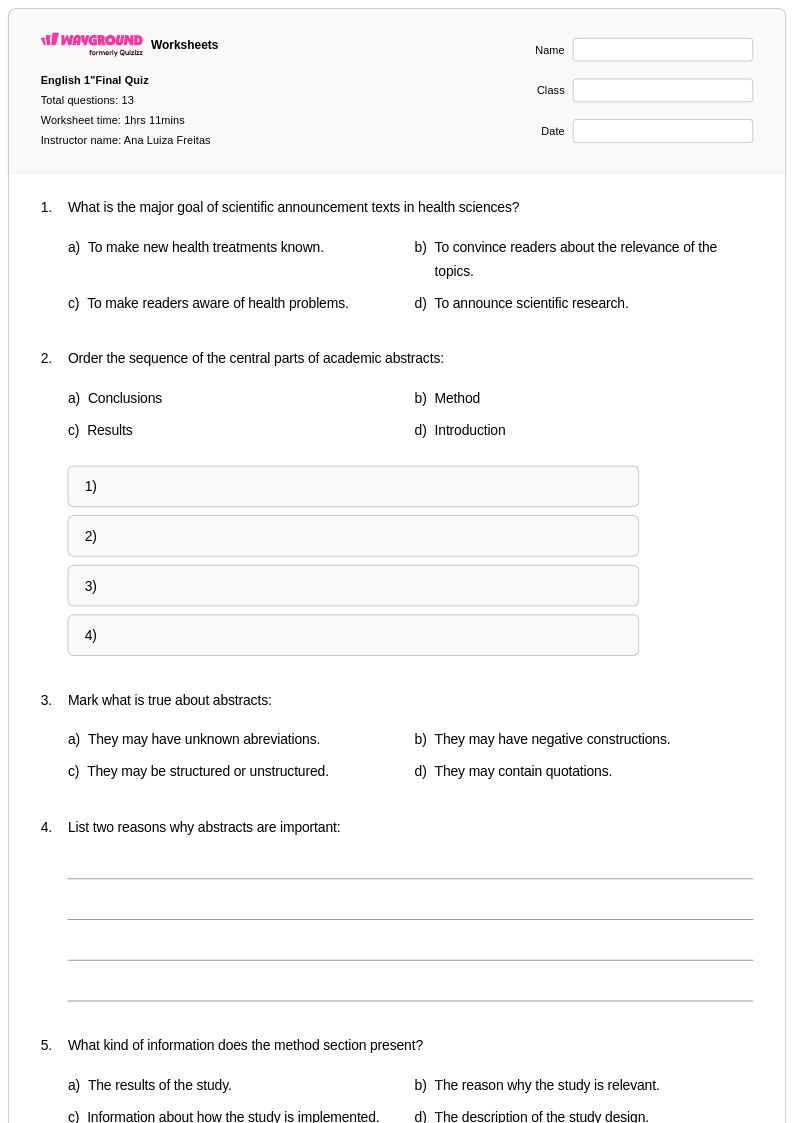
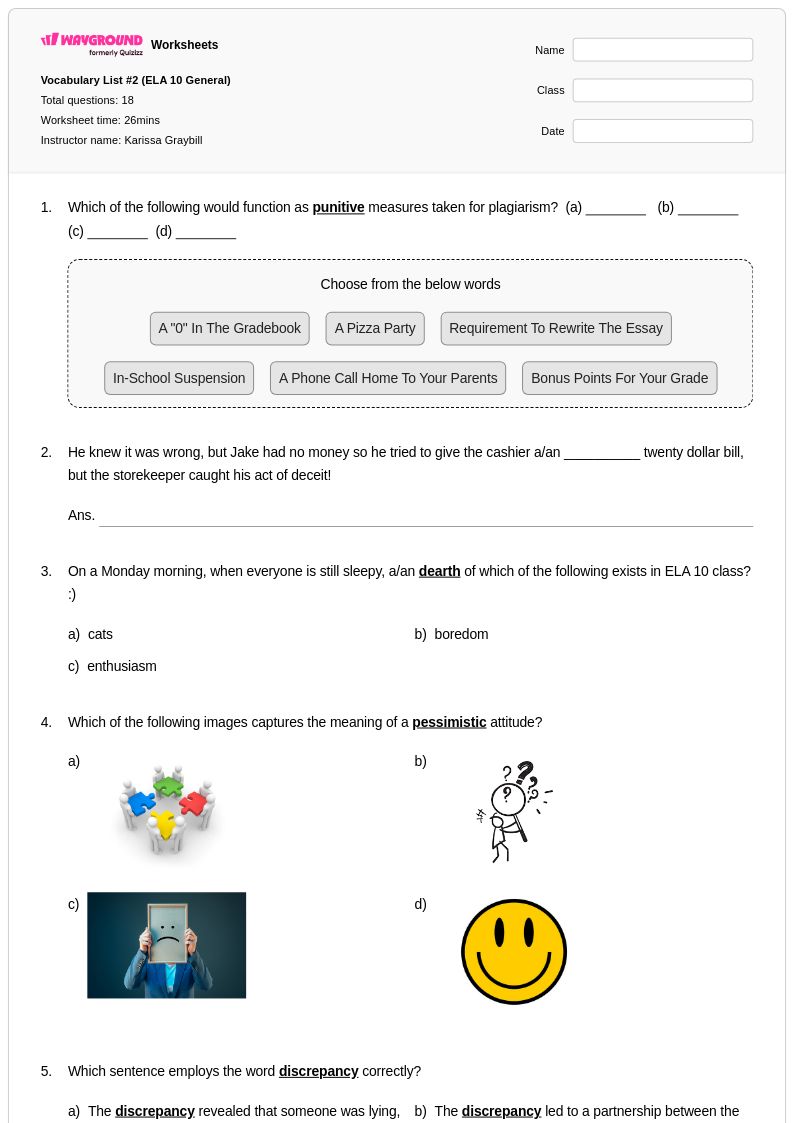
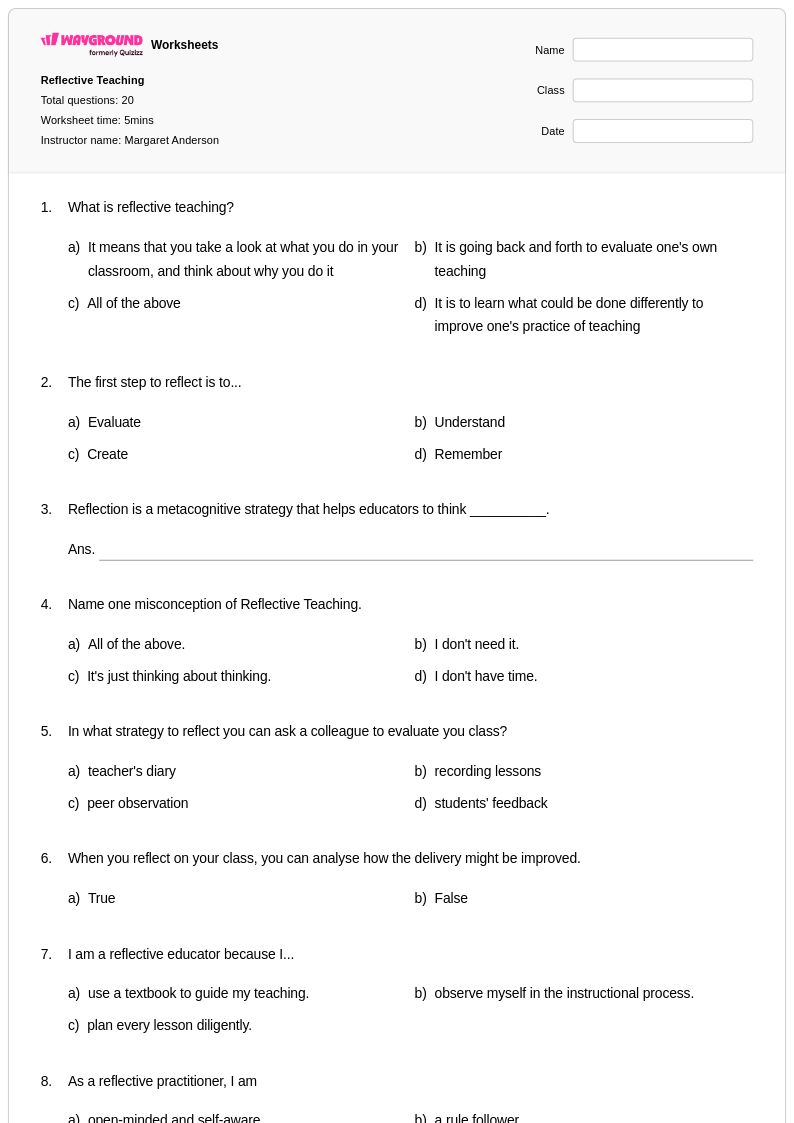
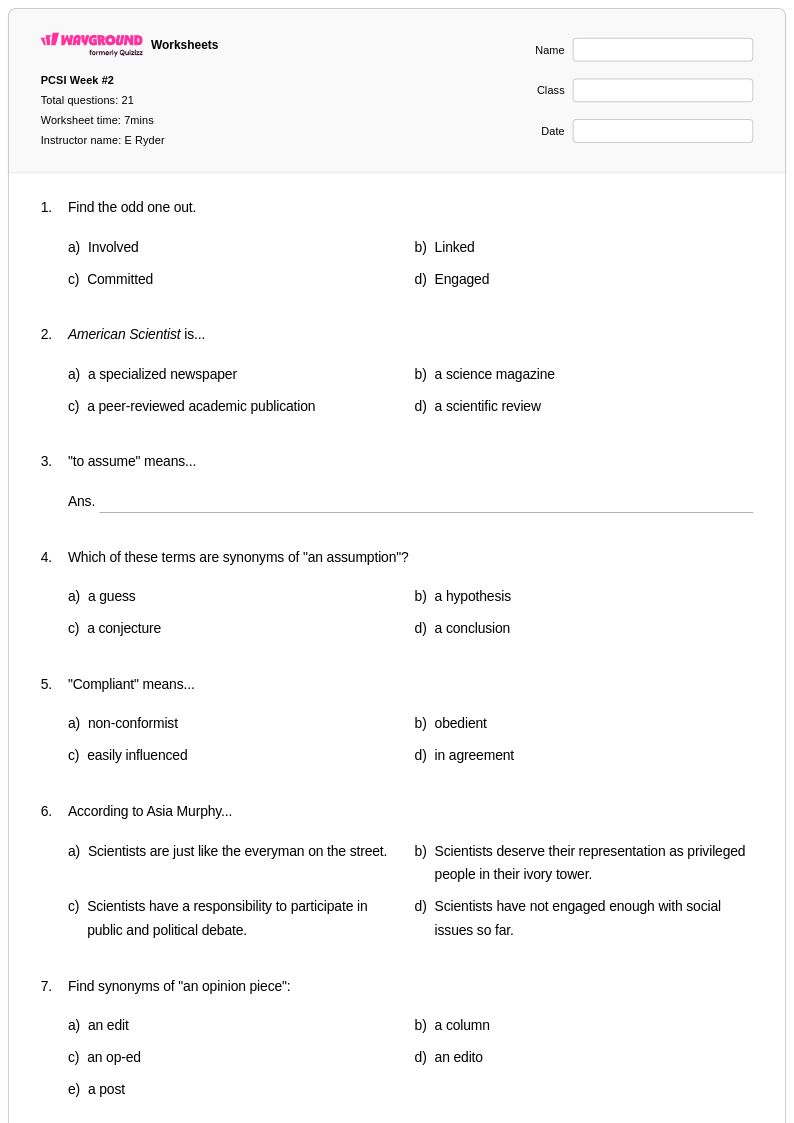
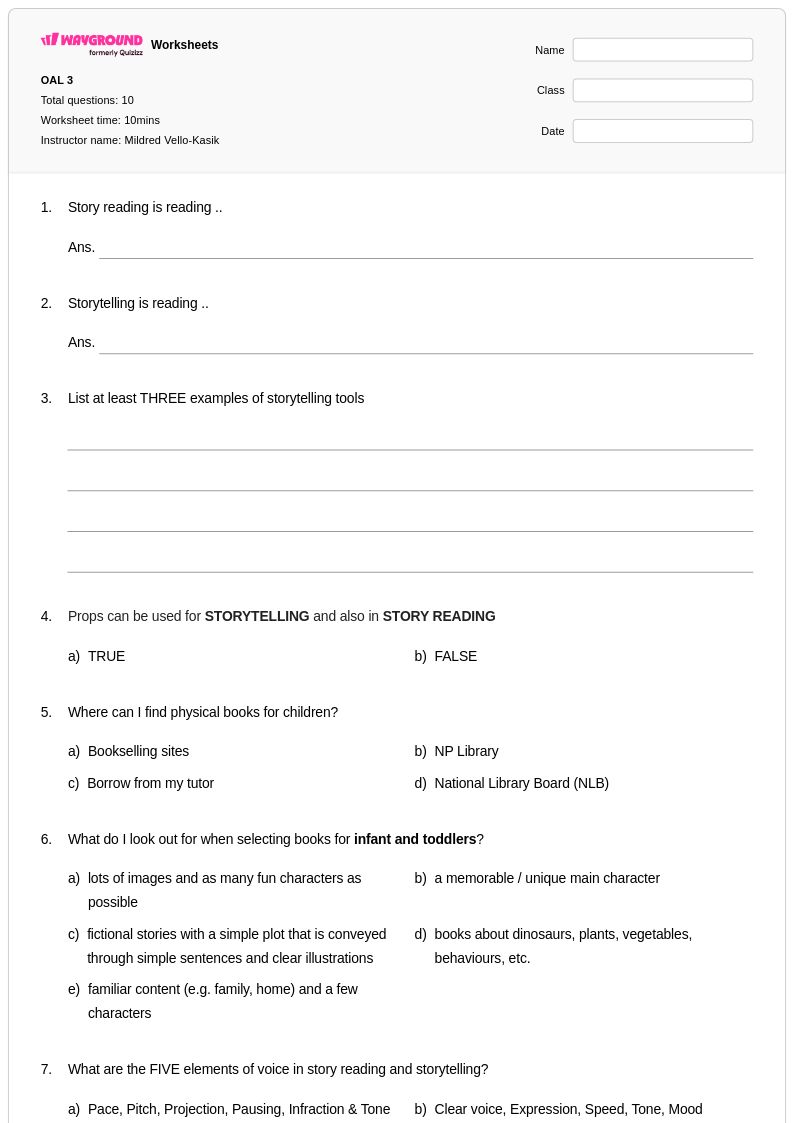
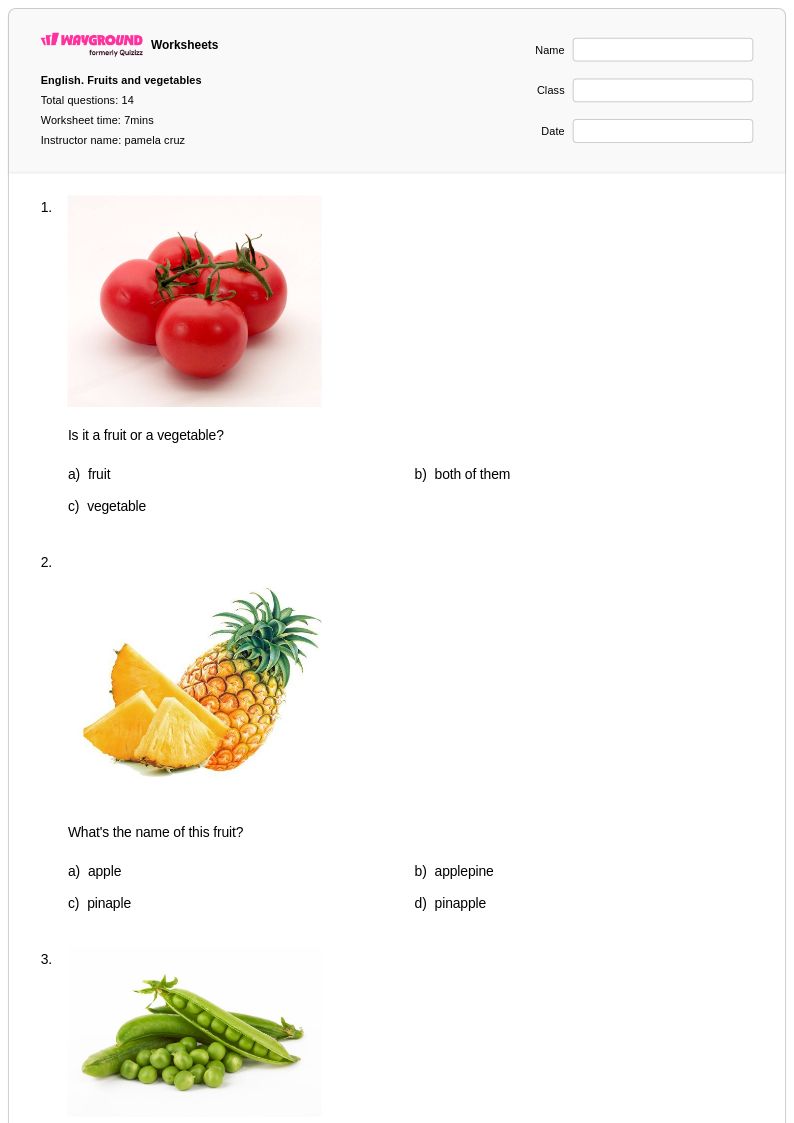
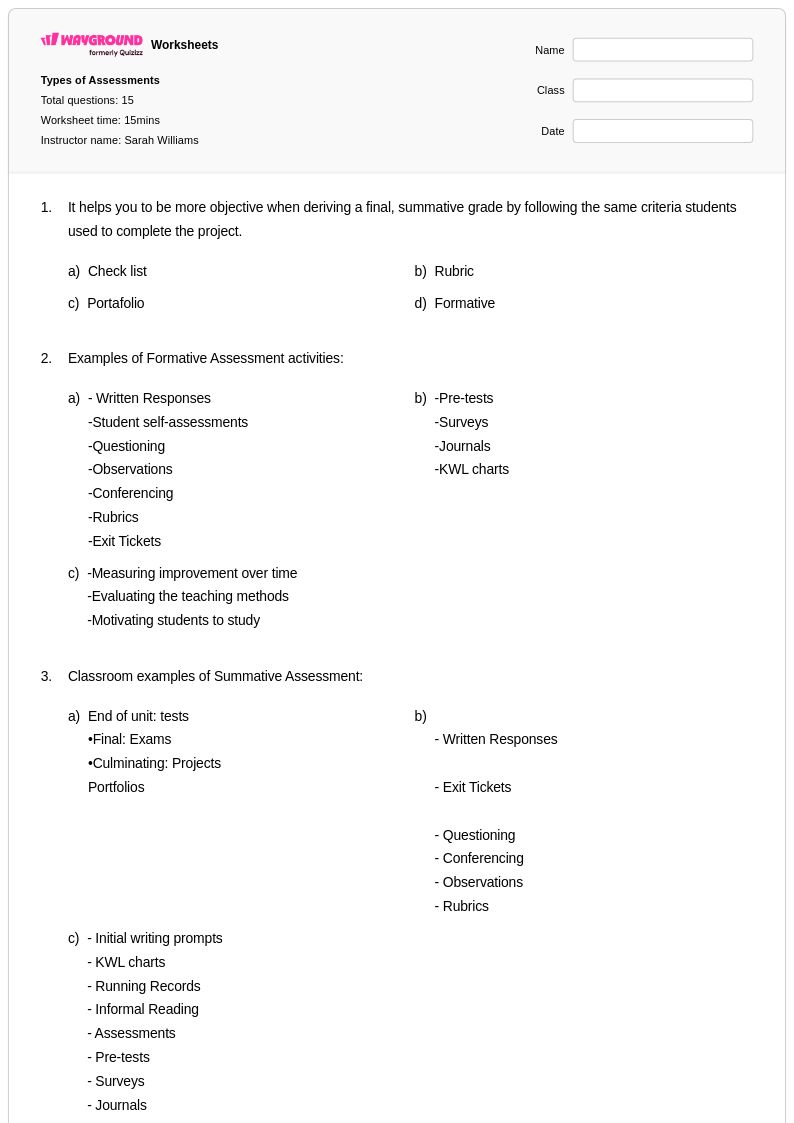
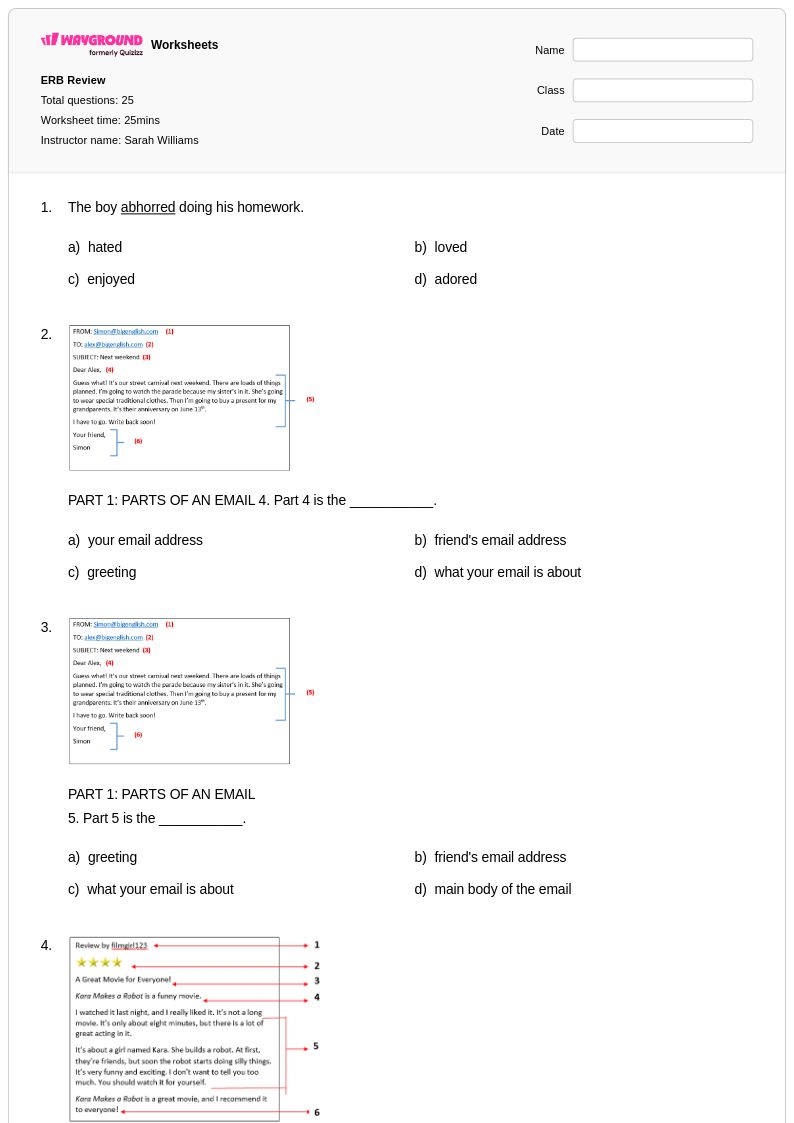
Enhance your students' collaborative writing skills with Wayground's free peer review worksheets and printables, featuring structured practice problems and answer keys to develop critical feedback techniques.
Peer review worksheets available through Wayground (formerly Quizizz) provide students with structured opportunities to develop critical evaluation skills and enhance their collaborative writing abilities. These comprehensive resources guide learners through the essential processes of analyzing peer work, offering constructive feedback, and refining their own writing based on received suggestions. The worksheets strengthen key academic skills including critical thinking, communication, and revision techniques while helping students understand different perspectives on effective writing. Each resource includes detailed practice problems that walk students through various peer review scenarios, complete answer keys for educators to facilitate meaningful discussions, and free printable formats that make implementation seamless in any classroom setting.
Wayground (formerly Quizizz) empowers educators with an extensive collection of millions of teacher-created peer review resources that can be easily customized to meet diverse classroom needs. The platform's robust search and filtering capabilities allow teachers to quickly locate worksheets aligned with specific writing standards and learning objectives, while built-in differentiation tools enable seamless adaptation for various skill levels and learning styles. These peer review materials are available in both printable PDF formats and interactive digital versions, providing flexibility for in-person collaboration sessions or remote learning environments. Teachers can leverage these resources for targeted skill practice, writing remediation programs, and enrichment activities that challenge advanced students to provide more sophisticated feedback, ultimately supporting comprehensive lesson planning that addresses the full spectrum of collaborative writing instruction.
FAQs
How do I teach peer review effectively in the classroom?
Effective peer review instruction begins with modeling the process explicitly — show students what constructive feedback looks like by reviewing a sample piece of writing as a class before asking them to review each other's work. Structured frameworks help students move beyond vague praise or criticism, so providing sentence starters and specific evaluation criteria (such as clarity, organization, and evidence use) gives students the scaffolding they need to respond meaningfully. Building in time to discuss the feedback process itself, not just the writing, reinforces the metacognitive value of peer review.
What exercises help students practice giving constructive feedback?
Structured peer review worksheets are one of the most effective tools for building feedback skills because they guide students through specific evaluation criteria rather than leaving them to assess writing in open-ended ways. Exercises that ask students to identify a strength, a weakness, and a specific suggestion for improvement help develop balanced, actionable feedback habits. Practice scenarios using anonymous or sample texts allow students to build confidence before reviewing classmates' actual work.
What mistakes do students commonly make when giving peer feedback?
The most common error is surface-level feedback — students tend to comment on spelling or punctuation rather than engaging with content, argument structure, or clarity of ideas. Another frequent mistake is feedback that is too vague to be useful, such as writing 'good job' or 'needs more detail' without explaining why or how. Students also sometimes conflate personal preference with evaluative criteria, which is why anchoring feedback to specific rubric elements or guiding questions is essential.
How can I help students receive peer feedback without becoming defensive?
Teaching students to separate their identity as a writer from the piece being reviewed is a key step in making peer review productive. Classroom norms that frame feedback as a tool for improvement rather than criticism — and that are established before the first peer review session — significantly reduce defensiveness. Having students practice responding to feedback with clarifying questions rather than immediate rebuttals builds the habit of treating peer input as data worth considering.
How do I differentiate peer review activities for different skill levels?
For struggling writers, peer review tasks should be narrowed to one or two focused criteria so students are not overwhelmed by evaluating multiple dimensions at once. More advanced students can be challenged to provide specific revision suggestions with rationale, pushing them toward higher-order critical thinking. On Wayground, teachers can apply accommodations such as reduced answer choices or read-aloud support to individual students, so the same peer review activity can be accessible to learners with different needs without requiring entirely separate materials.
How do I use Wayground's peer review worksheets in my classroom?
Wayground's peer review worksheets are available as printable PDFs for traditional classroom use and in digital formats for technology-integrated or remote learning environments, making them flexible for a range of instructional settings. Teachers can also host these worksheets as a quiz directly on Wayground, enabling real-time monitoring of student responses. Each worksheet includes complete answer keys, which support teacher-facilitated discussion after the peer review activity is completed.